

10-day guided trek. Enjoy Gurung culture, stunning peaks, rhododendron forests, and relaxing hot springs.

Unbeatable Holiday Offers – Save Up to 20% on Your Next Adventure!
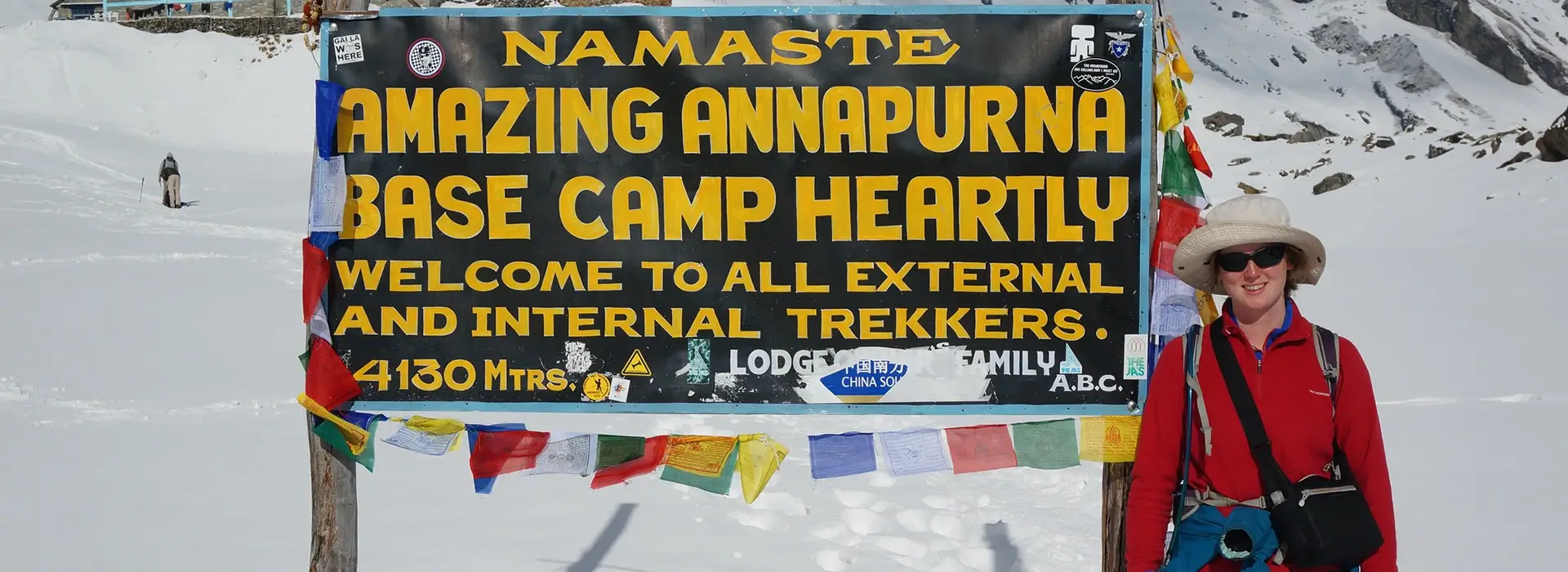

10-day guided trek. Enjoy Gurung culture, stunning peaks, rhododendron forests, and relaxing hot springs.
This package is a detailed guide to the Annapurna Base Camp (ABC) Trek, one of Nepal’s most iconic and rewarding mountain adventures. Nestled in the heart of the Himalayas, the ABC trek offers an immersive journey through some of the world’s most spectacular landscapes. This moderate 11-day trek takes you from the lower hills of Nepal through terraced rice fields, lush rhododendron forests, and high alpine meadows, culminating at the breathtaking Annapurna Base Camp, which sits at 8,091 meters above sea level.
The trek is carefully designed to give you a sense of what to expect, combining natural beauty, cultural experiences, and a sense of adventure hard to match elsewhere. From the moment you set foot on the trail, each day brings new scenery, fresh perspectives, and opportunities to connect with the region’s people and traditions.
One of the highlights of the Annapurna Base Camp trek is the variety of landscapes you encounter along the way. The lower regions feature terraced rice fields and quaint villages, where local farmers maintain centuries-old traditions. As you gain altitude, the trail winds through dense rhododendron forests, which burst into vivid red and pink blooms during spring. Higher still, the forests give way to alpine meadows, rocky ridges, and glacial streams, creating an ever-changing backdrop that keeps the trek visually captivating.
The trail is also a journey through local culture and tradition. You will pass through several Gurung villages, where stone houses, prayer flags, and welcoming locals offer a glimpse into daily mountain life. Visiting monasteries and spiritual sites along the way allows trekkers to experience the region’s rich cultural heritage. Watching the wind flutter through colorful prayer flags or listening to the rhythmic chants from a monastery creates a sense of peace and connection to the land. These cultural experiences are woven seamlessly into the trekking adventure, giving each day a unique flavor beyond the natural scenery.
As the trek progresses, the path gradually ascends into higher terrain, bringing trekkers closer to some of the highest and most spectacular peaks in the world. Annapurna Base Camp itself is surrounded by a ring of mountains, including Annapurna South, Hiunchuli, Machapuchare (Fishtail), and Annapurna I. Waking up at the base camp or standing at its edge, you are greeted by panoramic views that are both humbling and awe-inspiring.
The journey is not only about reaching a destination but also about enjoying the daily experiences along the trail. Crossing suspension bridges, hiking past roaring rivers, navigating high ridges, and discovering hidden waterfalls add adventure and variety to the trek. The combination of physical challenge, natural beauty, and cultural immersion makes each day rewarding.
The Annapurna Base Camp trek is considered moderate, making it accessible to hikers with a reasonable level of fitness. Its 10-day itinerary allows for gradual acclimatization and ensures that trekkers can enjoy the experience without rushing. Accommodation is typically in teahouses run by local families, providing a chance to enjoy home-cooked meals, rest in cozy settings, and interact with the hospitable mountain communities.
This trek offers a perfect blend of adventure, natural beauty, and cultural insight. Each step brings you closer to both the mountains and the local way of life. From lush green valleys and flowering forests to rocky highlands and a serene base camp, the Annapurna Base Camp trek is a journey that leaves a lasting impression.
The Annapurna Base Camp trek stands out among Nepal’s trekking routes for combining accessible adventure with remarkable scenery and cultural depth. Trekkers experience the warmth of mountain communities, the beauty of Nepal’s diverse landscapes, and the thrill of high-altitude trekking—all in a single, well-paced journey.
Whether you are drawn by the panoramic Himalayan views, the charming villages, or the spiritual aura of monasteries and prayer flags, the ABC trek delivers an unforgettable experience. It is a journey where every day offers new discoveries, and every step leads to a deeper connection with nature and culture. For those seeking a balance of adventure, beauty, and cultural immersion, the Annapurna Base Camp trek is a truly rewarding choice.

Included Meals

Trip staff

Transport

Accommodation

Trip Grade
Group Size
This Annapurna Base Camp Hike itinerary is a general outline to help you plan, but your guide may adjust the route or timing. Changes can happen due to weather, trail conditions, or how everyone in the group is feeling. These minor adjustments are made with your safety in mind, so you can enjoy the trek at a pace that works best for everyone.
Your trek begins with a 6 to 7-hour scenic drive from Kathmandu to Pokhara. You will cover approximately 200km by a private tourist bus. The bus will drive through the beautiful rivers of Trishuli and Marsyangdi, besides lush hills and terraced fields.
You can see the Ganesh and Manaslu ranges if the day is clear. You will arrive at the lakeside city of Pokhara at 850m in the afternoon. Pokhara is known for its laid-back atmosphere and stunning views of Annapurna and Machhapuchhre peaks.
You will stay overnight here. You can explore the Lakeside area and go on a walk. You will eat breakfast in Kathmandu, and you can explore Pokhara for dinner.
Overnight: Comfortable hotel in Lakeside, Pokhara

Time & Distance 7 hours/200 KM
Accommodation:
Tourist Standard Hotel

Maximum Altitude 820m/2,690ft (Pokhara)
Difficulty
Transportation Tourist Bus
Today you will drive from Pokhara to Ulleri. The drive is about 2 hours long along a bumpy, thrilling route via Tikhedhunga.
You will begin your ascent to Ghorepani after breakfast in Ulleri. The trail is less steep than yesterday, but steep regardless. You will go through rhododendron and oak forests, occasionally seeing langurs (monkeys) and birds singing. Banthanti and Nangethanti are popular rest points today.
You will get to see Annapurna South and Machhapuchhre between treetops. After walking for around 5 hours for approximately 11km, you will reach the beautiful ridgeline village of Ghorepani. You can see Dhaulagiri, Annapurna South, Nilgiri, and other towering peaks from here.
Tonight, you will stay in a teahouse in Ghorepani. The village offers comfortable rooms with attached bathrooms.
Time & Distance 7 KM Trek & 4-hours Trek
Accommodation:
Local Lodge
Meals Breakfast, Lunch, Dinner
Maximum Altitude 2,860m/9,383ft (Ghorepani)
Difficulty
Transportation Share Jeep & Hike
Today’s trek starts early at around 4:30 AM. You will walk up to Poon Hill at 3,210m for a sunrise view. After about an hour’s hike, you will walk through the rhododendron forest and reach the viewpoint. Enjoy the sunrise views of Dhaulagiri, Annapurna I, and other peaks from here. Celebrate the moment, then get down to Ghorepani for breakfast.
After breakfast, your trek will continue through a forested ridge. You will get to Deurali pass at 3,090m and descend into a valley. The path will cross forests and waterfalls with distant birdsong echoing in the valley. You will reach Tadapani after crossing a steep section. Tadapani is a small settlement with views of Annapurna South and Machhapuchhre.
Time & Distance 7 Hours Hike & 14 KM
Accommodation:
Local Lodge
Meals Breakfast, Lunch, Dinner
Maximum Altitude 3,210m/10,531ft (Poon Hill)
Difficulty
Transportation Hike
Today’s trek descends steadily through a thick rhododendron and oak forest. You will cross a suspension bridge over Kimrong Khola and climb through the hillside paths and forests. A broad view of terraced fields and the village of Chhomrong will come into view.
Chhomrong is a beautiful Gurung village at around 2,165m against a stunning view of Machhapuchhre and Annapurna South. A final climb up a long stone staircase will bring you to this lovely village with teahouses, cultivated fields, and a local charm.
Chhomrong is the stop for the night. You can visit the small Gompa, relax, and enjoy the views.
Time & Distance 6 Hours Hike & 10 KM
Accommodation:
Normal Lodge
Meals Breakfast, Lunch, Dinner
Maximum Altitude 2,165m/7,103ft (Chhomrong)
Difficulty
Transportation Hiking
Your day will start with a descent down a long staircase from Chhomrong. Cross the suspension bridge over Chhomrong Khola from here and climb the steep trail. The trail will lead to the small settlement of Sinuwa at 2,340m. You have arrived at the Annapurna Sanctuary valley.
The path narrows down, leading into a quiet forest of Bamboo, rhododendron, and oak trees. You will pass spots like Bamboo at 2,310m and Dovan at 2,505m. These places are popular resting and lunch spots.
Modi Khola appears in the trail with waterfalls on the opposite cliff. You might spot Himalaya Tahr and musk deer in these forests. You’ll reach the Himalayan Hotel area by afternoon at around 2,890m.
Himalaya Hotel is a quiet, open space in the forest near Hinku Cave. The oxygen level starts getting thinner, and the air becomes colder. Rest early and enjoy the beautiful mountain views.
Time & Distance 7 Hours Hike & 12 KM
Accommodation:
Local Lodge
Meals Breakfast, Lunch, Dinner
Maximum Altitude 2,890m/9,482ft (Himalaya)
Difficulty
Transportation Hiking
Today is one of the most exciting days. You will climb past Hinku Cave and a small settlement in Deurali at 3,230m. The trees start fading away, and you will cross the tree line, entering a narrower valley with the Annapurna range surrounding you.
You reach Machhapuchhre Base Camp (MBC), 3,700m, and enjoy the close-up views of Machhapuchhre, Annapurna I, and Gangapurna. You will rest and eat your lunch here.
You will arrive at Annapurna Base Camp after two hours. The trail to ABC is a gentle climb along the edge of a glacial riverbed and moraines. It is the highlight of the trek and stands at 4,130m. Famous peaks like Annapurna I, Annapurna South, Barahi Shikhar, Tent Peak, and more surround Annapurna Base Camp. The view is even better at sunset with changing light against the snowy summits.
Time & Distance 7 Hours
Accommodation:
Local Lodge
Maximum Altitude 4,130m/13,550ft (Annapurna Base Camp)
Difficulty
Transportation Hiking
Wake up before dawn to witness the best sunrise from Annapurna Base Camp. You will see the first lights hitting the white peaks, covering them with a gold and pink hue.
After breakfast, begin descending to Machhapuchhre Base Camp. Continue the hike to Deurali and the Himalaya Hotel area. You will trek downhill through the valley. Descending is easier with warmer temperatures and higher oxygen levels.
You will reach Bamboo by early afternoon. Bamboo is a small settlement in a bamboo forest. Climate change is significant. Rest early to recover from the long hike.
Time & Distance 7 Hours Hike & 15 KM
Accommodation:
Local Lodge
Meals Breakfast, Lunch, Dinner
Maximum Altitude 4,130m/13,550ft (Annapurna Base Camp)
Difficulty
Transportation Hiking
Today you will climb back to Sinuwa, then descend to Chhomrong Khola. You ascend from the river, then begin a steep climb to Chhomrong.
You will walk a different route from Chhomrong. The trail descends towards Jhinu Danda and arrives by early afternoon. Check in your teahouse, rest your backpack, and enjoy.
Take a 15-20 minute walk downhill along Modi Khola to Jhinu Hot Spring. This popular hot spring is one of the highlights of the trek. Soak in the warm, natural pod and relax your tired muscles. The river and lush jungle surround the hot spring. You will celebrate the trek with your team in the evening.
Time & Distance 6 Hours Hike & 10 KM
Accommodation:
Local Lodge
Meals Breakfast, Lunch, Dinner
Maximum Altitude 2,165m/7,103ft (Chhomrong)
Difficulty
Transportation Hiking
Today is your final trekking day. The trek begins with a gentle downhill trail through the Modi Khola valley. You pass through scattered farms and riverside forests. Today’s trek is relaxed and pleasant.
After about 3 hours, you’ll reach Siwai or Ghandruk Phedi, a small riverside stop with road access. A jeep will be waiting for you and your team to drive you back to Pokhara. The route to Pokhara starts with a bumpy off-road section to Nayapul, then to a smoother paved road.
You’ll arrive in Pokhara by late afternoon. Check into your hotel and enjoy the city. You are free to do whatever in the evening.
Time & Distance 5 KM Hike & 4 Hours Drive
Accommodation:
Tourist Standard Hotel
Meals Breakfast, Lunch
Maximum Altitude 1,780m/5,840ft (Jhinu Danda)
Difficulty
Transportation Hiking and Jeep
You will have breakfast in Pokhara, then wait for the bus back to Kathmandu. You pass the same route through Prithvi Highway, rivers, hills, and small villages. The drive lasts 6 to 7 hours, including rest and lunch stops.
Alternatively, you can take a short 25-minute domestic flight back to Kathmandu. It costs extra, and we will manage it for you.
After arriving in Kathmandu, you will check into your hotel or fly directly back to your home country. Your trek officially concludes here.
Time & Distance 7 Hours & 200 KM Drive
Meals Breakfast
Maximum Altitude 1,350m/4,429ft (Kathmandu)
Difficulty
Transportation Tourist Bus
You will stay in local teahouses throughout the Annapurna Base Camp Hike. These teahouses are simple and family-run with basic but comfortable accommodations. The rooms usually have two single beds, a mattress, a pillow, and blankets, with shared bathrooms. Some lodges in the lower villages offer private bathrooms and hot showers. Higher altitude villages have squat style or basic western, shared bathrooms. If hot power is available, it comes with an extra charge. Electricity and device charging also cost extra.
A central stove often warms dining halls in higher-altitude villages. The menu includes hearty Nepali food like dal bhat, noodles, and soups. You also have options for some familiar Western dishes. Rooms are basic with no heating, but this is part of the trekking experience.
Accommodation in Pokhara is in comfortable hotels with attached bathrooms, hot showers, WIFI, and other facilities. You can upgrade to a deluxe or boutique hotel for extra comfort.
Note: We handle all lodging arrangements during the Annapurna Base Camp Hike. Teahouses get full during the peak season and need advanced booking or someone reaching the lodge early to reserve spots. Teahouses are clean, simple, and welcoming.
The Annapurna Base Camp Hike starts from 1,500m and reaches 4,130m at the destination. You hike up to Poon Hill at 3,210m to help your body get used to the altitude, then drop to 2,165m in Chhomrong. The trail follows the Modi Khola valley and climbs past 3,000m to Machhapuchhre Base Camp at 3,700m.
The climb is gradual over several days, giving your body the time to adjust. You gain about 300-600m elevation daily, and more on the climbs closer to base camp. The itinerary follows climbing high and sleeping low to help reduce the possibility of altitude sickness. The altitude drops significantly from the Base Camp down to Bamboo. The air is thin after 3,000m, so hike carefully.
You gain about 2,600m while climbing to the Base camp and lose the same amount on the way back.
Altitude Profile table:
| Day | Location | Altitude |
| Day 1 | Kathmandu-Pokhara | 1,350m-820m |
| Day 2 | Pokhara-Nayapul-Ulleri | 820m-1,070m,2,070m |
| Day 3 | Ulleri-Ghorepani | 2,070m-2,860m |
| Day 4 | Poon Hill-Tadapani | 3,210m-2,630m |
| Day 5 | Tadapani-Chhomrong | 2,630m-2,615m |
| Day 6 | Chhomrong-Himalaya Hotel | 2,615m-2,890m |
| Day 7 | Himalaya Hotel-MBC-ABC | 2,890m-3,700m-4,130m |
| Day 8 | ABC-Bamboo | 4,310m-2,350m |
| Day 9 | Bamboo-Jhinu Danda | 2,350m-1,780m |
| Day 10 | Jhinu Danda-Siwai- Pokhara | 1,780m-1,150m-820m |
| Day 11 | Pokhara-Kathmandu | 820m-1,350m |
The best time for the ABC trek is autumn and spring. They offer stable weather and incredible mountain views.
Mountain weather is unpredictable. No season has completely stable days. Even so, autumn and spring are the most popular seasons.—mildtemperatures with clear skies and long, stable days. Early December to late February is common for people who like middays with fewer crowds.
Experts consider the Annapurna Base Camp Hike moderately challenging. If you are in good health and prepare properly, you should be able to complete it without trouble.
Trekking Distance and Hours:
You hike about 5 to 7 hours daily and cover 10-15 km. The whole route is about 110 km. Trails are uneven, and steep uphill sections can be challenging. Trekking poles help to balance the body and legs. The final climb from the Himalaya to Base Camp is tough.
Trail and Terrain:
The ABC trail is filled with dirt, stone, and rocky sections and goes through rice terraces, forests, and alpine valleys. Snow and ice may cover some parts.
Trek Elevation:
Eating well, drinking plenty of water, and getting enough rest throughout the trek are essential to avoid AMS. Although Annapurna Base Camp isn’t extremely high compared to other treks, the thinner air can still affect many people.
Physical Fitness:
First-time trekkers with good average fitness can finish the ABC trek with ease. Go on regular walks, take the stairs, or try short hikes to build stamina and get comfortable with uphill climbs before your trip.
Annapurna Base Camp is an excellent choice for beginner trekkers. Even though you don’t need excellent fitness or climbing experience. The destination is worth the hardships.
We hire an experienced, licensed guide who speaks fluent English to accompany you on your Annapurna Base Camp Hike. They are certified by the Nepal Government and are trained in mountain first-aid. Our guides are aware of altitude sickness and responsible trekking. Your guide will lead you safely through marked trails, share their knowledge, and help you participate in local culture. Having a skilled guide means you can relax and focus on your trek.
Porters carry your large duffel bag. A porter carries the bag for two trekkers. We have a strict weight limit of 7 kg per person. Our porters have ethical working conditions and responsible trekking practices. Pack light so the trek is easier for both you and your porter.
The team will adjust the pace according to the team’s health and safety. In case of emergencies, we coordinate a safe descent or evacuation immediately.
You don’t need an athletic build, but moderate fitness goes a long way. Begin training about 2 months in advance to feel stronger, recover faster, and enjoy the ABC trek more.
Work on your cardiovascular endurance by swimming, jogging, cycling, or brisk walking. Do 30-45 minutes of cardio 3-5 times a week. Include hikes in hills or stair climbing if possible. Alternate between low and high-intensity workouts for building stamina.
Do squats, sit-ups, and planks to strengthen your legs and core. Go on weekend hikes or long walks. Add distance and elevation gain gradually to adjust to the actual trek. Practice hiking with your loaded daypack so you get used to the weight.
Go on a long 5 to 6-hour hike before the trek. Go on consecutive hikes wearing your trekking boots. If hiking is not accessible, stair climbing is a great alternative. Try climbing 10-15 stairs in one session, so paths like the climb to Ulleri are easier.
Add yoga or stretching to improve flexibility and relieve body soreness. Give your body time to recover between training and avoid pressuring your body too much.
We advise trekkers with heart, lung, or joint-related health conditions and any chronic issues to bring enough personal medications. Consult your doctor before the ABC trek.
The ABC trek involves many days of consecutive trekking in different terrains. Regular training and some hiking practice will make the trek much easier. Eat well, stay hydrated, get enough rest, and listen to your body to acclimate properly.
Although the Annapurna Base Camp Hike is not as high as other treks, it is still arduous. The ABC sits at 4,130m, and trekkers will spend many days above 3000m. Proper acclimatization is necessary for a safe and enjoyable trek
We have designed the ABC Trek itinerary to help the body adjust gradually to the changing elevation. The hike to Poon Hill at 3,200m in the early days of the trek, then descending lower, is the start of the acclimatization process. We follow a steady pace with moderate elevation gain daily. There are built-in rest days in Ghorepani, Chhomrong, and the Himalaya before the final push to the Base Camp. The gradual ascent gives the body time to adapt and reduces altitude sickness. Walk steadily and slowly in higher elevations to prevent issues.
Hydration is the key. Drink about 4 liters of water daily to support acclimatization. Drink plenty of water and tea. And soup. Avoid alcohol and smoking as they cause dehydration. Altitude might affect your appetite, but eat properly for energy. Make sure you’re consuming energy-rich meals regularly. You can follow the local advice for acclimatization, like drinking garlic soup and ginger tea.
Acute Mountain Sickness (AMS) can affect anyone exceeding 2,500m. There is no way to avoid it altogether, but preventive measures exist. Common symptoms are headache, nausea, dizziness, fatigue, and difficulty sleeping. These are not yet dangerous, and you can usually manage them by resting, hydrating, and not hiking for the day if the symptoms are severe, such as shortness of breath, confusion, severe fatigue, and loss of coordination, descend immediately. These are signs of High Altitude Pulmonary or Cerebral Edema (HAPE/HACE).
Our guides closely monitor your health and pace, especially above 3,000 m. You will follow the “climb high, sleep low” principle, adjust the itinerary if needed, and carry emergency supplies like oxygen and a first aid kit. Stops like Poon Hill and MBC are built in to support safe acclimatization. If symptoms of altitude sickness appear, your guide will respond quickly to keep you safe.
Consult your doctor for any personal medications. Diamox is popular among trekkers for acclimatization. Walk steadily, hydrate, and rest as part of natural prevention.
Your guides are experts in navigating the mountain weather and trekking. Follow their judgment if they recommend extra rest, slower pace, or descending. Their advice is in your best interest. Finishing the EBC Trek is essential, but safety is the priority.
In conclusion, we have incorporated plenty of acclimatization into the trip. Walk slowly and steadily above 3,000m to avoid altitude sickness.
The weather changes quickly in the Annapurna region. It varies with altitude and season. Trekkers should be ready for any condition.
Temperature:
Daytime temperature is high, around 20-25°C, in spring/autumn. The temperature stays warm at lower altitudes, like Pokhara, up to 2,000m. You should wear a T-shirt and light pants. Nights are cooler at 5-10°C.
Day temperature can range from 10-20° C in mid-altitude hills like Ghorepani and Chhomrong. Late autumn and early spring bring freezing nights.
The temperature is noticeably colder in higher altitudes like MBC and ABC. If the day is sunny, the temperature is 5-10°C, but it can fall to 0°C if it is cloudy. Night times can be -5 °C or even colder in autumn, and -10°C in winter. The wind is harsh and makes you feel even chillier.
Seasonal Conditions: A recap on typical weather conditions:
Tips: The Weather can change quickly, so pack for every condition. Mornings and evenings are cold, but your body will start warming up while hiking. Take a good base layer, warm mid-layers, and an outer layer for comfort.
Clothing Advice
Layering is your best friend for the ABC Trek. Temperatures shift quickly, so it’s best to pack clothes you can add or remove easily throughout the day.
Base Layer: Base Layer keeps moisture away from your skin. Buy quick-drying shirts with short and long sleeves of sports fabric or merino wool. Pack thermal underwear so you are warm without adding bulk.
Mid Layer: Your mid layer should be insulating. Take a fleece hack on a cool morning and higher altitude reeks. It is cold in places like Ghorepani, MBC, or ABC in the evening, so take a good down or insulated jacket. Temperature can drop below freezing in the Base Camp, so take a medium-weight down jacket.
Outer Layer: Pack a windproof/waterproof outer layer. Ensure your jacket has enough room to fit over all your layers. Pack waterproof pants as they don’t take much space and help you while going through snow or walking through wet bushes. Carry a thick outer shell if you are trekking in winter.
Leg warmer: Take lightweight and quick-drying trekking pants with a hood, and first put on your cap/hat. Women cannot wear yoga pants/leggings. Villagers see modesty as a sign of respect, so dress accordingly. For extra warmth, carry thermal leggings to layer under your pants on colder days or at night.
Head/Hands: You must wear a cap/sunhat for sun protection. You need sunglasses with UV protection against sunlight and snow blindness. Bring a beanie or wool hat, a neck gaiter or buff, and gloves. Carry thermal leggings to layer your pants and stay warm in colder and higher altitudes.
Footwear
Your trekking boots should be tried, reliable, and broken in. They may be waterproof or at least water-resistant. The trail has uneven, rocky sections, and ankle support is necessary.
Bring multiple pairs of hiking socks in case some get dirty/wet. Gaiters are optional but help remove mud and snow from the feet. Wear your slippers or sandals after hiking on the beach to let your feet rest.
Other gears: Carry a rain poncho for you and your backpack. It helps especially during unexpected stops. An umbrella is useful, and a headlamp is essential. Temperature changes the weather frequently, so adjusting clothes according to the weather is critical.
Trekking Gear: Pack comfortable, broken-in, and waterproof trekking boots with ankle support. Trekking poles help in uphill and downhill sections by balancing the body. You need a 40L daypack with a rain cover to carry your daily items. You also need a sleeping bag rated for -10°C. Either rent or buy it in Kathmandu. Take a sleeping bag liner if you want extra warmth and hygiene.
Clothing: Pack 2-3 moisture-wicking t-shirts, 1-2 long-sleeve trekking shirts, and a lightweight fleece. You also need a heavy fleece or down jacket and two trekking pants. Pack a pair of thermal leggings, a waterproof jacket, and pants. You need a warm hat and gloves. Add a sun hat and light gloves with 4-5 trekking socks and 1-2 warm socks. Carry at least one pair of thermal underwear. Also, take everyday underwear and a sports bra. Gaiters are optional but helpful in saving boots from mud and snow.
Accessories: You need headlamps with extra batteries for night and pre-dawn trek. You need UV protection sunglasses to protect your eyes from harsh sunlight. Take a 2-3L capacity bottle or hydration bladder with a purification method like a tablet or filter. Sunscreen and lip balm with SPF30+ are necessary for trekking under harmful, harsh sun exposure. You also need a quick-dry towel and an optional trekking map. Bring a basic first aid kit with band aids, blister pads, ibuprofen, Diamox, diarrhea medicine, electrolyte powder, and your medication.
Toiletries: Lodges don’t provide toilet paper, so bring your own. Washing hands and body while trekking might not be accessible, so bring a hand sanitizer and wet wipes. Bring your toothbrush, toothpaste, and biodegradable soap/shampoo. Canary feminine hygiene products are available in zip locks for quick access, and a small packet of laundry detergent is available if you plan on washing clothes.
Snacks: Though lodges provide meals, you should bring some snacks. We recommend energy bars, chocolate, nuts, etc. Snacks are expensive on the trail, so buy yours from the city.
Electronics: Bring your smartphone and a high-capacity power bank to charge it during the trial. Lodges may charge you extra for devices, so a power bank is a significant investment. Nepal uses Type C and D adapters with 220V electricity, so bring a universal adapter to avoid hassle. Buy a SIM card for connectivity.
Documents and Money: Carry your original passport and photocopies for safety. Bring your travel insurance details and 2 or 3 passport photos in emergencies. Bring enough cash and keep all essential documents in a weatherproof bag.
We will send you a detailed guide before the trek, so follow it if you’re unsure what to bring. Keep your bag weight under 15kg so it’s easier for your porter to carry. You can do laundry on the trek or re-wear the clothes if necessary. If you have extra luggage, we can securely store it in Kathmandu or Pokhara.
Sun and UV: The sun is stronger at higher altitudes, even if the air feels cool. UV rays can damage your skin quickly. Use SPF 30+ sunscreen on your face, hands, neck, and other exposed areas. Carry a good pair of UV-protection sunglasses and an SPF lip balm to prevent sunburn and chapped lips.
Weather: It might rain without warning in autumn or snow unexpectedly in spring. Winter nights can turn out colder or even warmer than expected. Since the weather is unpredictable, it is best to pack for all types of weather.
It is relatively more straightforward to obtain a Nepal tourist visa. You can get it from the Nepal embassy in your home country or on arrival at Tribhuvan International Airport in Kathmandu or the land entry point.
Make sure your passport has at least 6 months’ validity remaining. Bring passport photos and pay the fees. As of 2025, the visa fee is $30 for 15 days, $50 for 30 days, and $125 for 90 days. You can fill out an online form in advance to save time.
Indian citizens don’t need a visa for Nepal and SAARC nationals at a discounted fee.
Travel Documents: Keep your passport, permits, and ID securely if checkpoints ask for them. Even if we handle permits, you are required to provide your passport or copies and photos.
Nepal uses the Nepalese Rupee (NPR) as currency. Presently, NPR 135 equals USD1, but it may change a little every day. You get better deals for money exchange in Kathmandu or Pokhara for major currencies like USD, euros, or pounds.
There are many ATMs in Kathmandu and Pokhara, but they have a limit of NPR 35000 at a time.
No ATMs are along the trekking route, and local teahouses or shops don’t take credit cards. So, bring enough cash in Nepalese rupees to cover your expenses. You must pay for snacks, drinks, hot showers, phone charging, Wi-Fi, and tips for your guide and porter.
How much you spend each day depends on your habits, but we suggest carrying around NPR 25,000 (roughly $200) for the whole trek. Bring small bills of 50,100, or 500 since lodges may not have change.
Nepal is a culturally rich country. The Annapurna Range is home to some ethnic groups of Nepal, like the Gurung and Magar communities. They follow both Hindu and Buddhist traditions. Respecting their culture and traditions as a guest in their land is essential.
Greetings: You can greet the locals by simply making a prayer hand and saying “Namaste” with a slight bow. Locals, especially children, love it.
Modesty: You can wear shorts, but avoiding showing too much skin while on the trek is still better. Try covering your shoulders and thighs while passing the villages. Otherwise, you can dress in whatever you are comfortable in.
Religious Site: Walk clockwise in the stupas. Remove your hat, sunglasses, and shoes when entering monasteries or someone’s home.
Consent: It is critical to remember that people in the mountains are also humans, regardless. Don’t clock their pictures without their permission. If they allow you to, you can share the images with them.
Be discreet: Avoid public display of affection. You can hold hands, but kissing or hugging in public will make the passersby uncomfortable.
Support Local Teahouses: Buy snacks and drinks from the lodge where you are staying. It helps the lodges. If you are using a lodge’s bathroom or taking shelter due to the weather, or just resting, or ordering a drink to be polite,
Respect Nature: Annapurna is a protected conservation area. Don’t litter the environment. Carry your trash in a ziplock and throw it in a waste collection bin. Refill your water bottle where possible.
Smoking and Drinking: We recommend avoiding smoking completely during the trek. But if you do, don’t litter cigarette butts. Wait until after the trek or drink moderately at a lower elevation.
Tipping: Tip your guides and porters to appreciate their hard work. We will brief you on tipping guidelines before the Annapurna Base Camp Hike.
The locals are friendly and used to visitors. Try to leave a positive impression of yourself. Be a responsible tourist and make your experience meaningful. You can ask if you’re unsure about something; the locals are eager to help you.
We have built it in better days and backup plans in case of unexpected issues.
Guide Expertise: Guides are professionals. They know the trails and the risks. Listen to their advice and follow their decisions. They will make minor adjustments if needed to avoid risky sections.
Group Hiking: Don’t hike alone. Ensure you are always with a friend or group, especially at night. Let someone know if you want to adjust your pace or take a break.
Trail Hazards: If you meet yaks or mules mid-trek, make it easy for them. Stand on the hillside, as they can kick you off the cliff. Watch your legs in rocky or steep sections. If you’re trekking in the Monsoon, look out for leeches.
Wildlife: While wild animals are rare, you may encounter monkeys, goats, or buffalo. Please don’t feed or approach them or pet the stray dogs, even if you deem them harmless.
Fire Safety: Most lodges use fire as their heating system. Avoid hanging your clothes near the fire, and be careful with the candles.
Water Safety: Tap water is not safe. Drink boiled or treated water. You can ask for boiled water in lodges and use a water purification tablet or filter on trek. Don’t drink from the streams to avoid water bugs.
Altitude: The itinerary includes a gradual ascent, giving your body the time to adjust. Inform your guide if you experience any symptoms. Buy a travel insurance covering up to 4,500m and helicopter evacuation before the trek. In case of an emergency, we will conduct an immediate rescue operation.
Personal Security: The trail is relatively safe, but petty theft may happen. Keep your essential documents and cash protected inside your backpack. Keep your valuables in a sleeping bag or under the pillow in shared rooms. Use trusted taxis and stay alert in cities at night.
Emergency Contacts: We will provide our local office and your guide’s contact number before the trek. Cell coverage is limited in the mountains, but villages can pass messages or call for help.
Thus, prepare for the trek in advance. Buy travel insurance, keep your necessary documents safe, and double-check your gear. Listen to your guides and follow basic safety tips. The Annapurna Base Camp Hike is safe if done with caution.
You can add a few extras to your plan to make the most out of your trip.
These extras are all optional and flexible. Ensure you have enough extra days in your vida for each extension you want to add. Let us know about the additional items while booking or trekking so we can arrange them for you.
This detailed itinerary may not go as planned due to weather, trail conditions, or the team’s condition. We arranged this itinerary to be flexible in case of emergencies.
The trek mostly goes as planned, but it is never a 100% guarantee. Have a positive and flexible mindset to enjoy the trek.
Booking with us
Let us know your preferred trekking dates and number of people, and we’ll reply shortly after checking availability.
Cancellation Policy:
Here is our cancellation policy:
You will get a full refund if we cancel the trek due to political reasons or a natural disaster. Buy travel insurance that covers trip cancellations and interruptions.
How to pay?
To secure your spot, we request a 20% deposit. It allows us to organize your trekking permits, guide, porter, and other logistics in advance. You can pay the deposit via TransferWise, credit card, or bank transfer. You can pay the remaining 80% after arriving in Nepal.
Deposits are usually non-refundable, but we offer credit for future use, valid for 1 year.
Change and Rescheduling:
You can change your trek dates if you want. Please inform us at least 15 days in advance. Any alteration might cost you different things, like the fees for booked flights. We don’t charge any rescheduling fees, but we do it fast so you can avoid other fees.
You also have the option to send someone else in your place. Let us know at least 7 days ahead to update the permits.
Travel Insurance:
Every trekker must have travel insurance. We ask for your insurance details before the Annapurna Base Camp Hike to coordinate with them in emergencies. If you are unsure what to buy, contact us to help. Buy a travel insurance that includes:
Group Size and Confirmation
You can trek solo, in a couple, family, or a large group. Most groups have 2 to 8 members. The maximum group number is 10 to ensure quality. Solo trekkers may need to pay a minor extra fee. Once the trek is confirmed, you’ll get a booking confirmation, pre-departure info pack, gear checklist, and meeting point details.
Tipping Guidelines:
While not mandatory, we highly recommend tipping your guides and porters. Tip about 10% of your total trekking cost. The crew shares this amount. You can ask a local taxi or transport staff member separately.