

Short trek to Everest Base Camp with scenic flight from Gorakshep to Kathmandu

Unbeatable Holiday Offers – Save Up to 20% on Your Next Adventure!
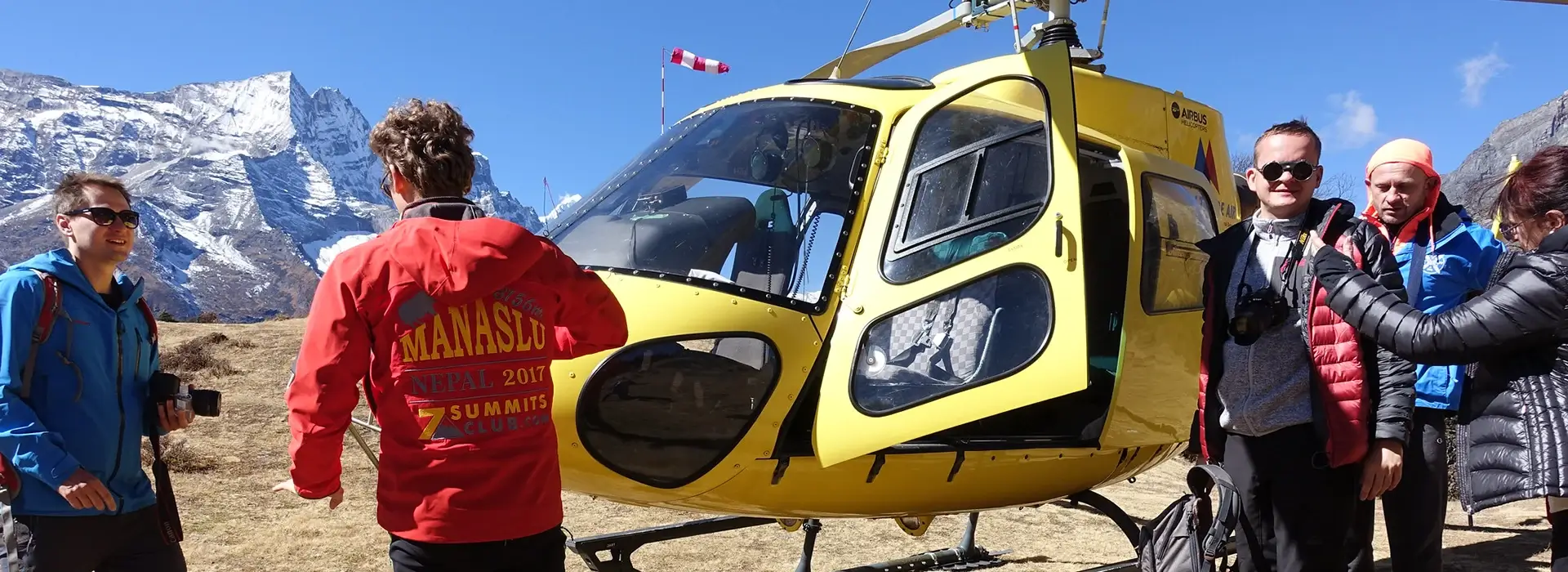

Short trek to Everest Base Camp with scenic flight from Gorakshep to Kathmandu
The Everest Base Camp Trek with Helicopter Return combines the classic Everest trail with a swift and scenic flight back to Kathmandu. Designed for trekkers who want the whole Everest Base Camp experience without retracing every step, this 9-day program follows the traditional route up to Kala Patthar and concludes with a helicopter return. As a result, valuable time is saved while the sense of achievement remains complete.
Unlike standard round-trip itineraries, the Everest Base Camp Trek with Helicopter Return allows participants to ascend gradually through iconic Sherpa settlements and then descend in comfort by air. Consequently, the physical demands are reduced while panoramic Himalayan views are extended to the very final moment.
Many trekkers wish to reach Everest Base Camp but are constrained by time. Therefore, the Everest Base Camp Trek with Helicopter Return offers a practical and rewarding alternative. By walking up and flying back, trekkers avoid several long downhill days that can strain knees and joints.
Moreover, the helicopter flight provides a dramatic aerial perspective of the Khumbu region. Snow-covered peaks, winding glacier valleys, and remote villages appear beneath the aircraft in a sweeping Himalayan panorama. In addition, weather windows are carefully monitored to ensure safe and efficient operations.
Thus, the Everest Base Camp Trek with Helicopter Return suits those who value both trekking immersion and logistical efficiency.
The adventure begins with a scenic flight to Lukla, one of the world’s most thrilling mountain airstrips. From there, the trail descends gently toward Phakding. Suspension bridges draped in prayer flags cross the Dudh Koshi River, while stone walls carved with Buddhist mantras line the path.
Gradually, trekkers adjust to the rhythm of Himalayan walking as forests of pine and rhododendron surround the route.
Next, the ascent toward Namche Bazaar begins. After crossing several high-suspension bridges, the climb becomes steeper. Although demanding, the effort is rewarded with the first distant views of Mount Everest on clear days.
Namche Bazaar serves as the commercial and cultural center of the Khumbu region. Bakeries, gear shops, and vibrant markets reflect a lively mountain atmosphere. Therefore, acclimatization time here is essential for altitude adaptation during the Everest Base Camp Trek with Helicopter Return.
After Namche, the trail leads toward Tengboche, home to the region’s most significant Buddhist monastery. Surrounded by Ama Dablam and other towering peaks, Tengboche Monastery offers spiritual calm amid dramatic landscapes. Monks perform daily rituals, and trekkers may observe prayer ceremonies if timing allows.
Consequently, cultural understanding deepens as Himalayan traditions become part of the trekking experience.
Beyond Tengboche, the landscape gradually changes. Trees become sparse, and alpine terrain dominates the horizon. Dingboche presents wide-open valleys framed by Lhotse and Island Peak. Meanwhile, acclimatization hikes strengthen endurance and support altitude acclimatization.
As the trail continues toward Lobuche, rocky moraines and glacial formations appear. Thin air demands steady pacing; therefore, hydration and proper rest become essential.
From Lobuche, the route advances to Gorakshep, the final settlement before Everest Base Camp. Although accommodation remains simple at this altitude, the surrounding scenery feels immense.
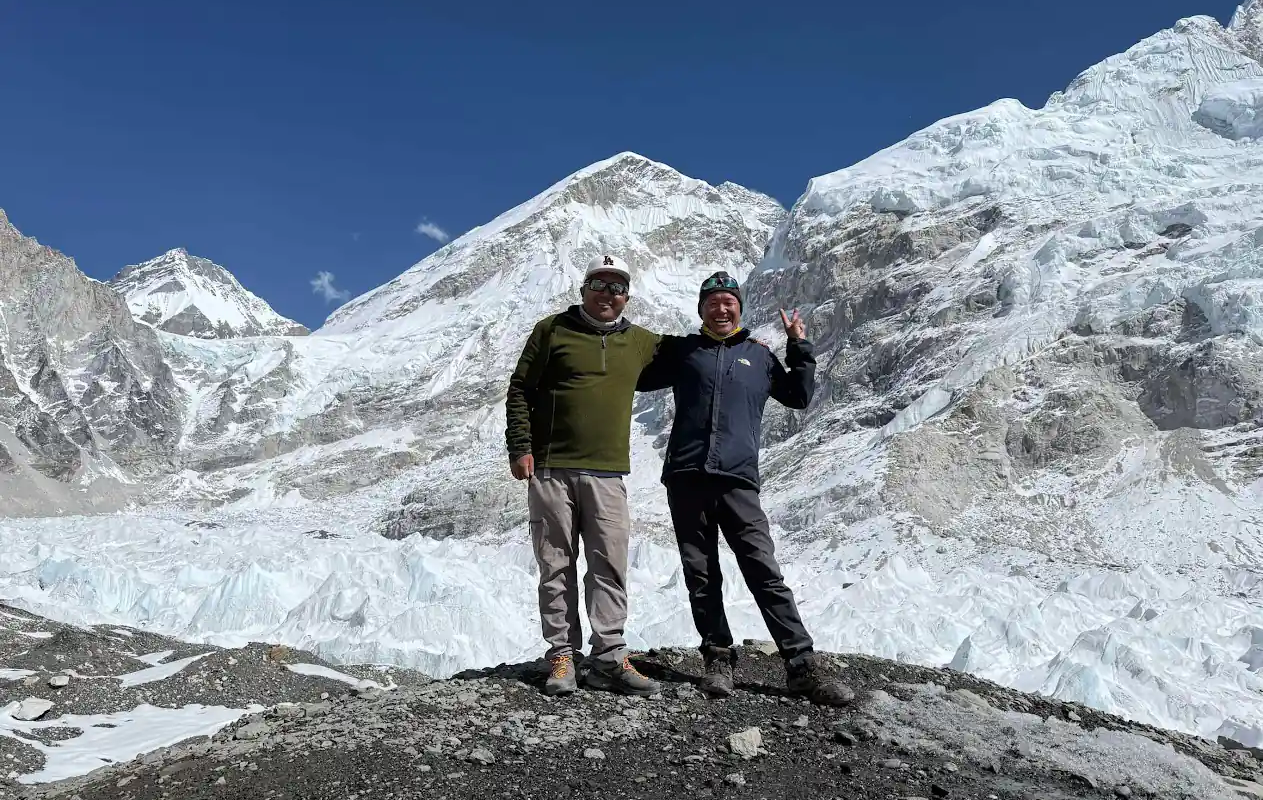
Eventually, trekkers reach Everest Base Camp itself. Prayer flags flutter beside the Khumbu Glacier, while expedition tents dot the area during climbing season. Standing at the base of the world’s highest peak creates a profound sense of accomplishment. The Everest Base Camp Trek with Helicopter Return ensures that this milestone remains the centerpiece of the program.
Early the next morning, a climb to Kala Patthar offers the best close-up view of Mount Everest. At 5,545 meters, Kala Patthar provides a vantage point from which Everest, Nuptse, and Pumori rise in full majesty. Golden sunrise light illuminates snow ridges and glaciers, creating a striking Himalayan panorama.
Although the climb requires effort, the reward surpasses expectations.
Throughout the Everest Base Camp Trek with Helicopter Return, villages such as Pangboche, Dingboche, and Lobuche reveal the resilience of high-altitude communities. Stone-built homes, yak pastures, and prayer wheels define the scenery.
Furthermore, conversations with local families provide insight into Sherpa heritage, mountaineering history, and seasonal livelihoods. Agriculture remains limited at higher elevations, so trade and tourism play crucial roles in economic sustainability.
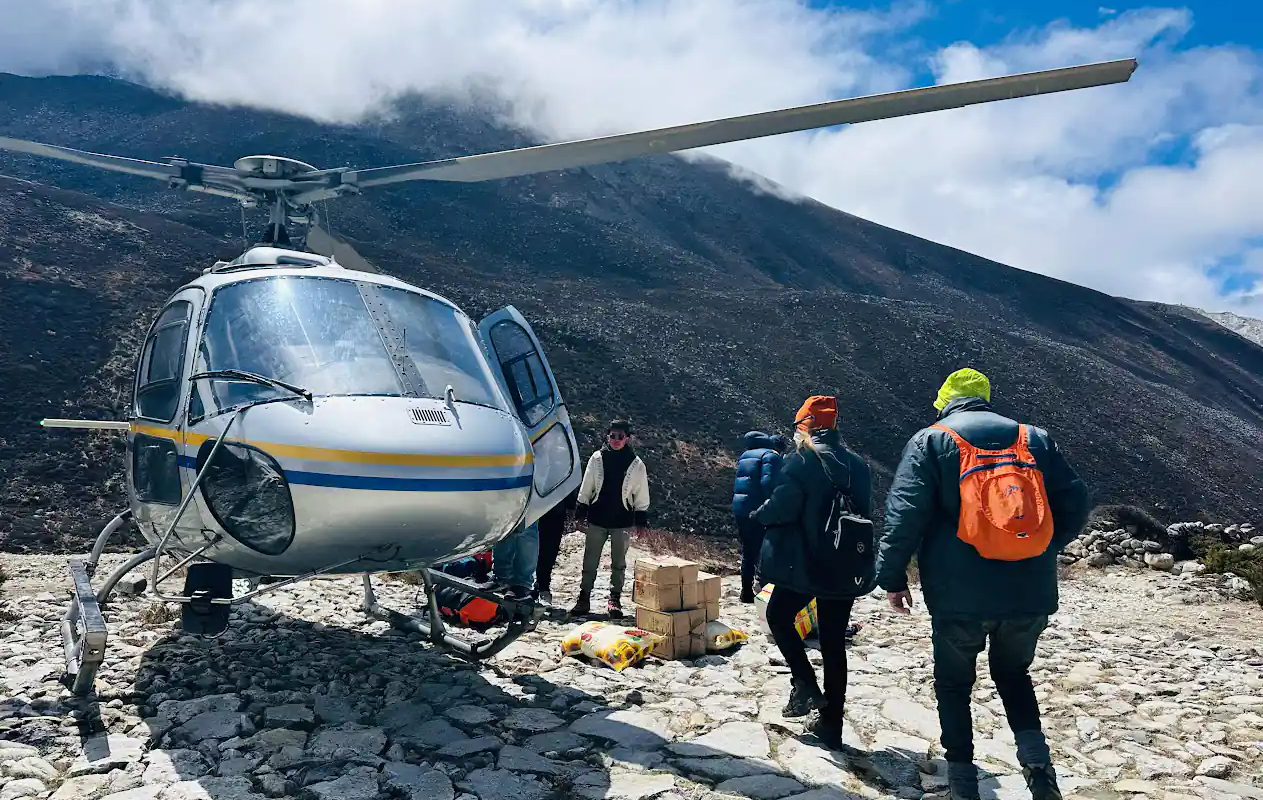
After descending to Gorakshep, the helicopter arrives for the return flight. From above, the entire Everest region unfolds beneath the aircraft. Valleys, icefalls, and villages previously crossed on foot appear in sweeping perspective.
Thus, the Everest Base Camp Trek with Helicopter Return concludes with a remarkable aerial finale. Within a short time, Kathmandu’s urban landscape replaces alpine terrain, marking the transition from mountain solitude to city life.

Included Meals

Trip staff

Transport

Accommodation

Trip Grade
Group Size

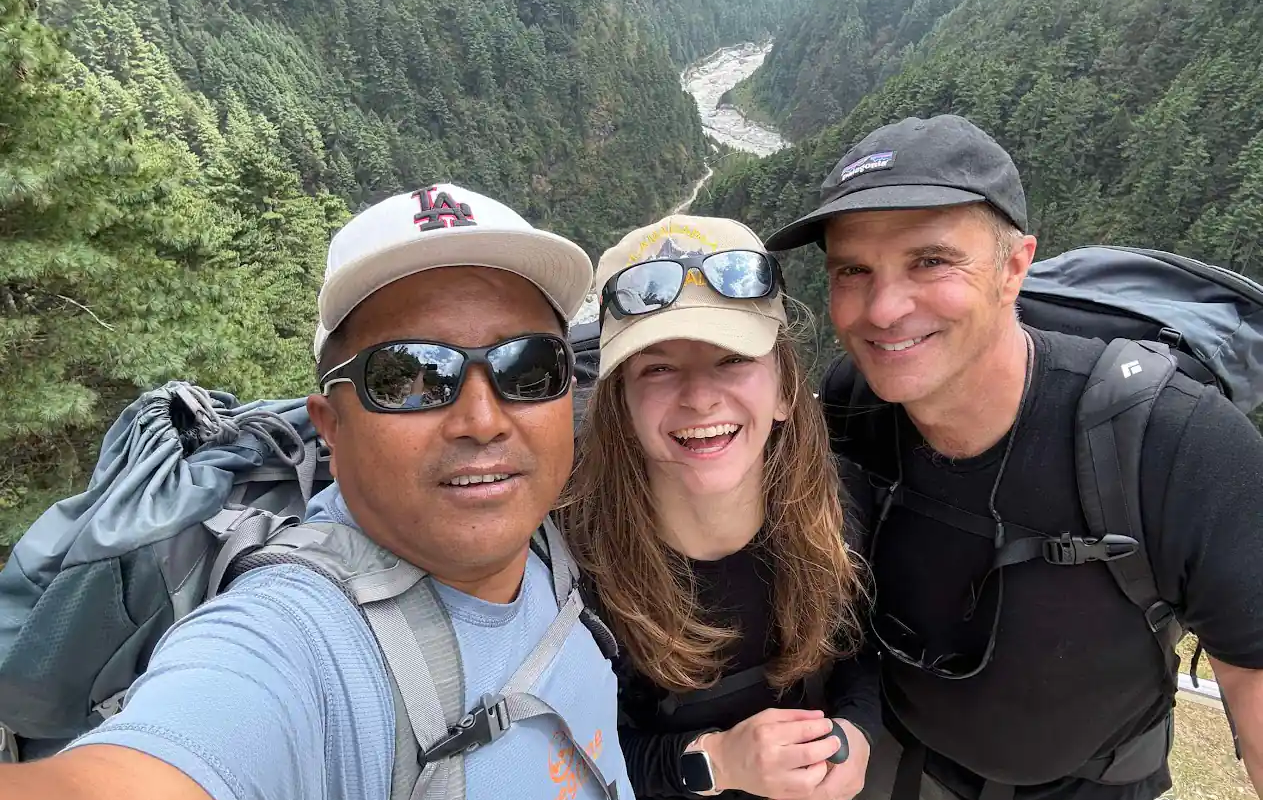
Board an early morning flight to Lukla. The approximately 30-minute flight will land you at Lukla, your starting point of the trek. The altitude significantly rises from Kathmandu from 1400m to 2,860m. But you won’t feel sick here. After landing, you start hiking to the nearby village of Phakding. Descend slowly from Lukla, following the Dudh Koshi River. Throughout the trail, you will pass through zhopkyos, a cow-yak hybrid, and mani walls. You will also cross your first suspension bridge of the trek today. After walking for about 3 hours, covering a distance of 6km, you will reach Phakding. Phakding is at 2610m, meaning it is slightly lower than Lukla. You will settle here for the day and relax in the lodge.

Time & Distance 3/4 hours & 6 KM trek
Accommodation:
Meals Lunch, Dinner

Maximum Altitude 2,610m/8,563ft (Phakding)
Difficulty
Transportation Flight & Drive
Begin your hike to Namche Bazaar after breakfast in Phakding. You cross many suspension bridges, including the Hillary Suspension Bridge, and pass rhododendron forests. Soon after you’ll arrive at Monjo. You enter Sagarmatha National Park and present your permits to continue. You’ll gain around 800m elevation today. Midway through the climb, you’ll catch the first view of Mount Everest. By early afternoon, you will arrive in Namche Bazaar (3,440), where you’ll spend the night with great views of Kongde Ri and Thamserku in the distance.
Time & Distance 6/7 Hours & 11 KM
Accommodation:
Meals Breakfast, Lunch, Dinner
Maximum Altitude 3,440m/11,286ft (Namche)
Difficulty
Transportation Hiking
It is essential to acclimate in Namche to prepare the body for the increasing altitude. Rest here for an extra day. Hike up to a recommended place to follow the ideology of climb high and sleep low. Acclimatizing helps the body avoid altitude sickness. After hiking a short trail, you have the rest of the day to spend however you like. You can explore the village, shop for snacks, visit bakeries, and visit museums. Namche has a lot to offer for idlers.
Time & Distance 6 Hours & 6 KM
Accommodation:
Meals Breakfast, Lunch, Dinner
Maximum Altitude 3,790m/12,434ft (Khumjung Village)
Difficulty
Transportation Hiking
Two days of acclimatization in Namche will energize your body and ensure you’re ready for another day of trekking. You will walk across Dudh Koshi Valley with the views of Everest, Lhotse, and Ama Dablam. You will walk through many stupas and prayer walls on your way. Around midday, you will reach Phuki Thenga, a riverside village where you will have lunch. Continue hiking and by afternoon, you will reach Tengboche at 3,860m. You can see Everest, Nuptse, Ama Dablam, and other peaks here. You will also visit the famous old Tengboche Monastery.
Time & Distance 6/7 Hours & 10 KM
Accommodation:
Meals Breakfast, Lunch, Dinner
Maximum Altitude 3,870m/12,697ft (Tengboche)
Difficulty
Transportation Hiking
Today’s trek will begin by passing the rhododendron and juniper forest. You walk through Debuche, cross the Imja Khola, and reach Pangboche. Pangboche is the region’s highest permanent settlement. Walking past, you will see hamlets like Orsho and Shomare. Have lunch in the area you prefer and continue hiking. By afternoon, you will reach Dingboche (4,410m).
Time & Distance 6/7 Hours & 10 KM
Accommodation:
Meals Breakfast, Lunch, Dinner
Maximum Altitude 4,410m/14,469ft (Dingboche)
Difficulty
Transportation Hiking
Today is another acclimatization day. You are standing over 4000 m. This high altitude can take a toll on the body if one is unprepared. The altitude will only go up from here. You can hike up to Nangkartshang Peak, a 2 to 3-hour walk from Dingboche. Nangkartshang offers excellent views of Makalu, Ama Dablam, and various smaller peaks. You can also choose to walk to the nearby village of Pheriche. Rest the rest of the day, eat, and hydrate well.
Time & Distance 5 Hours & 6 KM
Accommodation:
Meals Breakfast, Lunch, Dinner
Maximum Altitude 5,083m/16,677ft (Nangkartshang Peak)
Difficulty
Transportation Hiking
Today, you take another step towards Everest Base Camp. You will walk by Thukla, where you can stop for tea or snacks. Continue walking through the Khumbu Glacier’s terminal moraine, and you will reach Thukla Pass. Thuka Pass has memorial stones to honor the fallen climbers from Khumbu Glacier. Pay your respect and continue hiking through the rocky moraine now. You will reach Lobuche (4,910) early in the afternoon.
Time & Distance 7/8 Hours & 8 KM
Accommodation:
Meals Breakfast, Lunch, Dinner
Maximum Altitude 4,950m/16,240ft (Lobuche)
Difficulty
Transportation Hiking
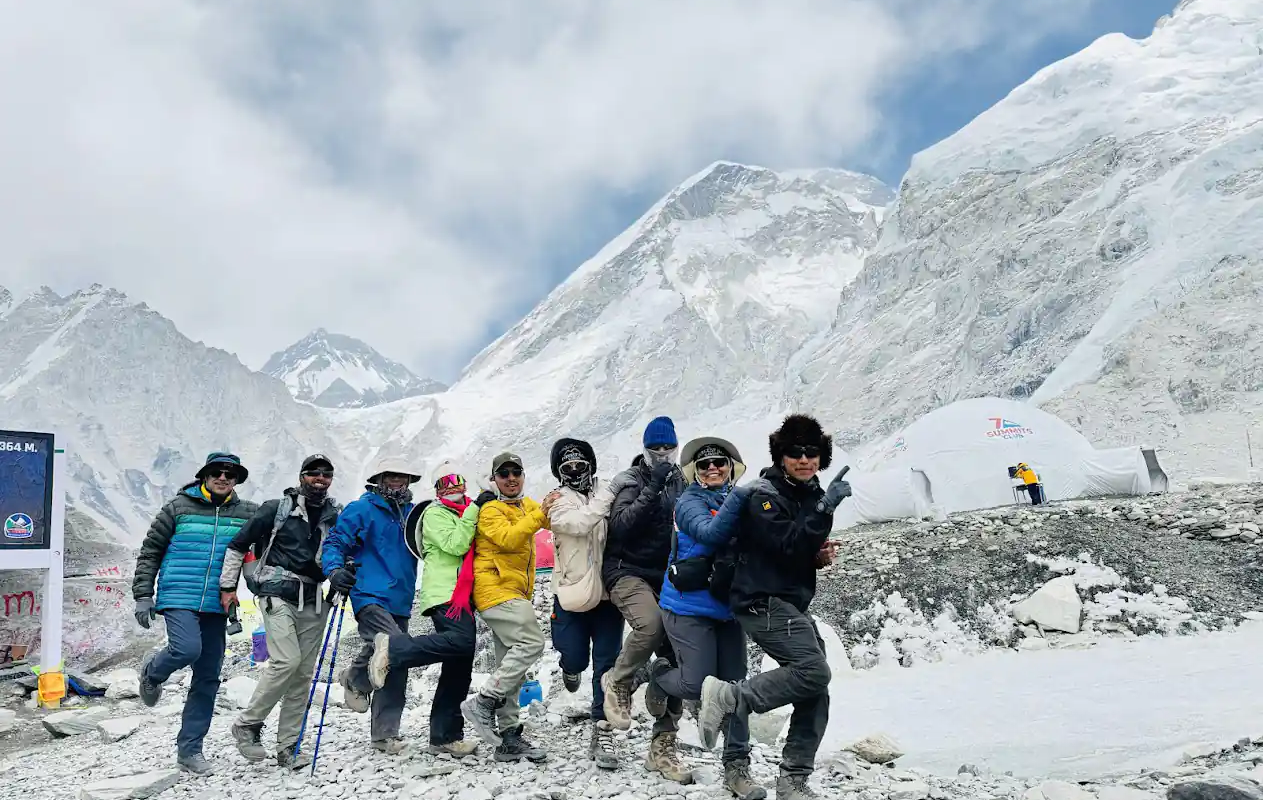
You wake up in Lobuche and trek to Gorak Shep(5,160 m), a slow three-hour walk at a high altitude. It is a short walk, but even a small step can make you breathless at high altitude. After resting and eating in Gorakshep, you leave your heavy gear and hike to Everest Base Camp(5,364m). The rocky trail follows the Khumbu Glacier and takes about five hours round-trip. Base Camp is busy, cold, and surreal, with prayer flags and expedition tents. You take photos, celebrate quietly, and then return to Gorak Shep. Tired but happy, you eat dinner and sleep early before tomorrow’s climb to Kala Patthar.
Time & Distance 10 Hours & 11 KM
Accommodation:
Meals Breakfast, Lunch, Dinner
Maximum Altitude 5,364m/17,598ft (Everest Base Camp)
Difficulty
Transportation Hiking
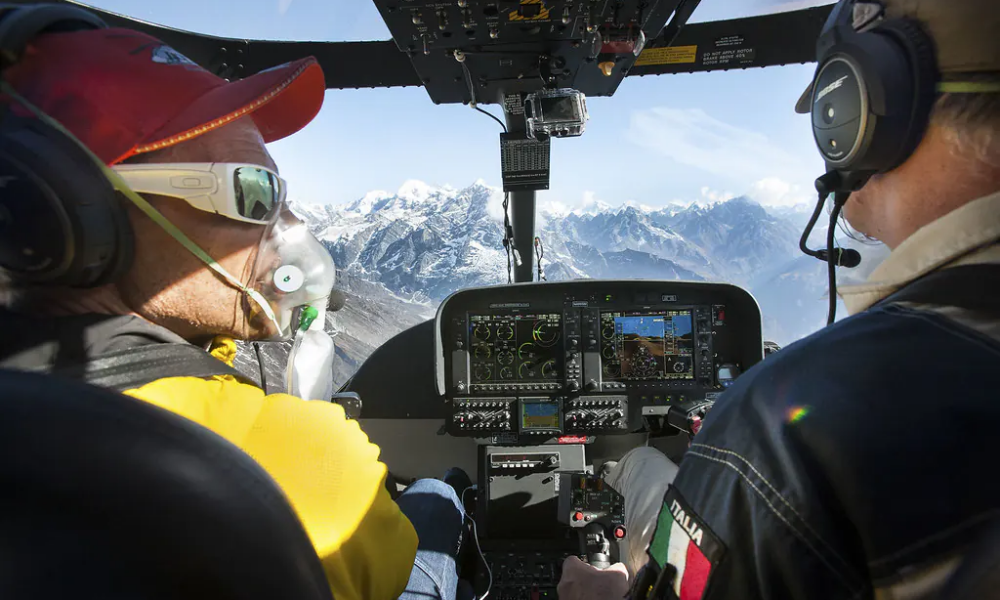
Today is the final day of the trek. Wake up predawn to start hiking towards Kala Patthar, a famous viewpoint. Kala Patthar(5,545m) is also the highest point of the Everest Base Camp trek. You need to walk about 2 hours to reach the Kala Patthar summit. Here you can enjoy the golden sunrise hitting the beautiful white mountains. After soaking in the view, you will return to Gorakshep for breakfast. A helicopter will be there to pick you up at Gorakshep. An hour flight from Gorakshep to Kathmandu will offer some of the best aerial views of the Himalayas.
Time & Distance 4 Hours & 3 KM
Meals Breakfast
Maximum Altitude 5,545m/18,192ft (Kala Patthar)
Difficulty
Transportation Hiking and Helicopter
The Everest Base Camp Trek with Helicopter Return is a thrilling 9-day adventure that combines challenging trekking with a spectacular helicopter ride back to Kathmandu. Here are seven points to help you decide if this trip suits you:
This Everest Base Camp Trek with Helicopter Return package is ideal for adventurers who are physically prepared, culturally curious, and ready for a high-altitude challenge with a memorable helicopter return. If this sounds like you, the Everest Base Camp Trek with Helicopter Return will be an unforgettable journey!
We rank the Everest Base Camp (EBC) Trek as moderate to challenging. It involves no technical climbing but reaches elevations over 5,500 m. It is an achievable trek for beginners if appropriately prepared.
The EBC trek is a serious but rewarding challenge. With solid fitness, good acclimatization, and determination, most trekkers succeed. The helicopter return adds comfort and unforgettable views. Reaching Base Camp is tough, but that makes it so meaningful.
The Trip’s highlight: After your trek, a helicopter picks you up near Gorak Shep (5,170 m), usually the morning after visiting Base Camp or Kala Patthar. It’s an exciting, scenic way to finish.
Flight Duration & Route: The flight to Kathmandu takes about 1 to 1.5 hours, with a quick refuel stop in Lukla. Instead of trekking down for three days, you enjoy a fast, comfortable ride with great views of the Khumbu valleys and Himalayas.
Passenger Info: Helicopters carry up to 5 passengers plus the pilot. Unless you book privately, you will share the ride with other trekkers. Groups will fly together, and we will match the solo travelers with others. We use choppers for high-altitude flying.
Weather & Timing: Flights mostly happen in the morning when the weather is best. You might have to stay an extra day in Gorakshep or nearby villages if the flights get canceled due to the weather. Our team manages changes, always prioritizing safety.
Safety & Experience: Our pilots are familiar with high-altitude flights. You’ll get a headset to communicate with the pilot and reduce noise. Flying here is routine and very safe. Many say the helicopter ride is the perfect grand finale.
The helicopter return saves time and energy, offering a rare bird’s-eye view of the mountains you trekked. Weather can cause delays, but our team ensures a safe, smooth trip back. It’s a thrilling and well-deserved reward after reaching Everest Base Camp.
Our policy for travel insurance for the Everest Base Camp Trek with a helicopter return is mandatory. You’ll be trekking at high altitudes in remote areas, so insurance is essential for your safety.
Make sure your policy covers:
You need to provide your insurance details to us before the trek. Carry a copy with you during the trip. Choose the insurance carefully to avoid future hassle.
Experts consider autumn the best season for trekking, while winter is the worst. The table below shows the pros and cons of each season:
| Season | Weather & Condition | Pros | Cons | Note |
| Spring (March-May) | Gradually warming temperatures, snow at high passes in March, longer sunny days, and rhododendron blooms in early spring. | Clear morning skies, excellent mountain views, moderate temperatures lower down | Late May brings more humidity, afternoon clouds, and some rain | Summit temps very cold (-20°C or lower); March & April ideal; May slightly warmer but wetter |
| Autumn (Late Sep-Nov) | Stable weather post-monsoon; clear blue skies; mild days and cold nights; chilly above 4,000 m | Best visibility, sharp mountain views, October is the busiest month, fewer crowds early Nov | November can be pretty cold at high altitudes; some lodges start closing late Nov | Early November is still good, but colder; late November starts winter conditions |
| Monsoon (June-Aug) | Heavy rain, cloudy mountains, slippery trails, a soggy valley, and leeches at low altitude | Very few climbers, meaning a quiet trail | High risk of rain, mud, flight cancellations, and avalanche risks | Not recommended except for very experienced teams |
| Winter (Dec-Feb) | Clear skies but freezing, heavy snow, fewer visitors, some lodges closed, difficult passes | Dry weather in January; tranquil season | Extreme cold (-25°C or lower at high camp), snow blocking trails, and no lodges are open in high altitudes. | Only for experienced winter climbers; most should avoid winter climbing. |
Here is a detailed essential packing list for the Everest Base Camp Trek.
Peregrine Treks and Tours offers various packages catered to any customer. We want to make your Everest Base Camp trek memorable. Here’s why you can trust us with your trip:
Choose Peregrine for a safe, well-organized, memorable Everest Base Camp trek.
We also offer several optional add-ons if you want.
Kathmandu Sightseeing Tour: A guided tour of Kathmandu Valley’s UNESCO World Heritage sites, including Swayambhunath, Boudhanath, Pashupatinath, and Kathmandu Durbar Square. It provides an opportunity to experience Nepal’s culture and traditions.
Everest Mountain Flight: An early morning one-hour flight that flies close to Everest and the surrounding Himalayan peaks.
Extra Nights in Kathmandu: We can arrange additional nights in Kathmandu or Lukla to allow more time for rest or exploration.
Accommodation Upgrades: Options to upgrade from standard 3-star hotels to 4- or 5-star hotels in Kathmandu or premium lodges at select points during the trek.
Cultural Programs: A traditional Nepali dinner with a traditional Nepali dance show.
Trip Extensions: Arrangements for additional activities such as wildlife safaris in Chitwan, rafting, or visits to Pokhara before or after the trek.
Experts consider the Everest Base Camp trek to be moderate to challenging. You won’t be doing any technical climbing, but the altitude will make it hard. The trails are uneven, with rocky trails and moraines. You will be walking daily for about 6 to 7 hours. Prepare your body in advance so the trek will go smoothly.
Altitude sickness is a significant concern. Walking over 5000m is hard. We include acclimatization days to help adjust the body. Everyone reacts to altitude differently, so we can’t say if you can avoid it. You can visit your doctor and take prescribed medicine for altitude sickness. Communicate with your guide if you feel off.
Solo hiking to the Everest Base Camp is no longer allowed. You can join a group if you are a solo traveler. We will join you with another group so you have a companion on the trip. Or you can book a private trek. Solo travelers in a group share a room with someone of the same gender unless they want a single room.
Bring layered clothing, sturdy boots, and a warm sleeping bag. Essentials include thermal layers, a waterproof shell, gloves, hats, sunglasses, sunscreen, and a headlamp. Use a daypack for daily needs. We provide a duffel bag for porters. You can rent or buy any missing gear in Kathmandu.
After reaching Base Camp and Kala Patthar, a helicopter will pick you up from Gorak Shep. The flight takes about an hour, with a quick stop in Lukla. Most people share the ride with up to four others, though private flights are available for an extra cost. Morning flights are usually clear, but rare weather delays are possible.
You’ll stay in basic teahouses with shared bathrooms. Bring a sleeping bag. Higher up, showers may be just hot buckets. Meals include dal bhat, noodles, pasta, soups, and pancakes. Eat vegetarian food at high altitudes since meat may not be fresh. Snacks and drinks are available, but prices go up with altitude. Drink boiled or treated water instead of bottled water.
Yes, it is mandatory. Travel insurance is compulsory if you want to book with us. It must cover trekking up to 5,600 m and helicopter evacuation. Medical costs and evacuations are expensive without it. Insurance should also cover trip delays or cancellations. You should also provide us with your insurance details before the trek.
Try to drink about 4 liters of water every day. Boiled water is available at lodges for a fee. Bottled water is expensive and creates waste. Carry purification tablets, a Steripen, or a filter to treat tap or spring water. Use a mix of these options. Drink tea and soup as part of your fluid intake. Our guides will tell you when and where to refill.