

Included Meals
- Breakfast: 19
- Lunch: 16
- Dinner: 16

Unbeatable Holiday Offers – Save Up to 20% on Your Next Adventure!
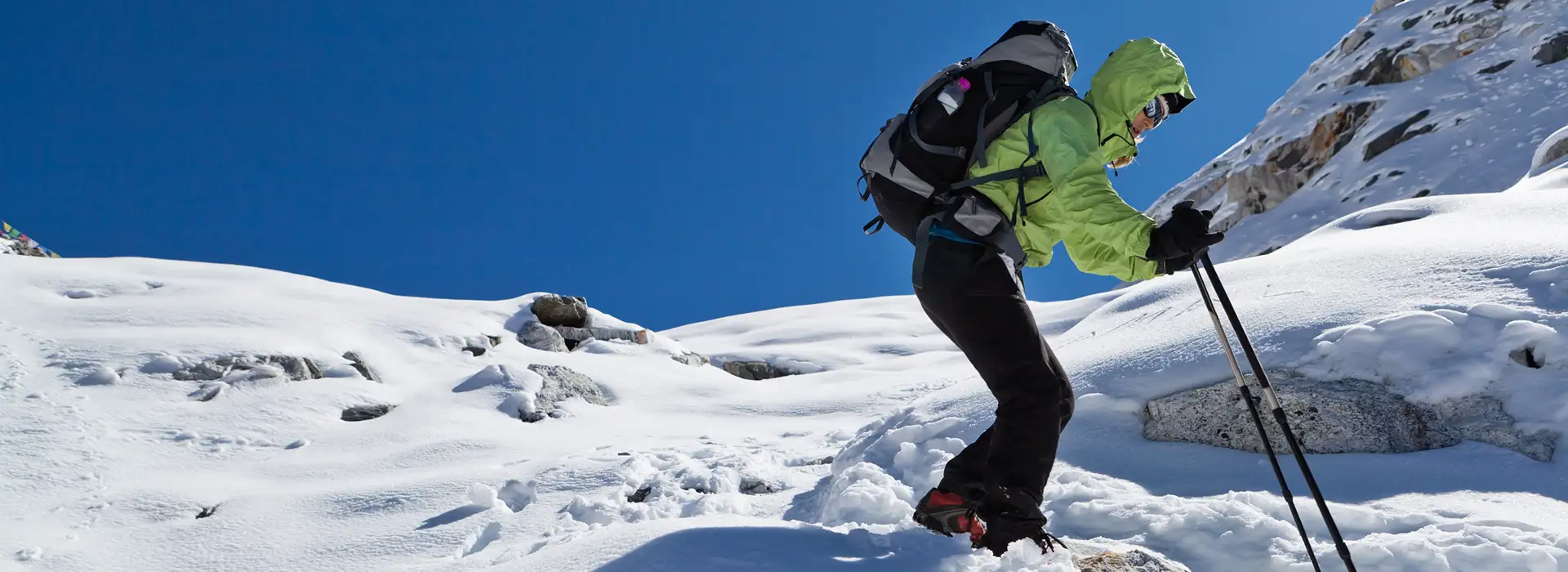
The Everest Base Camp Trek for beginners provides a full Himalayan experience for those who want to enjoy the journey at a slower pace. This 20-day trek is ideal for families with children, older travelers, and those new to high-altitude trekking. By allowing ample time for rest and exploration, this itinerary offers a safe and comfortable way to witness Nepal’s giant peaks.
The adventure begins with a scenic mountain flight to Lukla, where your trek starts on a well-marked trail through the Dudh Koshi Valley. As you walk through the lush alpine forests of Sagarmatha National Park, you will cross several suspension bridges and pass through traditional Sherpa villages. Local settlements such as Namche, Tengboche, and Dingboche offer a chance to experience warm hospitality and a rich cultural heritage. Throughout the journey, you are surrounded by iconic peaks including Ama Dablam, Lhotse, and Mount Everest.
Safety is a priority on the Everest Base Camp Trek for beginners, which is why the itinerary includes two essential acclimatization breaks. These rest days help your body adjust to the thinning air before you reach Everest Base Camp at 5,364 meters. For a spectacular finish, you will hike to Kala Patthar at 5,545 meters to catch the sunrise over the Himalayan range. Our team handles all logistics, from permits and meals to safety monitoring, so you can focus on the views. You will stay in comfortable teahouses each night and trek with only a light daypack while our experienced guides and porters manage the rest.

Included Meals

Trip staff

Transport

Accommodation

Trip Grade
Group Size
Welcome to Nepal! Our team representative will meet you at the airport and escort you to your hotel in Kathmandu. You can check in and take some time to rest or explore the lively streets of Thamel’s shops, cafes, and colorful atmosphere. You will meet some of your trekking crew for a detailed trek briefing, including your guide and fellow trekkers. Spend the night in a comfortable hotel in Kathmandu.
Accommodation:
Difficulty
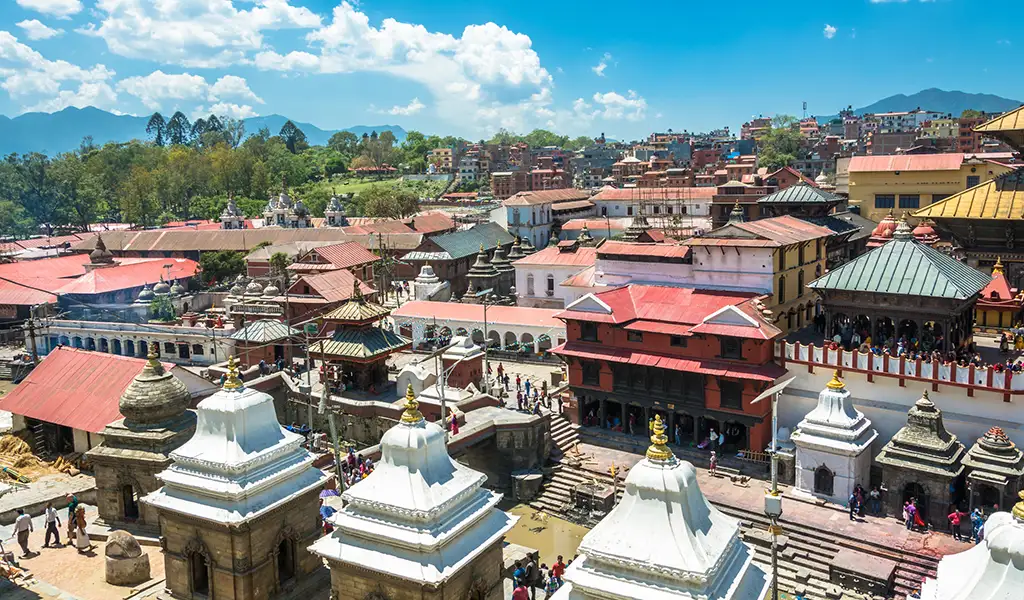
Today is the first day of your trip. Explore the ancient cultural landmarks of Kathmandu and learn more about the country. A local guide will lead you to various UNESCO World Heritage sites in the city, like the Swayambhunath Stupa and the sacred Pashupatinath Temple. You can go shopping for last-minute gear or essentials after the tour. You can explore the town or rest in the evening.
 Accommodation:
Meals Breakfast
Difficulty
Transportation Private Car
Board your early morning flight to Lukla to begin your trek officially. The flight rewards you with views of Gauri Shankar, Langtang Lirung, and Everest on clear days. After landing, you will meet our crew, organize your gear, and begin the trek. You’ll pass beautiful villages like Chheplung and Thado Koshi, see Buddhist mani stones, and cross many suspension bridges.
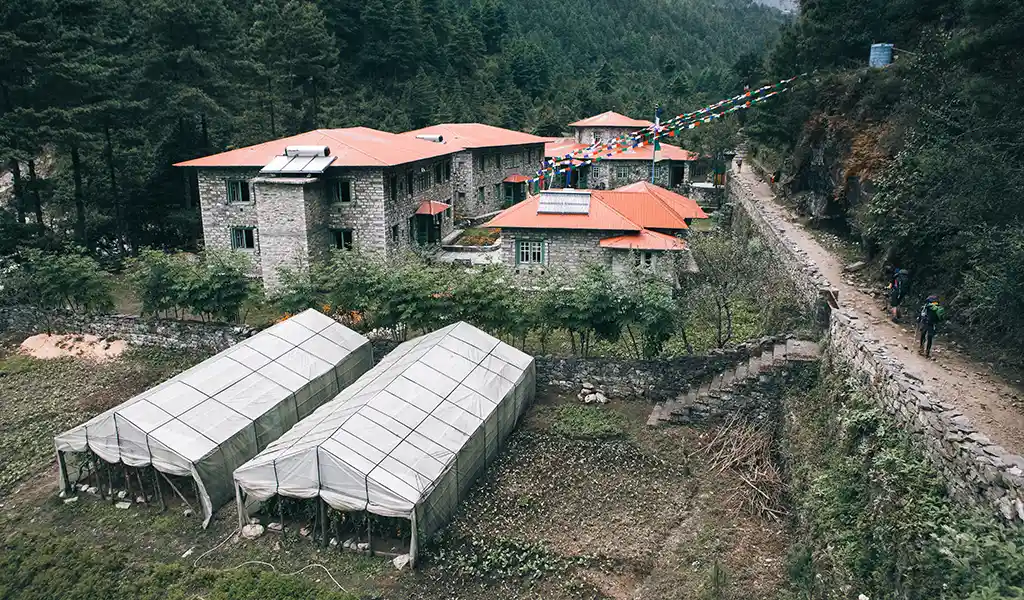
Today’s trek is an easy 3–4-hour hike covering 7 km. You will arrive in Phakding, a riverside village surrounded by forested hills. Check into your lodge and enjoy your first night in the mountains.
Starting and ending Elevation: Lukla – 2,860 m to Phakding – 2,610 m
Elevation Loss: 250 m / 820 ft
Maximum Altitude: 2,860 m / 9,383 ft
Oxygen Level: ~73% of sea level
Accommodation: Teahouse in Phakding
Accommodation:
Meals Breakfast, Lunch, Dinner
Difficulty
The trek begins by following the trail of the Dudh Koshi River after breakfast in Phakding. Today’s trek covers a gentle and manageable distance, helping your body get used to hiking. You will cross many suspension bridges draped with colorful prayer flags.
Pass through small Sherpa villages like Toktok and Benkar, where little children may greet you with warm smiles. Along the way, you will see many mani stones with Buddhist prayers and small shrines along the trail. The trail includes some waterfalls and distant views of the mountains.
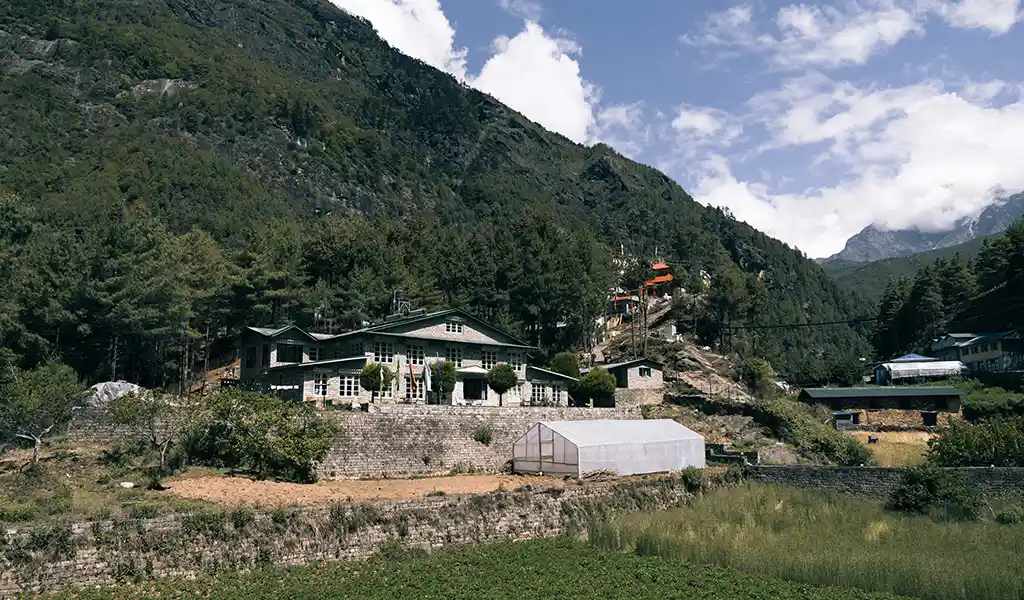
You will reach Monjo by midday. Monjo is the entrance to Sagarmatha National Park, so that staff may check your permits here. Rest overnight in a teahouse here and enjoy a warm meal.
Starting and Ending Elevation: Phakding – 2,610 m to Monjo – 2,835 m
Elevation Gain: 225 m / 740 ft
Maximum Altitude: 2,835 m / 9,301 ft
Oxygen Level: ~72% of sea level
Accommodation: Teahouse in Monjo
Meals Breakfast, Lunch, Dinner
Difficulty
You will begin your first significant ascent today. Show your permits at the Pak Gate to enter the Sagarmatha National Park, then follow the trail to the village of Jorsalle.
Jorsalle is the final village before Namche. Cross the famous Hillary Suspension Bridge over the Dudh Koshi and Bhote Koshi Rivers meeting point. The trail climbs steadily uphill after the bridge. Continue through the zigzag trail through the forest for about two hours. Take your time in uphill sections so you don’t overexert yourself.
If the sky is clear, you will see your first view of Everest from the trail. The trial gains about 600m of elevation and covers about 5 km before reaching Namche Bazaar.
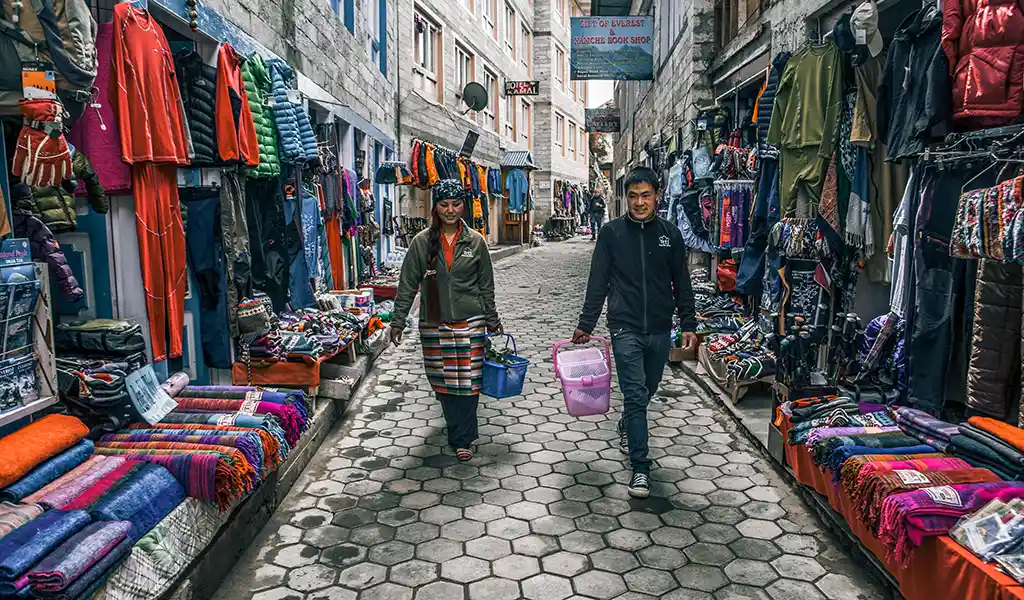
Namche Bazaar is a lively Sherpa town and a market hub in the Everest region. It has many shops, bakeries, and plenty of places to relax. Spend the night in a comfortable lodge and rest early.
Starting and Ending Elevation: Monjo – 2,835 m to Namche Bazaar – 3,440 m
Elevation Gain: 605 m / 1,985 ft
Maximum Altitude: 3,440 m / 11,286 ft
Oxygen Level: ~66% of sea level
Accommodation: Lodge in Namche Bazaar
Meals Breakfast, Lunch, Dinner
Difficulty
Today is your scheduled rest day. To help your body adjust to the altitude, you stay an extra night in Namche Bazaar. However, a rest day doesn’t mean you will remain idle. We will follow the critical strategy of climbing high and sleeping low to support proper acclimatization.
Have breakfast, then go on a short uphill hike to the Everest View Hotel at around 3,880m. This hotel is one of the highest-altitude hotels in the entire world. Enjoy the expansive views of Mount Everest, Lhotse, Ama Dablam, and other peaks from this viewpoint. It’s one of the most scenic views of the trek if the weather is clear.
You can visit the Sherpa Culture Museum or the Everest Photo Gallery on your way back to learn more about the history and lifestyle of the region. Return to your lodge, have lunch, and rest or explore the market. Staying active while gradually gaining altitude is a great way to help the body adjust.
Starting and Ending Elevation: Namche Bazaar – 3,440 m
Highest Elevation (hike to): Everest View Hotel – ~3,880 m / 12,730 ft
Elevation Gain (day hike): ~440 m / 1,444 ft
Oxygen Level: ~66% of sea level at Namche / ~63% at Everest View Hotel
Accommodation: Lodge in Namche Bazaar
Meals Breakfast, Lunch, Dinner
Difficulty
Have breakfast with a sunrise view over the mountains and begin your trek from Namche Bazaar to Tengboche. The trek starts gently along the side of the valley, while offering views of Everest, Lhotse, and Ama Dablam. Stop at Kyangjuma or a similar viewpoint to admire the scenery.
After about two hours of hiking, the trail descends through pine forests and reaches Phunki Tenga (3,250m). This riverside village on the bank of the Dudh Koshi River is your lunch stop for the day.
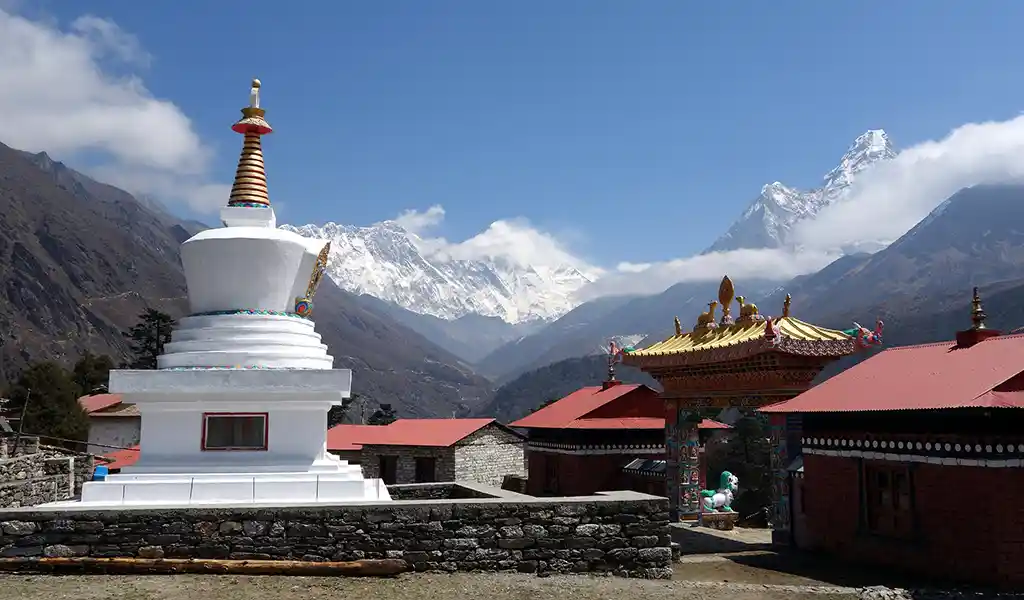
Continue through the trek with a steady ascent of roughly 600m through pine and rhododendron forests. The final uphill stretch of Tengboche is challenging but rewarding. The largest and most famous monastery in the Khumbu region, Tengboche Monastery, stands tall at the top of the village with the Ama Dablam rising in the background.
You can rest, explore the monastery, and enjoy the great panorama of the mountains, including the distant Everest behind the Nuptse ridge. You can attend the monks’ late afternoon prayer ceremony to witness the peaceful cultural heritage of the region.
Starting and Ending Elevation: Namche Bazaar – 3,440 m → Tengboche – 3,860 m
Elevation Loss: Down to Phunki Tenga – 3,250 m (approx. 190 m descent)
Maximum Altitude: Tengboche – 3,860 m / 12,664 ft
Oxygen Level: ~64% at Phunki Tenga, ~62% at Tengboche
Accommodation: Basic lodge in Tengboche
Meals Breakfast, Lunch, Dinner
Difficulty
Drink your morning tea and begin your short trek to Pangboche. The trek starts with a descent through rhododendron and pine forests and reaches Debuche (3,820m), where you will see a quiet nunnery.
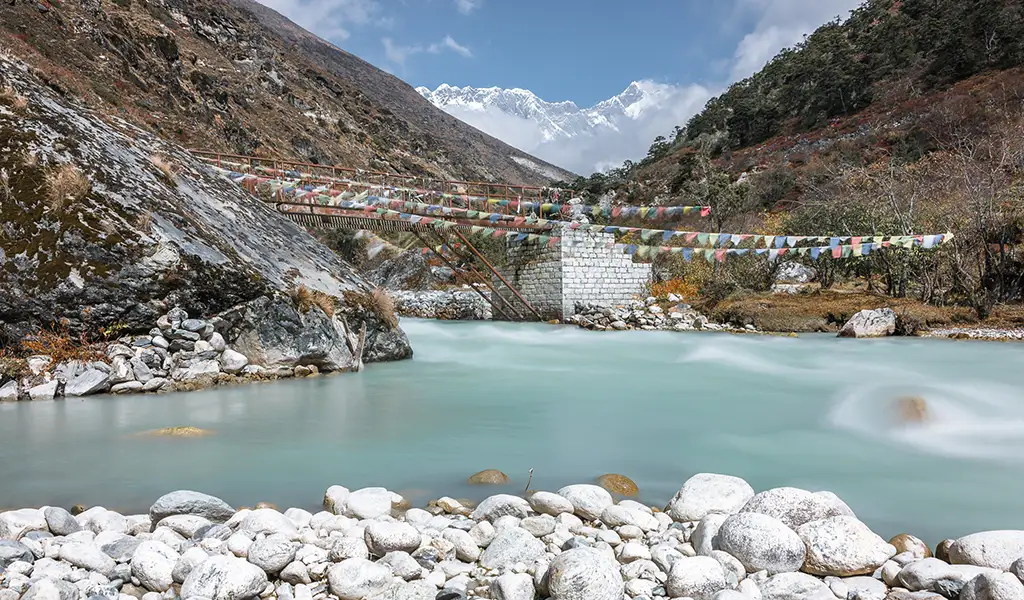
Continue to Imja Khola, cross a suspension bridge over it, then climb gradually along the hillside. While the climb to Pangboche is steady, it is easy to manage. You will reach the village after 2 to 3 hours of trekking by late morning. The distance is about 3 km, which is too short to let the body adjust and acclimate as you gain altitude.
Ama Dablam rises just above the Pangboche village. Check into your lodge here and rest. In the afternoon, you can visit the Pangboche Monastery, the oldest in the Khumbu region, which has a deep Sherpa heritage. Local mani walls and prayer flags fluttering in the wind sit as a reminder of the spiritual culture of the area.
Starting and Ending Elevation: Tengboche – 3,860 m → Pangboche – 3,985 m
Maximum Altitude: Pangboche – 3,985 m / 13,074 ft
Oxygen Level: ~61% at Pangboche
Trekking Distance: Approx. 3 km
Trekking Time: 2–3 hours
Accommodation: Teahouse in Pangboche
Meals Breakfast, Lunch, Dinner
Difficulty
The trail continues through the gradual climb along the Imja Valley. The forests start thinning out as the altitude begins to increase. The landscape transforms from thick forests to low alpine shrubs, yak pastures, and wide-open spaces. You will pass small settlements like Shomare at 4,010m and Orsho at 4,190m, where you will see yaks grazing and stone-walled fields.
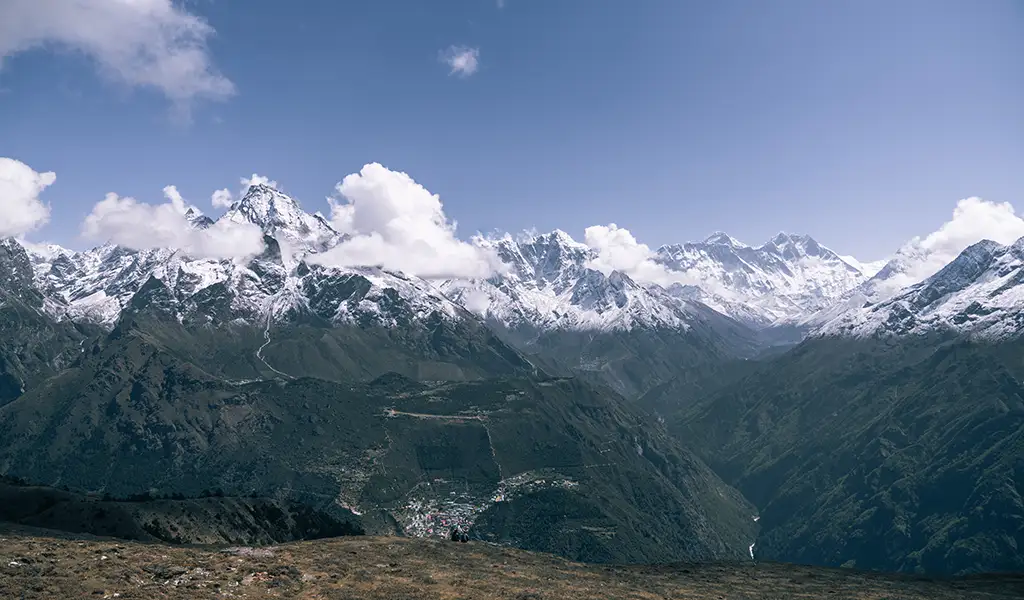
Cross a small stream of the Imja Khola on a wooden bridge and steadily climb up a ridge. You will reach Dingboche (4,410m) by early afternoon. Dingboche is a wide settlement with dramatic views of Ama Dablam, Lhotse, and Island Peak. The village has many stone-walled fields to protect crops from wind and grazing animals. Check into your lodge and rest or take a gentle walk along the town or up a short ridge for better mountain views.
Starting and Ending Elevation: Pangboche – 3,985 m → Dingboche – 4,410 m
Elevation Gain: 425 m / 1,394 ft
Maximum Altitude: Dingboche – 4,410 m / 14,469 ft
Oxygen Level: ~58% of sea level
Trekking Distance: Approx. 7 km / 4.3 miles
Trekking Time: 4–5 hours
Accommodation: Teahouse in Dingboche
Meals Breakfast, Lunch, Dinner
Difficulty
Today is another planned acclimatization day to help your body adjust to the increasing altitude before gaining more. Go on a short hike to gain elevation, then return to Dingboche for sleep to follow the climbing high and sleeping low strategy. Most trekkers hike to Nagarjun Hill (5,100m) in the morning. The climb is steep and challenging, with the summit offering majestic views of Himalayan giants like Makalu (8,845m), Lhotse, Cho Oyu, and Dingboche below.
Trek back to Dingboche during lunchtime and have your lunch. You can rest and recover in the afternoon. You can relax in the sun or share stories with fellow trekkers. Nights are colder as the altitude increases, and your body adjusts to the thin mountain air. Rest overnight in Dingboche.
Starting and Ending Elevation: Dingboche – 4,410 m
Maximum Elevation (Side Hike): Nagarjun Hill – ~5,100 m / 16,732 ft
Elevation Gain (Hike): Approx. 690 m / 2,263 ft
Oxygen Level at Dingboche: ~58% of sea level
Hiking Distance: 3–4 km round trip (optional side hike)
Hiking Time: 3–4 hours (optional hike), rest of day at leisure
Accommodation: Teahouse in Dingboche
Meals Breakfast, Lunch, Dinner
Difficulty
Today’s trek is short to help your body adjust to a higher altitude. Leave Dingboche and follow the trail along the moraine ridge of rocks and debris of the Khumbu Glacier. The trail follows through alpine terrain as the trees thin out and rugged mountain plants grow. You will enjoy sharp views of Cholatse and Lobuche East from your trek.
After 2 to 3 hours of steady uphill covering about 4 km, you will arrive in the small hamlet of Thukla, otherwise known as Dughla. Thukla has a few basic lodges at the base of the ridge and is primarily a resting place for trekkers before heading to higher areas.
You will each Thukla by midday and have plenty of time in the afternoon to rest. Resting at this high elevation is essential to allow the body to adjust to thin air and lower oxygen levels. Avoid overexertion and prepare yourself mentally and physically for the coming days. Have a warm meal and sleep well to be ready for tomorrow.
Starting and ending Elevation: 4,410 m (Dingboche)to 4,620 m (Thukla)
Elevation Gain: +210 m
Max Altitude: 4,620 m
Approximate Oxygen Level: ~58% of sea level
Accommodation: Basic lodge in Thukla
Meals Breakfast, Lunch, Dinner
Difficulty
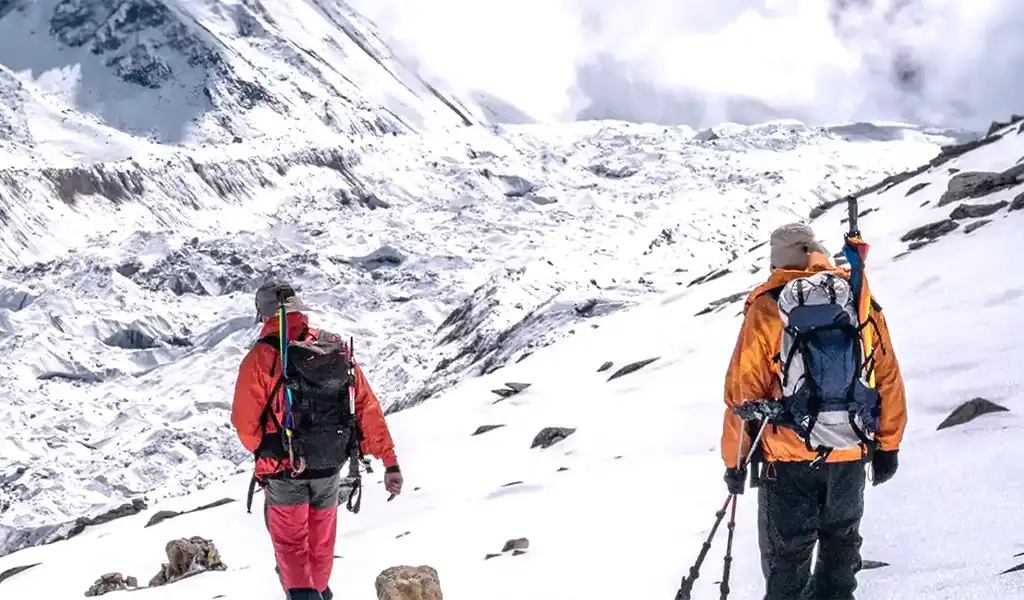
Have breakfast and begin your demanding ascent. Shortly after leaving Thukla, you will reach the Thukla pass, a plateau at around 4,830m. Thukla Pass has a collection of stone memorials and cairns to honor the mountaineers and Sherpas who died on Everest. Pay your respects here and reflect on the place surrounded by giant mountains.
After taking in Thukla Pass, the trail follows an even path along the lateral moraine of Khumbu Glacier. Trek across a rocky terrain and enjoy the views of peaks like Nuptse, Pumori, and the surrounding landscapes. Even though the trial is not long, the high altitude and rocky terrain make it challenging.
You will reach Lobuche after about 3 to 4 hours of steady trekking. Lobuche is a small cluster of lodges beneath the Lobuche Peak and Nuptse. You are almost at 5,000m, and the air is extremely thin. Rest the afternoon, stay warm, and hydrate to support acclimatization. Stay overnight in a teahouse in Lobuche.
Starting and Ending Elevation: 4,620 m (Thukla) to 4,940 m (Lobuche)
Elevation Gain: +320 m
Max Altitude: 4,940 m
Approximate Oxygen Level: ~54% of sea level
Accommodation: Teahouse in Lobuche
Meals Breakfast, Lunch, Dinner
Difficulty
Today, you will trek to the final outpost before reaching Everest Base Camp. Leave Lobuche and begin the trail gradually along the Khumbu glacier. While the distance is just 4 km and takes 2 to 3 hours, the high altitude makes each step more demanding than the last one. The trail covers rocky ridges and glacial debris while offering dramatic views of the shifting icy landscapes of the glacier below.
You will see many scattered lodges on a flat, sandy plain in Gorak Shep. Gorak Shep is the dried-up lakebed where the original Everest Base Camp once stood in the 1950s. At an altitude of 5,164m, Gorak Shep is a harsh place surrounded by many giant peaks.
You will arrive here by midday and have lunch in the teahouse. Unlike other itineraries, you will rest in Gorak Shep today instead of continuing to Everest Base Camp. Rest in the afternoon, rehydrate, and prepare for tomorrow’s hike. The high elevation and low oxygen tire the body, so eat and hydrate well.
Starting and Ending Elevation: 4,940 m (Lobuche) to 5,164 m (Gorak Shep)
Elevation Gain: +224 m
Max Altitude: 5,164 m
Approximate Oxygen Level: ~52% of sea level
Accommodation: Teahouse in Gorak Shep
Meals Breakfast, Lunch, Dinner
Difficulty
Wake up before dawn for your hike to Kala Patthar. Layer up, wear your headlamps, and begin the hike through a steep and rocky trail. The cold morning air makes breathing harder. After about two hours of strenuous climbing, you will reach the summit of Kala Patthar. You will be standing at 5,545m while enjoying the sunrise view over the giant Himalayan peaks.
You get a 360-degree view of the mountains from here. Mount Everest, Nuptse, Changtse, and Pumori stand nearby. It is the closest and clearest view of Everest without actually climbing it. Take pictures and soak in the atmosphere as the sunlight brightens the mountains.
Descend back to Gorak Shep for breakfast after the sunrise. You can rest after breakfast before continuing the hike to Everest Base Camp. The 3 km trail is rough, crosses glacial moraine, and takes about 3 hours to complete. You will stand at 5,364m at the foot of the world’s highest peak. During peak climbing seasons, you will see many colorful expedition tents at the camp and hear some distant avalanches from the Khumbu Icefall.
Return to Gorak Shep after exploring the Base Camp. The day is tiring and demanding, but the rewards make it worth it. You will stay for another night at Gorak Shep.
Starting and Ending Elevation: 5,164 m (Gorak Shep) to 5,545 m (Kala Patthar) and 5,364 m (Everest Base Camp)
Elevation Gain: +381 m (Kala Patthar), +200 m (Everest Base Camp)
Max Altitude: 5,545 m (Kala Patthar)
Approximate Oxygen Level: ~50% of sea level
Accommodation: Teahouse in Gorak Shep
Meals Breakfast, Lunch, Dinner
Difficulty
Begin your descent today. After breakfast, leave Gorak Shep and retrace your steps back to Pheriche. You will walk through Lobuche and continue past the memorials at Thukla Pass. You can reflect on the place and climbers who lost their lives while climbing the surrounding peaks.
You will notice the air getting thicker, and breathing becomes easier. The elevation drop is dramatic. You will reach Pheriche at 4,210m and descend about 950m from Gorak Shep in a single day. Pheriche is a wide valley with many lodges and a Himalayan rescue clinic. The thicker air and lower altitude make the day easier. Although you descend today, the trail can still be challenging on your knees, so take your time while trekking. Stay overnight in a teahouse in Pheriche.
Starting and Ending Elevation: 5,164 m (Gorak Shep) to 4,210 m (Pheriche)
Elevation Loss: -954 m
Max Altitude: 5,164 m (Gorak Shep)
Approximate Oxygen Level: ~60–64% of sea level
Accommodation: Teahouse in Pheriche
Meals Breakfast, Lunch, Dinner
Difficulty
Today is a long but rewarding day. Continue your descent through the Khumbu valley after breakfast. The trail begins along the river and passes the familiar villages of Orsho and Shomare. You will reach Pangboche after trekking for a while. Continue the trek through the dramatic mountain backdrop along the forested trail down to Debuche.
The trail then shifts to a short climb across the Imja Khola, followed by an uphill walk back to the famous Tengboche Monastery. Before continuing the trek, you can rest here while enjoying the view and the peaceful atmosphere.
The trail descends deeply through rhododendron and pine forests to the Dudh Koshi River. You will walk past hamlets like Sanasa and Kyangjuma before finally reaching Namche Bazaar. Today you hiked over 16km for 6 to 7 hours. The air is a lot thicker, and the lower altitude may bring a surge of energy in you. Namche is a market hub, where you can buy sweets or even drink to celebrate your trek. Stay overnight in a lodge at Namche Bazaar.
Starting and Ending Elevation: 4,210 m (Pheriche) to 3,440 m (Namche Bazaar)
Elevation Loss: -770 m
Max Altitude: 4,210 m (Pheriche)
Approximate Oxygen Level: ~64% of sea level
Accommodation: Lodge in Namche Bazaar
Meals Breakfast, Lunch, Dinner
Difficulty
Have breakfast in Namche Bazaar, then begin your steep descent to Monjo today. The trail starts with the downhill walk through the stone steps of the “Namche Hill”. You will lose about 600m of elevation in the first hour, so trek cautiously and watch your legs.
You hike through pine forests and cross the iconic high suspension bridges one last time. You will exit the Sagarmatha National Park after crossing Jorsalle. The final stretch to Monjo is short and gentle, relieving your legs after the tricky, steep descent. You will arrive in Monjo just 3 to 4 hours after leaving Namche, giving you plenty of time to rest and recover. Rest overnight in Monjo, where the air is thicker and your body starts recovering from the high altitude.
Starting and Ending Elevation: 3,440 m (Namche Bazaar) to 2,835 m (Monjo)
Elevation Loss: -605 m
Max Altitude: 3,440 m (Namche Bazaar)
Approximate Oxygen Level: ~66% to ~72% of sea level
Accommodation: Teahouse in Monjo
Meals Breakfast, Lunch, Dinner
Difficulty
Today is your final day of trekking. Have your breakfast, then begin your hike back to Lukla. You will trek through a well-marked trail and reach Phakding, where you’ll stop for lunch. Today’s trail has a few short uphill sections but is gentle, mainly along the river. Enjoy trekking through lush green forests and mountain views while going to Lukla.
The final section to Lukla involves a slight climb after climbing the short path. You will reach Lukla by afternoon, covering about 9km in about 4 to 5 hours. Celebrate finishing your trek in your lodge over dinner with your trekking crew in the evening.
Starting and Ending Elevation: 2,835 m (Monjo) to 2,860 m (Lukla)
Elevation Gain: +25 m
Max Altitude: 2,860 m (Lukla)
Approximate Oxygen Level: ~83% of sea level
Accommodation: Lodge in Lukla
Meals Breakfast, Lunch, Dinner
Difficulty
Wake up early to catch your flight back to Kathmandu today. The short flight is scenic over the mountains, giving you the final views of the giant peaks. We will drive you back to your hotel in Kathmandu upon your arrival.
The rest of the day is for you to enjoy and relax. You can go exploring the city if you go shopping for souvenirs. Many trekkers also like a spa treatment or relaxing in the hotel. Join your fellow trekkers and be guided to a special farewell dinner in a traditional Nepali restaurant. Celebrate your trek with good food, sorrows, and newfound connections. Rest overnight in Kathmandu.
Starting and Ending Elevation: 1,400 m (Kathmandu) to 1,400 m (Kathmandu)
Elevation Change: None
Max Altitude: 1,400 m
Approximate Oxygen Level: ~98% of sea level
Accommodation: Hotel in Kathmandu
Meals Breakfast
Difficulty
Your Everest adventure officially concludes today. We will drive you to the airport after breakfast for your flight back home. We hope you are leaving with lifelong memories and friendships from the Everest Base Camp trek. Safe Travels.
Important Note: The itinerary is subject to change due to weather, trail conditions, or the trekking group’s overall health. Your guide will adjust the plans to ensure everybody’s safety and comfort. If anyone in the group needs extra time for rest or acclimation, we can delay the trek. Always listen and follow your guide’s lead and communicate in case of any symptoms or difficulties you experience during the trek.
Meals Breakfast
Difficulty
Since this trek is for beginners, it’s less challenging than standard EBC trek. However, it doesn’t mean the trek is easy. You don’t need to be an athlete, but you should be able to walk for several hours daily on uneven terrain. If you have decent fitness, you can complete this adventure. This package is ideal for first-time trekkers or hikers with limited experience. The itinerary includes two acclimatization days and gradual pacing. Extra guidance from your guide eases you and makes your experience memorable.
You’ll likely hike for about 4 to 6 hours daily, with some days involving longer hours. The pace is steady with many rest stops, but the walking distance and terrain can still be challenging. Amenities are scarce after Namche. You will be offline for most of the trip. It is a perfect opportunity for a digital detox. If it is something you cannot handle, the trip may not fit you.
The trek is as much about the people as the mountains. You will walk through traditional villages and meet the locals of the region. The Sherpa people, with a deep Buddhist heritage, are the primary community of the area. You’ll learn more about the people through their monasteries, cultural sites, and their way of life.
You must listen to your body and your guide’s advice. If you are unwilling to adjust the pace, rest, and stay hydrated, your trek will be much more challenging.
If any of these sounds like you, the EBC trek suits you. The correct mindset, decent fitness, support from our expert guides, and a gradual itinerary help many beginners reach the EBC successfully
You will stay in mountain lodges throughout the trek and in a comfortable hotel in Kathmandu. Enjoy comfortable hotels with modern amenities like hot showers, WiFi, and cozy beds. Kathmandu hotels are the perfect place to rest before and after your demanding trek.
During the trek, you will stay in traditional Nepali teahouses. These small mountain lodges run by families offer basic, clean, and comfortable rooms. You will likely remain in twin-sharing rooms with two single beds, mattresses, pillows, and a warm blanket.
Few lodges provide electric blankets or extra duvets since nights are cold for an additional fee. It is wiser to bring a sleeping bag for warmth and quality sleep. You will share a bathroom with fellow trekkers and lodge staff. Lower altitude villages may have Western-style toilets, and higher elevation villages usually have squat toilets. Hot showers are available at some teahouses for an extra fee and are rarer and expensive as the altitude increases. Many trekkers skip a shower after 4,000m due to the cold and instead wipe their bodies with wet wipes.
These teahouses offer a warm and welcoming environment to all. Trekkers gather in the communal dining hall in the evening, surrounding the central stove to share stories and have dinner. Since firewood is scarce and cutting trees is strictly prohibited, locals use dried yak dung to fire the furnace. Menus have various options, from Nepali dishes like dal bhat to international cuisines like pasta and pizza. You can also eat momo, thukpa, and Sherpa stew. You will usually eat dinner and breakfast in your overnight lodge stop and lunch along the trail.
Staying in teahouses allows you to experience the Sherpa culture and heritage up close. You can chat with the lodge owners or make friends with other trekkers. Many trekkers finish the trek with a sense of community in the high Himalayan territory.
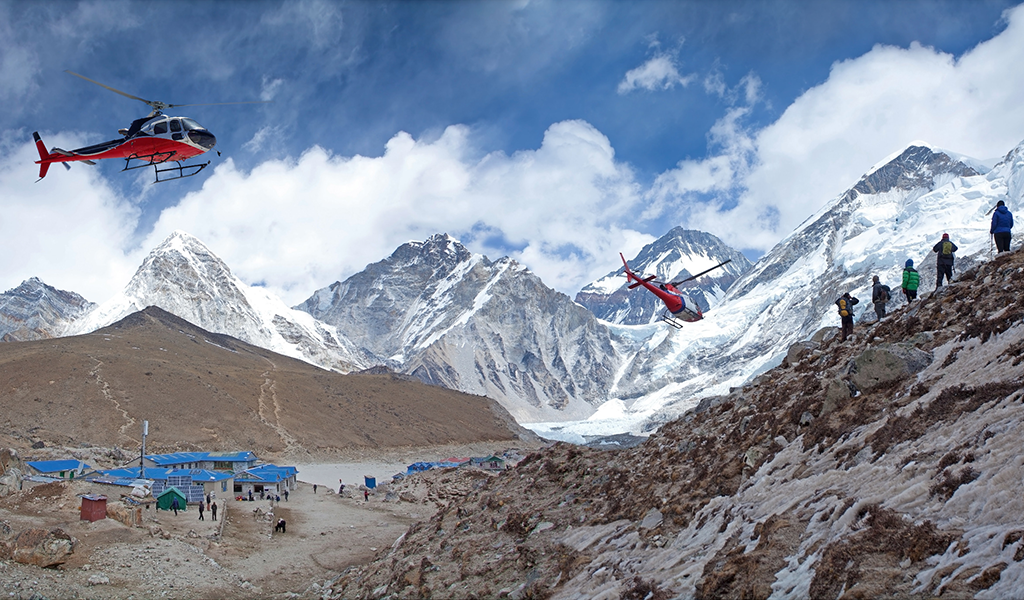
Kathmandu to Lukla Helicopter: You can skip the regular flight and board a private helicopter ride from Kathmandu directly to Lukla instead. You get more flexibility, avoiding possible weather delays with this option. You can also enjoy a more exclusive and scenic arrival to the mountains.
Lukla to Kathmandu Helicopter: You can also fly back to Kathmandu by helicopter instead of the usual plane. Many trekkers choose this upgrade for a more comfortable and reliable return to the city. It is especially rewarding during unpredictable mountain weather.
Gorak Shep to Kathmandu Helicopter: If you want to cut the trek down, we can arrange a helicopter pickup from Gorak Shep straight to Kathmandu. This option lets you skip the entire descent and enjoy an aerial view of the Himalayas and your trekking route.
Remember, these add-ons are all optional and come with an extra cost. Let us know if you want anything so we can arrange your itinerary similarly.
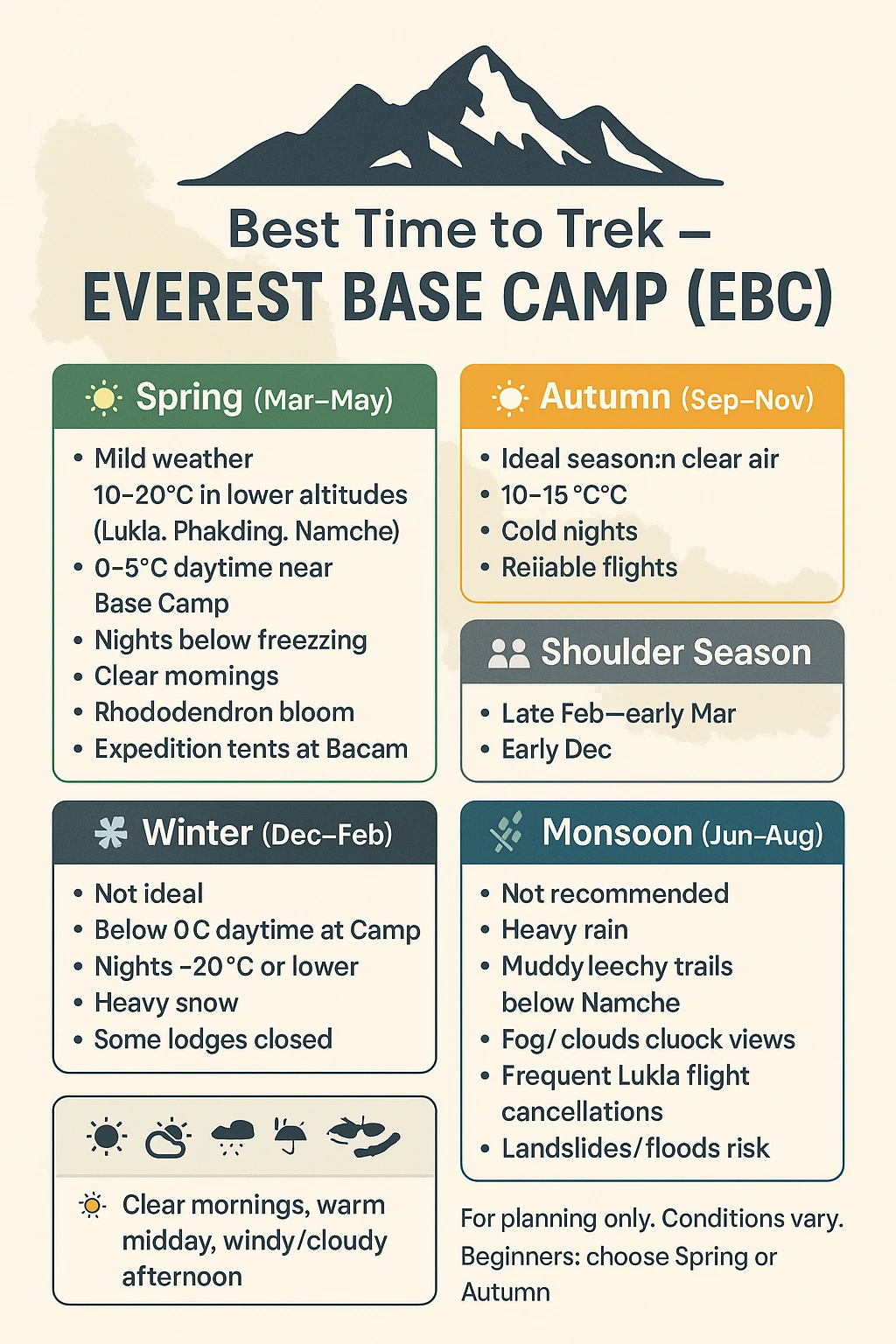
Spring and autumn seasons have stable weather, clear views, and safer trails, making them ideal for trekking. We don’t recommend other seasons, especially for beginners.
Spring (March to May): Spring is a popular trekking and climbing season. The weather is mild throughout the season. Lower altitudes like Lukla, Phakding, and Namche have an average daytime temperature of 10°C to 20°C. Higher up near the Base Camp. Days are just above the freezing temperature, about 0°C to 5°C. Nights can be cold and often drop below freezing in high camps.
Spring brings blooming rhododendrons, coloring the forest red, pink, and white. Morning air is usually clear, but clouds can build up as the day progresses. Base Camp is also lively with many expedition tents and climbing teams.
Autumn (September to November): Experts consider Autumn the ideal trekking season for Nepal. The monsoon rain ends, clearing the air and offering a breathtaking mountain view. The weather is stable with comfortable temperatures from late September through November. Daytime temperature usually ranges from 10 °C to 15°C, with cold nights. Teahouses with fireplaces make the cold night bearable. Flights are more reliable as the weather is more stable in autumn. Trails and teahouses tend to get extremely busy as autumn is a peak season. We handle all the bookings, so you have accommodation every night.
Shoulder Season: Late February and early December are good times to trek for mostly stable weather and fewer crowds. Late February to early March might still have some snow on the trail, but it gets warmer and longer. Early December offers clear, dry weather, which is not as cold as peak winter; however, days get freezing by mid-December.
Winter (December to February): Winter is not ideal for trekking to Everest Base Camp, especially for beginners. Temperatures are freezing with heavy snow in higher elevations. Daytime in the Base Camp area stays below 0°C, and nights can drop to -20°C or even lower. Some higher-altitude village lodges also close down for the season. Only experienced trekkers with proper gear and a flexible schedule should attempt winter trekking in the Everest Base Camp.
Monsoon (June to August): Monsoons bring heavy rain to Nepal. July and August are especially wet. We do not recommend trekking during the monsoon to beginners at all. Trails below Namche are muddy and leech-infested. Heavy rain, fog, and clouds often block mountain views. Flight cancellations to Lukla are common due to bad weather. Landslides and floods are a massive risk for trekking during the monsoon season.
What to expect daily: Weather shifts throughout the day. Mornings are usually clear and mid-days warm, but afternoons can be windy or cloudy. Wear sunscreen and sunglasses for UV protection. Our guides check the weather daily and keep updated on the route whenever possible. Wear layers and stay prepared for any weather.
While the EBC trek is challenging, since this itinerary is for beginners, it is most achievable for those without prior trekking experience. You don’t need any mountaineering or technical skills.
You will ascend over 5,300m at Everest Base Camp and 5,545m at Kala Patthar. These altitudes have extremely thin air with low oxygen levels. The thin air tires your body even when resting. Our itinerary included many acclimatization days so your body doesn’t feel too much of the altitude effects like breathlessness, fatigue, or headaches. Go slowly for an enjoyable trek.
You will trek for 8 days to reach the base camp, with two acclimation days and 3 to 4 days to descend. Most days, you hike about 5 to 6 hours, and the base camp day may be about 8 hours long. The gradual pacing makes it manageable. The trail is clear but has many uphill and downhill sections. Rocky paths, stone staircases, and uneven terrain can tire your body, but decent leg strength and balance help. You don’t need any special gear or training beyond basic fitness.
The Khumbu region has no roads, so you’ll be off-grid for about two weeks with limited access to WiFi. Nights are cold, and lodges are basic with no heating. You should embrace the remote lifestyle to enjoy the trek.
If you can walk a few hours a day while carrying a light daypack and have a positive attitude, you can easily finish this trek. People of all ages have completed this trek. Our beginner-friendly itinerary, acclimatization, and guides make your trek as safe and enjoyable as possible.
The beginner’s Everest Base Camp Hike includes the support of a licensed guide and porters. They ensure a safe, comfortable, and enriching experience throughout the trek.
Guides: Highly experienced licensed guides will accompany you on the trek. They have a license from the Nepal Tourism Board and know the Everest Region from the inside out. Many are the regional locals born and raised in the mountains, giving them a deeper insight into the terrain, weather patterns, and local culture. They are fluent in English and have training in first aid and altitude response. Guides set the daily pace, monitor group health, and ensure safety for all. Guides provide daily briefings, answer your questions, and share stories of the Himalayas and local life. They are friendly, patient, and deeply care for the team. Many trekkers end up making lifelong friends with their guides and porters.
Porters: Porters carry about 25 to 30 kg. Two trekkers will share one porter. You can pack about 12 to 15 kilograms for our porters and trek with a light daypack. We ensure a fair and ethical working environment for all our staff, especially porters. We provide them with all essential gear, insurance, footwear, and clothing. We strictly follow ethical porter welfare practices as a partner of the International Porter Protection Group (IPPG). Our porters are strong and friendly. Many are from the high-altitude villages and are familiar with the altitude. We ask our clients to treat porters with equal respect and kindness.
Teamwork: Guides and porters work as a team to handle every detail. The guide checks in with you each evening to monitor your health, and porters ensure you’re ready when you arrive at each lodge. The crew assists with water refills, extra blankets, or anything else.
Most trekkers end up making lifelong memories with their guides and porters. Their professionalism, care, and stories bring joy to the trek.
While you don’t need to be a pro athlete to trek to the EBC, basic fitness will make your trek easier. As it is a beginner-friendly trek, the pace is gradual, and there is plenty of time to rest and acclimate. However, walking for several hours daily at a high altitude can bring anyone down.
Build your stamina and leg strength through regular exercise several months before your trio. Do cardiovascular exercises like brisk walking, jogging, swimming, or cycling. Try to exercise for about 30 to 45 minutes, 3 to 4 times a week, regularly. We recommend training on hilly terrain or using stairs to stimulate the up-and-down nature of the trek. Do lower-body strength exercises like squats, lunges, and step-ups to prepare your muscles for long walking days.
Try going on longer bikes or walls of about 5 to 6 hours with a daypack for a few weeks before the trek. Hike on your full gear, including hiking boots, to break them in. Check your gears beforehand to make sure they won’t cause blisters.
You also need to be mentally prepared for a safe trek. Some days might be cold, windy, or more challenging than expected. A positive mindset and determination help on these days. Altitude makes you tired, and you may feel discouraged. But knowing that each step brings you closer to your goal motivates you.
Go slowly and rest whenever you feel like you can’t go on. Our itinerary follows a steady pace to help you acclimatize and trek safely. Our professional guide and crew make the trek easier. Most people can finish this trek successfully with regular exercise and mental preparation. Train early and smart to prepare your body physically and mentally for your adventure.
The mountain terrain is unpredictable. While we follow our planned itinerary, flexibility is essential. Weather conditions, trail issues, and health or pace can all influence your pace.
Weather Delays: Flights to and from Lukla usually get delayed due to weather. Even light fog, high winds, or storms can delay the flight for hours or days. We have built in buffer days into the itinerary, but keeping a day or two free at the end of the trek is always wiser. If the flight gets canceled, our team will assist with rescheduling. You can also choose a helicopter transfer back if you’re tight on schedule, but it costs extra.
Health and Acclimatization: Guides keep a close eye on every crew member. In case of any signs of mountain sickness or struggles with altitude, we can add an acclimatization day or begin the descent early. We can also pace the trek faster if the team acclimatizes well. We arrange these changes with the help of our experienced team while keeping everybody’s well-being in mind.
Route Changes: In any case of landslides, washed-out trails, or local events that can make a route inaccessible, we may take an alternate path. The Everest region has multiple trail options, making it easier to navigate the route. Our guides will choose the safest and most efficient route depending on the conditions.
Lodging Changes: While we pre-arrange teahouse accommodations along the route, they may change due to high-season crowds or local issues. We may shift to a different lodge or even to the next village. Accommodation changes may slightly affect your trekking distance for the day, but we never compromise your acclimatization schedule.
We aim to keep the trip safe, smooth, and memorable. If we need to change the lodges or the trails, we will do so in your best interest. You need to be open-minded and adaptable while we handle the rest.
Acclimatization is the process of your body adjusting to lower oxygen levels at higher altitudes. It is essential for our EBC hike. We follow the climbing high and sleeping low principle to help with acclimatization in Namche and Dingboche so you can avoid altitude sickness.
We designed the itinerary to follow the rule of no more than 500m higher than the previous night after 3,000m. Before continuing, you will stay two nights in Namche at 3,440m and two in Dingboche at 4,410m. A gradual pace means more time for your body to adjust.
You will take a short hike to a slightly higher altitude on acclimatization days and return to a lower altitude to sleep and stimulate the body. Most trekkers hike to the Everest View hotel at 3,880m while acclimating in Namche and Nagarjun Hill at 5,000m, while acclimating in Dingboche. This strategy helps the body produce red blood cells and increase oxygen levels without sleeping higher, helping the body adjust more efficiently.
Hydration is one of the most effective ways to support acclimatization. Drink about 4 to 5 liters of fluid like water, soup, or tea daily to stay hydrated. Loss of appetite is normal at higher altitudes, but you should eat pepper meals even if you don’t feel like it. The body drains energy faster, so it is essential to eat and hydrate well. We provide energy snacks and suggest meals that most trekkers find easy to eat. You can try the local altitude sickness remedy, Garlic soup, for a warm and comforting meal.
Your guides will frequently monitor your health, especially in the evenings, to ensure everyone is safe. Mild altitude symptoms like headaches, trouble sleeping, or shortness of breath with exertion are common and normal to experience. Your guide may use a pulse oximeter to check the oxygen level in the body if necessary. Watch out for severe symptoms like persistent headache, vomiting, dizziness, or nausea. Communicate with your guide if you feel any of these heavier symptoms. The best and most efficient solution is to descend immediately.
We don’t advise anyone to continue with trekking if it is unsafe. If someone cannot acclimate properly, we will arrange a descent with a guide or porter. The rest of the group may continue with the trek. Your health and safety are our top priority. The mountains won’t go anywhere. You can always trek again if your body remains healthy. However, many trekkers complete the trek with our pacing and support.
Respect the altitude, space yourself, and follow your guide’s advice to improve your chances of a successful trek. Many first-time trekkers reach the base camp without any issues. We have assisted trekkers from ages 12 to 70 completing the adventure in good health. Acclimatization is the key to a high-altitude trip.
How to book: Visit our official website, choose the Everest Base Camp Trek for Beginners, and book the trek. Please select your preferred departure date from our calendar and pay a 20% deposit to confirm your booking. Fill out the form with personal details and the group size. You can do a bank transfer or use any major credit card with our payment partner, WeTravel. After the payment submission, you will get a confirmation email and a receipt for your booked trek.
Payment Terms: You must deposit 20% of the total trekking costs to confirm your spot if you book at least a month before the trek. You can pay the remaining balance about 30 days before the trek. If you book the trek within 30-0 days of the departure, you must pay the full cost upfront.
Cancellation Policy: We try to be fair about our cancellation policy. You get a full refund if you cancel within 7 days of booking. If you cancel more than 30 days before the trip, we will refund the payment minus the 20% deposit. Canceling 30 days or less before departure means you get no refund.
Yes, airport transfers are part of the package. We will greet and escort you to your hotel in Kathmandu after you arrive in the country. We also handle the drop-off for your return flight after the trek.
You will receive a comprehensive pre-trip information pack upon booking. We also arrange a meeting with your guide and the trekking team the evening before your trek. Your guide will brief you on the routes and itineraries, check gear, discuss safety measures, and give altitude advice.
You will support the local economy directly by trekking with a Nepali company. We at Peregrine Treks and Tours arrange local guides and porters, creating employment opportunities for the local people. You get a deeper regional insight, resulting in a more immersive and personalized trekking experience, often at an affordable price.
Yes, charging points are available at most teahouses. Due to limited electricity, you must pay about NPR 200-500 per device extra. Lodges often generate electricity from solar power, so you can expect power outages. It’s better to bring a power bank as a backup.
Most lodges offer WiFi via services like Everest Link for a small charge. Mobile signal is mostly reliable up to Namche Bazaar but patchy in higher altitudes. WiFi is also not trustworthy. You buy a Nepali SIM Card for basic coverage.
Hot showers are available, especially up to Dingboche. Lodges heat water using solar or gas and charge about NPR 300-700 extra, depending on the altitude. Shower facilities may be limited or unavailable in higher altitudes.
Teahouses serve meals like Dal Bhat, pasta, soup, pancakes, fried rice, and more. You can buy bottled and boiled water. Skip raw food and eat hot, freshly prepared meals to avoid stomach issues.
Yes, trekkers must have travel insurance for this trek. Your policy should cover high-altitude trekking up to 5,600m and helicopter evacuation. Verify your coverage with your provider before travelling for financial protection.
Lukla flights tend to get delayed or cancelled due to weather complications. Add at least one buffer day at the end of your itinerary. We will assist you in rescheduling your flight if it is delayed or cancelled. You can also choose to fly in a helicopter for an extra cost.
We recommend carrying about USD 400-900 in small bills for WiFi, charging, shower, snacks, drinks, and tips. Exchange your money in Kathmandu so you have enough cash for the trek.
We recommend tipping about USD 10 to 15 per day for guides and USD 8 to 12 per day for porters. You can tip individually or as a group at the end of the trek. Tipping is customary to show appreciation to your guides and porters.