
Included Meals
- Breakfast: 7
- Lunch: 6
- Dinner: 6

Unbeatable Holiday Offers – Save Up to 20% on Your Next Adventure!
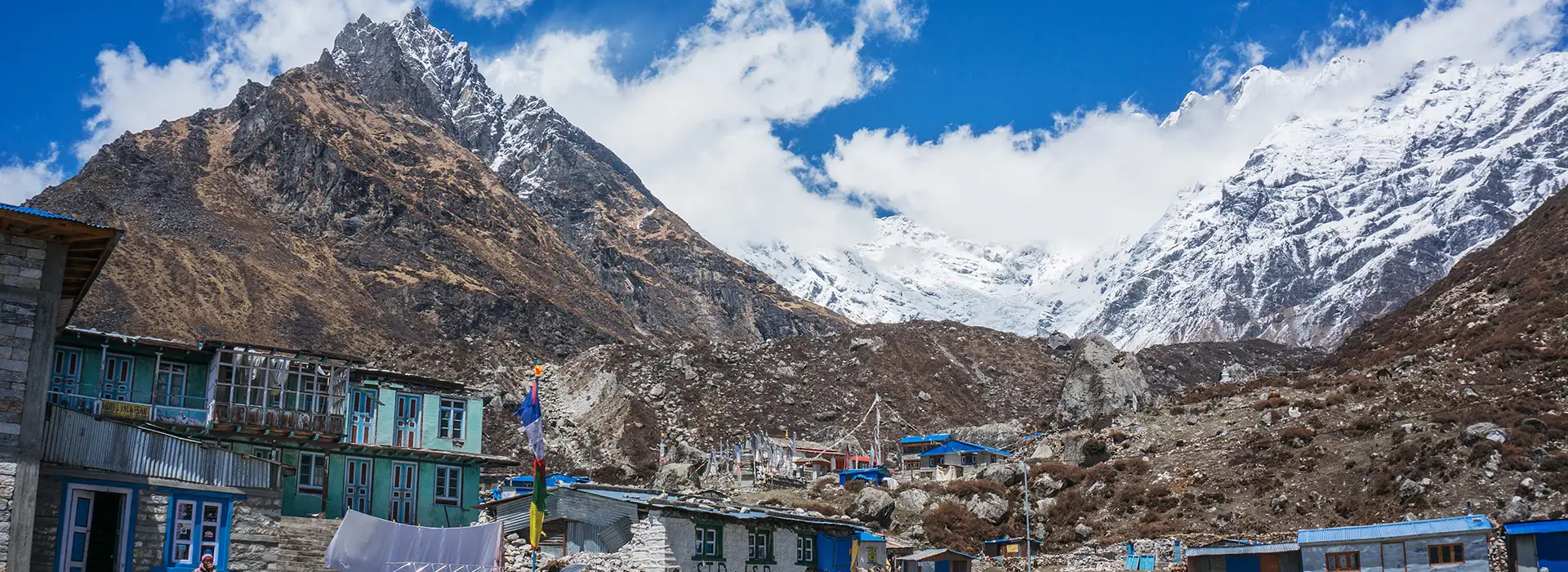
The Langtang Valley Trek passes through one of Nepal’s most beautiful Himalayan regions, offering a serene and remote atmosphere despite its proximity to the capital, Kathmandu. Trekkers enjoy a peaceful trekking experience without large crowds, surrounded by lush valleys, flowing rivers, and vibrant forests. The trail winds through rhododendron and bamboo groves, offering a constantly changing landscape that highlights the region’s natural beauty. Peaks such as Langtang Lirung and Ganesh Himal rise majestically in the distance, offering breathtaking views throughout the trek.
Travelers pass through traditional Tamang and Sherpa villages along the Langtang Valley trek, experiencing warm local hospitality and authentic village life. Centuries-old Buddhist monasteries dot the route, providing insight into the region’s rich spiritual and historical heritage. Trekkers can interact with locals, learn about traditional customs, and witness cultural rituals that have been preserved for generations. This combination of natural beauty and cultural immersion makes the trek a truly rewarding experience.
The Langtang Valley Trek maintains a moderately challenging pace, making it suitable for trekkers with average fitness. Its short duration and close proximity to Kathmandu make it ideal for travelers with limited time. Comfortable teahouses provide meals and rest along the route, while well-marked trails ensure safe navigation. The Langtang Valley Trek blends stunning Himalayan scenery with cultural encounters, making it one of Nepal’s best short trekking adventures for nature lovers and culturally curious travelers alike.

Included Meals

Trip staff

Transport

Accommodation

Trip Grade
Group Size
Your Langtang Valley trek starts with a drive from Kathmandu to Syabrubesi, the starting point of the trek. You will drive along the Trishuli River, where you may spot white water rafters navigating the river. You get your first magnificent view of Manaslu Massif, Ganesh Himal, Jugal Himal, and the Langtang range in the distance after passing the Trishuli Bazaar. The road is rough after this stop. You will reach Syabrubesi, a riverside village, by late afternoon. Settle into your teahouse and meet your guide for the next day’s briefing.
Starting Point: Kathmandu – 1,425 m / 4,675 ft
Ending Point: Syabrubesi – 1,500 m / 4,790 ft
Distance: ~122 km / 75 miles
Altitude Gain: +75 m / +246 ft
Drive Duration: 7–8 hours (traffic and road conditions dependent)
Meals Breakfast, Lunch, Dinner
Difficulty
Today, begin the trek with a steady ascent through pine, oak, and rhododendron forests. Follow the Langtang Khola and cross some suspension bridges. You will pass many small riverside settlements like Pairo and Bamboo. The trail gradually climbs with occasional views of waterfalls along the narrow and steep gorge and the Langtang Lirung through the trees.
By afternoon, you will reach the Lama Hotel, a riverside village with dense forests surrounding it. Check into your teahouse and enjoy the quiet and peaceful atmosphere in the woods.
Starting Point: Syabrubesi – 1,500 m / 4,790 ft
Ending Point: Lama Hotel – 2,470 m / 8,100 ft
Distance: ~11.3 km / 7 miles
Altitude Gain: +970 m / +3,180 ft
Trekking Hours: ~6 hours
Meals Breakfast, Lunch, Dinner
Difficulty
The trek continues with a climb through dense oak and rhododendron forest. You will reach Ghodatabela at 3,000m after hiking for about 3 hours. The valley widens into the alpine meadows with views of the Langtang Range.
After crossing Ghodatabela, you go through landslide debris and boulder fields. This area is a reminder of the catastrophic 2015 earthquake that destroyed the original Langtang village. Cross a small army post and arrive at the new Langtang Village. This new village has a health post, school, small shops, and Buddhist monasteries. The Langtang Lirung and Gonchompe towers above the town, offering great views.
You can hike 30 minutes farther to Mundu for slightly better teahouses or stay in the village. Both villages provide comfortable sleeping spaces and filling food.
Starting Point: Lama Hotel – 2,470 m / 8,100 ft
Ending Point: Langtang Village – 3,430 m / 11,253 ft
Distance: ~14.7 km / 9 miles
Altitude Gain: +960 m / +3,150 ft
Trekking Hours: ~7 hours
Difficulty
The trek is shorter but more challenging today with an ascent of around 440m. You pass prayer flags, mani walls, stone chortens, and water mills. You get a deeper insight into the region’s Buddhist heritage. Cross the pastures and notice the looming Langtang Lirung.
You will drive to Kyanjin Gompa by late morning. This sacred village got its name from its centuries-old monastery. Have your lunch and explore the monasteries. Visit the nearby yak cheese factory and witness the local cheese-making process. You can take an optional hike to Langshisha Kharka with extra energy. Rest for the night while enjoying the high-altitude ambiance.
Starting Point: Langtang Village – 3,430 m / 11,253 ft
Ending Point: Kyanjin Gompa – 3,870 m / 12,696 ft
Distance: ~5.7 km / 3.5 miles
Altitude Gain: +440 m / +1,443 ft
Trekking Hours: ~3 hours
Meals Breakfast, Lunch, Dinner
Difficulty
Today is your acclimatization hike day. Start early from Kyanjin Gompa and climb the steep trail gaining over 1,100m of elevation. The more you climb, the thinner the air gets. Hike slowly for a safe trek.
You will reach the Tserko Ri summit at 4,980m. It is also the trek’s highest point and rewards you with a breathtaking 360° panorama. The summit has over 20 snow-peaks like Langtang Lirung, Dorje Lakpa, and other Langtang range peaks. You can see the sweeping Langtang valley and even glacial lakes on clear days below the summit. Take some photos and celebrate your hike before descending.
The round trip is almost 9 hours long. You will be back in the village by afternoon. Rest and enjoy a hot meal.
Starting Point: Kyanjin Gompa – 3,870 m / 12,696 ft
Highest Point: Tserko Ri – 4,980 m / 16,338 ft
Distance (round trip): ~16 km / 10 miles
Altitude Gain: +1,110 m / +3,642 ft
Trekking Hours: ~8–9 hours
Meals Breakfast, Lunch, Dinner
Difficulty
Today, you will descend the same route you climbed down the Langtang Valley to Lama Hotel. The air gets thicker as you descend, making the trek easier. However, it can be demanding on the knees, so we recommend trekking poles.
Pass the familiar landmarks like Mundu, Langtang Village, Thyangsyap, and Ghodatabela. You will walk past the snow-capped peaks and into the lush valleys and forests. You can stop for tea or lunch in a teahouse or a village.
You will arrive at the Lama Hotel by late afternoon. Check into your teahouse and rest the night here.
Starting Point: Kyanjin Gompa – 3,870 m / 12,696 ft
Ending Point: Lama Hotel – 2,470 m / 8,100 ft
Distance: ~14.5 km / 9 miles
Altitude Loss: –1,400 m / –4,596 ft
Trekking Hours: ~6–7 hours
Meals Breakfast, Lunch, Dinner
Difficulty
Continue descending through the lush hills of Langtang. Along the Langtang Khola, the trail goes past rhododendron, oak, and bamboo forests. You will pass the familiar waterfalls, gorges, and cross suspension bridges. Stop for tea and rest in small hamlets and riverside tea shops.
The air gets significantly thicker and warmer in the lower elevations. After crossing the dense forests, you will enter terraced fields and traditional hill villages. Arrive back at Syabrubesi by mid to late afternoon and mark the end of your Langtang Valley trek. Check into your lodge and celebrate your win in the evening.
Starting Point: Lama Hotel – 2,470 m / 8,100 ft
Ending Point: Syabrubesi – 1,500 m / 4,790 ft
Distance: ~11.3 km / 7 miles
Altitude Loss: –970 m / –3,180 ft
Trekking Hours: ~6–7 hours
Meals Breakfast, Lunch, Dinner
Difficulty
Drive back to Kathmandu today. Have breakfast, hop in the car, and follow the same scenic road along the Trishuli River. On clear days, you will see terraced hillsides and glimpses of Manaslu, Ganesh Himal, and Langtang.
The first section of the route is rough until you pass Dhunche and Trishuli Bazaar, and smoother as you near Kathmandu. You will arrive in the city in the afternoon and check into your hotel. Enjoy a hot shower, relaxing rest, and a celebratory dinner to conclude your trek.
Starting Point: Syabrubesi – 1,500 m / 4,790 ft
Ending Point: Kathmandu – approx. 1,400 m / 4,593 ft
Distance: ~122 km / 75 miles
Altitude Loss: –100 m / –328 ft
Drive Duration: 7–9 hours
Meals Breakfast
Difficulty
This 8-day itinerary only includes 6 days of actual trekking. The trail goes through forests, alpine meadows, and broad valleys, offering open views of the highlands. Mountains tower over trails, and the air is cold, making the trek even better.
Most days involve 5–7 hours of hiking, with one challenging 8–9-hour climb to reach Tserko Ri, covering about 5 to 16 km daily. The toughest day includes 1,110m of elevation gain in a single day. Langtang Valley combines natural beauty with Tamang and Sherpa cultural traditions. Monkeys swing in the trees; if lucky, even red pandas may visit you. The trails have colorful prayer flags decorated with monasteries, chortens, prayer wheels, and mani walls with Buddhist mantras, adding a spiritual charm.
You’ll stay in local teahouses with basic but cozy rooms, twin beds, and warm blankets. These lodges are family-run and offer warm hospitality. Don’t look for luxury or privacy here.
Spring and Autumn:
Spring and autumn have clear skies and stable weather with cold nights in winter and heavy rainfall during the monsoon. Check the conditions of each season to see which one appeals to you.
The highest overnight stop of the trek is at Kyanjin Gompa (3,870m). The optional hike to Tserko Ri reaches 4,980m. Our itinerary includes gradual acclimatization, so it is manageable. Choose the Langtang trek to experience high-altitude trekking without extreme elevation gain.
The Langtang valley has no flight options, so you will reach the starting point via road. The drive is about 7-9 hours long, depending on the road and traffic conditions.
The Langtang Valley Trek is for travelers who want a short and moderately challenging trek. Luxury seekers might not enjoy the trek as much.
You will stay in traditional teahouses during the trek. They are simple, family-run mountain lodges that provide an authentic regional experience.
Though not mandatory, most trekkers eat a meal in their teahouses. You can order a simple, hearty meal like dal bhat, noodles, and soups. These family-run teahouses provide genuine hospitality and a chance to experience local culture and tradition.
Accommodation in Kathmandu:
The Langtang Valley trek package doesn’t include accommodation in Kathmandu. However, we can arrange hotel stays in Thamel’s central tourist hub. You can choose from boutique hotels to comfortable 3-star hotels. You can also book a place on your own if you’d like. We can assist with safe luggage storage while you are on a trek.
We rate the Langtang Valley Trek as moderately challenging, making it accessible to first-time and experienced trekkers. You should have basic fitness for an easier trek. While the trek doesn’t include any technical climbs, it does involve several days of trekking in varied terrain.
Trekking Hours: Most days, you will hike about 5 to 7 hours and cover 10-15 km. Some days, like the 3-hour hike on Day 4, are easier, and some days are harder. The optional 8-9-hour hike to Tserko Ri on Day 5 is one of the most challenging days in the itinerary. The trek paces without hurry with regular rest stops, alternating ascents and descents to help the body recover.
Terrain: From forest trails, riverbanks, to rocky ascent, the trek winds through a varied terrain. You will walk through rhododendron, bamboo forests, cross suspension bridges, stone steps, or muddy patches. You won’t use ropes or climb in any sections, but a good balance and trekking poles make the descent easier.
Altitude: The trek officially begins in Syabrubesi at 1,500m and reaches 3,870m, the highest sleeping point of the trek. You will hike from Kyanjin Gompa to Tserko Ri, the trek’s highest point at 4,980m. The itinerary includes acclimatization time to reduce the risk of altitude sickness. Shortness of breath or fatigue is common at high altitudes. We recommend that trekkers stroll at higher altitudes.
Physical Condition: Anyone with a decent physical condition can finish the trek. DO 5-6 hours of short hikes with short breaks for a week to prepare your body. Regular exercises before the trek also help. Use bracers or trekking poles for extra support if you have knee or joint issues.
Technical Skills: There are no technical climbing sections in the trek. Locals and yak caravans frequently use the defined and marked trekking trails. Build your endurance and stamina, and be aware of the altitude, as it is the main challenge.
We recommend regular exercise before the trek to build physical fitness—hiking, jogging, and cycling. And swimming helps make the experience more enjoyable.
Cardio: Cardiovascular fitness is vital since you will hike uphill and downhill a lot. Do activities like hiking, jogging, cycling, or swimming. Aim to do these exercises for one hour, 3-4 times a week, to build endurance
Leg and Core Strength: A strong core improves balance on uneven trails and trekking with a heavy backpack. Strong legs mean easier descents and climbs. DO squats, lunges, step-ups, and straight climbing.
Pack training: Go on practice hikes with a backpack on. Increase the weight gradually to the weight you will carry while on the trek. It helps your shoulders and back get used to the trekking conditions. Go on a hike with full gear to break in the gear.
Flexibility and Balance: Stretching and yoga help the body prevent stiffness and muscle tightness. Going for simple yoga for the legs and back is helpful. Practice balance on uneven ground to prepare yourself for the changing terrain of the trek.
Mental Preparedness: Altitude and long hiking days are hard on the body. A positive attitude and taking breaks help. Don’t lose hope when pacing yourself slowly at higher altitudes.
Mid-trek: Stay hydrated and eat filling meals for energy. Sleep well at night and get enough rest. If you feel sick or experience any discomfort, inform your guide immediately so they can pace the trek or suggest what to do.
Packing the right gear is as essential as having a fit body for a comfortable and safe trek.
Footwear: A sturdy, broken-in, and waterproof trekking boots with good ankle support to avoid blisters. Also, bring several pairs of breathable socks to keep the feet dry.
Clothing Layers: Pack in layers to be comfortable in any weather. Take a moisture-wicking base layer. Insulating mid-layers like fleece or a lightweight down jacket, and a warm, windproof, and waterproof outer jacket. Trekking pants, especially the convertible zip-offs, are handy. You also need waterproof over-pants, a warm hat/beanie, and a sunhat.
Hands: A lightweight pair of gloves for cool mornings and a thicker insulated gloves for higher elevations.
Sleeping gear: Bring a 4-season sleeping bag to be warm even at -10°C. You can either buy or rent one in Kathmandu.
Backpack: Bring a 25-35L backpack for essentials like water, camera, snacks, and extra gear. Additionally, a duffel bag with 65-85L capacity for trekking gear is needed. You will carry the daypack, and your porter will carry your duffel bag. Bring a rain cover to keep the gears dry.
Trekking gear: Trekking poles help with balance on descents. Bring sunglasses with UV protection and headlamps or flashlights with spare batteries. You need a reusable water bottle or hydration bladder with a 2L capacity and a water purification method.
Documents and Money: Bring your passport, visa paperwork, travel insurance details, trekking permits, and photocopies of every document. Since the trail doesn’t accept credit cards, carry Nepali cash for snacks, charging, WIFI, hot showers, or tips.
Personal Items: Include a toothbrush, toothpaste, soap, toilet paper, and a quick-dry towel in your toiletries. You need an SPF30+ sunscreen, lip balm, and insect repellent. Bring your first-aid kit with band-aids, blister care, and ibuprofen/paracetamol, and don’t forget your hand sanitizer. It’s better to bring travel-size items and make sure your soap is biodegradable.
Other: Since electricity is limited, carry your charger and power banks for your camera and smartphone. You can pack snacks like energy bars or chocolate, and offline entertainment like books and cards. Bring earplugs if you are a light sleeper.
Temperature and Altitude: Lower elevations from 1,500-2,000m have a 15-25°C temperature during the daytime at peak seasons. At higher elevations like Kyanjin Gompa at 3,870m, the daytime temperature can be 8-10°C or lower. Night temperature drops frequently below freezing at higher temperatures, regardless of the season. A rule of thumb is that for every 1,000m elevation gain, the temperature drops by 6°C.
Daily Weather Patterns: Mornings are usually clear, but afternoons can bring mist or cloud cover. Plan to finish every day’s trek before the afternoon for the best views and conditions.
Unpredictability: Mountain weather can change suddenly. A sunny morning may be rainy by afternoon. Put a waterproof jacket, pants, and a warm layer in your daypack for quick access.
Layering Strategy: Dress in layers to prepare for any weather conditions. Wear a moisture-wicking base layer and a windproof outer layer: weather gloves, a beanie, and extra layers for cold mornings and evenings.
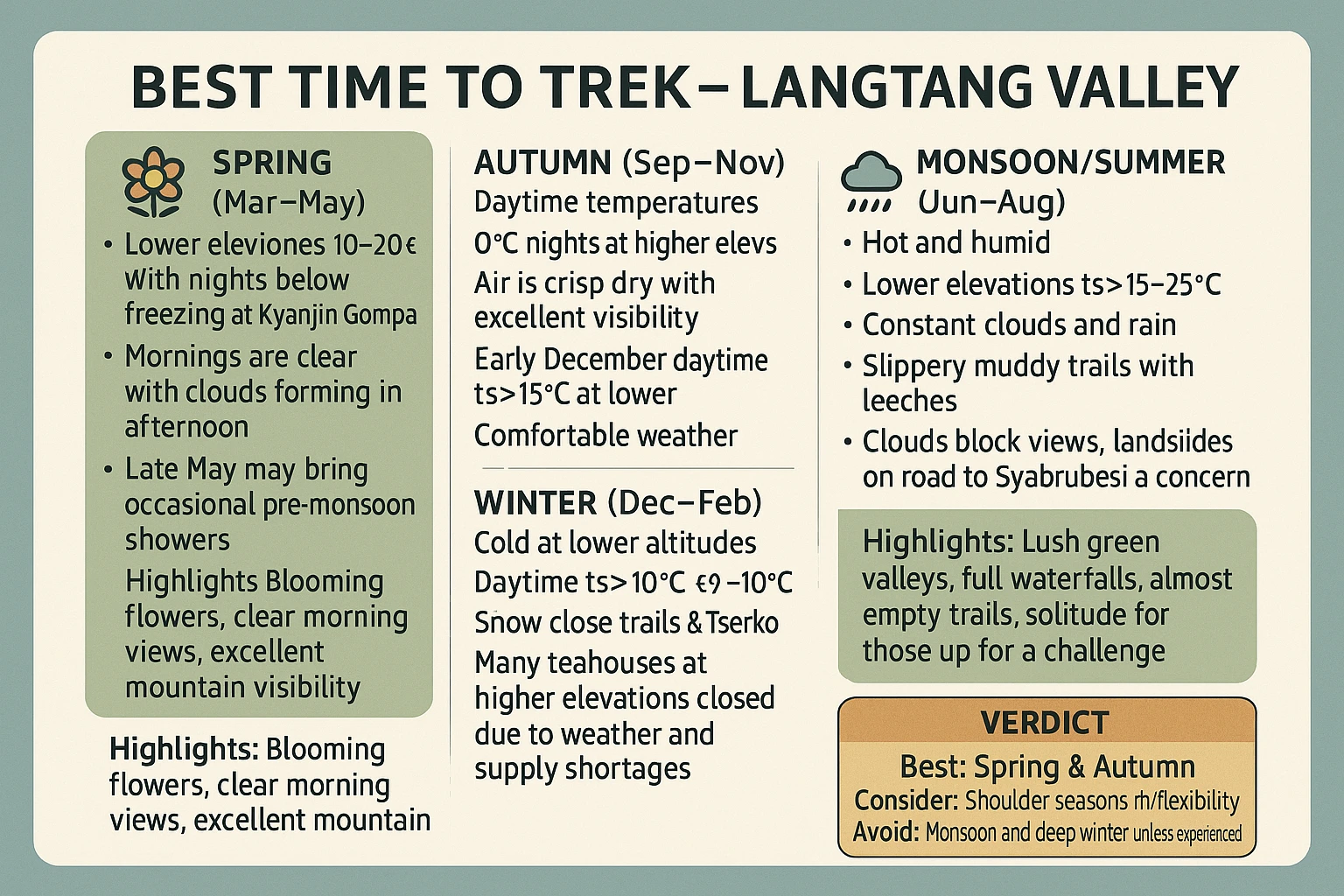
Spring (March to May): Spring has pleasant weather. Lower elevations have 15-20°C during the day, with nights below freezing at Kyanjin Gompa. The hills have blooming rhododendrons filling them, making the scenery even more beautiful. Mornings are usually clear, with some clouds forming during the afternoon. Late May can get occasional pre-monsoon showers.
Highlights: Blooming flowers make the season ideal for flora enthusiasts, as well as clear morning views and excellent visibility of the mountains.
Autumn (September to November): Autumn is the peak trekking season. Daytime temperature is a plane 10-20°C at lower elevations, with higher elevations having 0°C nights. The air is crisp and dry, and visibility is excellent. The post-monsoon season has clear blue skies with excellent visibility of the white mountains, contrasting with the blue sky.
Highlight: Consistent blue sky and excellent visibility of the mountains. Comfortable weather and ideal trekking season.
Shoulder Seasons (late February, early June, late November, and early December): The temperature is similar to spring and autumn, with excellent visibility. Early December can have daytime temperatures of around 5-15°C at lower altitudes. These months have fewer crowds and quieter trails with comfortable weather. However, the weather is unpredictable and has risks of late snow or early rain.
Highlights: Comfortable weather with excellent visibility. Fewer crowds with a peaceful trail are ideal for experienced trekkers who want solitude and are up for flexibility.
Monsoon/ Summer (June to August): The temperature is hot and humid. Lower elevations have a temperature of 15-25°C, with clouds and rain, which are constant guests. Heavy rain makes the trail slippery and muddy. Forest and riversides have many leeches, and clouds block the mountain views. Landslides along the road to Syabrubesi are a significant concern.
Highlight: However, rain or shine, the season brings lush green valleys and full waterfalls. The trails are almost empty, ideal for trekkers who want to trek in solitude and are up for a challenge.
Winter (December to February): The temperature is cold, even on lower altitudes, at around 5-10 °C, while Kyanjin Gompa gets nights lower than -10°C. Snow can close the trail and side trips like Tserko Ri, and many teahouses in higher elevations close due to the weather and shortage of supplies.
Highlights: Great visibility of the mountains and peaceful trails. Trekkers who want to trek in solitude and have experience in winter trekking can trek this season.
One of the biggest challenges for the Langtang Valley Trek is altitude. Our itinerary paces gradually to help your body adjust to the altitude naturally. You will gain significant altitude from 1,500 m in Syabrubesi to 2,470m at Lama Hotel, 3,430m at Langtang Valley, and 3,820m at Kyanjin Gompa. These gains are manageable, and daily altitude gains are moderate, helping the body adjust without a rush.
You will stay an extra night in Kyanjin Gompa, doubling your acclimatization stop. You will hike to the trek’s highest point, Tserko Ri at 4,980 m, and return to Kyanjin Gompa to sleep. The day follows the rule of climbing high and sleeping low to reduce the risk of altitude sickness.
You should drink plenty of water and eat nutritious meals to cope with the reduced oxygen level. Avoid alcohol and smoking since they cause dehydration. Symptoms like shortness of breath and headache are common in these high altitudes, but you should not take severe cases lightly. Your guides will use a pulse oximeter to check oxygen levels and adjust the pace or descend in case of emergencies.
Acclimatization is a gradual process. Sauntering, resting well, and giving time helps acclimate the body properly. Most trekkers feel down in the first couple of days in higher altitudes, but feel better after adjusting to it. While altitude gain is a concern, you can tackle it most of the time.
Safety Guidelines
Safety is our biggest priority in any trek. Even though the trek is non-technical, the mountain environment and uneven terrain require awareness and caution.
Follow your Guide: Our guides are the regional experts. They know the trail, weather, and local conditions in the back of their minds. Follow their instructions on pace, rest, and acclimation.
Stay Together: Don’t walk or wander off alone, especially at night. If you need to slow down, rest, or feel ill, inform your guide. They will pace the group for you, or an assistant guide will walk with you.
Watch the trail: The trail has many steep, rocky, and slippery paths. Use trekking poles to balance the body and be careful, especially on suspension bridges.
Hydration and Hygiene: Drink plenty of fluid, eat regularly, and use hand sanitizer. Drink boiled and purified water.
Weather: Since the weather can shift quickly, be ready for any situation. Keep a rain jacket and a warm layer in your daypack for easy access.
Emergency Protocols: Our guides carry a first aid kit and arrange helicopter evacuation in emergencies. Inform them if you feel any discomfort. We recommend having travel insurance to cover the bills.
Langtang Valley is home to many Tamang and Sherpa communities. Respect their customs for a warm and enjoyable trek.
Respect religious sites: The valley is predominantly Buddhist. Walk clockwise around mani walls, prayer wheels, and chortens. Remove your shoes and dress modestly when entering monasteries or people’s homes. It is customary to leave a small donation at monasteries.
Greeting and Communication: Put your hands together in a prayer pose and say “Namaste” with a slight bow to greet people. You can say “Dhanyabad” to show your appreciation. These small and polite gestures warm the hearts of the locals.
Photography Etiquette: Get permission before clicking pictures of anyone, especially monks and elders. Some religious sites don’t allow taking pictures, so learn the rules.
Dress Modestly: You can wear shorts on the trek, but avoid them when visiting religious sites and in the teahouses. Public display of affection is not standard, so avoid it.
Local Interaction: If someone offers you something, take it. Tamang and Sherpa people often share stories, tea, or meals. You don’t need to finish what they provided, but it’s polite to receive it.
Respecting guides and porters: Guides and Porters share their regional knowledge with you. They work hard to make your trek easier and more enjoyable. It is essential to treat them with respect.
Environmental Respect: Don’t litter the environment. Carry your waste in your bag, avoid disturbing wildlife, and don’t climb mani walls or chortens. Keep your voice down near the monasteries.
We highly recommend travel insurance; it is mandatory for trekking with us. A good travel insurance policy protects you from emergencies and lets you trek with peace of mind. Make sure your travel insurance includes these:
Emergency Medical and Helicopter Evacuation: Your policy should cover trekking up to 5,000 m with emergency helicopter evacuation and medical treatment. A helicopter rescue from the Langtang region can cost more than $5000. A good policy covers hospital bills in Nepal or medical return to your home country.
Trip Cancellation or Interruption: Buy a policy that reimburses non-refundable costs in case of trip cancellation due to illness, injury, family emergencies, or natural disasters. Your policy should also include trip delays.
Lost or Delayed Baggage: A policy covering lost or delayed checked baggage saves you if your trekking gear doesn’t arrive on time or gets lost. You can rent or replace the equipment.
Health and Pre-existing Conditions: Choose a policy that includes any pre-existing medical conditions. Be clear on all your health issues to avoid claim complications.
You must provide us with your insurance details before the trek so we can act quickly in emergencies.
Nepal Tourist Visa: A Nepal tourist visa is relatively easy to obtain. You can get one from the Nepal Embassy in your home country. Most trekkers get one on arrival at Tribhuwan International Airport or land border crossings. You need to pay $30 for 15, $50 for 30, and $125 for 90 days of stay. Your passport should have at least 6 months of validity and a few blank pages. You can fill out an online or physical form at the airport. After the formalities, you will get your Nepal tourist visa. Since the trek is only 8 days long, a 15-day visa is enough for this trek.
Trekking Permits: We handle all permits for you after booking confirmation. The package covers the permit costs. You need a Trekkers’ Information Management System (TIMS) card and a Langtang National Park Entry for the Langtang Valley Trek. You need to show these permits at multiple checkpoints.
Typical Trek Expense: The package includes all significant expenses like accommodation, three daily meals, permits, guides, and porters. You should budget extra for personal expenses. Bottled water, soda, beer, boiled water, chocolates, biscuits, or treats add up to your total cost.
Local Currency: The local currency in Nepal is Nepali Rupee (NPR). The trails don’t accept cards or foreign currency, so carry enough Nepali cash for the trek. You can exchange money in Kathmandu at banks or licensed money exchange centers. The trails also don’t have any ATMs. Carry small denominations for easier transactions. At present, $1 = NPR 140. Check the exchange rate before the trek.
Most teahouses charge extra for charging electronics, WIFI, and hot showers, about NPR 200-500 per service. Tipping your guides and porters about 10% of the total trekking cost is customary.
The package doesn’t include meals in Kathmandu or souvenirs like yak cheese or handmade crafts, so budget extra for all these expenses so you can trek more comfortably. Prices also increase as you gain altitude, as transporting supplies is extremely hard. It’s better to carry more than enough just for safety.
An experienced, licensed English-speaking guide is one of the most significant benefits of trekking with us. They lead the routes and share stories, cultural insight, and their knowledge of the local wildlife. They have training in first aid and altitude sickness response. Your guide will monitor the group’s health and manage logistics like teahouse bookings, meal coordination, and permit checks. Your guide works to ensure your comfort and safety throughout the trek.
Porters carry your heavier luggage so you can hike with a light daypack. Usually, one porter carried the baggage of two trekkers. They take about 15-18 kg, so we advise trekkers to pack only essentials for an easier trek. Our porters are hardworking and friendly, and look forward to building genuine connections with the guests. We ensure fair wages, proper clothing, and a reasonable load limit.
Hiring guides and porters not only makes your trek better, but it also helps support the local economy by providing employment. Many trekkers share their stories about newfound friendship and respect with their trekking team.
We have designed the itinerary with adaptability. Mountain conditions are not predictable. Each group has its own needs, and medical or natural emergencies can call for delays. We encourage you to stay flexible in case of adjustments.
Weather and Trail Conditions: Your guide may alter the schedule in case of heavy rain, snowfall, or landslides. You may have to wait out the weather or take an alternative route. These changes are common in mountain trekking. Don’t rush things while trekking.
Acclimatization Adjustments: If any trekker needs extra time to adjust to the altitude, we may take an unscheduled rest day or alter the route. It is more common in private treks. Although the itinerary includes gradual and proper acclimatization, altitude sickness can affect each person differently. The guide will help you make the appropriate decision in these situations.
Group Pace: Trekkers have different fitness levels in a group setting. Your guide will work to balance the group’s needs. Your guides might split the faster and slower trekkers or pace the entire group a little slower. If the group does split, an assistant guide will lead the second group so no one gets left behind or pressured to walk faster.
Private Trek: Private trekking groups have more flexibility in customizing the trek. Add an extra night in Kyanjin Gompa, take side hikes, or extend the trip with a Tamang Heritage Trail Visit.
Guide’s Discretion: Your guide’s decision is in the group’s best interest. They have the authority to make real-time decisions to make the trek safe and enjoyable. Follow their lead for a pleasant trek.
We can arrange optional add-ons in Nepal according to your preferences. These add-ons are subject to availability and come at an extra price.
Kathmandu Valley Sightseeing:
Kathmandu is a city of great historical significance. You will see people of all faiths, from Hindu to Buddhist, at cultural sites here. This optional sightseeing will take you to the city’s UNESCO World Heritage Sites. You will visit Swayambhunath Stupa (The monkey temple), Bouddhanath Stupa, Pashupatinath Temple, and the historic Durbar Squares of Kathmandu, Bhaktapur, or Lalitpur. Learn this old city’s rich history, culture, and architecture with a day of sightseeing.
Everest Mountain Flight:
You can take an hour flight over the Himalayas to get the close-up aerial views of Mount Everest and other towering peaks worldwide. The flight operates in the early morning. Every passenger gets a window seat for better views of the Everest, Lhotse, Makalu, and other peaks over 8,000m. The airline crew will point out the peaks for you.
Everest Base Camp Helicopter Tour:
A half-day helicopter tour to the Everest region is perfect for anyone looking for an aerial adventure. You will fly over the Himalayas to Everest Base Camp or Kala Patthar (5,500m) and land at Syangboche Everest View Hotel. This luxury experience is the fastest way to get to the Everest up close.
WhatsApp/Call:
We use an online booking system to make your reservation easier. Please select your preferred departure date from our calendar and book your trek. We offer fixed group departures and customizable private trek dates. Specify the number of trekkers in your group and select any add-ons or upgrades.
Fill in your traveler information, such as nationality, contact details, dietary requirements, and special requests. You can pay a 20% deposit or the full amount upfront. Pay through credit/debit card pr bank transfer. We list our prices in USD with automatic conversion.
You will get a confirmation email with a call back within 24 hours from one of our representatives. We will follow up with an email, receipt, and the next steps, like visa, insurance, packing tips, etc.
If you are booking offline, email us your details and we will arrange payment through banks or other means.
Payment Terms and Conditions
You can pay the full amount upfront or the mandatory 20-30% of the total trekking cost as a deposit. We require the deposit not only for the confirmation, but also to arrange your permits and other documents. Pay the remaining balance about 30 days before the trekking departure date. If you book within 30 days of the trek date, you must pay the full amount upfront.
We accept cash payments in Kathmandu, bank transfers, and major credit cards. Bank or card fees are the client’s responsibility.
Cancellation Policy
If you cancel your trek more than 30 days before the trek starts, we offer a full refund minus the administrative fee. You can also change your date for no additional cost.
We offer a 50% refund for cancelling 15 to 30 days before departure. Alternatively, you can apply 70% of the payment as a credit for any future trek with us, valid for 12 months from the original departure date. Canceling any later than 15 days or not showing up for the trek means no refund. We aim to be flexible for emergencies, so communicate your problems.
Though rare, if we cancel the trek due to unforeseen circumstances like natural disasters, politics, or low group numbers, you can get a full refund or move your trek later. It is better to get travel insurance that covers cancellations just to be safe.
Booking Changes: You can change your date for free up to 30 days before the trek, or even transfer your booking to someone else.
Yes, we will provide a complimentary airport transfer. A representative will meet you after you land at Tribhuvan International Airport. They will greet and transfer you to your hotel. We also drop you off at the airport after the trek ends. Share your flight details to coordinate a smooth pick-up and drop-off.
We always arrange a pre-trip briefing in Kathmandu, typically the evening before the trek starts. During the briefing, you will meet fellow trekkers and your guide, review the plan, and discuss acclimatization. We also send a delayed trip information pack upon booking. It includes packing lists, preparation tips, and cultural advice. After a last-minute gear check, rentals, and purchases, you are ready for the trek.
People living and working in the mountains run the trek with a Nepali company. We know firsthand the Langtang region’s trails, conditions, hidden viewpoints, and cultural nuances. You will support the local economy and get the best prices and quality. You can communicate directly with us, ask questions, request customizations, or make last-minute changes. Our local guides and porters share an authentic cultural experience that international companies may fail to match.
Electricity is limited and comes with a price. Most of the Langtang route gets power from the national grid, small hydro units, or solar panels. Charging electronics costs about NPR 200-500 per device. Power supply is inconsistent, so carry a power bank and a universal adapter.
The Wi-Fi and mobile network are slow but available on the Langtang trek. Lodges offer WIFI through satellite for a fee, but it’s slow due to weather disruptions. You can catch a weak mobile signal in lower villages like Syabrubesi or the Lama hotel. Let your family and friends know you’ll be offline and enjoy the trek. Your guide will carry a mobile phone and find a signal if you need to call.
Hot showers typically mean a gas-heated shower or a bucket of hot water. They come with a small fee of NPR 200-500. Higher stops like Kyanjin Gompa may not offer a hot shower due to the scarcity of supplies and power. You can use wet wipes instead for a quick clean.
Most of our treks have 2-10 participants. Though we don’t go over 12 trekkers, we can arrange a private trek for your group. Private trek means adjusting the pace, adding rest days, or making changes.
The food is simple and filling. Dal bhat is a classic menu in the trek, with other options like noodle soups, fried rice, momo, pasta, pancakes, and porridge. Breakfast options include eggs, bread, or chapati with tea or coffee. We recommend vegetarian meals since fresh meat is hard to find. Use a reusable water bottle and bring a water purification tablet or a UV sterilizer to purify your water to reduce plastic waste.
Yes, Thamel of Kathmandu has many gear shops. You can rent or buy trekking equipment here. Typically, one trekking gear costs about $1-2 per day. We can suggest reliable rental stores for you. If you have extra luggage like city clothes you won’t need in the trails, we can store it in the city.
Although not mandatory, we advise you to tip your guides and porters as customary. Groups often tip around $8-15 per day to the guide and $4-10 for the porter. You can tip either in Kathmandu or when saying goodbye to the crew. Do a handshake or write a thank-you note while presenting the tip to show your respect.