

Included Meals
- Breakfast: 2
- Lunch: 2
- Dinner: 2

Unbeatable Holiday Offers – Save Up to 20% on Your Next Adventure!
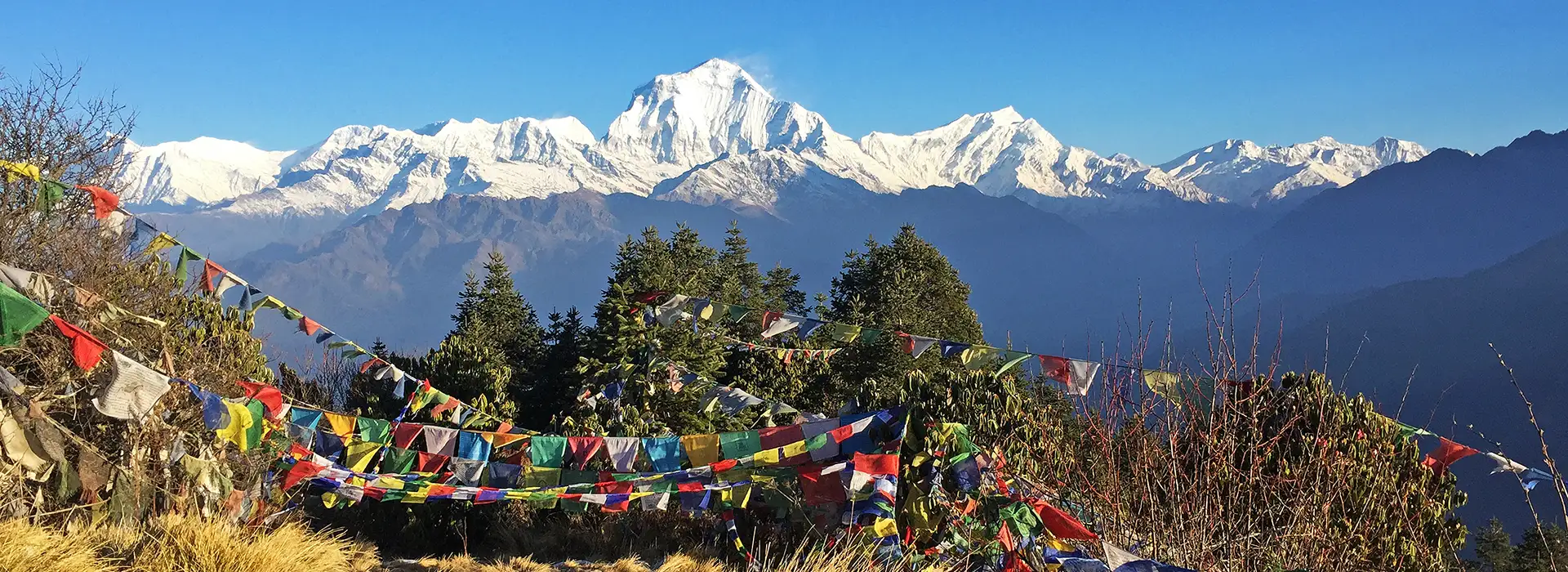
The Poon Hill Trek is short and accessible in Nepal’s Annapurna region, ideal for beginners, families, and first-time trekkers. The trail passes through vibrant rhododendron forests, terraced farmlands, and traditional Gurung and Magar villages. Travelers meet welcoming locals, admire colorful prayer flags, and observe daily life in rural Nepal. Each town provides insight into centuries-old traditions, while the surrounding landscapes showcase lush greenery and rolling hills. This trek combines cultural encounters with natural beauty, making every step both relaxing and memorable.
Travelers climb to Poon Hill at 3,210 meters to witness an unforgettable sunrise over the Annapurna and Dhaulagiri ranges. Peaks such as Annapurna South, Machhapuchhre, and Nilgiri glow in warm morning light, creating breathtaking panoramic views. Along the way, trekkers pass smaller ridges and viewpoints that offer additional perspectives of the Himalayas. This beginner-friendly trek offers stunning mountain scenery and immersive cultural experiences, delivering a short yet enriching adventure in Nepal.
The Poon Hill Trek maintains a gentle pace, allowing travelers to enjoy the scenery and cultural encounters without rushing. Lodging in teahouses along the trail provides meals and a comfortable place to rest each night. The well-marked paths and manageable distances make the trek highly accessible, and local guides assist with navigation, safety, and logistics. With its combination of natural beauty, cultural richness, and leisurely pace, the trek offers a perfect introduction to the Annapurna region for all ages and fitness levels.

Included Meals

Trip staff

Transport

Accommodation

Trip Grade
Group Size
The drive starts early in Pokhara with a 7:00 AM departure. You will drive in a jeep through a scenic but bumpy road. A 45 km drive through rugged mountain roads will take you to Ulleri (1,960m) in 4 to 5 hours. Then, the trek starts with a steep uphill climb.
Walk through stone steps between the thick rhododendron and oak forests. You will pass mountain villages like Banthanti and Nangethanti, where you will pause for tea or lunch. The trek covers about 7-8 km and takes about 5 to 6 hours at a comfortable pace. You will arrive at Ghorepani by late afternoon. Ghorepani (2,870 m) is a lively village with many teahouses. You will stay in this high-altitude village for the night to give your body time to adjust to the growing altitude. Enjoy a meal and rest early for tomorrow.
Start Point: Pokhara (820 m)
Drive Distance/Time: 45 km | 4–5 hours by jeep
Trek Distance/Time: 7–8 km | 5–6 hours trekking
Highest Point Today: Ghorepani (2,870 m)
Altitude Gain: Approx. 900 m (from Ulleri)
Meals Lunch, Dinner
Difficulty
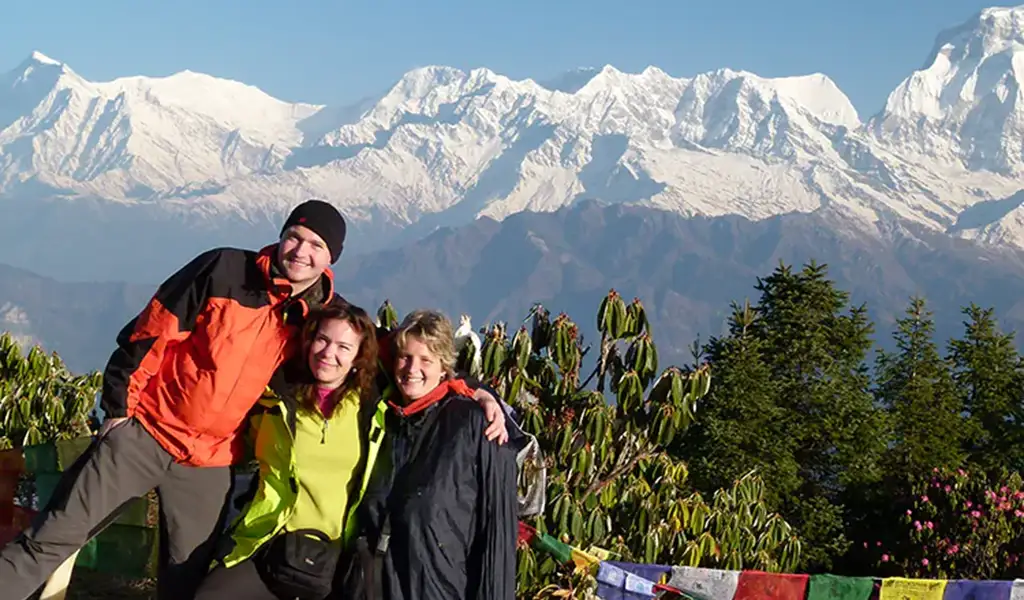
The trek begins with a pre-dawn hike to Poon Hill. The climb is about 1.5 hours long and takes you to one of the best sunrise viewpoints, Poon Hill at 3,210m. The sunrise brings golden and pink hues to the snowy white mountains, coloring them in orange, pink, and gold shades. You will see peaks like Annapurna 1 (8,091m), Annapurna South, Machhapuchhre, and Dhaulagiri (8,167 m). This magical moment is perfect for photography and self-reflection.
Descend to Ghorepani after soaking in the views. Have breakfast and continue your trek by mid-morning. The trail has multiple ascents and descents through rhododendron and oak forest. Springtime has a lovely trail with red and pink flower blossoms, with occasional sightings of langur monkeys and exotic birds.
The trek is about 4 to 5 hours and passes through Deurali and Banthanti villages. You will reach Tadapani by late afternoon and enjoy the close-up views of Macchapucchre and Annapurna South. Check into a lodge and enjoy a peaceful night in Tadapani.
Start Point: Ghorepani (2,870 m)
Morning Hike: 3,210 m Poon Hill summit | 1–1.5 hours uphill | 340 m gain
Trek Distance/Time: Ghorepani to Tadapani – 6–7 km | 4–5 hours
Highest Point: Poon Hill (3,210 m)
End Point: Tadapani (2,630 m)
Meals Breakfast, Lunch, Dinner
Difficulty
Begin the final trekking day today. Today you’ll mostly walk downhill to the beautiful village of Ghandruk at 1,940m. The trek is about 3 to 4 hours long and covers a 5 -6 km distance. You will hike through moss-covered forests and stone stairways with glimpses of terraced fields and distant peaks. You will arrive in Ghandruk by late morning, where you will explore the largest and charming villages of the Annapurna region. Ghandruk is a Gurung village. You can learn the rich history of the community, and wear the traditional dress.
Meet your driver after wrapping up the trek to drive back to Pokhara. The drive is about 3 to 4 hours and over 40 km. You will reach the place by late afternoon, where you will stay the night. Enjoy a hot shower, a comfortable hotel stay, and a peaceful lakeside experience.
Start Point: Tadapani (2,630 m)
Trek Distance/Time: 5–6 km | 3–4 hours trekking
End Point: Ghandruk (1,940 m)
Drive Distance/Time: Ghandruk to Pokhara – 40 km | 3–4 hours by jeep or local bus
Altitude Gain/Loss: Descend ~690 m during trek
Meals Breakfast
Difficulty
The Poon Hill trek is short and popular. It offers beautiful mountain views and a rich cultural experience quickly. The Poon Hill trek is ideal for first-time trekkers or beginners as it doesn’t involve any technical climbing and concludes in just three days.
Fitness and Experience Level: You will be walking for about 3 to 4 hours daily on a moderate trail. The maximum altitude of 3,210 m carries a low risk of altitude sickness. It is perfect for beginner trekkers.
Trip Duration and Pace: The trek is short, with just 3 days of hiking and additional travel time. You will trek pre-dawn to a hilltop for a sunrise view, which is also the highlight of the trek. Since the trek is short and packed with activities, it is ideal for those who want a complete experience but are short on time.
Scenery and Interests: Famous for panoramic views of Annapurna and Dhaulagiri, the trek passes through rhododendron forests and Gurung and Magar villages. You can enjoy a blend of cultural and natural encounters, though it’s a popular route with tourist amenities.
Comfort and Accommodation: Accommodation is basic teahouses with shared bathrooms and limited hot water, offering a rustic but manageable experience. If you prefer luxury, the trek may feel too simple, but hotels are available before and after.
Weather and Timing: Best trekked in October or April for clear skies and moderate temperatures, while monsoon and winter bring rain or cold that can affect the experience. Seasonal timing greatly influences scenery and comfort.
Accessibility and Logistics: The trailhead is a short drive from Pokhara, with easy permit arrangements and good support infrastructure. The trek is convenient for those who prefer less remote trips but still want a Himalayan adventure.
Who It’s Not For: Those with serious knee problems, seeking extreme challenges, wanting luxury comforts, or disliking early mornings may find this trek unsuitable. Also, it can get busy during peak season, so solitude seekers should consider alternatives.
On the trail: Accommodation is in teahouses along the trail while trekking. These teahouses are cozy and straightforward with twin-sharing rooms, basic beds, mattresses, pillows, and blankets. Heating is only available in the communal dining area, where a wood or yak-dung stove will warm the room. Bathrooms are shared, and amenities like hot showers, Wi-Fi, charging, etc., come with an extra charge. You will dine in the communal area with fellow trekkers. Meal options include Nepali dal bhat, fried rice, noodles, momo, soups, and pancakes, with prices ranging from NPR 500-800 depending on the altitude.
In the city: The package doesn’t include a stay in Pokhara or Kathmandu. We can arrange accommodation in Pokhara or Kathmandu if you want., Kuti resort or similar is popular in Pokhara and similar in Kathmandu. Enjoy hot showers, WiFi, spacious beds, and other modern facilities in the city.
The Poon Hill Trek is a moderate and beginner-friendly trek. Some parts may be challenging, but it’s achievable. You can complete the trek in 3 days, covering 5-10km daily in 3-6 hours. While the distance is short, the Himalayan terrain adds to the challenge. Since the duration is short, you don’t have much risk of altitude sickness.
Poon Hill at 3,210m is the highest point of the trek. You may feel short of breath on climbs with no severe altitude problems. A night on Ghorepani at 2,870m helps the body adjust better.
The trails have some stone steps, dirt trails, and rocky sections. The steepest climb includes a stone step around Ulleri and a pre-dawn hike to Poon Hill. The Tadapani to Ghandruk descent can be tricky on the knees due to the stone steps.
Porters carry your main luggage, leaving you to take your daypack with essentials. Basic fitness and pre-trek exercise help a lot. You don’t need any technical climbing skills or any climbing equipment. Trails are well-marked with no glacier travel or rock climbing: sturdy footwear and trekking poles.
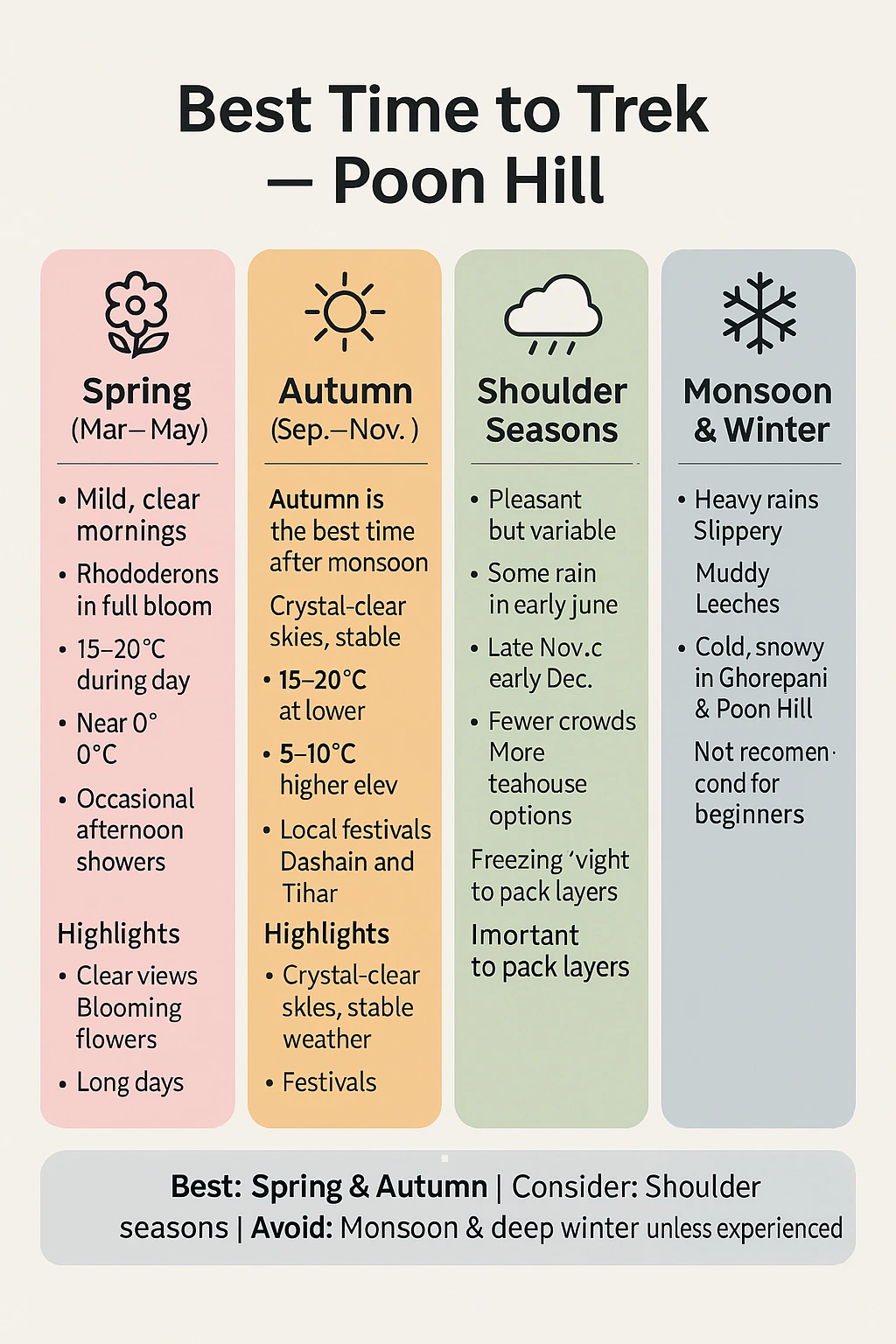
Spring (March to May): The weather is mild with clear mornings and excellent visibility. Rhododendrons are in full bloom, and red, pink, and white colors the hills. Daytime temperature can range from 15-20°C at lower elevations and around 10°C in higher elevations. Nights are cool and almost freezing, with afternoons bringing occasional rain showers. The weather is pleasant and the landscapes are colorful, making spring one of the best trekking seasons.
Autumn (September to November): August is the best time for the Poon Hill trek. Skies are crystal clear after the monsoon rain, and visibility is excellent. Temperature ranges from 15-20°C at lower elevations and 5-10°C at higher elevations. Since the weather is stable, many photographers flock to the area this season for the perfect shot. You will also experience local Nepali festivals like Dashain and Tihar.
Shoulder Seasons: Opt for shoulder seasons if you want quieter trails with equally pleasant weather. The shoulder seasons are late February, early June, late November, and early December. Early June has some rain and lingering winter chill in late February. Late November and early December are dry and clear with colder days and freezing nights. While trekking in the shoulder seasons, you can enjoy pleasant weather with more teahouse options and fewer crowds.
Monsoon and Winter: Monsoons bring heavy rainfall, making the trail slippery and muddy, and the forests full of leeches. Clouds block the mountain views, and landslide risks are at their peak. Winter is cold with snow in higher villages like Ghorepani and Poon Hill. If you have prior trekking experience, you may finish it with the correct gear, but we don’t recommend it to beginners. Monsoons and Winters have extreme conditions with high risks. Check the local weather forecasts daily and pack accordingly.
Guides: Our Poon Hill Trek package comes with an experienced and licensed guide. They are fluent in English and have training in mountain first aid and altitude sickness observation. They have years of experience and a National Academy of Tourism license. They take care of your logistics and are responsible for your safety. If you feel sick or experience any discomfort, inform your guide immediately so they can take appropriate action. Guides also take care of your permits and set the pace suitable for the entire group. You get to learn the culture of the regions and even a few local words for greetings. Having a guide who knows the trail like the back of their hand and can respond quickly in emergencies is a valuable part of the trek.
Porters: Carrying a heavy backpack while trekking can drain you quickly; this is where porters come in. Porters carry your main luggage, about 25 kg, so that you can hike with your lighter daypack. Usually, porters are the area’s locals and move with incredible strength and ease. We ensure proper clothing, insurance, a reasonable load limit, and fair wages for them. Most trekkers finish the trek with a newfound companionship with their trekking crews. Even with minimum English-speaking skills, porters are some of the best trekking companions. We encourage tipping at the end of the trek to show your appreciation for their hard work.
Mountain trekking conditions are unpredictable. While we follow our itinerary schedule, conditions on the ground may lead to adjustments. Weather shifts quickly in the mountains, with a sudden storm or heavy rain always possible all year round. Landslides or heavy snow can block the trail, and cloudy mornings can appear even in October.
Your guide might reroute or delay the day in these extreme conditions. Group health and pace can also affect the day. Some groups walk more slowly, while others push ahead and even go on side quests. If a trekker feels unwell or needs evacuation, your guide splits the group or delays the trek altogether. If the group gets separated, an assistant guide will lead the latter group so no one is left behind.
Itinerary customization is especially easy for private treks. You can add extra nights in Ghandruk or extend the trek to Annapurna Base Camp. We arrange custom add-ons if you want to expand your adventure. Flexibility is a part of mountain travel. Unexpected moments can bring some of the best memories of the trek. We encourage a positive mindset so these changes don’t affect your experience.
We offer a few add-ons to the trek if any trekkers want to learn more about Nepal and visit more places. These add-ons are entirely optional and come with an additional price.
Kathmandu Sightseeing: You can go on a guided tour to visit the cultural highlights of Kathmandu Valley. The UNESCO Heritage Sites, like Swayambhunath Stupa (The Monkey Temple), Bouddhanath Stupa, Pashupatinath Temple, and different Durbar Squares of the Valley, are part of the tour. Spend a day or two sightseeing to learn Nepal’s rich history, art, and religion.
Pokhara Sightseeing: Pokhara is a beautiful lakeside city that serves as the gateway to Poon Hill. Visit the World Peace Pagoda, explore Gupteshwor Mahadev Cave, and Devi’s Fall here. You can also go boating on a rented wooden boat in Phewa Lake and visit the Pumdikot Hill. Pokhara is also a hub for adventure lovers, offering paragliding, bungee jumping, and even ultralight flights to the Annapurnas.
Chitwan Jungle Safari: Chitwan National Park in southern Nepal offers a different landscape, weather, and views. You can go on a jeep safari with a guide, do jungle walks and canoe rides, and visit Tharu cultural villages. The park is home to many species of wildlife, like one-horned rhinos, elephants, crocodiles, deer, and over 500 species of exotic birds.
Kathmandu-Pokhara Flight: You can save time with a 25-minute flight from Kathmandu to Pokhara. This short flight offers beautiful Himalayan views and saves 6-7 hours of road trip time. It is ideal for trekkers on a tight schedule.
Kathmandu-Pokhara Tourist Bus: You can take a tourist bus to Pokhara from Kathmandu if you like road travel or are on a tight budget. These buses are more comfortable than local public buses and offer scenic views of Nepal’s mid-hills. The trip is roughly 7 hours long with multiple rest stops.
Additional Trek Days or Extensions: We can add an extra night in villages like Ghandruk or combine the trek with some sections of the Annapurna Base Camp trek. You can communicate with us about your preferences so we can arrange a schedule in advance.
Clothes: Pack breathable t-shirts, trekking pants, a warm fleece or a down jacket, and a waterproof/windproof outer shell. You need to pack and dress in layers to tackle any weather conditions. Bring a rain jacket or poncho and thermal base layers.
Trekking Gear: Your boots should be sturdy, broken-in, and have ankle support. Pack a 20-30L daypack for essentials like water, snacks, a camera, and an outer clothing layer.
Sleeping and other accessories: While teahouses provide blankets, they might not always be enough for the cold nights. Pack a lightweight sleeping bag rated to 0°C and an optional liner for hygiene. Bring a headlamp with extra batteries, a power bank, a trekking pole, and a reusable water bottle or hydration bladder with a purification method.
Health and Toiletries: Bring enough for the trek if you have any personal medications. We advise trekkers to get an individual first aid kit with band-aids, blister care, pain relievers, and electrolyte salt. You also need an SPF 30+ sunscreen, lip balm, hand sanitizer, wet wipes, toilet paper, toothbrush, and soap.
Miscellaneous: Carry Nepali rupees in cash in small denominations for snacks and tips. Keep your passport, permits, and travel insurance details securely in a waterproof pouch close to you.
Fitness and Preparation
We consider the Poon Hill Trek to be a moderate trek with only three trekking days. It might be a short trek, but the trail conditions and altitude can make it hard. You can efficiently work on your stamina and leg strength before the trek to tackle long walking days and steep climbs. Build endurance by hiking, jogging, cycling, and swimming.
Go on practice hikes on hills and uneven trails with your full trekking gear to get used to the conditions. Carry a light backpack during your exercise and hiking sessions to adjust your body to trekking with a load.
You can add exercises like squats, lunges, and planks to strengthen your legs and core so your muscles get used to challenging climbs and descents on the trek. You don’t need to be an athlete or have an extreme fit body. Consistent exercises before the trek help the body adjust to difficult walking days. You can walk slowly and take a rest stop where you like when trekking, so it is enjoyable for you. We advise moderate fitness, a steady pace, and a positive attitude to finish the trek comfortably.
Altitude sickness is a huge concern while trekking in Nepal, as most trekking routes are above 3000m. Acclimatization is adjusting the body to lower oxygen levels in high altitudes. While the Poon Hill trek doesn’t reach extreme height, you should still be aware of the symptoms and prevention of altitude sickness. AMS (Acute Mountain Sickness) can attack anyone regardless of fitness level.
The trek’s highest sleeping point is 2,870m at Ghorepani, and the maximum altitude is 3,210m at Poon Hill. These altitude levels are below the threshold where severe altitude sickness begins. We follow the climbing high and sleeping low principle to gradually adjust the body to the increasing altitude.
Mild altitude sickness symptoms like headache, dizziness, loss of appetite, and difficulty sleeping are common and can even occur at moderate elevations. Walk at a steady pace, drink enough fluids, eat nutritious meals, and avoid alcohol or smoking, as they cause dehydration. Your guide will monitor your health and oxygen level daily in case of any health issues. If your symptoms worsen, descend immediately to the nearest village.
We advise drinking about 4 liters of fluid, eating carbohydrate-rich food, and resting well. If you feel sick or notice signs of AMS, communicate with your guide for safety.
Travelers need a valid Nepal Tourist Visa to enter Nepal. Most trekkers can get a visa on arrival at Tribhuvan International Airport. Your passport should have at least 6 months of validity and a few blank pages left for the visa. Take your passport and a few passport-sized pictures with you to fill out the form at the airport.
Pay the visa fee for the days you plan to stay in the country. Since this trek is only about 5 days long, you can get a 15-day visa for USD 30. Check the largest visa regulations before your arrival, as rules are subject to change.
You need a Trekker’s Information Management System (TIMS) card and an Annapurna Conservation Area Permit (ACAP) for the Poon Hill trek. Local authorities use these permits to fund conservation projects and register trekkers for safety. We arrange both permits for you as part of our package. You must send us a copy of your passport and two passport-size photos to arrange these permits. Keep the permits with you during the trek since checkpoints along the route will ask to see them.
Nepal’s official currency is the Nepali rupee (NPR). It is best to exchange your money into Nepali cash before the trek in Kathmandu or Pokhara, as no ATMs are on the trail. You can exchange your cash in licensed money exchange centers or banks.
The package covers your major expenses like permits, guides, porters, and accommodation with three meals daily. However, you should budget for personal expenses like snacks, bottled water, hot drinks, and crew tipping. We advise tipping about 10% of your total trek cost to your guides/porters at the end of the trek. Lodges charge about NPR 100-500 extra for hot showers, charging devices, and WiFi. You should budget extra for souvenirs or handmade crafts from villages like Ghandruk.
Currently, 1USD~NPR140, but the rate might change, so check before exchanging. You can easily exchange major currencies like USD, EUR, or GBP in Nepal. Budget around NPR 2,000-3,000 in small denominations like 50s and 100s daily so that you can pay any additional costs. Mountains don’t accept credit cards; cities accept them, but you may have to pay a service fee. It’s better to carry cash for your Poon Hill trek.
The route to Poon Hill passes primarily through Gurung and Magar villages. These ethnic groups have their language, culture, attire, and traditions.
Greeting: Put your hands together in a prayer pose and say “Namaste” with a slight bow and a smile to greet people. This friendly gesture helps you bond with the locals. The word “Namaste” literally means “I salute the god within you” and is the most popular way of greeting hello or goodbye in Nepal.
Dress and behavior: Dress modestly in villages and while visiting religious sites. You can wear shorts while trekking, but avoid showing skin out of respect for local customs. Don’t click pictures of people or religious sites without permission. The people might be warm and welcoming, but you must respect their privacy and customs.
Local customs: Walk clockwise when visiting a monastery, temple, or shrine and follow the direction of prayer wheels. You should refrain from touching prayer flags or religious objects without permission. Remove your shoes before entering the living area in teahouses or homes and avoid stepping over anyone’s legs when visiting somebody’s house. The locals believe a person’s head is the most sacred part of their body, so you should avoid touching someone on their head.
Community and Environment: The Gurung and Magar communities of the region heavily rely on tourism for the local economy. You can support the community by buying tea or snacks from local shops. Don’t litter, use water purification methods to reduce plastic bottle use, and stick to marked trails to avoid disturbing and damaging the crops and vegetation. You should be mindful of your environmental footprint.
Trek with a guide: We include a licensed trekking guide. Your guide knows the trail, weather, and local conditions like the back of their hand. If they adjust the trekking schedule, know it’s in your best interest and safety. They may split the group, reroute, or delay the trek in case of any emergencies or weather conditions. Follow their lead for an enjoyable trek.
Stick to the Trail: Walk on the marked trails of the trek. Poon Hill and Ghandruk have well-marked trails that anyone can follow, but you should stay with your group at all times. Avoid shortcuts through forests or farmlands and check for leeches in damp areas during the monsoon.
Hydration and Food Safety: You should only drink boiled or purified water to avoid water-borne diseases. Use purification tablets and filters, or buy boiled water without worrying. Eat freshly cooked meals and avoid raw, unwashed fruits or vegetables. We advise trekkers to eat vegetarian meals throughout the trek, as fresh meat may not be available.
Weather and Gear: Mountain weather is not reliable. You should keep a rain jacket and a warm layer in your daypack to grab them easily in case of a sudden weather shift. Wear trekking boots with a good grip as trails may be slippery.
Listen to your body: You know your body better than anyone. Take breaks when you need to and communicate with your guide if you feel tired or notice any symptoms of altitude sickness. It’s better to prevent the issues than to push through discomfort.
Emergency Preparedness: Our guides carry a basic first-aid kit and have phone/radio access for emergencies. They are in 24/7 contact with our Kathmandu office in case of any emergencies. In severe cases, we arrange a helicopter evacuation from Ghorepani or Ghandruk.
Wildlife and Dogs: Do not feed or approach monkeys or other animals while trekking. Avoid contact with stray dogs and don’t disturb any animals. These animals are usually harmless if left alone, but they may carry diseases, so be careful around them.
Sanitation: Use hand sanitizer or wash your hands before any meals. If you wash your hands mid-trek, avoid soaking them near water resources, and carry a mask if you are sensitive to dust.
We highly recommend insurance for every trekker before joining the Poon Hill trek. While this short trek is generally safe, you’re trekking in remote mountain areas where nothing is specific. A good travel insurance policy protects you from the financial strain that any emergencies can bring. Your policy should cover,
Medical Coverage: Your policy should cover high-altitude trekking up to 4,000 m, including medical care in Nepal in case of any injuries.
Emergency Evacuation: Buy a policy that includes an emergency helicopter evacuation. Most severe altitude sickness or injury requires evacuation to hospitals in Pokhara or Kathmandu. These evacuations can be financially draining without insurance.
Trip Cancellation or Interruption: Illness, natural disasters, or other emergencies may lead to you canceling your trip. You can get protection from non-refundable expenses in case of trip cancellation or early termination.
Lost or Delayed Baggage: You can claim reimbursement for essential purchases if you lose your luggage or experience travel delays.
General Liability and Adventure Sports: While most policies cover trekking, they may not cover adventure sports like paragliding or safaris. Buy the policy that includes it.
Read the policy details carefully before purchasing so you know your rights and can act accordingly. Some insurers charge extra for trekking above certain altitudes or in remote regions. For quick assistance, carry a printed copy of your insurance certificate and emergency contact info.
How to book?
Visit our website and click the Poon Hill Trek to book the package with us. Select your preferred date, group size, and any optional add-ons or customizations to get started. Fill the form with your details, and we will follow up with other documents.
Pay a small deposit to confirm your spot, or pay the full amount upfront to secure your place. If you pay the deposit first, the rest of the balance is due on arrival in Nepal or before the trek begins. We accept major credit cards to secure payments. We will email you the confirmation with booking details, payment receipt, and preparation tips.
You also have the option to book by contacting us through email or phone. It is especially better for personal assistance, custom requests, or questions. We will guide you through the process and handle the booking for you.
Payment Terms and Conditions
We usually ask for a non-refundable deposit of around 20% of the total trekking cost upfront. You can pay the full balance upfront or the rest about 30 days before the trek. The deposit helps secure permits, guides, and other arrangements.
The package includes permits, guides, porter services, trek accommodations, and transportation from Pokhara to the trek starting point and vice versa. You are responsible for international flights, Nepal visa fees, city meals, travel insurance tips, and personal expenses. The client is responsible for extra costs from delays or extensions due to weather or other factors. We advise having a contingency budget and good insurance.
Cancellation Policy
If you need to make any changes to your plans, please email us as soon as possible. Canceling 30 days before the trek means you get a full refund minus the deposit. You can keep the deposit as credit for up to a year. If you cancel 15-30 days before the trek, we will refund up to 80% of the payment without the deposit. Cancel within 14 days of the trek, we don’t provide any refund, but we may offer limited credit or transfer your booking to another person. No-show on departure day means no refund.
If unforeseen circumstances like political unrest, natural disasters, etc., force us to cancel the trek, we offer an alternative trek of similar value or a full refund.