
Included Meals
- Breakfast: 0
- Lunch: 0
- Dinner: 0

Unbeatable Holiday Offers – Save Up to 20% on Your Next Adventure!
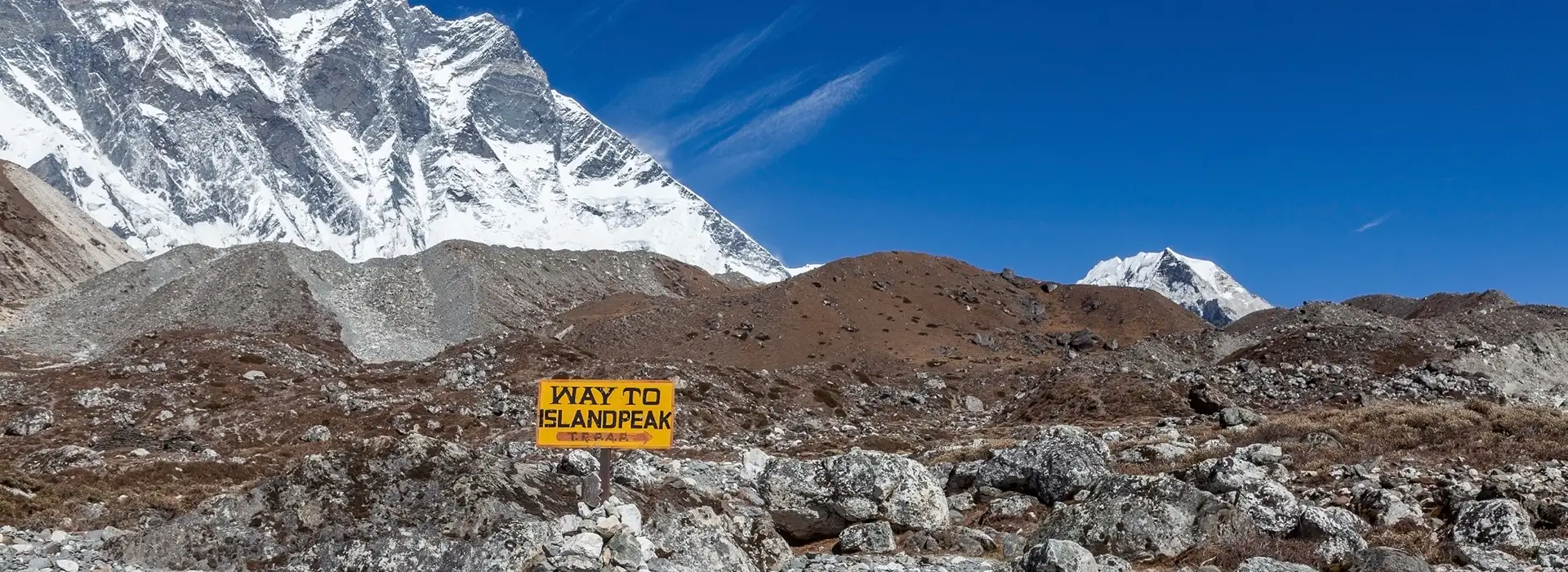
Named by Eric Shipton, Island Peak, also known as Imja Tse, is a striking Himalayan mountain in the Imja Valley within the Khumbu region. Island Peak climbing is a 17-day adventure that combines the classic Everest Base Camp trek with a non-technical climb of Island Peak itself.
This trek is ideal for trekkers seeking a mix of trekking, cultural immersion, and high-altitude mountaineering experience. The trail begins from Lukla and passes through lush rhododendron forests, rivers, and open alpine valleys.
Along the way, trekkers encounter multiple Sherpa villages, traditional monasteries, and suspension bridges connecting deep Himalayan gorges. The climb itself provides stunning views of iconic Himalayan peaks such as Everest, Lhotse, Nuptse, and Ama Dablam, making it a truly rewarding adventure.
During Island Peak climbing, trekkers pass through well-known Sherpa villages like Namche Bazaar, Pangboche, and Dingboche. These villages showcase the rich Sherpa culture, including traditional stone houses, mani walls, prayer flags, and local farming practices.
Staying in teahouses along the route allows trekkers to enjoy freshly prepared local food while resting comfortably at high altitude. The trail also passes through scenic landscapes of the Khumbu region, including forested hills, icy rivers, and panoramic Himalayan views.
Travelers can witness the harmony of natural beauty and cultural heritage that makes the Everest region so unique.
For those seeking a shorter, luxurious adventure alongside Island Peak climbing, the Luxury Sherpa Village Hike Everest Helicopter Tour is an excellent option.
This tour includes a scenic helicopter flight from Kathmandu to the Everest region, followed by a short hike through Sherpa villages. Participants experience traditional Sherpa life while enjoying panoramic views of the Himalayas without the long, exhausting trekking days.
This premium option provides comfort, cultural immersion, and unforgettable aerial perspectives of iconic peaks, making it ideal for travelers with limited time or those preferring a more relaxed high-altitude experience.
The climb to Island Peak, at 6,189 meters, is challenging yet non-technical, making it suitable for trekkers with previous high-altitude experience. The summit rewards climbers with spectacular views of Everest, Lhotse, Nuptse, Ama Dablam, and surrounding glaciers.
Every step of the climb is framed by rugged alpine landscapes, offering excellent photography opportunities and a sense of achievement.
Acclimatization is carefully planned along the route, allowing trekkers to adjust to higher altitudes while enjoying village stops and scenic viewpoints. The balance of trekking, culture, and summit climbing ensures a safe and enriching experience.
This 17-day Island Peak climbing package is perfect for adventure seekers, mountaineering beginners, and trekkers wanting a Himalayan challenge combined with cultural immersion.
It offers a rewarding mix of trekking through Sherpa villages, experiencing Buddhist culture, and climbing a high Himalayan peak. The combination of natural beauty, village life, and summit experience makes Island Peak climbing a complete and unforgettable adventure in Nepal’s Khumbu region.

Included Meals

Trip staff

Transport

Accommodation

Trip Grade
Group Size
Climbing Island Peak is more than reaching a high point. You walk through welcoming Sherpa villages, stand at the base of Everest, and get familiar with mountaineering. The trek is demanding but deeply rewarding. With the right mindset, good preparation, and solid support, you can reach the 6,189m summit. If you feel ready to push beyond trekking and try something bigger, Island Peak is a perfect goal. Reach out to us, and let us help you plan your Himalayan adventure.
If you are not a Nepali citizen, your experience begins when you arrive in Nepal. Our staff will greet you and pick you up at Tribhuvan International Airport. You will then reach your hotel in Thamel. You can explore the streets of Thamel after checking in. Immersing yourself in the Hindu and Buddhist cultures will give you the experience of Kathmandu. We will organize a short orientation in the evening to inform you about and discuss your trek.
Accommodation:
Hotel Thamel Park

Maximum Altitude 1,400m/4,593ft (Thamel)
Difficulty
Transportation Private Car
You will stay in Kathmandu for another day to complete all the preparations. You can go sightseeing and purchase essential stuff for the trek. There are many UNESCO World Heritage sites in Kathmandu; visit them to learn about the culture of the land you are stepping onto. Kathmandu is a blend of Buddhist and Hindu traditions. You can see famous tourist spots like Pashupatinath Temple, Swayambhunath, Bouddhanath, and Durbar Squares. You will meet your trekking guide for the final briefing. Finalize your permit formalities, gear checks, money exchange, and backpack checks. After spending the night, your adventure will begin.
Difficulty
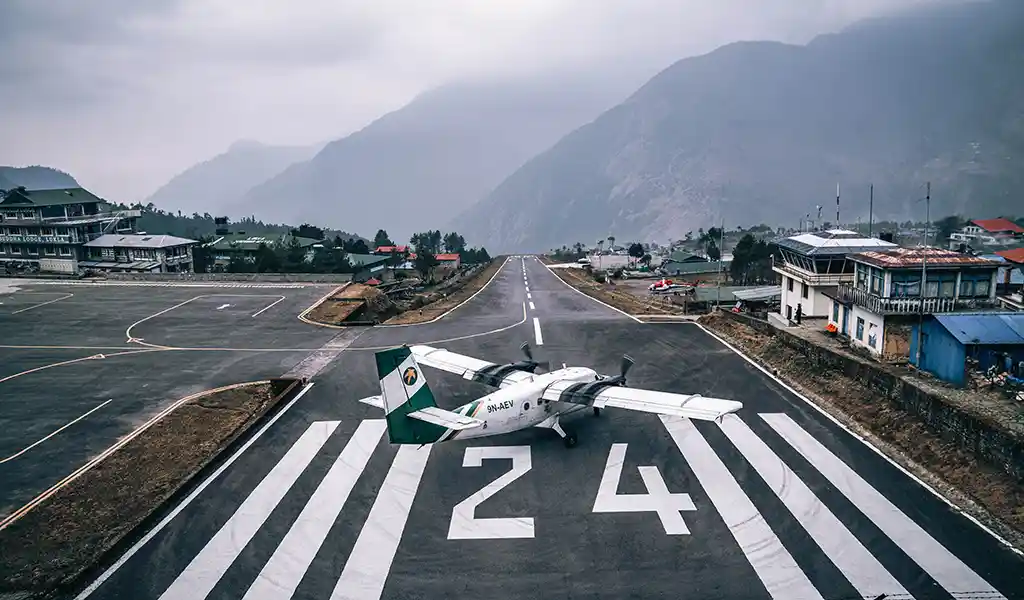
You will board an early morning flight to Lukla. If it is peak trekking season, you will reach Manthali airport by road and then go to Lukla by air. If not, you will fly directly to Lukla from Kathmandu. The aircraft will pass through beautiful mountains.
Lukla is known as the gateway to Everest. You will meet your porter and assistants upon arrival. Your trek will then begin the same day. You will walk a descending trail from Lukla along the Dudh Koshi valley and cross suspension bridges. After trekking for about 4 hours, you will reach Phakding, a small village by the river. You will be spending the night there.
 Difficulty
The next day, your trek begins again. Your trail will continue through the Dudh Koshi valley. You will then reach Sagarmatha National Park at Monjo village. Show your Sagarmatha National Park permit to enter this protected site.
You will continue walking, now through rhododendron and pine forests. You will cross more suspension bridges, including the famous Hillary Bridge. The altitude will gradually increase, and Everest will slowly be visible if the day is clear.
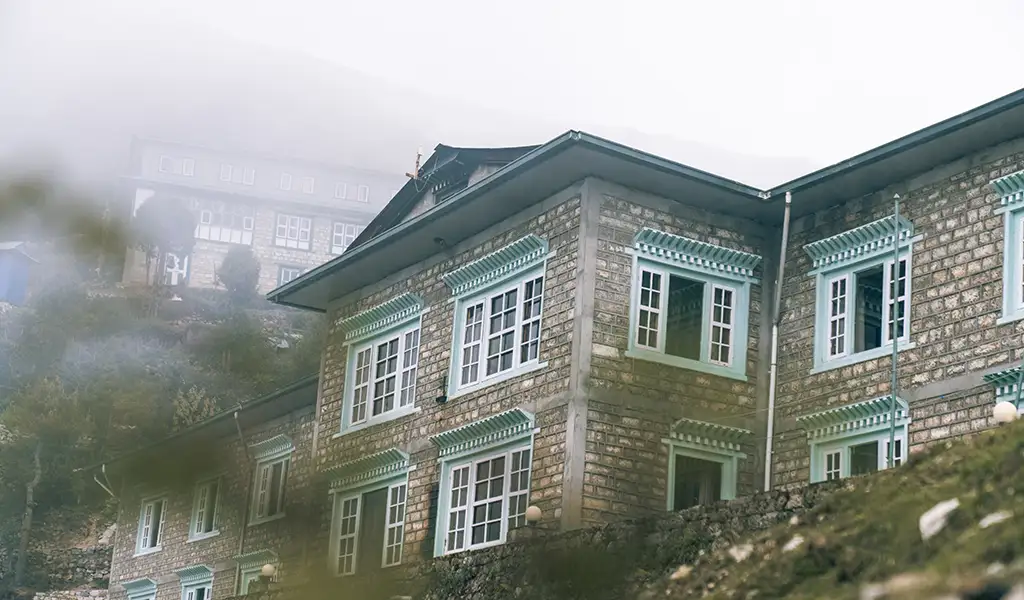
You will arrive at Namche Bazaar after a tiring 6-hour hike. Namche Bazaar is the first authentic village on your trail. It is also a market hub and crossroads for multiple routes. You will find hospitals and bustling markets with bakeries, cafes, shops, and lodges. You will be staying in a teahouse for the night.
 Difficulty
Almost every itinerary includes an acclimatizing day in Namche Bazaar. It is vital to adjust your body to the shifting altitude. Acclimatization helps prevent altitude sickness.
You can take short hikes to nearby places to prepare your body further. One of the most popular hikes is from Namche Bazaar to the Everest View Hotel. After this 2-hour hike, you can enjoy the views of Everest, Lhotse, Nuptse, and Ama Dablam.
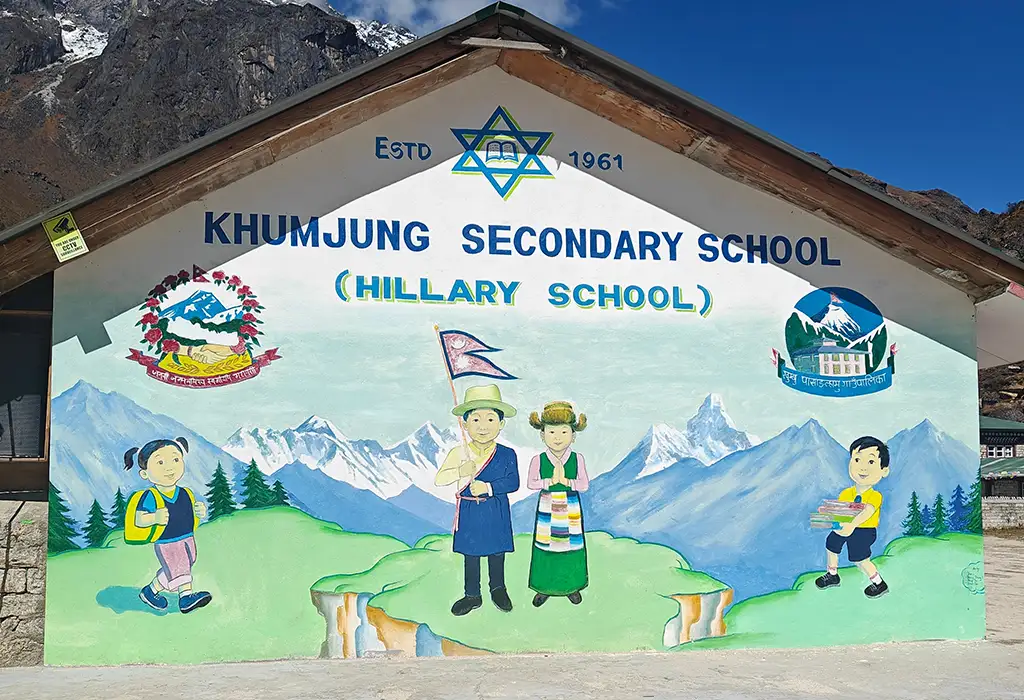
You will pass through the village of Khumjung and see the Edmund Hillary School and local monasteries. You can enjoy your lunch back in Namche and explore the town more. If it happens to be Saturday, you can visit the weekly Farmers’ market and buy anything you want. Your body will start adjusting to the thin air.
 Difficulty
Your trail from Namche to the midway Tengboche is primarily flat. You will pass through small villages like Kyangjums and Sanasa. You will get the views of Everest and Ama Dablam. You will also see yaks carrying goods.
Shortly after leaving Sanasa, the trail will begin descending. The descent trail will then follow along Dudh Koshi at Phunki Tenga, a riverside spot with prayer wheels and water mills. Then, your path will begin steeply uphill through the rhododendron and pine forest.
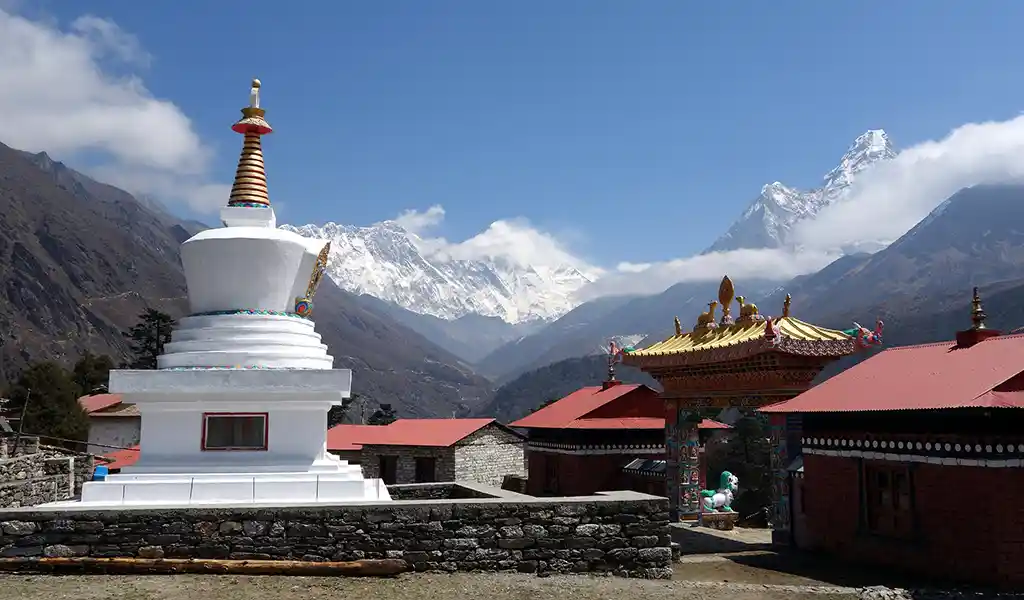
After the climb, you will reach Tengboche. Tengboche Monastery, or Dawa Choling Gompa, is the biggest Buddhist monastery in Tengboche. You can attend the afternoon prayer session. It is a peaceful moment with monks chanting in the monastery. You’ll spend the night in a local teahouse, where rooms are simple with shared bathrooms.
 Difficulty
You can wake up early to catch the beautiful sunrise over Mt. Ama Dablam. The trek will begin after breakfast. Your trail will descend steeply to Debuche. You will pass through the forest, then cross a suspension bridge over Imja Khola from Debuche.
After crossing Imja Khola, your trail will climb steadily through Pangboche. Pangboche is the oldest established Sherpa village and has the oldest monastery in the region. After passing Pangboche, the forest will start disappearing. The weather is too cold for any trees to grow after this point. Alpine meadows and barren lands are more common. You will have your lunch at Shomare or Orsho. After fueling your body, the trek continues gradually and continuously uphill until you reach Dingboche.
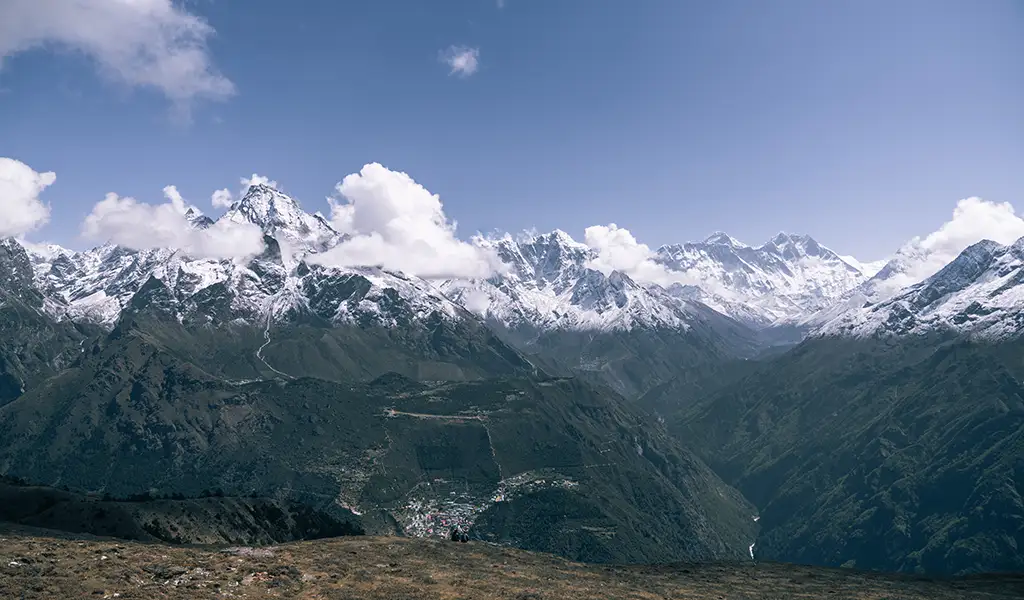
Dingboche offers excellent views of Ama Dablam, Lhotse, and Island Peak. You will be staying in a lodge in Sherpa village. The elevation is already at 4,400m, so rest your body well.
Difficulty
Dingboche will be the next acclimatization spot. You have already entered above 4000m above sea level. You may get altitude sickness if you don’t rest well. You can hike to a nearby hill, Nangkartshang, at 5,050m. The hike is about a 3 to 4-hour round trip with beautiful views of Makalu, the fifth-highest mountain in the world. You can see Lhotse, Island Peak, and Imja Valley from this hilltop. Descend back to Dingboche for the night. Hiking up and sleeping low aids in your acclimatization. Enjoy the day and explore the village.
Difficulty
Your trek will begin with a gentle trail. You will follow the trail until reaching Thukla. Thukla or Dughla is a small town clustered with teahouses. After Thukla, the route is steep uphill. You will then get the Thukla pass. There are memorials to honor the climbers who died on Everest at the top of Thukla Pass. Pay your respect there, then continue along the trail of the Khumbu Glacier. The path is rocky and barren. Walk carefully. The massive Khumbu glacier is visible in some places on the route. You will reach Lobuche by early afternoon. Lobuche is nearly at 5000m. The temperature is cold, and the air is thin. Make sure to rest your body and hydrate well. Eat a filling and energizing meal.
Difficulty
You will start hiking from Lobuche, following the trail of the glacial moraine. The trail is rocky and challenging. You will reach Gorakshep after walking for 3 hours. Gorakshep sits at 5164m above sea level.
You will rest in Gorakshep, leave your backpack there, and then trek to the Everest Base Camp. Gorakshep was previously the base camp before the authorities changed it to the current Base Camp. You will reach the Everest Base Camp after hiking for about 4 to 5 hours. Everest Base Camp is 5364m above sea level.
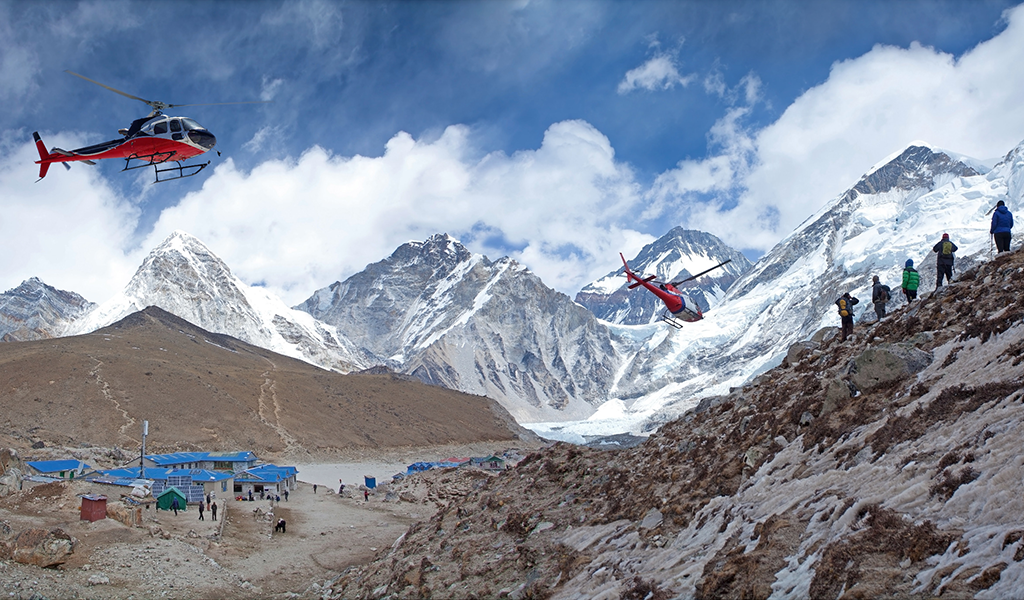
There is not much altitude gain from Gorakshep to Everest, but the drop in oxygen level makes the trip challenging. If you trek during the climbing season, you might see colorful tents from climbing teams and flags waving in the wind. Otherwise, the area is quiet, with no tents around.
It’s just the Khumbu Icefall rising before you and a mix of ice and rock all around. Take a few photos and start the return to Gorakshep, where you will stay the night and rest. You’ve made it to Everest Base Camp.
Difficulty
Your hike to Kala Pathhar will start early at around 4:30-5:00 AM. Kala Patthar, or Black Rock, is a steep hill near Gorakshep.
After hiking for about 2 hours, you will reach the summit of Kala Patthar. You will see the beautiful sunrise from this hill with the panoramic views of Mount Everest’s south face.
The morning light will shine through Pumori, Nuptse, Lhotse, and other peaks. It is one of the most popular Everest viewpoints. After watching the sunrise, you will descend to Gorakshep. You will have breakfast there.
After breakfast, you will hike the previous path through Lobuche and Dughla. You will reach Dingboche after walking downhill. The decrease in altitude will make your trek a lot easier, but it is still better to be careful.
Difficulty
Today, you will start your hike from Dingboche and leave the main Everest trail. Your path will head east through Imja Valley. You pass by streams and grasslands and get your first views of Island Peak and the dramatic Amphu Lapcha Pass.
After about 3 hours of a gentle hike, you will reach the Chhukung village and have lunch there. Then, you will continue your hike. The path is rocky and ascends steadily, following the Imja glacier moraine. You may spot Himalayan Thars on the way. You will then arrive at the Island Peak Base Camp. Here, there are no lodges and teahouses.
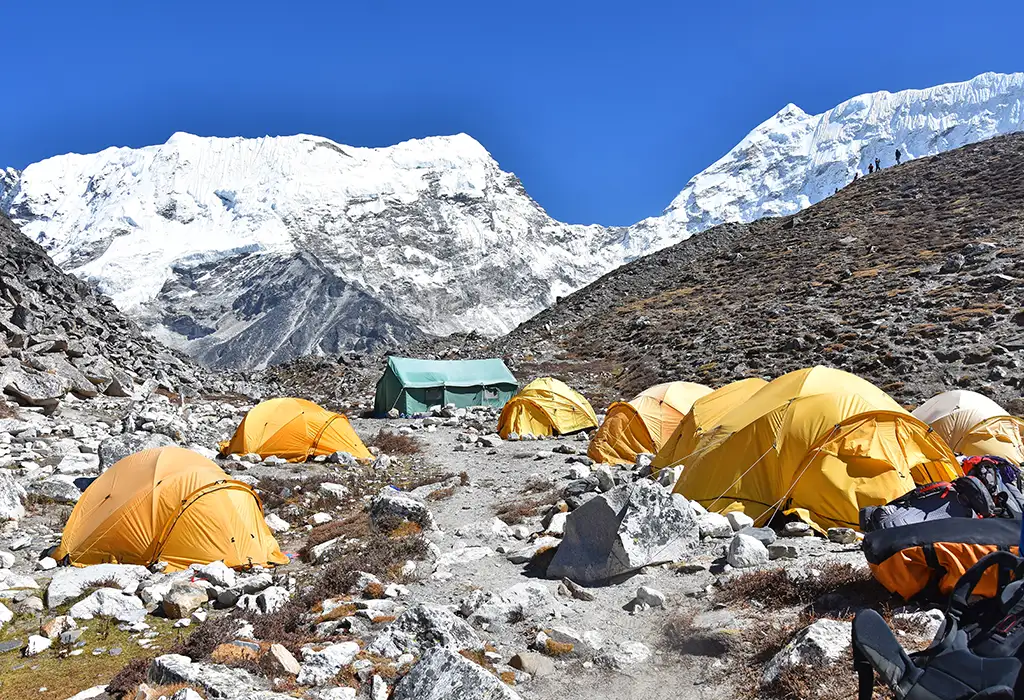
The staff will set up your tent for the night. Your climbing guides will teach you how to use the mountaineering gear in the late afternoons. You will learn to use equipment like harnesses, crampons, ascenders, and rope techniques like climbing fixed ropes and abseiling. The training builds your confidence and safety awareness for tomorrow’s climb. Eat dinner and rest early to start the next day early in the morning.
Difficulty
Your day will start at midnight. You will have a light breakfast at midnight, finish final preparation, and climb around 1:00-2:00 AM. You aim to reach the summit by sunrise, when the weather is calmest and visibility is best. Your climb will begin with a steep trail of loose rocks.
After a few hours, you will reach the snowline. The team will put on crampons and rope up. You will start crossing the Island Peak glacier. Parts of the glacier contain crevasses, and the guide has to fix the rope in these risky sections. The hardest section is the 100m 45° ice/snow wall just before the summit ridge. This section is physically demanding.
The air is thin at 6000m, making the path even more challenging. After passing this wall, you will see a narrow ridge to the summit secured with ropes. After passing this, you will stand on the Island Peak’s summit at 6189m by dawn.
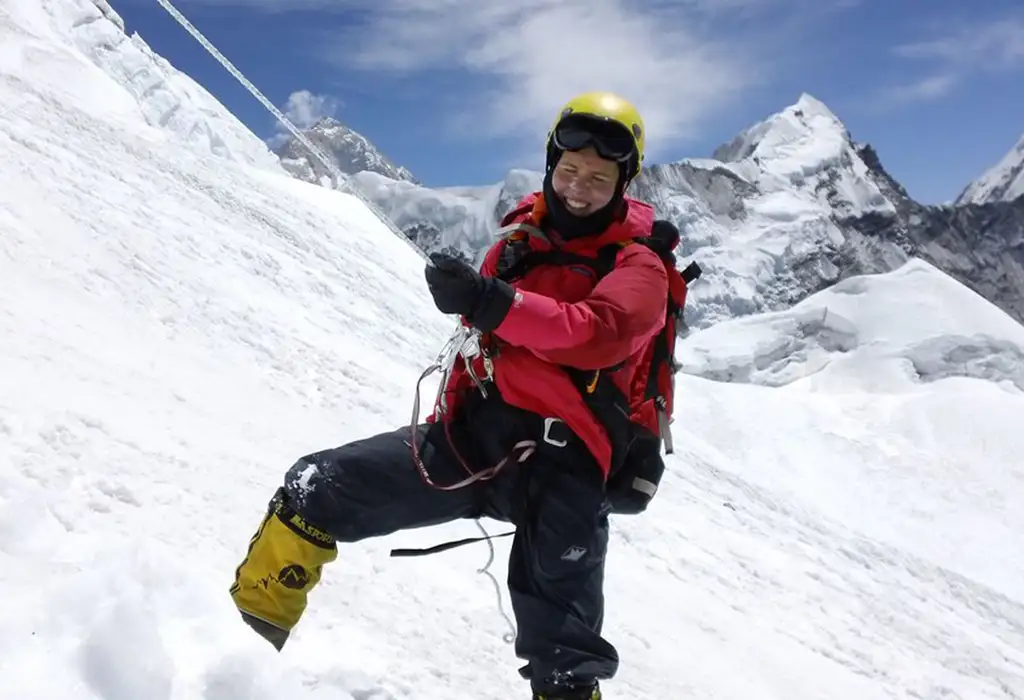
You will get beautiful views of Makalu, Baruntse, Ama Dablam, and many other peaks. The south face of Lhotse will be right in front of you. After the celebration, you will start your descent carefully. You will trek back across the rocky trail and glacier. You reach the Base Camp by late morning and start the trek back to Chukkung. After 10 to 12 hours of a physically demanding climb and trek, you will eat a hot and filling breakfast at Chhukkung. The results are worth the effort.
Difficulty
You must descend from Chukkung down to Dingboche, retracing the route through Pangboche. The air gets thicker and the terrain easier. You will also begin noticing the temperature warming after leaving the 4000m zone.
You will pass Tengboche and the monastery again, where you may rest for lunch. The trail then descends steeply to Phunki Tenga, a small riverside resting point. Upon leaving Phunki Tenga, the trail has a gradual ascent.
You will follow the path and finally reach Namche Bazaar. Check in at your lodge. You can take hot showers, visit bakeries, and get a comfortable night’s sleep here.
Difficulty
After breakfast in Namche, you will descend towards the Dudh Koshi River valley. You will cross many iconic suspension bridges as you bid goodbye to the visible peaks.
You will pass through Jorsalle, Monjo, and Phakding as you descend. You can reflect on your previous stay there. The trail is mostly downhill, but there are some steep uphill sections, especially in the final section, before reaching Lukla.
You will complete your trek when you arrive in Lula. You can have a congratulatory celebration with your guides and team on this final day of your adventure. After the celebration, prepare for the flight the next day and rest.
Difficulty
If the weather permits, you will take an early morning flight from Lukla to Kathmandu. The flight is only about 35 minutes long, with views of the great Himalayan peaks.
You can have a congratulatory celebration with your guides and team on this final day of your adventure. After the celebration, prepare for the flight the next day and rest. After landing, you get to your hotel and check in.
You can go sightseeing in Kathmandu, buy souvenirs, and explore the place. Or, you can have a relaxing rest day and recuperate from the trek. A farewell dinner in the evening with an optional cultural dance show will mark the end of your successful trip.
Difficulty
Check out of the hotel after breakfast. If you have extra time, you can go sightseeing and shopping for one last time.
We will provide you with transportation to Tribhuvan International Airport. The trip will officially conclude today.
Bid your goodbyes to Nepal and return with unforgettable memories from your Island Peak Climb. Travel safely. We hope your next adventure brings you back to us!
Difficulty
Teahouse Lodges on the Trek: You will stay in local teahouses and lodges. These lodges are simple but comforting. These family-run teahouses have twin beds, foam mattresses, pillows, and blankets. Only the dining hall is heated. Bathrooms can either be in the house or outdoors and are shared. Some lodges at lower latitudes have hot showers for an extra fee. Higher altitudes have limited facilities. You can buy snacks, tea, coffee, and WIFI in some lodges. These teahouses are welcoming but straightforward. We ensure your accommodation in the best available teahouses.
Camping at Island Peak Base Camp: No lodges exist in the base camp. You must set up a tent for accommodation in the Island Peak Base Camp. You can request a tent in advance; if not, two people will share the tent. We will set up high-quality alpine tents so you can get a good night’s rest even in the face of a mountain. We will provide a foam mattress, but you need your sleeping bag. We recommend either buying or renting a 4-season sleeping bag. Our expedition cook will make meals for the entire team in the camp.
Kathmandu Hotels:
The package includes three nights in Kathmandu, usually two before the trek and one after. We arranged a comfortable three-star hotel in a central area with breakfast, WiFi, hot showers, and air conditioning.
You will share a room with another group member, but solo travelers can request a private room for an added cost. If you want something more comfortable, we can upgrade your hotel to a four- or five-star option for an extra fee.
On the trek, you will spend most nights in simple but cozy teahouses. Some places like Lukla, Namche, or Dingboche have lodges with more comforts, such as private bathrooms or heated rooms. Let us know if that interests you, and we will check availability.
Pack proper trekking and climbing gear and layered clothing for unpredictable weather. Pack a polyester and thermal base layer, waterproof jackets and pants, a down jacket, nice trekking boots, and pants.
Also, carry insulated climbing boots for the summit climb. Pack small items like warm gloves, socks, and a hat. You need sun protection like UV-protective sunglasses and lip balm as well. Pack a 4-season sleeping bag for quality sleep.
Other essential items are headlamps, extra batteries, a reusable water bottle, water purification tablets, and personal medications. You can either buy or rent the climbing gear locally. You will get a detailed packing list from us when you book your trip.
Trekkers need to be physically fit to complete this trek. The whole trip is exceptionally demanding and requires good endurance.
You must prepare your body for 6 to 7 hours of hiking daily. It is better to start preparing your body in advance. You should begin training 2 to 3 months before the trek to adjust your body. Focus on cardio, core, and leg strength.
You can run, cycle, swim, and hike with a loaded weight. Island Peak climbing is non-technical, so you only need basic outdoor fitness to complete the trek. Walk steadily at a comfortable pace during the trek.
Your body is probably not used to a high altitude, so that you may get AMS (Acute Mountain Sickness). The 17-day itinerary includes acclimatization days to reduce the risks.
Attitude sickness is not a threat if you adjust your body to the increasing altitude. Hydrating well, avoiding alcohol and smoking, and walking at a comfortable pace help prevent AMS.
It is better to learn the symptoms of altitude sickness to detect the early signs. Headaches, loss of appetite, sleep loss, fatigue, etc., are AMS symptoms.
Our experienced guides can recognize these symptoms and give you the help needed. If you detect any of the symptoms, inform your guide immediately. Once detected, you will begin descending immediately and get first aid treatment.
You will be sent to the hospital in an emergency, or even get a helicopter rescue. We will ensure your safety at any altitude of the trek. If your body doesn’t allow you to, we will never force you to complete the trek. You can complete the trek with proper acclimatization and the guide’s plan.
Our itinerary’s design reflects a careful acclimatization strategy to help your body adjust to the altitude gradually. We follow the principle of “climb high, sleep low.” For example, in Namche and Dingboche, we include acclimatization days, where you hike to a higher elevation during the day and come back down to sleep. It stimulates your body to produce more red blood cells without over-stressing it at night.
We have designed our acclimatization to help your body adjust to the altitude steadily and safely. After reaching Namche Bazaar at 3,440 meters, the altitude gain is no more than 500 meters when moving to a new sleeping spot.
We include rest days in key places like Namche and Dingboche so your body can adapt. On those days, you’ll take short acclimatization hikes but primarily rest and stay hydrated. It’s common to feel slightly off, like a light headache or breathlessness, once you’re above 4,000 meters. You will be fine after resting.
Your guide will check your oxygen levels regularly. Stay hydrated and avoid alcohol. Some people choose to take Diamox for acclimatization. Our itinerary is flexible, so we can adjust if anyone needs to slow down.
You need a tourist visa to get to Nepal. You can get a visa upon arrival at Kathmandu Airport. Your passport should have at least 6 months of validity remaining, and you must pay the visa fees with cash. You need to pay $30 for 15 days and $50 for 30 days in Nepal.
We recommend a 30-day visa for this trip. You can fill out the visa form in person or online, and you should bring two passport-sized photos. We will assist you in the process if needed. We will also handle all the required permits for you. We include all permit fees in the package.
There are many money exchanges and ATMs in Kathmandu. Withdraw and exchange enough cash before the trek. People won’t accept Credit cards and digital money on the hiking trail. You need to do all transactions via cash. Carry enough Nepali rupees for your entire trek.
No ATMs are open on the trail beyond Namche Bazaar. The existing ATMs may have maximum withdrawal limits or may not be in operation. Budget the trek carefully so you know how much money you need.
You must pay for hot showers, WIFI, charging electronics, snacks, beverages, etc. Factor in all your expenses. You will have to pay and tip your porter with cash.
We will provide you with the Booking Information for guidance. Trekkers carry about NPR20,000 to 30,000 in cash on average for the trek.
Your trek trail is in the Everest region. It is home to many Sherpa people with a rich Buddhist culture. Appreciate and respect their culture and religion.
Avoid skin-revealing outfits, dress modestly, be quiet, and respect the people. Open your shoes if you are entering a monastery or a Sherpa home. Ask for permission before clicking pictures. Please treat them with the same respect you treat people back home.
Walking through the region, you will see prayer flags, carved stones, and small stupas along the trail. These are important in local culture, so passing them on the right side is respectful, walking clockwise.
Learning a few basic Nepali or Sherpa phrases can be a nice way to connect. Even a simple “namaste” often brings a smile. People in the mountains are kind and proud of their culture and are usually happy to share stories about their lives and the peaks around them.
Trekking in the Everest region is hard. Follow your guide’s advice to stay safe. Only walk on the established trails to ensure you are not destroying wildlife.
Step aside when yaks or mules are passing through. Cross the bridges with caution. Don’t overleaf the bridge and let the animals pass first. Wash your hands or use sanitizer before eating; only drink purified water.
Avoid cooking raw meat before eating. Carry your toilet paper and sealable bags. Practice good hygiene to stay safe. We will carry a first aid kit.
Carry your prescribed medicine yourself. Buy travel insurance before the trek that covers emergencies. You can complete your trek safely with precautions. Many people complete the trek annually. Our experienced team will ensure your safety.
You must buy travel insurance for this trip. All trekkers must get insurance covering high-altitude trekking, climbing up to 6,200m, and helicopter evacuations. You must pay $5000 or more for a helicopter evacuation from the Everest region. The insurance can cover this.
We also suggest choosing a policy that includes coverage for trip cancellations, interruptions, and lost or stolen baggage, as mountain travel can be unpredictable. Arrange travel insurance in your home country for trekking above 6,000 meters.
We’ll ask for your policy number and emergency contact before the trek. It’s also helpful to share a copy with someone at home.
How to Book: You can contact us through email or phone. You can check our website to find our contact details. Or, you can book through an online form.
You must provide your personal information, such as your legal name, passport number, nationality, etc. To proceed with the permits. You will have to finalize your intended travel dates. After these, we will get back to you shortly to finalize the arrangement.
Payment: The package includes the total cost with no hidden purchases. You must deposit 30% of the trip cost to confirm your booking. After you pay the deposit, we can proceed with your climbing permits, domestic flights, and other logistics. You can pay the remaining cost before the trek departs. You can pay in any primary currency or with a credit card. You can also pay the full amount in advance.
Guidelines for cancelling: Here is our cancellation policy in brief:
Cancelling before 30 days: You will get a refund for your deposit with a small administrative fee
Cancelling between 15 and 30 days before departure: You will get a 50% refund of the total trip cost.
Cancelling less than 15 days before the trek: No refund.
Travel insurance with a cancellation policy helps recover costs if you must cancel. We will give a full refund or the option to reschedule if we cancel the trip due to political unrest or a natural disaster. We do our best to be fair and will help you with any documents you need for your insurance claim.
Contact and Support: We’re available to help with any questions before and after you book. You can call us during business hours or email us anytime. Once you book with us, we’ll check in and help you prepare. When you arrive in Kathmandu, our team will meet you and give a short briefing. During the trek, your guide is your primary contact, and our office remains available for any urgent issues. After the trip, we welcome your feedback.
Spring (March to May): Spring offers one of the best temperatures for Island Peak Climbing. The weather is stable, and the days are clear. Days are mild, and nights are cold. Beautiful blooming rhododendrons cover your trail. The clear day makes the mountains visible.
By early May, the days get even warmer, but late May introduces pre-monsoon, making the sky unclear with a cloudy atmosphere. Spring has days of 10°C-20°C. The nights can be 0°C to 5°C. The base camp and higher altitudes may have freezing nights at -10°C. The weather is excellent, offering beautiful views with fewer crowds.
Autumn (September to November): Nepal receives many visitors during Autumn. Many of these visitors come specifically for trekking.
The weather is clear with crisp air. The monsoon ends, leaving clear air and days. The weather is stable, and the skies are blue. The mountains are visible, and the trails are beautiful.
Daytime temperatures can be 10°C-18°C at mid-altitude. Above 5000m, it’s freezing even in Autumn. Nights are cold at -5 °C to -15°C. October is the busiest month with lots of trekkers. Visitors pack the teahouses, and the trails are very crowded.
It is the ideal time to hike if you want moderate temperatures and good views of Everest.
Monsoon/Summer (June to August): We don’t recommend the Monsoon season for travelers. The trails are flooded, muddy, and can be slippery. The lower parts of the trail get heavy rain daily.
Humidity is high, and leeches are everywhere. The clouds cover the views of the mountains. There are risks of landslides. Flights often get canceled due to the weather. The higher trails don’t get as heavy rain, but they are cloudy. Unless you are an experienced trekker, it’s better to avoid trekking in this season.
Winter (December to February): The trails are quiet and not crowded. The sky can be clear in January and December.
The temperature can get as low as -20°C at night in high altitudes. The maximum temperature in the daytime is only around 5°C at 5000m. Snow can cover the trails due to high snowfall.
Teahouses above Dingboche are also closed due to the extreme weather. But the weather is stable, and the views are clear. Only experienced trekkers should attempt the trek in winter.
It is moderately challenging to climb Island Peak. It is a beginner-friendly climbing experience for trekkers with good physical health and outdoor experience. The trail is tiring, with many steep uphill and downhill sections. You have to walk 6-7 hours daily.
The altitude is exceptionally high, and the trip is long. Non-technical climbing is also challenging. Your climb starts at 2:00 AM. You have to climb across many risky paths in the mountain.
The air is thin and cold, making it even harder. You will reach 6189m, a major physical accomplishment. Trek slowly, maintaining a comfortable pace so the increasing altitude doesn’t affect you as much. Island Peak climbing is achievable for people who are fit, determined, and follow the guide’s instructions properly.
This adventure is more complex than the Everest Base Camp Trek, but within reach for many active trekkers, making it a moderately challenging trek.
We organize guides and porters to accompany you on your trip. They are a crucial part of making your adventure memorable. The Nepal Mountaineering Association licenses our professional lead guides. They have prior experience of climbing Island Peak and other mountain peaks multiple times.
During the climb, your assigned guide will lead the team. Guides will fix ropes and lines and ensure everybody is safe on the glacier if needed. They also carry a first aid kit for any possible injuries.
The porters carry most of your baggage. One porter has a weight limit of 30kg. Two people can share one porter by sharing the weight. There is a weight limit for ethical reasons. Our staff gets paid adequate wages, insurance, clothing, and lodging. And food on the trek. Many of our porters and guides are local to the Everest region. They will make sure your trip moves smoothly.
Your body must be physically fit for the trek. Try doing regular cardio like hiking, jogging, or cycling a few times a week. If you have stairs or hills nearby, hike with a backpack.
Some basic strength work, like squats or lunges, can help your legs and core feel more stable on uneven trails.
Do a short multi-day hike before your trip to get used to walking day after day. Stretching or yoga can also help with balance and avoiding injury. Most importantly, come in with a steady mindset. Trekking is about pacing yourself, listening to your body, and staying positive.
Mountain weather is unpredictable. It is better to plan any mountain trip with flexibility. If anyone on the team needs an extra acclimatization day, we can arrange extra days on the trail. There are also chances for flight delays due to weather. In those cases, we will reschedule the flight.
We have a team in Kathmandu and Lukla to deal with such problems. We can also postpone the Island Peak climb to another day if the weather is not good. No one in the group gets left behind, no matter the circumstance.
We arrange an assistant guide to walk with slower trekkers if needed. You can also customize the package for a private group.
We can schedule your trip with additional customizations per request. You must ask for this before the trek so that we can arrange it. We want clients to feel safe and trusted so the trip goes well.
Different altitudes experience different temperatures in the Everest region.
The Island Peak climb will start at around 2:00 AM, with the summit in the early morning. The wind can be cold and strong. Temperature can drop up to -20°C. Layer your clothing to adjust it to the temperature.
Pack waterproof clothes in case of sudden rain or snow, especially in summer. Afternoons can get cloudy in spring and autumn, so start your hike early when the skies are usually clearer. The sun is intense at high altitudes, and wearing a hat, sunglasses, and sunscreen is essential to avoid sunburn. Our checklist includes everything you need to stay comfortable in different conditions.