
Kathmandu – Pokhara – Chitwan – Kathmandu – Paro – Thimphu – Paro

Unbeatable Holiday Offers – Save Up to 20% on Your Next Adventure!

Kathmandu – Pokhara – Chitwan – Kathmandu – Paro – Thimphu – Paro
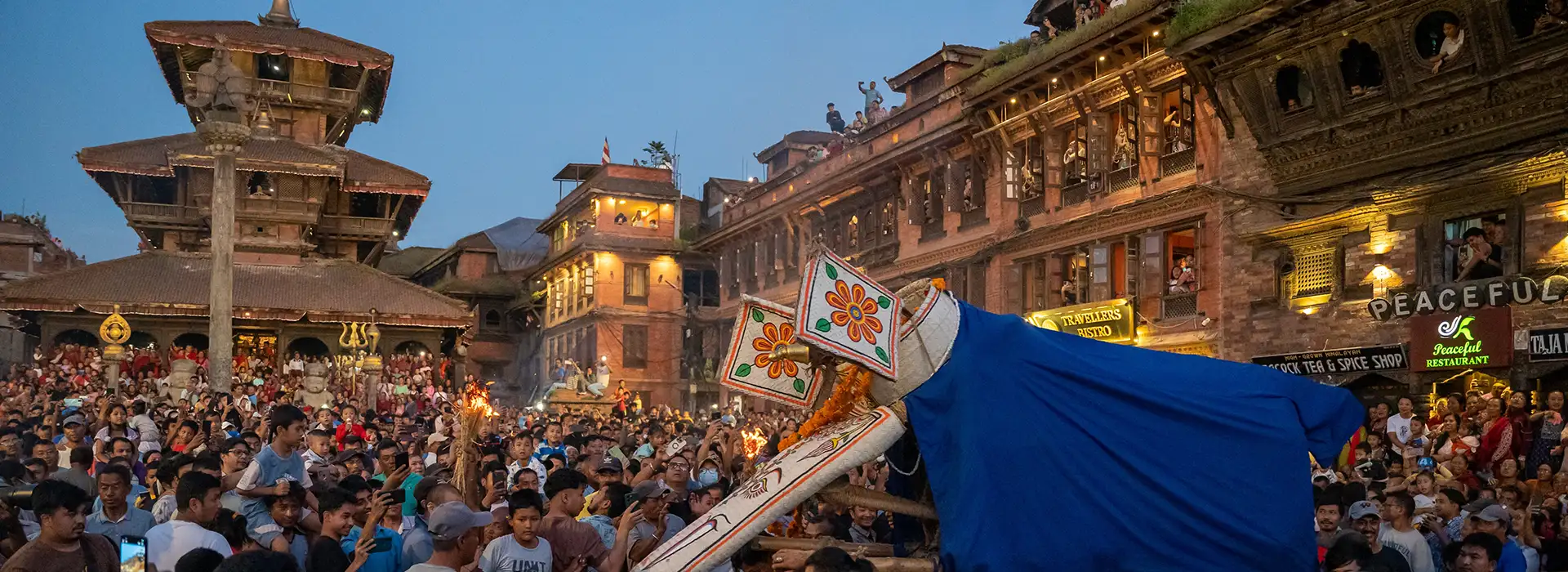
The Nepal and Bhutan Tour offers a rich blend of culture, nature, and Himalayan traditions across two unique countries. The tour begins in Nepal, where travelers explore the ancient Kathmandu Valley and its deep-rooted history. Kathmandu Durbar Square introduces traditional courtyards, detailed Newari architecture, and historic landmarks that reflect centuries of cultural heritage.
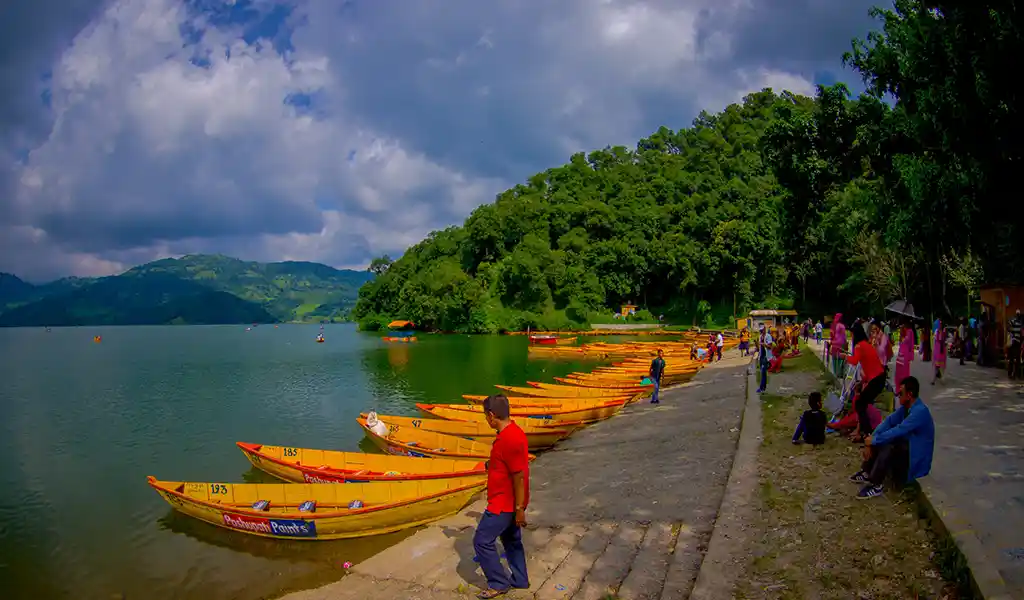
The Nepal and Bhutan Tour continues to Pokhara, a peaceful lakeside city set below the Annapurna range. Visitors enjoy a boat ride on Phewa Lake, scenic views of the mountains reflected in the lake, and natural attractions such as Devi’s Falls. A sunrise visit to Sarangkot offers wide Himalayan views, while time in Pokhara allows for a relaxed exploration of the city’s calm atmosphere.
The Nepal and Bhutan Tour then moves south to Chitwan National Park, where jungle safaris and canoe rides introduce Nepal’s wildlife and lowland landscapes. Visitors may spot one-horned rhinos, crocodiles, and native birdlife. A visit to a Tharu village offers insight into local traditions and daily life, enriching the experience.
From Nepal, the Nepal and Bhutan Tour continues east to Bhutan, known as the Land of the Thunder Dragon. In Thimphu, travelers explore landmarks such as Buddha Dordenma and Tashichho Dzong, where religion and governance coexist. The journey ends in Paro with a hike to the iconic Tiger’s Nest Monastery, set high above the valley.
Forest trails, prayer flags, and cool mountain air lead to one of Bhutan’s most sacred sites. The tour also includes time to explore Rinpung Dzong, overlooking Paro Valley. The Nepal and Bhutan Tour creates a meaningful connection with two Himalayan nations through culture, tradition, and natural beauty.

Included Meals

Trip staff

Transport

Accommodation

Trip Grade
Group Size
Your guide will welcome and take you to your hotel when you arrive at Tribhuwan International Airport. You’ll stay in Thamel, Kathmandu’s central tourist district, full of narrow streets, shops, and cafes. Settle into your hotel and feel free to roam around Thamel for a glimpse into the city. You can visit cafes, buy a SIM card from NCell or NTC, exchange money for Nepali Rupees, and prepare yourself for the tour.
Your guide or representative from the office will review the itinerary, explain local customs, and provide safety tips. Kathmandu, sitting at an altitude of 1,400m, is also called the “City of Temples” with more than a thousand temples in the valley. These temples are across the bowl-shaped alley and have medieval architecture.
You will see cows wandering the streets and the lively martes. Since Kathmandu is relatively high, you should drink enough water and avoid heavy meals or alcohol on your first day. Remove your shoes and dress modestly when visiting temples on the following days. You’ll spend your first night at a hotel in Kathmandu.

Time & Distance 30 minutes
Accommodation:
Hotel Thamel Park or similar

Maximum Altitude 1,400m/4,593ft (Kathmandu)
Difficulty
Transportation Private Car
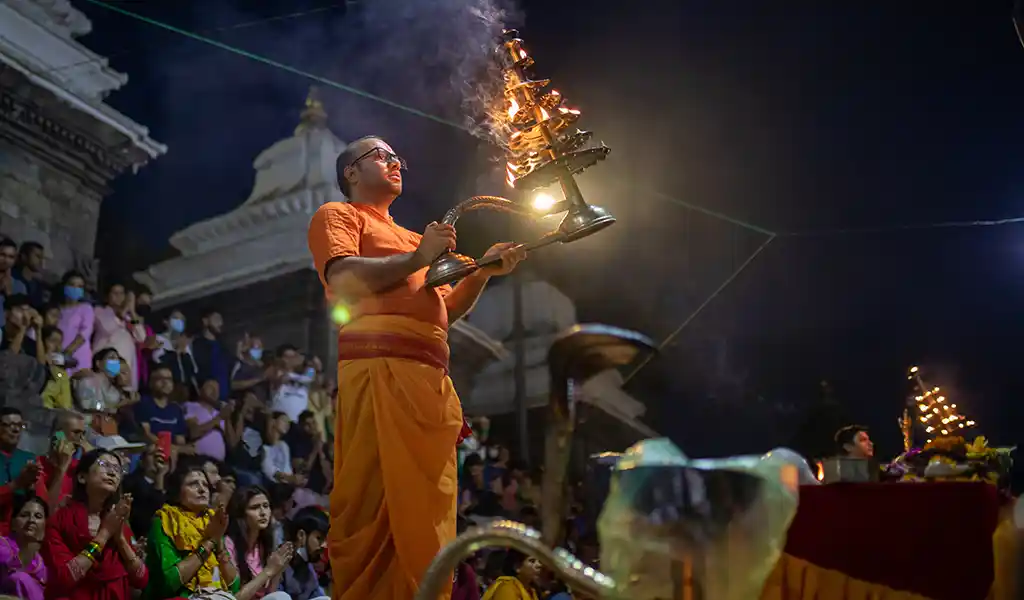
The day begins with a trip to Kathmandu Durbar Square. Listed as a UNESCO Site, this Square is an ancient royal palace amid bustling streets with locals, artisans, and holy men called sadhus. After exploring this ancient palace complex, you’ll drive to Swayambhunath Stupa (The Monkey Temple). Climb the stairs to the top of the hilltop stupa, where you can see its golden spire and Buddha’s eyes overlooking the Kathmandu valley. The temple is home to many monkeys and gives you a great view of the valley.
Have lunch at a local eatery to try Newari dishes like bara, chatamari, or other regional dishes. After lunch, you’ll visit the Boudhanath Stupa, the largest stupa and a hub of Tibetan Buddhism. You can walk clockwise around the site while spinning prayer wheels as monks chant, and the smell of butter lamps and incense fills the air. After visiting this Tibetan Buddhism hub, you’ll drive to see the Hindu temple, Pashupatinath. Regarded as the holiest temple in Nepal, this riverside temple on the banks of the Bagmati River is famous for its golden roof and open-air cremation. The temple spreads across 246 hectares of land and offers a respectful insight into Hindu rituals of life and death. While the temple is not open for non-believers, you can still observe the temple from outside and learn about Nepal’s different religious sides.
You’ll return to your hotel in the evening and have some free time to enjoy. You can shop for souvenirs like pashmina shawls, singing bowls, or hand-painted thangka art. The Kathmandu Valley is often called a living museum of art and faith, where Hinduism and Buddhism influence the way of life. Medieval architecture and friendly people make the tour even better. Dress modestly, watch your belongings in crowded areas, and hold your camera and snacks around the monkeys.
Time & Distance 6 Hours
Accommodation:
Hotel Thamel Park or similar
Meals Breakfast
Maximum Altitude 1,400m/4,593ft (Kathmandu)
Difficulty
Transportation Private Car
Today, you’ll drive to another Nepali city to get a different perspective on Nepal. Depart from Kathmandu at around 7:00 AM and drive through the Prithvi Highway. Covering about 200 m, you will reach Pokhara in about 6 to 7 hours. Your drive takes you through beautiful, lush green hills and terraced rice fields, and it follows the Trishuli River along the road. You will stop for lunch midway at a roadside restaurant. You can have simple and hearty Nepali or Indian meals here. You’ll arrive at your destination in mid to late afternoon. Check into your hotel near the Phewa Lake, where the atmosphere is more laid back and relaxed than the bustling Kathmandu.
You can go around the Lakeside district in the evening and explore the cafes, bookstores, and gear shops. Many travelers like sitting on the lake shore watching boats drift across the lake. If the day is clear, you can see the Annapurna range glowing in the sunset light. The drive to Pokhara goes along bumpy roads, so if you’re prone to motion sickness, take precautions. Carry essentials like toilet paper, hand sanitizer, and motion sickness pills. Pokhara sits at around 800m, significantly lower than Kathmandu, and is much warmer. Rest early for your tour tomorrow.
Time & Distance 7 Hours/200KM
Accommodation:
Kuti Resort or similar
Meals Breakfast
Maximum Altitude 800m/2,625ft (Pokhara)
Difficulty
Transportation Tourist Bus
Your tour starts early morning at around 4:30 AM with a drive to Sarangkot (1,592m) to watch the sunrise in the Himalayas. You will witness as the first ray of light falls on the white, snowy mountains, creating a beautiful gold and pink hue. The circuit offers views of Annapurna I, Dhaulagiri, Machhapuchhre, and other peaks. Return to Pokhara for breakfast and continue the day with a wooden boat ride on Phewa Lake. The boat ride will take you to the small island temple in the middle of the lake, to Tal Barahi Temple, dedicated to the goddess Durga.
After visiting the temple, you will see the dramatic Devi’s Falls, a powerful waterfall disappearing into an underground tunnel. Just across the road from the fall is Gupteshwor Mahadev Cave, where a Lord Shiva shrine sits in the middle. You can hear the water falling into the tunnel from the cavern of limestone walls. Have lunch in a lakeside restaurant to try fresh grilled fish from the lake.
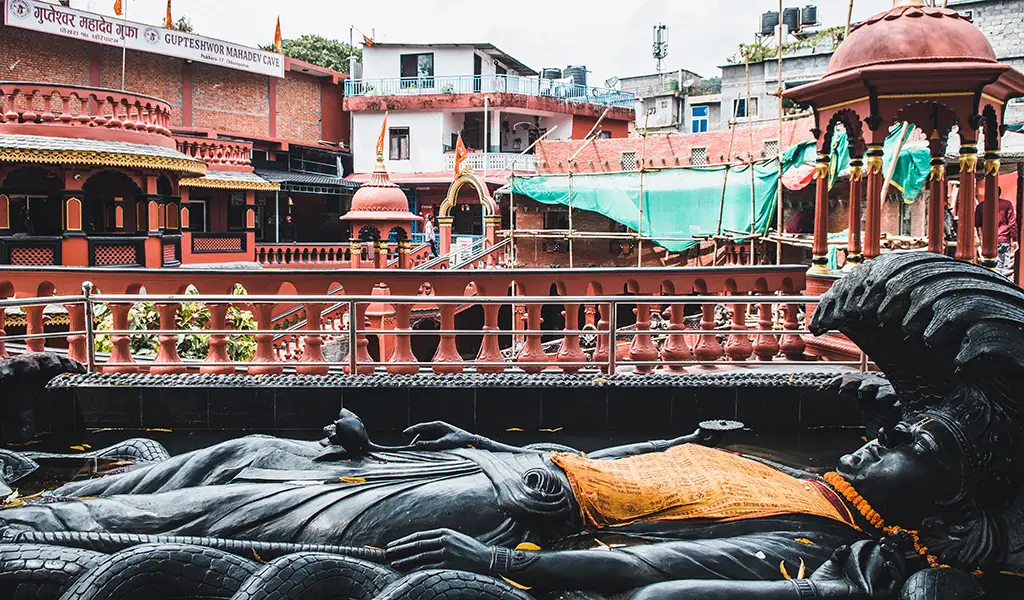
You’ll visit the Tibetan Refugee Camp in the evening, such as Tashiling or Tashi Palkhel. You can buy authentic crafts from artisans, like woven carpets and wooden souvenirs. Later, you will drive to the World Peace Pagoda, the Shanti Stupa. This stupa, sitting at the ridge above the city, was built by Buddhist monks to promote peace. You can enjoy the calm atmosphere here and the panoramic views of the lake and the city. You can also go on an optional paragliding experience or a zipline if you have free time. Get to your hotel in the evening and enjoy a dinner before resting for the night.
Time & Distance 5 Hours
Accommodation:
Kuti Resort or similar
Meals Breakfast
Maximum Altitude 800m/2,625ft (Pokhara)
Difficulty
Transportation Privarte Car
Depart from Pokhara at around 7:00 AM and drive towards southern Nepal. The drive covers about 150 km and takes you to Chitwan National Park in about 4 to 5 hours. You will descend from the hills and enter the flat Terai plains as the weather gets warmer and humid when you approach the jungle. You’ll arrive at your jungle lodge at lunchtime, where the staff will welcome you with welcome drinks and brief you on the safari adventures. Have lunch and rest before going on a guided walk through a nearby Tharu village. A local naturalist will lead you through the town, the Tharu people, who are indigenous to the Terai. You’ll see traditional mud and hatch hoses, water buffaloes, and rice paddies while learning about their culture and history co-existing with the wildlife.
After the walk, you can head to the Rapti River for a sunset view. The sky turns golden and pink, and the wildlife appears along the banks. You may spot rhinos, deer, or even crocodiles. Get back to your lodge for a transitional Tharu cultural show where dancers perform a stick dance in folk song, wearing traditional attire. You’ll have a mix of Nepali and continental dishes for dinner.
Chitwan National Park is a beautiful place and the first national park of Nepal. It is also a UNESCO World Heritage Site housing many one-horned rhinos, Bengal tigers, and other exotic animals and birds. You should wear light and breathable clothes, cover your body, and use insect repellent for protection against the sun and mosquitoes.
Time & Distance 6 Hours/160 KM
Accommodation:
Safari Adventure Lodge or similar
Meals Breakfast, Lunch, Dinner
Maximum Altitude 415m/1,362ft (Sauraha)
Difficulty
Transportation Toursit Bus
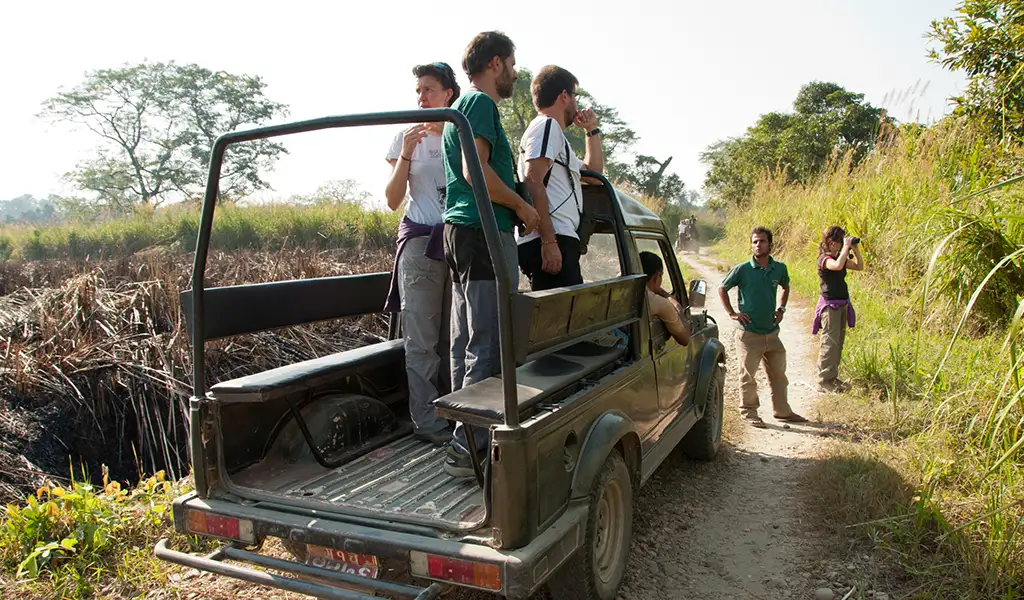
Have breakfast and visit the Elephant Breeding Center, where you’ll learn about elephant conservation and watch calves with their mothers. We don’t encourage elephant back rides for ethical reasons. Next, ride a canoe in a traditional Rapti or Budhi Rapti River dugout. Your guide will paddle the boat as you can watch for kingfishers, egrets, peacocks, or crocodiles. If luck is on your side, you might even see the rare Gangetic River dolphin. Have lunch and rest before going on a jeep safari through the dense sal forests, grasslands, and watering holes. Watch for one-horned rhinos, langur monkeys, chital and sambar deer, wild boars, and birds. Tigers can be a rare sighting, but you can see paw prints or scratches on trees signifying their presence. Return to your lodge by evening and reflect on the day full of wilderness. Wear neutral clothing to avoid startling the wildlife and spot the wildlife with your binoculars. Follow your guide’s instructions and protect yourself from the sun with a hat and sunscreen.
 Accommodation:
Safari Adventure Lodge or similar
Meals Breakfast, Lunch, Dinner
Maximum Altitude 415m/1,362ft (Sauraha)
Difficulty
Have breakfast and prepare for a drive back to Kathmandu. You can go birdwatching before the drive if you have time left, as Chitwan houses over 500 bird species. Your drive will begin at 8:00 AM, go through the Tharu villages, and follow the rivers. You’ll return to the hills and stop for tea, coffee, or lunch. You can use the time to reflect on the week’s adventures through mountains, lakes, and the jungle. You’ll cover the distance of about 180 km in about 5 to 6 hours and arrive in Kathmandu back at your hotel by mid to late afternoon. You are free to explore, rest, or go shopping for the rest of the day. You can visit the Garden of Dreams for a quiet break or enjoy a pastry at a local cafe.
Rest for the night and prepare for tomorrow’s flight to Bhutan. You can repack your bags or store the excess luggage if necessary.
Time & Distance 180 KM & 7 Hours
Accommodation:
Hotel Thamel Park or similar
Meals Breakfast
Maximum Altitude 1,400m/4,593ft (Kathmandu)
Difficulty
Transportation Tourist Bus
Board your flight to Paro, Bhutan, from Kathmandu and leave Nepal today. The flight is about an hour long and offers views of the Everest and Kanchenjunga on clear days. The flight winds through green mountain valleys to land in Paro, creating a mini adventure.
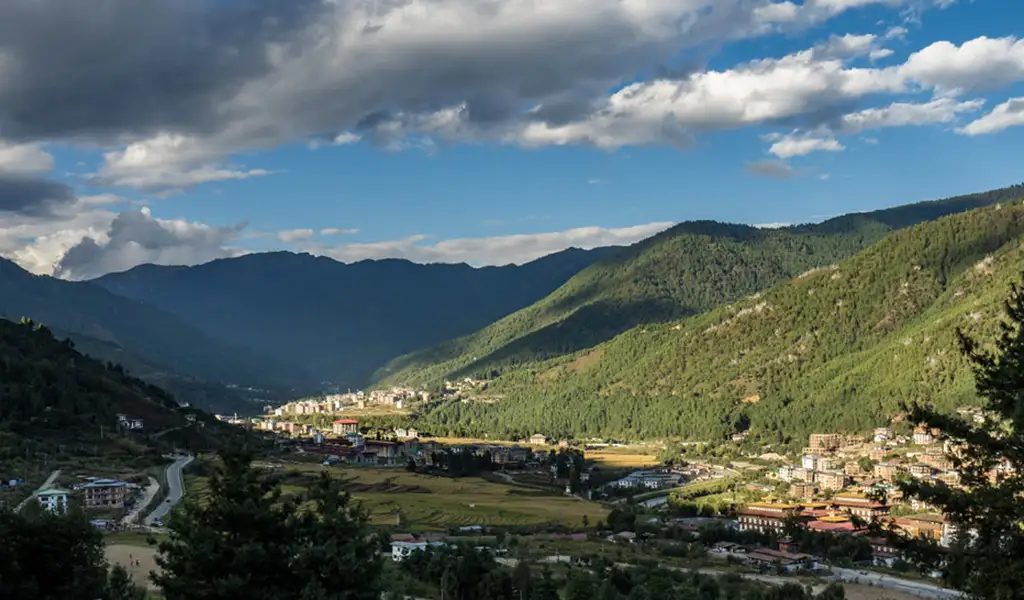
Complete your immigration and customs, and meet your Bhutanese guide and driver at the airport. They will welcome you with a warm “Kuzuzangpo La!” and drive you to your hotel in a private and comfortable vehicle. The drive is about 1.5 hours long and passes through pine forests, rivers, and farmhouses. You’ll arrive in Thimphu, where you’ll check into your hotel. You can have Bhutanese cuisine or continental dishes for lunch in the town. Explore Thimphu after your lunch with a visit to the National Memorial Chorten. Locals gather here to pray, spin prayer wheels, and walk around the stupa. If you have time, you can also visit the Buddha Dordenma, a 52m tall bronze statue with thousands of small Buddhas inside. It also offers panoramic views of the valley.
Thimphu has no traffic lights, and police direct intersections with hand signals. You can browse through the streets, shop for yak wool scarves from Bhutanese Textiles, and see the lit-up Tashichho Dzong at night. You’ll have your dinner at a local restaurant or your hotel. You can try Bhutanese dishes like ema datshi (chili and cheese) or shakam paa (spicy dried beef).
Time & Distance 1.5 Hours & 50 KM
Accommodation:
Hotel Pedling or similar hotel
Meals Breakfast, Lunch, Dinner
Maximum Altitude 2,340m/7,677ft (Thimphu)
Difficulty
Transportation Private Car
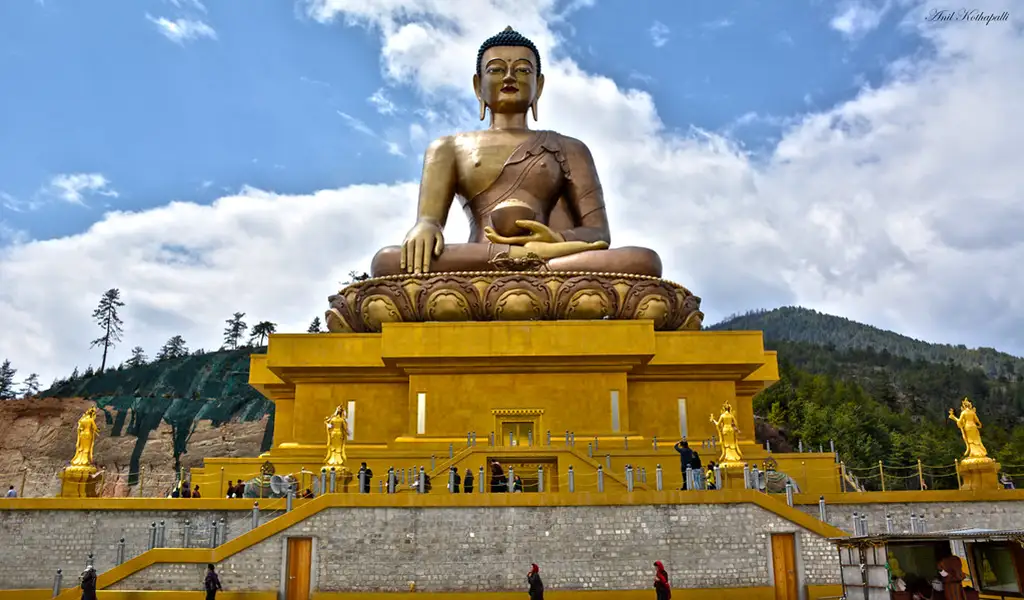
Have breakfast and continue exploring Bhutan today. If you didn’t see it yesterday, you’d visit the 51m tall Buddha Dordenma statue today. A short walk around the complex gives you different perspectives of the statue with fresh mountain air and incredible mountain views. Then, the tour will teach you about Bhutanese history at the Folk Heritage Museum, a 19th-century restored traditional house. You can explore the three stores filled with traditional household items, tools, and living spaces. You glimpse a rural Bhutanese life from the ground-floor animal stalls to upstairs living quarters and attic storage.
If you have time, you’ll also visit the nearby National Textile Museum to see handwoven fabrics and watch skilled weavers at work. You can have Bhutanese-style momo or red rice pilaf for lunch and visit the Tashichho Dzong, a monastery-fortress housing the King’s office and a monastic center. You can walk through its gardens and open courtyard as your guide explains the artwork’s significance. Wear modest attire and don’t click pictures inside temples and chapels.
Depart from Thimphu for a 1.5-hour ride back to Paro. Paro is a smaller town known for its traditional architecture and serene atmosphere. Check into your hotel and stroll through downtown Paro in the evening. Have your lunch at your hotel or a local restaurant. We can arrange a Bhutanese hot stone bath if you’re interested.
Accommodation:
Mandala Resort or similar
Meals Breakfast, Lunch, Dinner
Maximum Altitude 2,250m/7,382ft (Thimphu)
Difficulty
Transportation Private Car
Today is the highlight of your Bhutan trip with a hike up the Tiger’s Nest Monastery (Paro Taktsang). Have breakfast, drive about 25 minutes north of Paro, and begin the steady 4km climb from an altitude of 2600m. You’ll hike through moss-covered pine forest and catch the first glimpse of the monastery in the cliffside midway. Take a short break in the viewpoint cafe halfway up with a cup of tea and the beautiful view of the monastery. The trail gets steeper after this point, with about 700 steps on the final section, and finally reaches the monastery at 3,210m. Remove your shoes and step inside the monastery. You can admire the shrine, light a butter lamp, and feel the spirituality of the place where Guru Rinpoche flew on a tigress during the 8th century. Hiking to Tiger’s Nest is a physical and spiritual highlight, and ending the day with a cultural experience makes it even more special.
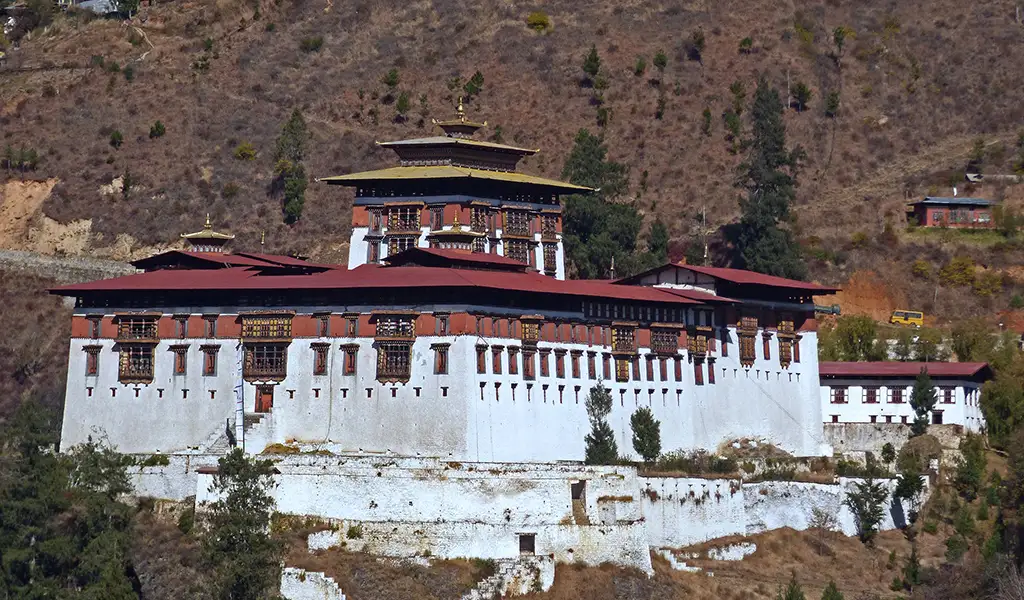
Return from the monastery and have lunch in Paro before exploring Rinpung Dzong, the fortress of jewels. The monastery has beautiful courtyards, carved woodwork, and bustling monastic life. If you have time, visit the National Museum to see Bhutanese art, armor, and history. You can have traditional Bhutanese meals and local wine over dinner. Return to your hotel in Paro tonight to relax and prepare for your departure tomorrow.
Time & Distance 6 Hours
Accommodation:
Mandala Resort or similar
Meals Breakfast, Lunch, Dinner
Maximum Altitude 2,600m/8,530ft (Paro Taktsang)
Difficulty
Transportation Private Car
Your Himalayan adventure ends with a final breakfast and a quiet morning in Paro. You can walk around Paro for the last time before driving to the airport. Your guide takes you to the airport, offering a warm “Tashi Delek” before farewell. Take one last look from the plane at the emerald fields and winding river below. You leave with unforgettable memories of temples, monasteries, and warm smiles across Nepal and Bhutan.
Meals Breakfast
Maximum Altitude 2,250m/7,382ft (Paro)
Difficulty
Transportation Private Car
You’ll explore vibrant cities and see beautiful landscapes. Visiting religious sites while enjoying adventures makes the tour even more enjoyable. The ancient streets, visiting historic sites, and witnessing centuries-old traditions will thrill people who want to learn more about culture. Each monument, festival, and monastery offers a glimpse into Nepal and Bhutan’s rich heritage.
Mountains, lakes, and wildlife jungles are perfect for nature lovers. You get to see panoramic viewpoints and walk through a gentle forest while enjoying the close-up views of the Himalayas. The tour is also great for spiritual seekers to find quiet moments of reflection in sacred monasteries, prayer halls, and meditation spots. The tour has something to offer for adventure enthusiasts with the light hike to Tiger’s Nest.
Travelers with moderate fitness will easily keep up with the itinerary. Every day combines sightseeing, gentle walks, and short drives, ensuring a complete experience with no rush.
If you are looking for ultra-luxury hotels, gourmet meals every night, or a fast-paced tour, this might not fit you. The accommodations are mostly in 3-4 star locally run hotels with a comfortable, clean, and welcoming environment, but nothing ultra-luxury. Some meals are simple, local styler or roadside dining experiences.
The long winding drives may be hard if you’re prone to motion sickness. You should also consider the high altitude in Paro Taktsang at 3,120m. It is manageable for most travelers, so you can handle it slowly. Nightlife outside Thamel in Kathmandu and Lakeside in Pokhara, evenings throughout the trip are quiet, calm, and reflective.
This tour is for flexible travelers who want a meaningful Himalayas tour. You’ll learn history, enjoy nature, and visit spiritual sites. If that’s the trip you wish to take, we’d love to welcome you.
You’ll stay in comfortable hotels throughout your trip. We choose 3-star deluxe hotels with twin-sharing rooms with private bathrooms and clean and modern amenities. Solo travelers can get a single room with a single supplement fee.
You’ll stay in Hotel Thamel Park in Kathmandu. This centrally located 3-star hotel in Thamel offers free WiFi, air conditioning, an on-site restaurant, and easy access to shops and city exploration. In Pokhara, we often book Kuti Resort or a similar lakeside hotel with mountain views, gardens, a swimming pool, and a peaceful atmosphere.
You’ll stay in a 3-star hotel like Hotel Pedling in Thimphu. This centrally located hotel has a mix of modern and Bhutanese decor, heating, WiFi, and hot showers. In Paro, you may stay in Mandala Resort or a 3-star property offering valley views and warm hospitality.
All standard rooms have double or twin beds, attached bathrooms with hot water, bedding, towels, and toiletries. You can request deluxe rooms or any special requests for rooms.
We arrange upgrades to 4- or 5-star hotels for extra cost. Upgraded hotels mean extra amenities like spas or gyms. We aim to make your stay as comfortable as possible.
Everest Base Camp Helicopter Tour: You can look closely at Everest with a helicopter flight from Kathmandu. The flight will take you over the giant Himalayas and land briefly at Everest Base Camp or Kala Patthar.
Extra Nights: We arrange extra days in Nepal or Bhutan if you want to slow down or explore more. You can also add side activities like trekking or resting in a wellness resort.
Accommodation Upgrade: Our tour includes 3-star hotels with upgrade options. You can upgrade your stay to a luxury four or 5-star hotel in Kathmandu or Paro.
Adventure Activities: Nepal offers many adventure activities. You can try paragliding or ultralight flights over Pokhara, zip lining, rafting the Trishuli River, or bungee jumping near the Tibetan border.
Cultural Experiences: You can add depth to your trip with local experiences. Go on cooking classes in Kathmandu to learn cooking Nepali dishes, dress in traditional kira or gho for a Bhutanese picture session, or even try archery in Thimphu, Bhutan’s national sport.
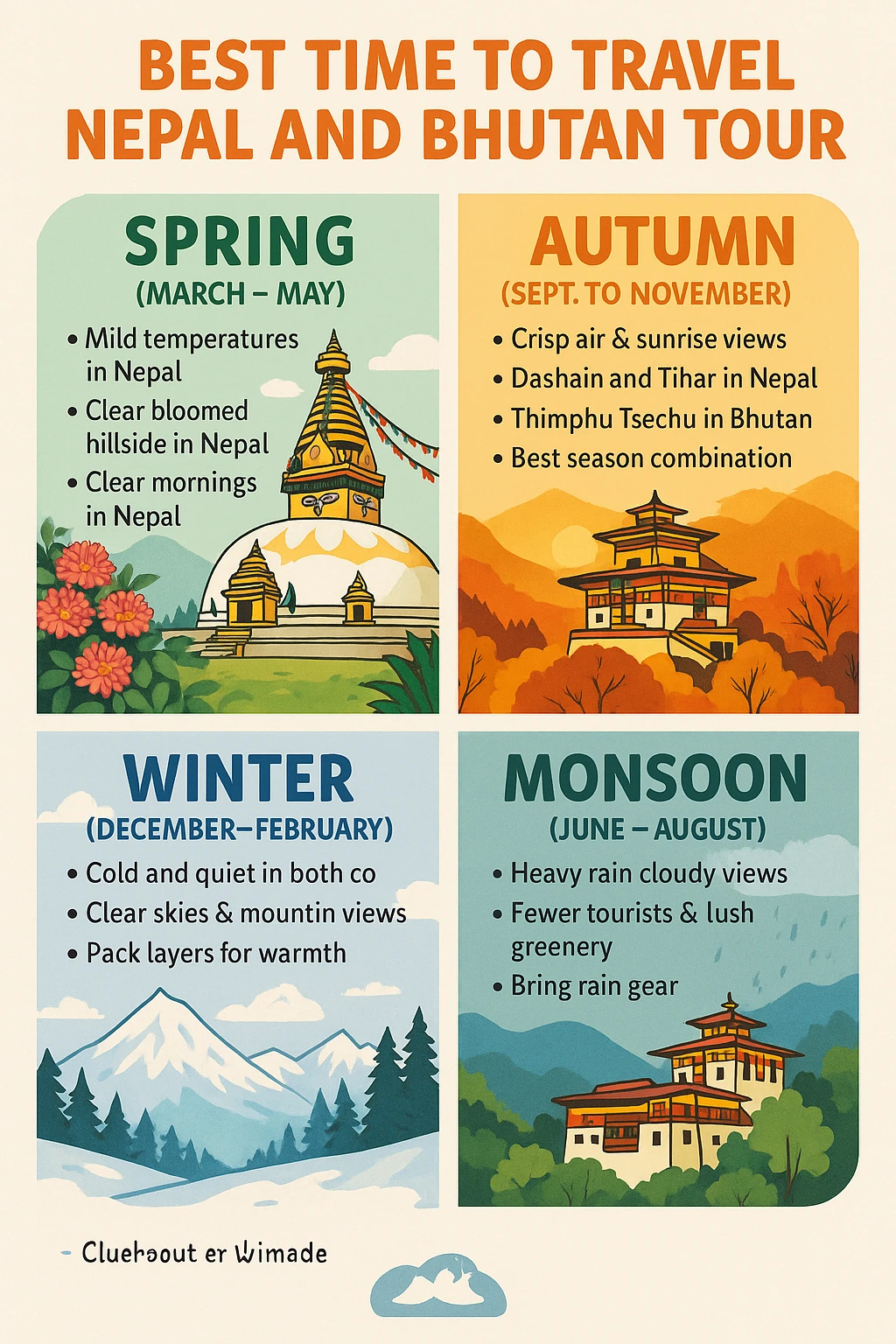
Spring and autumn are the ideal times. Spring has mild temperatures, flowers bloom, and wildlife in Chitwan is active, while Bhutan enjoys cool, clear days and festivals like Paro Tsechu. Autumn brings crisp air, stunning mountain views, and cultural highlights like Dashain, Tihar, and Thimphu Tsechu. Winter is quieter with clear skies but colder, especially in Bhutan. The monsoon is wet, roads can be slippery with blocked mountain views, though the countryside is lush and fewer crowds.
Spring (March to May): Kathmandu and Pokhara in Nepal have mild and warm temperatures with 15-27°C. Hillsides bloom with rhododendrons, and Chitwan wildlife stays active. In Bhutan, Thimphu and Paro have calm and pleasant days at around 10-20°C with clear mornings. Spring brings festivals like Paro Tsechu in Bhutan, offering a cultural experience. Mountain views are great in the morning.
Autumn (September to November): Autumn is the best season for Nepal and Bhutan tours. The air stays crisp after the monsoon rain. You’ll get excellent visibility for sunrise views, and the temperature is comfortable at around 20-25°C. Nepal celebrates Dashain and Tihar, and Bhutan celebrates. Thimphu Tsechu festival. Hiking conditions are ideal at the Tiger’s Nest Monastery. Autumn combines the best weather, views, and festivals.
Winter (December to February): Winter is cold and quiet in both countries. Kathmandu and Pokhara get mild days of around 10-18°C with chilly nights, and Chitwan remains pleasant for safaris. Thimphu and Paro are cold at around 5-10°C; mornings/evenings can drop below freezing. Mountain skies are clear and perfect for views with very few clouds. You should pack layers and consider hotel upgrades in Bhutan for comfort.
Monsoon (June to August): Monsoon is the least popular and recommended season due to heavy rainfall. Both Bhutan and Nepal experience Monsoon with frequent rain showers. Roads to Pokhara and Chitwan are affected by landslides, and views are cloudy, with hot, humid, and buggy jungle areas. Bhutan receives lighter rain than Nepal, but the conditions are still wet. On the positive side, there are fewer tourists, lush greenery, and discounted off-season rates. Late August and early September had improving weather. Bring rain gear and have flexible plans to go on the Nepal and Bhutan Tour during the monsoon.
Clothing: You need lightweight, breathable shirts and pants, plus a long pair of pants or a skirt for temple visits. Bring warm layers like a fleece or sweater, a warm jacket, and thermals if you’re traveling in winter. Traveling in the monsoon means you need a rain jacket, poncho, or umbrella. For footwear, bring comfortable walking shoes, hiking boots, and sandals for evenings at hotels or quick temple visits. Accessories include a sun hat, a warm hat, morning gloves, a light scarf, six pairs of socks, and undergarments. Women may want a sports bra and modest swimwear.
Gear: Bring a small daypack of 20-30L capacity to carry food, snacks, and a jacket. Carry a reusable water bottle, a flashlight, or a headlamp. If you bring your camera or phone, bring your charger and a power bank. Optionally, you can bring binoculars and trekking poles. You can get small locks, packing cubes, and zip-lock bags to keep your gear secure and organized.
Health and Personal Items: Pack personal medicines with a basic first aid kit, with motion sickness pills, pain relievers, insect repellent, band aids, etc.
For toiletries, bring a travel-size toothbrush, toothpaste, and shampoo. You need a quick-dry towel, hand sanitizer, wipes, tissues, and feminine hygiene products. Sunglasses, earplugs, a money belt, and copies of travel documents are also helpful. Optionally, you can bring items like journals, an e-reader, or snorkel gear.
We recommend bringing a soft duffel or backpack for main luggage and a daypack for daily essentials. Keep your bags light with 15-20kg for main luggage. Bhutan flights allow a 20 kg checked bag with 7 kg carry-on. Wear modest attire in temples and monasteries. You are free to wear casual clothing elsewhere.
How to Book: Booking the Nepal and Bhutan tour is easy. You can visit our website, choose the Nepal and Bhutan package, and book the tour. Select your preferred start date and number of travelers. After filling in your details, select your payment method. You must pay a 30% deposit to secure your spot on the tour. We will send a personalized message confirming your booking and the next steps. You can contact us if you feel confused, and we will assist you with the booking. We will send you arrival guides and visa info before the tour.
Payment Schedule: Pay a 30% deposit to secure your spot when booking. We use the deposit to confirm your hotels, flights, and Bhutan visa processing. You can pay the remaining 70% about 30 days before the tour starts. If you book within 30 days of the tour, we require a full payment up front. You can pay through any major credit card or cash if you’re already in Nepal. After receiving your deposit, we will send confirmation and start making all the arrangements.
Cancellation Policy: If you cancel the tour 60 days before the tour starts, we will refund the entire cost minus the deposit. Cancelling between 30 and 60 days means a 50% refund, 15 to 29 days means a 25% refund, and any less than that or no show means no refund. We will provide a letter for travel insurance claims if you must cancel due to illness or an emergency. The deposit is non-refundable in any case when you cancel the tour. We will provide a full refund if we have to cancel due to any events. You can buy travel insurance before booking to protect yourself from financial strain.
Group, Age, and Special Needs: This private tour is ideal for anyone, including solo travelers, couples, families, or groups of up to 12. Children above 8 enjoy it the best, with younger children needing adjustments like pony rides for the hike. Although Bhutan’s infrastructure has limitations, we can arrange some accommodations for travelers with health or mobility issues with some discussion. We modify the pace or skip steep sections for senior travelers.
We prioritize your well-being and safety for your Nepal and Bhutan Tour. We design the itinerary to make the trip enjoyable, keeping altitude, road conditions, and medical access in mind.
Altitude Consideration: The lowest altitude of the tour is at Chitwan at 150m, and the highest goes up to 3,120m at Tiger’s Nest in Bhutan. Most travelers won’t face severe altitude sickness as the altitude is still manageable, but you may get mild effects above 2,500m. A few travelers might get shortness of breath or headaches, depending on how their body handles the altitude change. You should stay hydrated, eat light meals, and avoid overexertion or alcohol on your first day at higher altitudes if you have any symptoms like dizziness, nausea, or fatigue. Inform your guide immediately. Usually, resting and drinking fluids help, but we will descend to a lower altitude if they don’t help. Your guides carry portable oxygen and a small oximeter in case of serious emergencies. You can take Diamox to prevent altitude sickness after consulting your doctor.
Vaccinations and Medical Preparation: There are no mandatory vaccines to enter either country except for COVID-19 requirements. We recommend visiting a travel clinic one or two months before the trip. You can get common vaccines like Hepatitis A and B, Typhoid-Diphtheria, and, if relevant, Rabies or Japanese Encephalitis. You can use insect repellent or nets, or consult your doctor about prophylaxis to deal with the risk of malaria in Chitwan.
Road, Transportation, and Wildlife Safety: You must only drink boiled, bottled, or filtered water throughout the trip. Use the same water to brush your teeth. Eat hot and freshly prepared meals at safe restaurants and peel fruits if you consume raw produce. You can inform us in advance if you have any dietary restrictions so we can arrange your meals for you.
Emergency Preparedness: You can contact us anytime with our 24/7 contact line. Our guides carry cell phones and walkie-talkies wherever coverage gets limited. We’ll adjust the itinerary, call doctors to hotels, and arrange clinics and hospital visits in case of illness. We also arrange helicopter evacuation in extreme emergencies. You should purchase travel insurance so you are free from financial strain in case of these emergencies. Keep digital copies of your important documents and have a local emergency contact.
Road, Transportation, and Wildlife Safety: We only use well-maintained vehicles with professional and experienced staff accompanying you. For safety, long drives are only during daylight hours. You should follow your guide’s instructions closely for your safety. Follow each guideline by your guide in Chitwan during wildlife safaris, and wear your life jacket at all times during canoe rides. Stay alert in the city area, use hotel safes, and carry copies of your passport.
Political and Social Climate: Nepal has stable political conditions with rare strikes. Bhutan is peaceful and secure, and has a well-protected tourism industry. Follow both countries’ local rules and customs to avoid unnecessary problems. You can ask your guide to help navigate any unusual situations.
Female and LGBTQ Travelers: Nepal and Bhutan are generally safe and respectful. Dress modestly in the religious sires and travel with a guide or in groups in unfamiliar places after dark. Nepal and Bhutan are welcoming and tolerant, but we recommend no public displays of affection for every couple. We treat everyone with respect and ensure a comfortable experience for all travelers, regardless of their sexual orientation.
COVID-19 Measures: Nepal and Bhutan require vaccination proof or a negative test. If symptoms arise, we help access medical care and adjust your itinerary. We maintain hygiene protocols in vehicles with complete vaccinations for our staff. You can carry a few rapid tests for peace of mind. We recommend travel insurance that covers COVID-19.
The tour is beyond sightseeing, allowing you to interact, learn, and participate in traditions. One of the most rewarding parts of the trip is the chance to connect directly with local people and their culture.
Nepal is a country with a living culture. You may meet the Kumari, a living goddess, or watch artisans crafting their works in hidden streets in Kathmandu. You can greet people with a simple “Namaste” as you press your hands together and bow with a smile. Visiting Pashupatinath will give you a deeper understanding of Nepali Hindu rituals, including cremation rites. You will meet Tibetan refugees and can help the community by purchasing handcrafted souvenirs in Pokhara. Chitwan gives a glimpse into the life of the indigenous Tharu people with their lively traditional dance performances as you join the final “chain dance”. You’ll visit local markets to practice your bargaining skills and connect with the local people. Nepal celebrated Dashain, Tihar, Holi, and other festivals at different times of the year. You can get to see any of them during a particular season.
Bhutan is usually rich in culture and traditions. You’ll see many locals in their national dress in Thimphu. You can greet them with a warm “Kuzuzangpo La.” You can visit the arts and crafts school, chat with students learning traditional skills, or explore local markets with your guide. In Paro, you can see a local farmhouse for a home-cooked meal and exchange talks on family life, traditions, and daily routines. Don’t miss Tsechus, like the Thimphu Tsechu in Sep/Oct and Paro Tsechu in Mar/Apr. Monks perform sacred dances and display giant religious paintings during these festivals.
Our local guides act as bridges for these cultural experiences. They can introduce you to different people and things, translate when needed, and ensure every interaction is respectful and meaningful. You’ll leave with many stories and bonds at the end of the trip. Our guides facilitate respectful interactions, translating and explaining local customs to ensure a rewarding experience.
We believe travel should positively impact the community and the environment you visit. We minimize our footprint while supporting the local economy and preserving culture.
We encourage using a reusable water bottle. Bhutan has a ban on single-use plastic, so we provide reusable shipping bags. You should carry your trash until you find a proper bin to dispose of it safely. We follow strict conservation guidelines for wildlife safety. The Chitwan safari follows a designated trail. You must not feed or disturb animals. We use eco-friendly transportation methods like jeeps and canoes instead of unethical animal rides.
Our guides and drivers are all local people. We support local communities by hiring local staff and partnering with locally owned hotels. You should purchase handicrafts directly from artisans to support their art and living wages.
Cultural preservation is a part of sustainable travel. Dress modestly at sacred sites, get permission before clicking pictures, and respect local customs to preserve traditions. You will participate in a responsible tourism model that benefits people and nature by traveling with us.
Nepal and Bhutan have diverse climates due to varying altitudes. You will experience a subtropical jumble from Chitwan to the mountain valleys of Bhutan.
Kathmandu Valley and Pokhara see warm days and cool nights during Spring and Autumn. These are ideal for sightseeing. Winter has cold nights, and the monsoon is wet but lush. Chitwan has a subtropical jungle environment, making the monsoon extremely humid. We adjust activities accordingly. Bhutan has ideal conditions for hiking in autumn. Paro and Thimphu get mild rain and clouds during the monsoon season, and the landscapes are vibrant green.
Bring layers of clothes for changing temperatures and conditions. You must have a windproof/waterproof jacket, use sunscreen and sunglasses, and stay hydrated. Bring your daypack, universal adapter, and power bank. We will send you a custom packing list according to your departure month.
You can buy a SIM card in Nepal and Bhutan to stay connected. A Nepalese tourist SIM costs about $8 and provides data and cell coverage. We can provide a Bhutanese SIM card with no extra cost. Most hotels have free Wi-Fi at varied speeds. WiFi works better in cities and slower in rural areas. Bhutan and Nepal both use 230V outlets. You need a universal adapter to charge your electronics with no hassle. Since the drives won’t have WiFi, you can access offline entertainment like music, books, or video. You should also download an offline map for every area you visit if you need it.
Carry a light daypack and keep cash for small purchases. You must always carry your passport, visa, insurance, and other essential documents. Contact our 24/7 contact line via phone or WhatsApp for urgent issues.
Nepal: Nepal is famous for its dal bhat and momo. Many travelers like the fresh fish from Phewa Lake in Pokhara and the Tharu dishes in Chitwan. Kathmandu is the home of the indigenous Newar people, who are also rich in cuisine. You can go to cooking classes or welcome dinners with cultural shows. Many travelers buy pashmina shawls, singing bowls, Thangka paintings, hand-knotted rugs, khukuri knives, silver jewelry, tea, and spices for souvenirs.
Bhutan: Try Ema Datshi (chili-cheese stew), Paksha Paa (pork and radish), and suja (tea). You can buy handwoven textiles, Thangka paintings, wooden masks, and traditional paper items for souvenirs. You cannot bargain in Bhutanese markets as they have fixed prices to ensure fair wages. Purchase smaller items with cash and carry a foldable bag for shopping.
You need a visa to travel in Bhutan and Nepal. You can get a Nepal Tourist Visa on arrival at Kathmandu airport. It costs about USD 30 for 15 days. Bring your passport-sized photo and cash in USD to get the visa. We arrange your Bhutan visa in advance after you send us a copy of your passport. We provide a visa clearance letter, and the official visa will be stamped on your passport upon arrival in Paro.
We don’t include your international flight in the package. You must book your flights to Nepal and back to your country from Bhutan separately. We can assist you with booking the Bhutan flight. Share your landing and departing flight details with us so we can help with airport drop-off and pickups.
This tour with guides and drivers is typically private for you and your group. Private tour slows down a personalized experience at your own pace. We can arrange a small group or set departure dates on request.
Yes, you can customize the itinerary. You can extend your stay, add destinations in Punakha in Bhutan, or extra days in different locations. We arrange side trips or treks to Lumbini or Tibet. You can also get hotel upgrades or special activities to tailor the itinerary to your interests.
By default, the itinerary includes mid-range hotels with twin-sharing rooms. The hotels combine local charm with modern amenities. You’ll stay in hotels with private bath, A/C, and WiFi in Kathmandu and lakeside boutique hotels in Pokhara. You’ll stay in jungle lodges with mosquito nets and a swimming pool in Chitwan. Bhutan offers 3-star hotels with traditional architecture and modern facilities, with 5-star upgrades available on request. We also arrange budget-friendly options.
Moderate fitness is enough for the tour. You will walk on uneven streets and do some climbing, the most challenging being the hike to Tiger’s Nest Monastery. You can hike the hill slowly and even take pony rides for assistance. You can enjoy this trip by walking for a few hours with a break.
Yes, you get a local experienced guide to lead you throughout the trip. Your guide will handle all logistics and provide cultural insight. Bhutan law requires a licensed guide to accompany you. Your guides and drivers will ensure a seamless experience for you.
We provide safe and filtered water throughout the trip to avoid water-borne diseases. You can use a reusable water bottle to reduce plastic waste. Meals are from clean and reputable restaurants. We advise stocking up on freshly cooked meals to stay healthy.
Nepal uses Nepalese Rupee (NPR) and Bhutan uses Ngultrum (Nu). Bhutanese currency equals the Indian Rupee, which is why many shops also accept INR. Carry cash for daily expenses, as most places don’t accept cards. You can use cards in large-scale hotels or shops. Bring USD to exchange for the local currency.
Tipping is customary, but it is also a good way to show your appreciation. Guides and drivers usually rely on tips as a significant part of their income. You can tip in USD or local currency based on the number of days and quality of service. Most travelers tip about $8-10 to guides and half to drivers daily.
Dress modestly at religious sites by covering shoulders and knees, and remove shoes before entering. You should use your right hand to give/receive items. And ask permission before clicking pictures.
Most hotels and cafes offer free WiFi. City areas have reliable connections, and the rural regions have limited coverage. You can use data with a local SIM card in Nepal. Ask your guides for assistance on cell coverage and SIM cards on arrival, and they’ll help you.
Both Bhutan and Nepal are generally safe countries for women and families. Violent crimes are rare, and locals are usually respectful and friendly. Follow the country’s rules and basic precautions for safety. Your guides will also advise you on the local customs so you can travel confidently.