

Walk a 11-day loop around the Annapurna range, cross Thorong La Pass, and relax in Tatopani hot springs.

Unbeatable Holiday Offers – Save Up to 20% on Your Next Adventure!
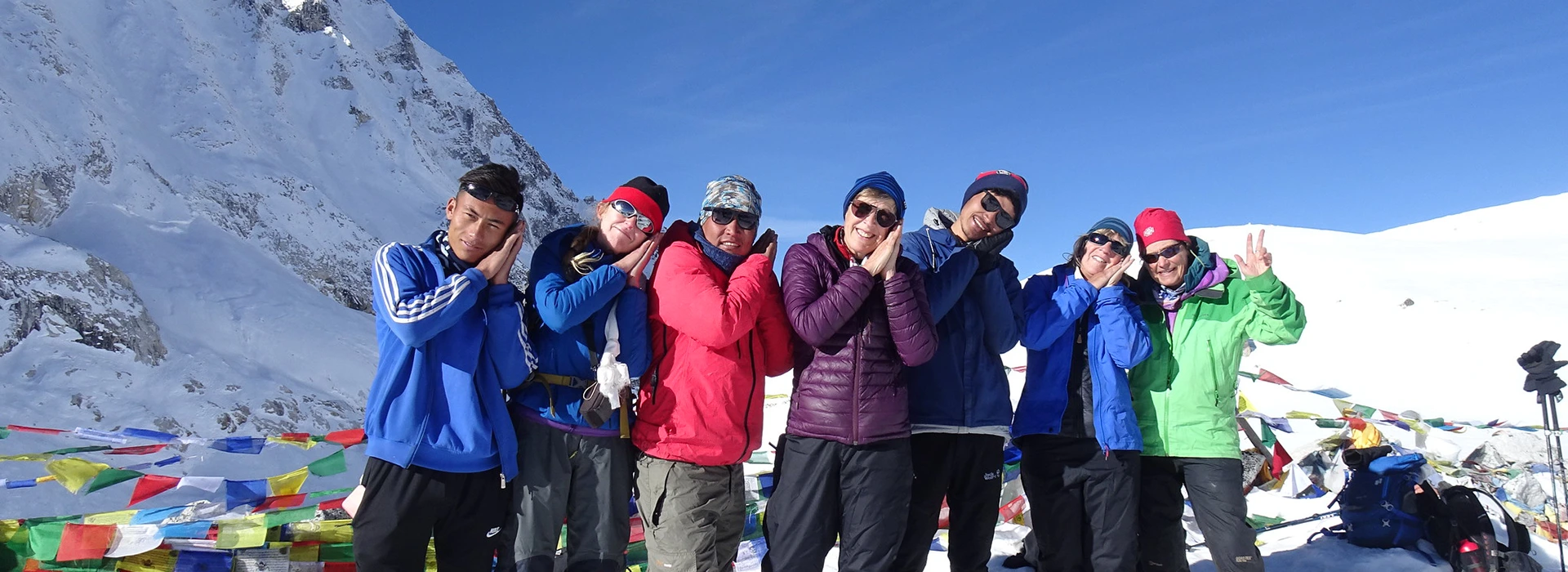

Walk a 11-day loop around the Annapurna range, cross Thorong La Pass, and relax in Tatopani hot springs.
Annapurna Circuit Trek stands among Nepal’s most diverse and rewarding long-distance hikes. Encircling the Annapurna Massif, the route presents dramatic shifts in scenery, climate, and culture within just 11 days. Terraced rice fields and river valleys gradually give way to alpine forests, high mountain deserts, and windswept passes. Because of these constant changes, each stage feels distinct and engaging.
This 11-day plan combines classic trekking sections with carefully placed drives. As a result, recently built road stretches are avoided while the most scenic and culturally rich segments remain on foot. Consequently, the experience feels both efficient and immersive, preserving the authentic Himalayan atmosphere without unnecessary backtracking.
The program begins with a drive from Kathmandu to Beshisahar, followed by a jeep transfer to Lower Pisang. From there, the Annapurna Circuit Trek continues entirely on foot toward Manang. Along this section, Annapurna II, III, and IV dominate the skyline, while pine forests and traditional villages line the trail.
Manang serves as a vital acclimatization stop. Therefore, time is allocated for altitude adjustment before continuing the ascent. Beyond Manang, the terrain becomes increasingly rugged as the route progresses through Yak Kharka to Thorong Phedi.
Thorong La Pass, standing at 5,416 meters, marks the highest and most demanding point of the Annapurna Circuit Trek. An early morning ascent rewards trekkers with sweeping Himalayan panoramas. After crossing the pass, the descent leads into the arid Mustang region and onward to Muktinath.
Subsequently, a drive to Tatopani allows recovery after the high-altitude section. The trail then climbs once more toward Ghorepani. A pre-dawn hike to Poon Hill reveals a wide sunrise view over Dhaulagiri and the Annapurna range. Finally, the descent to Birethanti leads to a drive to Pokhara and later back to Kathmandu.
Annapurna Circuit Trek is known for its exceptional geographical variety. Initially, subtropical greenery and terraced farms define the lower elevations. As altitude increases, alpine meadows and rocky slopes replace cultivated land. After Thorong La, the Mustang side introduces dry plateaus and wind-shaped cliffs. Finally, rhododendron forests return near Ghorepani, adding vibrant color during spring.
Cultural diversity parallels these landscape shifts. Gurung and Magar communities inhabit the lower villages, while higher settlements reflect Tibetan Buddhist traditions. Prayer flags, mani walls, and monasteries frequently appear along the route. Furthermore, traditional stone houses and yak caravans illustrate a lifestyle adapted to mountain conditions. Consequently, every overnight stop offers insight into daily life shaped by altitude and trade history.
Annapurna Circuit Trek suits hikers seeking both physical challenge and landscape variety. Moderate fitness and steady pacing are important, particularly during the ascent to Thorong La. However, strategic drives balance the workload, making the itinerary achievable within a shorter timeframe.
Because the route combines high mountain passes, changing ecosystems, and vibrant cultural settings, the Annapurna Circuit Trek remains one of Nepal’s most complete trekking experiences.

Included Meals

Trip staff

Transport

Accommodation

Trip Grade
Group Size
The itinerary is only a general guide. It may change due to weather, trail conditions, and the group’s health/wishes. While we plan to follow the ideal itinerary, many factors result in a slower or faster completion. We continue the trek with your safety in mind.
After breakfast, you will hop on a vehicle towards the Annapurna Region. Today, you drive west from Kathmandu along Prithvi Highway through river valleys, rice terraces, and small rural villages. After around 5 or 6 hours of driving, you will reach Beshisahar, an 800m town marking the starting point of the trek. You will get your first glimpse of the distant mountains behind the green hills of Lamjung. You can explore the town and enjoy the surroundings before resting for the night.

Time & Distance 6/7 Hours & 175 KM
Accommodation:
Normal Hotel
Meals Lunch, Dinner

Maximum Altitude 800m/2,625ft (Besisahar)
Difficulty
Transportation Bus/Hiace
The day starts with a jeep ride into the deeper mountains to avoid trails affected by road construction. You will pass the Marsyangdi River through lush valleys and steep hillsides. You will drive through the remote villages like Jagat, Dharapani, and Chame. You’ll steadily gain altitude as the landscape shifts from dense jungle to pine and fir forest. You will also notice a cultural shift to Tibetan-influenced prayer flags, mani walls, and chortens.
By afternoon, you will reach Lower Pisang, a quiet mountain village below the Pisang Peak. You will see Annapurna II and IV from here while feeling the cool and fresh air. The drive today is rough, but rewarding views of filled waterfalls and occasional views of steep ridges. You will rest overnight here. Sleep early to prepare for the actual trek tomorrow.
Time & Distance 7 Hours & 65 KM
Accommodation:
Guesthosue
Meals Breakfast, Lunch, Dinner
Maximum Altitude 3,200m/10,499ft (Pisang)
Difficulty
Transportation Local Jeep
The trek officially begins today. After breakfast, you will climb from Lower Pisang and take one of the two routes to Manang. If the weather allows, you will walk through the upper trail and pass Ghyaru and Ngawal.
Ghyaru is an old stone village outside Pisang. You can see the entire Pisang Valley beside you as you hike. Today, you can see Annapurna III, Gangapurna, and even Tilicho Peak from the rugged trail.
Walking towards Ngawal, a peaceful village, the trial slowly becomes quieter. You will descend to the central valley in the afternoon. The trail is noticeably different with barren and dry cliffs. You will also pass Braga, where the oldest monastery of the region lies. You can take a short detour here.
After a final stretch, you will reach the lively trekking hub, Manang, at 3,540 m. Manga offers bakeries, shops, a movie hall, and a small Himalayan rescue clinic. Check into a teahouse and rest early. Altitude sickness might start affecting you, so stay hydrated and take appropriate measures.
Time & Distance 6/7 Hours & 11 KM
Accommodation:
Teahosue
Meals Breakfast, Lunch, Dinner
Maximum Altitude 3,540m/11,614ft (Manang)
Difficulty
Transportation Hiking
You will spend an extra day in Manang to acclimate your body. We follow the principle of climbing high and sleeping low. After breakfast, you get options for an acclimatization hike.
Gangapurna Lake and the viewpoint are two of the most popular hikes. It offers a beautiful view of Gangapurna Peak and Manang valley. The turquoise Gangapurna Lake lies at the foot of the peak with great views and cool air.
You can also trek to Ice Lake at an altitude of 4,600m. It’s more demanding than other hikes, with a steep climb through rough terrain, a panoramic valley, and peak views from the destination.
Another option is exploring the nearby village of Khangsar. Himalayan Rescue Association conducts a free altitude awareness talk there. You can learn more about AMS, recognizing and preventing it.
Whatever hike you choose, you will return to Manang feeling more adjusted to the altitude. You can visit Manang’s stone alleyways and local bakeries, try yak cheese, and relax. We will monitor your condition to ensure you’re ready for the coming days. Spending another night at this high altitude gives your body time to adjust before more elevation gain.
Time & Distance Acclimatization Day
Accommodation:
Normal Teahosue
Meals Breakfast, Lunch, Dinner
Maximum Altitude 3,540m/11,614ft (Manang)
Difficulty
Transportation Hike
Today, you trek deeper into the mountains, on a steady climb out of Marsyangdi Valley, and follow the Jarang Khola. The trek leads you northwestern into a dry and high terrain. There are almost no trees, only alpine crush, juniper bushes, and hardy grasses.
You will continue the gentle uphill walk across a stream from a small wooden bridge. You can stop at Gunsang at 3,900m for a break. You can see Annapurna III, Gangapurna, and Chulu East from here after a final push. You will reach Yak Kharka, your stop for the day. Yak Kharka is 4,090m above sea level with many lodges. The air is thin and the wind is cold.
Today’s trek is short and gives you time to rest or hike to a nearby hill for acclimatization. Stay hydrated and move slowly so your body can adapt.
You should eat Dal Bhaat for Dinner and rest early.
Time & Distance 5 Hours & 9 KM
Accommodation:
Normal Teahosue
Meals Breakfast, Lunch, Dinner
Maximum Altitude 4,090m/13,419ft (Yak Kharka)
Difficulty
Transportation Hiking
You will continue ascending towards Thorong Phedi today. You begin with a gentle trail, gradually growing steeper as you go. The trail only gets easy after crossing the demanding, long suspension bridge over Jarsang Khola and a path over a landslide-prone zone.
The trail is mainly rock, scree, and patches of hardy grass and shrubs. The oxygen level is low, and hiking is strenuous.
You will arrive at Thorong Phedi by midday. Thorong Phedi means “foot of the hill”. It sits at 4,420m and has many cliffs surrounding it. You will check into a basic lodge and have your lunch here.
Rest in the afternoon as the altitude is high and oxygen is low. Prepare your gear, such as warm layers and headlamps, for tomorrow.
Time & Distance 5 Hours & 6 KM
Accommodation:
Local Lodge
Meals Breakfast, Lunch, Dinner
Maximum Altitude 4,420m/14,501ft (Thorong Phedi)
Difficulty
Transportation Hiking
Today is the longest and highest day of the trek. It starts early, around 4 AM, when the air is still icy and the sun is not shining. Wear your layers and headlamp, and eat a light breakfast. The path shifts from a steady climb to a steep rocky grooving along old moraines. You will go slowly so the altitude doesn’t affect you significantly.
After about 3 to 4 houses, you will reach Thorong La Pass, the highest point of our trek, at 5,410m. You will see Annapurna and Gangapurna behind you and the Mustang region in front of you. Dhaulagiri is more noticeable with its giant body.
The altitude and cold will not allow us to stay in the Pass for too long. You will descend from the snow and rock to dry and warm terrain. After hiking downhill for about 4 hours, you will reach Ranipauwa, the gateway to Muktinath.
Muktinath, 3,800m, one of Nepal’s most sacred pilgrimages, is significant to Buddhists and Hindus. You can visit the temple to see the eternal flame, 108 water sprouts, and a unique blend of nature and spirituality.
The trek takes you from a high of 5000m to a low of 3,000m. You will feel much warmer with thicker air by evening. Rest early to give your body the time to recover.
Time & Distance 10 Hours & 15 KM
Accommodation:
Normal Lodge
Meals Breakfast, Lunch, Dinner
Maximum Altitude 5,416m/17,769ft (Thorong La)
Difficulty
Transportation Hiking
Today, your feet get a rest. You will travel by road to Tatopani. You will visit Muktinath and descend to the Kali Gandaki Gorge in the morning. Kali Gandaki Gorge, situated between the Annapurna and Dhaulagiri ranges, is one of the deepest gorges on Earth.
The road is bumpy following a rough mountain road down the river valley. You will pass Jomsom at 2,700m, a town famous for its small airport and apple orchards. You will descend from dry, high-altitude Mustang and enter green and lush surroundings.
The drive continues through Thakali villages, which are famous for their apples and apple brandy. You will see Nilgiri and other peaks of the Dhaulagiri range from Kalopani. The surprising changes are noticeable, and the temperature is warmer with thicker air.
You will reach Tatopani by afternoon. Tatopani at 1,200m means “hot water” in Nepali. Banana trees and bougainvillea surround it. You can enjoy the natural hot spring here and relax your sore muscles.
Spend the evening exploring the village or rest early. The altitude makes daily work easier.
Time & Distance 5 Hours
Accommodation:
Teahouse
Meals Breakfast, Lunch, Dinner
Maximum Altitude 3,800m/12,467ft (Muktinath)
Difficulty
Transportation Local Bus
Today, you will begin the trek by crossing the Kali Gandaki River and climbing a steeply rising path through terraced farmlands. You will pass villages like Sikha and Chitre and notice a drop in temperature and a rise in altitude.
BY midday, you will walk on the trails towered by rhododendron trees. You will see a colorful forest and villages if you travel during spring. You will stop for lunch somewhere mid-trek.
After lunch, you will continue the trek and climb a steady trail through shaded woods by afternoon. You may notice birds echoing, trunks covered in sea moss, and fresh mountain air throughout the trek. You will reach Ghorepani by afternoon. Ghorepani is a crossroad trekking village with views of Annapurna South and Nilgiri. You will settle in a lodge, have your meal, and get rest.
Time & Distance 8 Hours & 15 KM
Accommodation:
Local Lodge
Meals Breakfast, Lunch, Dinner
Maximum Altitude 2,850m/9,350ft (Ghorepani)
Difficulty
Transportation Hiking
The trek begins with a pre-dawn hike to the Poon Hill viewpoint. You will leave Ghorepani around 5:00 AM and hike up stone steps through a rhododendron forest. You will reach Poon Hill in 45 minutes, just in time for the sunrise. You will see Annapurna South, Machhapuchhre, Dhaulagiri, and other peaks colored in the golden and pink hues of the sunrise. Enjoy the views and return to Ghorepani.
After breakfast in Ghorepani, you will descend at around 8:00 AM. The trail goes steeply down, with the steepest section between Ghorepani and Ulleri. You will zigzag down hundreds of stone steps.
The trail is easy after this steep section, though Tikhedhunga. You will pass through small waterfalls and lush greenery among rice terraces and sub-tropical plants. You will arrive at a village in Nayapul called Birethanti, where a vehicle will await you. The trek ends here. We will drive you from Birethanti to Pokhara. The drive is about 2 hours long with incredible views.
You will stay in Kuti Resort near Phewa Lake today. You can shower, rest, and explore the city in the afternoon. Celebrate the end of the trek and rest.
Time & Distance 6 Hours & 12 KM Hike
Accommodation:
3-star hotel
Meals Breakfast, Lunch
Maximum Altitude 3,210m/10,531ft (Poon Hill)
Difficulty
Transportation Hiking and Local Jeep
Today you will go back to Kathmandu. You can take a domestic flight back and reach in just 25 minutes with aerial views of the mountains. You also have the option to drive from Pokhara to Kathmandu. It is about a 6 to 7-hour drive through lush hills and rivers.
The standard package includes the driving option. You will travel by a tourist or private bus and cover around 200km through Nepal’s mid-hills. You will pass rivers, terrace farmlands, and small towns.
You will reach Kathmandu by afternoon. Explore the city or relax. The rest of the day is free. You can go souvenir shopping or sightseeing in Kathmandu.
Time & Distance 7 Hours & 200 KM
Accommodation:
Not Included
Meals Breakfast
Maximum Altitude 1,350m/4,429ft (Kathmandu)
Difficulty
Transportation Tourist Bus
Essential Information of Annapurna Circuit Trek
Packing Tip: Less is more. Pack only the essentials so the weight is not draining and takes away from trekking fun. If you forget any items, you can rent or buy them in Kathmandu.
The Annapurna Circuit trek has moderate difficulty. Good fitness allows you to enjoy the trek more. We advise training the body at least 12 weeks before the trek so your body is in the ideal condition.
Note: Consistency in training is more important than intensity. Doing regular exercise helps more than intense workouts right before the trek. Consult your doctor if you have any pre-existing conditions. Stop your exercises a week before the trek in case of injuries or torn muscles.
Acute Mountain Sickness (AMS) can affect anyone. It is essential to be aware of it, especially when nearing the Thorong La pass.
Many trekkers finish the trek every year without many complications. You should pace yourself and take preventive measures to avoid AMS. We will brief you on altitude sickness before the trek so you can prepare yourself better.
This section covers information regarding the Nepal tourist visa:
Carry your cash securely. You can buy a money belt or keep your money in a zippered inner pocket. While Nepal is a safe country, petty theft can happen anywhere. Don’t flash your cash in public, and keep your money safe.
The Annapurna Circuit Trek offers both natural and cultural beauty. It is home to Hindu and Buddhist cultures and has many cultural heritages. It is essential to respect the culture and traditions of the place you are visiting.
Respecting the Environment: Most people worship and appreciate nature as it is their home. Don’t litter the environment. Avoid single-use plastics and carry your Easter with you to throw it in a waste collection center. Don’t pick flowers and respect the wildlife.
Your safety is our priority. Trekking is fun and thrilling, but it also has many risks. Our experienced team will do its best to let you enjoy the trek stress-free.
Travel Insurance is a requirement for all our trekking guests. Even minor incidents can be hazardous in high mountain areas. Travel insurance helps cover the costs of these injuries. Helicopter rescue can drain your pocket without insurance.
IMPORTANT: Make sure to double-check your insurance policy. It should cover high-altitude trekking, helicopter rescue, and medical expenses. Some insurers expect you to pay upfront and then claim later. Don’t choose these policies as they are not ideal for emergencies. Most Nepal trekkers use companies like World Nomads, Global Rescue, or the Alpine Club (UK). Choose the policy best suited for you and your country.
Autumn (September to November): Autumn is the ideal season for the Annapurna Circuit Trek. Autumn falls right after monsoon with clear skies and lush forests. October is especially popular for its incredible views and stable weather. Nights are still cold in higher altitudes, but manageable with the right gear.
Spring (March to May): Spring is another popular season with warmer weather and blooming buds. The forest is colorful with flowers, and the views are generally good. There might be some snow in Thorong La with haze developing in late spring, but the temperature is comfortable.
Winter (December to February): Winter is off-trekking season. It brings freezing temperatures with snowstorms. Early December 9os still pleasant with clear skies, but January and February are below freezing with snow blocking trails to the Thorong La Pass. Many teahouses close down for the season due to extreme cold.
Monsoon/Summer (June to August): Monsoons bring heavy rainfall. It is also the least recommended season. Heavy rain, slippery trails, leeches, and landslides are common, especially on the lower trail. Manang and the region beyond it are dry as they lie in the rain shadow. Some trekkers reroute to avoid the slippery trail.
Shoulder Season (Early December and late February): Early December has clear skies, stable weather, fewer crowds, and increasing cold. Late February has spring-like conditions with risks of snowstorms.
Our Recommendation: Try to trek during October or April for stable weather and excellent conditions with a fully open trail. Trek with proper gear and preparations if you want to trek during the off-season.
The Annapurna Circuit Trek is moderately challenging. Most people can finish it with proper gear and preparation. The trek is challenging due to its duration, elevation, and different terrains. It doesn’t include any technical climbing.
Guides and Porters are the intricate members here at Peregrine Treks and Tours. They make the Annapurna Circuit Trek safer and unforgettable.
Guides: Our guides are professionals with a license from the Nepal Tourism Board. They are trained in mountain altitude sickness and are familiar with each trail of the trek. They are fluent in English and Nepali, with some also knowing German, Hindi, or French. They act as a bridge between you and the local community as well. They check your health and proceed in the group’s best interest. They will brief you on the trail conditions, route, terrain, and what to expect for the day.
Porter: We hire a porter for every two trekkers. They carry your weight for the trek, about 20-30 kg, allowing you to walk with your daypack. We follow ethical and responsible working practices to ensure no mistreatment of our porters. They might walk ahead to deliver your bags to the next teahouse or walk with the group. Pack light so the trek is easier for both you and your porter.
Ethical and Responsible Trekking: We at Peregrine Treks and Tours take pride in our ethical working system. We provide our staff with proper pay, food, gear, and insurance. We ensure they get warm clothing, shoes, sunglasses, and protective gear. We support these hardworking individuals and follow a responsible and ethical trekking way.
Guides and porters work together to make your trek better. Most regional locals have a deep understanding and love for the place. You can learn basic Nepali phrases like “Namaste” to greet and “Dhanyabad” to say thank you.
We try our best to follow the itinerary as planned, but we also realize that flexibility is the key to an enjoyable trip. Since the weather is unpredictable, there may be many trekking pauses.
Weather Delays or Changes: We prioritize safety above all. If heavy snow or a landslide blocks the trail, we will delay, reroute, or adjust the schedule. Remember, every decision made is for the group’s safety. Our guides will monitor the weather and trail and update the schedule in real time through local teams and the network.
Group Pace and Health: If someone wants to go ahead or needs a break, we can break the group or adjust the pace. We can stay overnight in an earlier village, shorten the walking day, or add a bonus hike depending on the group’s wants.
Custom Side Trips: We arrange custom side trips for flexible or private trekkers. Here are some side treks or custom routes you can request:
We can adjust group treks if the group unanimously agrees that the conditions are suitable. There may be additional charges, so keep it in mind.
Accommodation Flexibility: We can switch accommodation based on availability or the group’s preference. You can request a better lodge in Manang or Muktinath at extra cost. These upgrades are also available in Pokhara and Kathmandu.
Time in Kathmandu/ Pokhara: If you finish the trek early or you want to extend your stay, we can arrange more days in Kathmandu or Pokhara. You get extra hotel nights, activities like paragliding, sightseeing, etc., in Pokhara, and even a Chitwan Jungle Safari. The return flight is flexible depending on your international flight.
Private Treks: The itinerary is fully customizable for private groups. We can adjust more trekking days, different starting or ending points, rest days, and combine other trekking routes. Depending on the group’s preference, we can make the itinerary a 10-day or a 20-day route.
Communication: The guide will be fully transparent in any case of changes to the itinerary. They will explain why and offer other options for the change in route or delay. If you have any questions or want to share your opinion, feel free to do so.
Acclimatization is the process of the body adjusting to the growing altitude. It is essential for any high-altitude training. The Peregrine Treks and Tours itinerary includes gradual Acclimatization and a rest day to help their body adjust.
How to Book?
You can book directly through our website. You also have the option to email, call, or visit us at our Kathmandu Office. Provide your inquiry, and we will reply as soon as possible.
We recommend early booking for peak seasons, about a few months before securing permits, lodging, and flights.
We take last-minute bookings based on availability. You need to be flexible with your trekking date in case of late bookings.
Deposit and Payment:
Pay about 30% of the total trek price to secure your deposit. Deposits are generally non-refundable as we use them to pay for permits and advanced booking. You can pay the full balance about 30 days before the trek starts. You need to pay upfront or on arrival in case of late bookings.
We accept bank transfer, credit cards, or online payment. Remember that credit cards charge a 3-4% processing fee.
Cancellation Policy:
Here is our cancellation policy:
Postponing or changing the date:
You get one free date change if you request it 30 days before the trek. You may have to pay extra for these changes. You get a full refund or an alternative date if we have to cancel the trek due to any circumstance.
Group Departures and Private Treks:
We offer both group and private treks. Group treks are budget-friendly and great for meeting new people with similar interests. Private tours are ideal for friends, families, or couples who want flexibility.
After Booking:
After booking, we provide you with a confirmation, packing list, guide, and contact information for your hotels and guide. You must send us your travel details, such as a copy of your passport, arrival time, dietary restrictions, and travel insurance details.
We will pick you up from the airport and help you every step of the way while trekking. After the trek, you can complete a feedback form and chat with us. Share your experience and suggestions for improvements.
Booking with us ensures a trusted, local team who work for your comfort and safety. Contact us today to begin your trek to the Annapurna Circuit.