

Paro – Thimphu – Punakha – Paro

Unbeatable Holiday Offers – Save Up to 20% on Your Next Adventure!

Paro – Thimphu – Punakha – Paro
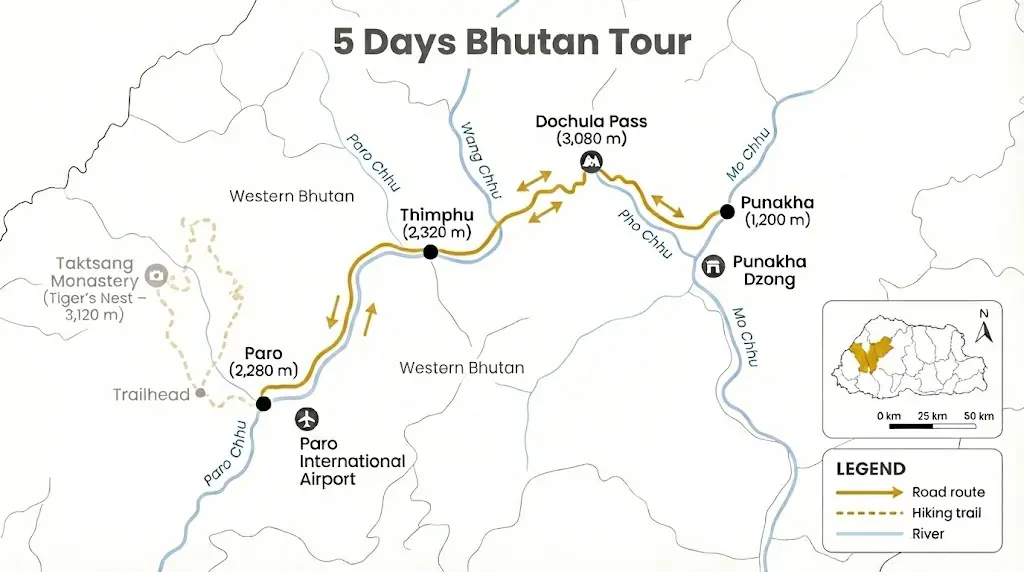
The 5 Days Bhutan Tour takes you to Bhutan’s highlights at a relaxed pace, with short drives and one rewarding hike. Your tour begins and ends in Paro. On day one, you settle in Thimphu, then cross the scenic Dochula Pass to Punakha on day two. On day three, you’ll return to Paro via Wangdue Phodrang. Day four is for the Taktsang Hike and exploring Paro’s dzongs and museums afterwards. Day five is for you to fly back home. The itinerary strikes a balance between culture, mountain views, and leisurely activities at a relaxed pace.
You’ll arrive in Paro and meet your guide and driver. Then, set on a 90-minute drive to Thimphu through river valleys and forested hills. You can go on a leisurely evening walk to adjust to the altitude in Thimphu. Explore Thimphu’s iconic sites the next morning, then drive over Dochula Pass (3,080m) into the warmer Punakha Valley. You can visit Punakha Dzong at the meeting point of the Mo Chhu and Po Chhu rivers. After Punakha Dzong, you’ll continue to Wangdue Phodrang, then drive back to Paro via Simtokha Dzong. Hike to Tiger’s Nest before visiting Ta Dzong and Rinpung Dzong. Depart from Paro on day 5.
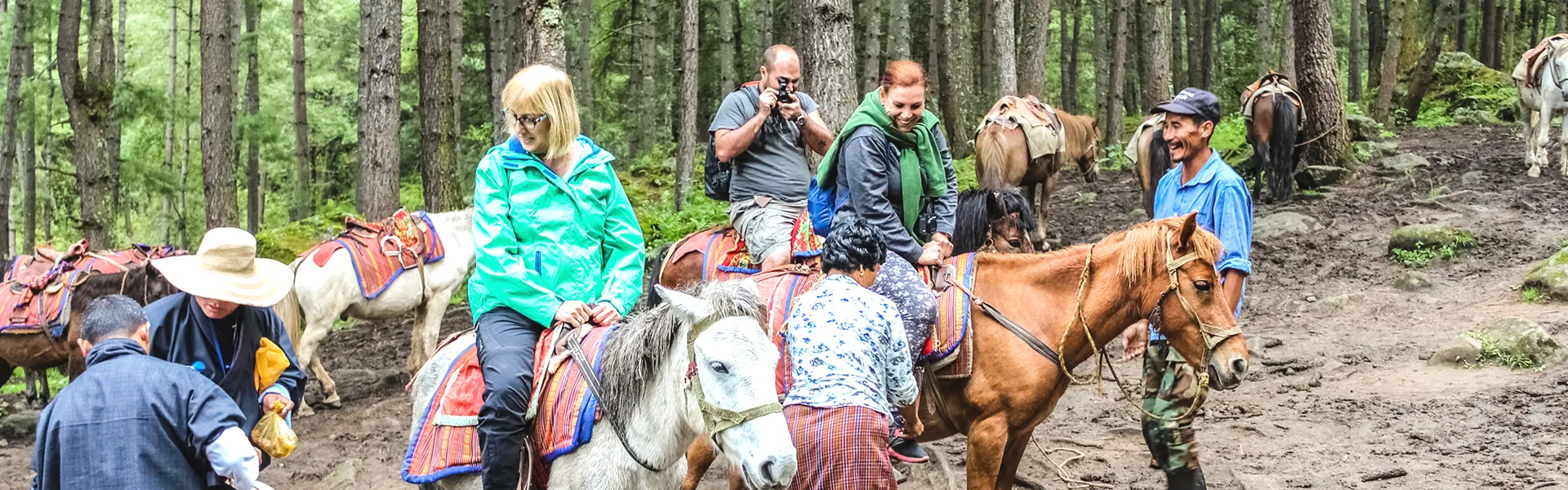
You’ll mostly gently walk through the towns. The tiger’s nest hike is about 4 to 5 hours round trip. You’ll hike through dirt paths and reach the famous monastery on the cliff. Horses can take you halfway up this hill, but you must walk the final part. The tour’s highest point is Dochula Pass and the Taktsang complex, nearly at 3,100m. Drink plenty of water, move steadily, and limit alcohol consumption to help prevent altitude sickness. Most travelers adjust comfortably if they take it slow.
Carry a printed visa clearance letter and your passport to avoid any hassles upon arrival. Dress modestly in sacred spaces and remove hats and sunglasses indoors. You must respect local customs. The local currency is Ngultrum, and you can exchange money at licensed counters or ATMs. You can pay with cards in larger shops and hotels, but you need cash to pay in markets. Local SIM cards, such as BTL or TashiCell, provide reliable data. Bhutan uses 230V power, so bring a universal adapter. Pack layers, a light rain shell, sturdy shoes, sun protection, hand sanitizer, tissues, and a refillable bottle.
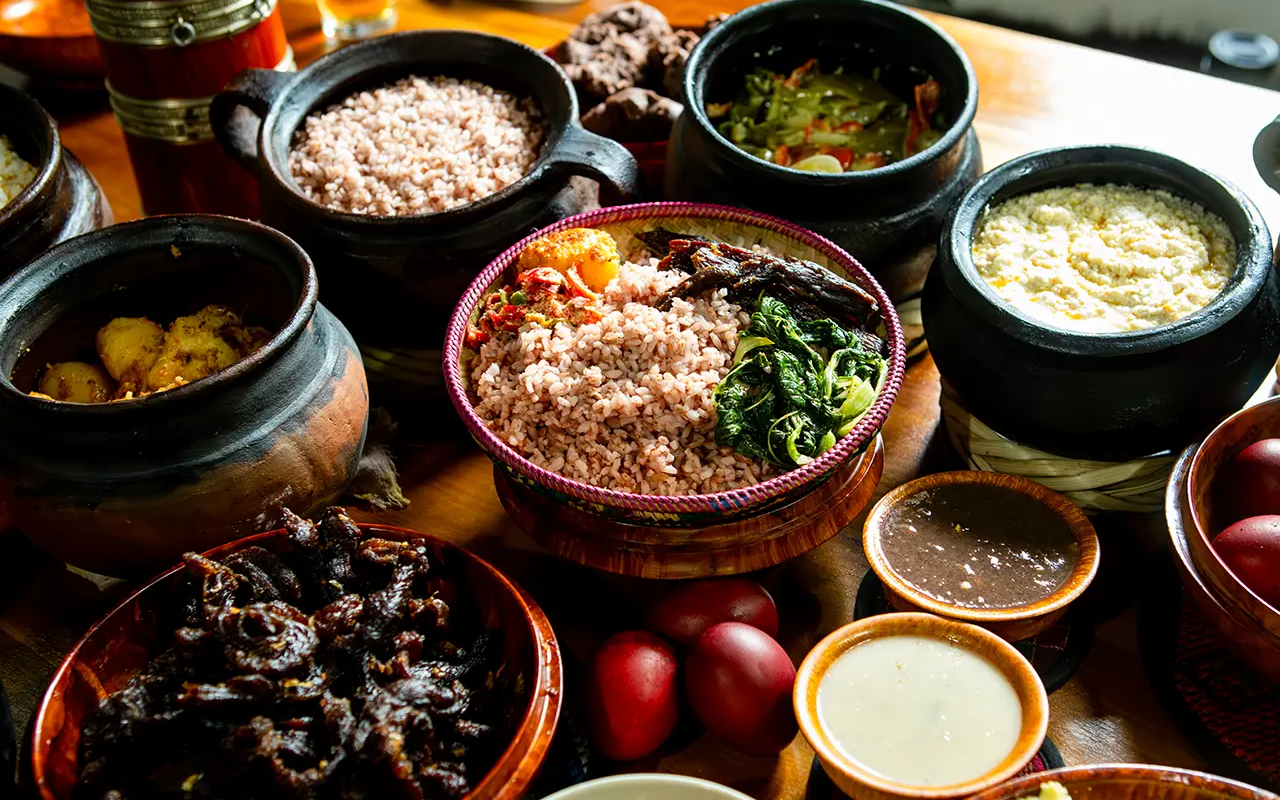
Hotels in Thimphu, Punakha, and Paro offer clean rooms, hot showers, and breakfast. You can have meals featuring red rice, seasonal greens, and cheese-bake curries. Vegetarian options are readily available, and you can adjust the spice levels to suit your taste. Drink tea or hot water to help your body recover after the hike.
The Bhutan Tour is accessible all year round. The best periods, however, are March to May and September to November. These periods offer clear skies and a comfortable temperature. Winter is cold at passes, and summer brings rain and high humidity. You can visit the Buddha Dordenma in Thimphu, the Punakha suspension bridge, or Kyichu Lhakhang in Paro if you have time. You can also have a farm lunch for local flavors with the locals.
This tour is ideal for first-time visitors to Bhutan who want to see the country’s highlights. Photographers can capture pictures in a variety of lighting conditions and architectural settings. Travelers who prefer moderate drives with one iconic hike will enjoy the tour. You’ll learn and experience Bhutan’s culture, landscape, and way of life in a relaxed manner.
Stay hydrated throughout the trip and eat a light breakfast before the hike. You should protect your skin from the sun with sunglasses, sunscreen, and a brimmed hat. If you experience any signs of altitude sickness, such as headaches, nausea, or unusual fatigue, please inform your guide immediately. You’ll only carry a daypack during the walks as the vehicle transports your main bag.

Included Meals

Trip staff

Transport

Accommodation

Trip Grade
Group Size

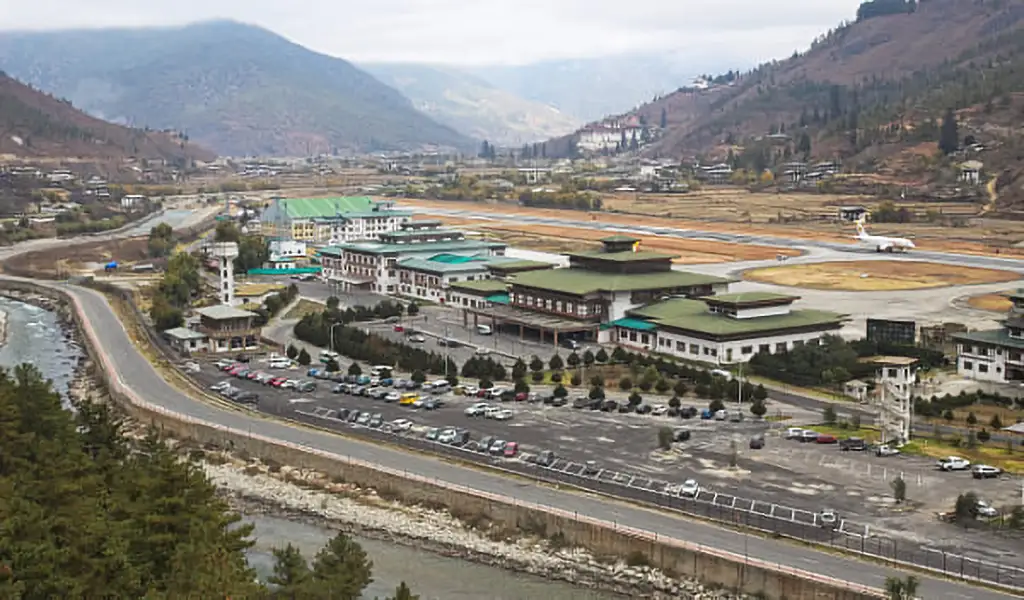
You’ll land at Paro International Airport and keep your visa clearance letter ready for inspection. You no longer need passport photos for this prepaid visa. After clearing immigration and customs, meet your licensed Bhutanese guide and driver outside the terminal. Your guide will review the itinerary, emergency contacts, and local etiquette. They will also assist with SIM cards and recommended data packages. ATMs operate in town centers, but carrying some cash is better.
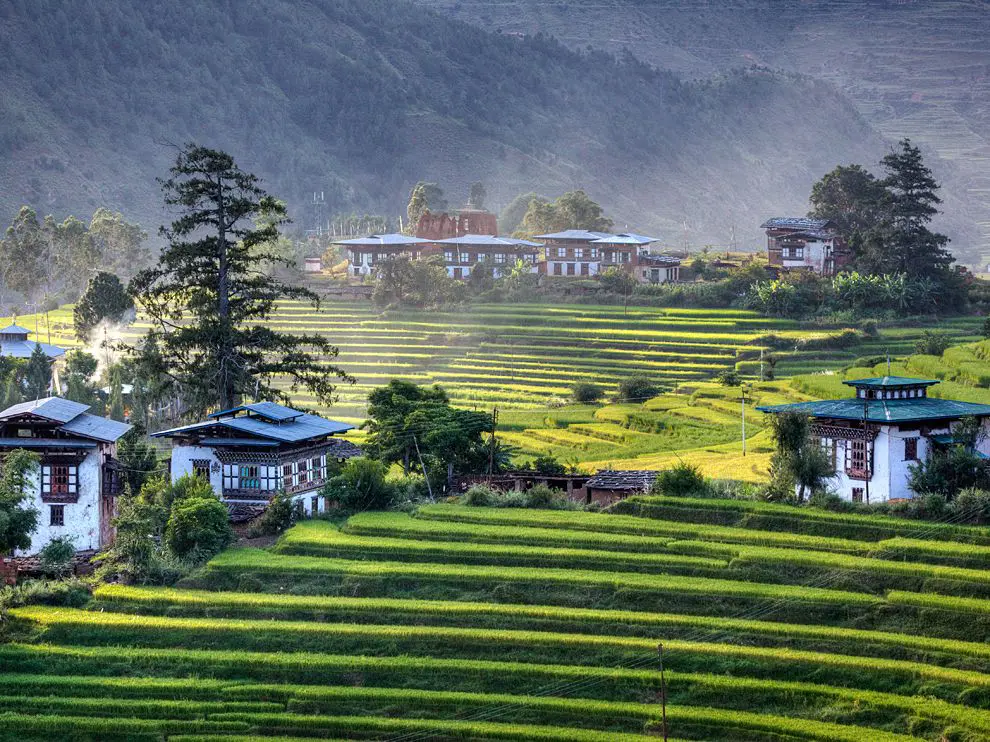
Begin your drive to Thimphu after completing the formalities. You’ll follow Paro Chhu and Wang Chhu valleys through forested hills, terraced fields, and whitewashed farmhouses. You can see colorful prayer flags marking passes and ridges. Your guide will tour the stupas and explain the etiquette at religious sites.
You can check in at your hotel in Thimphu (2,320m). Hydrate and move slowly in Thimphu to adjust to the altitude. You can walk near the hotel or visit the local market if you have time. Stop at Clock Tower Square and have Bhutanese dishes like ema datshi, red rice, buckwheat pancakes, and seasonal dishes for dinner.
You can organize your backpack in the evening. Charge your devices, label your water bottles, and pack the daypack with a light jacket, a rain shell, a hat, sunscreen, personal medications, and copies of your passport and permits. Your guide will advise on the dress code for visits to religious sites.
Thimphu is calm at night. You should respect the quiet hours and avoid loud music. You can stretch and drink warm tea to help with jet lag. You should not overexert yourself or drink alcohol to aid acclimatization. Bhutan uses 230V power, so bring a universal adapter.
Accommodation:
Meals Lunch, Dinner
Difficulty
Have breakfast at your hotel, and meet your guide to begin your tour. The day starts at Tashichho Dzong, a fortress monastery on the riverbank that houses the government offices and the King’s summer throne room. You can walk around the courtyard respectfully and quietly. Your guide will explain key symbols and the monastic calendar.
After this monastery, visit the National Library to view sacred texts and woodblock prints. Continue to the School of Arts and Crafts to see the students practice the thirteen traditional arts known as zorig chusum. You can watch thangka painting, wood carving, and embroidery in progress. Then, explore the Textile Museum and the Folk Heritage Museum to understand the Bhutanese daily life and weaving traditions.
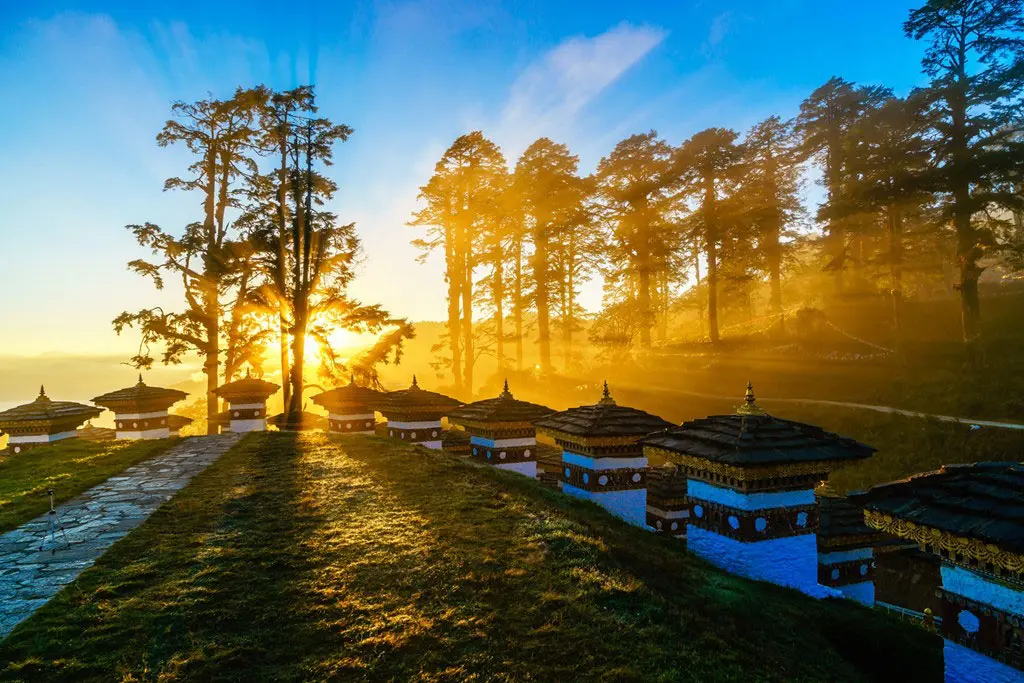
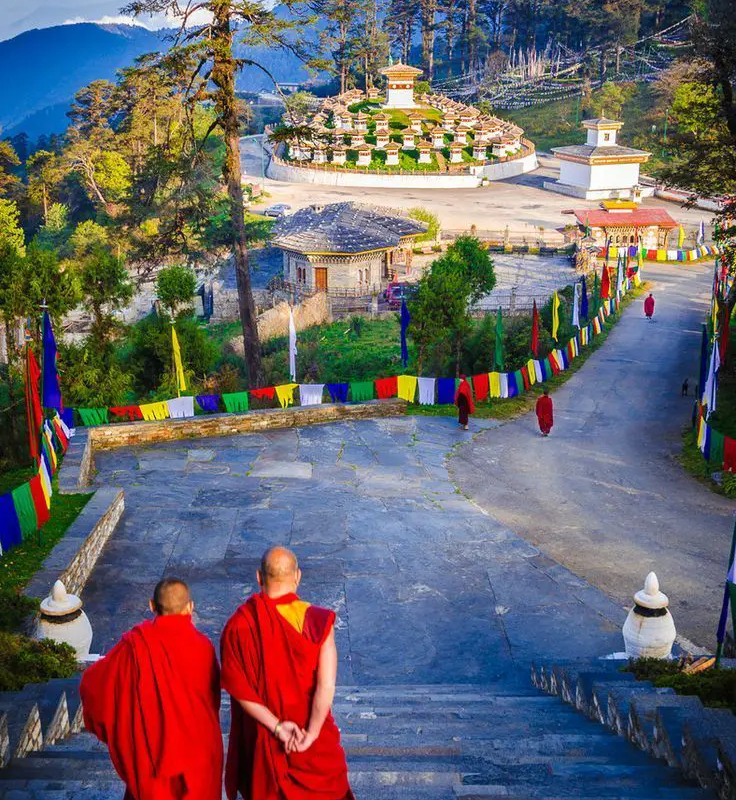
Stop at the Handicrafts Emporium or trusted co-ops to compare quality, identify natural dyes, and appreciate handwoven patterns. After lunch, begin your drive to Dochula Pass (3,080m). The road climbs through forested hills and offers Himalayan views when the weather is clear. The 1-8 chortens at the pass honor the Bhutanese history. Walk slowly, drink water, and enjoy the scenery.
Descend from the pass to the subtropical Punakha valley. After arriving, you can check in at your hotel and rest before visiting the Punakha Suspension Bridge. The bridge offers a wide-angle view of the Pho Chhu River. Optionally, you can stop at Buddha Dordenma for panoramic city views. You’ll also notice Druk Wangyel Lhakhang displaying modern murals celebrating national history.
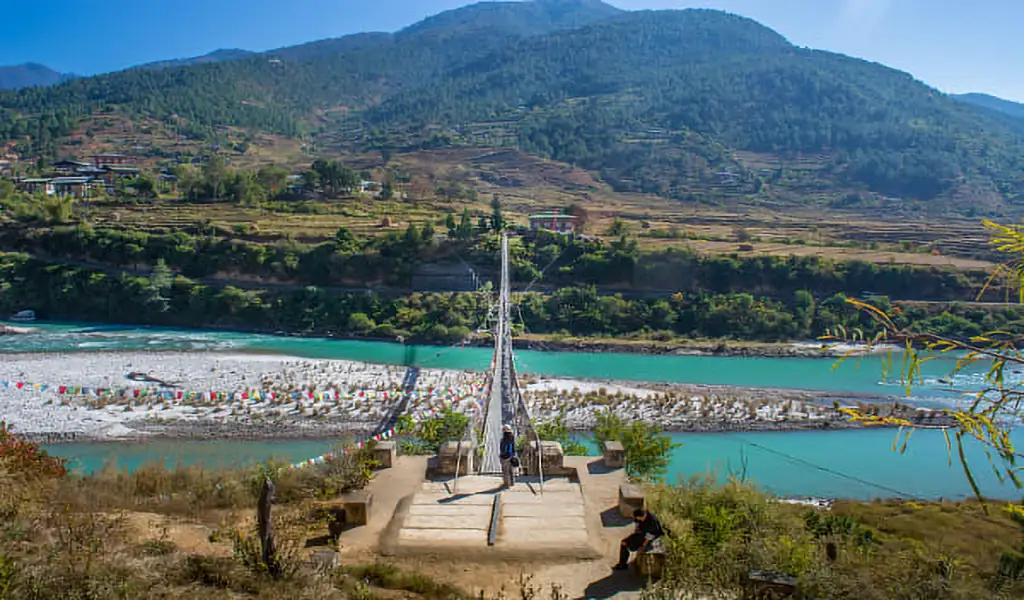
Have dinner while reviewing the next day’s plan. You can have local dishes like chili and cheese. If you want lighter meals, have plain rice or soup. Your guide will explain the history of Punakha Dzong, the old capital, and key etiquettes. Prepare a small daypack with sunscreen, a light scarf, insect repellent, water, and medications. Charge your devices and stretch or go on a riverside walk near the fields.
Accommodation:
Meals Breakfast, Lunch, Dinner
Difficulty
Begin the day with an early breakfast before heading to Punakha Dzong. This dzong was a religious and administrative center and sits at the meeting point of the Mo Chhu and the Pho Chhu. It was built by Shabdrung Ngawang Namgyal in 1637. While fires and earthquakes have caused damage over the centuries, careful restoration preserves it. Cross the wooden bridge, explore courtyards, and admire murals and carved beams.
You’ll continue for about 17km to Wangdue Phodrang. This place is known for its bamboo work, slate, and stone carving. You can visit the local market if it is open to see household goods and seasonal produce. Your guide will explain crops, barter customs, and local life. You can walk around the dzong perimeter and learn about the ongoing reconstruction efforts.
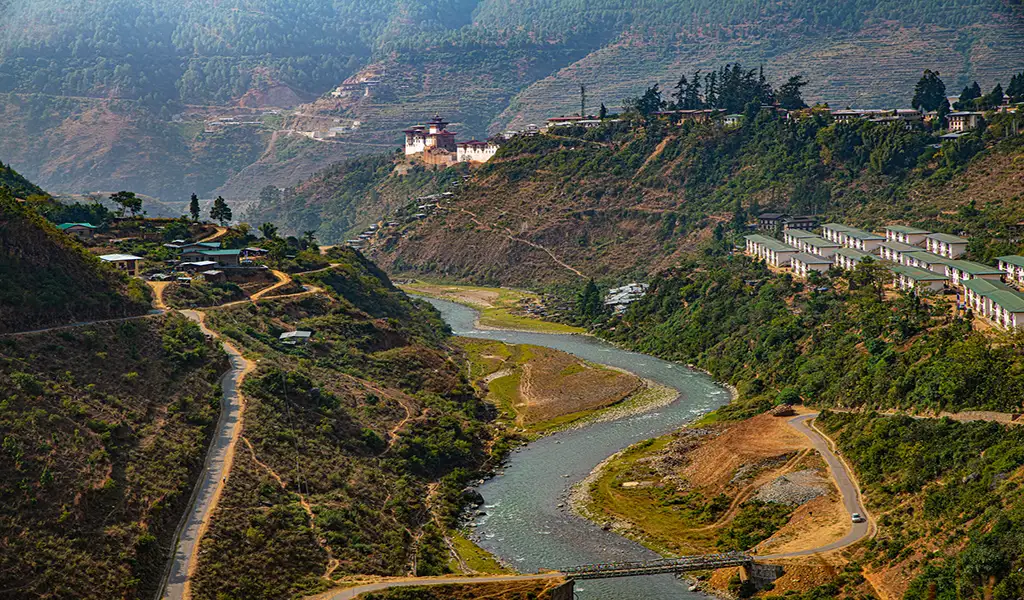
Have lunch, then drive back towards Dochula Pass. You’ll stop here for a final ridge view of the ridge if the sky is clear, then descend to Thimphu before continuing to Paro. The drive will take you through villages with whitewashed homes and painted window frames. Before reading Paro town, you’ll stop at Simtokha Dzong, one of the oldest Bhutanese forts built in 1627. Its courtyards and derailed woodwork make it a must-visit Bhutanese highlight.
Arrive in Paro and check into your hotel. You can take a gentle walk through Paro’s main street. Browse shops for textiles, hand-carved masks, and prayer flags. Try momo or red rice with seasonal vegetables for dinner.
You can prepare for tomorrow’s hike after dinner. Pack a comfortable daypack with a brimmed hat, a light rain shell, trekking poles, snacks, and water. Charge your electronics and set an early alarm. If time allows, you can take a short detour to Chimi Lhakhang.
Accommodation:
Meals Breakfast, Lunch, Dinner
Difficulty
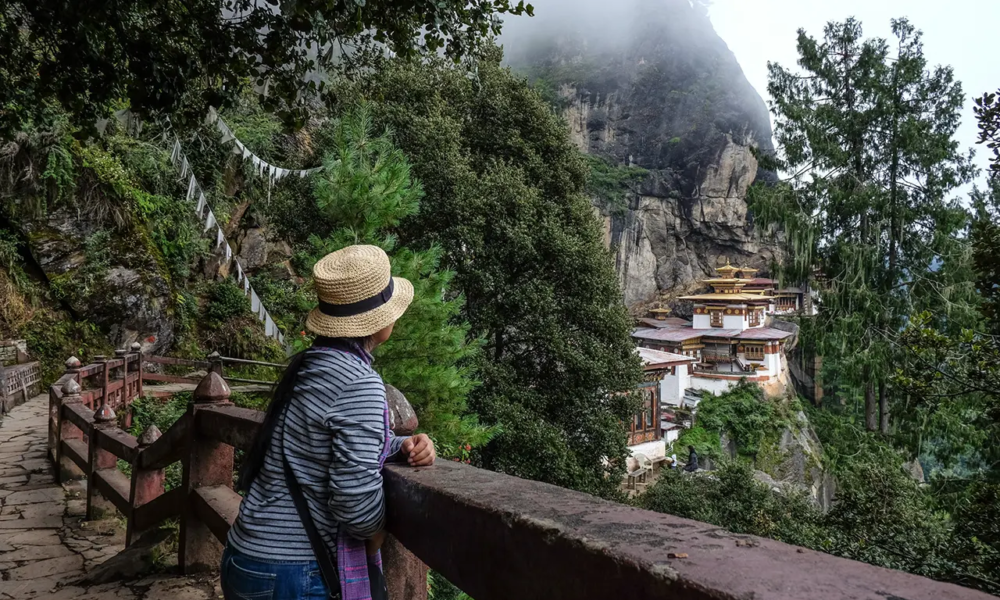
Begin the day with an early breakfast and drive to the Taktsang trailhead. The monastery sits on a cliff at 3,120m. According to legends, Guru Rinpoche arrived in this very monastery area on the back of a tigress and meditated. Later, people built the monastery around the meditation site to honor Bhutanese Buddhism.
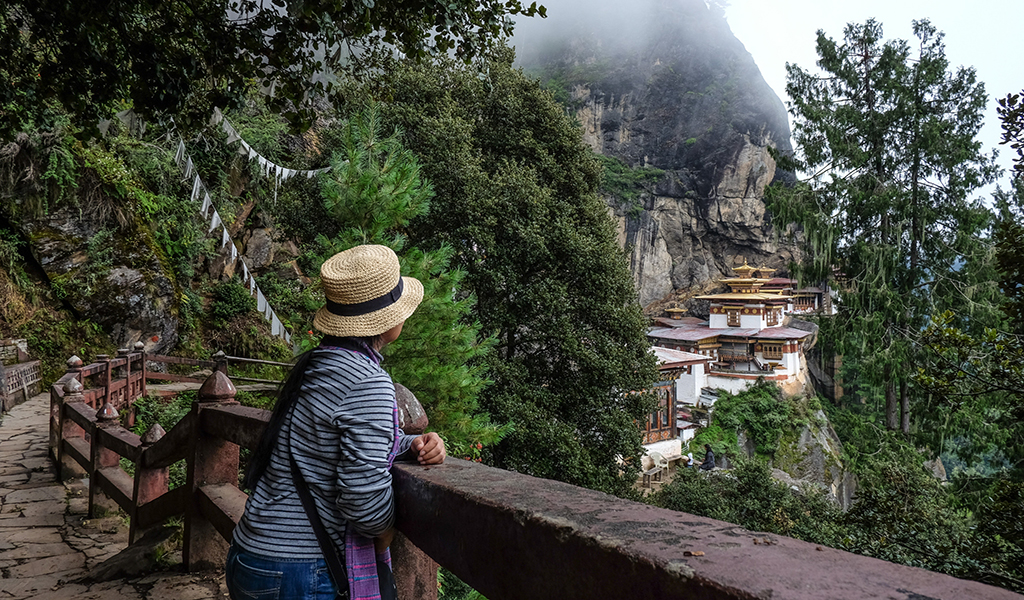
The trail climbs gradually and is about 5-hour round trip. You can hire a horse to take you halfway up, but you must continue the final stretch on foot. You can see the Taktsang across a gorge from the midway viewpoint. Reach the monastery and explore the courtyards respectfully. Return to the trailhead for lunch and visit Ta Dzong in the afternoon. Ta Dzong (National Museum) is a circular former watchtower displaying ritual objects, thangka paintings, and stamps reflecting Bhutanese culture and trade. Then, you can cross a traditional bridge to Rinpung Dzong. You can observe the defensive walls and courtyards of the place before continuing with the day.
You should walk slowly and steadily and practice nasal breathing to conserve energy. Carry about 2 liters of water per person to drink throughout the hike, and carry out all your trash to keep the trail clean. If you have time, visit Kyichu Lhakhang briefly. If not, have dinner and rest for the day.
Accommodation:
Meals Breakfast, Lunch, Dinner
Difficulty
Have breakfast and check out of the hotel today. You should organize all travel documents, like your passport, e-ticket, visa clearance letter, and permits. Carry proper paperwork if carrying carved antiques, wildlife products, or religious items.
Your driver will drive you to Paro International Airport in time for check-in and security. Since mountain flights are weather-dependent, add a few buffer days in the itinerary. Your guide will monitor updates and assist with any changes.
Difficulty
You’ll stay in a comfortable mid-range hotel with private bathrooms, hot water, and daily breakfast. Every hotel provides WiFi in rooms or common areas. Staff arrange wake-up calls, laundry, and breakfast for early starts. We arrange rooms as twin or double by default, with a single supplement available. Standard check-in begins at 2:00 pm and check-out ends at 11:30 AM. If the specific listed hotel is unavailable, we will arrange a different one of equal or higher standard.
Please inform us of your dietary needs before travel so we can arrange them. You cannot smoke in any of the rooms, and hot water and internet speeds may vary during peak demands or storms.
Paro – Mandala Resort: This hotel is a short drive from Paro town and the airport. Rooms are simple, clean, and warm with 24-hour hot water, a desk, and heating. WiFi works the best in common areas, and most rooms overlook the valley. You can request higher or lower floors depending on what you prefer. The restaurant serves Bhutanese and international dishes. Breakfast typically includes eggs, toast, cereal, fruit, and tea or coffee. Vegetarian meals are the standard. You can ask the staff to hold luggage, arrange early meals, and assist with transport.
Thimphu – Hotel Pedling: This hotel is near the Clock Tower Square, shops, and cafes at the city’s center. You get rooms with comfortable beds, private baths with hot water, a desk, and heating. WiFi is decent with varying speeds at peak times. The restaurant serves breakfast and set dinners, but you can also explore other eateries. You can get laundry service with the same-day return.
Punakha – Hotel Vera: Hotel Vera is close to Punakha Dzong and the suspension bridge. The valley is warmer than Thimphu, so fans are common and heaters are available in winter. You’ll stay in rooms with a private bath, a closet, and good natural light. WiFi works in the lobby and most rooms. The chefs prepare meals from fresh local produce and adjust the spice levels upon request. Note that this hotel has no elevators, so you must climb the stairs to your room.
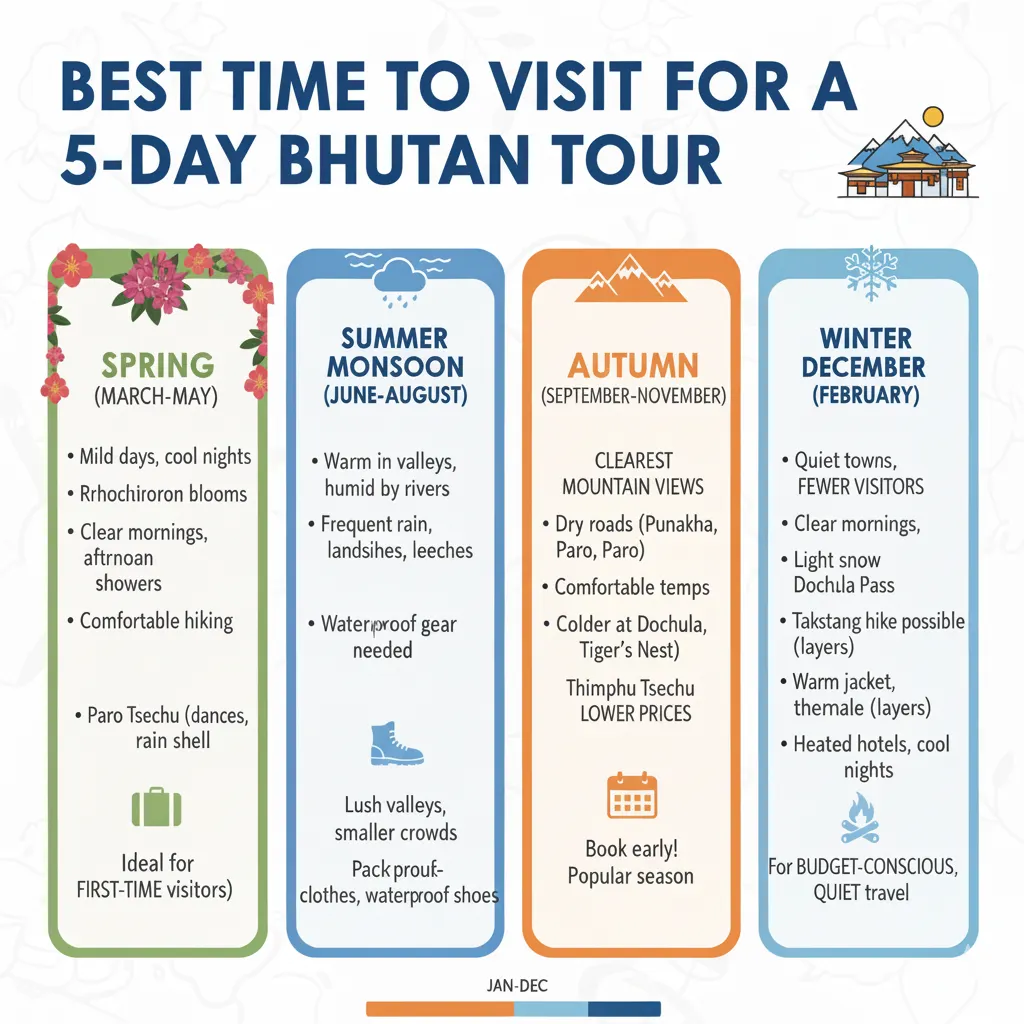
Spring (March to May): Spring brings mild days and cool nights. Hillsides bloom with rhododendrons, and trains are firm. Mornings are usually stable and clear, but afternoons can bring light showers. Hiking conditions are comfortable with good visibility. Paro Tsechu falls in this season, adding colorful dances and local celebrations. You should book early as seats fill up fast in this popular season. Pack layers, a light down jacket, and a rain shell. Spring is ideal for first-time Bhutan visitors who want vibrant landscapes, culture, and stable weather.
Summer Monsoon (June-August): Summer is warm in the valley and humid along the rivers. Frequent rainfalls cause landslides and leeches on the trails. Clouds may block the peaks, and you need waterproof gear. On the brighter side, the valleys are lush, and the crowds are smaller and have lower prices. Pack quick-drying clothes and sturdy waterproof shoes if you want to tour during this season.
Autumn (September to November): Autumn has the clearest mountain views with crisp skies. Roads are dry, making driving to Punakha and Paro easier. The temperature is comfortable, with colder conditions at Dochula Pass and the Tiger’s Nest Monastery. Autumn celebrated Thimphu Tsechu, making the season more vibrant with rich culture. Since the season is popular, you should secure accommodations and flights in advance.
Winter (December to February): Winter offers quiet towns with fewer visitors and clear mornings. Dochula pass may get light snow, and hiking to Taktsang is possible with proper layers. Hotels provide heating, although rooms cool quickly at night. Bring a warm jacket, thermal layers, gloves, and a hat. Winter is for budget-conscious travelers or those who want quiet travel.
This 5 Days Bhutan Tour is a moderate tour ideal for travelers with basic fitness. Most days involve city walks, cultural visits, and light sightseeing, with one hike to Tiger’s Nest. Driving distances are short to moderate, and mountain roads may be bumpy.
Altitude and Acclimatization: You’ll stay at moderate elevations during the trip. Thimphu sits at 2,300m and Paro at 2,200m. Dochula Pass and Tiger’s Nest are at the trek’s highest point, around 3,100m. You’ll rest and hydrate on the first day to adjust to Bhutan’s altitude. Most healthy travelers adapt well to the altitude. Keeping a slow pace, drinking water, eating light meals, and avoiding alcohol, followed by proper sleep, helps the body adjust naturally.
Daily Effort Profile: The first day from Paro to Thimphu is easy. You’ll complete airport formalities, drive 1.5 hours, and go on an evening walk. The second day, you’ll travel from Thimphu to Punakha with easy to moderate effort. Day 2 involves sightseeing, museum visits, and a three-hour drive over a high pass. The third day covers Punakha, Wangdue, and Paro, making it the longest drive of around 5 hours with visits to dzongs and local markets. Day four is all about the hike to Tiger’s Nest. This hike is about 5 hours round trip over a well-marked trail consisting of some steep sections and stone steps. You can hire a horse to rise halfway up the cliff, but you must walk the final stretch yourself. The finals day in Paro is easy. You’ll check out of your hotel and board the flight back home.
Terrain and Surfaces: You’ll see varied surfaces, including paved paths, dirt trails, cobblestones, and polished stone, within dzongs. Some monasteries and fortresses feature tall-riser stairs without handrails. The Taktsang trail includes switchbacks, uneven stone steps, and narrow rock staircases. You need shoes with good traction to reduce the risk of slipping on dust or light rain.
Preparation Plan: The tour is not physically demanding, so you don’t need to train too intensely. If you’re not used to regular activity, begin training for your tour about four weeks before the departure date. Walk for 30 to 45 minutes 5 days a week. It helps with the hike and city tour. Comfortable, broken-in shoes and a light daypack are more important than formal training.
Recommended Gear: You need sturdy walking shoes and a trekking pole for extra hiking support. Pack layered clothes for the changing weather, including a light down jacket or fleece, a waterproof shell, and a sun hat. Bring a small blister kit, sunscreen, lip balm, light gloves, and a refillable water bottle. Bring 2L of water and simple snacks for the Tiger’s Nest hike.
Yes, we arrange your Bhutan visa as a part of the package with the price already included. You need to send us a scanned copy of your passport at least two weeks before the departure date. We’ll provide a visa clearance letter where the immigration will stamp your visa on arrival.
Yes, the package includes all meals throughout the tour. We accommodate vegetarian, vegan, gluten-free, lactose-free, etc., diets with prior notice. Drinks other than tea and water are extra and under your expense.
We cover the package’s Sustainable Development Fee (SDF) and all government taxes. We’ll update your invoice if the government revises the fee before booking. There are no hidden local taxes or services in your itinerary.
No. This tour is only on a private basis. We customize dates, pacing, and sightseeing for your group.
You can book a connecting flight to Paro via Kathmandu, Delhi, Singapore, Dubai, Bangkok, and Kolkata. We recommend booking with Drukair. Since there are limited seats, we advise booking flights early and checking for any transit visa.
The hotel in Bhutan supplies 230V and 50 Hz electricity with Type D and G plus. A few hotels also offer multi-standard outlets. You should carry a universal adapter and a small surge protector.
With your passport, you can buy the Bhutanese SIM card from BTL or TashiCell in Paro or Thimphu. Towns and major highways have reliable connections, but weaker connections around high passes.
Bhutan uses Bhutanese Ngultrum (BTN) as its local currency. Paro, Thimphu, and Punakha have ATMs, but you should carry cash for small shops and the local market. Major hotels and some larger shops accept credit cards.
Bhutan restricts drones, and you need a special permit from the authorities. We do not arrange this permit for the tour, so you should leave your drone at home to avoid fines or confiscation.
The tour is leisurely. You’ll climb some stairs during sightseeing at dzongs and museums. The Tiger’s Nest is the most challenging part, with about 5 hours round-trip. The trail is steadily uphill, and horses are available until halfway, with the last section of stone stairs. You can use trekking poles, hydrate well, and pace yourself to enjoy the experience.