

Everest Base Camp trek: Sherpa culture, Kala Patthar, Everest views

Unbeatable Holiday Offers – Save Up to 20% on Your Next Adventure!

Everest Base Camp trek: Sherpa culture, Kala Patthar, Everest views
The Everest Base Camp Hike combines dramatic Himalayan scenery with deep immersion into Sherpa culture. This classic trek follows historic trade and climbing routes within Sagarmatha National Park, a UNESCO World Heritage Site. Along the way, trekkers stand beneath some of the world’s highest peaks and experience life in remote mountain villages shaped by altitude, faith, and tradition.
The journey reaches two major highlights. Everest Base Camp sits at 5,364 meters beside the powerful Khumbu Icefall, while Kala Patthar rises higher to 5,545 meters and offers the most iconic panoramic view of Mount Everest. Throughout the trek, views extend across Everest, Lhotse, Nuptse, Ama Dablam, and Pumori.
The adventure begins in Kathmandu, Nepal’s vibrant capital. After final preparations, a short mountain flight carries trekkers to Lukla. This 35-minute journey offers sweeping views of hills and valleys before landing on the famous hilltop airstrip.
From Lukla, the trail follows the Dudh Koshi River through pine forests and across suspension bridges. Small settlements appear along the path, marked by stone walls, prayer wheels, and colorful prayer flags. The clean mountain air and steady walking rhythm set the tone for the days ahead.
The first trekking days are gentle and designed to ease the body into altitude. An overnight stop in Phakding provides a comfortable start before the trail climbs steadily to Namche Bazaar.
Namche Bazaar sits at 3,440 meters in a natural bowl surrounded by ridgelines. As the main trading hub of the Khumbu region, it offers bakeries, cafes, gear shops, and mountain lodges. The Sherpa Museum provides insight into local history, mountaineering legends, and traditional lifestyles.
Acclimatization hikes play an important role here. A walk to the Everest View Hotel helps acclimatize and rewards trekkers with clear views of Everest, Lhotse, and Ama Dablam. Nearby villages such as Khumjung and Khunde allow visits to monasteries, schools, and traditional Sherpa homes.
Beyond Namche, the trail undulates through forests before descending to the river and climbing again to Tengboche. This village is home to the most important monastery in the region.
Tengboche Monastery sits on a ridge facing Ama Dablam’s striking peak. Monks perform daily prayers while clouds drift through the valley below. The atmosphere blends quiet spirituality with breathtaking scenery, making this one of the most memorable stops on the trek.
After crossing the river at Phunki Thenga, the trail climbs steadily through rhododendron and fir forests. A warm lunch and tea break mark the transition toward higher ground.
Dingboche lies at 4,410 meters in a broad alpine valley. The landscape becomes drier, with stone-walled fields and grazing yaks replacing dense forest. A half-day acclimatization hike to Nangkartshang Ridge helps the body adapt while revealing wide views of Makalu and the surrounding peaks.
Guides closely monitor pace, hydration, and oxygen levels. Slow progress and proper rest reduce the risk of altitude-related discomfort.
The route continues toward Lobuche, passing the memorial hill at Thukla. Stone markers, brass plaques, and prayer flags honor climbers who lost their lives on Everest and neighboring mountains. The site encourages quiet reflection.
Beyond this point, the trail follows the lateral moraine of the Khumbu Glacier. Ice lies hidden beneath rocks, and cold winds sweep through the open terrain. Lobuche offers simple accommodation, nourishing meals, and a calm atmosphere focused on the final approach.
Gorak Shep sits on a barren glacial shelf at 5,170 meters. After a short rest, trekkers continue to Everest Base Camp with light packs and measured steps.
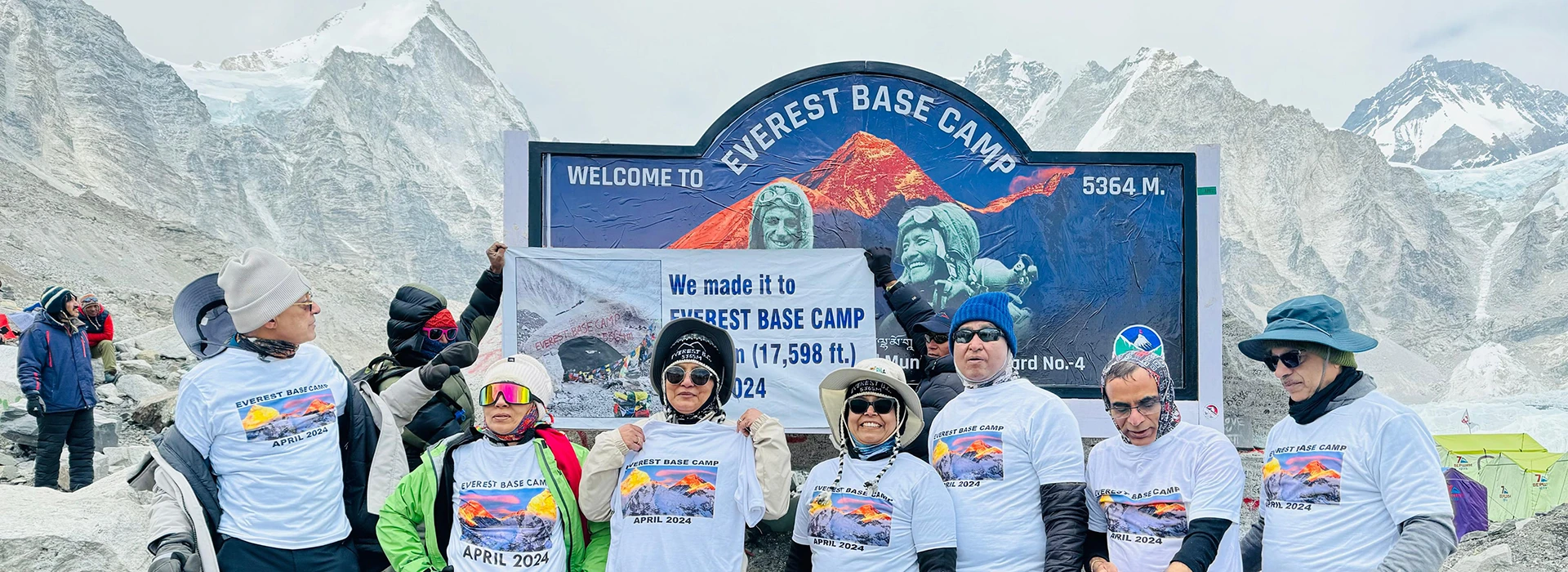
At Base Camp, prayer flags and stone cairns mark the destination. The Khumbu Icefall towers nearby, its blue ice formations constantly shifting. Standing here brings a strong sense of achievement, though careful energy management remains essential at this altitude.
The climb to Kala Patthar begins before dawn. As the sun rises, golden light spreads across Everest and the surrounding peaks, delivering the finest view of the entire trek.
After taking in the panorama, the descent leads back to thicker air. The return journey passes through Pheriche, Namche Bazaar, and finally Lukla, where hot showers, fresh coffee, and relaxed evenings feel especially rewarding.
Teahouses provide daily comfort throughout the trek. Meals such as dal bhat, momo, noodles, and soups fuel long walking days. Hot drinks are always available, offering warmth and rest.
Licensed guides lead with safety and local knowledge, while porters carry loads responsibly and are paid fair wages and treated with care. Trekkers are encouraged to refill water bottles, carry out waste, and respect local customs to help protect the fragile mountain environment.
The best seasons for the Everest Base Camp Hike are from March to May and from September to November. These months offer stable weather, clear skies, and comfortable trekking conditions. Good physical fitness, thoughtful packing, and comprehensive travel insurance are essential. With proper preparation, the trek becomes a steady and rewarding journey rather than a race.
The Everest Base Camp Hike offers a clear goal, gradual altitude gain, and a deep cultural connection. It is a journey shaped by mountain views, Sherpa hospitality, and personal achievement. In every sense, it remains one of the world’s great trekking experiences, with culture at its heart and the Himalayas as its stage.

Included Meals

Trip staff

Transport

Accommodation

Trip Grade
Group Size
The unforgettable trek to Everest Base Camp goes through some of the best views in the world. You walk through remote villages and get views of the giant peaks. Over 11 days of continuous hiking, you walk from Lukla green hills to the icy heights of the Base Camp. You follow the same trails as climbers, meet monks, and learn the cultural and natural significance of the place.
The trek is moderately challenging and tests your endurance. You will climb long hills, breathe thin air, and sleep through cold nights. You walked to the Kala Patthar and saw four of the world’s six highest peaks.
Reaching the Everest Base Camp is a significant achievement. Not everyone can finish it. You spin prayer wheels and soak in the warm Sherpa hospitality. You also help the local economy and control environmental waste by being a responsible trekker.
You will take a final flight from Lukla to Kathmandu and see the Himalayan peaks for the last time. You take the memories from the trek back home.
The Everest Base Camp trek will test your endurance. You must complete the challenge to fully understand the Sherpa way of living. The trek lets you connect to nature and find a new version of yourself.
The descriptions above draw from established Everest trekking guides, firsthand accounts, and cultural and geographic references to ensure the narrative is accurate and authentic.
Your adventure begins early with a short drive to the domestic airport in Lukla. The flight is only about 35 minutes long and offers incredible aerial views of the Himalayan range. Stepping off the plane, you breathe in the crisp mountain air and meet your guide and porters.
After a quick breakfast in Lukla, you begin your trek. The trail is lively and well-marked, passing through stone houses, Mani walls, and prayer wheels. You pass through Cheplung village and catch your first glimpse of a distant snow-capped peak, Kusum Kanguru.
By midday, you arrive in Phakding, a riverside village beside the Dudh Koshi River. After checking into your teahouse, you can relax by the river or cross a fluttering prayer-flagged suspension bridge nearby. Trekkers gather in the warm dining hall for dinner and stories in the evening. Sleep well and rest early. Tomorrow, you head to Namche Bazaar.
Difficulty
Today, you trek to Namche Bazaar, gaining significant altitude. You follow the Dudh Koshi River and cross several bridges. Finally, after climbing a long hill, you reach the Sherpa capital, Namche Bazaar.
You start early from Phakding, passing through pine forests. You walk through villages like Tok Tok and Benkar, where you may spot a waterfall and catch views of Thamserku Peak. After 2–3 hours, you reach Sagarmatha National Park‘s entrance at Monjo.
You will stop for a permit check and then continue to Jorsalle. The trail along the river is stunning as you approach the famous Hillary Suspension Bridge. Crossing the bridge, you face a steep climb up Namche Hill.
You can see Mount Everest, Lhotse, and Ama Dablam from the trail. You climb a steep hill through rhododendron and juniper forests until you reach Namche.
Check into your lodge and explore the bustling Sherpa town after reaching the destination for the day. Bakeries, shops, and the Sherpa Culture Museum are in the market. You can also enjoy the farmer’s market if you reach Namche on Saturday. Some trekkers visit the “World’s Highest Irish Pub” but take it easy to help acclimate.
You can have warm meals like Sherpa stew or Momo for dinner. Tomorrow is an acclimatization day with a relaxed schedule.
Difficulty
Today is an acclimatization day with a side hike to help your body adjust. We follow the “Climb high and Sleep low” principle. After breakfast, you’ll climb to the Everest View Hotel to acclimate. You get the views of Everest, Lhotse, Ama Dablam, and more. Many stop for a warm drink before visiting the nearby Sherpa villages of Khumjung and Khunde. Khumjung monastery even has a quirky Yeti scalp legend.
In the afternoon, you’ll return to Namche to rest and explore. Check out local shops and the Sherpa Museum, or relax. Mild headaches or trouble sleeping are regular, but watch for any signs of altitude sickness. Stay hydrated and listen to your body. Many have started taking Diamox now. At night, enjoy a warm meal and rest early. This extra day at altitude helps prepare you for the journey ahead.
Difficulty
Tengboche is famous for its views and monastery. After breakfast, you follow an easy path with the view of Everest, Ama Dablam, and Lhotse. You may spot some wildlife like musk, deer, or pheasants. You’ll pass small villages and Buddhist prayer stones along the way.
After walking for a few hours, you reach the riverside settlement of Phunki Thenga. Most trekkers eat lunch here. After lunch, you will climb a steady uphill through pine and rhododendron forests.
You will arrive at Tengboche in the afternoon. You can join the monks for the afternoon prayer if you are lucky. You get a great view of the monastery with Ama Dablam in the background.
There are a few bakeries in Tengboche. The lodges here are simple and can get cold, but the cozy dining room and warm meals make up for it. Feeling short of breath at this altitude at night is normal, so stay warm and hydrated. Sleep well to recover and prepare for tomorrow.
Difficulty
You will wake up to sunrise views against the white peaks of Everest and Ama Dablam. Your trek starts after breakfast and descends to Debuche. You will walk through rhododendron and juniper forests, then cross a wooden bridge to Imja Khola.
You walk long uphill after crossing a suspension bridge over the Imja Khola. The air starts getting thinner, and the terrain becomes more alpine.
You reach Pangboche, a traditional Sherpa village, for a tea break. After this, the tree line gets thin, and yaks are everywhere.
You will have your lunch above 4000m today at Shomare. After lunch, climb the trail along a wide and open valley. You will pass a stupa, cross the Khumbu River, and finally reach Dingboche.
Dingboche is at a high altitude of around 4,410m. Locals have built stone walls to protect the crops. You get great views of Lhotse, Ama Dablam, and Island Peak. The temperature drops significantly in the evening. Layer up and sleep early.
Difficulty
Today is another acclimatization day. You will follow the same “Climb high and Sleep Low” principle as you did in Namche.
After breakfast, you can head for a half-day hike to Nangkartshang Valley, a ridge above Dingboche. The trail is dusty and climbs quickly. You get the views of the entire valley and many Himalayan peaks. Ama Dablam is very close; you can also see Lhotse and Makalu. This 300-500m hike from the original sleeping altitude greatly helps acclimatization.
You will return to Dingboche after the hike for lunch. The lodges are sunny and relaxed. You can do laundry today.
Some trekkers walk to Pheriche at the HRA clinic for the 3 pm altitude talk. You can drink garlic soup or momo in the dining hall for dinner. The altitude is 4,400m, the highest yet. You will feel the altitude growth. Sleep well and rest for tomorrow’s hike to Lobuche.
Difficulty
The trail started with an easy climb across an open alpine terrain. The farms start failing, and the surrounding area gets barren and rugged. You can see the Imja Khola to your right and Cholatse and Taboche behind you. Pumori is in front of you.
After walking for a few hours, you will reach Dughla of Thukla. Little over Thukla, there is a memorial ridge with prayer flags. It is a memorial for the fallen climbers who lost their lives on Mount Everest.
The trail leveled out slightly and follows the lateral moraine of the Khumbu Glacier. You can hear ice creaking or spots of ice through the gaps between rock and debris. The final hour to Lobuche is rocky. You are above 4,800m, and even breathing is hard. You will arrive in Lobuche by mid-afternoon.
Lobuche is a remote village with clusters of lodges. There are no trees or grass. The lodges are basic at this high altitude. You can see Pumori from here. Headaches and breathlessness are common here. Hydrate yourself and rest early to recover your body.
Difficulty
Today, you trek to the Everest Base Camp. You will reach Gorak Shep, go to the EBC, and return to Gorak Shep. Eat well before starting the hike. You will walk above 5,000m today. You need energy for the day.
The trail goes through the rocky moraine of the Khumbu Glacier, following a valley surrounded by towering peaks of Nuptse and Pumori. The trail is rocky and uneven. You will get your first views of the Khumbu Icefall from the trail. After trekking a few more hours, you will reach Gorak Shep, a remote outpost of lodges on a dry glacial plain.
You should take a short break in Gorak Shep, eat lunch, and continue walking with a small daypack. The trail goes through the glacier and rubble. Walk carefully between the rock boulders and over the ice. You can see some expedition tents during the climbing season.
A boulder draped with prayer flags marked “Everest Base Camp. “The Everest Base Camp sits at 5,263m, at the foot of the world’s highest peak. You can celebrate by taking photos and taking in the views.
After the celebration, you will walk back to Gorak Shep. The return is quicker but tiring. You will arrive back by late afternoon. Gorak Shep is the highest sleeping altitude of the trek.
Difficulty
Your trek starts pre-dawn today. You will walk from Gorak Shep to Kala Patthar for sunrise views of Everest and other peaks. The morning is dark and cold, so wear your headlamp and layer up.
The climb is steep and slow. When you reach the Kala Patthar, the sun will come out and hit the peaks with a golden hue.
Kala Patthar is the highest point of the trek. Take photos, then descend back to Gorak Shep for breakfast. After breakfast and packing up, you will descend. Retrace your steps back to Lobuche and the memorials at Thukla. The descent is easier as the altitude drops and the air gets thicker. You can stop for lunch in Thukla or further away.
You will reach Pheriche at 4,240m by mid-afternoon. Pheriche is a flat village beneath Taboche and Cholatse. You will sleep and breathe easier today. The hard days are over. Rest early for tomorrow’s descent.
Difficulty
Today, you will walk back to Namche Bazaar. You will walk past the familiar villages of Pangboche, Tengboche, and Phunki Tenga. The air is thicker and easier to breathe.
You will join the main trail from Pheriche and follow the river towards Pangboche. The climb is more straightforward; you can even stop at the monastery for blessings. From there, the trail drops steeply to Phunki Tenga. You will go uphill towards Kyngjum through rhododendrons and pine forests. The trail gets even and reveals the valley.
You will reach Namche Bazaar by the afternoon. You can enjoy a hot shower, real coffee, WIFI, and warm beds here. You can go to bakeries or the Irish Pub; the rest of the day is yours to enjoy.
Eat a warm dinner and sleep for the final trek tomorrow. The trek is nearing its end, and you feel a sense of pride for completing the complex challenge.
Hiking time: 6 to 7 hours
Difficulty
Today is the final day of your trek. You will walk from Namche back to Lukla. The descent is long and tiring.
Retrace your steps from Day 2 and walk through the forests. You will cross the Hillary Bridge again and pass through Monjo, exiting the Sagarmatha National Park. You will pass Jorsalle and walk beside the Dudh Koshi River. The trial goes through villages like Benkar and Chumoa. You will reach Phakding by late morning and have your lunch there.
A final gentle climb will take you to Lukla. Lukla offers prayer wheels, small villages, and the buzz of aircraft. Arriving at Lukla marks the end of the trekking days.
You can check into your lodge and celebrate the last day with your team. Give the tips and enjoy the night.
Hiking time: 6 to 7 hours
Difficulty
You will take a morning flight to Kathmandu or Ramechhap and be dropped off at the hotel.
Difficulty
This section is a preparation guide. We have added a calendar-based guide starting with a 3-month countdown, assuming you’ve already decided when to go.
Everest Base Camp Trek requires physical and mental endurance. Hiking daily for about 5 hours is not easy. You must prepare for the daily hike on uneven terrain, high altitude, remote conditions, and harsh weather.
Physical Training: The Everest Base Camp trek is non-technical but can be hard on the body if unprepared. Do exercises like jogging, cycling, or swimming for 30 to 60 minutes, about 3 or 4 times per week? It builds your cardiovascular endurance. Practice hiking 5+ hours on local hills with a daypack during weekends.
If you can, hike at higher altitudes with full trekking gear. Build your leg and core strength with squats, lunges, and planks. Stretch and do yoga to avoid injuries on the hike. Consistency in these exercises and practices will prepare you for the big trek.
Book Flights and Trekking Services: Start sorting your logistics during this time. Book your international flights and a Lukla ticket if you travel independently.
Decide if you want to travel with or without an agency. Many choose a reputable company for a luxurious trek with an experienced guide, porters, meals, and premium lodging arrangements. Research and book accordingly. Make sure you know the trails or have a GPS for the route.
Arrange your leave from work and take care of your visa. Nepal offers visas on arrival for many, but it’s good to confirm.
Gear Check – Start Acquiring Essentials: You should also check your gear. Major items are a pair of nice, broken-in waterproof boots, trekking pants, a waterproof shell, a 25- 35L daypack, and an 80- 100L daypack for your porter.
You should buy or rent a 4-season sleeping bag. Some organizations provide this for you, so check with them before purchasing. You’ll need trekking poles, sunglasses, a headlamp, and a 2- 3L reusable bottle or hydration bladder. You should also pack gloves, a beanie, a sunhat, and wool socks.
Permits and Paperwork: Check your passport validity. Ensure you have at least six months of eligibility and a few blank pages left.
You’ll need a Khumbu Pasang Lhamu Rural Municipality and Sagarmatha National Park Permit for the Everest Base Camp Hike. Your trekking agency will prepare these for you. If you travel independently, you can get these permits in Kathmandu or on the trail.
It is better to do it in advance. Now is also a good time to buy travel insurance. Choose a pack that covers high-altitude trekking and emergency evacuation up to 6000 meters. Please keep all the documents and their photocopies with you for safety.
Intensify Hike Training: Start doing long hikes and cardio sessions daily to build stamina. You can do a 5-hour hike on Saturday and a 4-hour hike on Sunday. Doing this helps your body recover overnight, preparing for the daily hikes in the coming days. If you can hike on hills, you can climb stairs in high-rise buildings or stadiums. Build endurance, leg strength, and core stability. Continuous hikes will get you used to hiking. Get comfortable using trekking poles so they feel natural on the trail.
Complete Gear Purchases: You should have most of your gear ready by now. Wear your trekking boots on a practice hike to break them in. Test your clothes and their layering so that you can breathe in your trekking clothes. Try sleeping in your bag to check if it will keep you warm on the trails. Adjust all your gears now.
Don’t forget small necessities like sunscreen, lip balm, a basic first aid kit, and water purification. If you have knee issues, do strengthening exercises to prepare for descents in the hills.
Finalize Accommodation and Transport in Nepal: Start booking tour hotels in Kathmandu before and after the trek. You can choose a place with a spa to relax after the trek or something else you like. Check your airport transfers as well. Arrange a private car or keep a reliable taxi contact after arriving in Kathmandu. Your trekking agency will likely arrange these if you travel with them.
Your Lukla flight may get transferred to Manthali. Driving to Manthali from Kathmandu takes about 4 to 5 hours. Check your flight details to avoid any surprises. Get your Nepal visa from your home country. You can get a visa on arrival, but having it in advance is better. Have your documents, passport copies, insurance details, and emergency contact ready.
Visit your doctor for a check-up. Take some Diamox to help you with acclimatization on the trek if prescribed. Bring enough and a little extra for the trek if you take regular medication. You should also have a letter from your doctor with a list of medications you are taking.
Vaccinations and Health Prep: Check if Nepal has mandatory vaccination regulations for traveling. Hepatitis A, Typhoid, Tetanus booster, etc., are standard. Malaria is rare in the high mountains, but if you plan to visit lower Nepal, like Chitwan, you should get a Malaria Prophylaxis. Go to a travel clinic for consultation. Anemic patients should increase their iron intake. You can start a good hydration habit and take vitamins like C and E for an immunity boost. Intensify training without getting injured, and listen to your body.
Test Full Gear on a Weekend Hike: Check your clothes for the trek. Wear the whole kit and weigh your daypack with the approximate weight. Check if your trekking clothes or gear have any problems and replace them if necessary. Start practicing layering and removing them to get used to the temperature changes during the hike. Use your GPS, headlamp, water filter, camera, and other gear properly. Spot any problems you have to avoid them during the trek.
Finalize Packing List and Weight: Gather your trekking gear and check your packing list. Hiring a porter means they will carry about 15 kg of your gear, and you will carry 5 or 7 kg. Pack light to make the trip easier for both you and your porter. Only bring essentials; for example, you don’t need more than five pairs of wool socks for a 12-day trek. You can do laundry in Namche.
Avoid packing bulky clothes; instead, pack in layers and use a rain cover inside your pack in case of rain. Take a small medical kit with essentials like Diamox, painkillers, cold meds, and blister pads. You can pack a small sit pad for extra comfort. Weigh your bag and cut anything unnecessary.
Mental Preparation: Start reading or watching videos on the Everest Base Camp trek. It will help you get an overview of what to expect. Prepare yourself mentally for the days ahead. You can meditate and start accepting that you will be trekking in a remote high-altitude area where the facilities will not be on par with those in your home. Think of different situations and how you should react to them. Prepare yourself for the worst so you won’t panic if anything happens. Get familiar with your itinerary and leave a copy at home. Check your communication options while on the trek. You can use the WIFI in the teahouses with a fee or buy a local SIM card. You can do a digital detox and connect with nature.
Last-Minute Bookings and Confirmations: Confirm your hotel bookings and flight tickets. Let your trekking agency know if you have any dietary restrictions or want to make any customizations to the trek. If you rent or buy your gear from Kathmandu, check with the shop for availability. Withdraw cash so you can exchange it in Kathmandu for the local currency. Budget your trek and make notes of any missing items.
Final Gear Check and Packing: Do a final pack with everything you plan to bring about a week prior. Make a checklist and tick it off every time you pack. Double-check if you have a complete first aid kit and that none of your medicines are expired. Keep your essential documents like your passport, permits, insurance, and flight info in a waterproof bag, and keep their photocopies as well. Carry some passport-sized photos as well. After packing everything, carry your duffel to see if the weight is manageable. Check if you are over- or under-packing and arrange the bag accordingly. Leave some space in case you want to buy anything in Kathmandu.
Pack your carry-on wisely by including your boots, a set of trekking clothes, and your jacket. If your checked bag gets delayed, you’ll still have the essentials to begin your trek without hassle.
Fitness and Acclimatization: Mild your exercises to avoid any injuries. DO light stretching, stay relaxed, and sleep well. You can learn a few Nepali phrases for greetings and basic conversations. “Dhanyabad” for thanking people and “Namaste” to greet are common and easy phrases you can learn. Dehydration is common while flying and gaining altitude, so drink plenty of water this week.
Some take Diamox a few days before hiking to higher latitudes like Namche. If you plan on taking it during the trek, try a dose at home to see how your body reacts. Avoid getting sick as much as you can. Follow strict hygiene and safety precautions this week.
Home Affairs and Communications: Wrap things up at home. Pay your bills and share your trek plans and contact information with someone you trust. Set an automatic email response vaguely stating your whereabouts and absence. Register your trip in your country’s foreign travel office. Check your wallet and only take what you need. Ensure your phone has international roaming service, or plan to buy a local SIM card once you arrive in Kathmandu.
Download offline maps, books, or music you want for your journey. Charge your power bank and spare batteries, as charging can be expensive on the trail. Finally, inform your bank that you’re traveling to Nepal, so your card works in Nepal.
Double-check Gear Bags: Double-check every item to ensure nothing is missing. Pack your carry-on with boots, a change of clothes, important documents, and electronics. Keep the valuables with you. Carry your trekking poles and tools in the checked bag for international flights. Weigh your bag and see if it is over the weight limit. Lukla had strict weight limits of 10 kilos checked and 5 kilos carry-on. If you’re over the limit, remove some items or wear extra layers to lighten the load.
Managing Rest and Jet Lag: If you are not yet in Kathmandu and flying tomorrow, sleep early so you can start your journey fresh. Try breathing slowly to relax if you can’t sleep due to nervousness or excitement.
If you are already in Kathmandu, rest and hydrate well. Don’t consume any food that may upset your stomach. Eat familiar and straightforward meals.
Last-Minute Kathmandu Prep: If you’re in Kathmandu the day before your trek, use the time to collect any permits and rent last-minute gear. Head to the Nepal Tourism Board for your Sagarmatha National Park permit. Bring your passport, photos, and cash if you haven’t got it yet. You can get the Khumbu rural permit here or in Lukla the next day. Your travel agency will arrange them before the trek if you are not traveling independently. You can roam around Kathmandu and enjoy your stay there.
Meet Your Guide/Briefing: Usually, you will meet your guide in the evening for the trek briefing a day before the trek. If you are traveling with a group, you will meet them, review the itinerary, check the gear, and go over the final details. You can ask any of your queries during the briefing, and the guide will explain them to you.
Stay Healthy and Relaxed: Spend the day doing something light and enjoyable. You can visit some famous sites in the city or rest. Drink enough water, as it helps with altitude gain. Many believe garlic soup helps with acclimatization. Trim your toenails to prevent pain during descent. Charge all your devices and stay prepared for tomorrow.
Finally, take a moment to soak in. Prepare yourself mentally. You’ve done all the preparations, and it’s almost time to begin the trek. Trust yourself, get some rest, and enjoy.