
Kathmandu – Lukla – Kothe – Mera Base Camp – Mera Peak Climbing – Thuli Kharka – Lukla – Kathmandu

Unbeatable Holiday Offers – Save Up to 20% on Your Next Adventure!

Kathmandu – Lukla – Kothe – Mera Base Camp – Mera Peak Climbing – Thuli Kharka – Lukla – Kathmandu
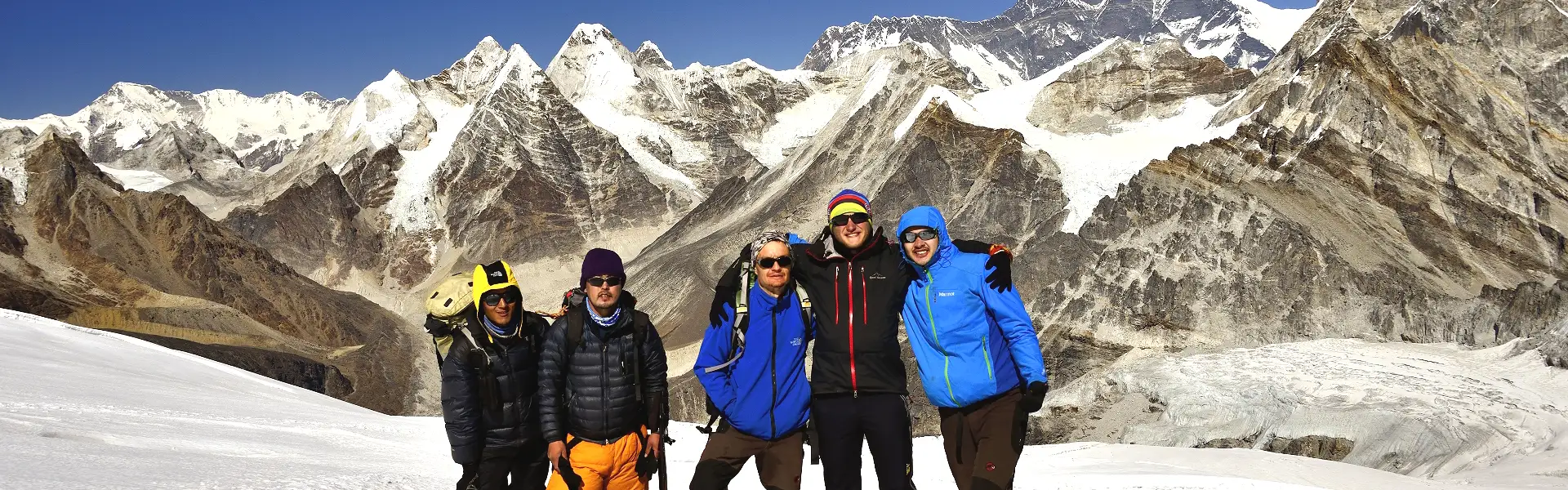
Mera Peak at 6,476m is one of Nepal’s most rewarding Himalayan adventures. It combines remote trekking with non-technical summit ascent. This highest trekking peak in Nepal at 6,476m offers a panoramic view of five of the world’s highest mountains: Everest, Lhotse, Makalu, Cho Oyu, and Kanchenjunga.
Your trip begins with an early morning flight to Lukla. You’ll trek through Hinku valley along dense forests, traditional Sherpa villages, and high alpine meadows. We design the itinerary to allow for proper acclimatization so you can successfully reach the Mera Base Camp and High Camp. From here, you’ll attempt the final ascent to the summit. Support of fixed ropes and professional Sherpa guidance makes the summit achievable for most trekkers with good fitness and basic mountaineering skills.
The standard itinerary is about 18-20 days long. The time is enough for safe acclimatization and a strong chance of summit success. The best times to climb are between March and May and September and November during spring and autumn. The weather is the most stable, and the mountain views are at their clearest during this time.
Mera Peak is a moderately challenging climb. It demands endurance and determination. You don’t need advanced technical expertise, which makes Mera Peak an ideal first Himalayan summit experience. Mera Peak climbing offers a safe and rewarding introduction to high-altitude mountaineering with proper preparation.
Beyond the summit, Mera also offers rich Sherpa culture, remote trails, and beautiful Himalayan scenery, defining the essence of trekking in Nepal. Expert Sherpa guides and reliable logistics make the trip both adventurous and unforgettable.

Included Meals

Trip staff

Transport

Accommodation

Trip Grade
Group Size
You need to arrive in Kathmandu to start the trip. The capital is bustling. Our team will be at the airport to receive you. After completing the hotel formalities, you can spend the day however you like. You will get a brief on the trip in the evening. If you are missing items or want to rent anything, you may explore the city for last-minute shopping. You can exchange your money and prepare for your flight tomorrow.
Accommodation:
Hotel Thamel Park or similar

Maximum Altitude 1,400m/4,593ft (Kathmandu)
Difficulty
Transportation Private Car
You will take the first steps on the trek. Board the flight in the early morning. The approximate 30-minute flight will take you through the scenic views of the great Himalayan peaks. You will then meet the rest of the crew in Lukla, organize equipment, and start the trek. Unlike the EBC trail, you will walk east to the Hinku Valley. You will walk a rocky trail and gain about 200 m of elevation. You will reach Chutanga at 3020m after hiking for about 4 hours. You can enjoy the afternoon and rest for the day.

Time & Distance 4 Hours
Accommodation:
Normal Teahouse
Meals Breakfast, Lunch, Dinner
Maximum Altitude 3,020m/9,908ft (Chutanga)
Difficulty
Transportation Flight
Today is a challenging but rewarding day. You will cross Zatrwa La Pass at 4,600 meters into the Hinku Valley.
After breakfast, you begin a steep climb from Chutanga and follow a narrow trail up the mountain. Walk slowly and steadily so the trail is not too hard. After a few hours, you reach the pass, where prayer flags flutter in the wind. You get your first glimpse of Mera Peak and other high summits in the distance. You might even spot Everest if the weather is clear.
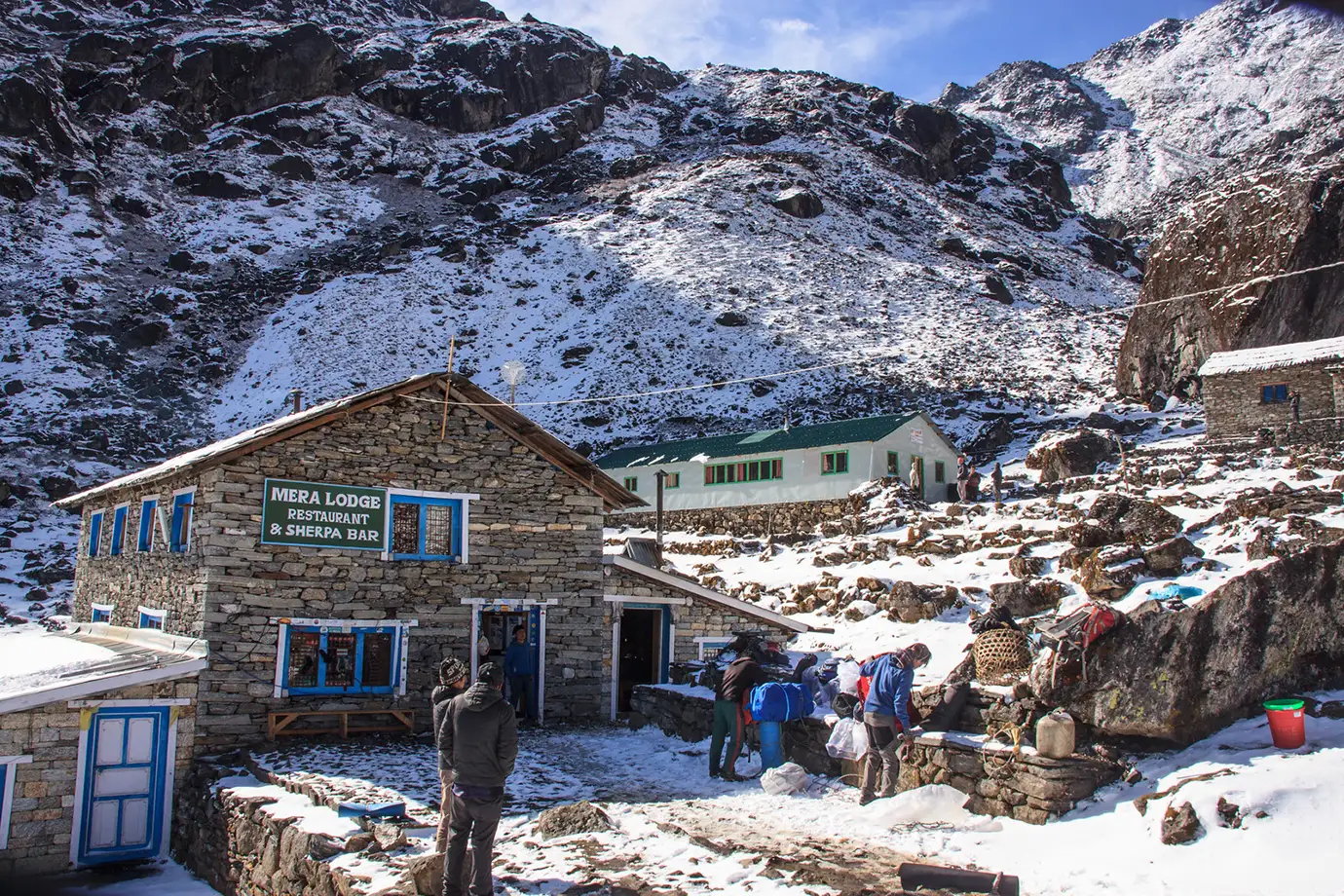
From the pass, the trail descends with a series of switchbacks. You lose about 300 meters in elevation as you head down to Thuli Kharka. Chhatra Khola, or Thuli Kharka, is a small settlement at around 4,300 meters. By late afternoon, you arrive and settle into a teahouse. After 6 to 7 hours of trekking, a warm meal and rest at this quiet spot feel well-earned.
Accommodation:
Teahouse
Meals Breakfast, Lunch, Dinner
Maximum Altitude 4,600m/15,092ft (Zatrwa Pass)
Difficulty
After the previous big day, today’s trek feels easier as you head mostly downhill. The trail from Thuli Kharka descends into the Hinku Valley, with warmer air and denser forests replacing the alpine landscape. You follow a river valley through rhododendron, oak, and pine forests. This part of the Makalu Barun National Park is rich in wildlife, including Himalayan thar, musk deer, and rare red pandas.
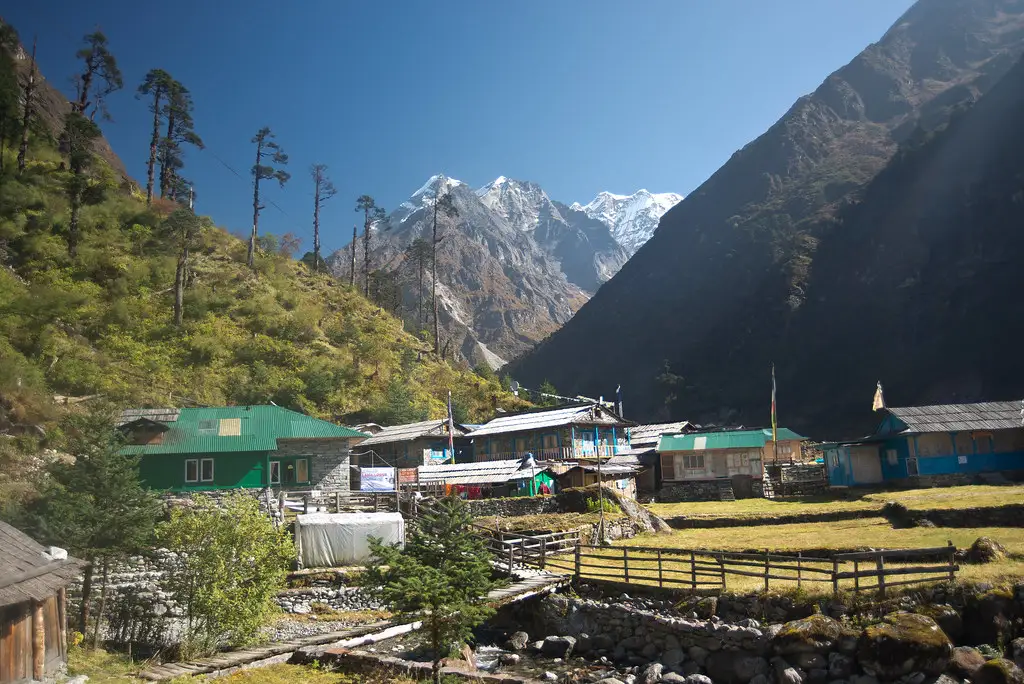
You will see giant mountains from the trail. Midway, you get your first clear view of Mera Peak. After about five hours of hiking, you arrive in Kothe at 3,600 meters, a small riverside village with a few simple lodges.
In the afternoon, relax by the river, sip tea, and enjoy the view. The lower altitude makes for a more restful night.
Accommodation:
Teahosue
Meals Breakfast, Lunch, Dinner
Maximum Altitude 4,300m/14,108ft (Thuli Kharka)
Difficulty
Today, you continue up the Hinku Valley and gradually ascend to Thangnak. The trail follows the west bank of the Hinku River as the landscape shifts from forest to alpine topography. You leave the treeline behind and enter a vast valley of glacial moraines and grazing pastures. It’s a short hike, about four hours, so that you can take your time.
Along the way, you pass Gondishung, a small stone outpost with the ancient Lungsumgba Gompa. This tiny 200-year-old monastery sits against a rock face and is a peaceful resting spot. Many trekkers spin the prayer wheels or admire the Buddhist murals for blessings on the journey ahead.
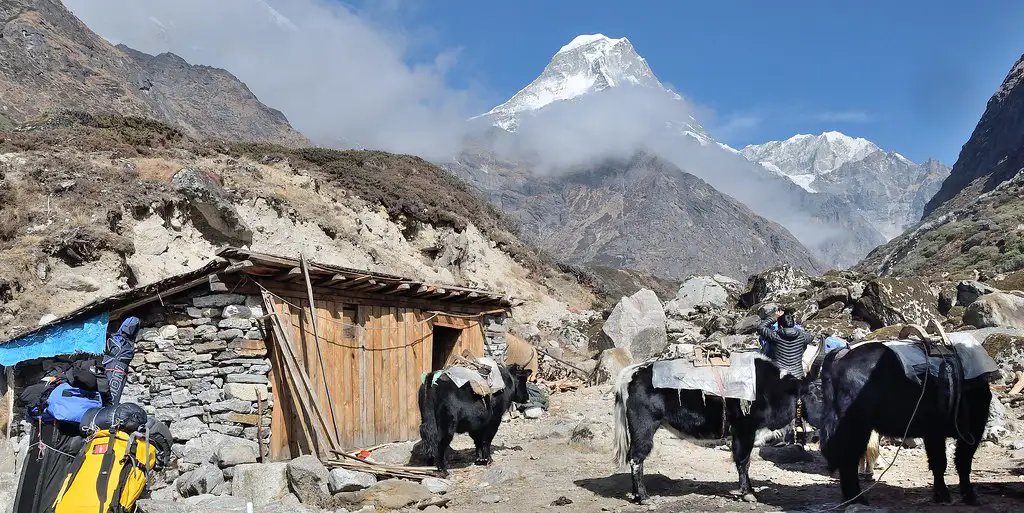
After a gentle climb from Gondishung, you reach Thangnak at 4,358 meters. Thangnak is a small Sherpa village below the Dig Glacier. Thangnak has a few basic teahouses and stunning views of Kusum Kanguru and the surrounding peaks. You arrive by lunchtime and rest in the afternoon to help your body adjust to the altitude.
Accommodation:
Teahosue
Meals Breakfast, Lunch, Dinner
Maximum Altitude 4,358m/14,298ft (Thangnak)
Difficulty
The air above 4000m is fragile, and acclimatization is necessary to adapt. Today, you will stay an extra day in Thangnak to acclimate. We recommend a small hike to nearby hills like Sabai Tso. The ridge rises to 5000m with views of Mera Peak. We will follow the principle of climbing high and sleeping low. You can rest for the rest of the day.
Accommodation:
Local Teahouse
Meals Breakfast, Lunch, Dinner
Maximum Altitude 4,358m/14,298ft (Thangnak)
Difficulty
Today’s trek is about four hours, but you gain nearly 700 meters, so a steady pace is essential. You will hike on the lateral moraine of the Dig Glacier through a barren landscape of rock and ice. Depending on the season, you may cross old snow or glacier sections.
Midway, you stop at a lone teahouse outpost, usually called Dig Kharka, for tea and a break. From here, the path steepens as you make the final push to Khare.
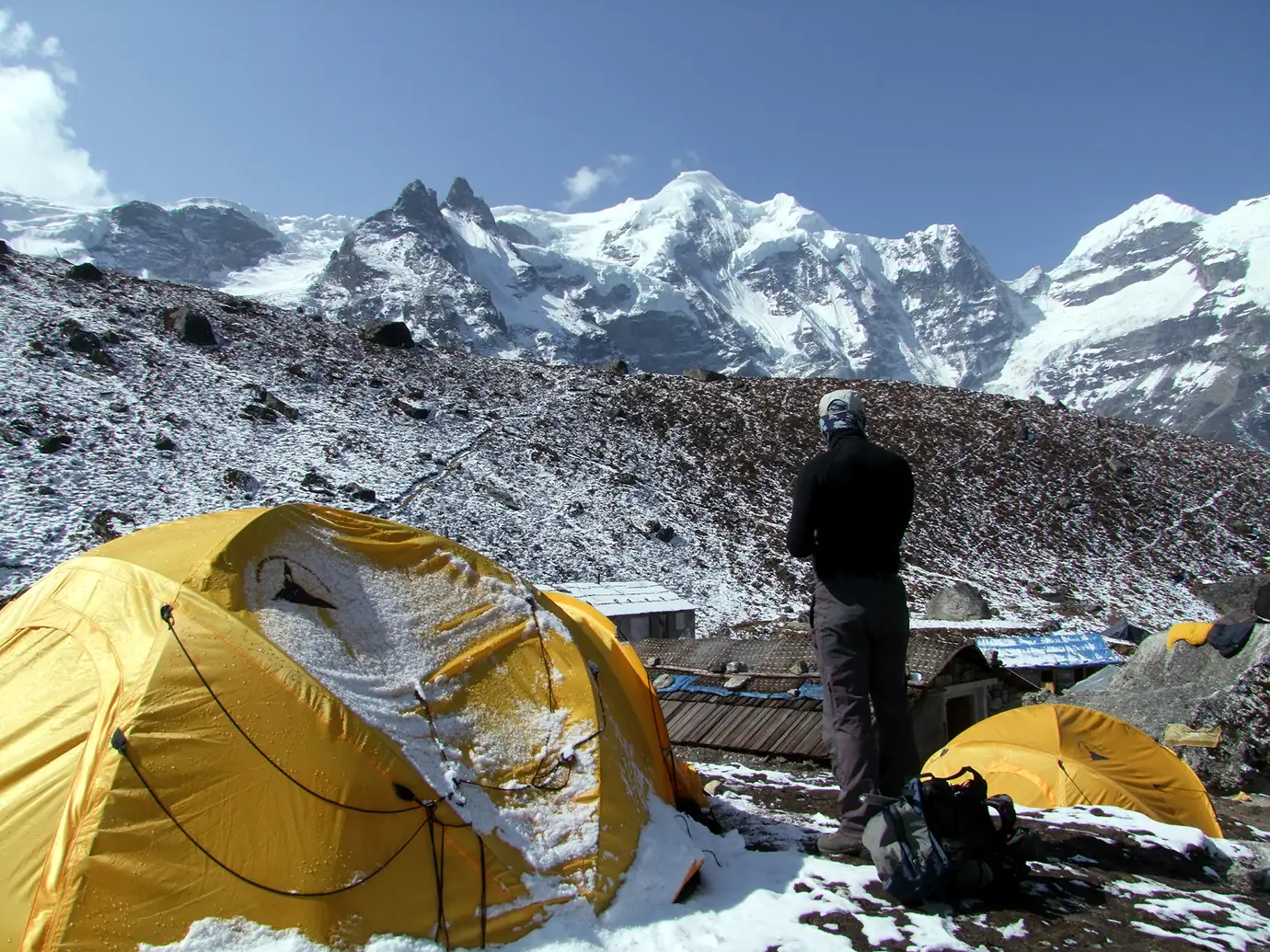
At 5,045 meters, Khare is the base area for Mera Peak climbers. A few lodges sit surrounded by glaciers and rugged peaks. You arrive by early afternoon and can either take a short walk to the glacier or rest and check your gear. The air is thin, so move slowly and stay warm.
Tonight, you’ll stay in a teahouse at over 5,000 meters. Eat and rest well.
Accommodation:
Local Guesthouse
Meals Breakfast, Lunch, Dinner
Maximum Altitude 5,045m/16,552ft (Khare)
Difficulty
Today is another rest day. We will rest today to make the ascent to the high camps easier. If you stay above 5000m, the air is thin, and every step might be tiring. You will get pre-climb training on the glacier above Khare today. You will practice walking on ice, using a jumar on a fixed rope, and taking safety measures for the climb. Consume enough calories today and hydrate properly.
Accommodation:
Teahosue
Meals Breakfast, Lunch, Dinner
Maximum Altitude 5,045m/16,552ft (Khare)
Difficulty
After breakfast in Khare, you will trek to Mera Peak Base Camp via the Mera La pass. Climbing a steep path will get you to Mera La at 5415m. Mera La connects the Hinku and Hongu valleys. Crossing Mera La, you officially step onto the slopes of Mera Peak. You will quickly descend to the usual Base campsite on the Hongu side at 5,350m. By midday, you will reach the Mera Base Camp.
We will set up tents and manage the chores. There are no villages or teahouses at this altitude. You can continue doing a short hike to keep your body active. You get great sunset views of Makalu and Baruntse from the camp. Dinner is a simple but filling meal prepared by the guides/crew. You will sleep in the tent tonight. It’s normal to have a light headache or odd dreams. Rest as much as possible because an even higher camp awaits tomorrow.
Accommodation:
Camping
Meals Breakfast, Lunch, Dinner
Maximum Altitude 5,350m/17,552ft (Mera Base Camp)
Difficulty
Today, there is a short but essential move from Base Camp to Mera High Camp, around 5,780 meters. After an early breakfast, you begin a steady climb up the glacier. The trail isn’t very steep, but the high altitude makes it physically demanding. You may be roped up and wear crampons, depending on the conditions. As you ascend, you will see peaks like Makalu, Cho Oyu, and Baruntse. By late morning, you reach High Camp, a small rocky ledge beside the glacier, just big enough for a few tents.
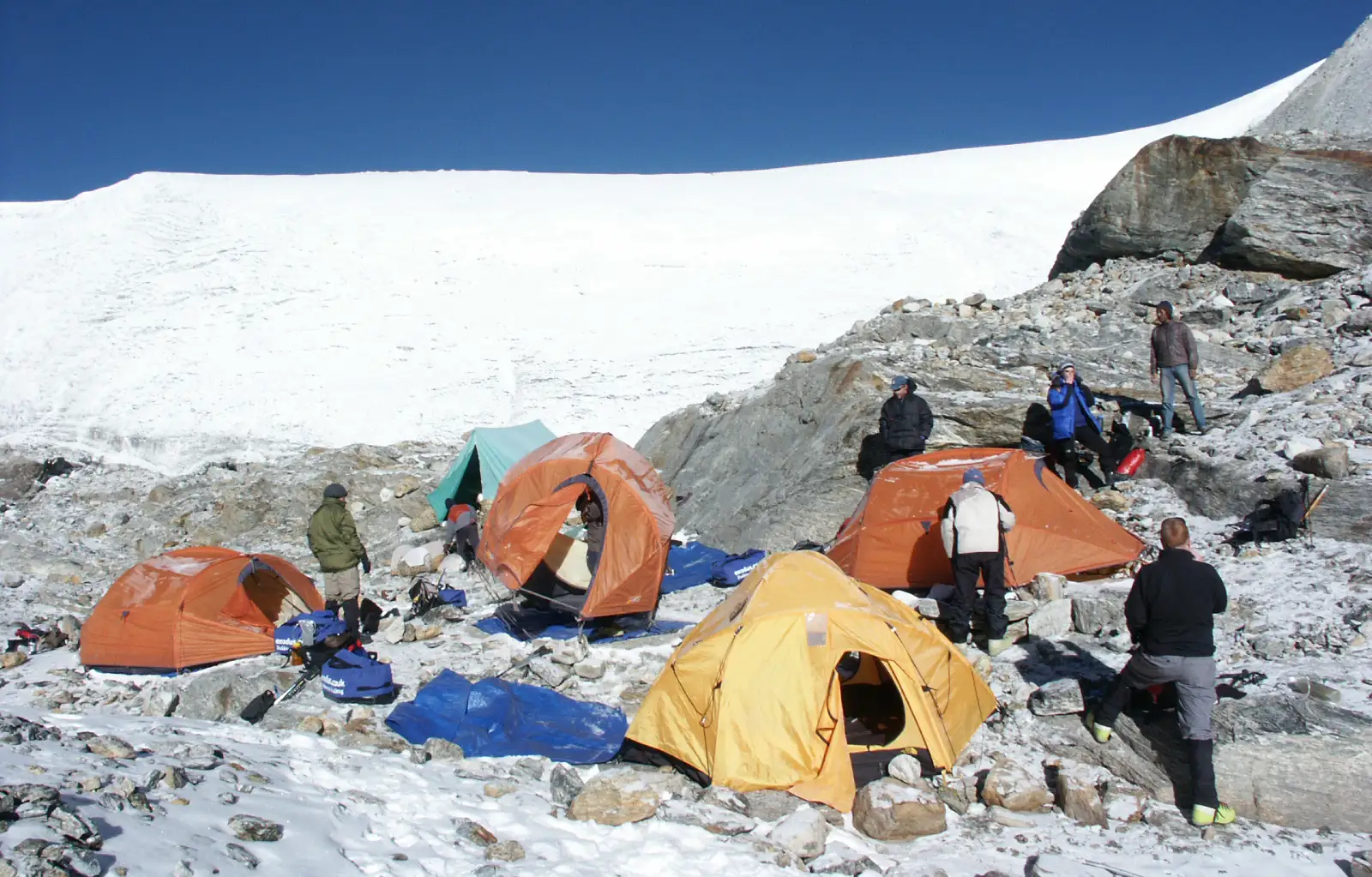
The rest of the day is for rest, hydration, and staying warm. Your guide will check gear and go over the summit plan. Even simple tasks feel tiring here, so take it slow. Try to eat and relax as much as you can. The summit push begins before dawn, so you’ll head to bed early tonight.
Accommodation:
Tented Camp
Meals Breakfast, Lunch, Dinner
Maximum Altitude 5,780m/18,963ft (High Camp)
Difficulty
Your day begins early, before dawn or past midnight. Your guide wakes you around 2 AM with hot tea and a light snack. Gear up with your headlamp, crampons, and harness, then rope in with your team and begin the long glacier ascent.
The climb starts gradually, a steady uphill in the cold, thin air. It’s not technically difficult, but the altitude makes every step challenging. You move slowly, resting every hour. You reach the summit ridge after 4 to 5 hours of steady climbing.
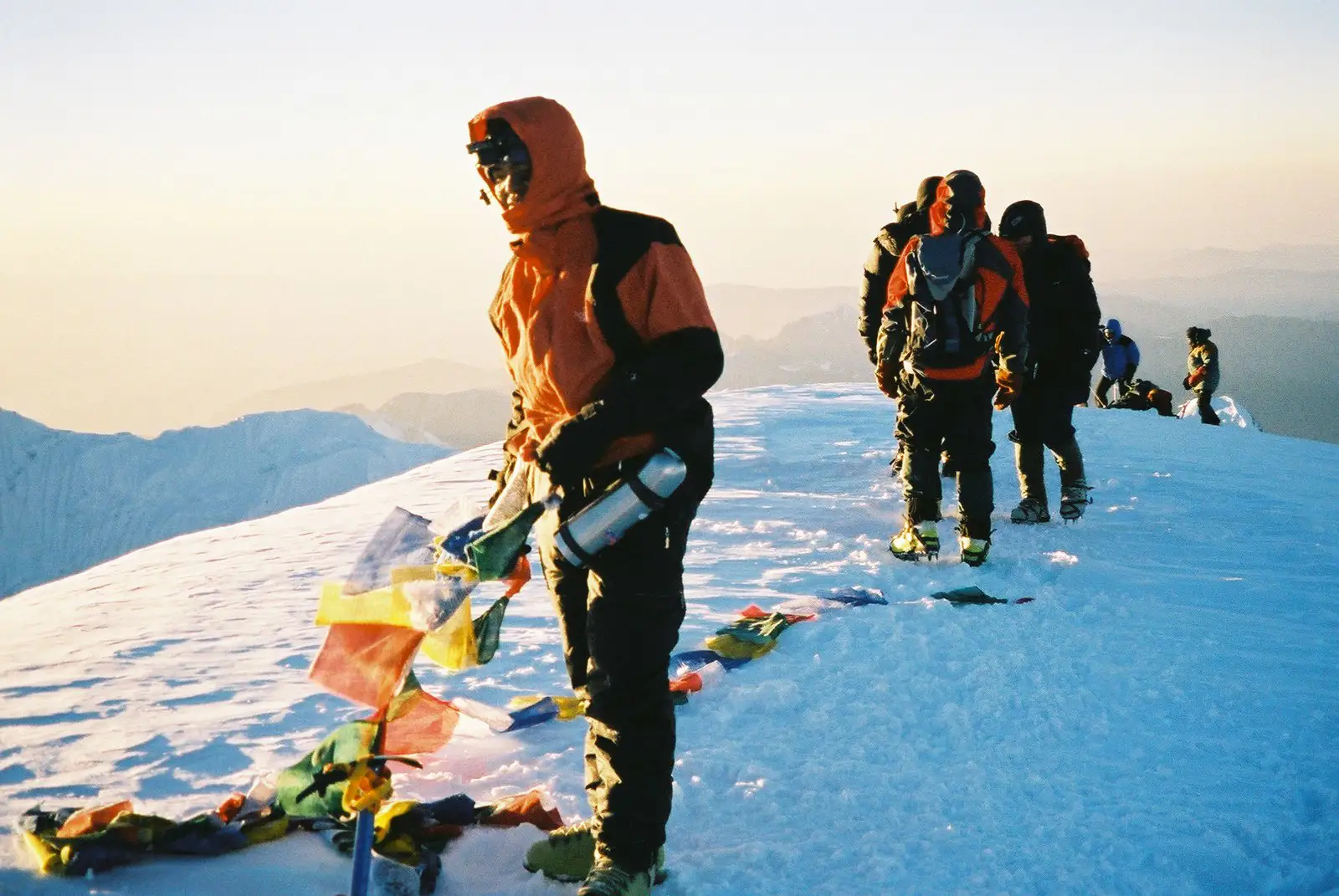
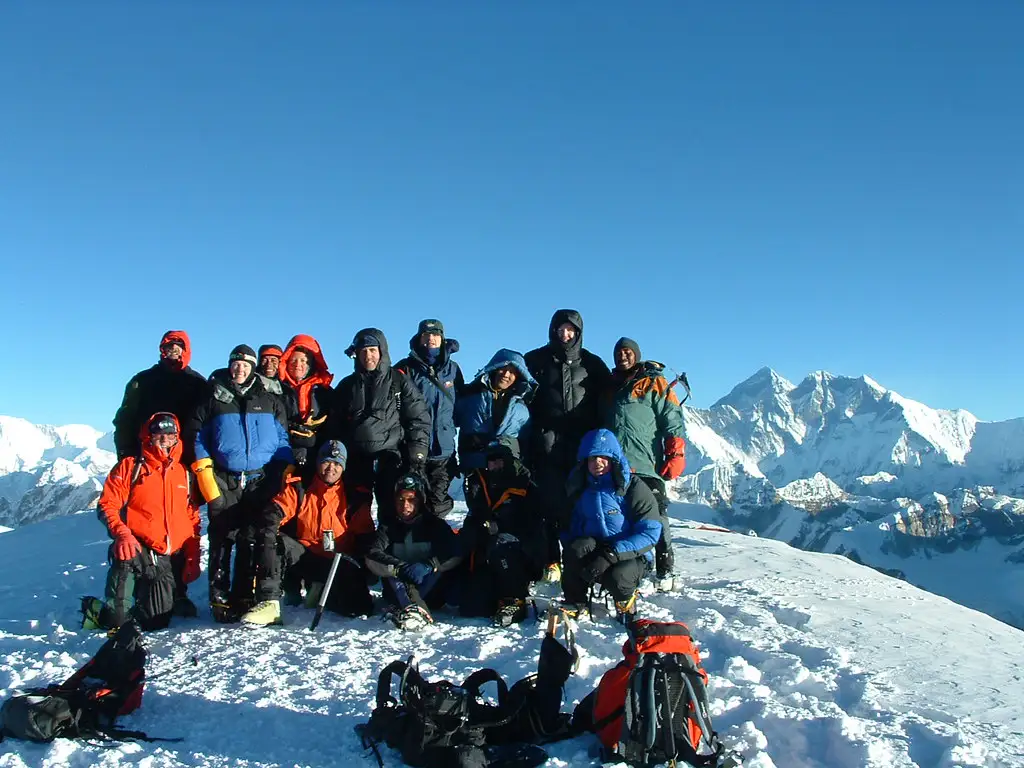
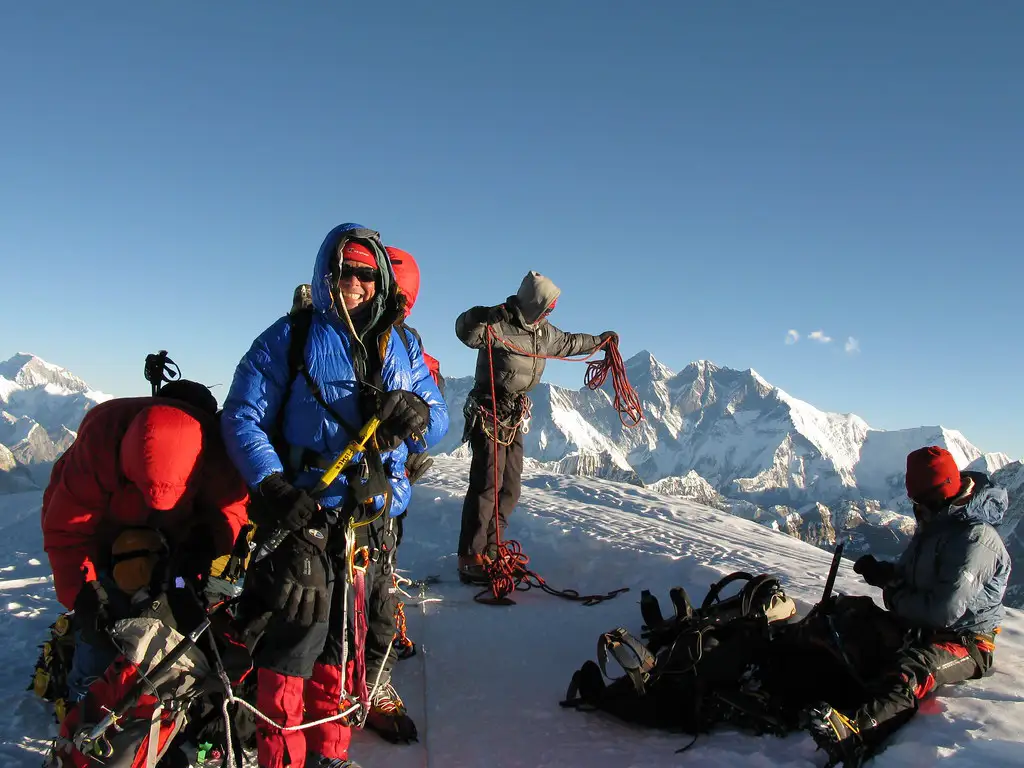
You will encounter a steep 35-40°C incline near the summit. You will use a fixed rope in this section for safety. Finally, in the early morning, you will summit the Mera Peak at 6,476 meters.
If the day is clear, you will see Everest, Lhotse, Nuptse, Makalu, Cho Oyu, Kanchenjunga, Ama Dablam, and other stunning peaks. Mera Peak is the highest trekking point in Nepal. After celebrating the win, slowly descend back to the Base Camp.
You retrace your steps down the glacier, now in daylight. Within a few hours, you’re back at High Camp to rest and pack up. You rest for a while, then descend back to Khare, depending on the weather and group conditions. Many teams choose to descend. By late afternoon, you will be back at Khare.
Back in Khare at 5,045 meters, the teahouse feels like a warm sanctuary. You’ll enjoy a hot meal and celebrate with your team. Rest early for tomorrow.
Accommodation:
Teahosue
Meals Breakfast, Lunch, Dinner
Maximum Altitude 6,476m/21,247ft (Mera Peak)
Difficulty
After breakfast in Khare, you will begin the long descent to Kothe. The walk is more leisurely as the oxygen level increases. The route leads down past Thangnak and along the Hinku River valley. You should stop for lunch in Thangnak or further down. Continuing, you eventually reach Kothe (3,600 m) again by late afternoon after about 6 hours of steady trekking.
You drop around 1,400 m in elevation from Khare, so take care of your knees on the downhill and use trekking poles if you have them. Back at Kothe, you can celebrate properly. There is thick air and relatively warmer temperatures in Kothe. Enjoy the evening by the riverside lodge, sharing summit stories with trekkers heading up.
Accommodation:
Teahosue
Meals Breakfast, Lunch, Dinner
Maximum Altitude 5,045m/16,552ft (Khare)
Difficulty
You leave the river behind and begin climbing out of the Hinku Valley today. The trail from Kothe ascends toward Thuli Kharka on a different route through alpine terrain. It’s a steady climb with around 700 meters of elevation gain. You will pass through rhododendrons and juniper shrubs. Along the way, you’ll catch occasional glimpses of Mera Peak.
After several hours of trekking, you reach Thuli Kharka and continue a bit farther to the area near Chatrabu at about 4,300 meters. Tonight is your last on the trail. You’ll stay in a simple lodge or tented camp and get some rest for tomorrow’s descent to Lukla.
Accommodation:
Teahosue
Meals Breakfast, Lunch, Dinner
Maximum Altitude 4,300m/14,108ft (Chatrabu)
Difficulty
Your final day of trekking begins with breakfast before you make your way back over Zatrwa La Pass. The trail climbs about 300 meters to the top. The trail feels easier with thick air.
The trail zigzags steeply down to Chutanga, where you reconnect with your path from Day 2. Walking is more pleasant from here, as you walk through the forest. You go past minor signs of life as you return to lower elevations. By afternoon, you arrive in Lukla.
At your lodge, a hot shower and maybe a cold drink mark the trail’s end. You might gather with your guide and porter team for a celebratory farewell dinner in the evening. Try local Sherpa dishes or toast with a glass of rukshi, the local rice liquor. Lukla has a festive feel, with trekkers sharing stories at small bakeries and teahouse bars. Tomorrow, you fly back to Kathmandu.
Accommodation:
Teahouse
Meals Breakfast, Lunch, Dinner
Maximum Altitude 4,300m/14,108ft (Thuli Kharka)
Difficulty
You will fly back to Kathmandu today. Approximately 35 minutes of flight over the beautiful Himalayan mountains and the cities of Nepal will get you back to the capital. The weather might delay or ultimately postpone your flight; keep it in mind when preparing for the trip. We will organize a celebratory dinner back in the capital to complete the Mera Peak climb.
Time & Distance 35 Minutes
Accommodation:
Hotel Thamel Park
Meals Breakfast
Maximum Altitude 2,860m/9,383ft (Lukla)
Difficulty
Transportation Flight
We will provide drop-off service as per your flight schedule.
Meals Breakfast
Difficulty
You will mainly be staying in teahouses during the trek. Also, you will remain in a nice hotel and a camp.
At Kathmandu: You will be staying in Kathmandu before and after the trek ends in a nice hotel. Kathmandu will provide hot showers, WIFI, and good meal options. We can also arrange for an upgrade if you wish.
While trekking, on the trail, you will stay in local teahouses. These modest family-run teahouses provide the best that the altitude allows them to. Rooms are basic but cozy. You will share a room and bathroom. Wi-Fi, hot showers, and charging electronics will cost extra money, and the dining hall doubles as a gathering spot. These teahouses host the guests with hospitality. You may not have all the facilities in the world, but everything will be rewarding after the long hike.
On climbing days, your lodge privilege will disappear at the base and the high camp. You will stay in a tent built by the crew. We also set up a separate dining room and toilet tents. It will be basic, but we will work to make it as comfortable as possible.
Overall, accommodation is simple and modest. Warm meals, good company, and mountain views compensate for the lack of luxury.
Mera Peak is not a technical climb, so you don’t need previous mountaineering skills. It still pushes you in many ways. It is rated a moderate to challenging trek and climb. Here are some ways it challenges you:
High Altitude: You’ll climb up to 6,476 meters and spend several days above 5,000 meters. The air gets thin, and walking on easy terrain can leave you breathless and tired. Everyone reacts differently to the altitude, so listen to your body and communicate with your guide. We include acclimatization days to help your body adjust, but expect mild headaches or trouble sleeping.
Physical Endurance: You’ll usually be hiking for 5 to 7 hours. Summit day is even longer, with 10 hours of climbing and descending. Some steep climbs and downhills can be challenging on your knees, so good fitness and stamina are essential. Walk at a comfortable pace. It’s as much about mental determination as physical strength.
Technical Skills: The climb itself isn’t technical. You’ll mostly be walking on glaciers with crampons, using an ice axe, and wearing a safety harness. Your guides will teach you everything you need to know during the trek. The trickiest bit is a short, steep section near the summit where you’ll climb using a fixed rope. It is a doable climb, even for beginners.
Weather and Cold: The temperature is freezing above 5000m, especially at night. The weather can change quickly, too, with wind, snow, or storms. Dressing right and being mentally prepared for early wake-ups in the cold are essential.
Remoteness: Mera Peak is far from roads or hospitals. If anything serious happens, you’ll need a helicopter evacuation, so travel insurance is necessary. Your guides, porters, and fellow trekkers become your support system.
Our itinerary involved a couple of acclimatization days. You would be climbing over 6000m above sea level. This altitude means the air is thin and has minimal oxygen. It is essential to walk safely.
Our elevation gain should be gradual. We ensure the altitude gain is no more than 500m daily. We have two scheduled acclimatization days in Thangnak and Khare. Doing this allows the body to adjust. During these acclimatization days, we will conduct small hikes and then return following the idea of climbing high and sleeping low.
Staying well-hydrated prevents altitude sickness. The air is arid at this altitude, and your body dehydrates quickly. You must eat and drink enough, even if your body may not want it. Carbs energize, and water hydrates. Our guides will monitor the team’s daily health. We will give you the necessary medication for the treatment and ensure your safety.
Our guides will be leading the group at a slow pace. It is a deliberate strategy to prevent overexertion. It also allows the body to adapt to the altitude. We have built the itinerary to be flexible. Anything can slow down the trek, like someone needing more adjusting time or weather shifts. We will delay the summit or descend quickly if these situations arise.
The only effective remedy for severe altitude sickness is immediate descent to a lower altitude. We will assist anyone on the team with a safe descent. Helicopter evacuations are common during emergencies. But we can avoid these with the right pace and planning.
With these strategies, most trekkers stay healthy and enjoy the trip. Everyone responds to altitude differently, so communication with your guide and listening to your body are key. Acclimatization makes your summit day possible, safe, and successful.
You don’t need to be a pro athlete to climb Mera Peak, but reasonable fitness and preparation make a huge difference. The better your shape, the easier the trek and summit will be. Here’s how to train:
Cardio: Trekking at high altitude means you need strong aerobic endurance. Do cardio workouts like hiking, jogging, cycling, or stair climbing 3–4 times a week. Gradually increase to longer sessions. If possible, do weekend hikes with a backpack to simulate real conditions.
Legs, Core & Stamina: Focus on leg strength with exercises like squats, lunges, and step-ups. Try hiking daily with a backpack to build stamina and train your body.
Flexibility, Balance & Rest: Stretch often or include yoga to prevent injuries. Work on balance to handle rough terrain. Rest days are also important, allowing your body to recover and strengthen between workouts.
Test Your Gear Early: Break in your boots before the trek to prevent painful blisters. You should also practice hiking in your trekking gear to be comfortable with the weight and layers.
Train Your Mind Too: Altitude and long days test you mentally. Prepare by accepting the discomfort as part of the trek. Stay positive and focus on small goals.
Health & Experience: Get a medical check-up, especially if you have asthma or high blood pressure. Having a trekking experience is a plus, but it isn’t essential. Do a multiple-day hike before the trek for practice.
The bottom line is to start training 2–3 months in advance. Regular cardio, strength, and real-world hikes help. Being fit enough means you can enjoy the trek more.
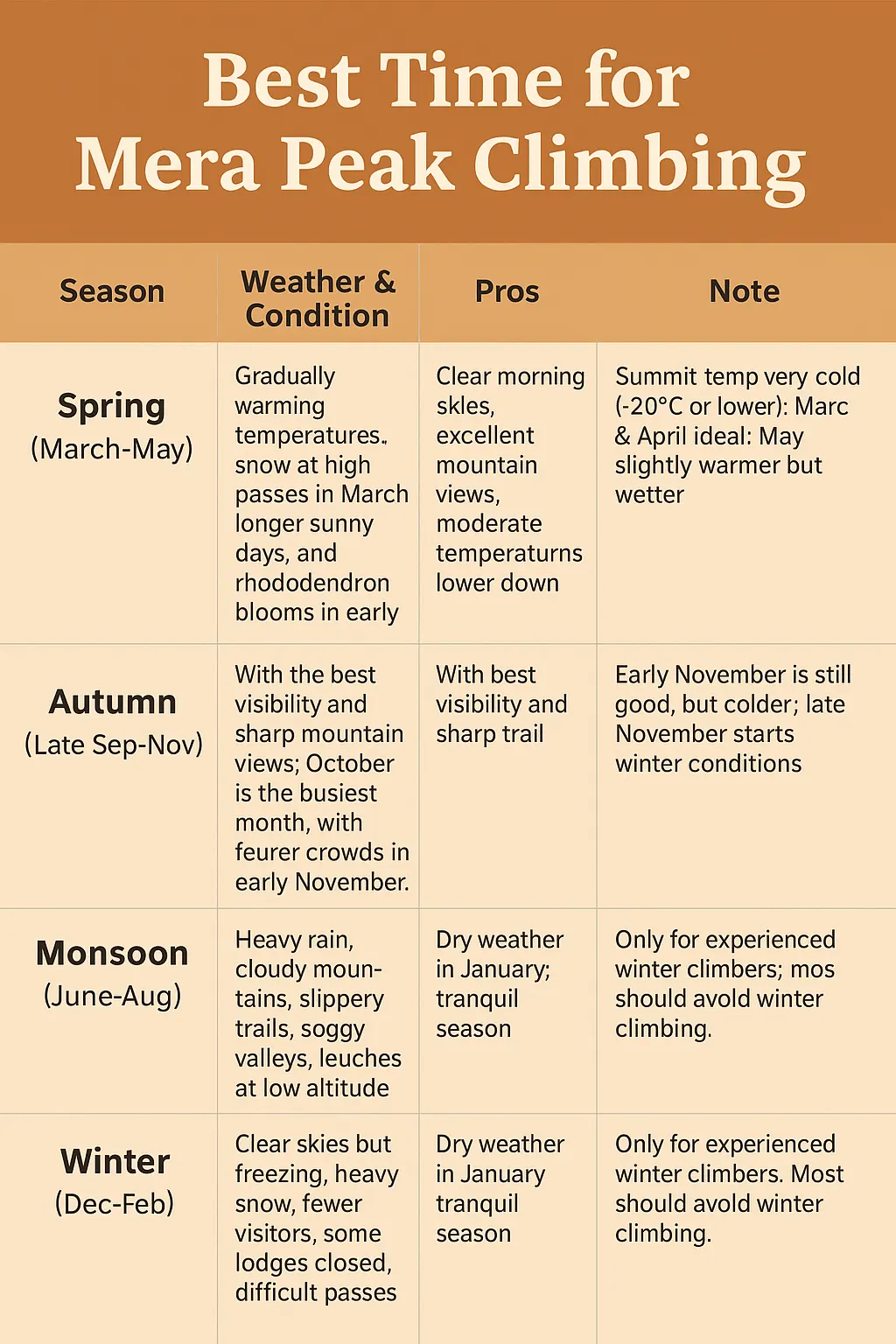
The best time to climb Mera Peak is spring or autumn. Spring runs from March to May. Days get warmer, and rhododendrons decorate the trail. April is usually the best month. Autumn starts in late September and peaks in October. This season has clear skies and stable weather. Views are often the best of the year. October is popular, while early November is colder and still good. Avoid the summer monsoon due to rain and flight delays. Winter is frigid and snowy, so it is best left to experienced climbers. For most trekkers, April and October are the top choices.
Basics for packing: Bring a broken-in, good trekking boots. They help avoid blisters and walk comfortably. Pack a down jacket and thermal wear as well. Bring essentials like gloves, a hat, waterproof covers, and a 4-season sleeping bag. Don’t forget a headlamp, water bottle or bladder, and sunglasses. Carry toiletries and sunscreen. You don’t need to worry about climbing gears. We will provide crampons, harnesses, helmets, and ropes. Bring a trekking pole and pack everything in a duffel bag. Carry essentials in a day bag. Porters will carry the duffel bag while you have your daypack.
Money Tips: There are many money exchange centers and ATMs in Kathmandu. Carry Nepali cash. We recommend carrying at least NPR 20,000-30,000 cash for the trek. Although meals and accommodation come with the package, you must pay for snacks or additional charges. You must tip the porter and guide at the end of the trek. Mind every expense while budgeting.
Cultural Etiquette: “Namaste” and “Tashi Delek” are standard greetings in the village. It is better to teach them to appear friendly. Dress modestly and respect the culture and values of the people. Don’t take pictures without consent, and open your shoes before entering monasteries. These simple steps can make your trek way more fun and memorable.
Food and Water: Dal Bhaat is the most common meal. It is both filling and safe. Don’t eat raw foods; only drink filtered water. You have to maintain good hygiene throughout the trek. Bring a reusable bottle and a water purifier. Bring oral rehydration salt in case of dehydration or diarrhea.
Safety on the Trail: Use poles on rocky or steep paths. Give way to the animals crossing by. These animals can push you, so remember to stand on the mountainside. Follow your guide’s advice in every step. Don’t wander off alone; let the guide know if you feel discomfort. Your safety is our primary concern.
Visa and Entry: Most nationalities get a visa on arrival in Nepal. A 15-day visa costs $30. Bring a passport photo and make sure your passport is valid for 6 months. Fill in your hotel name on the visa form. Keep the slight departure slip they give you; it is needed when leaving. Keep a photocopy of all the essential documents for emergencies.
Travel Insurance: Get insurance that covers trekking and climbing up to 6,500 meters. Make sure it includes emergency helicopter rescue. Select the plan carefully and share your policy details with us.
Permits: We handle all permits: TIMS, national park entry, and Mera Peak climbing permit. You need to provide a copy of your passport and photos. The guide carries the licenses on the trail. Follow park rules: don’t litter or disturb wildlife.
Communication: You won’t have any phone connection or internet after Chutanga. The signal is available in Kathmandu and Lukla. Wifi on the trail is not reliable. Let your family know about these and enjoy a digital detox.
We provide many optional additions for the trip. These extensions help enhance the adventure of trekkers. These add-ons come with an extra price. It is entirely optional. Here are some:
Upgraded Services: If you want to upgrade any facility during your stay, like accommodation in Kathmandu, we arrange it for you. You can have private transport, a personal porter, or even a helicopter ride back from Lukla. Please get in touch with us with any upgrades you want.
Guides on Booking:
Visit our website for detailed booking information. You can also email us about the trip. We will get back to you shortly and provide the full itinerary. We are open about the pricing with no hidden costs. You must pay about 30% of the total trek cost to book the trip. We also share the add-ons information. Choose accordingly.
Cancellation and Refund:
You will get a full refund if you cancel 30 days before the trip, with a small fee. The refunds change when you inform us about the cancellation. It is better to have travel insurance that covers the cancellation fee.
Itinerary Flexibility:
Sometimes plans need to change depending on what’s happening around us. We will keep you safe if there are any delays, including extra buffer days in the schedule. In an emergency where a helicopter is needed, we can split the group so everyone can make the most of their time. We’re also flexible and can change the trek if the group wants
Post-Trip Debrief and Feedback:
You will enjoy a nice congratulatory meal after the trek in Kathmandu. You can give your feedback about the trip. You can discuss anything you like or dislike. We are grateful to hear how to make our services even better.
Ethical Travel:
You need to respect the environment and prepare for anything on the trip. If any local events delay the trek, we will adapt to them according to the local advice.
Your Mera Peak adventure deserves expert planning and personal care. We combine safety, comfort, and local knowledge to create an exceptional journey. Contact us to begin your Mera Peak expedition.