
Included Meals
- Breakfast: 0
- Lunch: 0
- Dinner: 0

Unbeatable Holiday Offers – Save Up to 20% on Your Next Adventure!
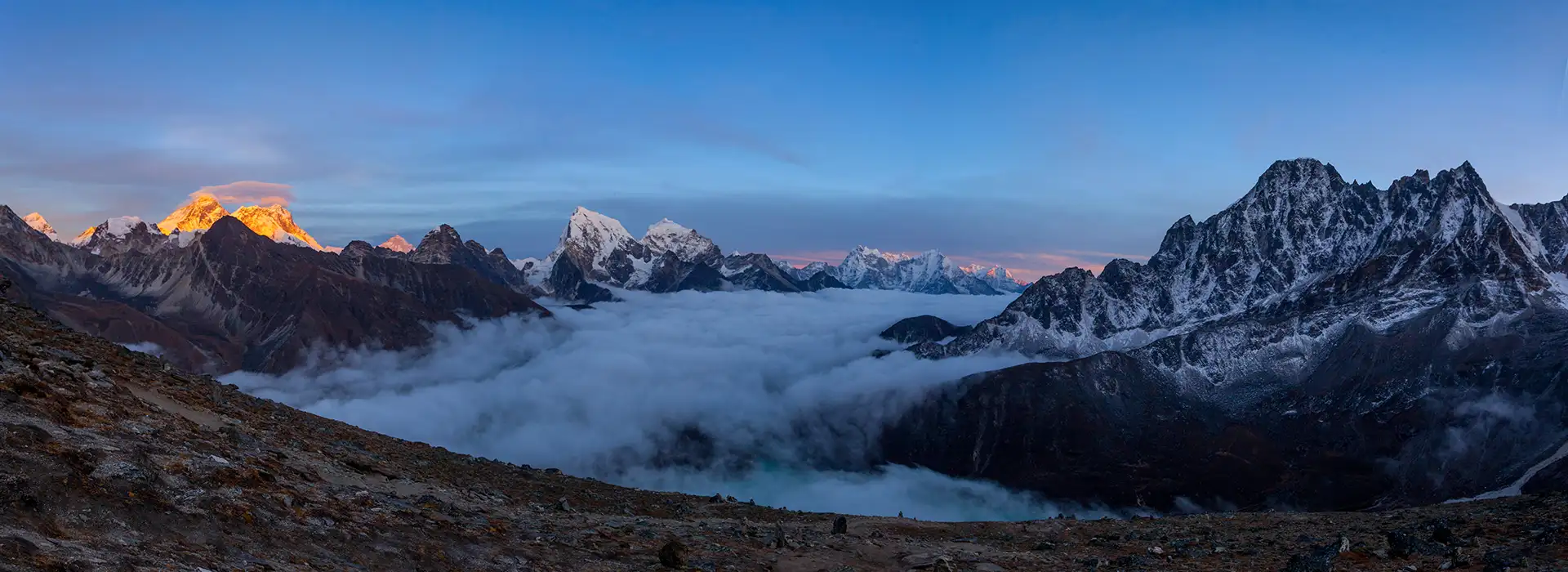
Gokyo Trek is an 11-day trek through some of the most beautiful and less crowded trails of the Himalayas. Unlike the traditional Everest Base Camp route, this trek offers a peaceful and serene experience, passing through lush valleys, alpine forests, and vibrant Sherpa villages.
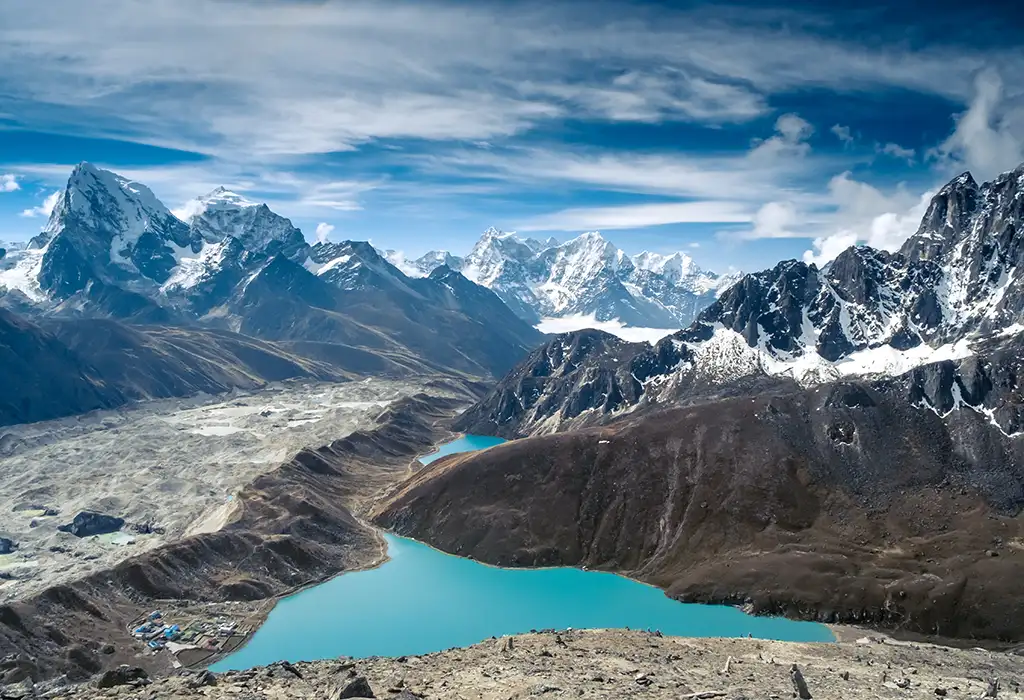
The highlight of the trek is the Gokyo Valley, famous for its chain of turquoise alpine lakes fed by the Ngozumpa Glacier, the longest glacier in the Himalayas. These lakes are nearly 5000 meters high and are considered the highest freshwater lake system in the world. They also hold spiritual significance for both Hindus and Buddhists.
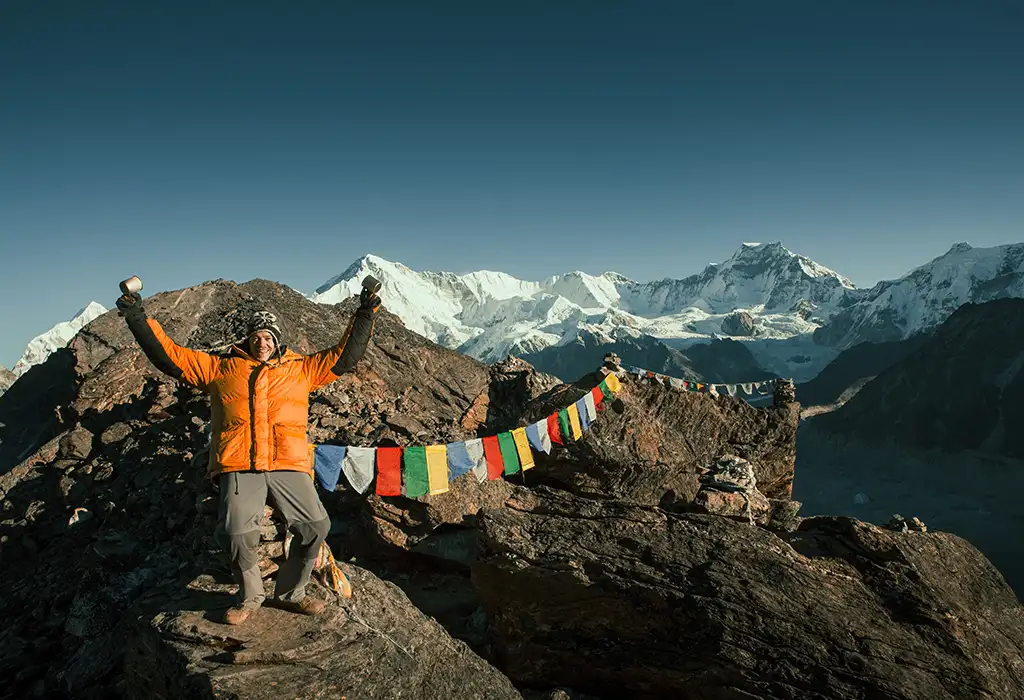
Along the Gokyo Trek, trekkers pass through quiet Sherpa villages that showcase traditional Himalayan culture. Stone houses, prayer flags, mani walls, and Buddhist monasteries enrich the cultural experience.
The trail also includes numerous suspension bridges, glacial rivers, and forested areas, making each day visually stunning. Trekking here offers both physical challenge and cultural insight, allowing travelers to connect with local communities while enjoying the region’s natural beauty.
The ascent to Gokyo Ri summit is a major highlight of the trek. From the top, trekkers can witness sunrise over four of the six highest mountains in the world: Everest, Lhotse, Makalu, and Cho Oyu. The panoramic views of surrounding glaciers, valleys, and Himalayan peaks make it an unforgettable experience. This vantage point is ideal for photography, reflection, and appreciating the grandeur of the region.
For travelers who want a more comfortable experience or limited time in the region, the Luxury Sherpa Village Hike Everest Helicopter Tour is an excellent addition. This short, helicopter-assisted trek allows visitors to enjoy Sherpa villages, Himalayan scenery, and aerial views of Gokyo Valley without the full multi-day trek. It combines comfort, culture, and breathtaking landscapes for a unique high-altitude experience.
The Gokyo Trek is perfect for trekkers seeking adventure, cultural immersion, and high-altitude challenges. With quiet trails, turquoise lakes, Sherpa villages, and Himalayan vistas, this trek offers a mix of physical activity and meaningful cultural experience. The combination of trekking, high-altitude lakes, and summit views makes the Gokyo Trek a complete Himalayan adventure.

Included Meals

Trip staff

Transport

Accommodation

Trip Grade
Group Size
Kathmandu is the capital of Nepal. Arriving here marks the start of your trip. Our staff will then greet and escort you to your hotel. You will likely stay in central Kathmandu, Thamel. Settle into your room and prepare for tomorrow. You can go sightseeing or do some last-minute shopping. Finalize your packing list and buy anything else that you may need. We will organize a small briefing in which your guide will explain the coming days. You will enjoy a nice welcome dinner with a classic traditional Nepali meal and prepare for tomorrow’s flight.
Difficulty
Board an early morning flight to Lukla and enjoy fantastic mountain views from above. The 30-minute rise will land you at your starting point of the trek. Lukla stands at 2860m, increasing the altitude significantly from Kathmandu. You won’t feel too sick here.
After landing, you will begin hiking towards the nearby village of Phakding. You will descend slowly from Lukla, following the Dudh Koshi River through the lush pine forest and small settlements.
Throughout the trail, you will pass through zhopkyos, a cow-yak hybrid, and mani walls. You will also cross your first suspension bridge of the trek today. After walking for about 3 hours, covering a distance of 6km, you will reach Phakding. You will settle here for the day and relax in the comfortable lodge.
Difficulty
After having breakfast in Phakding, we begin our hike to Namche Bazaar. You’ll walk through rhododendron forests and several suspension bridges, including the Hillary Suspension Bridge. Soon after crossing it, you’ll arrive at Monjo, where you enter Sagarmatha National Park and present your permits to continue.
From here, the path becomes steeper and mostly uphill. Today, you gain around 800 meters in elevation. Midway through the climb, we’ll catch our first view of Mount Everest. By early afternoon, you will arrive in Namche Bazaar, where you’ll spend the night with great views of Kongde Ri and Thamserku in the distance.
Difficulty
Today is a rest day for acclimatization, so you will not continue the main trek. Give our bodies time to adjust to the higher altitude.
In the morning, take a short hike to the Everest View Hotel or the Sagarmatha National Park Museum, where you can enjoy beautiful views of Everest, Lhotse, Ama Dablam, and other peaks.
After the hike, return to Namche Bazaar for lunch and take it easy for the rest of the day. You can relax or explore the lively Sherpa village. There are bakeries, cafés, shops, and teahouses to visit. Spend the night in Namche and get ready for tomorrow’s hike.
Difficulty
Today, you leave Namche and head toward Dole. Instead of following the main Everest Base Camp trail to Tengboche, you take a quieter path above the central valley. The views are beautiful, with Ama Dablam close by and Everest visible in the distance.
You will walk through forests of rhododendrons and Himalayan juniper. After about two hours, you reach Mong La at 3,970 meters. A small stupa at the top and a great view over the Khumbu Valley make it a perfect spot to catch your breath.
From there, you descend to Phortse Thenga for lunch before climbing uphill again. In the afternoon, you pass through fir and rhododendron forests until you reach Dole, where the trees thin out. The walk takes around six to seven hours in total.
As the air gets colder and thinner, you might feel the altitude. Resting and taking it easy for the evening is a good idea.
Difficulty
You continue the hike in the morning, following an uphill trail through high alpine meadows where yaks often graze in the summer. As you gain altitude, you pass through Lhabarma and Luza, with views of Cho Oyu in the distance.
The walk to Machhermo takes about four hours from Dole. Machhermo is a quiet village in a wide mountain valley surrounded by snow-covered peaks. If available, you can attend an informative talk on altitude sickness at the local rescue post. In the evening, you settle in and rest at a cozy teahouse.
Difficulty
You leave Machhermo and climb to a high point with beautiful views of Kangtega and Thamserku. From there, the trail becomes gentler as you head toward the Ngozumpa Glacier, the longest glacier in Nepal. You cross its rocky moraine and soon see the first Gokyo Lakes.
These deep turquoise lakes stand out against the surrounding barren landscape. As you continue, you pass the second and third lakes, with Dudh Pokhari being the largest.
Gokyo village sits on its shore, and you arrive there around midday. The rest of the day is yours to relax or take a short walk by the lake or up a nearby hill for even better views. Tonight, you sleep in one of the highest settlements in the world, surrounded by dramatic Himalayan scenery.
Difficulty
Your trek begins early in the morning, before dawn. Wear a warm outfit and set out for Gokyo Ri. It is incredibly dark, with the only light source being your headlight. You and the rest of the team have to reach the summit before sunrise.
Stroll, mindful of the thin air and high altitude. After hiking for about 2 hours, you will reach the Gokyo Ri summit at 5,360m. You will see the beautiful sunrise hitting the towering peaks of Everest, Lhotse, Makalu, Cho Oyu, and others. You can also see the Gokyo Lakes and the Khumbu Valley below you. After sunrise, head back to Gokyo for breakfast.
By late morning, you will descend back to Dole. You will have your lunch in Machhermo and walk past the previous trails. As the air gets thicker during your descent, you’ll feel relieved and more energized.
You will continue on your descent through the forests and yak herds. Finally, by late afternoon, you will reach Dole. You would’ve trekked for about 7 to 8 hours today, making your body extremely exhausted. Rest early to energize your body for tomorrow.
Difficulty
Have your breakfast, and start hiking towards Namche. You will walk through beautiful rhododendrons and fir forest, passing Photse Thanga. The trail goes upwards Until Mong La, then gentle descent towards Namche.
You will see Ama Dablam and Everest occasionally from your trail. By around lunchtime, you will reach Namche Bazaar. Have lunch, check into your lodge, and relax for the rest of the day. The most complex parts of the trek have already finished; allow yourself to enjoy the Bazaar and the views. Reflect on your trek until now, and rest early.
Difficulty
Today is your final day of trekking through the Khumbu Valley. You begin the descent from Namche, descending toward the Dudh Koshi River.
Along the way, you cross several suspension bridges and officially exit Sagarmatha National Park. You pass through the village of Monjo and continue along the familiar trail through Phakding, where you stop for lunch. From there, the path leads you toward Lukla with one last short uphill stretch before reaching the village.
After a long and tiring 7-hour walk, you check in at your lodge, share a well-earned celebration with your team, and settle in for your final night in the mountains.
Difficulty
Today, you wake up early and catch your flight back to Kathmandu. The 30-minute flight gives you amazing aerial views of the Himalayas one last time.
Once you arrive, our staff will take you to your hotel, where you can relax and plan your day. You can explore the city, shop, or unwind. Today marks the official end of your Gokyo Lake Everest Base Camp trek. Take some time to reflect on your trip and enjoy the day. We also suggest adding an extra day or two to your schedule to cover any unexpected delays.
Difficulty
People classify the Gokyo Lake trek as a moderate to challenging trek. While the route does not require technical climbing skills and is suitable for beginners, the high altitude makes it physically demanding. The trek takes around two weeks and follows rocky, uneven trails that sometimes have snow or ice. The trek is earlier than the EBC trek, which climbs to over 5,500 meters at Kala Patthar, where the air is thin and oxygen is limited.
Altitude sickness is a genuine concern, so taking time and strolling is essential. Expect long, cold, tiring days with rest stops spaced far apart. Even though it is demanding, many first-time trekkers complete this route yearly. With a good attitude, some preparation, and support from experienced guides and fellow trekkers, it is a challenging but enriching adventure.
The Gokyo trek isn’t the easiest in Nepal, but it’s doable for many trekkers with good preparation, proper gear, and a steady pace. It’s moderate in technical difficulty but challenging because of the high altitude and endurance needed.
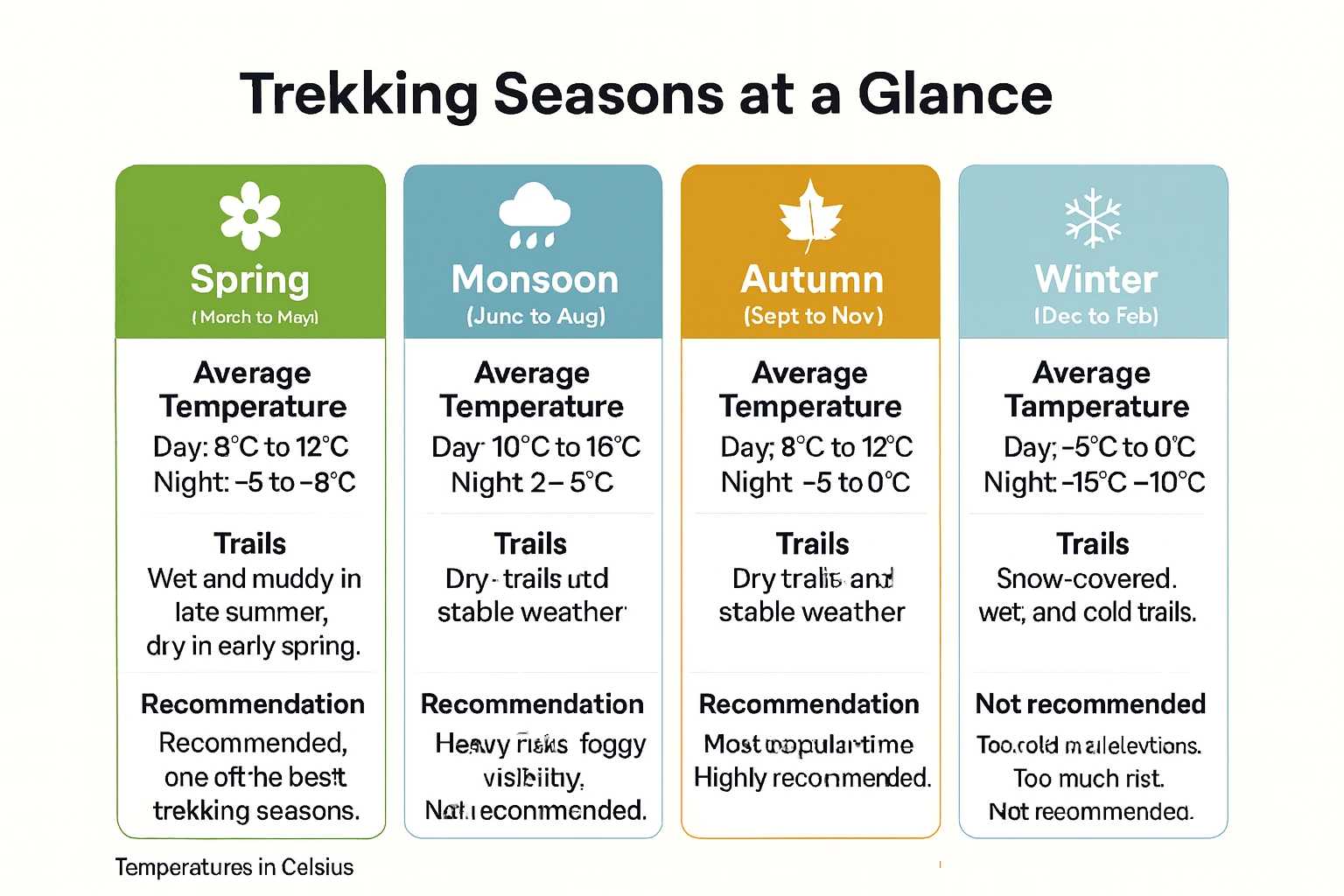
Choosing the right season is key to enjoying your Gokyo Lakes trek. Spring and autumn have the best conditions, with stable weather, clear skies, and manageable temperatures, making them the most recommended times to visit. The monsoon season brings heavy rain, slippery trails, and landslide risks. Winter, while quieter, is very cold with snow-covered paths, increasing the difficulty and risks. Plan your trek accordingly to make the most of this incredible Himalayan experience.
Here is a brief overview of the average temperature and trail conditions. Keep in mind that they may vary with the changing altitude.
The Gokyo Trek takes you from the lower Khumbu Valley to the high-altitude glacial lakes and towering peaks. Starting in Lukla at 2,860 meters, the route goes through Phakding, then gradually climbs to Namche Bazaar at 3,440 meters. You will have an acclimatizing day here. From there, the trail leads higher to Dole and Machhermo, above 4,000 meters. When you reach Gokyo village at 4,790 meters, you’re deep in the high mountains, and the air is thin. The summit of Gokyo Ri, at 5,360 meters, is the trek’s highest point. It offers incredible views of Everest and the surrounding peaks. Although you don’t sleep at that altitude, standing up there with the wind and the silence is unforgettable.
What makes this trek manageable is its steady pace and planned rest days. Following this itinerary gives your body the time it needs to adjust. Descending from the high altitude eases your body. Acclimatize well to reduce the risk of altitude sickness. This high-altitude adventure becomes doable and deeply rewarding with the right pace and preparation.
Here are all the things you will need for a successful Gokyo Trek for 11 days:
Clothing Layers
Footwear
Headwear and Handwear
Trekking Equipment
Backpack and Bags
Sleeping Gear
Personal Essentials
Documents and Money
We will follow the principles of Climb High and Sleep Low. On acclimatizing days, we will hike up and return to the original place to sleep. Doing this helps our body adjust to the rising altitude. You should always listen to your body.
Your body will give you signs of feeling unwell. Please don’t ignore them. It is better to communicate how your body is feeling with the guides. Hydrating, strolling, and taking smaller steps can also help avoid altitude sickness.
We’ve built this itinerary from experience. It has a high success rate and allows trekkers to complete it enjoyably. Staying hydrated is key at high altitudes. You breathe faster and lose more moisture, so drinking lots of water with electrolytes helps. Eat well, too, even if you are not hungry. A good meal option is Dal Bhat, which is comforting, filling, and full of energy.
Consult a doctor and bring Diamox to help with altitude sickness. While natural acclimatization is preferred, you can use Diamox under medical advice. It increases urination, so drinking plenty of water is essential. Painkillers for headaches should also be carried, with the understanding that a severe headache requires stopping the ascent.
The key rule is that anyone showing severe altitude sickness must descend immediately. Safety always comes first. Our guides have emergency plans; nearby villages allow quick descent if needed. With careful acclimatization, most trekkers complete the trek safely.
It is better to prepare your body in advance for the trek. It’s not a challenging trek, but physical fitness is necessary. Start your preparation at least 2 to 3 months ahead of the trek. Focus on your core and leg strength.
Cardio exercises like jogging, cycling, swimming, or even brisk walking help improve stamina. Climbing stairs or going on weekend hikes with a daypack prepares the body for long trekking days. Strength training, like squats, lunges, and planks, is helpful for uphill climbs and balancing on rocky paths. Practicing with a backpack also gets the body used to carrying weight.
Mental preparation matters, too. Stretching and rest are just as important. Simple yoga or daily stretches help prevent injury and support recovery.
It’s essential to have travel insurance that explicitly covers high-altitude trekking. Gokyo Ri reaches up to at least 5,600 meters. Many standard travel plans don’t include trekking or have lower altitude limits, so choosing a mountain hiking or adventure travel policy is essential.
The insurance must include emergency helicopter evacuation, medical treatment for altitude sickness or injuries, trip cancellation, and coverage for loss of belongings.
Helicopter rescues without insurance can be costly, so having at least $100,000 in evacuation coverage is recommended. Share your insurance details with us before the trek begins so we can coordinate assistance if needed. Having the right insurance helps ensure a safer and worry-free trek.
It’s also smart to get coverage for trip cancellations or delays. Don’t forget to protect your baggage in case something gets lost or stolen. Choose a trusted insurance provider with 24/7 emergency help and share your policy details with your guide and trekking company before you leave. Keep the emergency numbers handy on the trek, too.
Knowing you’re covered lets you relax and enjoy the experience without worrying about what might happen.
Experienced guides truly enhance the trekking experience. All our guides are licensed by the Nepal Government and speak English fluently. They know the route inside out and stay in contact with the Kathmandu office for emergencies.
They can detect the signs of altitude sickness and provide first aid when needed. Our guides lead the way on the trails and manage all logistics during the trek, making it smoother and more enjoyable. They’re also there to help with gear and any other needs along the way.
Porters carry your luggage, usually up to around 30 kilograms, so you only need a light daypack. Most of our porters are local people from the region, many of whom are farmers who take up porter work seasonally.
Porters and guides work closely as a team to ensure no one gets left behind during the trek. If someone needs extra support, they might assign an assistant or have the porter walk alongside the slower walker. Having local staff with you makes the trip more meaningful, giving a glimpse into their daily lives. Hiring porters and guides also means you’re directly supporting the local community.
Most non-Nepalese require a visa to enter Nepal. You can easily obtain this upon arrival at Tribhuwan International Airport. Bring a valid passport with at least six months left and a passport-sized photo, and pay the fee in US dollars or Nepali rupees. A 30-day visa is usually enough for the Gokyo Lake Everest Base Camp trek. You can apply for a visa at a Nepalese embassy in your home country. Our team will help arrange your visa and trekking permits after you arrive; the package includes this cost. Bringing a few extra photos and some cash is a brilliant idea. Once everything is ready, you’re all set to start your adventure.
Accommodation varies with the altitude. In the lower altitudes, the facilities are generally higher and better. In the lower altitudes like Phakding and especially Namche, you get options for premium lodges. Even basic teahouses have WIFI, hot showers, and meal options. They come at a cost, but you can enjoy them.
There are luxury hotels you can choose from as well. They can be very pricey, but you have options. In the mid-altitude, you get basic facilities. No premium and luxury lodges exist, but the teahouses offer the same facilities. They have hot showers and chargeable ports; they will, however, cost you more.
In higher altitudes, lodges have fundamental facilities. You can eat and sleep, but not much else. Gokyo has many teahouses where you can stay. They are still comfortable but may not have the luxury you are used to. Transporting goods in these altitudes is harder, so most items are pricey.
One of the best parts of the Gokyo Trek is the chance to get insights into the local communities. Sherpa people have been living in the area since the 16th century. They know the place in the back of their head. They have a rich culture and Buddhist practices.
The people in this community generally speak Nepali or their ethnic Sherpa language. English is also popular among people in the tourist sector. Learning to say basic greetings like “Namaste” will go a long way in showing your appreciation for the community.
The region has many prayer flags, mani walls, and other marks of religious significance. Most people follow Buddhism. It is essential as a visitor to respect them. Walk clockwise in religious sites like a stupa. Make sure to open your shoes before entering any sacred places. Don’t step on player flags. Respect the people and land you are walking on.
Buddhism preaches patience. It teaches people to be kind and calm. No good comes out of anger. Many people believe in these practices. You should also not show agitation while on trek. If something happens, resolve it with peace. Don’t resort to violence in any place.
Respect the elders. Don’t click pictures of anyone without consent. You respect people’s consent in your country, so practice the same with others.
Nepal’s currency is the Nepalese Rupee (NPR). You can withdraw cash or exchange money in Namche and Kathmandu, but there are no ATMs beyond that point. It’s best to carry enough cash for snacks, bottled water, hot showers, device charging, or Wi-Fi.
While your trek package covers most meals and accommodation, you’ll want some rupees for personal expenses or tipping your guide and porter. Costs increase as you gain altitude, so having a bit extra can be helpful.
While we have designed the itinerary for a safe trip, clients may prefer a few add-ons.