
Included Meals
- Breakfast: 0
- Lunch: 0
- Dinner: 0

Unbeatable Holiday Offers – Save Up to 20% on Your Next Adventure!
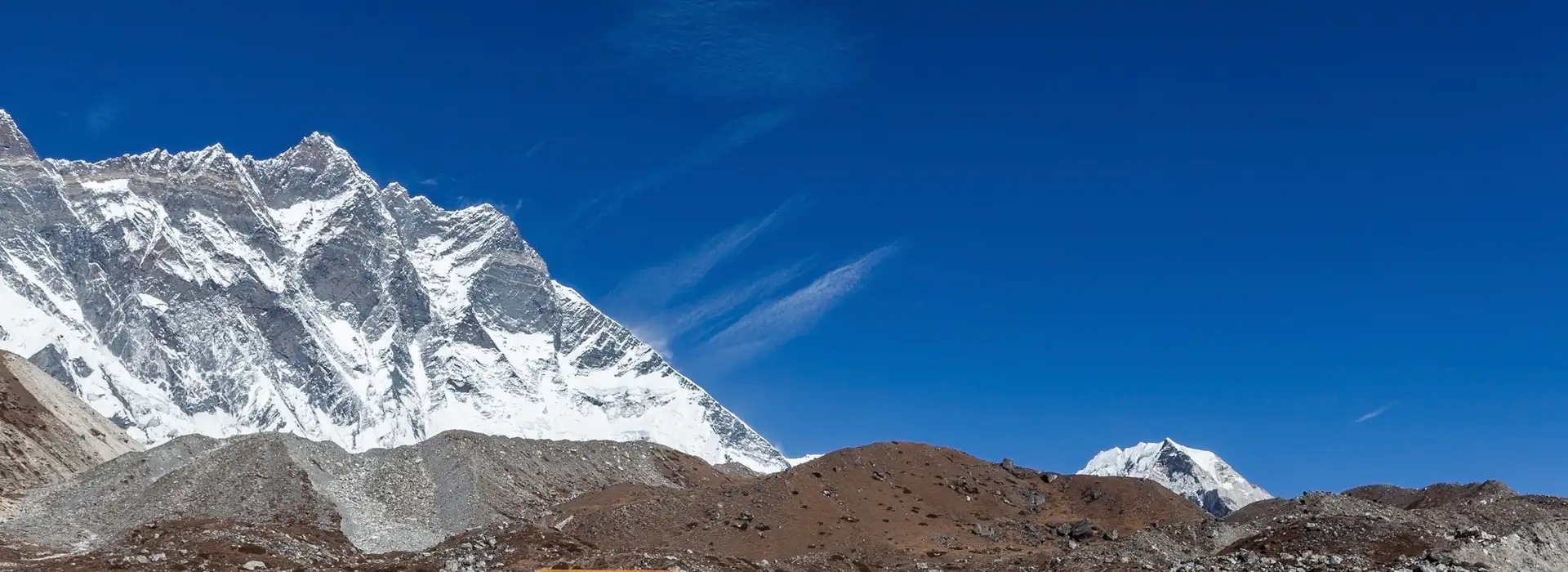
The Three Peak Climbing in Nepal is a challenging and rewarding 27-day trek and climb in the Everest region. You summit Mera Peak (6,476 m), Island Peak (6,189 m), and Lobuche East (6,119 m). These peaks involve non-technical climbing but still test your stamina, strength, and high-altitude adaptability. The trek takes you through lush green forests and terraced farmlands, gradually transitioning into barren alpine landscapes. On clear days, you enjoy breathtaking views of Mount Everest, Lhotse, Makalu, Cho Oyu, and even Kanchenjunga in the distance.
During the Three Peak Climbing in Nepal, you follow trails that pass remote villages, high passes, and classic Everest Base Camp trek routes. You witness spectacular scenery, including glacial valleys, rocky ridgelines, and snow-capped peaks. Along the way, you meet local Sherpa communities, see their traditional homes, and experience their warm hospitality firsthand. Trekking through these authentic villages adds a rich cultural dimension to the high-altitude adventure.
The Three Peak Climbing in Nepal combines trekking with mountaineering. Each peak provides a unique challenge, with dramatic vistas and a sense of achievement upon reaching the summit. You also immerse yourself in Sherpa culture, visiting monasteries, interacting with villagers, and learning about their traditions and way of life. This trek is ideal for trekkers seeking high-altitude climbing while enjoying Nepal’s natural beauty and cultural richness.

Included Meals

Trip staff

Transport

Accommodation

Trip Grade
Group Size
Welcome to Nepal! Today, you will arrive in Nepal and begin your Three Peaks Climbing trip. We will greet you at the airport. We will send a vehicle to the airport to receive you. After greetings from the staff, you will check into your hotel. In the evening, you’ll meet your guide or office representative for a short briefing about the trek. Rest the day and pack your stuff for the trek. Double-check if you have everything you need for the trek. Rent or buy any missing gear. Rest well to start the trek tomorrow.

Maximum Altitude 1,400m/4,593ft
Difficulty
Today, you officially begin the trek. You will board an early morning flight to Lukla. You will get to Lukla and meet the rest of your trekking group. You will get your first view of the mountains.
Have breakfast in Lukla and begin your trek. Chutanga is about 3 to 4 hours away. Along a gentle trail, you will walk through a thick pine and rhododendron forest.
Your altitude grows by about 200m today. There is no significant altitude gain, ensuring your body has time to adjust. You pass stone walls and small Sherpa villages. The trail is gentle and well-defined. Chutanga is a small, quiet settlement with yak herds surrounded by woods and streams.
Difficulty
After breakfast, you continue on the trail. The trek starts with a gradual and steady ascent from the tree line. It steeply climbs up to Zartwa La at 4,610m. The ascent is a tough 1,500m from Chutanga.
You can see Lukla in the back and Hinku Valley in front of you from Zartwa La. After taking a short break, begin descending from the pass. The trail is steep, rocky, and slippery. Be careful on the legs. Stroll and descend about 300m. After descending, you reach the high alpine meadow, Tuli Kharka.
The meadow offers stunning views of Mera Peak. Overnight in a teahouse or tented camp at Tuli Kharka.
Difficulty
Today’s trek is more leisurely than yesterday’s. You will begin descending along the trail today. You walk into the remote Hinku Valley and along a ridge. You will hike with some of the best views of the area. You enter a forest filled with rhododendrons and juniper trees.
You walk about 5 to 6 hours and cover about 9 km of distance. You may spot a Himalayan Thar or Danphes in the woods. You will see riverbanks and cliffs near Kothe. Kothe is a riverside settlement in Hinku Valley at 4,100m. The high altitude, yet the valley stays green and refreshing during summer. You will remain here for the night.
Difficulty
Today, you head north along the Hinku Valley, following the trail deeper into the mountains. You walk along the river’s west bank and climb the rocky paths. You go through rhododendron forests and yak herds. You may stop at Lungde or Tashing Ongma to rest or have lunch. These are the temporary settlements of yak herders.
The valley starts narrowing, and you start seeing glaciers in the distance. You can see the Sabai Tso glacial lake nearby. After walking a bit more, you reach Thangnak, a small Sherpa hamlet sitting at the foot of Mera Peak. Days are warm, but evenings are chilly, and nights are cold.
Difficulty
Today is a short hike. The distance is not too far, but the elevation gain is significant, with 700m. Walk slowly and at a steady pace to avoid any injuries and sickness. You climb along the Dig Glacier and the lateral moraine.
The tail is rocky, and the air starts thinning out. You get close-up views of Mera Peak and Kusum Kanguru. You will reach Khare by lunchtime and have your lunch there. Khare is the base camp of Mera Peak. In the afternoon, your guide may do a short gear briefing or practice session, such as how to use crampons and a harness. A light acclimatization walk to a ridge above Khare is a good idea to help with sleep. You’ll stay overnight in a teahouse.
Difficulty
Today is an acclimatization day. Acclimating is essential at high altitudes. You will train and rest today. You can take a short hike to Mera La or a nearby viewpoint and return. It is an acclimatization strategy used by many trekkers. You can get glimpses of Mt. Baruntse during the hike. Your guide may run a practice climb on the glacier above Khare. You learn to walk on crampons, use an ice axe, and practice rope techniques.
You can rest for the rest of the day. You will stay overnight in Khare amidst the high-mountain terrain with ice and rock surrounding you.
Difficulty
Today, your first peak climbing starts. You climb to Mera Base Camp at 5,400m, then towards High Camp. You gain 700 to 800m altitude and climb a rocky trail to Mera La.
From here, you rope up and climb to Mera Glacier. The climb is primarily non-technical but does require climbing gear. You need crampons and steady footing on snow and ice. You get the views of Chamlang and Makalhy in the east while climbing up.
Mera High Camp, 5,780m, is a rocky spot beside the glacier. Our crew will set up mountaineering tents and prepare your meals. You will rest early after dinner.
Difficulty
Your trek starts at 2 to 3 AM. The snow is firm in the early hours of the day. You will gear up with climbing gear and follow your guide. You will rope up and climb a non-technical peak. The altitude is very high, and the air is thin.
You climb for 6 to 7 hours to reach the summit ridge. You will climb the final steep slope of 30 to 40 degrees. This section is hard and roped up for safety.
You reach the summit of Mera Peak around mid-morning. It is the highest of the three peaks. You will see 5 of the six highest peaks: Everest, Kanchenjunga, Lhotse, Makalu, and Cho Oyu. You also see other peaks like Nuptse, Chamlang, and Baruntse.
After celebrating your win, you start descending back. You’ll head down the glacier to High Camp, then continue to Khare. You’ll cover around 8 to 10 kilometers.
Difficulty
Today is a buffer day. You can do it today if you can’t finish the climb on the scheduled day. If everything goes as planned, you can rest today on Khare. You can also continue the trek today. If you finish the climb, you can relax today. You can clean the gears and recharge for the days ahead. You can even trek to Kongma Dingma and continue the trip.
Difficulty
Assuming you didn’t continue the trek yesterday, you will today. You head east towards Upper Hongu Valley, walking on remote trails.
You climb the Mera La and descend towards the Hongu Valley. You crossed melted glacial streams and debris. The altitude drops by 200m, and the air gets thicker. After walking about 7 to 8 km, you will reach Kongma Dingma. Kongma Dingma is a grassy camping area in the Hongu Valley. It is not a permanent settlement, and no lodges are available. You can relax by the clear streams and enjoy the silent hills.
Difficulty
Continuing the hike, you go up the Hongu Valley. You go towards Amphu Laptsa Pass and trek towards Seto Pokhari.
The trail is gentle today and gains about 200m of altitude. Trek at a comfortable pace since the trail is above 5,000m. The valley has multiple glacial boulders, and small lakes start coming into view. You can see Chamlang and Baruntse in the north.
You arrive at Seto Pokhari in the afternoon. Seto Pokhari, or White Lake, is one of the five sacred high-altitude lakes in the valley. It is a milky turquoise lake with rocky and barren land. You will stay in camps today as well. You can also see Amphu Laptsa from here.
Difficulty
Today is a relatively short trek. You ascend 350 to 400m through the moraine ridges and some sections of old glacier ice. There is hardly any vegetation on the trail, covered with rock and ice. You will reach the southern base of the Amphu Laptsa Pass(5,400m).
The camp is basic and stands on rubble and snow. The crew will check the route and fix the ropes for tomorrow. You are free to check your gear and rest. Amphu Laptsa is a steep, technical pass connecting the Hongu and Imja valleys. Your accommodation is tents on Amphy Laptsa.
Difficulty
Today is a long and probably the hardest day of the trek. You ascend through the trails mixed with rock and ice. The support crew set most of the fixed ropes along the route the day before. You climb about 400 to 450m from the camp to the pass. You should wear a harness and slip into a safety line. You can see Everest, Island Peak, Ama Dablam, etc, from the top of Amphu Laptsa Pass.
After passing the challenging rock, you descend a rocky slope and reach the Imja Glacier moraine. After trekking more, you get an easier trail in the Imja Valley. By afternoon, you reach Chukkung, a Sherpa village at 4,730m. Chukkung is the gateway to Island Peak. You have also entered the Sagarmatha National Park. The altitude drops over 1000m, helping with recovery.
Difficulty
Today is the beginning of climbing Island Peak. You won’t be starting the trek in the morning. You can rest or hike to a nearby destination. After lunch, you will start trekking to Island Peak High Camp.
The trek is short but gains about 800m of altitude. You will descend gradually from Chhukung, then start walking towards Island Peak. Approaching Island Peak Base Camp, the trail becomes steep and rocky. You will reach the Base camp and rest there before continuing to the High camp.
High Camp has limited space, and tents may be cramped. The team will set up tents and prepare dinner. You can see the ridge of Island Peak, Lhotse, and Lhotse Shar. Nights are freezing, and the air is thin. You need to rest and take care of your body.
Difficulty
Today, you climb the second of your three summits: Island Peak. Island Peak is a moderately challenging climb. You begin the trek from high camp following a narrow and steep path. The trail is rocky for about an hour until you reach the Island Peak Glacier.
You gear up with all the climbing gear and begin the climb. You ascend around 700m through glaciers with crevasses. The slope steepens into a 100m headwall. You use your jumar to climb using the fixed ropes. It is the most challenging part of the climb. You will get to the summit ridge and step onto the Island Peak. You can see Lhotse, Ama Dablam, and Makalu from the peak. You start descending after celebrating and reach the high camp by midday. After packing up and resting, you head back to Chukkung.
Difficulty
You will join the Everest Base Camp trail today. You start walking towards Dingboche, a broad Sherpa village filled with stone walls and potato fields. Dingboche also offers excellent views of Ama Dablam.
You continue down the valley from Dingboche, then join the EBC trail at Dughla. You will descend 300m and then ascend again for 500m today. You will reach Thukla Pass Ridge and see a collection of memorial cairns and prayer flags. These cairns honor climbers who lost their lives here, many in the treacherous Khumbu Icefall. You can also see Pumori and other peaks from the ridge.
You follow the trail through the lateral moraine from the Khumbu Glacier. By late afternoon, you will reach Lobuche. Lobuche, at 4,940m, is a small settlement of lodges. Here, you can see more trekkers and a busier route.
Difficulty
Today, you reach the Everest Base Camp. Starting the trek from Lobuche, you begin walking towards Gorakshep. Gorakshep is the last settlement with lodges before the EBC and used to serve as the former base camp.
The trail is tricky, with rocky paths along the edge of the Khumbu glacier. The altitude grows slowly, with a significant effect on the air. You reach Gorakshep by lunchtime and have your lunch. After a quick lunch and resting, you start hiking towards the Everest Base Camp.
You will leave the rest of your weight in Gorakshep and take just a light backpack to the EBC. You will come across some moraines and glacial streams on the way. You will see many bright tents in the distance, signifying your arrival at the Everest Base Camp.
EBC is the foot of the world’s highest peak. Many mountains like Nuptse, Khumbutse, and Lingtren will surround you. You can celebrate the win and return to Gorakshep. Gorakshep is your stop for the day.
Difficulty
You begin your trek early in the morning. You wake up at pre-dawn and start hiking towards Kala Patthar, a famous viewpoint for sunrise. The trail from Gorakshep is steep and rocky. You gain about 400m of altitude and see Pumori in the surroundings. You will reach the top during sunrise and see the beautiful gold hitting the giant mountain peaks. You will see Everest, Nuptse, Lhotse, Ama Dablam, and other peaks.
After sunrise, you will return to Gorakshep, have breakfast, and descend towards Lobuche. Pack up all your belongings and start going downhill. You retrace your steps and reach Lobuche for the third summit climb. Your guides may do a quick gear check and brief in the afternoon for the Lobuche Climb.
Difficulty
You will rest in the morning as the trek doesn’t start till midday. You begin hiking toward Lobuche East High Camp after lunch. You only walk about 2 to 3 hours, but the altitude gain is significant, with 450-500m.
You will leave the Lobuche village and ascend towards the Lobuche East. The trail transitions from a grassy hillside to rocky terrain. Yaks can go up to halfway and carry your weight. Beyond that, your porter or you have to take your load.
The High Camp is 5,400 with a rocky shelf and offers views of Lobuche and Khumbu Glacier. Lobuche High Camp is more secluded than the others on the three peaks. You will see Nuptse and Everest in the distance. The team will set up tents, prepare food, and help everyone rest early.
Difficulty
Today is the final summit climbing day. You will wake up at around 2 AM and begin climbing to take advantage of the soft snow. You will gear up with all the climbing gear and start the trail through the rock and scree in the first section. You will reach the beginning of the ice climb near the Lobuche East Glacier after about 2 hours. Put on crampons and rope up if necessary.
Lobuche Peak climbing is more complex than Island Peak, but more technical. You may come across blue ice where the guides have fixed the ropes. The final climb requires a ~45-50° steep ice face. You will finally reach the summit ridge after 4 to 6 hours of ascent. Climb a little further, and you’ll reach the summit of Lobuche East at 6,119m.
It is the third and final summit of the Three Peaks climb. You can see Everest, Lhotse, Pumori, Changtse, and other mountains in the surroundings. Celebrate the evening and start descending to the High Camp. Retracing your steps, you reach the High Camp and continue to Lobiche village. Many prefer to go to Pheriche for a lower altitude and better sleep.
Difficulty
Today is another contingency day. If you can’t finish the climb on schedule, you can catch up with the schedule today. Assuming you have completed the climb already, you can rest today. Or, you can hike down to Pheriche for a head start.
We designed the contingency day so that trekkers who fall behind can catch up to the rest of the trekkers. If the weather didn’t allow the trek yesterday, today is the perfect day to continue.
Difficulty
The trek continues today. Assuming you start the trek from Lobuche, you descend to the Pheriche Valley and rejoin the main trail at Pangboche. Pangboche is home to one of the region’s oldest monasteries. Then, the trail goes through rhododendrons and juniper forests. After about 6 hours of descent, you arrive at Tengboche.
Tengboche is one of the most culturally significant villages in the region. The largest Buddhist monastery in the area is in Tengboche. If you have time, visit the monastery and soak in the rich cultural experience. The air is much richer, and everything is easier.
Difficulty
You will have breakfast at Tengboche and continue the trek through the fragrant pine and rhododendron forest. You hike towards Dudh Koshi and Phunki Tenga. Today, you cross suspension bridges and start going uphill about 600m towards Namche. You will go through small hamlets like Kyangjuma and Sanasa, then reach Namche Bazaar.
The trail is not too hard today. Namche Bazaar is the region’s market hub. It is also the crossroads for almost all of Everest’s trails. It is a bustling town with many shops, cafes, and bakeries. You can visit the museums or explore the market. We also organize a small celebration in the evening with the crew for the completion of the trek.
Difficulty
Today is the final day of trekking. You hike a long way back to Lukla. The trail begins with a steep descent on Namche with many zigzags. These paths can be complex on the knees, so walk carefully. There are many yaks, so walk carefully. The trail is gentler on the riverside valley.
You will pass Monjo, exiting the Sagarmatha National Park. You also pass the familiar village of Phakding. After a final little climb, you will reach Lukla. It is also where you will depart from the rest of your crew members. Celebrate your journey with the team over a well-earned dinner in Lukla.
Difficulty
Today, you will fly back to Kathmandu. You will bid farewell to the snow peaks and reach the city. The flight is about 35 minutes long, offering scenic aerial views of the Himalayan range. You can rest for the day. Assuming the weather is clear and there are no flight delays, you have the whole day to yourself. You can return the gear if you have rented anything, and go souvenir shopping. You can also go sightseeing or rest.
Difficulty
The trip has come to an end. After breakfast, check out of the hotel. If you have time to spare, you can go last-minute shopping or visit some places in Kathmandu. We will arrange a private vehicle to go to the airport. We hope the Three Peaks Climbing was successful and enjoyable for you. We hope to see you again.
Note: The itinerary might not go as scheduled for various reasons. Mountain weather, trail conditions, and group health can affect the Itinerary. We have buffer and acclimatization days to minimize them, but it is still better to prepare yourself.
Difficulty
You will mostly stay in teahouses during the trek. They are family-run, simple, and cozy.
You will sleep in tents at higher altitudes. We will set up tents in Mera High Camp, Island Peak High Camp, and Lobuche High Camp. You must stay in tents during the remote Hongu Valley crossing in Kongma Dingma, Seto Pokhari, and Amphu Laptsa Base Camp.
Our crew handles everything from setting up tents to cooking and melting snow so you can rest. It is basic living, but the clear stars and deep mountain quiet make it a memorable part of the climb.
The package includes three nights of comfort in Kathmandu. Kathmandu is the capital and has many facilities. We arranged a 3-star hotel for you with all the amenities necessary. You will stay in the heart of the capital at Thamel. You will enjoy warm Nepali hospitality with hot showers, WIFI, and breakfast included.
These hotels host lots of trekkers and are familiar with the service for them. They will help you with the weather, such as storing your luggage or arranging an early breakfast for the early flight.
You can also upgrade the hotels in Kathmandu and other lower-altitude villages. We can add extra nights if you arrive early or leave later.
Packing Tips: Pack light and stay within the 10kg limit. Keep essentials like rain gear, a warm layer, water, and snacks in your daypack. Dress in layers to handle temperature shifts. Break in your boots and test gear on practice hikes to avoid blisters or gear issues on the trail.
Note: You don’t need to be super fit, but training greatly helps. Start early, ideally 3 to 6 months before. Focus on cardio and leg strength. The better your shape, the more enjoyable the trek will be. With solid prep, many people of all ages have done it.
Note: Knowing about altitude sickness helps you spot problems early and act quickly. Guides prioritize your safety and adjust plans as needed.
Note: Bring photocopies of all essential documents with you to be safe. Bring a few passport-sized photos as well. Getting a visa approval is not hard in Nepal. Visit the Nepal Government Website to learn more in detail.
Note: Carry cash securely in a neck pouch or money belt, and keep some emergency funds hidden. Use Nepali Rupees before leaving since they’re hard to exchange abroad. Still, you can exchange leftovers back to USD at the airport with your original receipt.
Note: Respecting local customs and culture enriches your trek experience and builds goodwill with the people you meet. Being polite, patient, and mindful of traditions helps everyone enjoy the trip safely and meaningfully.
Note: Travel insurance is essential. It covers emergencies like altitude sickness or evacuation, which can be costly. Once purchased, share your policy details with us or bring them to the pre-trek briefing so we can assist quickly if needed.
We do our best to book the lodges we promise, but sometimes, things may not go as planned. Trails are extremely crowded during the peak season, and our lodge for the night may change. Though not common, we may opt for a simpler lodge if the lodges don’t have any room available or have an issue. We can also set up tents as a last resort. We will make sure you have a place to sleep. These situations are rare, but we prepare for any surprises.
There may be occasional power cuts or frozen water pipes. Don’t be surprised or agitated by these sudden changes. These remote villages have limited resources; you can’t expect a city-like luxury. While we ensure your safety and comfort, this isn’t a luxury trip unless you request upgrades like heated tents and extra support.
Wherever we stay, we focus on cleanliness. Our team checks kitchens to ensure food safety and sticks with teahouses known for good hygiene.
Spring is a good season. It is considered one of the best trekking seasons. In March, the lower areas are mild but still cold higher up. By April and May, days warm up, but nights stay cold. Kathmandu is around 15 to 20°C. Lukla and Namche reach 10 to 15°C. At higher camps like Gorak Shep, it can be nearly freezing during the day. Summit mornings can drop to -20°C. Spring has clear mornings and some afternoon clouds with occasional showers and haze that may reduce views.
Autumn is the peak Everest trekking season. Monsoon season ends, and the air is crisp. The temperature is mild, and October is typically dry and mild, considered the best month for trekking. November sees cooler temperatures, shorter daylight hours, and stronger winds. In areas like Lukla and Namche, daytime temperatures can be 10°C to 15°C, while nights drop below freezing by late October. Higher elevations, including Base Camp, are often below freezing during the day, and summit mornings can reach as low as -20°C. Skies are mostly clear throughout October and into early November.
We don’t recommend trekking during the monsoon season. This trek is long and at a very high altitude. The monsoon season makes the trek highly challenging and potentially unsafe.
June is the beginning of monsoon season, which brings hot, humid weather and frequent rain showers. While higher elevations receive less rain, the heavy clouds still block mountain views. Lukla flights are frequently delayed or canceled due to poor visibility. Rivers are flooded, and trails are risky.
Winter is understandably freezing. It is dry, with clear skies in December and early January. January and February are frigid, with heavy snow blocking the passes. Daytime temperature in lower villages like Namche is around 5 to 10°C. The night temperature is below freezing above 3000m. The temperature can reach up to -25°C or colder at the Everest Base Camp. Late winter in February may bring storms as spring begins.
Thus, autumn is the best season for trekking, and monsoons are the worst. If you’re experienced, you can enjoy the trek in any season. We recommend this trek from Late March through mid-May or Late Sept through late October.
We rate the Three Peaks Climbing Nepal expedition as moderate to challenging. There are different factors for this result:
We have acclimatization days, but the altitude will undoubtedly affect you. You will likely feel breathless and fatigued, and have some mild AMS symptoms as the best-case scenario.
You won’t be rock climbing, but will use basic mountaineering techniques. These are moderately challenging climbs. You don’t need to be an expert or even have any experience. You should get used to wearing crampons, being tied to a rope, and climbing a jumar. Our guides will handle the technical parts, like fixing the ropes. They will also teach you how to climb along the way. Many first-time beginners can successfully finish the trek with our support.
Planning a trek like the Three Peaks takes careful preparation, getting used to the altitude, and understanding the local area. We are here to make your journey safe, smooth, and unforgettable from beginning to end. Our team will handle everything, including permits, flights, guides, and gear, so that you can focus on the climb. Reach out today, and let us start planning your adventure with confidence.