


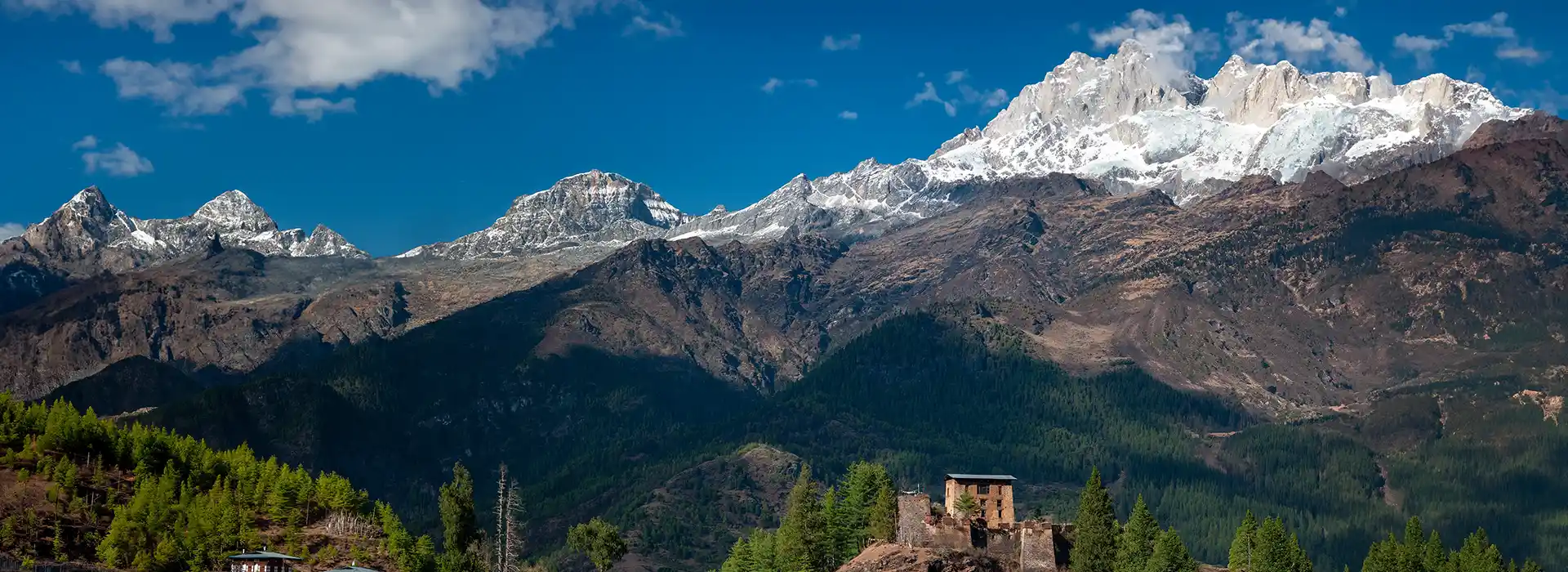

Bhutan Budget Travel remains a top goal for many global visitors. The country follows a high-value, low-volume approach. This plan keeps visitor numbers low to save the land. Many people ask a key question. Is Bhutan expensive? The answer depends on the daily fees. The government charges a tax for every night. This tax supports the local people. It pays for free health care. It pays for free schools for the youth. The tax helps keep the forest green. The land remains carbon-negative thanks to these funds.
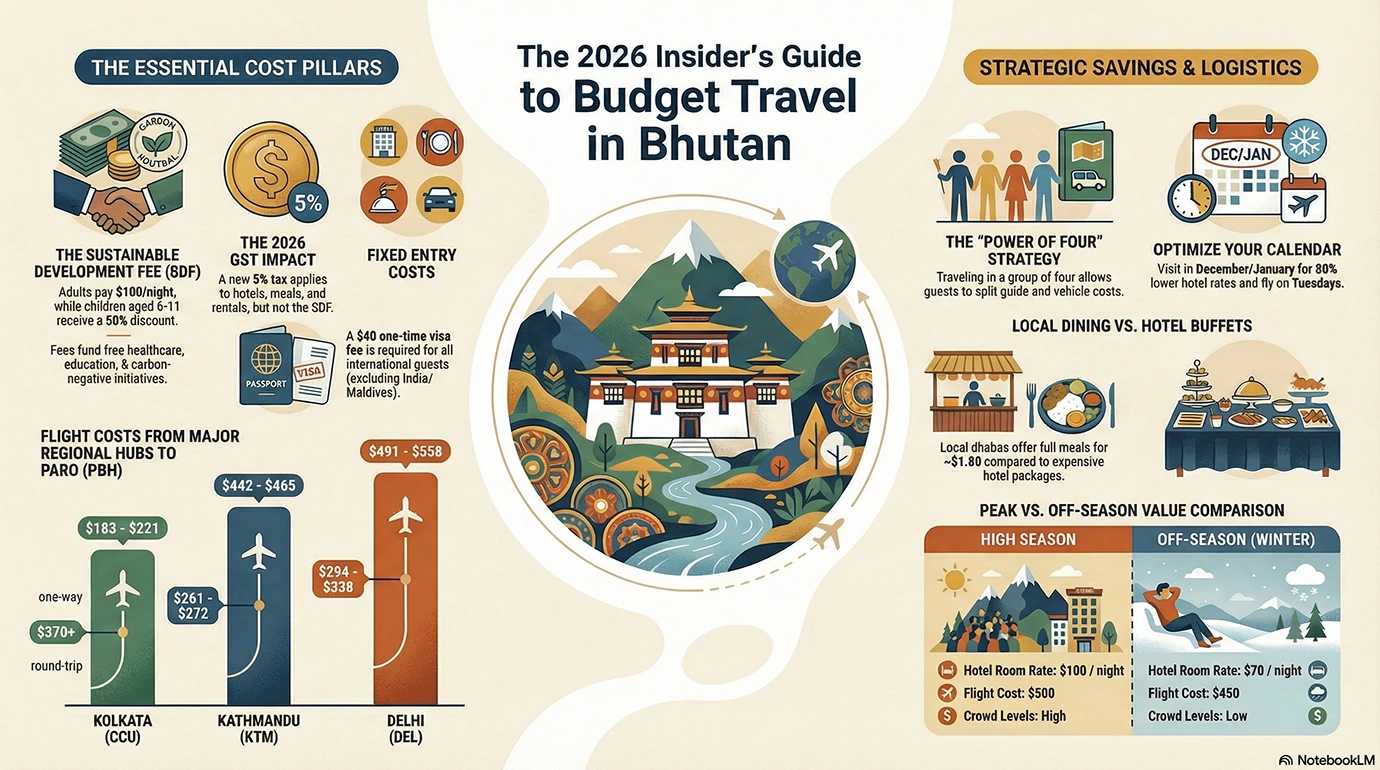
Sustainable Development Fee Economic Structure
The Sustainable Development Fee, or SDF, drives the cost of the trip. All guests pay this fee except some regional neighbors. The rate remains fixed. This price lasts until August 2027. The fee goes to the national bank. It funds big projects for the public good.
| Age Group | Daily SDF Cost (USD) | Discount Rate |
| Adults (12 and up) | $100 | None |
| Children (6 to 11) | $50 | 50 Percent |
| Children (5 and under) | $0 | 100 Percent |
The SDF does not cover the hotel room. It does not cover the food. It does not cover the guide or the car. Travelers must pay these costs in addition to the tax.
Bhutan Visa and Entry Costs
Every guest needs a visa to enter the country. Only people from India and the Maldives skip this. The visa fee remains at $40. You pay this fee once for each trip. The process starts online with a tour agent. The agent files the paperwork for the guest. The guest sends a scanned passport. The passport must be valid for six months. The agent also asks for a digital photo.
The guest pays the Sustainable Development Fee and the visa fee together. This payment must be made via bank wire. Most agents do not take credit cards for the tax. Some new portals now allow Visa card payments. The visa will be ready in 5 to 7 days. The guest receives a letter of approval. This letter shows the airport check-in. The real visa stamp goes in the book at the border.
Goods and Services Tax Impact
The year 2026 brings a new tax change. The government adds a Goods and Services Tax (GST). The rate sits at five percent. This tax changes how people plan Bhutan Budget Travel. The GST applies to most things a guest buys in the land.
| Service Category | GST Status | Tax Rate |
| Hotel Stays | Taxable | 5 Percent |
| Restaurant Meals | Taxable | 5 Percent |
| Vehicle Rentals | Taxable | 5 Percent |
| Guide Services | Taxable | 5 Percent |
| SDF Fee | Exempt | 0 Percent |
| Visa Fee | Exempt | 0 Percent |
The GST makes the trip cost more for the guest. A guide that cost fifty dollars now costs fifty-two fifty. A hotel room for one hundred dollars now costs one hundred and five. The SDF stays exempt from this tax. This keeps the base royalty the same. Travelers book in 2025 to save money.
Flight Logistics from Kathmandu and Regional Hubs
Flying to Paro is the main way to arrive. The airport sits in a high valley. Only two local airlines fly there. These are Druk Air and Bhutan Airlines. Kathmandu is the best hub for budget travel to Bhutan.
Kathmandu to Paro Flight Data
The flight from Nepal takes about one hour. Guests see the tall peaks on the left.
| Airline | One-Way Cost (USD) | Round-Trip Cost (USD) |
| Bhutan Airlines | $261 | $442 |
| Druk Air | $272 | $465 |
| Hahn Air | $264 | $460 |
February is the cheapest month to fly. October is the most expensive month. Booking ten months early saves a lot of money. Tuesday is the cheapest day to fly. Thursday is the most costly day to fly.
Other Regional Hubs
Delhi also offers many flights to Paro. The flight takes about two hours and ten minutes.
| Flight Hub | One-Way Cost (USD) | Round-Trip Cost (USD) |
| Delhi (DEL) | $284 – $338 | $491 – $558 |
| Bangkok (BKK) | $385 – $440 | $800+ |
| Kolkata (CCU) | $183 – $221 | $370+ |
Kolkata offers the cheapest way to fly to Bhutan. Bangkok flight costs the most money. Many guests choose Kathmandu for the mountain views.
Accommodation and Lodging Analysis
Bhutan Budget Travel relies on 3-star hotels. These hotels must have a state permit. They provide clean rooms and safe stays.
3-Star Hotel Pricing in Thimphu
Thimphu is the capital city. It has the most hotel beds.
| Hotel Name | Nightly Rate (USD) | Guest Rating |
| Hotel Gakyil | $29 | 7.6 / 10 |
| Forest Boutique | $29 | Good |
| Lemon Tree Thimphu | $40 | 8.0 / 10 |
| Hotel Mayto | $44 | Good |
| City Hotel Thimphu | $67 | 9.2 / 10 |
Budget hotels in Thimphu cost about thirty dollars. Mid-range hotels cost $80 to $100. These rates include breakfast. They include free Wi-Fi for the guests.
3-Star Hotel Pricing in Paro and Punakha
Paro sits near the airport. Punakha is a warm valley.
| Hotel Name | City | Nightly Rate (USD) |
| Nirvana Inn | Paro | $31 |
| Dzi Pema | Paro | $30 |
| Spirit Village Lodge | Punakha | $39 – $43 |
| Hotel River Valley | Punakha | $41 |
| Lobesa Boutique | Punakha | $45 |
Homestays are even cheaper than hotels. They cost twenty to forty dollars. Guests eat local food with a family. This is the most affordable way to get lodging in Bhutan.
Food and Dining Costs for Budget Travelers
Food costs very little if you eat like a local. Many tour packages include all three meals. Independent guests pay at the shop.
Daily Meal Budgets
| Dining Level | Cost per Meal (USD) | Common Dishes |
| Local Dhaba | $2 – $4 | Red Rice, Ema Datshi |
| Mid-Range Cafe | $8 – $12 | Momos, Thukpa |
| Fine Dining | $25 – $60 | Bhutanese Set Meals |
A full meal in Thimphu costs about 150 Nu ($1.80). A plate of beef momos costs 100 Nu ($1.20). Red rice is a staple in the land. It has a nutty taste and is healthy. Ema Datshi uses green chili and cheese. It is very hot and spicy.
Recommended Budget Eateries
Thimphu offers the most choices. Zombala 2 is the best spot for momos. Burger Point sells local burgers for school kids. Kalden Restaurant serves home-style food. In Paro, Sonam Trophel is a top pick. It serves beef and chicken momos. My Kind of Place serves good local food.
Independent Travel and Guide Regulations
The land has strict rules for travel. Most international guests need a guide. Only Indians can walk entirely alone.
Where You Can Go Alone
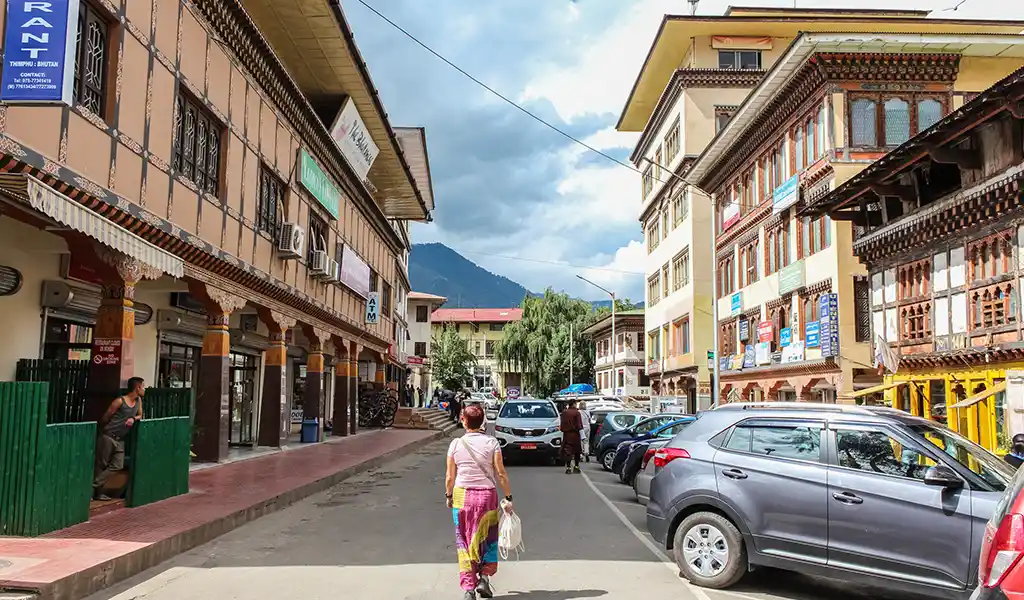
You can walk around Thimphu city on your own. You can walk around Paro town on your own. You do not need a guide for city walks. You can shop and eat without a guide.
Where You Must Have a Guide
| Location or Task | Guide Mandatory? | Source |
| All Monasteries | Yes | |
| All Dzong Forts | Yes | |
| Tiger’s Nest Hike | Yes | |
| Beyond Thimphu / Paro | Yes | |
| Trekking / Hikes | Yes |
A licensed guide costs $30 to $60 a day. A private car and driver costs eighty to one hundred dollars. Bhutan Budget Travel works best with four people. Four guests share one guide and one car. This cut the cost by a significant amount.
Practical 5-Day Bhutan Budget Travel Itinerary
This plan starts in Kathmandu. It focuses on the cheapest way to visit Bhutan.
Day 1: Kathmandu to Thimphu Arrival
Fly from Kathmandu to Paro in the morning. See the mountains from the plane window. Meet the guide at the airport gate. Drive one hour to the capital city. Check into a 3-star hotel like Gakyil. Walk to the Memorial Chorten to see the older adults. Visit the big Buddha statue on the hill. Eat dinner at Zombala 2 on Norzin Lam.
Day 2: Thimphu Cultural Tour
Visit the Takin Preserve to see the strange animal. Go to the Folk Heritage Museum. See the School of Arts and Crafts. Visit the post office to print your own stamps. Watch an archery match in the afternoon. Explore the local market for red rice. Sleep in Thimphu again.
Day 3: Punakha Valley Visit
Drive three hours to Punakha. Stop at the Dochula Pass. See the 108 stupas and the snow peaks. Visit the Punakha Dzong at the river edge. Walk over the long suspension bridge. See the Chimi Lhakhang temple in the valley. Stay at a budget hotel in Punakha.
Day 4: Tiger’s Nest Hike
Drive back to Paro valley. Start the hike to Taktsang Monastery. The hike takes two to three hours. Drink tea at the halfway cafe. See the temple on the high cliff. Visit the Kyichu Lhakhang temple in the town. Have a hot stone bath in a farmhouse.
Day 5: Paro to Kathmandu Return
Eat breakfast at the hotel. Drive ten minutes to the airport. Fly back to Kathmandu in the morning.
Monument and Site Fee Schedule
Fees for sites rise for 2026. Guests pay in local currency.
| Site Name | District | Fee (Nu) | USD Cost |
| Tiger’s Nest | Paro | 1000 – 2000 | $12 – $24 |
| Punakha Dzong | Punakha | 500 | $6 |
| National Museum | Paro | 500 | $6 |
| Memorial Chorten | Thimphu | 500 | $6 |
| Buddha Dordenma | Thimphu | 300 | $3.60 |
| Takin Preserve | Thimphu | 300 | $3.60 |
| Simply Bhutan | Thimphu | 1000 | $12 |
Children under 5 enter for free. Children aged 5 to 18 pay half price. Some sites only open at certain hours. Most dzongs open for guests after 5 PM.
Connectivity and Communication in Bhutan
Bhutan Budget Travel needs good internet. Most hotels offer free Wi-wifihe, the speed is good for chat and mail. It is not fast with large videos.
Local SIM Card Options
There are two main networks. B-Mobile covers the rural spots well. TashiCell is good in the western towns.
| Plan Name | Data / Talk | Validity | Cost (Nu) |
| Tourist SIM 200 | 1 GB + 100 Nu | 7 Days | 200 |
| Tourist SIM 500 | 3 GB + 200 Nu | 30 Days | 500 |
| Tourist e-SIM | Unlimited | 7 Days | 1100 |
Buy the SIM at the airport arrival hall. You need your passport book. You need the visa letter. The card works in most unlocked phones.
Cultural Etiquette and Dress Code
The land follows old ways and faith. Guests must show respect at all times.
Dress Code for Temples and Dzongs
- Arms: Cover the arms to the wrist. No tank tops.
- Legs: Cover the legs to the ankle. No shorts.
- Feet: Wear socks and shoes. No flip-flops inside.
- Head: Remove the hat. Remove the sunglasses.
Behavioral Rules
Walk clockwise around a stupa. Spin prayer wheels clockwise. Do not step over holy flags on the ground. Use an open palm to point at a statue. Do not use one finger to point. Ask before you take a photo of a person.
Strategies for the Cheapest Way to Visit Bhutan
Is Bhutan expensive? It is for solo travelers. It is cheap for groups.
- Group of Four: This is the best number. Four people split the cost of the car. They split the guide’s fee.
- Winter Travel: Visit in December or January. The sky is blue and clear. Hotels drop prices by thirty percent.
- Kolkata Entry: Fly from Kolkata if possible. This flight is the cheapest way to visit Bhutan by air.
- Local Food: Skip hotel buffets. Eat at small dhabas in Thimphu. A meal costs two dollars instead of twenty.
- Book Ahead: Pay for the trip in 2025. This avoids the 2026 GST hike.
Economic Conclusion
Budget travel in Bhutan is a challenge, but it is possible. The $100 SDF tax is the highest cost. Once you pay the tax, the land is affordable. Food is cheap in local spots. The land remains clean and green. Guests contribute to the joy of the people. This high-value model protects the hills. Bhutan Budget Travel is more than just a trip. It is a way to help a sustainable land.
| Factor | High Season | Off Season | Savings |
| SDF Tax | $100 | $100 | 0% |
| Hotel Room | $100 | $70 | 30% |
| Flight Cost | $500 | $450 | 10% |
| Crowds | High | Low | Large |
The trip shows a new era for the land. The GST adds a small cost. But the open rules allow more choice. Guests pick their own hotels. They pick their own meals. This is the new way for Bhutan Budget Travel. The land of the dragon waits for the guest. It offer peace and clear air. It provides a look at an old world. Plan the trip with care to save money. Use the hubs in Nepal or India. Follow the local culture’s rules. Enjoy the walk to the Tiger’s Nest. This is the heart of the Bhutan trip.
Bhutan Budget Travel is ready for the world. The cost is fair for the value. The land stay safe and kind. Women travel alone with no fear. No one steals in the markets. No one scammed the guests. This is why the land is special. It is a place of high trust. Pay the SDF and see the truth. The cheapest way to visit Bhutan is to be smart. Be a guest and help the land grow.