


Bhutan remains a unique destination that prioritizes high-value, low-volume tourism to protect its environment and culture. A Bhutan Road Trip offers a primary way to explore the transition from the modernizing western districts to the spiritual central valleys. Every traveler who visits the kingdom contributes to national development through a daily fee system.
Roads serve as the vital links between these isolated mountain communities. The Bhutan Road Trip Guide provides essential details for navigating the route from Paro to Bumthang. Planning a Bhutan Road Trip requires a deep understanding of the regulatory framework and the logistical challenges of mountain travel.
Financial and Administrative Requirements for the Bhutan Road Trip
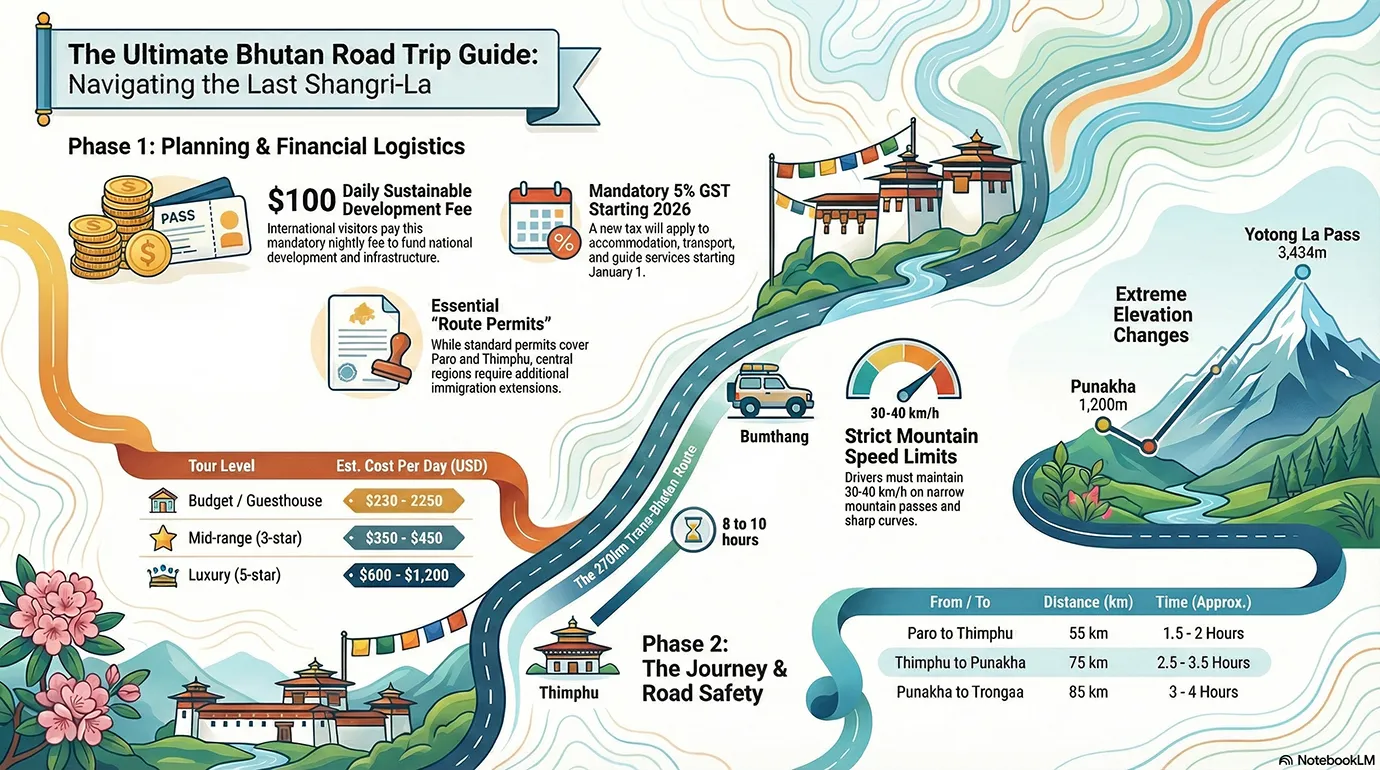
The Royal Government of Bhutan implements a strict fee structure to manage visitor numbers and fund infrastructure. A Bhutan Road Trip involves various costs that vary by traveler’s nationality. International visitors pay a Sustainable Development Fee (SDF) of 100 USD per night. This rate remains valid until August 31, 2027. Indian nationals pay a lower SDF of 1,200 Ngultrum per night. Children between the ages of six and twelve receive a 50% discount on the SDF. Children under the age of six do not pay any SDF.
| Fee Category | International Visitors (USD) | Indian Nationals (INR/Nu) |
| Sustainable Development Fee (SDF) | $100 per night | Nu. 1,200 per night |
| Visa Application Fee | $40 one-time | Not applicable |
| SDF for Children (6-12) | $50 per night | Nu. 600 per night |
| SDF for Children (Under 6) | Free | Free |
New tax updates change the budget for a Bhutan Road Trip starting January 1, 2026. A 5% Goods and Services Tax (GST) applies to tour components like accommodation, transport, and guide services. The 100 USD SDF remains exempt from this 5% GST. Travelers save money by completing their Bhutan Road Trip before these changes take effect. Visa processing takes approximately five working days. A Bhutan Road Trip Guide helps clarify these administrative steps.
Daily Budget Estimates for Different Tour Types
A Bhutan Road Trip budget varies depending on the level of service. Tour operators offer packages that range from budget homestays to ultra-luxury resorts. These estimates include the SDF, accommodation, meals, and transport.
| Tour Level | Estimated Cost per Person per Day (USD) |
| Budget / Guesthouses | $230 – $250 |
| Mid-range (3-star) | $350 – $450 |
| Luxury (5-star) | $600 – $1,200 |
| Ultra-luxury | $1,500+ |
Standard tour packages often cost between 350 USD and 400 USD per night, inclusive of the SDF. Premium services such as private chefs or helicopter transfers significantly increase the daily cost. Indian families often find a Bhutan Road Trip more affordable due to lower fees and the option for overland entry. Budget travel for Indian citizens ranges from 4,000 to 7,000 INR per day.
Vehicle Logistics and Driving Permits
A Bhutan Road Trip requires specific permits for vehicles and drivers. Foreign tourists generally use Bhutanese-registered vehicles provided by tour operators. Self-driving remains rare for international visitors, but it remains an option for Indian tourists who bring their own cars.
Bringing an Indian Vehicle for a Bhutan Road Trip
Indian travelers obtain vehicle entry permits at the Regional Transport Office (RSTA) in Phuentsholing. Certain documents must stay with the driver at all times during the Bhutan Road Trip.
- Original Vehicle Registration Certificate (RC)
- Valid Driving License
- Vehicle Insurance Documents
- Pollution Under Control (PUC) Certificate
- Entry Permit for the driver and passengers
Private vehicles from India can navigate mountain roads effectively when well-maintained. Commercial vehicles require special approvals and are often not permitted for tourism. Roads use left-hand driving, which feels familiar to Indian drivers.
Regional Route Permits
The standard entry permit only covers Paro and Thimphu. A Bhutan Road Trip that extends to central or eastern regions requires a “Route Permit”. Drivers obtain these extensions at the Immigration Office in Thimphu. Checkpoints along the highway verify these permits regularly.
Road Conditions and Safety on a Bhutan Road Trip
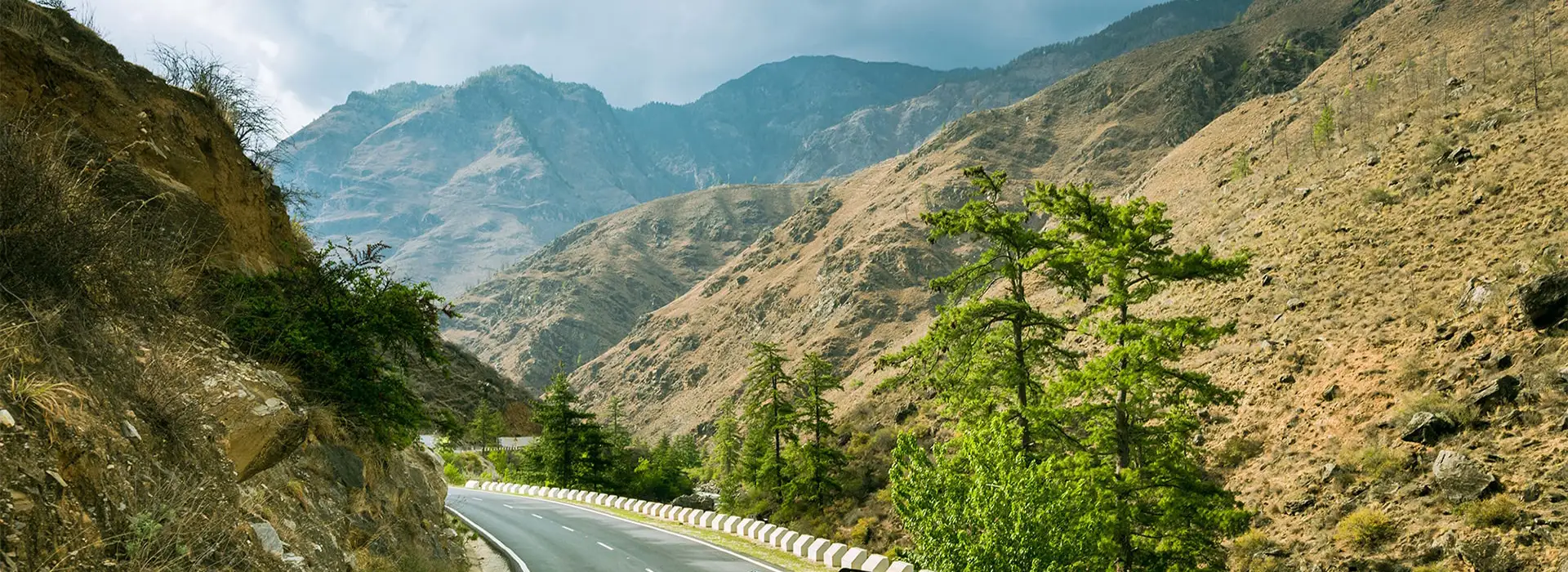
Driving in a mountainous country like Bhutan presents unique challenges. The East-West Highway, or Lateral Road, serves as the main artery for a Bhutan Road Trip. Construction activity often causes delays on the eastern sections of this highway.
Driving Speed and Mountain Norms
Roads wind through steep terrain with many sharp curves. Speed limits reflect the rugged landscape. A Bhutan Road Trip Guide emphasizes safety over speed.
| Location | Speed Limit (km/h) |
| Urban Areas | 50 km/h |
| Rural / Rural Highways | 60 – 80 km/h |
| Mountain Passes / Narrow Roads | 30 – 40 km/h |
Drivers use low gears when they descend steep slopes to prevent brake failure. Uphill traffic usually receives the right of way on narrow passages. Horns provide a warning when approaching blind corners, but drivers avoid excessive noise in towns. Seatbelts remain mandatory for front-seat passengers. Using a mobile phone while driving results in a fine unless the driver uses a hands-free device.
Safety Tips for the Bhutan Road Trip
- Avoid driving at night due to limited lighting and visibility.
- Watch for livestock, such as cows and yaks, on the highway.
- Carry a spare tire and basic vehicle tools for long sections between towns.
- Refuel at major hubs like Thimphu or Paro, as fuel stations remain limited in the highlands.
- Check the weather forecasts because rain or snow can make mountain roads slippery.
Distance and Elevation Profiles for a Bhutan Road Trip
A Bhutan Road Trip involves significant changes in altitude. These changes affect driving time and the climate of each valley.
Table of Driving Distances and Times
Mountain miles take longer to cover than flat roads. The following table lists approximate distances and times for the Paro-Bumthang route.
| From | To | Distance (km) | Time (hours) |
| Paro | Thimphu | 55 km | 1.5 – 2 hrs |
| Thimphu | Punakha | 75 km | 2.5 – 3.5 hrs |
| Punakha | Trongsa | 85 km | 3 – 4 hrs |
| Trongsa | Bumthang (Jakar) | 68 km | 2.5 – 3 hrs |
| Thimphu | Bumthang (Direct) | 270 km | 8 – 10 hrs |
Altitude of Major Destinations
Altitude sickness becomes a concern above 2,500 meters. The Bhutan Road Trip crosses several high passes that exceed this elevation.
| Destination | Altitude (Meters) | Travel Feel |
| Punakha | 1,200 m | Warm and subtropical |
| Trongsa | 2,100 m | Temperate |
| Paro | 2,200 m | Cool mountain air |
| Thimphu | 2,334 m | Moderate elevation |
| Bumthang (Jakar) | 2,600 m | High altitude, cooler |
| Dochula Pass | 3,100 m | High pass, often misty |
| Pele La Pass | 3,420 m | High mountain environment |
| Yotong La Pass | 3,434 m | Highest pass on this route |
The Western Leg: Starting the Bhutan Road Trip in Paro
Paro serves as the entry point for most travelers. The valley features a lush, rice-filled landscape at 2,200 meters. A Bhutan Road Trip Guide recommends spending at least two days in Paro to acclimatize.
Paro Dzong and Kyichu Lhakhang
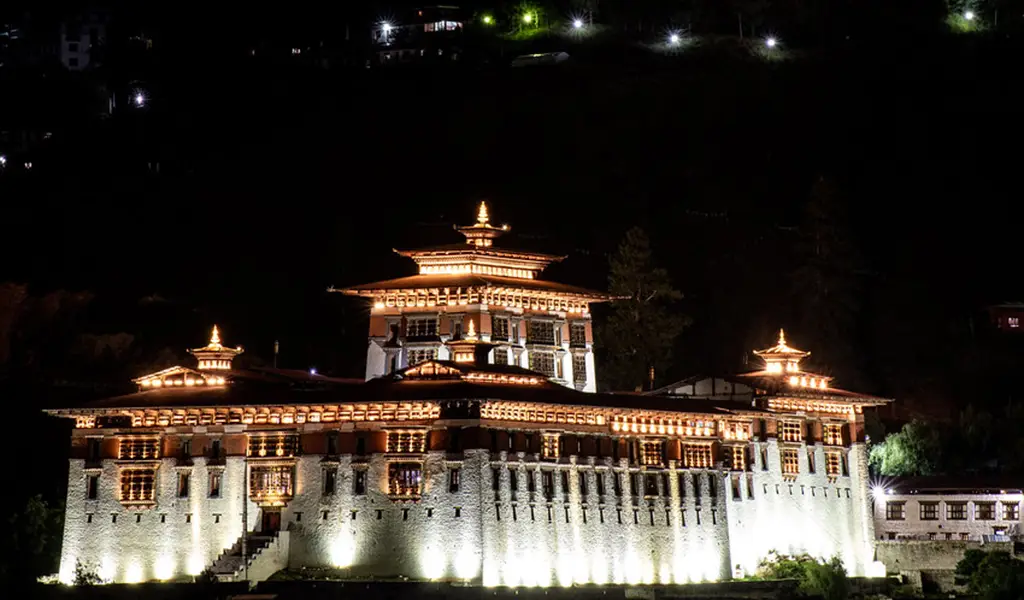
Paro Dzong, also known as Rinpung Dzong, stands as a massive fortress overlooking the Pa Chhu River. It acts as the administrative and religious hub of the district. Inside, visitors view wall paintings that illustrate Buddhist lore, such as the “Four Friends” and the “Wheel of Life”.
Kyichu Lhakhang remains one of the oldest temples in Bhutan. The Tibetan King Songtsen Gampo built it in the 7th century to pin down a demoness who prevented the spread of Buddhism. A magical orange tree in the courtyard bears fruit year-round.
The Hike to Tiger’s Nest
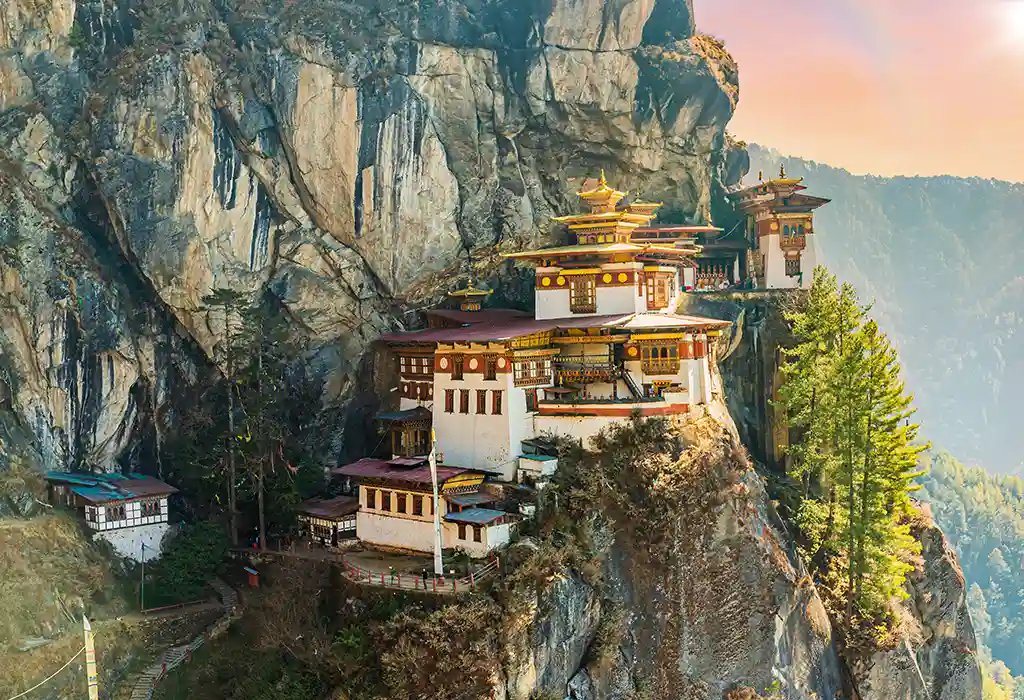
Taktsang Lhakhang, or Tiger’s Nest, clings to a granite cliff 900 meters above the valley. Most visitors complete this hike on the second or third day of their Bhutan Road Trip. The trail takes about 2 hours to reach the halfway point at the cafeteria. Legend says Guru Rinpoche flew to this spot on the back of a tigress in the 8th century.
Thimphu: The Capital City
The 55 km drive from Paro to Thimphu follows a scenic route along the river. Thimphu, the capital, offers a mix of modern and traditional sites.
- Buddha Dordenma: A giant gold statue of Buddha overlooks the valley from a hill.
- National Memorial Chorten: A stupa in the heart of town where locals circumambulate and pray.
- Motithang Takin Preserve: This site is home to the Takin, a unique national animal that looks like a cross between a cow and a goat.
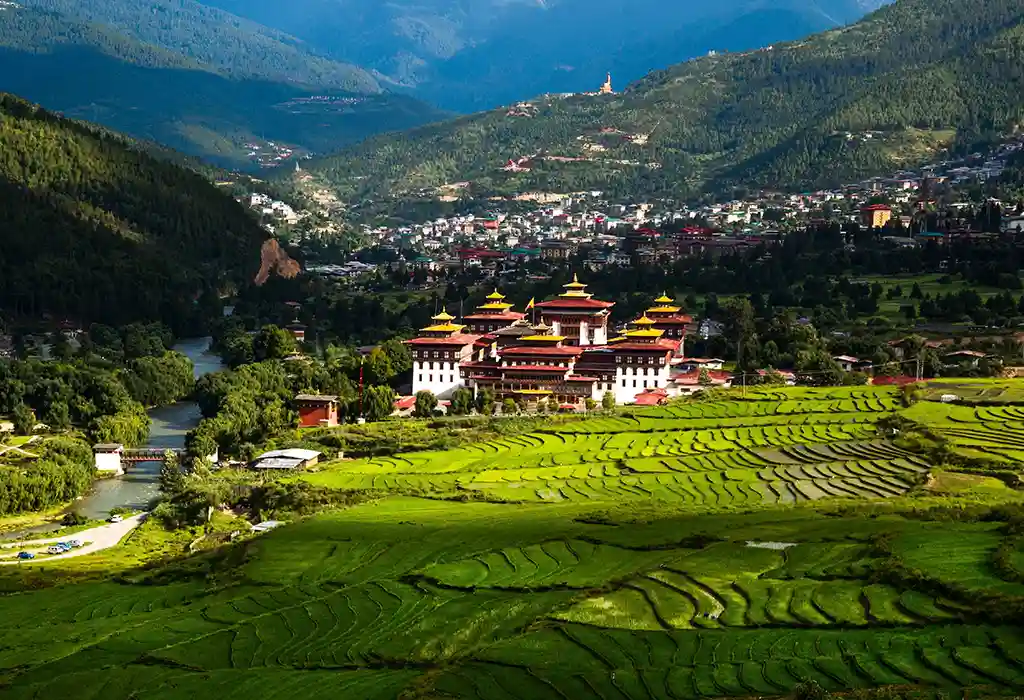
- Tashichho Dzong: This fortress houses the King’s throne room and serves as the summer capital for the monks.
Crossing the Central Passes: Dochula and Pele La
The Bhutan Road Trip becomes more dramatic as the highway climbs into the mountains toward central Bhutan.
Dochula Pass and Punakha Valley
Dochula Pass sits at 3,100 meters on the road between Thimphu and Punakha. It features 108 chortens built to honor the fourth king of Bhutan. On clear days, the pass offers panoramic views of the high Himalayas, including Gangkar Puensum, Bhutan’s highest peak.
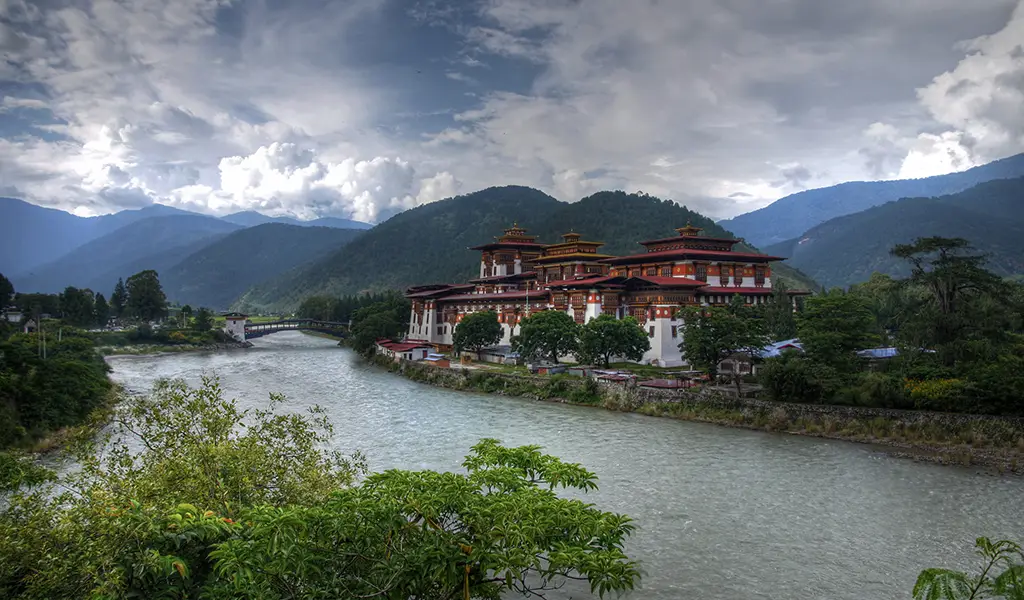
The road then descends into the warm Punakha Valley. Punakha Dzong sits at the junction of the Pho Chhu and Mo Chhu rivers. This dzong remains the winter residence for the central monk body. A short hike leads to Chimi Lhakhang, a temple dedicated to fertility and the “Divine Madman” Lama Drukpa Kuenley.
Pele La Pass and Phobjikha
Pele La Pass, at 3,420 meters, marks the traditional boundary between western and central Bhutan. The pass features a large white chorten and many prayer flags. The vegetation here includes rhododendrons and dwarf bamboo.
A side road from Pele La leads to the Phobjikha Valley. This wide glacial valley provides a winter home for endangered Black-necked Cranes. The Gangtey Monastery overlooks the valley and serves as an important center for the Nyingmapa school of Buddhism.
Historical Landmarks: Chendebji and Trongsa
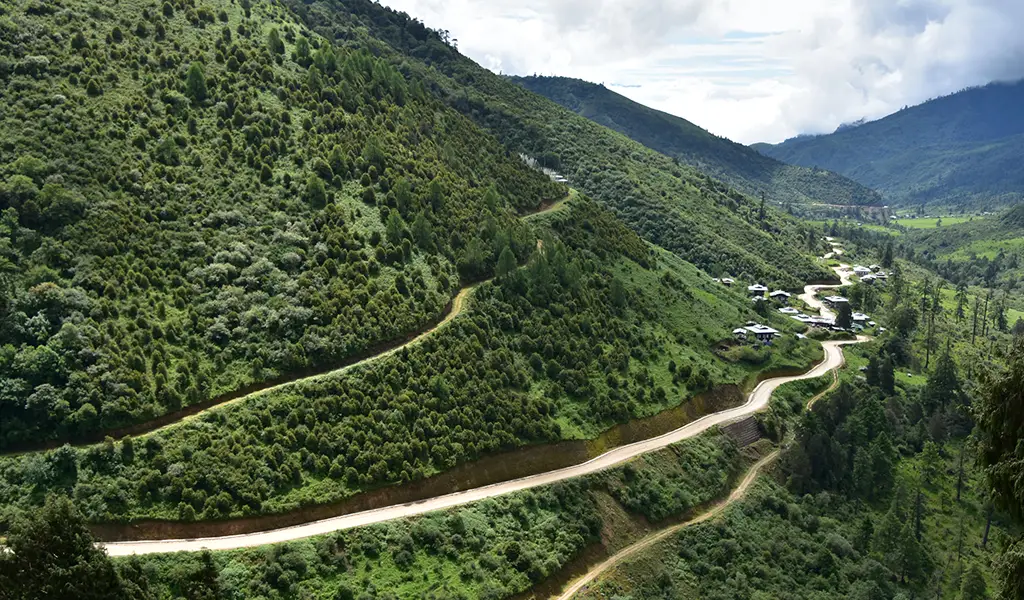
The Bhutan Road Trip continues through the rugged terrain of Trongsa District.
Chendebji Chorten
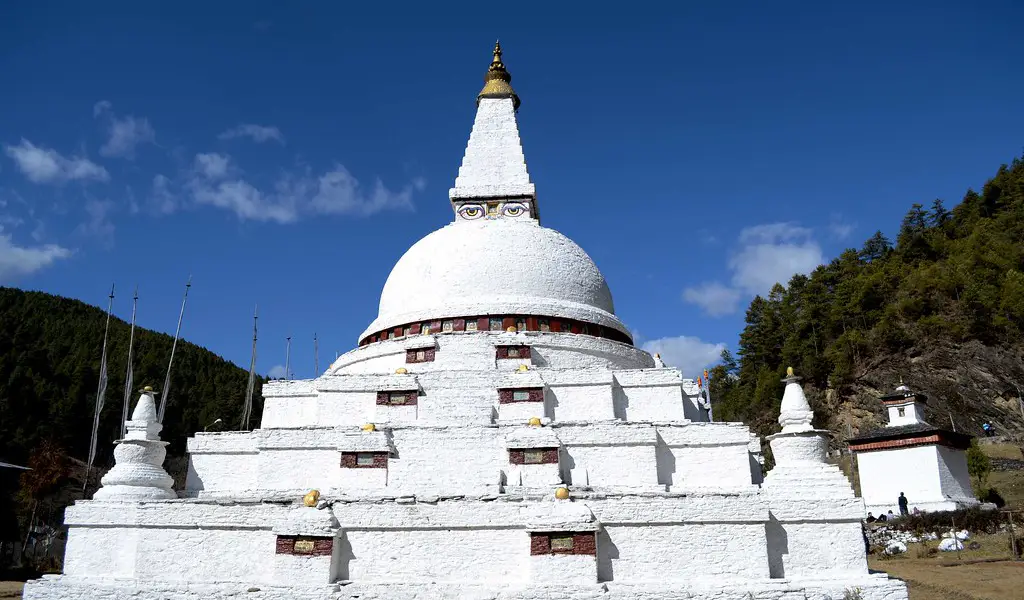
Chendebji Chorten stands along the highway 40 km west of Trongsa. Lama Shida built it in the 18th century to subdue a local demon. The chorten follows a Nepali architectural style with eyes painted on four sides, similar to the Swayambhunath Stupa in Kathmandu. It serves as a popular rest stop for travelers on a Bhutan Road Trip.
Trongsa Dzong
Trongsa Dzong sits on a steep ridge above a river gorge. It is the largest fortress in Bhutan and played a vital role in unifying the kingdom. Theing of Bhutan served the Trongsa Penlop (Governor) before ascending to the throne. The Ta Dzong watchtower above the fortress now acts as a museum for royal heritage and religious relics.
Bumthang Valley Travel Guide: The Spiritual Heart
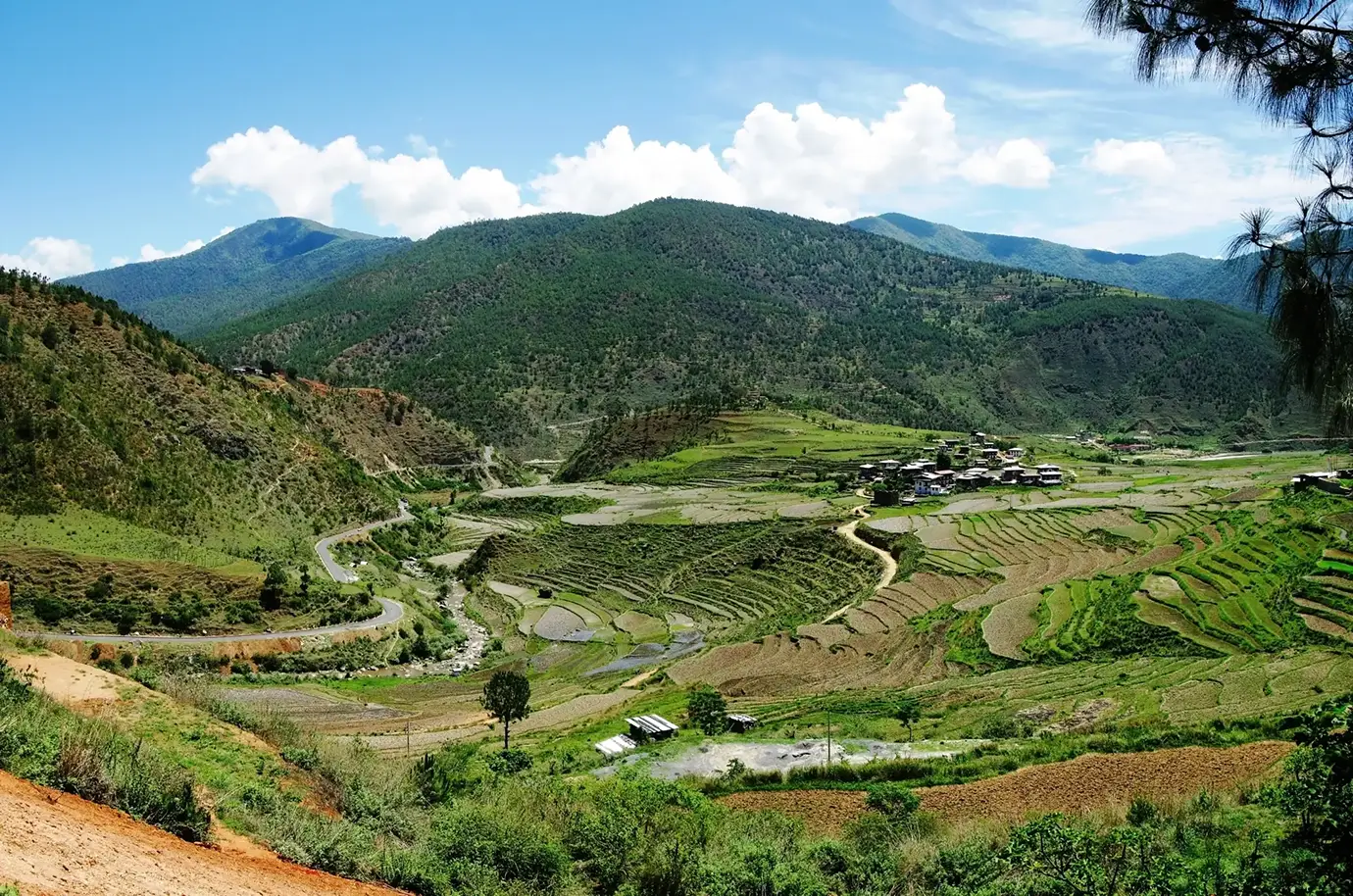
Bumthang consists of four smaller valleys: Chokhor, Tang, Ura, and Chhume. A Bumthang Valley travel guide helps visitors explore these deeply spiritual regions. The area contains many of the country’s oldest temples.
Chokhor Valley (Jakar Town)
Jakar serves as the administrative center for Bumthang. Jakar Dzong, or the “Castle of the White Bird,” sits on a ridge overlooking the town. Legend says a white bird indicates the location of the fortress in the 14th century.
- Jambay Lhakhang: This 7th-century temple remains one of the most sacred in the kingdom. It hosts a famous festival with mask dances and fire rituals in October or November.
- Kurjey Lhakhang: The temple complex houses a cave containing the imprint of Guru Rinpoche’s body. He meditated here in the 8th century and left his mark on the rock face.
- Tamshing Lhakhang: Built in 1501 by Pema Lingpa, this temple contains ancient wall paintings and religious relics.
Tang Valley and the Burning Lake
Tang Valley offers a more remote experience for travelers on a Bhutan Road Trip. The most famous site is Mebar Tsho, also known as the Burning Lake.
Mebar Tsho remains a sacred pool in the Tang Chhu River. Legend says Pema Lingpa had a vision of treasures hidden by Guru Rinpoche at the bottom of the pool. He dives into the water with a lit butter lamp and returns with a treasure chest while the light still burns. Today, pilgrims offer butter lamps and prayer flags at this site to seek blessings.
Near the head of the valley, the Ogyen Choling Palace Museum displays artifacts from Bhutanese history. This manor house offers a detailed look at the lives of nobility and rural communities in earlier centuries.
Ura and Chhume Valleys
Ura Valley sits at 3,100 meters and features a medieval village layout with cobblestone streets. The road to Ura crosses the Ura Shelthang La Pass, which offers views of Gangkar Puensum on clear days.
Chhume Valley remains famous for “Yathra,” a colorful wool textile. Weaving centers along the highway allow visitors to observe the traditional process and buy hand-made souvenirs.
Local Industries: Swiss Farm and Red Panda Brewery
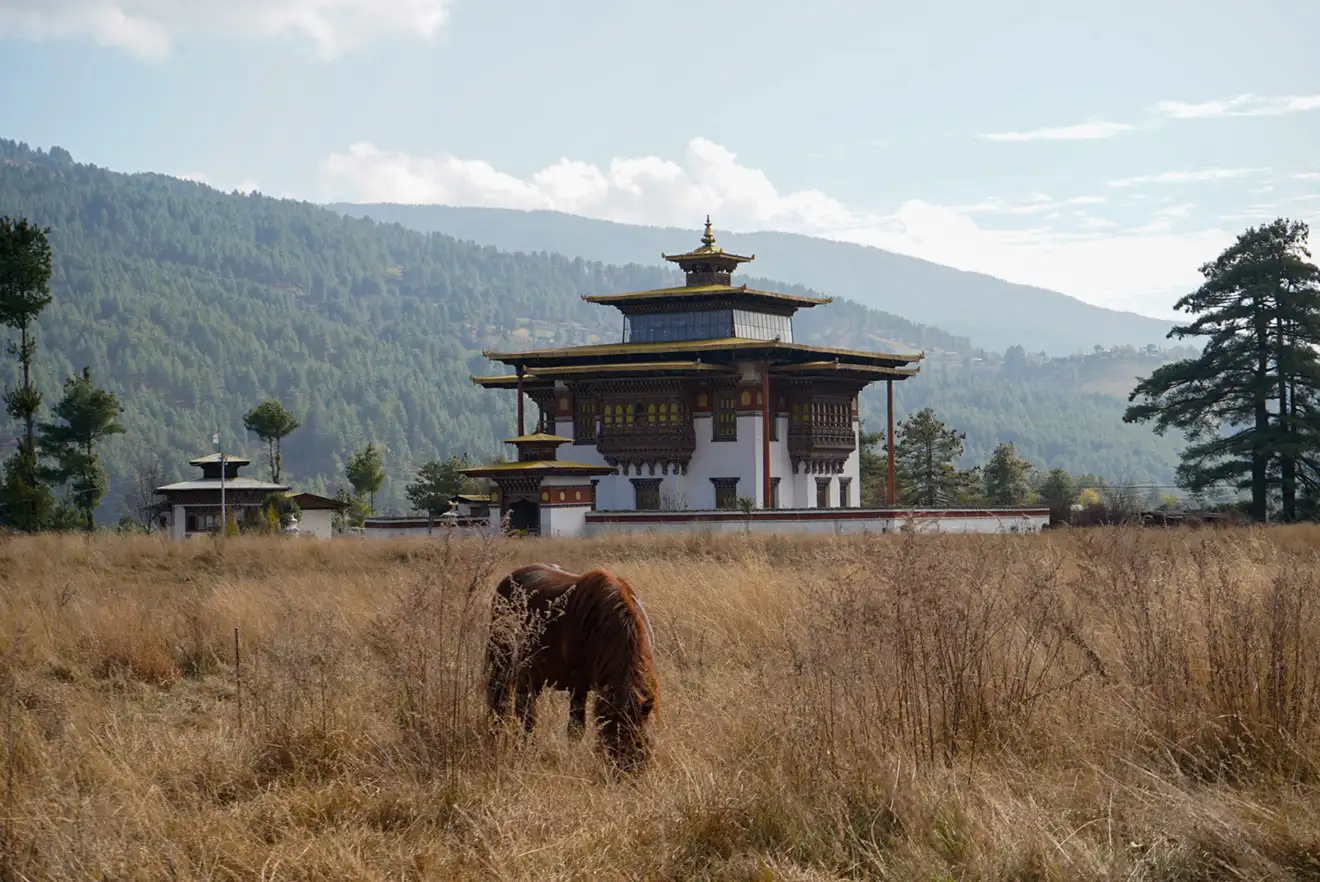
Bumthang resembles Switzerland because of its green meadows and alpine forests. A Swiss national, Fritz Maurer, establishes several local industries in the 1960s that combine European techniques with Bhutanese ingredients.
The Cheese Factory
The Bumthang Cheese Factory produces Gouda and Emmental cheese. Local farmers provide milk from cows and yaks that graze in high-altitude pastures. The factory uses traditional Swiss methods to age the cheese on wooden shelves. This cheese serves as a significant ingredient in local dishes across Bhutan.
Red Panda Brewery
The Red Panda Brewery remains Bhutan’s first microbrewery. It produces an unfiltered Weiss beer (wheat beer) using fresh spring water and organic barley. Visitors take guided tours to see the copper vats and the fermentation process. The tour often ends with a beer sample at the adjacent Panda Beer Garden Cafe.
| Local Product | Key Ingredients | Product Detail |
| Red Panda Beer | Wheat, Barley, Spring Water | Unfiltered, preservative-free |
| Swiss Cheese | Cow or Yak milk | Gouda and Emmental styles |
| Apple Cider | Local Bumthang apples | Naturally fermented |
| Clover Honey | Wildflower nectar | Locally sourced and pure |
Natural Wonders: Flora and Fauna on the Road
A Bhutan Road Trip provides a window into the kingdom’s rich biodiversity. Bhutan maintains over 60% of its land as protected nature preserves.
Ecological Zones
The Bhutan scenic drive passes through different ecological zones as the altitude changes.
• Subtropical Zone (150m – 2,000m): Features tropical trees, pine, and hardwoods in the lower valleys like Punakha.
• Temperate Zone (2,000m – 4,000m): Covers most of the Bhutan Road Trip route. It includes conifer forests of blue pine, fir, and maple.
• Alpine Zone (above 4,000m): Characterized by medicinal herbs, dwarf junipers, and the Blue Poppy national flower.
Rhododendron Forests
Bhutan boasts 46 species of rhododendrons. These colorful flowers bloom spectacularly between March and May. The Royal Botanical Park at Lamperi, near Dochula, houses many of these species along the main highway.
Wildlife Spotting
Travelers often see animals during the Bhutan scenic drive. Gray langur monkeys usually sit by the roadside near Thimphu. Higher elevations provide habitat for the red panda, Himalayan black bear, and the elusive snow leopard. Bird enthusiasts spot rare species like the White-bellied Heron and the Ward’s Trogon in the temperate forests.
Gastronomy: A Culinary Guide for the Bhutan Road Trip
Food in Bhutan remains bold and spicy. Most meals include chilies as a vegetable rather than a spice.
Ema Datshi: The National Dish
Ema Datshi is the staple dish in every Bhutanese meal. It consists of green or red chilies cooked in a rich cheese sauce made from cow or yak milk. Every cook makes a different version, ranging from creamy to broth-like.
| Dish Name | Key Ingredients | Description |
| Ema Datshi | Chilies and Cheese | National dish, spicy stew |
| Red Rice | High-altitude rice | Nutty flavor, staple grain |
| Phaksha Paa | Pork and Chilies | Sliced pork with dried chilies |
| Jasha Maru | Chicken Stew | Spicy minced chicken with ginger |
| Hoentay | Buckwheat Dumplings | Specialty of Haa and Bumthang |
| Suja | Butter Tea | Tea with yak butter and salt |
Dining Tips for Travelers
- Try Red Rice, which grows exceptionally well in the high-altitude Paro Valley.
- Drink Suja (butter tea) to stay warm in the chilly weather of Bumthang.
- Visit Farmhouse Stays for an authentic meal prepared over a stone hearth.
- Ask for milder versions of local dishes if spicy food causes discomfort.
Practical Travel Advice for a Bhutan Road Trip
Successful travel in Bhutan requires attention to small details regarding money, communication, and health.
Connectivity and SIM Cards
Indian SIM cards do not work in Bhutan. Travelers buy a Bhutanese SIM card (TashiCell or B-Mobile) upon arrival at the airport or in major towns. A tourist SIM card costs about 4 USD and requires a passport copy. Wi-Fi remains available in most hotels and cafes in urban areas, but speeds vary in remote valleys.
Money and Payments
The Bhutanese currency is the Ngultrum (BTN), which is valued at the same rate as the Indian Rupee (INR). Indian Rupees stay widely accepted, though notes of 100 and 200 remain preferred. Cash is necessary for shopping and small expenses in remote areas because card acceptance remains limited. ATMs are available in cities like Thimphu and Paro, but sometimes they do not work with foreign cards.
Health and Packing
Altitude sickness sometimes affects travelers above 2,500 meters. Symptoms include headache and insomnia, but they usually go away after one night. Drink plenty of water and avoid overexertion to help the body adjust. Carry motion sickness medicine for the winding mountain roads.
Pack layered clothing because temperatures drop significantly at night, even in summer. Comfortable walking shoes remain essential for monastery visits and hikes, such as the Tiger’s Nest. Bring a universal travel adapter, as Bhutan uses round-pin sockets (Types C and D).
Cultural Protocol
- Remove shoes and hats before entering temples and dzongs.
- Walk clockwise around religious structures like chortens and prayer wheels.
- Dress conservatively by covering shoulders and knees in sacred spaces.
- Avoid pointing feet toward people or religious objects.
- Ask for permission before taking photos of people or inside temples.
Seasonal Planning for the Bhutan Road Trip
The best time for a Bhutan Road Trip depends on individual interests in nature or culture.
- Spring (March to May): This season offers pleasant weather and rhododendron blooms. The Paro Tshechu festival takes place in spring.
- Autumn (September to November): Clear skies provide the best mountain views. This season remains peak time for trekking and the Thimphu Tshechu.
- Winter (December to February): Fewer crowds and crisp air make this a good time for photography. Black-necked cranes stay in the valleys during these months.
- Summer (June to August): The landscape looks lush and green, but monsoon rains sometimes cause road delays due to landslides.
A Bhutan Road Trip Guide helps travelers prepare for these seasonal changes. Whether exploring the Paro to Bumthang road trip or a shorter Bhutan scenic drive, preparation remains the key to a rewarding experience. Following these guidelines ensures a safe and respectful visit to the Last Shangri-La.