



Bhutan maintains a unique “High Value, Low Volume” tourism policy to protect its pristine environment and vibrant culture. Travelers find that the Bhutan Travel Cost reflects this commitment through a mandatory Sustainable Development Fee and specific visa requirements. Understanding the total Bhutan Travel Cost requires a deep dive into daily levies, newly implemented taxes, and varied accommodation tiers.
National policy prioritizes sustainability over mass tourism, ensuring every visitor contributes directly to the country’s social and environmental welfare. Analysis shows that a well-planned trip balances fixed government fees with flexible choices in lodging and transportation.
The Sustainable Development Fee Framework
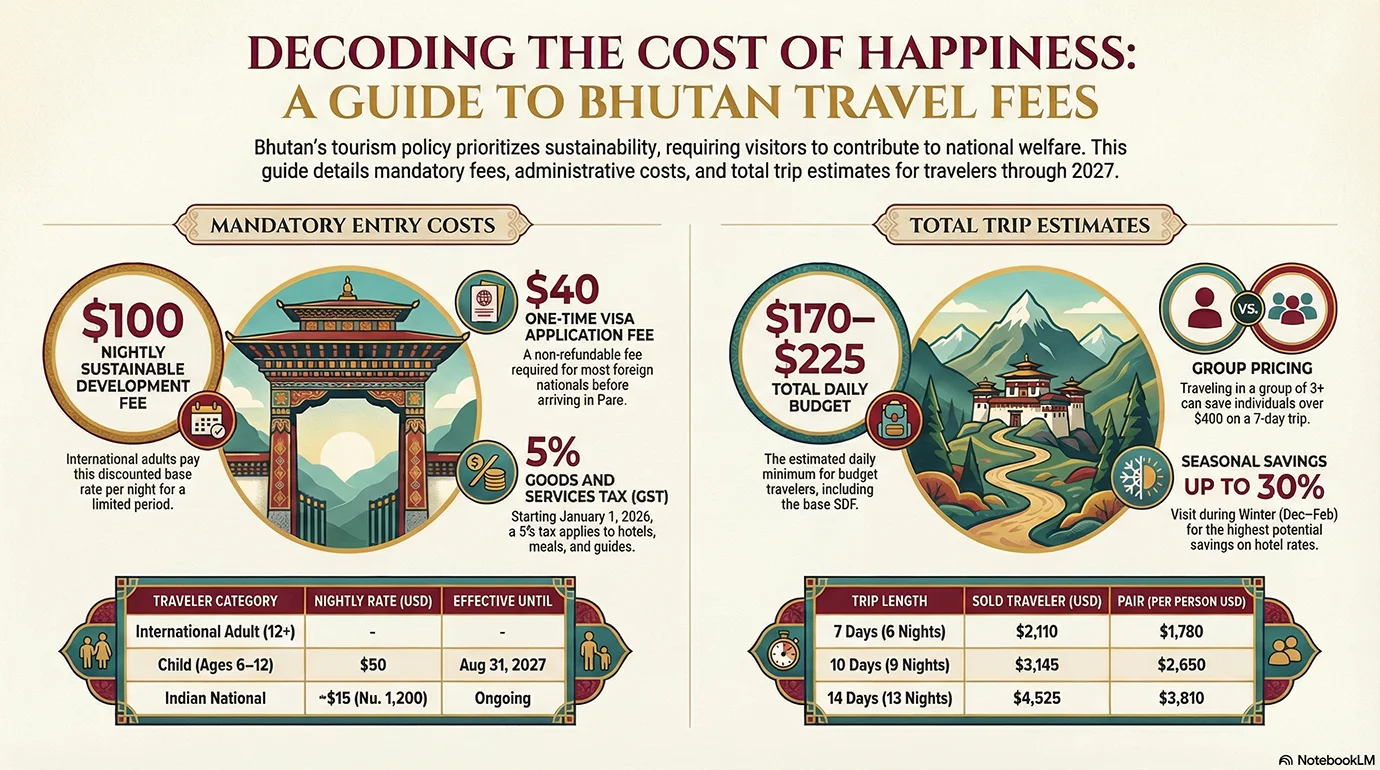
Sustainable Development Fee (SDF) payments represent the most significant fixed component of the Bhutan Travel Cost. Government authorities use these funds to provide free education and healthcare to citizens. Every international visitor pays a nightly fee that supports the national goal of remaining carbon-negative. Current regulations offer a 50% discount on the standard rate through August 31, 2027.
Adult travelers from most nations pay $100 per person per night as the base SDF. Children receive specific concessions that lower the family’s Bhutan Travel Cost. Children ages 6 to 12 pay $50 per night. Infants and children under 5 do not pay the daily Sustainable Development Fee. These rates remain fixed for several years to allow for predictable travel planning.
Daily SDF Rates and Concessions
| Traveler Category | Nightly Rate (USD) | Effective Until |
| International Adult (Age 12+) | $100 | August 31, 2027 |
| Child (Ages 6–12) | $50 | August 31, 2027 |
| Child (Under 5) | $0 | August 31, 2027 |
| Indian National | Nu. 1,200 (approx. $15) | Ongoing |
Visa and Administrative Entry Expenses
Acquiring a visa constitutes another essential part of the upfront Bhutan Travel Cost. Most foreign nationals require a pre-approved visa before they board a flight to Paro. Official rules require a non-refundable visa application fee of $40 per person. Applicants submit a digital copy of their passport, a recent photograph, and proof of travel insurance.
Visa processing usually takes between three and seven working days. Successful applicants receive a Visa Clearance Letter via email. Immigration officers stamp the actual visa in the passport upon arrival at the airport or land border. Travelers must ensure their passports remain valid for at least six months from the date of entry.
Fixed Entry Fees for International Visitors
| Fee Description | Amount (USD) | Frequency |
| Visa Application Fee | $40 | Per Trip |
| Visa Extension Fee | $40 | Per Extension |
| Route Permit Fee | Included | Per Itinerary |
| Trekking Permit Fee | Included | Per Trek |
Goods and Services Tax Impact in 2026
Implementation of a 5% Goods and Services Tax (GST) begins on January 1, 2026. This tax affects various tourism-related services and changes the total Bhutan Travel Cost for future visitors. National policy replaces old sales taxes with this single 5% rate to modernize the financial system. GST applies to several internal trip components but excludes certain government levies. The $100 nightly SDF remains exempt from this 5% tax. Visa fees and international air tickets also stay outside the scope of the new GST. However, daily services like hotels, meals, and guides see a slight price increase.
Services Subject to 5% GST
- Hotel and guesthouse accommodation.
- Ground transportation and private vehicle rentals.
- Licensed guide and support staff services.
- Restaurant meals and catering.
- Entrance fees for museums and monuments.
| Service Category | GST Status | Estimated Cost Change |
| SDF (Nightly Fee) | Exempt | 0% |
| Visa Fee | Exempt | 0% |
| Hotel Room Rate | Taxable | +5% |
| Guide/Driver Daily Fee | Taxable | +5% |
| Internal Flight Tickets | Taxable | +5% |
Budget Travel Strategies and Costs
Finding ways to manage the Bhutan Travel Cost allows budget-conscious explorers to visit the kingdom without excessive spending. Removal of the old Minimum Daily Package Rate (MDPR) gives visitors more choice in their spending levels. Budget travelers often prioritize shared resources and off-peak travel. A typical budget trip involves staying in government-approved 3-star hotels or traditional homestays. These accommodations offer basic comfort, clean rooms, and authentic meals. Travelers often choose to share a guide and vehicle with others to distribute fixed daily expenses.
Daily Budget Breakdown (Excluding SDF)
| Expense Type | Cost Range (USD) | Strategy |
| 3-Star Hotel/Homestay | $30 – $50 | Stay in smaller towns |
| Daily Meals | $10 – $20 | Eat at local cafes |
| Shared Guide/Vehicle | $20 – $40 | Join a small group |
| Entrance Fees | $10 – $15 | Pick key monuments |
| Total Daily Cost | $70 – $125 | Add $100 for SDF |
Mid-Range and Boutique Options
Mid-range tours represent the most popular choice for international visitors seeking comfort and value. These packages include 3-star to 4-star hotels, a private vehicle, and a dedicated guide. Operators offer full-board services, including breakfast, lunch, and dinner. A standard 7-day mid-range itinerary costs between $2,500 and $3,500 per person. This total covers the SDF, visa fees, and all internal logistics. Solo travelers pay a premium for private services, whereas couples and small groups save on shared costs.
Nightly Package Rates for Standard Tours
| Group Size | Package Rate (USD) | SDF (USD) | Total per Night |
| Solo Traveler | $230 – $245 | $100 | $330 – $345 |
| Group of 2 Pax | $150 – $190 | $100 | $250 – $290 |
| Group of 3+ Pax | $140 – $180 | $100 | $240 – $280 |
Ultra-Luxury Travel Analysis
Bhutan offers some of the most exclusive luxury experiences in the world. Brands like Amankora, Six Senses, and COMO Uma operate high-end lodges across several valleys. The Bhutan Travel Cost for this tier reflects personalized services, world-class spas, and bespoke cultural encounters. Ultra-luxury travelers typically spend between $1,500 and $2,500 per night. These properties often sell “circuit” journeys where guests stay in different lodges throughout their trip. These lodges provide all-inclusive dining with farm-to-table ingredients and private wellness treatments.
Luxury Lodge Pricing and Promotions
| Lodge Brand | Standard Suite (USD/Night) | Key Feature |
| Amankora | $2,000 – $2,500 | All-inclusive circuit |
| Six Senses | $1,500 – $2,000 | Valley-specific themes |
| COMO Uma | $600 – $1,200 | Wellness and yoga focus |
| Pemako | $800 – $1,500 | Modern luxury design |
Trekking Costs and Logistics
Trekking in the Himalayas requires significant human resources and equipment, which influences the total Bhutan Travel Cost. Most treks involve a team consisting of a guide, a cook, assistants, and horse riders. Pack animals, such as yaks or ponies, carry supplies and luggage, allowing travelers to walk with light backpacks. Standard trekking packages cost between $225 and $350 per person per night, depending on group size. This fee covers all meals, camping equipment, and staff salaries. Travelers must also pay the $100 SDF nightly fee in addition to the package rate.
Popular Trekking Routes and Total Costs
| Trek Name | Duration | Total Cost (USD) | Difficulty |
| Druk Path Trek | 5–6 Days | $2,198 – $3,000 | Moderate |
| Jomolhari Trek | 8–10 Days | $3,365 – $4,900 | Difficult |
| Dagala Lakes | 5–6 Days | $2,525 – $2,850 | Moderate |
| Snowman Trek | 25–30 Days | $10,140+ | Extreme |
Aviation and Regional Connectivity
Flying to Bhutan remains one of the most significant single expenses in the total Bhutan Travel Cost. Two national airlines, Druk Air and Bhutan Airlines, serve the Paro International Airport. Most travelers connect through major hubs like Bangkok, Delhi, Kolkata, or Kathmandu.
Round-trip tickets from Bangkok usually cost between $500 and $800. Fares from closer cities like Kathmandu or Kolkata are more affordable, ranging from $200 to $500. Flight prices fluctuate with demand, and peak-season tickets sell out months in advance.
Estimated Airfares to Paro (Economy Class)
| Departure Hub | Round-Trip Range (USD) | Seasonal Note |
| Bangkok (BKK) | $500 – $850 | Most popular route |
| Delhi (DEL) | $380 – $600 | Key India gateway |
| Kathmandu (KTM) | $250 – $500 | Short and scenic |
| Singapore (SIN) | $555 – $900 | Direct service |
| Kolkata (CCU) | $250 – $450 | Economical regional hub |
Monument Entry and Sightseeing Fees
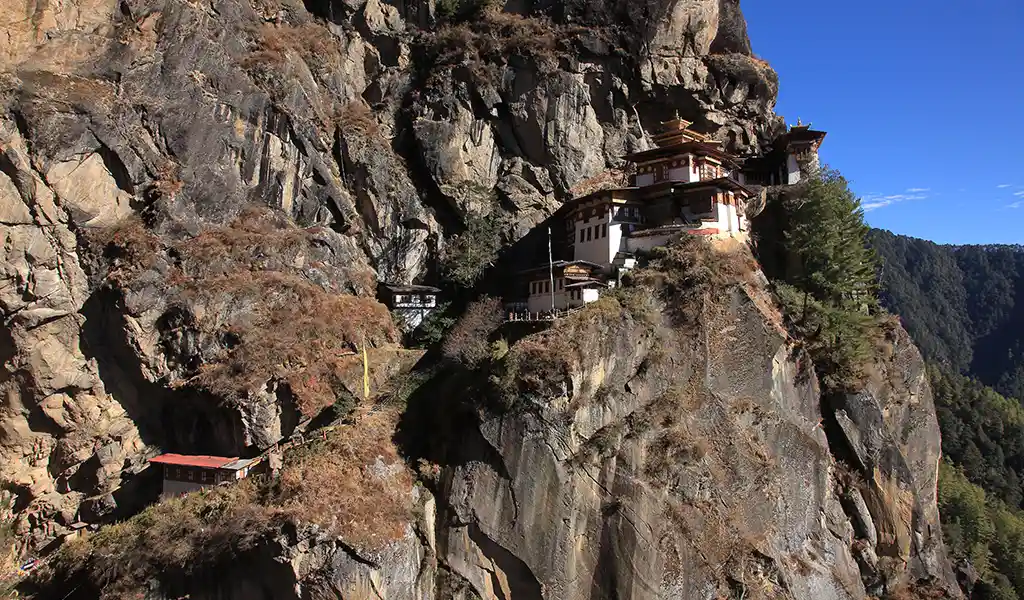
Entry fees for major tourist sites add a small but necessary amount to the Bhutan Travel Cost. Visitors pay these fees at the entrance of each fortress (dzong), temple (lhakhang), or museum. These fees support the maintenance of ancient structures and sacred sites. The Tiger’s Nest Monastery (Taktshang) charges a 1,000 Ngultrum (about $12) fee for international adults. Most other major dzongs and museums charge 500 Ngultrum (about $6). Children under 18 receive significant discounts at these locations.
District-Specific Entrance Fees 2026
| Location | Site Name | Fee (Nu) | Fee (USD Approx.) |
| Paro | Tiger’s Nest | 1,000 | $12.00 |
| Paro | National Museum | 500 | $6.00 |
| Thimphu | Tashichho Dzong | 500 | $6.00 |
| Thimphu | Memorial Chorten | 500 | $6.00 |
| Thimphu | Buddha Dordenma | 300 | $3.60 |
| Punakha | Punakha Dzong | 500 | $6.00 |
| Bumthang | Jambay Lhakhang | 500 | $6.00 |
Financial Planning: Banking and Currency
Effective cash management helps travelers stay within their Bhutan Travel Cost estimates. The national currency is the Ngultrum (Nu), which maintains a fixed exchange rate with the Indian Rupee. While major hotels and high-end shops accept credit cards, most transactions in the country occur in cash. ATMs in major cities like Thimphu and Paro accept international Visa and Mastercard chips. Banks like the Bank of Bhutan (BoB) and Bhutan National Bank (BNB) charge a withdrawal fee of 200 to 300 Ngultrum per instance. Daily withdrawal limits for international cards typically range between 10,000 and 15,000 Ngultrum.
Banking Service Charges for Tourists
| Service Category | Fee Amount (Nu) | Remarks |
| ATM Cash Withdrawal | 200 – 300 | Per transaction |
| Credit Card Surcharge | 3.5% | At the point of sale |
| Balance Enquiry | 20 – 50 | At international ATMs |
| SWIFT Inward Transfer | Free | For tour pre-payments |
Staying Connected: Mobile and Data Plans
Communication expenses form a minor yet essential part of the Bhutan Travel Cost. Travelers can purchase a prepaid tourist SIM card upon arrival at the Paro International Airport or in major towns. Two providers, B-Mobile and TashiCell, offer extensive nationwide coverage. A basic SIM card costs between 100 and 200 Ngultrum and comes with some talk-time credit. Data plans are affordable and can be purchased separately to suit usage needs. Unlimited data packages are also available for short stays for those who need constant connectivity.
Tourist SIM Package Options 2026
| Provider | Plan Name | Price (Nu) | Validity | Data/Talk |
| B-Mobile | Tourist SIM 500 | 500 | 1 Month | 3GB Data |
| B-Mobile | Tourist e-SIM | 1,100 | 7 Days | Unlimited |
| TashiCell | Package 1 | 300 | 14 Days | 2GB Data |
| TashiCell | Unlimited 1 | 1,100 | 7 Days | Unlimited |
Tipping and Gratuity Culture
Tipping remains voluntary in the kingdom, but is a standard practice that reflects the quality of service. Gratuities are not included in the prepaid tour package and should be budgeted separately as part of the total Bhutan Travel Cost. Travelers typically tip their guide and driver at the end of the trip. Trekking crews also rely on tips, as they work long hours in challenging mountain conditions. These crews often include cooks, helpers, and horse riders. Small tips for hotel staff and restaurant servers are also common during more extended stays.
Suggested Tipping Guidelines
- Cultural Guides: $15 – $20 per day per group.
- Private Drivers: $10 – $15 per day per group.
- Trekking Cooks: $5 – $10 per day.
- Trekking Helpers: $3 – $5 per day.
- Hotel Bellboys/Staff: 50–100 Ngultrum per servizio.
Using local currency for tips is preferred, though US Dollars are widely accepted in the tourism sector. Tipping helps support the local workforce and ensures high service standards for future travelers. This small addition to the Bhutan Travel Cost directly benefits the individuals who make the trip successful.
Seasonality and Price Variations
Timing the trip affects both the experience and the total Bhutan Travel Cost. Peak tourist seasons occur during spring (March to May) and autumn (September to November). These months offer clear skies, pleasant temperatures, and significant cultural festivals. Travel during the off-peak seasons (winter and summer) offers substantial savings. The winter months (December to February) feature sunny days and fewer crowds, while the summer months (June to August) bring lush greenery and agricultural festivals.
Seasonality Comparison Table
| Season | Best For | Crowds | Estimated Package Savings |
| Spring (Mar–May) | Flowers, Festivals | High | 0% (Standard Rates) |
| Summer (Jun–Aug) | Greenery, Rice fields | Low | 10% – 20% on Hotels |
| Autumn (Sep–Nov) | Clear Skies, Hikes | High | 0% (Standard Rates) |
| Winter (Dec–Feb) | Birding, Photography | Low | 20% – 30% on Hotels |
Synthesis of 7-Day and 10-Day Total Trip Estimates
Calculating the total Bhutan Travel Cost for a specific duration helps travelers set realistic expectations. These estimates combine the fixed SDF, visa fees, and standard 3-star package rates. International airfare and personal expenses, such as tips and souvenirs, remain separate. A 7-day tour (6 nights) provides a comprehensive introduction to the central valleys of Paro, Thimphu, and Punakha. A 10-day tour (9 nights) allows for a deeper exploration of the central districts, such as Bumthang and Gangtey.
Total Estimated Bhutan Travel Cost (Standard 3-Star)
| Trip Length | Solo Traveler (USD) | Pair (Per Person USD) | Group of 3+ (Per Person USD) |
| 7 Days (6 Nights) | $2,110 | $1,780 | $1,720 |
| 10 Days (9 Nights) | $3,145 | $2,650 | $2,560 |
| 14 Days (13 Nights) | $4,525 | $3,810 | $3,680 |
Future Outlook and Strategic Conclusions
The architecture of the Bhutan Travel Cost for 2026 demonstrates a commitment to sustainable, high-quality tourism. While the 5% GST and daily monument fees add to the expense, they ensure the nation’s cultural and environmental treasures remain protected. The current 50% reduction in the SDF makes the country more competitive while maintaining the core principles of “High Value, Low Volume” travel.
Travelers find that the high upfront cost results in an exclusive, uncrowded experience that few other destinations can match. Every dollar spent contributes to a carbon-negative future and social services for the Bhutanese people. As policy updates continue to refine the tourism model, visiting before the potential SDF increase in August 2027 remains a strategic choice for many international explorers. Final planning should always involve a licensed local operator to ensure compliance with the latest government regulations and tax laws.