


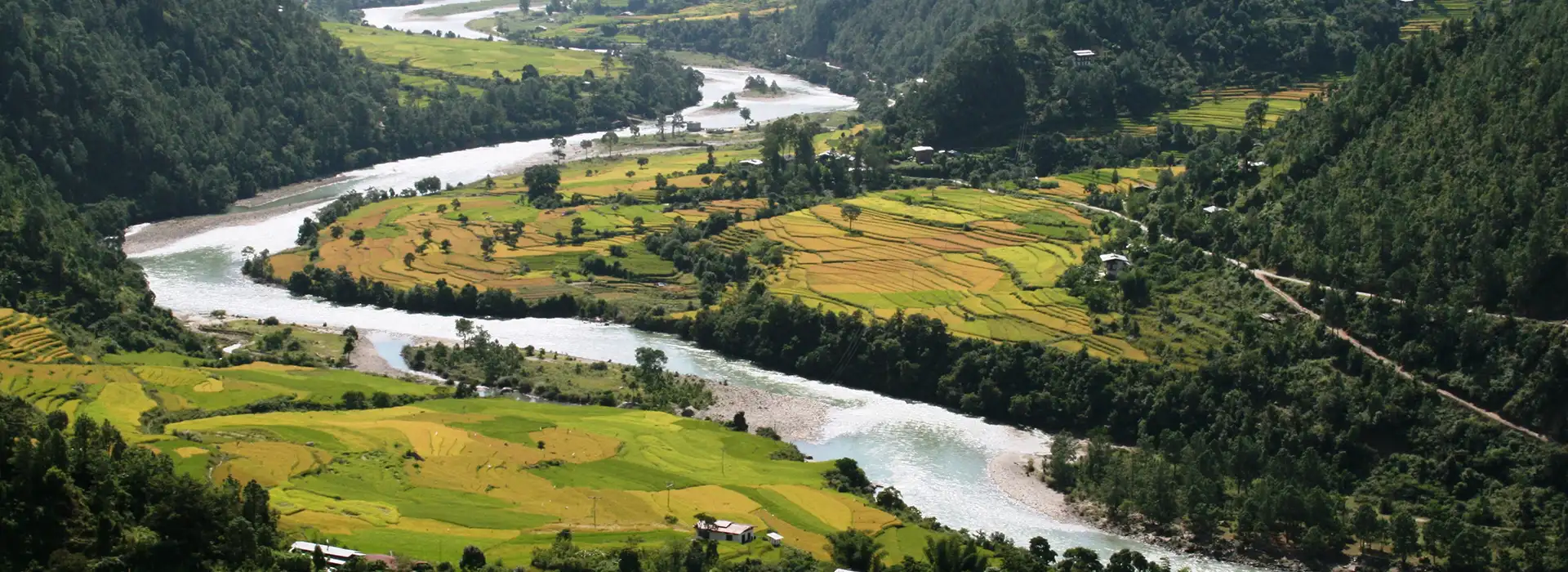

Where most of the country focuses on generating more income through tourism, Bhutan emphasizes high-value services with minimal environmental impact by limiting the number of visitors. This approach helps to protect and preserve Bhutan’s natural environments and local communities while also providing visitors with a meaningful experience.
By limiting visitor numbers, Bhutan reduces crowding and protects its natural and cultural heritage. This Bhutan Travel Guide provides an outlook of a kingdom where ancient traditions meet modern civilization. The leaders of Bhutan are continually working to keep the air and water clean, making the country the world’s first carbon-negative nation.
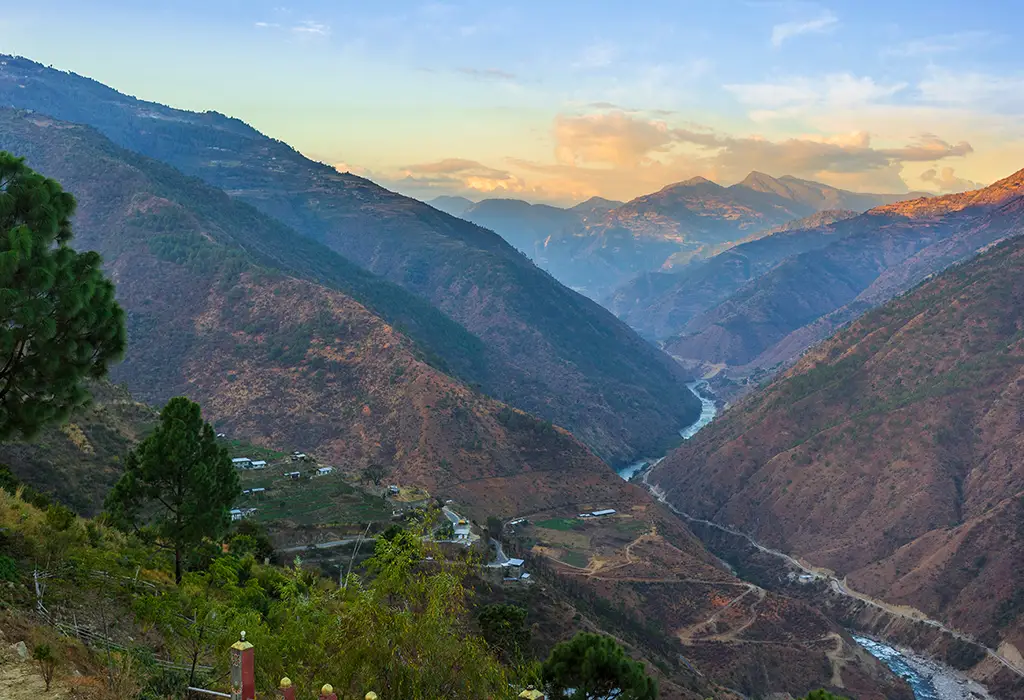
Travelers often say they feel calm and refreshed upon landing. With every aspect of travel controlled and overseen by the government, travelers can enjoy high-quality services. For first-time travelers, every detail of their plan should be thoroughly prepared with the help of a licensed operator, including all required paperwork. You can travel independently in a few specific areas, such as Paro and Thimphu, and moving beyond these areas will require a licensed guide and private transport at all times.
Planning and Logistics for Bhutan Tour
For a successful trip, a traveler must understand the visa and payment system of their destination. In Bhutan, a traveler must plan their trip thoroughly. Bhutan does not allow random or unplanned travel within its borders. Every traveler must have their visa or a special permit before arriving at the airport or border gate.
Visa and Permit Rules for 2026/2027
The standard visa for an international visitor costs US $40 and is paid once during the online application process. The citizens of India, Bangladesh, and the Maldives have different entry rules. Indian citizens do not require a visa; instead, they need a permit and pay a lower daily fee. The visa is valid for the exact length of time that you booked with the operator. Your passport must also have at least 6 months of validity from the arrival date to avoid any entry issues.
| Category | Requirement | Fee Amount |
| International Tourists | Pre-arrival e-Visa | US$40 |
| Indian Nationals | Entry Permit | Free (Processing) |
| Children (Under 5) | Visa/Permit Required | No SDF |
| Passport Validity | Minimum 6 Months | N/A |
| Processing Time | 5-7 Working Days | N/A |
After receiving the full payment for the trip, operators submit their visa application, and the government issues a visa clearance letter only then. Show this letter at the airport to get the actual visa stamp in your passport. With this system, Bhutan prevents over-tourism and ensures that every traveler has their confirmed accommodation.
The Sustainable Development Fee Structure
The Sustainable Development Fee (SDF) is a mandatory daily charge for all visitors to Bhutan. The rate for international adults is US$100 per night, a fee confirmed through August 31, 2027. Indian nationals pay 1,200 Indian Rupees per night. Children ages 6 to 11 receive a 50 percent discount. Children under 5 are exempt from the fee entirely.
The government reinvests the Sustainable Development Fee directly into Bhutan’s social and environmental programs. These funds support essential services, such as free healthcare and education for citizens. They also maintain critical mountain roads and infrastructure. A portion of the fee helps protect the environment and prevent pollution. By paying the SDF, travelers help preserve Bhutan’s pristine landscapes. Their visit also provides direct support to local communities across the country.
| Age Group | SDF Rate (International) | SDF Rate (Indian) |
| Adults (12+) | US$100 per night | INR 1,200 per night |
| Children (6-11) | US $50 per night | INR 600 per night |
| Children (Under 5) | Free | Free |
Transportation Networks and Reaching Bhutan
A flight into Paro International Airport provides one of the world’s most dramatic arrivals. The single runway sits in a narrow valley, with steep Himalayan peaks towering on all sides. This terrain leaves pilots very little room for error. Due to these demanding conditions, only a handful of specially certified pilots can land here. Their skill makes the approach both exceptionally safe and truly unforgettable for passengers.
Flight Schedules and Regional Hubs
Druk Air and Bhutan Airlines operate the majority of international flights into Bhutan. Their primary hubs are Kathmandu, Delhi, Bangkok, and Singapore. Many travelers choose to combine their visit to Bhutan with trips to Nepal or India. This itinerary lets them explore a broader section of the Himalayan region.
| Route | Airline | Frequency | Earliest Flight |
| Kathmandu (KTM) to Paro (PBH) | Druk Air | Daily | 08:40 / 09:00 |
| Kathmandu (KTM) to Paro (PBH) | Bhutan Airlines | 4-7 times a week | 08:55 |
| Delhi (DEL) to Paro (PBH) | Druk Air | Daily | Morning |
| Bangkok (BKK) to Paro (PBH) | Druk Air | Daily | Morning |
Morning flights offer the clearest views of Bhutan’s high Himalayan peaks. Passengers also experience smoother flying conditions and better overall visibility during these early hours. Travelers flying from Kathmandu should select seats on the left side of the aircraft for a potential sighting of Mount Everest during the journey.
Overland Gateways from India
Land travel is ideal for visitors arriving from India or for those who prefer a slower journey. Phuentsholing serves as the primary road gateway for international travelers. This border town is situated near West Bengal and connects directly to the Indian rail network. Other border points, such as Gelephu and Samdrup Jongkhar, cater primarily to Indian nationals. They also serve travelers headed to Bhutan’s eastern regions.
| Border Point | Location | Distance to Thimphu | Status (2026) |
| Phuentsholing | West Bengal Border | 170 km (6 hours) | Open to all |
| Gelephu | Assam Border | 270 km (9-10 hours) | Indian nationals only |
| Samdrup Jongkhar | Assam Border | 300 km (10-12 hours) | Indian nationals only |
Entering Bhutan by land allows the body to gradually acclimatize to the high altitude. It takes at least 6 hours to reach Thimphu from Phuentsholing. In these 6 hours, travelers pass through lush forests and waterfalls, making the drive not boring. Complete every step of the immigration process before heading further into the country.
Financial Systems and New Taxes in 2026
The official currency of Bhutan is the Ngultrum. Its value is pegged directly to the Indian Rupee, and many shops across the country accept both currencies interchangeably. In rural areas, cash remains essential for small purchases and local services. Travelers should carry a supply of small-denomination notes for convenience during their trip.
Cryptocurrency Adoption and Binance Pay
Bhutan is a world leader in adopting digital payments for tourism. The country’s partnership with Binance Pay allows visitors to do transactions using cryptocurrency. Travelers have to scan QR codes to pay for their hotel rooms, meals, and souvenirs. This system has been adopted by over 1000 merchants across the country, helping visitors to avoid high bank fees and long waits for international transfers.
Cryptocurrency streamlines travel for tech-savvy visitors to Bhutan. The system supports a wide range of coins, including Bitcoin and major stablecoins. This technology enables even small village vendors and rural artisans to accept direct payment from travelers. This payment innovation effectively links remote communities to the global digital economy. It functions without requiring costly traditional point-of-sale terminals or complex banking infrastructure.
The 2026 Goods and Services Tax (GST)
From January 1, 2026, most travel services in Bhutan apply a 5% Goods and Services Tax (GST). This means that your total trip cost will increase by 5%. The US$100 daily Sustainable Development Fee (SDF) is exempt from this new tax, meaning there is a 5% increase in other tour costs, such as accommodation, transportation, and guide fees. First-time travelers should plan a slight increase in their daily spending budget from 2026 onwards.
| Expense Item | Typical Cost (USD) | 2026 GST (5%) |
| Mid-Range Hotel | $100 – $200 per night | Applies |
| Guide and Driver | $50 – $100 per day | Applies |
| Daily Food | $20 – $40 per day | Applies |
| Daily SDF | $100 per night | Exempt |
Most operators include these taxes in the final prices to make it easier for travelers to pay the full amount of the tour package, including taxes, or to pay for services locally. Learning about these additional costs is very helpful for travelers setting a realistic budget for their Bhutan tour.
Exploring the Paro Valley and the Tiger’s Nest Monastery
Nearly every trip to Bhutan starts or finishes in the beautiful Paro Valley. Its floor rests roughly 2,200 meters above sea level. The valley is also home to several of the nation’s most revered and sacred cultural sites.
Hiking to the Tiger’s Nest Monastery
The Tiger’s Nest Monastery, or Paro Taktsang, located on a vertical cliff 900 meters above the valley floor, is a famous monastery with a legend that says Guru Rinpoche flew here on a tigress back in the 8th century. There is also a belief that Guru Rinpoche meditates inside a cave here to defeat the evil spirits and bring peace to the land. This monastery sits at an elevation of 3,120 meters and offers a spectacular view that stays with the viewer forever.
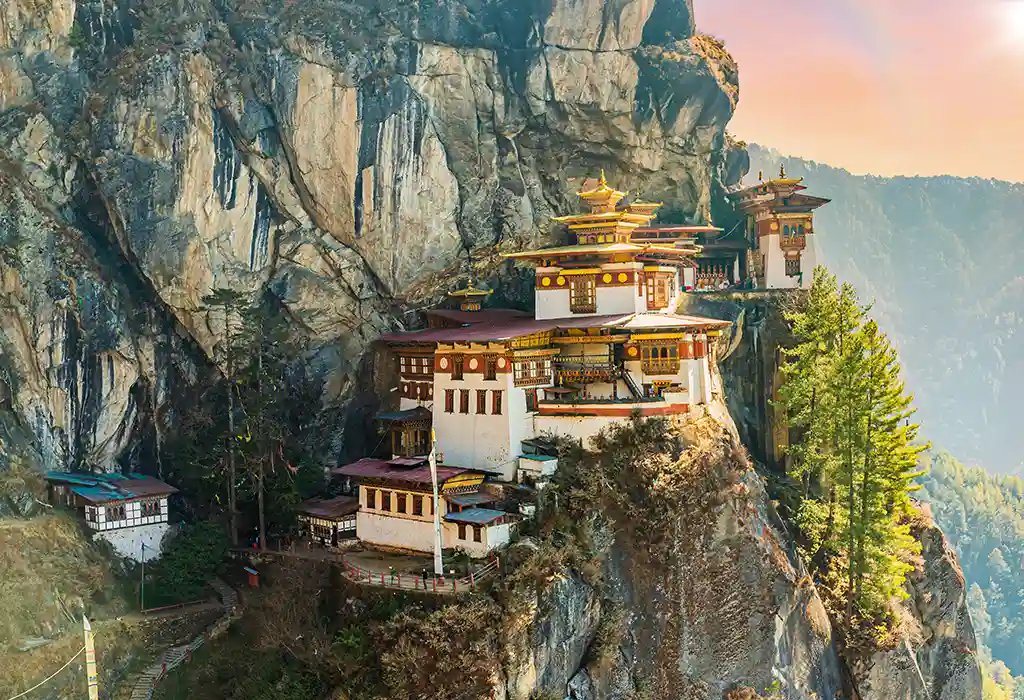
The round-trip hike to the monastery takes between 4 and 6 hours. Most people begin walking at 7:00 AM to avoid the intense afternoon sun. A small cafeteria sits at the trail’s halfway point, where visitors often stop for tea while viewing the monastery from a distance. Some hikers also choose to ride a horse to this halfway point to avoid being too tired to complete the rest of the hike.
| Hike Detail | Information |
| Total Distance | 6.4 km (4 miles) round trip |
| Elevation Gain | 500 – 550 meters |
| Time Required | 4 – 6 hours |
| Difficulty | Moderate |
| Entrance Fee | Nu. 500 or US $12 |
At the end of the trek, there are 700 stone steps down and back up. A bridge near a waterfall marks the entrance to the monastery’s sacred site. Inside the site, there are four main temples and many small shrines surrounding it. Visitors can see the monks living and praying here with utmost devotion, keeping the centuries-old tradition alive. Store your cameras and bags in the lockers near the entrance, as temple rules strictly prohibit photography inside.
The National Museum of Bhutan (Ta Dzong)
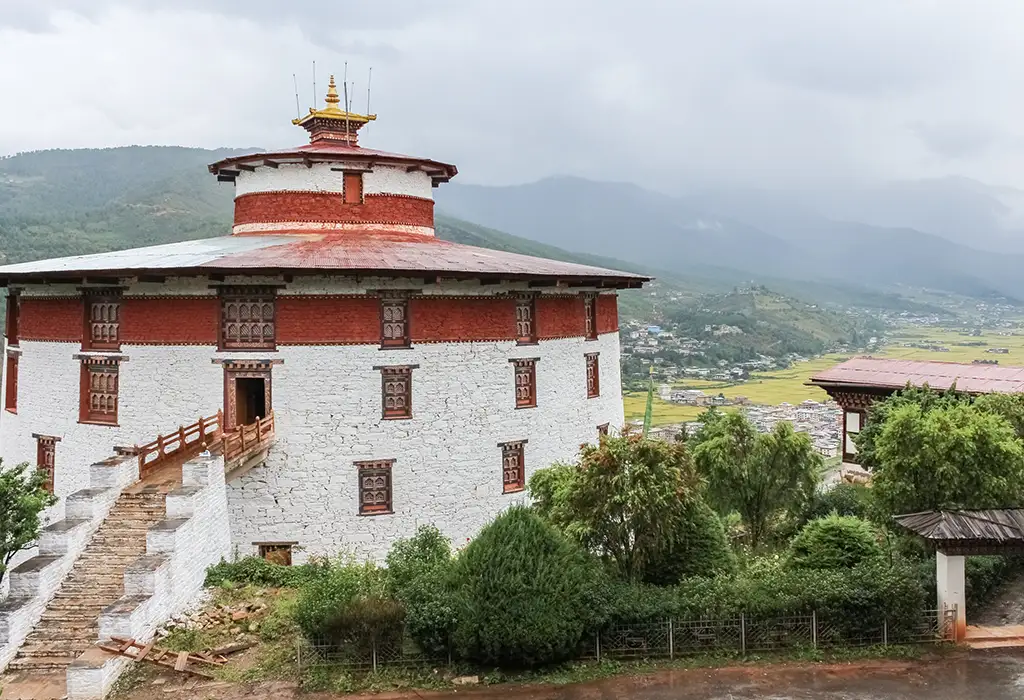
The National Museum of Bhutan, Ta Dzong, sits inside a circular watchtower built in 1949 to guard the valley. The museum houses over 3,000 artifacts that showcase the country’s art and history, with walls over 2 meters thick protecting it on all sides.
| Floor | Exhibits and Themes |
| Ground Floor | Farming tools, traditional pots, and metalwork |
| First Floor | Ancient weapons, cane items, and former prison cells |
| Second Floor | Famous 3D stamps, jewelry, and old coins |
| Third Floor | Royal Gallery with portraits and traditional clothes |
| Fourth Floor | Stone Age tools and early Buddhist artifacts |
| Fifth Floor | Thangka Gallery and religious scroll paintings |
| Sixth Floor | A massive three-dimensional tree mandala |
The Natural History Gallery showcases Bhutan’s rich wildlife. Visitors encounter the national animal, the Takin. This unique creature appears as a distinctive mix of a goat and a cow. The museum also features the rare Bhutan Glory butterfly, an insect exclusive to this Himalayan region. These exhibits collectively provide meaningful insight into Bhutan’s cultural philosophy. They illustrate how its people maintain a tradition of living in careful balance with the natural world.
Cultural Landmarks in the Capital City of Thimphu
Thimphu is the capital city of Bhutan and the country’s political and religious center. It sits at an altitude of 2,300 meters. Visitors can see a blend of tradition and modern innovation in this city in Bhutan.
The Great Buddha Dordenma Statue
A 51.5-meter-tall Buddha Dordenma statue sits on a high hill overlooking the city and the valley. Shimmering gold and bronze cover this statue from head to toe. This statue was created in celebration of the 60th birthday of the fourth king of Buddha and also to fulfill an ancient prophecy that a giant Buddha would bring peace to the world.
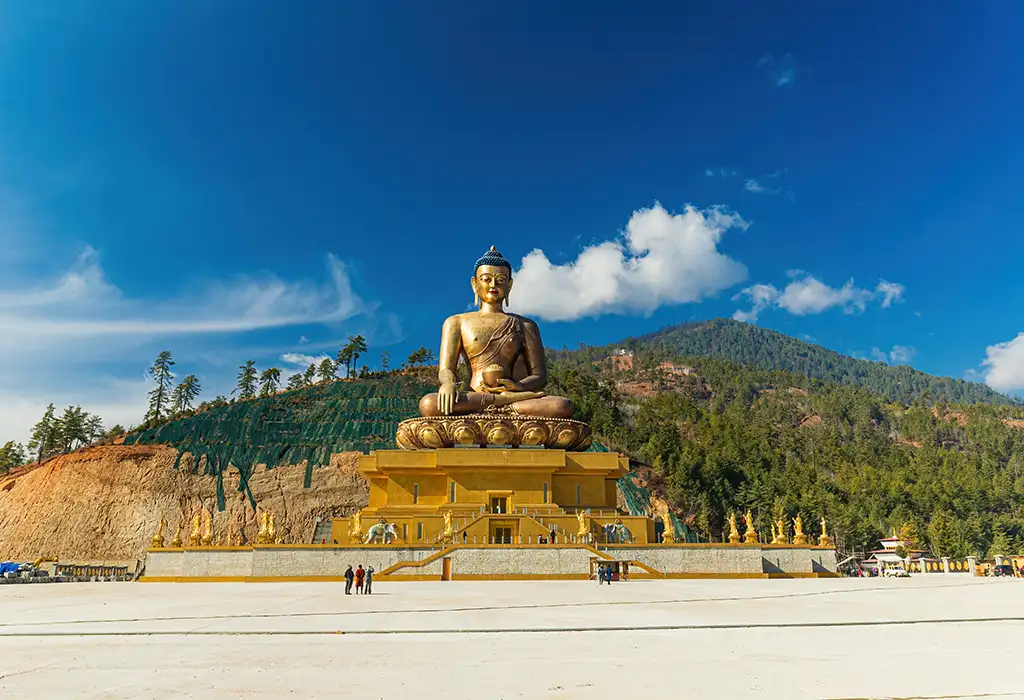
About 125,000 smaller Buddha statues are embedded in the body of the large Dordenma statue, with 100,000 of 8 inches tall and the remaining 25,000 of 12 inches tall. There is also a large meditation hall that serves as the statue’s throne, where many devotees come to find peace and tranquility. The statue’s wisdom eye contains diamonds worth US$1 million, symbolizing devotees’ devotion to the Buddha.
| Statue Fact | Detail |
| Total Height | 51.5 meters (169 feet) |
| Material | Bronze gilded with gold. |
| Small Buddhas | 125,000 statues inside |
| Elevation | 2,500 meters above sea level |
| Opening Year | Completed in 2015 |
Visitors walk around the base of the monument for sweeping views of the Thimphu Valley. The location exudes profound tranquility and serves as a key pilgrimage site for monks and local devotees. Most travelers add this destination to their schedule to capture photographs and to have a quiet moment of reflection on the city’s calm beauty.
Tashichho Dzong: The Fortress of Glory
The Tashichho Dzong is the main center of government and religion in Thimphu, housing the King’s throne room and the offices of the home and finance ministers. The Tashichho Dzong has undergone several renovations since its construction in 1216. After renovation, the building uses traditional construction methods and has no steel or iron nails in its frame.
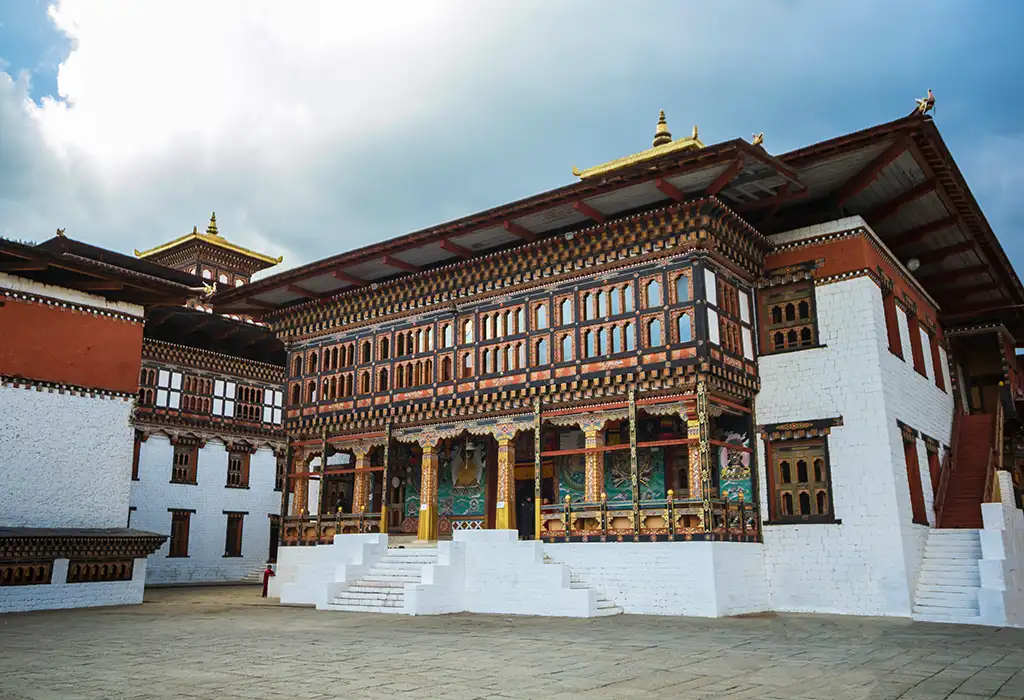
During working hours, the dzong remains closed to protect the government’s privacy. After 5:00 PM, it opens to the public on weekdays, following the flag-lowering ceremony. The Tashichho Dzong is home to over 600 monks in the summer months when they move from Punakha. The courtyards of the dzong feature large murals showing the Buddhist saints and kings.
| Dzong Feature | Description |
| Main Section | Administrative and Monastic quarters |
| Central Tower | Known as the Utse |
| Opening Time | After 5:00 PM on weekdays |
| Architecture | White-washed walls and red-topped roofs |
| Key Site | Summer home of the Chief Abbot |
The Tashichho Dzong hosts the annual Thimphu festival in its courtyard yearly. Thousands of devotees come here to take part in the festival and watch the masked dances of the monks, and also to socialize with fellow devotees in their best clothes. Planning your Bhutan travel at this time allows you to take part in the vibrant festivals of the Bhutanese people and witness their culture and traditions up close.
The Punakha Valley and Its Architecture
Punakha acts as the winter home for the central monastic body of Bhutan. The valley lies at a lower altitude of 1,200 meters. This elevation results in a consistently warm and pleasant climate throughout the winter months.
Punakha Dzong: The Palace of Great Happiness
Punakha Dzong is situated at the meeting point of the Pho Chhu and Mo Chhu rivers. This fortress-monastery is the second-oldest and second-largest in Bhutan. Zhabdrung Ngawang Namgyal founded it in 1637 to protect important sacred relics. The dzong’s imposing structure spans 180 meters in length and 72 meters in width.
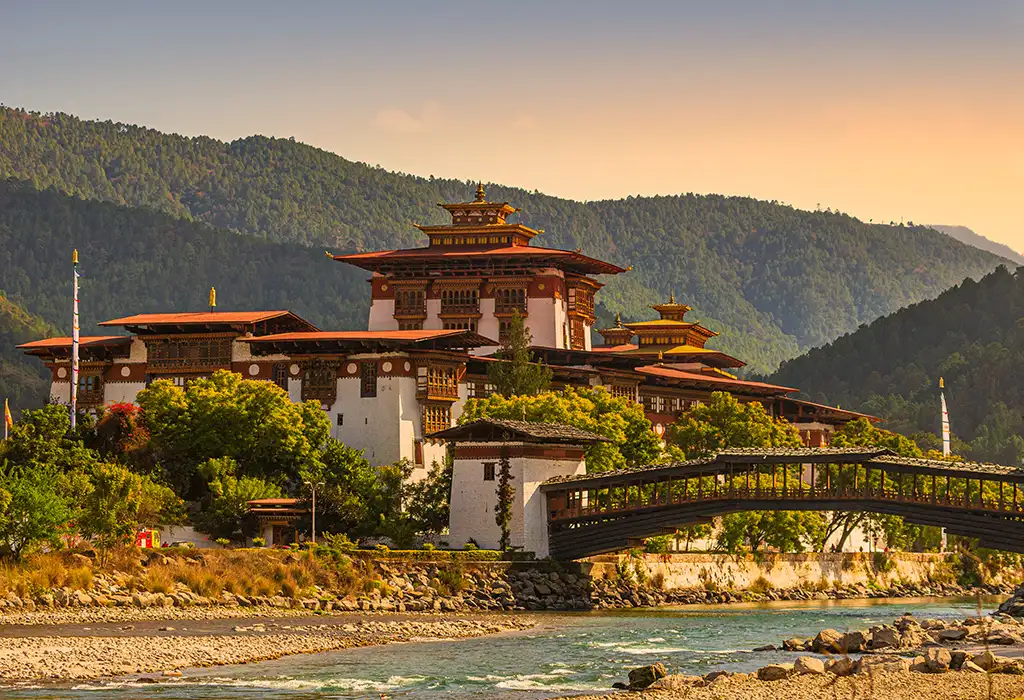
This dzong has three courtyards in which the first courtyard holds the administrative offices and a large Bodhi tree, the second courtyard houses a central tower and the living quarters of monks, and the third courtyard is the most sacred place as it houses the main temple and the treasury.
| Dzong Highlight | Description |
| River Junction | Confluence of Pho Chhu and Mo Chhu |
| Hundred-Pillar Hall | Large hall with 54 intricate pillars |
| Sacred Relic | Holds the remains of the Zhabdrung |
| Bridge | Traditional wooden cantilever bridge |
| Significance | Site of the King’s coronation in 1907 |
Each spring, the jacaranda trees around the dzong erupt in a vibrant display of purple flowers. The brilliant white walls of the fortress stand in striking contrast to the colorful blooms and the green river water below. Visitors following this Bhutan Travel Guide typically allocate an entire day to Punakha. They spend their time exploring the dzong’s historic temples and walking across the iconic suspension bridge spanning the nearby river.
Traditional Bhutanese Food and Dining Habits
Bhutanese cuisine focuses on simple, locally grown ingredients from its high valleys. Cooks use chili as a primary ingredient, not merely a spice for added heat.
National Dishes and Local Staples
| Dish Name | Main Ingredients | Flavor Profile |
| Ema Datshi | Chilies and local cheese | Very spicy and creamy |
| Kewa Datshi | Potatoes, cheese, and butter | Mild and comforting |
| Shamu Datshi | Mushrooms and cheese | Earthy and savory |
| Momos | Meat, cheese, or vegetables | Steamed or fried dumplings |
| Phaksha Paa | Pork, radish, and dried chilies | Hearty and spicy meat stew |
| Red Rice | High-altitude rice | Nutty and chewy texture |
Ema Datshi is Bhutan’s iconic national dish, served at almost every meal. Visitors unaccustomed to strong spice should ask for a milder version. Hearty red rice supplies the necessary energy for long walks and mountain hikes. Suja, the traditional butter tea, delivers warmth and a distinct salty taste during chilly mornings in the high valleys.
Dining Etiquette for Guests
Bhutanese culture places a high value on politeness during meals. Guests should always accept at least a small portion of any offered food as a gesture of gratitude. Use your right hand, or both hands together, when giving or receiving dishes. If you visit a local farmhouse, remember to remove your shoes at the entrance before stepping into the dining area. This is a standard sign of respect.
Try to avoid leaving food on your plate, as locals consider this wasteful and disrespectful to the farmer’s work. Sip the butter tea slowly to show your appreciation for your host’s hospitality. These small, considerate actions make your journey more respectful. They also help forge genuine connections with local families.
Religious Festivals and Spiritual Events in 2026
Tshechus are vibrant religious festivals known for their elaborate mask dances and traditional music. These events honor the life and teachings of Guru Rinpoche, the saint who introduced Buddhism to Bhutan. Local communities believe that observing these sacred dances enables a person to accumulate spiritual merit and progress on the path toward enlightenment.
Major Festival Calendar for 2026
| Festival Name | Location | Dates in 2026 |
| Punakha Tshechu | Punakha Dzong | Feb 27 – March 1 |
| Paro Tshechu | Rinpung Dzong | March 29 – April 2 |
| Rhododendron Festival | Lamperi Botanical Park | April 13 – April 14 |
| Thimphu Tshechu | Tashichho Dzong | Sept 21 – Sept 23 |
| Jambay Lhakhang Drup | Bumthang Valley | Oct 26 – Oct 29 |
| Black-Necked Crane | Phobjikha Valley | Nov 11 |
The Paro Tshechu is one of the most popular festivals for visitors. On the final morning, monks display a gigantic silk thangka painting at dawn. Thousands of devotees and tourists then form a long line. Each person waits for a turn to touch the painting’s lower border, an act they believe brings a profound spiritual blessing.
What to Expect at a Festival
In Bhutan, the festivals feel like a mix of religious services and carnivals, with masked dances and clowns called Atsaras. The Atsaras are clowns who wear red masks with long noses, making people laugh while the dancers take a break. The Atsaras also protect the sacred space and ceremonies from the influence of bad energy. To attend this festival, visitors should dress neatly and appropriately. They should also avoid blocking the locals who come here to pray.
The major festival of Bhutan lasts three to five days, with each masked dance telling its own story, such as that of a saint or a demon from the past. Travelling during this period gives the visitors a loud, colorful glimpse into the heart of Bhutan.
Behavior and Etiquette for First-Time Visitors
Respect for religious and temporal authority profoundly shapes people’s daily lives in Bhutan. Visitors need to understand and adhere to specific behavioral guidelines. This practice ensures they remain welcome guests in monasteries, temples, and local communities. Following this Bhutan Travel Guide provides essential insight into these cultural expectations, paving the way for a respectful, smooth, and deeply enriching visit.
| Rule Category | Correct Action |
| Walking Path | Always walk clockwise around stupas and prayer wheels. |
| Photography | No photos inside temple rooms or of the King’s office |
| Speaking | Keep your voice low and calm in sacred spaces. |
| Pointing | Use an open palm instead of a single finger to point. |
| Sitting | Do not point your feet at statues or monks. |
Smoking is completely forbidden at all religious sites and in most public spaces. If you find a prayer flag on the ground, avoid stepping over it and walk around it to show your respect. Following these straightforward guidelines makes your trip more significant. It also clearly shows you are a thoughtful visitor and a true friend to Bhutan.
Bhutan Travel Guide: Gelephu Mindfulness City (GMC)
The King of Bhutan is developing a new city, Gelephu Mindfulness City, in the southern plains. This Special Administrative Region will cover 2,600 square kilometers. It will follow a new development model that carefully integrates modern economics and science with traditional spiritual values and environmental stewardship.
Core Industries and Visitor Experiences
| Sector | Vision for GMC |
| Spirituality | A global hub for Buddhist journeys and teaching |
| Wellness | High-end spas and health healing centers |
| Tech | Green energy and digital asset hubs |
| Tourism | Car-free districts and sustainable parks |
The city will include bridges across its rivers, with buildings for housing and commerce built on top. A new international airport in Gelephu will enable direct air connections from more countries in the future. The project’s core goals are to generate employment for the younger generation and to uphold a carbon-neutral standard. Your travel plans for 2026 or 2027 could include a stop in this futuristic city, offering a window into the country’s ongoing, innovative transformation.
Conclusion
This Bhutan Travel guide offers a unique opportunity to experience a country that prioritizes collective happiness over mere economic gain. The national “High Value, Low Volume” tourism policy preserves the tranquil valleys and lush, green forests. Your visit directly supports the education and healthcare of Bhutanese citizens through the mandatory Sustainable Development Fee. Modern innovations like cryptocurrency payments and projects such as Gelephu Mindfulness City demonstrate how Bhutan integrates progress while protecting its core values.
First-time visitors often discover the kingdom to be more than a destination; it is a new perspective on how a society can function. Planning the trip carefully and thoughtfully ensures your trip to the Land of the Thunder Dragon is memorable. Consulting a detailed Bhutan Travel Guide like this one is the essential first step toward that profound and unforgettable Bhutan adventure.