


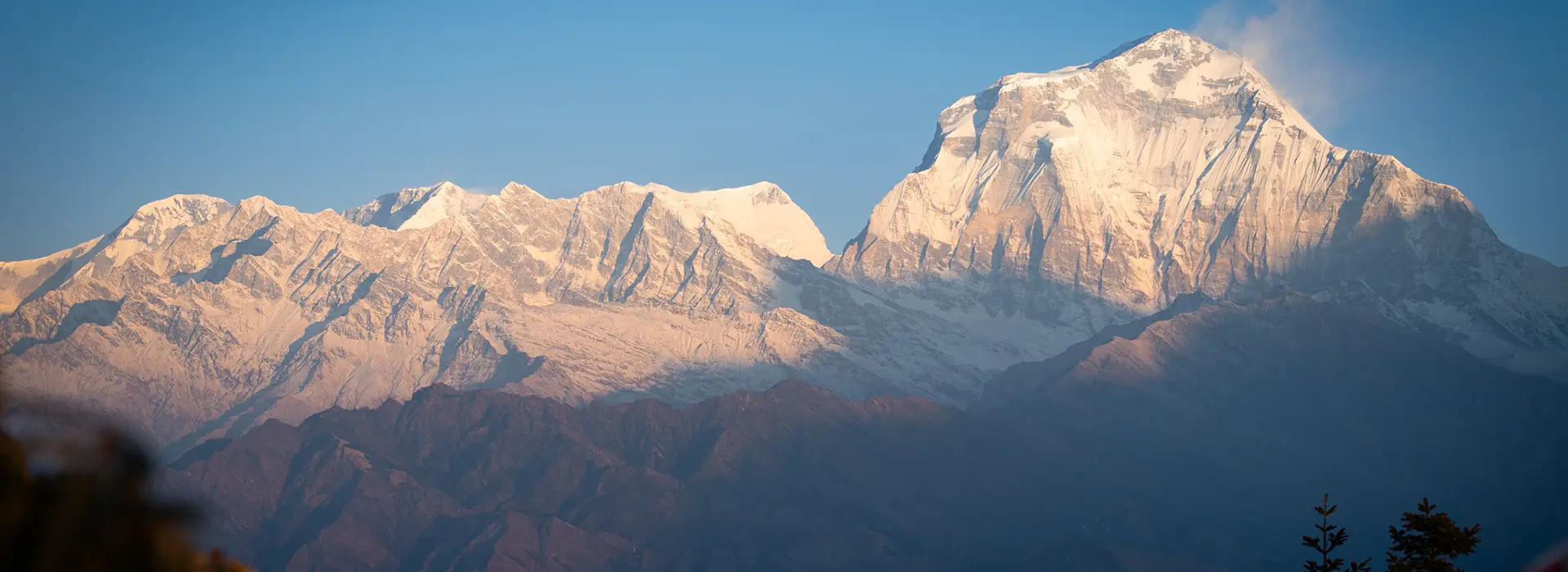

This Dhaulagiri Circuit Trek Guide helps experienced trekkers plan one of Nepal’s most remote and demanding mountain routes. The Dhaulagiri Circuit Trek circles Dhaulagiri I, the world’s seventh-highest mountain at 8,167 meters. The route crosses French Pass at about 5,360 meters, enters Hidden Valley, crosses Dhampus Pass at around 5,240 to 5,258 meters, and descends toward Marpha or Jomsom.
The Dhaulagiri Circuit Trek needs full camping support, strong fitness, and previous high-altitude trekking experience. No teahouse network serves the upper route. Trekkers sleep in tents, eat camp-cooked meals, and rely on a complete support crew above Italian Base Camp. This Dhaulagiri Circuit Trek Guide covers the full route, French Pass, Dhampus Pass, Hidden Valley, Dhaulagiri Base Camp, a 19-day itinerary, difficulty, permits, cost, best season, gear, altitude safety, and who should and should not attempt this route.
Quick Answer: What Is the Dhaulagiri Circuit Trek?
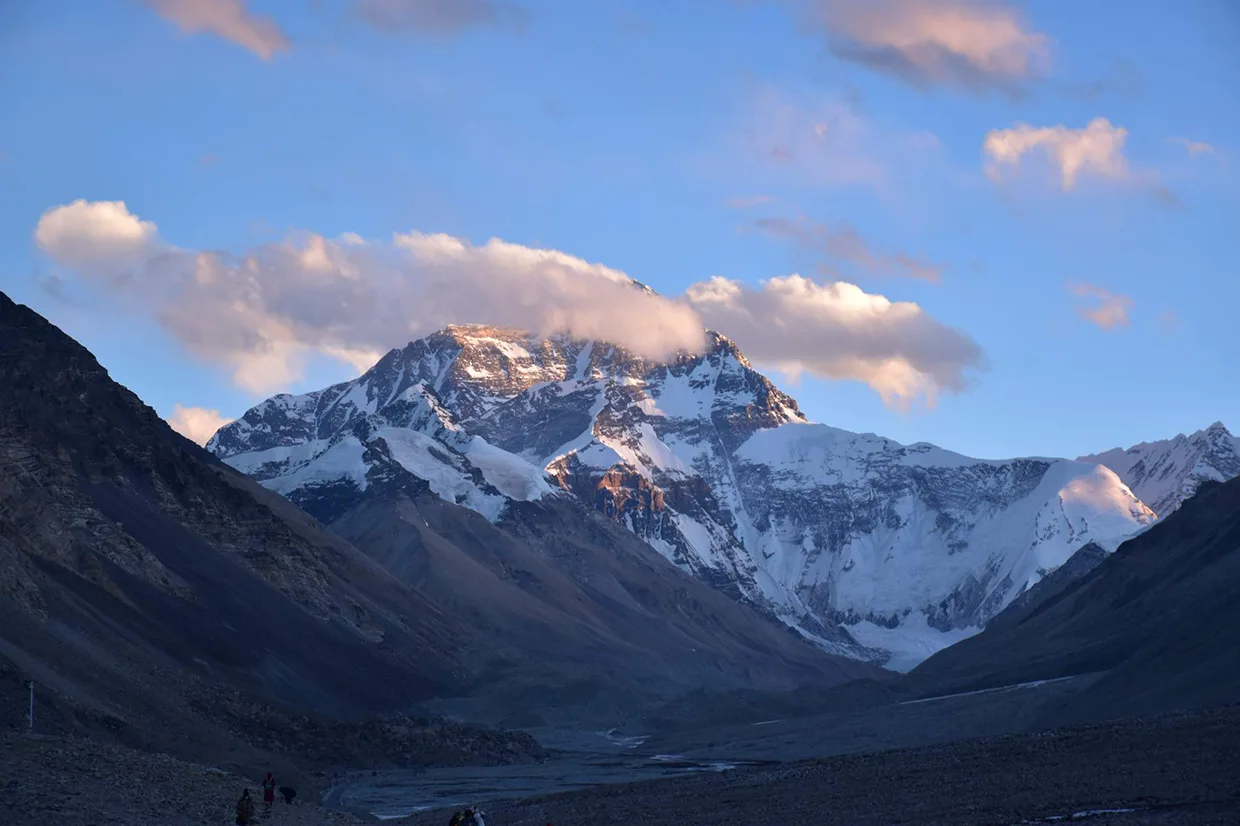
The Dhaulagiri Circuit Trek circles Mount Dhaulagiri in western Nepal. The route crosses French Pass at approximately 5,360 meters, enters Hidden Valley, crosses Dhampus Pass at around 5,240 to 5,258 meters, and descends toward Marpha or Jomsom. This Dhaulagiri Circuit Trek Guide confirms that it is suitable only for experienced trekkers with strong fitness and prior high-altitude trekking experience.
| Category | Details |
|---|---|
| Trek Duration | 17–21 days |
| Trek Type | Camping trek with limited lower teahouse sections |
| Highest Point | French Pass, about 5,360 m |
| Second High Pass | Dhampus Pass, ~5,240–5,258 m |
| Main Highlight | Dhaulagiri Base Camp and Hidden Valley |
| Difficulty | Very challenging |
| Best Season | April–May and October–November |
| Start Point | Beni / Darbang area |
| End Point | Marpha / Jomsom |
| Best For | Experienced trekkers only |
| Not Best For | Beginners or comfort-focused travelers |
What Makes the Dhaulagiri Circuit Trek Special?
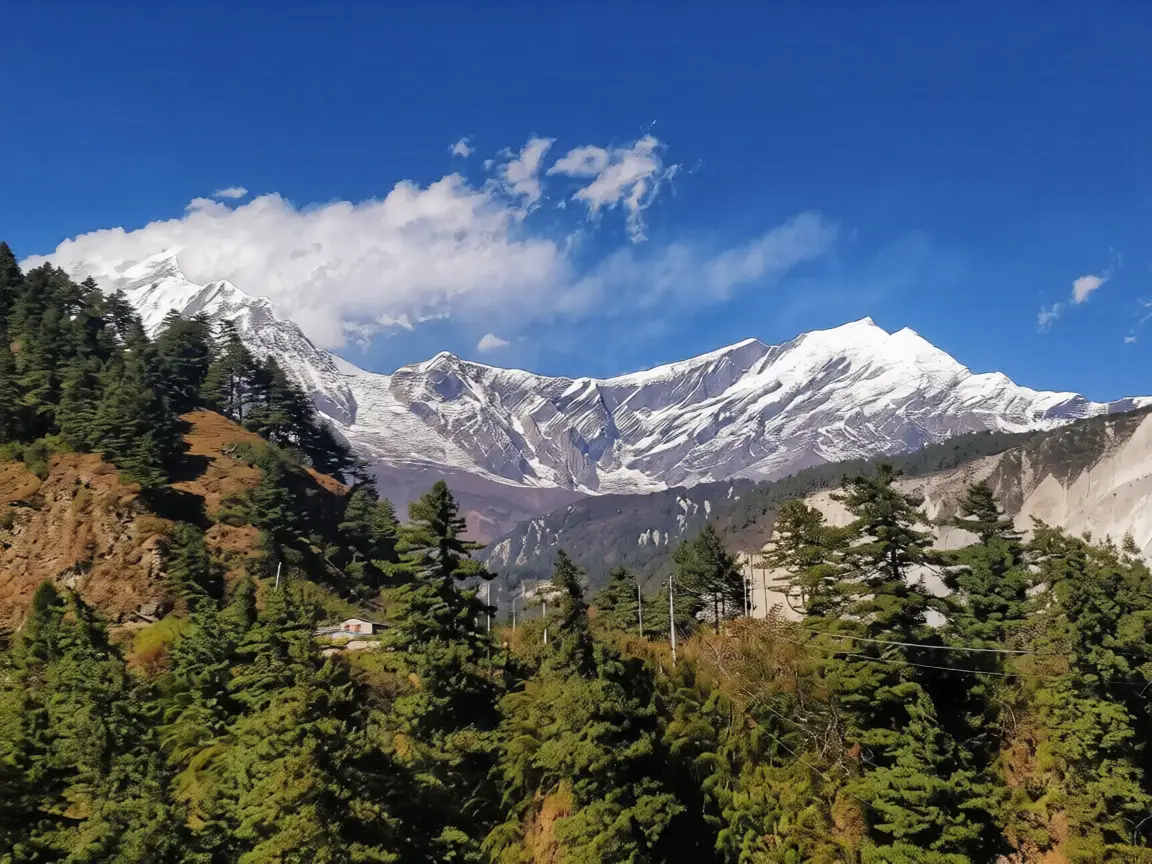
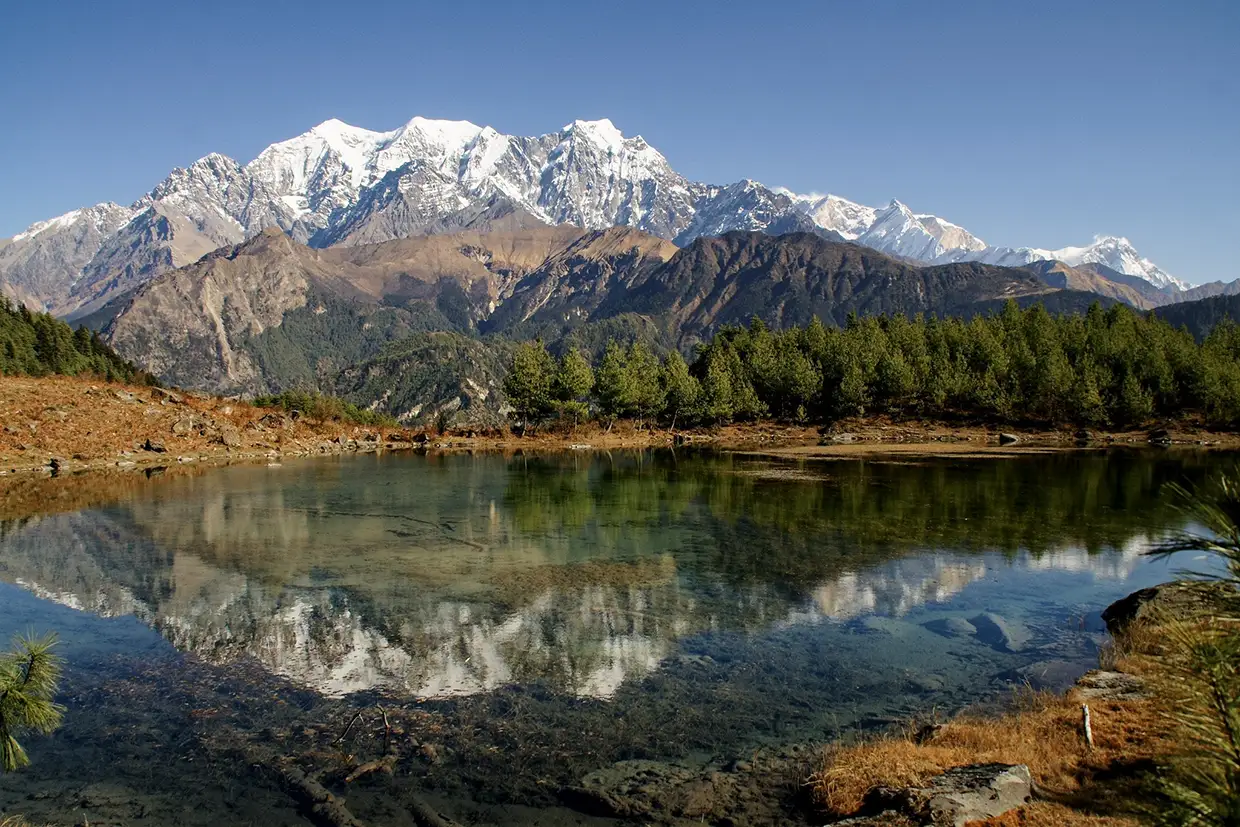
The Dhaulagiri Circuit Trek circles Dhaulagiri I through remote terrain that feels unlike any other standard Nepal trekking route. The route moves from warm lower valleys through dense forest, past Italian Base Camp, across glacier terrain, and into high-altitude camping zones. Dhaulagiri Base Camp, French Pass, Hidden Valley, and Dhampus Pass combine to create a route with true expedition character. Close views of Dhaulagiri, Tukuche Peak, Nilgiri, Gurja Himal, and the Annapurna range reward trekkers who prepare well and fully accept remote camping conditions on the Dhaulagiri Circuit Trek.
Dhaulagiri Circuit Trek Route Overview
| Route Zone | What Trekkers Experience |
|---|---|
| Lower Myagdi Valley | Villages, farmland, forest, and river crossings |
| Muri to Dobhan | Remote villages and dense forest sections |
| Italian Base Camp | First strong mountain views and camping zone |
| Glacier Section | Moraine, rock, snow, and changing trail conditions |
| Dhaulagiri Base Camp | High-altitude camping below Dhaulagiri’s north face |
| French Pass | The highest and most demanding pass crossing |
| Hidden Valley | Remote alpine basin above 5,000 m |
| Dhampus Pass | Second major pass before the final descent |
| Marpha / Jomsom | Thakali villages and return to road access |
Mountain Views on the Dhaulagiri Circuit Trek
| Mountain | Altitude | View Quality |
|---|---|---|
| Dhaulagiri I | 8,167 m | Dominant view throughout the upper sections |
| Dhaulagiri II | 7,751 m | Visible around the Hidden Valley area |
| Dhaulagiri III | 7,715 m | Visible in the upper Dhaulagiri Circuit Trek sections |
| Tukuche Peak | 6,920 m | Strong views near Dhampus Pass and Marpha |
| Nilgiri | 7,061 m | Seen toward the Kali Gandaki side |
| Gurja Himal | 7,193 m | Visible from lower route sections |
French Pass and Dhampus Pass on the Dhaulagiri Circuit Trek
French Pass (~5,360 m)
French Pass is the highest point on the Dhaulagiri Circuit Trek. The crossing connects Dhaulagiri Base Camp with Hidden Valley above 5,000 meters. The terrain includes rock, moraine, deep snow, and possible ice throughout the approach. Trekkers on the Dhaulagiri Circuit Trek usually cross after a dedicated rest day at Dhaulagiri Base Camp. The pass demands strong fitness, careful acclimatization, and genuinely stable weather conditions. Wind, intense cold, and poor visibility delay many attempts to cross French Pass each season. The lead guide assesses snow conditions, wind strength, visibility, and overall group condition before every crossing attempt on the Dhaulagiri Circuit Trek.
Dhampus Pass (~5,240–5,258 m)
Dhampus Pass connects Hidden Valley with the descent toward Yak Kharka and Marpha on the Dhaulagiri Circuit Trek. This crossing comes after French Pass, when trekkers are already significantly fatigued from preceding high-altitude camping days. The long descent places heavy stress on the knees and legs. Wide views toward the Annapurna range, Tukuche Peak, and the Kali Gandaki Valley open up dramatically on the descent side. Dhampus Pass demands careful pacing and full warm gear despite being the second pass encountered on the Dhaulagiri Circuit Trek.
| Factor | French Pass | Dhampus Pass |
|---|---|---|
| Altitude | ~5,360 m | ~5,240–5,258 m |
| Difficulty | Hardest day of the Dhaulagiri Circuit Trek | Very demanding |
| Main challenge | Extreme altitude and pass approach | Cumulative fatigue and long descent |
| Position | Before Hidden Valley | After Hidden Valley |
| View style | Dhaulagiri massif and Hidden Valley | Annapurna range and Kali Gandaki side |
Hidden Valley on the Dhaulagiri Circuit Trek
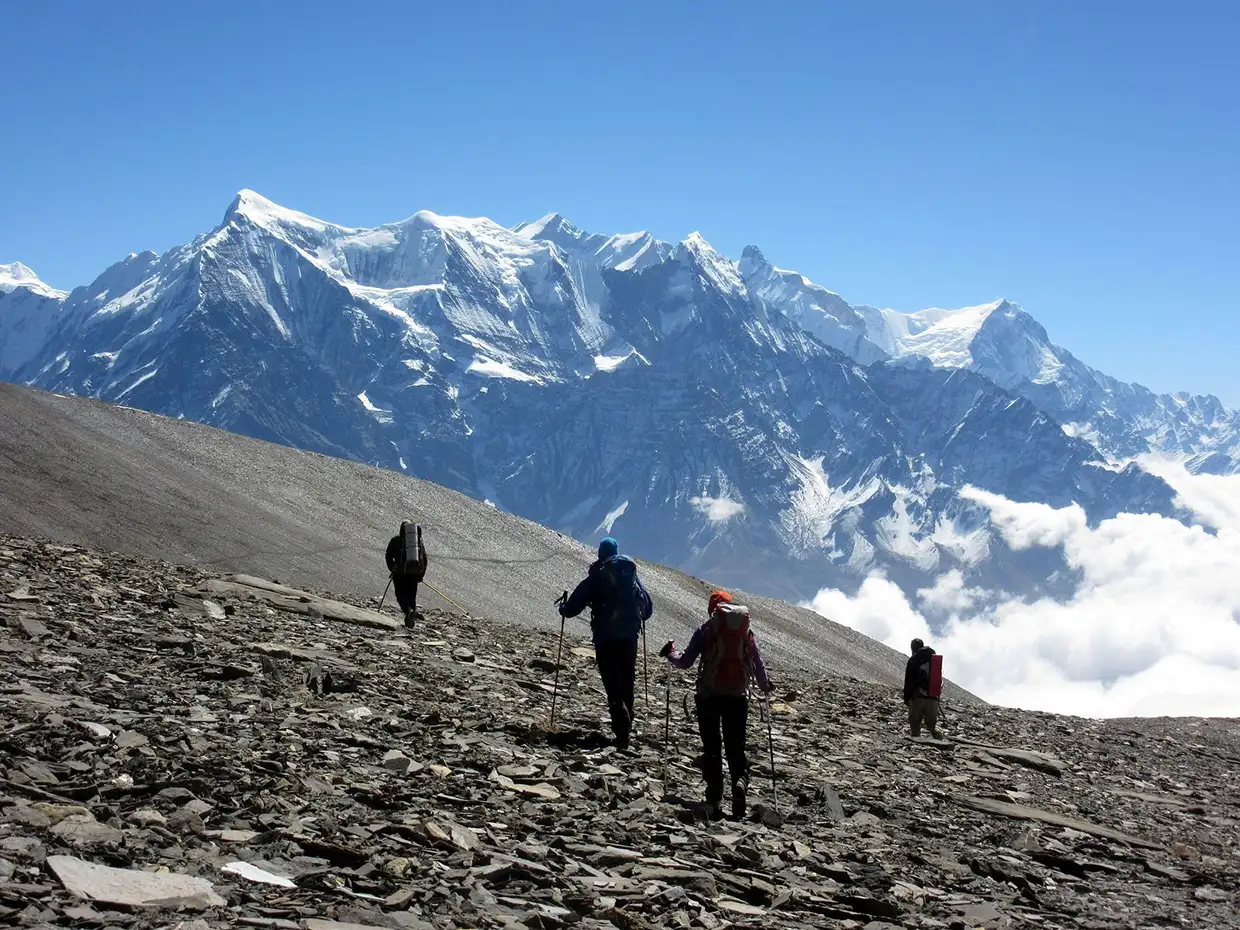
Hidden Valley sits above 5,000 meters between French Pass and Dhampus Pass — the remote heart of the Dhaulagiri Circuit Trek experience. The open alpine basin feels dry, brutally cold, and fully exposed to the wind at all times. No lodge facilities of any kind exist in Hidden Valley—Trekkers on the Dhaulagiri Circuit Trek camp here without shelter beyond their expedition tents. The altitude makes sleep, appetite, and physical recovery significantly harder. The valley delivers rare views of the Dhaulagiri massif and surrounding high ridges that no other Nepal trekking route provides. The profound isolation and complete silence define the Dhaulagiri Circuit Trek for every trekker who reaches this point.
Dhaulagiri Circuit Itinerary: 19-Day Itinerary
| Day | Route | Elevation | Accommodation | Notes |
|---|---|---|---|---|
| 1 | Arrive Kathmandu | 1,400 m | Hotel | Briefing and final preparation |
| 2 | Drive or fly to Pokhara | 822 m | Hotel | Final gear check |
| 3 | Drive to Darbang | 1,060 m | Lodge/camp | Road transfer to the trailhead |
| 4 | Trek to Sibang | 1,500 m | Lodge/camp | Lower village trail section |
| 5 | Trek to Muri | 1,850 m | Lodge/camp | Magar village area |
| 6 | Trek to Boghara | 2,080 m | Lodge/camp | Forest and village trail |
| 7 | Trek to Dobhan | 2,520 m | Camp | The Remote Dhaulagiri Circuit Trek terrain begins |
| 8 | Trek to Choriban Khola | 3,100 m | Camp | Forest to alpine transition zone |
| 9 | Trek to Italian Base Camp | 3,660 m | Camp | Mountain views open dramatically |
| 10 | Acclimatization at Italian Base Camp | 3,660 m | Camp | Essential rest and a short acclimatization hike |
| 11 | Trek to Glacier Camp | 4,200 m | Camp | Moraine and glacier zone entry |
| 12 | Trek to Dhaulagiri Base Camp | 4,750 m | Camp | High-altitude camp on the Dhaulagiri Circuit Trek |
| 13 | Acclimatization at Dhaulagiri Base Camp | 4,750 m | Camp | Crucial rest day before French Pass |
| 14 | Cross French Pass to Hidden Valley | 5,360 m pass | Camp | Hardest day of the Dhaulagiri Circuit Trek |
| 15 | Hidden Valley rest and weather buffer | 5,000+ m | Camp | Essential buffer day |
| 16 | Cross the Dhampus Pass and descend | 5,240 m pass | Camp/lodge | Long, demanding descent day |
| 17 | Trek to Marpha / Jomsom | 2,670 m | Teahouse | Rejoin the lower lodge route |
| 18 | Drive or fly to Pokhara | 822 m | Hotel | Weather-dependent transport |
| 19 | Return to Kathmandu | 1,400 m | Hotel | Buffer day or final departure |
Warning: Never follow rushed Dhaulagiri Circuit Trek itineraries that skip acclimatization at Italian Base Camp or Dhaulagiri Base Camp. Add dedicated buffer days before the French Pass crossing for unavoidable weather delays.
Dhaulagiri Circuit Trek Difficulty
The Dhaulagiri Circuit Trek is rated very challenging to expedition-grade difficulty. Long duration, remote camping throughout the upper section, several consecutive nights above 4,000 meters, sleeping near or above 5,000 meters in Hidden Valley, glacier and moraine terrain, extreme cold nights, severely limited rescue access, and strong mental demands define what this route requires. Trekkers on the Dhaulagiri Circuit Trek should walk 6 to 8 hours per day for multiple consecutive days, handle steep technical ascents and descents, walk confidently on loose rock and snow, sleep in expedition tents for several nights, and follow the lead guide’s safety decisions without hesitation.
Warning: The Dhaulagiri Circuit Trek is not suitable for beginners under any circumstances. Trekkers should complete at least one full high-altitude Nepal trek before attempting the Dhaulagiri Circuit Trek: Annapurna Circuit, Manaslu Circuit, Everest Three Passes, Kanchenjunga Base Camp, or Upper Dolpo are all appropriate prerequisites.
Altitude Sickness and Safety on the Dhaulagiri Circuit Trek
| Location | AMS Risk Level |
|---|---|
| Italian Base Camp (3,660 m) | Moderate |
| Glacier Camp (4,200 m) | High |
| Dhaulagiri Base Camp (4,750 m) | High |
| French Pass (5,360 m) | Very high |
| Hidden Valley (5,000+ m) | Very high |
| Dhampus Pass (5,240 m) | Very high |
- Add dedicated acclimatization days at Italian Base Camp and Dhaulagiri Base Camp on the Dhaulagiri Circuit Trek.
- Avoid all rushed itineraries that compress the upper section
- Drink enough water consistently and eat even when altitude suppresses appetite
- Report headache, nausea, and dizziness to your guide immediately
- Never continue climbing if AMS symptoms worsen above 4,000 meters
- Let the lead guide make all weather and route decisions without argument
- Carry travel insurance covering helicopter rescue above 5,500 meters
- Use satellite communication or a personal emergency device throughout the upper Dhaulagiri Circuit Trek section
Consult your doctor before using altitude medication like Diamox. No medication replaces proper acclimatization and willingness to descend when symptoms appear on the Dhaulagiri Circuit Trek.
Dhaulagiri Circuit Trek Camping Logistics
| Team Member | Role |
|---|---|
| Lead Guide | Route decisions, safety, permit checks, and group management |
| Assistant Guide | Supports group pace and emergency response |
| Cook | Prepares all meals during the Dhaulagiri Circuit Trek camping days |
| Kitchen Helper | Food preparation, water, and camp duties |
| Porters | Carry tents, food supplies, fuel, and equipment throughout |
| Agency Office | Monitors logistics and provides rescue support from Kathmandu |
The upper Dhaulagiri Circuit Trek route has no teahouse network. A properly organized Dhaulagiri Circuit Trek uses sleeping tents, a dining tent, a kitchen tent, a toilet tent, cooking fuel, adequate food supplies, and reliable emergency communication equipment. The full camping crew carries everything above Italian Base Camp.
Dhaulagiri Circuit Trek Permits and Guide Rules
| Permit / Document | Status | Notes |
|---|---|---|
| ACAP Permit | Required | For the Annapurna Conservation Area, sections of the route |
| TIMS Card | Required where applicable | NTB revised provision for listed protected areas |
| Dhaulagiri / Local Permit | Verify before booking | Some operators list additional permit requirements |
| Travel Insurance | Essential | Must cover high-altitude rescue above 5,500 m |
| Licensed Guide | Essential | Required for safety, permit handling, and route decisions |
Permit rules for the Dhaulagiri Circuit Trek vary by exact route and change over time. Confirm the latest requirements through a registered trekking agency before finalizing your booking. Never assume permit conditions remain unchanged across different seasons on the Dhaulagiri Circuit Trek.
Best Season for the Dhaulagiri Circuit Trek
| Season | Months | Route Condition | Recommendation |
|---|---|---|---|
| Autumn | Oct–early Nov | Best stability and visibility | Best overall season |
| Spring | Late Apr–May | Possible snow, but manageable | Good second choice |
| Winter | Dec–Feb | Extreme cold, high pass closure risk | Avoid |
| Monsoon | Jun–Sep | Rain, landslides, poor visibility | Avoid |
Dhaulagiri Circuit Trek Gear and Packing
Clothing
- Thermal moisture-wicking base layers, mid-layer fleece jacket, heavy expedition down jacket
- Waterproof hardshell jacket and waterproof trousers with sealed seams
- Durable trekking pants, warm fleece hat, wide-brim sun hat, neck gaiter
- Thin liner gloves, heavily insulated outer gloves, quality wool or synthetic trekking socks
Footwear
- Waterproof high-ankle trekking boots — well broken-in before the Dhaulagiri Circuit Trek
- Lightweight camp shoes for teahouse evenings in lower sections, gaiters
- Microspikes or crampons, as specifically recommended by your chosen operator
Sleeping and Technical Gear
- Expedition sleeping bag rated for very cold conditions — -15°C or colder for the Dhaulagiri Circuit Trek
- Sleeping bag liner for added warmth and hygiene, inflatable travel pillow
- Adjustable trekking poles, headlamp with spare batteries for the upper sections
- Glacier-rated sunglasses with full UV protection — essential above French Pass
- Insulated water bottles, purification tablets, and a high-capacity power bank
- Dry bags, a personal first-aid kit, travel insurance documents, and all permit copies
Dhaulagiri Circuit Trek Cost Factors
The Dhaulagiri Circuit Trek costs significantly more than most Nepal trekking routes. A full camping crew, multiple experienced porters, complete food supplies carried from lower areas, expedition tents, reliable emergency communication equipment, high-altitude specialist guides, and the longer overall duration of the Dhaulagiri Circuit Trek all drive the cost of the Dhaulagiri Circuit Trek considerably higher than that of standard teahouse treks.
| Cost Item | Notes |
|---|---|
| Permits | ACAP, TIMS, and any required local Dhaulagiri permits |
| Guide and assistant guide | Higher cost due to the Dhaulagiri Circuit Trek route complexity |
| Porters | More is required for a full camping equipment load |
| Cook and kitchen crew | Required throughout the entire camping section |
| Camping equipment | Sleeping tents, kitchen tent, dining tent, toilet tent |
| Food supplies | Carried entirely from the lower valley areas |
| Transport | Pokhara, Beni/Darbang, Jomsom/Marpha connections |
| Insurance | High-altitude rescue cover is essential for the Dhaulagiri Circuit Trek |
| Buffer days | Required for inevitable weather delays at high passes |
Dhaulagiri Circuit Trek vs Annapurna Circuit
| Factor | Dhaulagiri Circuit Trek | Annapurna Circuit |
|---|---|---|
| Trek type | Camping-focused remote trek | Mostly the teahouse route |
| Difficulty | Very challenging | Moderate to challenging |
| Highest pass | French Pass ~5,360 m | Thorong La 5,416 m |
| Trail traffic | Very low — remote and isolated | Moderate to high |
| Logistics | Complex full camping operation | Easier teahouse logistics |
| Rescue access | Very limited on the upper sections | Better access throughout |
| Best for | Experienced expedition-style trekkers | Wider range of trekkers |
Dhaulagiri Circuit Trek vs Manaslu Circuit
| Factor | Dhaulagiri Circuit Trek | Manaslu Circuit |
|---|---|---|
| Accommodation | Camping is mandatory in the upper section | Full teahouse route |
| Main pass | French Pass at 5,360 m | Larkya La at 5,106 m |
| Difficulty | Harder overall | Challenging |
| Remoteness | Higher — more isolated | High |
| Cost | Higher due to camping logistics | Lower |
| Best for | Expedition-style experienced trekkers | Remote teahouse trekkers |
Dhaulagiri Circuit Trek Route Risk by Section
| Section | Main Risk |
|---|---|
| Lower Valley | Rain, mud, and leeches in warmer months |
| Forest Zone | Slippery trail and river crossings |
| Italian Base Camp | Altitude begins to matter significantly |
| Glacier Camp | Rock, ice, and unstable moraine terrain |
| Dhaulagiri Base Camp | Sustained cold and increasing altitude stress |
| French Pass | Extreme altitude, snow, wind, and fatigue |
| Hidden Valley | Cold isolation, wind exposure, and poor sleep quality |
| Dhampus Pass | Cumulative fatigue and a very long descent |
| Marpha Descent | Significant knee stress and loose trail surface |
Common Mistakes to Avoid on the Dhaulagiri Circuit Trek
| Mistake | Better Approach |
|---|---|
| Treating the Dhaulagiri Circuit Trek like the Annapurna Circuit | Prepare fully for camping and remote technical terrain |
| Skipping essential acclimatization days | Add dedicated rest at Italian BC and Dhaulagiri BC |
| Choosing the cheapest available operator | Choose an operator with specific Dhaulagiri Circuit Trek experience |
| Building no weather buItinerary into the itinerary | Add a minimum of 1 to 2 buffer days before the French Pass |
| Weak or inadequate travel insurance | Cover high-altitude helicopter rescue above 5,500 m |
| Starting the Dhaulagiri Circuit Trek in new boots | Break in all boots thoroughly before arrival in Nepal |
| Underestimating cold-weather gear requirements | Pack specifically for freezing nights above 4,000 m |
| Ignoring early altitude sickness symptoms | Report all symptoms immediately to the lead guide |
| Untested crampon or microspike fit before departure | Check and test all technical gear before the Dhaulagiri Circuit Trek |
Frequently Asked Questions About the Dhaulagiri Circuit Trek
Q: What defines the Dhaulagiri Circuit Trek?
A: The Dhaulagiri Circuit Trek is a remote full-camping trek circling Mount Dhaulagiri in western Nepal. The route crosses French Pass, enters Hidden Valley, crosses Dhampus Pass, and descends toward Marpha or Jomsom. This Dhaulagiri Circuit Trek Guide confirms it traverses high-altitude terrain far from any settled villages, offering a profound sense of raw Himalayan wilderness, massive glaciers, and dramatic peak views unavailable on any standard Nepal trekking route.
Q: How difficult is the Dhaulagiri Circuit Trek?
A: The Dhaulagiri Circuit Trek is rated very challenging because of remote camping conditions and high passes exceeding 5,200 meters. Trekkers must endure glacier terrain sections, freezing high-altitude nights, long 6- to 8-hour daily walks, and very limited rescue access throughout. Physical demands are extreme and require thorough preparation for unpredictable mountain weather and the sustained rigors of multi-week camping on the Dhaulagiri Circuit Trek.
Q: How many days does the Dhaulagiri Circuit Trek take?
A: Most Dhaulagiri Circuit Trek itineraries range between 17 and 21 days. This duration accounts for necessary travel days, dedicated acclimatization stops at Italian Base Camp and Dhaulagiri Base Camp, full camping logistics, and essential weather buffer time at the high passes. Rushing the ascent of the Dhaulagiri Circuit Trek is genuinely dangerous — extra days ensure the team can wait safely for stable conditions.
Q: Does the Dhaulagiri Circuit Trek require camping?
A: Yes, camping is mandatory throughout the upper Dhaulagiri Circuit Trek. At the same time, the lower route has basic lodges; the entire upper section requires full expedition tented camping with a lead guide, licensed cook, sufficient porters, and complete camping equipment. The Dhaulagiri Circuit Trek places trekkers in a remote wilderness setting, far from any permanent structures, for several consecutive nights.
Q: Does the Dhaulagiri Circuit Trek suit beginners?
A: No — this Dhaulagiri Circuit Trek Guide is clear that the route is strictly for experienced trekkers with proven fitness and documented prior high-altitude experience. Beginners must avoid the Dhaulagiri Circuit Trek due to technical terrain, extreme isolation at the high passes, and the complete absence of infrastructure above Italian Base Camp. Prospective trekkers need a proven track record of safe high-altitude trekking before attempting the Dhaulagiri Circuit Trek.
Q: What permits do I need for the Dhaulagiri Circuit Trek?
A: The Dhaulagiri Circuit Trek requires ACAP and TIMS-related documentation at a minimum. Some operators also identify additional route-specific permits depending on the exact itinerary chosen. Because trekking regulations in Nepal change frequently, always confirm the current permit rules with a licensed trekking agency before booking your Dhaulagiri Circuit Trek. Proper permits fund local conservation and ensure your presence in the mountains is officially documented.
Q: When is the best time for the Dhaulagiri Circuit Trek?
A: The best window for the Dhaulagiri Circuit Trek is October to early November for optimal route stability and visibility. Late April to May provides a solid second choice. This Dhaulagiri Circuit Trek Guide strongly advises avoiding winter and full monsoon seasons — both pose serious risks, including heavy snowfall at the passes, avalanche danger, and severe visibility reduction throughout the upper route.
Q: Does the Dhaulagiri Circuit Trek rate harder than the Annapurna Circuit?
A: Yes, the Dhaulagiri Circuit Trek is significantly more demanding than the Annapurna Circuit. The Dhaulagiri Circuit Trek requires full camping logistics, provides far fewer rescue options, traverses considerably more remote terrain, and demands stronger overall fitness and experience. Unlike the Annapurna Circuit’s comfortable teahouse network, the Dhaulagiri Circuit Trek requires genuine self-sufficiency with no easy exit points if conditions deteriorate on the high passes.
Q: What insurance do I need for the Dhaulagiri Circuit Trek?
A: You must carry travel insurance covering high-altitude trekking, helicopter rescue, and full medical evacuation specifically for the Dhaulagiri Circuit Trek. Confirm your policy covers the maximum trek altitude to ensure complete protection in an emergency. Given the severely limited rescue access on the Dhaulagiri Circuit Trek, the cost of a private helicopter evacuation without adequate insurance coverage can be financially devastating.
Q: What gear do I need for the Dhaulagiri Circuit Trek?
A: The Dhaulagiri Circuit Trek demands cold-weather expedition clothing, a heavy-rated sleeping bag, full waterproof shell layers, reliable trekking poles, and high-quality,y broken-in boots. Additionally, you carry a quality headlamp, glacier-rated sunglasses, water treatment supplies, personal prescription medicine, and any operator-recommended traction gear. Equipment must be professional-grade to withstand the extreme cold and slippery glacier sections encountered throughout the Dhaulagiri Circuit Trek.
Q: What makes Hidden Valley unique on the Dhaulagiri Circuit Trek?
A: Hidden Valley sits above 5,000 meters between French Pass and Dhampus Pass — a defining location in this Dhaulagiri Circuit Trek Guide. This completely open alpine basin has no settlement, no lodge, and no shelter beyond expedition tents. The profound isolation, relentless wind exposure, and views of the surrounding Dhaulagiri massif create a uniquely powerful experience. Hidden Valley’s emptiness and the towering high peaks create a hauntingly beautiful atmosphere found nowhere else on any Nepal trekking route.
Q: Do I need a guide for the Dhaulagiri Circuit Trek?
A: Yes — a licensed guide is essential for the Dhaulagiri Circuit Trek. The complex terrain, extreme altitude, full camping requirements, and severely limited rescue access make professional guided support a non-negotiable requirement. Never attempt the Dhaulagiri Circuit Trek without a licensed lead guide and a fully organized support team. A qualified guide provides expert glacier navigation, continuous health monitoring, and critical safety decisions that determine whether everyone completes the Dhaulagiri Circuit Trek safely.
Final Advice From This Dhaulagiri Circuit Trek Guide
The Dhaulagiri Circuit Trek gives experienced trekkers one of Nepal’s most remote and genuinely demanding mountain routes. Dhaulagiri Base Camp, French Pass, Hidden Valley, and Dhampus Pass combine into a route with true expedition character found nowhere else in the country. The Dhaulagiri Circuit Trek requires strong,, proven fitness, very careful acclimatization at every high camp, fully reliable camping logistics, current permit documentation, and a guide team with real,, specific route experience on Dhaulagiri.
Before booking the Dhaulagiri Circuit Trek, confirm the current permit rules with a registered agent. Itinerary: Complete the itinerary carefully, verify your insurance covers helicopter rescue above 5,500 meters, and choose an operator that genuinely understands the Dhaulagiri Circuit Trek’s specific camping requirements and high-pass logistics. This Dhaulagiri Circuit Trek Guide concludes with one final principle — the trek rewards thorough preparation far more than pure ambition alone.