


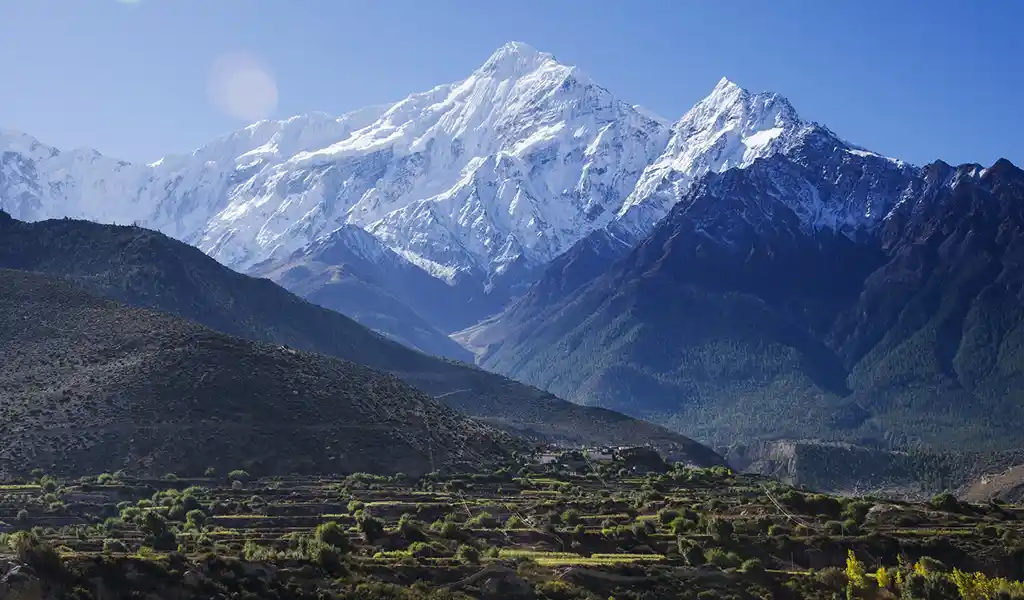
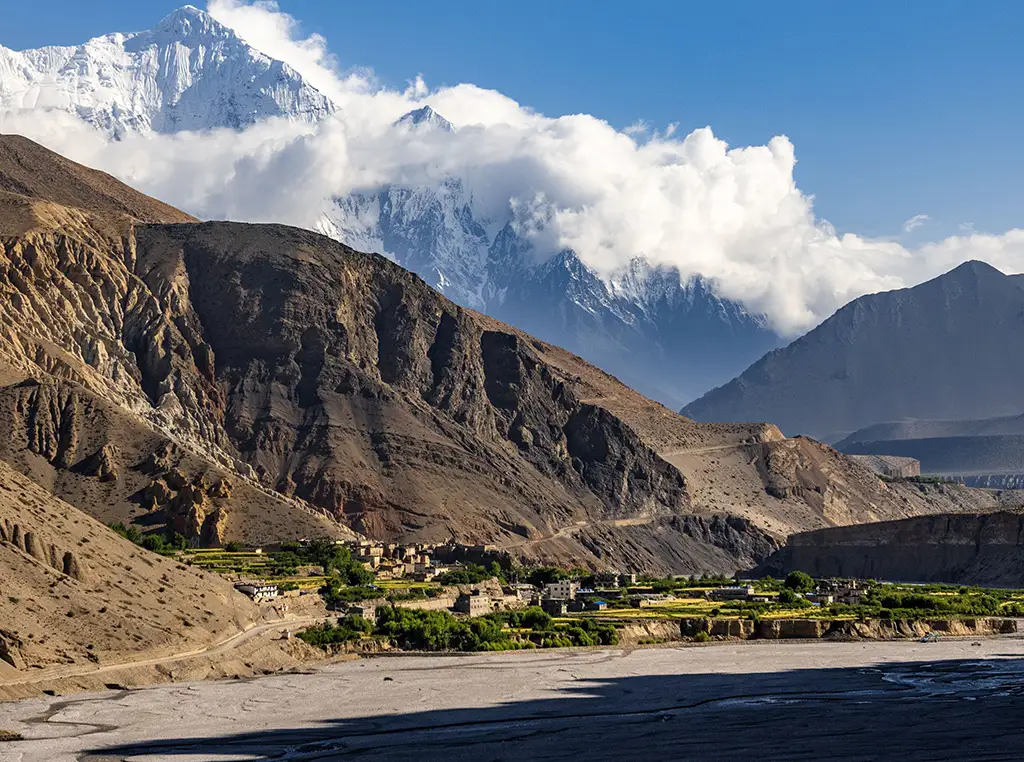
Jomsom, the administrative heart of the Mustang District, lies in the trans-Himalayan region of Nepal. It sits at 2,740m in the Kali Gandaki Valley. Kali Gandaki River, which created the world’s deepest gorge, flows beside the town. You can also see the Nilgiri mountains from Jomsom. The north face of Nilgiri (7,061m) is evident at sunrise and sunset.
The town is notorious for its strong daily winds. The pressure between the lowlands and the Tibetan Plateau results in wind sweeping through the Kali Gandaki gorge around 11 AM. These winds affect daily life. You need to book your Pokhara flight in the early morning to avoid these winds.
Historically, Jomsom was an important trade center connecting Tibet and Nepal. It is now a main gateway for tourism and serves trekkers heading to Upper Mustang and the Jomsom-Muktinath trek. The rain shadow from the Annapurna and Dhaulagiri mountains makes the town dry and cool, unlike other parts of Nepal. Jomsom is mostly barren.
Jomsom is a hub for traveling in the high Himalayas. In this harsh, wind-swept environment, you’ll experience the coexisting Nepalese and Tibetan cultures
Cultural and Local Life
Jomsom is home to the Thakali people. Thakali is an ethnic group unique to Nepal, known for its hospitality and business. This lower Mustang town blends traditional life with modern influences. People from different backgrounds live together in harmony here.
Thakali Culture and Identity
The culture of the Thakali people is a blend of Himalayan and lowland traditions. Their religion mixes Buddhism and folk shamanism, with some Hindu practices. You can see gompas and festivals here with locals following clan deities and ancient rituals. Traditionally, the Thakali people make their homes of stone with flat roofs to withstand strong winds. While you can find newer buildings in Jomsom today, older parts still feature this classic style.
Thakali food is famous across Nepal. The traditional Thakali meal includes lentil soup, rice, curries, and a tangy pickle. You can also try Apple products like dried apples and apple brandy here,
The Thakali people have a long history of running inns and businesses. Most hotels and restaurants in the area are Thakali-owned. Their business skills have helped the group venture into cities as well.
A Lively Cultural Mix
The Thakali, Tibetan, and other Nepalese ethnic groups strongly influence Jomsom’s culture. The region has many Hindu Nepalese in government positions and a significant Tibetan refugee community. Many Tibetans arrived here in the 1960s. They speak their language and follow their customs. You’ll see many Tibetan signs, schools, and monasteries around the town. ‘
Jomsom is the distinct center. It has schools, a hospital, and government offices. Jeeps and mules regularly carry supplies to and from nearby villages. People of Jomsom finish most of their outdoor work before the wind picks up and spend afternoons indoors. Evenings are for socializing.
People wear modern clothes, but during festivals, they can be seen wearing traditional clothes. Women wear black wrap-around skirts with red borders, and men wear Bakkhu. The Yartung Festival is a horse-racing event in Muktinath. It’s an essential local celebration that marks the end of the monsoon season.
Jomsom is a place where you can see contrasting lifestyles together. Mule caravans share the roads with modern jeeps, and monks walk among trekkers. This mix of contemporary and ancient life in the Himalayas makes Jomsom a unique and memorable place.
Practical Information for Travelers
Jomsom is a busy Mustang town and a welcome trek stop. Its facilities are second only to Pokhara’s. Jomsom is highly accessible with modern amenities. It’s a key point in the trekking route of the rain shadow region of Nepal.
Getting to Jomsom
By Air: You can take a 20-minute flight from Pokhara to Jomsom. The flight offers beautiful views of ranges like the Annapurna and Dhaulagiri. It is the easiest and quickest way to reach Jomsom. Flights only operate in the early mornings due to strong winds. You should plan extra time as flight delays are common.
By Road: You can get there by jeep or bus from Pokhara to Jomsom. A rough route connects the two places and will take you a full day on the bumpy road to reach the destination. The views are beautiful, but the road is not for everyone. Jeeps also go to Muktinath and nearby villages, which can shorten your trek.
On Foot: Trekkers often stop in Jomsom for rest. The trail is near the road, and you can walk at your own pace. You can visit villages like Marpha and look for fossils in the Kali Gandaki River.
Amenities and Services
Jomsom is the district center, so it has more modern amenities than other villages on the route. It offers a variety of lodges and hotels. You can even stay in higher-end hotels with attached bathrooms, hot showers, and heaters. The town has reliable electricity and good cell phone coverage. Many hotels offer WiFi. Jomsom also has a few ATMs, but carrying cash is better. You can buy snacks, toiletries, and trekking gear in the Jomsom Bazaar. The market also features local products like dried apples and Marpha apple brandy. The Mustang District Hospital provides basic medical care. You can visit the local pharmacies for basic and everyday medical needs.
Onward Travel and Local Life
Jomsom is a key stop when planning the rest of your trip. Many trekkers take a jeep from Jomsom to Tatopani and skip the less interesting parts of the road. You can also walk for two hours to Marpha. Marpha is a nearby village known for its stone alleys and apples.
People of Jomsom usually do outdoor work in the mornings to avoid the strong afternoon winds. The town is a mix of Thakali and Tibetan communities with modern influences. You’ll feel safe here with the army barracks and police station. Jomsom offers a break after trekking. You can rest in comfortable beds and enjoy good food. This lively town sees the blend of traditional and modern life against the stunning Himalayas.
Attractions and Side Trips
Muktinath Temple
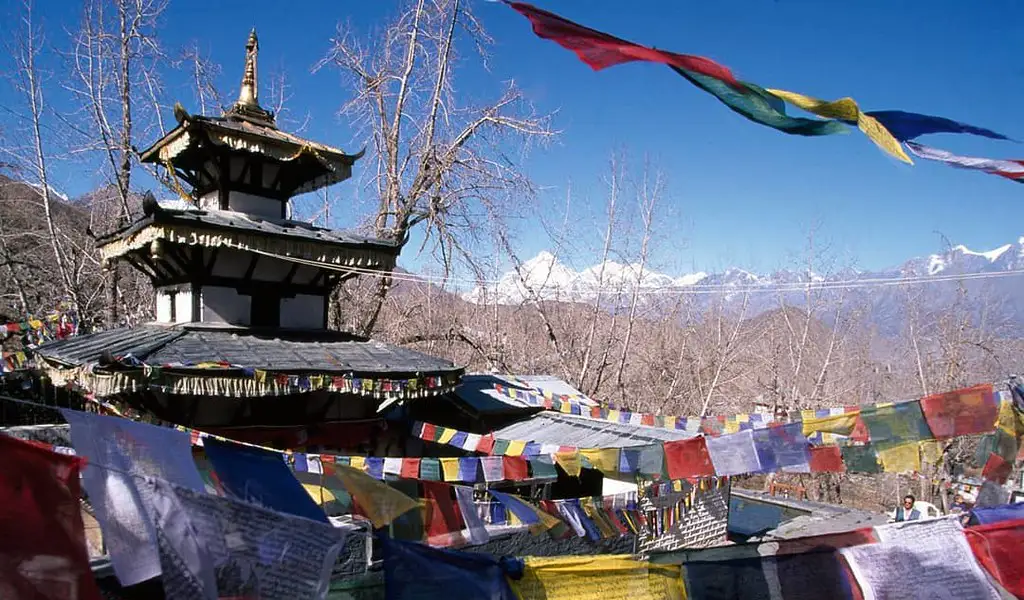
Jomsom is the base for visiting cultural and spiritual sites in Lower Mustang. One of the most spiritual sites is the Muktinath Temple. It’s sacred for both Hindus and Buddhists. Muktinath is about 20km northwest of Jomsom at 3,800m. It’s one of the eight holy sites where Lord Vishnu lives for Hindus. Muktinath’s name, “Mukti Kshetra,” means “Place of Liberation”. Many devotees believe bathing in its cold waters brings salvation. Buddhists call this temple Chumig Gyatsa or “Hundred Waters.” They think it’s a meditation site linked to Guru Rinpoche (Padmasambhava), who spread Buddhism in Tibet. Muktinath is a unique meeting place for Hindu and Buddhist traditions.
One hundred eight water sprouts shaped like cow heads surround the main pagoda temple. Pilgrims bathe in the water of each sprout for purification. The Jwala Mai temple has a natural “eternal flame” which burns from the gas of the ground. The combination of water, fire, and Earth adds to the Earth’s significance.
Muktinath also offers beautiful views of the Himalayas, including Dhaulagiri. Ranipauwa village is just a short walk from the temple. You can buy souvenirs on your way there. Visiting Muktinath is a moving experience due to its spiritual importance and beautiful views.
Dhumba Lake
Dhumba Lake is a calm, green lake near Thini village. This lake is not as popular as other side trips of Jomsom and thus offers some solitude. You can take a 2-hour hike or a pony ride to reach Dhumba Lake. The lake sits at 2,900m and locals believe it’s sacred. If the day is clear, you can see the reflection of the Nilgiri peaks in its still water. Dhumba Lake is a peaceful spot offering quiet news of the valley away from the crowded trails.
Marpha
Marpha is just a short walk or drive from Jomsom. It’s also a favorite stop for trekkers. Marpha has many apple orchards, earning its name as the “apple capital” of Nepal. You can try fresh apple juice, pies, and the local apple brandy. These Apple products are popular souvenirs.
The village showcases traditional Thakali architecture. The cobblestone streets are narrow, and the stone houses are whitewashed. The locals keep the town tidy. You can visit Marpha Monastery at the village edge to get great views of the rooftops below. Many trekkers stay overnight in Marpha to enjoy its peaceful and ancient charm.
Kagbeni
Kagbeni is about 11 km north of Jomsom and is the official entrance to Upper Mustang. This old village offers a medieval feel. It has narrow alleys, mud-brick houses, and Tibetan-style chortens.
A key site of Kagbeni is the red-painted Kagchode Thubten Sampheling Gompa. It is a 500-year-old monastery of the Sakya sect. Kagbeni is sacred for Hindus who perform ancestral rituals at the meeting point of the Kali Gandaki and Jhong Khola rivers.
Kagbeni sits against the Annapurna and Nilgiri mountains to the south and Upper Mustang to the north. Kagbeni is popular due to its ancient fortress, cultural museum, and small cafes. Many trekkers spend a night here to enjoy its unique atmosphere.
Kali Gandaki River and Shaligram Fossils
The Kali Gandaki is a sacred and geologically special river. Its name comes from its dark, sediment-filled waters and Kali, a Hindu goddess. It flows through the deepest gorges on Earth between two peaks over 8,000 meters high, Annapurna and Dhaulagiri. This gorge feels more like a broad valley near Jomsom and Kagbeni.
The river is famous for its Shaligram fossils. Hindus consider Shaligram sacred as a symbol of God Vishnu. These black, spiral-shaped ammonite fossils come from the Jurassic/Cretaceous era. Pilgrims and trekkers collect small ones from the riverbanks near Jomsom and Kagbeni. If you take some as souvenirs, you should respect their religious importance.
These fossils prove that the valley was once under the Tethys Sea millions of years ago, before the Himalayas rose. You can walk along the riverbed on your rest day. You’ll see unusual rock formations and feel the scale of the valley.
Conclusion
The Jomsom area and Lower Mustang region offer a mix of experiences. Spiritually, you can feel the calm at Muktinath and hear chants in the Kagbeni monasteries. Nature lovers will enjoy the peaceful Dhumba Lake and the strong winds of Kali Gandaki.
Walking through Marpha’s tidy streets and Kagbeni’s alleys gives you a glimpse into the local life. You can meet the Thakali and Loba people here. Food is another highlight. The region is famous for its traditional dal bhat and apple products, like apple brandy.
Trekkers like adding a day or two in these areas to explore more. Even if your schedule is tight, visiting Muktinath or Marpha is worthwhile. These experiences are the latter part of the Annapurna Circuit and are a memorable part of the high mountains.