



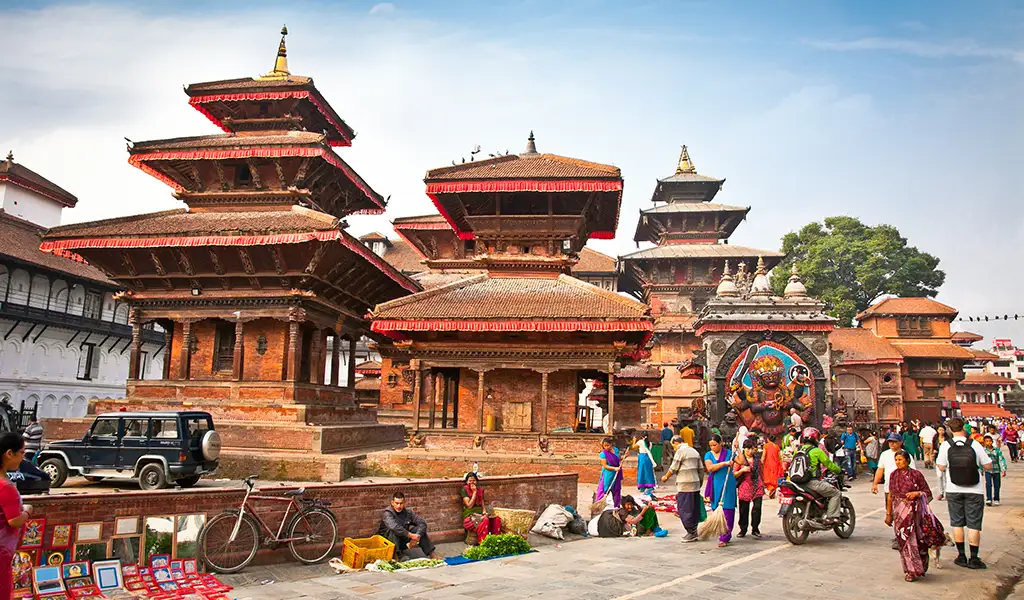
Kathmandu Durbar Square is in central Kathmandu. It was once the grand stage of Nepal’s royalty and has many ancient palaces, shrines, and pagoda temples. The place is locally known as Basantapur, a name recalling the spring festivals celebrated in the plaza. It is also among the UNESCO World Heritage Sites of Kathmandu.
Kathmandu Durbar Square has endured many wars and earthquakes, symbolizing resilience. The complex is a museum of Newari art and the legacy of Nepal’s monarchs. Each corner reflects centuries of faith, tradition, and art. Kathmandu Durbar Square is part of the three royal squares of the valley. The rest of the trio are in Patan and Bhaktapur, all sharing the same Newari architecture and heritage.
Historical Background
Kathmandu Durbar Square’s origin dates back to the Licchavi era between the 5th and 9th centuries. However, most of its monuments are from the Malla Dynasty between the 12th and 18th centuries. The Malla kings constructed many temples, halls, and gateways, featuring intricate artistry. King Mahendra built the iconic Kasthamandap pavilion in the 1500s, and King Pratap Malla added new courtyards and shrines in the 1600s.
After King Prithwi Narayan Shah conquered Kathmandu in 1768 and unified Nepal, he built a nine-storey Nautalle Durbar tower in the plaza. It marked his victory. Kathmandu Durbar Square remains a national landmark even after the abolishment of the monarchy in 2008. It served as a royal palace and still carries the memories of royal celebrations and aristocratic life.
Architectural and Artistic Significance
Kathmandu Durbar Square is a masterpiece of Newari architecture. Skilled artisans carved wood, stone, and metal into each temple, palace, and pavilion. The buildings have pagoda roofs, carved windows, and wooden struts of gods, dancers, or animals. Doors and cornices have bright metalwork reflecting the Newari artistry.
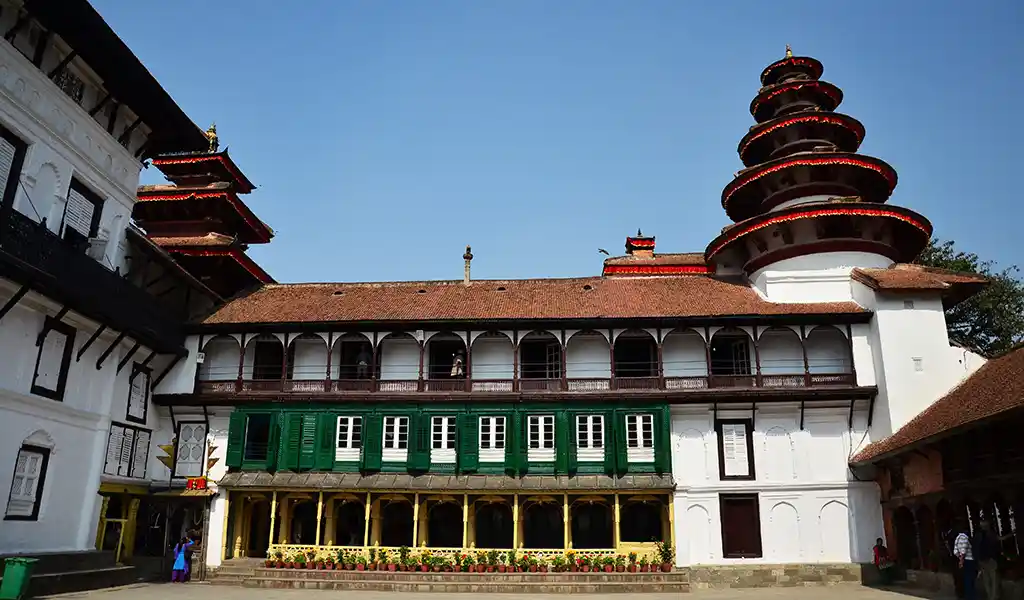
Hanuman Dhoka Palace: This palace sits at the heart of the square. A statue of Hanuman, the monkey god, stands at the main gate guarding the palace. Inside, there are many temples and monuments in an open courtyard. You can see the giant bronze Shiva Statue on a carved mandala on one of its courtyards, Nasal Chowk. The palace’s wooden windows and balconies display designs and floral patterns. A part of the Hanuman Dhoka Palace is now a museum where you can see royal thrones, ceremonial crowns, and relics of Nepali kings.
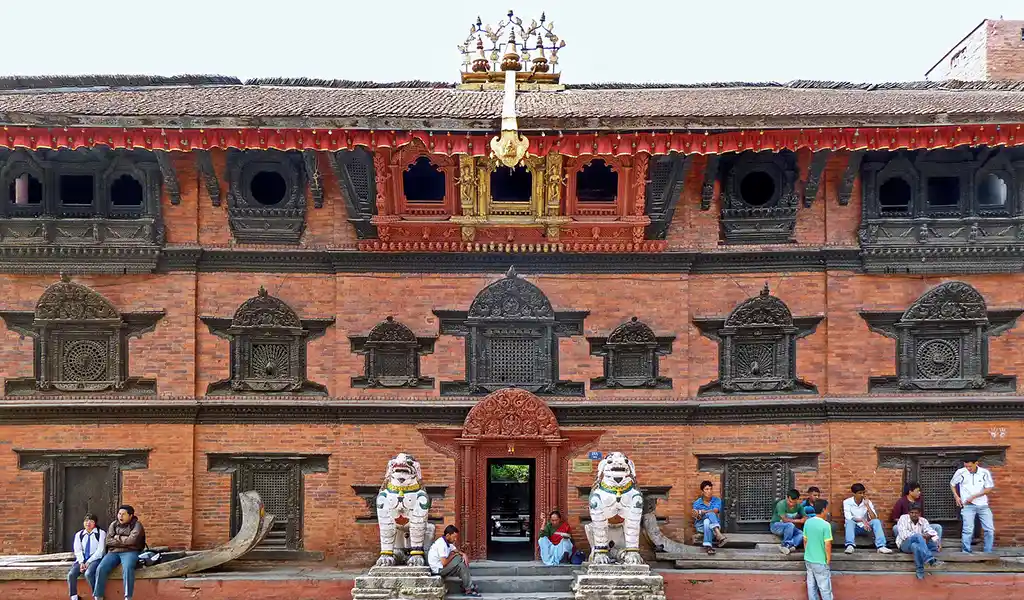
Kumari Ghar: This brick building is the residence of the Living Goddess Kumari. People believe that Goddess Taleju Bhawani lives inside the young girl. Kumari appears at a tall window to bless the crowd below. The house reflects classic Newar architecture with carved wood struts and windows on every level. The bright red bricks and roof woodwork blend royal architecture with spiritual purpose.
Shiva-Parvati Temple: This temple is a small pagoda near the palace wall known for its life-size black stone statue of Lord Shiva with his wife, Goddess Parvati. This seated statue has detailed carvings of a gilded temple and a tiered roof. It is a symbol of family unity and devotion in Hindu belief.
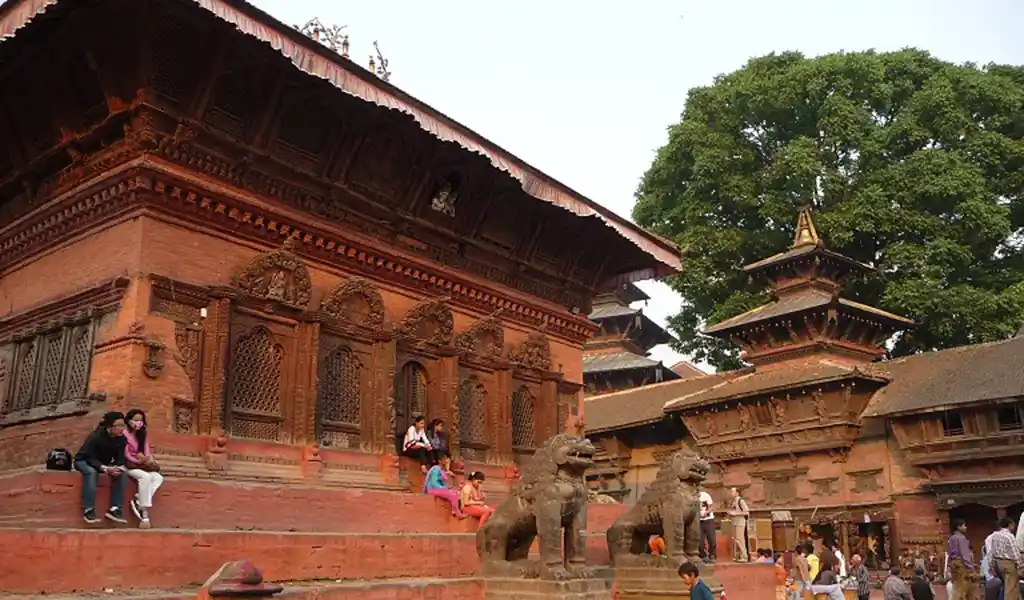
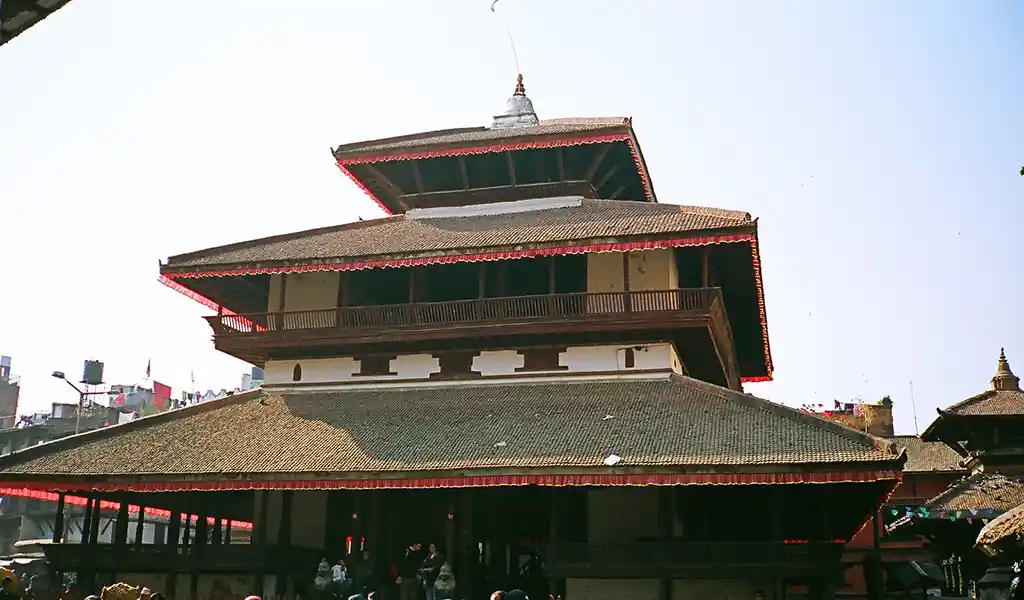
Kasthamandap: Kasthamandap is a three-story wooden pavilion at the square’s edge. It was built around the 12th century from a single massive tower. The name literally means wooden pavilion, and according to legend, Kathmandu got its name from it. The 2015 earthquake left the building in ruins, and local artisans are reconstructing it using the old practices.
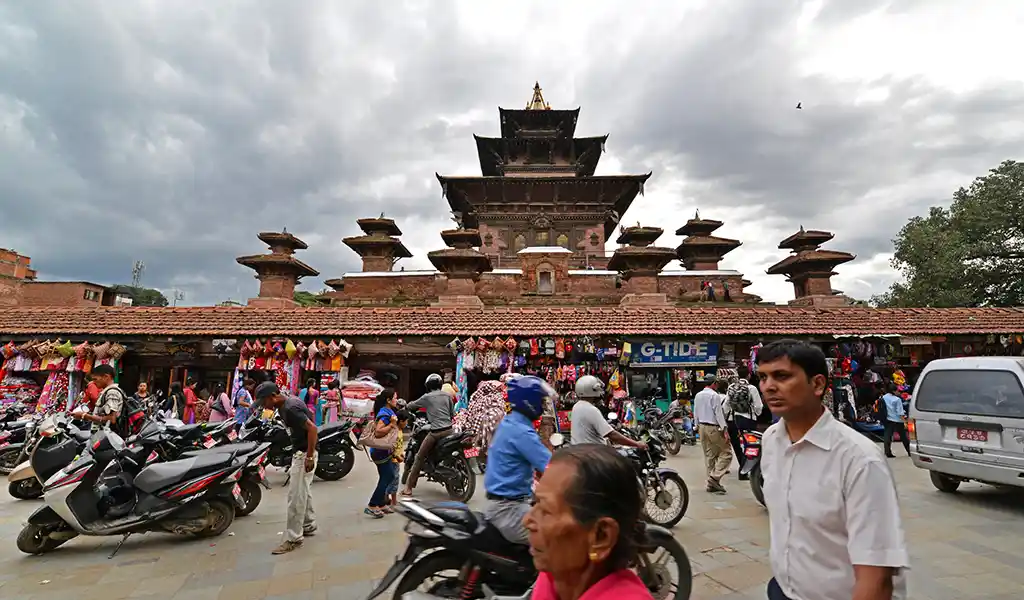
Taleju Temple: This tall five-roofed pagoda is for the goddess Taleju Bhawani. Built by Malla kings in the 1600s as their personal temple, its golden roofs and towers rise above the palace. Only priests and royal family members are allowed inside the holy chamber. The temple’s base has many stone sculptures of river goddesses and lions symbolizing the connection between the royal family and the divine.
Cultural Importance
Indra Jatra (Yenla Punhi): Held in September, Indra Jatra is a week-long festival that brings chaos to the plaza. Chariots carrying the Living Goddess Kumari parade through the streets. Masked dancers and musicians celebrate across the square to honor Lord Indra, the rain god, and other deities. Families gather to watch the Kumari procession and traditional dances.
Dashain: It is the biggest and most important Hindu festival in Nepal. It falls in autumn and centers on the square. The date of the Taleju temple opens on the first day, and a priest lights a sacred fire inside. Devotees stand outside the nearby temples to seek blessings.
Living Goddess (Kumari): People worship a young girl as a living goddess. She resides in Kumari Ghar within the complex and appears twice daily at her window to bless devotees. She gets carried in a procession around the plaza during festivals like Indra Jatra. Newars believe she brings blessings and good fortune to the city.
Music and Dance: The square is lively with Newari music and dance all year-round. During the festival, local bands play drums and cymbals, and traditional lion dancers (lakhe) perform at cultural events. Street musicians play flutes and horns, preserving Kathmandu’s folk heritage.
Artisan Workshops: Artisans practice their art and trades in the square’s alleys. You can see intricate panels by wood carvers, metalworkers casting religious statues in small foundries, and painters working on thangkas or mandalas. You can watch or even join in these workshops.
Community Life: The square is a bustling social hub with market stalls and tea shops. You can buy snacks as you see children play games. Pilgrims tie prayer flags to temple trees, and volunteers sweep the floors each morning.
Religious Significance
Kathmandu Durbar Square is sacred to both Hindus and Buddhists. Kathmandu Durbar Square honors deities from both traditions and draws pilgrims.
Hindu Temples: There are many statues of Shiva, Parvati, Vishnu, and Ganesh throughout the square. Priests perform daily rituals, light oil lamps, ring bells, and pour water over the sacred stones. Devotees offer rice, flowers, and incense and kneel in prayer. The carved image of Shiva and Parvati is a reminder of family unity and divine power.
Buddhist Influence: The square has influences from Newari Buddhism as well. Some carvings combine Hindu and Buddhist symbols, reflecting centuries of shared culture. There are many small stupas and prayer wheels inside the square. Even the Kumari, a Hindu goddess, has links to Vajrayana practice.
Ritual Practices: The temple comes alive at dawn as priests chant mantras and eave incense while worshippers pour milk or water over the stone lingam. This practice honors the different gods. People circle the shrines, make wishes for health, prosperity, and protection, and maintain the square’s spiritual energy and continuity.
Pilgrimage: Kathmandu Durbar Square attracts people from across Nepal. Families visit the square on holy days, after weddings, or before trips. Tourists also participate in these rituals. The square functions as the spiritual heart of the entire Kathmandu Valley.
Kathmandu Durbar Square, a UNESCO Site
Kathmandu Durbar Square joined as a part to the UNESCO World Heritage Site in 1979. Along with Patan and Bhaktapur durbar squares, it is one of Nepal’s most treasured heritage sites.
After the 2015 earthquake, international and local experts joined to save the historic building of the square. Archeologists, architects, and skilled carpenters worked together, and masons replaced wood struts. Most of the temple has been restored, but some scaffolding and support beams remain where work continues.
Experts conduct regular surveys while workshops train young carpenters to carve wood in the traditional Newar style. The square is an open-air classroom with centuries of artistic and cultural knowledge. The heritage of the square lives on with these efforts. Schools take children on field trips here to learn history, see traditional woodwork, and understand their heritage.
Visitor Experience
Kathmandu Durbar Square takes you back in time. You’ll notice the incense and the smell of food stalls filling the air. Locals gather in the tea stalls or sit on the temple steps as the morning prayer continues. Many Newari buildings are on the edges of the square, and small shops sell brass lamps, prayer beads, and handicrafts. Many travelers say the square is peaceful, offering a break from the city’s bustle.
Visitors’ Tips: You should dress modestly by covering your shoulders and knees. Take your shoes off before entering the temple pr palace courtyard. Don’t click pictures of anyone without permission. If you can, hire a guide so they can explain the history and legends of the place. The best time to visit the complex is between 8 and 11 AM and late afternoon. It closes at around 6 pm, and midday can get crowded. Like locals, you can walk around the shrine clockwise, but don’t step on the threshold or sacred objects. You should follow the square rules and respect the complex. Carry water and small change to pay for restrooms and snacks.
You can walk north to Asan Bazaar, a colorful local market. Other attractions are the Garden of Dreams, a historic garden, and Thamel, a tourist district.
Social and Economic Impact
The Kathmandu Durbar Square attracts travelers from all around the world. You can buy handmade goods and support the artists and their families. The complex has many woodcarvers, stonemasons, and painters selling their creations in nearby stalls. You can buy tea and snacks from street vendors if you want to rest. Tourism boosts the local community’s economy, along with hotels and restaurants in the neighborhood.
The square is more than a marketplace. Residents host music and dance performances in the courtyards, and schools organize a trip to the square. Kathmandu Durbar Square remains a lively space with a strong community.
Local groups organize programs to teach traditional art to the next generation. Every morning, volunteers sweep the floors and water the gardens. During festivals, they throw the trash and set up decorations. These small and steady actions reflect people’s pride in their culture. Thanks to these efforts, the square continues to thrive as a cultural heritage and a source of livelihood.
Challenges and Modern Dynamics
Kathmandu Durbar Square, like any other heritage site in Kathmandu, faces modern challenges. The 2015 earthquake damaged many temples and palace wings. Crowds press into the narrow courtyards, and the traffic and noise from nearby roads fill the temple spaces. Air pollution is also a significant concern. Few modern buildings rise above the traditional skyline, threatening the historic character.
Conservationists warned that unchecked development could hide the identity of the square away. They advise on limited construction and reduce vehicular access. The Kathmandu Valley Preservation Trust calls for traditional techniques in restoration works. Many residents sweep the courtyards, tend the gardens, and remove candles and offerings to protect the shrine.
Conclusion
Kathmandu Durbar Square still has centuries of art and ceremony alive today in its courtyards and temples. You can sense the devotion of a generation here. Each statue, shrine, and palace wall holds a story.
Visitors of all ages leave with lasting impressions from the square. By visiting the complex, you’ll support artists, vendors, and families who depend on the heritage. Kathmandu Durbar Square is a living part of Nepal’s past and future.
You can take your time while visiting. Walk between temples, listen to bells, breathe in incense, and try a snack. You can speak to a Newar guide to understand the meaning of he carved wood and stones. Take photos, but with respect.
By learning the history and sharing the beauty, you help preserve the Kathmandu Durbar Square. You should plan your visit soon to become a part of its story.