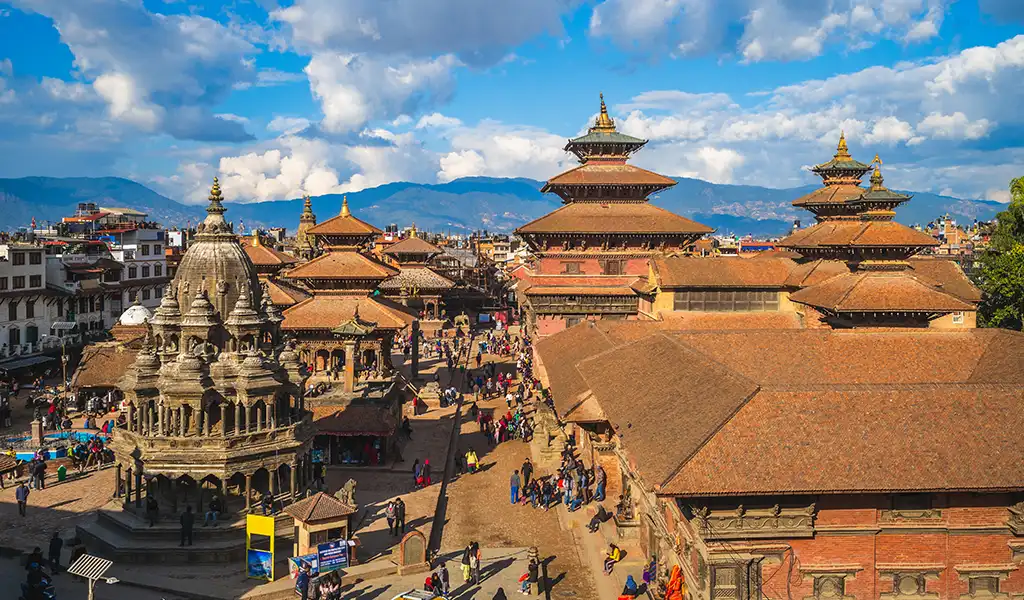

Patan Durbar Square in Lalitpur is a historic royal palace known for its Newar architecture and Malla heritage. Patan is famous as a center of art and culture and is among the World Heritage Sites by UNESCO. It has pagoda-style temples, brick towers, and carved wooden windows. The place feels peaceful yet active, with temple chants mixed with the voices of artisans. Walking in this plaza feels like entering an open-air museum.
Historical Background
Patan Durbar Square grew into its glory after the rule of the Malla Kings of Nepal between the 12th and 18th centuries. Patan, or Lalitpur, was a powerful city-state rivaling Kathmandu and Bhaktapur. King Siddhi Narsingh Malla transformed the city into a museum of art in the 1600s. Other rulers added more palaces and expanded the royal courtyards. Patan was an essential stop on the old Silk Road Route, where traders from India, Tibet, and China met to bring wealth and new ideas.
Patan kept its royal palace and traditions even after the Shah dynasty took over and unified Nepal in 1768. King Prithwi Narayan also took refuge in the square during his campaigns. Over the centuries, the square has hosted many coronations, festivals, and royal courts. It faced invasions and natural disasters, including the 1934 earthquake. Patan Durbar Square still stands as a symbol of resilience and creativity today.
Architectural and Artistic Significance
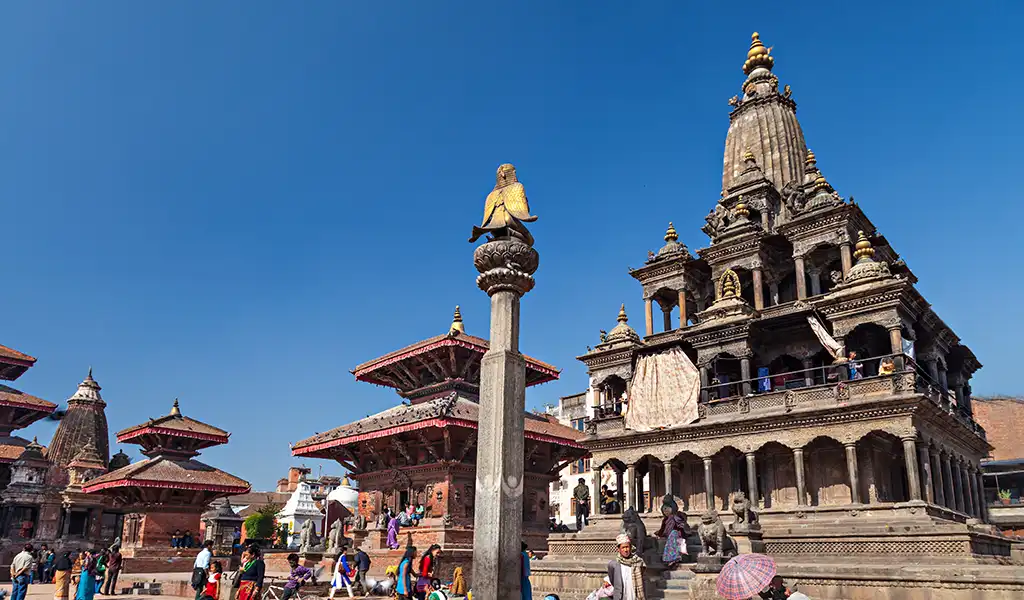
Patan is often called the city of fine arts because of its Newar artistry. The temples have multi-tiered pagoda roofs and struts with carved gods, humans, or mythical creatures. The walls and doors are made of deep red brick with wooden beams. You can find flowers, dancers, or deities carved in wood if you look closely at any door frame.
Patan Museum (Old Palace): The old royal palace is now a museum. It has peaceful courtyards featuring a gilded golden gate. You can see Newari art, including bronze Buddhas, carved doors, and medieval paintings. The palace is full of wood carvings. The entrance features long-necked swans (hamsa) and lotus flowers. Visitors can see the royal thrones and the walls with old ritual objects.
Krishna Mandir: King Siddhi Narsingh Malla built this stone temple in 1637. It’s different from the usual pagoda style with five rising tiers and carvings showing scenes from the Mahabharata and Ramayana. It also tells the tale of Krishna’s likes and warriors in battle. Hundreds of tiny figures cover the temple walls. It survived the 2015 earthquake thanks to its strong stone design. Krishna Mandir is a focal point of the square and often casts a long shadow at dusk.
Bhimsen Temple: Bhimsen Temple is a two-tiered pagoda shrine dedicated to Bhimsen, the Newar God of trade. Traders pray here before doing business. The base has gilded windows and a row of Buddha images. Inside the temple stands a fierce statue of Bhairaba (a form of Shiva) symbolizing strength in commerce. The temple’s wood and metal work reflect Patan’s history as a trading center.
Vishwanath Temple: This temple is a two-roofed pagoda named for Lord Shiva. Its struts show Lord Shiva dancing as Nataraja. The temple has gold decorations on the doors and finials. Devotees light oil lamps daily, and the temple attracts large crowds during Shivaratri. There are many carvings of Nagas (serpents) at the corners, highlighting Shiva as the protector of the valley.
Hiranya Varna Mahavihar (Golden Temple): This temple is a Buddhist monastery covered in gold foil and gilded metalwork near the square. It’s a three-storey golden tower above the entrance. Monks perform daily prayers with statues of Buddha and Vajrayana deities. Although outside the main square, it still adds to Patan’s art and scene.
Cultural Importance
Patan Durbar Square hosts many Newari celebrations. Its temples and courtyards have seen traditions continue from generation to generation.
Krishna Janmashtami: This festival falls in August or September, marking the birth of Lord Krishna. Devotees parade a colorful chariot carrying a statue of baby Krishna through the streets. The chariot occasionally stops at the Krishna Temple. Flowers decorate the deity inside the temple, and followers sing devotional songs. Many families attend this ceremony in their finest clothes.
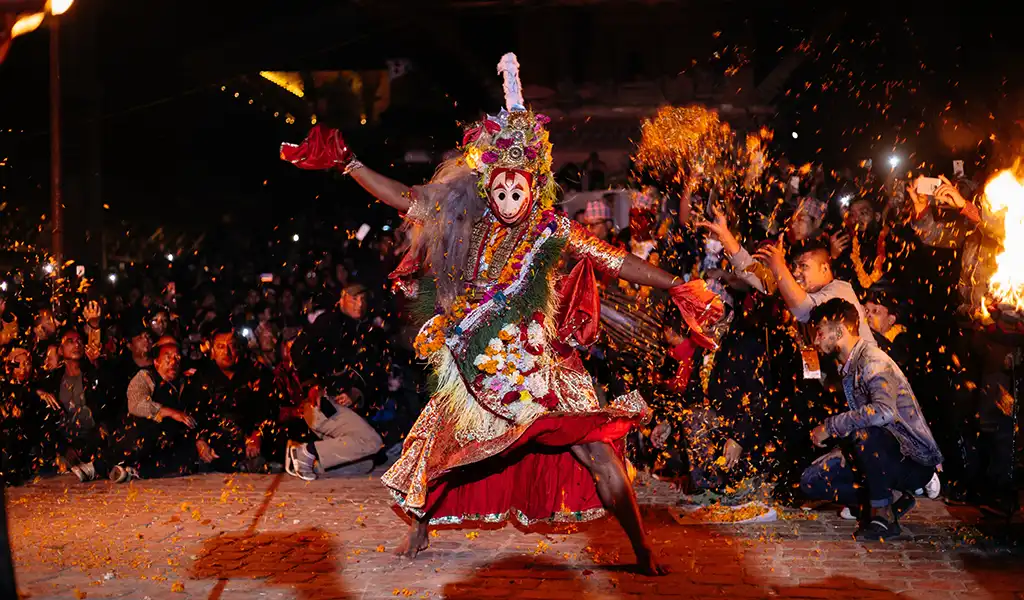
Rato Macchendranath Jatra: This festival is one of the largest ones in Nepal. It honors Macchendranath, a rain god worshipped by both Hindus and Buddhists. People build a giant wooden chariot in Patan and pull it through the town for 30 days, stopping in Durbar Square for special rituals. Musicians and dancers wear Lakhe (lion) masks, play drums, and perform in the courtyards. The festival reflects the unity of Hindu-Buddhist traditions in Patan and the importance of rain for farming.
Gai Jatra (Cow Festival): People celebrate Gai Jatra in late summer. This festival honors family members who passed away in the past year. Families parade a decorated cow or a child dressed as one through the streets of Durbar Square. People wear exaggerated masks and tell jokes to mix mourning with humor. The festival reflects the community’s way of helping the souls of the dead find peace.
Artisan Community: The other name for Patan is the City of Fine Arts. You can see woodcarvers, metal casters, and painters all creating art. Young apprentices learn from their masters in open-air studios. You can see the efforts of different generations to keep their crafts alive.
Music and Dance: The square is often lively and features traditional Newari music. Musicians play cymbals, long-horn drums, or flutes. Masked dancers also perform guardian dances around temples. Devotees also form processions beating large kettledrums to devotional songs on special occasions.
Daily Life: Durbar Square is a part of everyday life beyond festivals. Students stop to offer incense for school success, elders chat over tea, and street vendors sell snacks. People feed pigeons and light oil lamps at small shrines.
Religious Significance
Hindu Shrines: Many temples inside the complex honor Hindu gods. Besides Krishna, Bhimsen, and Vishwanath, small shrines also worship Ganesh and Parvati. Priests perform daily puja, devotees offer rice, fruits, and marigolds, and you’ll see rituals for the fierce form of Shiva at the Tambu Bhairav shrine. Families come to seek blessings during festivals like Dashain or Teej. These practices reflect the Hindu faith in the square.
Buddhist Traditions: Patan also has a rich Buddhist heritage. The Golden Temple is a primary Buddhist site. Its inner santrum houses a statue of Manjushri carved by King Amshuverma in the 6th century. Monks and visitors light butter lamps on the steps during Buddha Jayanti. Small statues throughout the square show Buddhist figures. Many local Hindus also follow the Vajrayana rituals and worship Hindu and Buddhist deities.
Ritual Practices: Every morning, temples open for worship. The priest lights incense and rings bells. Visitors pour oil into the lamps or tie protective amulets. You can walk clockwise around the altar as a common sign of respect. Festivals include music, masked dances, chants, blended prayer, art, and community.
Pilgrimage: People from all over the world come to Nepal to visit these holy sites. Traders stop at the Bhimsen Temple to thank it for the business success. Buddhists from nearby regions come to the Golden Temple for the blessings of wisdom.
Patan Durbar Square, a part of the UNESCO World Heritage Site
Like other Kathmandu heritage sites, Patan Durbar Square became part of the UNESCO World Heritage Site in 1976. As a part of this list, Patan Durbar Square highlights its art and historical value.
The 2015 earthquake did minor damage to the square. Some buildings, like the Krishna Mandir, had cracks in their stone base, and Bhimsen and Vishwanath needed repairs. Artisans rebuilt the walls and restored the temples with the help of international and national aid.
Some areas are still not open to conservation work in Patan Durbar Square. The World Heritage status increases awareness and pride among locals. Schools teach children about the history of the square to ensure the protection of its art and architecture in the generations to come.
Visitor Experience
You must respect the temples in the complex. You should remove your shoes before entering the shrine and cover your shoulders and knees. Some temple interiors restrict photos, so follow the signs or ask before clicking. You can get a local guide to lead you through the palace near the entrance for a small fee. They’ll show history and legends, like how the Krishna Mandir is a stone building.
Walk clockwise around the altar tables, accept blessings with cupped hands, and avoid touching statues. You can pay a small fee for the restrooms. Many shops outside the complex sell paubha paintings, metalwork, and snacks. You can try the famous chatamari in a Newari restaurant. A short walk to the square’s north brings you near the Patan Industrial Estate, showcasing the meeting point of traditional and modern industries.
Patan Durbar Square is both an educational and peaceful complex. Pala feels less crowded by equally grand temples, locals, and local life. You can sit on a stone bench, watch an artisan crafting at work, or listen to monks chanting.
Social and Economic Impact
Patan Durbar Square supports the local economy and the cultural life. Many vendors seek their crafts and arrange workshops on woodcarving, silversmithing, or painting to teach traditional art. Tourists and pilgrims buy these works, which directly support the local people. Traditional handmade Newari items like taas and paauh keep centuries-old crafts alive, and the restaurants attract more visitors. You can try Newari delicacies like yomari, chatamari, bara, etc., in restaurants or at small street vendors.
Beyond commerce, the place is also a hub for the local community. Families and locals gather in the open courtyards during festivals, musicians practice on temple steps, and you can even see announcements or meetings at Sundari Chowk. Many youngsters meet at dusk to practice dance routines or play traditional music.
Local organizations like the Kathmandu Valley Preservation Trust and Patan City Council work to preserve the complex and fund cultural programs. Annual Newar songs, dance events, and school mural projects help the next generation connect with their heritage.
Challenges and Modern Dynamics
The 2015 earthquake posed a significant challenge with cracks in the Krishna Temple and restoration projects for the Bhimsen and Vishwanath Temples. Some smaller shrines fell completely. Restoration took years, as sculpting the replacement window frames for the 55-Window Palace was almost too complicated.
Urban growth is another layer of challenge for Patan Durbar Square. Traffic from nearby roads brings dust and dulls the brick and stone in the complex. Balancing commerce and heritage is not easy. Locals advocate for strict vehicle limits and height control of the new buildings. Many shopkeepers want more stall area, while preservationists insist on an open square. Heavy crowds make prayers and ceremonies hard during festivals.
Volunteers organize cleanups after significant events, and artists patrol to prevent theft or damage to the creations. Citizens take pride in their heritage and volunteer willingly. Policies guide new constructions to match the traditional styles, and the UNESCO and local trusts run workshops for builders. These efforts help preserve the history of the Patan Durbar Square while adapting to modern life.
Conclusion
Patan Durbar Square is an artistic museum. You can connect to Newari art and the legacy of the Malla kings and their centuries of culture and royalty. You can explore the courtyards and speak to local artisans to directly support the people working to keep the traditions alive. Every gate, statue, and mural tells a story of Nepal’s past. Through its arts and architecture, Patan’s cultural spirit continues to shine today.