


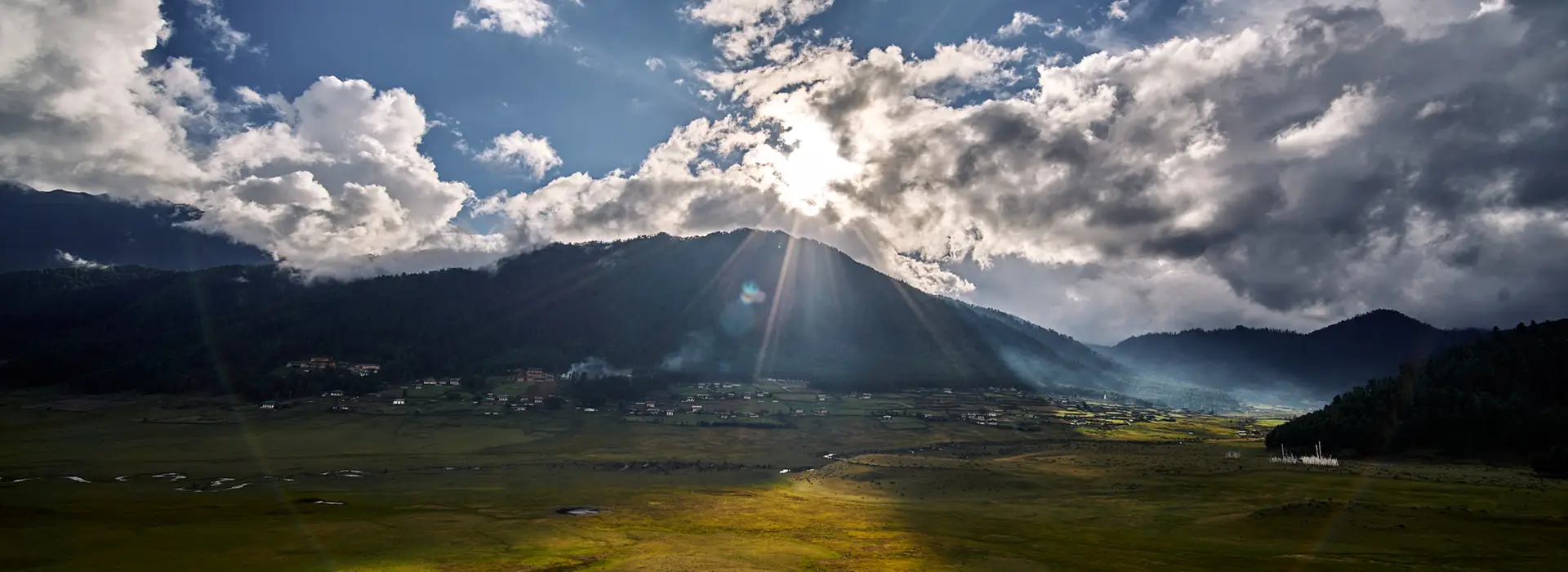

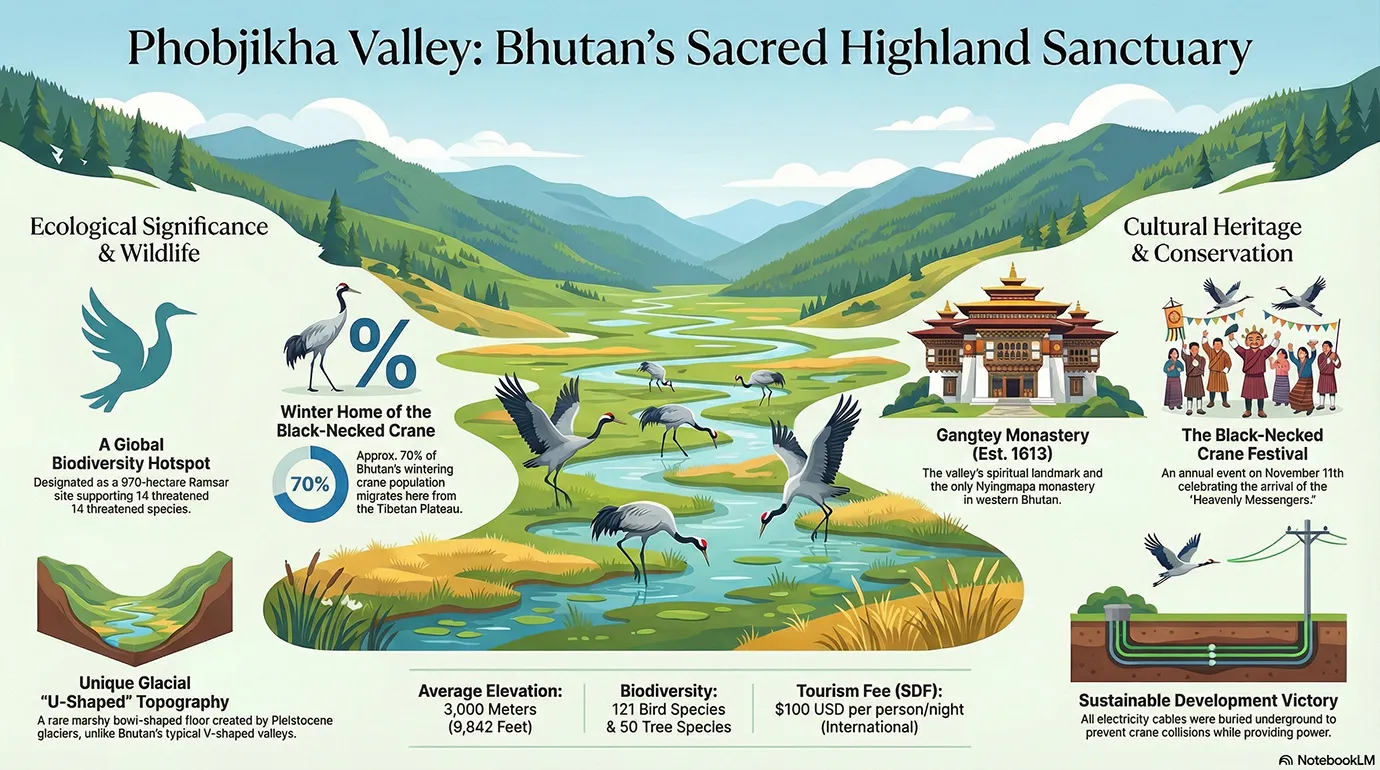
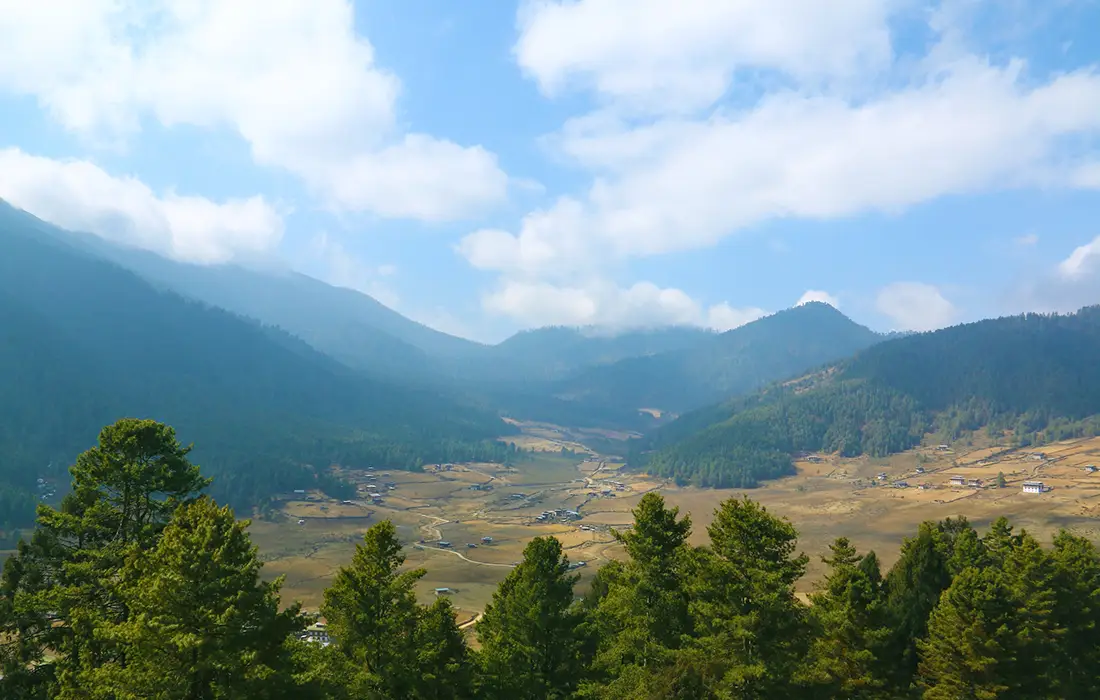
Phobjikha Valley, Bhutan, stands as one of the most significant high-altitude glacial valleys in the eastern Himalayas. Situated at an average elevation of 3,000 meters (9,800 feet), this wide, bowl-shaped expanse occupies the western slopes of the Black Mountains. This mountain range effectively serves as the geographical divide between western and central Bhutan, with peaks in its immediate vicinity rising to elevations above 5,000 meters. The valley floor consists of a vast, marshy wetland, a rare landscape feature in a country dominated by steep, narrow river gorges.
The valley’s geological formation results from glacial activity during the Pleistocene epoch, which carved out the broad, U-shaped profile that characterizes the region today. Unlike most other Bhutanese valleys, which are V-shaped due to river erosion, Phobjikha maintains a flat, expansive floor. Two primary rivers, the Nake Chuu and the Phag Chuu, meander through the valley, providing the necessary hydration for the unique marshland ecosystem. These rivers eventually drain southwards through the Black Mountain range.
Geographical data indicates that the valley is enclosed by a series of significant mountain passes. Local traditions refer to the “nine great passes” and “nine mountain peaks” that protect the valley, each associated with a specific local deity. This intersection of topography and spirituality defines the region, as the valley’s physical isolation helped preserve its cultural and ecological integrity for centuries.
| Geographical Metric | Data Point |
| Average Elevation | 3,000 Meters (9,842 Feet) |
| Surrounding Peaks | >5,000 Meters |
| Valley Type | Glacial, U-shaped Bowl |
| Principal Waterways | Nake Chuu, Phag Chuu |
| District | Wangdue Phodrang |
| Administrative Units | Phobji, Gangteng, and Athang Gewogs |
The Ecological Significance of the Phobjikha Ramsar Site
The Phobjikha Valley Travel Guide highlights the region as a global biodiversity hotspot. On May 2, 2014, an area covering approximately 970 hectares (3.7 square miles) received designation as a Ramsar site. This status recognizes the valley as a wetland of international importance, particularly as a habitat for threatened species. The Royal Society for the Protection of Nature (RSPN) manages the site, balancing the needs of the environment with those of the local human population.
The valley’s botanical profile is remarkably diverse. Research by the RSPN identifies approximately 50 tree species and 121 bird species within the conservation area. The marshy wetlands are predominantly covered by a sward of grassy pastures and a specific variety of dwarf bamboo, Yushania microphylla. This bamboo species is the primary food source for the wintering cranes and also provides grazing material for local livestock.
The surrounding slopes are dominated by coniferous forests, particularly blue pine (Pinus wallichiana), birch, and various rhododendron species. In higher altitudes, juniper and magnolia trees become more prevalent. This varied vegetation supports a wide array of fauna beyond the cranes, including globally threatened species such as the wood snipe, the Pallas’s fish eagle, and the red panda. Mammals like the barking deer, Tibetan fox, and wild boar also inhabit the forest fringes.
| Biodiversity Category | Estimated Count/Species |
| Avian Species | 121 |
| Tree Species | 50 |
| Globally Threatened Species | 14 (including cranes) |
| Primary Forest Type | Blue Pine, Rhododendron, Juniper |
| Key Wetland Flora | Yushania microphylla (Dwarf Bamboo) |
| Protected Status | Ramsar Site (since 2014) |
Black-Necked Cranes Bhutan
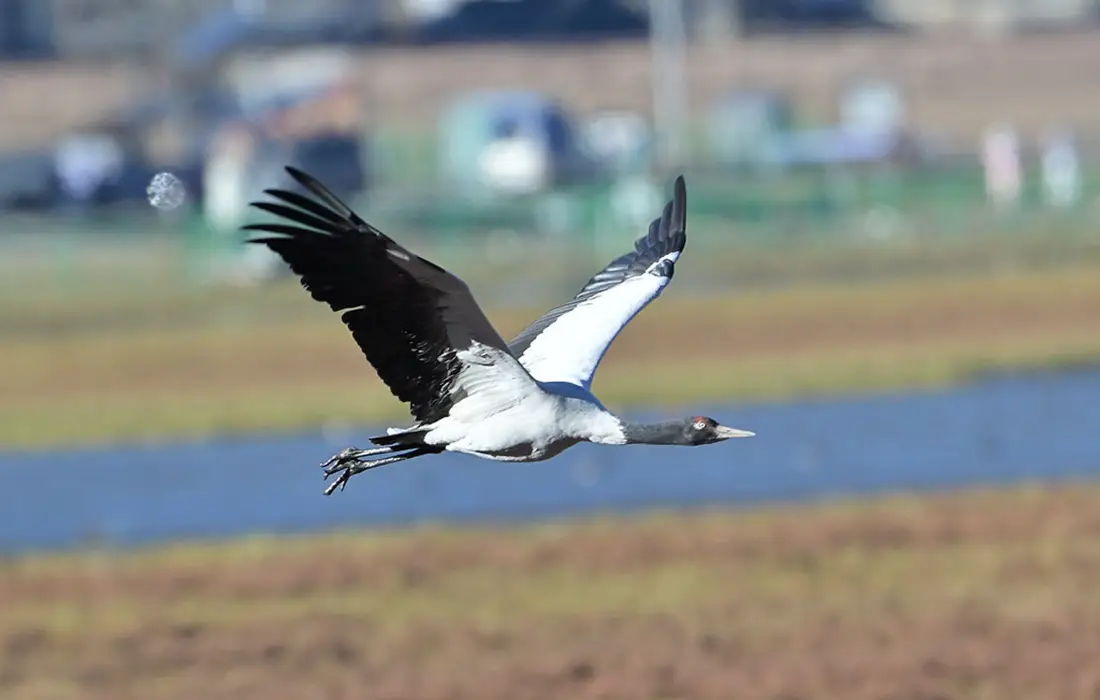
The Black-Necked Cranes of Bhutan (Grus nigricollis) occupy a central role in the valley’s identity. Known locally as Thrung Trung Karmo, these birds are revered as symbols of peace, longevity, and prosperity. Standing over a meter tall with a striking red crown and black neck, they are the only alpine crane species in the world.
Migration Patterns and Habitat
Every autumn, these cranes depart from the Tibetan Plateau to avoid the harsh winters and migrate to the relatively warmer, wetter Phobjikha wetlands. They typically arrive in late October or early November and depart for their breeding grounds in March. Estimates suggest that 300-500 cranes winter in Bhutan, with approximately 70% of this population wintering in Phobjikha.
Upon their arrival and before their departure, the cranes exhibit a behavior that locals find deeply spiritual. They circle the Gangtey Monastery three times clockwise. Local folklore interprets this as a sign of reverence to the three sacred jewels of Buddhism or an act of seeking protection for their stay.
Conservation Efforts and the RSPN
Conservation is a high priority in Phobjikha. The RSPN established the Black-Necked Crane Information Centre in 2003 to facilitate education and research. One of the most significant conservation victories involved the electrification of the valley. To prevent cranes from colliding with overhead power lines, the Bhutanese government and international donors invested in burying power cables underground, preserving the cranes’ flight paths while providing modern amenities to villagers.
| Crane Metric | Observation Data |
| Arrival Period | Late October to November |
| Departure Period | Mid-March |
| Estimated Population in Phobjikha | 300 – 450 individuals |
| Primary Diet | Dwarf bamboo shoots, fallen grain, tubers |
| Status | Near Threatened / Vulnerable (IUCN Red List) |
| Key Observation Site | Black-Necked Crane Information Centre |
Gangtey Monastery: Spiritual and Architectural Heart
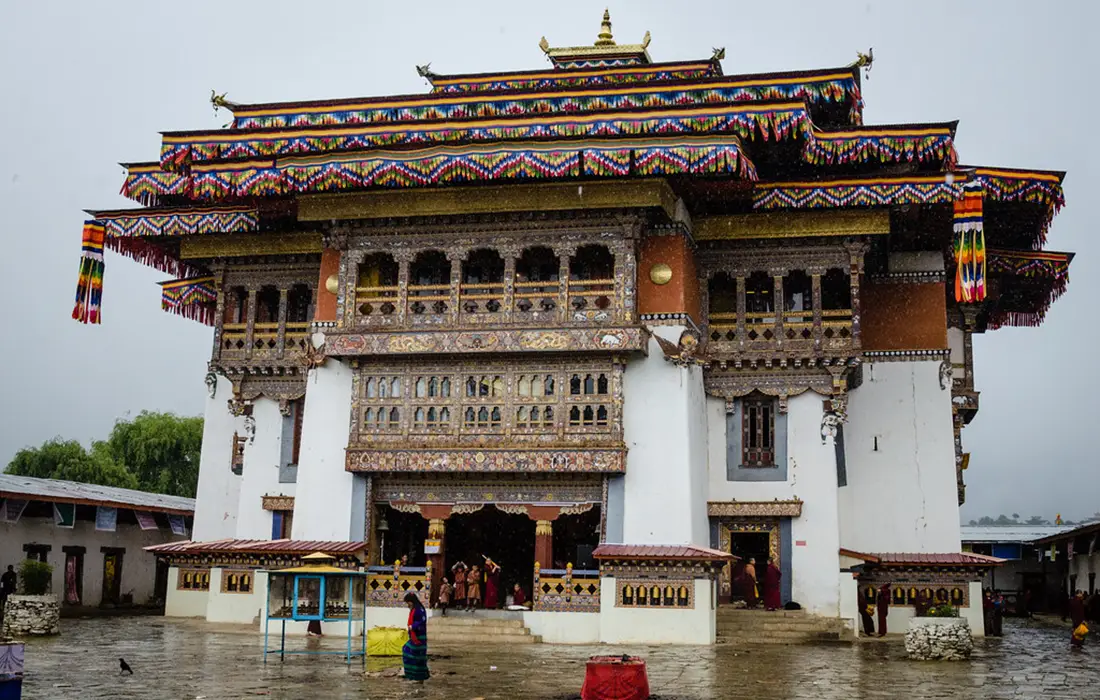
Gangtey Monastery, also known as Gangtey Goempa, serves as the spiritual landmark of the valley. It sits on a prominent spur overlooking the marshy floor, surrounded by the village of Gangtey. This 17th-century structure belongs to the Nyingma school of Buddhism, making it the only Nyingmapa monastery in western Bhutan.
History and Lineage
Gyalse Pema Thinley, the grandson and spiritual heir of the great treasure revealer Pema Lingpa, founded the monastery in 1613. The site’s location aligns with prophecies made by Pema Lingpa himself. The monastery complex consists of the central temple (Utse), surrounding monastic quarters, and a Shedra (Buddhist college) located to the north. The Shedra provides rigorous Buddhist education to approximately 300 monks.
Architectural Features
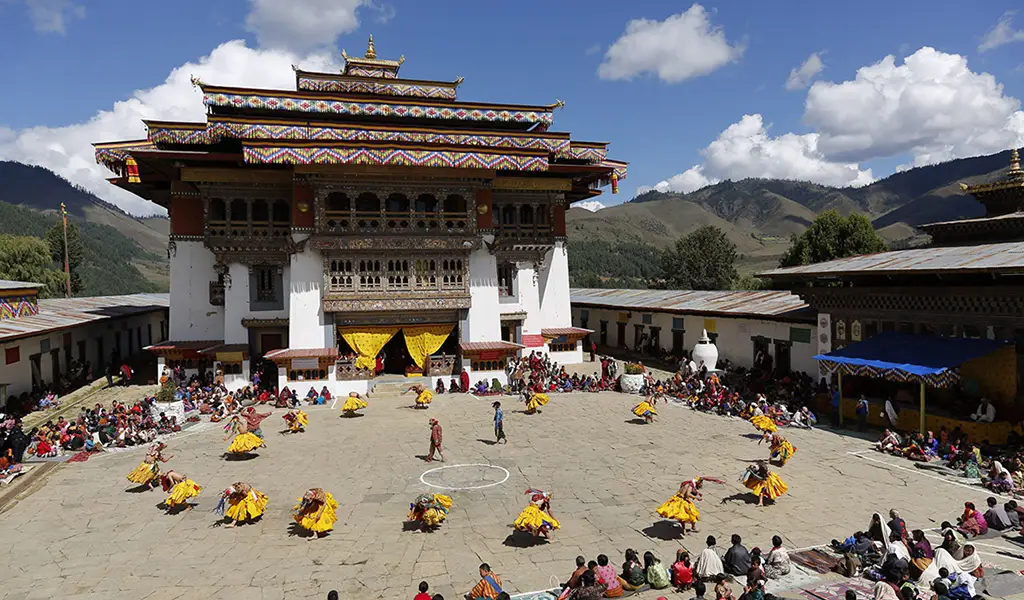
The monastery exemplifies traditional Bhutanese architecture with massive, tapered whitewashed walls and intricate wooden carvings. The central prayer hall features one of the largest halls in Bhutan, housing significant statues of the Buddha and the lineage masters. The courtyard serves as the primary venue for annual festivals and public gatherings.
| Monastery Feature | Detail |
| Founder | Gyalse Pema Thinley |
| Year Established | 1613 |
| Buddhist School | Nyingma (Pelling Nyingma lineage) |
| Head Figure | Gangtey Tulku (reincarnation of Pema Lingpa) |
| Daily Visiting Hours | 9:00 AM – 4:00 PM |
| Significant Structures | Central Utse, Shedra (College), Monastic Housing |
Cultural Festivals and Community Events
Festivals in Phobjikha are not merely tourist attractions but vital expressions of the community’s relationship with nature and the divine. The Black-Necked Crane Festival and the Gangtey Tsechu are the two most prominent events on the calendar.
The Black-Necked Crane Festival (November 11)
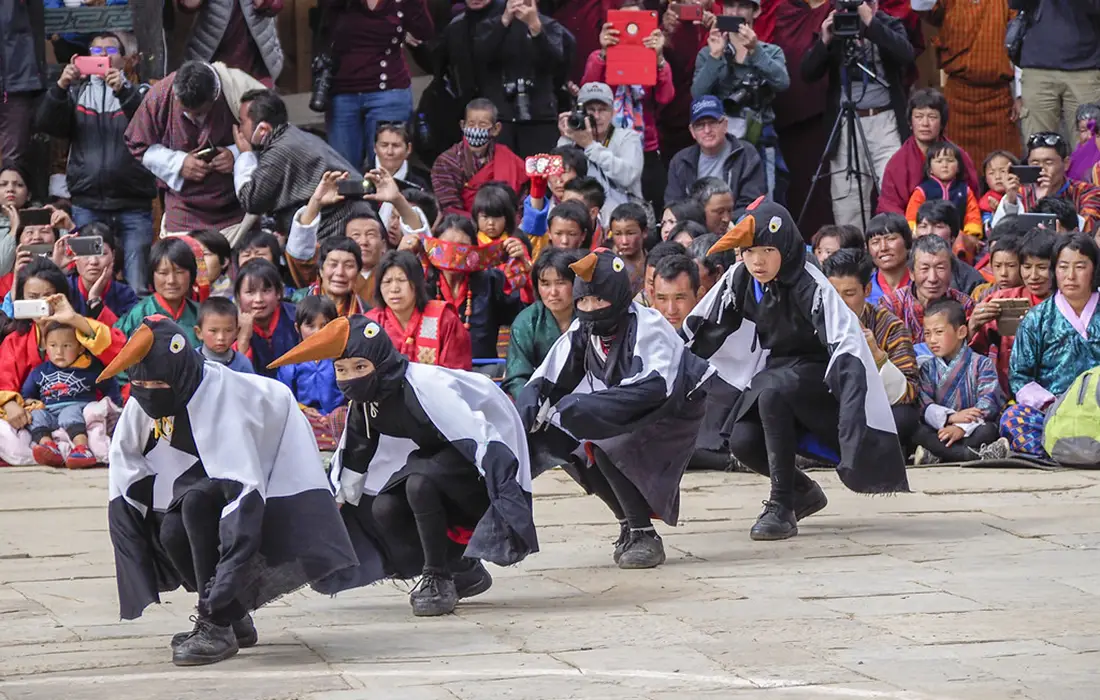
This annual festival occurs on November 11, coinciding with the official birth anniversary of the Fourth King of Bhutan and the arrival of the cranes. The RSPN initiated the festival in 1998 to raise awareness for crane conservation and generate sustainable income for the local community.
Key activities include:
- The Crane Dance: Local schoolchildren dress in costumes and mimic the cranes’ graceful movements, accompanied by traditional songs.
- Masked Dances (Cham): Monks perform sacred dances that represent various deities and spiritual lessons.
- Handicraft Stalls: Villagers sell local items such as yak-tail dusters, butter tea cups, and hand-woven textiles.
- Environmental Programs: The event includes plays and songs with conservation themes to educate both locals and visitors.
Gangtey Tsechu
The Gangtey Tsechu is a traditional religious festival held over several days in late autumn (usually September or October). It follows the lunar calendar and features elaborate masked dances and rituals that have remained unchanged for centuries. Unlike the Crane Festival, the Tsechu is primarily a spiritual event for the local residents to receive blessings and accumulate merit.
| Festival Name | Date | Venue | Primary Purpose |
| Black-Necked Crane Festival | November 11 | Gangtey Monastery Courtyard | Conservation awareness & cultural celebration |
| Gangtey Tsechu | Variable (Autumn) | Gangtey Monastery Courtyard | Religious blessing & merit accumulation |
| Khewang Lhakhang Festival | 3rd day of 9th lunar month | Khewang Lhakhang | Local community celebration |
Best time to visit Phobjikha Valley
Selecting the Best time to visit Phobjikha Valley depends on the traveler’s specific goals, whether wildlife viewing, trekking, or attending cultural festivals.
Winter: The Peak Crane Season (November to March)
Winter is the most popular time for visitors interested in the Black-Necked Cranes in Bhutan. While the weather is cold and dry, with nighttime temperatures dropping below freezing, the skies are generally clear, providing excellent views of the mountains. Snow is common in January and February, often prompting some locals and monks to temporarily relocate to warmer districts.
Spring: The Season of Blooms (March to May)
Spring is the ideal season for nature lovers and trekkers. As the cranes depart, the valley transforms with the blooming of azaleas, rhododendrons, and magnolias. The weather is mild, making it perfect for the 3-day Phobjikha Valley itinerary or day hikes.
Autumn: Harvest and Festivals (September to November)
Autumn provides crisp air and golden landscapes as the potato harvest concludes. This season is preferred by photographers for the dramatic lighting and by culture seekers for the major festivals.
| Season | Months | Temperature Range (Low/High) | Highlights |
| Winter | Dec – Feb | -5°C to 10°C | Black-necked cranes, clear mountain views, and snow |
| Spring | Mar – May | 5°C to 18°C | Rhododendrons, magnolia, peak trekking season |
| Summer | Jun – Aug | 10°C to 20°C | Lush green meadows, occasional monsoon rain |
| Autumn | Sep – Nov | 0°C to 15°C | Gangtey Tsechu, Crane Festival, potato harvest |
Sustainable Tourism and Visitor Logistics
Bhutan operates under a unique “High-Value, Low-Impact” tourism model to preserve its cultural and environmental heritage. Visitors to Phobjikha must adhere to specific national policies and local regulations.
Sustainable Development Fee (SDF)
As of the 2026-2027 period, the Sustainable Development Fee (SDF) remains a critical component of the travel budget. International tourists (excluding Indian, Bangladeshi, and Maldivian nationals) pay $100 USD per person per night. For Indian nationals, the fee is 1,200 Ngultrum (approximately $15-16 USD) per night. This fee funds free education, healthcare, and infrastructure development in Bhutan.
Visa and Entry Requirements
All international tourists must obtain a visa before arrival, which costs $40 USD per trip. This process is typically handled by a registered Bhutanese tour operator. From January 1, 2026, a 5% Goods and Services Tax (GST) applies to all tour package components, such as transport, hotels, and guide fees, though the SDF remains exempt from this tax.
| Fee Type | Amount (approx.) | Applicability |
| Sustainable Development Fee (SDF) | $100 / night | International Tourists |
| SDF for Indian Nationals | 1,200 Nu/night | Indian Citizens |
| Bhutan Visa Fee | $40 / person | All International Tourists |
| 5% GST (New for 2026) | 5% of package | All travelers (on services) |
| Standard Daily Package Cost | $180 – $250 | Includes guide, transport, and 3-star hotel |
Recommended Phobjikha Valley Itinerary
A typical Phobjikha Valley itinerary involves 2 to 3 days in the region, often as part of a longer western or central Bhutan tour.
2-Day Nature and Culture Loop
- Day 1: Drive from Punakha to Phobjikha (approx. 3 hours). Visit the Black-Necked Crane Information Centre to use high-powered telescopes. Enjoy a traditional farmhouse dinner with a local family.
- Day 2: Morning visit to Gangtey Monastery to witness monastic prayers. Hike the 4-km Gangtey Nature Trail (1.5 to 2 hours). Visit the Wangmo Hand-Woven Carpet Factory before departing for Trongsa or returning to Wangdue Phodrang.
3-Day Gangtey Trek
For adventure seekers, the Gangtey Trek is an easy-to-moderate route that passes through remote villages and diverse forests.
- Day 1: Phobjikha to Gogona (15 km). The trail starts from Tabiting village and climbs through meadows to the Tsele La pass (3,430m) before descending to Gogona village.
- Day 2: Gogona to Khotokha (16 km). Hikers climb through forests of fir, oak, and cypress to the Shobe La pass (3,480m) and descend into the wide valley of Khotokha.
- Day 3: Khotokha to Tikke Zampa (12 km). The final descent passes through an area renowned for birdwatching, eventually ending near the road at Tikke Zampa.
| Trekking Segment | Elevation Gain/Loss | Duration | Highlights |
| Phobjikha – Gogona | Ascent 610m | 6-7 Hours | Tsele La pass, dwarf bamboo, yak pastures |
| Gogona – Khotokha | Ascent 450m | 5-7 Hours | Shobe La Pass, rhododendron forests |
| Khotokha – Tikke Zampa | Descent 1,340m | 4-5 Hours | Birdwatching, terraced wheat fields |
Accommodations: From Luxury Lodges to Homestays
Phobjikha offers a range of lodging options that reflect the valley’s commitment to sustainable development and authentic experiences.
Luxury Eco-Lodges
The valley features several high-end lodges that blend traditional architecture with modern comfort.
- Gangtey Lodge: An award-winning 12-suite lodge designed like a Bhutanese farmhouse, featuring slate underfloor heating and roll-top bathtubs with valley views.
- Amankora Gangtey: An 8-suite lodge situated on a forested knoll, offering minimalist design and floor-to-ceiling windows overlooking the Gangtey Goempa.
- Six Senses Gangtey: A boutique lodge known for its “Bird Watching Bridge” design and focus on holistic wellness.
Traditional Farmstays and Guesthouses
For a deeper cultural connection, many travelers choose farmstays.
- Ap Passang’s Farmstay: A well-maintained traditional setup where guests can experience the daily life of a Bhutanese farmer and enjoy meals around a wood-fed stove.
- Dewachen Hotel & Spa: A mid-range option with 16 rooms heated by wood stoves (bukharis), located within the pine forests.
| Accommodation Tier | Typical Price (USD) | Example Property | Best Feature |
| Luxury / Deluxe | $800 – $2,000+ | Gangtey Lodge | Underfloor heating, hot-stone baths |
| Mid-Range | $60 – $150 | Dewachen Hotel | Panoramic views, authentic mountain charm |
| Budget / Homestay | $30 – $50 | Ap Passang’s Farmstay | Direct interaction with locals, organic food |
Gastronomy: The Flavors of Phobjikha
The culinary landscape of Phobjikha is defined by its agrarian roots and the high-altitude environment.
Staple Ingredients
Potatoes are the valley’s primary cash crop and feature prominently in local meals. Red rice, which grows in higher altitudes, is the standard accompaniment to most dishes. Dairy products, including butter and cheese (Datshi), are sourced from local cows and yaks.
Key Dishes to Try
- Kewa Datshi: Sliced potatoes cooked with local cheese, butter, and mild chilies. This dish is particularly comforting during the cold winters in Phobjikha.
- Gogona Cheese: A Swiss-style hard cheese produced in the village of Gogona, the result of a Swiss-Bhutanese development project started in the 1980s.
- Hoentay: Buckwheat dumplings filled with turnip leaves, cheese, and ginger, especially popular in higher valleys like Phobjikha and Haa.
| Food Item | Primary Ingredients | Description |
| Kewa Datshi | Potatoes, Cheese, Chilies | Hearty, creamy potato-cheese stew |
| Ema Datshi | Chilies, Local Cheese | The spicy national dish of Bhutan |
| Phaksha Paa | Pork, Dried Chilies, Radish | Sliced pork sautéed with spice and radish |
| Red Rice | Bhutanese Red Rice | Nutty-flavored, high-altitude staple rice |
| Ara | Fermented Grain | Traditional homemade alcohol served warm |
Artisanal Traditions: Wangmo Hand-Woven Carpet Factory
The Wangmo Hand-Woven Carpet Factory represents a successful model of community-based enterprise in the valley.
History and Impact
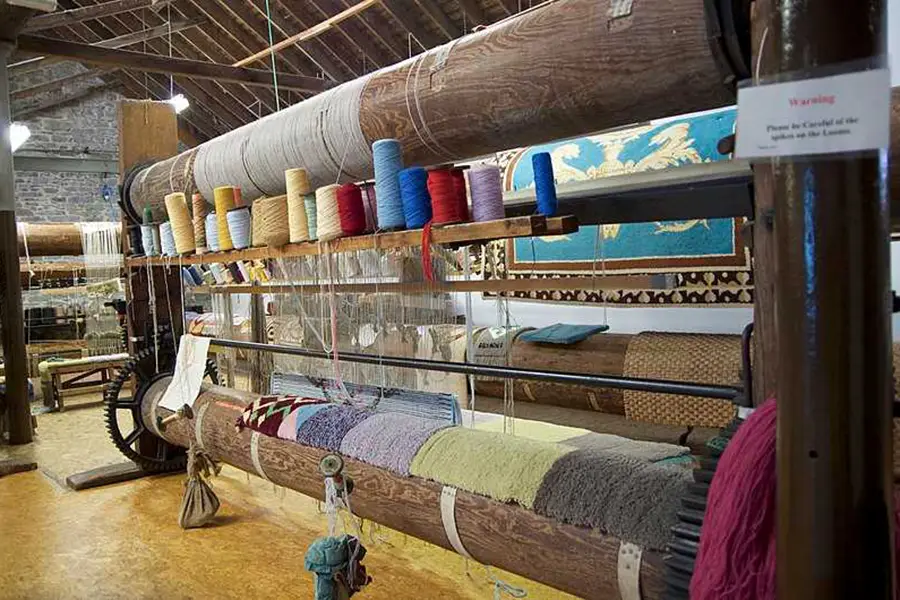
Dorji Wangmo established the factory in 1992 below the Yue Loki Guest House. Her primary objective was to empower local women through training and employment in the traditional art of carpet weaving. Today, the factory produces high-quality organic carpets that are in demand globally.
The Weaving Process
The entire production process is hand-driven, from spinning local wool to applying natural dyes derived from minerals and plants. The patterns are often deeply symbolic, incorporating traditional motifs that represent Bhutanese mythology and folklore. Visitors can observe the weavers at work and purchase finished carpets directly from the source.
| Artisanal Metric | Data |
| Establishment Year | 1992 |
| Founder | Dorji Wangmo |
| Material Source | Locally sourced sheep/yak wool |
| Dye Type | Organic (plant and mineral-based) |
| Social Impact | Employment and skill development for valley women |
| Visitor Access | Open daily 9:00 AM – 5:00 PM |
Practical Preparation
Preparing for a Phobjikha visit requires consideration of the high altitude and the variable weather conditions of the Black Mountains.
Packing Essentials
- Layering Clothing: Temperatures can fluctuate significantly throughout the day. Pack thermal base layers, a warm fleece, and a down jacket for evenings.
- Footwear: Sturdy, broken-in hiking boots are essential for the nature trails. Slip-on shoes are recommended for temple visits, as shoes must be removed frequently.
- Protection: The high altitude increases UV exposure. High-SPF sunscreen, a wide-brimmed hat, and polarized sunglasses are mandatory.
- Gear: Bring a reusable water bottle to support the valley’s plastic-free initiatives. Binoculars are highly recommended for viewing the cranes from a respectful distance.
Health Considerations
While Phobjikha (3,000m) is generally below the threshold for severe altitude sickness for most, travelers may experience mild symptoms such as shortness of breath or headaches. Stay hydrated, avoid excessive alcohol consumption on the first night, and move at a relaxed pace. Consult a doctor regarding altitude medication if you have a history of sensitivity.
| Packing Category | Recommended Items |
| Clothing | Thermal layers, down jacket, wool socks, modest temple attire |
| Footwear | Hiking boots, slip-on shoes for temples, sandals for farmstays |
| Toiletries | High-SPF sunscreen, lip balm, moisturizer, hand sanitizer |
| Electronics | Universal adapter (Type D, F, G), power bank, extra batteries |
| Medical | Altitude meds, motion sickness pills, basic first-aid kit |
Cultural Etiquette and Conduct
Bhutan is a deeply traditional society, and respectful behavior is essential when visiting sacred sites in Phobjikha.
Temple and Monastery Etiquette
- Dress Code: Visitors must cover their shoulders and knees. Shorts, tank tops, and short skirts are strictly prohibited.
- Hats and Shoes: Remove hats and sunglasses before entering temple precincts. Remove shoes before stepping into the main shrine rooms.
- Direction of Travel: Always walk clockwise around religious structures such as stupas (chortens), mani walls, and prayer wheels.
- Photography: Taking photos is usually permitted in courtyards but strictly forbidden inside chapels and shrine rooms.
Social Interactions
- Pointing: Do not point at people or religious artifacts with your index finger. Instead, use an open hand with the palm facing upwards.
- Voice and Demeanor: Maintain a low voice and calm behavior in public spaces, especially near monasteries and when viewing wildlife.
- Tipping: While not mandatory, tipping guides and drivers is a common practice in the tourism industry to show appreciation for good service.
| Rule of Conduct | Correct Behavior |
| Entering a Temple | Remove shoes and hat, speak in whispers |
| Circumambulation | Always walk clockwise |
| Pointing | Use an open palm, never the index finger |
| Photography | Ask permission, no flash, no photos inside shrines |
| Clothing | Long pants/skirts, collared shirts, no bare shoulders |
Community-Based Sustainable Tourism (CBST)
Phobjikha is a pioneer in community-based sustainable tourism in Bhutan, where the economic benefits of travel are shared with local inhabitants.
Socio-Economic Impact
Research indicates that CBST has brought positive economic and socio-cultural impacts to the valley. The creation of homestays and the sale of local handicrafts provide alternative livelihoods for subsistence farmers. These initiatives also foster a sense of pride in the local heritage and encourage the preservation of traditional arts.
Challenges and Mitigation
Despite the successes, the increase in tourism poses challenges, including waste management and environmental pressure on the fragile wetlands. The RSPN and the local government have implemented collaborative strategies to address these issues, including visitor caps during peak festivals and community-led clean-up drives. Travelers are encouraged to practice “leave no trace” principles by disposing of their waste properly and supporting eco-friendly businesses.
Future Outlook
The goal for Phobjikha is to maintain its status as a sanctuary for both wildlife and the human spirit. By prioritizing happiness and environmental conservation over unchecked growth, the valley remains a testament to Bhutan’s unique development philosophy.
| CBST Element | Description |
| Primary Goal | Balance economic gain with conservation |
| Revenue Source | Homestays, guiding, handicrafts, festival fees |
| Management | Collaborative model (RSPN, Government, Community) |
| Key Challenge | Waste management and plastic pollution |
| Success Indicator | Stable crane population and improved local infrastructure |
Detailed Site Guide: Beyond Gangtey Monastery
While the Gangtey Monastery is the primary attraction, several other significant sites in Phobjikha offer deeper historical and spiritual insights.
Khewang Lhakhang
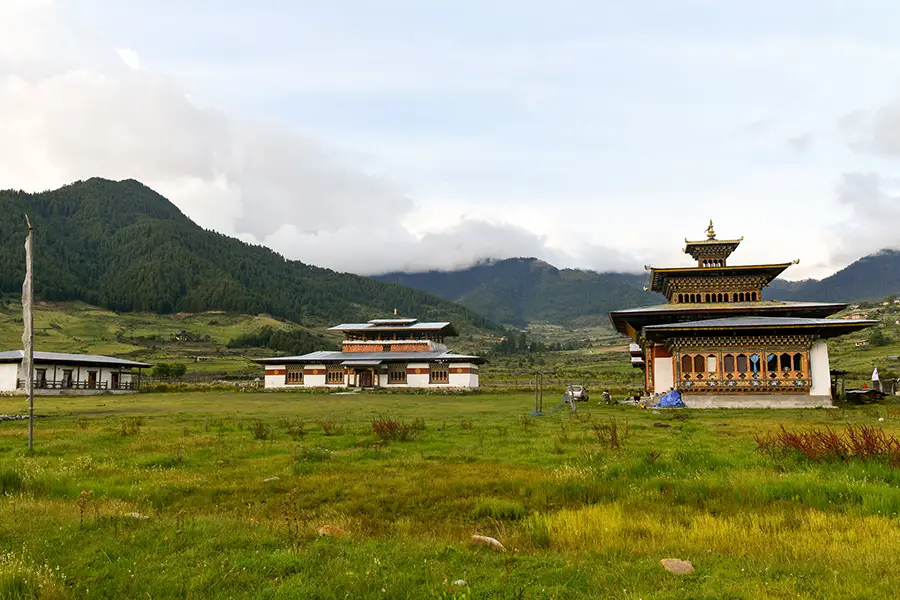
Located on the eastern side of the valley, this 15th-century temple was built by Tibetan sculptors in a distinct Tibetan style. It features three statues of the past, present, and future Buddhas. The local community holds its own festival here on the third day of the ninth month of the lunar calendar.
Kumbu Lhakhang
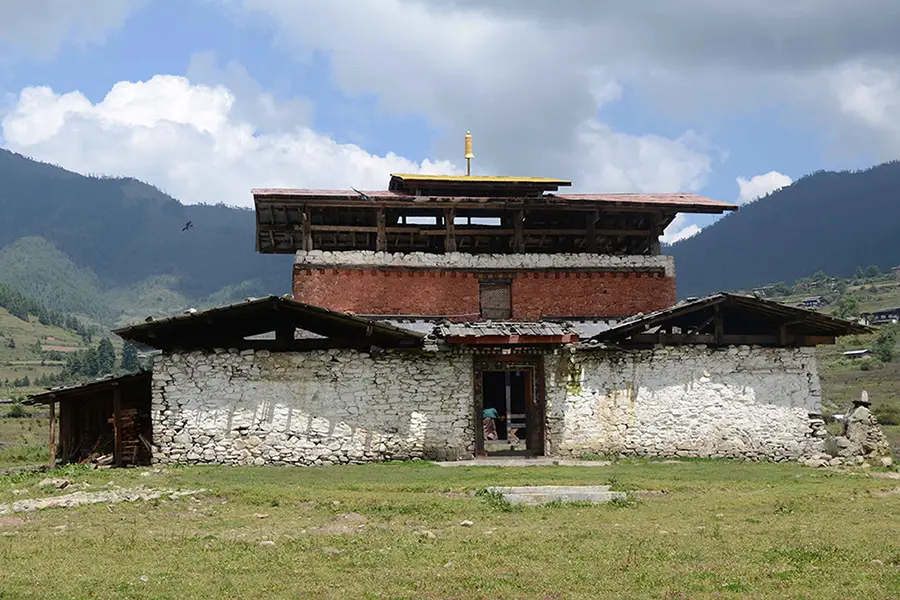
Situated to the northeast of Gangtey, this temple is dedicated to the ancient Bon religion deity Sipey Gyalpo. The name Kumbu translates to “100,000 statues”. It serves as a meditation center and is considered spiritually refreshing to visit, though the dirt road can become impassable during heavy rains.
Nyelong Dechenling
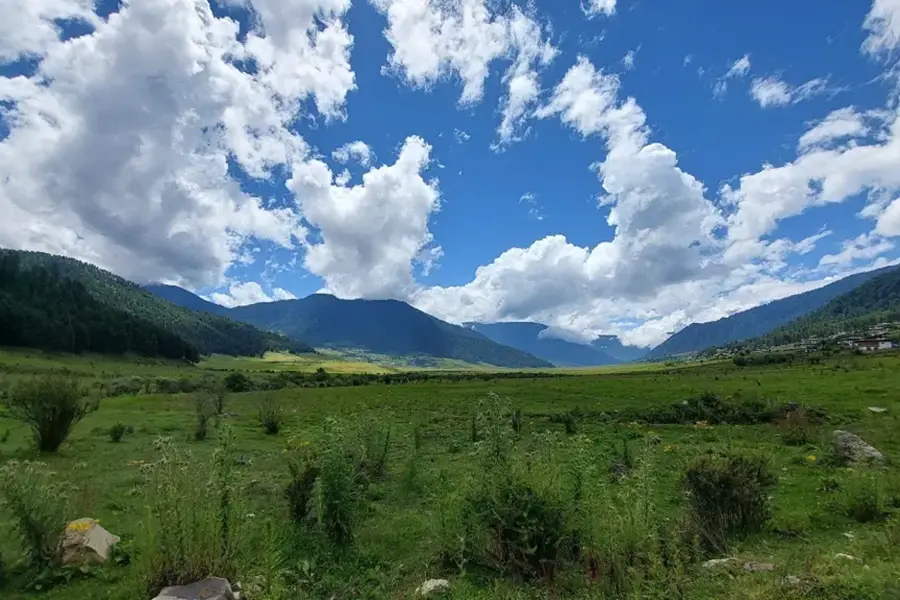
This temple is historically significant as one of the eight residences of the great Nyingma master Longchen Rabjam (Longchenpa), who visited the valley in the 14th century. It is located near the Amankora Gangtey Resort and offers a quiet, contemplative atmosphere away from the main tourist paths.
Damchen Lhakhang
One of the oldest temples in the region, Damchen Lhakhang, is located in the western part of the valley and is noted for its beautiful, ancient wall paintings.
| Lesser-Known Site | Significance | Location |
| Khewang Lhakhang | 15th-century Tibetan-style temple | East Valley floor |
| Kumbu Lhakhang | Dedicated to Bon deity Sipey Gyalpo | Northeast of Gangtey |
| Nyelong Dechenling | Home of Master Longchenpa | West Valley ridge |
| Damchen Lhakhang | Ancient paintings, very old foundation | West Valley floor |
Wildlife Watching: Best Practices
Observing the Black-Necked Cranes in Bhutan requires a respectful approach to ensure the birds are not stressed or displaced from their roosting grounds.
Non-Intrusive Viewing
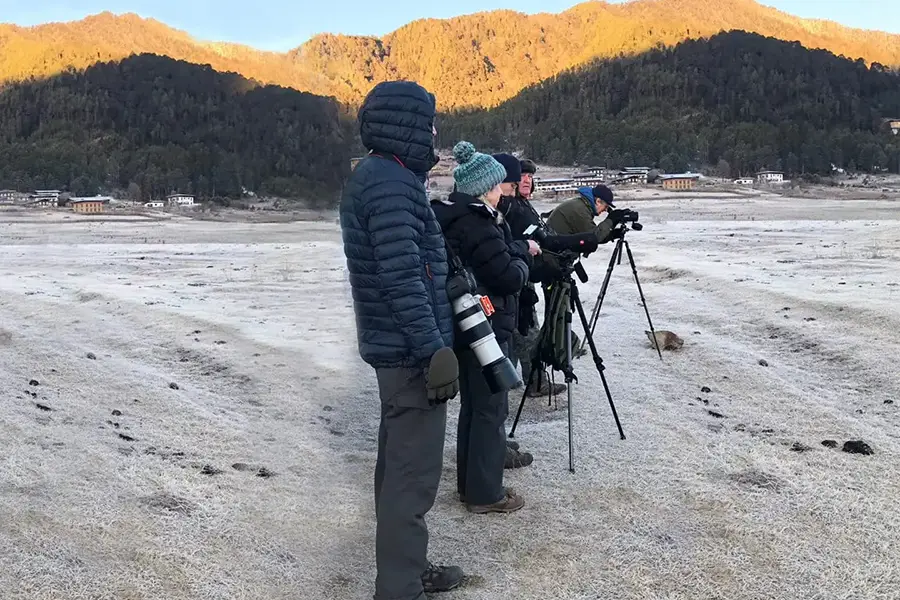
The RSPN recommends using the Black-Necked Crane Information Centre as the primary viewing point. The center’s observation room is equipped with professional spotting scopes that enable high-resolution viewing from hundreds of meters away. Visitors should avoid walking into the marshy areas where the cranes feed and roost.
Optimal Timing
The cranes are most active during the early morning and late afternoon. Sunrise viewing offers the chance to see the birds taking flight from their communal roosts to feed in the nearby potato fields. During the day, they often forage in smaller family groups across the valley floor.
Photography Ethics
When photographing wildlife, do not use flash and maintain a silent presence. Using a long telephoto lens (300mm or more) is the best way to capture images without physically approaching the birds. If a bird stops its behavior and looks at you, it means you are too close and should retreat slowly.
| Wildlife Watching Tip | Recommendation |
| Best Time of Day | 6:00 AM – 8:00 AM & 4:00 PM – 6:00 PM |
| Recommended Gear | Binoculars or 400mm+ lens |
| Viewing Distance | Stay on designated trails or at the Information Centre |
| Behavior to Avoid | Shouting, running, using drones, flash photography |
| Auspicious Sight | Cranes circling Gangtey Monastery |
Environmental Conservation History
The protection of the Phobjikha Valley in Bhutan is not accidental but the result of decades of proactive planning and international cooperation.
The MacArthur Foundation and ICDP
In 1999, the RSPN received financial support from the MacArthur Foundation in the USA to establish the Integrated Conservation and Development Program (ICDP). This program was the first to formalize the link between environmental protection and improved local livelihoods in the valley.
Ramsar Convention and Beyond
The 2014 Ramsar designation placed Phobjikha on the global stage, committing the Bhutanese government to maintain water quality and preserve the habitat under international treaty obligations. This status has helped attract further funding for climate change adaptation projects, such as restoring degraded wetlands and planting bamboo buffers to protect the crane feeding grounds.
Lessons for Other Regions
The Phobjikha model—where development, such as electrification, is adapted (e.g., underground cables) to meet wildlife needs—is often cited by environmentalists as a blueprint for balancing modern progress with biodiversity. It demonstrates that sustainable tourism can fund conservation while maintaining the traditional way of life for thousands of subsistence farmers.
| Historical Milestone | Year | Impact |
| First Monastic Foundation | 1613 | Spiritual center of the valley established |
| RSPN Founded | 1987 | Professional conservation monitoring began |
| ICDP Launched | 1999 | Linked community development with conservation |
| Information Centre Opened | 2003 | Public education and research hub established |
| Ramsar Site Designation | 2014 | International protection for the wetlands |
Final Conclusion for the Traveler
Phobjikha Valley, Bhutan, offers a rare opportunity to witness a landscape where nature, culture, and sustainable development exist in genuine harmony. Whether you visit to see the “Heavenly Messengers” in the winter, to trek through the blooming rhododendron forests in the spring, or to join the vibrant festivities in the autumn, the valley leaves a lasting impression of tranquility and resilience. By preparing carefully, respecting local etiquette, and supporting the community-based tourism initiatives, visitors contribute directly to the preservation of this unique Himalayan treasure for future generations.