


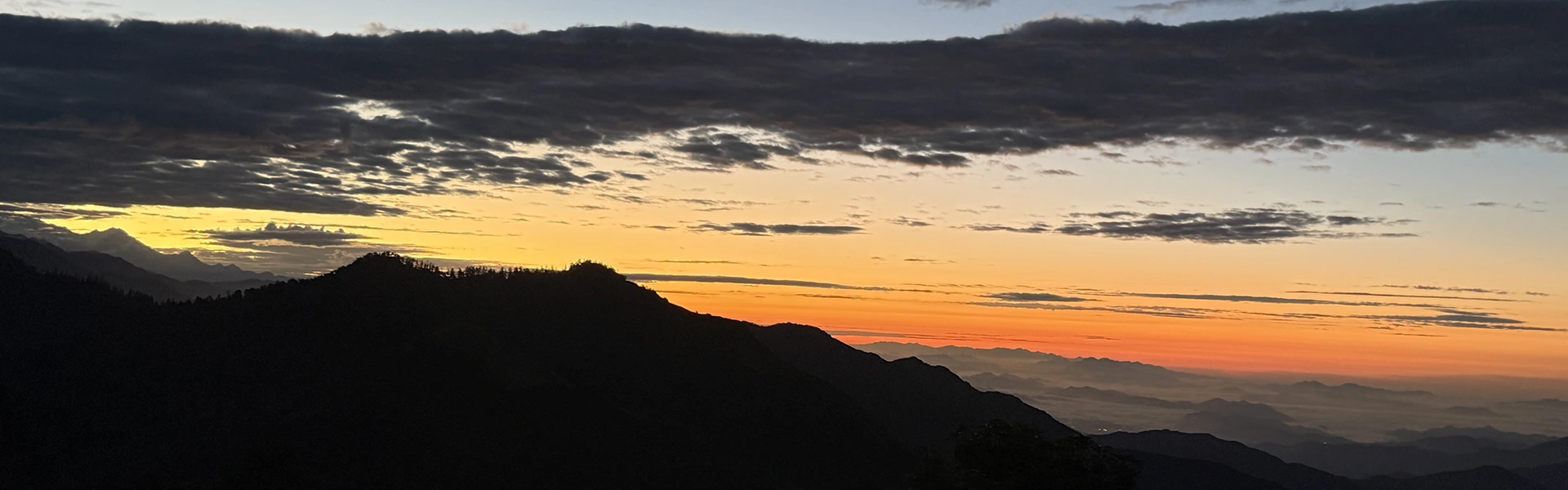

This Poon Hill Trek Guide helps travelers plan Nepal’s most popular short Himalayan trek. The Poon Hill Trek route starts near Pokhara, passes through Ulleri, Ghorepani, Tadapani, and Ghandruk, and reaches Poon Hill at 3,210 meters for sunrise views of Dhaulagiri, Annapurna South, Hiunchuli, and Machhapuchhre. The Poon Hill Trek suits beginners, families, photographers, and travelers with limited time. Most Poon Hill Trek itineraries take 4 to 5 days from Pokhara.
The Poon Hill Trek route stays inside the Annapurna Conservation Area and uses teahouse lodges every night. This Poon Hill Trek Guide covers the sunrise experience, route overview, day-by-day itinerary, mountain views, difficulty, permits, guide rules, cost, best season, rhododendron bloom, packing, accommodation, and common mistakes.
Quick Answer: Poon Hill Trek Guide
The Poon Hill Trek takes 4 to 5 days from Pokhara. The route reaches Poon Hill at 3,210 meters for sunrise views of Dhaulagiri, Annapurna South, Hiunchuli, Machhapuchhre, and nearby peaks. Trekkers need an ACAP permit and current TIMS documentation for the Poon Hill Trek, as per official Nepal Tourism Board guidance.
| Topic | Details |
|---|---|
| Trek Region | Annapurna Conservation Area |
| Gateway City | Pokhara |
| Typical Duration | 4 to 5 days |
| Highest Point | Poon Hill, 3,210 m |
| Difficulty | Easy to moderate |
| Best Seasons | Autumn (Oct–Nov), Spring (Mar–May) |
| Best For | Beginners, families, photographers, short-term travelers |
| Main Highlight | Poon Hill sunrise panorama |
| Rhododendron Season | March to April |
Poon Hill Sunrise: What Trekkers Actually See
Trekkers on the Poon Hill Trek usually start climbing from Ghorepani before dawn. The pre-sunrise hike takes 45 to 90 minutes, depending on pace and trail conditions. The Poon Hill viewpoint sits at 3,210 meters above the village. Clear mornings deliver the best mountain panoramas from the summit. Cloud can block views on some days, so no responsible Poon Hill Trek Guide should ever guarantee the sunrise.
| Detail | Information |
|---|---|
| Viewpoint altitude | 3,210 m |
| Start point | Ghorepani |
| Hike duration | 45–90 minutes |
| Best start time | 4:30–5:00 AM, season-dependent |
| Key peaks visible | Dhaulagiri, Annapurna South, Hiunchuli, Machhapuchhre, Nilgiri |
| Essential gear | Headlamp, warm jacket, gloves, water, camera |
| Best for clear sky | Autumn and winter mornings |
| Best for flowers | Spring (March–April) |
The Poon Hill viewpoint gets crowded during peak trekking season. Arrive early for a good position. Warm clothing matters because the pre-dawn wait can feel cold on the Poon Hill Trek in the evening of spring. Keep your headlamp, jacket, gloves, and camera ready the night before departing Ghorepani.
Mountains Visible from Poon Hill
| Mountain | Altitude | View Quality |
|---|---|---|
| Dhaulagiri I | 8,167 m | Dominant western view — most impressive peak from Poon Hill |
| Annapurna I | 8,091 m | Visible across the Annapurna range |
| Annapurna South | 7,219 m | One of the most prominent peaks from the viewpoint |
| Hiunchuli | 6,441 m | Clearly visible beside Annapurna South |
| Machhapuchhre | 6,993 m | Recognizable fishtail shape from Poon Hill |
| Nilgiri | 7,061 m | Strong view toward the northwest |
| Tukuche Peak | 6,920 m | Near the Dhaulagiri side |
| Lamjung Himal | 6,983 m | Eastern Annapurna side |
Everest does not appear from Poon Hill. Everest lies far to the east and does not form part of the Poon Hill panorama. Dhaulagiri dominates the western view on the Poon Hill Trek. Machhapuchhre and Annapurna South define the entire eastern side of the sunrise spectacle.
Route Overview
Standard 5-Day Poon Hill Trek Route
Pokhara to Nayapul/Birethanti to Tikhedhunga/Ulleri to Ghorepani to Poon Hill to Tadapani to Ghandruk to Pokhara. The 5-day Poon Hill Trek plan suits most travelers and gives a comfortable, well-paced journey through villages, rhododendron forests, and the iconic sunrise viewpoint.
Short 4-Day Poon Hill Trek Route
Pokhara to Ulleri to Ghorepani to Poon Hill to Tadapani/Ghandruk to Pokhara. The 4-day Poon Hill Trek is well-suited for fit hikers. It skips some lower sections of the trail but covers all the main highlights of the route.
Extended Route: Poon Hill Trek to ABC
From Tadapani, Poon Hill trekkers can continue toward Chhomrong and Annapurna Base Camp. This extension adds five to seven days and turns the short Poon Hill Trek into a full Annapurna trekking experience.
Poon Hill Trek Itinerary: 5 Days
| Day | Route | Altitude | Walk Time | Highlights |
|---|---|---|---|---|
| 1 | Pokhara to Nayapul, trek to Tikhedhunga/Ulleri | 1,540–2,050 m | 4–6 hrs | Villages, river trail, stone steps |
| 2 | Trek to Ghorepani | ~2,860 m | 4–6 hrs | Rhododendron forest trail, mountain views |
| 3 | Poon Hill sunrise, trek to Tadapani | 3,210 m peak | 5–6 hrs | Sunrise panorama, forest ridge walk |
| 4 | Trek to Ghandruk | ~1,940 m | 3–4 hrs | Gurung village, mountain views |
| 5 | Trek/drive to Pokhara | 822 m | Variable | Return to Pokhara lakeside |
4-Day Short Poon Hill Trek Version
Day 1: Drive from Pokhara to Ulleri, trek to Ghorepani. Day 2: Poon Hill sunrise, trek to Tadapani. Day 3: Trek to Ghandruk. Day 4: Drive or trek back to Pokhara. The shorter Poon Hill Trek version works for fit trekkers but feels rushed for families or first-time trekkers.
Poon Hill Trek Altitude Profile
| Place | Approx. Altitude |
|---|---|
| Pokhara | 822 m |
| Nayapul | ~1,070 m |
| Tikhedhunga | ~1,540 m |
| Ulleri | ~2,050 m |
| Ghorepani | ~2,860 m |
| Poon Hill | 3,210 m |
| Tadapani | ~2,620 m |
| Ghandruk | ~1,940 m |
The Poon Hill Trek reaches 3,210 meters at the viewpoint. Trekkers sleep at Ghorepani, approximately 2,860 meters. Altitude risk on the Poon Hill Trek stays lower than on high Himalayan routes. Walk at a steady pace, drink enough water, and avoid rushing between villages.
Key Villages and Trail Highlights on the Poon Hill Trek
- Nayapul/Birethanti: Common Poon Hill Trek trailhead from Pokhara. ACAP permit checkpoint. River valley start point.
- Tikhedhunga: Popular first-night stop on the Poon Hill Trek. Lower-altitude village. Gateway to the Ulleri stone step climb.
- Ulleri: Famous for its steep stone steps — the most physically demanding section of the Poon Hill Trek—Magar village with open mountain views. A slow pace with short breaks is the best approach here.
- Ghorepani: The main Poon Hill Trek base village for the sunrise viewpoint hike. Teahouse hub surrounded by dense rhododendron forests. Most trekkers overnight here before the pre-dawn Poon Hill climb.
- Tadapani: A forest ridge village on the Poon Hill Trek descent. Junction point toward Ghandruk and the ABC extension route. Good mountain views on clear days.
- Ghandruk: A classic Gurung cultural village and a highlight of this Poon Hill Trek Guide. Views of Annapurna South, Hiunchuli, and Machhapuchhre.—better tea house facilities than most stops on the route.
The Stone Steps of Ulleri
The Ulleri climb ranks as the toughest physical section for most Poon Hill Trek trekkers. Thousands of stone steps gain significant elevation over a short distance. The trek to Poon Hill Tests leg strength and patience. Trekking poles help considerably. Stair training before the Poon Hill Trek helps even more. The trail becomes slippery during rain. Take short rest breaks rather than pushing straight to the top. The reward comes at Ulleri village, where mountain views open up for the first time. Fit trekkers handle the stone steps well. Families and beginners planning the Poon Hill Trek should allow extra time for this section.
Rhododendron Season on the Poon Hill Trek
| Altitude Zone | Typical Bloom | Trail Section |
|---|---|---|
| 1,500–2,000 m | Late February to March | Lower route and Ulleri area |
| 2,000–2,500 m | March | Ulleri to Banthanti |
| 2,500–3,000 m | Late March to April | Banthanti to Ghorepani |
| Around 3,000 m | April | Ghorepani and Tadapani side |
The Ghorepani area on the Poon Hill Trek sits inside one of Nepal’s most spectacular rhododendron forest zones. Spring delivers the best flower season for the Poon Hill Trek. Lower forests bloom earlier in the season. Higher forests around Ghorepani bloom later into April. Bloom timing changes each year with temperature and rainfall patterns. Autumn gives clearer mountain skies on the Poon Hill Trek, but without the spring flowers.
Best Time for the Poon Hill Trek
| Season | Months | Views | Trail Conditions | Rating |
|---|---|---|---|---|
| Autumn | Sep–Nov | Excellent | Stable and dry | Best season |
| Spring | Mar–May | Good mornings | Rhododendron bloom | Best for flowers |
| Winter | Dec–Feb | Clear on good days | Cold mornings | Good |
| Monsoon | Jun–Aug | Often cloudy | Wet, slippery, leeches | Not ideal |
Winter works well for the Poon Hill Trek because the route stays at a moderate altitude throughout. Clear winter skies reward trekkers with sharp, detailed mountain panoramas. Cold mornings require proper warm gear at Ghorepani and the viewpoint. Monsoon season brings rain, persistent cloud, slippery stone steps, and poor summit visibility on the Poon Hill Trek.
Poon Hill Trek Difficulty and Fitness Requirements
The Poon Hill Trek is rated easy to moderate difficulty. The main challenges on this trek include the stone steps up to Ulleri, the pre-dawn hike to Poon Hill, repeated uphill and downhill walking, slippery forest trails in the rain, the cold pre-dawn wait at the viewpoint, and knee strain on long descents. Poon Hill Trek trekkers should be able to walk 4 to 6 hours per day, climb stairs without excessive strain, carry a light daypack, and descend without significant knee pain. Train on stairs and hilly terrain for four to six weeks before starting the Poon Hill Trek.
| Traveler Type | Suitable? | Note |
|---|---|---|
| Fit beginner | Yes | One of Nepal’s best first Himalayan treks |
| Family with active children | Yes | Use a 5-day Poon Hill Trek pace, and supervise the steps |
| Older traveler with good mobility | Yes | Trekking poles help significantly on descents |
| Photographer | Yes | Outstanding sunrise and rhododendron opportunities |
| Cannot manage stairs | Challenging | Ulleri stone steps present a real physical barrier |
| Experienced trekker | Easy | Excellent warm-up trek before longer Annapurna routes |
Poon Hill Trek Permits and Guide Rules
| Permit / Rule | Required? | Notes |
|---|---|---|
| ACAP Permit | Yes | NPR 3,000 for foreigners, NPR 1,000 for SAARC nationals |
| TIMS Card | Yes | Agency-issued under the NTB revised provision |
| Licensed Guide | Yes | Mandatory under the NTB revised TIMS provision |
| Restricted Area Permit | No | Not required for the standard Poon Hill Trek route |
| Poon Hill viewpoint fee | Usually yes | Small local entry fee collected at the viewpoint gate |
Permit and guide rules for the Poon Hill Trek change periodically. Confirm the latest ACAP fee and TIMS requirements with a registered trekking agency before finalizing your Poon Hill Trek booking.

Poon Hill Trek Cost Overview
| Trek Style | Best For | Main Cost Factors |
|---|---|---|
| Budget guided Poon Hill Trek | Cost-conscious travelers | Basic lodges, local transport, guide, permits |
| Standard guided Poon Hill Trek | Most travelers | Guide, porter, meals, lodges, private or shared transport |
| Comfort Poon Hill Trek | Families and private groups | Better lodges, private vehicle, experienced guide |
| Poon Hill Trek + ABC | Trekkers with more available time | Extra days, more meals, higher route cost |
The Poon Hill Trek typically costs less than longer Nepal trekking routes because of the shorter duration. Main cost items on the Poon Hill Trek include the ACAP permit, TIMS documentation, guide fees, porter fees, transport from Pokhara, teahouse accommodation, meals, hot showers, device charging, tips, and equipment rental where needed.
Poon Hill Trek vs Mardi Himal, ABC, and Everest Panorama
| Factor | Poon Hill Trek | Mardi Himal | ABC Trek | Everest Panorama |
|---|---|---|---|---|
| Duration | 4–5 days | 5–7 days | 7–12 days | 7–10 days |
| Highest point | 3,210 m | ~4,500 m | 4,130 m | ~3,880 m |
| Difficulty | Easy–moderate | Moderate | Moderate | Easy–moderate |
| Main view | Dhaulagiri and Annapurna panorama | Close Machhapuchhre views | Annapurna Sanctuary | Everest region |
| Best for | Beginners, short trips | Fit and experienced hikers | Deeper Annapurna experience | Short Everest trek |
| Cost | Lower | Low to moderate | Moderate | Higher — Lukla flight required |
Poon Hill Trek Accommodation and Food
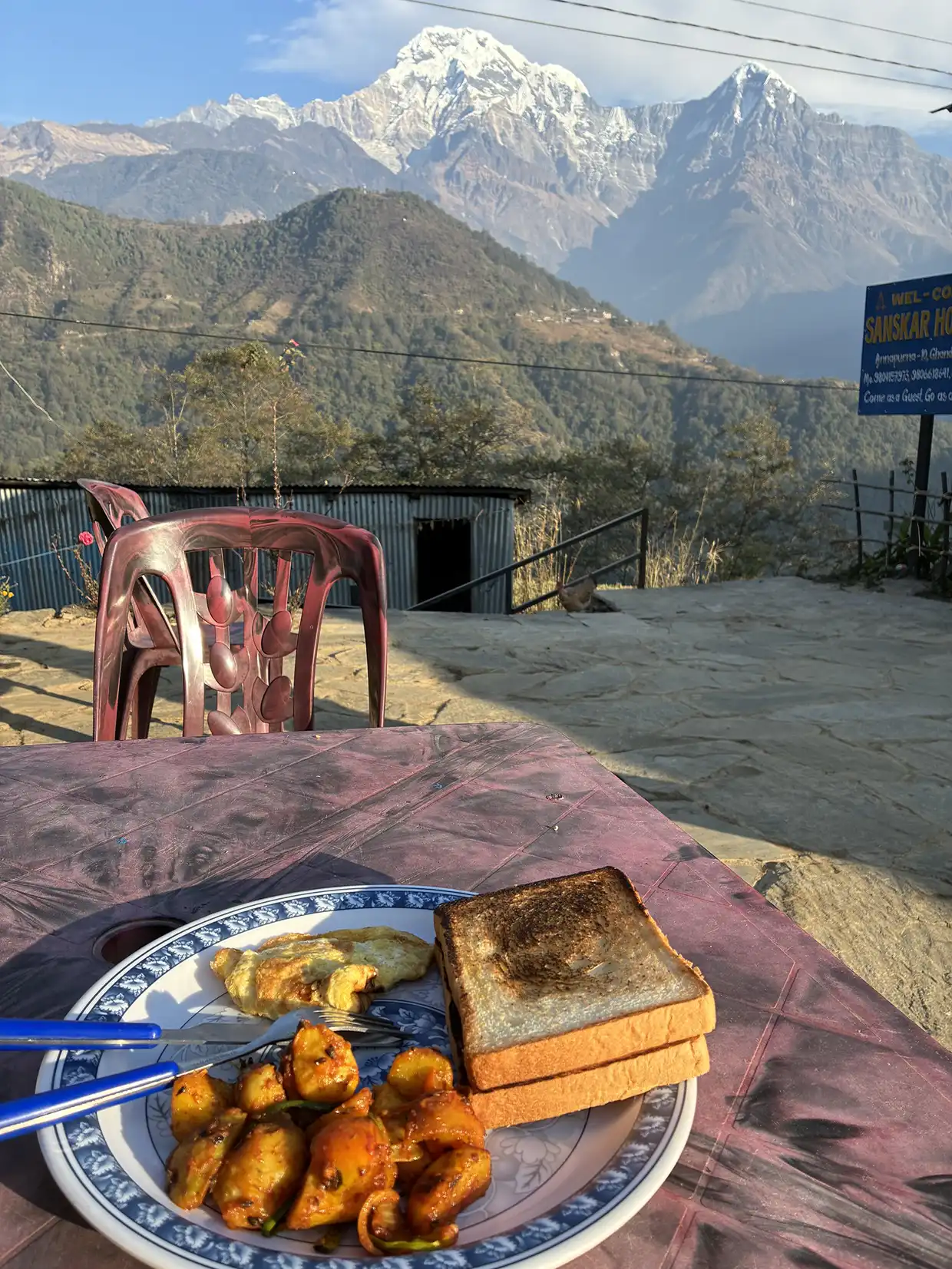
Teahouses operate along the entire Poon Hill Trek route. Ghorepani and Ghandruk offer the widest selection of lodge options on the Poon Hill Trek. Rooms stay simple and twin-sharing throughout. Hot showers and device charging cost extra at most teahouses. Booking ahead during peak Poon Hill Trek season helps secure better rooms. Common meals on the Poon Hill Trek include dal bhat, noodle soup, fried rice, pasta, potatoes, eggs, porridge, pancakes, tea, and hot lemon. Gurung and Magar-style dishes add authentic local flavor where available. Food prices stay reasonable on this lower-altitude route.
Poon Hill Trek Packing List
Clothing
- Moisture-wicking base layer, mid-layer fleece, down or warm jacket, essential for the Poon Hill sunrise
- Waterproof shell jacket, convertible trekking pants
- Warm hat, wide-brim sun hat, lightweight gloves, neck buff
- Moisture-wicking trekking socks — multiple pairs
Poon Hill Trek Footwear and Gear
- Well broken-in waterproof trekking boots or trail shoes
- Lightweight camp sandals for teahouse evenings
- 25–30L daypack, adjustable trekking poles, headlamp with spare batteries
- UV-protection sunglasses, insulated water bottle, power bank
- Rain cover for pack and gear
Poon Hill Trek Essentials
- Passport copy, ACAP permit, TIMS documentation — all required for the Poon Hill Trek
- Travel insurance copy, sufficient cash in Nepali rupees
- High-SPF sunscreen, SPF lip balm, personal prescription medicines, compact first-aid kit
Keep a headlamp, warm jacket, gloves, hat, water, and camera ready before sleeping in Ghorepani on the Poon Hill Trek. The sunrise hike to the viewpoint starts in complete darkness.
Connecting the Poon Hill Trek to Longer Routes
| Connection | Extra Days | Best For |
|---|---|---|
| Poon Hill Trek to ABC | 5–7 days | Trekkers wanting both sunrise and the Annapurna Sanctuary |
| Annapurna Circuit finish | 3–4 days | Classic circuit ending via Tatopani and Ghorepani |
| Poon Hill Trek and Ghandruk loop | 1–2 days | Families and culture-focused trekkers |
| Poon Hill Trek as a warm-up | Separate trek | First-time trekkers preparing for longer Himalayan routes |
Common Mistakes to Avoid on the Poon Hill Trek
- Underestimating the Ulleri stone steps on the Poon Hill Trek
- Starting the Poon Hill sunrise hike too late from Ghorepani
- Forgetting a headlamp for the pre-dawn climb to the viewpoint
- Packing too lightly for cold mornings at the Poon Hill summit
- Expecting clear mountain views during the monsoon season
- Starting the Poon Hill Trek with new, unbroken shoes or boots
- Carrying excessive luggage on a short route
- Not carrying sufficient cash for trail expenses and tips
- Skipping required Poon Hill Trek permits or ignoring current guide rules
- Rushing through Ghandruk without exploring the Gurung village
- Not booking Ghorepani teahouses in advance during the peak Poon Hill Trek season
- Treating the Poon Hill Trek as flat or effortless walking
Frequently Asked Questions About the Poon Hill Trek
Q: How many days does the Poon Hill Trek take?
A: Most Poon Hill Trek itineraries span 4 to 5 days starting from Pokhara. A 5-day Poon Hill Trek plan offers a better pace for most walkers, while the 4-day version suits fit trekkers with limited time. This duration allows steady movement through villages, rhododendron forests, and the Poon Hill sunrise viewpoint without feeling rushed or overly fatigued.
Q: How difficult is the Poon Hill Trek?
A: The Poon Hill Trek is rated easy to moderate difficulty. The main challenges include thousands of stone steps leading to Ulleri and the uphill forest trails to Ghorepani. The pre-dawn climb to Poon Hill also requires effort in cold conditions. While the terrain is manageable for most prepared travelers, the consistent elevation gain requires decent leg strength and stamina throughout the Poon Hill Trek.
Q: What mountains appear from Poon Hill?
A: On a clear Poon Hill Trek morning, the viewpoint reveals Dhaulagiri, Annapurna South, Hiunchuli, and Machhapuchhre in full panoramic detail. Nilgiri and Tukuche Peak are also visible from the summit. It is important to note that Mount Everest does not appear from the Poon Hill viewpoint. The sunrise panorama over the Annapurna and Dhaulagiri ranges remains one of Nepal’s most celebrated views.
Q: What permits do I need for the Poon Hill Trek?
A: The Poon Hill Trek requires an ACAP permit and current TIMS documentation. The ACAP conservation area fee for foreign trekkers is NPR 3,000. Always check with a registered trekking agency for the latest provisions for the listed protected-area routes before booking your Poon Hill Trek. Having all documents ready ensures a smooth passage through every checkpoint on the trail.
Q: Do I need a guide for the Poon Hill Trek?
A: Yes, revised Nepal Tourism Board provisions require a licensed trekking guide and an agency-issued TIMS card for the Poon Hill Trek. This policy applies to listed protected-area paths to ensure trekker safety and proper support. Confirm the latest guide requirements with your registered agency before departure. A licensed guide adds navigation support, cultural knowledge, and emergency assistance throughout the Poon Hill Trek.
Q: Does the Poon Hill Trek suit beginners?
A: Yes, the Poon Hill Trek is widely regarded as one of the best short treks in Nepal for first-time Himalayan trekkers. The combination of comfortable teahouses, well-marked village trails, manageable daily distances, and moderate altitude makes it highly accessible. The Poon Hill Trek provides a perfect introduction to Nepal’s mountains without the extreme physical demands of higher-altitude routes.
Q: What is the best time for the Poon Hill Trek?
A: Autumn delivers the clearest Poon Hill Trek sunrise views and the most stable weather overall. Spring is equally popular for the Poon Hill Trek because rhododendron blooms line the trail from Ulleri to Ghorepani. Winter Poon Hill Trek conditions work well for travelers with warm gear, as clear skies offer sharp mountain views. Monsoon season is typically the least ideal time for the Poon Hill Trek.
Q: When do rhododendrons bloom on the Poon Hill Trek?
A: Rhododendrons bloom along the Poon Hill Trek route mainly from March to April. Lower trail forests below 2,000 meters bloom earlier in the season. The higher forests approach Ghorepani peak later in spring. Exact bloom timing on the Poon Hill Trek changes each year based on temperature and rainfall patterns. Walking through the red and pink rhododendron tunnels with white Himalayan peaks in the background remains a defining Poon Hill Trek experience.
Q: Does the Poon Hill Trek suit families?
A: Yes, active families can complete the Poon Hill Trek at a steady 5-day pace. Children should have enough stamina to handle the Ulleri stone steps and walk 4 to 6 hours daily. A slower, family-friendly approach to the Poon Hill Trek ensures everyone stays comfortable and enjoys both the cultural villages and the natural mountain highlights. The route works well for families seeking a first Himalayan trekking experience together.
Q: Does the Poon Hill Trek connect to ABC?
A: Yes, Poon Hill Trek trekkers can continue from Tadapani toward Chhomrong and eventually reach Annapurna Base Camp. This Poon Hill Trek extension adds five to seven days to the total itinerary. It is a popular choice for trekkers with more available time who want to experience both the Poon Hill sunrise and the full Annapurna Sanctuary. The combined route requires additional fitness, preparation, and acclimatization planning.
Q: Do I need a sleeping bag for the Poon Hill Trek?
A: A sleeping bag is strongly recommended for the Poon Hill Trek, especially during the winter months. While most Poon Hill Trek teahouses provide blankets, they may not provide sufficient warmth on the coldest nights at Ghorepani. Carrying a lightweight sleeping bag or thermal liner improves comfort and hygiene throughout the trek. This small addition to your Poon Hill Trek pack significantly improves rest and trail performance.
Q: Does the Poon Hill sunrise always happen?
A: No, clouds can block mountain views on some Poon Hill Trek mornings despite clear afternoon skies the day before. Autumn and winter provide the best statistical chance for a clear Poon Hill sunrise. Spring mornings on the Poon Hill Trek often work well, but cannot be guaranteed. The weather in the mountains is unpredictable — even on partially cloudy days, the atmosphere of the high rhododendron forest surrounding Poon Hill is genuinely beautiful.
Final Advice From This Poon Hill Trek Guide
The Poon Hill Trek combines sunrise views, rhododendron forests, Gurung and Magar villages, teahouse comfort, and easy access from Pokhara into one of Nepal’s finest short trekking experiences. The Poon Hill Trek route stays lower than longer Himalayan routes but still demands real walking effort, especially on the Ulleri stone steps between Tikhedhunga and Ghorepani.
Use this Poon Hill Trek Guide to choose your season first. Select October or November for the clearest Poon Hill sunrise views. Choose March or April for the full rhododendron bloom experience. Train specifically for stone steps and hilly terrain before departure. Confirm the latest ACAP permit fees and licensed guide requirements with a registered agency. Pack warm layers specifically for the Poon Hill sunrise hike. Then enjoy one of the most rewarding and accessible short treks available anywhere in the Himalayas.