


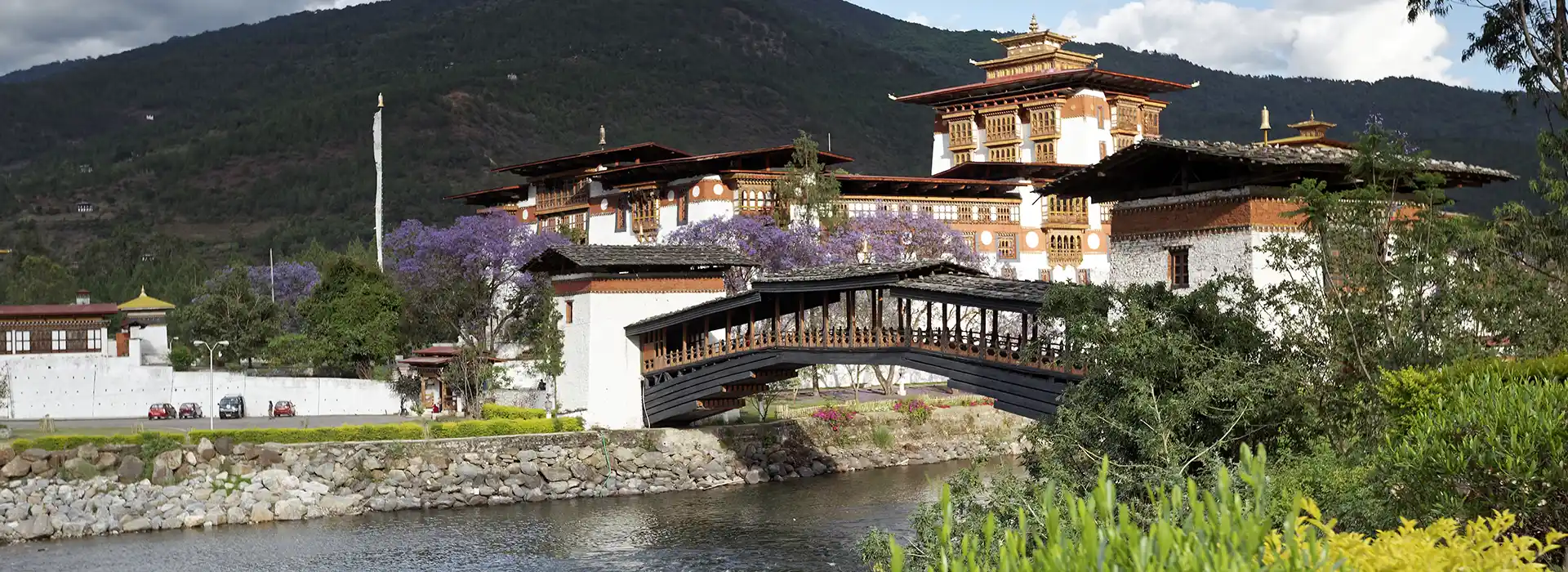

Punakha Valley sits in the heart of western Bhutan. Green hills surround this fertile land. Two major rivers flow through the center. Warm air fills the valley most of the year. Travelers find a different world here compared to Thimphu or Paro. The low altitude makes Punakha a tropical paradise in the mountains. This Punakha Travel Guide helps you plan every detail of your visit.
The region acts as the winter home for the religious head of Bhutan. Monks move from the capital to this warmer spot during the cold months. Rice fields cover the valley floor. Farmers grow both red and white rice along the river banks. Flowers bloom early in spring. Purple trees decorate the fortress walls. Every corner of the valley tells a story of the past.
Geography and Environment of Punakha Valley
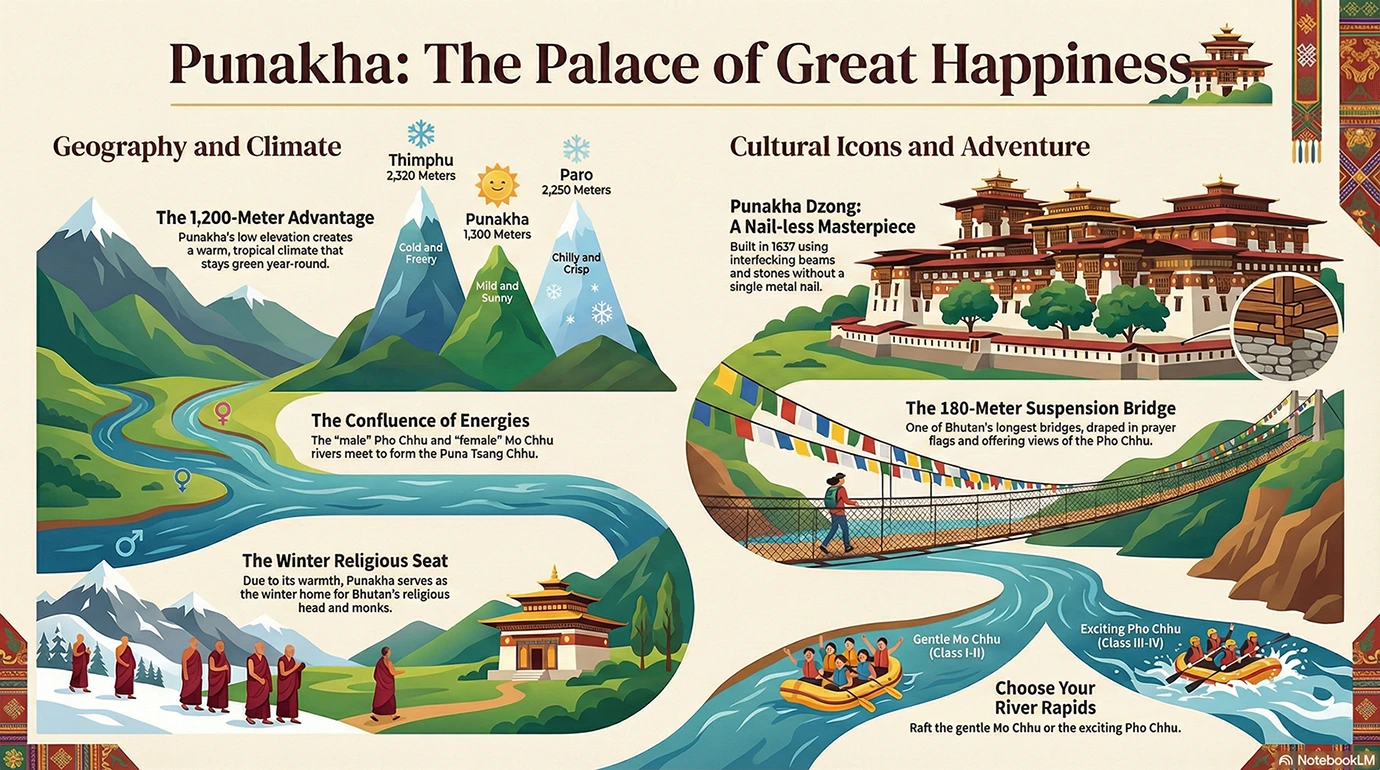
Punakha sits at an average elevation of 1,200 meters. Most towns in Bhutan lie much higher in the sky. High mountains block the cold winds from the north. These peaks act as natural walls. Warm breezes blow through the forests instead. The valley stays green even when other places turn brown. Rivers define the shape of the land. The Pho Chhu represents the male energy. The Mo Chhu represents the female energy. They meet at the base of the Great Palace. After they join, the water becomes the Puna Tsang Chhu. Alluvial soil from these rivers makes the ground very rich.
Altitude and Weather Comparisons
| Location | Elevation (Meters) | Typical Winter Feel | Typical Summer Feel |
| Punakha | 1,200 | Mild and Sunny | Warm and Humid |
| Thimphu | 2,320 | Cold and Frosty | Cool and Fresh |
| Paro | 2,250 | Chilly and Crisp | Mild and Pleasant |
| Dochula Pass | 3,100 | Freezing with Snow | Foggy and Cool |
Weather patterns in Punakha follow a subtropical monsoon cycle. Spring brings temperatures between 18°C and 25°C. Summer sees the mercury rise to 28°C or higher. Heavy rain falls in June and July. Winter days remain warm with lots of sunshine. Clear skies make winter a great time for mountain views.
Why Visit Punakha Valley?
Punakha served as the capital of Bhutan for over 300 years. History lives in every building. The fortress here is the most beautiful in the nation. Rural life moves at a slow pace. Travelers find peace as they walk through the rice paddies. The valley offers a mix of nature and culture. You see monks walking in red robes. You hear the sound of the river. You smell the fresh pine air. People here are friendly and humble. They welcome visitors with smiles.
Key Reasons to Add Punakha to Your Tour
- See the most famous fortress in the country.
- Walk across one of the longest suspension bridges.
- Visit the temple of the Divine Madman.
- Enjoy a warm climate even in January.
- Try river rafting on the Mother or Father rivers.
- Taste the famous red rice grown in the valley.
Punakha Dzong: The Crown Jewel of Bhutan
Punakha Dzong is a masterpiece of craftsmanship. People call it the Palace of Great Happiness. Zhabdrung Ngawang Namgyal built the structure in 1637. It acts as the second-oldest fortress in the kingdom. The design comes from a master carpenter’s dream. The fortress sits exactly where the two rivers meet. Its walls rise high above the water. In spring, purple flowers fall from the trees around the gate. Sunlight reflects off the white walls and gold domes. It looks like a giant ship floating on the river.
History of Punakha Dzong
Zhabdrung unifies Bhutan from this fortress. He brings sacred relics from Tibet to store here. Tibetan armies attacked the valley many times. They want to take the relics back. The Bhutanese soldiers defeat them every time.
Important national events happen here. The first king receives his crown in the assembly hall. The current king marries his queen in this palace. The government worked from here until 1955. Today, it remains the winter seat of the religious body.
Architecture and Design
The fortress measures 180 meters in length. It spans 72 meters in width. Builders use no nails to hold the wood together. They use interlocking beams and stones. A wide red band runs around the top of the walls. This band highlights the building’s religious nature. Steep wooden stairs lead into the entrance. These stairs can be removed during war. Heavy wooden doors close at night. The central tower rises six stories high. It holds the country’s most valuable treasures.
Interior Courtyards (Docheys)
| Courtyard | Purpose | Key Sight |
| First | Administration | Giant white stupa and Bodhi tree |
| Second | Monastic | Historic halls and monk quarters |
| Third | Religious | Assembly Hall with 100 pillars |
The third courtyard holds the greatest spiritual weight. It contains the remains of Zhabdrung. Only the King and the Chief Abbot enter the most sacred room. Murals on the walls show the life of Buddha. Large statues of saints watch over the hall.
Best Time to Visit Punakha Dzong
Spring offers the best light for photos. The purple trees bloom in April and May. These flowers create a sea of color. Autumn provides clear blue skies behind the fortress. Winter remains peaceful with few crowds. Avoid the peak of summer if you dislike rain. Heavy storms can make the paths slippery. The Punakha Tshechu festival in spring is a busy time. Thousands of people come to see the dances. Book your tour early if you want to visit during the festival.
Top Punakha Attractions: Sightseeing Guide
This Punakha Travel Guide covers the must-see spots in the valley. Beyond the palace, many gems wait for you.
Punakha Suspension Bridge
The bridge connects the town to nearby villages. It measures 180 meters in length. It sits high above the Pho Chhu river. Iron chains make the structure strong. Metal netting keeps walkers safe. Prayer flags cover the railings. They blow in the wind and carry prayers up the valley. The bridge sways gently as you walk. You get a great view of the river and the mountains. It takes about 15 minutes to reach the bridge from the palace parking lot.
Chimi Lhakhang: The Fertility Temple
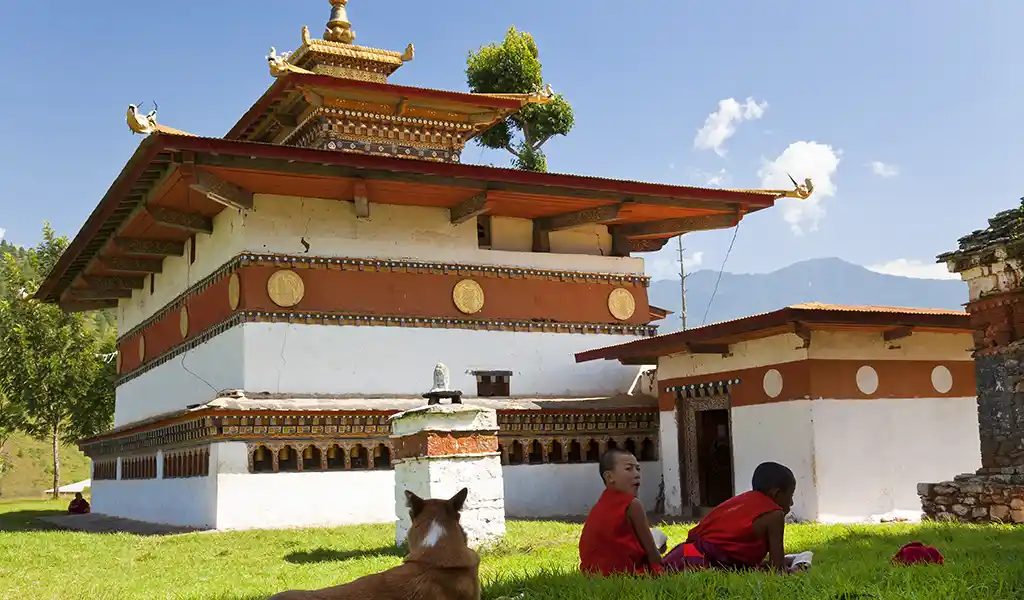
Lama Ngawang Chogyal built this temple in 1499. It honors the Divine Madman, Drukpa Kunley. He uses strange methods to teach the dharma. He believes in removing shame and ego. His symbol is the phallus. Couples come from all over the world to seek blessings for children. The monk hits visitors on the head with a wooden phallus. Women carry a wooden symbol around the temple three times. Many people believe the temple has special power. You see phallus paintings on every house in the village.
Khamsum Yulley Namgyal Chorten
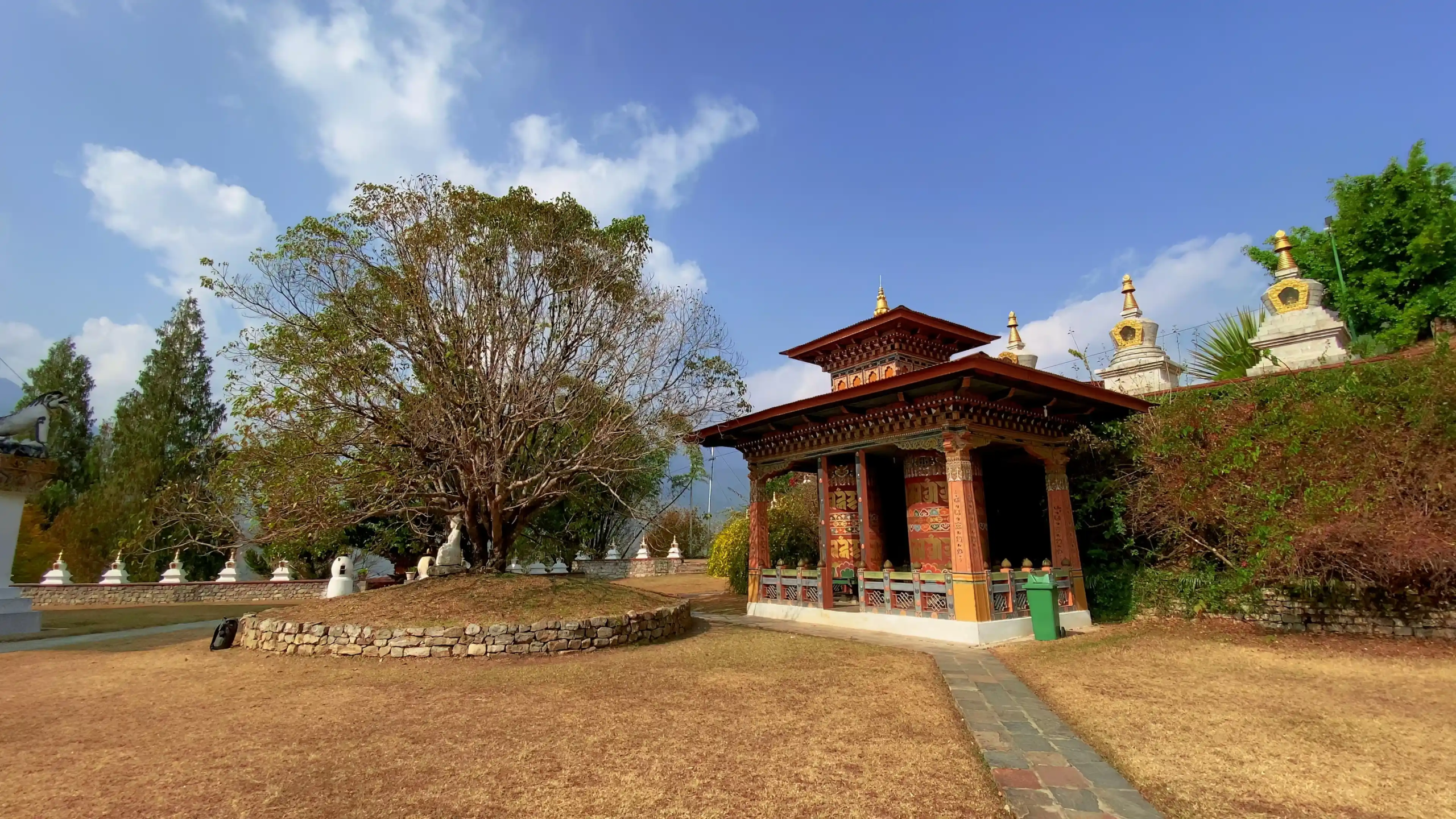
The Queen Mother ordered the building of this chorten in the 1990s. It promotes peace and removes negative forces. The design follows ancient holy books. It sits on a ridge high above the Mo Chhu river. A short hike leads you to the top. You walk through green rice fields first. Then you climb a pine forest path. It takes about 45 minutes to reach the temple. The view from the roof shows the whole valley.
Dochula Pass
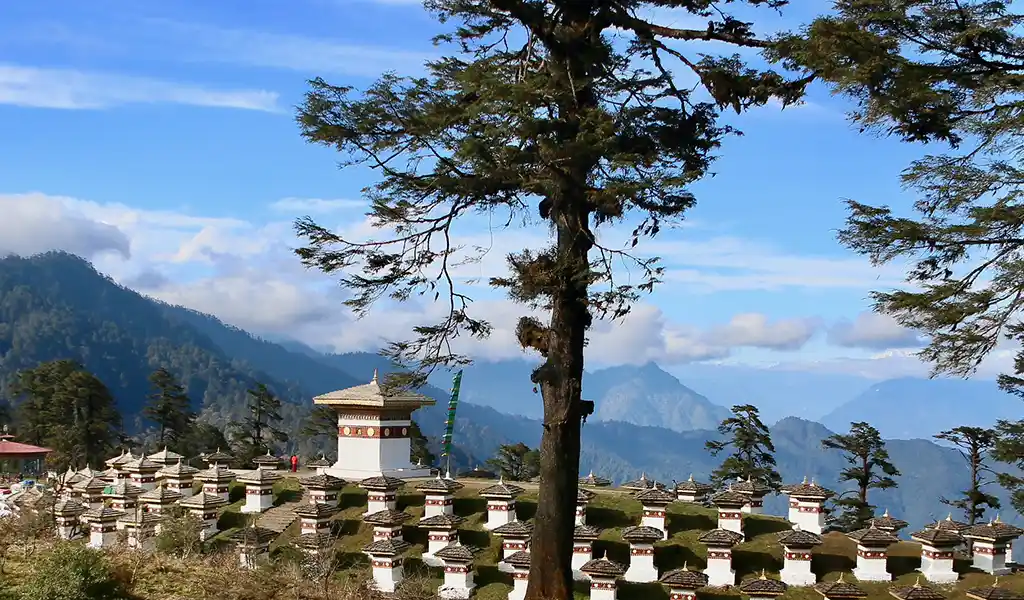
You cross this pass on the way from Thimphu. It sits at 3,100 meters. 108 small stupas stand in the center of the road. They honor Bhutanese soldiers. On a clear day, you see the massive Himalayan peaks. The pass often sits in the clouds. It feels mysterious and cool. You find a temple and a botanical park nearby. Most travelers stop here for tea and photos.
Things to do in Punakha: Adventure and Activities
Punakha offers more than just temples. You can find both thrill and quiet moments.
White Water River Rafting
Rafting in Punakha is a top experience. You choose between two different rivers.
| River | Difficulty | Highlights |
| Mo Chhu | Class I – II | Gentle rapids, views of the palace, family-friendly |
| Pho Chhu | Class III – IV | Fast water, exciting drops, need more effort |
The trip lasts about two hours. You float past traditional houses and fields. You see the fortress from a new angle. Trained guides steer the boat and keep you safe.
Village Walks and Local Life
Walk through Ritsha village to see the rice bowl of Bhutan. Stroll in Limbukha to learn about the peace negotiators. In Talo village, you find clean streets and beautiful gardens. These walks show you how people live their daily lives. Interaction with locals brings joy to the trip. You see children walking to school. You see elders spinning prayer wheels. People often invite you for a chat or a look at their farm.
Farmhouse Lunch
Many farmhouses open their doors for lunch. You sit on the floor and eat with your hands or a spoon. The food comes from the garden outside. It tastes fresh and spicy. A typical lunch includes red rice and Ema Datshi. You might also try local chicken or pork stew. Drinking butter tea makes the meal complete. This is the best way to feel the local heart.
Photography Tours
Punakha is a dream for photographers. The morning light is soft and golden. The valley looks best at sunset, too.
- Capture the monks in their red robes against the white walls.
- Snap the green rice terraces from a high hill.
- Take photos of the suspension bridge with flags blowing in the wind.
- Record the meeting of the two rivers.
Hotels in Punakha: Where to Stay
Punakha offers a range of accommodation options. You find luxury lodges and simple guesthouses.
Luxury Hotels in Punakha Valley
COMO Uma Punakha sits on a high hill. It gives you the best service and privacy. Six Senses Punakha looks like a floating farmhouse. It has a great spa and infinity pool. Amankora Punakha uses an old farmhouse as its lobby. You reach it by crossing a suspension bridge.
Mid-Range Punakha Accommodation
Zhingkham Resort offers a clear view of the palace. RKPO Green Resort uses traditional art in its rooms. Hotel Lobesa is small and run by local staff. These places provide comfort and good views.
Budget and Guesthouses
Hotel Vara is good for short stays and fits tight budgets. Damchen Resort sits right by the river. Punakha Residency is located in the middle of Khuruthang town. These options are clean and friendly.
| Hotel Type | Sample Price (Nightly) | Best For |
| Luxury | $500 – $1,500 | Honeymooners and Comfort seekers |
| Mid-Range | $80 – $200 | Families and View lovers |
| Budget | $40 – $70 | Solo travelers and Backpackers |
Best Time to Visit Punakha Valley
Timing matters for your Punakha Travel Guide. Each season brings a new look to the valley.
Spring (March to May)
The weather is warm and perfect for walks. Flowers bloom everywhere. This is the most popular time for tours. The jacaranda trees are the star of the show in April.
Autumn (September to November)
The sky is very clear. You get the best views of the mountains. The rice fields turn golden before the harvest. Festivals happen in many villages.
Winter (December to February)
Punakha is warmer than Thimphu. Winter days are sunny and pleasant. You can explore without many other tourists around. It is a great time for bird watching.
Monsoon (June to August)
Rain falls almost every day. The valley becomes a deep green paradise. Waterfalls appear on the mountain sides. Travel can be slower due to road conditions.
How to Reach Punakha
You drive from the capital city to Punakha. There are no planes to the valley.
- From Thimphu: The drive takes about 3 hours. The distance is 72 kilometers.
- From Paro: The drive takes about 4 to 5 hours. The distance is 125 kilometers.
- The Route: You travel via the Dochula Pass. The road winds through forests and mountains.
- Road Conditions: Roads are narrow but paved. Drivers are careful on the curves.
How Many Days to Spend in Punakha?
One night is the minimum stay. You see the main palace and the bridge. Two nights allow for a relaxed visit. You add a hike to the chorten or the fertility temple. You can try rafting on the second day. Three nights or more are best for deep explorers. You visit remote villages and go on longer treks. You spend more time interacting with local families.
Travel Tips for Visiting Punakha
Prepare well with these practical tips from our Punakha Travel Guide.
What to Wear
Punakha is warmer than other parts of Bhutan. Pack light layers for the daytime. A light jacket is good for the evenings. Always carry a hat and sunscreen.
Entry Rules for Dzong and Temples
You must dress with respect. Cover your shoulders and legs. No shorts or tank tops are allowed. You remove your shoes before entering the temple rooms. Speak quietly and turn off your phone.
Money and Connectivity
ATMs are found in Khuruthang town. They might not always work with international cards. Carry some cash in local currency for small shops. Most big hotels provide Wi-Fi. You can buy a local SIM card for better internet.
Cultural Etiquette
- Walk clockwise around religious structures.
- Ask before taking photos of people or inside temples.
- Do not touch religious statues or paintings.
- Use both hands when giving or receiving something.
- Cultural Importance of Punakha
Punakha holds the spirit of the nation. It remains the winter residence of the Je Khenpo. This chief abbot leads the monks down from Thimphu every year. The fortress stores the most sacred relics of the Drukpa line. The history of the first king starts here. The unity of the people is celebrated in the festivals. Punakha is not just a place for tourists. It is the living heart of the Bhutanese faith.
Suggested Punakha Itinerary
Follow this plan for a great 2-day visit.
Day 1: Arrival and The Fortress
- Morning: Drive from Thimphu and stop at Dochula Pass.
- Lunch: Try a local meal in Sopsokha village.
- Afternoon: Explore the Punakha Dzong and the suspension bridge.
- Evening: Relax by the river or try a hot stone bath.
Day 2: Hikes and Spirituality
- Morning: Hike to Khamsum Yulley Namgyal Chorten.
- Lunch: Enjoy a picnic by the Mo Chhu River.
- Afternoon: Visit Chimi Lhakhang temple and the village shops.
- Evening: Visit the Sangchhen Dorji Lhuendrup Nunnery.
FAQs for Your Punakha Travel Guide
Q: Why is Punakha Dzong famous?
A: Punakha Dzong is famous for being Bhutan’s former capital and one of the most beautiful fortresses in the country. It is also renowned for housing the sacred relics of the nation’s unifier, making it a key site of historical and religious significance.
Q: Is Punakha worth visiting?
A: Yes, Punakha is definitely worth a visit. It offers a pleasant, warm climate, a rich history, and breathtaking views of rivers and surrounding mountains. Its iconic dzong, charming local villages, and vibrant festivals make it a highlight on most Bhutan tour itineraries.
Q: How far is Punakha from Thimphu?
A: Punakha is about 72 kilometers from Thimphu. The drive usually takes about 3 hours, winding through scenic valleys, rivers, and mountains, making the journey as enjoyable as the destination.
Q: What is the altitude of Punakha?
A: Punakha sits at an altitude of 1,200 meters above sea level. This lower elevation gives it a warmer, more temperate climate than Thimphu, making it ideal for comfortably exploring its dzongs, rivers, and surrounding valleys.
Q: When do jacaranda trees bloom in Punakha?
A: Jacaranda trees in Punakha usually bloom in late April and May. During this time, the town is sprinkled with vibrant purple flowers, creating stunning scenery that is especially popular with photographers and travelers looking to capture Bhutan’s natural beauty.
This Punakha Travel Guide helps you prepare for a meaningful tour. Enjoy the warmth and beauty of this ancient valley. Prepare for a trip that touches your heart and spirit.
Food and Dining in Punakha
Eating in Punakha is an experience of spice and local flavors. Red rice is the base of most meals.
Popular Dishes to Try
- Ema Datshi: Chilies and cheese stew.
- Kewa Datshi: Potato and cheese stew.
- Shamu Datshi: Mushrooms and cheese.
- Jasha Maru: Spicy chicken stew with ginger.
- Momos: Steamed dumplings with meat or cheese.
Best Places to Eat
Khuruthang town has many small restaurants. Tenphey Bhutanese Cuisine serves authentic flavors in the town center. Momo Corner in Changyul is famous for its juicy dumplings. For a modern vibe, Merengma’ Bistro offers good views and international drinks. Most hotels have their own dining rooms. They offer buffets for lunch and dinner. You can try both local and Indian dishes. Always ask for less spice if you are sensitive to heat.
Shopping in Punakha
You find unique crafts and gifts in the valley.
- Khuruthang Town: Explore the narrow streets for local shops.
- Punakha Sales: A general store for daily needs and snacks.
- Handicrafts: Look for handwoven baskets and bamboo items.
- Textiles: Traditional clothes like the Gho and the Kira are available.
A new dedicated craft market is opening in Khuruthang. It will have 27 stalls for local artisans. This will be the best place to find authentic souvenirs.
Final Thoughts for Your Punakha Tour
Punakha Valley stays in your memory long after you leave. The mix of rivers and history creates a special feeling. This Punakha Travel Guide provides the tools for a great visit. Follow the local rules and keep an open heart. You will discover the true magic of the Land of the Thunder Dragon.