


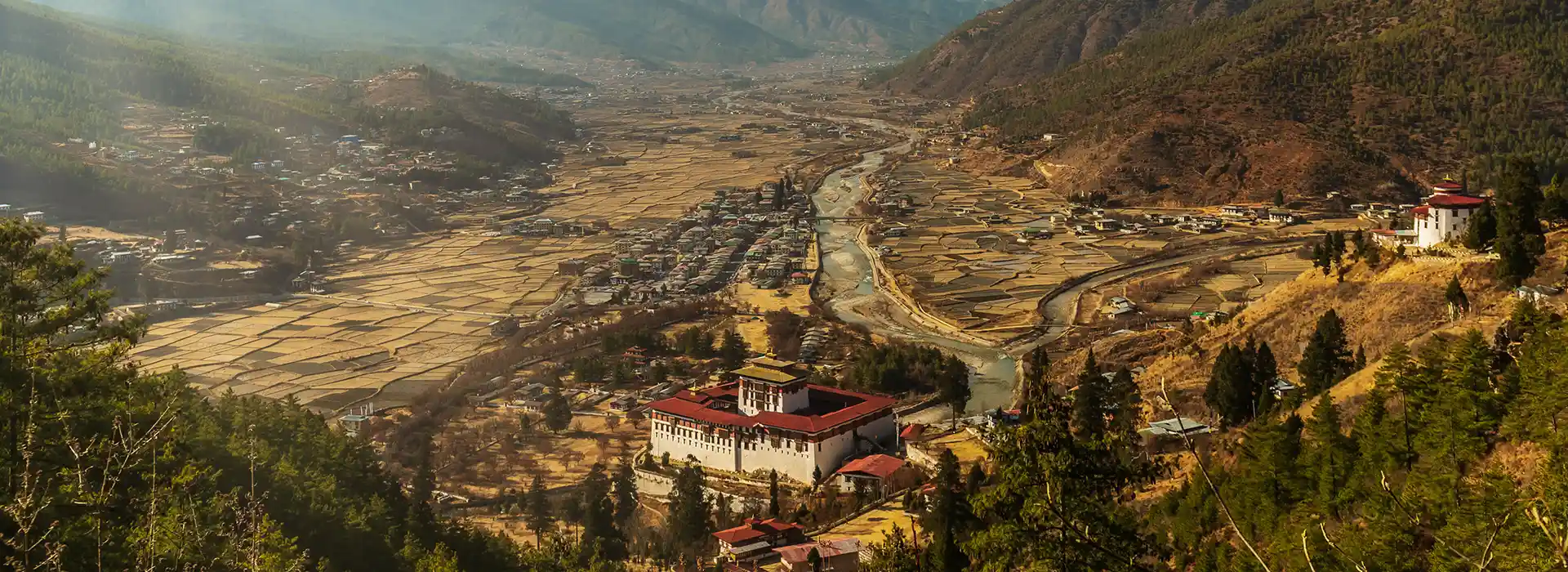

Paro Valley serves as the premier gateway to the Kingdom of Bhutan. The region hosts the nation’s only international airport, where pilots navigate narrow mountain passes to land on the valley floor. This Paro Travel Guide details the cultural, historical, and logistical aspects of visiting one of the most sacred districts in the Himalayas. The valley floor sits at roughly 2,200 meters, surrounded by peaks that reach over 5,000 meters. Residents live in traditional houses built from rammed earth and timber, often decorated with intricate carvings and religious symbols.
The Paro Travel Guide identifies the district as a central hub for history and spiritual life. The Pa Chhu River flows through the center of the valley, providing water for the vast rice paddies that turn green in summer and gold in autumn. Many historic battles took place in this region during the 17th century when Bhutanese forces defended the country against external invasions. Historical records show that Guru Rinpoche, the saint who brought Buddhism to Bhutan, visited Paro in the 8th century. His presence makes the valley a significant pilgrimage site for Buddhists from across the globe.
| Geography Feature | Detail |
| Elevation (Valley Floor) | ~2,200 meters (7,218 feet) |
| Primary River | Pa Chhu |
| Main Airport | Paro International Airport (PBH) |
| Surrounding Peaks | Himalayas |
| Dominant Vegetation | Blue Pine, Fir, and Rhododendron |
Why Visit Paro?
Choosing a destination in Bhutan usually starts with this valley because it offers a mix of nature and heritage. This Paro Travel Guide highlights that travelers experience the landing at Paro International Airport as one of the most thrilling flight arrivals in the world. The valley provides access to the kingdom’s most iconic monument, the Tiger’s Nest Monastery. Visitors find the local people warm and proud of their traditional way of life. Safety remains a hallmark of the region, and tourists walk around the town even after dark without worry. The air stays clean, and the environment remains protected through strict government regulations.
The Paro Travel Guide emphasizes the concept of Gross National Happiness, which visitors feel through the peaceful pace of life. The valley acts as a sanctuary for those seeking silence and spiritual reflection. Nature lovers observe rare bird species and walk through pristine forests that cover over 70 percent of the country. The region also serves as a starting point for several high-altitude treks, including the Druk Path Trek and the Jomolhari Round Trek.
Top Attractions in the Paro Travel Guide
Tiger’s Nest Monastery (Paro Taktsang)
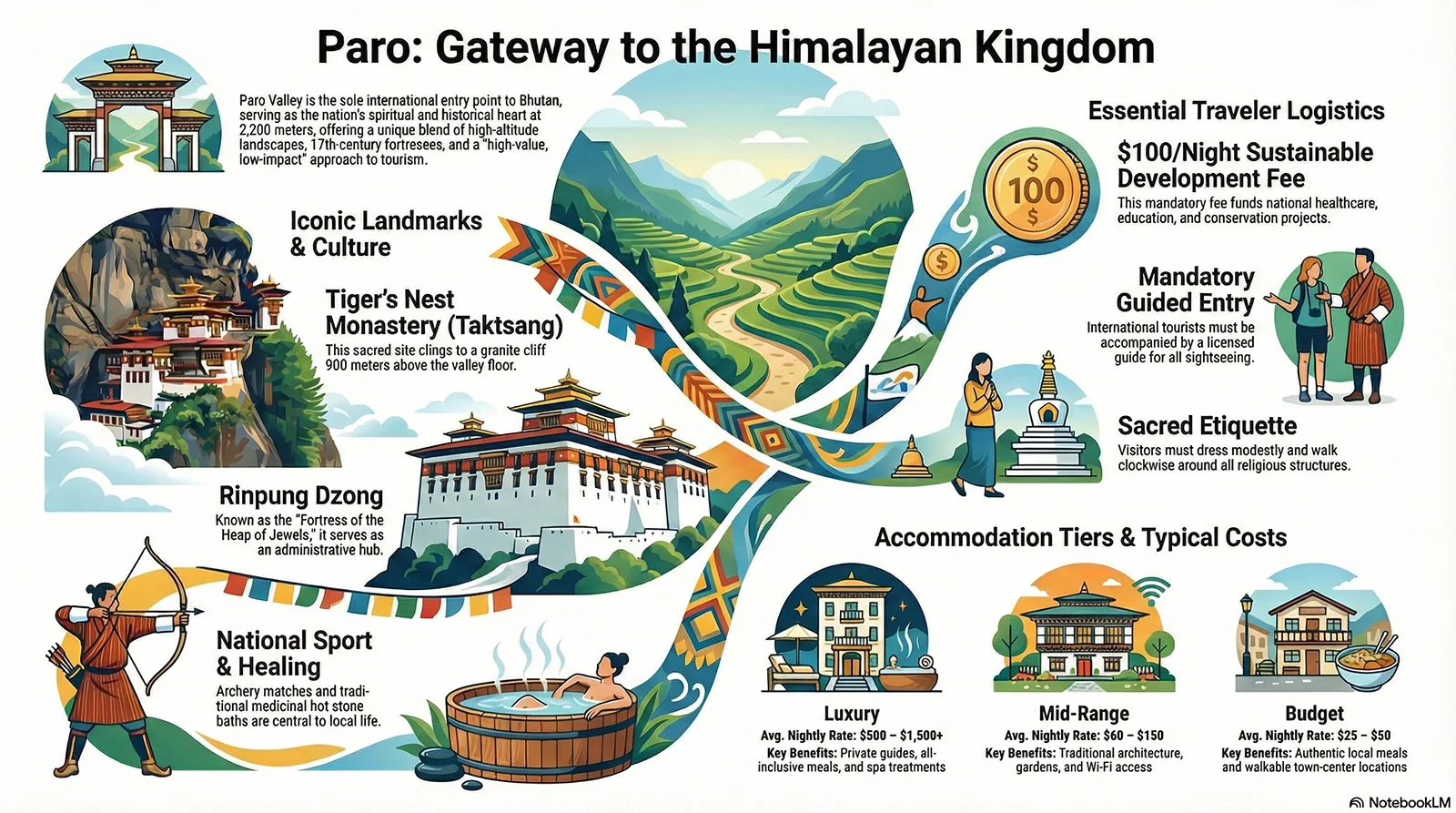
Tiger’s Nest Monastery stands as the most famous site in Bhutan. It clings to a granite cliff 900 meters above the valley floor. This Paro Travel Guide recommends the hike to visitors with a basic level of fitness. The monastery marks the spot where Guru Rinpoche meditated for three years, three months, three weeks, and three days in the 8th century. Legend says the Guru flew to this cliff on the back of a tigress to subdue local demons. The hike starts at the base of the mountain, which is about a 20-minute drive from Paro town. Most hikers take two to three hours to reach the viewpoint and another hour to reach the monastery entrance.
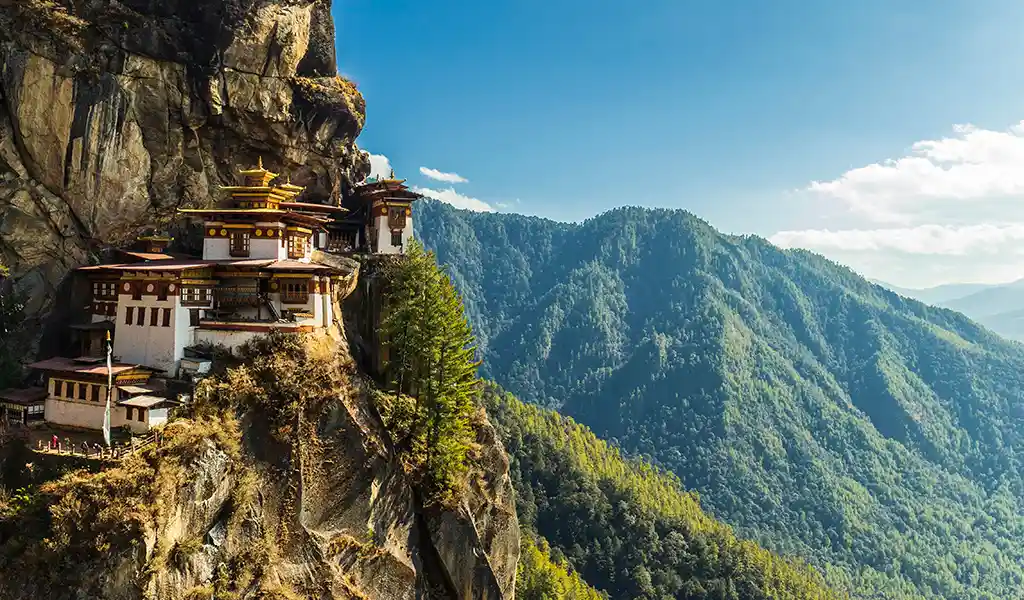
The trail winds through pine forests draped with Spanish moss and colorful prayer flags. A cafeteria sits at the halfway point, offering tea and views of the monastery. From the viewpoint, the path descends into a gorge before climbing up a set of stone steps to the main gate. Inside, several chapels house sacred statues and butter lamps. Photography is forbidden inside the temples, and visitors leave bags and cameras in lockers at the entrance. The Paro Travel Guide notes that the site remains an active meditation retreat where monks seek enlightenment in deep solitude.
| Trekking Metric | Detail |
| Starting Altitude | 2,600 meters |
| Maximum Altitude | 3,120 meters |
| Total Distance | ~6.4 km (4 miles) round trip |
| Average Duration | 4 to 6 hours |
| Trail Difficulty | Moderate |
Rinpung Dzong
Rinpung Dzong serves as both a fortress and a monastery. Its name translates to “Fortress of the Heap of Jewels”. This Paro Travel Guide notes that the structure houses the district administrative offices and the local monastic body. Zhabdrung Ngawang Namgyal built the current fortress in 1644 on the foundation of an older temple. The architecture features massive stone walls and a central tower called the Utse. Intricate wood carvings decorate the windows and balconies.
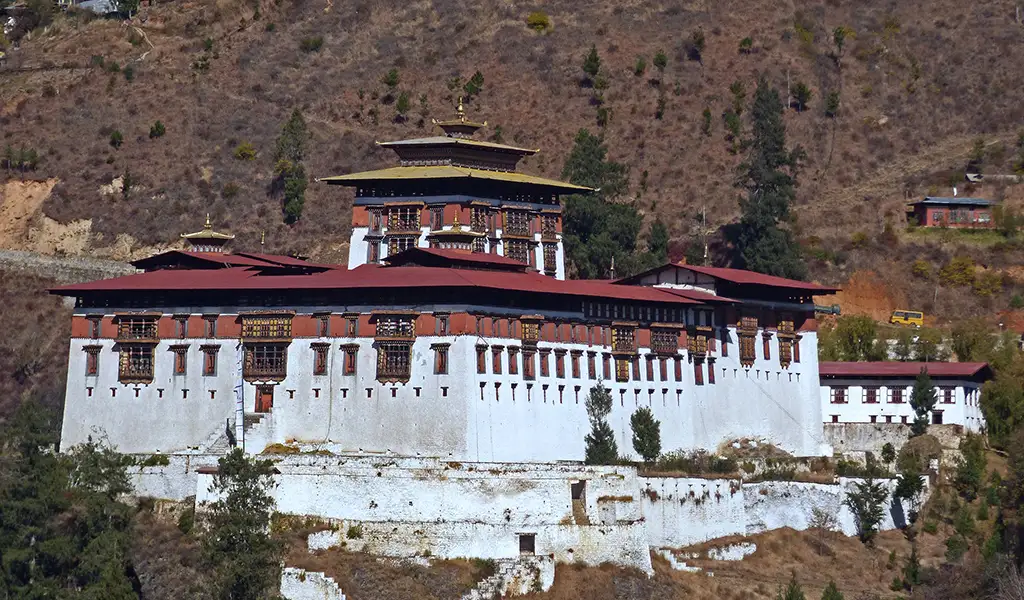
A traditional covered bridge, Nemi Zam, crosses the river below the dzong. The bridge provides a perfect angle for photography, especially during sunset. Each year, the courtyard hosts the Paro Tshechu festival, where monks perform sacred mask dances. The Paro Travel Guide identifies the dzong as a masterpiece of Bhutanese artistry that reflects Buddhist philosophy and values. Fourteen shrines and chapels exist inside the fortress, including the Temple of the Guru’s Eight Manifestations.
National Museum of Bhutan (Ta Dzong)
The National Museum of Bhutan sits in a circular building above Rinpung Dzong. The structure was originally a watchtower built in 1649 to protect the fortress from attacks. In 1968, the government converted it into a museum to house Bhutanese art and historical artifacts. The galleries display ancient weapons, bronze statues, and traditional costumes. A collection of thangkas shows the artistic skill of Bhutanese painters.
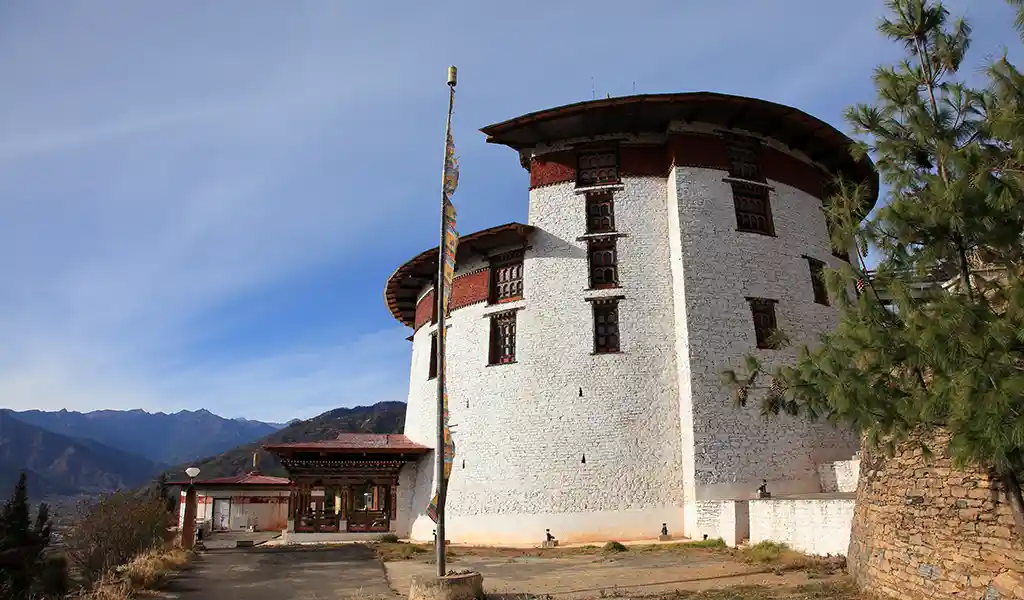
The museum provides deep context for the country’s cultural transition from ancient times to the modern era. Visitors check their bags at the entrance because cameras are not allowed inside the main galleries. The Paro Travel Guide recommends visiting the museum to understand Bhutan’s history and traditions in a simple, beautiful way. Exhibits include religious festival masks, delicate thangkas, and statues of rare animals. The circular shape of the building allows visitors to move through different floors that represent various aspects of Bhutanese life.
Kyichu Lhakhang
Kyichu Lhakhang is one of the oldest temples in Bhutan, dating back to the 7th century. Tibetan King Songtsen Gampo built this temple as part of a network of 108 border-taming shrines. Legend states that a giant demoness lay across the Himalayas, and the king built temples on her vital points to subdue her. Kyichu Lhakhang pins down her left foot.
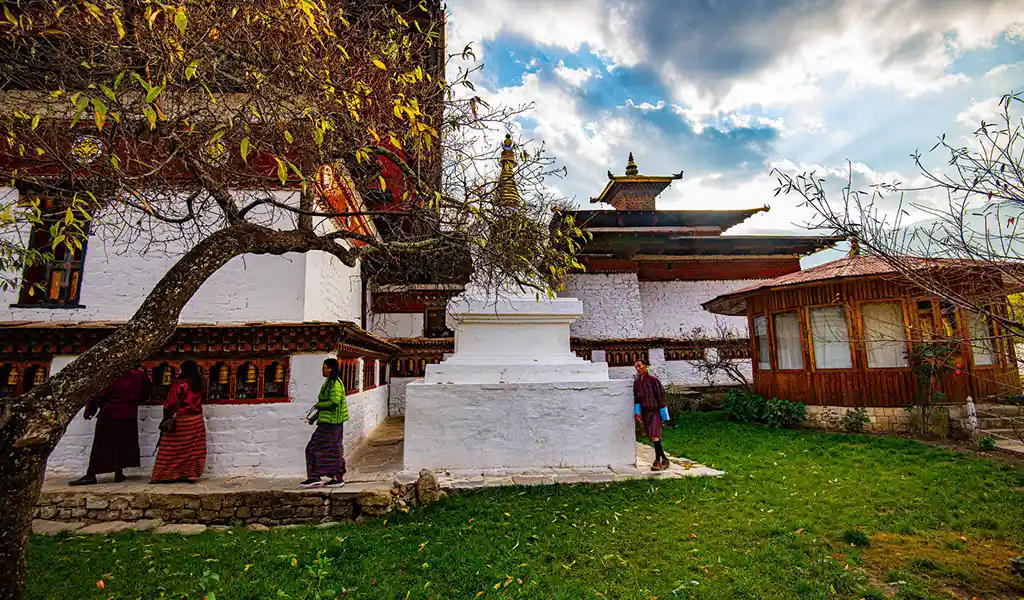
The temple complex includes a twin temple built in 1968 by the Queen Mother of Bhutan. In the courtyard, two orange trees bear fruit year-round, which locals consider a miracle. Senior pilgrims walk around the temple, spinning prayer wheels and chanting mantras. The inner shrine houses a 7th-century statue of Jowo Jamba. This Paro Travel Guide identifies Kyichu Lhakhang as a place of art and culture important to historians and spiritual seekers.
Drukgyel Dzong
Drukgyel Dzong stands at the northern end of the valley. This Paro Travel Guide describes it as a victory fortress built to commemorate the defeat of Tibetan invaders in 1649. A fire in 1951 reduced much of the structure to ruins, but recent restoration efforts aim to restore it to its original glory. The ruins offer a clear look at the defensive architecture of 17th-century Bhutan.
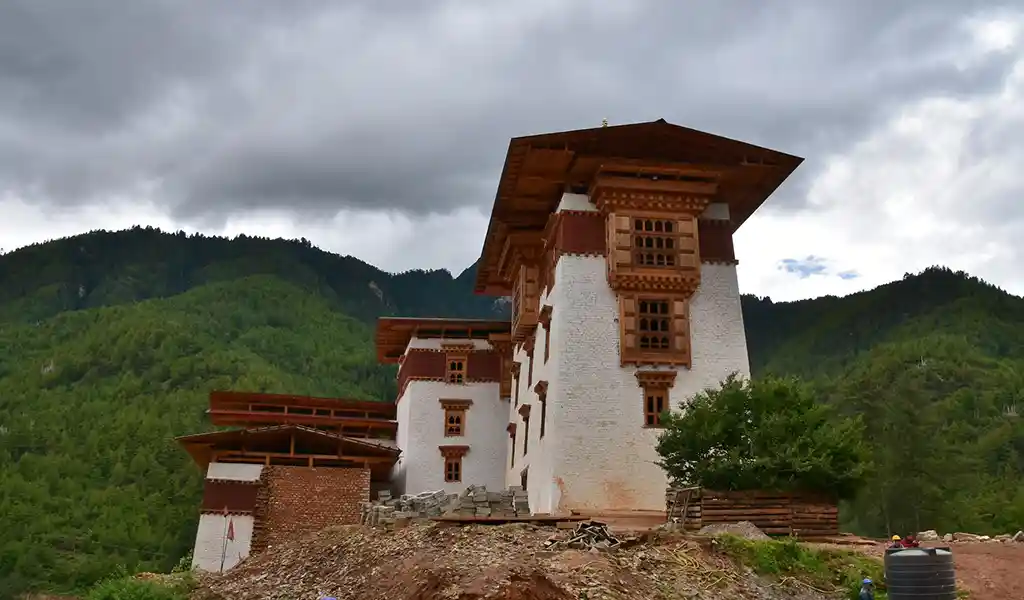
On clear days, the snow-capped peak of Mount Jomolhari appears visible from the site. The fortress was strictly defensive and did not have administrative or religious roles like other dzongs. Reconstruction began in 2016 to celebrate the birth of the Crown Prince. The Paro Travel Guide notes that the dzong exemplifies robust construction and intricate design. Tunnels once provided safe access to water from the river during sieges.
Chele La Pass
Chele La Pass is the highest motorable pass in Bhutan, at an altitude of 3,988 meters. It separates the Paro and Haa valleys. This Paro Travel Guide recommends the drive for its panoramic views of the Himalayan range. Thousands of prayer flags flutter in the wind at the top of the pass. In spring, the slopes around the pass bloom with rhododendrons and primulas.
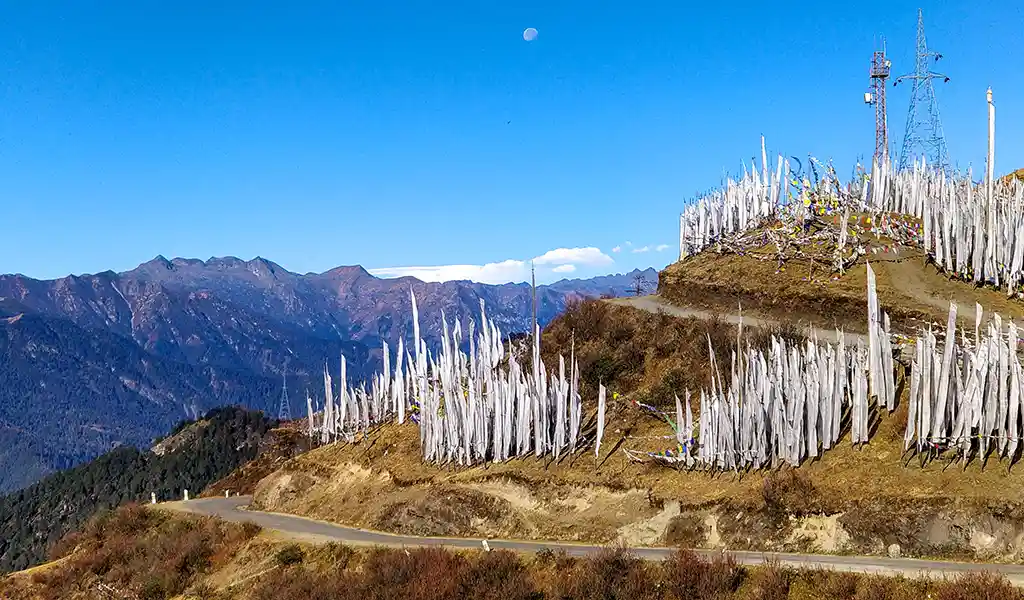
The drive from Paro town takes about 90 minutes through dense forests of blue pine and fir. Visitors stop here for a picnic or to start a hike toward the Kila Nunnery. Warm clothes are necessary even in summer, as temperatures at this height stay low. The Paro Travel Guide suggests visiting early in the morning to catch the sunrise over the mountains. Spectacular views of Mount Jomolhari and Mount Jichu Drake exist from this vantage point.
Best Hotels in the Paro Travel Guide
Luxury Hotels
Luxury hotels in Paro provide a refined experience that integrates traditional design with modern comfort. These properties often sit on hillsides, offering views of the valley and the surrounding forests.
- COMO Uma Paro: This resort features private villas and suites overlooking the valley. It offers a famous spa and guided treks to nearby monasteries. The property uses stylish furniture with an organic feel.
- Six Senses Paro: Known as the “Stone Ruins” lodge, it sits high above the valley floor. The design mirrors the architecture of ancient fortresses. It includes a heated indoor pool and specialized wellness programs.
- Amankora Paro: This lodge rests in a quiet pine forest. It uses rammed earth and wood for a minimalist, peaceful atmosphere. Guests enjoy communal dining and traditional hot stone baths.
- Zhiwa Ling Heritage: A Bhutanese-owned luxury property that showcases hand-carved woodwork. It includes its own temple and a traditional meditation house.
Mid-Range and Budget Hotels
Mid-range and budget hotels in Paro provide clean rooms and warm hospitality at accessible prices.
- Hotel Olathang: One of the oldest hotels in Paro, spread across a pine-covered hill. It offers cottage-style rooms and a large dining hall.
- Naksel Boutique Hotel & Spa: An eco-friendly resort located in a quiet village area. It provides excellent views of Mount Jomolhari on clear days.
- Tashi Namgay Resort: Situated near the airport, this hotel features riverside gardens and traditional architecture.
- Hotel Khamsum: A popular budget option in the town center, offering easy access to shops and cafes.
- Sonam Trophel Inn: A family-run guesthouse known for its friendly service and central location.
| Accommodation Tier | Average Nightly Rate | Key Benefits |
| Luxury | $500 – $1,500+ | All-inclusive meals, private guides, spa treatments |
| Mid-Range | $60 – $150 | Traditional architecture, garden settings, Wi-Fi |
| Budget | $25 – $50 | Walkable to town, authentic local meals, basic comforts |
Things to Do Beyond Sightseeing
Traditional Hot Stone Bath
A hot stone bath is a traditional Bhutanese healing practice. People believe the minerals in the stones have medicinal properties that cure muscle pain and joint aches. Attendants heat river stones over a fire until they glow red. These stones are placed in a wooden tub filled with water and medicinal herbs. The tub usually has a wooden partition to protect the bather from the direct heat of the stones.
Many farmhouses in Paro, such as the Tshering Farmhouse, offer this experience. Visitors take a hot stone bath after the long hike to Tiger’s Nest to relax their muscles. This Paro Travel Guide describes the bath as a local jacuzzi experience that heals body aches and back pain.
Bhutanese Cooking Classes
Food plays a vital role in Bhutanese culture, and cooking classes allow visitors to learn local secrets. Ema Datshi, a spicy stew of chilies and cheese, represents the national dish and a staple of every class. Instructors teach students how to prepare red rice, momos, and suja. Most classes take place in traditional kitchens using wood-fired stoves.
The Trophel Tours and Treks team operates one of the most popular classes in Paro. Participants often visit a local market first to pick fresh, organic ingredients. The Paro Travel Guide notes that Bhutanese cuisine is delicious yet straightforward due to its use of fresh ingredients.
Archery: The National Sport
Archery stands as the national sport of Bhutan and a significant social activity. Teams compete in matches where targets stand 145 meters apart. This distance is twice the length of Olympic archery ranges. Archers use traditional bamboo bows or modern compound bows. Matches involve singing, dancing, and friendly taunting to distract opponents.
The town of Paro has several archery grounds where visitors watch local tournaments, especially on weekends. Some resorts provide lessons for guests to try the sport. The Paro Travel Guide identifies archery as deeply woven into the culture’s social fabric.
Paro Festivals (Tshechu)
The Paro Tshechu is the biggest annual religious festival in the district. It takes place in the second lunar month, which usually falls in March or April. This Paro Travel Guide highlights the festival as a time for spiritual merit and social gathering. Monks and laypeople perform mask dances that depict the life and manifestations of Guru Rinpoche.
Performers wear colorful silk costumes and elaborate masks representing deities and demons. The highlight of the festival takes place on the final day, before dawn. A massive thangka painting, known as the Thongdrel, unfurls on the side of the dzong. Locals believe that simply catching a glimpse of the Thongdrel cleanses a person of their sins.
Clowns called Atsaras provide entertainment throughout the event. They wear red wooden masks and use humor to interact with the crowd. Despite their jokes, Atsaras are respected figures who help maintain the flow of the ceremonies. The Paro Travel Guide recommends attending the festival to witness the vibrant culture and receive blessings.
Best Time to Visit Paro
Timing a trip to Paro depends on weather preferences and festival dates.
- Spring (March to May): This represents the most popular time for visitors. Temperatures stay mild, and the valley blooms with rhododendrons. The Paro Tshechu occurs during this season, drawing large crowds.
- Autumn (September to November): This season offers the clearest skies and best mountain views. It is the ideal time for trekking and photography. Clear weather allows for glimpses of Mount Everest during the flight to Paro.
- Winter (December to February): Days remain sunny and clear, but nights feel very cold. There are fewer tourists, and hotel prices may be lower. Snow-capped peaks provide beautiful scenery.
- Summer (June to August): This is the monsoon season, bringing frequent rain and clouds. The valley looks incredibly lush and green, but the trails become muddy.
How to Reach Paro
Most travelers reach Paro by air. Paro International Airport connects to cities like Bangkok, Delhi, Kathmandu, and Singapore. Druk Air and Bhutan Airlines represent the two carriers that serve the country. Overland travel is another option. Visitors enter Bhutan through the border town of Phuentsholing after traveling through India. The drive from Phuentsholing to Paro takes about six hours through winding mountain roads.
The Paro Travel Guide emphasizes that a guide must meet all international tourists upon arrival. Visa approval is linked to payment of the Sustainable Development Fee. Most international tourists need a visa, while Indian citizens can travel with a valid passport or voter ID.
How Many Days to Spend
The Paro Travel Guide recommends staying at least three days in the valley to see the main sites. A three-day itinerary allows for the Tiger’s Nest hike, a visit to the dzongs, and some time in the town center. Travelers who enjoy hiking or want to explore offbeat villages should stay five to seven days.
This extra time allows for day trips to Chele La Pass or the Haa Valley. Some visitors spend their entire one-week vacation in Paro to fully absorb the peaceful atmosphere. Longer stays allow for visits to the Haa Valley or Bumthang.
| Trip Duration | Suggested Coverage |
| 3 Days | Tiger’s Nest, Rinpung Dzong, National Museum |
| 5 Days | Add Chele La Pass, Drukgyel Dzong, and Farmhouse stay |
| 7+ Days | Add Haa Valley, village hikes, or short treks |
Essential Travel Tips for the Paro Travel Guide
Wear and Dress Code
Layered clothing provides the best comfort for Paro’s mountain climate. Temperatures change quickly when the sun sets or if clouds move in. For hiking, wear sturdy walking shoes with good grip and breathable fabrics. For temples, visitors must dress modestly. This means covering shoulders and knees. Long pants and shirts with sleeves are required. Hats and shoes must come off before entering any temple or shrine.
Altitude and Health
Paro is at a high altitude, and altitude sickness can affect some travelers. Symptoms include headaches, dizziness, and shortness of breath. Drink plenty of water to stay hydrated. Take it easy on the first day to let the body adjust. Avoid alcohol during the first 24 hours. The hike to Tiger’s Nest climbs over 500 meters, so save it for the second or third day.
Money and Banking
The official currency represents the Bhutanese Ngultrum, which is pegged to the Indian Rupee. Indian Rupees are widely accepted, but denominations above 500 may not be accepted in some shops. Paro town has several ATMs that accept international cards like Visa and Mastercard. However, machines sometimes run out of cash. High-end hotels and large handicraft shops accept credit cards, but they often charge a transaction fee. Small restaurants and local markets usually require money.
Internet and Connectivity
Most hotels and cafes in Paro provide free Wi-Fi, but the speeds feel slow and unstable. Getting a local SIM card represents the best way to stay online. B-Mobile offers the widest coverage, especially in rural areas. TashiCell generally provides faster 4G speeds in the town center. You need a copy of your passport and one photo to buy a SIM card. Most tourists buy their SIM cards at the airport upon arrival.
Cultural Etiquette in Paro
Bhutanese society is deeply rooted in Buddhist traditions and respect. Following local customs helps build a positive connection with the community.
- Walking Direction: Always walk clockwise around religious structures like chortens, prayer wheels, and mani walls.
- Photography: Never take photos inside temples or of people without first asking for permission. The National Museum and Tiger’s Nest have strict rules about where cameras are allowed.
- Monastic Interaction: Treat monks with respect and avoid touching them. If you wish to offer a donation at a temple, place the money on the altar.
- Environment: Do not litter or damage plants and trees. Bhutanese people believe that spirits live in nature, especially on high mountain peaks.
Responsible Tourism
Bhutan follows a “high-value, low-impact” tourism policy to protect its culture and environment. All international tourists pay a Sustainable Development Fee of $100 per night. This fee funds healthcare, education, and conservation projects.
- Support Local Businesses: Buy souvenirs directly from artisans and eat at locally-owned restaurants.
- Waste Management: Carry a reusable water bottle. Tap water is not safe to drink unless boiled, but hotels provide filtered water.
- Mandatory Guide: Traveling with a licensed guide is required by law. Guides explain traditions and ensure safety in remote areas.
Suggested Paro Itinerary
3-Day Highlights Tour
- Day 1: Arrive at Paro International Airport. Transfer to the hotel and eat lunch. Visit Rinpung Dzong and walk across the Nemi Zam bridge. Spend the evening exploring Paro town and the central prayer wheel.
- Day 2: Start early for the hike to Tiger’s Nest Monastery. Enjoy lunch at the cafeteria and return to the base by late afternoon. Relax with a traditional hot stone bath at a local farmhouse.
- Day 3: Visit Kyichu Lhakhang and the National Museum of Bhutan. Shop for souvenirs, such as textiles and wooden masks, in the town center. Depart for the airport or continue to Thimphu.
5-Day Immersive Tour
- Day 1: Arrival and exploration of Paro town and the local market.
- Day 2: Drive to Chele La Pass for sunrise and mountain views. Hike down through rhododendron forests to Kila Nunnery.
- Day 3: Hike to Tiger’s Nest Monastery. Spend the afternoon in a cooking class learning to make Ema Datshi.
- Day 4: Visit the ruins of Drukgyel Dzong and enjoy a view of Mount Jomolhari. Afternoon visit to the National Museum and Kyichu Lhakhang.
- Day 5: Morning walk to Dzongdrakha Monastery, known as the “Mini Tiger’s Nest”. Final shopping before departure.
Paro Travel Guide FAQs
Q: Is it safe to travel alone in Paro?
A: Paro is considered highly safe, with very low crime and a welcoming local community that helps visitors feel comfortable throughout their stay. Travelers can explore monasteries, scenic valleys, and the town area with confidence and peace of mind. However, a licensed guide must accompany all international tourists, so even solo travel is structured and supported, ensuring a secure, well-organized experience.
Q: Do I need to carry cash?
A: Yes, carrying cash is essential for small purchases, snacks, and tipping, as it ensures you can pay without hassle. While some shops, restaurants, and hotels do accept cards, outages and connectivity issues are relatively common, making cash the more reliable and convenient option for everyday expenses.
Q: What represents the national dish?
A: The national dish of Bhutan is Ema Datshi, a flavorful preparation of green or red chilies cooked in a rich, melted cheese sauce. It is traditionally served with red rice, creating a hearty, spicy combination central to Bhutanese cuisine.
Q: Can I visit the monasteries without a guide?
A: No, all international visitors are required to be accompanied by a licensed guide to enter monasteries and dzongs. This rule ensures that travelers follow local regulations while also benefiting from the guide’s more profound insight into the history, culture, and significance of these sacred sites.
Q: How hard is the Tiger’s Nest hike?
A: The hike is generally considered moderate. The trail is well-maintained and easy to follow, but the steady incline and higher altitude can make it tiring for some hikers. For those who prefer an easier option, horse rides are available to take visitors partway up, allowing everyone to enjoy the scenery without walking the entire route.
Q: What should I buy as a souvenir?
A: Popular items to buy include handmade textiles, wooden masks, colorful prayer flags, and traditional Bhutanese tea. To make the most meaningful impact, it’s best to purchase souvenirs directly from local artisans, which supports the community and preserves traditional crafts.
Q: Is there internet access in Paro?
A: Yes, the internet is available, but the speeds can feel relatively slow at times. Most hotels and cafes offer free Wi-Fi, but using a local SIM card tends to provide a more reliable, consistent connection, especially in remote areas.
Q: What is the best time for photography?
A: Autumn is the ideal season for visiting, offering clear skies and the best visibility for breathtaking mountain views. The late-afternoon light, in particular, is perfect for photographing Rinpung Dzong, highlighting its intricate architecture and the surrounding landscape.
Q: How much is the Sustainable Development Fee?
A: The Sustainable Development Fee (SDF) is currently $100 per night for international tourists. Children between the ages of six and twelve receive a 50 percent discount, making it more affordable for families traveling with young kids.
Q: Do I need any vaccinations?
A: Travelers should check the current government requirements, as vaccination documents may be required for entry. It’s also wise to carry water purification tablets when visiting remote areas, ensuring safe drinking water throughout the journey.
Q: Can I drive myself in Bhutan?
A: International tourists are required to travel with a licensed guide and driver, as independent travel is not permitted for most nationalities. This ensures compliance with local regulations while providing support and insight throughout the journey.
Q: What represents the role of the National Museum?
A: The museum houses more than 3,000 artifacts that highlight Bhutan’s rich cultural heritage. It offers visitors a detailed look into the country’s long history, traditional practices, and exquisite religious art, making it an essential stop for anyone interested in Bhutanese culture.
Q: How long does the flight to Paro take?
A: The flight from Kathmandu to Bhutan takes approximately one hour. On clear days, passengers are treated to stunning views of Mount Everest and the surrounding Himalayan peaks, making the short journey a memorable experience in itself.
Q: What is the significance of Kyichu Lhakhang?
A: It is one of the oldest temples in the Himalayas, built initially to pin down a demoness and help spread Buddhism. The temple houses ancient relics and a 7th-century statue of Jowo Jamba, making it a site of great historical and spiritual significance.
Q: Are there ATMs in Paro?
A: Yes, ATMs are available in Paro town and generally accept international cards. However, they can occasionally run out of cash or face technical issues, so it’s wise to carry some money as a backup.
Q: What should I wear to the Tiger’s Nest?
A: Wear comfortable hiking shoes and dress in layers to adapt to changing weather conditions. Once you reach the monastery entrance, modest clothing is required to show respect for local customs and religious practices.
Q: Is Bhutanese food spicy?
A: Yes, chilies serve as a primary vegetable in many Bhutanese dishes, adding both flavor and heat. Ema Datshi, in particular, is famously spicy and can be pretty intense for many Western palates.
Q: What is the religious affiliation of most Bhutanese people?
A: Most Bhutanese people follow Tibetan Buddhism, specifically the Drukpa Lineage of the Kagyu school.
Q: Can I fly directly to Bhutan from the USA?
A: No direct flights are available from the USA to Bhutan. Most travelers reach the country by connecting through cities like Bangkok, Delhi, or Kathmandu.
Q: What is the “Mini Tiger’s Nest”?
A: Dzongdrakha Monastery earns its name from its striking position perched on a cliffside overlooking the Paro Valley. The location not only provides breathtaking views but also creates a tranquil atmosphere. Visiting this monastery offers a peaceful spiritual experience, often with far fewer tourists than the more frequented sites, allowing for quiet reflection and a deeper connection with the surroundings.