

Included Meals
- Breakfast: 14
- Lunch: 12
- Dinner: 11

Unbeatable Holiday Offers – Save Up to 20% on Your Next Adventure!
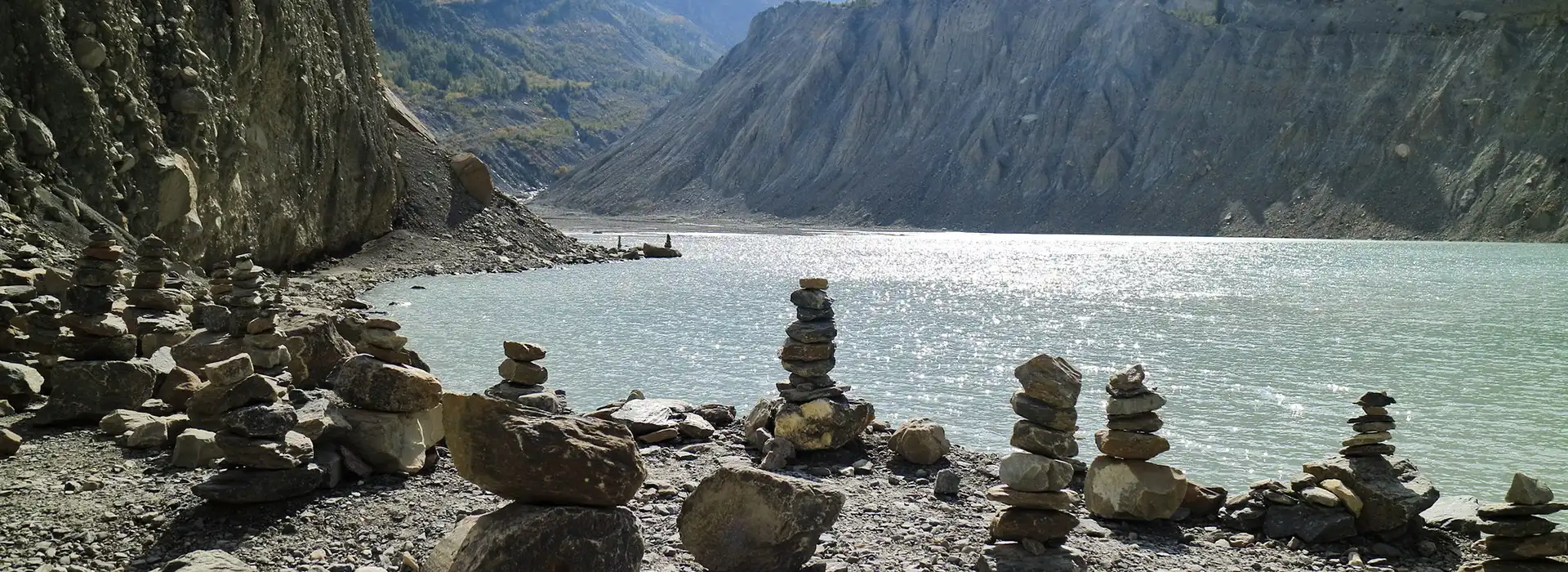
The Annapurna Circuit with Tilicho Lake Trek combines two of Nepal’s most celebrated high-altitude destinations into a single 15-day route from Kathmandu. You follow the classic Annapurna Circuit through Dharapani, Chame, Upper Pisang, and Manang before branching off toward Tilicho Lake—one of the highest lakes in the world at approximately 4,919 meters—and then crossing the legendary Thorong La Pass at 5,416 meters on the way down to the sacred site of Muktinath. The route descends through the Kali Gandaki Valley and finishes with a jeep ride to Pokhara before returning to Kathmandu.
Tilicho Lake adds a full-day side trip that most standard Annapurna Circuit packages skip. The lake sits in a glacial basin beneath Tilicho Peak at an elevation well above the treeline, in the permanent high-altitude zone. Getting there requires two days of approach through Shree Kharka and Tilicho Base Camp, followed by an early morning push to the lake itself and a return to Shree Kharka. The effort delivers a setting that trekkers consistently describe as the visual high point of the entire route—more remote and more dramatically positioned than Thorong La Pass itself.
The Thorong La Pass crossing at 5,416 meters represents the highest and most demanding day of the trek. You start well before sunrise from Thorong Phedi or High Camp, climb steeply through frozen morning terrain to the pass, then descend more than 1,600 meters on the western side to Muktinath. The descent covers a long, knee-testing downhill trail through rocky, open terrain before the sacred Hindu and Buddhist temple complex at Muktinath marks the end of the high mountain section.
The 15-day package provides airport pickup by private car, two nights at Hotel Thamel Park in Kathmandu, one night at Hotel Splendid View in Pokhara, all transport between cities and trek points, teahouse accommodation on all 11 trekking nights, full board meals from Day 2 lunch through Day 13, a licensed English-speaking guide, and both required trekking permits. Challenging but achievable for fit trekkers with proper preparation, the Annapurna Circuit Trek Nepal route with Tilicho Lake ranks among the most complete high-Himalayan experiences available within a 15-day window.
Quick Answer: What Is the Annapurna Circuit with Tilicho Lake Trek?
The Annapurna Circuit with Tilicho Lake Trek is a 15-day high-altitude trekking package from Kathmandu. The route covers Dharapani, Chame, Upper Pisang, Manang, Shree Kharka, Tilicho Base Camp, Tilicho Lake (4,919 m), Thorong La Pass (5,416 m), and Muktinath. The trek is challenging, and suits fit trekkers who want to see Tilicho Lake, the Manang Valley, and Thorong La Pass in one complete itinerary, with city hotels in Kathmandu and Pokhara.
Quick Facts
| Trip Details | Specifications |
|---|---|
| Duration | 15 Days (arrival to departure) |
| Trip Start / End | Kathmandu, Nepal |
| Trek Start | Dharapani (approx. 1,860 m) |
| Trek End | Muktinath (3,710 m) |
| Highest Point | Thorong La Pass – 5,416 m / 17,769 ft |
| Major Lake | Tilicho Lake – approx. 4,919 m / 16,138 ft |
| Difficulty | Challenging |
| Accommodation | Hotel in Kathmandu & Pokhara; Teahouse on Trek |
| Meals | Breakfast in cities; Full board on all trek days |
| Transport | Private car, Hiace, shared jeep, jeep, tourist bus |
| Permits | ACAP; TIMS Card (if required) |
| Best Season | Spring (Mar–May); Autumn (Sep–Nov) |
| Guide | Licensed English-speaking guide included |
| Porter | Recommended – one porter per two trekkers |
| Acclimatization | Rest day in Manang (Day 6) |
The Annapurna Circuit stands as Nepal’s most geographically diverse trekking route, circling the entire Annapurna massif through terrain that shifts from subtropical river valleys to high-altitude Trans-Himalayan desert over the course of less than two weeks. Adding Tilicho Lake to the standard circuit expands the route’s scope without adding excessive days—the Tilicho side trip integrates into the itinerary between the Manang acclimatization day and the Thorong La crossing in a logical sequence that maximizes both safety and scenery.
The Annapurna Conservation Area, managed by the National Trust for Nature Conservation, covers 7,629 square kilometers and encompasses the entire circuit route from Dharapani in the east to Muktinath in the west. Both sections of the trek—the Tilicho Lake approach and the Thorong La crossing—sit within this protected zone. Your ACAP permit fee supports trail maintenance, community development, and wildlife conservation programs throughout the conservation area.
The 15-day structure provides adequate acclimatization without padding the itinerary with unnecessary rest days. You gain altitude progressively from Dharapani at 1,860 meters to Manang at 3,519 meters across four trekking days, then take a full rest day at Manang before the high-altitude push toward Tilicho Lake. The Tilicho Lake section itself takes three days (Days 7, 8, and 9) before you rejoin the main circuit trail and continue upward toward Thorong La.
Road access now extends deep into the Annapurna Circuit, with vehicles able to reach Dharapani and beyond in most seasons. Driving to Dharapani on Day 2 rather than trekking from Besisahar saves two to three walking days and significantly reduces the pre-acclimatization section of the route. The 15-day itinerary accounts for this road access adjustment and uses the saved days to include the Tilicho Lake side trip and the Manang rest day without extending the total trip duration beyond what most travelers can manage.

Included Meals

Trip staff

Transport

Accommodation

Trip Grade
Group Size
Our guides complete the Annapurna Circuit and Tilicho Lake route multiple times each trekking season. The assigned guide for your trek knows the Tilicho Base Camp approach section firsthand—including the specific landslide-prone section on Day 8, the best weather window for the Tilicho Lake day, and the optimal Thorong Phedi vs. High Camp decision for different group fitness levels. Route knowledge at this level of specificity only comes from regular, recent walking.
We name Hotel Thamel Park and Hotel Splendid View in this package because our team knows both properties from ongoing working relationships. We verify room quality, service standards, and breakfast provision at both hotels at regular intervals. If the quality of either property changes in a way that does not meet the standard we describe, we adjust the accommodation before that change affects a guest’s experience.
All permit fees stated in this package reflect current NTNC pricing as published on their official permit portal. ACAP fees for foreign nationals currently stand at NRs. 3,000 inclusive of tax. Our company handles online permit processing and carries your group’s permit documentation throughout the trek. Permit costs do not change between booking and departure for confirmed bookings—if government fees increase after your booking confirmation, we absorb the difference.
Emergency evacuation from the Annapurna Circuit high section requires helicopter access. Our guide carries a fully charged emergency communication device and maintains 24-hour contact with our Kathmandu office throughout every active trek. The office team handles helicopter coordination, hospital communication, and liaison with insurance companies in the event of any emergency requiring evacuation from the route.
You arrive at Tribhuvan International Airport in Kathmandu. Our representative meets you in the international arrivals hall with a name sign and transfers you by private car to Hotel Thamel Park in the Thamel tourist district. Check in, rest after your flight, and use the afternoon to prepare for the trek. Thamel offers easy access to trekking gear shops, money exchange outlets, pharmacies, and restaurants within walking distance of the hotel.
Our guide visits your hotel in the evening to introduce themselves and walk through the full 15-day itinerary. Use the meeting to ask questions about gear requirements, altitude preparation, the logistics for the Tilicho Lake day, and the Thorong La Pass crossing. Confirm that your travel insurance covers trekking above 5,000 meters and helicopter evacuation before the meeting ends.
Meals: Not included – many restaurant options nearby
Accommodation:
Hotel Thamel Park, Kathmandu (twin sharing)
Difficulty
Transportation Private car airport transfer
An early departure from Kathmandu begins with the Hiace van journey to Besisahar—approximately 4 to 5 hours along the Prithvi Highway, then the Marsyangdi Valley Road. From Besisahar, a shared jeep continues the drive up the valley road to Dharapani at approximately 1,860 meters. The full Kathmandu to Dharapani journey takes 8 to 10 hours, depending on road conditions and the availability of shared jeeps.
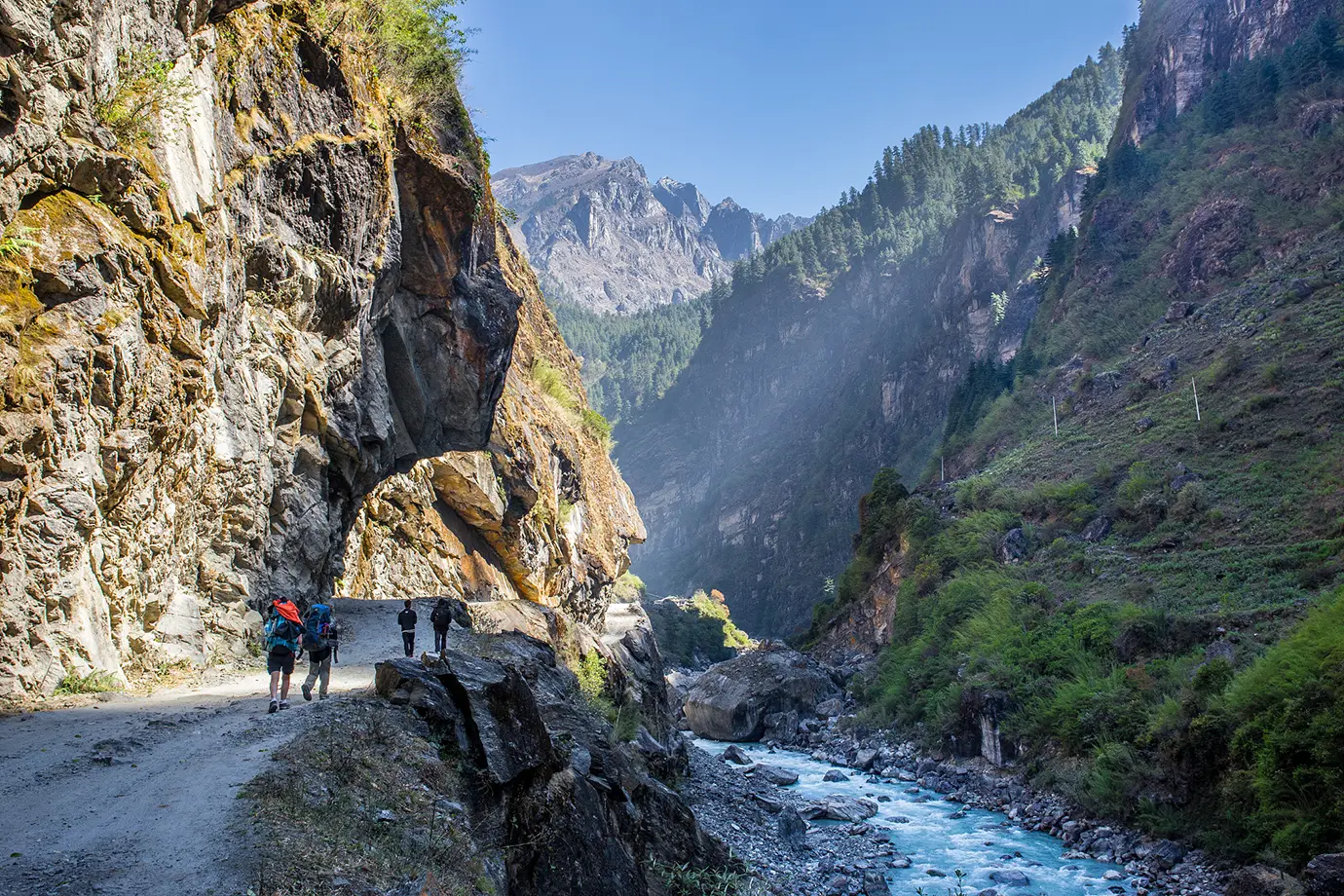
Lunch stops at roadside teahouses along the Besisahar to Dharapani section count as the first full-board meal of the trek. You arrive in Dharapani in the late afternoon, check into your teahouse, eat dinner, and rest. Dharapani marks the official entry point into the Annapurna Conservation Area from the eastern side—permit rangers check your ACAP and TIMS documents at the checkpoint here.
Accommodation:
Teahouse in Dharapani
Meals Breakfast, Lunch, Dinner
Difficulty
Transportation Hiace to Besisahar; shared jeep Besisahar to Dharapani
The first full trekking day from Dharapani follows the Marsyangdi River through pine forests, small Gurung and Tamang villages, and sections of the river valley trail toward Chame at 2,710 meters. The walking distance covers approximately 18 kilometers with a consistent but manageable elevation gain. The trail passes through Bagarchhap, Danaque, and Timang before the final approach to Chame.
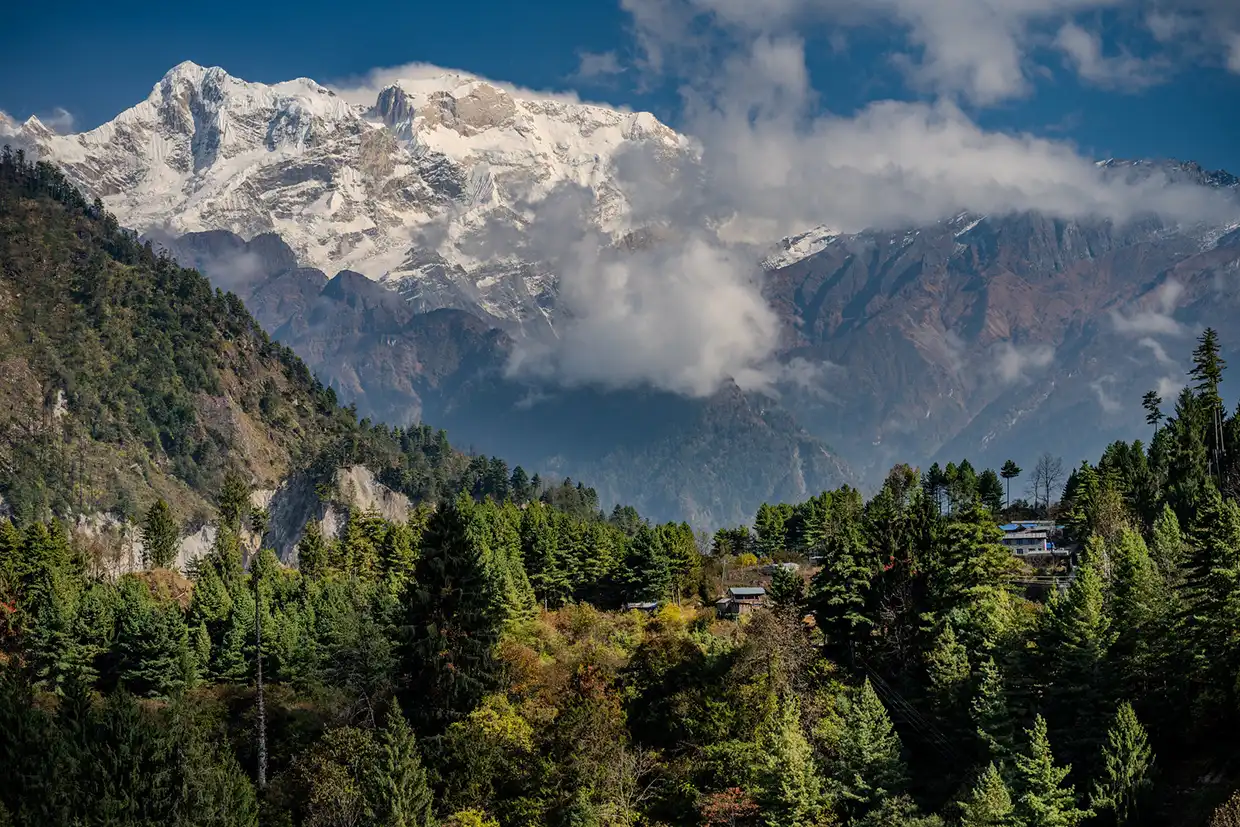
Chame serves as the district headquarters of Manang district and offers the best teahouse facilities and market services you encounter before reaching Manang. Stock up on snacks, batteries, and any missing gear items at the small shops in Chame. The first significant Himalayan views appear on the upper sections of today’s trail—Lamjung Himal and Annapurna II begin to dominate the northern skyline above the tree canopy.
Accommodation:
Teahouse in Chame
Meals Breakfast, Lunch, Dinner
Difficulty
The trail from Chame to Upper Pisang passes through the dramatic Paungda Danda rock face—a sheer curved cliff rising hundreds of meters above the trail on the left side—and through mixed forest with increasingly open mountain views. The main trail splits between lower Pisang and upper Pisang at the top of the valley. Your guide takes the upper route to Upper Pisang at 3,300 meters, which sits on a high ridge above the valley with wide views of Annapurna II, Annapurna IV, and Pisang Peak.
Upper Pisang marks the transition from the forested lower valley into the drier, more open terrain of the upper Annapurna Conservation Area. The village contains a prominent monastery on the ridge above the teahouses—visit it in the late afternoon for views down the valley and a close look at traditional Tibetan-influenced Buddhist art and architecture.
Accommodation:
Teahouse in Upper Pisang
Meals Breakfast, Lunch, Dinner
Difficulty
The trail from Upper Pisang to Manang follows the high route through Ghyaru and Ngawal, or the alternative high route through Bhraka, depending on weather and trail conditions. Your guide selects the specific route on Day 5 in the morning. Both options stay on the ridge above the main valley trail and offer consistently wider, more dramatic mountain views than the lower trail that runs directly along the riverbank.
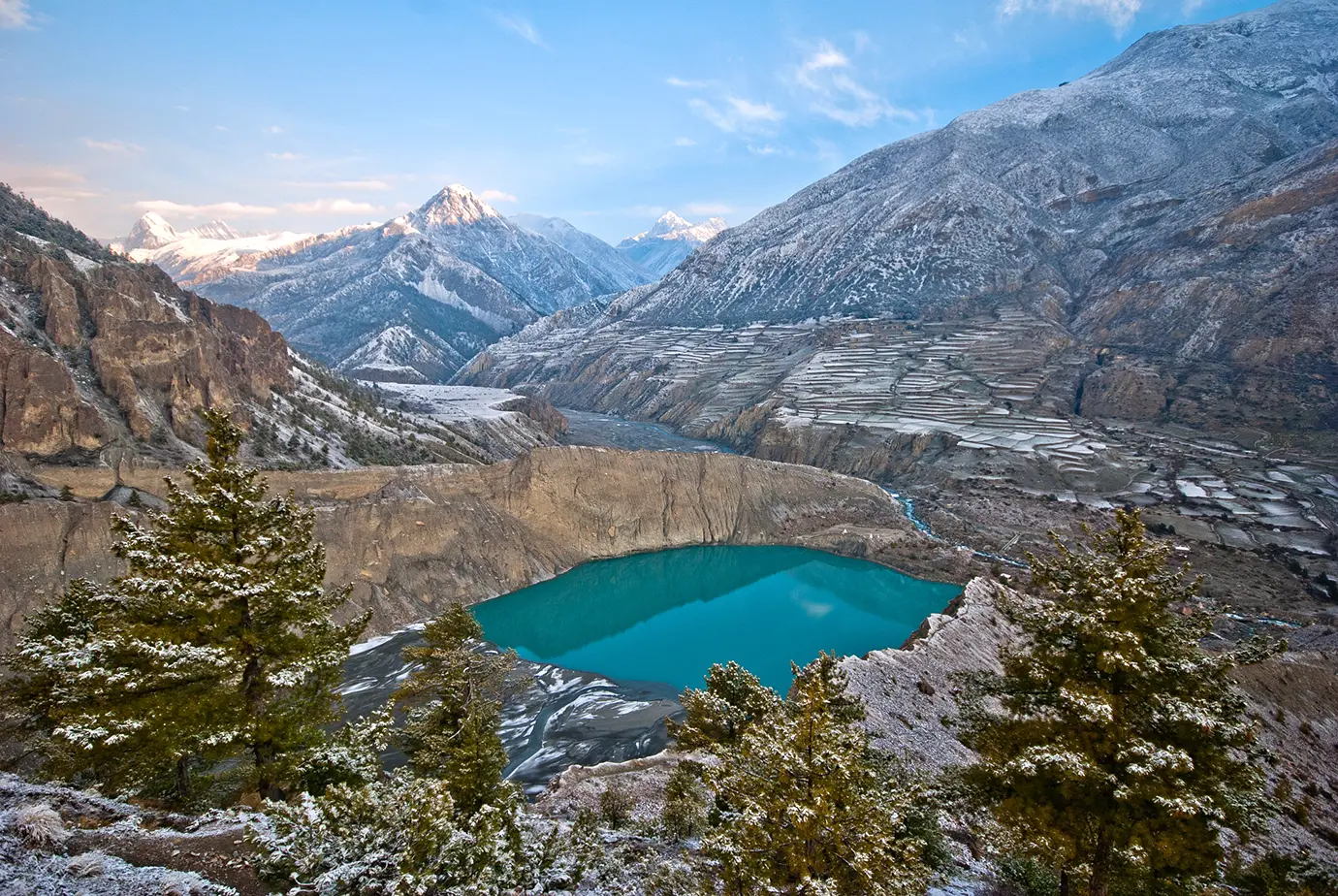
Ngawal village at 3,660 meters gives you a full face view of the Gangapurna glacier descending toward the Gangapurna Lake below Manang. Bhraka village at 3,450 meters sits on a smaller ridge with views across the main valley toward Annapurna III and Gangapurna. Both high routes meet the Manang trail before the final approach to the town. Manang at 3,519 meters marks the end of the green, forested Annapurna world—above Manang, the terrain shifts permanently into a dry, rocky, Trans-Himalayan character.
 Accommodation:
Teahouse in Manange
Meals Breakfast, Lunch, Dinner
Difficulty
Day 6 stays in Manang for a full rest and acclimatization day. Your guide leads an acclimatization hike in the morning—typically to the Gangapurna Lake viewpoint at approximately 3,700 meters, or to the ridge above Manang at 3,900 meters, or to the Ice Lake at approximately 4,600 meters for stronger trekkers. The acclimatization hike principle follows the standard high-altitude protocol: hike high, sleep low. Climbing higher than your sleeping altitude during the day accelerates the body’s adaptation to reduced oxygen levels.
Spend the afternoon resting, eating well, and drinking adequate water—at least 3 liters across the full day. Visit the Manang Himalayan Rescue Association clinic for a free altitude information session that covers the symptoms and management of acute mountain sickness, high-altitude pulmonary edema, and high-altitude cerebral edema. The session runs most afternoons during trekking season and gives you practical knowledge that improves decision-making on the high-altitude days ahead.
Accommodation:
Teahouse in Manang
Meals Breakfast, Lunch, Dinner
Difficulty
The Tilicho Lake detour begins on Day 7. You leave Manang on the trail that heads west through Khangsar village at 3,734 meters—a traditional Tibetan-style village with flat-roofed stone houses, mani walls, and terraced fields above the main valley. From Khangsar, the trail climbs toward Shree Kharka on an exposed ridgeline trail with wide views of the Annapurna III and Gangapurna summits to the south.
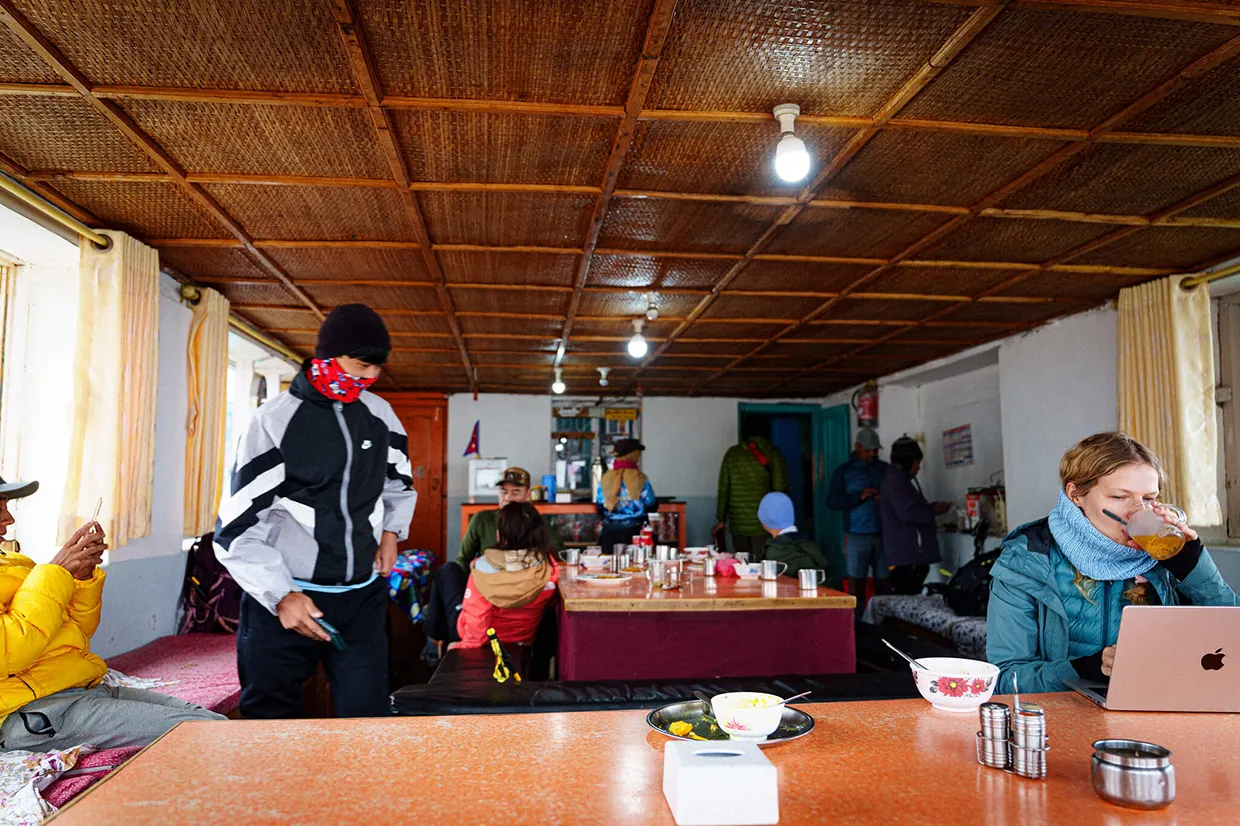
Shree Kharka sits at approximately 4,150 meters and represents the last teahouse settlement before Tilicho Base Camp. The facilities here are more basic than the Manang teahouses—rooms are small, bathrooms are shared, and the menu focuses on simple, high-calorie trail food. Rest well at Shree Kharka and prepare your full cold-weather gear for the Day 8 approach to Tilicho Base Camp and the Day 9 lake visit.
 Accommodation:
Teahouse in Shree Kharka
Meals Breakfast, Lunch, Dinner
Difficulty
The trail from Shree Kharka to Tilicho Base Camp crosses the most technically demanding terrain of the Tilicho Lake approach. A landslide-prone section above Shree Kharka requires careful foot placement and your guide’s direct instruction on line and pace. The trail traverses the face of a large slope that sheds rock debris during the monsoon season and continues to present loose terrain even in the dry season. Walk steadily, watch the ground ahead, and follow your guide’s exact line through the difficult section.
Above the landslide section, the trail opens onto dry, rocky terrain at high altitude with increasingly dramatic views of Tilicho Peak (7,134 m) directly above. Tilicho Base Camp sits at approximately 4,500 meters in a cold, windswept location with minimal facilities—basic rooms, simple food, shared bathrooms, and no hot water. Arrive as early as possible in the afternoon to rest before the early start on Day 9. Eat a full dinner, drink adequate water, and prepare everything you need for the lake visit in your daypack the night before.
Accommodation:
Teahouse at Tilicho Base Camp
Meals Breakfast, Lunch, Dinner
Difficulty
Your guide wakes the group before 6 AM. You eat a quick breakfast, dress in full warm layers, and depart for Tilicho Lake on the trail that climbs steeply from the base camp into the glacial basin above. The 400-meter elevation gain from the base camp to the lake at approximately 4,919 meters takes 2 to 3 hours, depending on pace and altitude acclimatization. The trail passes through rocky, exposed terrain with no shelter from the wind above base camp.
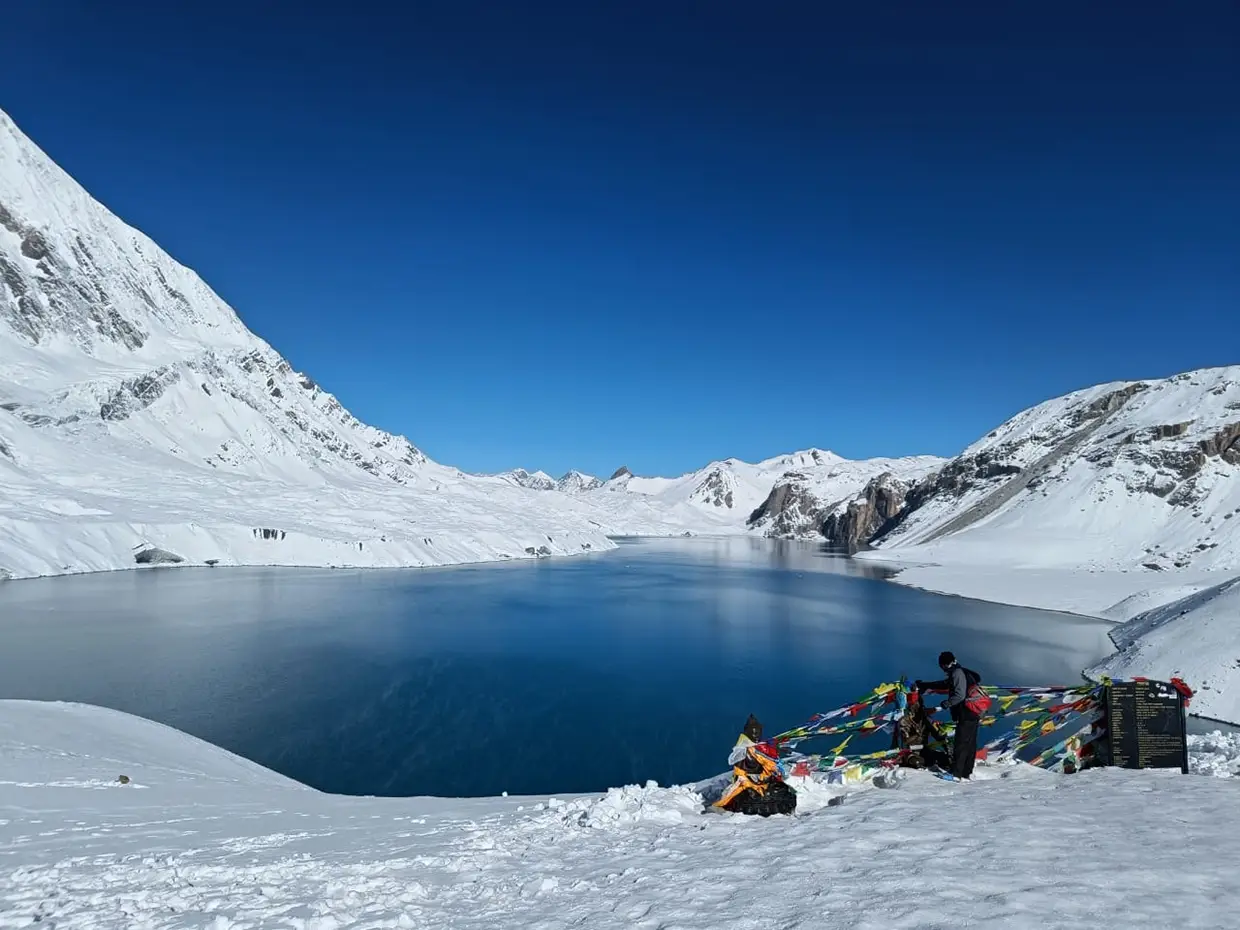
Tilicho Lake appears suddenly as you crest the final ridge—a deep, flat body of water filling a high-altitude glacial bowl with Tilicho Peak rising directly behind it. The combination of the peak’s height, the lake’s stillness at that altitude, and the surrounding rocky ridgelines creates one of the most powerful visual compositions in the entire Himalayan trekking world. Most trekkers spend 30 to 60 minutes at the lake before the cold and the need to return drive them to descend. Return to Tilicho Base Camp for lunch, then continue the full descent back to Shree Kharka for the overnight stay.
 Accommodation:
Teahouse at Shree Kharka
Meals Breakfast, Lunch, Dinner
Difficulty
Day 10 reconnects the Tilicho Lake route with the main Annapurna Circuit trail. The trail from Shree Kharka drops back toward the main valley before climbing to rejoin the circuit at Yak Kharka at 4,018 meters or Ledar at 4,200 meters. The reconnection section requires navigational attention—your guide handles route choice and carefully manages pace on a day following two demanding days at high altitude.
Yak Kharka and Ledar both offer basic teahouse accommodation in open, windswept terrain above the main Manang valley. The altitude gain continues on Day 10 as the trail pushes above 4,000 meters on the approach to Thorong Phedi. Walk slowly throughout the day, drink continuously, eat a full dinner, and rest as much as possible in the afternoon. Your body requires maximum recovery before the Thorong La Pass crossing on Day 12.
Accommodation:
Teahouse at Yak Kharka or Ledar
Meals Breakfast, Lunch, Dinner
Difficulty
The Day 11 destination—Thorong Phedi at 4,450 meters or Thorong High Camp at 4,850 meters—depends on weather, group fitness, and your guide’s assessment of optimal Thorong La pass day timing. Thorong Phedi represents the standard overnight choice for the night before the pass, with a longer but less strenuous climb to the pass on Day 12. High Camp gives you a shorter but more intense climb on Day 12 and requires spending a night at 4,850 meters in very cold conditions.
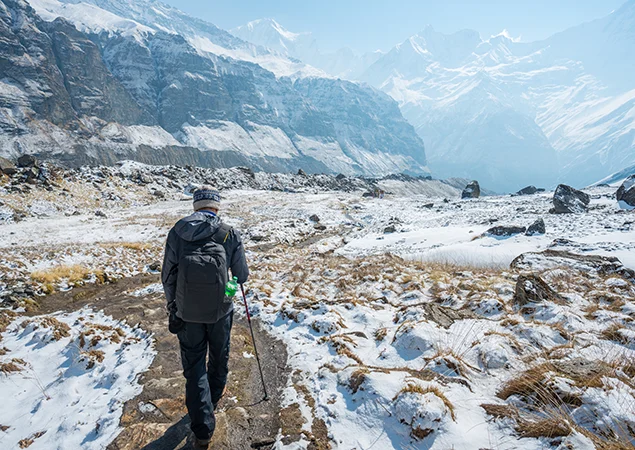
Regardless of which stop you choose, Day 11 keeps movement to a minimum after reaching your overnight destination. Arrive early, rest completely in the afternoon, eat a large and carbohydrate-rich dinner, hydrate aggressively, and prepare everything for the pass day the night before—headlamp charged, warm layers accessible, daypack packed, water bottle full. Set your alarm for 3 AM to 5 AM, depending on your guide’s specified departure time.
 Accommodation:
Teahouse at Thorong Phedi or High Camp
Meals Breakfast, Lunch, Dinner
Difficulty
The day at the Thorong La Pass starts in complete darkness. Headlamps light the trail as your group joins the pre-dawn procession of trekkers climbing from Phedi or High Camp toward the 5,416-meter summit. The air temperature drops well below freezing above 5,000 meters. Wind intensifies near the pass summit. Every step requires deliberate effort as the altitude reduces your effective lung capacity to roughly half its sea-level function.
The summit at 5,416 meters carries prayer flags and stone cairns and offers a view westward into the Mustang and Kali Gandaki region—an entirely different visual world from the green Marsyangdi valley you entered the circuit from 10 days earlier. Spend 10 to 15 minutes at the top before beginning the descent. The downhill trail drops 1,600 meters to Muktinath through rocky, switchbacking terrain that demands careful footing on tired legs.
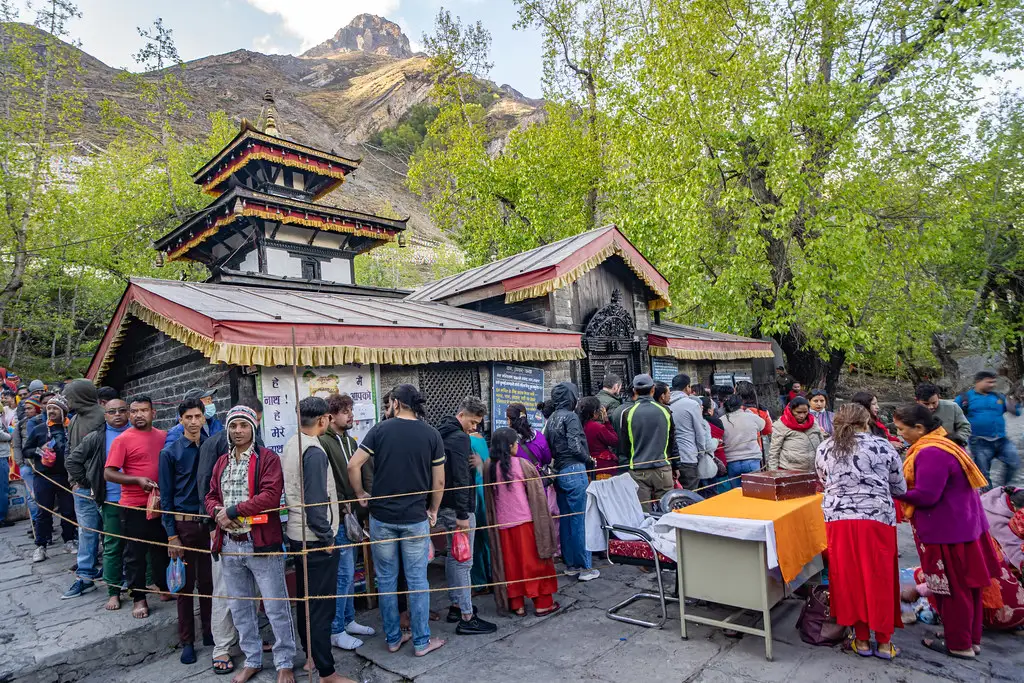
Muktinath at 3,710 meters marks the end of the high mountain section. The sacred Muktinath Temple complex—revered by both Hindu pilgrims and Tibetan Buddhist communities—sits above the village with 108 water spouts and a flame of natural gas that burns continuously from a crack in the rock. Spend time at the temple before checking into your teahouse for a well-deserved rest after the most demanding day of the entire trek.
 Accommodation:
Teahouse in Muktinath
Meals Breakfast, Lunch, Dinner
Difficulty
A jeep collects your group from Muktinath for the drive down the western slope of the Annapurna Circuit through the Kali Gandaki Valley—the deepest river gorge in the world, running between the Dhaulagiri and Annapurna massifs. The drive passes through Jomsom, Kagbeni, Marpha, Tukuche, and Ghasa before the road drops through the lower Kali Gandaki valley toward Beni and then Pokhara. The full journey takes 6 to 8 hours, depending on road conditions.
You arrive in Pokhara in the late afternoon and transfer to Hotel Splendid View near the lakeside. Clean clothes, a hot shower, a proper bed, and a lakeside dinner mark the transition from the trail back to city life. The single night in Pokhara is short but genuinely restorative after 11 consecutive teahouse nights on the trail.
Accommodation:
Hotel Splendid View, Pokhara Lakeside
Meals Breakfast, Lunch
Difficulty
Transportation Jeep from Muktinath to Pokhara
The morning tourist bus from Pokhara returns to Kathmandu in 6 to 7 hours. Transfer to Hotel Thamel Park on arrival in the late afternoon. Use the evening for final shopping in Thamel, a celebration dinner, or simply resting before the next day’s airport departure. Our team remains reachable by phone and WhatsApp throughout Day 14 if you need any last-minute assistance with departure logistics.
Accommodation:
Hotel Thamel Park, Kathmandu
Meals Breakfast
Difficulty
Transportation Tourist bus Pokhara to Kathmandu
Our driver transfers you from Hotel Thamel Park to Tribhuvan International Airport at the agreed pickup time. Allow at least 3 hours before international departure for check-in, immigration, and security. If your flight departs in the afternoon, store your luggage at the hotel after checkout and use the free morning to visit Swayambhunath Stupa or the Boudhanath area—both are within 15 minutes of Thamel by taxi.
Accommodation:
Not included
Meals Breakfast
Difficulty
Transportation Private car airport transfer
The Annapurna Circuit with Tilicho Lake Trek suits the following travelers:
Be honest before confirming this package:
| Trek | Duration | Difficulty | Highest Point | Best Feature | Best For |
|---|---|---|---|---|---|
| Annapurna Circuit with Tilicho Lake | 15 Days | Challenging | 5,416 m | Tilicho Lake + Thorong La Pass | Fit, experienced trekkers |
| Annapurna Circuit Trek | 12–15 Days | Mod–Challenging | 5,416 m | Classic full circuit | First big Himalayan trek |
| Tilicho Lake Trek | 10–13 Days | Mod–Challenging | 4,919 m | High alpine lake focus | Lake-focused trekkers |
| Annapurna Base Camp Trek | 10–14 Days | Moderate | 4,130 m | Glacier amphitheater | Base camp seekers |
| Mardi Himal Trek | 7–10 Days | Moderate | ~4,500 m | Machhapuchhre views | Short scenic adventure |
The booking process completes in under 10 minutes from start to confirmation:
Our booking team responds to WhatsApp, email, and phone inquiries within 4 hours during Nepal business hours (9 AM to 6 PM, UTC+5:45), 7 days a week throughout the year.
The Annapurna Circuit with Tilicho Lake Trek 15-day package offers the most complete high-Himalayan trekking experience in Nepal, without requiring technical mountaineering skills or camping equipment. You get Tilicho Lake at 4,919 meters, the Manang Valley acclimatization structure, Thorong La Pass at 5,416 meters, and the sacred site of Muktinath—all in a single 15-day itinerary that includes Hotel Thamel Park in Kathmandu, Hotel Splendid View in Pokhara, full trail meals, a licensed guide, all permits, and clear transport for every leg.
The Annapurna Circuit Tilicho Lake Trek rewards preparation and punishes complacency in equal measure. Trekkers who arrive fit, prepared, and appropriately insured complete the route with a sense of achievement that few other 15-day itineraries in the world can match. The physical difficulty is real. The reward is proportional.
Book now to secure your trek dates and confirm your community lodge reservations at Tilicho Base Camp and High Camp before they fill during peak season. Send our team a message to request a custom quote, discuss group departures, or ask questions about optional upgrades. We respond within 4 hours.
Hotel Thamel Park sits in the Thamel tourist district, with easy access to gear shops, restaurants, money exchange, and the departure points for tourist buses. The hotel offers clean twin-sharing rooms with private bathrooms, hot water, Wi-Fi, and daily breakfast. The location, quality, and included breakfast make it a practical and comfortable base for both the pre-trek arrival night and the post-trek recovery night before departure.
Hotel Splendid View is located in a convenient lakeside spot in Pokhara, offering private bathrooms, hot water, Wi-Fi, and mountain views from upper-floor rooms. The single Pokhara night on Day 13 provides the first genuine city-standard accommodation after 11 consecutive teahouse nights. The lakeside location puts you within a short walk of Pokhara’s best restaurants and evening options.
Trekking Route – Teahouses and High-Altitude Lodges
On the trail, you stay in locally run teahouses across 11 nights from Dharapani through Muktinath. Teahouse quality decreases progressively with altitude—Chame and Manang offer the most developed facilities, with larger menus, reasonable room quality, and reliable services. Tilicho Base Camp, Thorong Phedi, and High Camp represent the most basic accommodation on the route, with small rooms, thin mattresses, shared bathrooms, and limited menu options.
Hot showers, Wi-Fi, and device charging carry additional fees at all teahouses—payable directly in Nepali rupees. Carry a power bank for reliable device charging during the high-altitude section, where the electricity supply is inconsistent. Room availability at Tilicho Base Camp and High Camp becomes limited during the peak October season—our team contacts lodges in advance to confirm space before your departure from Kathmandu.
Full board meals run from Day 2 lunch through Day 13 lunch—covering every breakfast, lunch, and dinner across all 11 active trekking days plus the Day 2 drive day. Hotel breakfast is included at both Hotel Thamel Park and Hotel Splendid View. Lunch and dinner in Kathmandu on Days 1, 14, and 15 are not included.
Teahouse food on the Annapurna Circuit provides consistent energy for high-altitude walking days. Dal bhat—steamed rice, lentil soup, vegetable curry, pickles, and papadum with free refills—represents the single best caloric option on the trail. Other common meals include noodle soup, potato dishes, pasta with vegetable sauce, fried rice, eggs in multiple preparations, porridge with honey for breakfast, and chapati with curry. Menu diversity decreases at high altitude—Tilicho Base Camp and High Camp offer limited options and prioritize hot, simple, high-calorie food over variety.
Bottled water, soft drinks, alcohol, hot drinks beyond standard tea and coffee, snacks, and desserts carry additional charges at all locations. Budget USD 3 to USD 8 per day for extras, depending on altitude—prices increase consistently with elevation on the Annapurna Circuit route.
The package covers six transport segments: private car airport pickup on Day 1, Hiace van from Kathmandu to Besisahar on Day 2, shared jeep from Besisahar to Dharapani on Day 2, jeep from Muktinath to Pokhara on Day 13, tourist bus from Pokhara to Kathmandu on Day 14, and private car airport drop-off on Day 15. Every segment connects logically to the trekking route, so you don’t need to arrange anything independently.
Optional transport upgrades improve comfort on specific legs. A private jeep from Kathmandu to Dharapani on Day 2 replaces the Hiace-and-shared-jeep combination with a single private vehicle—faster, more comfortable, and more flexible for stops. A private jeep from Muktinath to Pokhara on Day 13 provides a more comfortable alternative to the standard shared jeep. A domestic flight from Pokhara to Kathmandu on Day 14 cuts the 6-hour bus journey to 25 minutes.
The Annapurna Circuit with Tilicho Lake Trek Nepal route requires two permits: the Annapurna Conservation Area Permit and the TIMS card. The current ACAP fee stands at NRs. 3,000 for foreign nationals and NRs. 1,000 for SAARC nationals, inclusive of applicable taxes, as listed on the NTNC permit portal. NTNC’s online system accepts payment by Visa or MasterCard and sends the permit confirmation by email after payment. Our team arranges both permits in Kathmandu before your Day 2 departure.
Permit rangers check both documents at multiple checkpoints along the Annapurna Circuit—at Dharapani entry, at Manang, and at other designated stops on the route. Keep both permits in your daypack at all times. Bring two passport-size photographs and a clear copy of your passport photo page to provide to our team on Day 1 or the morning of Day 2.
The Annapurna Circuit with Tilicho Lake Trek rates as challenging—the highest difficulty category on Nepal’s trekking scale for non-technical routes. Three elements drive this rating above the moderate level: the Tilicho Lake day hike above 4,900 meters, the Thorong La Pass crossing at 5,416 meters, and the landslide-prone approach to Tilicho Base Camp that requires steady, careful walking on an unstable trail section.
Daily walking time ranges from 5 to 8 hours on most trekking days, with Day 12 (Thorong La) potentially running 8 to 10 hours, depending on the starting point and pace. The altitude profile pushes the physical challenge well beyond the moderate category: you spend multiple consecutive nights above 4,000 meters, attempt the Tilicho Lake hike at approximately 4,900 meters, and cross a pass at 5,416 meters in cold and potentially windy conditions.
Fit trekkers who exercise regularly and prepare specifically for altitude challenges complete this route safely and enjoyably every season. The preparation requirements extend beyond general fitness—specific cardiovascular fitness, walking endurance on uphill terrain for consecutive days, and mental readiness for extreme cold and physical discomfort on the Thorong La day all contribute to the outcome. Trekkers who arrive underprepared face a genuinely dangerous situation on the Thorong La section, where turning back after the High Camp start point becomes progressively more difficult as the day advances.
| Season | Months | Conditions | Recommended |
|---|---|---|---|
| Spring | Mar to May | Mild days, clear mornings, rhododendron bloom in lower valleys. Stable weather window for Thorong La. Trails busy in April and May. | Yes |
| Autumn | Sep to Nov | Best visibility of the year after the monsoon ends. Dry, stable, blue-sky days. October is the best month to visit Thorong La and Tilicho Lake. | Yes – Best |
| Winter | Dec to Feb | Very cold at altitude. Snow covers Thorong La and may close the pass. Fewer trekkers, harder conditions. Experienced winter trekkers only. | With Care |
| Monsoon | Jun to Aug | Heavy rain, landslide risk on the Tilicho Base Camp approach, cloud cover, muddy trails. Not recommended for most trekkers. | No |
October and November deliver the strongest combination of visibility, stable weather, and safe pass conditions. March, April, and May offer warm days and rhododendron forests in the lower valley sections. Winter permits the crossing in mild years but requires experienced trekkers with full cold-weather equipment and strong fitness. Avoid monsoon months for the Tilicho Lake approach, specifically, the landslide-prone section above Shree Kharka becomes genuinely dangerous during and immediately after heavy rain.
Porter service is strongly recommended for the Annapurna Circuit with Tilicho Lake Trek. The combination of 11 consecutive trekking days, high altitude above 4,500 meters on multiple days, and the physical demands of Thorong La Pass makes carrying a heavy main bag a significant additional load that reduces your enjoyment and increases fatigue at critical high-altitude moments. One porter can carry a maximum of 20 kilograms between two trekkers.
The most important porter support days on this route are the Tilicho Base Camp approach on Day 8, the Tilicho Lake day on Day 9, and the Thorong La Pass crossing on Day 12. On each of these days, arriving at the destination with energy reserves rather than complete exhaustion dramatically improves both safety and experience. You carry your own daypack throughout the trek with water, snacks, a rain jacket, a camera, sunscreen, a warm layer, and personal items.
All porters assigned through our company receive fair wages, adequate cold-weather clothing and footwear, and full insurance coverage as required under Nepal’s trekking industry employment standards. We do not assign porters to loads above their permitted carrying limit, and we ensure all porters receive the same accommodation and food standards as the trekking guide throughout the full route.
Add any of the following upgrades to your base package at extra cost:
Travel insurance is compulsory for the Annapurna Circuit with Tilicho Lake Trek. The route reaches 5,416 meters at Thorong La Pass and approximately 4,919 meters at Tilicho Lake. Most standard travel insurance policies cover trekking to 3,000 or 4,000 meters—these policies do not provide adequate coverage for this route. Purchase a policy that specifically covers trekking activity above 5,000 meters before you depart for Nepal.
Your policy must cover emergency helicopter evacuation from altitude, inpatient and outpatient medical treatment in Nepal, personal accident and injury during high-altitude trekking, trip cancellation and curtailment, emergency rescue from remote terrain, and lost or delayed baggage. A helicopter evacuation from the Thorong La section or the Tilicho Lake area to Kathmandu costs USD 3,000 to USD 6,000, depending on location and weather. Without insurance coverage, the full cost falls on the trekker.
Confirm your altitude coverage limit with your insurance provider before you depart. Our office requires your insurance provider’s name, policy number, and emergency assistance phone number before the trek departs. We cannot arrange evacuations without confirmed insurance details.
Pack for temperatures ranging from warm afternoons in the Marsyangdi valley at 1,800 meters to well below freezing at Thorong La Pass at 5,416 meters. Every item on the following list serves a specific purpose on this route—do not reduce the cold-weather layers:
The Annapurna Conservation Area hosts a large and diverse community of Gurung, Magar, Tamang, Thakali, and Tibetan-origin communities whose economies depend directly on trekking tourism. Buy food, water, and supplies from local teahouses along the route rather than carrying pre-packaged goods from Kathmandu or Pokhara. The Tilicho Lake approach passes through Khangsar village—a traditional community that sees fewer trekkers than the main circuit towns. Spend money there.
Muktinath holds deep religious significance for both Hindu and Tibetan Buddhist communities. Dress modestly when approaching the temple complex, remove footwear before entering the inner temple areas, walk clockwise around the temple perimeter, and maintain quiet, respectful behavior within the sacred precincts. Many Hindu pilgrims travel long distances to reach Muktinath—your presence as a trekker should support rather than disrupt their experience of the site.
Carry a refillable water bottle and use purification tablets throughout the trek. The Annapurna Circuit suffers from chronic accumulation of single-use plastic bottles, particularly above Manang, where the cost of removal makes disposal management difficult. Your water bottle and purification tablets eliminate your personal plastic contribution at a cost far lower than buying bottled water at high-altitude teahouse prices.
Stay on marked trails at all times. The landslide-prone terrain above Shree Kharka on the Tilicho Base Camp approach makes trail discipline a safety and environmental issue. Follow your guide exactly through the difficult sections and do not attempt shortcuts. The ACAP permit fee you pay supports trail repair, community development, and wildlife protection programs throughout the 7,629-square-kilometer conservation area.
Your licensed guide carries primary responsibility for group safety on every day of the Annapurna Circuit with Tilicho Lake Trek. Safety responsibilities include setting a pace that prevents over-exertion at altitude, monitoring weather forecasts before committing to the Tilicho Lake and Thorong La days, managing teahouse reservations in advance at critical high-altitude stops, and maintaining emergency communication capability at all times.
The Manang acclimatization day on Day 6 serves as the central safety feature of the 15-day itinerary. Do not attempt to skip this day or reduce the rest to a half day. The altitude difference between Manang at 3,519 meters and Tilicho Lake at 4,919 meters, followed by Thorong La at 5,416 meters, requires the body to make significant physiological adaptations, which the Day 6 rest and acclimatization hike directly supports.
Learn the symptoms of acute mountain sickness before departure: persistent headache, nausea, dizziness, loss of appetite, and disturbed sleep. Any symptoms that worsen rather than improve after rest and hydration require immediate descent. Never ascend with worsening altitude sickness symptoms. Inform your guide immediately at the first sign of any altitude-related symptom—early intervention prevents serious outcomes.
The landslide section on the Day 8 approach to Tilicho Base Camp requires strict trail discipline. Walk exactly where your guide walks. Do not cross the unstable terrain sections at your own pace or line. The section passes quickly when crossed steadily and carefully, but it poses a genuine risk to trekkers who rush or step off the established trail.
The Annapurna Circuit Trek Nepal route at 15 days, including Tilicho Lake, offers the best value available for this destination. Standard Annapurna Circuit packages that skip Tilicho Lake cost less and take fewer days, but miss the single most visually distinctive element of the entire route. Packages that include Tilicho Lake but skip the Manang acclimatization day save one day but increase the risk of altitude sickness on the most demanding section of the trek. The 15-day structure keeps both elements and maintains the safety margin required for high-altitude trekking.
The transport plan in this package combines cost efficiency with practical comfort. Private car handles airport transfers in Kathmandu. Hiace transport covers the long Kathmandu-Besisahar road section. Shared jeep transfers from Besisahar to Dharapani handle the final approach to the trailhead. A jeep covers the return from Muktinath to Pokhara. The tourist bus handles the return from Pokhara to Kathmandu. Each segment uses the most appropriate and efficient transport option for the route.
The hotel selection provides genuine comfort on city nights without inflating the package price. Hotel Thamel Park in Kathmandu and Hotel Splendid View in Pokhara are both solid three-star properties in central tourist areas, offering reliable service, private bathrooms, hot water, Wi-Fi, and included breakfast. The mountain accommodation uses locally run teahouses that keep the trek authentic and practical in remote areas where luxury lodge infrastructure does not exist.
The guide assigned to your trek holds a current government-issued trekking license and has direct, recent experience with the Annapurna Circuit and Tilicho Lake trail system. On a challenging route that reaches 5,416 meters and includes a landslide-prone approach to Tilicho Base Camp, a licensed and experienced guide is not optional equipment—it is the primary safety mechanism the package provides.
Tilicho Lake does not sit on the main Annapurna Circuit trail. It requires a deliberate detour from the circuit route near Manang, heading west through Khangsar village, then climbing to Shree Kharka and then to Tilicho Base Camp. Most Annapurna Circuit trekkers skip the lake entirely because the side trip adds two to three days to the standard itinerary. Adding the lake to your circuit plan adds altitude, effort, and significant scenic reward—but it also adds physical and logistical complexity that requires proper planning.
After the Tilicho Lake visit on Day 9, the route returns to Shree Kharka and then reconnects with the main Annapurna Circuit trail at Yak Kharka or Ledar. The rejoining section requires careful navigation, and your guide makes route decisions based on current trail conditions. The connection between the Tilicho Lake approach and the Thorong La section of the circuit creates the logical 15-day structure that makes this combined route work.
Skipping the Manang rest day saves 24 hours on the itinerary but creates a dangerous altitude gain profile for the days that follow. The trek reaches 3,519 meters at Manang. Tilicho Lake sits at 4,919 meters. Thorong La sits at 5,416 meters. Moving from Manang directly toward Tilicho Base Camp without a rest day forces the body to adapt to two major altitude jumps—the 1,400-meter gain to Tilicho Lake and then the further gain to Thorong La—without adequate recovery time between them.
The Day 6 acclimatization day in Manang is used productively rather than simply resting. Your guide leads a short acclimatization hike to a higher point above Manang—typically to the Gangapurna Lake viewpoint or the ridge above the village—which helps the body adapt more effectively than flat rest alone. The day also gives you time to assess your health, dry your gear, replenish supplies, and confirm with your guide that you feel ready for the high-altitude days ahead.
The Tilicho Lake day starts before 6 AM from Tilicho Base Camp. The trail from the base camp to the lake gains approximately 400 meters of elevation in a relatively short horizontal distance. The terrain above the base camp is rocky, exposed, and cold in the early morning hours—temperatures at the lake itself frequently drop below freezing even in October. Carry full warm gear, including gloves, a hat, and an insulating layer, in your daypack regardless of the temperature at the base camp the night before.
Wind conditions at Tilicho Lake can shift rapidly. Your guide monitors the weather on the morning of Day 9 and makes the lake decision based on visibility, wind forecast, and your group’s physical state. Trekkers who arrive at Tilicho Base Camp on Day 8 feeling strong and find clear weather on Day 9 morning encounter the lake in full, unforgettable high-altitude clarity. Groups that face strong winds or poor visibility on the morning of Day 9 may adjust their timing or, in extreme weather, decide to return without reaching the lake.
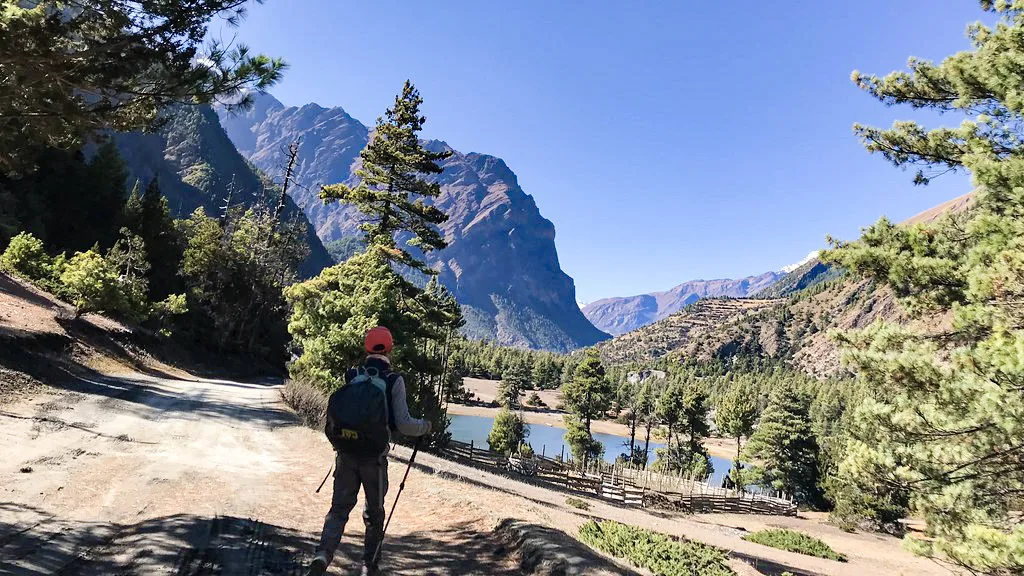
The Thorong La Pass day starts between 3 AM and 5 AM, depending on whether you overnight at Thorong Phedi or High Camp. The entire trekking community on the pass section departs at similar times, creating a long line of headlamps moving upward through the pre-dawn darkness. The altitude at High Camp sits above 4,800 meters, and even simple activities like dressing and eating breakfast require noticeably more effort than at lower elevations. Do everything slowly on Thorong La day—dress slowly, eat slowly, walk slowly.
The climb from High Camp to the pass gains approximately 600 meters in elevation on a steep, exposed, rocky trail. Wind hits hardest near the top of the pass. Snow patches persist near the summit even in autumn. At the prayer flag-covered summit at 5,416 meters, your body operates at roughly 50% of its sea-level oxygen efficiency. Most trekkers spend 10 to 15 minutes at the top before the cold sets in, and the altitude encourages a continued descent. The drop from Thorong La to Muktinath covers 1,600 meters of descent on a long, rocky, knee-testing trail.
The Annapurna Circuit of twenty years ago started walking from Besisahar or even Dumre. The circuit of today starts from Dharapani after a full day of road travel that bypasses the lower valley sections entirely. Roads now push even further up the valley in some seasons, and the upper circuit route between Manang and Thorong La sees occasional jeep traffic on dirt tracks that were walking-only paths a decade ago. The 15-day itinerary accounts for this reality by driving to Dharapani on Day 2 rather than spending days walking roads that provide little trekking value.
The trade-off deserves acknowledgment. The lower Marsyangdi Valley section between Besisahar and Dharapani contained forests, waterfalls, and river views that the drive bypasses completely. Trekkers who want the full walking circuit from its historical start point need a longer itinerary—18 to 21 days minimum. The 15-day structure prioritizes the high-altitude, culturally rich sections of the route—Manang, Tilicho Lake, Thorong La, Muktinath—over the lower-valley sections, where road development has reduced the trekking appeal.
A: The full package runs 15 days from arrival in Kathmandu on Day 1 to final airport transfer on Day 15. The active section covers 11 trekking days from Day 2 through Day 12, plus one drive day on Day 13 from Muktinath to Pokhara. You spend 2 nights in Kathmandu and 1 night in Pokhara on either side of the mountain section. The total trail and transport distance from Dharapani to Muktinath exceeds 120 kilometers.
A: The trek rates as challenging. Daily walking time ranges from 5 to 8 hours, with the Thorong La Pass day potentially reaching 10 hours depending on starting point and pace. The route involves significant altitude gain, consecutive nights above 4,000 meters, a landslide-prone approach to Tilicho Base Camp, and a 5,416-meter pass crossing in cold and potentially windy conditions. Previous multi-day trekking experience and proper fitness preparation are strongly recommended before booking.
A: The highest point is Thorong La Pass at 5,416 meters (17,769 feet) above sea level, crossed on Day 12. Tilicho Lake at approximately 4,919 meters (16,138 feet) represents the second highest point, reached on Day 9. The trek spends multiple consecutive nights above 4,000 meters between Day 7 and Day 12.
A: Tilicho Lake sits at approximately 4,919 meters (16,138 feet) above sea level in a glacial basin beneath Tilicho Peak. The lake visit requires a full day hike from Tilicho Base Camp at approximately 4,500 meters—a 400-meter elevation gain on a steep, rocky, exposed trail. Most trekkers take 2 to 3 hours to reach the lake from the base camp.
A: Yes. Day 6 stays in Manang as a full rest and acclimatization day. The rest day includes a morning acclimatization hike to a higher point above Manang, a free afternoon, and a strongly recommended evening session at the Manang Himalayan Rescue Association altitude information clinic. The Manang rest day is built into the itinerary as a non-negotiable safety element—it is not available as an optional skip.
A: Yes. Crossing Thorong La Pass at 5,416 meters is the central mountain challenge of the route and forms the climax of Day 12. You start the climb before sunrise from Thorong Phedi or High Camp, reach the pass summit in the morning, and descend 1,600 meters to Muktinath through the afternoon. The full day runs 8 to 10 hours depending on starting point and pace.
A: You stay at Hotel Thamel Park in Kathmandu for two nights—one on arrival and one on the final evening before departure. In Pokhara, you stay at Hotel Splendid View near the lakeside for one night after the Muktinath to Pokhara jeep drive. Both hotels offer clean twin-sharing rooms with private bathrooms, hot water, Wi-Fi, and daily breakfast.
A: You stay in locally run teahouses across all 11 trekking nights. Teahouse quality decreases with altitude—Chame and Manang offer the best facilities on the route, while Tilicho Base Camp, Thorong Phedi, and High Camp offer the most basic. All teahouses provide twin beds, pillows, and blankets. Bathrooms are shared at most trail lodges. Hot showers, Wi-Fi, and charging carry additional fees payable on-site.
A: Yes. Full board—breakfast, lunch, and dinner—is included on all 11 trekking days from Day 2 lunch through Day 13 lunch. Hotel breakfast is included at both city hotels on applicable mornings. Lunch and dinner in Kathmandu on Days 1, 14, and 15 are not included. Bottled water, hot drinks, snacks, and alcohol are not included at any location.
A: Porter service is included in package tiers that list it as a standard inclusion. For packages where porter is listed as optional, you add it at extra cost before departure. We strongly recommend porter service for this route given the altitude, terrain, and physical demands of the Tilicho Lake and Thorong La days. One porter carries a maximum of 20 kilograms shared between two trekkers.
A: You need the Annapurna Conservation Area Permit (ACAP) and the TIMS card. ACAP costs NRs. 3,000 for foreign nationals and NRs. 1,000 for SAARC nationals inclusive of tax. Both permits are included in the package price. Our team arranges both documents in Kathmandu before your Day 2 departure. Bring two passport-size photographs and a passport copy.
A: October and November offer the best conditions overall—clear skies, stable weather, and safe Thorong La pass conditions. March, April, and May offer a reliable spring window with warm days and rhododendron forests in the lower valley. Avoid monsoon months for this route, particularly the Tilicho Base Camp approach section, which becomes dangerous in wet conditions. Winter is possible for experienced trekkers with full cold-weather gear.
A: Yes. The standard package uses a Hiace van to Besisahar followed by a shared jeep to Dharapani. You can upgrade to a private jeep from Kathmandu directly to Dharapani at extra cost—a more comfortable option that eliminates the shared jeep transfer and gives you more flexibility on the Day 2 road journey. Contact our team before booking to add this upgrade.
A: Yes. The standard package uses the tourist bus from Pokhara to Kathmandu on Day 14. You can upgrade to a domestic flight at extra cost—the flight takes 25 minutes versus 6 to 7 hours on the bus. Multiple airlines operate this route with several daily departures. Contact our team at booking to add the flight upgrade.
A: Yes, travel insurance is compulsory. Your policy must cover trekking above 5,000 meters, emergency helicopter evacuation, medical treatment in Nepal, and trip cancellation. Standard travel policies that exclude adventure activities or cap altitude coverage at 3,000 to 4,000 meters are not adequate for this route. Confirm your altitude coverage limit with your provider before purchase and carry both printed and digital copies throughout the trek.