

Walk through authentic mountain villages and experience local traditions on this quiet trail near the Tibetan border.

Unbeatable Holiday Offers – Save Up to 20% on Your Next Adventure!
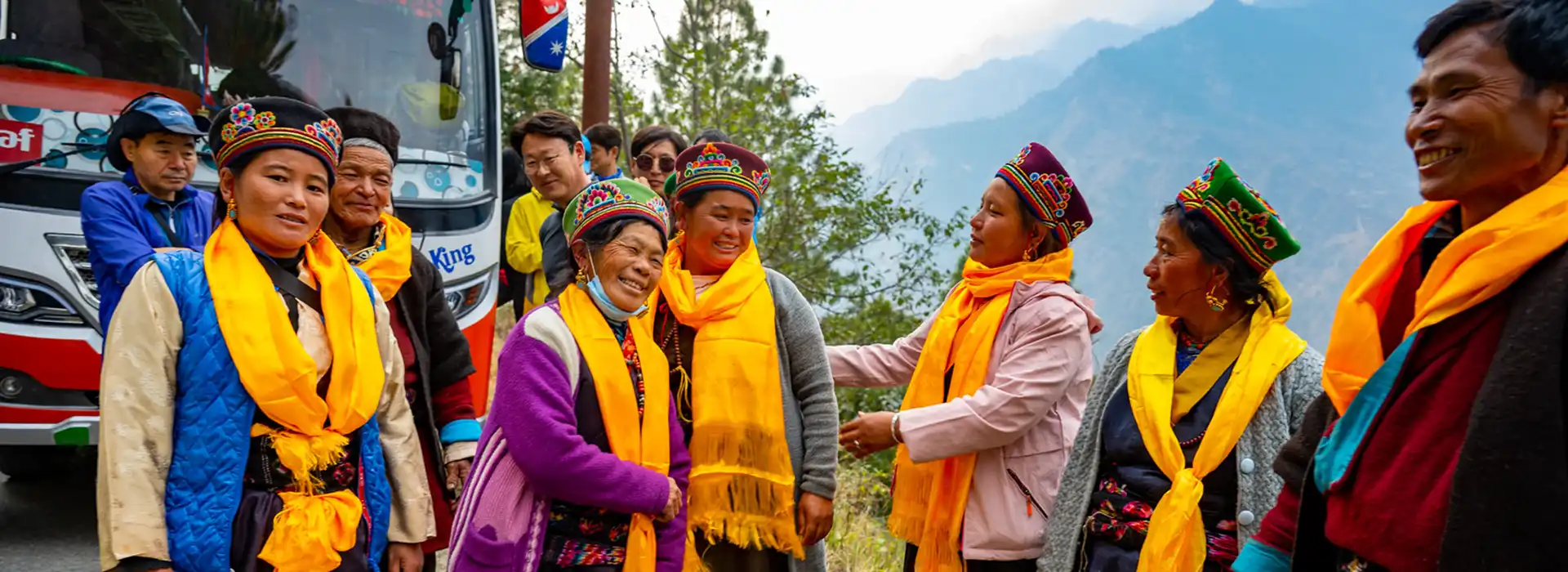

Walk through authentic mountain villages and experience local traditions on this quiet trail near the Tibetan border.
The Tamang Heritage Trek offers a rich cultural journey in the Langtang region, departing from Kathmandu in a compact 9 days. The itinerary focuses on the traditional Tamang villages of Gatlang, Thuman, and Briddim, as well as the spectacular Nagthali viewpoint and genuine homestay hospitality. Moving entirely on village-to-village terrain between 1,400 and 3,165 meters, this route uses reliable road transport through Syabrubesi for both the approach and the return, completely bypassing domestic flights.
This trail separates itself from standard Langtang Valley itineraries by prioritizing the Tamang Buddhist community life over mere summit views. You will walk through vibrant, working villages characterized by wood-smoke, active terraced farming, and chortens at every junction. This provides an authentic encounter with highland traditions and local kitchens serving traditional dal bhat and buckwheat dishes. The dramatic panorama of Ganesh Himal and Langtang Lirung from Nagthali acts as a magnificent bonus to this immersive experience.
The Tamang people of the Rasuwa district maintain a deeply rooted, Tibetan-influenced Buddhist tradition within the Langtang National Park buffer area. Subsistence farming, yak herding, and active monastery life have coexisted here in a stable community structure for centuries. Traveling through these settlements connects you to a genuine, living cultural landscape rather than a commercialized tourist setup.
This comprehensive 9-day package covers airport transfers, two nights in Kathmandu, round-trip overland transport to Syabrubesi, five nights of local teahouse and homestay accommodation, full-board meals, a licensed guide, and your Langtang National Park entry permit. Rated highly accessible, this quiet, culture-focused route is ideal for first-time trekkers, active photographers, and anyone seeking meaningful connections with local villages within a predictable, well-paced timeline.
Quick Answer: What Is the Tamang Heritage Trek?
The Tamang Heritage Trek is a 9-day cultural trek in Nepal near Langtang. The route follows Kathmandu, Syabrubesi, Gatlang, Tatopani, Nagthali viewpoint, Thuman, Briddim, and Syabrubesi. The trek focuses on Tamang culture, Buddhist villages, homestay-style hospitality, local food, forest trails, and Himalayan views from Nagthali (3,165 m) without entering a high-altitude alpine zone. Road-based access runs through Syabrubesi with no domestic flight required.
The Tamang Heritage Trek offers a distinct cultural journey that the classic Langtang Valley Trek—despite being in the same region—does not provide. While the standard Langtang route climbs a single valley toward glacial views, the Tamang Heritage Trail traverses a network of inhabited villages and traditional trade routes, delivering an immersive, cumulative cultural encounter over six walking days. Gatlang, Thuman, and Briddim each showcase a unique facet of this rich Buddhist tradition.
Gatlang features a compact settlement of iconic stone-walled houses, communal courtyards, and hillside monasteries, making it one of the most photographically compelling stops on the route. Thuman provides a deep spiritual atmosphere and an active village economy, anchoring the journey just below the spectacular Nagthali viewpoint. Finally, Briddim’s famous homestay tradition offers the most direct human connection, placing you in cozy family lodges where the kitchen, evening conversations, and morning tea reflect genuine household hospitality rather than standard commercial service.
The 9-day framework optimizes physical pacing to protect this cultural depth. Shorter 6- or 7-day alternatives compress the village stops, leaving no time for an afternoon walk, a monastery visit, or a meaningful conversation with a local family. Our format allocates time proportionally to each stopping point’s cultural value rather than sprinting for maximum daily mileage.
From a logistics standpoint, the Nepal Tourism Board requires a Langtang National Park entry permit for this route, which our team manages in its entirety. Because the trail winds through a scenic area near the Kerung border, trekkers can experience a fascinating, Tibetan-influenced atmosphere without the need for expensive or restrictive border-area permits.

Included Meals

Trip staff

Transport

Accommodation

Trip Grade
Group Size
You arrive at Tribhuvan International Airport in Kathmandu. Our representative meets you at the arrival hall and transfers you by private vehicle to Hotel Thamel Park in the Thamel tourist district. Check in, rest after your flight, and use the afternoon to purchase any remaining trekking items or visit Thamel’s restaurants. Hotel Thamel Park gives you walking access to trekking gear shops, money exchange, and pharmacies for last-minute preparation.
Our guide visits your hotel in the evening to walk through the full 9-day Tamang Heritage Trek itinerary, explain the Syabrubesi road transfer, and cover the cultural etiquette requirements for visiting Tamang villages and monasteries. Confirm your travel insurance covers trekking activity and emergency evacuation before the meeting ends.
Meals: Not included
Accommodation:
Hotel Thamel Park, Kathmandu (twin sharing)
Difficulty
The Day 2 road journey from Kathmandu to Syabrubesi follows the Trishuli River northward from Kathmandu through Dhunche before reaching the Langtang National Park gateway town of Syabrubesi at approximately 1,460 meters. The full drive takes 7 to 8 hours, with roads improving significantly from the Kathmandu valley exit to the Trishuli highway and becoming rougher on the Dhunche to Syabrubesi approach.
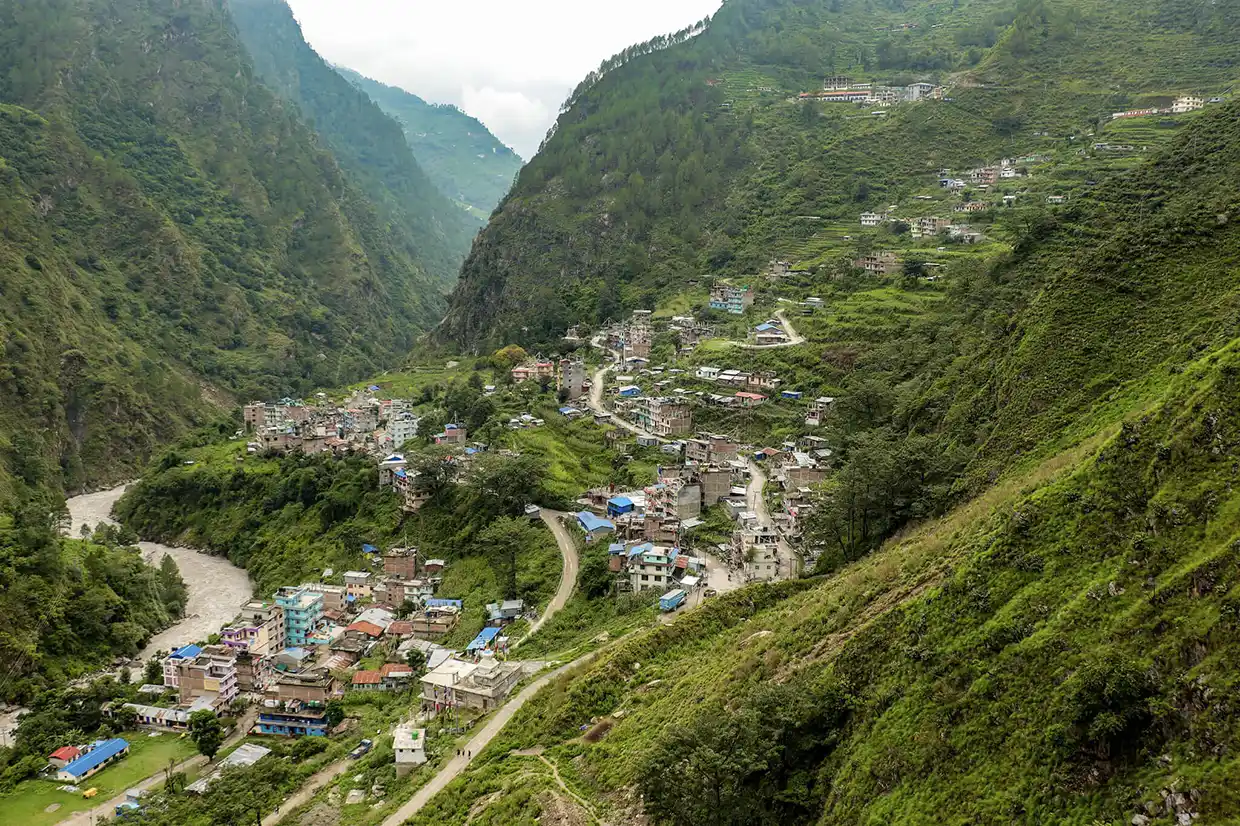
The Trishuli valley drive provides the first mountain views of the trip—the river gorge narrows progressively as the road climbs toward Dhunche, with Himalayan ridge systems visible above the valley walls in the upper sections. Syabrubesi sits at the confluence of the Bhote Koshi and Langtang rivers, in a dramatically situated town that serves as the start of both the Langtang Valley Trek and the Tamang Heritage Trail.
 Accommodation:
Teahouse in Syabrubesi
Meals Breakfast, Lunch, Dinner
Difficulty
The first trekking day from Syabrubesi to Gatlang establishes the Tamang Heritage Trek’s characteristic trail environment—village paths, hill forest sections, terraced farmland approaches, and the first Buddhist cultural markers of the route. The climb from Syabrubesi to Gatlang at approximately 2,238 meters covers significant elevation gain over 5 to 6 hours of walking through forest, open ridge sections, and the final approach to Gatlang’s traditional stone-house settlement.
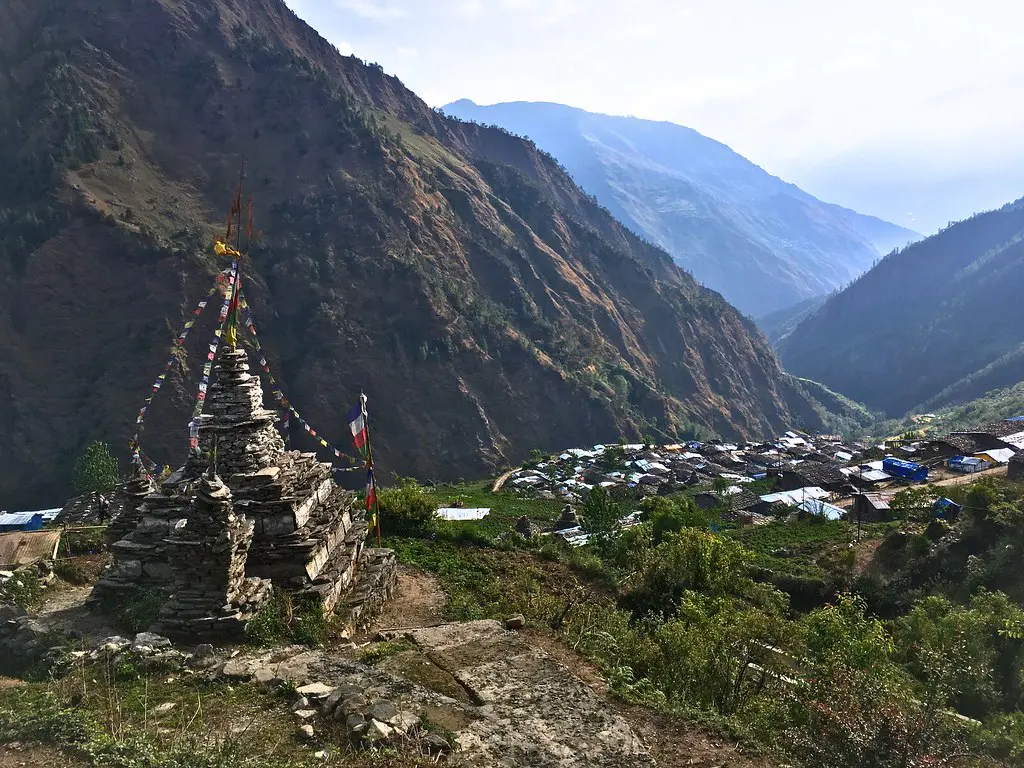
Gatlang village appears on the terrace above the trail as you approach from the south—monastery prayer flags visible on the upper ridge, stone walls and flat-roofed houses spread across the terrace, and the sound of the village’s community activity audible before the settlement itself comes into view. Check into the local teahouse or homestay in the afternoon, explore the village and monastery before dinner, and rest early for the Day 4 walk to Tatopani.
Accommodation:
Teahouse or homestay in Gatlang
Meals Breakfast, Lunch, Dinner
Difficulty
The Day 4 trail from Gatlang to Tatopani passes through forest sections, open ridge walking, and approaches village farmland before reaching the small settlement of Tatopani. Tatopani literally means hot water in Nepali—some older versions of the Tamang Heritage itinerary reference hot springs at this stop. The 2015 earthquake affected the natural hot spring infrastructure in this area. Our team confirms current hot spring conditions directly with local contacts before departure and presents Tatopani honestly as a village stop rather than guaranteeing a bathing experience that current ground conditions may not support.
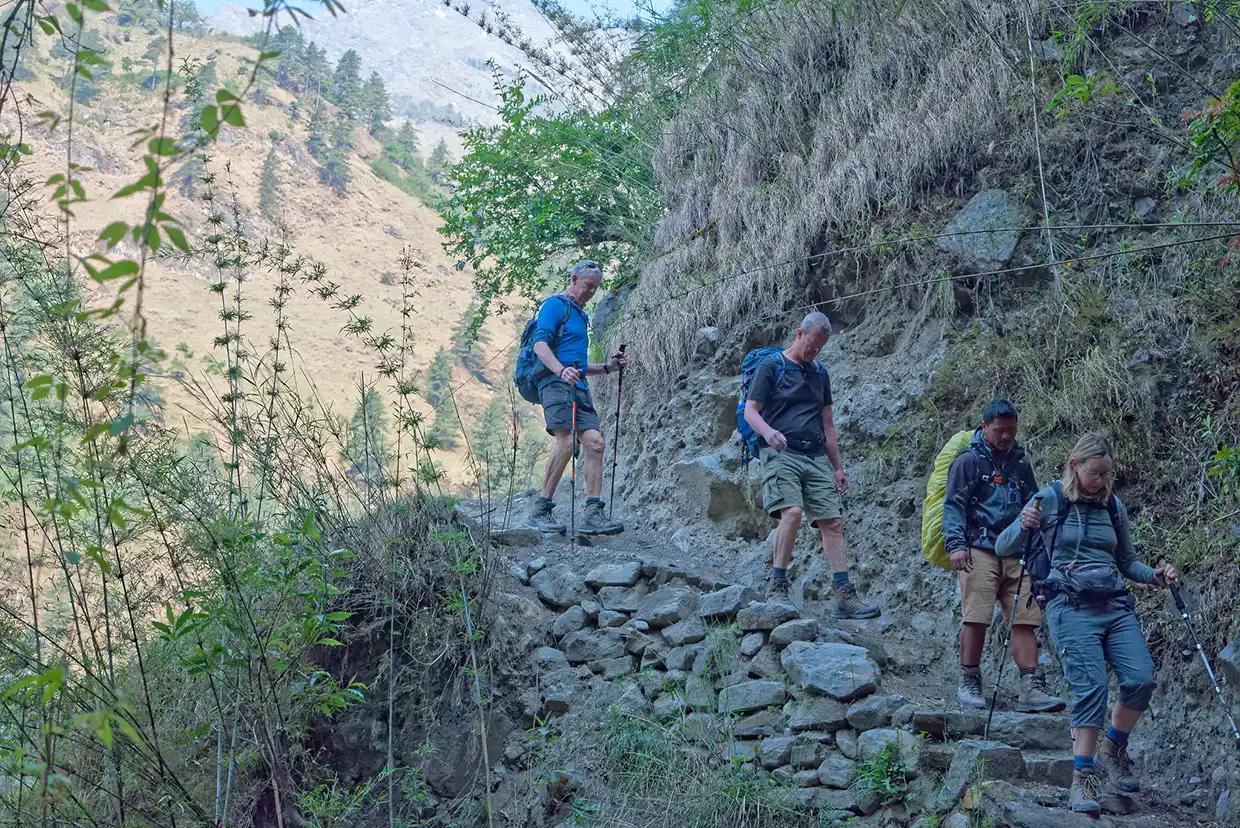
The walking time from Gatlang to Tatopani is approximately 5 to 6 hours. The trail passes through a mix of forest and farmland, with views of the Langtang ridge system on clear days. Arrive in the afternoon and rest in preparation for Day 5’s longer section to Nagthali and Thuman.
Accommodation:
Teahouse or homestay at Tatopani
Meals Breakfast, Lunch, Dinner
Difficulty
Day 5 covers the most physically demanding and visually rewarding section of the Tamang Heritage Trek. The trail climbs from Tatopani toward the Nagthali viewpoint ridge at approximately 3,165 meters through forest and open ridge terrain. Your guide sets a steady, unhurried pace throughout the ascent and monitors weather conditions to ensure optimal timing for the viewpoint. On clear mornings, the Nagthali ridge offers a panorama of the Ganesh Himal and Langtang Lirung, along with the surrounding Himalayan ridge system.
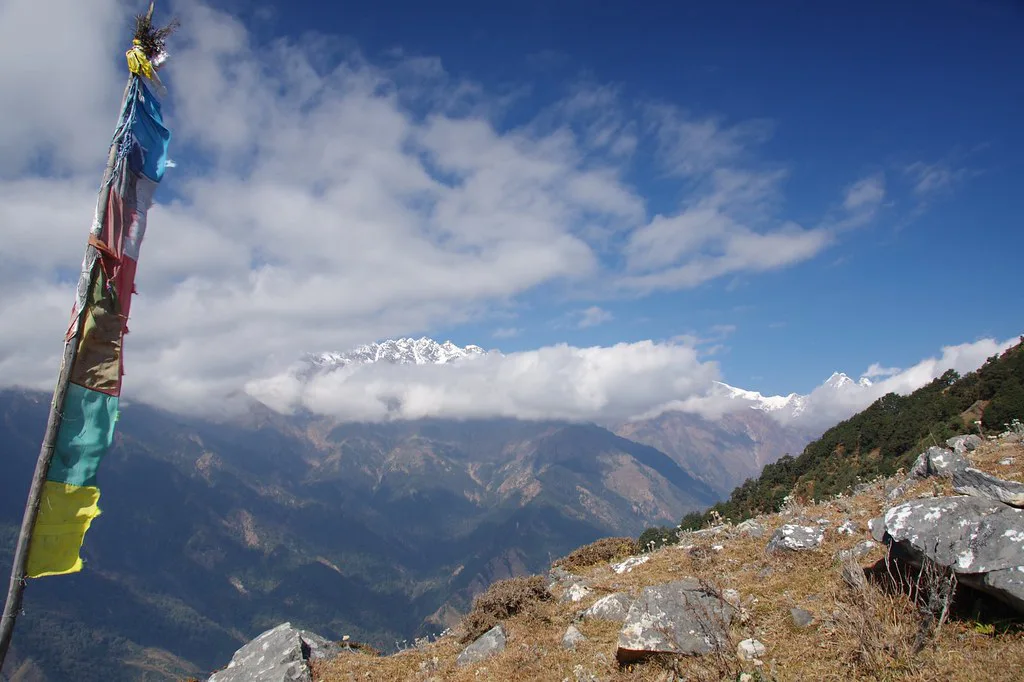
After the Nagthali viewpoint section, the trail descends toward Thuman—a Tamang village with an active Buddhist monastery, a traditional stone house settlement, and the cultural atmosphere that defines the upper Tamang Heritage Trail section. The walking time for the full Day 5 from Tatopani to Thuman via Nagthali is approximately 6 to 8 hours, including time at the viewpoint. Arrive in Thuman in the late afternoon, visit the monastery if the ceremony schedule allows, eat dinner, and rest.
Accommodation:
Teahouse or homestay in Thuman
Meals Breakfast, Lunch, Dinner
Difficulty
The Day 6 trail from Thuman to Briddim descends through forest sections, village paths, and farmland, taking approximately 4 to 5 hours to complete. The route passes through the cultural zone connecting two of the Tamang Heritage Trail’s most distinctive village stops—the Buddhist monastery culture of Thuman giving way to the homestay hospitality tradition of Briddim as the trail descends toward the lower valley.
Briddim, at approximately 2,229 meters, serves as the trek’s cultural centerpiece for the homestay. Check in at the family lodge in the early afternoon, take time to explore the village before dinner, and engage with the host family context through your guide’s facilitation. The evening and morning in Briddim deliver the most direct Tamang household cultural encounter of the entire 9-day route.
Accommodation:
Teahouse or homestay in Briddim
Meals Breakfast, Lunch, Dinner
Difficulty
The final trekking day descends from Briddim back to Syabrubesi via local trails and forest sections, taking approximately 4 to 5 hours. The trail moves through the lower Langtang National Park buffer area before reaching the road access town of Syabrubesi at the river confluence. Arrive in the afternoon and check into the Syabrubesi teahouse for the final overnight on the trail.
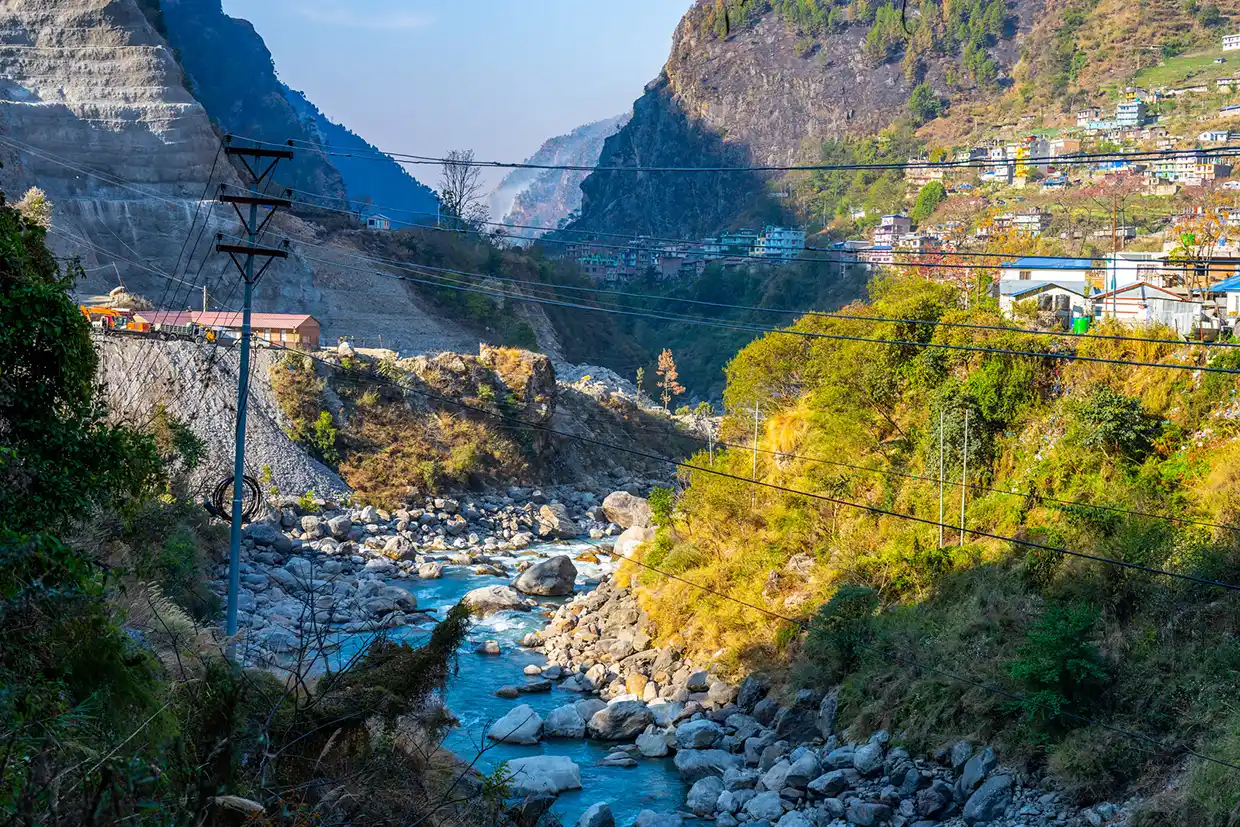
The Day 7 afternoon in Syabrubesi gives time for a final review of the trek’s cultural experiences with your guide, photography review, and a full dinner before the Day 8 road return to Kathmandu. Celebrate the completion of the Tamang Heritage Trek over dinner and prepare your main bag for the early morning departure.
Accommodation:
Teahouse in Syabrubesi
Meals Breakfast, Lunch, Dinner
Difficulty
The Day 8 road return from Syabrubesi to Kathmandu follows the same Trishuli valley route as the Day 2 approach in reverse—Syabrubesi, Dhunche, Trishuli, and the Kathmandu valley highway back to the city center. The drive takes 7 to 8 hours, depending on road and traffic conditions. Our pre-arranged vehicle departs Syabrubesi in the morning, allowing a mid- to late-afternoon arrival in Kathmandu.
Transfer to Hotel Thamel Park in the late afternoon. The Day 8 Kathmandu return gives you one more hotel night before the Day 9 airport departure—time for a final dinner, souvenir shopping in Thamel, or any remaining Kathmandu city errands.
Accommodation:
Hotel Thamel Park, Kathmandu
Meals Breakfast, Lunch
Difficulty
Our driver transfers you from Hotel Thamel Park to Tribhuvan International Airport at the agreed pickup time. Allow at least 3 hours before international departure for check-in, immigration, and security. If your international flight departs in the afternoon or evening, store your luggage at the hotel after checkout and use the free morning to visit the Boudhanath Stupa—20 minutes from Thamel by taxi—before your airport transfer.
Accommodation:
Not included – hotel checkout at standard time
Meals Breakfast
Difficulty
The Tamang Heritage Trek suits:
Be honest before confirming the Tamang Heritage Trek:
| Trek | Duration | Difficulty | Highest Point | Main Style | Best For |
|---|---|---|---|---|---|
| Tamang Heritage Trek | 9 Days | Moderate | ~3,165 m (Nagthali) | Tamang villages and culture | Cultural trekkers |
| Langtang Valley Trek | 8–11 Days | Moderate | Kyanjin Ri / Tserko Ri | Alpine valley, mountain views | Mountain scenery |
| Helambu Circuit Trek | 8 Days | Easy–Moderate | Tharepati area | Yolmo villages and forests | Short cultural trek |
| Gosaikunda Trek | 7–10 Days | Mod–Challenging | Sacred alpine lake | Lake and pilgrimage route | Stronger trekkers |
| Ruby Valley Trek | 8–12 Days | Moderate | Village highlands | Remote villages and culture | Offbeat trekkers |
Hotel Thamel Park, in the Thamel tourist district, offers clean twin-sharing rooms with private bathrooms, hot water, Wi-Fi, and daily breakfast. Two nights at Hotel Thamel Park—one before the trek and one on the return. Day 8—frame the village accommodation experience with consistent city-standard comfort. The hotel’s central Thamel location gives you walking access to the gear shops, pharmacies, and restaurants that pre-trek preparation and post-trek celebration both require.
On the trail, you stay in locally run teahouses and homestay-style lodges at Syabrubesi, Gatlang, Tatopani, Thuman, Briddim, and Syabrubesi again across six consecutive trail nights. Accommodation quality varies along the route—Syabrubesi’s teahouses offer the most developed facilities, with electricity, broader menus, and cleaner bathrooms, compared to the smaller village stops. Gatlang, Thuman, and Briddim offer simple yet genuine local hospitality at their family-run lodges.
Shared bathroom facilities apply at most Tamang Heritage Trek teahouse and homestay stops. Hot showers carry an additional fee at most stops—typically NPR 200 to NPR 500—and may not be available at the smaller village lodges. Wi-Fi connectivity is unreliable above Syabrubesi and may not work at Tatopani, Thuman, or Briddim. Carry a fully charged power bank from Kathmandu.
The Tamang people represent Nepal’s third-largest ethnic group by population and occupy a continuous cultural zone across the mid-hills north and northeast of Kathmandu—from the Langtang region in the north to the Sindhupalchok hills in the east. The Tamang Heritage Trail specifically passes through the Tamang communities in Rasuwa district near the Langtang National Park boundary, where the combination of proximity to the Tibet border and relative geographic isolation has preserved a more intact Tibetan-influenced cultural tradition than the Tamang communities closer to Kathmandu have.
Buddhist monasteries form the cultural foundation of every Tamang village on the Tamang Heritage Trek. The gompas in Gatlang and Thuman both maintain active monk communities with regular puja ceremony schedules, traditional Tibetan Buddhist manuscript libraries, and painted murals depicting the iconographic tradition of the Nyingma or Kagyu school most prevalent in the Langtang-Rasuwa zone. The morning puja ceremonies—butter lamps lit, incense burning, drums and horns resonating through the monastery courtyard—begin before the typical trekking group starts breakfast and can be attended with appropriate advance notice from your guide.
Mani walls run along the village approach paths in all three main Tamang villages on the route. Walk to the left of every mani wall—keeping the stone structure on your right—throughout the entire Tamang Heritage Trek. The clockwise Buddhist convention applies to all chortens, prayer wheels, and monastery circuit paths. Prayer wheels line the monastery perimeter walls at Gatlang and Thuman—spin each prayer wheel clockwise as you pass. Every correct interaction with these Buddhist community markers demonstrates the respect that your guide’s cultural introduction should communicate before the first monastery visit.
Village farming life shapes the daily rhythm of every Tamang community on the route. The Tamang Heritage Trail passes through potato fields and buckwheat terraces in full cultivation between spring and autumn, with harvest activity visible from mid-August through October. Yak and cattle move regularly between the lower village grazing areas and the upper pasture zones, particularly during the spring pasture migration in April and May and the autumn return in September and October. Watching this agricultural cycle while walking the village-to-village trail sections gives the trek its strongest visual connection to the living cultural identity of the Tamang communities.
Photography etiquette in Tamang villages follows the same principles as in all Himalayan cultural communities—ask before photographing individuals, particularly women working in household courtyards, elderly community members, and monks during or after a ceremony. The Gatlang and Thuman monasteries restrict interior photography in some ceremonial spaces. Your guide provides current photography rules for the monastery before each visit and addresses any misunderstandings that arise between the group and community members.
Nagthali, at approximately 3,165 meters, represents the Tamang Heritage Trek’s highest point and its main mountain-view destination. The viewpoint sits above the Tatopani to Thuman trail section on a ridge that faces north and northwest across the Langtang National Park toward Ganesh Himal (7,422 m), Langtang Lirung (7,227 m), and the Gosaikunda range. On clear mornings—most reliable in October and November, and in March and April—the ridge panorama extends across several named Himalayan peaks in a view arc that the lower village trail sections below Nagthali never provide.
The climb from Tatopani toward Nagthali on Day 5 covers sustained uphill terrain through forest and open ridge. The ascent requires a steady walking pace rather than a rushed uphill effort—the altitude stays manageable, but the vertical gain over several hours of consistent climbing demands patience and adequate hydration. Your guide sets the pace based on the group’s fitness and monitors the weather throughout the morning.
Cold and wind at the Nagthali ridge affect conditions, particularly in autumn and winter mornings—dress in full warm layers for the early ridge section, even if the lower village morning feels mild. The view quality depends entirely on morning cloud conditions—clear mornings deliver the full Ganesh Himal and Langtang Lirung panorama, while cloud cover below the ridge line can partially or fully obstruct the mountain view. October and April mornings provide the most reliable clear-sky windows.
Gatlang – The Tamang Heritage Trek’s Cultural Introduction
Gatlang sits at approximately 2,238 meters on a terrace above the Trishuli valley with commanding views southward toward the Langtang National Park foothills and a compact traditional village layout that places the monastery complex above the main residential zone. The village’s stone-walled house compounds, narrow interconnecting lanes, and prayer flag-covered rooftops present the Tamang architectural tradition at its most photogenic and culturally coherent.
The Day 3 arrival in Gatlang after the climb from Syabrubesi gives the Tamang Heritage Trek its first genuine village cultural encounter—the monastery visit, the village lane walk, and the evening in a local teahouse or homestay where the family provides the first of the trek’s home-cooked Tamang-influenced meals. Gatlang’s position as the first major overnight establishes the cultural framework that Thuman and Briddim build on in the subsequent days.
Thuman – Buddhist Village Atmosphere Above Nagthali
Thuman provides the Day 5 overnight after the Nagthali viewpoint crossing—a village whose Buddhist community atmosphere, monastery compound, and traditional Tamang house architecture form a coherent cultural environment at approximately 2,200 meters above the Tamang Heritage Trail’s central valley section. The village’s position on the descent side of the Nagthali ridge gives it views back toward the viewpoint and forward toward the lower valley approaching Briddim.
The monastery in Thuman maintains an active schedule of puja ceremonies and community religious observances. An evening visit to the monastery after the Day 5 arrival—when the afternoon light hits the prayer wheel wall, and the resident monks conduct the evening ceremony—provides the trek’s most visually atmospheric monastery encounter. Your guide coordinates the monastery visit with the current schedule and manages the etiquette introductions.
Briddim – Homestay Capital of the Tamang Heritage Trail
Briddim holds a specific reputation among Tamang Heritage Trek trekkers for delivering the most direct homestay cultural experience along the entire route. The village sits at approximately 2,229 meters on the descent trail toward Syabrubesi and maintains a community lodge system in which local families host trekkers in their own homes or in attached guest rooms that share the family compound’s kitchen, courtyard, and daily rhythms.
The Day 6 overnight in Briddim provides the homestay experience that the Tamang Heritage Trek’s positioning most distinctively promises—breakfast cooked in a family kitchen at an open wood or gas fire, buckwheat pancakes or local potatoes alongside tea and the standard morning fare, and the household activity of a Tamang family morning visible from the guest room or courtyard. The cultural interaction available at Briddim’s family lodges goes deeper than any teahouse encounter on the standard Langtang Valley Trek provides.
Full board meals cover all six active trekking days from Day 2 through Day 7. Hotel Thamel Park breakfast is included on Day 2 morning. Day 8 includes breakfast and lunch before arrival at the Kathmandu hotel. Lunch and dinner in Kathmandu on Days 1 and 9 are not included in the package.
The Tamang Heritage Trek’s food experience reflects the agricultural economy of the Rasuwa district communities. Dal bhat, prepared with locally grown lentils, rice, and seasonal vegetables, appears at every meal across the trail section. Buckwheat-based dishes—roti, pancakes, and porridge—appear in season at the higher-elevation stops where buckwheat cultivation replaces rice as the primary grain crop. Potato preparations in various forms feature prominently at all village stops.
Food choice decreases with remoteness. Syabrubesi provides the widest menu on the trail. Gatlang and Thuman offer a range of standard options, including noodle soup, egg dishes, and local grain preparations, alongside dal bhat. Tatopani and the smaller stops focus on the essential mountain food repertoire with limited menu variety. Briddim’s homestay kitchen typically serves the most authentic Tamang cooking—home-prepared food made with ingredients from the family’s own garden and storage.
Bottled water, soft drinks, hot drinks beyond standard tea, alcohol, snacks, and desserts carry additional fees at all stops. Carry a refillable bottle with purification tablets. The Langtang region’s water sources run clean in most conditions, and purification tablets eliminate both plastic waste and water costs throughout the six trekking days.
The package includes airport pickup and drop-off in Kathmandu, a road transfer to Syabrubesi on Day 2, and a road return from Syabrubesi to Kathmandu on Day 8. Shared or private jeep transport depends on the package tier—private jeep upgrades are available for the full Kathmandu to Syabrubesi and return route.
The Tamang Heritage Trek requires a Langtang National Park Entry Permit for access to the protected area that the route passes through. Our team arranges the national park permit in Kathmandu before your Day 2 departure. The TIMS card may apply under the current Nepal Tourism Board policy—our team confirms the current requirement at booking time and includes it in the permit package if applicable.
All permits are included in the package price. Bring two passport-size photographs and a clear copy of your passport photo page to our team on Day 1. Your guide carries all permit documentation throughout the trek and manages all checkpoint inspections in Nepali. Permit fees are subject to annual government review—our team confirms the exact current pricing at the time of the booking inquiry.
The Tamang Heritage Trek rates as moderate—accessible to fit beginners with preparation, but not effortless. The maximum altitude of 3,165 meters at Nagthali is below the threshold where serious altitude acclimatization management becomes necessary, but the Day 5 combined Tatopani to Thuman via Nagthali section is a full-day effort of 6 to 8 hours with sustained uphill climbing to the viewpoint.
Daily walking time ranges from 4 to 8 hours across the six trekking days. Day 5’s Nagthali section is the most demanding day. Days 3 and 4 both involve consistent hill-trail walking with village terrain—uneven stone paths, short, steep sections, and farmland approaches that require steady footwork. Trekking poles are particularly beneficial on the descent sections from Nagthali to Thuman and from Briddim to Syabrubesi.
Fit beginners with 3 to 4 weeks of regular walking preparation can handle the moderate difficulty comfortably. The route includes no technical terrain, no glacier travel, and no high-altitude pass crossings. The cultural trail character—stopping frequently in village settings, walking at a pace appropriate for cultural observation rather than athletic effort—naturally moderates the physical demand compared with mountain summit routes at the same altitude.
| Season | Months | Conditions | Best? |
|---|---|---|---|
| Spring | March to May | Rhododendron forests bloom across the lower Langtang ridges. Clear morning views from Nagthali. Mild daytime temperatures in the villages. One of the best seasons for the cultural trek. | Yes |
| Autumn | Sep to Nov | Best mountain visibility of the year. Stable weather, dry village trails, clear blue-sky mornings for Nagthali views. October gives the strongest combination of visibility and temperature. | Yes – Best |
| Winter | Dec to Feb | Cold mornings in teahouses and homestays. Clear days are possible. Quiet trails with few trekkers. Manageable with full warm gear for a lower-altitude cultural route like this one. | Possible |
| Monsoon | Jun to Aug | Rain, clouds, leeches on forest paths, and slippery trail surfaces throughout. Nagthali’s views are obscured most mornings. Road conditions on the Syabrubesi approach may deteriorate. Not recommended. | No |
Spring and autumn provide the strongest conditions. Spring’s rhododendron bloom, from late February to April, adds a visual reward to the forest sections approaching Nagthali. Autumn’s superior visibility offers the clearest views of Ganesh Himal and Langtang Lirung from the Nagthali ridge. Book October departures at least 3 to 4 weeks in advance—Syabrubesi teahouses and the village lodges at Gatlang and Briddim fill during peak season.
Porter service is optional in the base package and available as a paid upgrade. The Day 5 Nagthali section represents the single most demanding day on the Tamang Heritage Trek in terms of combined distance and elevation gain—arriving at Thuman with energy remaining for the monastery visit and cultural engagement requires not carrying unnecessary pack weight through the Nagthali ascent. One porter carries a maximum of 20 kilograms shared between two trekkers. You carry your own daypack with water, snacks, a camera, and personal items throughout the trail.
Add any of the following to your base package at extra cost:
Travel insurance is compulsory for all trekkers on the Tamang Heritage Trek. Your policy must cover trekking activity in Nepal, emergency helicopter evacuation, medical treatment, road delays, trip cancellation, and lost baggage. The route reaches 3,165 meters at Nagthali—within standard trekking insurance altitude coverage for most policies. Confirm your policy covers Nepal trekking and helicopter evacuation before purchase.
Road delay coverage provides additional protection for the Day 2 and Day 8 Syabrubesi road transfers. Monsoon season road closures and post-earthquake landslide instability in the Rasuwa district can occasionally affect the Trishuli valley approach road. Trip interruption coverage compensates for unplanned extra nights caused by road conditions outside the standard trekking schedule.
Pack for temperature conditions from warm Syabrubesi valley afternoons to cold Nagthali ridge mornings:
Walk to the left of all mani walls and chortens throughout the Tamang Heritage Trek—keeping the stone structure on your right in the clockwise Buddhist direction. Spin prayer wheels clockwise as you pass the monastery perimeter walls. Remove footwear before entering monastery buildings and family homes when invited inside. Follow your guide’s specific instructions about photography restrictions in monastery interiors.
The Tamang Heritage Trail’s village economies depend on trekking tourism income for a significant share of household income. Eating at local teahouses and family lodges for every meal keeps your spending in the community rather than in Kathmandu supply chains. The guide’s food ordering and teahouse booking decisions support specific local businesses for each trekking group—your meal purchases in Gatlang, Thuman, and Briddim generate direct income for the families who host you.
Dress modestly throughout all village settings—cover shoulders and knees in the village lanes, monastery courtyards, and family compound areas. The Tamang cultural tradition does not formally police tourist clothing, but the respect that modest dress communicates reaches the community without requiring enforcement. Your guide addresses any misunderstandings that arise from clothing or behavioral differences between the trekking group and the village community.
Stay on marked trails through the Langtang National Park buffer area sections of the route. The national park’s wildlife—red pandas, Himalayan tahr, and monal pheasants in the forest sections—benefits from reduced off-trail human disturbance. Carry out all non-biodegradable waste from the village stops. The Tamang Heritage Trail’s lower altitude and road accessibility make trash removal more feasible than in remote, high-altitude regions, but the accumulation problem persists in village teahouse areas.
Your licensed guide manages safety across all six trekking days. On the Tamang Heritage Trek, the primary safety factors are trail conditions in wet weather, walking pace on the Day 5 Nagthali section, and road safety on the Day 2 and Day 8 Syabrubesi transfers. The guide monitors trail surface conditions throughout the day and adjusts the route or pace when rain or morning frost makes the village approach paths slippery.
The 3,165-meter Nagthali altitude stays below the threshold where serious altitude sickness management becomes necessary for most healthy adults. Mild fatigue and a mild headache at the Nagthali ridge are manageable with hydration and rest overnight in Thuman. Symptoms that worsen rather than improve after rest and hydration require communication with your guide before proceeding. Our guide carries a group first-aid kit throughout the trek.
Road travel on Day 2 and Day 8, and Syabrubesi transfers, follow the road safety considerations of Nepal mountain driving—our pre-arranged drivers know the Kathmandu-Dhunche-Syabrubesi route and maintain appropriate speeds on the mountain sections. Road delays from seasonal landslides or vehicle breakdowns are manageable, occasional disruptions rather than a regular occurrence on this route.
A: The full package runs 9 days from arrival in Kathmandu on Day 1 to final airport departure on Day 9. The active trekking section covers 6 days from Day 2 through Day 7. Day 2 covers the Kathmandu to Syabrubesi road transfer plus the Syabrubesi teahouse overnight. Day 8 covers the road return and Kathmandu hotel arrival.
A: The trek starts at Syabrubesi after the Day 2 road transfer from Kathmandu and ends at Syabrubesi before the Day 8 road return to Kathmandu. Both access points use road transport—no domestic flight is required for either the approach or the return.
A: Nagthali at approximately 3,165 meters (10,384 feet) is the highest point of the trek. You reach the Nagthali viewpoint on Day 5 during the climb from Tatopani toward Thuman. The route does not go above 3,165 meters at any point.
A: The trek rates as moderate. The most demanding day is Day 5—the climb from Tatopani to the Nagthali viewpoint and the descent to Thuman across 6 to 8 hours of total walking. Other days run 4 to 6 hours on village trail terrain. Fit beginners with 3 to 4 weeks of regular walking preparation complete the route comfortably.
A: The route passes through three distinct Tamang Buddhist villages—Gatlang, Thuman, and Briddim—each with traditional stone-house architecture, active monastery compounds, Buddhist mani walls and chortens, local farming life, and homestay-style teahouse hospitality. The village-to-village trail structure prioritizes cultural encounter over altitude gain, which makes the Tamang Heritage Trek the most culturally focused short trek available in the Langtang region.
A: From Nagthali at approximately 3,165 meters on clear mornings, you see Ganesh Himal (7,422 m), Langtang Lirung (7,227 m), and the surrounding Himalayan ridge system of the Langtang National Park. View quality depends on morning weather—October and April deliver the clearest mountain panoramas from the Nagthali ridge.
A: The 2015 Nepal earthquake affected the natural hot spring water flow in the Tatopani area, with reports indicating reduced or stopped flow after the earthquake. Our team verifies current hot spring conditions with local contacts before each departure. We present Tatopani as a village overnight stop rather than guaranteeing a hot spring bathing experience that current ground conditions may not support.
A: You stay at Hotel Thamel Park in Kathmandu for two nights. On the trail, you stay in locally run teahouses and homestay-style lodges at Syabrubesi, Gatlang, Tatopani, Thuman, Briddim, and Syabrubesi across six trail nights. Village accommodation provides basic twin rooms with shared bathrooms. Hot showers cost extra at most stops.
A: Yes. Full board—breakfast, lunch, and dinner—comes included on all 6 trekking days from Day 2 through Day 7. Hotel Thamel Park breakfast comes included on Days 2 and 9. Day 8 includes breakfast and lunch before the Kathmandu hotel arrival. Bottled water, hot drinks, and alcohol carry additional fees at all stops.
A: Porter service is optional in the base package and available as a paid upgrade. One porter carries a maximum of 20 kilograms shared between two trekkers. We recommend adding a porter for the Day 5 Nagthali section specifically.
A: The Tamang Heritage Trek requires the Langtang National Park Entry Permit. The TIMS card may apply under current Nepal Tourism Board policy. Both permits come included in the package price. Our team confirms current requirements and fees at booking inquiry time and arranges all documentation before your departure.
A: Spring (March to May) and autumn (September to November) provide the best trekking conditions. Spring adds rhododendron forest blooms on the lower trail sections. Autumn delivers the clearest mountain views from Nagthali. October gives the strongest combination of visibility and stable weather.
A: Yes. The Langtang Valley Trek extension from Syabrubesi is available as an optional add-on. After completing the Tamang Heritage circuit back to Syabrubesi, the route can continue up the Langtang Valley toward Kyanjin Gompa and the optional alpine viewpoints. Contact our team before booking to discuss the combined itinerary and current trail conditions.
A: Yes. Travel insurance is compulsory. Your policy must cover trekking in Nepal, emergency helicopter evacuation, medical treatment, road delays, and trip cancellation. The route reaches 3,165 meters—within standard trekking insurance altitude coverage for most policies. Confirm helicopter evacuation coverage before purchase.
A: The Tamang Heritage Trek focuses on Tamang Buddhist village culture—Gatlang, Thuman, Briddim, and homestay-style accommodation—with Nagthali as the main viewpoint at 3,165 meters. The Langtang Valley Trek focuses on alpine valley scenery and mountain views at Kyanjin Gompa with optional ridge climbs to 4,700 and 5,033 meters. Both routes start from Syabrubesi. The Tamang Heritage Trek suits cultural travelers. The Langtang Valley Trek suits mountain scenery seekers.