


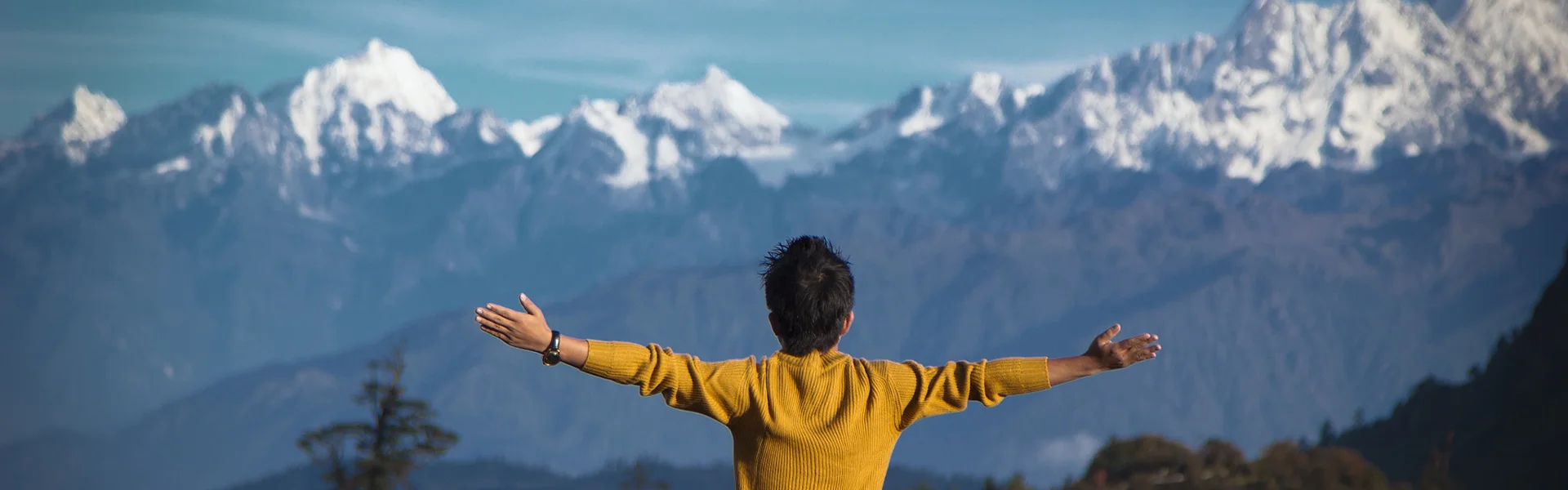

Thorong La Pass (5,416m/17,769ft) is one of the highest trekking passes in the world. It is also the crown of the Annapurna Circuit and marks the boundary between Manang in the east and Mustang in the west. It links the two district valleys and cultures. You’ll ascend through long valleys, alpine meadows, and rocky moraines from Manang Side. The Manang side lies in the Marsyangdi Valley, home to Tibetan-Buddhist families. The descent to Muktinath from the Mustang side. Mustang is in the Kali Gandaki Valley, where Hindu and Tibetan traditions blend.
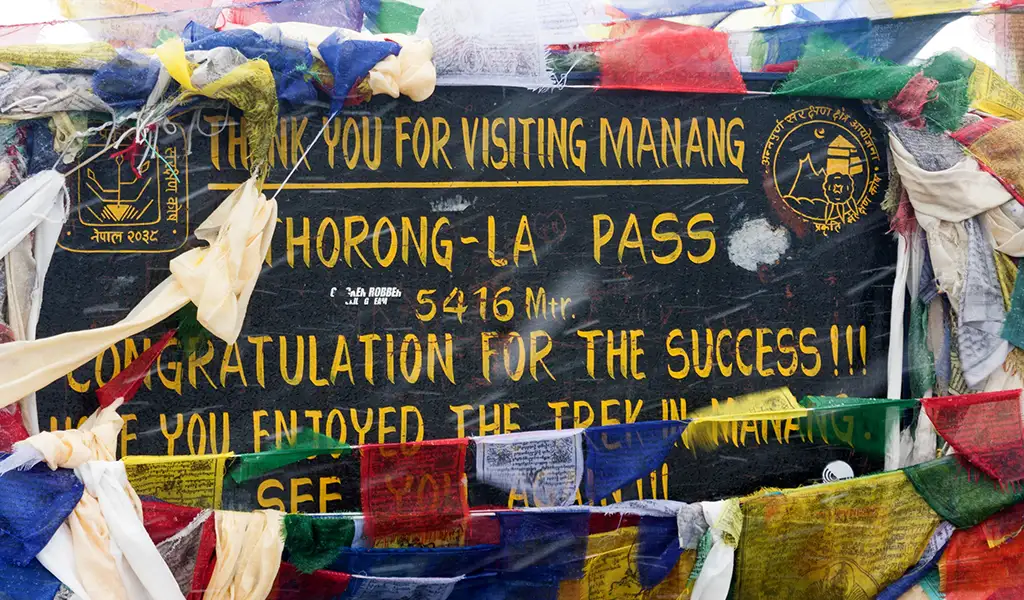
Thorong La Pass is the literal high point of the Annapurna. Most people climb through Manang’s alpine meadows and rocky moraines to reach the pass. Then they descend steeply towards Mustang, covering the route anticlockwise.
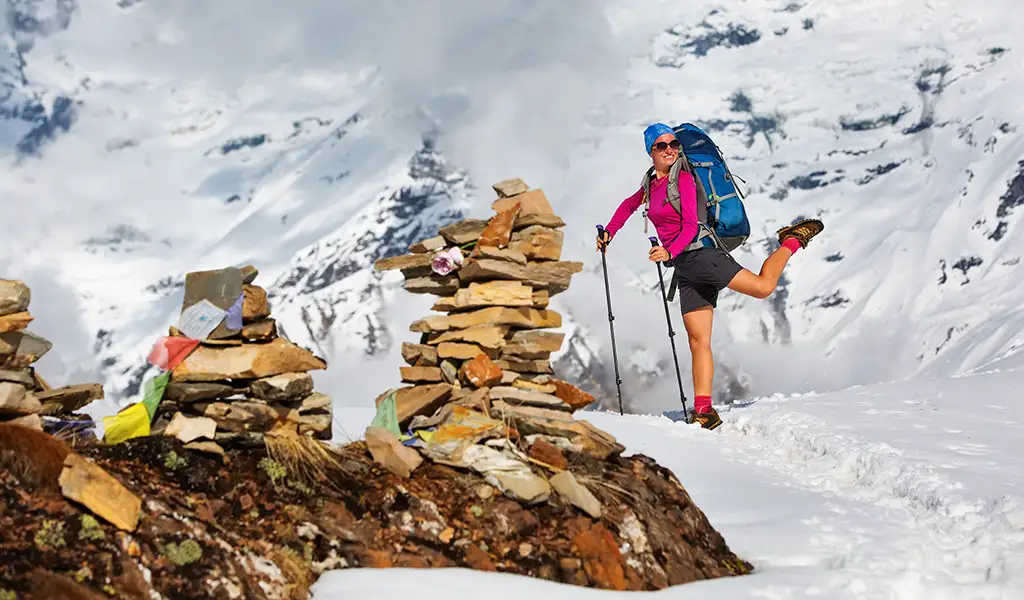
The pass is a broad, exposed mountain crossing draped in prayer flags and marked by the famous sign congratulating the trekkers. You’ll even find a tea stall in the pass during peak seasons serving hot drinks.
The name “Thorong La” has Tibetan roots. La means pass in Tibetan, and Thorong is either a local peak’s name or a descriptive term. Historically, this crossing was part of an important trading route. At present, it is a path for trekkers. Standing at Thorong La pass is the highest point many will ever reach on foot.
Trekking Experience
Trekkers usually stay overnight at Yak Kharka (4,060m) and Thorong Phedi (4,535m) or even at High Camp (4,800m) before reaching Thorong La. The landscape is stark and barren here. Yaks and blue sheep graze on the barren slopes as vegetation thins into hardy shrubs and grades. The cold increases with altitude, and nights are often below freezing.
Thorong Phedi means “Foot of Thorong” and is the standard staging point. High Camp is on a rocky ledge with only a handful of lodges. You can trek to High Camp to shorten the next day’s ascent, but you’ll have to endure harsher conditions for the night. Wherever you spend the night, you’re likely to feel restless. Wear your headlamps, warm layers, and have breakfast before setting off between 3 and 5 AM. Starting early means you can avoid the high-altitude winds later.
The Ascent on Pass Day
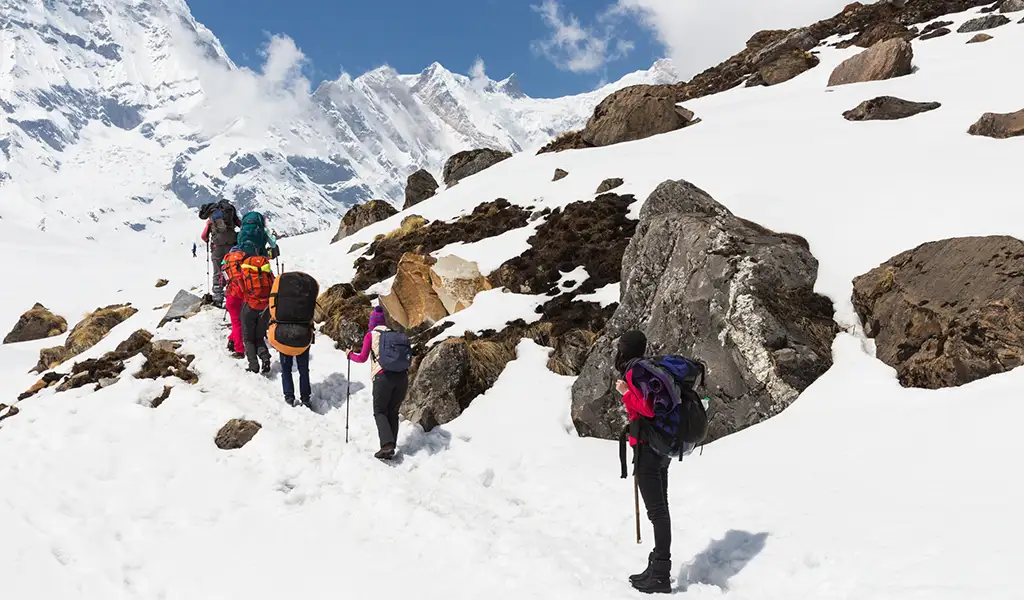
The day begins in the dark when the temperature is still below freezing. Most trekkers start with a quick tea or porridge before heading out. Secure your headlamps and form a steady line to move up the slope.
You must climb for a few hours to reach High Camp from Thorong Phedi. You may begin a little later if you’re already at High Camp. The route beyond High Phedi continues to rise on the frozen gravel path, which can be slippery because of snow or ice. The slope flattens out in a few sections but it is still tiring.
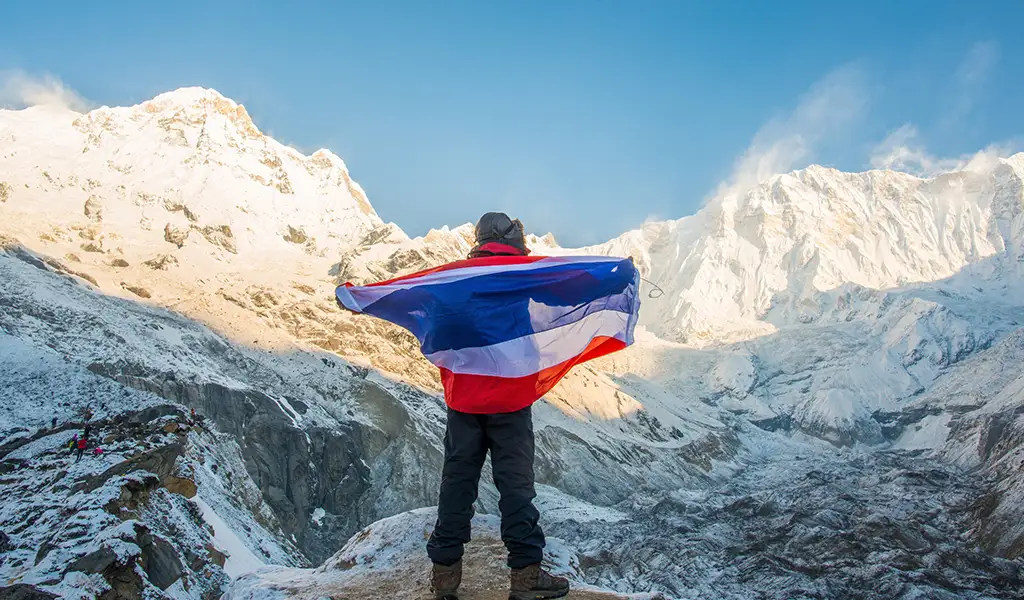
The thin air makes breathing difficult, so most trekkers follow a slow pace. You will see the sunrise over the mountains like Annapurna as you travel.
Reaching Thorong La
Most trekkers will reach Thorong La Pass at 5,416m by mid-morning. You can relax and celebrate at the top. Click the picture, hug your teammate, and rest briefly before descending.
The views are beautiful in all directions. Manang is on the horizon, and the brown ridges of Mustang spread to the Kali Gandaki Valley. Dhaulagiri, Yakawa Kang, and other peaks rise in the distance.
This exposed pass is windy, and the cold makes it unbearable to stay longer. Most trekkers only spend a few minutes here before beginning their descent towards Muktinath. Even though you can’t physically stay at the pass for too long, reaching it is memorable and a proud achievement.
The Descent to Muktinath
The descent from Thorong La is tricky even on experienced legs. The pass is at 5,164m, and you’ll gain more than 1,600m vertically to Muktinath at 3,800m. The trail is steep with loose gravel. You must check your balance and support your knees. Use trekking poles for a better experience. The first tea spot is at Charabu at 4,200m. The oxygen thickens as you descend, making it a little easier. While oxygen improves, you may experience fatigue.
You’ll start seeing Mustang landscapes as you descend. The landscape is muted red and browns with many villages and terraced fields near Muktinath. You’ll reach Ranipauwa in the afternoon, where you can rest for the night.
Challenges and Safety
Altitude and Acclimatization
Crossing Thorong La means you’ll deal with extreme altitude. Trekkers usually struggle to sleep at 4,500m and go over 5,400m the following morning. The risk of Acute Mountain Sickness is significant at this height. You may deal with headache, nausea, dizziness, and loss of appetite. You can get better with rest, hydration, or medication if the symptoms are mild. But if you have severe symptoms like persistent vomiting, confusion, or loss of coordination, you must descend immediately.
Trekkers take an acclimatization stop at Manang and sometimes an extra night at Yak Kharka to let their bodies adapt to the altitude. Most groups use a buddy system and check on each other for signs of AMS. Guides can recognize symptoms and carry first-aid kits. Helicopter evacuation is possible in the lower villages, but it’s practically impossible at the pass. Careful acclimatization, slow pacing, and hydration will help you trek safely.
Weather and Conditions
Thorong La has unpredictable conditions. Morning temperature often drops to –10°C or even lower with risks of frostbite. Strong winds pick up by late morning, so you must begin your trek before dawn. Even during peak seasons, sudden snow can close the route temporarily.
Sun exposure is also a significant concern at this high altitude. UV rays are powerful above 5,000m, and fresh snow may cause snow blindness with a whiteout. You need sunglasses and sunscreen for protection. Fog and clouds may reduce visibility, so stay close to the group and follow the marked trail.
Physical Demands
By the time you reach Thorong La, you’ll already be dealing with fatigue. Your pass day can take 8 to 10 hours with a steep climb and a long descent. The 1,600m drop to Muktinath will make your knees ache, so use trekking poles, sturdy boots, and trek with a steady focus. You may also use braces for extra support if you have sensitive knees.
Icy sections are standard in early autumn and late spring. You can use micro-spikes in those sections for added safety. Other times, a good hiking boots is sufficient.
Mental Preparation
Thorong La is as mentally challenging as it is physically. The night before, you may feel anxious about the climb and your preparation for the challenge. Once you form a steady pace, trekking will feel easier. Guides will help and encourage you and remind you that thousands of other trekkers cross the pass safely yearly.
The 2014 snowstorm incident remains one of the worst trekking disasters in Nepal. You should respect the weather. While modern forecasting and a guided support team have improved safety, but you must move forward cautiously.
The Rewards
While challenging, Thorong La offers fantastic rewards. You can see the panoramic view of the Annapurna and Dhaulagiri ranges, along with the snowy slopes of Manang and the dry ridges of Mustang, from the top. You’ll also see glaciers and alpine meadows, a desert, and a village on your way.
Reaching the pass is a milestone in itself. Many people’s day trips to Thorong La inspired their future travels. This high mountain and cultural significance blend make Thorong La a memorable experience.
Essential Information
Best Time to Trek/Cross Thorong La
Autumn: The best time to cross Thorong La is autumn and spring. October and early November usually have the most stable conditions with clear skies, excellent visibility, and less snow. Temperatures drop sharply with frequent snowfall by late November. The pass stays open until mid-November, but you need proper winter gear and a high-risk tolerance. Days get shorter, so you’ll climb mostly in the dark.
Spring: Late March through April has manageable weather and moderate snow cover. There might be leftover snow from winter on the pass, but it’s mostly clear. Afternoon clouds are common by late April, and mornings stay suitable for crossing. Spring also brings climbers attempting Thorong Peak from High Camp.
Winter and Monsoon: The pass is not accessible in the winter as it’s dangerous, freezing, and no running teahouses. Monsoon brings heavy rain, leeches, and landslides, making the Manang side difficult. Mustang’s side remains unstable, and clouds block views.
Permits
Trekkers need two permits to cross the Thorong La Pass, as it is a part of the Annapurna Circuit. Authorities will check these permits at checkpoints like Besisahar, Dharapani, and Jomsom. Agencies typically arrange these for you.
Annapurna Conservation Area Permit (ACAP): It costs NPR 3000 for foreigners and NPR 1,000 for SAARC nationals. For Nepali citizens, it costs only NPR 100.
Trekkers’ Information Management System (TIMS) card: It costs USD 20for individual trekkers and USD 10 for group trekkers through an agency.
Accommodation around Thorong La
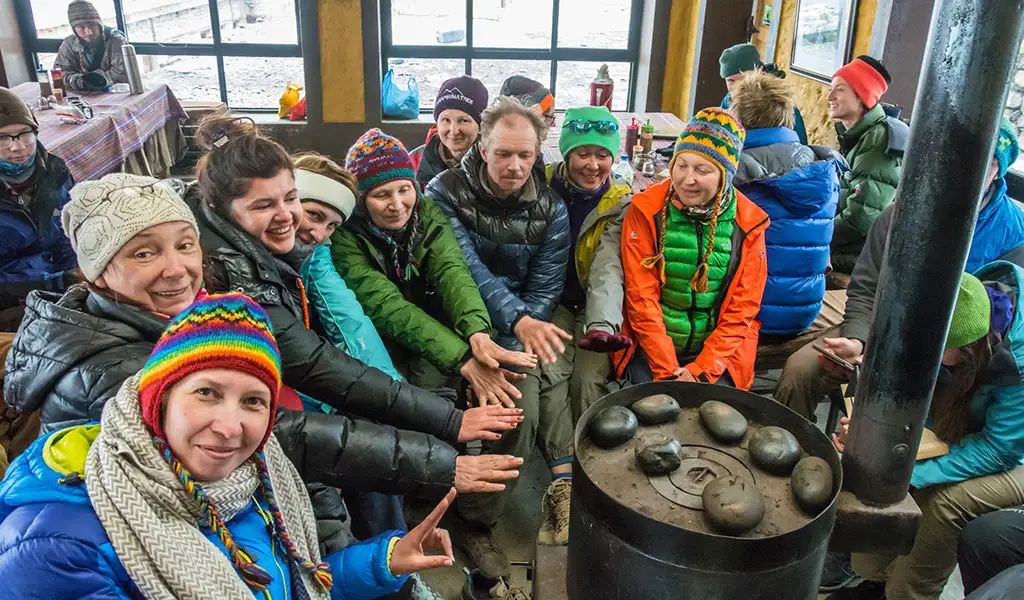
Manang: There is a small cluster of lodges in Yak Kharka. The number of lodges thins out as the altitude grows. Thorong Phedi has 2-3 lodges with a communal dining hall and basic rooms. High Camp has basic rooms with harsh conditions, such as freezing toilets, limited water, and minimal heating.
Sleeping at Thorong Phedi is safer for acclimatization, while High Camp shortens the next day’s climb.
Mustang: Mustang offers better accommodations. You can stay at hotels with attached bathrooms, hot showers, WIFI, and good food.
Wear layered clothes to stay comfortable and safe. You need thermal base layers, fleece, a down jacket, and a windproof shell. It’s better to have good gloves, two pairs of socks, and face protection like a buff or balaclava. Carry 1-1.5 liters of water in insulated bottles and snacks. You can also take a small thermos with tea or coffee for warmth and morale. Trekking poles are also helpful, if not essential. You may need micro spikes for trekking in early spring or late autumn.
Communication and Rescue
Mobile coverage and road access improve around Muktinath after you cross Mustang. Jomsom even has an airport. It makes rescue and communication easier. The pass day and the day leading to it are the two most challenging and remote sections of the trek.
Environmental Consideration
Thorong La is popular among trekkers and sees hundreds of people every year. You should carry out all your trash and drink boiled or purified water instead of bottled water to keep the environment clean. Support eco-friendly practices like yak dung fuel and solar energy. It helps reduce deforestation.
Alternate Routes
You can technically cross the reverse pass from Muktinath to Manang. But the ascent from Mustang is much steeper and requires careful acclimatization. You should go east to west for your own safety.
Conclusion
Thorong La Pass is the ultimate challenge of the Annapurna Circuit. You can finish the trek successfully with proper preparation, choosing the right season, securing permits, carrying proper gear, and acclimatizing well. It is a challenging but achievable trek. We take pride in guiding trekkers’ safety while providing all the support and information you need.