

Included Meals
- Breakfast: 8
- Lunch: 7
- Dinner: 7

Unbeatable Holiday Offers – Save Up to 20% on Your Next Adventure!
Nepal Hiking Company puts together the Bhutan Golden Triangle Tour for travelers who want to experience the country firsthand, not just check off places. The route passes through old fortresses, active monasteries, and wide valleys, offering a clear view of how history and daily life still connect here. The pace stays easy, so you’re not rushing from one stop to the next.
You travel in a private vehicle, with your own guide and a dedicated driver, which keeps things flexible day by day. The route links Thimphu, Punakha, and Phobjikha, and you can feel the change as you move between them, from busier towns to quiet wetlands. Along the way, you stop where it makes sense, try local food, and spend time in places instead of just passing through. The plan also accounts for altitude, so the shift between valleys feels manageable. The trip culminates in the Tiger’s Nest hike, giving the whole journey a strong finish. Nepal Hiking Company handles the logistics in the background, so you can stay focused on where you are and what’s around you.

Included Meals

Accommodation
3-star standard / 4-star premium / luxury upgrades

Trip Grade
The Bhutan Golden Triangle Tour Package begins upon arrival at Paro International Airport. A local guide meets you at the arrival gate with a warm greeting and assists with your luggage. The group boards a private vehicle and heads east toward the capital city.
The scenic drive follows the winding Pa Chhu river through a deep valley. The driver stops at a scenic viewpoint to reveal the 15th-century Tamchog Monastery. Visitors admire the ancient iron chain bridge built by the famous Tibetan engineer Thang Tong Gyalpo.
Upon arriving in Thimphu, guests check into their hotel and enjoy a gentle evening walk around the city center. The high altitude requires a slow walking pace during the first few hours. Travelers eat a quiet dinner at the hotel and retire early to recover from the flight.
Meals Breakfast, Lunch, Dinner
Difficulty
After breakfast, the day starts with a walk through Thimphu’s main sights. The first stop is the National Memorial Chorten, right in the center of the city, where locals spend hours walking around the stupa, turning prayer wheels, and quietly reciting mantras. It’s one of those places where you can see daily life and belief come together without effort.
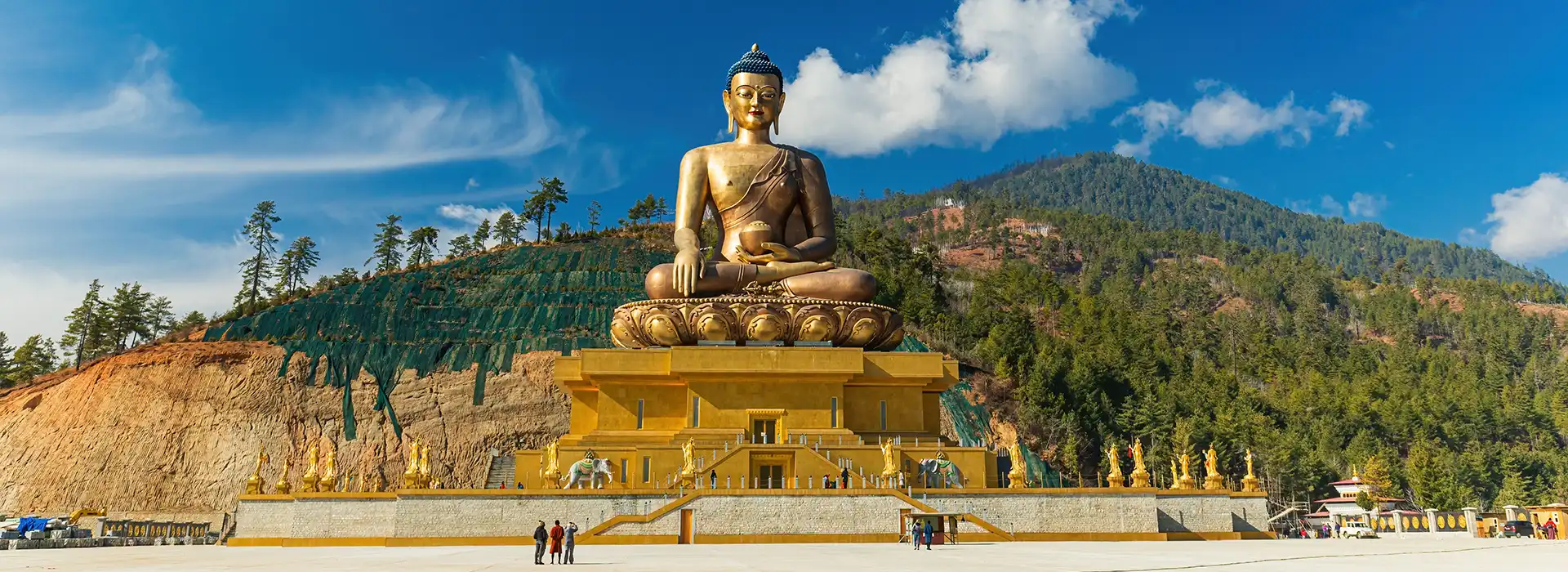
From there, the drive heads uphill to the Buddha Dordenma statue, which sits high above the valley. The scale of it stands out immediately, and the open space around it gives you wide views over the forests and the city below. It’s an easy place to slow down, take photos, and just take in the setting.
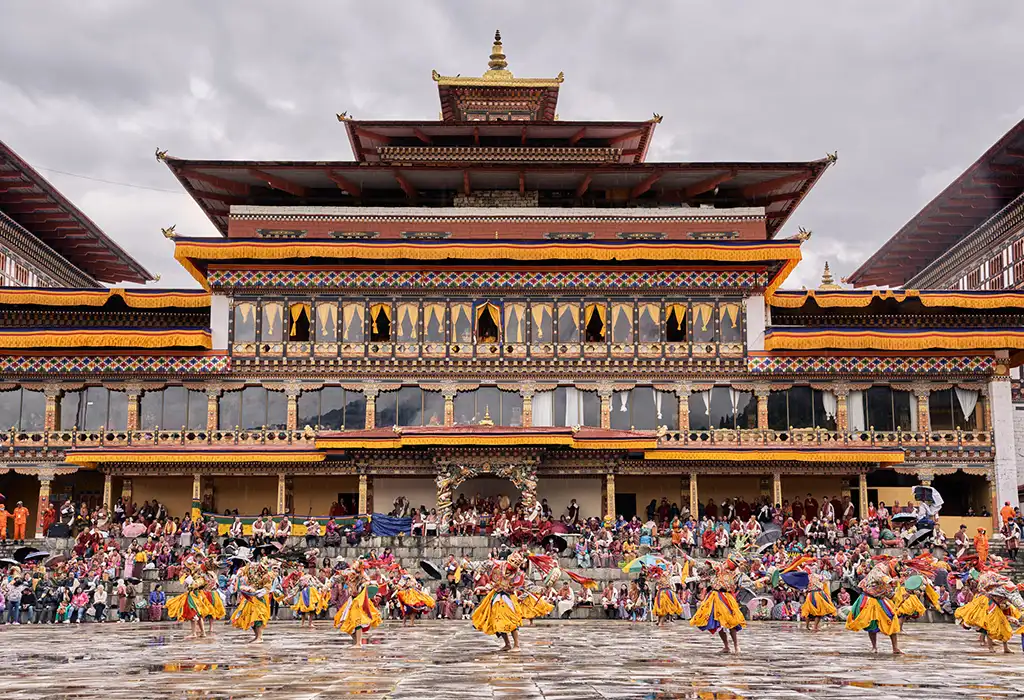
In the afternoon, you spend time at the local craft market and then visit Tashichho Dzong. The market is simple but full of handmade textiles and woodwork, while the dzong shows a more formal side of Bhutan’s architecture and administration. The day ends back at the hotel with a relaxed dinner made from local ingredients.
Meals Breakfast, Lunch, Dinner
Difficulty
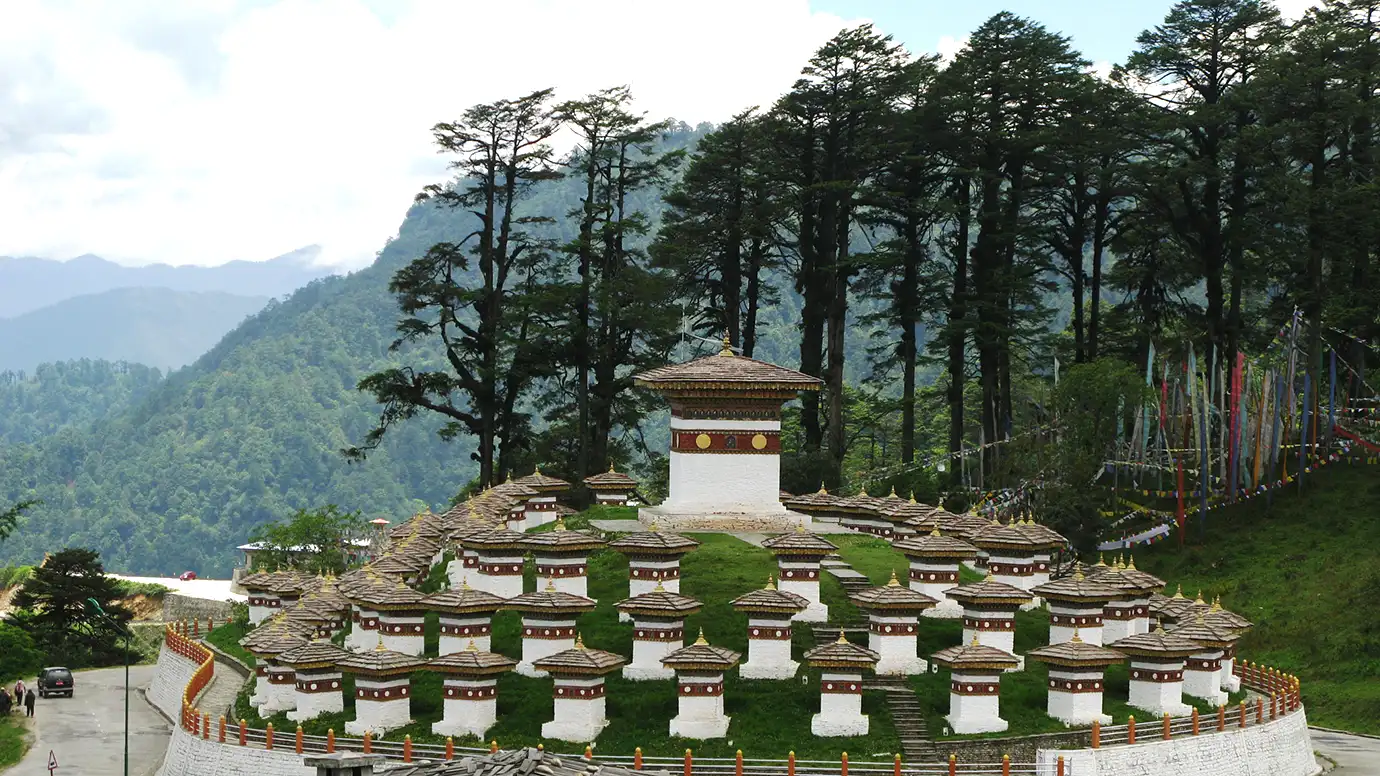
You leave Thimphu in the morning and head toward Punakha, with the road climbing steadily through pine forests. As you gain height, the air cools, and the drive leads up to Dochula Pass at around 3,150 meters. On clear days, the view opens up to distant Himalayan peaks, and you can walk among the 108 chortens spread across the ridge while the guide shares their background.
From the pass, the road drops down into Punakha, and the change is easy to feel. The air gets warmer, the landscape turns greener, and the valley opens up. By the time you reach the lower elevation, it already feels like a different part of the country.
In the afternoon, you visit Punakha Dzong, set right where two rivers meet. If you feel like stretching your legs, there’s a short walk across a long suspension bridge nearby. The warmer conditions make the evening more comfortable, and most guests settle in easily for the night.
Meals Breakfast, Lunch, Dinner
Difficulty
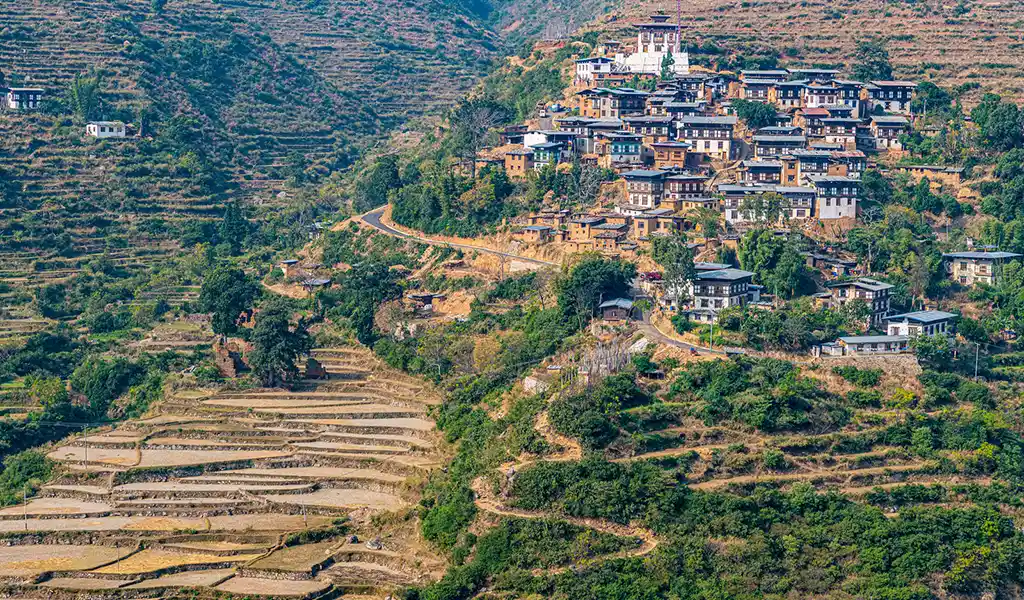
As you climb, the landscape starts to change. The warmer valley vegetation gives way to cooler forests with rhododendron and bamboo, and then opens up as you descend into the wide Phobjikha Valley. The valley feels quiet and open, and in winter it becomes home to black-necked cranes.
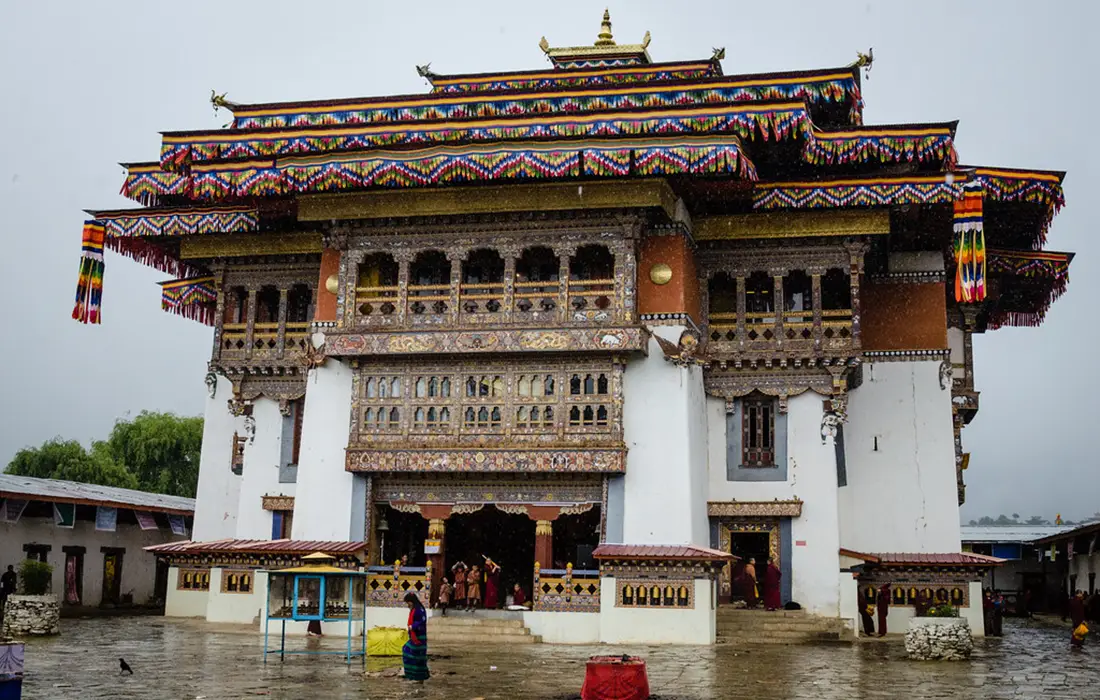
You stop at Gangtey Monastery, set on a hill above the valley, where you can look around the structure and take in the view below. By late afternoon, you reach your accommodation and settle in before the temperature drops in the evening.
Meals Breakfast, Lunch, Dinner
Difficulty
The day starts with a cool morning walk along the Gangtey Nature Trail. The route runs for about 6 kilometers and takes about 2 hours, passing through pine forests, open fields, and small villages, with steady views across the valley. The pace stays easy, so you can take it in without rushing.
After the walk, you visit the Black-Necked Crane Information Center. From here, you can watch the cranes in the wetlands through spotting scopes, while the displays explain their migration patterns and the efforts to protect them.
Later, the drive heads back west toward Wangdue Phodrang. The road drops gradually out of the valley, and by evening, you arrive at a riverside hotel, where the setting feels warmer and more relaxed again.
Meals Breakfast, Lunch, Dinner
Difficulty
Guests leave Wangdue and drive back over the scenic Dochula Pass. The journey offers another chance to capture the Himalayan peaks, with the driver stopping regularly for leg stretches and restroom breaks. The vehicle passes through Thimphu and continues on to Paro, where guests arrive at their hotel early in the afternoon. The rest of the day is free to wander the charming main street of Paro town. Visitors can browse souvenir shops, pick up traditional textiles, or enjoy a relaxing coffee. The guide helps with restaurant tips and translations, and a hearty dinner sets everyone up for the next day’s adventure.
Meals Breakfast, Lunch, Dinner
Difficulty
The iconic Tiger’s Nest Monastery hike kicks off early in the morning with a short drive to the trailhead at the mountain’s base. The round-trip trek spans about 6 kilometers, climbing 900 meters along a dirt path through pine forests. The guide sets a comfortable, steady pace, with a mid-hike stop at the viewpoint cafeteria for hot tea and stunning views of the cliffside monastery. The final approach includes a series of stone steps beside a scenic waterfall, leading to the temple entrance.
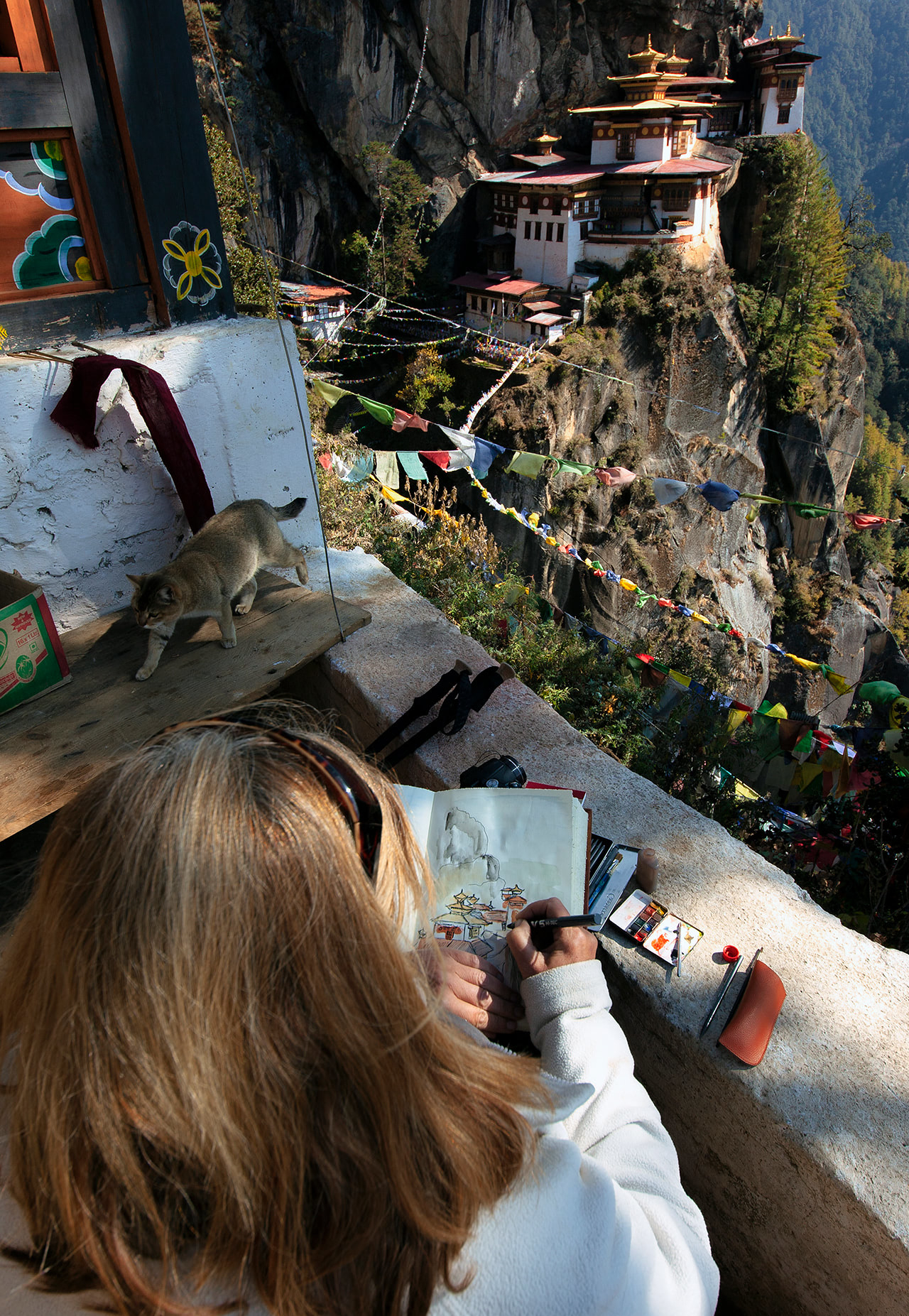
Those skipping the hike enjoy a laid-back cultural day in Paro, visiting the National Museum and ancient temples. By early afternoon, hikers return to the valley floor, and the day concludes with a festive farewell dinner celebrating the Bhutan Golden Triangle adventure.
Meals Breakfast, Lunch, Dinner
Difficulty
The last morning starts with a hearty breakfast at the Paro hotel. Guests enjoy a brief stroll through the local market if time allows, picking up any final souvenirs. The guide ensures all luggage is securely loaded into the private vehicle before the drive to Paro International Airport. Nepal Hiking Company team members assist with the initial terminal procedures and send off the travelers with warm wishes. Guests depart with lasting memories of Bhutan’s stunning landscapes, sacred monasteries, and rich cultural heritage.
Meals Breakfast
Difficulty
The Bhutan Golden Triangle Tour Package includes three levels of accommodation, all offering clean, welcoming spaces with authentic Bhutanese charm.
Standard 3-star hotels like Kichu Resort in Wangdue or similar boutique properties in Thimphu and Paro provide cozy stays with traditional architecture, simple modern amenities, and comfortable dining areas. Wi-Fi works best in lobbies, and heating comes from either electric space heaters or classic wood stoves.
Premium 4-star hotels such as Druk Hotel in Thimphu and Kunzang Zhing Resort in Punakha offer more space, reliable central heating, stronger internet, and upgraded dining options. These properties give guests a comfortable retreat after long days exploring.
Luxury lodges bring a touch of indulgence. Six Senses, COMO Uma, Amankora, and Gangtey Lodge offer stunning views, private hot-stone baths, premium bedding, and gourmet local meals. Staying here turns the mountains into a true luxury escape.
Phobjikha and Wangdue nights: Temperatures drop quickly after sunset, even in luxury lodges. All properties provide extra blankets, hot water bottles, and warm stoves to keep guests cozy through the chilly mountain evenings.
The best times to visit Bhutan on the Golden Triangle Tour Package are spring and autumn, each offering its own magic for hikers, photographers, and culture lovers.
Spring (March–May): Valleys turn vibrant green, and mild daytime temperatures make walking and sightseeing comfortable. Phobjikha blooms with rhododendrons and wildflowers, and clear light creates perfect photography conditions.
Summer (June–August): Monsoon season brings frequent rain, muddy trails, and low clouds that can obscure mountain views. The landscape is lush, and crowds are smaller, but travelers need rain gear and flexibility for travel delays.
Autumn (September–November): Post-monsoon skies are brilliantly clear, offering spectacular Himalayan views. October and November are the peak for festivals and trekking, and the black-necked cranes begin arriving in Phobjikha.
Winter (December–February): High valleys see freezing nights and occasional snow. Days remain sunny and clear, ideal for photographers. Warm clothing is essential, and the Phobjikha marshlands are home to the entire crane population.
Tips:
Guests travel in a private vehicle with a professional driver throughout the eight-day Bhutan Golden Triangle Tour. Couples ride in modern SUVs, while families or larger groups enjoy spacious minibusses. Traveling privately gives plenty of freedom to stop for photos, stretch your legs, or grab a quick snack anytime.
Bhutan’s mountain roads are winding, narrow, and often steep, so the driver keeps a steady, safe pace. The drive to Phobjikha Valley crosses the Pele La Pass at over 3,000 meters, offering dramatic views along the way.
Guests prone to motion sickness may want to bring medication to prevent it. Seat belts are available in all vehicles and must be worn. The guide plans regular stops at scenic viewpoints, cafes, and small villages, making even the longer drives enjoyable and comfortable.
The Paro Taktsang hike is the highlight of the Bhutan trip. The trail is about 6 km round-trip, climbing from 2200 m in the valley to 3120 m at the monastery, a 900-meter gain that’s challenging but doable for anyone with moderate fitness.
The guide sets a slow, steady pace to prevent exhaustion and help hikers adjust to the altitude. Most groups reach the monastery in 2–3 hours, enjoying plenty of breaks along the way.
Guests carry daypacks with water, sunscreen, and a camera, and wear layers, cold at the start, warm as the climb steepens. A windproof jacket is handy in the exposed top sections.
Pony rides are available for the first half of the trail, stopping at the midway cafeteria, after which everyone completes the final steps on foot. The descent can get slippery with loose dust and pine needles, so trekking poles are strongly recommended for balance and knee support.
An early start avoids the midday sun. The final staircase is steep but safe, though hikers with a fear of heights should take it slow and steady.
Comfort comes from layering; temperatures swing from warm subtropical valleys to chilly mountain passes. Start with moisture-wicking base layers, add a fleece or wool sweater, and bring a down jacket for cool evenings in Paro and Thimphu. In Phobjikha, a heavy jacket and thermal layers are essential for autumn and winter nights.
Footwear: sturdy, broken-in trekking boots are perfect for Tiger’s Nest and Gangtey trails. Bring a second pair of comfortable sneakers for city walks, and slip-on shoes for dzong visits, where footwear must be removed.
Sun & skin protection: a wide-brimmed hat, polarized sunglasses, and high-SPF sunscreen are essential. The dry mountain air calls for moisturizer and lip balm daily.
Cultural clothing: In Bhutan, modesty is strictly enforced, with shoulders and knees covered when entering temples or administrative buildings. Pack long-sleeved shirts and long trousers, and remove hats or caps indoors.
Daypack essentials: water bottle, hand sanitizer, personal first-aid kit, and any prescription medications. Motion sickness pills are useful for the winding drives to Wangdue Phodrang and other mountain passes.
Respecting local traditions guarantees a positive reception from the Bhutanese people. The culture places heavy emphasis on polite behavior and religious reverence.
Proper preparation ensures a smooth arrival and immediate enjoyment of the tour. Guests secure all necessary flights into Paro and forward the tickets to Nepal Hiking Company. The team uses these details to finalize the visa clearance letter. Print multiple copies of this letter and pack them alongside the physical passport.
The guide meets the group at the airport and provides a comprehensive arrival briefing. This short orientation covers the daily timing, vehicle rules, and basic cultural greetings. The guide explains the concept of local timing, where schedules remain slightly flexible and relaxed.
Check physical pacing before arrival. Walking a few miles a week at home prepares the legs for the Gangtey Nature Trail and temple steps. Test hiking boots thoroughly to prevent blisters on the mountain.
Cold-weather preparation matters greatly for the Phobjikha Valley. The temperature drops rapidly as the sun falls behind the Black Mountains. Pack a warm hat, gloves, and a heavy sweater specifically for this overnight stay.
Review the team’s cultural etiquette guidance. Understanding the dress code prevents delays at the Dzong entrances. Prepare a small amount of US dollars or Indian Rupees for the first day. The guide assists with exchanging money into the local Ngultrum at the hotel or a bank in Thimphu.
How to Book This Trip
What we need from you:
Cancellation Policy
Meals balance authentic Bhutanese flavors with familiar tastes. Breakfasts feature eggs, toast, and porridge, while hotel buffets serve Bhutanese, Indian, and international dishes. The national favorite, Ema Datshi, combines spicy chilies with creamy local cheese, and a milder Kewa Datshi mixes potatoes with cheese. Red rice accompanies nearly every meal.
Vegetarians enjoy fresh vegetables, lentils, and cheese-based dishes. Vegans may need advance notice, and guests with nut or gluten allergies should inform Nepal Hiking Company. The guide communicates with chefs to ensure safe, worry-free meals.
Trying local specialties is a highlight. Adventurous eaters can sample Phaksha Paa, a pork-and-chili stew, or Jasha Maroo, spicy minced chicken with ginger and garlic. Adults may try local red rice wine or warm Ara. Milder options like roasted vegetables, soups, or grilled chicken are also available. Drink only bottled or boiled water and avoid ice cubes for safety.
We handle all visa and fee paperwork, making your Bhutan trip completely stress-free. Every international visitor must pay a $40 tourist visa fee and the daily Sustainable Development Fee (SDF), currently $100 per adult per night. The SDF directly supports environmental protection, healthcare, and infrastructure in Bhutan. Children ages 6 to 12 pay half, and kids 5 and under go free. The company handles the SDF and visa fees upfront, including them in your total package price.
To apply for the visa, travelers provide a clear passport scan, a recent digital photo, and confirmed travel dates. Passports must be valid for at least six months beyond arrival. Nepal Hiking Company submits all documents to the government, which issues the visa clearance letter within 3 to 5 business days. Guests print this letter and present it at the airline check-in and Paro airport, no extra stress, just a smooth start to your adventure.
Bhutan is one of the safest travel destinations in the world. Crime against tourists is extremely rare. Most safety concerns come from geography, altitude, and road conditions rather than people. The itinerary is designed to help with natural acclimatization. Guests sleep at 2334 meters in Thimphu and 1242 meters in Punakha, with higher points at the Dochula and Pele La passes, both exceeding 3000 meters. Altitude affects everyone differently, so drink plenty of water and let your guide know immediately if you feel headaches, nausea, or dizziness.
Mountain roads are winding. Drivers move carefully, but motion sickness can affect sensitive travelers. Bring preventive medication for the drives to Phobjikha and Wangdue. Temperatures change quickly from cool mornings to sunny afternoons. The thin mountain air can cause sunburn and dehydration, so reapply sunscreen and use lip balm throughout the day. Physical activity is mostly moderate. Most walks are on flat or gently sloping paths, with the Tiger’s Nest hike on day seven as the only strenuous challenge. Nepal Hiking Company strongly recommends comprehensive travel insurance, ideally covering emergency helicopter evacuation, since medical facilities outside Thimphu can be limited.
Wah, where do I start? Just came back from Bhutan Golden Triangle Tour. Damn solid lah. I went with my wife and another couple. We all agree – the three‑star hotels are good enough. Clean, got hot water, bed comfortable. In Phobjikha, the night very cold, but hotel give extra blanket and small heater. No need five-star, because you spend whole day outside anyway.
The tour itinerary very smooth. Day one, pick up from Paro airport, drive to Thimphu. The guide speak good English, very friendly. We stop at Tamchog Monastery bridge – nice photo. In Thimphu, we see the big Buddha statue and the Memorial Chorten. The locals there walk around and spin prayer wheels – very peaceful.
The best part is Dochula Pass. 108 stupas on the mountain ridge. That morning sky very clear – we can see snow mountain far away. Our guide tell us the story behind the stupas. Then we go down to Punakha. The dzong there is very big, built at river junction. We also walk across a long suspension bridge – my wife a bit scared, but okay lah.
Phobjikha Valley very quiet. We do the Gangtey Nature Trail – about two hours walk. Very easy, not like Singapore hiking. See black‑necked cranes from the information centre.
Tiger’s Nest hike sibei steep. But we take it slow. The guide bring us stop many times. The cafeteria halfway got sell coffee and biscuit. The monastery on the cliff – wah, damn impressive. Worth the sweat.
All meals included – breakfast, lunch, dinner. Food is good, not too spicy. Got red rice, vegetable curry, some chicken. Private vehicle very important – the road many bends. Our driver very steady.
Overall, value for money. Three‑star hotel can already – you go Bhutan for the culture and scenery, not for the hotel lobby. Highly recommend for Singaporeans.