



1. Introduction to Thimphu
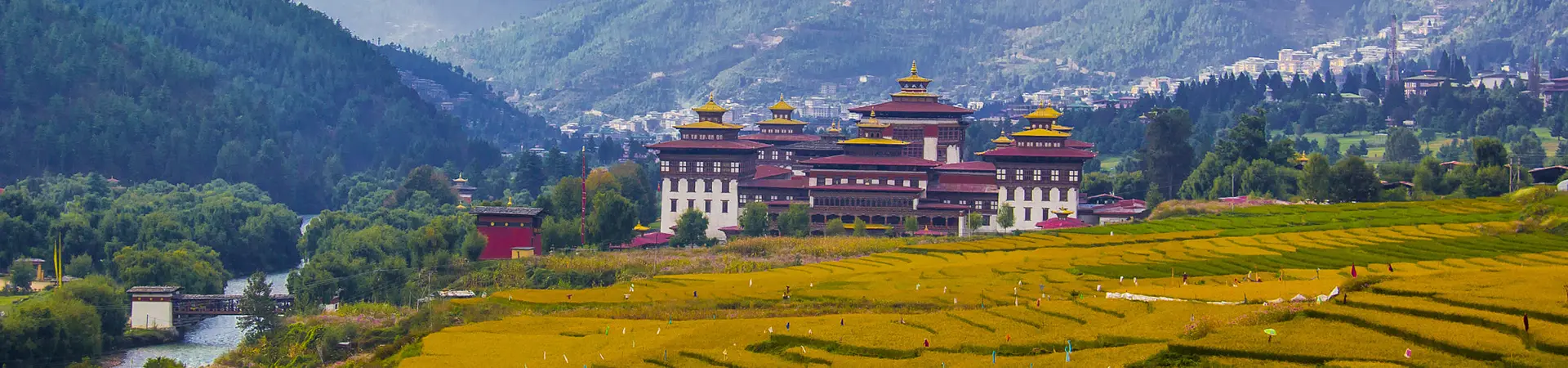
Thimphu stands as the capital city of Bhutan. It rests in the western central part of the country. The city sits in a valley along the Wang Chuu River. The altitude reaches approximately 2,334 meters (7,656 feet). Mountains surround the city. These ridges range in height from 2,000 to 3,800 meters. The air feels thin but clean. Travelers often need time to adjust to the high elevation.
Thimphu holds a unique title in the world. It serves as the only national capital without traffic lights. The city installed a set of traffic lights years ago. The residents disliked the lights’ impersonal nature. The city removed them shortly after. Now, police officers direct traffic. They stand in decorated booths. They wear white gloves. Their hand movements look like a graceful dance. This famous feature highlights the local preference for human interaction over machines.
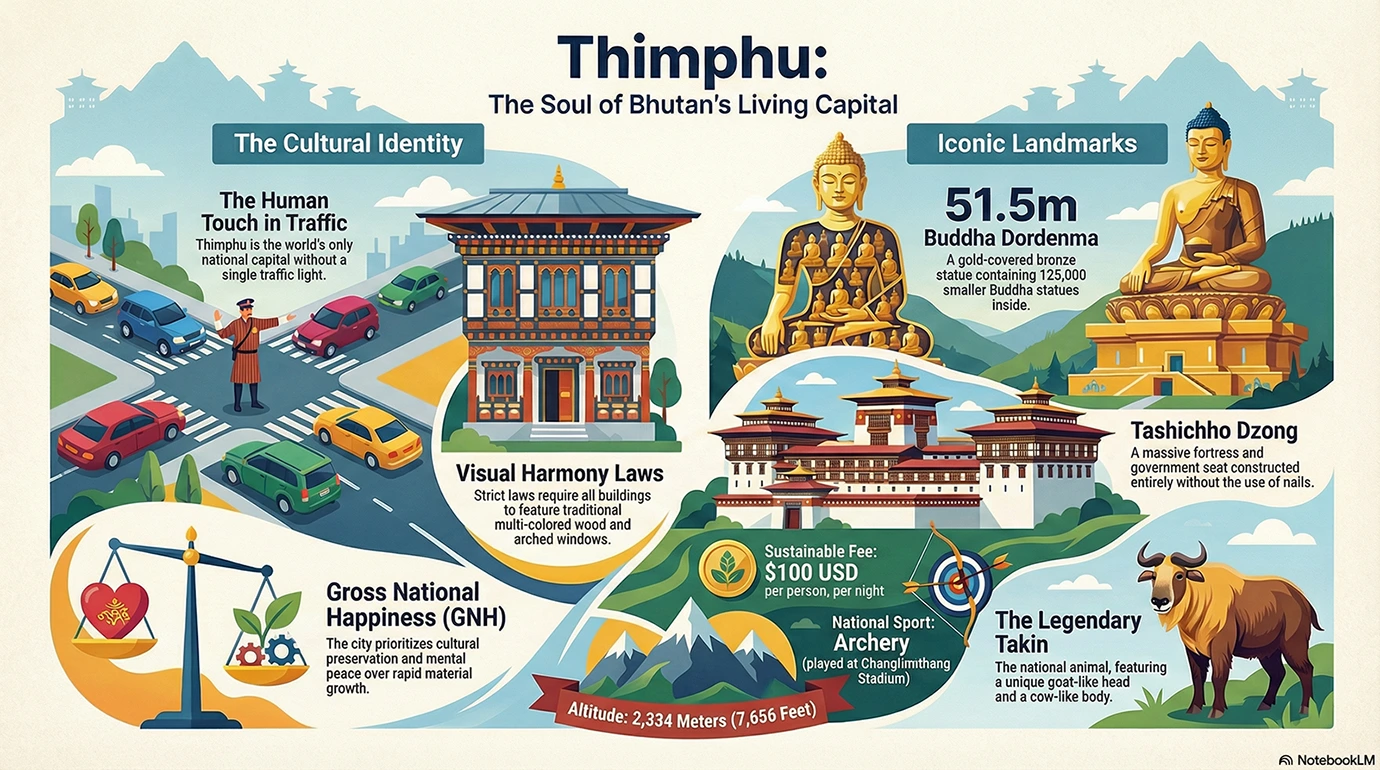
The city acts as the political and economic center of the Kingdom. It houses the Tashichho Dzong. This fortress houses the King’s office and the government secretariat. The population remains small. Approximately 100,000 people live here. The urban area expands up the valley slopes. Strict laws govern construction. All new buildings must follow traditional Bhutanese designs. They must feature multi-colored wood frontages and arched windows. This rule preserves the visual harmony of the Thimphu Travel Guide destination.
Visitors find a mix of ancient tradition and modern life here. Monks walk the streets in red robes. Young people wear modern fashion and use smartphones. Shops sell dried yak cheese next to cafes serving espresso. Thimphu offers a perfect introduction to Bhutan. It balances the old spiritual ways with the 21st-century developments.
Location and Altitude Details
The valley runs from north to south. The Raidak River flows through the center. The high altitude affects the weather. The sun feels strong during the day. The nights turn cold quickly. Travelers arriving from sea level often feel short of breath. It helps to drink plenty of water and rest on the first day. Acclimatization is key to a good trip.
The Traffic Circle Legend
The main traffic circle is a major landmark. It sits near the Bhutan Post Office and the main bank. The policeman stands in the center. He directs cars with precision. He uses swift arm motions. Locals call this spot “Traffic.” It represents the rejection of standard modernization in favor of culture. Visitors often stop to take photos of this unique system.
2. Why Visit Thimphu?
Travelers choose Thimphu to see the heart of Bhutan. The city offers amenities that rural areas lack. It also keeps the nation’s spiritual core alive.
Gross National Happiness in Action
Bhutan values Gross National Happiness (GNH) more than money. Thimphu shows how this works in real life. The government protects culture and nature. The pace of life remains slow. People do not rush. They make time for family and prayer. The city reflects a balance between material growth and mental peace.
Modern Comforts meet Tradition
Thimphu is the most modern city in Bhutan. It has internet, ATMs, and hotels. Yet, tradition rules daily life. Men wear the Gho (a knee-length robe). Women wear the Kira (a long dress). They wear these clothes to work and school. The architecture also blends eras. Concrete buildings look like ancient temples. This creates a unique atmosphere.
Cultural Education Center
The city hosts the country’s main museums. The Folk Heritage Museum and the Textile Museum are here. The National Institute for Zorig Chusum teaches traditional arts. Travelers learn about the history and crafts here. It serves as a great base before exploring the rest of the country. A Thimphu Travel Guide always recommends starting here to understand the culture.
Safety and Cleanliness
Violent crime is infrequent in Thimphu. It is one of the safest capitals in Asia. Women and solo travelers feel secure. The streets are generally clean. The “Clean Thimphu” project works to manage waste. The city bans plastic bags to protect the environment.
3. Top Attractions in Thimphu
Thimphu contains many famous sites. These places hold deep meaning for the Bhutanese people. A good Thimphu Travel Guide lists these as must-visit locations.
Buddha Dordenma (Buddha Point)
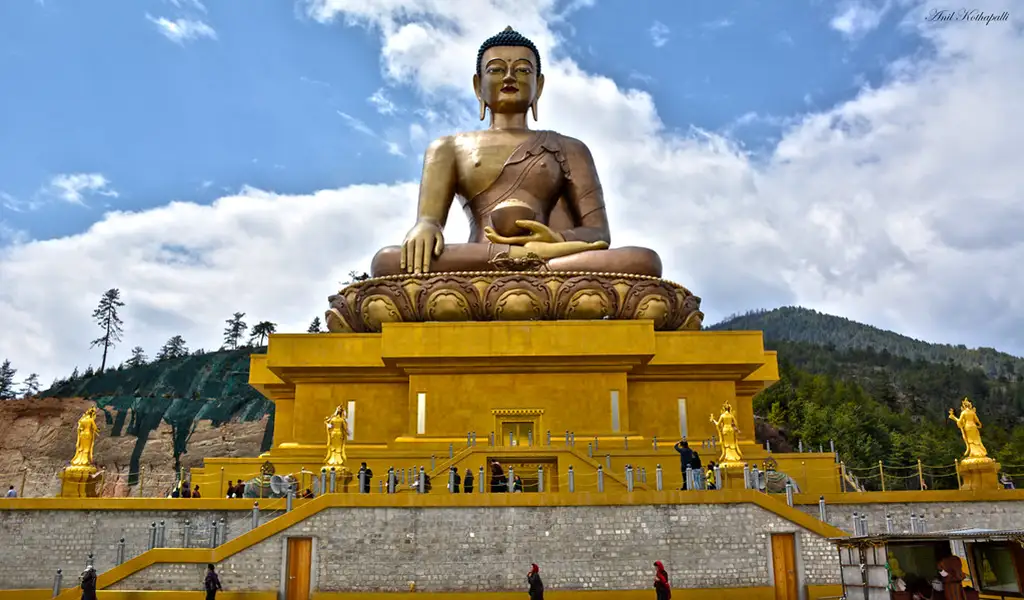
The Buddha Dordenma is a giant statue. It sits on a hill in Kuensel Phodrang Nature Park. It overlooks the southern entrance of the valley.
- Size: The statue stands 51.5 meters tall. It ranks among the largest sitting Buddhas in the world.
- Material: Builders use bronze and cover it in gold. It shines in the sun.
- Inside: The statue is hollow. It contains 125,000 smaller Buddha statues. These range in height from 8 to 12 inches.
- View: The courtyard offers a panoramic view of Thimphu. The morning light hits the face of the Buddha. The evening light casts a glow over the mountains.
- Purpose: The statue fulfills an ancient prophecy. It aims to bring peace and happiness to the world.
Tashichho Dzong
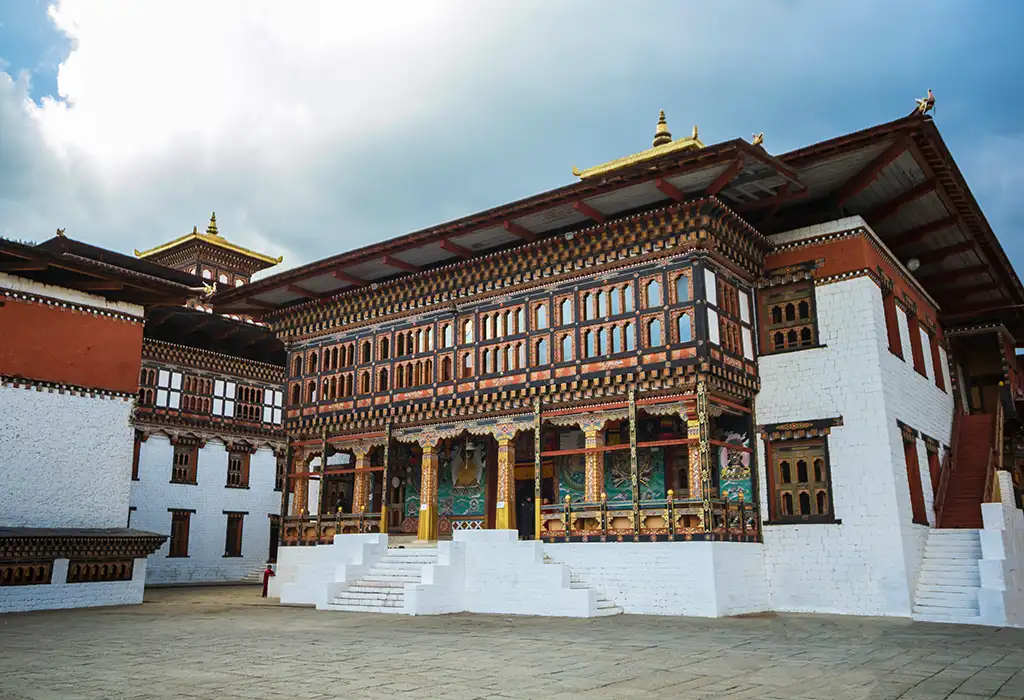
This fortress dominates the northern edge of the city. It serves as the seat of the government. It houses the King’s throne room.
- Construction: Builders make the Dzong without nails. They use traditional methods. They do not use architectural plans.
- Appearance: It has massive white walls. The roofs are red and gold. It looks powerful and grand.
- Access: Tourists enter only after 5:00 PM on weekdays. They enter anytime on weekends. This allows the government offices to close first.
- Ritual: A flag-lowering ceremony happens at sunset. Monks and guards perform a traditional march. It is solemn and beautiful. The Dzong lights up at night. It glows against the dark hills.
National Memorial Chorten
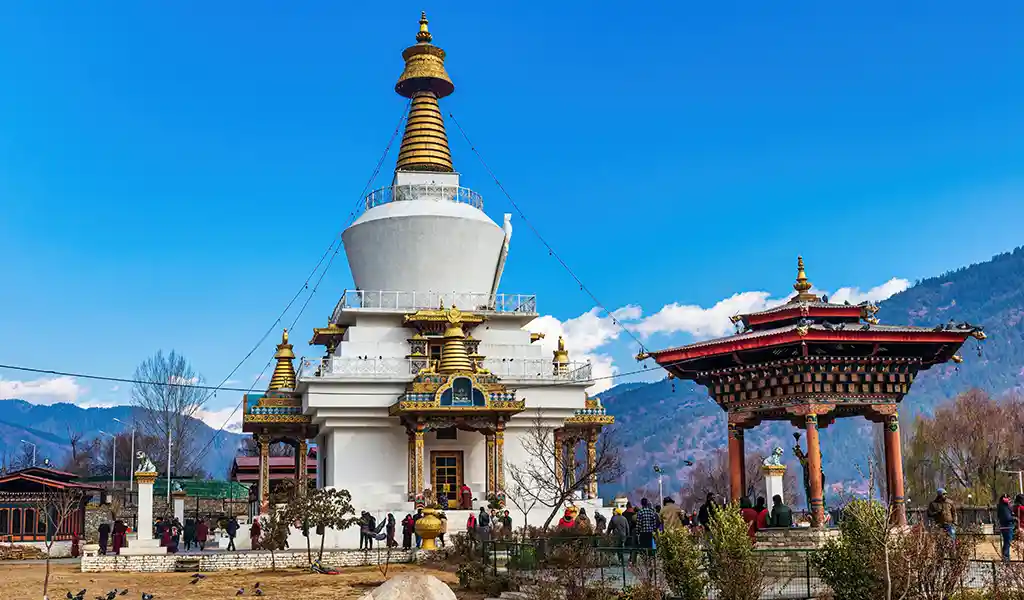
This stupa stands in the center of town. It is a white structure with a golden spire.
- History: The Queen Mother built it in 1974. It honors the third King, Jigme Dorji Wangchuck.
- Activity: It does not hold human remains. It represents the Buddha’s mind.
- Local Life: Many older adults spend their day here. They walk around the Chorten. They spin large red prayer wheels. They chant mantras. It is the best place to see people’s devotion.
- Rule: Visitors must walk around it clockwise.
Folk Heritage Museum
This museum showcases Bhutan’s rural past.
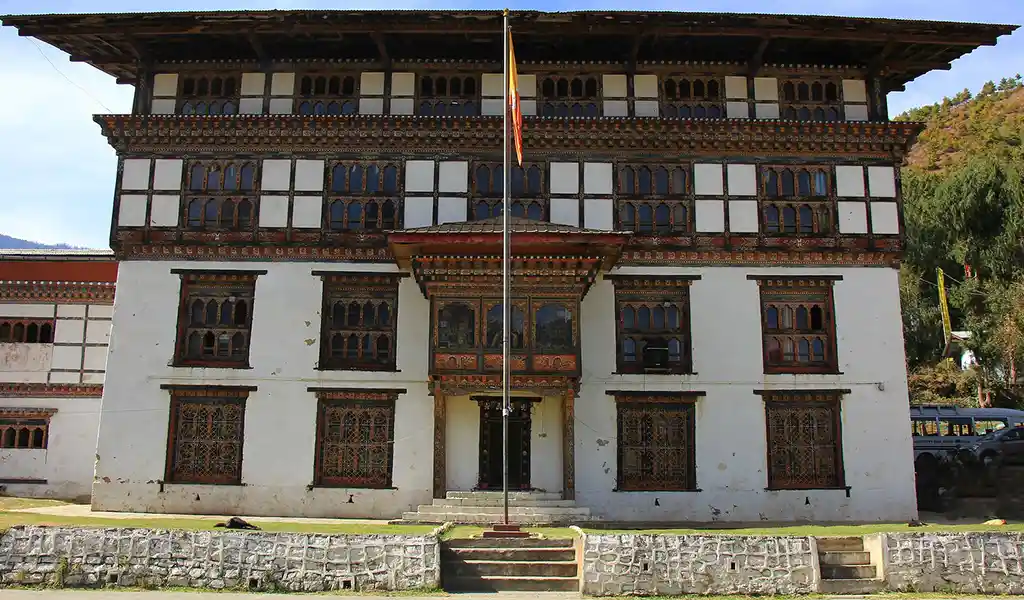
- Building: It is a restored traditional house. It uses rammed earth. It has three stories.
- Layout: The ground floor holds cattle. The middle floor stores grain. The top floor serves as the living area and shrine.
- Experience: Visitors see how farmers lived a century ago. The museum displays old tools and household items.
- Food: The restaurant serves authentic meals. Guests eat Ema Datshi and red rice. The setting feels rustic and real.
National Institute for Zorig Chusum
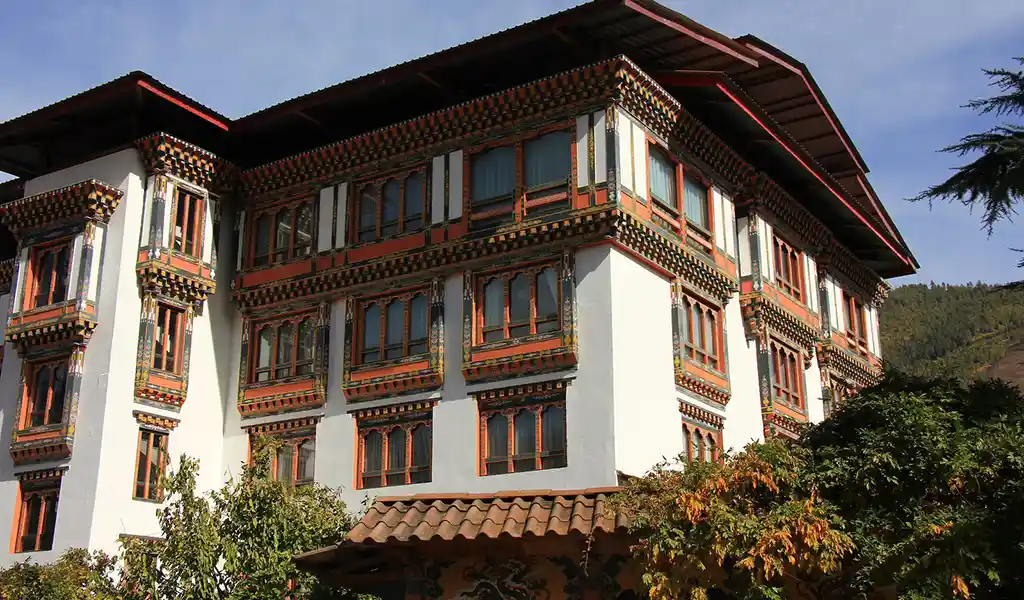
People call this the Painting School. It preserves the 13 traditional arts of Bhutan.
The 13 Arts (Zorig Chusum):
- Thagzo: Weaving textiles.
- Tshazo: Weaving bamboo and cane.
- Shagzo: Turning wood to make bowls and cups.
- Lhazo: Painting thangkas and murals.
- Jinzo: Sculpting clay statues.
- Lugzo: Casting bronze statues.
- Garzo: Blacksmithing and iron work.
- Troeko: Making ornaments from gold and silver.
- Dozo: Masonry and stone work.
- Shingzo: Carpentry for building temples.
- Parzo: Carving wood, stone, and slate.
- Dezo: Making paper from daphne bark.
- Tshemzo: Tailoring and embroidery.
Visit: You walk into classrooms. You watch students work. They focus on their art. They draw intricate lines. They carve wood with patience.
Motithang Takin Preserve
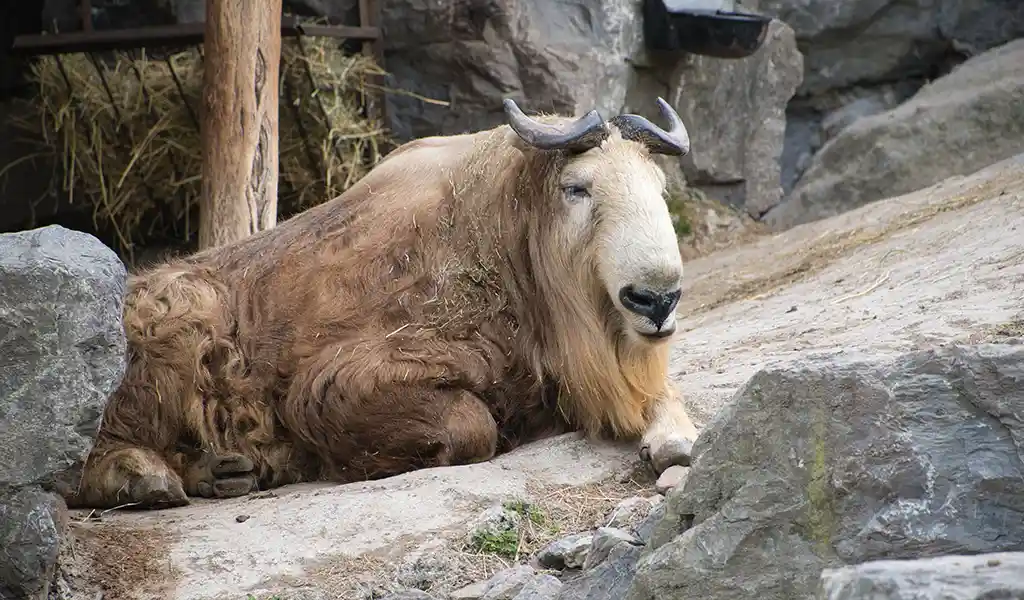
This reserve protects the Takin. The Takin serves as the national animal of Bhutan.
- Appearance: The animal looks strange. It has the head of a goat and the body of a cow.
- Legend: The Divine Madman (Lama Drukpa Kunley) creates the Takin. He eats a whole cow and a goat. He puts the goat head on the cow bones. He snaps his fingers. The beast comes alive.
- Habitat: The preserve sits in a pine forest. Visitors walk on paths to see the animals. It is a quiet place.
Simply Bhutan
This is a living museum. It offers interactive fun.
- Dress Up: Visitors wear a Gho and a Kira. They take photos in these traditional clothes.
- Archery: You try shooting bamboo arrows. It is more complicated than it looks.
- Drink: They serve a welcome shot of Ara. This is the local rice wine.
- Songs: Women demonstrate how to build mud walls. They sing traditional songs while they work. They use wooden rammers to beat the earth.
4. Hidden Gems in Thimphu
Thimphu hides many secrets. A complete Thimphu Travel Guide reveals these lesser-known spots.
Changangkha Lhakhang
This temple stands as the oldest in Thimphu. Builders constructed it in the 12th century.
- Role: It protects children born in the Thimphu valley. Parents bring babies here. The monks give the baby a name and a blessing.
- View: The temple sits on a ridge. It offers a great view of the town.
- Statue: Inside sits a statue of Chenrezig. The statue has 11 heads and 1,000 arms.
- Vibe: It feels very spiritual. Fewer tourists come here. You see local families praying.
Dochula Pass
This pass lies on the way to Punakha. It takes 45 minutes to drive there from Thimphu.
- Height: The pass sits at 3,100 meters.
- Scenery: On a clear day, the snow-covered Himalayas come into view. The view stretches far.
- Monuments: The Druk Wangyal Chortens stand here. These are 108 small stupas. They honor soldiers who died in a 2003 conflict. Fog often covers the pass. It creates a mystical mood.
Centenary Farmers’ Market
This market opens from Thursday to Sunday.
- Vegetables: Farmers bring fresh produce. You see piles of red chilies. You see ferns and asparagus. You see wild mushrooms.
- Local Items: Vendors sell yeast balls for making wine. They sell dried yak cheese blocks. They sell wild honey.
- Smells: One section sells incense. The air smells of juniper and herbs.
- Location: It sits near the river. It is north of the stadium. A footbridge connects it to the craft market.
Jungshi Handmade Paper Factory
This factory makes paper the old way. It sits about 1 km from the city.
- Process: Workers use the bark of the Daphne tree. They soak the bark. They boil it. They beat it into a pulp. They spread the pulp on bamboo screens. The sheets dry in the sun.
- Products: You buy greeting cards and notebooks here. Some papers have flower petals inside them.
Zilukha Nunnery
People also call this Drubthob Goemba. It is the largest nunnery in the country.
- Life: Visitors talk to the nuns. They see a different side of religious life. The nuns dedicate their lives to prayer and service.
- Photography: The location overlooks Tashichho Dzong. It provides a perfect angle for photos of the fortress.
5. Best Things to Do in Thimphu
Activities make a trip memorable. Here are the best things to do in this Thimphu Travel Guide.
Watch an Archery Match
Archery serves as the national sport. The Changlimithang Stadium hosts many games.
- Target: Archers shoot at a small target. It stands 145 meters away. This distance is very long.
- Dance: When a player hits the target, the team dances. They sing a victory song.
- Social: The crowd cheers. They make jokes at the other team. It is a lively event.
Walk Down Norzin Lam
Norzin Lam is the main street of the city.
- Stroll: You walk from the traffic circle to the Clock Tower.
- Shop: Shops line the street. They sell Yathra jackets and wooden bowls. They sell thangkas.
- Craft Bazaar: A row of bamboo huts stands along the street. Artisans sell their goods here. You find authentic items here.
Hike the Wangditse Loop
This nature hike is suitable for most fitness levels.
- Path: You start at the BBS Tower (Sangaygang). You walk through pine forests. The trail loops to Wangditse Lhakhang. It goes down to Dechen Phodrang.
- Scenery: You see the Dzong from above. You see the whole valley. Prayer flags flutter in the wind.
Visit Clock Tower Square
This square acts as the social heart of the town.
- Design: The tower has Bhutanese carvings. Prayer wheels sit at the base.
- Fun: Concerts happen here. Fairs take place here. Young people hang out here. You sit on the steps and watch the city life.
Relax in a Cafe
Thimphu has a growing cafe scene.
- Ambient Cafe: People love the coffee here. It has free Wi-Fi. It is a good place to rest.
- Thija Cafe: They serve good cakes and pastries.
- Zone: Expats and locals like this place. It serves burgers and pizza.
6. Best Hotels in Thimphu
Thimphu offers many places to stay. Choices range from luxury resorts to simple guesthouses.
Luxury Hotels
These hotels offer top comfort and design.
- Taj Tashi: It sits in the city center. It looks like a Dzong. It has hand-painted murals. It has a luxury spa.
- Le Méridien: This is a modern hotel. It stands near the Memorial Chorten. It offers comfortable beds. It provides international service.
- Six Senses Thimphu: It sits high on a hill. People call it the “Palace in the Sky.” It offers incredible views. It has huge pools.
- Amankora Thimphu: This is a quiet retreat. It sits in a pine forest. It focuses on peace and simplicity.
Mid-Range Hotels
These hotels give good value.
- Hotel Norbuling: It is on Norzin Lam. The rooms look modern and clean.
- Bhutan Suites: It is away from the center. It has large rooms with kitchenettes. The views are incredible.
- Hotel Osel: It stands near the main street. Guests like the service.
- Tara Phendeyling: It offers warm hospitality.
Budget Hotels
These places save money.
- Kisa Villa: It is near the stadium. It offers good value.
- Khamsum Inn: It is clean and straightforward. The staff is friendly.
- Guesthouses: Local families run these. They serve home-cooked food.
Hotel Amenities Table
| Hotel Type | Cost (Approx.) | Features | View Quality | Location |
| Luxury | $300 – $1500+ | Spa, Pool, Fine Dining, Gym | Panoramic | Prime or Private |
| Mid-Range | $70 – $200 | Wi-Fi, Restaurant, Heater | City or Valley | Central |
| Budget | $30 – $70 | Wi-Fi, Basic Food, Clean Bed | Limited | Varies |
7. Food and Restaurants
Bhutanese food tastes unique. Cooks use many chilies and cheese. A Thimphu Travel Guide helps you find the best dishes.
Dishes to Try
- Ema Datshi: This is the national dish. It is a stew. It contains chili peppers (ema) and cheese (datshi). It tastes spicy and creamy.
- Kewa Datshi: This dish uses potatoes (kewa) and cheese. It is less spicy. It tastes comforting.
- Shamu Datshi: This version uses mushrooms (shamu) and cheese.
- Phaksha Paa: This is pork with red chilies. Cooks stir-fry it with radishes or spinach.
- Shakam Paa: This is dried beef. It cooks with chilies and radishes.
- Momos: These are dumplings. They contain meat or cheese. You eat them with spicy chili paste (ezay).
- Red Rice: This rice looks pink. It has a nutty flavor. It is the main food in Bhutan.
- Suja: This is butter tea. It tastes salty. It tastes like soup. It warms you up in the cold.
Top Restaurants
- Babesa Village Restaurant: It sits in a 600-year-old mud house. It serves traditional set meals. You must try the Mengay (Bhutanese pizza) here.
- Folk Heritage Museum Restaurant: This place serves traditional meals. You sit on the floor. You eat from wooden bowls. The set lunch tastes fresh.
- Zombala 2: People love the momos here. Locals eat here often.
- Kalden Restaurant: It is a small place. Locals go here for the best home-style Ema Datshi.
- Bhutan Kitchen: This place is suitable for tourists. You can ask for less spice.
8. Best Time to Visit Thimphu
The weather shapes the trip. Thimphu has four seasons.
Spring (March to May)
- Climate: The weather feels mild. It is pleasant.
- Nature: Flowers bloom. You see purple jacaranda trees. You see rhododendrons in the hills.
- Crowds: Many tourists come now. You should book hotels early.
- Events: The Paro Tshechu happens nearby. Travelers visit Thimphu during this time, too.
Autumn (September to November)
- Climate: The air feels crisp. The sky looks deep blue.
- Views: This time offers the best mountain views from Dochula Pass.
- Festival: The Thimphu Tshechu happens in late September or early October. It is the city’s biggest festival.
Winter (December to February)
- Climate: It gets cold. Nights freeze. Mornings are sunny. Snow falls sometimes.
- Pros: Fewer tourists come. The mountain views are clear.
- Cons: High passes might close due to snow.
Summer (June to August)
- Climate: This is the monsoon season. Rain falls often. Clouds cover the views. Leeches appear on trails.
- Pros: The valley looks green. Fresh mushrooms appear in markets.
- Cons: Rain delays travel.
Thimphu Tshechu (Festival Details)
This festival lasts for three days.
- Location: It happens in the courtyard of Tashichho Dzong.
- Dances: Monks perform mask dances (Cham). They dress as deities. They dress as demons. The dances purify the ground. They ward off evil.
- Costumes: Dancers wear colorful silk robes. They wear scary masks.
- Crowd: Locals wear their best Gho and Kira. The crowd looks colorful.
- Atsaras: These are clowns. They wear red masks. They mock the monks. They distract the crowd. People believe they have spiritual powers.
9. How to Reach Thimphu
Thimphu has no airport. You must enter through Paro.
From Paro International Airport
- Distance: The airport is 51 km (32 miles) away.
- Time: The drive takes 1.5 to 2 hours.
- Road: The road is a double-lane highway. It is paved. It winds along the river. It offers nice views.
- Ride: Most tourists use a car from their tour operator. Taxis are also available at the airport.
By Road from India
- Entry: You enter at Phuentsholing.
- Drive: The trip to Thimphu takes 5 to 6 hours (170 km). The road climbs from the plains to the mountains. Fog often covers the road.
10. How Many Days to Spend
Short Trip: 2 Days.
- Day 1: See Memorial Chorten, Buddha Point, and the Dzong.
- Day 2: Visit Museums, Takin Preserve, and the Market.
Better Trip: 3 Days.
- Add a hike to Wangditse or Cheri Monastery.
- Spend time in cafes.
- Visit Dochula Pass without rushing.
11. Travel Tips for Thimphu
Preparation makes the trip smooth. Here are tips for this Thimphu Travel Guide.
Sustainable Development Fee (SDF)
Fee: Tourists pay $100 USD per person per night.
- Kids: Children under 6 pay nothing. Children 6-12 pay 50%.
- Why: This money funds free healthcare and education for the Bhutanese people. It keeps tourism “High Value, Low Volume”.
Visa Info
- Need: Most tourists need a visa. Only citizens of India, Bangladesh, and the Maldives do not.
- Cost: The visa fee is $40 USD one-time.
- How: Your tour operator or hotel arranges it. You pay the SDF and visa fee first.
Money Matters
- Cash: The currency is the Ngultrum (BTN). It equals the Indian Rupee (INR).
- Use: Indian Rupees work everywhere. Do not use 500 or 2000 rupee notes. Shops take US Dollars for oversized items.
- ATMs: Thimphu has ATMs. They take Visa and Mastercard. Sometimes they do not work. Bring some cash.
Connectivity
- SIM: Buy a tourist SIM from B-Mobile or TashiCell.
- Price: A data package costs about $10-$15.
- Wi-Fi: Hotels and cafes have Wi-Fi. Speed varies.
Health
- Altitude: Thimphu is at 2,300m. You might breathe hard. Drink water. Avoid alcohol on the first night.
- Motion Sickness: The roads curve a lot. Bring pills if you get car sick.
12. Cultural Etiquette
Respect matters in Bhutan.
- Clothes: Dress modestly. Cover your shoulders. Cover your knees.
- Temples: You must wear long pants and long sleeves in Dzongs. Take off your hat. Take off your shoes before entering the shrine.
- Photos: Do not take pictures inside temple prayer halls. You can take pictures in the courtyards.
- Respect: Walk clockwise around Chortens. Walk clockwise around prayer wheels. Do not point with a finger. Use an open palm.
- Royals: Speak nicely about the King. People love the Royal Family.
13. Responsible Travel
Bhutan protects nature. Travelers should help.
- Plastic: The country bans plastic bags. Bring a reusable bag.
- Trash: Do not throw trash on the ground. Carry it back to the hotel.
- Water: Do not buy plastic bottles. Bring a bottle. Fill it at the hotel or restaurants.
- Wildlife: Do not feed animals. Do not feed stray dogs.
- Local Support: Buy crafts from the makers. Buy at the Craft Bazaar. Buy at Zorig Chusum. This helps the people.
14. Suggested Itinerary (2 Days)
This plan covers the main spots.
Day 1: Culture and Views
- 09:00 AM: Go to the National Memorial Chorten. Spin the wheels with the locals.
- 10:30 AM: Drive to Buddha Dordenma. See the giant statue. Look at the valley.
- 12:00 PM: Eat lunch at Folk Heritage Museum Restaurant. Try the set meal.
- 01:30 PM: Go to the National Institute for Zorig Chusum. See the art students.
- 03:30 PM: Go to Motithang Takin Preserve. See the strange animal.
- 05:00 PM: Visit Tashichho Dzong. Watch the flag ceremony. See the grand building.
- 07:00 PM: Have dinner in town.
Day 2: Tradition and Crafts
- 09:00 AM: Go to Changangkha Lhakhang. Walk around. See the view.
- 10:30 AM: Visit Centenary Farmers’ Market (if Fri-Sun). See the vegetables.
- 12:00 PM: Eat lunch at Zombala 2. Eat momos.
- 01:30 PM: Visit Simply Bhutan. Shoot arrows. Wear local clothes.
- 03:00 PM: Visit Jungshi Paper Factory. See how they make paper.
- 04:30 PM: Walk on Norzin Lam. Visit the Craft Bazaar. Buy gifts.
- 06:00 PM: Rest at Clock Tower Square. Drink coffee.
15. FAQs
Q: Is Thimphu safe for solo travelers?
A: Yes, Thimphu is very safe for solo travelers, even at night. While the city is generally secure, it’s always wise to exercise caution, such as keeping an eye on your belongings and staying aware of your surroundings.
Q: Can I use Indian Rupees?
A: Smoking is only allowed in designated areas, and it’s prohibited on the streets. You are allowed to bring tobacco into the country, but it is subject to a government tax.
Q: Do I need a guide?
A: You can explore Thimphu town on your own, but a guide is required to visit the dzongs. Additionally, tourists on standard visas must travel with a licensed guide for the duration of their trip.
Q: Is vegetarian food available?
A: Yes, vegetarian food is widely available in Bhutan. Bhutanese cuisine features plenty of cheese and vegetables, making it easy for vegetarian travelers to find satisfying meals.
Q: How do I say hello?
A: You can greet people by saying “Kuzuzangpo La.” Adding “La” at the end shows politeness and respect.