



Quick Answer
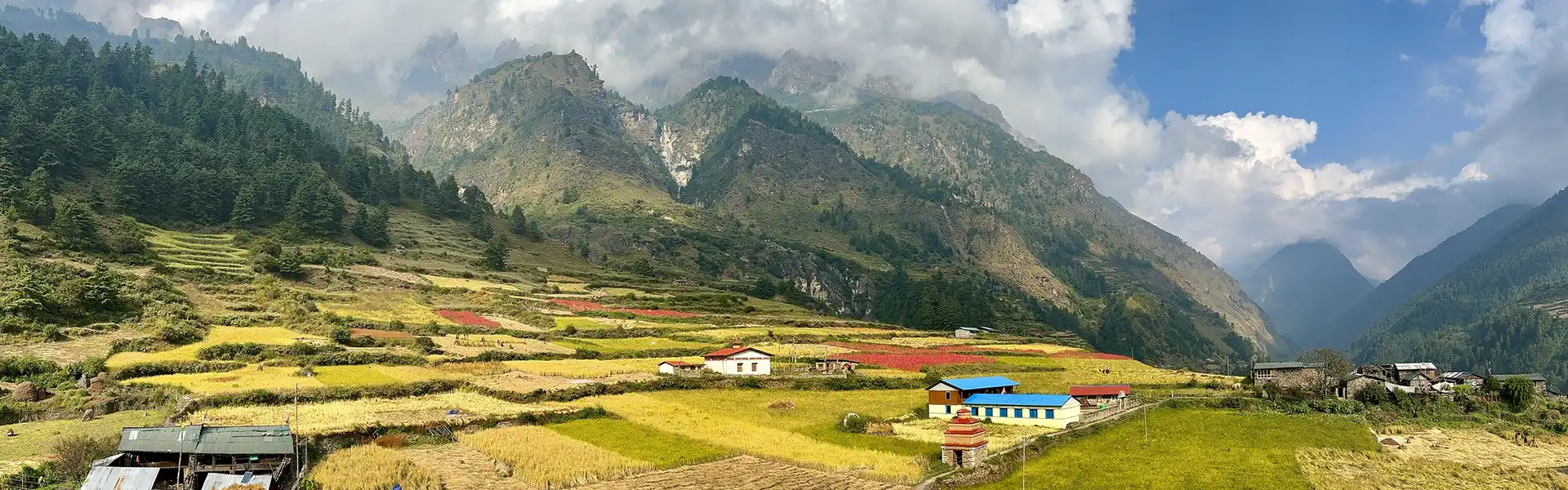
October is the best time for the Manaslu Circuit Trek. It delivers clear post-monsoon skies, dry trails, fully open teahouses, and the most reliable conditions for crossing Larkya La Pass at 5,106 meters. Early November and late April through May are the strongest alternatives. Winter and monsoon months are unsuitable for most trekkers attempting the full circuit.
This guide covers every month in detail — Larkya La Pass conditions, seasonal weather by altitude zone, permit costs, teahouse availability, crowd levels, packing lists, and the most common timing mistakes. Use it to pick the month that fits your fitness, budget, and schedule.
Quick Answer: Best Time for the Manaslu Circuit Trek
October gives the most reliable window for the full circuit. Post-monsoon air produces sharp mountain views. Trails are dry and stable. Larkya La Pass stays open consistently. Teahouses run at full capacity across all stops. Early November is an excellent second choice, though nights turn noticeably colder. Late April and May offer the strongest spring alternative, with warmer daytime temperatures and lower permit costs.
Quick Timing Summary
| Timing Factor | Best Choice |
|---|---|
| Best overall month | October |
| Best autumn window | Late September to early November |
| Best spring window | Late April to May |
| Best for mountain views | October and early November |
| Best for rhododendrons | April |
| Best for fewer crowds | Late September, May, late November |
| Best for lower permit cost | Spring (December to August permit rate) |
| Avoid the full circuit | Winter and monsoon |
| Weakest months | June, July, August, January, February |
← Scroll to view →
Why Timing Matters More on the Manaslu Circuit
The Manaslu Circuit is not a forgiving route for bad timing. Three factors make the choice of month more critical here than on most other treks in Nepal.
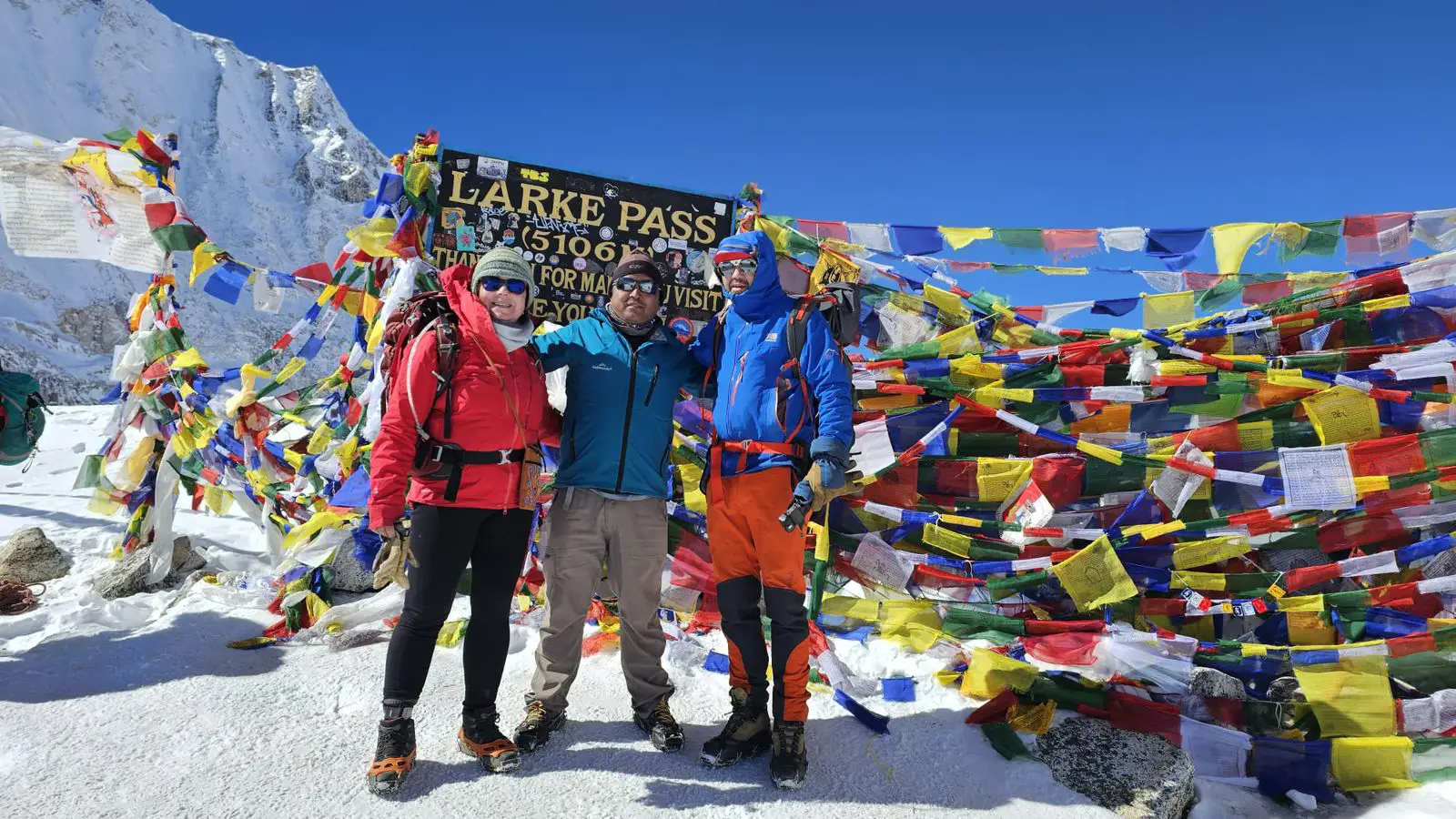
Larkya La Pass blocks the circuit. The pass sits at 5,106 meters. Heavy snow closes it in winter, making early-spring crossings unreliable. There is no easy bypass. A blocked pass forces trekkers to turn back.
The lower Budhi Gandaki gorge becomes dangerous in the monsoon. Landslides block the approach road and sections of the trail from June through August. Road access to the trailhead at Machha Khola or Soti Khola becomes unreliable throughout this period.
High teahouses close in winter. Key stops, including Samdo, Dharamsala, and Bimthang, reduce services or shut completely from December through February. Dharamsala has the fewest beds on the entire route. Losing access there the night before the pass crossing is a serious logistical problem.
October solves all three issues. The pass is open, the lower gorge is dry and stable, and teahouses run at full capacity from the trailhead to Bimthang.
Quick Answer October is the best time for the Manaslu Circuit Trek. It delivers clear post-monsoon skies, dry trails, fully…
 12 Days
 Moderate
Manaslu Circuit Trek Month-by-Month Breakdown
| Month | Season | Larkya La Status | Views | Trail Condition | Crowds | Recommendation |
|---|---|---|---|---|---|---|
| January | Winter | Often blocked | Clear on good days | Very cold; upper trail difficult | Very low | Not recommended |
| February | Winter | Often blocked | Clear on good days | Snow and cold continue | Very low | Not recommended |
| March | Early spring | Unreliable; snow possible | Good when clear | Lower trail improves; upper cold | Low | Risky for the full circuit |
| April | Spring | Improves late month | Good | Rhododendrons; some snow near the pass | Medium | Good from late April |
| May | Spring | Usually open | Good morning, haze builds later | Warm lower trail; reliable upper access | Medium | Best spring month |
| June | Monsoon | Approach risky | Poor | Rain, mud, landslides, leeches | Very low | Avoid |
| July | Monsoon | Approach risky | Poor | Heavy rain and trail damage | Very low | Avoid |
| August | Monsoon | Approach risky | Poor | Wet and unstable | Very low | Avoid |
| September | Autumn transition | Improves after the monsoon | Improving | Good from late month | Medium | Good from late September |
| October | Autumn | Most reliable | Excellent | Dry and stable | Highest | ⭐ Best month |
| November | Late autumn | Good early; risk late month | Excellent | Cold nights; possible late snow | Medium | Excellent early November |
| December | Winter starts | Increasing snow risk | Clear on good days | Cold; upper services reduce | Low | Not ideal |
← Scroll to view →
Autumn: The Best Season for the Manaslu Circuit Trek
Autumn runs from late September through November. It is the most popular and most reliable season for the Manaslu Circuit Trek. October sits at the center and delivers the strongest combination of pass conditions, trail stability, weather, and teahouse access.
Late September: Post-Monsoon Transition
Early September carries lingering monsoon rain. The second half of September changes quickly. Trails turn green and fresh after the summer rains. Mud reduces as the monsoon weakens. Leeches disappear. Mountain views improve as high-altitude clouds clear. Teahouses reopen along the full route to prepare for the main trekking season.
Late September draws fewer trekkers than October. It suits flexible travelers who want quieter trails and are not bothered by slightly variable conditions in the lower gorge.
Best For
- Trekkers who want fewer crowds than in October
- Flexible travelers are comfortable with variable conditions
- Photographers who prefer lush green post-monsoon landscapes
- Budget-conscious travelers facing lower teahouse demand
October: Best Overall Month for the Manaslu Circuit
October is the standout month. Post-monsoon air scrubs the atmosphere clean, producing sharp views of Manaslu (8,163m), Himalchuli, and the Ganesh Himal range. Larkya La Pass stays reliably open throughout the month. Trails are dry, well-trodden, and stable at every altitude. Teahouses run at full capacity from Machha Khola to Bimthang.
Daytime hiking feels comfortable in mid-altitude zones. High-altitude nights above 4,000 meters drop below freezing — a warm sleeping bag is non-negotiable. Guides and porters fill up fast. Dashain or Tihar festivals sometimes fall in October, which can affect transport and staff availability. Confirm logistics with your agency well in advance.
Best For
- First-time Manaslu Circuit trekkers
- Photographers want the clearest light and sharpest views
- High-pass trekkers prioritizing Larkya La reliability
- Anyone wanting the safest, most predictable seasonal window
Early November: Clear Views, Cold Nights
Early November holds most of October’s advantages. Views remain sharp and clear. Trail conditions stay dry. Crowds thin out noticeably after the first two weeks. Nights become significantly colder near Samdo (3,860m), Dharamsala (4,460m), and Bimthang (3,590m). Late November raises the snow risk at and above the pass. Days shorten, so the Larkya La crossing requires an earlier pre-dawn start.
Best For
- Photographers who prefer fewer people on the trail
- Experienced trekkers are comfortable with cold nights above 3,500m
- Travelers who missed October bookings
Spring: Second-Best Season for the Manaslu Circuit Trek
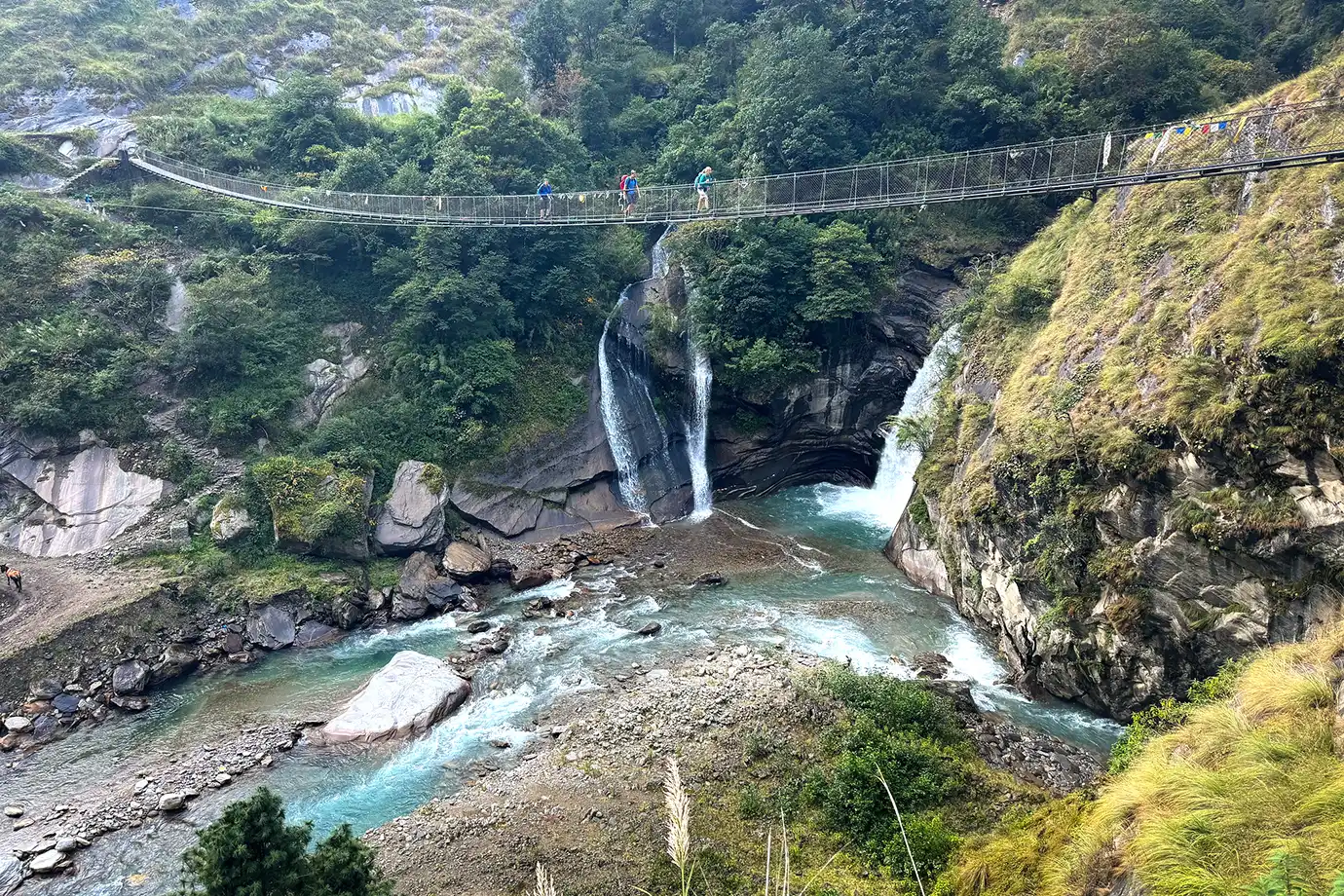
Spring runs from March through May. Late April and May provide the most reliable spring conditions for the full circuit. Spring trekkers benefit from warmer daytime temperatures, rhododendron blooms in the lower and mid-altitude forests, lower permit costs, and fewer fellow trekkers than in October.
March: Too Early for Most Full-Circuit Plans
March brings warming lower trails but unreliable conditions at higher elevations. Larkya La Pass still holds significant winter snow in most years. Teahouses above Samagaon may not open fully in early March. The full circuit remains risky. March suits partial treks to Samagaon or exploratory lower-valley hiking more than the complete circuit.
Late April: Good Window with Pass Caution
Late April usually works for the full circuit. Rhododendrons bloom in lower and mid-altitude forests between 1,500 and 3,000 meters. The trail above Samagaon becomes more accessible as snow melts from the pass. Early April remains uncertain near Larkya La. Always verify current pass conditions with your guide or agency before committing to a late April departure.
Best For
- Flower lovers — rhododendron forests are extraordinary in April
- Spring hikers who want warmer lower-valley temperatures
- Flexible trekkers willing to adjust the pass-crossing day based on conditions
May: Best Spring Month for the Manaslu Circuit Trek
May is the strongest spring month. Larkya La Pass opens fully and reliably. Teahouses operate across all stops. Lower valleys feel warm and pleasant. Morning skies stay clear, though afternoon haze and pre-monsoon cloud buildup can reduce summit visibility by midday. Early May outperforms late May — pre-monsoon weather can arrive in the final week and create unstable afternoons.
Best For
- Trekkers who missed the autumn season
- Budget travelers targeting the lower restricted-area permit rate
- Hikers who prefer warmer daytime temperatures
- Anyone who wants good conditions with fewer crowds than in October
Winter on the Manaslu Circuit: December to February
Winter is not suitable for the full Manaslu Circuit Trek for most travelers. Larkya La Pass carries heavy snow from December through February. High-altitude nights become extreme. Teahouses above Samagaon have closed or reduced service to a single skeleton-staff operation. Water sources freeze. Rescue logistics become far more complicated.
A partial trek to Samagaon may work for experienced winter trekkers with proper cold-weather equipment and a licensed guide. The full circuit in winter suits only highly prepared mountaineering-grade expeditions.
Winter Assessment
| Factor | December | January | February |
|---|---|---|---|
| Larkya La Pass | Increasing snow risk | Often blocked | Often blocked |
| Teahouses above Samagaon | Reduced or closing | Very limited | Very limited |
| Mountain views | Clear on good days | Clear but very cold | Clear but cold |
| Crowd level | Very low | Almost none | Almost none |
| Full circuit viability | Risky | Not recommended | Not recommended |
| Partial lower trek | Possible with a guide | Possible with a guide | Possible from late month |
← Scroll to view →
Monsoon on the Manaslu Circuit: June to August
The monsoon season is the least suitable time for the Manaslu Circuit Trek. Heavy rain saturates the lower Budhi Gandaki gorge from June through August. Landslides regularly block the access road to Soti Khola and Machha Khola. Sections of the trail through the lower gorge become dangerously slippery. Leeches appear throughout the lower forest zones. Mountain views are almost entirely blocked by cloud cover.
Do not plan the full Manaslu Circuit Trek during June, July, or August. The safety risk in the lower gorge outweighs any benefit from open pass conditions above.
Larkya La Pass Conditions by Season
Larkya La Pass at 5,106 meters is the defining variable of the entire trek. Every timing decision on the Manaslu Circuit ultimately comes down to this single crossing. The pass blocks in winter, becomes unreachable during the monsoon, and reaches peak reliability in October.
Guides assess current snow and ice conditions from Samdo (3,860m) and Dharamsala (4,460m) before advising on crossing days. Always build at least one buffer day into your itinerary near Samdo or Dharamsala for weather delays.
Larkya La Pass Seasonal Conditions
| Period | Pass Status | Reliability | Notes |
|---|---|---|---|
| January–March | Often blocked | Poor | Heavy snow and severe cold; full circuit not recommended |
| Early April | Uncertain | Low to medium | Residual winter snow may remain on the upper approach |
| Late April | Improving | Medium | Confirm current conditions before departure |
| May | Usually open | Good | Best spring crossing window; early May preferred |
| June–August | Approach unsafe | Poor | Lower gorge landslide risk makes the full circuit unsuitable |
| Late September | Open and improving | Good | Post-monsoon window begins; conditions improve daily |
| October | Open | Best | Most reliable month for the crossing |
| Early November | Open | Very good | Cold but clear; an earlier start is required for the crossing day |
| Late November | Variable | Medium | Snow risk increases; buffer days essential |
| December | Risky or blocked | Poor | Winter conditions begin; full circuit not recommended |
← Scroll to view →
Weather by Altitude Zone
The Manaslu Circuit climbs from the subtropical lower gorge at around 700 meters to Larkya La Pass at 5,106 meters. Conditions differ sharply between altitude zones. Always pack for the highest zone where you will sleep that night — not the average elevation for the day.
| Altitude Zone | Spring | Autumn | Winter | Monsoon |
|---|---|---|---|---|
| Lower gorge: 700–1,500m | Warm and pleasant; flowers bloom | Dry and stable | Cool and dry | Hot, wet, leeches, landslide risk |
| Mid-valley: 1,500–2,500m | Mild to warm | Comfortable and clear | Cold mornings | Rain and persistent cloud |
| Upper villages: 2,500–3,800m | Cold mornings; improving afternoons | Clear, cold nights | Very cold | Cloudy and damp |
| Dharamsala: 4,460m | Cold; snow possible in early spring | Very cold nights; clear days | Extreme cold | Cold and unsettled |
| Larkya La: 5,106m | Cold; snow patches possible | Cold, windy, often clear | Snow and severe cold | Approach unsafe |
← Scroll to view →
How the Season Affects Manaslu Permit Costs
The Manaslu Restricted Area Permit (RAP) uses a two-tier seasonal pricing structure. Autumn trekkers pay a higher rate than spring trekkers. Choosing spring over autumn saves on permit fees while still providing safe, reliable trekking conditions.
Manaslu Restricted Area Permit Cost by Season
| Season | Permit Cost |
|---|---|
| September to November | USD 100 per person for the first 7 days, then USD 15 per person per additional day |
| December to August | USD 75 per person for the first 7 days, then USD 10 per person per additional day |
← Scroll to view →
Do not choose winter or monsoon dates purely to save on permit fees. The reduction in safety and comfort far outweighs the savings. Trekkers also require the Manaslu Conservation Area Permit (MCAP) and the Annapurna Conservation Area Permit (ACAP). Confirm current rates with your agency before booking.
Teahouse Availability by Season on the Manaslu Circuit
| Location | Main Open Season | Reduced Season | Notes |
|---|---|---|---|
| Machha Khola to Jagat | Mostly year-round | Minimal disruption | Lower villages support local traffic year-round |
| Deng to Namrung | Spring and autumn | Reduced in winter | Basic but available throughout the trekking season |
| Lho to Samagaon | Spring and autumn | Reduced in winter | Stronger lodge options; Samagaon has a medical post |
| Samdo | Spring and autumn | Limited in winter | Critical acclimatization stops before the pass |
| Dharamsala ⚠ | Late spring and autumn | Closed or very limited in winter | Most season-sensitive stop; fewest beds on the route — book ahead in October |
| Bimthang | Spring and autumn | Limited in winter | First full stop after the Larkya La crossing |
← Scroll to view →
Crowd Levels and Booking Lead Times
The Manaslu Circuit stays quieter than the Everest Base Camp hike and the Annapurna Circuit. October still creates meaningful pressure on guides, porters, and limited teahouse capacity — especially at Dharamsala. Book October departures three to six months in advance.
Recommended Booking Lead Times
| Departure Month | Booking Lead Time | Crowd Level | Notes |
|---|---|---|---|
| Late September | 2–4 months ahead | Low to medium | Good shoulder option with improving conditions |
| October | 3–6 months ahead | Highest | Book guides, permits, and the Dharamsala stop early |
| Early November | 2–4 months ahead | Medium | Excellent conditions; easier to book than October |
| Late November | 1–3 months ahead | Low | Cold nights and snow risk require extra buffer days |
| Late April | 2–3 months ahead | Low to medium | Confirm pass conditions before finalizing the itinerary |
| May | 2–3 months ahead | Medium | Best spring window; easier logistics than October |
← Scroll to view →
Festivals and Cultural Timing on the Manaslu Circuit
Dashain and Tihar
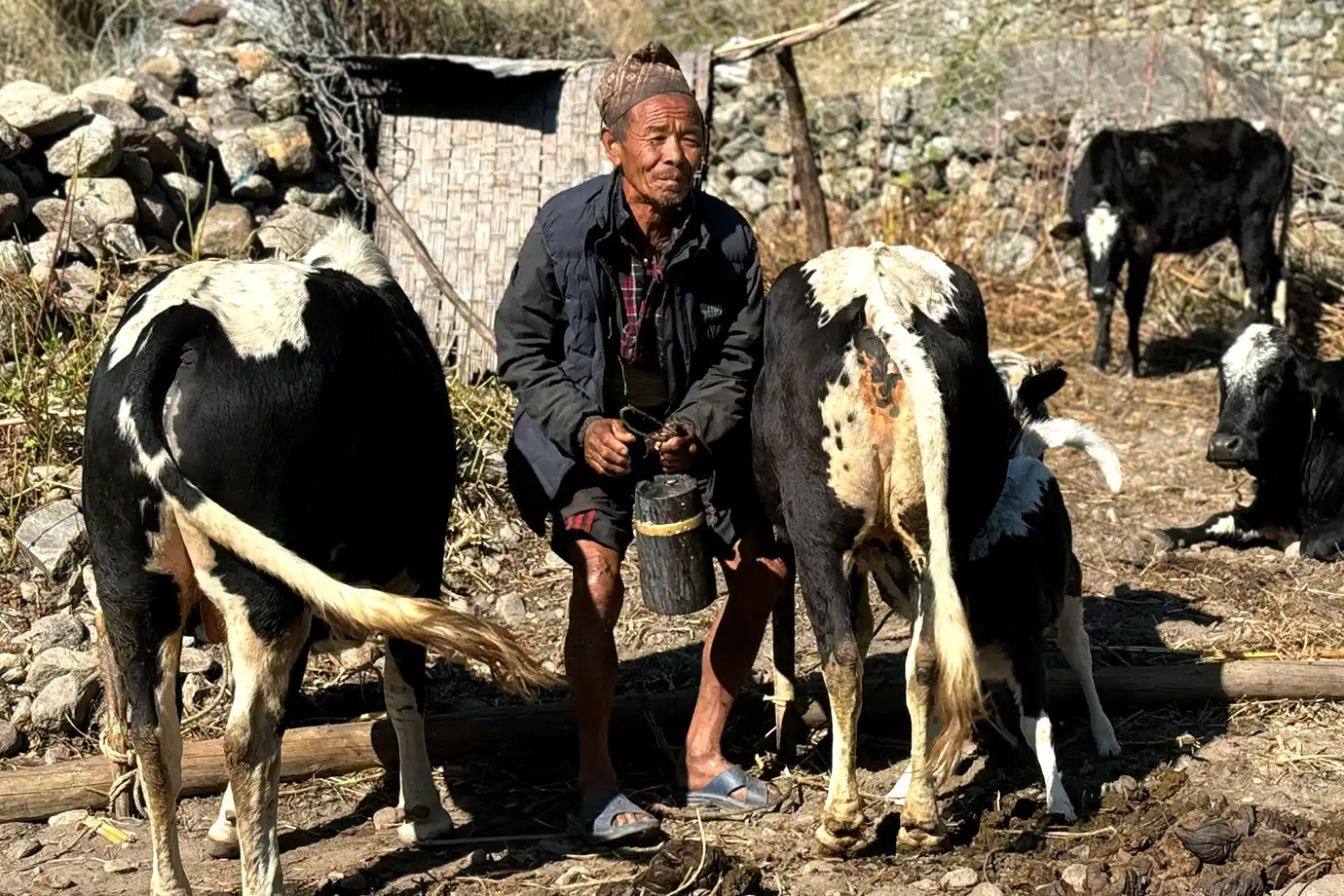
Dashain and Tihar usually fall in September, October, or November. The exact dates shift each year based on the lunar calendar. Domestic transport demand spikes during these festivals. Some staff travel home during peak festival days. Lower Hindu-majority villages along the trail feel more festive during this period. Upper Tibetan Buddhist villages — including Lho, Samagaon, and Samdo — are less affected. Confirm specific festival dates with your agency when planning an October or November departure.
Losar and Buddhist Monastery Festivals
Losar, the Tibetan New Year, usually falls in winter or early spring. Monastery festivals in the Nubri Valley around Samagaon follow a local Tibetan Buddhist calendar. Trekkers interested in witnessing monastery rituals, masked dances, or community ceremonies should check the specific village calendar before booking. The cultural depth of the upper Manaslu region is one of the route’s most distinctive attractions.
Autumn vs Spring: Which Season Is Right for You?
| Factor | Autumn | Spring |
|---|---|---|
| Best month | October | May or late April |
| Mountain views | Clearest post-monsoon visibility | Good afternoon, haze can build |
| Larkya La’s reliability | Strongest in October | Good in May; variable in April |
| Trail condition | Dry and stable throughout | Good; some snow possible early |
| Temperature | Cooler and crisp | Warmer daytime temperatures |
| Flowers | Limited | Rhododendrons bloom in the lower sections |
| Crowd level | Higher | Lower |
| Permit cost (RAP) | Higher rate (Sep–Nov) | Lower rate (Dec–Aug) |
| Best for | First-time trekkers, photographers, and safest overall timing | Value seekers, warm-weather hikers, and flower lovers |
← Scroll to view →
Verdict: Choose October for the most reliable pass conditions, clearest views, and safest overall timing. Choose May if you want warmer temperatures, lower permit fees, fewer crowds, and better spring scenery.
Best Time for the Manaslu Circuit Trek by Traveler Type
| Traveler Type | Best Time | Why |
|---|---|---|
| First-time Manaslu trekker | October | Most reliable conditions across all variables |
| Photographer | October or early November | Clearest mountain views and sharpest light of the year |
| Budget traveler | May | Lower RAP rate with safe, reliable conditions |
| Flower lover | April | Rhododendron blooms in lower and mid-altitude forests |
| Experienced cold-weather trekker | Early November | Fewer crowds, excellent views, and manageable cold |
| Crowd-averse traveler | Late September or May | Good conditions with noticeably fewer trekkers |
| Cultural traveler | October or November | Major Hindu and Buddhist festivals may align |
| Solo trekker with licensed guide | October or May | Strong logistics and reliable guide availability |
| High-pass focused trekker | October | Best Larkya La crossing conditions of the year |
← Scroll to view →
Seasonal Packing Guide for the Manaslu Circuit Trek
Pack for the highest altitude where you will sleep each night. The lower gorge and the area above Dharamsala require completely different gear layers. Never downgrade your kit based on conditions in the lower sections.
Spring Packing List (Late April and May)
- Moisture-wicking trekking base layers
- Mid-layer fleece jacket
- Light down jacket
- Waterproof and windproof shell
- Trekking pants
- Sun hat and warm hat
- Lightweight gloves
- Sunglasses and high-SPF sunscreen
- Rain cover for backpack
- Microspikes if early-spring snow lingers near the pass
Autumn Packing List (September to November)
- Thermal base layers (top and bottom)
- Fleece jacket
- Warm down jacket
- Windproof and waterproof shell
- Trekking pants
- Warm gloves and liner gloves
- Buff or neck warmer
- Sleeping bag rated to at least -10°C
- Sunglasses
- High-SPF sunscreen and lip balm
Winter Packing List (December to February — Partial Treks Only)
- Heavy expedition-grade down jacket
- Full thermal base layer system
- Expedition-rated sleeping bag (-20°C or lower)
- Insulated waterproof gloves
- Wool socks and vapor barrier socks
- Gaiters
- Microspikes or crampons were needed
- Extra power banks (cold drains batteries fast)
- Insulated water bottle system
Monsoon Packing List (Not Recommended for the Full Circuit)
- Waterproof jacket and pants
- Dry bags for clothing and electronics
- Backpack rain cover
- Gaiters
- Quick-dry clothing
- Leech socks or long trekking socks
- Trekking poles for slippery sections
- Water purification tablets or a filter
Transport and Road Access by Season
The trailhead access road runs through Arughat to Soti Khola or Machha Khola. Road conditions change significantly by season and year due to ongoing construction and monsoon damage. Private jeeps handle rough sections more effectively than local buses. Always confirm current trailhead access with your agency within four to six weeks of your departure date.
| Season | Road Condition | Landslide Risk | Reliability |
|---|---|---|---|
| Autumn | Best after post-monsoon repairs | Low | Good |
| Spring | Dry and stable | Low | Good |
| Winter | Passable; cold morning delays possible | Low | Fair to good |
| Monsoon | Poor and frequently blocked | High | Unreliable |
← Scroll to view →
Permit and Guide Requirements
The Manaslu Circuit Trek requires three permits: the Manaslu Restricted Area Permit (RAP), the Manaslu Conservation Area Permit (MCAP), and the Annapurna Conservation Area Permit (ACAP). A licensed trekking guide is mandatory under Nepal’s current restricted-area trekking regulations. Solo trekking without a guide is not permitted on this route.
All permits must be arranged through a registered Nepal trekking agency. Submit your passport copy, visa details, photos, and itinerary well ahead of your departure date — especially for October, when agency processing loads are highest. Permit checkpoints inspect documents at multiple stops along the route. Carry physical copies and keep them accessible throughout the trek.
Common Timing Mistakes to Avoid
- Planning the full circuit in March without checking the current Larkya La Pass snow conditions
- Starting in early September and underestimating monsoon aftereffects in the lower gorge
- Waiting too long to book an October departure — guides and teahouses fill up months in advance
- Packing too lightly for November nights above 3,500 meters
- Choosing December or January only to avoid crowds — the risks far outweigh the benefits
- Choosing monsoon months to save on permit fees — it is not a worthwhile trade-off
- Skipping buffer days near Samdo or Dharamsala — Larkya La weather can delay crossings by one to two days
- Assuming the Manaslu Circuit follows the same timing as the Annapurna Circuit, the routes have different risk profiles
- Ignoring the limited bed capacity at Dharamsala and not booking ahead in October
- Underestimating how quickly conditions deteriorate in late November
Frequently Asked Questions: Best Time for the Manaslu Circuit Trek
When is the best month for the Manaslu Circuit Trek?
October is the strongest month. It delivers clear post-monsoon views, dry trails, fully open teahouses at all stops, and the most reliable conditions for crossing Larkya La Pass at 5,106 meters. Early November and May are the best alternatives.
Is April a good time for the Manaslu Circuit Trek?
Late April works well. Early April still holds residual winter snow near Larkya La, which can block or complicate the crossing. Rhododendrons bloom throughout the lower and mid-altitude sections. Always confirm current pass conditions before departing for a late April trip.
Is May good for the Manaslu Circuit Trek?
May is the best spring month. Larkya La opens reliably, teahouses operate fully, daytime temperatures are warm in lower valleys, and the route sees fewer trekkers than in October. Early May performs better than late May, when pre-monsoon clouds begin building in the afternoons.
How crowded is October on the Manaslu Circuit?
October is the busiest month, but the route stays noticeably quieter than Everest Base Camp or the Annapurna Circuit at their peaks. The pressure concentrates at Dharamsala, which has the fewest beds on the route. Book October guides, permits, and Dharamsala accommodation three to six months in advance.
Is November a good time to trek the Manaslu Circuit?
Early to mid-November is excellent. Views are clear, trails are dry, and crowds thin out compared to October. Late November brings colder nights and increasing snow risk near Larkya La. Add extra buffer days and bring warmer gear for any November departure.
Can I trek the Manaslu Circuit in December?
The full circuit in December is risky for most travelers. Larkya La Pass accumulates snow, high teahouses reduce service or close, and nights become intensely cold above 3,500 meters. Experienced trekkers with strong cold-weather kit and a licensed guide may complete a partial lower-circuit trek, but the full circuit is not recommended.
Should I trek Manaslu in the monsoon season?
No. June through August brings heavy rain, landslide risk on the lower gorge trail and access road, leeches, poor mountain visibility, and unreliable transport to the trailhead. The full circuit is unsuitable during the monsoon season.
When is Larkya La Pass most reliable?
October is the most reliable month for crossing Larkya La. Early November, late April, and May also provide stable enough windows for most trekkers. Always verify current snow and ice conditions through your guide or agency before the crossing day.
Which season gives the best mountain views on the Manaslu Circuit?
Autumn produces the best conditions for mountain photography. October and early November offer the clearest air after the monsoon washes out dust and haze. Spring views are good in the morning but haze tends to build in the afternoons.
Which season is cheaper for Manaslu permits?
The Manaslu Restricted Area Permit costs less between December and August than between September and November. Late April and May combine the lower permit rate with safe and reliable trekking conditions — the strongest value combination on the route.
Do I need a guide for the Manaslu Circuit Trek?
Yes. A licensed guide is required at all times. The route passes through a government-restricted area. Permits are only issued through registered trekking agencies, and a licensed guide must accompany all trekking groups. This requirement applies year-round regardless of group size or experience level.
How far in advance should I book the Manaslu Circuit Trek?
Book October departures three to six months in advance. Spring and November departures can usually be arranged two to three months ahead. Restricted Area Permit processing, guide scheduling, and Dharamsala accommodation booking all require lead time — especially for October.
Is spring or autumn better for the Manaslu Circuit Trek?
Autumn is superior for mountain views, pass reliability, and overall safety margin. Spring is better for warmer temperatures, lower permit fees, rhododendron scenery, and quieter trails. First-time trekkers should choose October. Budget-conscious or crowd-averse trekkers should choose May.
Conclusion
October is the best time for the Manaslu Circuit Trek for most travelers. It offers the clearest skies, the most reliable conditions at Larkya La Pass, dry trails, and fully operational teahouses from the trailhead to Bimthang. Early November offers crisp views and fewer trekkers, but colder nights. Late April and May deliver a strong spring alternative with warmer temperatures, lower permit costs, and rhododendron scenery in the lower valleys.
Avoid the full circuit in winter and monsoon months. The combination of a blocked pass, dangerous lower gorge conditions, and closed high teahouses makes completion unreliable and unsafe for most trekkers.
Choose your month first. Then confirm Larkya La Pass conditions through a licensed guide, arrange all three required permits through a registered trekking agency, build at least one buffer day near Samdo or Dharamsala, and book Dharamsala accommodation well in advance.
Ready to Trek the Manaslu Circuit?
Our Kathmandu-based team handles permits, licensed guides, and full logistics for every season.
📧 info@hikinginnepal.com
|
📲 WhatsApp: +977 9851052413
|
🌐 hikinginnepal.com