


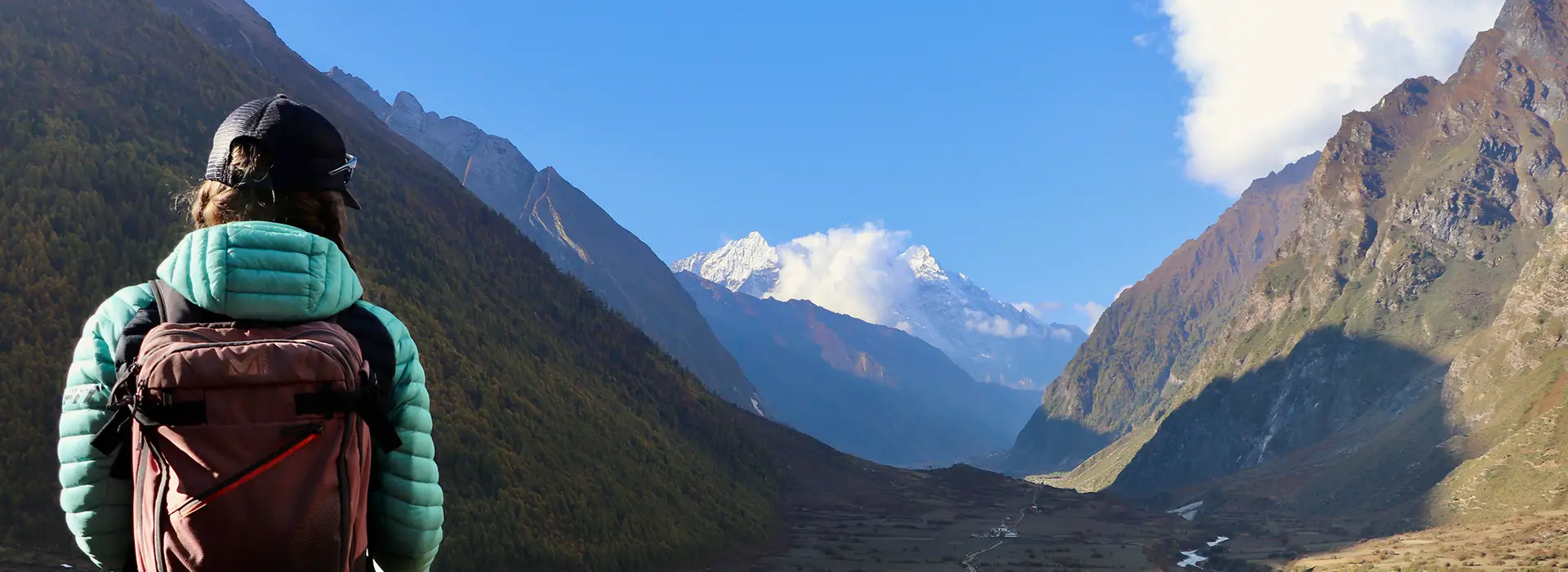

The Manaslu Circuit Trek Guide covers everything you need to plan one of Nepal’s finest restricted-area adventures. This route circles Mount Manaslu, the world’s eighth-highest mountain at 8,163 meters, following the Budhi Gandaki Valley through Tibetan-influenced villages, over Larkya La Pass at roughly 5,106 meters, and down toward the Annapurna region. Most itineraries run 12 to 16 days. Trekkers need restricted-area permits, a licensed guide, and a registered trekking agency. Compared to Everest and Annapurna, this route sees far fewer trekkers — making it ideal for those seeking remote mountain culture and a serious high-pass challenge.
Quick Answer: Manaslu Circuit Trek at a Glance
| Detail | Information |
|---|---|
| Main Mountain | Mount Manaslu, 8,163 m, world’s 8th highest mountain |
| Trek Type | Restricted-area teahouse trek |
| Duration | 12–16 days |
| Highest Point | Larkya La Pass, about 5,106 m |
| Difficulty | Challenging |
| Start | Machha Khola or nearby roadhead |
| End | Dharapani or Besisahar |
| Key Permits | Manaslu RAP, MCAP, ACAP, and TIMS process |
| Guide Required | Yes, a licensed guide is mandatory |
| Best Seasons | March–May and September–November |
| Optional Extension | Tsum Valley, 5–7 extra days |
Scroll left or right to view the full table.
What Makes the Manaslu Circuit Special?
The Manaslu Circuit Trek stands apart from Nepal’s other popular routes for several compelling reasons. The trail circles the world’s eighth-highest mountain through the dramatic Budhi Gandaki Valley, crossing Larkya La Pass and passing through Tibetan Buddhist villages in the upper Nubri Valley. The restricted-area status keeps trekker numbers lower than on the Everest or Annapurna trails, preserving a more authentic and less commercialized experience.
At the end of the circuit, the route merges with the Annapurna corridor near Dharapani — giving trekkers the rare feeling of having crossed from one great Himalayan region into another. Mountain scenery, ancient monastery culture, high-altitude challenge, and remote village life combine into a single, deeply rewarding journey that rewards thorough preparation.
The Manaslu Circuit Trek Guide covers everything you need to plan one of Nepal's finest restricted-area adventures. This route circles…
 12 Days
 Moderate
Mountain Views Along the Route
| Peak | Altitude | Where Trekkers See It |
|---|---|---|
| Manaslu | 8,163 m | Lho, Shyala, Sama Gaun, upper route |
| Himalchuli | 7,893 m | Lower and middle route |
| Ngadi Chuli | 7,871 m | Middle and upper route |
| Ganesh Himal | 7,422 m | Lower Budhi Gandaki sections |
| Larkya Peak | 6,249 m | Larkya La area |
| Cheo Himal | 6,820 m | Samdo and pass area |
| Annapurna II | 7,937 m | Descent toward the Annapurna side |
Scroll left or right to view the full table.
Manaslu Circuit Route Overview
The Manaslu Circuit route divides naturally into five distinct zones, each with its own terrain, altitude, and character. Understanding these zones helps trekkers mentally prepare for what lies ahead on each section of the journey.
| Zone | Altitude | Terrain | Key Stops |
|---|---|---|---|
| Lower Budhi Gandaki | 700–1,500 m | River valley, gorge | Machha Khola, Jagat |
| Middle Manaslu | 1,500–2,800 m | Forest, bridges, villages | Deng, Namrung |
| Upper Nubri Valley | 2,800–3,900 m | Alpine villages, monasteries | Lho, Sama Gaun, Samdo |
| High Pass Zone | 3,900–5,106 m | Moraine, wind, snow risk | Dharamsala, Larkya La |
| Descent Zone | 3,700–1,800 m | Meadow, forest | Bhimthang, Tilije, Dharapani |
Scroll left or right to view the full table.
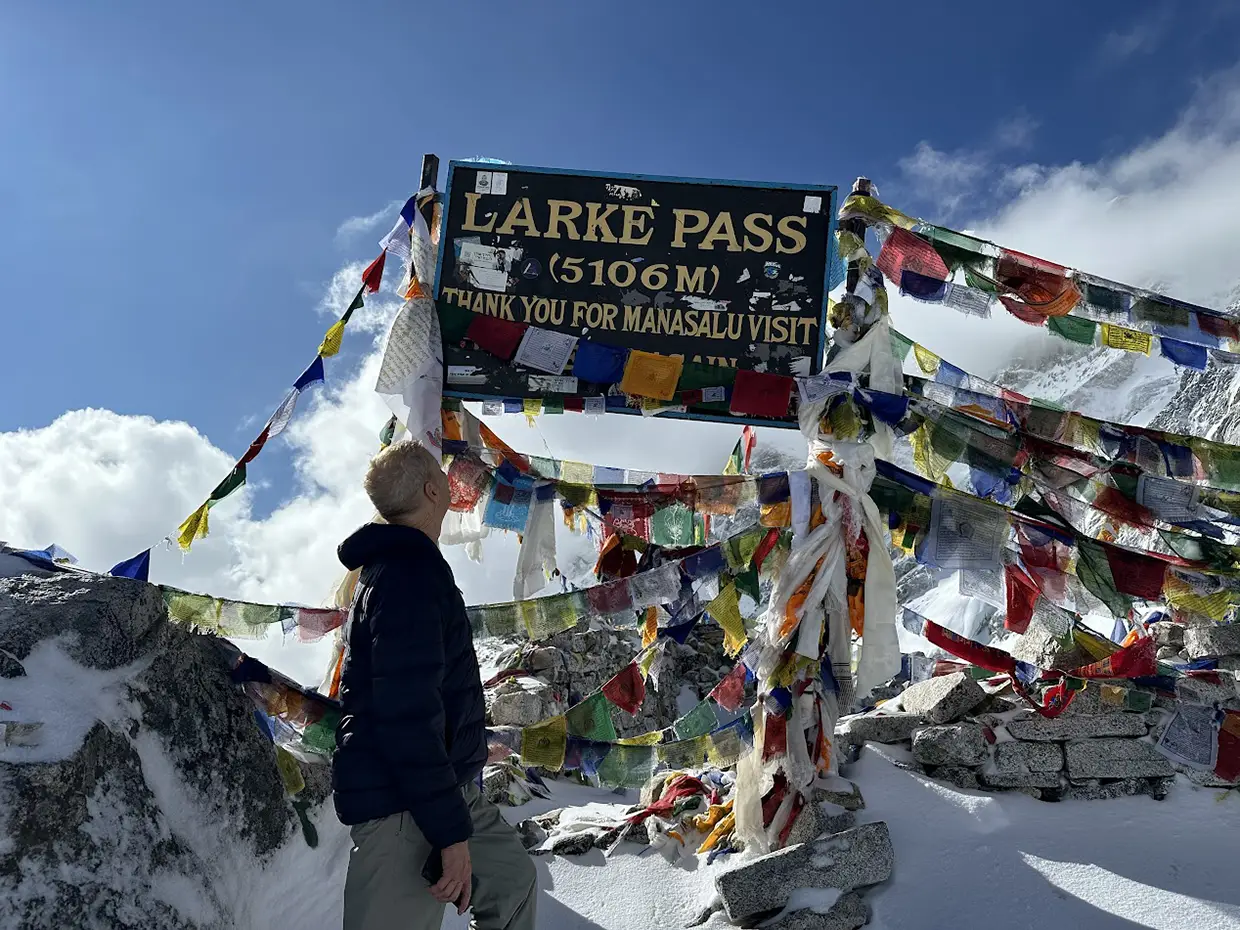
Larkya La Pass: The Heart of the Manaslu Circuit Trek
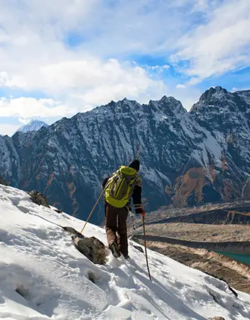
Every Manaslu Circuit Trek guide points to Larkya La Pass as the single most demanding and defining moment of the journey. At approximately 5,106 meters, the pass demands an early pre-dawn start, careful navigation over rocky and sometimes snowy terrain, and a long, knee-testing descent to Bhimthang. Guides assess snow cover, wind strength, and visibility before allowing departure. Trekkers should carry snacks, extra water, warm layers, a headlamp, gloves, and trekking poles on pass day.
| Detail | Information |
|---|---|
| Altitude | About 5,106 m |
| Starting Point | Dharamsala / Larkya Phedi |
| End Point | Bhimthang |
| Walking Time | 8–10 hours |
| Typical Start Time | Pre-dawn, often 3–4 AM |
| Main Challenges | Altitude, cold, wind, possible snow, and long descent |
| Technical Climbing | Not required under normal conditions |
Scroll left or right to view the full table.
14-Day Manaslu Circuit Trek Itinerary
The following itinerary represents a well-paced 14-day plan that includes essential acclimatization stops in Sama Gaun and Samdo before tackling Larkya La Pass. A 16-day version adds extra rest nights in Lho or Shyala plus a weather buffer before the pass crossing — recommended for those with more time.
| Day | Route | Notes |
|---|---|---|
| 1 | Drive Kathmandu to Machha Khola | Long road into the Budhi Gandaki Valley |
| 2 | Trek to Jagat | River valley trail, waterfalls, suspension bridges |
| 3 | Trek to Deng | Forest, gorge, first Buddhist cultural signs |
| 4 | Trek to Namrung | Cultural shift begins, better mountain views |
| 5 | Trek to Lho | Mani walls, monastery, outstanding Manaslu views |
| 6 | Trek to Sama Gaun | Major cultural hub, key acclimatization village |
| 7 | Acclimatization at Sama Gaun | Birendra Lake, Pungyen Gompa, or Base Camp hike |
| 8 | Trek to Samdo | Shorter high-altitude day, strong Tibetan feel |
| 9 | Acclimatization at Samdo | Side hike and rest before the pass |
| 10 | Trek to Dharamsala | High camp before Larkya La, basic but essential |
| 11 | Cross Larkya La Pass to Bhimthang | Hardest and highest day of the trek |
| 12 | Trek to Tilije | Forest descent, warmer valley |
| 13 | Trek to Dharapani, drive to Besisahar | Join the Annapurna Corridor |
| 14 | Drive to Kathmandu | End of the Manaslu Circuit Trek |
Scroll left or right to view the full table.
The Tsum Valley extension adds 5 to 7 days with visits to Mu Gompa and traditional Tsum settlements. It requires a separate restricted-area permit and suits cultural travellers seeking an even more remote experience.
Altitude Profile
| Location | Altitude | Role on the Trek |
|---|---|---|
| Machha Khola | 900 m | Lower trail start |
| Jagat | 1,340 m | Checkpoint and route transition |
| Deng | 1,860 m | Middle Valley cultural shift |
| Namrung | 2,630 m | Tibetan cultural transition begins |
| Lho | 3,180 m | Manaslu views, monastery stop |
| Sama Gaun | 3,530 m | Primary acclimatization hub |
| Samdo | 3,860 m | Last village before the high route |
| Dharamsala | 4,460 m | Pre-pass overnight camp |
| Larkya La Pass | About 5,106 m | The highest point of the trek |
| Bhimthang | 3,590–3,720 m | Post-pass recovery stop |
| Dharapani | 1,860 m | Annapurna corridor entry point |
Scroll left or right to view the full table.
Key Villages and Culture on the Manaslu Circuit
One of the defining strengths of the Manaslu Circuit Trek is the depth of Tibetan Buddhist culture encountered along the way. Each village offers a distinct character shaped by altitude, trade history, and proximity to the Tibetan plateau.
- Jagat: The main checkpoint village at the start of the regulated route, where permits are first inspected.
- Deng: A cultural transition zone where Buddhist mani walls and prayer flags begin to appear more frequently. The Tsum Valley branch splits off nearby.
- Namrung: A strongly Tibetan-influenced village surrounded by chortens and mani walls, with improving mountain views.
- Lho: One of the most scenic villages on the entire circuit — dramatic Manaslu views, a beautiful monastery, and long mani walls line the trail.
- Sama Gaun: The cultural heart of the upper route. Side trips to Birendra Lake, Pungyen Gompa, and Manaslu Base Camp depart from here. The essential acclimatization stop.
- Samdo: The last village before the pass. Windswept, high, remote, and deeply Tibetan in character.
- Dharamsala: A basic high camp used purely as a rest point before the Larkya La crossing. Cold and exposed.
- Bhimthang: The first settlement after the pass, set in a beautiful meadow. A welcome rest point after the hardest day of the trek.
Permits and Guide Requirements
Every Manaslu Circuit Trek guide must address the permit structure — it is more complex than most other treks in Nepal and must be arranged through a registered agency before departure.
| Permit | Required? | Notes |
|---|---|---|
| Manaslu Restricted Area Permit (RAP) | Yes | Issued through a registered agency for the restricted section |
| MCAP | Yes | Manaslu Conservation Area Permit |
| ACAP | Yes | Required as the route exits into the Annapurna side |
| TIMS | Confirm current process | Verify the latest rule before booking |
| Tsum Valley RAP | If adding Tsum | A separate restricted-area permit is required |
| Licensed Guide | Yes | Mandatory for restricted-area access |
Scroll left or right to view the full table.
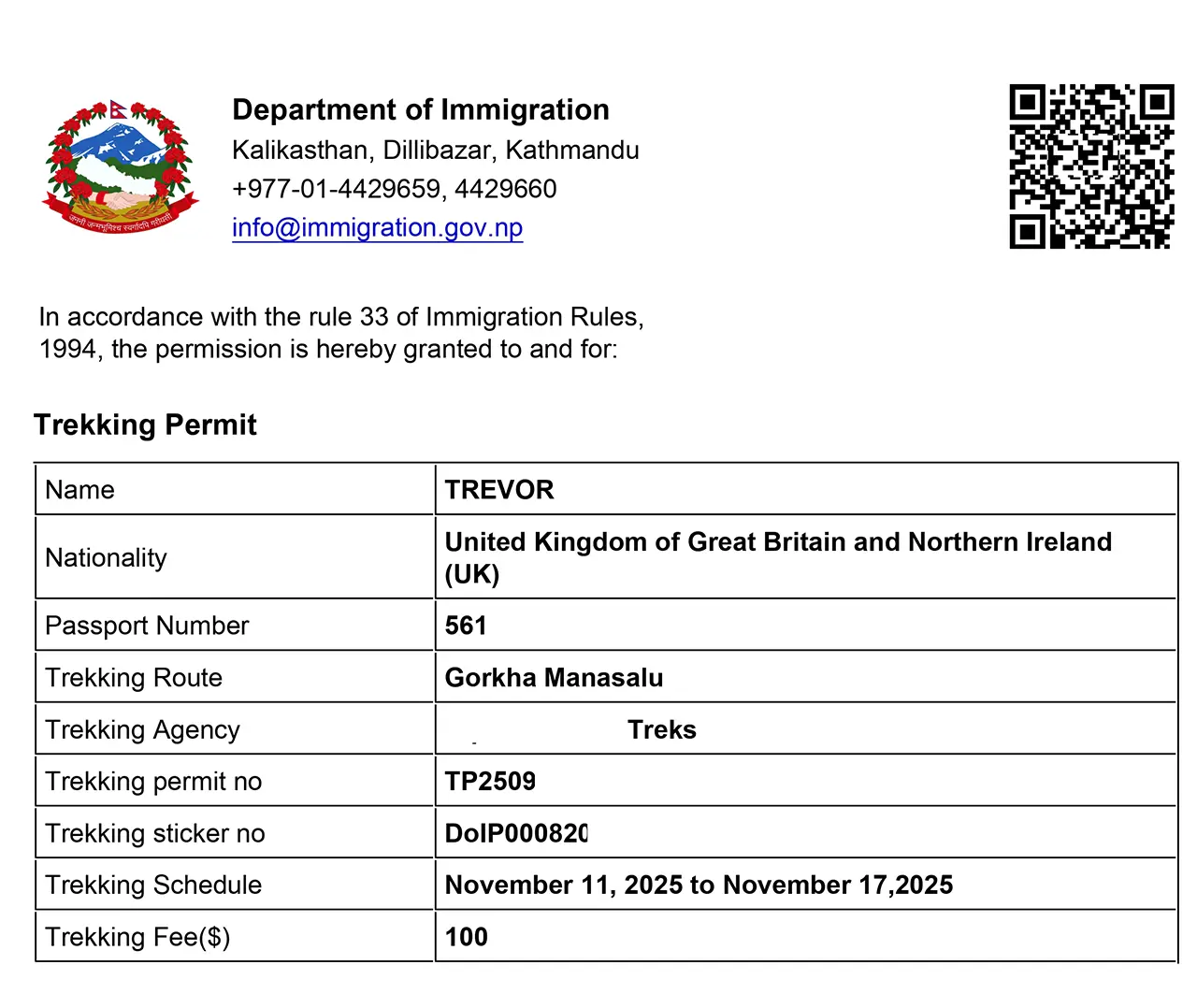
Important note: Nepal has eased the former two-person rule for restricted areas, allowing individual foreign trekkers to access restricted routes with permits. However, a licensed guide and registered trekking agency remain essential. The Department of Immigration sets the Gorkha Manaslu restricted-area fee at USD 100 per person per week during the peak September–November season, and USD 15 per extra day. Always confirm the latest rules before booking.
Tsum Valley Extension
For trekkers with additional time, the Tsum Valley extension transforms the Manaslu Circuit Trek into one of the most culturally immersive journeys in the entire Himalayan region.
| Detail | Information |
|---|---|
| Access Point | Branches from the main route near Lokpa/Deng |
| Extra Days Required | 5–7 days |
| Key Destinations | Chumling, Chhekampar, Nile, Mu Gompa |
| Additional Permit | A separate restricted-area permit is required |
| Best Suited For | Cultural travelers, photographers, and repeat Nepal visitors |
Scroll left or right to view the full table.
Trek Difficulty
The Manaslu Circuit Trek is rated challenging. The high pass above 5,000 meters, long walking days, remote and restricted terrain, basic upper-route teahouses, cold nights, significant altitude exposure, the extended descent from Larkya La, and the weather-sensitive pass crossing all contribute to the difficulty rating.
Trekkers should be able to walk 6 to 8 hours on hilly terrain, manage multi-day hikes, climb sustained staircases, and descend long slopes without excessive knee strain. Begin cardio and strength training 10 to 14 weeks before departure. Fit beginners can complete the trek with proper preparation, a safe itinerary, and an experienced guide — but prior multi-day hiking experience is a genuine advantage.
Best Season for the Manaslu Circuit Trek
| Season | Months | Best For | Key Challenge |
|---|---|---|---|
| Autumn | Sep–Nov | Clear views, stable weather, best pass conditions | Higher permit costs; cold November nights |
| Spring | Mar–May | Warmer days, rhododendrons, Himalayan climbing season | Possible snow near the pass in early spring |
| Winter | Dec–Feb | Not recommended for most trekkers | Heavy snow, extreme cold, risk of pass closure |
| Monsoon | Jun–Aug | Not recommended | Landslides, heavy rain, leeches, and poor visibility |
Scroll left or right to view the full table.
Teahouse Reality on the Manaslu Circuit
Accommodation along the Manaslu Circuit route is functional but more basic than on the Everest or Annapurna circuits. Trekkers should adjust expectations accordingly, particularly for the upper sections of the route.
| Section | Accommodation Type | Comfort Level |
|---|---|---|
| Machha Khola to Deng | Basic teahouses | Simple but functional |
| Namrung to Sama Gaun | Better teahouses | Best section for lodge comfort |
| Samdo | Basic teahouses | Cold and limited facilities |
| Dharamsala | Very basic lodge or shelter | Coldest and simplest on the route |
| Bhimthang to Dharapani | Basic to moderate | Comfort improves steadily on descent |
Scroll left or right to view the full table.
Safety and Risk Assessment
| Risk | Level | How to Mitigate |
|---|---|---|
| Altitude sickness (AMS) | Moderate–High | Acclimatize properly in Sama Gaun and Samdo; add buffer days |
| Larkya La weather | High | Start pre-dawn, use buffer days, and follow the guide’s judgment |
| Cold exposure | Moderate–High | Pack warm layers and a cold-rated sleeping bag |
| Long descent strain | Moderate | Use trekking poles and train your knees before departure |
| Remote rescue logistics | High | Carry comprehensive high-altitude evacuation insurance |
| Landslides | Seasonal | Avoid the monsoon season entirely |
| Permit or rule issues | High | Use a registered agency and confirm the latest rules before booking |
Scroll left or right to view the full table.
Manaslu vs Annapurna Circuit, EBC, and Three Passes
Comparing the Manaslu Circuit Trek against Nepal’s other major routes helps trekkers choose the right adventure for their fitness level, timeline, and preferences.
| Factor | Manaslu Circuit | Annapurna Circuit | EBC Trek | Three Passes |
|---|---|---|---|---|
| Duration | 12–16 days | 10–18 days | 12–14 days | 18–21 days |
| Highest Point | Larkya La, about 5,106 m | Thorong La, 5,416 m | Kala Patthar, 5,545 m | Passes above 5,300 m |
| Permit Type | Restricted area and conservation permits | Conservation permit | National park and local fees | National park and local fees |
| Crowd Level | Low–moderate | Moderate–high | High | Moderate |
| Culture | Tibetan Buddhist, Nubri | Multi-ethnic communities | Sherpa culture | Sherpa culture |
| Teahouses | Basic–moderate | Well developed | Well developed | Good but remote |
| Best For | Remote culture and high pass trekking | Landscape variety | Classic Everest route | Strong, experienced hikers |
Scroll left or right to view the full table.
Manaslu Circuit Trek Packing List
Clothing and Core Gear
- Thermal base layers (top and bottom)
- Mid-layer fleece and an insulated down jacket
- Waterproof shell jacket and waterproof trousers
- Trekking pants, warm hat, sun hat, and neck buff
- Liner gloves plus insulated outer gloves
- Warm trekking socks (multiple pairs)
- Well broken-in waterproof trekking boots
- Trekking poles (essential for Larkya La descent)
- Cold-rated sleeping bag (at least -10°C comfort rating)
- Daypack and main duffel bag
- Headlamp with spare batteries
- UV-protection sunglasses
- Water bottles, purification tablets, or a filter
- Power bank and dry bags
Manaslu-Specific Essentials
- Microspikes — useful if ice or snow is present near Larkya La
- Extra high-energy snacks for the past day
- Strong headlamp for the pre-dawn Larkya La start
- Sufficient cash for remote villages (no ATMs on the trail)
- Insurance documents covering high-altitude helicopter evacuation
Common Mistakes on the Manaslu Circuit Trek
- Choosing a rushed itinerary without adequate acclimatization days
- Skipping the rest day in Sama Gaun or Samdo
- Starting the Larkya La crossing too late in the morning
- Failing to check current permit rules and solo trekking regulations
- Booking with an agency that lacks specific Manaslu experience
- Packing too lightly for the extreme cold at Dharamsala
- Expecting Everest-region lodge standards in the upper sections
- Not purchasing insurance that explicitly covers high-altitude evacuation
- Adding the Tsum Valley extension without budgeting enough extra days
- Underestimating the length and knee strain of the descent to Bhimthang
Responsible Trekking on the Manaslu Circuit
- Respect monasteries, mani walls, and prayer wheels — always pass them on the left (clockwise)
- Ask permission before photographing local people
- Carry all plastic waste out of the restricted area
- Use refillable water bottles rather than single-use plastic
- Support local teahouses and village shops wherever possible
- Follow all restricted-area rules and keep permits ready at checkpoints
Frequently Asked Questions
How many days does the Manaslu Circuit Trek take?
Most itineraries for the Manaslu Circuit Trek take 12 to 16 days. A 14-day plan provides a good balance, allowing proper acclimatization stops in Sama Gaun and Samdo before the Larkya La crossing. Trekkers with more time benefit from the safer 16-day pacing, which adds buffer days for weather flexibility near the pass.
How difficult is the Manaslu Circuit Trek?
The trek is rated challenging. Trekkers face long daily walking stages, remote terrain with limited rescue access, cold nights above 3,500 meters, and basic teahouse facilities on the upper route. The route culminates at Larkya La Pass at approximately 5,106 meters. Physical preparation and prior multi-day hiking experience significantly improve the chances of a successful, enjoyable crossing.
What permits do I need for the Manaslu Circuit?
You need a Manaslu Restricted Area Permit (RAP), the Manaslu Conservation Area Permit (MCAP), the Annapurna Conservation Area Permit (ACAP), and the current TIMS process. A licensed guide and registered agency handle all permit arrangements. These documents are checked at multiple checkpoints along the route, so keep them accessible throughout the trek.
Do I need a guide for the Manaslu Circuit Trek?
Yes. A licensed guide is a strict legal requirement for the Manaslu restricted area. Beyond the regulatory requirement, an experienced local guide adds significant safety, navigational, and logistical value — particularly on pass day and in the event of altitude-related illness or route closures.
Can solo trekkers complete the Manaslu Circuit?
Yes. Nepal has eased the former two-person-per-group rule in restricted areas, allowing solo foreign trekkers to access the Manaslu Circuit. However, a licensed guide and registered agency remain mandatory. Always confirm the latest regulations before booking, as rules in restricted areas can change.
How hard is Larkya La Pass on the Manaslu Circuit Trek?
Larkya La is the hardest day of the entire trek. High altitude, sub-zero temperatures, a pre-dawn start, and potentially snowy or icy terrain combine with a 10-hour walking day that includes a long, demanding descent to Bhimthang. Mental focus, physical endurance, and the right gear all matter considerably on pass day.
When is the best time to do the Manaslu Circuit Trek?
Autumn (September to November) offers the clearest skies, most stable pass conditions, and the best overall experience. Spring (March to May) is the second-best window, with warmer temperatures and flowering rhododendrons in the lower sections. Both winter and the monsoon season pose serious safety risks and are not recommended for most trekkers.
Is the Manaslu Circuit harder than the Annapurna Circuit?
The Manaslu Circuit Trek feels more remote and logistically demanding than the Annapurna Circuit, even though Thorong La on the Annapurna route sits slightly higher at 5,416 meters. Manaslu’s restricted-area permit requirements, more basic teahouse infrastructure, and fewer emergency evacuation options make it a more serious undertaking overall. It rewards trekkers who prefer wilderness and solitude over convenience.
Can beginners complete the Manaslu Circuit Trek?
Fit beginners who have completed serious preparation can succeed on the Manaslu Circuit Trek. Building cardiovascular endurance and leg strength over 10 to 14 weeks before departure is essential. A sensible 14 to 16-day itinerary with proper acclimatization days, combined with an experienced guide, gives first-time high-altitude trekkers a realistic path to completing this challenging circuit.
What are teahouses like on the Manaslu route?
Teahouses serve the entire standard route, but facilities are simpler than those found on the Everest or Annapurna trails — particularly at Samdo, Dharamsala, and other upper-route villages. Expect basic rooms, shared bathroom facilities, and simple local meals. A warm, cold-rated sleeping bag is essential for comfortable nights at high altitude.
Can I add Tsum Valley to the Manaslu Circuit Trek?
Yes. The Tsum Valley extension adds approximately 5-7 days to your itinerary and requires a separate restricted-area permit. The extension includes Mu Gompa and traditional Tsum settlements, offering some of the deepest Tibetan Buddhist cultural experiences available anywhere in Nepal. It is particularly well-suited to cultural travelers, photographers, and those returning to Nepal for a second or third time.
What happens if Larkya La Pass closes due to weather?
If the weather makes the pass unsafe, the guiding team will wait for conditions to improve. If the pass remains impassable, the group returns via the same route to Machha Khola. Building at least one or two buffer days into your itinerary before your scheduled departure flight protects your overall travel plan against this possibility.
What should I pack for the Manaslu Circuit Trek?
Essential items include warm thermal layers, a down jacket, waterproof outer clothing, and a cold-rated sleeping bag. Trekking poles, well broken-in boots, a strong headlamp, water purification, and a power bank are all necessary. Carry extra snacks specifically for the Larkya La day, sufficient cash for the entire trail (no ATMs on the route), and insurance documents covering a high-altitude helicopter evacuation.
Final Advice for the Manaslu Circuit Trek Guide
The Manaslu Circuit Trek delivers a remote, regulated, and culturally extraordinary journey around the world’s eighth-highest mountain. Tibetan Buddhist villages, the dramatic Budhi Gandaki Valley, the challenge of the Larkya La Pass, and the descent into the Annapurna region combine to make one of Nepal’s finest and most complete trekking experiences.
To make the most of this route: confirm current permit rules and solo trekking regulations before booking; choose a registered agency with proven Manaslu experience; build acclimatization days into your itinerary rather than cutting them; pack properly for cold and remote conditions; carry comprehensive high-altitude evacuation insurance; and respect the restricted-area culture encountered along the way. The Manaslu Circuit Trek Guide rewards thorough preparation far more than it rewards speed.