


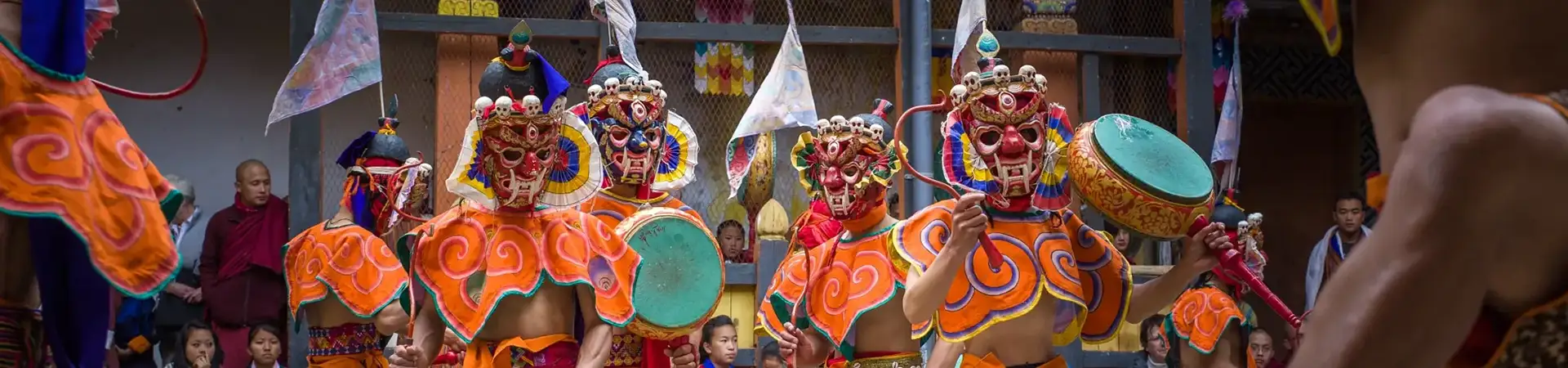

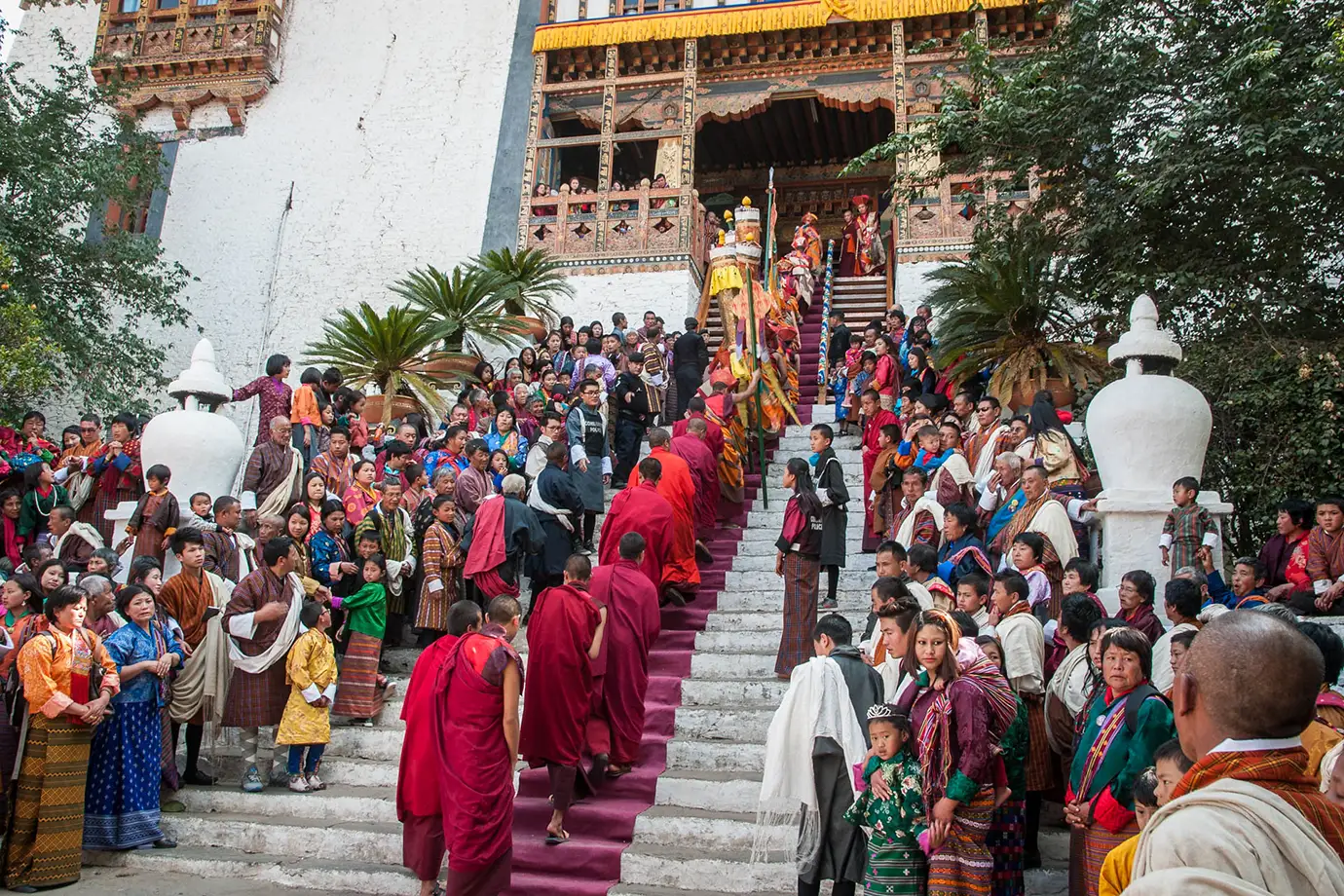
Bhutan Festival provides a window into the kingdom’s spiritual life. These events celebrate the birth of Guru Rinpoche. Locals call him the “Precious Master”. He brought Buddhism to Bhutan in the 8th century. Every year, citizens gather at the Dzongs, fortresses. They wear their best clothes and pray for blessings. These Bhutan festivals act as a bridge between the past and the present. They combine ancient rituals with social gatherings. Communities share food, watch dances, and seek spiritual merit.
The government follows a “High Value, Low Volume” tourism model. This model protects the culture from overcrowding. Every visitor pays a Sustainable Development Fee (SDF) of USD 100 per night. This money funds free healthcare and education for the people. Visitors must book a Bhutan Tour through a licensed operator. Planning ahead ensures the availability of hotel rooms and flights during the busy festival season.
Spiritual meaning of the Tsechu
The word Tsechu translates to “Tenth Day”. This festival occurs on the tenth day of a lunar month. The date changes every year based on the moon. Most Tsechus happen in the spring or autumn. These seasons offer clear skies and mild weather.
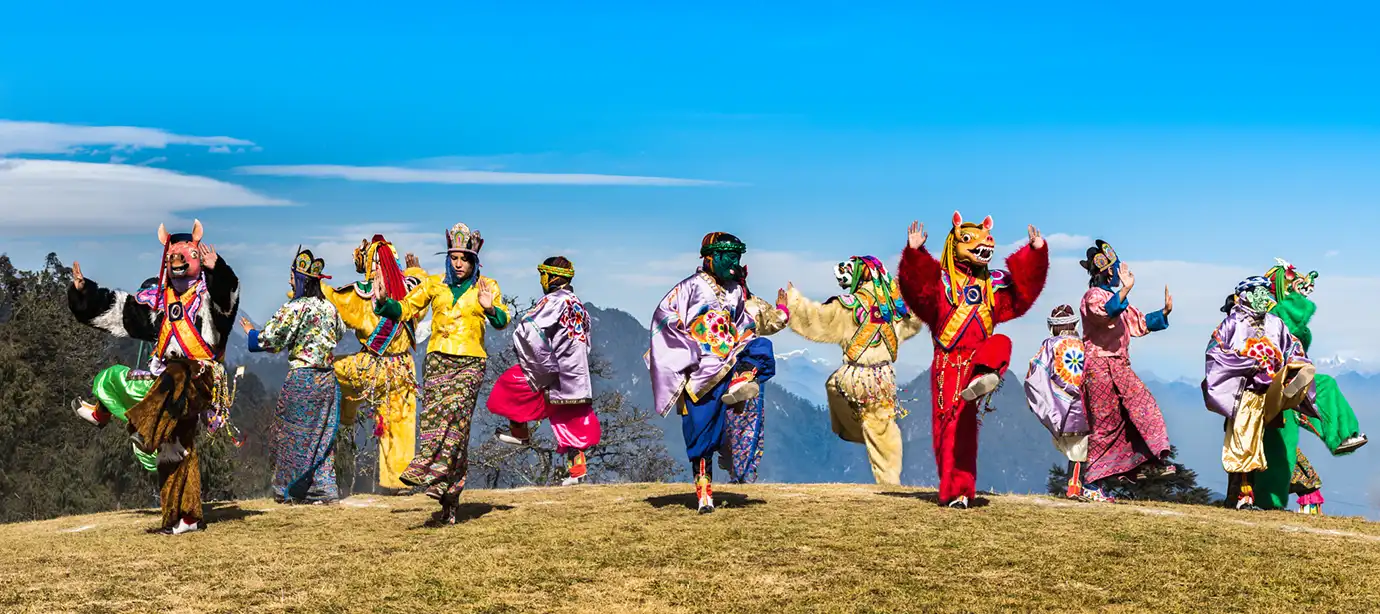
Guru Rinpoche promised to visit his followers on the tenth day. He subdues demons and protects the Dharma. Witnessing a Tsechu helps a person gain merit. It also purifies negative karma. The dances represent stories of his life and teachings.
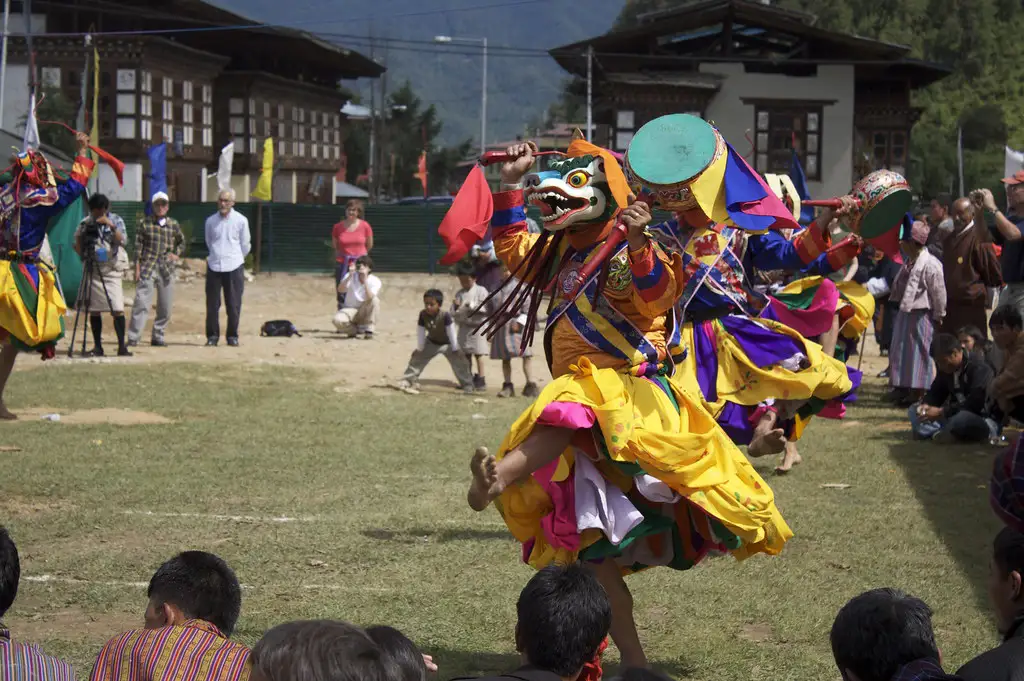
Monks perform sacred Cham mask dances. These dances serve as a form of meditation. Dancers wear heavy silk robes and wooden masks. Some masks look peaceful, while others look fierce. Fierce masks represent the power to destroy ignorance.
| Bhutanese Festival Terms | Meaning and Significance |
| Tsechu | Tenth day of the lunar month; a religious festival |
| Cham | Sacred religious mask dances performed by monks |
| Thongdrel | Large silk scroll depicting Guru Rinpoche; viewing it cleanses sins |
| Dzong | Fortress-monastery that serves as a religious and government center |
| Atsara | Sacred clowns who entertain the crowd and repel evil spirits |
| Gho | Traditional knee-length robe worn by Bhutanese men |
| Kira | Traditional ankle-length dress worn by Bhutanese women |
Guru Rinpoche and the eight manifestations
Guru Rinpoche remains the central figure of the Bhutan Festival. He manifests in eight different forms to help sentient beings. Masked dancers portray these forms during major celebrations. Each manifestation has a specific meaning and iconographic style.
Guru Tsokye Dorje represents the lotus-born child. He symbolizes purity and wisdom. Guru Shakya Senge represents the form of a monk. He emphasizes discipline and study. Guru Nyima Ozer represents the sun’s rays. He dispels darkness and ignorance.
Guru Loden Chokse represents the seeker of knowledge. He masters all spiritual sciences. Guru Pema Gyalpo represents the lotus king. He leads with authority and compassion. Guru Senge Dradrok represents the roaring lion. He subdues negative forces with power. Guru Dorje Drolo represents the wrathful form. He binds spirits under oath and protects the teachings. Guru Pema Jungne represents the essence of enlightenment.
Paro Tsechu festival highlights
The Paro Tsechu is held in spring at the Rinpung Dzong. It remains one of the largest festivals in the kingdom. The 2026 festival happens from March 29 to April 2. The Rinpung Dzong overlooks the Paro valley. It features white walls and traditional wooden architecture.
The festival ground fills with local people in their best national dress. They bring picnic baskets and socialize with neighbors. Monks perform the “Dance of the Terrifying Deities” and the “Dance of the Noblemen and the Ladies”.
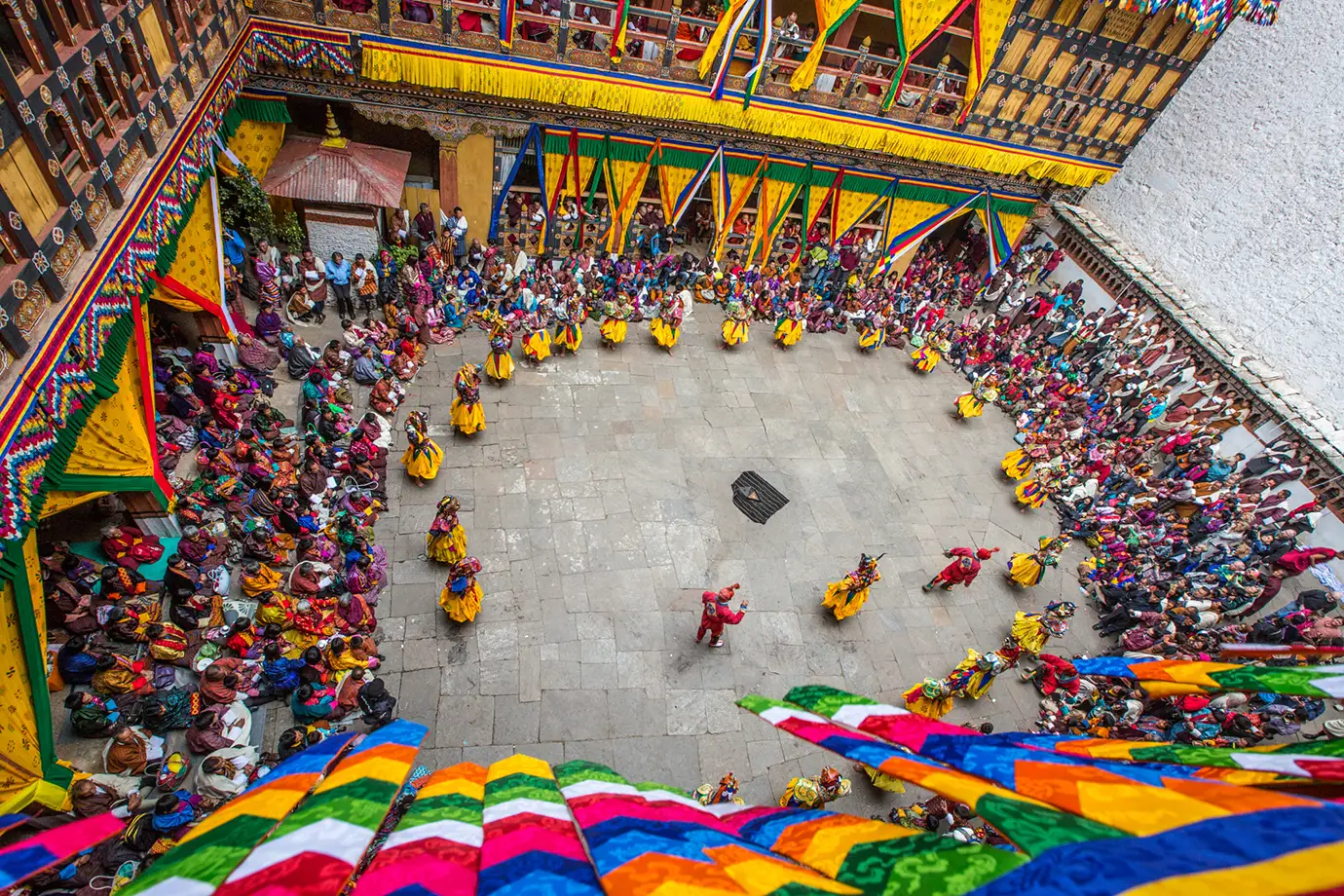
The unveiling of the giant Thongdrel happens on the final day. Workers lower the massive silk scroll before dawn. Seeing this scroll cleanses a person of all sins. Thousands of people wait in line to touch their foreheads to the fabric. The scroll goes back into storage before the sun rises.
Reasons to attend Paro Tsechu
- Location: Rinpung Dzong, Paro District.
- High Point: Unfurling of the world’s largest Guru Rinpoche Thongdrel.
- Atmosphere: Vibrant, crowded, and deeply spiritual.
- Photography: Excellent views of the Dzong and the valley.
- Convenience: Located near the international airport.
Thimphu Tsechu festival
Thimphu Tsechu takes place in the capital city during the autumn. The 2026 dates are September 21 to September 23. The Tashichho Dzong hosts the event in its large courtyard. This Dzong serves as the King’s office and the seat of the head monk.
Large crowds from rural areas travel to the city for this event. Many families save money all year to buy new clothes for Thimphu Tsechu. The festival features the famous Black Hat Dance. Dancers wear large black hats and perform spinning movements. This dance purifies the land and subdues demons.
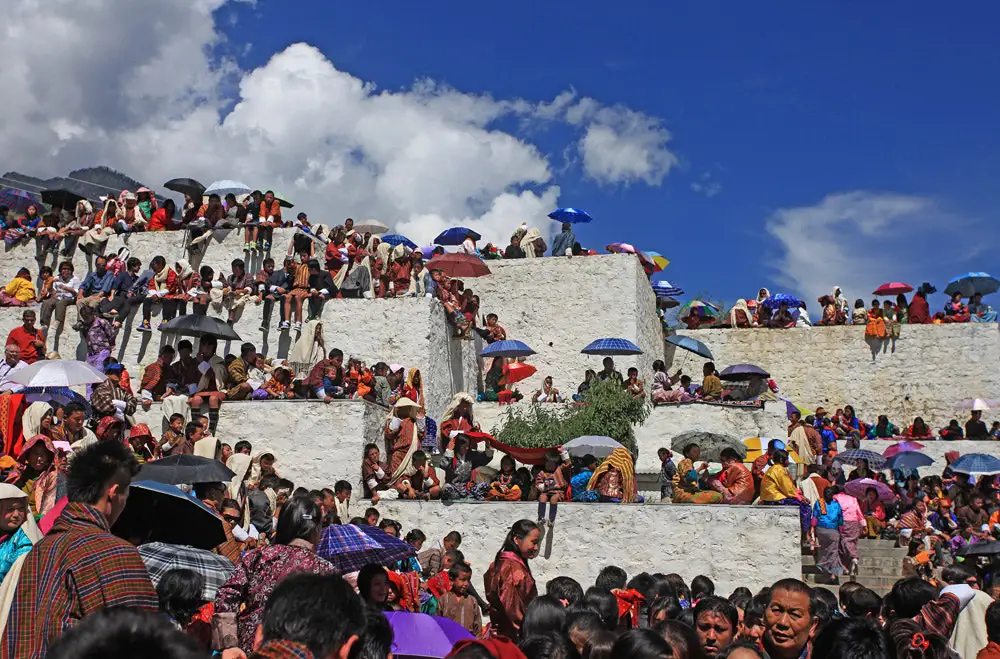
The Thimphu Tsechu also includes traditional folk songs performed by women. They wear colorful silk kiras and sing in praise of the King and the country. Vendors set up markets near the Dzong to sell food and souvenirs.
| Thimphu Tsechu Details | Key Information |
| Venue | Tashichho Dzong courtyard |
| Typical Month | September or October |
| 2026 Dates | September 21 – September 23 |
| Core Symbolism | National unity and spiritual protection |
| Cultural Events | Archery competitions and street markets |
Punakha Drubchen and historical reenactment
Punakha Dzong sits at the meeting point of two rivers. It hosts the Punakha Drubchen in late February or early March. The 2026 Drubchen runs from February 24 to February 26. This festival commemorates a 17th-century military victory.
Zhabdrung Ngawang Namgyal unified Bhutan during that time. He defended the country against Tibetan invaders. Local men dress as Pazap warriors for the celebration. They wear red armor and carry swords. They reenact the battle scenes in the Dzong courtyard.
The Punakha Tsechu follows the Drubchen. The 2026 Tsechu dates are February 27 to March 1. This event features the same mask dances and Thongdrel ceremony as other regions. Visitors appreciate the warm weather in the Punakha valley during this time.
Bumthang spiritual festivals
Bumthang serves as the religious heart of Bhutan. Many ancient masters meditated in its valleys. The region hosts small and intimate festivals. The Jambay Lhakhang Drup remains the most unique event in Bumthang.
Jambay Lhakhang dates back to the 7th century. King Songtsen Gampo built it to pin down the knee of a giant demoness. The festival honors Guru Rinpoche and commemorates the temple’s founding.
The festival features the fire blessing ceremony called Mewang. People jump through a tunnel of flames to cleanse their spirits. Another highlight is the Tercham, or Naked Dance. Sixteen men perform the dance at midnight while wearing only masks. This ritual distracts evil spirits and brings good luck for the harvest.
Other notable Bumthang festivals
- Kurjey Tsechu: Honors Guru Rinpoche’s body imprint on a rock.
- Ura Yakchoe: Features the display of a sacred relic in the Ura valley.
- Tamshing Phala Choepa: Celebrates the works of the treasure discoverer Pema Lingpa.
- Thangbi Mewang: Includes fire jumping and mask dances in a rural setting.
- Nimalung Tsechu: Known for the display of a large Guru Rinpoche tapestry.
Haa Summer Festival and nomadic traditions
The Haa Summer Festival celebrates the culture of the highland herders. It happens in July in the Haa Valley. This valley sits near the western border of Bhutan. The festival focuses on the nomadic lifestyle and traditional sports.
Visitors can see demonstrations of yak shearing and wool processing. Artisans show how to weave yak hair into durable tents. The festival features traditional games like archery and khuru (darts). Local people sing the “Haa-pi Ausa” to praise their yaks.
The food in Haa reflects the high altitude and cold climate. Hoentey dumplings remain a regional specialty. These dumplings use buckwheat dough and turnip leaf filling. Visitors can stay in local farmhouses to learn about daily life in the valley.
Black-Necked Crane Festival in Phobjikha
The Black-Necked Crane Festival occurs on November 11 every year. It takes place at the Gangtey Monastery. The festival celebrates the return of the endangered cranes to the Phobjikha Valley. These birds migrate from Tibet during the winter.
Buddhists consider the cranes as holy birds. Their presence signifies a healthy environment and brings good luck to farmers. The Royal Society for the Protection of Nature (RSPN) organizes the event. It raises awareness about wildlife conservation.
The highlight of the festival is the “Crane Dance”. Local schoolchildren wear bird costumes and perform graceful movements. The festival also includes environmental plays and folk songs. Visitors can watch the cranes through telescopes at the RSPN center.
| Crane Festival Details | Information |
| Date | November 11 (Fixed Date) |
| Location | Gangtey Monastery, Phobjikha Valley |
| Conservation Focus | Protecting the winter habitat of endangered birds |
| Participant Activity | Environmental education and community dances |
| Bird Characteristics | Black and white plumage with a red cap |
Best time to visit Bhutan for festivals
The timing of a Bhutan Tour depends on the specific celebrations you want to see. Most travelers choose spring or autumn.
Spring festival season
Spring runs from March to May. This season offers blooming rhododendrons and green valleys.
- Punakha Tsechu: Late February or early March.
- Paro Tsechu: Late March or early April.
- Rhododendron Festival: April at Lamperi Botanical Park.
- Ura Yakchoe: Late April or early May.
Autumn festival season
Autumn runs from September to November. This season offers clear skies and the best views of the mountains.
- Thimphu Tsechu: September or October.
- Gangtey Tsechu: Late September or October.
- Jambay Lhakhang Drup: Late October or November.
- Black-Necked Crane Festival: November 11.
What to expect at a Bhutan festival
Bhutan Festival provides a sensory experience unlike any other. The air smells of incense and burning pine branches. The sound of long horns and crashing cymbals fills the air.
Locals wear their finest silk ghos and kiras. These clothes feature intricate patterns and bright colors. Entire families gather in the courtyard for a full day of prayer and celebration. They often sit on mats on the ground and share food from home.
The dances move slowly and with deep purpose. Masked monks portray gods and demons in a battle between good and evil. Atsaras clowns wear red masks and carry wooden symbols. They make jokes and entertain the crowd between the sacred dances.
Bhutanese festival street food guide
Markets near the festival grounds sell local snacks and drinks. These foods offer a taste of traditional Himalayan ingredients.
Popular festival dishes
- Ema Datshi: Chilies cooked in a cheese sauce; the national dish.
- Momos: Steamed dumplings filled with meat or cheese.
- Kewa Datshi: Potatoes cooked with cheese and mild chilies.
- Phaksha Paa: Pork stewed with radishes and dried red chilies.
- Hoentey: Buckwheat dumplings filled with spinach and cheese.
- Red Rice: The staple grain served with every meal.
Traditional festival drinks
- Suja: Butter tea made with salt and yak butter.
- Ara: Strong local alcohol made from rice or maize.
- Bangchang: Fermented drink served in a bamboo container.
- Herbal Tea: Tea made from local mountain herbs.
Dress code and cultural etiquette
Respecting local rules remains essential for every visitor. These festivals represent sacred religious events.
Proper clothing for visitors
- Dress modestly when entering Dzongs and temples.
- Arms and legs must remain covered.
- No shorts, short skirts, or sleeveless tops.
- Remove hats and sunglasses inside religious complexes.
- Take off your shoes before entering a temple shrine room.
- Do not wear flip-flops in religious areas.
Rules for behavior
- Walk clockwise around religious structures like Chortens.
- Keep your voice low and remain quiet during prayers.
- Do not touch religious paintings or statues.
- Avoid pointing your feet at altars or monks when sitting.
- Ask for permission before taking a photo of an individual.
- Do not smoke or consume alcohol near religious sites.
Festival travel tips for tourists
Planning a Bhutan Tour during the festival season requires attention to detail.
- Book Early: Flights and hotels fill up months in advance for Paro and Thimphu Tsechus.
- Hire a Local Guide: A guide explains the meaning of the dances and the history of the Dzongs.
- Arrive Early at the Dzong: Festivals start early in the morning; arriving early ensures a good seat.
- Bring Essentials: Carry sunscreen, water, and a light mat to sit on.
- Pack Layers: Mountain weather changes quickly; carry a jacket for cold mornings.
- Bring Extra Batteries: You will take many photos of the colorful dances.
Bhutan festival dates 2026 and 2027
The following tables list the expected dates for major Bhutan Festivals in 2026 and 2027. These dates depend on the lunar calendar and may change slightly.
Bhutan festival calendar 2026
| Festival Name | Location | Dates 2026 |
| Punakha Drubchen | Punakha Dzong | February 24 – February 26 |
| Punakha Tsechu | Punakha Dzong | February 27 – March 1 |
| Paro Tsechu | Rinpung Dzong, Paro | March 29 – April 2 |
| Rhododendron Festival | Lamperi, Thimphu | April 13 – April 14 |
| Ura Yakchoe | Ura, Bumthang | April 28 – May 2 |
| Kurjey Tsechu | Bumthang | June 24 |
| Thimphu Tsechu | Tashichho Dzong | September 21 – September 23 |
| Gangtey Tsechu | Phobjikha | September 24 – September 26 |
| Jambay Lhakhang Drup | Bumthang | October 26 – October 29 |
| Black-Necked Crane Festival | Phobjikha | November 11 |
Bhutan festival calendar 2027 (Tentative)
| Festival Name | Location | Dates 2027 (Tentative) |
| Punakha Drubchen | Punakha Dzong | February 13 – February 15 |
| Punakha Tsechu | Punakha Dzong | February 16 – February 18 |
| Paro Tsechu | Rinpung Dzong, Paro | March 18 – March 22 |
| Rhododendron Festival | Lamperi, Thimphu | April 22 – April 23 |
| Kurjey Tsechu | Bumthang | June 14 |
| Thimphu Tsechu | Tashichho Dzong | October 10 – October 12 |
| Gangtey Tsechu | Phobjikha | October 13 – October 15 |
| Black-Necked Crane Festival | Phobjikha | November 11 |
| Jambay Lhakhang Drup | Bumthang | November 14 – November 17 |
Bhutan Festival Tour itinerary ideas
A well-planned itinerary helps visitors see the best of Bhutan during the festival season.
5-Day Bhutan Tour (Paro Festival Focus)
- Day 1: Arrive in Paro. Drive to Thimphu and visit the Memorial Chorten.
- Day 2: Explore Thimphu. Visit Buddha Point and Tashichho Dzong.
- Day 3: Drive to Paro. Spend the full day at the Paro Tsechu, witnessing mask dances.
- Day 4: Early morning Thongdrel ceremony at Paro Dzong. Hike to Tiger’s Nest.
- Day 5: Departure from Paro International Airport.
7-Day Cultural Festival Tour
- Day 1: Arrival in Paro. Transfer to Thimphu and visit the farmers’ market.
- Day 2: Attend the first day of Thimphu Tsechu at Tashichho Dzong.
- Day 3: Drive to Punakha across the Dochula Pass. Enjoy Himalayan views.
- Day 4: Visit Punakha Dzong and the longest suspension bridge.
- Day 5: Drive back to Paro via Chimi Lhakhang (Fertility Temple).
- Day 6: Hike to Tiger’s Nest Monastery perched on a cliff.
- Day 7: Departure from Paro.
Responsible festival tourism
Practicing responsible tourism ensures that Bhutan’s Festivals remain sacred to local people.
Respect the religious nature of the event. Do not treat the festival like a tourist show. Designate visitor areas and avoid blocking locals’ views. If a monk or an elder walks by, give them the path and lower your head slightly as a sign of respect.
Support the local economy by buying from small vendors at the festival market. Choose hand-woven textiles and wooden crafts made by local artisans. Avoid haggling over small prices; the money supports families in rural valleys. Protect the environment by properly managing your trash. Carry a reusable water bottle and avoid leaving plastic at the festival site. Bhutan takes great pride in its pristine nature; every visitor should help keep it clean.
Frequently Asked Questions
Q: When does the Paro Tsechu happen?
A: The Paro Tsechu occurs in the second lunar month of the Bhutanese calendar. This usually falls in March or April. In 2026, it runs from March 29 to April 2.
Q: What makes Thimphu Tsechu famous?
A: Thimphu Tsechu represents the largest festival in Bhutan. It brings together thousands of people in the capital city. The festival features famous mask dances and the Black Hat dance at Tashichho Dzong.
Q: Are Bhutan Festivals worth visiting?
A: Bhutan Festivals offer an authentic look at the culture and religion of the kingdom. They provide some of the best opportunities for photography and cultural learning. Most travelers consider them the highlight of their trip.
Q: How long do Bhutan Festivals last?
A: Most Tsechus last for three to five days. The final day usually includes the most sacred rituals, such as the unfurling of the giant Thongdrel.
Q: Can tourists attend Tsechu festivals?
A: Yes, tourists can attend any public Tsechu festival. You must follow the dress code and stay in the designated seating areas. Attendance remains included in your daily tour price.
Final advice for your Bhutan Tour
Attending a festival requires patience and an open heart. The schedules follow the rhythm of the local community. Sometimes things start late or finish early. Embrace this slow pace. It embodies the country’s charm.
Observe the people around you. Notice how they pray and how they interact with their families. A festival provides more than just a dance performance. It shows the strength of the Bhutanese community. When you show respect, locals often share stories or snacks with you. This connection makes your visit memorable.
Prepare for high altitudes by staying hydrated. Some festivals happen in valleys over 3,000 meters above sea level. Walking and standing for long periods can tire you quickly. Take breaks and enjoy the fresh mountain air. Your guide ensures your comfort throughout the celebration.
Bhutan Festivals offer a glimpse into a world where faith and culture are one. By following the local rules and preparing well, you help protect these traditions for the future. You return home with blessings and a deeper understanding of the “Land of the Thunder Dragon.”