


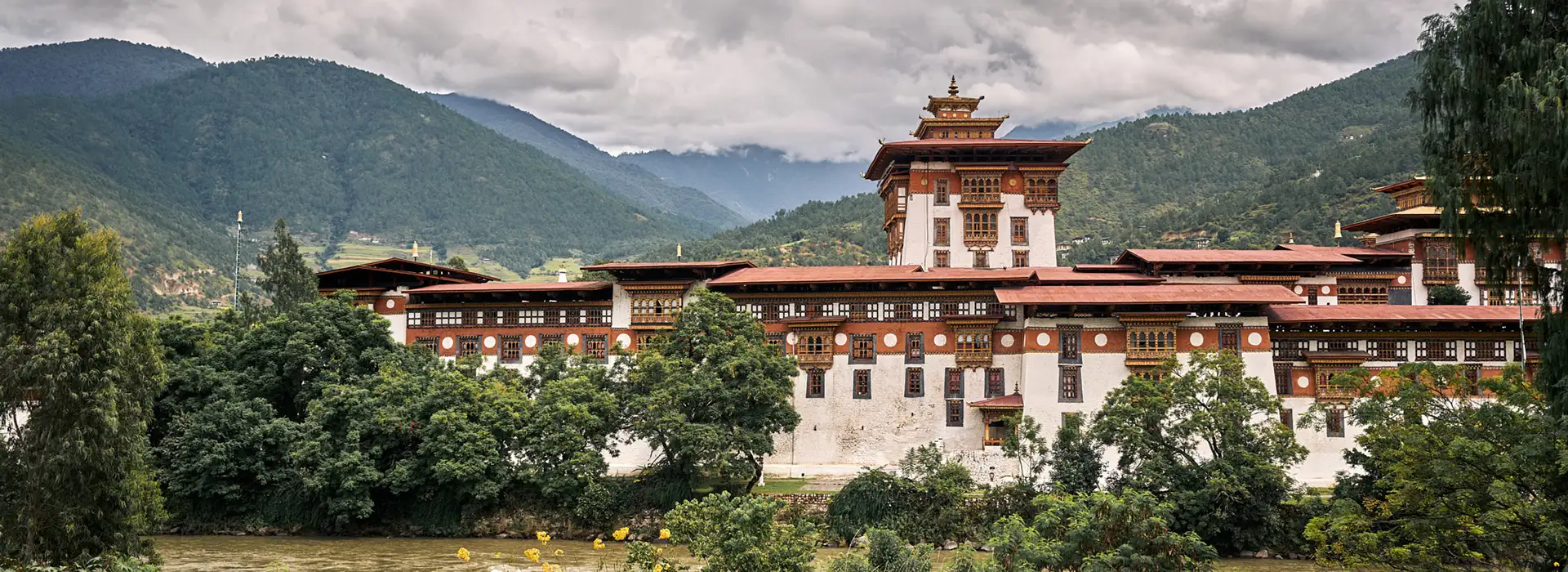

Bhutan Village Life represents the fundamental soul of the Himalayan kingdom. Small settlements house the majority of the nation’s citizens who follow ancient ways of life. High valleys and steep slopes provide the setting for a society built on Buddhist values and mutual support. Understanding traditional Bhutan lifestyle requires a close look at the buildings, spiritual practices, and agricultural cycles that sustain the culture.
Regional Variations in Bhutan Village Life
Geographic diversity shapes the way people live across the country. Every district develops its own style based on the weather and the height above sea level.
Western Highlands of Paro and Haa
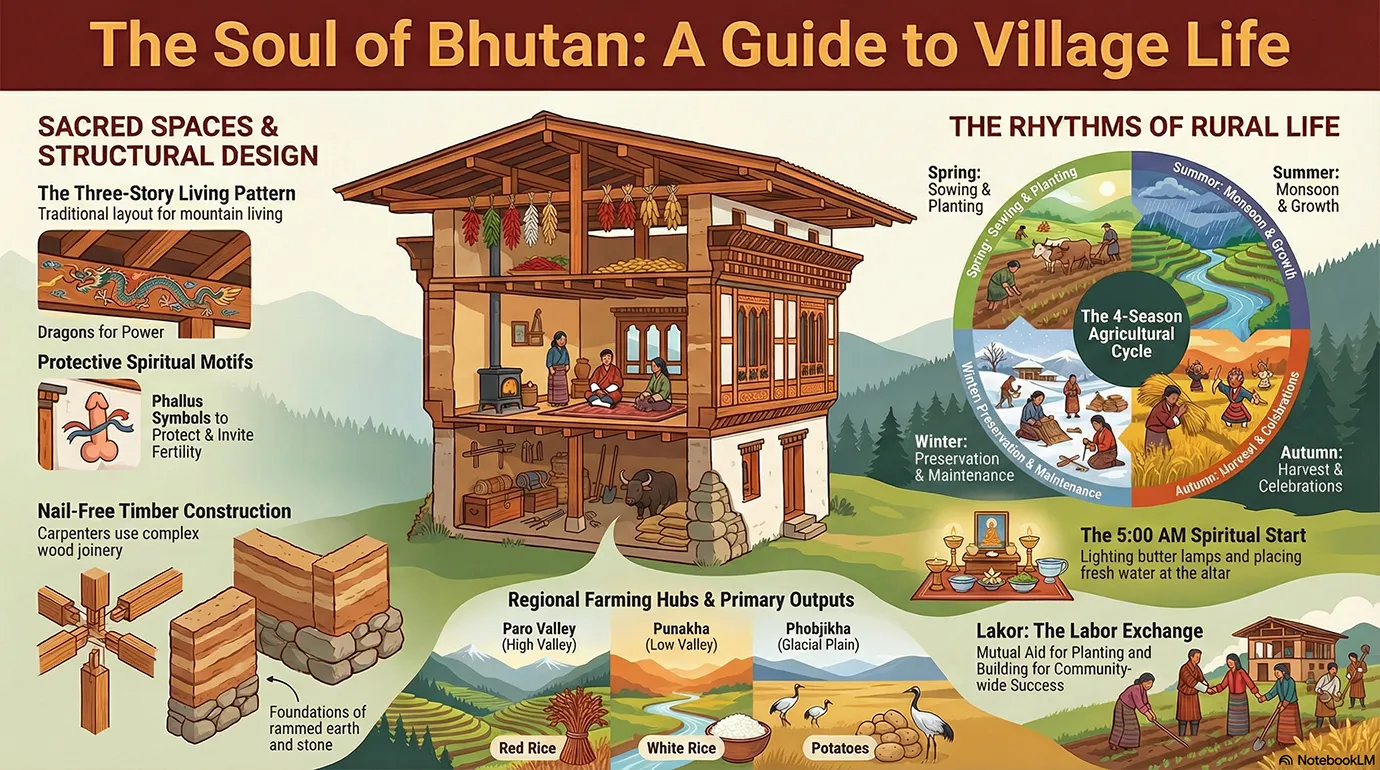
Paro Valley is a primary farming hub where red rice is grown across wide fields. Residents build houses from stone and timber near their apple orchards. The Haa Valley sits nearby and offers a secluded Bhutan Village Life experience. People in Haa focus on livestock and hardy crops such as wheat.
Warm Valleys of Punakha and Phobjikha
Punakha enjoys a lower elevation and warmer air. Farmers here produce two rice crops every year along with tropical fruits. The local Bhutan rural life centers on the riverbanks, where families tend their crops. Phobjikha Valley presents a different scene. This high glacial plain stays cold and snowbound during the winter months. People there protect the black-necked cranes that visit the valley.
Spiritual Centers in Bumthang and the East
Bumthang comprises four valleys and is the religious heart of the nation. Bhutan Village Life in this region involves dairy farming and buckwheat cultivation. Ancient temples stand among the green hills, reminding residents of their faith. Farther east, the villages of Merak and Sakteng are home to semi-nomadic herders. These Brokpa people move their yaks between high and low pastures as the seasons change.
| Region | Elevation Type | Primary Crop | Livestock |
| Paro | High Valley | Red Rice | Cows |
| Punakha | Low Valley | White Rice | Pigs |
| Phobjikha | Glacial Plain | Potatoes | Yaks |
| Bumthang | Middle Hills | Buckwheat | Dairy Cows |
| Haa | Alpine Valley | Barley | Yaks |
| Laya | High Frontier | Incense Herbs | Yaks |
Architecture and Structural Design of Farmhouses
Buildings in rural areas follow a specific pattern to survive the mountain climate. Most families live in large homes designed for multiple generations.
Materials and Building Techniques
Carpenters and masons construct houses using rammed earth, stone, and wood. Builders avoid nails and instead use complex joinery to hold the timber together. Thick walls provide insulation against the freezing winter nights. Pitched roofs feature wooden shingles held down by heavy rocks.
Internal Floor Functions
The layout of a typical house supports the family’s daily needs and those of their animals.
Historically, first-floor rooms served as shelters for cattle. Many families now use this space for storage to keep the living areas clean. Second-floor rooms provide space for the family to cook, eat, and sleep. The kitchen serves as the social center of the home. Third-floor spaces allow residents to store grains and dry their hay. A ladder made from a single tree trunk connects the levels.
Artistic Windows and Roofs
Timber windows frame the views of the surrounding hills. These windows display colorful paint and complex carvings. National rules require all modern buildings to keep these traditional styles. Sloped roofs allow rain and snow to slide off easily.
Sacred Symbols and Protective Motifs
Spiritual beliefs influence the appearance of every home. Residents use art to invite good luck and keep bad spirits away.
The Role of Phallus Paintings
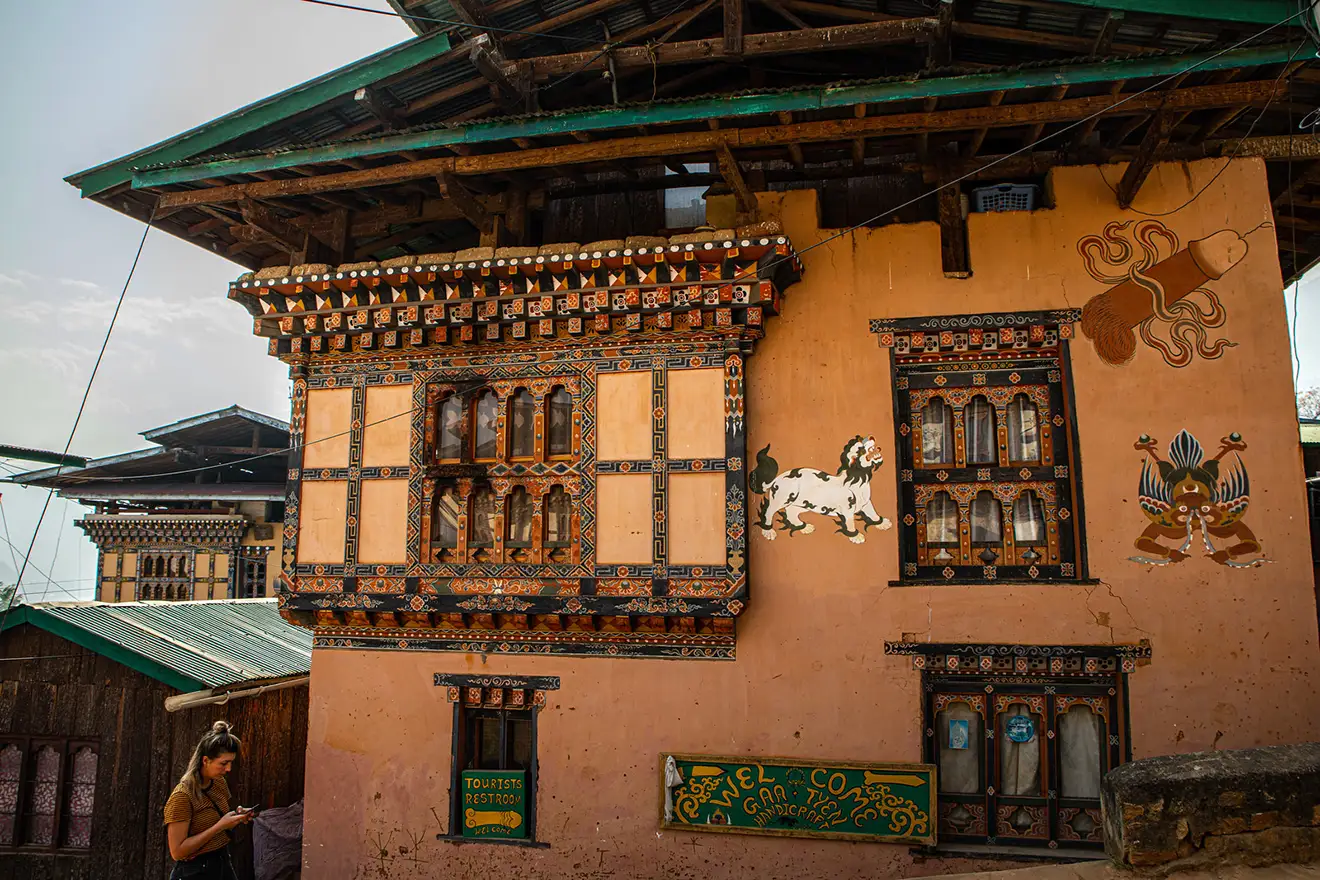
Brightly colored phallus symbols often appear on the outside walls of houses. These paintings represent the teachings of Drukpa Kunley, a famous saint. People believe these images protect the family and help them have many children. Tourists find these symbols unique to Bhutanese village life.
Dragons and Auspicious Signs
The Thunder Dragon serves as the national symbol and decorates many roofs and walls. Families also paint the Eight Auspicious Symbols of Buddhism. These include the lotus flower for purity and the endless knot for harmony. Every color and shape carries a deep religious meaning.
| Symbol Name | Visual Form | Spiritual Meaning |
| Druk | Dragon | Protection and Power |
| Lotus | Flower | Purity of Mind |
| Endless Knot | Tangled Lines | Interconnected Life |
| Dorje | Thunderbolt | Indestructibility |
| Painted Eyes | Large Pupils | Divine Watchfulness |
| White Flag | Tall Fabric | Spiritual Victory |
The Daily Schedule in a Rural Settlement
Rhythms of nature guide the Bhutan Village Life from dawn until dusk. Hard work and spiritual duty fill every resident’s hours.
Morning Chores and Altar Service
The day begins at 5:00 AM with the sound of farm animals. Women head to the kitchen to boil water for butter tea. Before breakfast, the family gathers at the home altar. They place fresh water in seven cups and light a butter lamp. Prayers and mantras set a calm mood for the morning.
Daytime Field Work
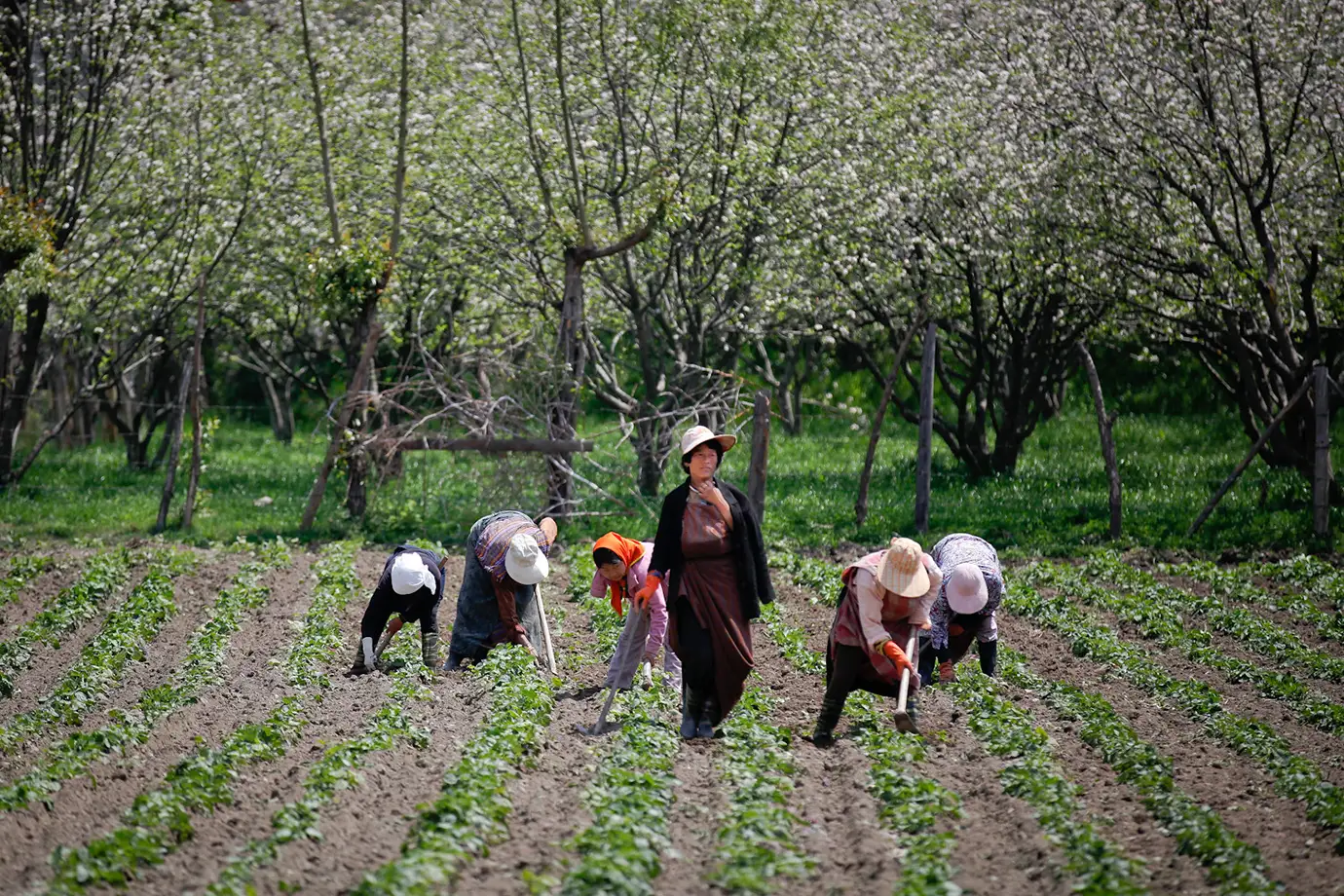
Farmers reach their fields by 6:30 AM to start their labor. They use simple tools, such as spades and oxen-pulled plows. The work includes digging irrigation paths and pulling weeds. Neighbors often join together to finish large tasks more quickly. This shared effort turns hard work into a social occasion.
Evening Gatherings and Meals
Families return home as the sun disappears behind the ridges. After feeding the cows, they sit around the kitchen fire. Dinner usually consists of red rice and spicy stews. Grandparents tell children stories about ancient spirits. The village becomes quiet early so everyone can rest for the next day.
The Agricultural Calendar and Seasons
Farming remains the most important activity in Bhutanese village life. The local calendar dictates when people plant and harvest their food.
Planting in Spring and Summer
Farmers plow the soil in February and March to prepare for seeds. They sow rice in small beds and wait for the sprouts to appear. When the monsoon rains arrive in May, the community transplants the seedlings to larger fields. Frequent rain during the summer helps the crops grow tall.
The Autumn Harvest
October brings the busiest time of the year for Bhutan Village Life. Whole families go to the fields to hand-cut the rice. They thresh the grain to separate it from the stalks. Residents offer the first portion of the harvest to the local gods. Red chilies are spread out to dry in the sun.
Winter Preservation
In colder months, people need to stay indoors and use their stored food. Farmers mend their tools and weave bamboo baskets. They process meat and cheese to last until the next spring. High-altitude villages often face deep snow during this period.
| Season | Months | Key Activity | Weather Impact |
| Spring | March – May | Sowing Seeds | Early Showers |
| Summer | June – August | Weeding Fields | Heavy Monsoon |
| Autumn | Sept – Nov | Harvesting Crops | Clear Skies |
| Winter | Dec – Feb | Storing Grain | Freezing Temp |
Traditional Foods and Local Ingredients
Dietary habits in Bhutan Village Life reflect the available resources of the mountains. Meals focus on nutrition and on staying warm to survive the cold.
The National Dish: Ema Datshi
Every rural home serves Ema Datshi frequently. Cooks simmer green or red chilies in a thick cheese sauce. They treat chilies as a vegetable rather than just a seasoning. Variations of the dish include potatoes or mushrooms.
Red Rice and Grains
Red rice serves as the main food for most citizens. It grows in high valleys and contains many minerals. In colder areas, people eat buckwheat pancakes or noodles. Barley provides flour for bread and ceremonial offerings.
Churned Tea and Rice Liquor
Beverages hold a special place in social meetings within Bhutan Village Life. Suja, or butter tea, is made by mixing tea leaves with yak butter and salt. The maker churns the liquid until it becomes frothy and warm. Ara is a traditional alcoholic beverage made from fermented grains. Hosts offer Ara to guests as a sign of welcome.
Education and the Lives of Rural Youth
Children in villages balance their time between learning and helping at home.
The Experience of Village Schools
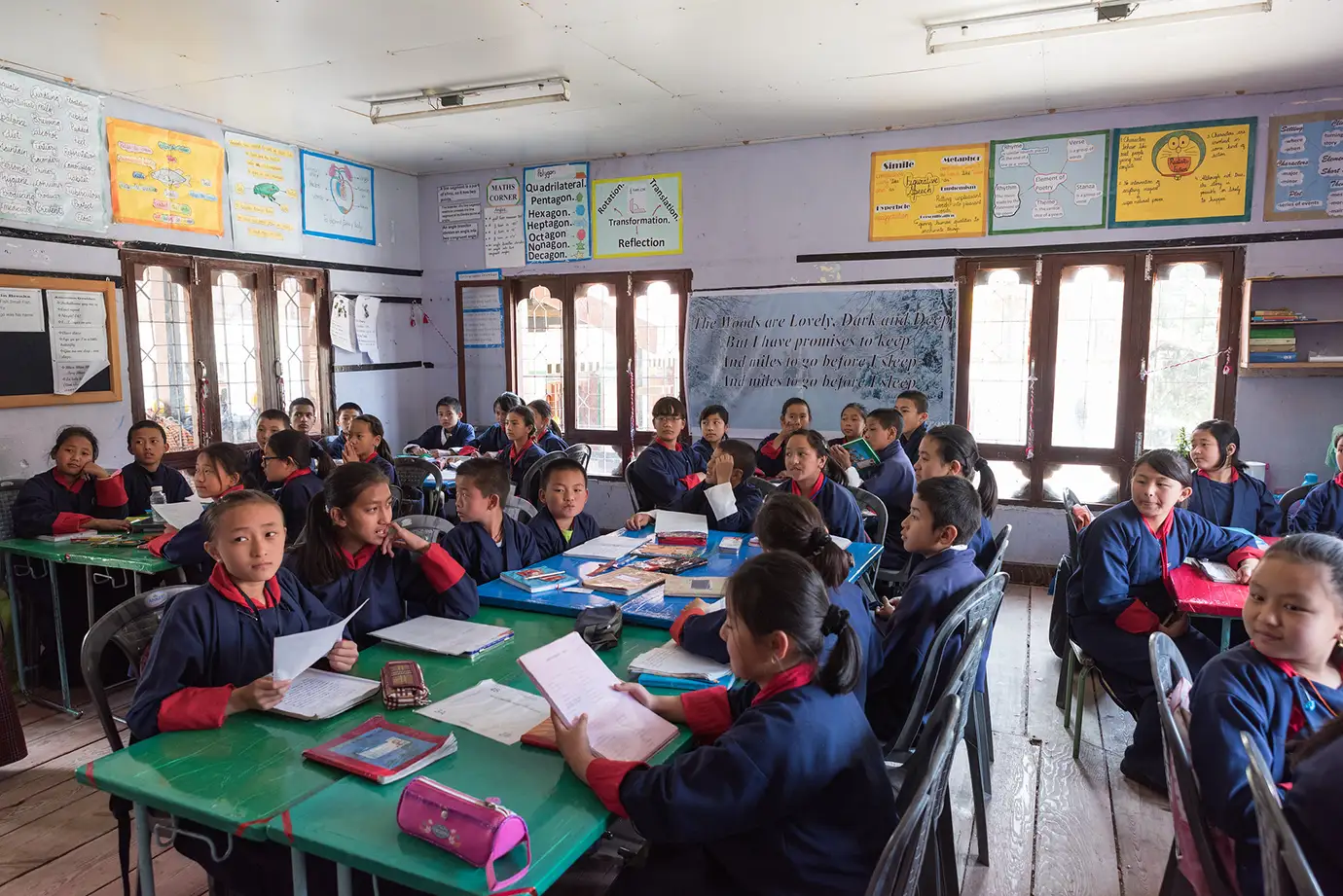
Students wear the national dress to class every day. The school day starts with an assembly and a Buddhist prayer. Teachers use English and Dzongkha for all lessons. Some children walk for two hours over mountain paths to reach the classroom.
Boarding Life and Bagos
Many schools provide hostels for students from faraway huts. In some districts, parents build simple huts called Bagos near the school. Older siblings look after the younger ones in these huts. They cook their own meals and study together without adult supervision.
Duties After the School Bell
In Bhutan, children are required to work on the farm after school. They herd the cows to the pastures and collect wood for the fire. Young people help carry the harvest and dry the chilies. These chores teach them how to support their families from a young age.
Spiritual Practices and Home Rituals
Faith guides the actions of everyone living in rural areas. Religion exists in the home just as much as in the temples.
The Domestic Shrine Room
Every farmhouse maintains a dedicated space for worship called the Choesham. Families place their most valuable religious items in this room. They keep statues of the Buddha and sacred books on the shelves. Guests must remove their shoes and hats before entering this room.
The Annual Lochoe Ritual
Once a year, families invite monks to perform the Lochoe ceremony. This ritual cleanses the home and brings good luck for the future. Neighbors bring gifts of milk and cheese to help with the event. The house fills with the smell of incense and the sound of drums.
Community Festivals and Dances
Villagers travel to local monasteries for Tshechu festivals. Monks wear masks and perform dances that represent Buddhist stories. Residents wear their best silk clothes to watch the events. These gatherings allow people from different valleys to meet and share news.
| Ritual Name | Location | Key Participant | Primary Goal |
| Morning Offering | Home Altar | Family Members | Daily Blessings |
| Lochoe | Farmhouse | Village Monks | Yearly Protection |
| Tshechu | Monastery | Masked Dancers | Spiritual Merit |
| Rimdro | Community | Local Lama | Disaster Prevention |
| Sangchoe | Outdoors | Head of House | Cleansing the Air |
Community Cooperation and Shared Labor
Rural life depends on neighbors’ willingness to help each other. Bhutan Village Life functions through a system of mutual aid.
The Lakor Labor Exchange
Residents participate in Lakor to finish big agricultural projects. When one family needs to plant rice, the whole village arrives to help. The host provides food and drinks but does not pay cash. This ensures that every field gets the attention it needs before the weather changes.
Building and Repairing Homes
When a fire or storm damages a house, the community works together to fix it. Men and women carry stones and pound them into the mud walls. They sing rhythmic songs to stay motivated during the heavy work. This tradition keeps the cost of living low and the bonds of the village strong.
Local Leadership and Governance
Elected leaders manage the needs of the rural blocks. The Gup serves as the head of the gewog and makes decisions about local projects. A Mangmi serves as the Gup’s deputy and assists with administration. Tshogpas represent individual villages and bring community concerns to the council. These leaders ensure that Bhutan Village Life receives government support for roads and schools.
Impact of Modern Infrastructure
Development brings significant changes to the way people live in remote areas. Modern tools and services improve the quality of life in Bhutan’s villages.
Electricity and Household Technology
Most villages now have access to hydroelectric power from mountain rivers. Families use electric rice cookers instead of wood fires for many meals. This reduces indoor smoke and protects lung health. Children use electric lamps to finish their homework after the sun sets.
Mobile Phones and Internet
Cell phone towers now stand on many mountain ridges. Even subsistence farmers use mobile phones to talk to relatives in the city. Internet access allows students to see the world beyond their valleys. Digital tools help residents check crop prices and weather reports.
Roads and Market Access
New farm roads connect isolated huts to the main highways. Farmers use power tillers to carry their vegetables to the market. This access allows them to earn more money by selling surplus grain. Better transportation makes it easier for people to visit doctors and hospitals.
Traveler Etiquette and Cultural Respect
Visitors must follow local rules to ensure they respect the Bhutan Village Life. Good manners help build trust between travelers and hosts.
Social Interactions and Greetings
People say “Kuzu Zangpo La” to say hello in a formal way. Using the word “la” at the end of a sentence shows respect. Travelers should use both hands when giving or receiving an object. It is impolite to point a finger at a person or a religious painting.
Behavior Inside Temples
Remove shoes and hats before stepping into a sacred building. Wear clothes that cover the shoulders and the legs. Always walk clockwise around religious monuments. Ask for permission before taking a photo of a monk or an altar.
Homestay Guidelines
Remove shoes at the farmhouse door. Accept a small taste of any food or tea that the host offers. Avoid stretching your legs toward the family shrine. A simple smile works better than loud talking in a quiet home.
| Action | Recommended Behavior | Reason |
| Greeting | Say “Kuzu Zangpo La” | Shows Politeness |
| Giving | Use Both Hands | Demonstrates Respect |
| Walking | Go Clockwise | Follows Tradition |
| Photography | Ask First | Respects Privacy |
| Sitting | Cross Your Legs | Avoids Offense |
| Trash | Carry It Out | Protects Nature |
Practical Preparation for Rural Tours
Planning a visit to experience Bhutanese village life requires the right gear and mindset. Travelers should prepare for basic conditions and changing weather.
Packing for the Mountains
Bring many layers of clothing to stay warm. A waterproof jacket protects against sudden summer rain. Sturdy boots allow for safe walking on muddy village paths. Pack a power bank to charge electronics when electricity is unreliable.
Choosing Appropriate Gifts
Rural families appreciate small tokens of friendship. Practical items like tea, biscuits, or warm socks make excellent gifts. For children, bring school supplies like pens and notebooks. Avoid giving money to individual children as it encourages begging.
Health and Safety Tips
Drink only bottled or filtered water to avoid stomach issues. Use sunscreen and sunglasses to protect against UV rays at high altitudes. Move slowly to reduce the risk of altitude sickness if you visit high-altitude valleys. Carry a basic first aid kit with medicine for headaches and colds.
Conclusion: The Enduring Spirit of Bhutan Village Life
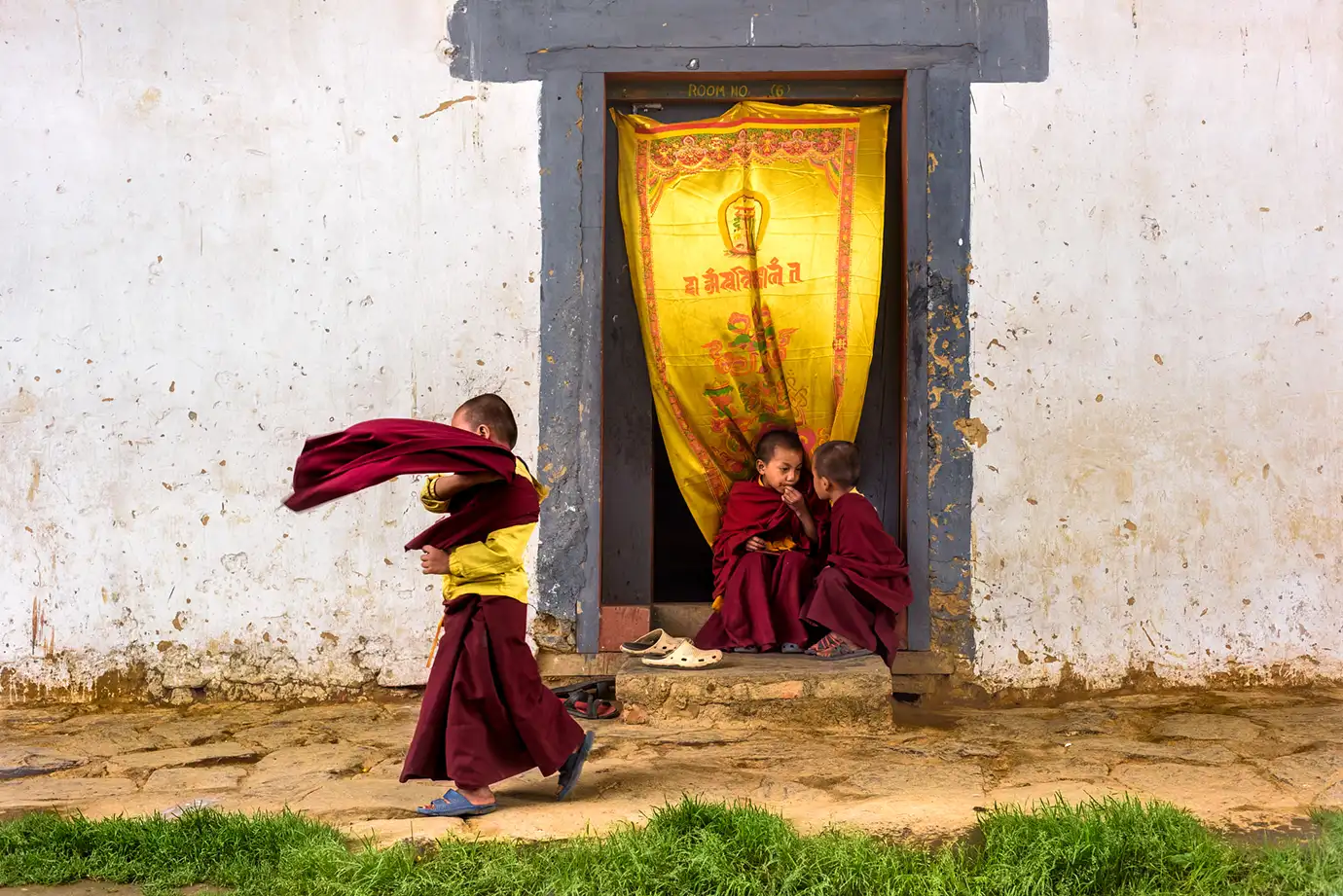
Bhutan Village Life continues to thrive because of the strong connection between the people and their land. While modern tools change the way families work, the core values of faith and community remain unchanged. Travelers who visit these rural areas witness a unique way of living that prioritizes happiness and harmony. By respecting local customs and participating in daily tasks, outsiders gain a deep appreciation for the Bhutanese spirit’s resilience. The future of the kingdom rests on its ability to balance new technology with the ancient traditions that define the mountains.