
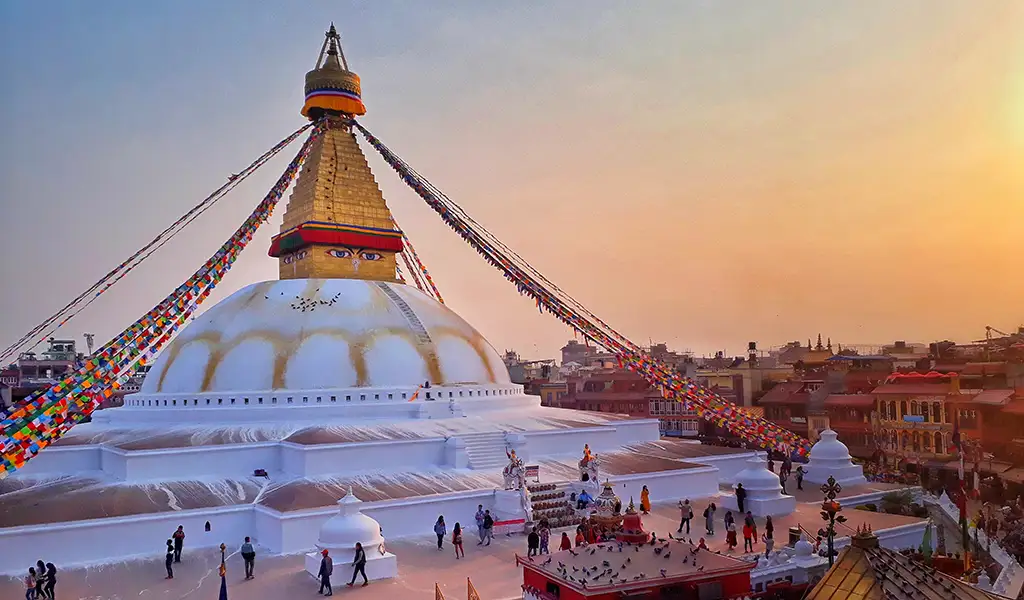
Boudhanath Stupa of Nepal is one of the largest Buddhist stupas in the world. It sits on the northeastern outskirts of Kathmandu. This massive white dome and the Buddha’s all-seeing eyes look over the city. The prayer flags flutter in the sky as the smell of incense fills the air. Lamas in maroon robes kneel and chant while pilgrims circle the dome, spinning the prayer wheels. The stupa is a spiritual site for Tibetan Buddhism and a sacred site for devotees. This site is more of a small holy town.
Despite the lively markets surrounding it, the stupa remains calm. You can spin prayer wheels and shop for thangkas, prayer beads, and butter lamps. Many devotees bring the yak butter lamp to lamp mingles and ring the monastery bells. Pilgrims move slowly as they circle the supa and chant mantras.
Historical Background
Archaeologists trace the origins of the Boudhanath Stupa over a thousand years ago in the Lichhavi period, around the 5th century. Local legends say that a Tibetan woman sold her chicken coop to fund the first shrine of the stupa. She led the foundation of the stupa with her modest savings. Over the centuries, many rulers expanded the stupa and made it what we know as the modern-day Boudhanath. King Jayasthiti Malla constructed a massive base while skilled artisans added the iconic dome and spire in the 14th century. However, there is no historical evidence to back this theory up.
Over the years, the stupa has undergone a series of restoration processes. Many kings and nobles have contributed to rebuilding the walls and reglazing the statues. After thousands of Tibetan refugees settled in Kathmandu in 1959, they restored the stupa and established monasteries around it. Each generation has left its imprint on the stupa. Today, the site consists of ancient bricks and fresh paint. Boudhanath is rich in faith and heritage, with intertwined legends and history.
Religious Importance
Boudhanath is one of the most sacred sites, especially for Tibetan Buddhists. Devotees believe it’s the house of holy relics and embodies the essence of Buddha. Kora, walking around the stupa, is an act of devotion, and each clockwise turn honors Buddha. You can spin the prayer wheels inscribed with “Om Mani Padme Hum” as you circle the dome. The Buddha’s eyes serve as a reminder to cultivate wisdom and compassion.
The stupa and its surrounding temples create a vibrant monastic community. Many gompas and nunneries line the plaza where monks and nuns pray, teach, and guide devotees. You can see a large gathering here on days like Buddha Jayanti and Losar. People of all faiths can witness and take part in these rituals. Many Hindus offer flowers and incense at the shrines. The stupa not only highlights its holiness but also reflects Nepal’s religious tolerance.
Cultural Significance
Boudhanath is almost like a home to Nepal’s Tibetan community, as streets around the stupa primarily house Tibetan refugees and their descendants. You can hear the Tibetan language in each corner; many residents wear traditional clothes. Schools teach the Tibetan language, history, and customs. Over time, this stupa has become a cultural center for exiled Tibetans.
Festivals are lively and colorful here, and lanterns glow across neighborhoods during Losar. People come together to dance to traditional music and celebrate their heritage. Thousands of devotees gather to light butter lamps and chant mantras during Buddha Jayanti. On Saga Dawa, which marks the birth and passing of Buddha, people cover the stupa with red cloth. Many local Nepali people join in these ceremonies and participate in prayers. Festivals foster a sense of community, resilience, and hope.
Boudhanath complex is a museum of art and artistry. Shops sell thangka paintings, wool rugs, prayer flags, and Tibetan musical instruments. Monasteries teach traditional arts like mandala creation and thangka embroidery. You can try sweet Tibetan tea and steaming momo at the street vendors. Bouddha, as a district, preserves Tibetan culture and Nepal’s diverse heritage, and is a symbol for hope and resilience.
Architectural and Symbolic Features
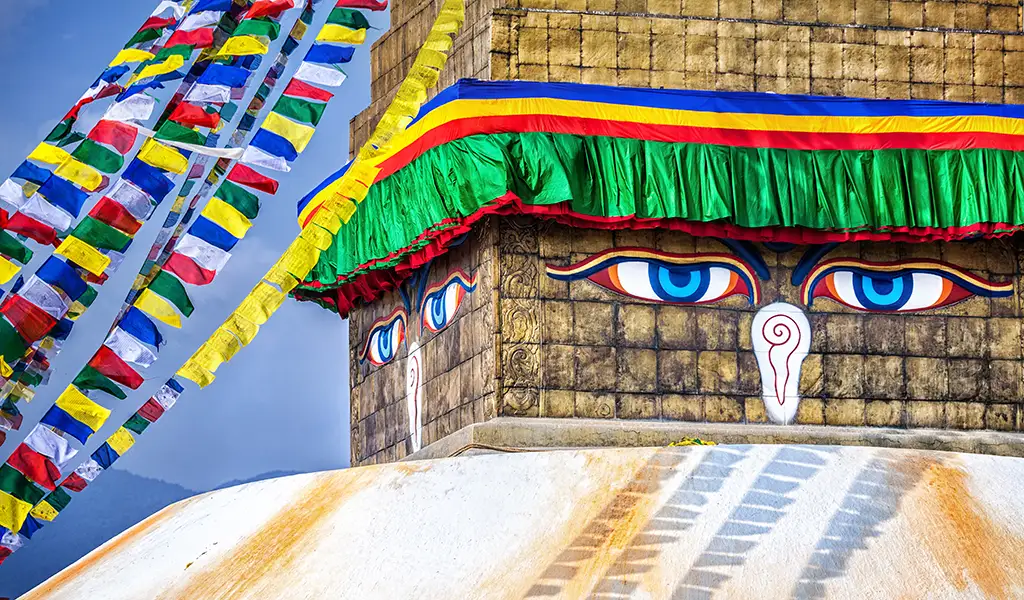
Bouddha’s architecture is a reflection of Buddhist teaching. The massive dome is on a three-tiered white base, with each tier symbolizing earth, water, and fire. A square tower with Buddha’s face painted on each side sits atop the base. The eyes of Buddha symbolize wisdom and look over the place. A curly symbol between each set of eyes resembles the number one, representing unity and Nepal. Above the tower, the stupa narrows into thirteen golden rings, making the steps to enlightenment. At the very top of the tower is a golden umbrella, a royal mark of protection and authority.
Many smaller shrines, statues, and decorative elements surround the main stupa. You can spin more than a hundred prayer wheels and see small sculptures of animals and deities along the walls. You’ll see clay lamps before the idols of Avalokiteshvara and other bodhisattvas. Each element of Boudhanath Stupa carries meaning and guides visitors toward peace and enlightenment.
Boudhanath Stupa – a UNESCO World Heritage Site
Boudhanath Stupa became a part of the Kathmandu Valley’s World Heritage Site listing in 1979. UNESCO recognizes this stipa for its universal value. It highlights the importance of the stupa in global culture and religion.
Boudhanath faced significant damage and lost its iconic spire in the 2015 earthquake. By late 2016, Boudhanath was back to its original state and reopened with a grand ceremony. The Nepal government, Buddhist organizations, and international donors funded the project. You can see the stupa in its original form in the present.
Visitor Experience
Boudhanath is an easily accessible place. A wide road leads directly to the large circular plaza surrounding the stupa. You can drive, take a rickshaw, park beside the temple, then get to the stupa’s base. Pilgrims walk clockwise while spinning prayer wheels and murmuring prayers, while monks and nuns move in procession. Monkeys, pigeons, and stray cats add a lively, playful touch to the site.
You’ll observe the local customs in Boudhanath. Remove your shoes before touching the whitewashed base and avoid touching the sacred surface. You must only walk clockwise. Dress modestly and be mindful of prayer wheels and worshippers. Many people visit the place in early mornings or late afternoons to avoid the heat. You can arrive early, before the crowds gather during festivals, to observe it without any hassle.
Guides help explain Buddhist symbols around the stupa. Monasteries like Shechan or Tharlam offer additional insight into monastic life. You can stop by the cafes and rooftop restaurants to relax while looking at the stupa. Boudhanath welcomes all visitors with peace, devotion, and cultural richness.
Social and Economic Impact
Boudhanath plays a central role in the local economy. You can buy prayer flags, khata, and religious souvenirs. Family-run teahouses and cafes serve Tibetan bread, butter tea, and steaming momo. These shops heavily rely on tourists and pilgrims for their business. Many Tibetan refugees have found work or started a business here, thanks to the steady flow of visitors. Taxi drivers and rickshaw pullers also earn from taking people to the stupa.
Culturally, the stupa unites people. Tibetan refugees, Sherpa, Newars, and international visitors visit the gompa. Young Tibetans learn traditions from elders, and Nepalese of different castes join in prayer. The stupa shares a message of compassion and influences local art, festivals, and even academia. Boudhanath sis a spiritual site nurturing both community and culture.
Challenges and Modern Dynamics
Boudhanath, like any other site in Kathmandu, faces the pressure of urban growth. Over the years, buildings and shops have started opening closer to the stupa. Traffic and pollution from Kathmandu often leave dust on the white dome. Many visitors worry that the growing number of souvenir stalls catering to tourists can distract from the sacred atmosphere.
The stupa depends on its visitor funds to maintain its structure and support the monastic community. Festivals and donations provide resources, and youth groups help pass down traditions. You must respect the space, avoid blocking the prayer path, and keep the grounds clean. These efforts help Boudhanath preserve its sacred calm.
Conclusion
Boudhanath Stupa is a symbol of peace and rich heritage, and you can learn its legend and history through its massive dome and flags. Many pilgrims and visitors circle the dome to keep the ancient tradition alive. People spin the prayer wheels inscribed with mantras, offering silent prayers. You’ll observe a place within an intertwined community and faith of Tibetan and Nepali people here. Amid the city’s noise, the stupa is a gentle reminder of devotion transcending borders.