


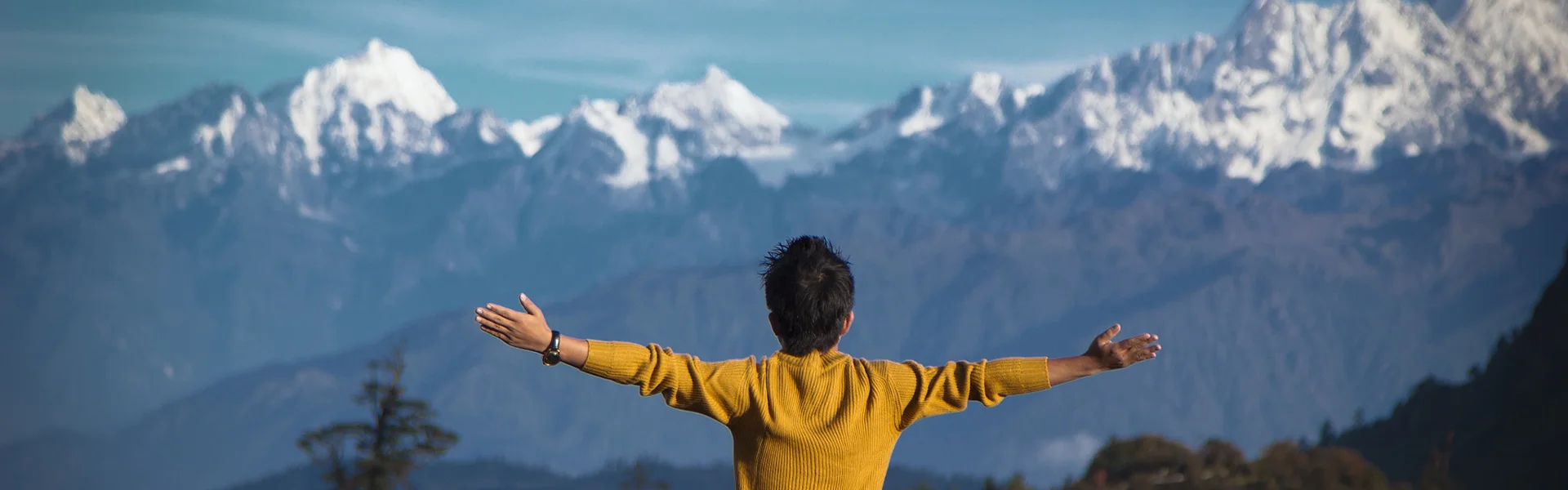

Dingboche is a remote village in the Himalayas. This village in the Khumbu region sits within the boundaries of Sagarmatha National Park. Perched at an altitude of approximately 4,410m, Dingboche lies in the broad Imja Valley surrounded by dramatic giant peaks and glacier-covered slopes. Dingboche offers panoramic views of the surrounding mountains. You will see the giant Ama Dablam, Lhotse, even the distant peak of Makalu, and the popular trekking peak of Island Peak. Dingboche’s open valley allows ample sunshine in the region, offering beautiful panoramic views.
Despite the harsh alpine setting, Dingboche is the key acclimatization stop on the Everest Base Camp trail. Many trekkers arrive here after several days of steady ascent. The village provides a place to rest and adjust to the altitude. Dingboche has many barley and potato fields. These crops imitate the local resilience against the cold and clever high-altitude farming. Prayer flags, crisp mountain air, and long mani stone walls carved with Buddhist mantras stay as the quiet reminder of the Sherpa culture of the region.
Dingboche is key for trekkers en route to Everest Base Camp and beyond. At roughly 4,410m, the effects of the elevation start to show. Most itineraries include a day or two of acclimatization to give trekkers time to adjust to the thinning air before continuing to higher destinations such as Lobuche and Gorak Shep.
Acclimatization is not the only important thing in Dingboche. It also acts as a junction connecting major Himalayan routes. The trails lead toward Chukhung and Island Peak Base Camp on the village’s eastern edge, attracting climbers for the 6,189m summit. Another path leads to Kongma La pass, one of the three passes above Dingboche. The trail crosses into the Lobuche valley via a dramatic alpine crossing.
Whether you’re doing the classic Everest Base Camp trek or branching off to explore remote valleys or summits, Dingboche serves its purpose. It tests your lungs and rewards you with paranormal mountain views.
Acclimatization and Health at High Altitude
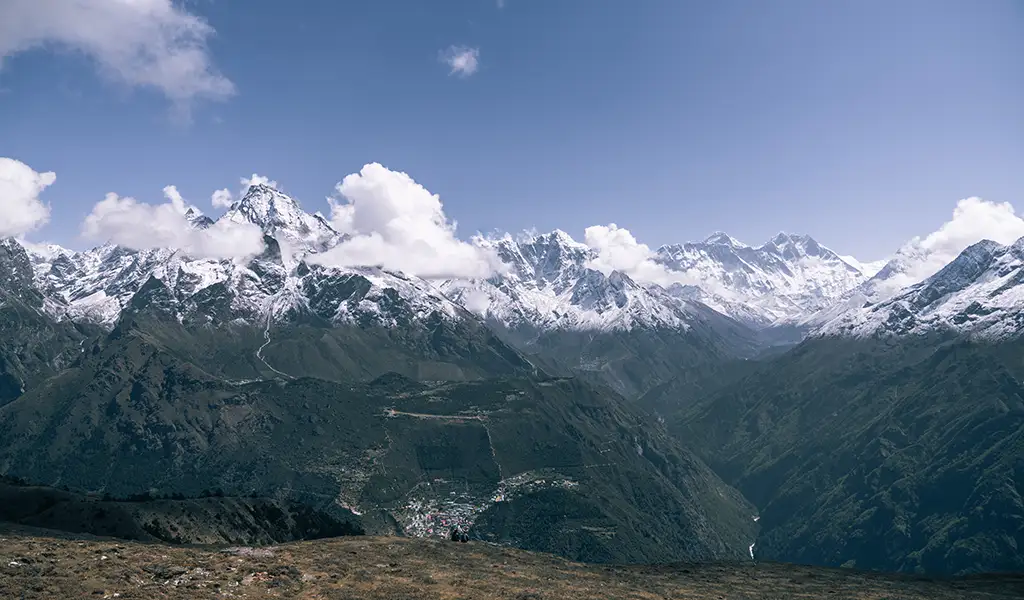
Dingboche at 4,410m is more than just a beautiful village; it is a key acclimatization stop before continuing to the Base Camp or other routes. The air pressure drops and oxygen is less in every breath as the elevation increases in the Khumbu region. Trekkers might get Acute Mountain Sickness (AMS) without proper acclimatization. AMS is a dangerous condition with symptoms like headaches, dizziness, fatigue, nausea, and loss of appetite. If these symptoms worsen, the only practical solution would be to descend immediately.
Most itineraries schedule one or two extra nights in Dingboche. It is the ideal place to rest and help your body adapt to the thinning air. You can follow the famous strategy of climbing high and sleeping low to help further acclimate. Ascend a few hundred meters on a short hike during the day, then return to Dingboche to rest. This strategy allows the body to increase red blood cells and oxygen levels overnight, helping with acclimatization.
Symptoms can appear in anyone. If you get severe headaches, vomiting, or confusion, immediate descent is the best solution. Dingboche is a 30-minute walk from Pheriche, where the Himalayan Rescue Association runs a seasonal aid post. Volunteer doctors offer check-ups, altitude advice, and daily educational talks on AMS prevention and recognition.
Preventing Altitude Sickness: Ascend gradually while trekking, allowing your body to adjust to the altitude with acclimatization days. Drink about 5 liters of fluid each day while hiking. Cold mountain air dehydrates the body quickly, which worsens altitude symptoms. Alcohol, cigarettes, and excess caffeine also cause dehydration, so avoid them at all costs. You can drink while descending, but prevent them from ascending.
Avoid pushing your body too much. Rest during rest days and the evenings in the lodges. You know your body better than anyone, so listen to it. If you experience any unusual symptoms, communicate clearly with your guide. You can take Diamox (acetazolamide) to help acclimate. But you must consult your doctor before using it on the trek. Diamox helps prevent symptoms but won’t treat severe AMS. It is better to understand that there is no definite medicine for severe AMS; descent is the only option.
Take time to acclimate in Dingboche. It is not a delay but an investment for your future days. Giving your body time to adjust improves your safety, increases your chances of finishing the trek successfully, and helps ensure an enjoyable adventure.
Things to Do and See in Dingboche
Dingboche offers a range of rewarding short hikes and experiences to make your time memorable. The village helps adjust your body to the altitude while offering plenty to explore.
Hike to Nangkartshang Hill: One of the most popular activities in Dingboche is hiking up to the Nangkartshang Viewpoint, also known as Nagarjun Hill. This viewpoint sits at around 5,083m, and you can reach it in about 3 hours from Dingboche.
Enjoy the panoramic views of Everest from behind Baruntse, the south face of Lhotse, and the giant Makalu in the distance. Ama Dablam is almost at eye level from the hill, and its glaciers are nearby.
Most trekkers hike this route to return to Dingboche by lunchtime, practicing the climbing high, sleeping low strategy. This hike is an excellent way to pump blood, strengthen your lungs, and help your body adjust to the days ahead.
Chukhung Village: The Chukhung Village is about 5 km up from Dingboche. Sitting at around 4,730m, towering peaks surround this small settlement. Chukhung is a quiet village with only a few teahouses hosting trekkers heading towards Island Peak. It is the starting point for climbing the Chukhung Ri at 5,550m. You will see breathtaking glaciers and peaks like Baruntse, Makalu, and Ama Dablam while climbing Chukhung Ri.
Even if you don’t hike to Chukhung Ri, simply walking to Chukhung village helps you to acclimate and offers beautiful views. The hike to Chukhung provides a quieter, remote path, adding another high-altitude exposure.
Dingboche Village: Wandering through the Dingboche village is a calming experience. The town has stone houses, teahouses, and fields full of crops with hand-built rock walls. These walls protect the barley and potato fields from wind and animals. The village sings the song of Sherpa resilience through the prayer flags, chortens, and mani walls.
You might spot yak trains or families tending to their farms and animals along the trail. You’ll come across some stupas and spinning prayer wheels in the main path, reflecting the Buddhist heritage of the region. You can also go to one of Dingboche’s cafes or bakeries. Cafe 4410, named after the village elevation, is popular for hot drinks, snacks, and film screenings. Watch a mountaineering documentary while sipping tea while staying amid a Himalayan peak.
Mani walls and Chortens: Mani walls are the rows of stone tablets carved with Buddhist mantras like “Om Mani Padme Hum”. These sacred mantras are a vital part of local spiritual life. Pass on the left side of the mani walls to show your respect.
Trekkers and locals leave small offerings or string prayer flags near chortens. Chortens are small stupas, often placed on the ridges or trail junctions. Chortens are white with golden spires and painted eyes to symbolize awareness and compassion.
Tengboche Monastery: While Tengboche Monastery is not in Dingboche, many trekkers pass through Tengboche village a day or two before reaching Dingboche. It is the largest monastery in the region and is a cultural highlight of the trek. The monastery has a rich, intricate interior offering a chance to witness Buddhist ceremonies or chanting monks. With the serene mountains in the background, Tengboche offers a spiritual pause before continuing to the high Himalayan region. You can see a 360-degree view of Everest, Lhotse, Nuptse, and Ama Dablam. You might even experience the Mani Rimdu Festival if you arrive on time.
Dingboche is not just a pause in the trek but a place of cultural and natural beauty and an ideal acclimatization stop. Here, you can prepare mentally and physically for the trekking days ahead.
Sherpa Culture and Daily Life in Dingboche
Dingboche is a vibrant village with a close-knit community. Dingboche has predominantly Sherpa communities, the ethnic mountain people of Nepal, who are popular for their climbing abilities and sincere hospitality. Dingboche offers a unique opportunity to observe Sherpa culture and the reality of high mountain life.
You will experience the rich hospitality of the community when you arrive at our teahouse. Lodge owners and staff do their best to make your stay enjoyable and welcome. Many locals are in the trekking industry, with some even climbing Mount Everest and supporting expeditions as guides or porters. People here speak basic English and are happy to chat with travelers. You can ask them about their local lifestyle. Most hosts enjoy sharing stories about their village and culture.
Life in Dingboche is routine and slow-paced. Families farm and cultivate crops like potatoes and barley in the summer. Stone walls border these fields to protect the crops from strong winds and to define the property lines. Many villagers keep yaks and naks (female yaks) for dairy products like butter and cheese. The livestock also serve as reliable pack animals along the trekking routes. They graze in nearby meadows with their bells chiming softly against the wind.
The Sherpa people have lived in these high altitudes since the 16th century. Their bodies have already adapted to the demanding environment. They have greater lung capacity and stamina at altitude as part of their ethnic mutation. They follow Tibetan Buddhism and its way of life. Their faith guides their daily life and values of kindness, mutual support, and respect for the natural world to help sustain life in these remote hills.
Prayer flags throughout the trail on rooftops and hillsides, as well as carved mani stones, symbolize the spiritual blessings to the land and anyone who passes by. Many locals begin their day by spinning a prayer wheel or chanting a small prayer at a shrine, seeking good fortune and safe travels.
Tourism shapes the local economy. Teahouses are family-run and stay busy preparing meals and hosting guests during peak seasons. Some villagers also work as guides and porters, leading different groups to the mountains and assisting on major expeditions. A few villages work with trekking companies or climbing agencies during the Everest season. Trekking and mountain expeditions create job opportunities for many people in the town. During slow seasons, people of Dingboche rely primarily on farming and trading. People here trade potatoes for rice or other goods from lower-altitude villages. Yak caravans travel down to trading centers with salt or daily products for trade.
Living in Dingboche comes with its own set of challenges. The trekking season is brief, and winter is long and freezing. Daily life demands resilience here. The sense of solidarity among the villagers makes Dingboche feel welcoming and warm. Hosts are kind, and sharing small interactions makes meaningful memories. The trek to Everest is not just about the mountains, but also the people living among them.
Accommodations and Facilities in Dingboche
Though remote and high in altitude, Dingboche offers many traditional mountain lodges. These lodges are more known for their warmth and utility than luxury. While accommodation is basic, you get essentials for rest in a harsh environment.
Teahouses and Lodges: Dingboche has many family-run teahouses scattered through the village. These lodges usually have a communal dining area and multiple compact bedrooms. Most rooms have two single beds with a pillow and a woolen blanket. Walls are thin wooden planks or stone made with minimal insulation, so the indoor temperature can also be cold. Many trekkers bring their sleeping bags rated for sub-zero temperatures to stay warm.
Shared bathrooms are common. These are mainly outside the main building, with squat-style toilets, a water bucket for flushing, and a sink sometimes. Newer lodges may have attached bathrooms, but they are still not common. Running water is frequently unavailable in the morning due to extreme cold conditions.
The communal dining hall is at the heart of each of the teahouses. Long wooden tables and benches line the wall, with climbing memorabilia, Tibetan fabrics, and local artwork decorating this hall. A central stove fires up in the late afternoon field by dried yak dung, as firewood is scarce and tree cutting is prohibited. Trekkers gather here for warmth, food, conservation, and share games, stories, or tea.
Food and Drink: Teahouse Menus include Nepali staples and a few international cuisines. The most popular meal option is dal-Bhat, a traditional Nepali plate with rice, lentil soup, and curried vegetables. Other meal options include noodle soups, fried rice, pasta, potato-based meals, and momo. Sherpa stew, a mix of hand-pulled dough, vegetables, and potatoes, is also popular in the chilly climate. Many trekkers drink garlic soup, a local remedy for altitude sickness.
You can have porridge, toast, eggs, or pancakes for breakfast. Tea is exceptionally popular in this high-altitude village. Black, milk, lemon-ginger-honey, and butter tea are everyday drink staples. Coffee is usually instant. Prices for food and drink typically increase with altitude. Since porters and yaks carry even the smallest supplies, like bottled water, prices rise, so budget accordingly.
Amenities and Services: Many lodges offer hot showers. These may be as-heated or bucket-style showers in basic stalls. Since the altitude is high, the air is cold, and staying wet can be dangerous, so dry yourself immediately after showering. Showers usually cost about $5-10 per use, and many trekkers skip showers altogether. Using wet sipes to freshen up is a popular alternative.
Solar panels or small generators generate limited electricity for Dingboche. Lodges usually charge a fee for charging devices, about $2-5 per device. You can charge the dining hall in the afternoons or when the solar batteries are full. We advise bringing a power bank instead to avoid dependency.
Cell service is patchy or nonexistent after crossing Pangboche. Many trekkers buy an Everest Link WIFI card for connectivity. These cards offer a data allowance through local routers. However, the connection is slow and unreliable due to weather and power limitations. Sending a message or checking an email takes much time. Don’t expect video calls or large downloads. You can use this time for digital detox and enjoying nature.
Dingboche has shops selling snacks, drinks, and trekking basics like sunscreen, lip balm, and batteries. There is no range of supplies, and prices increase with elevation. Your familiar chocolate bar can cost way more in Dingboche than its regular price. There are no banks or ATMs, and they don’t accept debit or credit cards, so ensure you have enough cash before departing Namche Bazaar.
Dingboche does not have its permanent clinic, but its nearby village, Pheriche, operates a seasonal medical post with volunteer doctors during Spring and autumn. Some local guides carry oxygen bottles or pulse oximeters. We conduct a helicopter evacuation during emergencies as it is the fastest option. Travel insurance covering high-altitude medical rescue is crucial for trekkers to protect themselves from financial burden.
Dingboche is a humble and beautiful village. Located at over 4,400m, it is one of the highest permanent villages in the trek. Although the lodges are modest and nights are cold, the communal dining hall, stories, and laughter make up for it.
Weather and Best Time to Visit
The weather is unpredictable in Dingboche. You should pack for any weather so you can tackle it.
Spring (March to May): Dingboche is pleasant in Spring. The temperature begins to rise after winter. Daytime temperatures typically rise from 5°C to 10°C on clear days with -10°C nights. Mornings have clear skies, and afternoons may bring clouds. Flowers are in full bloom during Spring. Though rhododendrons and wildflowers bloom at lower altitudes, Dingboche remains quite barren. Mountain views are vivid, and the visibility is excellent. You will also come across Everest expedition teams on the trail. Lodges are busy and energetic, and trails are vibrant with many trekkers.
Autumn (September to November): Autumn is the peak trekking season in Nepal. The air is clean and crisp after the monsoon rain. Early September may still get some rain or moisture, but by October and November, the weather stabilizes. Skies are deep blue, and visibility is the best compared to any other time of the year. Mornings are chilly, and afternoons are about 5-10°C. By late November, nighttime temperatures can drop to -15°C.
Many Nepali festivals fall during this time, making the environment more vibrant. You can enjoy the Mani Rimdu Festival at Tengboche Monastery for a deeper insight into the region’s Buddhist heritage. Accommodations fill up quickly as autumn is a peak season. Have our guide book your lodges in advance during busy weeks.
Monsoon (June to August): Monsoons overlap with summer in Nepal, while higher elevations get more mist and drizzle than heavy rain. The trail from Lukla to Namche is muddy and dangerous. Daytime temperature can range between 10 and 15°C, and nights are freezing. Clouds often block the mountain views, and fog is common, creating an overall atmosphere. Lower areas are also prone to landslides, and this trek is risky. Leeches are not an issue in Dingboche. Only a few trekkers choose this season.
Lodges might close or operate with limited staff. Positively, the landscape is lush and green, and the trails are quiet with almost no fellow trekkers, making it peaceful. If planning a monsoon trek, carry proper gear and be flexible with flight delays.
Winter (December to February): Winter is quiet, cold, and challenging in Dingboche. Daytime temperature maxes at 0°C, and nights can drop to -20°C or even lower. Snowfall is possible, resulting in blocked and risky trails. Many lodges close as lodge owners migrate to lower villages, limiting the accommodation. With correct gear like down jackets, thermal layers, and high-altitude sleeping bags, trekking in winter is possible. Your itinerary should include buffer days, as flight delays are common. On the plus side, trails are mostly empty, making it peaceful and ideal for those who seek solitude. Experienced and well-prepared trekkers can trek even in this harsh season.
For the best experience, go to Dingboche in Spring and Autumn. Stable weather, moderate temperature, and open services make these periods ideal. Visibility is excellent, and Dingboche offers a majestic view of Ama Dablam and the surrounding peaks.
Early March or late November, as trails are quiet with slightly colder conditions. These periods are ideal for those who want fewer crowds and moderate weather conditions. Regardless of when you go, check the weather updates daily and follow your guide’s recommendations. The mountain weather shifts quickly from calm to stormy, so pack layers of clothes for sunny afternoons to -0°C nights.
Dingboche is more than just a pathway to the Everest Base Camp; it is a crucial acclimatization stop, a cultural haven, and a glimpse into the daily life of the Sherpa people. Dingboche has everything from adjusting the body to high-altitude conditions, exploring viewpoints like Nangkartshang Hill, and simply sipping tea while enjoying the breeze and view. Dingboche is a core part of the Himalayan experience, leaving a lasting impression on every traveler.