



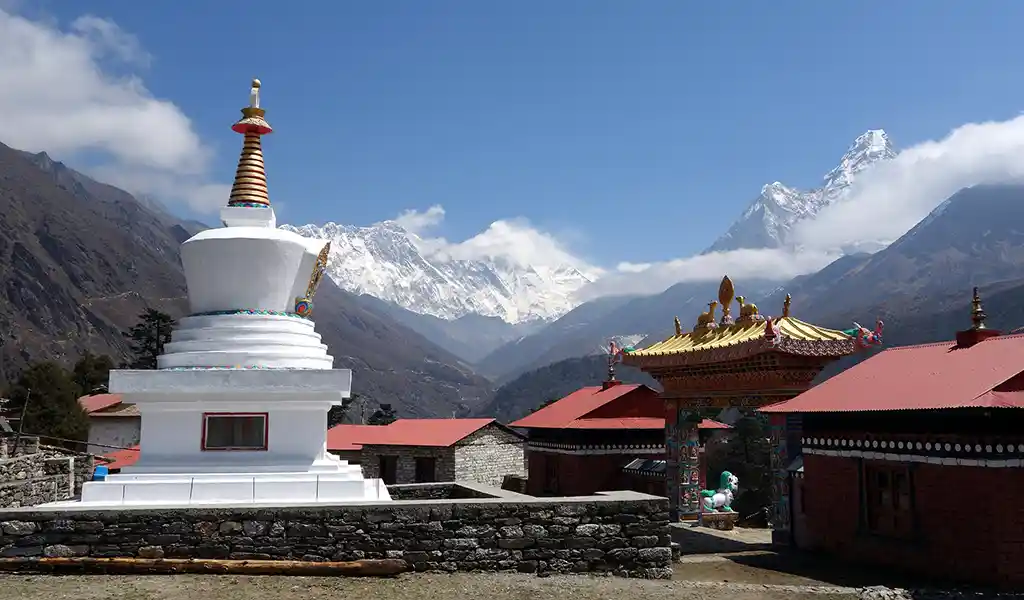
The Tengboche monastery, at 3,867m, is a famous and culturally significant site in the Khumbu region of Nepal. It is considered one of the best Buddhist monasteries in the area and a spiritual highlight for many trekkers.
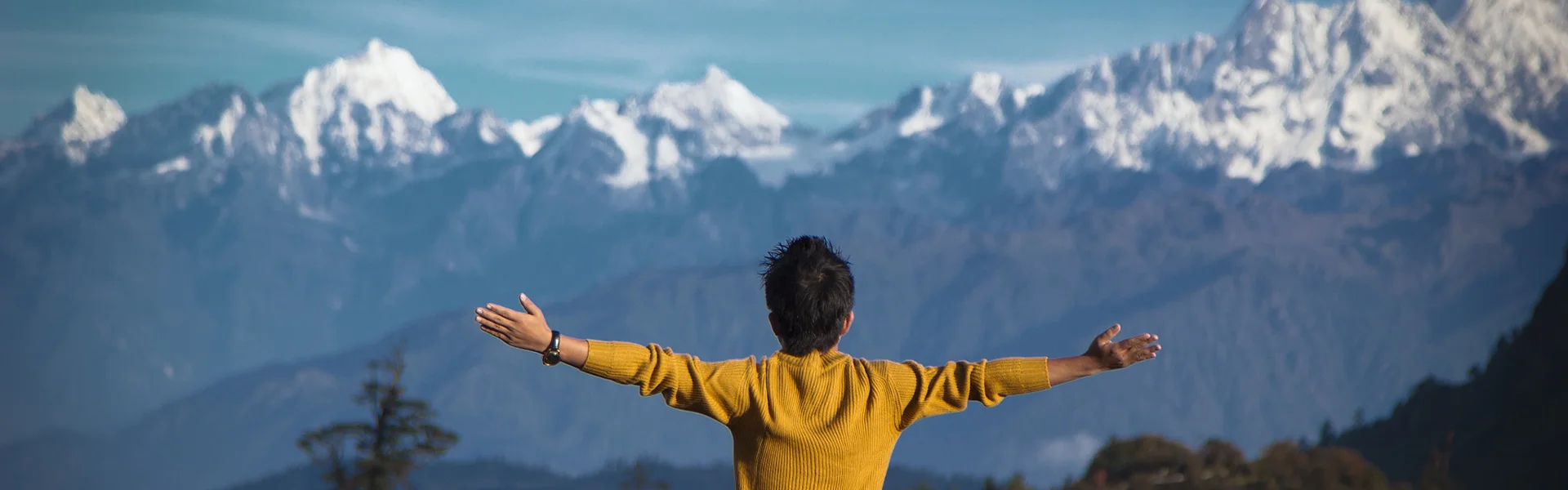
A steady uphill from Namche Bazaar to Tengboche will bring you to the famous Dawa Choling Gompa or Tengboche monastery. The high peaks of Everest, Lhotse, and Ama Dablam surround this site. Prayer flags adorn the trail leading to the monastery. Many trekkers arrive early in Tengboche to attend the evening prayer in the monastery. Trekkers can also watch the first light hit the peak of Ama Dablam.
Red rhododendrons bloom in the monastery during spring, creating a beautiful sight. Snow fills the surroundings during the winter. The monastery is vibrant during the Mani Rimdu festival in early November.
History of Tengboche
Lama Gulu founded the Tengboche Monastery in 1916. It was a result of following the Nyingma tradition of Tibetan Buddhism. Lama Gulu trained at Rongbuk Monastery in Tibet, bringing a spiritual connection to Tengboche. People believe this monastery stands on a sacred site where a hermit once meditated in the 17th century.
The 1934 earthquake destroyed the original building, devastating the entire village. The local villagers, with a Tibetan Carpenter, rebuilt the monastery. Artist Kappa Kalden also helped by painting murals on the monastery. Unfortunately, a fire caused by an electrical short, along with the ancient scriptures and artwork, burned it down. The then abbot, Nawang Tenzing Jangpo, was believed to be the reincarnation of Lama Gulu. He led a massive rebuilding effort with the help of the local community and international donors like Sir Edmund Hillary’s Himalayan Trust. They completed the present structure in 1993.
The visitor fees currently help maintain the monastery and support nearby schools and clinics. Tengboche is an essential stop for trekkers and climbers. Most visitors stop by the monastery to seek blessings before continuing their trip.
Tengboche monastery is one of the most cherished places on the trail due to its cultural, historical, and spiritual depth.
Visiting Tengboche Monastery
Visitors hike for about two days from Lukla to reach the monster. The trail from Namche Bazaar goes along a scenic trail across the Dudh Koshi River and climbs through pine and rhododendron forests. The monastery sits nestled among the trees with prayer wheels, mani stones, and prayer flags. Many villagers visit the monastery to show devotion.
The Gompa has a simple wooden window and a golden roof. They decorated the roof with the symbols of the first Buddha’s teachings: a Dharma wheel and two deer. A chestnut tree believed to be planted by Lama Gulu stands in the courtyard. People see it as the sacred link to the beginning of Tengboche and a living legacy of the monastery’s spirituality.
Architecture and Prayer Hall
A two-story Shakyamuni Buddha statue sits in the quiet and sacred main prayer hall. Monks sweep the floor and light yak butter lamps as a daily ritual. Colorful thangka paintings and murals of Buddhist deities and stories cover the hall.
There are statues of Avalokiteshvara, the Bodhisattva of Compassion, and Guru Rinpoche, Padmasambhava, on the central altar. The Buddha’s hand is raised in a teaching pose, reflecting wisdom and peace. Ceilings have cloth banners hanging on them with small bells.
A narrow staircase in the back leads to Guru Rinpoche’s shrine room. The upstairs holds more sacred statues and relics. Many visitors find this space exceptionally peaceful and moving.
Monks and Daily Life
Monks wear maroon robes and live by a quiet and disciplined rhythm. They wake up before sunrise for the morning chant with the sounds of long horns, drums, and cymbals. After the morning prayers, they study sacred texts and perform traditional rituals. Younger monks attend monastery schools where they learn the Tibetan language and Buddhist teachings under senior monks and teachers.
Monks cook, clean, and maintain the monastery grounds daily. Their meals include rice, lentils, and seasonal vegetables. An evening prayer follows, continuing the cycle of devotion.
Monks live in shared dorms above the prayer halls. They share each room with 2 or 3 monks. They welcome visitors with a warm smile or a quiet nod. Monks are more than religious figures; they are mentors, family guides, and traditional caretakers. A nunnery in Debuche works as a spiritual refuge for Sherpa women. Monks and nuns unite for rituals and festivals to continue the conventional culture.
Prayer Wheels and Devotion
The monastery is surrounded by carved stone prayer wheels and mani walls. Each wheel has “Om Mani Padme Hum” carved in it. Pilgrims and trekkers spin the wheels, walking clockwise, praying for the world. Stone slabs carved with prayers line the long mani wall in a continuous row. Locals and visitors offer butter lamps, incense, white khata scarves, or small rice grains at the temple altar to honor the Buddha and guardian deities. People believe these simple acts of spinning the wheels and offering a light bring merit and protection.
Visitors Etiquette:
Here are a few simple customs you can follow to keep the place peaceful as a visitor:
- Don’t enter the prayer hall without removing your shoes and hats.
- Cover your shoulders and knees; dress modestly,
- Walk clockwise around shrines and prayer wheels,
- Don’t make a loud noise, take photos with flash, or disrupt. Avoid them, especially during the prayer,
- Don’t step over the marked boundary of the altar or sacred spaces,
- Make a small donation to help support the monastery.
Spiritual Significance
Tengboche Monastery is considered the spiritual heart of the Everest region. It is a center of Tibetan Buddhism. Young monks study Buddhist teachings and Tibetan traditions here under senior monks and the abbot. Locals and trekkers visit the site, seeking blessings for protection and good fortune. Monks dedicate each day to preserving the centuries-old practices by chanting, meditating, and performing sacred rituals.
The Mani Rimdu Festival takes place every autumn. This 19-day festival is the highlight of the monastery’s calendar. Monks perform masked dances, intricate ceremonies, and community prayers celebrating the victory of wisdom over ignorance. Most locals attend the festival in the monastery with candlelight, music, and joy. Children play, and elders receive blessings and symbolic offerings like mani pills. Locals believe mani pills bring health and luck.
Monks light rows of butter lamps and play horns and drums during the morning and evening prayers as a component of their daily ritual. Each Friday, special prayers occur in the courtyard to bless families, corps, and livestock.
For Sherpa, the monastery is not just a religious side but a source of identity, guidance, and community. Visitors get a powerful glimpse into the spiritual life of the local people in the region from the monastery.
Role on the Everest Base Camp trek
Tengboche Monastery lies on the route of the classic Everest Base Camp trek. It is considered one of the most meaningful stops for trekkers. It lies between Namche Bazaar and Dingboche. Nearly every EBC trek itinerary includes a visit to this monastery. Autumn trekkers get to see the Mani Rimdu Festival as well. Most trekkers adjust their schedules to arrive on time for the morning and evening prayers. It is an essential stop for the Everest experience.
You can see the majestic Ama Dablam from the Tengboche monastery courtyard. You can also see Everest from the northern skyline. Most mountaineers stop here to light butter lamps and receive blessings so their further climb is easy. The first person to summit Everest, Tenzin Norgay, was also from this village.
Tengboche offers teahouses for the trekkers. Many teahouses welcome trekkers with warm meals and hospitality. Rooms are basic but comfortable with wool blankets and wood stoves. A few lodges offer solar showers and baked goods like biscuits or apple pie.
The trail climbs above the tree line into thinner air after crossing Tengboche. This village is peaceful, culturally prosperous, and offers an incredible view. Even luxury helicopter travelers stop here. Tengboche Monastery is a powerful blend of spiritual calm and mountain beauty.
Supporting the Monastery and Local Community
Small actions make a tremendous difference. Travelers are essential in protecting the Tengboche Monastery and the fragile surrounding ecosystem. Here are a few steps you can take to trek responsibly:
- Hire and pay the guides and porters fairly,
- Stay in family-run lodges and buy snacks/souvenirs from locally owned shops,
- Carry your waste in a ziplock bag to safely dispose of it in the waste collection center. Use a reusable water bottle instead of buying bottled water.
- Follow the rules issued by Sagarmatha National Park.
- Return the used batteries and bottles to the designated disposal pits.
- You can donate warm clothes or school supplies to local children, or contribute to monastery and village support funds.
Trekking and tourism support the Khumbu region’s schools, health posts, and conservation projects. You should travel mindfully so your trip leaves a positive impact.
Conclusion
Tengboche Monastery is a symbol of strength and peace in the Khumbu region. Despite the earthquake, fire, and harsh mountain life, it has continued to guide the area. The monastery teaches resilience, humility, reflection, and the power of faith.
Visiting the Tengboche monastery is one of the highlight memories for most Everest Base Camp trekkers. Tengboche offers an opportunity to reflect on life, insight, and peace. Trekkers feel nature’s beauty and the Sherpa tradition’s strength here. Many trekkers plan their trek in autumn to participate in the Mani Rimdu Festival. The sky is clear, and the trail is open during this time. Spring brings blooming flowers, and winter brings the icy trails.
Even if your visit is short, pack layers and sun protection to adjust to the changing mountain weather. The monastery and many lodges use solar panels to power lights and heat water. This practice helps reduce the use of firewood and supports a more sustainable future.
You can hire a local guide/porter to get local insight on the place. With their help, you can take part in ceremonies respectfully.
Tengboche Monastery is a calm and meaningful stop on the Everest trek. Surrounded by great peaks and colorful prayer flags, it’s a place where many trekkers pause to rest and reflect. Whether joining a prayer or watching the sunrise over Ama Dablam, visitors often find the experience memorable. With its rich culture, basic comforts, and incredible views, Tengboche stays with you long after the trek ends.