


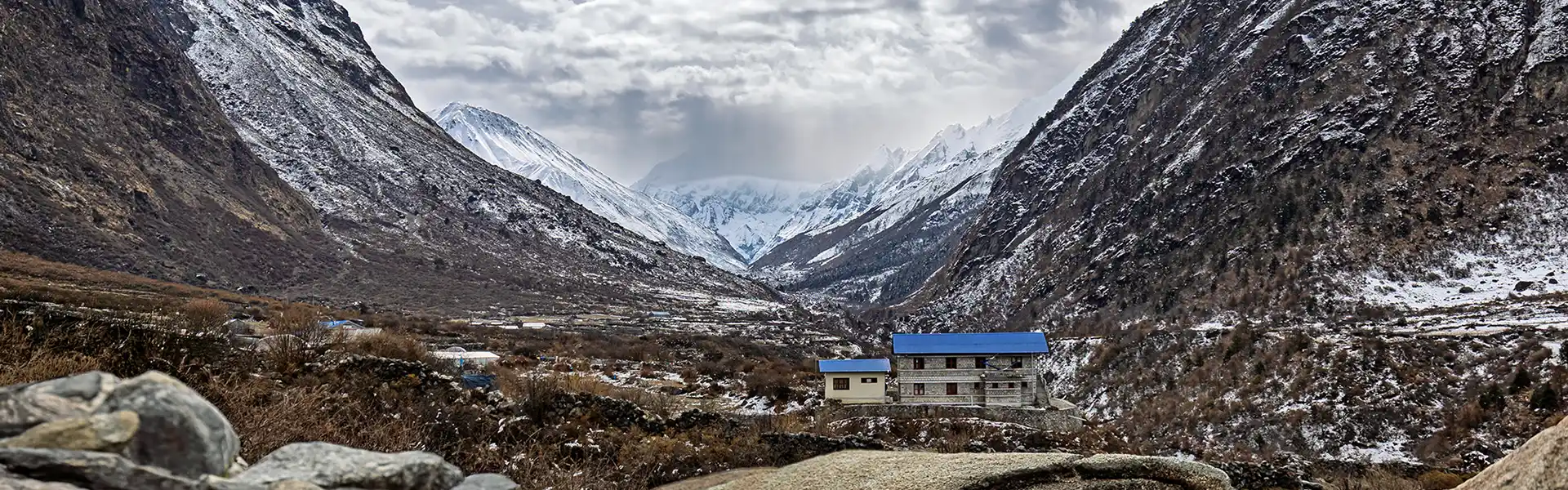

The Langtang Trek Cost usually ranges from USD 600 to USD 1,200 per person for a guided 6 to 10-day trek. Langtang ranks among Nepal’s best-value Himalayan treks because it starts by road from Kathmandu. Travelers avoid expensive domestic flights yet still reach high-mountain viewpoints. The total cost depends on guide service, porter support, transport type, meals, lodging, trek length, and service level. This guide gives a transparent cost breakdown in USD and NPR to help travelers plan their budget before booking.
Quick Answer: How Much Does the Langtang Trek Cost?
The Langtang Trek cost usually ranges from USD 600 to USD 1,200 per person for a guided 6-10 day trek. Budget travelers spend less with shared transport and basic teahouses. Private trips with a guide, porter, private jeep, and full support cost more. Main costs include permits, guide fees, transport, meals, lodging, porter service, and trail extras.
Langtang Trek Cost at a Glance
| Trek Style | Estimated Cost | Best For |
|---|---|---|
| Budget guided | USD 600-800 | Cost-focused trekkers |
| Standard guided | USD 800-1,100 | Most international travelers |
| Private guided | USD 900-1,300+ | Couples, families, private groups |
| Comfort-focused | USD 1,200-1,600+ | Private transport, better service |
Langtang costs less than Everest Base Camp because it does not require flights to Lukla. The trek also takes fewer days than many classic Nepal routes.
Why Langtang Gives Strong Value
The trek starts by road from Kathmandu. No domestic flight keeps the total cost lower. The route offers mountain views, Tamang culture, forests, and Kyanjin Gompa within 6 to 10 days. Teahouse costs remain lower than Everest-region prices. Trekkers avoid domestic flight costs and still reach high mountain viewpoints like Kyanjin Ri (~4,700 m) and Tserko Ri (~5,000 m). The scenery-per-dollar value stays strong compared with longer, pricier Nepal treks.
Permit Costs
| Permit | Foreigners | SAARC | Nepali |
|---|---|---|---|
| Langtang National Park | NPR 3,000 | NPR 1,500 | NPR 25 |
| TIMS Card | NPR 2,000 | NPR 1,000 | Check the current rule |
Nepal Tourism Board lists Langtang Trek as a route requiring a licensed guide and an agency-issued TIMS card under the revised TIMS provision. The trekking agency arranges both permits. Carry passport copies for permit processing. Always check current fees before departure.
Guide and Porter Cost
| Service | Daily Cost | Notes |
|---|---|---|
| Licensed guide | USD 30-40 per day | Senior/language specialists cost more |
| Porter | USD 20-30 per day | Carries luggage for 1-2 trekkers |
| Porter-guide | USD 25-35 per day | Combined role, suits solo/couples |
A good guide helps with permit checks, trail timing, weather decisions, teahouse booking, altitude monitoring, cultural context, and emergency coordination. Frame guide cost as safety and service value, not only as a rule.
Transport: Kathmandu to Syabrubesi
| Transport Type | Estimated Cost | Best For |
|---|---|---|
| Local bus | USD 8-15 one way | Budget travelers |
| Shared jeep | USD 20-40 one way | Most trekkers |
| Private jeep | USD 150-250+ one way | Couples, families, groups |
Syabrubesi serves as the usual trailhead. The road feels rough and long (6-9 hours). Shared jeep gives the best balance of cost and comfort. Private jeep suits groups who split the cost. Monsoon affects road conditions.
Food and Accommodation Cost
| Room Location | Cost per Night |
|---|---|
| Lower route villages | USD 3-8 |
| Mid-route villages | USD 5-10 |
| Kyanjin Gompa | USD 5-15+ |
| Meal | Estimated Cost |
| Breakfast | USD 4-7 |
| Lunch | USD 5-9 |
| Dinner | USD 6-12 |
| Tea or coffee | USD 1-4 |
Dal bhat gives the best value. Food prices rise with altitude. Imported snacks cost more. The rooms feel cheap because teahouses expect guests to eat there. Hot showers, Wi-Fi, and charging usually cost extra.
| Daily Budget Style | Food + Lodge per Day |
|---|---|
| Budget | USD 25-35 |
| Standard | USD 35-50 |
| Comfort-focused | USD 50-70+ |
Hidden Costs
| Extra Item | Estimated Cost |
|---|---|
| Hot shower | USD 2-5 |
| Battery charging | USD 1-5 |
| Wi-Fi | USD 2-5 |
| Boiled water | USD 1-4 |
| Snacks and drinks | USD 2-6 |
| Extra day on trek | USD 40-80+ |
| Tips (guide + porter) | USD 70-150+ |
Small costs add up fast. Carry enough Nepali rupees from Kathmandu. No reliable ATMs exist on the trail. Budget extra for showers, charging, snacks, drinks, and tips.
Sample 6-Day Budget
| Expense | Estimated Cost | Notes |
|---|---|---|
| Permits | USD 35-45 | Park + TIMS |
| Shared jeep transport | USD 50-80 | Round trip |
| Licensed guide | USD 180-240 | 6 days |
| Food and lodging | USD 180-270 | USD 30-45/day |
| Trail extras | USD 30-60 | Shower, Wi-Fi, and charging |
| Tips | USD 40-80 | Guide/porter |
| Total | USD 515-775 | Excludes gear and insurance |
Sample 8-Day Budget
| Expense | Guide Only | Guide + Porter |
|---|---|---|
| Permits | USD 35-45 | USD 35-45 |
| Shared jeep | USD 50-80 | USD 50-80 |
| Guide (8 days) | USD 240-320 | USD 240-320 |
| Porter (8 days) | — | USD 160-240 |
| Food and lodging | USD 240-360 | USD 240-360 |
| Trail extras | USD 40-80 | USD 40-80 |
| Tips | USD 70-120 | USD 70-120 |
| Total | USD 675-1,005 | USD 835-1,245 |
Cost by Itinerary Length
| Itinerary | Duration | Estimated Cost |
|---|---|---|
| Short Langtang Trek | 6 days | USD 550-800 |
| Standard Langtang Valley | 7-9 days | USD 700-1,100 |
| Langtang with Kyanjin Ri/Tserko Ri | 8-10 days | USD 800-1,300 |
| Langtang Gosaikunda Trek | 12-15 days | USD 1,100-1,800+ |
| Tamang Heritage with Langtang | 12-14 days | USD 1,000-1,600+ |
Langtang Trek Cost vs EBC and ABC
| Trek | Typical Cost | Main Cost Driver |
|---|---|---|
| Langtang Trek | USD 600-1,200 | Road transport, guide, food, lodging |
| Annapurna Base Camp | USD 700-1,400 | Longer route, guide, transport |
| Everest Base Camp | USD 1,200-2,500+ | Lukla flights, longer duration, higher trail costs |
How Group Size Affects Cost
| Group Size | Cost Impact |
|---|---|
| Solo traveler | Highest per-person cost (guide not shared) |
| 2 travelers | Guide and jeep costs are easier to share |
| 3-5 travelers | Best value for private service |
| 6+ travelers | Lowest guide and transport cost per person |
Seasonal Price Changes
Spring and autumn bring higher demand, better weather, and slightly higher costs during busy weeks. Guides and rooms book early in October. Winter offers lower crowds and good value for experienced cold-weather trekkers. Monsoon brings lower prices but wet trails, leeches, and road delays. The best-value months are late February, early March, late November, and early December. Off-peak shoulder weeks give the best balance of weather and cost.
How Much Cash to Carry
If meals are included in the package, carry NPR 15,000 to 25,000 for hot showers, charging, Wi-Fi, snacks, drinks, tips, and small emergencies. If meals are not included, carry NPR 35,000 to 50,000 or more, depending on trek length and spending style. Use Nepali rupees. Carry small notes. Do not rely on ATMs on the trail. Keep emergency cash separate from daily spending money.
How to Reduce Cost Without Cutting Safety
Smart Saving Tips
- Join a small group departure
- Use shared jeep transport
- Share a porter between two trekkers
- Eat dal bhat often (best value meal)
- Carry a reusable bottle and purification tablets
- Bring snacks from Kathmandu
- Rent a sleeping bag and a down jacket
- Carry a power bank (skip charging fees)
- Compare package inclusions carefully
Do Not Cut Costs On
- Licensed guide
- Permits
- Travel insurance
- Good boots and warm clothing
- Safe transport
- Emergency support
What to Check Before Booking
- Do permits come included (park + TIMS)?
- Does the guide hold a license?
- Do guide meals, insurance, and accommodation come included?
- Does the package include porter service?
- What transport type does the operator use?
- Do all trail meals come included?
- Do hot showers, Wi-Fi, and charging come included?
- What happens if road delays affect the itinerary?
- What cancellation or postponement policy applies?
- How much cash should you carry in addition to the package?
Why Cheap Packages Sometimes Cost More
Low package prices sometimes exclude meals, permits, or guide expenses. Some operators use public buses instead of jeeps. Some add extra fees later. Some do not include porter insurance. Compare the full inclusion list, not only the headline price. A good-value package includes a licensed guide, correct permits, safe transport, fair porter load, clear inclusions, emergency coordination, transparent tipping guidance, and no hidden costs.
Common Budget Mistakes
- Comparing prices without checking inclusions
- Forgetting the guide and the TIMS rules
- Carrying too little cash
- Ignoring tips for the guide and porter
- Forgetting the transport cost in the budget
- Not budgeting for showers, charging, and Wi-Fi
- Renting poor-quality gear to save money
- Buying snacks on the trail (higher prices)
- Skipping travel insurance
- Choosing a rushed itinerary only to save one day
FAQ
Q: How much does the Langtang trek cost?
A: A guided 6 to 10-day trek typically costs between USD 600 and USD 1,200 per person. Budget trips can cost less, while opting for a private trip will increase the total price. This range generally covers the basic logistics and professional support required for the journey. Selecting a plan that fits your budget ensures a smooth, enjoyable mountain experience.
Q: What permits do I need?
A: You must obtain a Langtang National Park permit for NPR 3,000 and a TIMS card for NPR 2,000. These permits are required for foreigners to legally enter the park. The Nepal Tourism Board also classifies Langtang as a route where a licensed guide is mandatory. Having these documents ready is essential for park entry and helps fund vital local conservation and infrastructure projects.
Q: How much does a guide cost?
A: A licensed guide usually costs between USD 30 and USD 40 per day. These rates can vary depending on the guide’s experience, language proficiency, and the size of your trekking group. Hiring a professional provides safety, local knowledge, and better communication throughout the trip. Their expertise is a valuable asset for navigating the trails and managing your daily logistics effectively.
Q: How much does a porter cost?
A: Hiring a porter typically costs between USD 20 and USD 30 per day. A porter helps reduce physical strain, making long walking days much more manageable and comfortable. This support allows you to focus on the trek rather than the weight of your gear. Using a porter is also a great way to provide employment and support the local economy directly.
Q: How much does transport cost?
A: Local buses cost USD 8-15, while shared jeeps cost USD 20-40 one way. For greater comfort, private jeeps cost USD 150-250 per trip or more. Your choice depends on your preference for speed, comfort, and budget. These transport options offer different ways to reach the Syabrubesi trailhead from Kathmandu.
Q: How much cash should I carry?
A: Carry NPR 15,000 to 25,000 if your meals are already included, or NPR 35,000 to 50,000 if they are not. Since there are no reliable ATMs on the trail, having enough cash is vital. This money covers daily extras such as snacks, hot showers, and device charging. It is always best to carry a little extra to handle any unexpected situations.
Q: Does Langtang cost less than EBC?
A: Yes, the Langtang trek is significantly cheaper than a standard Everest Base Camp trek. It avoids the high cost of domestic flights to Lukla and generally takes fewer days to complete. The overall logistics are simpler, making it a budget-friendly alternative for high-altitude trekking. You still experience incredible scenery and culture without the premium expenses of the Everest region.
Q: Does Langtang cost less than ABC?
A: Usually, yes, because Langtang typically takes fewer days and involves shorter road transport compared to the Annapurna Base Camp route. Both treks save money by avoiding domestic flights. However, the shorter duration of most Langtang itineraries often leads to a lower total cost. Your choice may depend on whether you have a preference for a specific mountain range.
Q: What hidden costs should I expect?
A: Be prepared to pay extra for amenities like hot showers, battery charging, Wi-Fi, and boiled water. You should also budget for snacks, drinks, tips for your staff, and potential delays due to weather or road conditions. These small daily costs can add up over the course of a week. Having a dedicated fund for these extras ensures you stay comfortable throughout your journey.
Q: Does a private trek give good value?
A: Yes, private treks offer great value for couples, families, and small groups who can share costs for jeeps and guides. These trips provide more flexible timing and personalized service tailored to your needs. Logistics often feel smoother when the schedule is built around your pace. It is an excellent way to have a more intimate and customizable experience in the Himalayas.
Q: What gives the cheapest option?
A: The most affordable choice is to join a small group and use shared transport. Staying in basic teahouses and eating local meals also helps keep your daily spending low. You should avoid unnecessary extras and stick to the essentials of the trail. While saving money is helpful, never compromise on safety essentials such as guides, permits, insurance, and quality trekking gear.
Final Advice
Langtang remains one of Nepal’s best-value Himalayan treks. Direct road access from Kathmandu, strong mountain scenery, Tamang culture, and flexible itinerary options keep the total cost lower than most comparable treks. The final cost of the Langtang Trek depends on guide services, porter support, transport type, meals, lodging, and trek length. Compare full inclusions. Carry enough cash. Choose safe service over the lowest headline price. A well-planned budget makes the trek more enjoyable and stress-free.