


Nepal hiking permits are not a single document. Most first-time hikers assume one permit covers all trails. That assumption causes serious problems at trail checkpoints before the hike even starts.
Different routes need different permits. Some routes only need a national park or conservation area entry permit. Many major Himalayan routes also require a licensed trekking guide and an agency-issued TIMS card. Restricted areas require a separate permit from the Department of Immigration, in addition to everything else.
Nepal Tourism Board (NTB) says that under a revised rule effective March 31, 2023, trekkers on many listed protected routes must travel with a licensed trekking guide and carry a trekking-agency-issued TIMS card. Route choice determines your full permit list. This Nepal Hiking Permits Guide covers every permit layer, current published fees, and the rules that apply to each trail type. Use it as your planning reference before booking any route.
Quick Answer: What Permits Do You Need for Hiking in Nepal?
Short on time? Here is a fast overview of hiking permits in Nepal:
- Many major Himalayan routes require a licensed trekking guide and a trekking-agency-issued TIMS card
- All national parks and conservation areas charge a paid entry permit
- Restricted areas require a special trekking permit from the Department of Immigration in Kathmandu
- Restricted areas also require a minimum group of two trekkers and a licensed guide at all times
- No restricted-area route in Nepal allows solo trekking
- Permit requirements depend entirely on the specific route you choose, not just the destination name
NTB’s TIMS-listed routes cover the Everest, Langtang, Helambu, Annapurna, Manaslu, Mustang, Dolpo, and Humla-linked regions. Read this full Nepal Hiking Permits Guide to match the right documents to your specific trail.
Why Nepal’s Permit System Feels Confusing
The permit system confuses trekkers because it operates across three separate layers. Each layer covers a different aspect of your trek and gets issued by a different authority.
- Layer one: the TIMS card and licensed-guide rule.
- Layer two: the national park or conservation area entry permit.
- Layer three: the restricted-area trekking permit, which only applies to specific border-adjacent zones.
Not all three layers apply to every route. The Poon Hill trek requires layers one and two. An Upper Mustang trekker needs all three. Knowing which layers your route requires prevents last-minute permit problems and checkpoint delays. This Nepal Hiking Permits Guide separates each layer clearly so you can build the right permit checklist for your specific trail before you arrive in Kathmandu.
Nepal Hiking Permits at a Glance
Use this summary table before reading the detailed breakdown.
| Permit Type | Who Needs It | Where It Applies | Where to Get It | Guide Required |
|---|---|---|---|---|
| TIMS Card | All trekkers on NTB-listed routes | Major Himalayan trekking zones | Registered trekking agency only | Yes — mandatory |
| National Park Permit | All visitors entering a national park | Sagarmatha, Langtang, Makalu-Barun, etc. | Tourist Service Center or entry gate | Depends on the route |
| Conservation Area Permit | All visitors to a conservation area | ACAP, MCAP, KCAP, Shivapuri-Nagarjun | Tourist Service Center, entry gate, or online (ACAP/MCAP) | Depends on the route |
| Restricted-Area Permit | All trekkers entering restricted zones | Upper Mustang, Upper Dolpo, Tsum Valley, Gorkha Manaslu | Dept of Immigration, Kalikasthan, Kathmandu | Yes — no exceptions |
TIMS Card and Current Guide Rules
TIMS stands for Trekkers’ Information Management System. The TIMS card tracks trekker movements, connects trekkers to licensed guides, and registers route details through NTB-approved trekking agencies. Under the 2023 rule revision, trekkers on many listed routes must travel with a licensed trekking guide. The guide must hold a valid NTB-recognized license. Agencies register the guide and trekker details together when issuing the TIMS card.
Current TIMS fees: NPR 1,000 for SAARC-country visitors and NPR 2,000 for all other nationalities. NTB now issues an eCard with a QR code through the supported agency process. Confirm fees with your agency before booking because NTB updates fee pages after official department verification. Trekkers who hire a licensed guide through a registered agency get the TIMS card as part of the agency booking process. Do not attempt to obtain a TIMS card without going through a registered agency for routes that require the guide rule.
Routes Covered by the TIMS and Guide Rule
NTB’s TIMS list includes routes across these major trekking regions. Always check the current NTB list to confirm your specific trail:
- Everest region: Everest Base Camp, Gokyo, Cho La Pass, Phaplu, and connected routes
- Langtang region: Langtang Valley, Gosaikunda, Helambu, and linked trails
- Annapurna region: Annapurna Circuit, Annapurna Base Camp, Mardi Himal, Ghorepani Poon Hill, and Dhampus routes
- Manaslu region: Manaslu Circuit and connected entry corridors
- Mustang region: Upper Mustang and Lower Mustang
- Dolpo region: Upper Dolpo and Lower Dolpo
- Humla-linked routes, Kanchenjunga, and other listed protected corridors
National Park and Conservation Area Entry Permits
Every national park and conservation area in Nepal charges an entry permit fee. Protected-area permits exist separately from TIMS. Trekkers on routes that enter a protected area need both permits. NTB says you may pay protected-area entry fees at the Tourist Service Center in Bhrikutimandap, Kathmandu, or at entry points, depending on the specific area.
Some conservation areas now support online payment through NTNC’s portal. Bring your passport and visa details to the permit counter. Some offices require passport-size photos. SAARC visitors and Nepali citizens pay lower rates. Children under 10 travel free in most listed protected areas.
Protected-Area Entry Fee Table
| Protected Area | Fee (Foreigners) | Fee (SAARC) | Children Under 10 | Online Option |
|---|---|---|---|---|
| Sagarmatha National Park | NPR 3,000 | NPR 1,500 | Free | No |
| Langtang National Park | NPR 3,000 | NPR 1,500 | Free | No |
| Annapurna Conservation Area (ACAP) | NPR 3,000 | NPR 1,500 | Free | Yes (NTNC portal) |
| Manaslu Conservation Area (MCAP) | NPR 3,000 | NPR 1,500 | Free | Yes (NTNC portal) |
| Kanchenjunga Conservation Area (KCAP) | NPR 2,000 | NPR 1,000 | Free | No |
| Shivapuri Nagarjun National Park | NPR 1,000 | NPR 500 | Free | No |
| Makalu-Barun National Park | NPR 3,000 | NPR 1,500 | Free | No |
| Gaurishankar Conservation Area (GCAP) | NPR 3,000 | NPR 1,500 | Free | Yes (NTNC portal) |
Always verify current fees on NTB’s official pages before travel. NTB explicitly states that fee information is updated after verification by official departments. Published rates may change between the time you read this guide and the time you trek.
Restricted-Area Trekking Permits
Restricted-area permits apply to specific border-adjacent zones designated by Nepal’s government as sensitive or ecologically restricted. NTB says you must obtain these special trekking permits from the Department of Immigration at Kalikasthan, Kathmandu. Restricted-area permits cost significantly more than standard park entry permits. They go through formal immigration channels, not tourist counters or online systems.
No entry-point purchase option exists for restricted-area permits. Nepal Immigration confirms that restricted-area trekking requires a minimum group of two trekkers and a licensed guide. Individual solo applications receive no approval. These rules carry zero exceptions.
Restricted-Area Permit Fee Table
| Restricted Area | Permit Fee | Season | Extra Rules |
|---|---|---|---|
| Upper Mustang | USD 50 per person per day | Year-round | Min. 2 trekkers + licensed guide |
| Upper Dolpa | USD 50 per person per day | Year-round | Min. 2 trekkers + licensed guide |
| Gorkha Manaslu Area | USD 100 per person per week | Sep to Nov | Extra daily fee beyond 1st week |
| Gorkha Manaslu Area | USD 75 per person per week | Dec to Aug | Extra daily fee beyond 1st week |
| Gorkha Tsum Valley Area | USD 40 per person per week | Sep to Nov | Min. 2 trekkers + licensed guide |
| Gorkha Tsum Valley Area | USD 30 per person per week | Dec to Aug | Min. 2 trekkers + licensed guide |
Group Rule for All Restricted Areas
Nepal Immigration applies the same strict group rule to every restricted-area route:
- Minimum two trekkers per permit application — solo applications receive no approval
- A licensed trekking guide must accompany the group for the full permit duration
- All applications go through the Department of Immigration, Kalikasthan, Kathmandu
- Registered trekking agencies coordinate the application process and documentation
- Build at least three to five working days into your Kathmandu schedule for permit processing
Which Permits Do You Need for Popular Hiking Routes?
Use this route-by-route section as your practical permit reference. Each major trail in Nepal follows a specific permit combination. Knowing yours before arrival saves significant time.
Everest Base Camp
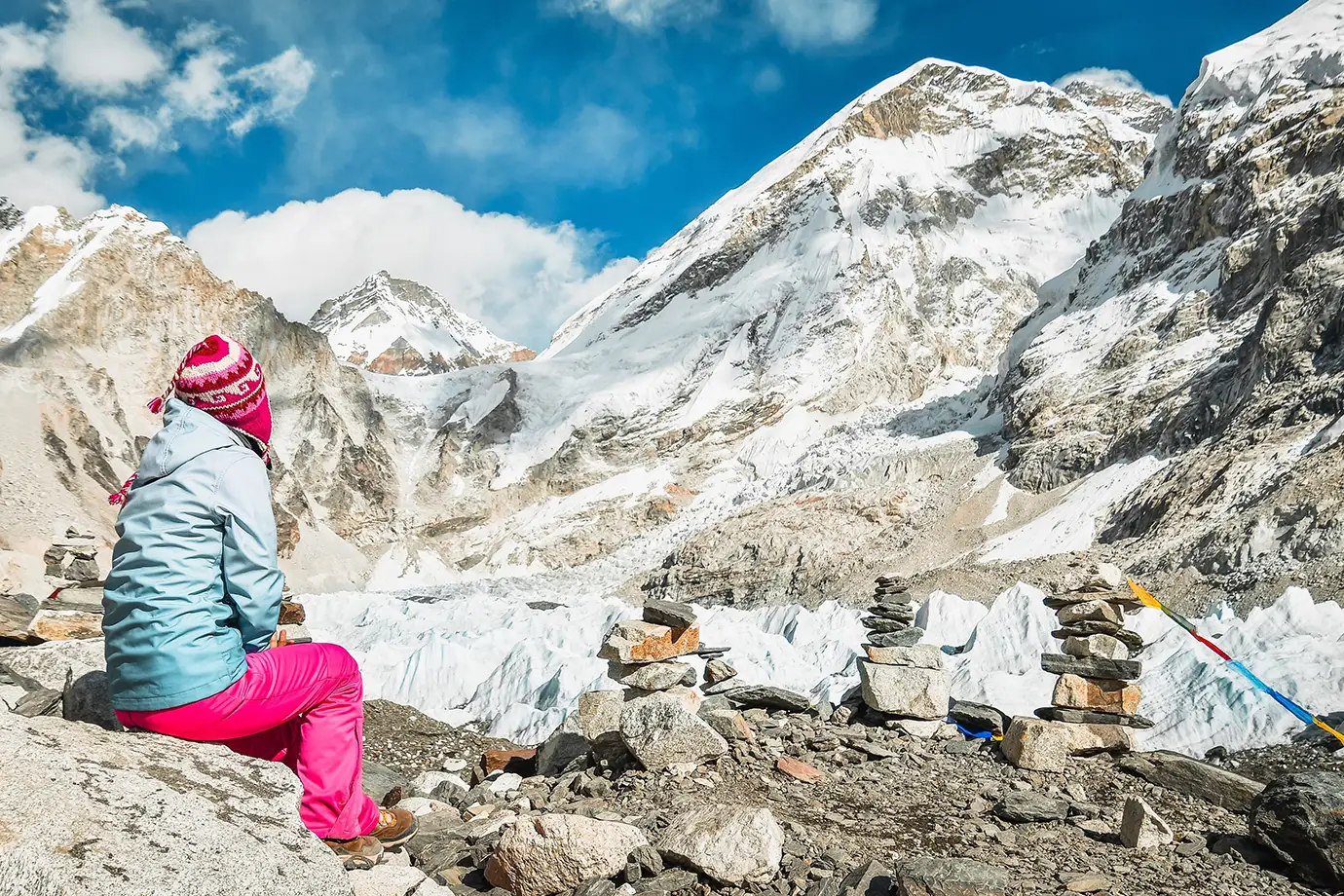
Everest Base Camp sits inside Sagarmatha National Park. Trekkers need a Sagarmatha National Park entry permit (NPR 3,000 for foreigners) and a trekking-agency-issued TIMS card under the licensed-guide rule. NTB’s official trekking permit fee schedule includes the Khumbu Pasang Lhamu Rural Municipality fee for the Everest region.
Confirm this local municipality fee with your agency at the time of booking, as it is added to the total permit cost. A licensed guide is mandatory on the Everest trail under the 2023 NTB revision. No restricted-area permit is required for the standard Everest Base Camp hike. Arrange all permits through a registered Kathmandu-based agency before your departure from the city.
Annapurna Base Camp
Annapurna Base Camp hike passes through the Annapurna Conservation Area. Trekkers need an ACAP entry permit (NPR 3,000 for foreigners) and a trekking-agency-issued TIMS card.
NTNC’s online portal handles ACAP permits. Trekkers apply online, pay digitally, and receive their permit via email. A licensed guide is required under the listed-route guide rule. No restricted-area permit applies to standard ABC routes.
Ghorepani Poon Hill
Ghorepani Poon Hill falls inside the Annapurna Conservation Area. Trekkers need an ACAP permit and a TIMS card issued through a registered agency. The route appears on NTB’s guide-requirement list. No restricted-area permit applies. This route suits first-time Nepal hikers from a permit perspective. It works as a good introduction to the two-layer permit system before attempting more complex routes.
Mardi Himal
Mardi Himal sits inside the Annapurna Conservation Area. Trekkers need an ACAP entry permit and an agency-issued TIMS card. The route falls under NTB’s listed guide-requirement routes.
No restricted-area permit is required for the Mardi Himal Trek. The permit structure matches other standard Annapurna-region trails.
Langtang Valley
Langtang Valley falls inside Langtang National Park. Trekkers need a Langtang National Park entry permit (NPR 3,000 for foreigners) and a trekking-agency-issued TIMS card for the Langtang Valley Trek. A licensed guide is required under the 2023 NTB rule. No restricted-area permit is required for the standard Langtang Valley route. Arrange permits through a registered agency or at the Tourist Service Center in Kathmandu.
Manaslu Circuit
Manaslu Circuit Trek passes through the Manaslu Conservation Area and enters a restricted zone in the upper sections. Trekkers need an MCAP entry permit, a TIMS card, and a Gorkha Manaslu restricted-area permit from the Department of Immigration. The Manaslu restricted-area permit costs USD 100 per person per week from September to November and USD 75 per week from December to August. Additional daily fees apply beyond the first week.
A minimum of 2 trekkers and a licensed guide are required for the restricted section. Manaslu ranks among the more permit-complex trails in Nepal. Build at least four weeks of planning time before your trek start date.
Upper Mustang
Upper Mustang sits entirely inside a restricted zone. Trekkers need a restricted-area permit (USD 50 per person per day year-round), an ACAP entry permit, and a TIMS card. The Department of Immigration in Kathmandu issues the restricted-area permit. Solo trekking is not allowed. A minimum of 2 trekkers and a licensed guide are required for the full duration. Upper Mustang represents the highest per-day permit cost of any standard Nepal trekking route.
Shivapuri and Kathmandu Valley Day Hikes
Shivapuri Nagarjun National Park entry costs NPR 1,000 for foreign visitors. Day hikers pay this fee at the main park entry gate. No TIMS card or guide is required for standard Shivapuri day hikes. Many walking routes in the Kathmandu Valley that fall outside designated trekking zones do not require a TIMS or a licensed guide. Confirm this for your specific trail. Carry cash for park gate fees.
Where and How to Get Hiking Permits in Nepal
The process for getting your Nepal trekking permits depends on the permit type. Each permit type uses a different office, counter, or system.
Through a Registered Trekking Agency
Most trekkers use a registered agency to arrange TIMS cards and restricted-area permits. Agencies handle guide registration, documentation preparation, and checkpoint requirements. This approach suits first-time Nepal hikers and anyone on a multi-permit route. Agencies also know the current checkpoint requirements and local fee rules, which official websites sometimes update without notice. For complex routes like Manaslu or Upper Mustang, using an agency for all permit types significantly reduces errors.
At the Tourist Service Center in Kathmandu
The Tourist Service Center at Bhrikutimandap, Kathmandu, issues national park and conservation area permits directly. Bring your passport, one passport-size photo if required, and cash in Nepali rupees. Opening hours follow government office schedules. Visit early in peak season (October and March to April) to avoid queues that stretch into the afternoon.
At Protected-Area Entry Points
Some national parks issue permits at the main entry gate. In Langtang National Park and Sagarmatha National Park, entry-point permits can be purchased in some cases. Shivapuri Nagarjun sells permits at the main gate. Always confirm the availability of the entry-point permit with your agency before relying on this option. Some entry gates close early or run out of forms during busy periods.
Through Online Systems Where Available
NTNC runs an online permit system for ACAP, MCAP, and GCAP. Trekkers complete the application, pay online, and receive an emailed permit with a QR code. No visit to a physical office is required for these three conservation-area permits. Online options do not cover TIMS cards or restricted-area permits. Those still require agency-based or in-person processing. Do not assume that all the places for hiking in Nepal requires permit fees are available through a single online platform.
Through the Department of Immigration for Restricted Areas
The Department of Immigration at Kalikasthan, Kathmandu, handles all restricted-area trekking permits. No entry point or online option exists for these permits. Your registered agency will guide you through the application steps. Plan for two to four working days of processing time in Kathmandu. Complete this step before you leave the city.
Documents You Need Before Applying
Document requirements vary slightly by permit type and issuing office. Prepare these core items before any permit application:
- Original passport with a valid Nepal visa
- One printed or digital copy of your passport photo page
- Passport-size photographs (1 to 2 printed copies for some offices)
- Confirmed trek itinerary showing dates and full route
- Licensed guide’s full name and official license number
- Registered trekking agency name, registration number, and confirmation letter
- Cash in Nepali rupees or the accepted digital payment method for online systems
- Completed application form where required (agencies usually prepare these)
Restricted-area permit applications sometimes require additional documentation beyond this list. Your registered agency confirms the exact requirements for each permit type before your application date.
Nepal Hiking Permit Fees: What to Budget For
Permit costs form a predictable part of any Nepal trekking budget. Use this section as a planning guide, not a final invoice. Always verify current fees before departure.
TIMS Card Fee
TIMS costs NPR 1,000 for SAARC-country visitors and NPR 2,000 for all other nationalities. Most trek packages from registered agencies include the TIMS card. Confirm it separately on custom itineraries.
National Park and Conservation-Area Fees
Most major protected-area permits cost NPR 3,000 for foreign trekkers. Shivapuri Nagarjun costs NPR 1,000. Kanchenjunga Conservation Area costs NPR 2,000. Some trekking routes cross two different protected areas, adding both fees to the permit budget.
Restricted-Area Permit Costs
Restricted-area permits are the most expensive in Nepal. Upper Mustang and Upper Dolpa charge USD 50 per person per day year-round. A 10-day Upper Mustang trek costs USD 500 per person in the restricted permit alone. Add ACAP entry and TIMS for the total permit spend. Manaslu restricted-area permits cost USD 75-100 per person per week, depending on the season. A 14-day Manaslu Circuit in October may generate USD 200 to USD 300 per person in restricted-area permit fees before guide, agency, and park entry costs.
Total Permit Budget by Route Type
| Route | Estimated Permit Cost (Foreigners) | Permit Components |
|---|---|---|
| Shivapuri day hike | NPR 1,000 | Park entry only |
| Ghorepani Poon Hill | NPR 5,000–7,000 | ACAP + TIMS |
| Annapurna Base Camp | NPR 5,000–7,000 | ACAP + TIMS |
| Mardi Himal | NPR 5,000–7,000 | ACAP + TIMS |
| Everest Base Camp | NPR 5,000–8,000 + local fee | Sagarmatha NP + TIMS + Khumbu local fee |
| Langtang Valley | NPR 5,000–7,000 | Langtang NP + TIMS |
| Manaslu Circuit | USD 75–100/week + NPR 3,000 + TIMS | Restricted permit + MCAP + TIMS |
| Upper Mustang | USD 50/day + NPR 3,000 + TIMS | Restricted permit + ACAP + TIMS |
These figures reflect current published rates. NTB says it updates fee information after verification from official departments. Verify all fees on official NTB and NTNC pages before finalizing your trek plan.
Common Permit Mistakes Hikers Make
Permit mistakes at checkpoints cost time and sometimes deny trail access. These errors repeat frequently among first-time Nepal visitors.
- Assuming one permit covers all routes, each route needs its specific permit combination
- Confusing a national park entry permit with a restricted-area trekking permit — they come from different authorities
- Not checking the guide rule before arriving — the 2023 NTB revision affects most major listed routes
- Assuming restricted-area routes allow solo trekking — they do not, with zero exceptions
- Waiting until the final week of peak season (October or March) to arrange permits — agencies get busy and processing slows
- Not carrying printed copies of all permits at every checkpoint — officers require physical proof
- Paying permit fees to unofficial vendors at trail start points — only pay through agencies, official counters, and NTNC’s online portal
- Relying on outdated information from forums or travel blogs — always check current NTB pages before departure
Nepal Hiking Permits Guide for Beginners
The Nepal hiking permit system looks complicated at first. For most standard routes, the process becomes straightforward once you understand the two main permit layers. Start with a route that does not require a restricted-area permit. Trails like Ghorepani Poon Hill, Annapurna Base Camp, Mardi Himal, Langtang Valley, and Everest Base Camp all follow the two-layer system: a conservation or national park entry permit plus a TIMS card. These routes suit first-time Nepal hikers from a permit perspective.
Use a registered trekking agency for your first Nepal trek. The agency handles TIMS registration, guide assignment, and permit paperwork. You review the documents and prepare cash for fees. The agency handles the government offices. Save restricted-area routes like Upper Mustang, Upper Dolpa, and Manaslu’s restricted section for after you understand how the basic hiking permit system in Nepal works. These routes demand more money, more planning time, and stricter group rules.
Route Planning by Permit Complexity
Classifying Nepal trails by permit complexity gives you a better planning lens than comparing prices alone. Complexity affects your timeline, budget, and agency dependence.
Simple Permit Routes — One Layer
These routes require only a protected-area entry permit. No TIMS card or guide rule applies to day hikes and some short walks outside designated trekking zones.
- Shivapuri Nagarjun National Park day hikes (park entry at gate)
- Some Kathmandu Valley short walks outside the listed TIMS route zones
- Lower valley trails that do not enter any national park or listed trekking corridor
Simple permit routes suit hikers who want to explore before committing to a longer multi-day trek.
Moderate Permit Routes — Two Layers
These routes need a protected-area entry permit and a TIMS card. A licensed guide applies under the 2023 NTB rule. No restricted-area permit needed.
- Everest Base Camp
- Annapurna Base Camp
- Ghorepani Poon Hill
- Mardi Himal
- Langtang Valley
- Gosaikunda
- Helambu circuit
Moderate permit routes cover the most popular Nepal hiking routes. A registered agency handles both permit layers efficiently. Most trekkers complete the full permit process in Kathmandu in 1 to 2 days.
High-Complexity Restricted Routes — Three Layers
These routes require a protected-area permit, a TIMS card, and a restricted-area permit from the Department of Immigration. Strict group and guide rules apply throughout.
- Upper Mustang: USD 50 per person per day, minimum two trekkers, licensed guide required
- Upper Dolpa: USD 50 per person per day, same group rules
- Manaslu Circuit restricted section: USD 75 to USD 100 per person per week by season
- Tsum Valley: USD 30 to USD 40 per person per week by season
High-complexity routes require four to six weeks of advance planning. Start permit applications early. Restricted-area permits need more processing time than standard park entry permits.
Frequently Asked Questions
Q: Do I need a TIMS card in Nepal?
A: Yes, if your route appears on NTB’s listed trekking routes under the 2023 guide rule. Registered trekking agencies issue TIMS cards after linking them to your licensed guide. Check NTB’s current TIMS page to confirm whether your specific trail requires one.
Q: Do I need a guide for hiking in Nepal?
A: Most major Himalayan trekking routes now require a licensed guide under NTB’s 2023 revision. Day hikes near Kathmandu and shorter walks outside the listed trekking zones may not require a guide. Always verify the current NTB route list before finalizing your plan.
Q: Which routes in Nepal require a licensed guide?
A: Routes in the Everest, Annapurna, Langtang, Manaslu, Mustang, Dolpo, and Humla-linked regions fall under the guide requirement. NTB maintains the official route list. All restricted-area routes require a licensed guide without exception.
Q: What is the difference between a TIMS and a national park permit?
A: TIMS is a trekker tracking and guide-registration system. A national park or conservation area permit is a paid entry right to access a specific protected area. Both apply to most major Nepal trekking routes. They serve different purposes and come from different authorities.
Q: What is a restricted-area trekking permit?
A: A restricted-area trekking permit grants access to Nepal’s sensitive border-adjacent zones. The Department of Immigration at Kalikasthan, Kathmandu, issues these permits. They cost more than standard park permits and require a minimum group of two trekkers and a licensed guide.
Q: Can I trek solo in Upper Mustang or Manaslu?
A: No. Nepal Immigration requires a minimum group size of 2 trekkers for all restricted-area routes, including Upper Mustang and the restricted section of the Manaslu Circuit. No solo applications receive approval. A licensed guide is mandatory for the full duration.
Q: Where do I get trekking permits in Nepal?
A: National park and conservation-area permits: Tourist Service Center at Bhrikutimandap, Kathmandu, or at some entry gates. ACAP, MCAP, and GCAP also have online payment through NTNC’s portal. TIMS cards: available only to registered trekking agencies. Restricted-area permits: Department of Immigration, Kalikasthan, Kathmandu.
Q: Which permit costs the most in Nepal?
A: Restricted-area permits carry the highest cost. Upper Mustang and Upper Dolpa charge USD 50 per person per day year-round. A 10-day Upper Mustang trek costs USD 500 per person in the restricted permit alone, before adding park entry, TIMS, and guide fees.
Final Thoughts: Know Your Route Before You Pack
Nepal hiking permits are issued in three categories. Layer one covers TIMS and the licensed-guide rule. Layer two covers entry fees for national parks and conservation areas. Layer three covers restricted-area permits from the Department of Immigration. Your route determines which layers apply. Annapurna Base Camp and Everest Base Camp need layers one and two. Upper Mustang and Manaslu need all three. Start with your route, then build your permit checklist from there. Never assume a single document covers all your needs.
Restricted areas carry strict rules. Minimum two trekkers. Licensed guide required. No solo applications. No exceptions. Plan for these rules early and budget accordingly. Restricted-area permit costs can exceed USD 500 per person before other expenses are considered. Always verify current fees on NTB’s official pages and NTNC’s portal before booking. NTB updates fee information after verification from official departments. The fees in this Nepal Hiking Permits Guide reflect current published rates. Confirm them with a registered agency in Kathmandu before finalizing any trek plan.