


Lukla Airport, also known as Tenzing-Hillary Airport, is recognized as the gateway to Everest. It sits at 2,860m in the Solukhumbu district of Nepal. It was built in 1964 and named after the first Everest Summit team: Tenzin Norgay Sherpa and Sir Edmund Hillary. This entry point to the Everest Base Camp has also gained the nickname of one of the most dangerous airports in the world.
There are no roads leading to the Khumbu region. Flying to Lukla is the only air connection to Kathmandu. From locals to trekkers, everyone flies on a small plane. They also fly in supplies by plane. The runway is short, situated in mountainous terrain with unpredictable weather, making the airport a nerve-wracking experience. It is both exciting and scary.
Flights to and from Lukla offer amazing aerial views of the Himalayan range. You will immediately feel the crisp mountain air after landing in Lukla. Your trek in the Everest region starts from Lukla.
Strategic Importance
Road Access
Lukla is the primary connection between the Everest Region and the rest of the world. No road reaches the Khumbu region. It makes transportation of supplies hard. Everything, including food and fuel, mail, building supplies, and trekking gear, is flown in via air. Without the airport, bringing in the goods on foot would take more than 10 days.
Tourism is the primary source of the local economy in Lukla. Most visitors flying in are trekkers in the region. Their arrival creates job opportunities for guides, porters, and lodge owners. Travelers’ spending in local shops boosts the local economy. Teahouses also depend on tourism to maintain a steady flow of customers.
The airport welcomes dozens of flights every week during peak season. They mainly operate these flights in the morning when the weather is ideal and visibility is clear. A siren alerts the locals when an airplane is landing so they can clear the runway. Lukla Airport is more than just an airstrip; it is a source of money for many locals. It helps boost the economy and connects the region to the world.
Local Economy and Job Opportunities
Lukla airport is essential during emergencies. It is the base for helicopter rescue and medical evacuations. Trekkers, climbers, and even locals are flown to Kathmandu for treatment in case of severe injury or illness. These helicopters fly with doctors, medicine, and emergency supplies like an air ambulance. Each second counts in medical emergencies. Quick air access makes all the difference in these remote villages. Lukla is the main entry point for rescue operations, especially in winter when rugged trails and avalanches are frequent.
Unique Features and Challenges
Mountain Runway
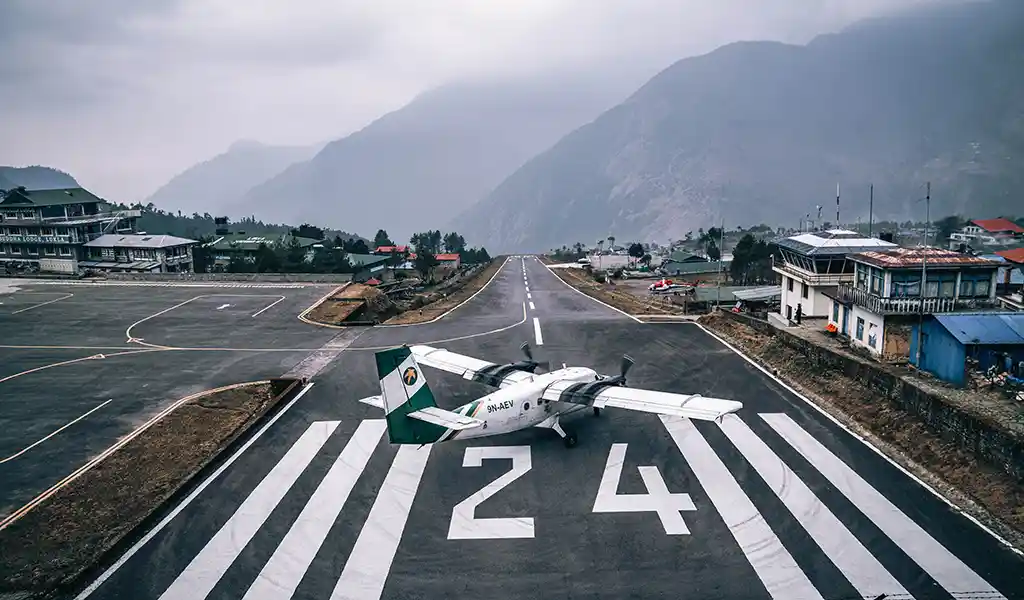
Lukla Airport is popular for its unique and challenging features. The runway, built into a mountain ridge, is only 527 meters long. The runway slopes steeply upwards at 11.7% grade. Pilots need to land going uphill and take off downhill. The runway drops abruptly and sharply, with a 700m cliff on one side. The concrete runway helps with friction, but it can become slippery when it rains or snows. There is no room for error in this airport. The high altitude reduces the engine power and lift, weakening the airplane. Every landing and takeoff feels climactic.
Weather Patterns
The weather changes fast and is harsh. Clouds often gather below the airport ridgeline. The flight from Kathmandu may face a change from clear sky to foggy conditions in Lukla. Monsoon season brings heavy rain and low clouds, effectively shutting down the airport for several days. Even if the weather is good, the flights can only operate in daylight hours. The airport typically opens around 6:30 AM and closes by late morning when the wind picks up.
Aircraft and Equipment
Designers specially build airplanes that fly to Lukla for mountain flying. DHC-6 Twin Otter, Dornier 228, and Pilatus Porter are the standard models used to fly in Lukla. They can carry about 12 to 18 people and have powerful engines designed for short takeoffs on a rough airstrip.
Helicopters fly in for charters and rescue missions. High altitude and limited runway result in flights with a strict weight limit of about 15kg per person. It ensures the plane’s weight is not over the limit and can take off safely in the dangerous but beautiful mountains.
Pilot Training and Safety
Pilots flying the planes to Lukla need special training and experience. They are legally required to practice landing at Lukla before carrying any passengers. Pilots navigate a narrow valley and line up with the short runway in one short when nearing Lukla. When taking off from the airport, they use the runway’s steep slope before lifting. The slope helps the aircraft build speed before takeoff. The ground staff follow strict safety rules. A warning sound is blown every time a plane lands or takes off to alert anyone on the runway to clear the way. There are no runway lights or instrument landing systems here, so pilots rely on their vision.
These unique features earned Lukla the title of one of the world’s most famous and dangerous airports. It is the main gateway for trekkers to the Everest region. Even flying in for the trek is generous. It adds excitement and makes every trip memorable.
The Passenger Experience
Book flights to Lukla through your trekking agency or the local airline website before the trek. Tara Air, Summit Air, and Yeti Air operate the morning flights from Kathmandu to Lukla. Arrive at least a day early in Kathmandu, check flight schedules, stay updated, and be prepared for the flight.
Lukla flights allow each person 10-15kg of weight, including the carry-on. Arrive early at Tribhuvan Airport to complete all the formalities, like verifying documents and weighing bags. Sometimes, only a carry-on is allowed when the plane is full. Flights to Lukla usually depart early in the morning to avoid weather delays.
Board the plane and enjoy the scenic aerial mountain views. The flight is 30 to 40 minutes long and climbs above green hills and deep valleys. You can see Everest, Lhotse, and other peaks if the sky is clear. The plane can get bumpy when nearing the mountains. Fasten your seatbelt and enjoy the views of glaciers and villages.
Landing in Lukla is an unforgettable moment. Engineers specially design airplanes that fly to Lukla for mountain flying. The plane jolts before finally stopping at the airport. Ground staff will open the doors and welcome you to the mountain village. Collect your bags at the terminal and meet the rest of your team. Your guides and porters are usually waiting for you here. The porter or an animal will carry your loads.
Lukla is the starting point of the trek. You can stop by the coffee shops in the airport for a break and start the trek later.
Trekking Tips
Here are some tips for a smooth Lukla flight and trek to the Everest region:
- Add buffer days in Kathmandu: Weather often delays flights to Lukla. Add at least a day or two extra days in case of delays or cancellations.
- Book an early flight: Flights to Lukla often only operate in the morning due to reliable weather. The wind is picking up in the afternoon, making flying dangerous.
- Pack light: Most airlines allow 10 to 15 kilos, including the carry-on, per person. The airport charges NPR 100 per extra kg. Even so, you can’t take much with you.
- Alternate option: Not all flights to Lukla operate from Kathmandu. The Nepal government issued Manthali airport as an alternate option for the Lukla flight to reduce air traffic. You travel to Manthali by road for 4 to 5 hours, then board the 20-minute plane to Lukla. It adds time but helps avoid delays.
- Acclimatize early: Start taking precautions against altitude sickness. Stay hydrated and consider resting in Lukla on arrival to adjust to the increasing altitude.
- Hire a porter: If you haven’t already, you can hire one in Lukla. They carry your loads and make your trek experience better. Tipping 10 to 15% of the total trek fee to your porter is recommended.
- Clothes: Lukla is chilly, especially during the day and at night. Bring layers of clothes, including a jacket, on the flight to avoid the cold.
- Carry cash: ATMs are limited and often have withdrawal limits. Since cash is the only way for economic transactions, carry cash from the city. Bring Nepali cash to the trek from Kathmandu.
- Sun protection: The Sun is intense and harsh in higher altitudes. You should bring sunglasses, sunscreen, and lip balm to protect your skin.
- Power bank: Since charging electronics might not always be available and costs extra, a power bank helps. Keep your devices charged.
- Training your body: Trekking in the Everest region is physically demanding. You need to start teaching your body about 2 or 3 months prior so you can handle the harsh and rocky terrains. Build your endurance by going on uphill walks and doing cardio exercises.
- Consult a doctor: Go on a thorough medical check-up before your trek starts. Consult your doctor on what medications you should bring to the trek. Ask for Diamox if you are prone to AMS. Study the symptoms and prevention of altitude sickness.
- Permits: Have your permits sorted before the trek. Check for all mandatory licenses and get them in Kathmandu or through your trekking agency. Carry your passport, ID pictures, and other important documents to avoid any hassles.
- Tipping: Budget around 10-15% of your trekking cost for tipping your team. Your team will include a guide, porters, and lodge staff. Tips are a key source of income for people in the region.
- Weather: Ask your lodges and guides if the flights are getting canceled before the boarding day, since they know about it. Check the weather since it’s unpredictable. It will save the early airport trip and disappointment.
- Season: Choosing the right season to trek is just as important. Fly during spring or autumn for better weather. Monsoon and winter have the most canceled flights and harsh weather.
- Visa: You need a valid tourist visa and passport for the trek and flight to Lukla. Have your Nepal visa ready in advance.
- Pack a daypack: You start trekking after landing. Carry water, snacks, layers, and a camera.
The town of Lukla
Lukla is a small village standing at 2,860m. The name Lukla means “The land of many goats.” Only a few hundred people live here, and daily life is a blend of tradition and trekking life. The lodges, shops, and teahouses are mostly stone-built. Many trekkers rest in the lodge upon arrival.
Trekkers and visitors describe the village as a laid-back town. Guides, porters, and hikers fill the streets in the morning as they prepare for the trails. The village gets quiet as the day goes on. Prayer flags adorn the town with mani stones and a small stupa near the airport. The stupa serves as a place to seek blessings before the trek.
Lukla offers basic services. Few lodges offer WIFI, but the service is slow. Diesel generators and solar panels generate electricity. Power cuts are common. There’s a small health post and a local ATM here. The ATM sometimes runs out of cash, and mobile reception is limited. Carry some money and buy a local SIM card in Kathmandu for a more comfortable trekking experience.
You can reach a viewpoint offering a clear view of Everest and Ama Dablam after a short walk from Lukla. Lukla is the perfect first taste of the Himalayas with prayer flags and crisp air. Lukla makes a lasting impression on every visitor.
Conclusion
Lukla Airstrip is a dramatic starting point for the Everest region trek. The airport serves a purpose as more than just a remote airstrip. It connects Kathmandu to the high Himalayan territory and marks the trip’s starting point.
The plane landing on the short, sloped runway gives you the feeling of thrilling excitement. Snow peaks surround you, and the crisp mountain air hits you with low intensity. Your team awaits you outside the terminal.
Flying to Lukla is a memorable experience. For many, landing in Lukla means the first glance at the Sherpa lifestyle. Getting into Lukla is already challenging, but the hardships waiting for you are even more thrilling. Lukla sets the tone for the days to come. The views from Lukla and the anticipation of the upcoming trek make Lukla an excellent memory for many.
Ready to Plan your Trek?
Use this guide to plan your trek. Plan, check flight schedules, and pack within the weight limits. Leave some room in your itinerary for any possible weather delays or cancellations. Start the trip with a positive mindset and take care of your health. Share your experience with others so they can learn about the place vicariously through you. Your experience might influence and inspire others as well.