
The Manaslu Circuit Trek usually costs USD 1,200 to USD 3,500+ per person. The final price depends on season, permit days, group size, guide and porter support, transport, food, accommodation, and service level. Manaslu costs more than many open-area treks because it requires a restricted-area permit, conservation permits, a licensed guide, and agency handling. The highest fixed costs include the Manaslu Restricted Area Permit, MCAP, ACAP, licensed guide, transport, food, and lodging.
Quick Answer: How Much Does the Manaslu Circuit Trek Cost?
The Manaslu Circuit Trek usually costs USD 1,200 to USD 3,500+ per person. Budget guided treks cost USD 1,200-1,800. Standard guided treks cost USD 1,800-2,800. Private comfort treks cost USD 2,800-4,500+. Permits, guide, transport, food, and lodging make up the main expenses.
Cost at a Glance
| Category | Budget | Standard | Premium |
|---|---|---|---|
| Permits | USD 170–300+ | USD 170–300+ | USD 170–300+ |
| Guide | USD 25–40/day | USD 35–50/day | USD 50+/day |
| Porter | Optional | USD 20–35/day | Included |
| Food + Lodging | USD 30–45/day | USD 45–65/day | Included or upgraded |
| Transport | USD 60–150 | USD 150–350 | USD 350+ |
| Total Estimate | USD 1,200–1,800 | USD 1,800–2,800 | USD 2,800–4,500+ |
Scroll left or right to view the full table.
Why Does Manaslu Cost More Than Some Nepal Treks?
Manaslu lies in a restricted trekking area. Trekkers need a Manaslu Restricted Area Permit, MCAP, and ACAP. The route requires a licensed guide. A registered agency handles the permit process. Food and supplies cost more in remote upper villages. Smaller groups pay more per person. Larkya La Pass adds safety and logistics needs. The combination of restricted permits, mandatory guide, agency handling, and remote-route supply costs pushes the price above open-area treks like the Annapurna Circuit and Langtang.
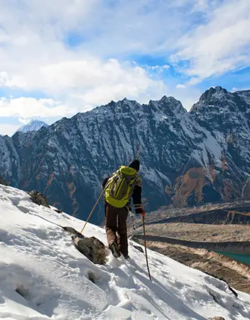
The Manaslu Circuit Trek usually costs USD 1,200 to USD 3,500+ per person. The final price depends on season, permit…
 12 Days
 Moderate
Permit Costs
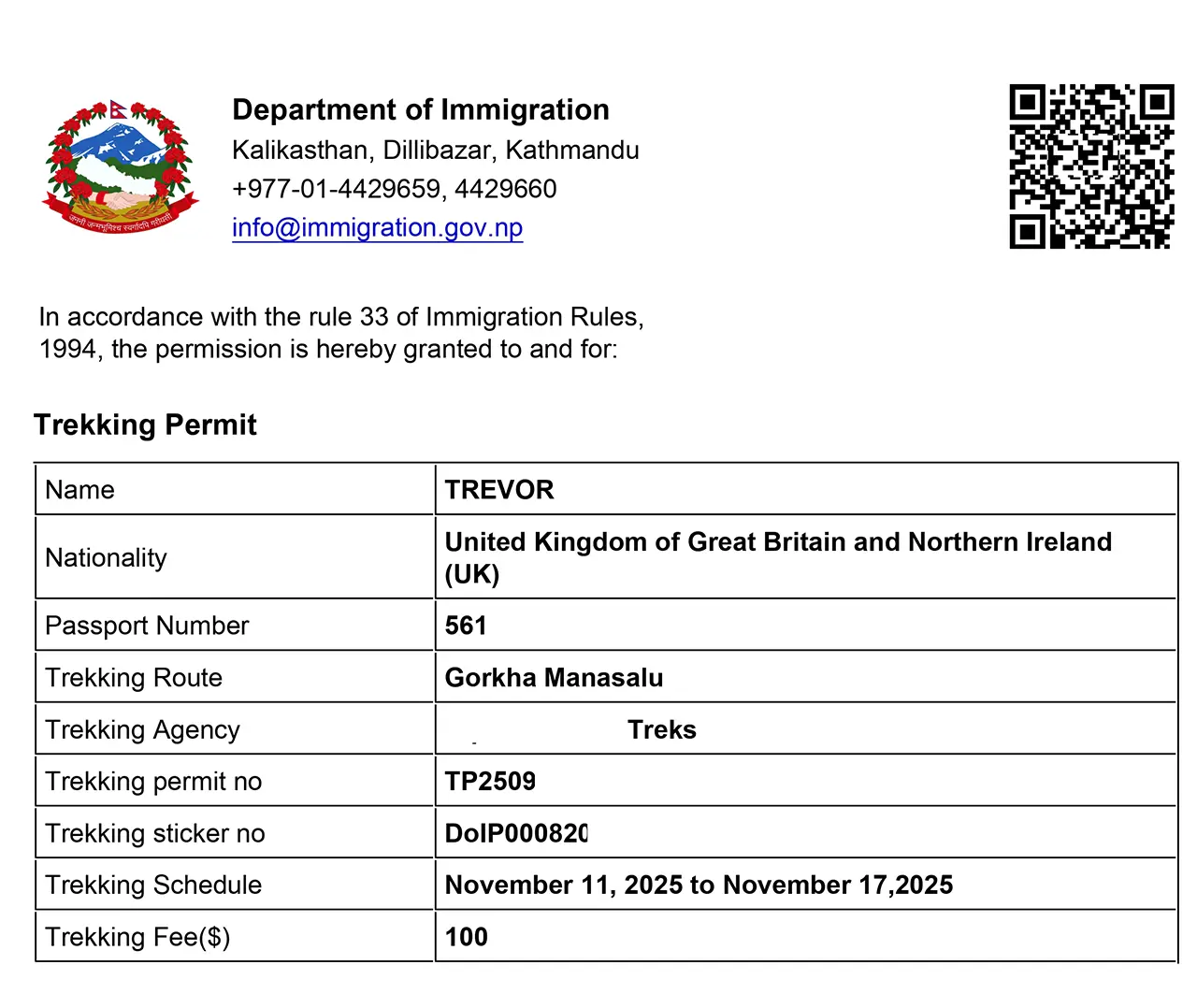
Manaslu Restricted Area Permit
| Season / Duration | Cost |
|---|---|
| September to November: first 7 days | USD 100 per person |
| September to November: each extra day | USD 15 per person per day |
| December to August: first 7 days | USD 75 per person |
| December to August: each extra day | USD 10 per person per day |
Scroll left or right to view the full table.
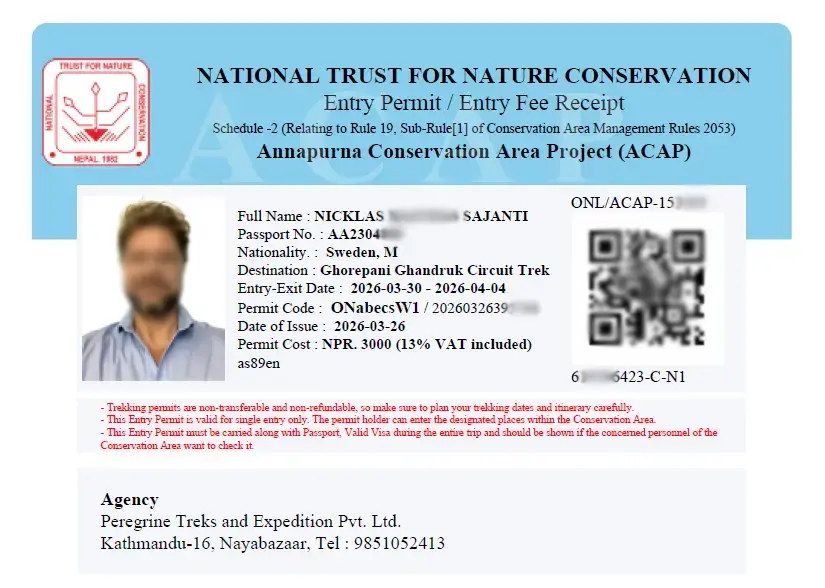
MCAP and ACAP
| Permit | Foreign National | SAARC National |
|---|---|---|
| Manaslu Conservation Area Permit (MCAP) | NPR 3,000 | NPR 1,000 |
| Annapurna Conservation Area Permit (ACAP) | NPR 3,000 | NPR 1,000 |
Scroll left or right to view the full table.
The trek needs MCAP because it passes through the Manaslu Conservation Area. It needs ACAP because the route exits into the Annapurna Conservation Area near Dharapani.
TIMS Card
Nepal Tourism Board lists the Manaslu Circuit Trek as a route that requires a licensed guide and an agency-issued TIMS card. The safest approach is to confirm the current TIMS process with your registered trekking agency before booking.
Sample Permit Cost Calculations
Autumn Example: 10 Restricted-Area Days
| Item | Cost |
|---|---|
| RAP first 7 days, autumn rate | USD 100 |
| RAP extra 3 days, 3 x USD 15 | USD 45 |
| Total RAP | USD 145 |
| MCAP | NPR 3,000 |
| ACAP | NPR 3,000 |
| TIMS, if applied | NPR 2,000 |
Spring Example: 10 Restricted-Area Days
| Item | Cost |
|---|---|
| RAP first 7 days, off-season rate | USD 75 |
| RAP extra 3 days, 3 x USD 10 | USD 30 |
| Total RAP | USD 105 |
| MCAP | NPR 3,000 |
| ACAP | NPR 3,000 |
| TIMS, if applied | NPR 2,000 |
Guide and Porter Cost
| Staff Type | Daily Cost | Best For |
|---|---|---|
| Licensed Guide | USD 25–50/day | Required for permits and safety |
| Senior Guide | USD 40–60+/day | Private and premium groups |
| Porter | USD 20–30/day | Carrying the main luggage |
| Porter-Guide | USD 30–40/day | Budget trips with limited support |
Scroll left or right to view the full tables.
A guide helps with permit checks, trail timing, judgment of the Larkya La pass, weather decisions, lodge bookings, altitude monitoring, cultural interpretation, and emergency coordination. Porter support reduces fatigue, especially before and after Larkya La.
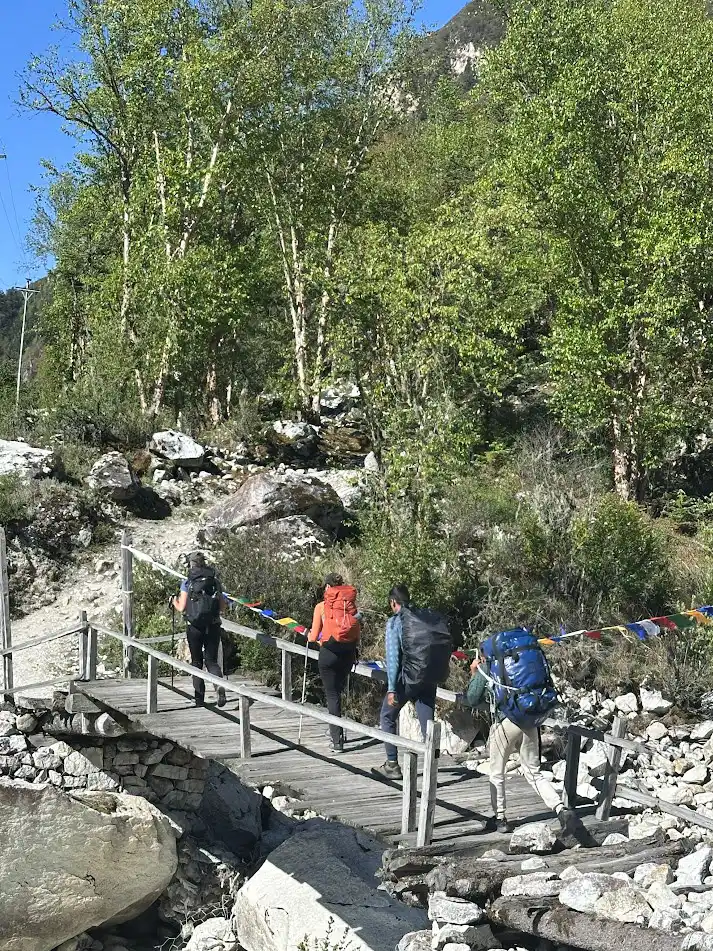
Transport Cost
| Transport Type | Estimated Cost | Notes |
|---|---|---|
| Local Bus to Trailhead | USD 10–15 | Cheapest option, but rough and slow |
| Shared Jeep to Trailhead | USD 25–45/seat | Better comfort and faster travel time |
| Private Jeep to Trailhead | USD 200–300+/jeep | Best option for private groups |
| Return: Dharapani to Kathmandu | USD 30–150+ | Jeep plus bus, or private vehicle |
Food Cost
| Trekker Type | Daily Food Budget |
|---|---|
| Budget | USD 20–30/day |
| Standard | USD 30–45/day |
| Comfort | USD 45–60/day |
Scroll left or right to view the full tables.
Dal bhat gives the best trekking value. It often includes refills and gives strong energy. Food costs rise with altitude because supplies move by mule, porter, or local transport. Buy snacks in Kathmandu. Use water purification instead of buying bottled water on the trail.
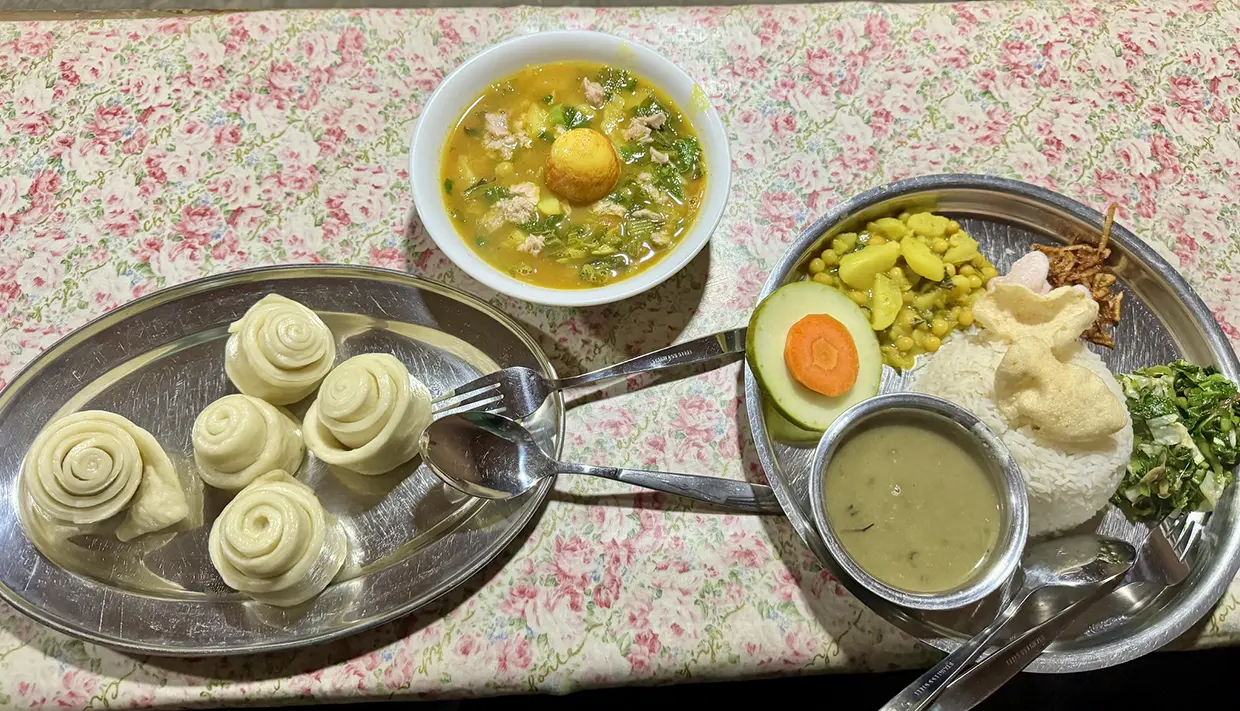
Accommodation Quality by Location
| Location | Quality | Cost Note |
|---|---|---|
| Machha Khola to Deng | Basic | Lower cost |
| Namrung to Lho | Better | Good comfort for the route |
| Sama Gaun | Best on route | Popular acclimatization stop |
| Samdo | Basic | Cold rooms |
| Dharamsala | Very basic | Pre-pass, coldest stop |
| Bhimthang to Dharapani | Basic to moderate | Improves on descent |
Hidden Costs
| Hidden Cost | Estimated | Notes |
|---|---|---|
| Hot Shower | USD 3–5 | More expensive at altitude |
| Device Charging | USD 2–5 | Per device or per hour |
| Wi-Fi | USD 3–5 | Limited and unreliable |
| Boiled Water | Varies | Cheaper than bottled water |
| Snacks and Drinks | Varies | Buy in Kathmandu to save money |
| Tips | 10–15% of the wage | For guide and porter |
| Gear Rental | USD 50–200+ | Sleeping bag, jacket, and poles |
| Buffer Day | USD 30–70/day | For weather or health delays |
Scroll left or right to view the full tables.
Add a 15-20% buffer to your Manaslu Trek budget. Remote trails, weather delays, extra snacks, hot showers, and staff tips increase the final cost beyond the package price.
Cost by Season
| Season | Permit Cost | Trail Cost | Recommendation |
|---|---|---|---|
| Autumn, Sep–Nov | Highest | Highest | Best weather and highest demand |
| Spring, Mar–May | Lower | Moderate | Best value season |
| Winter, Dec–Feb | Lower | Lower but risky | Experienced trekkers only |
| Monsoon, Jun–Aug | Lower | Unpredictable | Not recommended |
Scroll left or right to view the full table.
Spring gives the best value: lower RAP cost than autumn, good weather in April and May, and rhododendron blooms in the lower sections. Autumn brings the best conditions but the highest permit fees.
Cost by Group Size
| Group Size | Cost Effect |
|---|---|
| 1 Traveler | Highest per-person cost because guide and jeep costs are not shared |
| 2 Travelers | Better value through shared guide and transport costs |
| 3–6 Travelers | Best balance of price, comfort, and guide attention |
| 7+ Travelers | Lowest per-person cost, but the group needs strong guide support |
Scroll left or right to view the full table.
Solo travelers should confirm current permit handling with the agency. A licensed guide and registered trekking agency remain essential regardless of group size.
Tsum Valley Extension Cost
| Tsum Valley RAP Season | Cost |
|---|---|
| September to November: first week | USD 40 per person |
| September to November: extra day | USD 7 per person per day |
| December to August: first week | USD 30 per person |
| December to August: extra day | USD 7 per person per day |
Scroll left or right to view the full table.
Tsum Valley adds a separate restricted-area permit, 5 to 7 extra trekking days, and higher guide and porter wages, as well as food, accommodation, and buffer-day costs. The extension suits cultural travelers with enough time and budget.
Manaslu Cost vs Other Treks
| Trek | Cost Level | Why |
|---|---|---|
| Langtang Valley | Lower | Shorter route, closer access, and no restricted-area permit |
| Annapurna Circuit | Lower–Moderate | Easier logistics and lower permit costs |
| Everest Base Camp | Moderate–High | Lukla flights and higher trail prices increase the total cost |
| Manaslu Circuit | Moderate–High | Restricted-area permit, licensed guide, and remote logistics add cost |
| Upper Mustang | High | Daily restricted-area permit makes it one of Nepal’s costlier treks |
Scroll left or right to view the full table.
How to Reduce Cost Safely
Smart Savings
- Trek in spring instead of peak autumn (lower RAP)
- Travel with 2-6 people to share guide and jeep costs
- Use shared transport where road conditions allow
- Rent a sleeping bag and a down jacket in Kathmandu
- Buy trail snacks in Kathmandu
- Use water purification instead of bottled water
- Eat dal bhat and local meals
- Book directly with a reputable Nepal-based operator
Do Not Cut Costs On
- Permits (restricted-area, MCAP, ACAP)
- Licensed guide (required for restricted area)
- Travel insurance covering high-altitude evacuation
- Acclimatization days at Sama Gaun and Samdo
- Warm gear for Dharamsala and Larkya La
- Operator with real Manaslu route experience
Red Flags in Cheap Pricing
- Permit costs are not clearly listed
- No registered agency details
- No guide license information
- No staff insurance or porter weight policy
- No clear meal or transport plan
- No emergency plan for Larkya La
- No acclimatization day at Sama Gaun
- Unrealistically low total price
- Vague ‘all-inclusive’ wording
Worth the Cost?
Yes. Manaslu Circuit Trek delivers a quieter, restricted-area experience, Tibetan Buddhist villages, close views of the world’s eighth-highest mountain, and the Larkya La Pass crossing. The route stays less commercial than Everest and Annapurna. The restricted permit helps keep crowds lower and the route more controlled. The cost is higher than for open-area treks, but the combination of remote culture, serious mountain scenery, and regulated access makes the investment worthwhile for trekkers who want more than a busy, popular trail.
Frequently Asked Questions
Q: When is the best time for the trek to reduce costs?
A: Trekking during the spring season, from December to August, reduces your restricted area permit fees significantly. To save more money, you can travel in a small group of 2 to 6 people, splitting your guiding and jeep transportation costs. Opting for shared vehicles, eating traditional dal bhat, and renting your gear in Kathmandu helps keep your budget low.
Q: What permits do I need for this journey?
A: You are required to obtain a Manaslu Restricted Area Permit alongside two separate conservation area permits, known as MCAP and ACAP. Additionally, the Nepal Tourism Board lists this circuit as requiring an official agency-issued TIMS card. Your chosen trekking agency will coordinate these mandatory documents on your behalf to ensure legal entry at all trail checkpoints.
Q: Why does Manaslu cost more than the Annapurna Circuit?
A: The total price runs higher because it includes specialized restricted area fees and a mandatory requirement to hire a licensed guide. You must also pay for multiple conservation permits, agency processing fees, and the complex logistics of transporting supplies to remote, high-altitude villages. These combined regulatory and operational expenses naturally push your total budget well above the cost of open-area trekking routes.
Q: How much does a guide and porter cost per day?
A: A licensed guide generally costs between USD 25 and USD 50 per day, depending on their specific language skills and experience. Meanwhile, hiring a porter typically costs between USD 20 and USD 30 daily. Utilizing porter support is highly recommended because it significantly reduces physical fatigue during the long, demanding walking days before and after crossing Larkya La Pass.
Q: What is the daily food and lodging budget?
A: You should budget between USD 30 and USD 65 each day to cover standard teahouse accommodation and basic meals. It is important to note that menu prices rise noticeably as you reach the upper villages on the route. This price increase is due to the higher logistics required to transport food and supplies into remote mountain areas.
Q: Does adding Tsum Valley increase the overall price much?
A: Yes, including this extension adds a noticeable amount to your total expenses. It requires purchasing a separate restricted-area permit, which costs between USD 30 and USD 40 for the first week. Furthermore, the side trip adds 5 to 7 extra days to your itinerary, which increases your daily food, lodging, guiding, and porterage fees.
Q: Are there reliable ATMs available on the Manaslu route?
A: No, you cannot rely on finding functional ATMs anywhere along this mountain trail. Because of this, it is critical to exchange and carry sufficient Nepali rupees directly from Kathmandu. This cash is necessary to pay for daily trail amenities such as hot showers, device charging, Wi-Fi, snacks, drinks, tipping staff, and handling unexpected emergency needs.
Q: What hidden costs should I expect during the journey?
A: You should budget for extra daily expenses like hot showers, battery charging, Wi-Fi access, and buying boiled drinking water. It is also important to plan for trail snacks, drinks, gear rentals, and gratuities for your mountain crew. Finally, set aside emergency funds for extra transport and unexpected buffer days caused by sudden road closures or weather delays.
Q: Is the Manaslu Circuit trek worth the total price?
A: Yes, the journey delivers exceptional value for hikers looking for a quieter, less crowded restricted area experience. The circuit showcases deep local culture, dramatic mountain scenery, and the rewarding challenge of crossing Larkya La Pass. The unique sense of isolation and pristine natural beauty provide an incredible wilderness atmosphere that busy, highly commercialized routes in Nepal often lack.
Final Advice
The Manaslu Circuit Trek Cost depends on more than one package price. Permit season, restricted-area days, guide support, porter service, transport type, food, lodging, group size, insurance, and hidden trail expenses all shape the final budget. Manaslu costs more than open-area treks, but it delivers a quieter restricted-area route, strong Tibetan Buddhist culture, close views of Manaslu, and the Larkya La Pass crossing. Plan with a clear budget. Choose a registered agency. Keep a safety buffer. Confirm current permit rules before booking.