


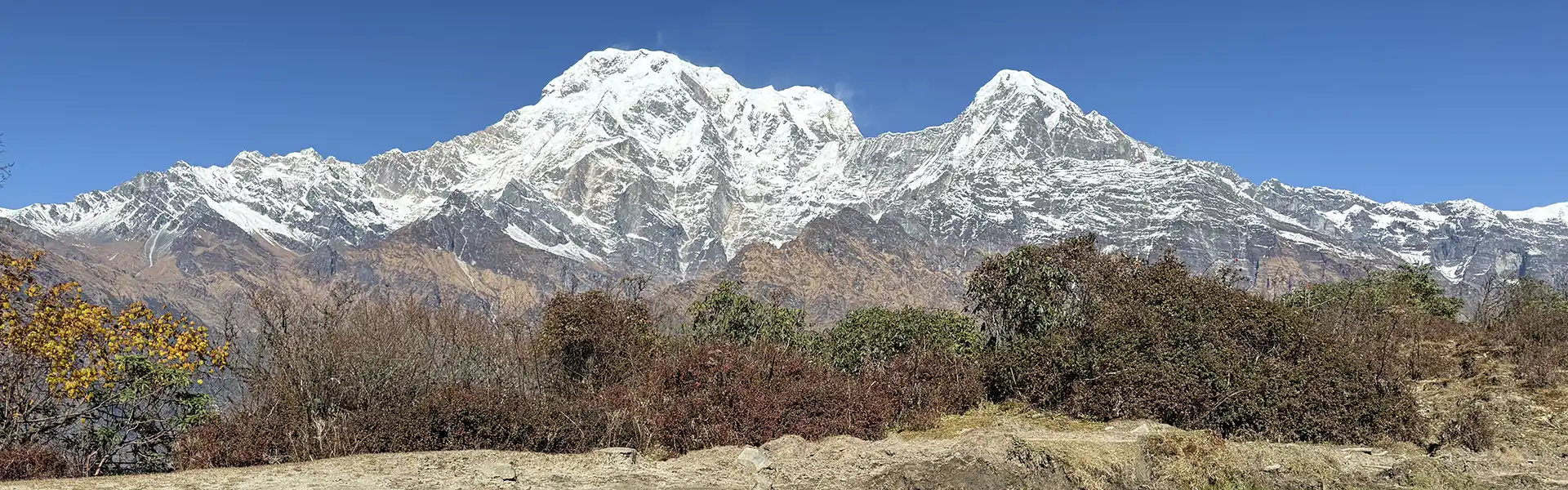

The Mardi Himal Trek Guide helps travelers plan one of Nepal’s best short ridge treks near Pokhara. The route climbs through forest, rhododendron sections, alpine meadows, Badal Danda, and High Camp before reaching the upper viewpoint area near Mardi Himal Base Camp. The trek offers close views of Machhapuchhre, Mardi Himal, Annapurna South, and Hiunchuli. It takes 5 to 7 days, is shorter than the Annapurna Base Camp trek, and suits hikers who want a scenic Annapurna trek without a long itinerary. This guide covers the ridge walk experience, mountain views, day-by-day itinerary, altitude profile, difficulty, permits, guide rules, cost, best season, rhododendron bloom, packing, teahouses, safety, and common mistakes.
Quick Answer: What Makes the Mardi Himal Trek Worth Doing?
The Mardi Himal Trek follows a ridge toward Machhapuchhre through forest, alpine meadows, and exposed high terrain. It usually takes 5 to 7 days from Pokhara and reaches the upper viewpoint area around 4,200 to 4,500 meters with close views of Machhapuchhre, Mardi Himal, Annapurna South, and Hiunchuli.
| Topic | Details |
|---|---|
| Trek Region | Annapurna Conservation Area |
| Gateway City | Pokhara |
| Starting Point | Kande, Phedi, or nearby trailhead |
| Typical Duration | 5 to 7 days |
| Difficulty | Moderate |
| Highest Point | Viewpoint area ~4,200-4,500 m |
| Highest Sleeping Point | High Camp ~3,580 m |
| Best Seasons | March-May and September-November |
| Best For | Fit hikers, photographers, short-term travelers |
| High Pass | No |
The Ridge Walk: What Makes Mardi Himal Different
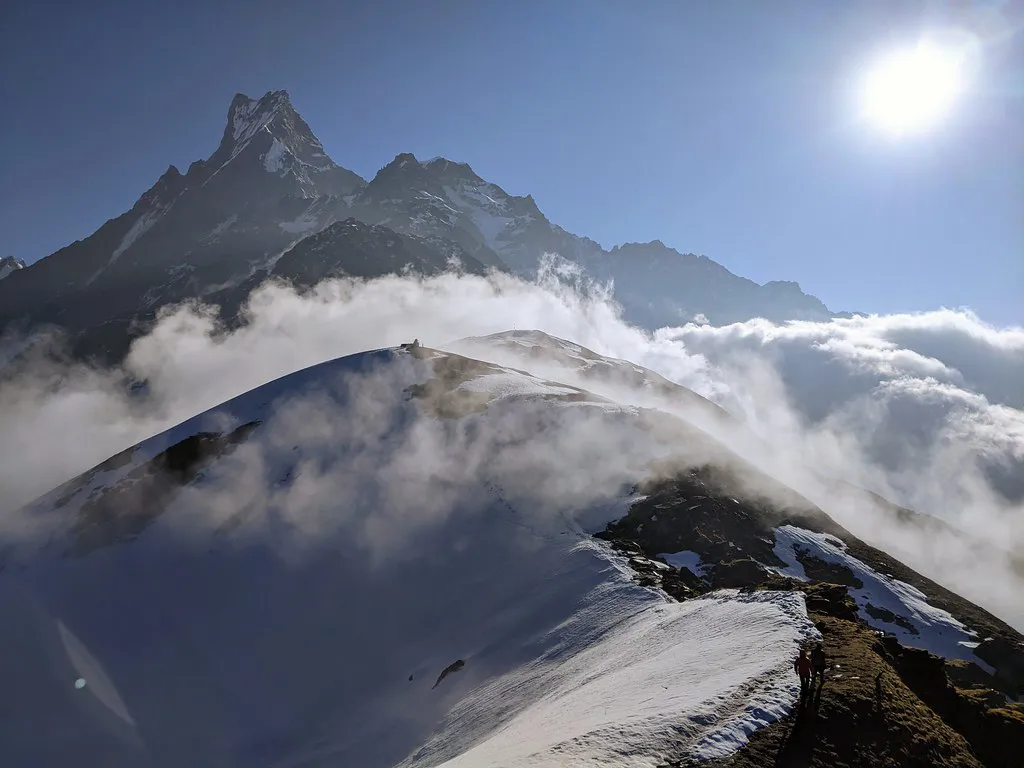
The lower trail passes through rhododendron and bamboo forests. Above Low Camp, the route climbs toward open ridge terrain. Badal Danda gives one of the first wide views. High Camp sits above the treeline. The upper viewpoint trail feels exposed and windy. Clouds rise quickly from the valleys and cover the ridge. Morning views usually work better than afternoon views. Trekkers should carry warm layers, water, snacks, and a headlamp for the pre-dawn viewpoint hike.
| Trail Section | Altitude | Terrain | Exposure | View Quality |
|---|---|---|---|---|
| Forest Camp to Low Camp | 2,550-2,970 m | Forest trail | Sheltered | Moderate |
| Low Camp to Badal Danda | 2,970-3,210 m | Forest thinning, ridge start | Partial | Stronger |
| Badal Danda to High Camp | 3,210-3,580 m | Open ridge and meadow | Exposed | Excellent |
| High Camp to Viewpoint | 3,580-4,200+ m | Rocky upper ridge | Fully exposed | Main highlight |
Mountains Visible from the Mardi Himal Route
| Mountain | Altitude | View from Route | View Quality |
|---|---|---|---|
| Machhapuchhre | 6,993 m | Directly ahead of the upper ridge | Excellent |
| Mardi Himal | 5,587 m | Upper ridge and viewpoint area | Strong |
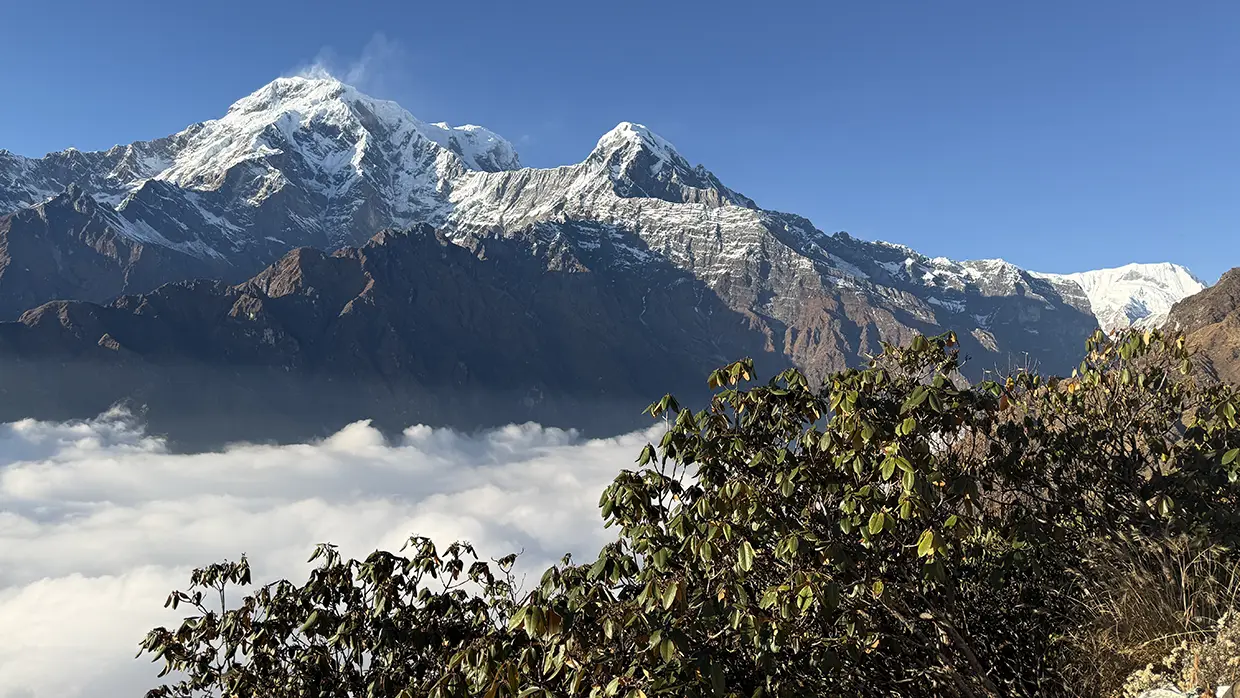
| Annapurna South | 7,219 m | Badal Danda, High Camp, Viewpoint | Excellent |
| Hiunchuli | 6,441 m | High Camp and upper ridge | Strong |
| Annapurna I | 8,091 m | Upper ridge on clear days | Good |
| Gangapurna | 7,455 m | Upper viewpoint area | Partial to good |
| Lamjung Himal | 6,983 m | Ridge sections | Good |
Machhapuchhre dominates the upper route. Annapurna South and Hiunchuli form a strong western wall. Best light comes at sunrise. Afternoon clouds often reduce visibility.
Mardi Himal Trek Itinerary: 7 Days
| Day | Route | Altitude | Walk Time | Highlights |
|---|---|---|---|---|
| 1 | Arrive Pokhara | 820 m | — | Briefing, gear check |
| 2 | Drive to Kande, trek to Forest Camp | 2,550 m | 5-6 hrs | Australian Camp, forest trail |
| 3 | Forest Camp to Low Camp | 2,970 m | 3-4 hrs | Rhododendron and forest sections |
| 4 | Low Camp to High Camp via Badal Danda | 3,580 m | 4-5 hrs | Ridge opens, Machhapuchhre views |
| 5 | High Camp to Viewpoint, return | 4,200-4,500 m | 5-7 hrs | Sunrise, close mountain views |
| 6 | Descend to Siding, drive to Pokhara | 820 m | 5-6 hrs+drive | Forest descent and return |
| 7 | Departure from Pokhara | — | — | Transfer or onward travel |
Shorter 5-Day Itinerary
Day 1: Drive Pokhara to Kande, trek to Low Camp (long day). Day 2: Low Camp to High Camp. Day 3: High Camp to Viewpoint, descend to Low Camp. Day 4: Low Camp to Siding, drive to Pokhara. Day 5: Departure. The 5-day version is only for fit trekkers. The 7-day plan gives better pacing.
Altitude Profile
| Location | Altitude | Role in Trek |
|---|---|---|
| Pokhara | 820 m | Gateway city |
| Kande | 1,770 m | Common trailhead |
| Australian Camp | 2,060 m | Early viewpoint |
| Forest Camp | ~2,550 m | Forest overnight |
| Low Camp | ~2,970 m | Edge of forest zone |
| Badal Danda | ~3,210 m | Ridge viewpoint |
| High Camp | ~3,580 m | Base for viewpoint hike |
| Mardi Himal Viewpoint | ~4,200-4,500 m | The highest hiking point |
| Siding | ~1,700-1,850 m | Descent village |
The trek gains altitude quickly from Low Camp to the viewpoint. The highest sleeping point stays at High Camp. Altitude sickness occurs above High Camp. The descent to Siding loses a lot of altitude in a single day and is hard on the knees.
Key Trail Sections and Camps
- Kande to Australian Camp: Short drive from Pokhara. Climb to Australian Camp. Early Annapurna and Machhapuchhre views. Good warm-up section.
- Forest Camp: Dense forest setting. Rhododendron and bamboo sections. Simple teahouses. Quiet trail atmosphere.
- Low Camp: Upper edge of forest zone. First, stronger mountain views. Good acclimatization stops on a slower itinerary.
- Badal Danda (Cloud Hill): Ridge viewpoint. Strong sunrise and sunset views. One of the most scenic stops on the route.
- High Camp: Main overnight stop before the viewpoint hike. Colder and windier than the lower camps. Basic lodge facilities. Strong Machhapuchhre and Annapurna South views.
- Mardi Himal Viewpoint / Upper Ridge: Main highlight. Best reached early morning. No teahouse above High Camp. Carry water and snacks. Weather and visibility decide how far trekkers continue.
- Siding Village: Common descent route. Village and forest scenery. Road connection back to Pokhara.
Rhododendron Season
| Altitude Zone | Typical Bloom | Trail Section |
|---|---|---|
| 1,800-2,200 m | Late Feb to March | Kande to Australian Camp |
| 2,200-2,600 m | March | Australian Camp to Forest Camp |
| 2,600-3,000 m | Late March to April | Forest Camp to Low Camp |
Spring combines flowers on the lower trail and mountain views above the ridge. Autumn gives clearer views but no rhododendron bloom. Bloom timing changes each year.
Best Season and Weather
| Season | Months | Ridge Views | Trail Condition | Rating |
|---|---|---|---|---|
| Autumn | Sep-Nov | Excellent | Dry and clear | Best |
| Spring | Mar-May | Good to excellent | Flowers, mild weather | Yes |
| Winter | Dec-Feb | Good on clear days | Snow and ice possible | Prepared only |
| Monsoon | Jun-Aug | Often poor | Wet, slippery, leeches | Not ideal |
Ridge Weather and Safety
| Risk | Why It Matters | Safety Tip |
|---|---|---|
| Fast cloud buildup | Visibility drops quickly | Start early, follow the guide’s advice |
| Strong wind | Wind chill makes it very cold | Carry a windproof shell, gloves, buff |
| Narrow ridge | Some sections feel exposed | Walk slowly, use trekking poles |
| Altitude symptoms | Upper route rises above 4,000 m | Descend if symptoms worsen |
| Snow or ice | The winter trail gets slippery | Proper footwear and judgment |
| Thunderstorm | Exposed ridge increases risk | Avoid afternoon storms, descend early |
Difficulty and Fitness
The Mardi Himal Trek rates moderately. Quick altitude gain above Low Camp, the exposed ridge above High Camp, cold-morning viewpoints, the steep descent to Siding, and weather changes on the upper ridge present the main challenges. Trekkers should walk for 5 to 6 hours on hilly terrain, carry a daypack, climb stairs without frequent breaks, and handle cold and wind. Train with hill walks and stairs for 6 to 8 weeks before departure.
| Traveler Type | Suitable? | Note |
|---|---|---|
| Fit beginner with hiking experience | Yes | Choose the 7-day itinerary |
| Active adult | Yes | Good preparation helps |
| Experienced trekker | Yes | Ridge scenery feels rewarding |
| Photographer | Excellent | Strong sunrise and mountain views |
| Complete beginner | Not ideal | Start with Poon Hill first |
| Family with young children | Not recommended | Ridge exposure adds risk |
| Older traveler with good fitness | Possible | Slower itinerary and guide support |
Mardi Himal vs Poon Hill, ABC, and Langtang
| Factor | Mardi Himal | Poon Hill | ABC | Langtang Valley |
|---|---|---|---|---|
| Duration | 5-7 days | 4-5 days | 7-12 days | 7-10 days |
| Max Altitude | ~4,500 m | 3,210 m | 4,130 m | ~3,870-4,984 m |
| Difficulty | Moderate | Easy-moderate | Moderate | Moderate |
| View Style | Ridge and close Machhapuchhre | Wide sunrise panorama | Mountain amphitheater | Valley and glacier |
| Ridge Exposure | Yes | No | No | No |
| Crowd Level | Lower-moderate | Moderate-high | Moderate-high | Moderate |
| Best For | Ridge views, photographers | Beginners, short trips | Sanctuary experience | Culture, valley scenery |
Permits and Guide Rules
| Permit / Rule | Required?</tdh | Notes |
|---|---|---|
| ACAP Entry Permit | Yes | NPR 3,000 for foreigners, NPR 1,000 for SAARC |
| TIMS / agency trekker record | Yes | Mardi Himal is listed under the NTB revised provision |
| Licensed trekking guide | Yes | Under the NTB revised TIMS provision |
| Restricted Area Permit | No | Not needed for the standard Mardi Himal route |
NTNC also offers an online permit option where travelers pay online and receive the ACAP permit by email. Confirm the latest permit fees and guide rules with a registered trekking agency before booking.
Cost Breakdown
| Cost Item | Budget | Standard | Comfort/Luxury |
|---|---|---|---|
| Guide and porter | USD 200-350 | USD 350-600 | USD 600+ |
| Permits | USD 40-90 | USD 40-90 | USD 40-90 |
| Transport | USD 20-50 | USD 50-100 | USD 100+ |
| Accommodation | USD 50-150 | USD 150-300 | USD 300+ |
| Food and drinks | USD 100-220 | USD 220-350 | Package-based |
| Pokhara hotel | USD 30-100 | USD 100-250 | USD 250+ |
| Estimated Total | USD 500-950 | USD 950-1,650 | USD 1,650+ |
Mardi Himal costs less than EBC because it avoids domestic flights. Transport from Pokhara to the trailhead keeps access simple. High Camp food and lodging cost more due to supply logistics.
Packing List
Clothing and Layers
- Base layer, fleece, down jacket, windproof shell, waterproof jacket
- Trekking pants, warm hat, sun hat, insulated gloves, buff
- Warm socks
Footwear and Gear
- Broken-in waterproof trekking boots, camp shoes
- Daypack, duffel bag, trekking poles, headlamp
- Sunglasses, water bottle, purification tablets, power bank
Essentials
- Sunscreen, lip balm, personal medicine, blister kit
- Passport copy, ACAP permit, TIMS documentation, insurance copy
- Cash in Nepali rupees
Wind protection matters on Mardi Himal. The upper ridge sits open above the treeline. A windproof shell, warm gloves, a down jacket, and a headlamp remain essential for the pre-dawn viewpoint hike.
Teahouse Accommodation and Food
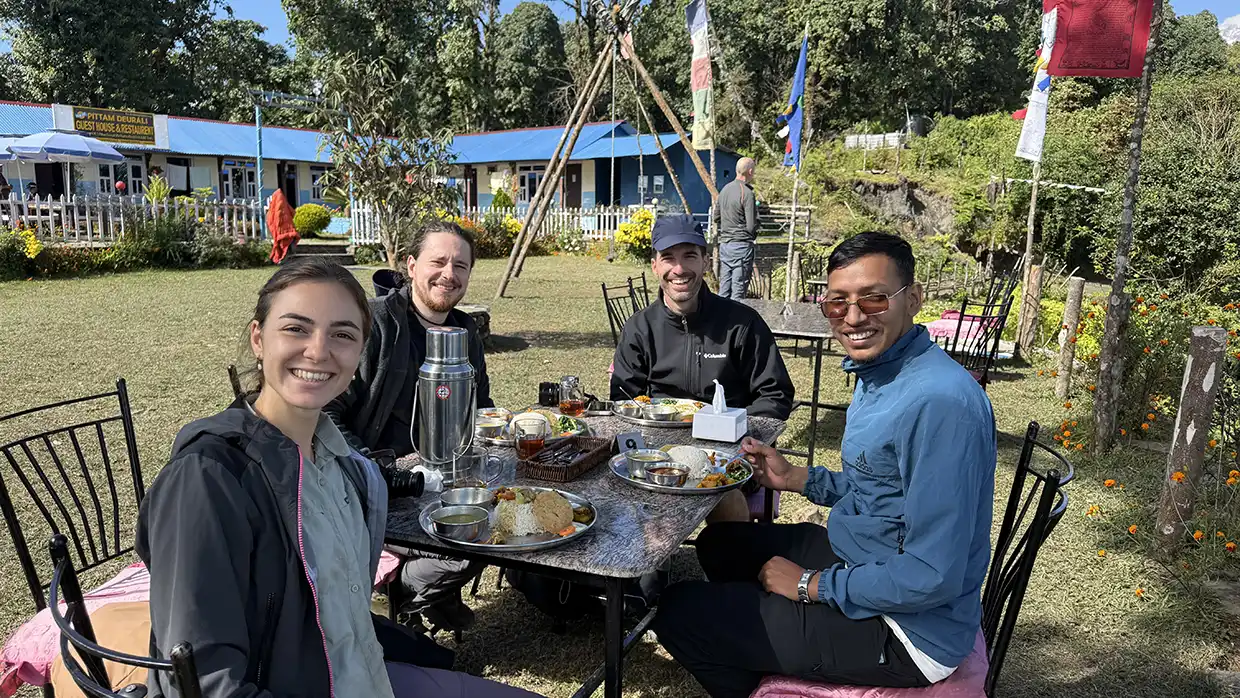
Teahouses operate at Forest Camp, Low Camp, Badal Danda, High Camp, and nearby stops. Rooms stay simple and are often twin-sharing. Facilities become more basic above Low Camp. High Camp lodges are simple and stay cold. No teahouse operates above High Camp. Common meals include dal bhat, noodle soup, fried rice, potatoes, eggs, porridge, pancakes, tea, and hot lemon. Hot showers, charging, and Wi-Fi cost extra. Peak-season rooms fill early.
Route Connections and Extensions
| Option | Extra Days | Best For |
|---|---|---|
| Add Australian Camp overnight | +1 day | Gentler start and early views for beginners |
| Add Ghandruk village | +1 day | Gurung culture |
| Mardi Himal + Poon Hill | +4-5 days | Sunrise panorama and forest trails for photographers |
| Mardi Himal + ABC | +7-10 days | Full Sanctuary trek for fit trekkers |
| Pokhara luxury extension | +1-2 days | Recovery, spa, lakeside stay |
Common Mistakes to Avoid
- Choosing the fastest itinerary without enough fitness
- Underestimating altitude gain above Low Camp
- Not carrying windproof layers for the exposed ridge
- Starting late on viewpoint day
- Ignoring headache, nausea, or dizziness above High Camp
- Walking above High Camp in fog or strong wind
- Expecting luxury lodges at High Camp
- Forgetting a headlamp for the pre-dawn hike
- Carrying too little water and snacks for the viewpoint day
- Wearing new boots on the trek
- Booking no buffer day in Pokhara
- Comparing Mardi Himal with Poon Hill and assuming it feels easy
Frequently Asked Questions
Q: How many days does the Mardi Himal Trek take?
A: The trek generally takes 5 to 7 days starting from Pokhara. A 7-day plan provides a better pace for most walkers, while the 5-day version suits fit trekkers with limited time. This timeframe allows you to experience the diverse terrain while managing the daily physical effort. Choosing the right duration ensures a safe and enjoyable journey through the high mountain ridges.
Q: How difficult is the trek?
A: This trek is rated as moderate but includes specific challenges. Key difficulties involve quick altitude gain above Low Camp and navigating an exposed ridge above High Camp. Trekkers must also contend with cold mornings and a very long descent to Siding. These factors require a steady effort and careful movement. It is physically demanding but manageable for those with a good level of fitness.
Q: What altitude does the trek reach?
A: The upper viewpoint area of this route sits around 4,200 to 4,500 meters. High Camp, where most trekkers stay before the final ascent, is situated at approximately 3,580 meters. Reaching these heights provides a dramatic perspective of the surrounding peaks while staying within the limits of a shorter trek. It offers a true high-altitude experience without requiring a long expedition into the mountains.
Q: Does the trek suit beginners?
A: Fit beginners with some previous hiking experience can successfully complete the 7-day itinerary. However, complete beginners should consider starting with easier routes, such as Poon Hill or Australian Camp, before tackling more challenging ones. The steep sections and ridge exposure require a basic level of comfort with mountain trails. Proper preparation and a realistic assessment of your abilities will ensure a much more positive trekking experience.
Q: What mountains appear from the route?
A: On clear days, you can see Machhapuchhre, Mardi Himal, Annapurna South, and Hiunchuli. Other visible summits include Annapurna I, Gangapurna, and Lamjung Himal. The proximity to Machhapuchhre is a major highlight as you walk directly toward its base. This range of peaks provides a stunning backdrop throughout the entire journey. The views from the ridge are among the best in the region.
Q: Do I need a guide?
A: Yes, the Nepal Tourism Board lists this trek under routes that require a licensed guide. You must also have an agency-issued TIMS card under the revised tourism provisions. Having a professional guide is essential for safety on the exposed ridge sections. They also manage logistics and provide valuable environmental information. Always verify the latest field rules with a registered agency before travel.
Q: What permits do I need?
A: You are required to have an ACAP permit, which costs NPR 3,000 for foreigners. You also need current TIMS or agency-issued trekker documentation. These permits are checked at various points along the trail to support conservation efforts. It is important to confirm the very latest requirements and fees before you book. Proper documentation is vital for planning any legal trek in Nepal.
Q: When is the best time for the trek?
A: October and November offer the clearest mountain views from the high ridge. March and April are also excellent choices as they feature blooming rhododendrons and good morning visibility. These seasons offer the most stable weather for safely navigating the upper sections. While other times are possible, these windows offer the highest chance for spectacular photography and a comfortable walking environment.
Q: Is the Mardi Himal trek harder than Poon Hill?
A: Yes, Mardi Himal is considered more difficult than Poon Hill. It reaches a higher altitude and includes more technical, exposed ridge terrain. The physical demands are greater and require a higher level of overall fitness from the trekker. While Poon Hill is shorter and lower, Mardi Himal offers a more rugged and challenging mountain experience. It is a step up for those seeking more adventure.
Q: Is the Mardi Himal trek easier than ABC?
A: Mardi Himal takes fewer days to complete than the trek to Annapurna Base Camp. However, the ridge exposure and rapid altitude gain can make certain sections feel more challenging. The Annapurna Base Camp route follows a longer valley path with less ridge exposure. Both have unique demands, but Mardi Himal is more compact and more intense on the ascent.
Q: Do teahouses operate on the route?
A: Yes, teahouses are available at Forest Camp, Low Camp, Badal Danda, and High Camp. These lodges provide basic rooms and daily meals for trekkers. It is important to note that no teahouses operate above the High Camp area. This means your final push to the viewpoint requires returning to High Camp for food and sleep. These facilities offer a welcoming place to rest.
Q: Does the trek work in winter?
A: Yes, the trek can be done in winter with warm gear and professional guide support. However, you must use careful weather judgment as snow and ice can heavily affect the upper ridge. The trail above High Camp can become slippery and dangerous in deep snow. Winter offers a quieter trail but demands much more preparation and respect for the changing mountain conditions.
Q: What makes the ridge walk special?
A: The ridge walk is unique because it heads directly toward the base of Machhapuchhre. It offers wide, open views of both the mountains and the valleys below. This gives a more exposed and dramatic feel than most other short treks in the Annapurna region. Walking along the spine of the mountain offers a constantly changing perspective of the high peaks that is truly unforgettable.
Q: Does Mardi Himal connect to ABC?
A: Yes, fit trekkers can combine both Mardi Himal and Annapurna Base Camp for a longer journey. This combination usually requires 12 to 15 days or more to complete safely. It allows you to experience both the high ridge and the deep glacial sanctuary in one trip. This extended route is a great option for those with more time and strong physical endurance.
Final Advice
The Mardi Himal Trek gives travelers a short but rewarding ridge route in the Annapurna region. Starting near Pokhara, the trail climbs through forest and alpine terrain before reaching a high viewpoint with close views of Machhapuchhre, Mardi Himal, Annapurna South, and Hiunchuli. Before booking, choose your season. Pick October or November for clear ridge views. Choose March or April for rhododendron blooms. Train for uphill walking. Pack windproof layers. Confirm the latest permit requirements and guidelines. Choose an itinerary that gives enough time for safe pacing above Low Camp.