
Included Meals
- Breakfast: 0
- Lunch: 0
- Dinner: 0

Unbeatable Holiday Offers – Save Up to 20% on Your Next Adventure!
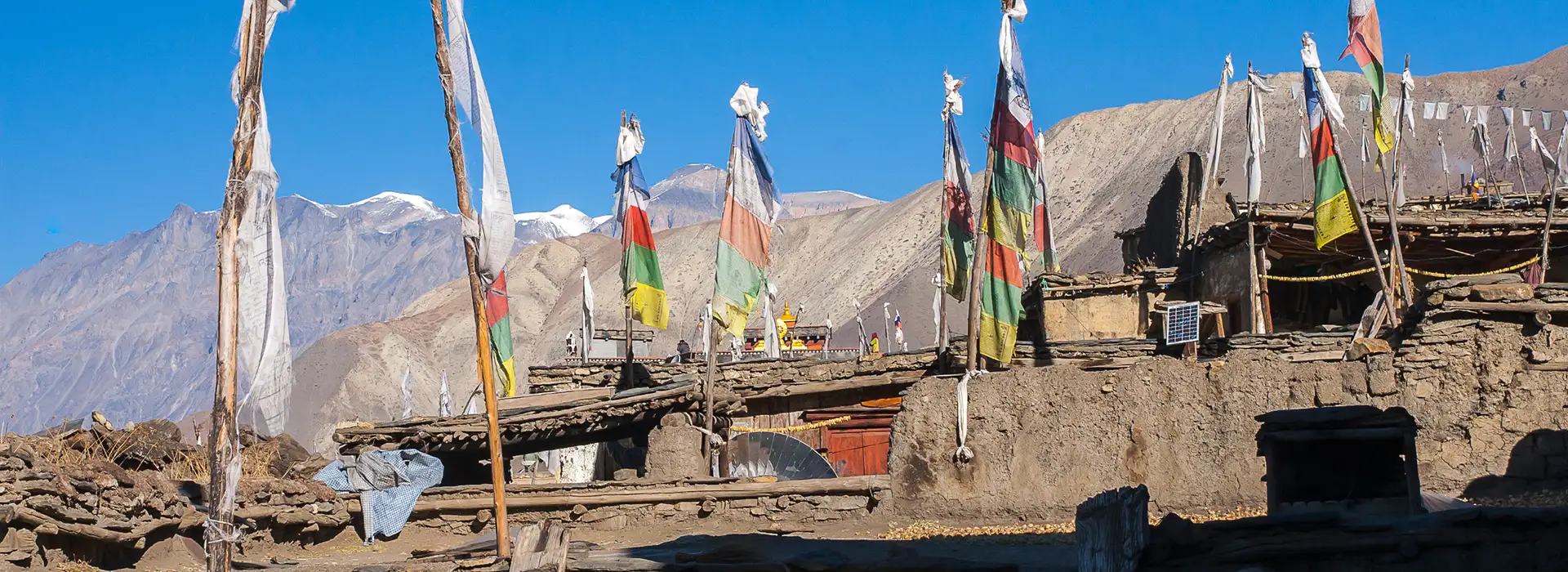
The Upper Mustang Trek guides you through one of Nepal’s most remote and untouched regions. You visit the “Last Forbidden Kingdom of Lo” and uncover the rich history and heritage of this unique area. Trekkers need a special permit to enter Upper Mustang, ensuring that the region remains protected and culturally preserved.
Upper Mustang lies in the rain shadow of the Himalayas, creating a stark, arid landscape. The government restricted foreign access until 1992, which helped maintain the traditional culture, ancient architecture, and pristine environment that you experience today.
During the Upper Mustang Trek, you hike across striking high-altitude desert terrain. The trail takes you past wind-eroded red cliffs, hidden caves, and vast valleys that appear untouched by time. You enjoy breathtaking views of the Annapurna and Dhaulagiri ranges, along with peaks like Nilgiri, Tukuche, and other Himalayan giants. Each day offers a unique combination of desert scenery and mountain panoramas, making every step an unforgettable part of the trek.
The Upper Mustang Trek immerses you in centuries-old Tibetan Buddhist traditions. Along the trail, you see ancient monasteries, colorful chortens, and fluttering prayer flags that reflect the region’s spiritual heritage.
You explore Lo Manthang, the well-preserved capital of the former kingdom, and walk through historic palaces, monasteries, and narrow cobbled streets. Meeting the local people gives you insight into their daily life, rituals, and customs, which have remained largely unchanged for generations.

Included Meals

Trip staff

Transport

Accommodation

Trip Grade
Group Size
Today, you will drive from Kathmandu to Pokhara. You will hop on a private bus and drive west from Kathmandu, covering 200 km in 6 to 7 hours. The drive follows the Trishuli and Marsyangdi river valley past terraced hillsides, local villages, and lush green landscapes.
You will arrive in the lakeside city of Pokhara (820m) in the afternoon. Pokhara is known for its peaceful, laid-back atmosphere and panoramic Mount Annapurna and Machhapuchhre. You can enjoy the evening by Phewa Lake and prepare for the trek.
Start and end altitude: 1,400 m to 820 m
Elevation loss: –580 m
Distance and hours: ~200 km; 6–7 hours drive
Accommodation: Hotel in Pokhara
Accommodation:
Kuti Resort
Difficulty
Since there are no direct commercial flights from Kathmandu to Jomsom, you will fly from Pokhara. The flight from Pokhara to Jomsom offers great aerial views of the Annapurna and Dhaulagiri ranges. Jomsom is a windy mountain town and a gateway to the Kali Gandaki Valley.
After landing in Jomsom, you will begin trekking to Kagbeni. The trail follows the Kali Gandaki River along a wide gravel riverbed and dirt paths. You hike for about 3 to 4 hours, covering about 10km through beautiful mountain views, and reach Kangbeni at 2,810m. Kagbeni is a lovely village of mud-brick houses and narrow tunnels. It is also the entry point to Upper Mustang and offers the most incredible view of the Nilgiri Peak.
Start and end altitude: 820 m (Pokhara) to 2,810 m (Kagbeni) via 2,720 m (Jomsom)
Elevation gain: +1,990 m (flight + trek)
Distance and hours: ~10 km; 20-minute flight, 3–4 hours trek
Accommodation: Teahouse in Kagbeni
Difficulty
After a permit check in Kagbeni, you will enter the Upper Mustang region today. You will follow the east bank of the Kali Gandaki River and trek through the desert landscape and traditional villages of Tangbe and Chhusang. These high-altitude villages are famous for their apple orchards, barley fields, and white homes. After crossing a steel bridge, you will climb steeply and reach Chele at 3,050m. Chele is a ridge-top village offering panoramic views of the valley below.
Chele has a profound Tibetan cultural influence, with prayer flags and locals speaking in a Lama dialect.
Start and end altitude: 2,810 m to 3,050 m
Elevation gain: +240 m
Distance and hours: ~15 km; 6–7 hours trek
Accommodation: Teahouse in Chele
Difficulty
Today is challenging as you gain significant altitude and cross multiple high passes. You will follow a steep ascent to the Taklam La Pass at ~3,700m. Here, you will get the expansive views of barren cliffs and the Tibetan plateau in the distance.
As you continue trekking, you will pass many hills, grazing yaks, and high-desert terrain with occasional juniper shrubs. You will arrive at the village of Samar, then continue to Syangboche La Pass at 3,850m.
You will descend from the Syangboche La Pass and reach the Synagboche Village at ~3,800m. The village of Synagbpocehe is small within dry ridges.
Start and end altitude: 3,050 m to ~3,800 m
Elevation gain: +750 m
Distance and hours: ~12 km; 6–7 hours trek
Accommodation: Teahouse in Syangboche
Difficulty
After breakfast, you will continue through the high arid plateau of Upper Mustang along dramatic rock formations and wind-carved ridges. The trail climbs steadily to one of the highest points of the trek, Nyi La Pass (4,010m).
From Nyi La, you descend along a rugged trail to the Ghami Valley and pass the Ghami La at 3,765m. Today, you will visit the mani wall, carved with stone tablets and Buddhist prayers. The locals believe the wall to be the longest mani wall in Nepal.
You will arrive in Ghami (3,520m) by early afternoon. Ghami is a traditional village with white mud houses, patchy barley fields, and high desert terrain.
Start and end altitude: ~3,800 m to 3,520 m
Elevation gain/loss: +210 m ascent to Nyi La (4,010 m), –490 m descent to Ghami
Distance and hours: ~11 km; 5–6 hours trek
Accommodation: Teahouse in Ghami
Difficulty
You will climb from Ghami across a desolate highland landscape with wind-eroded cliffs and ancient trade routes.
If you have time, you can detour to Ghar Gompa, the 8th-century monastery linked to Guru Rinpoche or Pasmasambhava. Continue through the trail and reach Tsarand (3,560m) by early afternoon.
Tsarang or Charang used to serve as Mustang’s royal and religious center and holds great historical significance. You can visit the red-walled Tsarandf Monastery and the palace portress here. You can also see the nearby Sky Cave, a mysterious cave with archaeological ties to centuries-old burial practices and hidden settlements.
Start and end altitude: 3,520 m to 3,560 m
Elevation gain: +40 m (with undulating terrain)
Distance and hours: ~10 km; 5–6 hours trek
Accommodation: Teahouse in Tsarang
Difficulty
Today, you will trek to the legendary cultural heart of the Upper Mustang, the walled city of Lo Manthang. You will gradually ascend to a broad, open valley with views of high-altitude desert.
Then, you will climb to Lo La Pass at ~3,950m and get a first glimpse of the white mud houses and red-roofed monasteries of Lo Manthang. Descend gently and enter the Lo Manthang (3,840m) through its medieval gateway by midday. You can explore the town in the afternoon.
You will see the Lo-ba villages with people in traditional dree, herds of goats and dzopkyos, and glimpses of the King’s Palace of a once-sovereign Himalayan Kingdom.
Start and end altitude: 3,560 m to 3,840 m
Elevation gain: +280 m (via Lo La Pass ~3,950 m)
Distance and hours: ~11 km; 4–6 hours trek
Accommodation: Teahouse in Lo Manthang
Difficulty
Today is an exploration and acclimatization day in Lo Manthang. You can explore the historical capital of the former Kingdom of Mustang. You can go on a cultural tour to the town’s four major monasteries of Jhampa, Thubchen, Chode, and Choprang. Buddhist statues, frescoes, and mandalas reflecting Mustang’s deep spiritual heritage fill these monasteries.
You can hike or hire a local pony to visit the Chhoser Cave complexes in the afternoon. People in ancient times carved these multi-story homes into the cliffs, a reflection of how people used to live in Mustang long ago.
The day is for relaxing and resting. Enjoy the serene atmosphere, snowy peaks, and brown desert hills.
Start and end altitude: 3,840 m (same)
Elevation gain: Optional short hikes (+100–300 m depending on route)
Distance and hours: No long trek; optional 3–6 hours walking or pony ride
Accommodation: Teahouse in Lo Manthang
Difficulty
Today is difficult, with about 500m ascent and 850m descent. You will leave Lo Mnathand and climb a high ridge with views of the desert valleys below. You will climb to Marang La Pass at ~4,200m, the trek’s highest point. The air is thin at high altitude, so walk comfortably and stay hydrated.
You will descend through a dry and remote landscape with few villages. If you didn’t get the chance to visit the Ghar Gompa, you can visit it today. Locals say anyone who makes a wish in this old and sacred place with a pure heart will see it come true.
From Ghar Gompa, you will continue down to Dhankar at 3,820m. Dhamkar is a small village famous for its bright red cliffs, as the name “Dhamkar” means “Red Wall” suggests. This area is also known for the ancient caves hidden in the cliffs.
Start and end altitude: 3,840 m to 3,820 m (via ~4,200 m)
Elevation gain/loss: +360 m ascent to Marang La (~4,200 m), –380 m descent to Dhakmar
Distance and hours: ~18 km; 6–7 hours trek
Accommodation: Teahouse in Dhakmar
Difficulty
Enjoy the breathtaking views of Dhakmar’s red cliffs before continuing the trek today. The rail has many up and down sections through patches of juniper bushes and several small streams.
You will join the main trail near Ghami and continue trekking until you reach Ghiling by afternoon. Ghiling (3,570m) is a charming village with mid-brick houses, terrace fields, and a peaceful atmosphere.
The air is thicker here, and breathing is easier. You can explore the old monastery, which is known for its murals and traditional architecture. Check into your lodge and enjoy the Nilgiri Himal views.
Start and end altitude: 3,820 m to 3,570 m
Elevation loss: –250 m
Distance and hours: ~14 km; 5–6 hours trek
Accommodation: Teahouse in Ghiling
Difficulty
After breakfast, you will continue on a mostly downhill trail to Chhuksang today. Upi will experience a significant altitude loss and retrace your route through Syangboche or Samar.
The landscape slowly becomes greener, and you will notice more vegetation throughout the trail. You will reach Chhuksang at 3,050m by late afternoon. Chhuksang is a village south of Upper Mustang that has a warmer climate. It is also the meeting point og Kali Gandaki and Narshing Rivers.
Start and end altitude: 3,570 m to 3,050 m
Elevation loss: –520 m
Distance and hours: ~14 km; ~6 hours trek
Accommodation: Lodge in Chhuksang
Difficulty
Today is your final trekking day. You will follow the Kali Gandaki River and pass through Kagbeni again, exiting the restricted Upper Mustang area.
The trail is primarily flat and manageable, with chances of afternoon wind. You will enjoy your last views of Mustang’s brown and red cliffs. You will arrive in Jomsom in the evening. Trekking ends here. You can celebrate with your team and relax the rest of the day.
The full round-trip from Jomsom to Lo Manthang covers about 125 km on foot. Congratulations on completing the challenging trek.
Start and end altitude: 3,050 m to 2,720 m
Elevation loss: –330 m
Distance and hours: ~18 km; 6–7 hours trek
Accommodation: Teahouse in Jomsom
Difficulty
Today, you board a flight from Jomsom back to Pokhara. This scenic early morning flight gives you the final aerial views of the Mustang region. You will arrive in the lush green city of Pokhara in just 20 minutes via air.
You can enjoy the rest of the day. You have the day to yourself, you can clean yourself, go for a massage, or simply explore the city. You can go for an adventurous sport like bungee jumping or paragliding.
Since mountain weather is unpredictable, flight delays and cancellations are common. We will arrange a jeep drive back to Pokhara if the flight is unavailable.
Start and end altitude: 2,720 m to 820 m
Elevation loss: –1,900 m (by flight)
Distance and hours: ~20-minute flight (or 8–10 hours by jeep if weather delays)
Accommodation: Hotel in Pokhara
Difficulty
You will return to Kathmandu via road today. You will follow the same trail through scenic highways, rivers, and terraced valleys. You will reach Kathmandu by afternoon and thus officially conclude the Upper Mustang Trek.
Start and end altitude: 820 m to 1,400m
Distance and hours: ~200 km; 6–7 hours drive
Difficulty
Accommodation on the trail: You will stay in local teahouses during the trek. These simple family-run teahouses offer warm beds, filling meals, and great hospitality.
You usually get a twin-share with two single beds, a pillow, and basic bedding. We advise bringing personal sleeping gear for extra warmth. These rooms often come with a small table or a few hooks. They are thinly insulated and can get cold at night. Bring warm layers and a down jacket for warmth and comfort.
Bathrooms are shared and basic. Some villages offer squat-style toilets, and some provide western-style toilets. Hot showers come with a small fee of NPR 200-300. The lodges heat water with either gas or solar energy.
Meal and Dining Experience: Every teahouse has a communal dining hall with a wood- or yak-dung-heated stove for evenings. Trekkers and locals gather here for food and stories. The menu often includes Dal Bhat, fried rice, noodles, momo, thukpa, tsampa porridge, and occasional Western options such as pancakes, pasta, or omelets.
Our teahouses are known for their hygiene, hospitality, and fresh meals. Your guide will check your room, help with meal arrangements, and ensure daily comfort.
Optional upgrade in Pokhara and Jomsom: We offer upgrades in Pokhara, Jomsom, and Kathmandu. We can arrange higher-end hotels in Pokhara with WIFI, hot showers, AC, and modern comforts. We can also book an upscale lodge in Jomsom if available. The package doesn’t include a hotel in Kathmandu, as many trekkers choose their own hotel; we can assist with bookings and recommendations.
The Upper Mustang Trek is moderate in difficulty. Trekkers with decent physical fitness and prior hiking experience can finish the trek with moderate challenge. The trek involves a balance of relatively manageable and demanding sections.
Every day, you walk about 5 to 7 hours on varied terrain. You will encounter flat riverbeds and steep rocky climbs. Hike slowly and steadily on high passes between 3,899 and 4,200m. Your highest point of sleep is Lo Manthanf at 3,840. It is manageable with our gradual pacing and acclimatization day.
The trek is non-technical and doesn’t require any climbing gear or mountaineering experience. However, it does include many up-and-down hikes over sandy, gravel paths, with ups and downs and sun exposure.
The biggest challenges are altitude, distance, and basic conditions like cold mornings. Since the elevation is high, the oxygen level is low, and breathing can be hard. You are covering 125km of trekking distance, which will be physically and mentally demanding. You might not be used to modest conditions, such as cold mornings, rustic teahouses, and simple toilets. The local way of life will be hard for you to navigate as someone unfamiliar with it.
Since daily distance and altitude gain are gradual and reasonable, you can finish the trek easily. We have plenty of breaks for tea, rest, and photos throughout the trail, making it easier.
Prepare yourself mentally to complete the trek successfully. You will not receive any modern comforts, which can be hard to get used to. You should be open and flexible to any unfamiliar conditions so you can trek with a clear mind.
The best seasons for the Upper Mustang Trek are spring and autumn. These seasons have stable weather, comfortable temperatures, and good visibility. These seasons are also popular among many trekkers. Other seasons are less ideal for many reasons.
Spring (March to May): Spring is one of the ideal trekking seasons. The region is more accessible by March with mild temperatures and longer days. The trail is lush with blooming rhododendrons. The sky is clear, and visibility is excellent. Locals celebrate the Tiji Festival, often in May in Lo Manthang, which adds a cultural atmosphere. Daytime temperatures are 10–20°C at mid altitudes and colder in higher regions. Nights are cold but manageable.
Autumn (September to November): Autumn is Nepal’s best overall trekking season. The monsoon clears the sky, making it crystal blue and stable. People celebrate festivals and enjoy the comfortable weather. The visibility is excellent for photography with golden light and colorful contrast in Mustang’s red canyons. Locals work in barley and buckwheat fields during the harvest season. Apples are fresh in villages like Marpha and Kagbeni. Daytime temperatures are 12–20°C at lower altitudes and 5-15°C in Lo Manthang.
Monsoon (June to August): Mustang lies in the rain shadow. While it is not ideal to trek this season, it is still more feasible than in other parts of Nepal. Upper Mustang receives little to no rainfall, while lower regions like Jomsom and Kagbeni experience some rainfall. Daytime temperatures can be 20–30°C in the lower village and colder in Upper Mustang. Nights are mild or cool. Some areas have wildflowers blooming amid greenery. Sometimes Tiji falls in early June so that you can experience the cultural festival. Trails are quiet with very few trekkers.
Winter (December to February): Winter is cold, with the potential for snow, especially at higher altitudes like Lo Manthang. Many locals migrate to lower areas to avoid the cold. We don’t advise trekkers to trek this season due to harsh weather, and many teahouses are closed. Daytime temperatures can range from 0 to 5°C, and nights can drop to -15°C or lower in Lo Manthang. The trail offers solitude and mostly clear skies.
The Upper Mustang Trek requires stamina and endurance. You don’t need to be an elite athlete, but you need consistent effort and basic fitness.
You should be in reasonably good health and can hike for 5 to 7 hours daily in different terrain. The trek includes some steep ascents as high passes up to 4,200m. There are no technical trails, so you don’t need any climbing or special skills.
Begin training about 3 months before the trek starts so you can build endurance in time. Go on regular walks or hikes with a loaded daypack. Do cardiovascular activities like jogging, cycling, swimming, or brisk walking. These help build endurance and stamina. Since the trail includes many descents, you must train your legs and core strength for good balance. Do squats, lunges, and planks. Go on long walks on uneven ground. Try to train for 45 minutes 3 to 4 times a week, then gradually increase it to 2 to 3 hours of training. Practice stretchers and yoga to avoid straining your muscles.
If you notice any sign of illness, inform your guide immediately on the trail. Don’t skip meals and stay hydrated. You can snack on energy bars mid-trek and walk comfortably to manage the trail. Stretch your body every day before the trek to avoid soreness. Trekking is not a race; being last in the group is okay. Trek at a comfortable pace so your trek is more enjoyable. Take brief pauses and communicate with your guide.
You should prepare yourself mentally as well as physically. Trek with a flexible mindset and patience, and embrace the unexpected to stay positive throughout the trek. Be prepared for modest and simple living conditions with unfamiliar discomfort. These challenges make the trek even more enjoyable. Celebrate your small achievements and encourage/support your group if necessary.
Proper acclimatization ensures a safe and comfortable trek. We have designed our Upper Mustang Itinerary to help your body adjust with gradual altitude gain. We follow the principle of climbing high and sleeping low to help the body produce more red blood cells.
Our route gains elevation steadily instead of jumping quickly. You will stay a night in Kagbeni at 2,810m before entering the Upper Mustang region. The ascent is distributed among many days from Chele (3,050m) to Tsarang (3,560m). We also ensure you descend slightly for an overnight stop when crossing Lo La Pass (~3,950m) to reach Lo Manthang (3,840m).
We also have a built-in acclimatization day on day 8 at Lo Manthang. Lo Manthang is also the trek’s highest sleeping point. The day is not just for sightseeing; it is a critical time for your body to produce red blood cells and improve oxygen absorption. You can go on an optional hike to Chhoser at ~4,000m to follow the climb high and sleep low principle.
We advise the trekkers to drink at least 3 litres of fluid daily and eat regularly. You can try the traditional altitude sickness remedies like garlic soup and ginger tea.
Our guides will monitor your health and remind you to eat regularly. If they notice any signs of acute mountain sickness (AMS), such as headaches, nausea, dizziness, or fatigue, in that case, we will respond with a clear protocol and make the best decision for your safety.
You can take Diamox to support acclimatization if your doctor advises you to do so. Trekking slowly and steadily, and hydrating/eating well, is the key to acclimatization. You should avoid alcohol and sleeping pills, and inform your guide in case of any discomfort.
Upper Mustang is known for its year-round calm, dry weather. Rainfall is minimal as it is in the rain shadow of the Himalayas. Temperature and wind can fluctuate significantly depending on the season, altitude, and time of day. You will experience a range of temperatures and weather conditions.
Temperature: Daytime temperatures can range from 5-20°C, depending on elevation and sun. Lower altitude villages like Jomsom or Kagbeni may feel warm enough for a t-shirt by midday. Higher altitude areas like Lo Manthanf or Syangboche are often cold. Nighttime can be 0°C year-round and might drop to -10°C on colder spring or autumn nights. Winter can have nights as cold as -15°C.
Wind: Upper Mustang gets very windy and dusty. The Kali Gandaki Valley is a region’s natural wind tunnel. This wind can make even warm days feel cold and dry. We start the trek early so we can finish it by early afternoon to avoid the strong winds. Bring a windproof outer layer and a buff or scarf for protection against harsh wind and dust.
Precipitation: Though rare, light rainfall is possible in Upper Mustang. There might be no rain for several days, but weather changes quickly, so pack a light rain jacket just in case. Early spring or late autumn may get a light snow at higher elevations, but it melts quickly, making the trail slippery. You can use microspikes in these cases.
Sun and UV exposure: UV radiation increases with altitude. Use SPF 50+ sunscreen and lip balm on all exposed skin. Wear sunglasses with UV protection to protect your eyes from sunlight and dust. We advise trekkers to bring a sun hat and a beanie/buff for safety and warmth.
Our guides receive regular weather updates to adjust their daily plans as needed. Upper Mustang can experience unexpected weather conditions, but staying prepared is always better.
Our trusted guides and porters accompany you on your Upper Mustang Trek. They ensure safety and proper logistics and act as a bridge between you and the local people.
Our guides are professional and have a license from the Nepal Tourist Board. They speak English fluently and know the trek trails, culture, history, and weather. They will explain the meaning behind chortens, monasteries, and local costumes. They have a more profound understanding of the region’s Tibetan-influenced heritage.
Every evening, your guide will brief you on the next day’s trek, route, altitude, and highlights. They will also regularly monitor your health, check for signs of altitude sickness, and ensure everyone stays well hydrated.
They will also pace the group based on its health. From handling unexpected weather and route to accommodation, your guide will look after everything to ensure comfort. They also have basic first-aid training and will perform the first medical procedure when necessary. Should you have any questions, feel free to ask them.
Porters are the heart of the trek. They carry most of your load, about 10-15 kg per trekker. We assign one porter to two trekkers, meaning each porter carries about 30 kilograms throughout the trek. They will take the weight of two trekkers with a fair division. Thanks to them, you will only carry a small daypack with essentials.
We ensure they have suitable clothes, footwear, gear, and weather protection. We follow ethical and responsible working and trekking conditions. Our staff are insured and receive above-average wages. We follow the standards of the International Porter Protection Group (IPPG) to ensure safety and uplift the local communities.
We advise our trekkers to tip their guides and porters at the end of the trek to show appreciation for their hard work and dedication. Porters and guides are integral to the trek. Bonding with them is also a memorable part of the trek.
We design the itinerary as a brief overview of the trek. We understand that flexibility is essential when trekking, especially in higher-altitude regions. Different circumstances may delay the trek; we will adjust our plans accordingly.
Low visibility often delays flights to and from Jomsom. We will wait for the conditions to improve in such cases. We will take the road as an alternative if the weather doesn’t improve.
Landslides, construction, or local festivals can block trails. Our guides will lead you along an alternative route to ensure your safety and comfort.
Group Pace and Health also factor into the likelihood of a trek delay. If a trekker feels sick or the group needs more rest, we will consider modifying the itinerary.
You should always listen to your guide; they may start the trek early or shorten the day’s trek. You might stay in a different destination, take a short detour, or skip one. The guides make these decisions for the group’s overall health and well-being. They will preserve the main highlights, but the trail might change.
The itinerary acts as our guideline, not a fixed plan. Flexibility is key to a memorable and safe trek. It allows you to adapt to sudden weather/trail changes, unplanned cultural experiences, and unique encounters.
This is a private trek, giving you more flexibility to customise it. You can walk at your own pace and adapt to each situation. We will also consider your plans if they are available.
Clothes: Pack layers for the trek. Since the weather is unpredictable, it’s best to prepare for it. Pack a breathable base layer, a warm fleece or a lightweight down jacket, and a wind- and water-resistant jacket. You need a pair of thermal leggings and trekking pants. Pack a thin inner and an insulated outer glove.
Carry a beanie or wool cap and a sun hat. Take some quick-dry underwear and several pairs of wool or synthetic hiking socks. Ensure your trekking boots are sturdy and well broken in, with good ankle support. You also need a pair of camp shoes or sandals for evenings at the teahouse.
Trekking Gear: Bring a 35-45L daypack for essentials like water, a jacket, snacks, cash, and important documents. Bring a duffel bag for your porter with a capacity of 80-100L. The lodges provide blankets, but the cold can still pierce them, so bring a 4-season sleeping bag.
You need trekking poles, especially for trekking downhills. Brimming a water bottle or a hydration bladder and a water purification method like tablets or a filter. Don’t forget headlamps with spare batteries for pre-dawn hikes and nightly bathroom trips.
Personal Items: Bring category 3 or 4 UV-blocking sunglasses, SPF 50+ sunscreen, and lip balm. You need basic toiletries like a toothbrush, toothpaste, a travel-size towel, toilet paper, wet wipes, hand sanitizer, and feminine hygiene products.
If you are bringing soap, make sure it is biodegradable. Bring a small first-aid kit with blister care, band-aids, antiseptic, painkillers, acclimatization medication, diarrhea medication, and any personal medication prescriptions.
Other: Since electricity is limited, you can bring a power bank. You can get a camera to take pictures or just your phone with extra storage. Earplugs can help reduce noise in teahouses. Bring a neck gaiter or buff for protection against wind and dust. Bring snacks like energy bars, trail mix, or chocolate since they are rare on the trail.
Most people can get a visa on arrival at Tribhuvan International Airport in Kathmandu. You need your passport with at least 6 months’ validity, a passport-sized photo, and cash in any primary currency or NPR. Pay the visa fee to complete the process. You can buy a 15-day, 30-day, or 90-day visa. Since the Upper Mustang Trek is 14 days, we recommend a 30-day visa. You can fill out the visa at the airport or online to save time. Alternatively, you can apply for a tourist visa at your local Nepal Embassy.
The Upper Mustang area is a remote and restricted region. You need a Special Restricted Permit (RAP) to tweak in this region. Please send us a scanned or photocopied passport, be part of a registered trekking group, and trek with a licensed guide for this permit. It costs USD 500 for the first 10 days, plus an additional USD 50 per day for each additional day. You also need two other permits: an Annapurna Conservation Area Permit (ACAP) and a Trekkers Information Management System (TIMS) card. We will handle these permits for you.
Nepal uses the Nepalese Rupee (NPR) as its official currency. Banknotes are available in denominations of NPR 1,000, 500, 100, 50, 20, 10, and 5. Coins are rarely used in practice, but you can get a one-rupee and a two-rupee coin.
You can find money exchange counters for major currencies like USD, EUR, GBP, etc., and ATMs that accept international debit/credit cards in Kathmandu and Pokhara. 1 USD ~ NPR 140 can fluctuate, so check rates before exchanging. ATMs usually have a withdrawal limit of NPR 20,000-30,000 and may charge a service fee of NPR 500-700 per transaction.
Since the trail doesn’t accept cards or foreign cash, you need Nepali rupees in cash to buy anything while on the trek. There are no ATMs beyond Jomsom, so exchange your money in the city. The package includes your meals and accommodation, but you might need cash for snacks, drinks, a hot shower, a charging device, souvenirs, and tips for local staff.
We recommend carrying NPR 15,000-25,000 per person in cash so you have enough money for the entire trek. Bring small denominations like NPR 100s and 500s for easier transactions. Keep your cash securely in a money belt and distribute it among your jacket and bag pockets for safety. Withdraw or exchange money before leaving Pokhara. Budget correctly and carry enough cash for the entire trek.
The Upper Mustang region has a profound Tibetan influence. They follow Tibetan Buddhism and have rich local customs. The area remained a kingdom until 2008 and restricted foreigners. Show respect and cultural sensitivity to build connections with local people.
Don’t click pictures without the people’s consent. Monks and elders appreciate this small yet kind gesture. Some Gompas forbid pictures or flashlights; look at the rules and follow them.
Remove your shoes and hat when entering monasteries or homes. Wear modest outfits and avoid revealing too much skin, especially in sacred places. Speak and behave softly and respectfully. Walk clockwise when passing Mani walls, Chhortens, or prayer wells, and don’t step over prayer flags, butter lamps, or other sacred items. Don’t touch or disturb the relics, statues, or prayer offerings.
You can learn basic Nepali and Tibetan phrases like “Namaste” or “Tashi Delek” to greet people with a smile. Avoid touching anyone’s head because it’s considered sacred, and don’t point your finger at anything or anyone.
Trekkers walk around a central wood stove in the evenings in a teahouse. It’s a great time to connect with other like-minded people. Be friendly and learn a few local words to show interest in their culture.
Upper Mustang is home to centuries-old monasteries, culture, hidden caves, and palaces. Please don’t climb on the structure or remove anything, as it may be fragile. Your guide will give instructions when visiting restricted or sacred sites so you don’t make any mistakes.
Your safety is our top priority. The Upper Mustang region is remote, and the trails are rugged. You can easily finish the trek with proper precautions and by following the team’s lead. Our guides have many years of experience in high-altitude trekking and mountain first aid. They carry a basic first-aid kit and a mobile phone in case of emergencies.
The itinerary allows a gradual altitude gain with proper acclimatization. The team also monitors the group’s health throughout the trek. We recommend drinking only boiled or treated water for safety concerns.
Eat freshly cooked meals, preferably vegetarian, in remote areas. Wash your hands or use hand sanitizer before and after meals. Yaks and mules might come your way; make way for them by standing on the hillside to avoid being pushed off the cliff.
The weather can change quickly with strong afternoon gusts and storms. Wear UV-protection sunglasses and wrap them over your face with a scarf or a buff. If it rains or snows, the guide will adjust the plans following your safety. We will conduct helicopter evacuations in the event of an unfortunate emergency. You can finish the trek in good health by following the guide’s lead, trekking cautiously, and staying hydrated.
Since Upper Mustang Trek is a remote, high-altitude trek, your policy should cover trekking above 4,000m, helicopter evacuation, and medical care.
A good insurance policy protects you from unexpected disruptions like trip cancellations, flight delays, or lost baggage. Please bring a printed copy of your insurance certificate and emergency contacts in case we need to arrange an evacuation.
Travel Insurance is not only essential but also mandatory. A good policy protects you financially and allows you to trek stress-free.
Here are some add-ons we provide. These are optional and cost extra. We understand your choice, whether or not you want any of these add-ons.
Kathmandu Sightseeing: The trek starts and ends in Kathmandu. If you want a city tour, we can arrange a private tour with a guide to the city’s UNESCO World Heritage Sites. You will visit Boudhanath Stupa, Pashupatinath Temple, Swayambhunath, and the Durbar Squares of the valley. You get a cultural insight into the city’s art, religion, and history. A typical tour is a day long, but you can customise it further.
Extra Nights and Extensions: You can add extra nights during or after the trip if you have extra days in your schedule. Many trekkers spend an additional day in Lo Manthang exploring the ancient kingdom further. You can also stay additional days in Pokhara or Kathmandu if you want. You can take detour hikes to Chhoser, Garphy, or the Niphjy cave monasteries. You can also visit the Muktinath temple near Jomsom. All extensions are private and customisable.
Cultural Experiences: If your trek falls during the Tiji festival in Lo Manthang, we can adapt your itinerary so you can witness and participate in this centuries-old festival. We can arrange local add-ons, such as dal bhat cooking sessions, in Ghami or Kagbeni. You can visit the village schools or volunteer there. Taste regional specialities like apple cider or tak cheese in Kagbeni. These experiences will enrich your memory and teach you more about local life.
If you want any add-ons, inform us when booking or during the trek so we can make appropriate arrangements.
You can contact Peregrine Treks and Tours via email or phone. Visit our website for our contact information. The booking process is easy and traveler-friendly. We will get back to you after checking the availability of your ideal trekking date and group size. We’ll send the booking form, itinerary, and Trek Agreement. Pay a 20–30% deposit to confirm the booking, and you can pay the rest before the trek starts. We handle all the permits, accommodations, and flights after booking confirmation.
You get a full refund minus a 20% cancellation fee if you cancel the trip 30 days before the trek. You get no refund if you cancel after that. We know plans and emergencies can change, so we let you postpone your trek if needed. We can also hold our deposit as credit for a future trek. Read our full Terms and Conditions document for details on refund timelines, cancellation deadlines, and rescheduling policies.
For further questions, email us via our website’s contact form, and we will respond within 24 hours. We aim to make your booking as easy and fun as possible.