


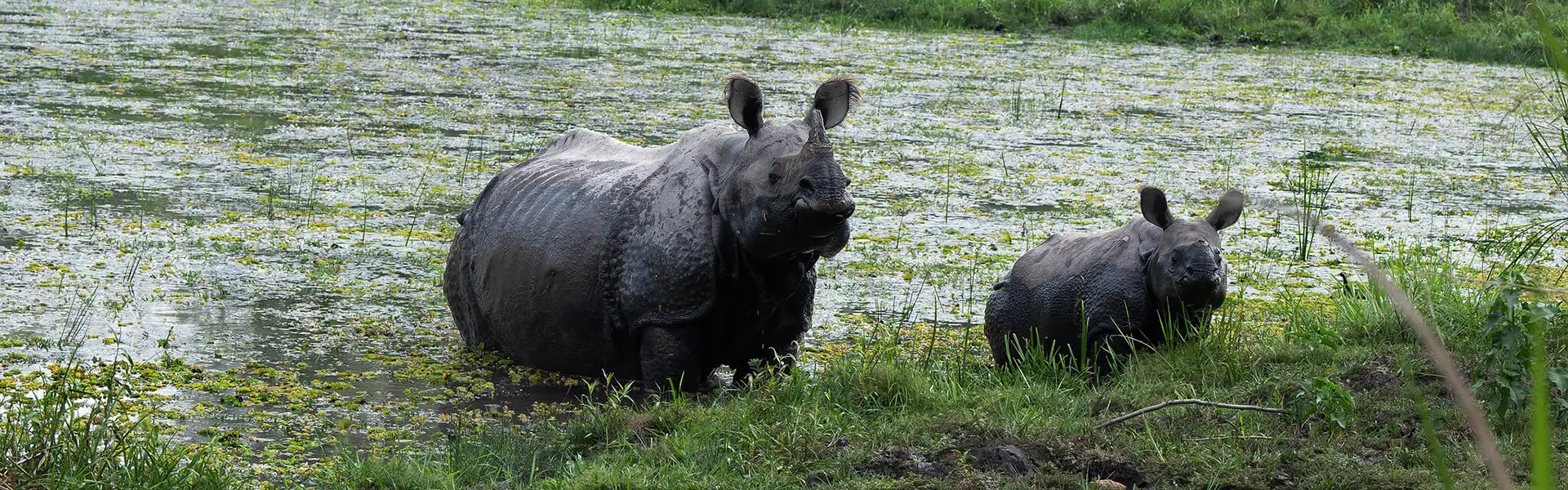

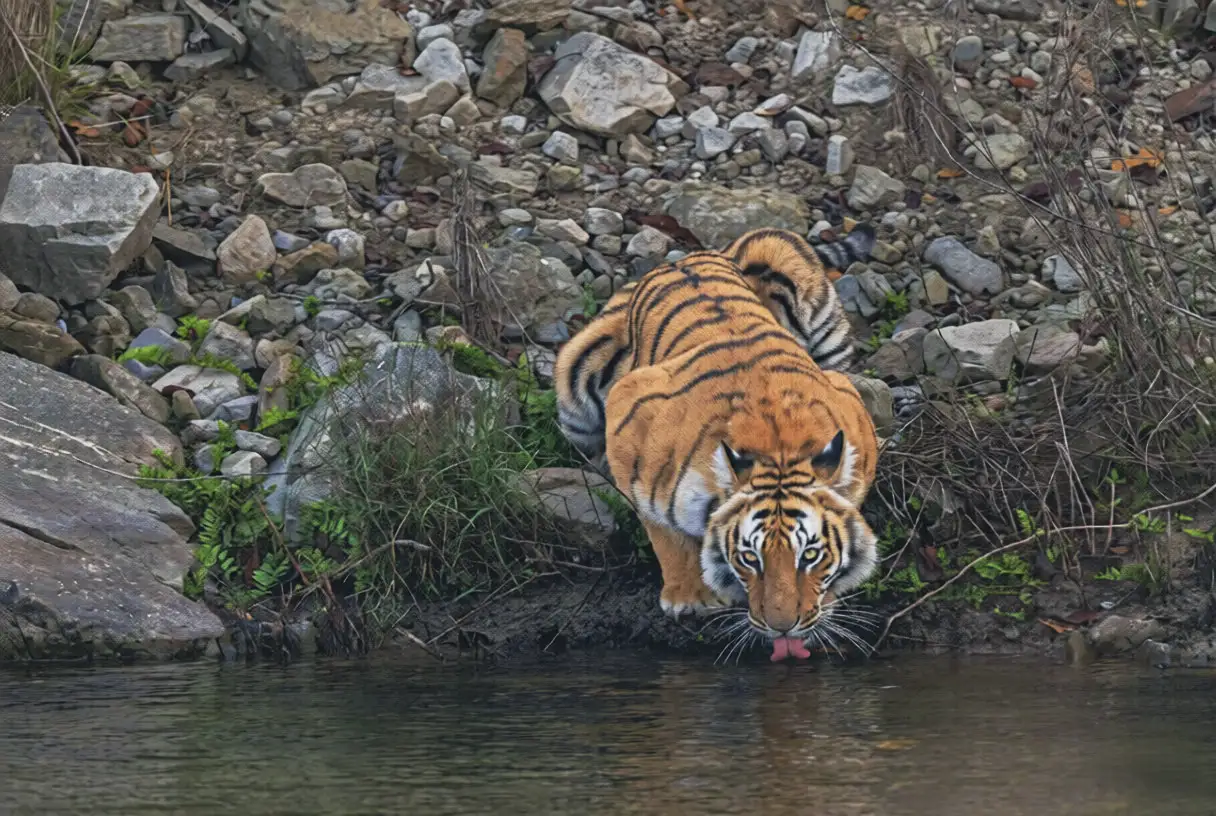
Most travelers come to Nepal for the mountains. Chitwan shows a completely different side of the country. Dense forest, tall grasslands, slow rivers, and open wetlands replace the high peaks. Rhinoceroses walk through tall elephant grass. Gharial crocodiles rest on sandy riverbanks. Hundreds of bird species fill the trees every morning. Chitwan National Park became Nepal’s first national park in 1973 and was designated a UNESCO World Heritage Site in 1984.
UNESCO recognizes it as one of the last important refuges for the greater one-horned rhinoceros and Bengal tiger. But things to do in Chitwan extend well beyond the park gate. The Tharu villages, Rapti River, Beeshazar wetlands, and local culture all add real depth to a visit. Use this guide to find the best activities for your travel style, understand when to go, and plan a 2-day or 3-day Chitwan itinerary that makes the most of your time.

Quick Answer: What Are the Best Things to Do in Chitwan?
- Take a jeep safari through the national park for rhinoceros and tiger sightings.
- Paddle a canoe along the Rapti River for crocodile and bird viewing.
- Walk into the jungle with a trained naturalist guide.
- Visit Beeshazar and Associated Lakes for birdwatching and wetland scenery.
- Watch a Tharu cultural dance performance in the evening.
- Cycle through Sauraha village and nearby Tharu settlements.
- Watch the sunset from the Rapti riverbank.
- Stay at Meghauli for a quieter, deeper wildlife and birding experience.
Why Chitwan Offers More Than a Simple Safari
Chitwan travel combines wildlife, wetlands, rivers, traditional villages, and cultural life into one destination. A short 2-night or 3-night stay gives enough time to cover multiple activity types without rushing. The destination sits naturally between Kathmandu and Pokhara on the main Nepal tourist circuit. Most visitors stop here for 2 to 4 nights. Families, birdwatchers, photographers, couples, and first-time Nepal visitors all find the right activities here.
The Chitwan region covers far more than one park entrance. Sauraha, Meghauli, Bharatpur, Beeshazar, Devghat, and the Chepang Hill Trail all offer distinct experiences. The benefits of a private Nepal tour become clear at this stage: a private operator arranges the right activities for your style, handles park permits, and books guides suited to your interests.
Chitwan at a Glance
| Category | Details |
|---|---|
| Ideal Stay Length | 2 to 4 nights |
| Best Season | October to March (autumn and winter) |
| Top Experiences | Jeep safari, canoe ride, Tharu culture, Beeshazar birdwatching |
| Best Base Area | Sauraha (most visitors), Meghauli (wildlife and peace) |
| Best For | Families, couples, birdwatchers, photographers, and first-time Nepal visitors |
| Average Budget Level | USD 40-80 per day (budget), USD 150-400+ per day (luxury lodge) |
| Park Status | UNESCO World Heritage Site since 1984 |
| Known Wildlife | Greater one-horned rhinoceros, Bengal tiger, gharial, 544+ bird species |
Best Things to Do in Chitwan
Wildlife and Safari Activities
Wildlife activities form the core of any Chitwan visit. The park records 68 mammal species, 544 bird species, 56 reptile and amphibian species, and 126 fish species. Plan at least two different wildlife activity types during your stay.
Jeep Safari
A jeep safari takes you deep into the national park on designated tracks. Open 4×4 vehicles give clear sightlines across grasslands, forest edges, and riverbeds. Chitwan jeep safari tours run in the early morning and late afternoon, when animals are most active. Rhinoceroses are regularly seen near the Kasara area and in the park’s eastern grasslands. Tiger sightings happen, but stay unpredictable. Keep expectations realistic and enjoy the full forest atmosphere even when larger animals stay hidden.
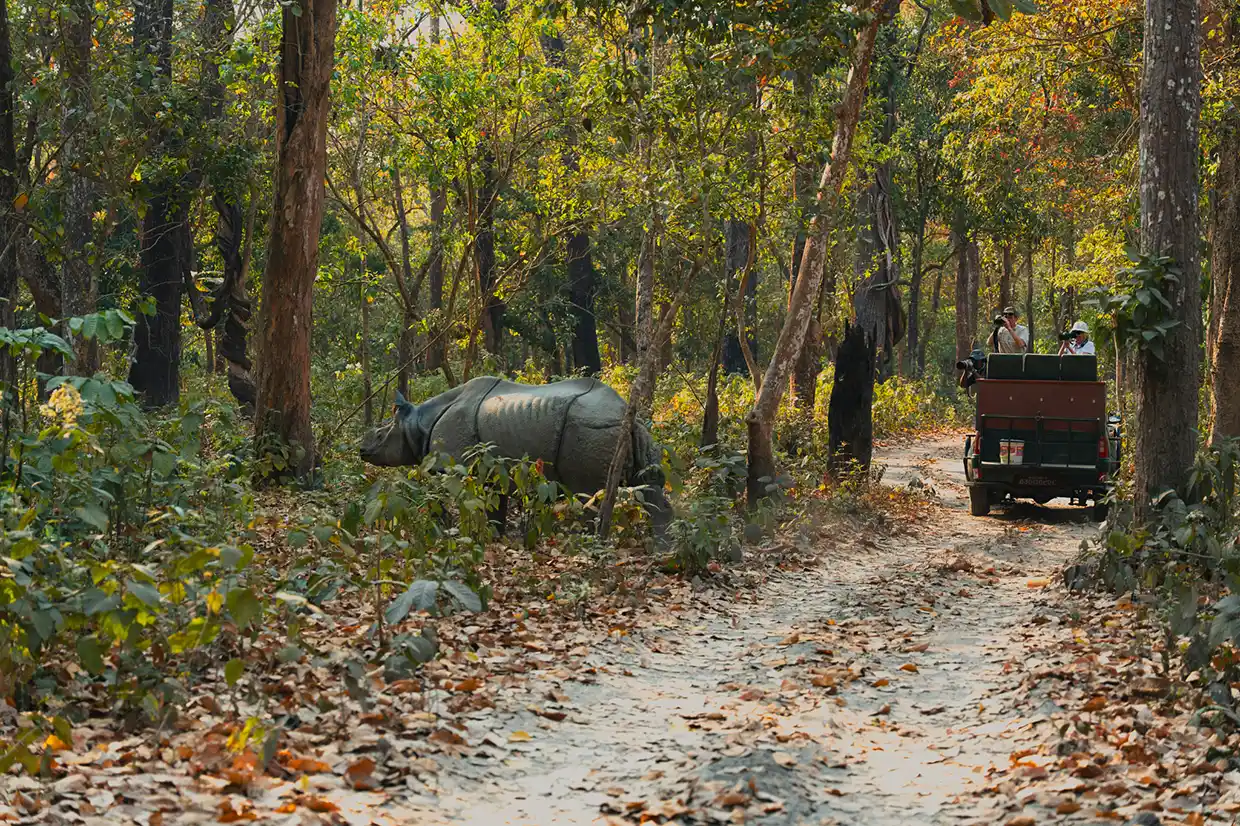
- Best for: All visitors, especially first-timers and photographers.
- Time needed: 3 to 4 hours per session.
- Best time: 6 to 9 AM and 3 to 6 PM.
- Practical tip: Book a qualified naturalist guide. Knowledge of animal behavior improves every sighting.
Jungle Walk
A guided jungle walk gives a completely different experience from a vehicle safari. Walk quietly through the buffer zone forest with a trained guide. Tracks, droppings, feathers, and plant life tell stories that no vehicle tour covers. Walks run for 2 to 4 hours, depending on the route. Guides carry communication devices and follow strict safety protocols. The jungle walk suits travelers who want a slower, more personal connection to the forest.
- Best for: Nature lovers, slower travelers, couples.
- Time needed: 2 to 4 hours.
- Best time: Early morning.
- Practical tip: Wear neutral-colored clothing. Avoid bright colors that disturb wildlife.
Canoe Ride on the Rapti River
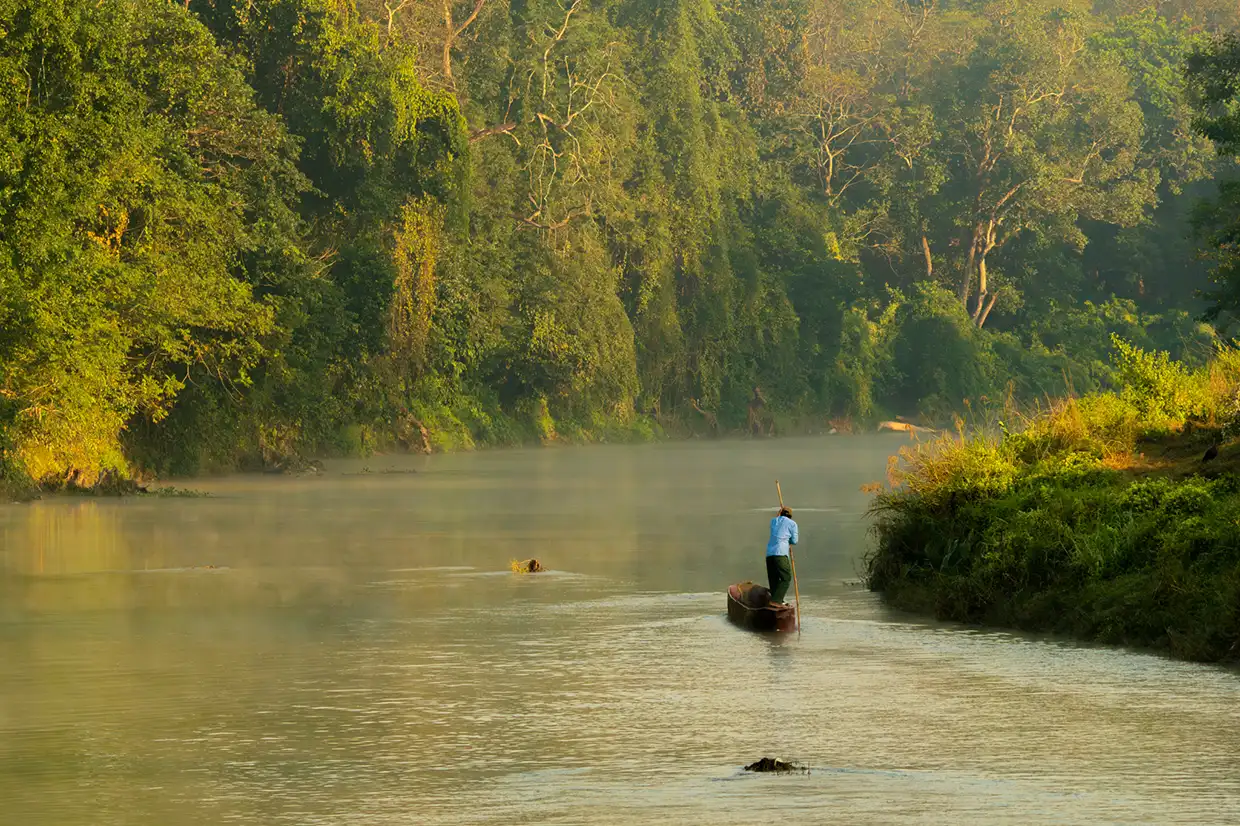
A traditional dugout canoe ride along the Rapti River ranks among the best things to do in Chitwan for both wildlife watching and atmosphere. Mugger and gharial crocodiles rest on sandy banks only meters from the boat. Kingfishers, herons, storks, and egrets line the riverbanks. Rides run in the morning, usually as part of a combined park activity package. The water stays calm, the pace stays slow, and the views stay wide. Canoe rides suit families with children, photographers, and birdwatchers equally well.
- Best for: Families, birdwatchers, photographers, and all visitor types.
- Time needed: 1 to 2 hours.
- Best time: Early morning.
- Practical tip: Sit still and speak quietly for the best crocodile and bird sightings.
Birdwatching
Chitwan holds one of the most important birdwatching sites in South Asia. Over 544 species have official records in the park. The grasslands host the Bengal florican and the lesser florican. The wetlands attract painted storks, Asian openbill storks, and rare winter migrant species. Dedicated birdwatching walks start before sunrise. A specialist bird guide increases sighting counts dramatically. Beeshazar Lake, the Rapti riverbank, and the forest edge near the buffer zone all produce strong results.
- Best for: Birdwatchers, nature photographers, quiet travelers.
- Time needed: 2 to 5 hours.
- Best time: Dawn, between 5:30 and 9 AM.
- Practical tip: Bring binoculars. Even basic 8×42 binoculars improve every sighting.
River and Wetland Experiences
The rivers and wetlands around Chitwan give the destination much of its character. Rapti River activities go beyond the canoe ride. Watch the river at sunset from the Sauraha bank as birds return to roost and the forest turns golden.
Beeshazar and Associated Lakes
Beeshazar and Associated Lakes form one of Nepal’s largest wetland systems. The lakes attract seasonal migratory waterbirds alongside resident species. Painted storks, lesser adjutant storks, and various duck and heron species use the shallow margins throughout the year. A guided visit to Beeshazar works well as a half-day activity from Sauraha. Walking trails and open viewpoints give good sightlines across the water. Quiet photography conditions make this one of the best free and low-cost additions to any Chitwan itinerary.
- Best for: Birdwatchers, nature photographers, slow travelers.
- Time needed: 2 to 3 hours.
- Best time: Morning.
- Practical tip: Visit from October to March for the highest bird numbers.
Rapti River Sunset
The Rapti River runs along the northern edge of Chitwan National Park and marks the boundary between Sauraha village and the park forest. Watching the sun drop behind the forest from the riverbank costs nothing and delivers one of Chitwan’s most memorable moments. Local people, children, and other travelers often gather at the bank in the late afternoon. Elephants sometimes bathe across the river near dusk. Birds fly back to roost across the water. Set aside one evening specifically for the Rapti sunset.
- Best for: Couples, photographers, and all visitor types.
- Time needed: 45 minutes to 1 hour.
- Best time: 5 to 6:30 PM.
- Practical tip: Free activity. Bring a camera and arrive 30 minutes before sunset.
Cultural and Village Experiences
Tharu culture forms a strong second layer of the Chitwan experience. The Tharu people have lived in the inner Terai for centuries and developed a distinctive culture shaped by the forest and river environment around them.
Tharu Village Visit
Walk through a traditional Tharu village near Sauraha or Meghauli. Traditional mud-and-clay houses with bamboo walls and thatch roofs line the village lanes. Women paint decorative patterns on house walls. Community life continues in open courtyards throughout the day. A guided village walk explains architectural traditions, farming practices, and the relationship between Tharu communities and the surrounding forest. The experience adds real cultural weight to a safari-focused trip.
- Best for: Culture travelers, first-time Nepal visitors, families.
- Time needed: 1 to 2 hours.
- Best time: Morning or late afternoon.
- Practical tip: Ask your guide to introduce you to a local family for a genuine interaction.
Tharu Cultural Dance Program
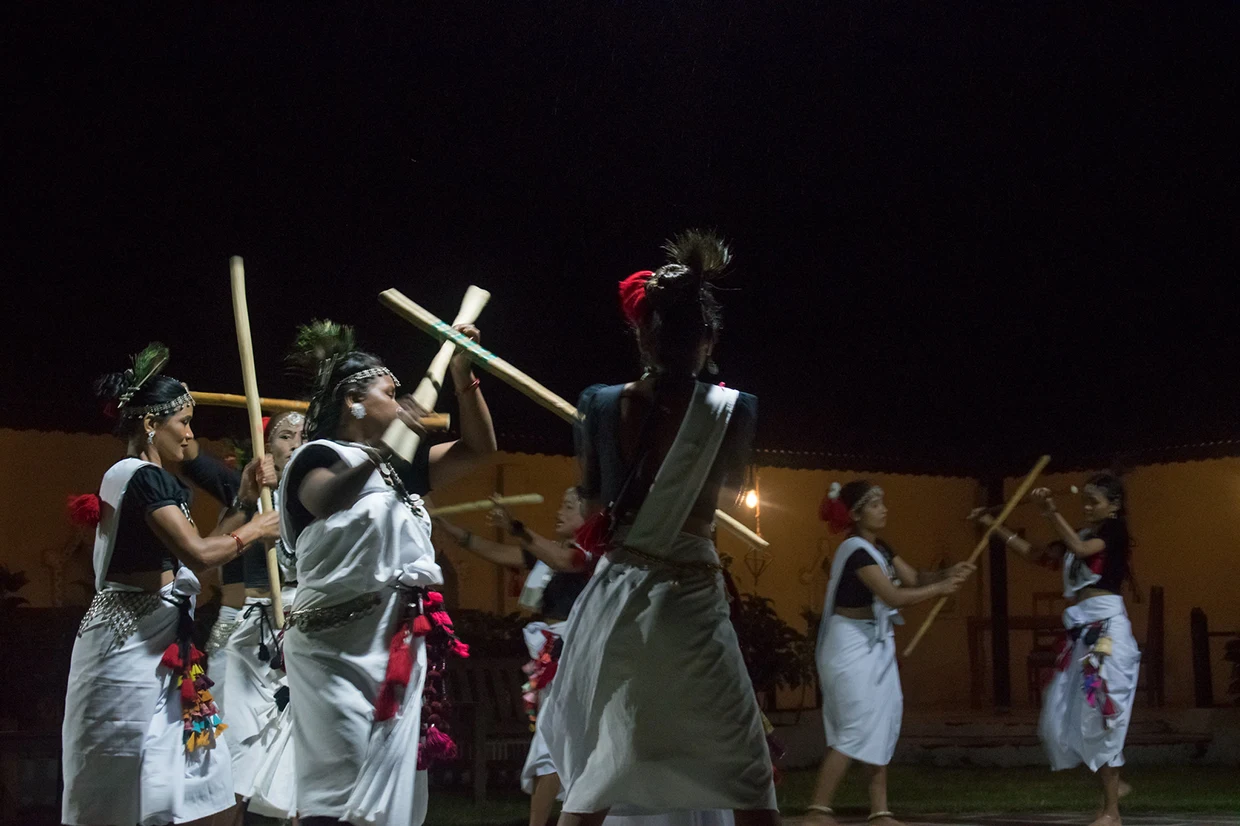
Most lodges and guesthouses in Sauraha and Meghauli arrange evening Tharu cultural performances. Dancers in traditional costumes perform the stick dance (Danda Nach) and other traditional forms to live percussion. Programs run for 45 minutes to 1 hour after dinner. The performance gives a strong visual and cultural context to the Tharu people you meet during daytime village walks. Private Nepal tour benefits include reserved front-row seating and a guide who explains each dance form before and after the performance.
- Best for: All visitor types. Families especially enjoy this.
- Time needed: 45 minutes to 1 hour.
- Best time: Evening after dinner.
- Practical tip: Tip the performers directly. The full cost rarely reaches the dancers from group bookings.
Village Cycling
Rent a bicycle in Sauraha and cycle through the buffer zone villages and paddy fields surrounding the town. Paths stay flat and easy. Village life, local farms, and occasional wildlife sightings along the tree-lined lanes make the ride genuinely engaging. Cycling suits independent travelers and families with older children. A half-day cycling route covers several Tharu settlements and returns via the Rapti riverbank. A luxury travel Nepal comparison shows that cycling costs less than USD 5 for a full-day rental but delivers experiences no vehicle tour can replicate.
- Best for: Independent travelers, active couples, culture lovers.
- Time needed: 2 to 4 hours.
- Best time: Morning or early afternoon.
- Practical tip: Bring water and sunscreen. The Terai sun feels intense even in winter.
Quiet Nature and Slow Travel Experiences
Meghauli, located on the western side of the park near the Rapti and Narayani rivers, suits travelers who want more wildlife depth and less tourist infrastructure. Fewer visitors, longer forest stretches, and closer proximity to core rhino and tiger habitat define the Meghauli experience. Birdwatching mornings, quiet riverside time, and slower photography sessions all work better from Meghauli than from the busier Sauraha side. Luxury lodges near Meghauli cater specifically to wildlife-focused travelers and offer longer guided walks and more personalized activity planning.
Things to Do in Chitwan by Travel Style
Best Things to Do in Chitwan for First-Time Visitors
First-time visitors get the most value from a structured combination of the main activities.
- Must-do: Jeep safari for rhinoceros sightings.
- Add: Canoe ride on the Rapti River.
- Add: Tharu cultural dance performance in the evening.
- Add: Short guided jungle walk in the buffer zone.
- Add: Rapti River sunset.
- Skip if short on time: Beeshazar Lakes. Save it for a 3-day visit.
Best Things to Do in Chitwan with Family
Families with children enjoy Chitwan’s open spaces, gentle river activities, and visual wildlife encounters.
- Canoe ride: Calm and safe for all ages. Crocodile sightings excite children.
- Jeep safari: Easy for children and highly visual.
- Village cycling: Flat terrain suits families with children aged 8 or older.
- Tharu cultural performance: Strong entertainment value for children.
- Beeshazar Wetlands: Good for a quiet morning away from the crowds at the park entrance.
- Skip: Long jungle walks in the heat. Keep morning activity slots short for younger children.
Best Things to Do in Chitwan for Couples
Couples find Chitwan’s river evenings, quiet forest mornings, and cultural dinner settings especially memorable.
- Rapti River sunset: One of Nepal’s most romantic evening moments.
- Private jungle walk: A quieter and more personal forest experience.
- Canoe ride: Peaceful and visually rich.
- Tharu dinner with cultural performance: Strong evening atmosphere.
- Meghauli stay: Quieter setting suits couples who want space and privacy.
Best Things to Do in Chitwan for Birdwatchers
Chitwan delivers some of the strongest birdwatching in South Asia. A dedicated birdwatcher can record 100 or more species in a 3-day visit with a specialist guide.
- Dawn birdwatching walk: Start before sunrise near the buffer zone forest edge.
- Beeshazar Lakes: Best wetland birdwatching site in the region.
- Canoe ride: Strong river and bank species in one slow hour.
- Grassland edges: Bengal florican and grassland specialists appear here.
- Meghauli stay: Access to the forest interior for forest-specific species.
Things to Do in Chitwan After Pokhara or Kathmandu
Chitwan sits midway between Kathmandu and Pokhara on Nepal’s main tourist route. Most travelers stop here for 2 to 3 nights on the way between the two cities. A standard 2-night stop comfortably covers a jeep safari, a canoe ride, and a cultural evening. Premium vs budget Nepal tour planning both work well here. Budget travelers use shared jeep safaris and guesthouses in Sauraha. Premium and private Nepal tour benefits include exclusive vehicle access, specialist guides, and lodge-based activity arrangements that fit the overall trip schedule.
Things to Do in Chitwan by Season
Autumn: October and November
Autumn gives the best overall Chitwan experience. Monsoon rains end, vegetation clears, and animals move more freely through shorter grass. Jeep safari sightings improve in October and November as animals concentrate near water sources. Birdwatching benefits from clear skies and early migrant arrivals.
Winter: December to February
Winter keeps Chitwan cool and dry. Mist sits over the Rapti River on early mornings, creating strong photographic conditions. Grasslands stay short after the post-monsoon growth cycle. Winter is best for birdwatching, canoe rides, and longer jungle walks without the heat.
Spring: March to May
Spring brings rising temperatures and a forest in bloom. Wildlife remains active before the hot season peaks. March and April give a good balance of warmth, wildlife activity, and reduced crowds. Late April and May bring increasing heat, shortening comfortable safari windows.
Summer and Monsoon: June to September
Heavy monsoon rains restrict park access between June and September. Chitwan National Park closes the core areas during the peak monsoon months. Some lodge and cultural activities continue in Sauraha, but wildlife sightings become limited. Avoid this period unless you plan only Sauraha cultural activities.
Things to Do in Chitwan in 2 Days and 3 Days
2-Day Chitwan Plan
Two days and two nights are enough time to cover the core wildlife and cultural highlights.
- Day 1 Morning: Arrive in Sauraha. Check in and take a short orientation walk along the Rapti Riverbank. Afternoon: Canoe ride on the Rapti River for crocodile and bird viewing. Sunset: Rapti River sunset from the village bank. Evening: Tharu cultural dance program after dinner.
- Day 2 Morning: Early jeep safari into the national park. 3 to 4 hours. Midday: Return to lodge for breakfast and checkout. Afternoon: Depart for Pokhara or Kathmandu.
3-Day Chitwan Plan
Three days allow a second wildlife block, Beeshazar, and a slower cultural day.
- Day 1 Morning: Arrive. River walk and orientation. Afternoon: Canoe ride and guided jungle walk in the buffer zone. Evening: Rapti sunset and Tharu cultural performance.
- Day 2 Morning: Full jeep safari. 4 hours deep into core park zones. Afternoon: Tharu village cycling or village walk. Evening: Local Tharu dinner at a village restaurant.
- Day 3 Morning: Beeshazar and Associated Lakes birdwatching. 2 to 3 hours. Midday: Return to Sauraha. Check out and depart.
Free and Low-Cost Things to Do in Chitwan
Several strong Chitwan activities cost very little or nothing.
- Rapti River sunset: Free. Walk to the riverbank every evening. No cost, high reward.
- Sauraha village walk: Free. Walk the Sauraha lanes and observe daily local life.
- Village cycling: Under USD 5 per day bicycle rental. Covers multiple Tharu villages.
- irdwatching from public paths: Free. Walk the buffer zone edge paths without a paid guide.
- Local market exploration: Free. Sauraha’s small morning market runs daily near the main intersection.
- Beeshazar wetland edges: Some public viewing areas sit outside the paid entry zone.
Paid activities such as jeep safaris, canoe rides, and park entry fees apply to national park access. Budget USD 30-60 per person per day, depending on the activity package.
Where to Stay for Easy Access to the Best Activities
| Area | Best For | Main Activity Access | Atmosphere | Downside |
|---|---|---|---|---|
| Sauraha | First-timers, families, budget to mid-range | All park activities, Rapti River, Beeshazar, village life | Lively, practical, convenient | Busier than Meghauli |
| Meghauli | Wildlife focus, birdwatchers, couples, luxury stays | Deep park access, forest walks, Rapti and Narayani rivers | Quiet, remote, nature-focused | Less local town atmosphere |
| Bharatpur | Business travelers, short-stay visitors | Beeshazar, Narayani riverfront, urban activities | Urban, practical | Further from the core park activities |
| Kasara Area | Deep wildlife experience, luxury lodges | Core park zone, high-frequency safari tracks | Very quiet, forest-edge setting | Premium pricing, limited options |
Sauraha suits most first-time visitors and families. Meghauli is best suited to wildlife-focused travelers, birdwatchers, and those on luxury lodge stays. Luxury travel Nepal comparisons consistently show that Meghauli Lodge experiences produce more wildlife encounters per day due to its direct park adjacency and exclusive vehicle arrangements.
Practical Tips Before You Plan Your Activities
- Book activities the evening before. Morning safari slots fill up quickly at popular lodges.
- Choose a qualified naturalist guide over a basic driver-guide. Knowledge transforms ordinary sightings into memorable experiences.
- Wildlife sightings stay unpredictable. Enjoy the full forest atmosphere even when major animals stay out of sight.
- Build one flexible time slot into each day. Guides sometimes redirect toward active wildlife areas at short notice.
- Stay hydrated. The Terai heat significantly affects safari comfort between March and May.
- Wear neutral clothing during all wildlife activities. Khaki, olive, and brown colors blend better than bright fabrics.
- Tourist Police offices operate in Sauraha and Patihani to support visitor safety.
What to pack for Chitwan activities:
- Lightweight neutral-colored clothing for safari days.
- Comfortable walking shoes or boots for jungle walks.
- Insect repellent, especially for evening programs.
- Sunscreen and a hat for an open jeep safari.
- Binoculars for birdwatching and river activities.
- A light rain jacket for early morning canoe rides in cooler months.
Responsible wildlife-viewing rules:
- Stay inside the vehicle or behind your guide at all times during jungle walks.
- Do not make sudden movements or loud sounds near wildlife.
- Never feed animals or leave food waste in the park or buffer zone.
- Follow your guide’s instructions immediately if a large animal approaches.
- Keep a minimum safe distance from rhinoceroses, wild elephants, and sloth bears.
Things to Do in Chitwan at a Glance
| Activity | Category | Best For | Time Needed | Best Season |
|---|---|---|---|---|
| Jeep Safari | Wildlife | All visitors, photographers | 3-4 hrs per session | Oct to March |
| Jungle Walk | Wildlife / Nature | Nature lovers, couples | 2-4 hrs | Oct to April |
| Canoe Ride (Rapti) | Wildlife / River | All visitors, families | 1-2 hrs | Oct to March |
| Birdwatching Walk | Nature / Birds | Birdwatchers, quiet travelers | 2-5 hrs | Nov to Feb |
| Beeshazar Lakes | Wetlands / Birds | Birdwatchers, photographers | 2-3 hrs | Oct to March |
| Rapti River Sunset | Scenic / Leisure | Couples, all visitors | 45-60 min | Year-round |
| Tharu Village Visit | Culture | Culture travelers, families | 1-2 hrs | Year-round |
| Tharu Cultural Program | Culture / Evening | All visitors, families | 45-60 min | Year-round |
| Village Cycling | Culture / Active | Independent travelers, couples | 2-4 hrs | Oct to March |
| Meghauli Safari Stay | Wildlife / Luxury | Wildlife focus, birdwatchers | Overnight or multi-day | Oct to March |
Things to Do in Chitwan: Frequently Asked Questions
Q: What are the best things to do in Chitwan for first-time visitors?
A: First-time visitors should take a jeep safari, go canoeing on the Rapti River, and watch an evening Tharu cultural dance. Ending the day with a Rapti River sunset completes the experience. These four core activities let you see the absolute best of the region in a two-day visit. They provide a perfect blend of wildlife, local culture, and natural beauty.
Q: Is 2 days enough for Chitwan?
A: Staying for two nights and two full days is sufficient to cover all the primary activities. However, adding a third night is recommended if you wish to include a cycling day, visit the Beeshazar Lakes, or schedule a second wildlife session. This extra time ensures a more relaxed pace and increases your chances of seeing diverse animals in their natural habitat.
Q: What is Chitwan most famous for?
A: The National Park is world-renowned for being home to the Bengal tiger and the greater one-horned rhinoceros. Beyond these iconic animals, the area is also famous as a premier birdwatching destination in South Asia and for its traditional Tharu cultural heritage. These elements make it a unique destination where incredible biodiversity meets deep-rooted local history and customs.
Q: What are the best family things to do in Chitwan?
A: Families find that jeep safaris, canoe rides, Tharu cultural performances, and village cycling are all excellent activities that suit children well. Because of the local heat and travel distances, it is wise to keep morning activity windows short for younger travelers. This approach ensures the trip remains enjoyable and comfortable for everyone while still allowing them to experience the park’s wildlife and culture.
Q: What are the best free things to do in Chitwan?
A: You can enjoy many experiences without a fee, such as watching the sunset at the Rapti River or walking through Sauraha village. Cycling to nearby Tharu settlements and visiting the accessible edges of the Beeshazar wetlands outside the paid zones are also great options. These activities provide a wonderful way to soak up the local atmosphere and scenery on a budget.
Q: Is Sauraha or Meghauli better?
A: Sauraha is the better choice for families, first-time visitors, and those looking for budget or mid-range accommodation. Meghauli is better suited for birdwatchers, wildlife enthusiasts, and luxury travelers who prefer fewer crowds and deeper access to the park. Your choice depends on whether you value central convenience and variety or a more secluded, high-end wildlife experience during your stay.
Q: What wildlife can you realistically see in Chitwan?
A: You can reliably expect to see greater one-horned rhinoceroses, spotted deer, langur monkeys, and crocodiles. While hundreds of bird species are also present, tiger sightings remain uncommon. It is important to avoid operators who guarantee tiger sightings, as such sightings are never certain. Managing your expectations ensures you appreciate the many other incredible animals that live within the park.
Q: Are there good things to do in Chitwan besides safari?
A: Yes, many rewarding activities exist outside of traditional safaris, including canoe rides, Tharu village visits, and birdwatching at Beeshazar. You can also enjoy village cycling, cultural programs, and beautiful river sunsets. These options provide a well-rounded trip that highlights the region’s cultural richness and natural tranquility beyond the excitement of searching for large animals in a jeep.
Conclusion
Chitwan rewards every traveler who comes prepared for a variety of experiences. The best things to do in Chitwan span wildlife and safari, river and wetland activities, traditional Tharu culture, and peaceful slow-travel moments along the Rapti riverbank. A 2-night stay covers the essential highlights. A 3-night stay adds depth with Beeshazar, cycling, and a second wildlife block. Choose activities based on your travel style and season, not only on what a standard package includes.
Premium vs budget Nepal tour options both work well in Chitwan. Budget travelers use Sauraha guesthouses and shared safari vehicles. Private Nepal tour benefits include dedicated naturalist guides, flexible timing, exclusive vehicle use, and lodge arrangements that match your wildlife and cultural interests. Chitwan lays a strong foundation for the wider Nepal experience, which continues in Pokhara and the mountain regions beyond.