

Included Meals
- Breakfast: 10
- Lunch: 7
- Dinner: 6

Unbeatable Holiday Offers – Save Up to 20% on Your Next Adventure!
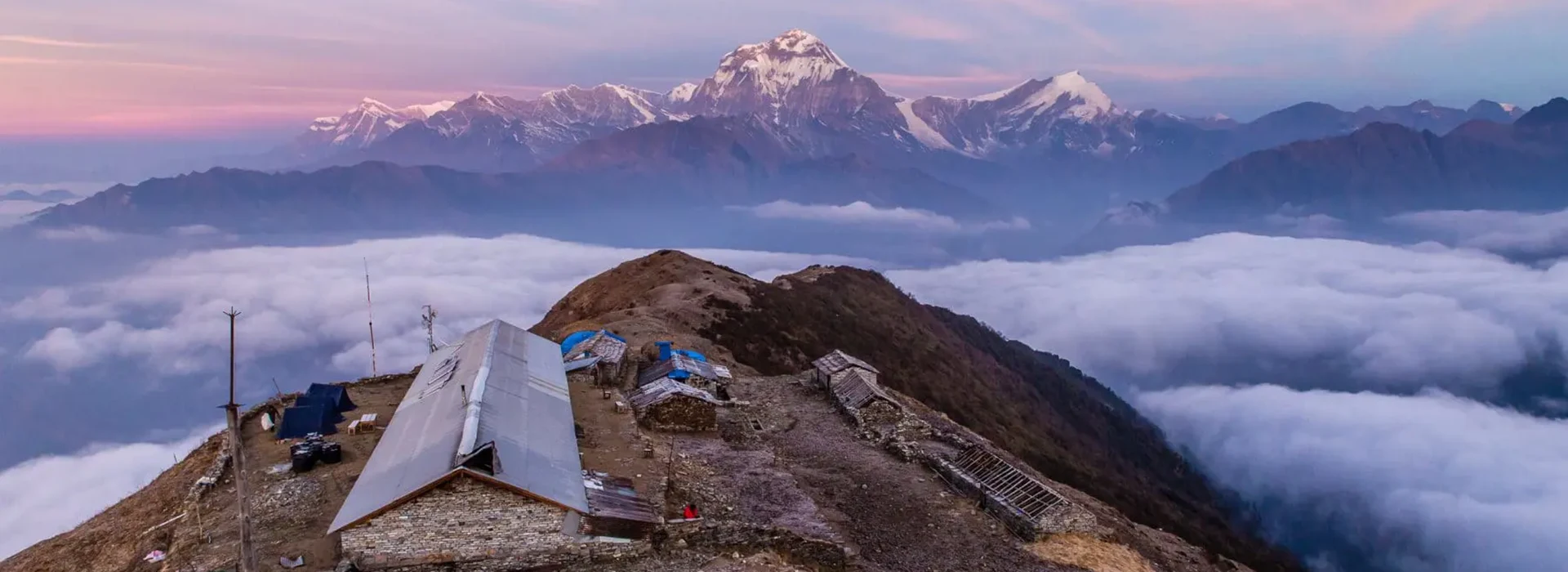
The Khopra Ridge Trek takes you through one of the quietest and most scenic sections of the Annapurna Conservation Area in 11 days. You start and end in Kathmandu, travel to Pokhara by tourist bus, and walk through Ghandruk, Tadapani, Dobato, Muldai Viewpoint, Khopra Ridge, Khayer Lake, Swanta Village, Ghorepani, and Poon Hill. The route blends ridgeline panoramas, dense rhododendron forests, traditional Gurung villages, and a sacred alpine lake above 4,500 meters into a single cohesive itinerary.
Khopra Danda sits at approximately 3,660 meters and offers a 270-degree panorama of Dhaulagiri, Annapurna South, Nilgiri, Machhapuchhre, and Hiunchuli. The ridge receives a fraction of the foot traffic that passes through Poon Hill on a busy October morning. You share the community lodge at Khopra Ridge with a small group of trekkers rather than the teahouse crowds that fill the main Annapurna corridor trails. Swanta Village, on the descent side of Khopra Danda, sees even fewer visitors and offers a genuine remote Nepali village experience that most Annapurna trekkers miss entirely.
The Khopra Ridge and Khayer Lake Trek includes three named viewpoints along a single route: Muldai Viewpoint for Day 5 sunrise, Khopra Ridge as the main overnight stop with panoramic views, and Poon Hill for the final Day 9 sunrise before the descent to the road. The optional day hike from Khopra Ridge to Khayer Lake—a sacred Hindu and Buddhist lake at over 4,500 meters—adds a high-altitude challenge that separates the Khopra Trek from shorter and easier Annapurna routes.
The 11-day package covers airport pickup and drop-off, two nights at Hotel Thamel Park in Kathmandu, two nights at Hotel Splendid View in Pokhara, tourist bus transport in both directions, all local trek transfers, teahouse and community lodge accommodation on the trail, full board meals during all trekking days, a licensed English-speaking guide, and both required trekking permits. Fit beginners who prepare properly complete the Khopra Ridge Trek Nepal route with confidence every season.
Quick Answer: What Is the Khopra Ridge Trek?
The Khopra Ridge Trek is an 11-day Annapurna trekking package from Kathmandu. The route covers Ghandruk, Tadapani, Dobato, Muldai Viewpoint, Khopra Ridge, Khayer Lake, Swanta Village, Ghorepani, and Poon Hill. The trek is rated moderate difficulty and suits trekkers who want a quieter Annapurna experience, with three major viewpoints, a sacred alpine lake, and full hotel stays in Kathmandu and Pokhara. Permits, guide, meals, and all transfers are included in the package price.
| Trip Overview | Specification |
|---|---|
| Duration | 11 Days (arrival to departure) |
| Trip Start / End | Kathmandu, Nepal |
| Trek Start | Ghandruk, Annapurna Conservation Area |
| Trek End | Ulleri or Hile |
| Highest Point | Khayer Lake area (approx. 4,500 m / 14,764 ft) |
| Main Viewpoint | Khopra Ridge (approx. 3,660 m / 12,008 ft) |
| Secondary Viewpoints | Muldai Viewpoint and Poon Hill (3,210 m) |
| Trek Difficulty | Moderate |
| Accommodation | Hotel Kathmandu & Pokhara; Teahouse & Community Lodge on Trek |
| Meals | Breakfast in cities; Full board on all trek days |
| Transport | Tourist bus; Local/private transfers |
| Permits | ACAP; TIMS Card (if required) |
| Best Season | Spring (Mar–May); Autumn (Sep–Nov) |
| Porter | Recommended — one porter per two trekkers |
| Minimum Age | 10 years (children under 10 do not require permits) |
The Khopra Ridge Trek covers the western Annapurna Conservation Area on a route that branches away from the main Annapurna trail network between Tadapani and the Khopra Ridge ridgeline. Where the main Annapurna Base Camp trail pulls south from Ghandruk toward Chhomrong, and the Poon Hill route pushes directly from Ghorepani to Tikhedhunga, the Khopra Danda Trek cuts across the middle ground on a trail that most trekkers simply do not know exists.
The Annapurna Conservation Area, managed by the National Trust for Nature Conservation, covers 7,629 square kilometers and stands as Nepal’s largest protected area. The Khopra Ridge section falls within this protected zone and requires both an ACAP permit and a TIMS card to access. The conservation fee you pay through these permits supports trail maintenance, community development projects, and wildlife protection programs throughout the region.
The route suits trekkers who want more solitude than the crowded Poon Hill loop but less physical commitment than the high-altitude Annapurna Base Camp or the extended Annapurna Circuit. You get genuine mountain views, a sacred lake day hike, cultural village encounters, rhododendron forest walks, and three separate sunrise viewpoints—all within 11 days and without venturing into the glaciated high-altitude zone that demands acclimatization days and mountaineering experience.
Daily walking time ranges from 5 to 8 hours on trekking days, with the Khayer Lake day the longest and most physically demanding section of the entire route. The approach to Khayer Lake involves significant altitude gain above Khopra Ridge, and the combination of elevation, distance, and steep terrain makes it the one section where less-fit trekkers sometimes choose to rest at the lodge rather than make the full-day hike.

Included Meals

Accommodation

Trip Grade
You arrive at Tribhuvan International Airport in Kathmandu. Our representative waits in the international arrivals hall with a signboard displaying your name. After collecting your luggage and passing through customs, the transfer vehicle takes you directly to Hotel Thamel Park in the center of the Thamel tourist district. Check in, freshen up, and use the afternoon to rest after your flight.
Thamel sits within walking distance of dozens of restaurants, trekking gear shops, money exchange outlets, pharmacies, and convenience stores. Use Day 1 to purchase any remaining trekking items—gloves, thermal layers, trekking poles, or snacks for the trail are all available at competitive prices in Thamel. Our guide visits your hotel in the evening to introduce themselves, walk through the 11-day itinerary, and answer questions about gear, fitness, and expectations.
Meals: Not included – many restaurant options in Thamel
Accommodation:
Hotel Thamel Park, Kathmandu (twin sharing)
Difficulty
You board the tourist bus from the Thamel departure point early in the morning for the 6 to 7-hour drive to Pokhara along the Prithvi Highway. The road follows the valleys of the Trishuli and Marsyangdi rivers through Nepal’s middle hills, passing terraced fields, river gorges, and small roadside bazaars along the way. The bus stops once at a roadside restaurant for a short break—lunch on this day falls outside the package but costs very little.
You arrive in Pokhara in the early to mid-afternoon and transfer to Hotel Splendid View, situated close to the Lakeside promenade along Phewa Lake. The evening is completely free. Walk along the lake at sunset, rent a rowboat on Phewa Lake, or sit at an outdoor cafe with Annapurna and Machhapuchhre reflecting on the water surface.
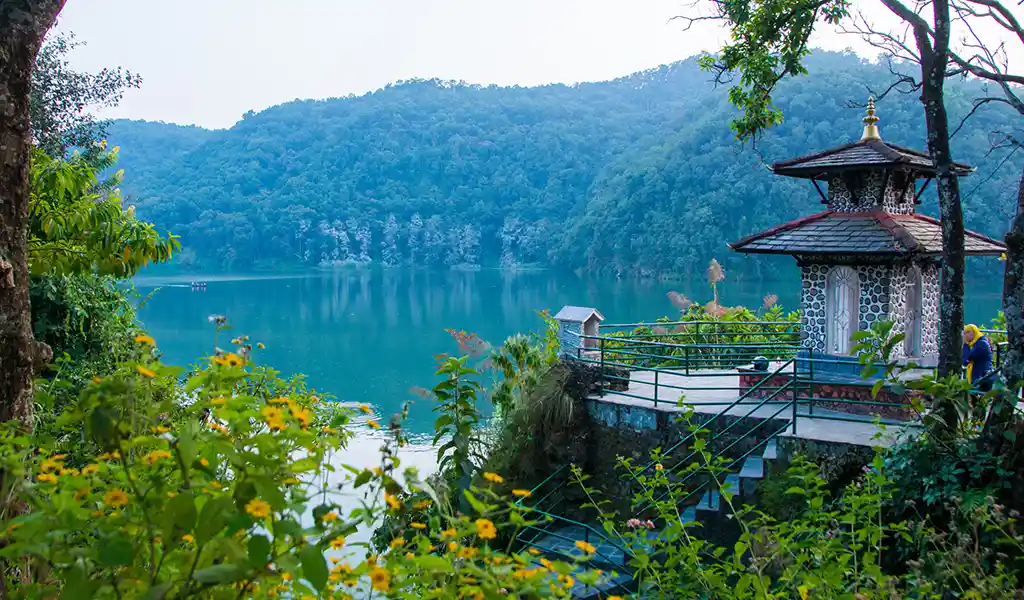
Use the evening to check your gear, charge your power bank, and confirm your daypack contents with your guide.
Accommodation:
Hotel Splendid View, Pokhara Lakeside (twin sharing)
Meals Breakfast
Difficulty
A private vehicle transfers you from Pokhara to Ghandruk, the largest Gurung village in the Annapurna Conservation Area, situated at 1,940 meters above sea level. Ghandruk receives visitors from the Annapurna Base Camp trail and from the Poon Hill circuit, but the village itself retains a genuinely traditional Gurung character with slate-roofed stone houses, cobbled pathways, carved wooden windows, and an active Gurung Museum near the village center.
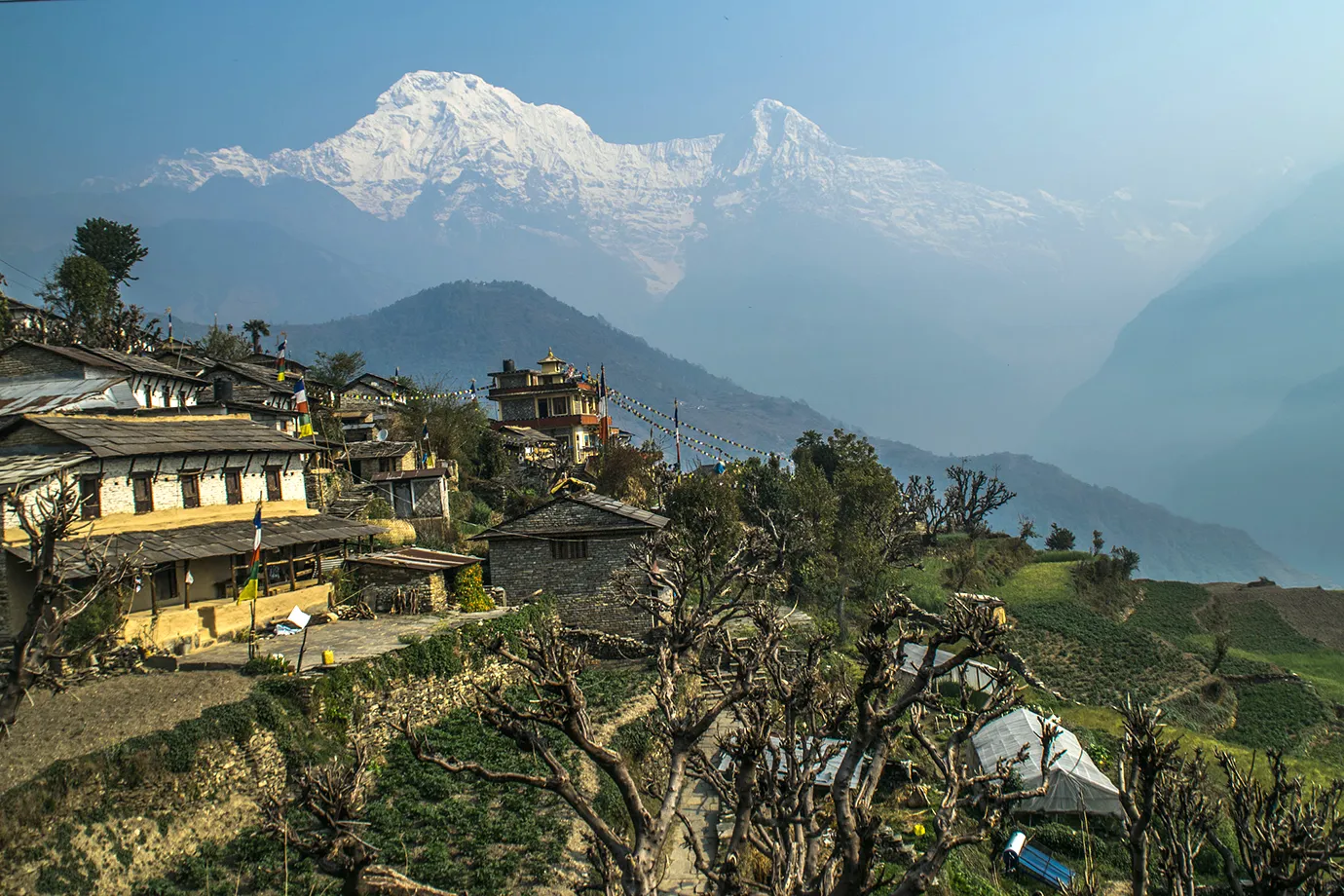
After exploring Ghandruk and eating lunch at a local teahouse, the trek begins on a trail that rises eastward through rhododendron and oak forests toward Tadapani at 2,590 meters. The walk from Ghandruk to Tadapani takes approximately 3 to 4 hours on a clear, well-marked forest trail. Tadapani sits on a forested ridge with mountain views north toward Annapurna South and Hiunchuli, which appear between the trees on clear afternoons.
Accommodation:
Teahouse in Tadapani
Meals Breakfast, Lunch, Dinner
Difficulty
Day 4 takes you away from the main Annapurna trail network onto the quieter Khopra trail. From Tadapani, the path heads south and west through dense rhododendron and oak forest on a trail section that sees far fewer trekkers than the main route toward Chhomrong and Annapurna Base Camp. The forest feels genuinely remote on this section—bird calls replace trekker conversations, and the trail narrows through overgrown sections that show how rarely the path gets walked.
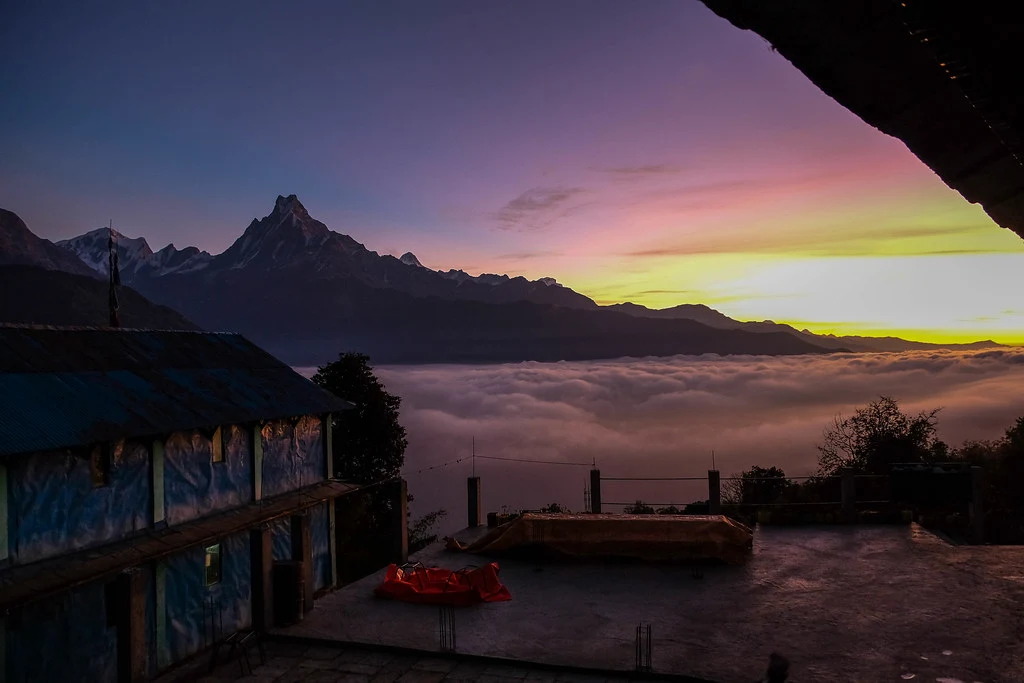
Dobato sits at approximately 3,600 meters below the Muldai ridge and serves as the overnight base for the Day 5 Muldai Viewpoint sunrise. The climb from the forest zone to Dobato passes through a transitional vegetation band where rhododendron gives way to open scrub, and the first wide mountain views begin to appear above the treeline. Arrive at the Dobato teahouse in the late afternoon, eat dinner early, and prepare your warm layers for the pre-dawn Muldai Viewpoint hike the following morning.
Accommodation:
Teahouse in Dobato
Meals Breakfast, Lunch, Dinner
Difficulty
Your guide wakes the group before dawn. You dress in full warm layers and follow the trail upward in darkness toward the Muldai Viewpoint ridge. The climb from Dobato takes approximately 45 minutes to an hour on a steep but clear path. Muldai Viewpoint sits above the treeline on an open ridge at over 3,600 meters, and on a clear morning it delivers one of the least-visited and most dramatic mountain panoramas in the entire Annapurna Conservation Area.
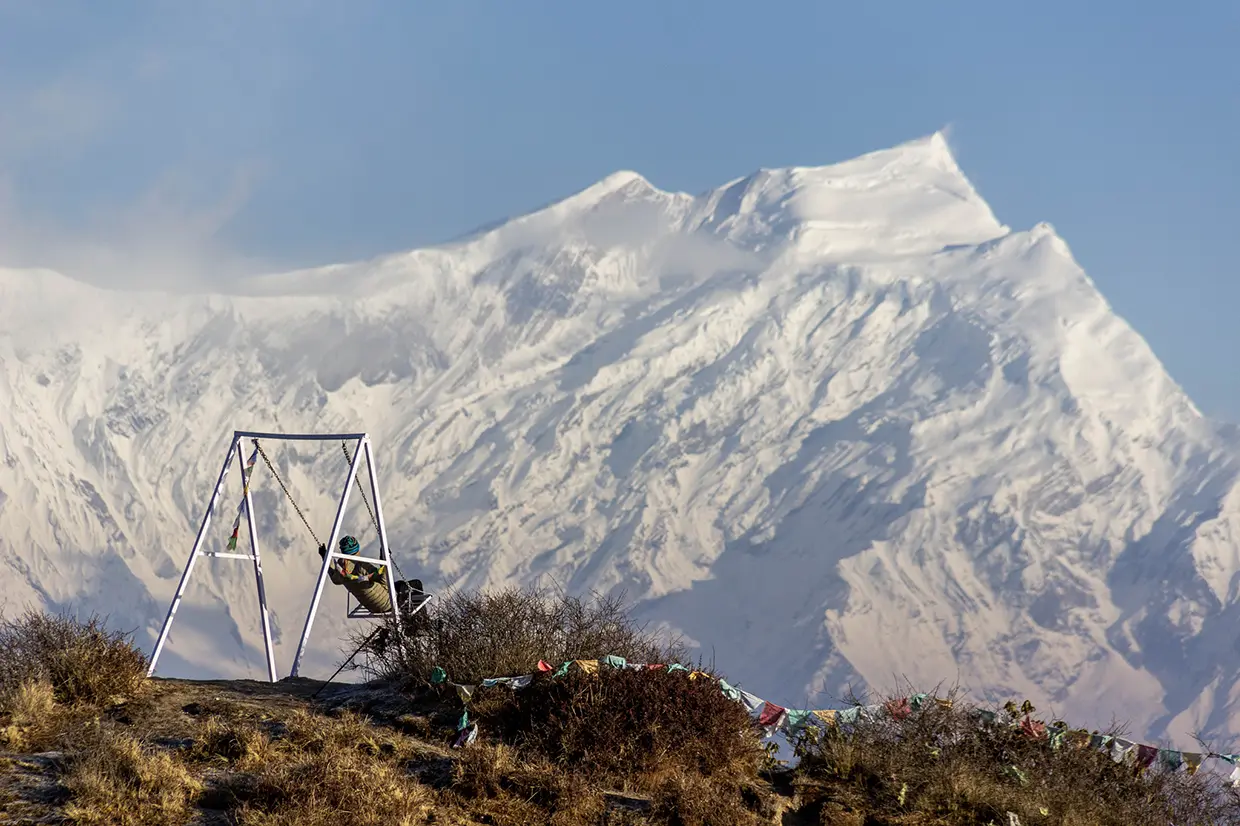
From Muldai, Dhaulagiri rises to the northwest at 8,167 meters—the seventh highest mountain in the world—while Annapurna South, Hiunchuli, and Nilgiri fill the eastern view. The Muldai sunrise view looks across a broader mountain canvas than Poon Hill, because the ridge sits higher and faces the main Himalayan chain at a slightly different angle. Return to Dobato for breakfast, pack your bags, and continue the trail toward Khopra Ridge through open pastureland and low scrub vegetation.
The trek from Dobato to Khopra Ridge takes approximately 3 to 4 hours and covers open ridgeline terrain. The community lodge at Khopra Ridge sits on the ridge crest at 3,660 meters with the full Annapurna panorama directly in front of the lodge dining room windows. Check in, eat lunch on the terrace, and spend the afternoon resting and watching the mountain light change across Dhaulagiri and the Annapurna massif.
Accommodation:
Community lodge or teahouse at Khopra Ridge
Meals Breakfast, Lunch, Dinner
Difficulty
Day 6 is the most physically demanding day of the Khopra Ridge Trek itinerary. Your guide assesses weather conditions at first light and confirms the Khayer Lake decision based on visibility, trail conditions, and your group’s energy levels after the previous day. If conditions look good and the group feels strong, you depart for Khayer Lake before 7 AM with a packed lunch and full warm gear.
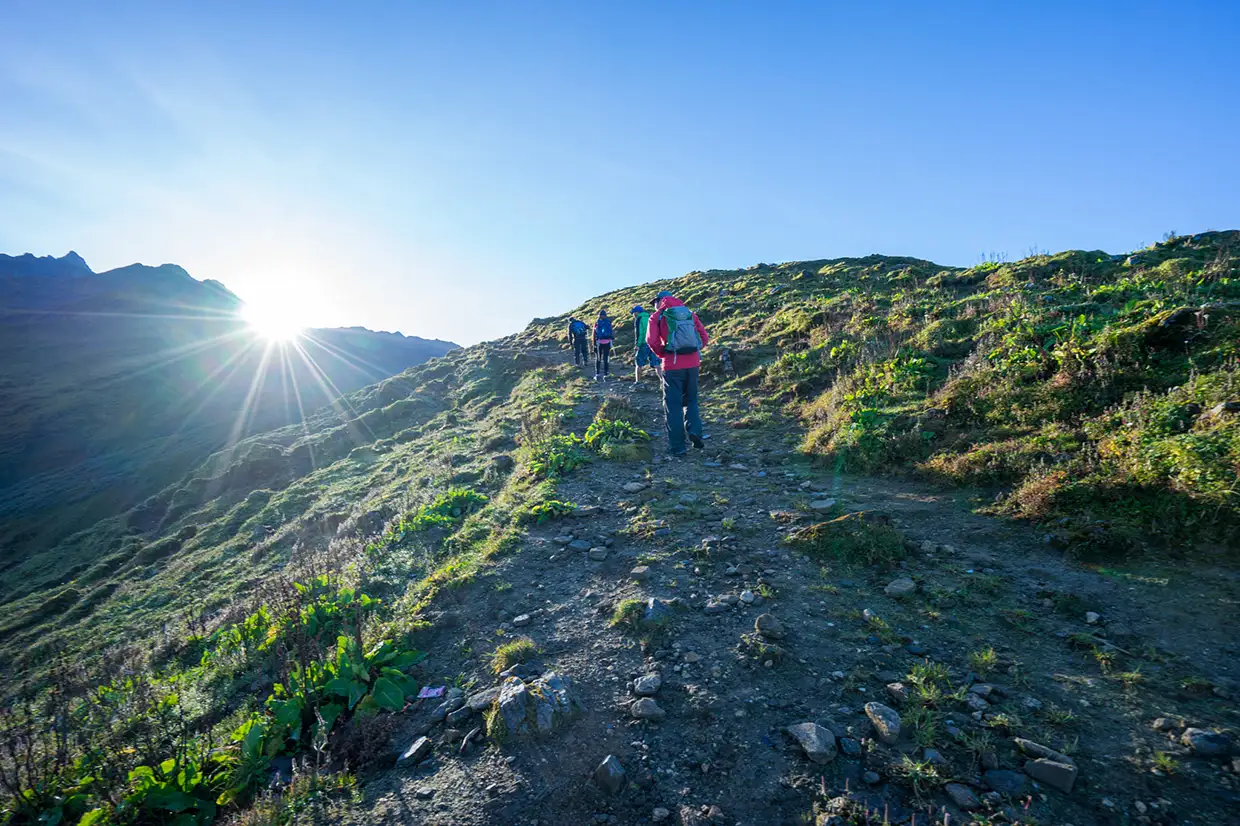
The trail from Khopra Ridge to Khayer Lake gains approximately 900 meters in elevation across a steep, rocky, exposed ridgeline route above the treeline. The path passes through high-altitude pastureland, scree sections, and rocky outcrops before the lake appears in a glacial bowl at over 4,500 meters. Khayer Lake sits in a sacred landscape—Hindu pilgrims make the journey during Janai Purnima in August, and colorful prayer flags mark the shoreline year-round. The views from the lake area extend north toward the Dhaulagiri and Annapurna ranges in clear conditions.
The descent back to Khopra Ridge takes 2 to 3 hours on the same trail. Total walking time for the Khayer Lake day ranges from 8 to 10 hours, depending on pace and rest stops. Return to the community lodge, eat a proper dinner, and rest your legs for the descent toward Swanta Village that begins on Day 7. Trekkers who choose to rest at Khopra Ridge instead of attempting the lake spend the day on the lodge terrace, with uninterrupted mountain views, and recover their energy for the remaining trail days.
Accommodation:
Community lodge or teahouse at Khopra Ridge
Meals Breakfast, Lunch, Dinner
Difficulty
The descent from Khopra Ridge toward Swanta Village drops through open pastureland, scrub hillside, and lower forest trails on a path that moves away from the well-traveled Annapurna routes and into genuinely local highland territory. Swanta Village sits at approximately 2,400 meters in a river valley below the main Khopra ridge system. The village sees very few foreign trekkers on most days of the year.
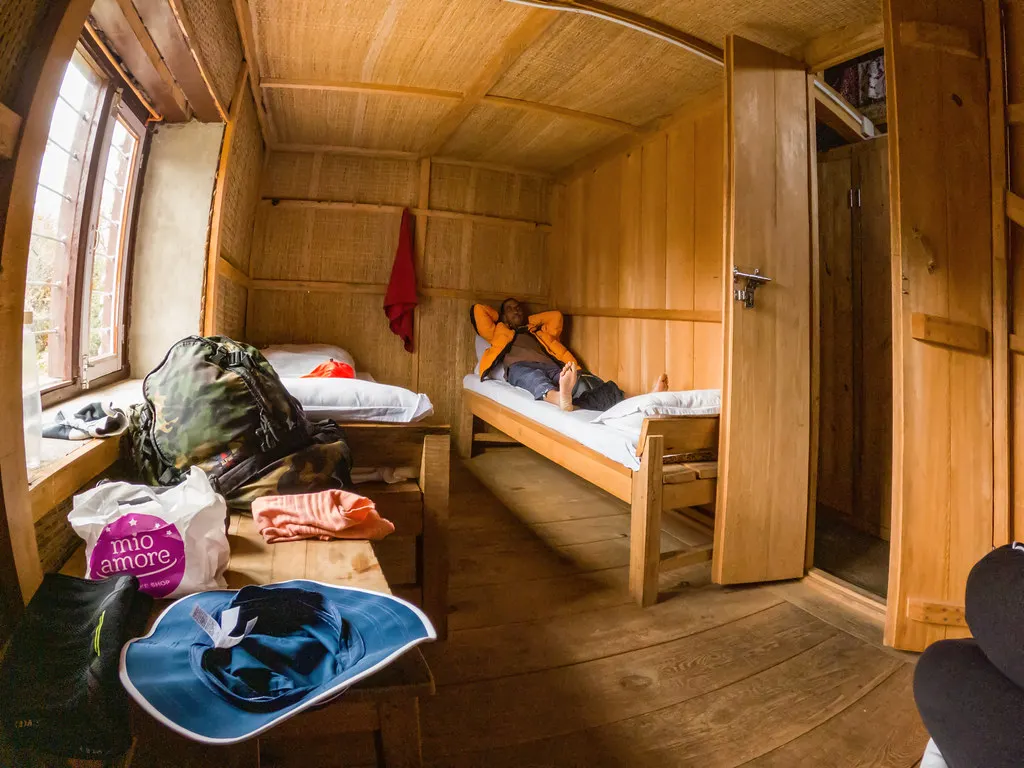
Swanta offers basic teahouse accommodation with simple rooms and straightforward meals—dal bhat, noodle soup, vegetable curry, eggs, and tea. The village community runs the teahouses and lodges directly, and trekking tourism income represents a significant portion of the local economy. Spend the evening talking with your guide about local village life, Gurung customs, and the history of the Annapurna trail system. Swanta represents the cultural depth that most shorter Annapurna treks skip entirely.
Accommodation:
Teahouse in Swanta Village
Meals Breakfast, Lunch, Dinner
Difficulty
The trail from Swanta to Ghorepani reconnects with the main Annapurna trail network via a mix of village paths, forested sections, and ridgeline climbs. The walking time ranges from 5 to 7 hours, depending on pace and the exact route your guide takes based on trail conditions. You rejoin the main Poon Hill circuit trail as you approach Ghorepani from the south or west, and the increase in teahouse density and trekker numbers signals the return to the main Annapurna corridor.
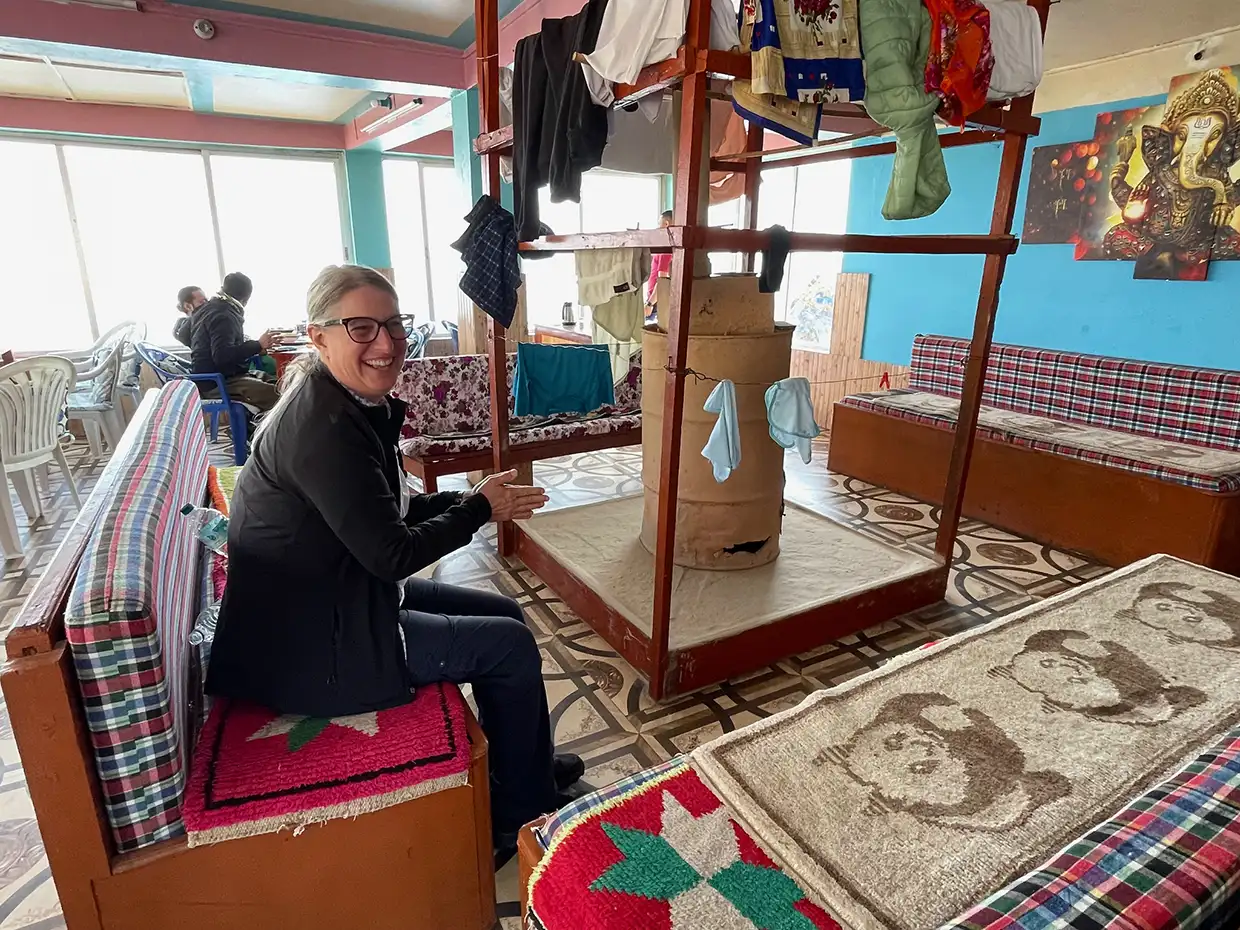
Ghorepani sits at 2,874 meters and represents the highest teahouse settlement on the standard Poon Hill circuit. The village fills quickly in October and April with trekkers preparing for the pre-dawn Poon Hill climb. Your guide handles teahouse reservations in advance for the Ghorepani night—early booking matters in peak season. Eat dinner early, prepare your headlamp and warm layers, and set your alarm for the Poon Hill pre-dawn departure on Day 9.
Accommodation:
Teahouse in Ghorepani
Meals Breakfast, Lunch, Dinner
Difficulty
Your guide wakes the group at 4:30 AM. The 45-minute stone-step climb to the Poon Hill viewpoint at 3,210 meters follows dozens of other headlamps moving upward in the cold pre-dawn air. After 8 days on the Khopra Ridge trail—including the Muldai Viewpoint sunrise and the Khopra Ridge panorama—the Poon Hill sunrise lands with a different emotional weight. You know the mountains by name now. You recognize the exact shape of Dhaulagiri, the profile of Machhapuchhre, and the distance between Annapurna I and Annapurna South. The view means more after 8 days of walking toward it.
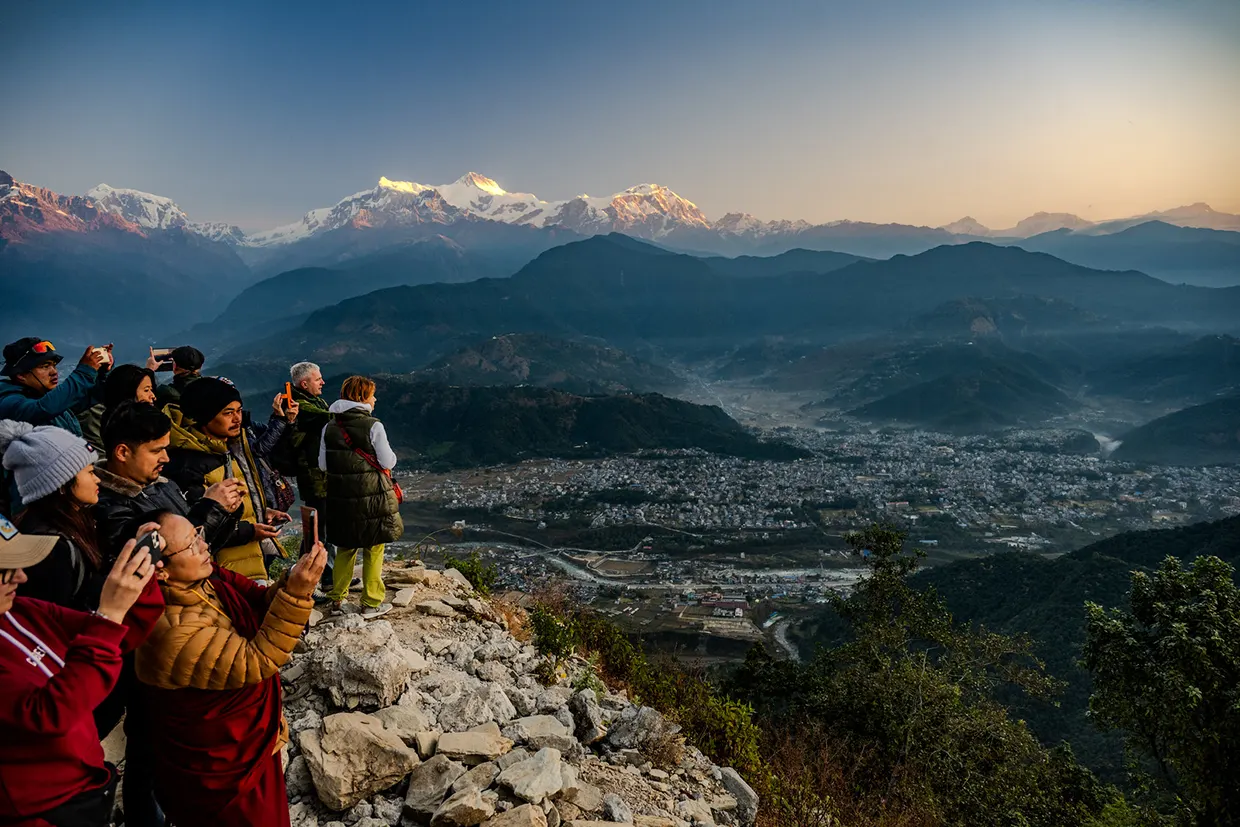
After sunrise, return to Ghorepani for breakfast, then descend to the road at Ulleri or Hile. The downhill trail covers several hundred stone steps and a series of forest switchbacks before the settlement near the road access point. A pre-arranged vehicle picks up the group and drives back to Pokhara in approximately 2 to 3 hours. Check in at Hotel Splendid View and spend the evening at Lakeside—your last night in Pokhara before the return journey to Kathmandu.
Accommodation:
Hotel Splendid View, Pokhara Lakeside
Meals Breakfast, Lunch
Difficulty
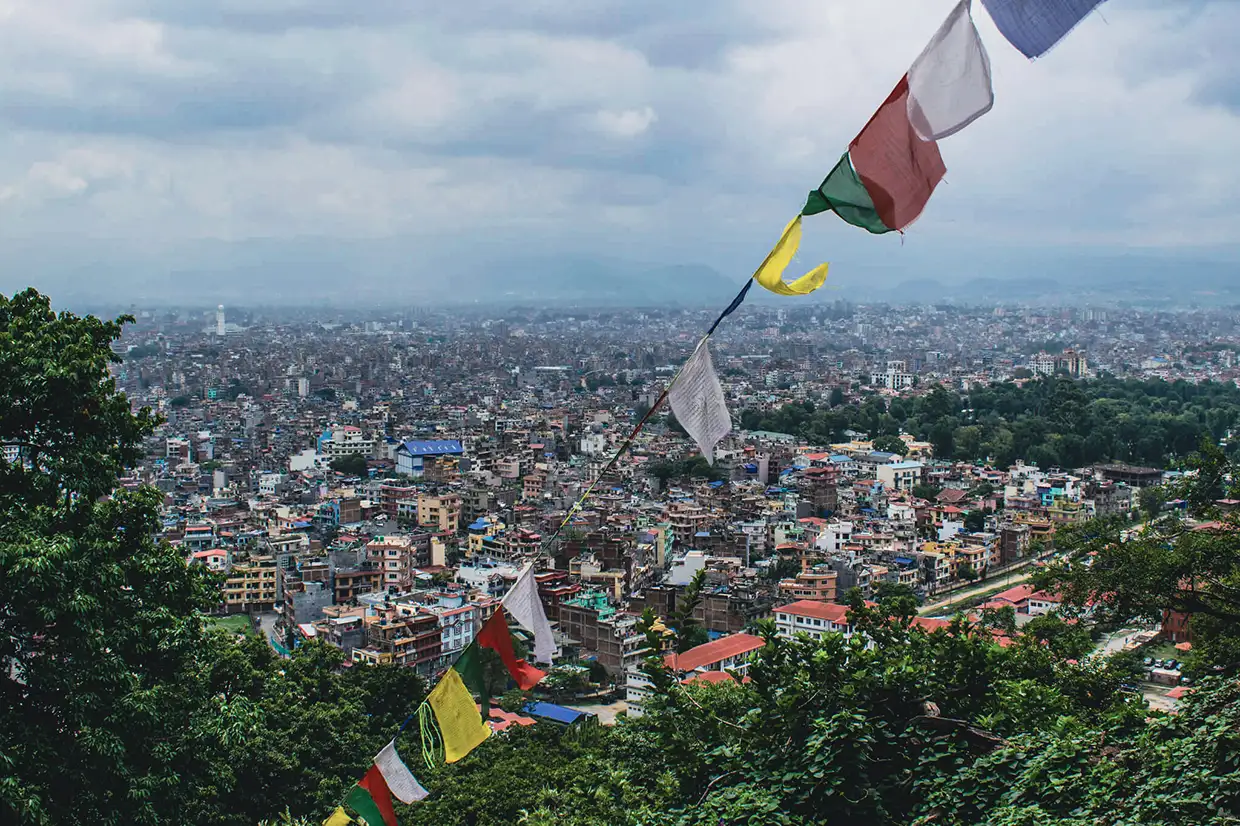
The morning tourist bus departs Pokhara and follows the Prithvi Highway back to Kathmandu in 6 to 7 hours. Transfer to Hotel Thamel Park on arrival in the late afternoon. Use the evening for final souvenir shopping in Thamel, a celebration dinner at one of Kathmandu’s excellent restaurants, or simply resting at the hotel before the airport transfer on Day 11.
If your international departure falls in the afternoon or evening on Day 11, you have the full morning free in Kathmandu. The hotel holds your luggage after checkout. Pashupatinath Temple, Boudhanath Stupa, and Swayambhunath Stupa all sit within a 15-minute taxi ride of Thamel and make excellent final-morning visits. Ask our team at the time of booking if you want to add an organized Kathmandu city sightseeing tour on Day 10 evening or Day 11 morning.
 Accommodation:
Hotel Thamel Park, Kathmandu
Meals Breakfast
Difficulty
Our driver will pick you up from Hotel Thamel Park and drop you off at Tribhuvan International Airport at the agreed pickup time, based on your flight schedule. Allow at least 3 hours before international departure for check-in, immigration, and security. Our office remains reachable by phone and WhatsApp until you board your flight.
Accommodation:
Not included – hotel checkout by standard time
Meals Breakfast
Difficulty
Hotel Thamel Park sits in the heart of Thamel, the main tourist and trekking hub of Kathmandu. The hotel provides clean, comfortable twin-sharing rooms with private bathrooms, hot water, Wi-Fi, air conditioning, and daily breakfast. The central location puts you within easy walking distance of trekking gear shops, money exchange outlets, pharmacies, restaurants serving every cuisine style, and the main departure points for tourist buses to Pokhara.
Hotel Splendid View is conveniently located near the Phewa Lakeside area of Pokhara. Twin-sharing rooms come with private bathrooms, hot water, Wi-Fi, and mountain-view balconies on upper floors. The lakeside location gives you direct access to Pokhara’s best restaurants, gear shops, boat rental services, and evening entertainment options. The hotel provides a comfortable and well-located base for both your pre-trek and post-trek nights in Pokhara.
On the trail, accommodation is provided at locally run teahouses in Tadapani, Dobato, Swanta, and Ghorepani, plus the Khopra Ridge community lodge on Days 5 and 6. Teahouse rooms provide twin beds with pillows and blankets in basic but clean rooms. Bathrooms at most teahouses are shared facilities located in a separate block. Room quality improves at the Ghandruk teahouses near the bottom of the trail and at Ghorepani near the end.
The Khopra Ridge community lodge offers managed accommodation on the ridgeline with a heated dining room and reserved rooms for pre-booked groups. Room availability at the community lodge is limited—our team books your Khopra Ridge nights well in advance, particularly for October and April departures when the lodge fills to capacity. Hot showers, Wi-Fi, and device charging carry additional fees at all trail lodges, payable directly on-site in Nepali rupees.
The Khopra Ridge Trek package offers something no single-viewpoint Annapurna trek provides: three named mountain viewpoints within one continuous 11-day route. Muldai Viewpoint on Day 5, Khopra Ridge on Days 5 and 6, and Poon Hill on Day 9 each deliver distinct perspectives across different sections of the same mountain range. You do not repeat the same view—you approach the Annapurna massif from three different angles across four days.
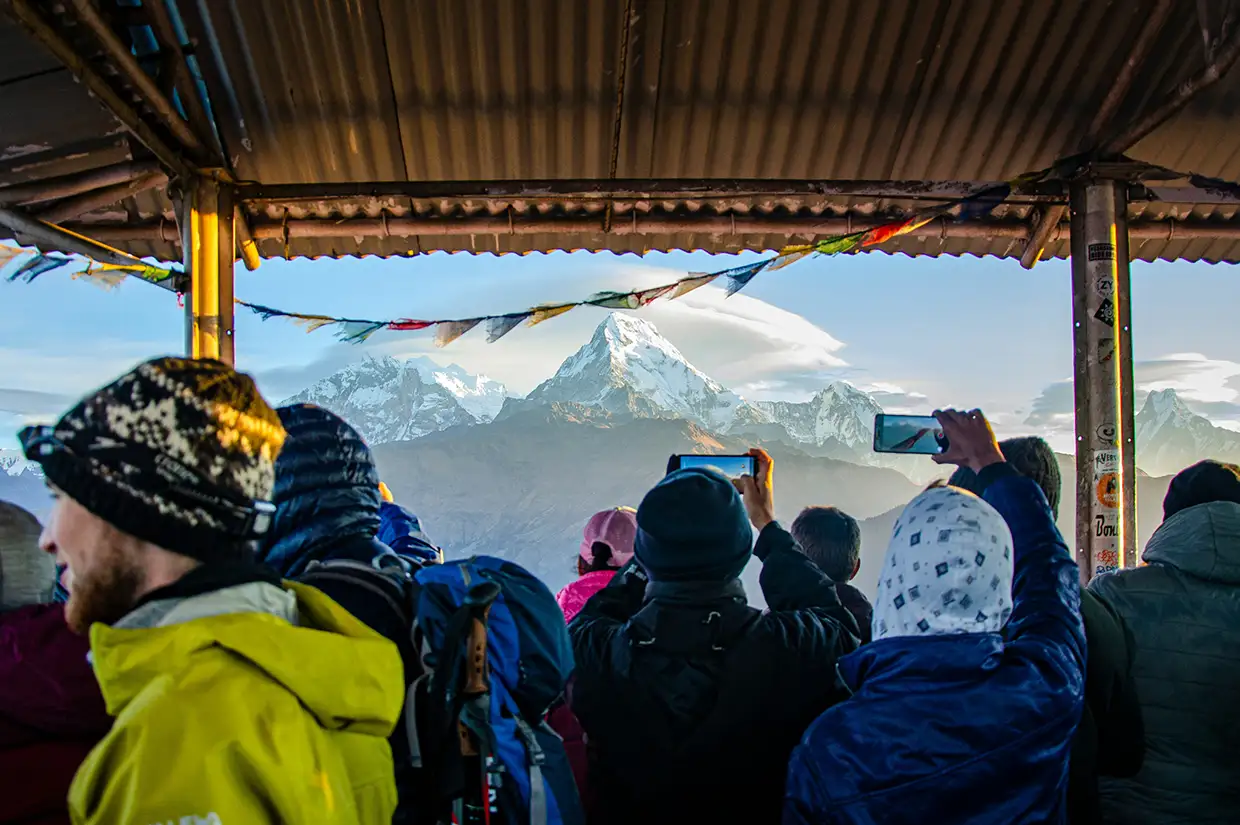
The quiet trail characterizes the Khopra Danda Trek and sets it apart from other popular Annapurna routes. On a clear October day at Poon Hill, you share the viewpoint platform with hundreds of trekkers from a dozen different tour groups. On a clear October morning at Muldai Viewpoint, you share the same sunrise with the small group who stayed at Dobato the night before. The difference in atmosphere affects the entire quality of the experience.
The Khayer Lake element adds a strong element of adventure to a trek that otherwise stays in the moderate range. The sacred lake sits above 4,500 meters and requires 5 to 7 hours of walking from Khopra Ridge and back. Trekkers who complete the Khayer Lake hike return to the community lodge with a genuine sense of physical achievement that shorter Annapurna routes simply do not provide.
The full package handles all logistics from arrival in Kathmandu to departure. You stay at Hotel Thamel Park in Kathmandu for pre-trek and post-trek nights, and at Hotel Splendid View in Pokhara before and after the trail begins. Both hotels offer comfort and central locations that make city days productive and relaxing. The trail accommodation moves through teahouses and the Khopra Ridge community lodge—all locally run, all genuinely Nepali in character.
The inclusion of a licensed guide throughout every trekking day adds a layer of safety and local knowledge that self-guided trekking on a less-traveled route like Khopra simply cannot replicate. Your guide knows the Khopra Ridge trail system from regular experience, communicates with lodge owners in advance, monitors weather for the Khayer Lake decision, and provides first-aid support at all times.
Many Khopra Ridge Trek packages available online cover 7 or 8 days and exclude either Muldai Viewpoint or Poon Hill from the itinerary. The 11-day structure in this package includes both viewpoints in full, which means you experience the complete Khopra Ridge corridor from its first high point at Muldai through its main ridge section at Khopra Danda and down to the classic Poon Hill finale.
Two Kathmandu hotel nights—one on arrival and one before departure—remove the stress of tight international flight connections. You do not arrive in Kathmandu and travel directly to Pokhara the same day. Day 1 gives you a full rest and preparation day in Thamel. Day 10 gives you a recovery evening after the long bus return from Pokhara, and Day 11 allows a relaxed morning departure to the airport.
Pokhara hotel nights on either side of the trek provide a genuine transition between city travel and mountain walking. The night at Hotel Splendid View, before the trek begins, lets you organize your daypack, rest your legs, and mentally prepare for the days ahead. The night after the trek ends gives you a proper shower, a lakeside dinner, and a good night’s sleep before the bus back to Kathmandu.
Khayer Lake stays flexible rather than fixed in this itinerary. Your guide makes the final decision based on weather conditions at Khopra Ridge on the morning of Day 6, your group’s energy levels after Day 5, and current trail conditions above the community lodge. Trekkers who attempt Khayer Lake in poor weather or with tired legs face a genuinely dangerous and unrewarding experience. The flexibility built into Day 6 protects you from both outcomes.
New trekkers often confuse Khopra Ridge and Khayer Lake, treating them as interchangeable destinations. The two places sit on the same route but represent very different trekking experiences. Khopra Ridge—also called Khopra Danda—is the main overnight viewpoint, with the community lodge located at approximately 3,660 meters. You reach Khopra Ridge on the afternoon of Day 5 and stay there through Day 6. The lodge terrace faces the full Annapurna mountain wall and provides one of the most dramatic dinner-table views in the entire Annapurna Conservation Area.
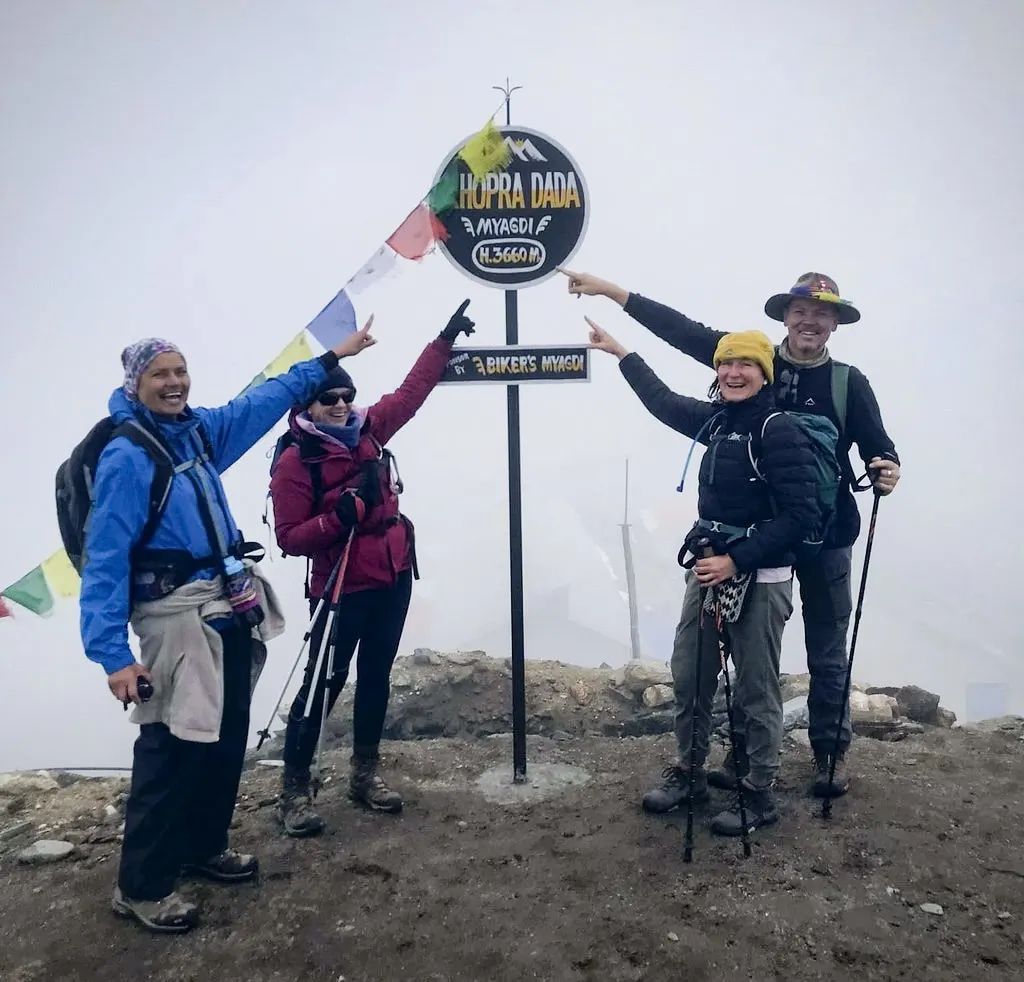
Khayer Lake sits above Khopra Ridge at over 4,500 meters and is reached by a long, steep day hike from the community lodge. The round trip covers approximately 14 to 16 kilometers with over 900 meters of elevation gain and loss. The lake itself holds deep religious significance—Hindu pilgrims visit during the Janai Purnima festival in August, and Buddhist prayer flags line the shoreline year-round. The lake freezes completely in winter and sits in a high-altitude bowl surrounded by rocky ridgelines above the treeline.
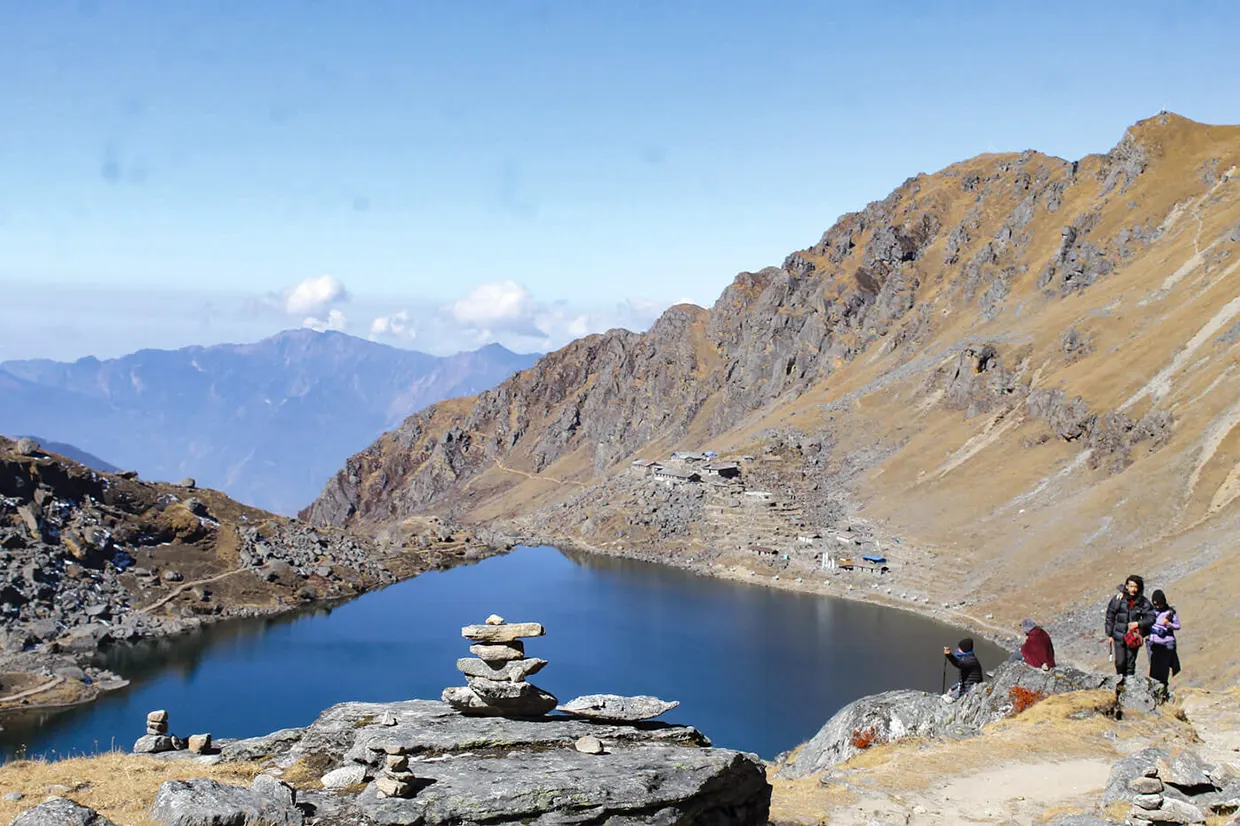
The decision to attempt Khayer Lake depends on three factors: your physical condition after the previous day’s long climb from Tadapani and Dobato to Muldai Viewpoint and then to Khopra Ridge, the current weather at altitude above 4,000 meters, and your guide’s assessment of trail safety. Trekkers who feel strong, find clear skies, and receive a positive guide assessment should attempt the Khayer Lake hike without hesitation—it rates as the most rewarding single day of the entire trek. Trekkers who feel fatigued or encounter cloud and wind at altitude should stay at Khopra Ridge, rest, and enjoy the panorama from the lodge terrace.
The Khopra Ridge Trek package suits the following travelers:
The package covers all meals on the seven active trekking days from Day 3 through Day 9. On trekking days, you receive breakfast, lunch, and dinner at teahouses and lodges along the trail. Hotel breakfast is included at Thamel Park and Splendid View on Days 2, 10, and 11. On Day 1, no meals are included.
Teahouse food on the Khopra Ridge trail reflects the standard Nepali mountain kitchen. Dal bhat—steamed rice, lentil soup, vegetable curry, pickles, and papadum—represents the best energy food on the trail and comes with free refills at virtually every teahouse. Other common trail meals include noodle soup, fried rice, pasta, vegetable curry with chapati, momo dumplings at lower elevations, potato dishes, eggs prepared multiple ways, porridge with honey for breakfast, and pancakes with jam.
Food quality and menu variety decrease with altitude. Teahouses in Ghandruk and Ghorepani offer broader menus and fresher ingredients than the lodge at Khopra Ridge, where supply logistics limit the available options. Breakfast at the Khopra Ridge community lodge typically includes eggs, toast, porridge, and tea or coffee—simple but sufficient before the demanding Khayer Lake day hike.
Lunch and dinner in Kathmandu and Pokhara are not included in the package. Both cities offer extensive dining options from cheap local dal bhat houses to international cuisine restaurants in the tourist districts. Budget USD 5-15 per person per meal in Thamel and Lakeside for a comfortable dining experience. Bottled water, soft drinks, alcohol, hot drinks beyond standard tea and coffee, desserts, and snacks all carry additional fees at teahouses throughout the trek.
The package covers six transport segments: airport pickup on Day 1, tourist bus Kathmandu to Pokhara on Day 2, local or private vehicle Pokhara to Ghandruk on Day 3, vehicle transfer from the road point to Pokhara on Day 9, tourist bus Pokhara to Kathmandu on Day 10, and airport drop-off on Day 11. Every transport segment connects seamlessly, so you don’t need to arrange anything yourself.
The tourist bus service between Kathmandu and Pokhara runs on a fixed schedule with reserved seats, reclining chairs, and onboard entertainment on most services. The journey takes 6 to 7 hours and includes a stop at a roadside restaurant. The Pokhara to Ghandruk transfer uses a local jeep or shared vehicle, depending on group size and the road conditions to the trailhead.
Optional transport upgrades are available for any leg of the journey. Domestic flights between Kathmandu and Pokhara cut the travel time from 6 hours to 25 minutes and offer aerial Himalayan views on clear days. Private cars or jeeps offer more comfort and flexibility than the tourist bus on either the Kathmandu–Pokhara or Pokhara–Kathmandu segment. Contact our team before booking to add transport upgrades and receive current pricing.
Two permits cover the Khopra Ridge Trek in Nepal. The Annapurna Conservation Area Permit, issued under NTNC’s e-permit system, allows entry into the 7,629 square kilometer protected area that covers the entire Khopra Ridge trail corridor. The Trekkers’ Information Management System card registers your trek with the Nepal Tourism Board for safety tracking. Both permits come included in the package price.
Our team arranges both permits in Kathmandu before Day 2’s departure to Pokhara. Bring two passport-size photographs and a clear copy of your passport photo page to our office on Day 1 or Day 2 morning. Children under 10 years of age do not require permits under the current NTNC policy. SAARC nationals pay a reduced permit fee—our team adjusts the cost at booking based on your passport nationality.
Permit rangers check both documents at official checkpoints along the Annapurna Conservation Area trail. Keep both permits accessible in your daypack at all times during the trek. Our guide carries a copy of your permit details and handles all checkpoint interactions in Nepali on your behalf.
| Season | Months | Conditions | Recommended |
|---|---|---|---|
| Spring | March to May | Rhododendron forests bloom red and pink. Clear mornings, mild daytime warmth. Mountain views stay sharp most days. Busiest trekking season. | Yes |
| Autumn | Sep to Nov | Best mountain visibility of the year after monsoon clears the air. Stable weather, dry trails, strong blue-sky days. October fills up fast. | Yes |
| Winter | Dec to Feb | Cold nights below freezing at Khopra Ridge and Khayer Lake. Snow possible above 3,000 m. Quiet trails, fewer trekkers. Bring full winter gear. | Possible |
| Monsoon | June to Aug | Daily rain, leeches on trail, cloud cover blocks views. Muddy and slippery sections. Not recommended for first-time trekkers. | No |
Spring and autumn stand as the two best seasons for the Khopra Ridge Trek. Spring offers rhododendron bloom, mild temperatures, and clear mornings. Autumn delivers the clearest mountain views of the year. October fills community lodges at Khopra Ridge most rapidly—book at least 4 to 6 weeks in advance for October and November departures. March and April represent the best balance of good weather, blooming forests, and manageable trekker numbers.
The Khopra Ridge Trek involves more altitude gain and longer daily walking times than the standard Poon Hill circuit. Porter service is strongly recommended for all trekkers on this route, particularly for the Dobato approach, the Muldai Viewpoint climb, and the Khayer Lake day hike. Carrying a heavy pack on the Day 5 and Day 6 sections significantly reduces your enjoyment and increases the physical load at exactly the moments when the views reward you most.
One porter can carry a maximum combined load of 20 kilograms between two trekkers. You carry your own daypack on the trail at all times, which holds your water bottle, snacks, rain jacket, camera, sunscreen, extra layer, and personal items. The porter carries your main bag from lodge to lodge. Porters assigned through our company receive fair daily wages, adequate equipment, including proper footwear and cold-weather gear, and full insurance coverage as required under Nepal trekking industry guidelines.
Additional porters are available for groups or solo trekkers who carry more than 10 kilograms of gear. Contact our team before booking to add porter service and confirm current pricing. Solo trekkers who want a porter typically hire one porter for their full 20-kilogram allowance rather than sharing with another trekker.
Add any of the following services to your base package at extra cost. Contact our team before confirming your booking to include add-ons and receive current pricing:
Travel insurance is compulsory for every trekker on the Khopra Ridge Trek. The route reaches over 4,500 meters on the Khayer Lake day, which places it firmly in the high-altitude trekking category for insurance purposes. Check your policy specifically for altitude coverage—policies that cover trekking to 2,000 meters or 3,000 meters do not provide adequate protection for the Khayer Lake section of the route.
Your policy must cover emergency helicopter evacuation from high altitude, in-patient and out-patient medical treatment in Nepal, personal accident and injury during trekking activity, trip cancellation and curtailment, flight delays and missed connections, and lost or delayed baggage. Purchase your policy before you fly to Nepal and carry both a printed copy and a digital copy throughout the trip.
Our office requires your insurance provider’s name, policy number, and emergency contact number before the trek departs. Without confirmed insurance documentation, our team cannot arrange emergency evacuations. If you need guidance on suitable Nepal trekking insurance providers, contact us before booking, and our team will provide practical recommendations based on our current experience with evacuation claims on the Khopra Ridge route.
Pack for a temperature range from warm lowland afternoons below 2,000 meters to sub-zero pre-dawn mornings at Khopra Ridge above 3,600 meters and at Khayer Lake above 4,500 meters. Keep your main bag to 10 kilograms maximum if you hire a porter—pack only what you genuinely need:
The Khopra Ridge Trek rates as moderate and sits above the easy category due to three specific demanding elements: the long climb from the forest trail to Dobato and Muldai Viewpoint on Days 4 and 5, the sustained ridge walking between Muldai and Khopra Ridge at altitude, and the optional Khayer Lake day hike on Day 6, which involves 900 meters of elevation gain above 3,660 meters on a steep, rocky, exposed trail.
Daily walking time ranges from 5 to 8 hours, depending on the day and pace. The Khayer Lake day can extend to 10 hours for slower walkers. No technical climbing, rope work, or glacier travel appears on the route. The trails stay clear and well-defined throughout, but the combination of altitude, sustained uphill climbs, and the multi-day physical load makes preparation essential for an enjoyable experience rather than a survival exercise.
Fit beginners who complete 4 to 6 weeks of regular hill walking before departure handle the Khopra Ridge Trek comfortably. Trekkers who arrive without preparation find the Dobato climb and the Khayer Lake day significantly more difficult than expected. If you exercise regularly—walking, cycling, swimming, or gym training—your baseline fitness transfers well to the demands of this route. Add specific uphill walking to your preparation, since the Khopra trail involves more cumulative elevation gain per day than the classic Poon Hill circuit.
Trekking poles provide genuine benefit on the downhill sections from Khopra Ridge to Swanta and from Ghorepani to the road on Day 9. The stone staircases near Ulleri and the rocky descent sections above Ghorepani place repeated stress on the knees over several hours. Poles distribute the load and significantly reduce knee fatigue on longer descent days.
The Khopra Ridge Trek from Kathmandu package uses premium city hotels and authentic mountain lodges—not luxury trekking lodges with private bathrooms and restaurant menus. Hotel Thamel Park and Hotel Splendid View both offer clean, comfortable three-star accommodation with private bathrooms, hot water, Wi-Fi, and daily breakfast. City nights feel genuinely comfortable and give you proper rest before and after the trail.
Mountain accommodation becomes significantly more expensive once you leave Pokhara. Teahouses in Ghandruk, Tadapani, Dobato, Swanta, and Ghorepani offer twin-sharing rooms with basic beds, pillows, and blankets in clean but simple rooms. Bathrooms at most teahouses are shared and located in a separate block from the sleeping rooms. Hot showers cost extra at most trail lodges—typically USD 1-3 per shower, payable directly to the teahouse owner.
The Khopra Ridge community lodge offers slightly better facilities than the standard teahouses lower on the trail, with a heated dining room and a properly managed booking system. Room availability at the community lodge fills up quickly in October and April—our team books your community lodge nights in advance to prevent you from arriving at Khopra Ridge to find no rooms available. If you travel in peak season, early booking of the full package protects your accommodation on the critical ridge night.
Wi-Fi and device charging are available at most lodges along the route, but they charge per use. Carry a power bank for reliable device charging throughout the trek. Phone signal is available at most stops on the Khopra Ridge route, but it varies with altitude. Your guide carries a communication device for emergency contact at all times, regardless of the strength of your personal phone signal.
The Annapurna Conservation Area supports a diverse community of Gurung, Magar, and Thakali people whose daily livelihoods depend directly on trekking tourism. Responsible trekking choices create direct economic benefit for the communities along the Khopra Ridge trail and protect the natural environment that makes the route worth walking in the first place.
Eat at local teahouses and buy food, water, and supplies from trail vendors rather than carrying pre-packaged goods from Pokhara. Every meal you buy at a Dobato teahouse or a Swanta lodge feeds the local economy at a level that international tour operators and city hotels cannot replicate. Support the community lodge at Khopra Ridge, which operates as a direct conservation and community income project within the NTNC management framework.
Carry a refillable water bottle throughout the trek and use purification tablets to avoid buying single-use plastic bottles at teahouse prices that increase with altitude. Single-use plastic waste on the Annapurna trail represents one of the most persistent environmental challenges in the conservation area. Your water bottle and purification tablets cost less than three days of bottled water purchases and eliminate your contribution to the plastic problem entirely.
Dress modestly when walking through Ghandruk, Swanta, and other village settlements. Remove footwear before entering temples and private homes when invited inside. Walk clockwise around all mani walls, chortens, and Buddhist prayer structures on the trail—the carved stones hold religious significance and the clockwise direction follows the correct ritual practice. Ask clearly before photographing local residents, particularly older community members and people in traditional Gurung dress. Follow your guide’s instructions at all checkpoints and cultural sites throughout the trek.
Stay on marked trails at all times. Trail shortcuts through vegetation zones accelerate erosion, damage root systems, and disturb the habitats of wildlife species, including Himalayan tahr, red panda, musk deer, and dozens of Himalayan bird species documented within the Annapurna Conservation Area. The ACAP permit fee you pay contributes directly to the wildlife protection and trail maintenance programs that keep the Khopra Ridge corridor in the condition you enjoy walking through.
Your licensed guide carries responsibility for group safety on every trekking day. This includes setting a sustainable walking pace appropriate for the weakest member of the group, monitoring weather conditions at altitude before committing to the Khayer Lake day hike, managing teahouse reservations to ensure accommodation security each evening, and maintaining emergency communication capability throughout the route.
Hydration is critical at altitude. Drink at least 3 liters of water per day on trekking days, more on the Khayer Lake and Muldai Viewpoint days. Dehydration accelerates altitude-related symptoms and fatigue on high-elevation trail sections. Carry your water bottle in a side pocket or chest harness, rather than inside your pack, to make regular drinking habitual rather than occasional.
Altitude sickness risk increases above 3,000 meters. The Khopra Ridge Trek spends multiple nights above 2,500 meters and reaches 4,500 meters on the Khayer Lake day. Symptoms of acute mountain sickness include headache, nausea, dizziness, loss of appetite, and disturbed sleep. Mild symptoms resolve with rest and hydration. Any symptoms that worsen rather than improve require immediate descent. Inform your guide at the first sign of any altitude-related symptom and do not attempt to push through worsening symptoms.
Trekking poles provide stability on the stone staircase sections near Ulleri on Day 9 and on the rocky trail above Khopra Ridge toward Khayer Lake. Carry a basic first-aid kit in your daypack at all times—blister plasters, pain relief, anti-diarrheal medication, and any personal prescription medicine. Your guide carries a group first-aid kit with bandages, antiseptics, and altitude medication as standard equipment on all departures.
The booking process takes under 10 minutes from start to confirmation. Follow these steps:
Our booking team responds to WhatsApp, email, and phone inquiries within 4 hours during Nepal business hours (9 AM to 6 PM, Nepal Standard Time, UTC+5:45), 7 days a week.
Be honest with yourself before confirming the Khopra Ridge Trek:
The Khopra Ridge Trek 11-day package delivers a complete Annapurna experience that goes further, reaches higher, and covers more mountain terrain than any other moderate trek in the region. You get Hotel Thamel Park in Kathmandu, Hotel Splendid View in Pokhara, the full Khopra Ridge and Khayer Lake route including Muldai Viewpoint and Poon Hill, a licensed guide, all permits, full board meals on the trail, and flexible upgrade options—all in a single transparent package price.
Fit trekkers who want to step away from the main Annapurna crowd, experience a genuinely quiet ridgeline, and reach a sacred alpine lake above 4,500 meters find the Khopra Danda Trek the most rewarding moderate choice in the entire Annapurna Conservation Area. The route rewards preparation and punishes complacency—exactly the qualities that make it memorable.
Book now to secure your community lodge nights at Khopra Ridge before the peak season fills. Send our team a message to request a custom quote or ask questions about group departures, date flexibility, and optional add-ons. We look forward to welcoming you to the Khopra Ridge trail.
A: The full package runs 11 days from arrival in Kathmandu on Day 1 to final airport departure on Day 11. The active trekking section covers 7 days from Day 3 through Day 9. You spend 2 nights in Kathmandu and 2 nights in Pokhara on either side of the trail. The total trail distance across all 7 trekking days ranges from 70 to 85 kilometers depending on the route taken and whether you complete the full Khayer Lake day hike.
A: The full package starts and ends in Kathmandu. The trekking section begins at Ghandruk after the Day 3 drive from Pokhara and ends at the road point near Ulleri or Hile after the Day 9 Poon Hill sunrise and descent. A vehicle collects the group at the road point and returns everyone to Pokhara before the bus back to Kathmandu on Day 10.
A: The Khopra Ridge Trek rates as moderate difficulty. Daily walking time ranges from 5 to 8 hours, with the Khayer Lake day potentially reaching 10 hours for slower walkers. The route involves significant elevation gain on multiple days, particularly the approaches to Dobato, Muldai Viewpoint, and Khopra Ridge. No technical climbing appears on the route, but the sustained altitude and physical load place it above the easy category. Adequate preparation makes a significant difference to your experience.
A: Yes, Khayer Lake appears as the Day 6 destination in the itinerary. However, the Khayer Lake hike functions as a weather-dependent and fitness-dependent day on the route. Your guide makes the final decision on the morning of Day 6 based on weather conditions at altitude, your group’s energy levels after the demanding Day 5, and current trail conditions above Khopra Ridge. Trekkers who reach Khopra Ridge in strong condition with clear weather almost always complete the Khayer Lake hike. The itinerary builds in the day regardless so you always have the option.
A: Yes. Trekkers who feel fatigued after the Day 5 approach or who encounter poor weather at Khopra Ridge can rest at the community lodge on Day 6 instead of attempting the Khayer Lake hike. The lodge terrace at Khopra Ridge provides full-day mountain views across Dhaulagiri and the Annapurna range—spending a recovery day on the terrace is a genuinely rewarding experience in itself and not a disappointing alternative.
A: The highest point is the Khayer Lake area at approximately 4,500 meters (14,764 feet) above sea level. The lake sits in a glacial bowl above the Khopra Ridge ridgeline and requires a full day hike from the community lodge at 3,660 meters. Khopra Ridge itself, where the community lodge sits, stands at approximately 3,660 meters. Poon Hill at 3,210 meters represents the third highest point on the route.
A: The Khopra Ridge Trek offers mountain views across multiple days and from three distinct viewpoints. From Muldai Viewpoint and Khopra Ridge, you see Dhaulagiri (8,167 m), Annapurna South (7,219 m), Nilgiri (7,061 m), Machhapuchhre (6,993 m), and Hiunchuli (6,441 m). The Poon Hill viewpoint on Day 9 adds Annapurna I (8,091 m) to the panorama. The ridge orientation at Khopra Danda places Dhaulagiri more centrally in the view than the Poon Hill viewpoint, giving the Khopra Ridge panorama a different character.
A: Fit beginners with proper preparation handle the Khopra Ridge Trek confidently. The key word is preparation—trekkers who arrive without consistent fitness training find the Dobato approach and the Khayer Lake day significantly more challenging than expected. Add 4 to 6 weeks of regular hill walking to your preparation before departure. Trekkers who exercise regularly in their daily lives typically transition well to the demands of this route.
A: You stay at Hotel Thamel Park in Kathmandu and Hotel Splendid View in Pokhara for city nights—both are clean, comfortable three-star hotels with private bathrooms and breakfast included. On the trail, you stay in locally run teahouses in Tadapani, Dobato, Swanta, and Ghorepani, and in the Khopra Ridge community lodge on Days 5 and 6. Teahouse rooms are basic but clean with twin beds and shared bathrooms. The community lodge at Khopra Ridge offers slightly better facilities with a heated dining room.
A: Yes. Full board—breakfast, lunch, and dinner—comes included at teahouses and lodges on all 7 active trekking days from Day 3 through Day 9. Hotel breakfast comes included at both city hotels on applicable mornings. Lunch and dinner in Kathmandu and Pokhara are not included. Bottled water, hot drinks beyond standard tea and coffee, soft drinks, alcohol, and desserts are not included at any location.
A: Porter service comes included in packages that specifically state it as part of the standard inclusions. For packages where porter is listed as optional, you can add a porter at extra cost before departure. One porter carries a maximum of 20 kilograms shared between two trekkers. We strongly recommend porter service for the Khopra Ridge Trek due to the altitude and daily walking demands, particularly on the Khayer Lake day.
A: You need two permits: the Annapurna Conservation Area Permit (ACAP) and the TIMS card. Both permits come included in the package price. Our team arranges both documents in Kathmandu before you leave for Pokhara. Bring two passport-size photographs and a copy of your passport photo page. Children under 10 years of age do not require permits under current NTNC policy.
A: Spring (March to May) and autumn (September to November) offer the best conditions. Spring brings warm temperatures, rhododendron blooms in the Tadapani to Dobato forest section, and clear morning views. Autumn delivers the clearest mountain visibility of the year. October fills the Khopra Ridge community lodge most rapidly—book at least 4 to 6 weeks in advance for October and early November departures.
A: Yes. You can upgrade the Kathmandu to Pokhara or Pokhara to Kathmandu bus journey—or both—to a domestic flight at extra cost. The flight takes 25 minutes and offers aerial mountain views on clear days. Multiple airlines operate the Kathmandu–Pokhara route with several daily departures. Contact our team before booking to add flight upgrades and receive current airfare pricing.
A: Yes. Both Kathmandu and Pokhara sightseeing tours are available as optional add-ons. The Kathmandu tour covers Pashupatinath Temple, Boudhanath Stupa, Swayambhunath Stupa, and one Durbar Square. The Pokhara tour covers Phewa Lake boat ride, the World Peace Pagoda, Davis Falls, and Gupteshwor Cave. Contact our team at booking to add city tours and receive current pricing.