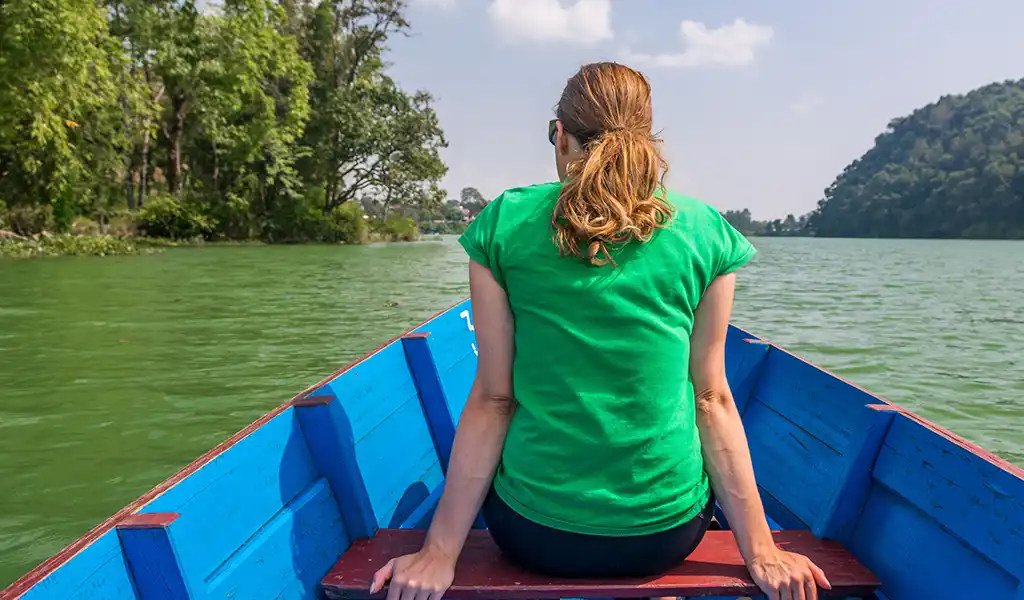
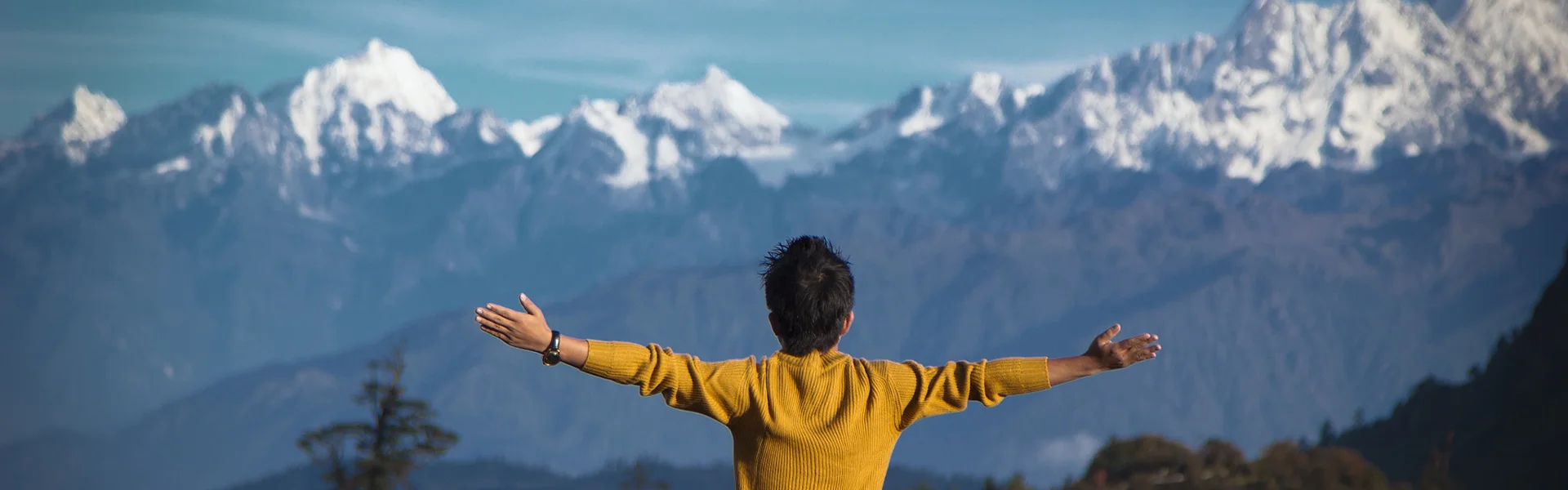

The Phewa Lake stays calm and still in the morning light as snow-capped Annapurna and Machhapuchhre peaks reflect in its water. Boats float gently as the lotus flower grows along the edges. A white stupa and prayer flags on the south add color to the view.
Location and Overview
Phewa Lake sits in the Pokhara Valley, about 200 to 230 km west of Kathmandu, at around 727m above sea level. The lake covers about 5.7 square kilometers, but its size changes with the season.
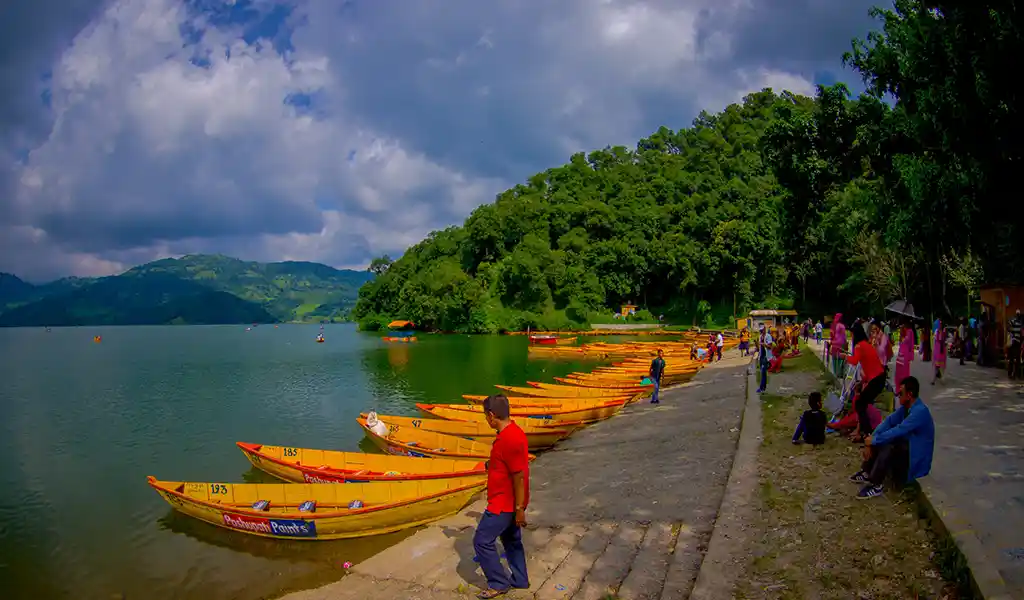
Pokhara city and Lakeside villages line the eastern shore of the lake. If you take a road from Kathmandu to Pokhara, you’ll pass through hills and plains. Lakeside is a lively area with hotels, restaurants, and shops. You can easily walk from most of the town to the water’s edge.
Natural Beauty and Scenic Highlights
Phewa Lake often reflects the sky and the surrounding mountains on its calm water. On a clear day, you may see Machhapuchhre perfectly. The view is breathtaking in the morning or late afternoon when the light is soft.
The mountains form a natural amphitheater around the lake. You can see the Annapurna massif to the north, the Dhaulagiri range to the west, and Machhapuchhre’s point nearby. The mountains glow with shades of orange and pink during sunrise and sunset. You can see the colors directly or through the reflection of the water.
The southern shore has Rani Ban, or Queen’s Forest. Here, you’ll see wooded trails and viewpoints, frogs, fish, and lotus plants in the wetlands, and egrets or kingfishers along the reed. Lotus and water lilies bloom widely during the monsoon.
Cultural and Spiritual Significance
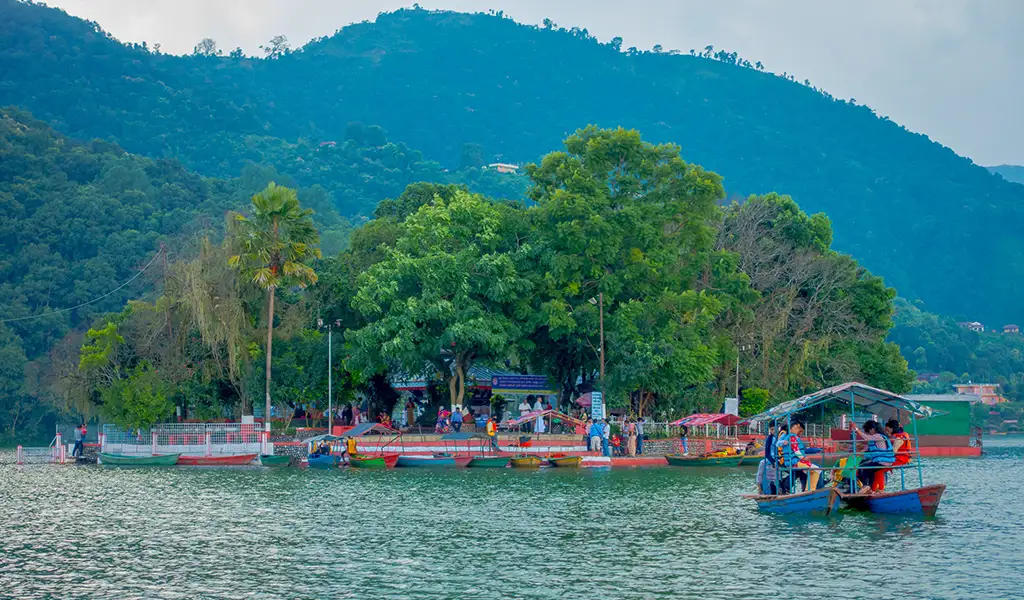
Tal Barahi Temple, a two-storey pagoda-roofed shrine dedicated to Goddess Barahi, a form of Durga, sits in the center of the Phewa Lake. The only way to reach the temple is by boat. Pilgrims and visitors row to the temple to offer prayers and receive blessings.
Villagers maintain the temple by repairing the roof and keeping the wood in good condition every few years. Many devotees gather to light oil lamps and chant inside. The temple is lively during Dashain with many visitors and a spiritual atmosphere.
This temple is sometimes called the “Lake Temple”. According to local legends, the goddess guided villages in building it on the island. Some other legends describe it as a valley flooded to punish a king. Other stories also include a hidden city beneath the water.
Gurung, Magar, and Newar communities live around Phewa Lake. These people celebrate lakeshore festivals and share the lake. Villagers hold the Rasual Jatra in Shravan, an annual boat festival honoring the water and rain.
Activities and Experiences
Boating: The most popular activity is taking a boat. You can rent a ghatta, a wooden rowboat, for about NPR 300-500 per hour. A local boat operator will row you around the Tal Barahi temple. You can share the boat with others to reduce the cost.
Kayaking and Canoeing: Kayaks and canoes are available for around NPR 500-800 per hour. You can paddle at your own pace on these rides. You can rent inflatable kayak sets or paddling kits for about $10 per four.
Tandem Rowboat: Some shops offer tandem rowboats with a female boat operator called a ghatwali. She will row the boat and sing folk songs, giving you a memorable cultural experience.
Lakeside Stroll: You can walk or cycle along the Lakeside, experiencing the cool breeze. Follow the paved path beside the lake with cafes, souvenir shops, and gardens.
Photography: Phewa Lake is ideal for photographers. Early mornings and sunset offer the perfect reflections of the mountains. A polarizing filter can make the sky and hills more vibrant.
Other Activities: Many boats offer a one-way trip to the Peace Stupa on the opposite hill. You can take the boat and hike up the trail for $2-4. Fishing and paddleboats are also available near Lakeside.
Practical Tips for Visitors
Best Time to Visit: October to March offers dry, clear weather and excellent visibility. The monsoons from June to September bring heavy rain and mist, which can hide the peaks, but the landscape is lush green. Early morning and late afternoon are the best times for reflections on the lake.
Clothing: Daytime temperature ranges from 15–25°C, but mornings and evenings are cooler. You can wear light clothes during the day and a light jacket or a shawl in the mornings and evenings. You should wear a hat and sunscreen to prevent sunburn.
Footwear: Wear comfortable, non-slip shoes. It’s better if your shoes are water-resistant if you plan on boating.
Gear: Bring sunglasses and waterproof bags for cameras and phones. Waterproof cases are helpful in case of splashes.
Essentials: You must carry bottled water, as you may spend hours at the lake. Bring snacks like fruits or nuts.
Safety: Always wear a life jacket provided on the boats. The water is deep, and sudden dips or currents may occur. Watch over children near the water and avoid swimming in the main lake where motorboats operate.
Temple Etiquette: Remove shoes before visiting Tal Barahi Temple and dress modestly. Place the offerings or flowers respectfully at the shrine.
Costs: Refer to the above notes for the boat rentals. Ferry trips to the island temple cost about NPR 10-15 one way per person. Meals range from $2 to $10 at Lakeside.
Eco-friendly Tips: Don’t litter around the lake and use trash bins. Supporting local boat operators and vendors helps the community directly. Avoid plastic bags and bottles.
Connectivity: Most lakeside hotels offer WIFI and good mobile data coverage. You can use ride-hailing apps and local taxis to get around.
Nearby Attractions
Tal Barahi Temple: This temple sits in the center of the Phewa Lake. You can take a boat to the temple for prayers and blessings.
World Peace Pagoda: This white Buddhist stupa sits on a hill southwest of the lake. You can take a boat across the lake and hike a short trail to the top. This pagoda offers a spiritual atmosphere and panoramic views of Pokhara and the Annapurnas.
Devi’s Falls and Gupteshwor Cave: Located 2 to 3 km from the Lakeside, Devi’s Falls is a dramatic waterfall, and Gupteshwor Cave is an underground Shiva shrine. They sit directly across from each other.
Paragliding: You can paraglide from Sarangkot above the Phewa Lake. Morning flights offer calmer air and smoother conditions.
Hiking: If you want more adventure, take short treks from Pokhara. Most trails begin at Lakeside or Phewa Bridge, including routes to Kande, Dhampus, or Australian Camp villages.
Environmental and Community Insights
Phewa Lake faces challenges from pollution and silt. Wastewater and trash from the tower can affect its clear water. Local groups and the government organize clean-up efforts, and many shops avoid plastic, encouraging the use of local products.
Farmers use organic methods, and organizations teach children about the lake’s ecology. You may see volunteers teaching visitors and residents how to separate trash or plant trees along the shore.
The lake’s community is active. Fishers sell fresh fish from their rowboats in the morning, and families carry lotus flowers to the market. You can support the local community by supporting the local vendors and shops.
Accommodation and Logistics
Staying in Lakeside is the most convenient option. You can easily reach Phewa Lake and other nearby attractions. Accommodation ranges from $5 hostel dorms to luxury resorts along the lake. Most guesthouses offer WIFI with good speed.
You should book early if you want to visit during holidays or weekends. Many hotels arrange breakfast by the lake or for early morning boat rides.
Getting around Pokhara is simple. You can rent a bicycle or motorbike, or use cycle rickshaws and taxis for short trips. Small boats regularly travel across Phewa Lake between the banks. You can pay a small fare at Lakeside docks.
Lakeside has many ATMs and shops, but carrying cash for small vendors is better. The local currency of Nepal is the Nepali Rupee (NPR). While not required, you can tip to show your appreciation.
Conclusion
Phewa Lake combines natural beauty, spirituality, and local culture. The lake reflects the surrounding mountains and offers a spiritual scene. You can take a boat to the Tal Barahi Temple, hike to the World Peace Pagoda, or relax at a lakeside cafe.
You should enjoy the lake responsibly. Respect the temple and wildlife, avoid using plastic, and support local businesses. It helps preserve the Phewa Lake for everyone. The mountains and the lake create a lasting impact on you.