
Unbeatable Holiday Offers – Save Up to 20% on Your Next Adventure!


Short Hikes Near Pokhara: 7 Easy Day Hikes and Treks
Last verified: 23 November 2026. Trail conditions change after the monsoon, and Annapurna Conservation Area permits apply on some routes. Confirm current conditions and permits with your guide or agency.
Short hikes near Pokhara reward you with Annapurna and Machapuchare views from lakeside ridges, Gurung villages and forest trails, often within an hour of Lakeside. Here are seven day hikes and short overnights, with walking times, difficulty, permits, how to reach each trailhead and the best season, plus tips for combining them with a longer Annapurna trek.
What are the best short hikes near Pokhara?
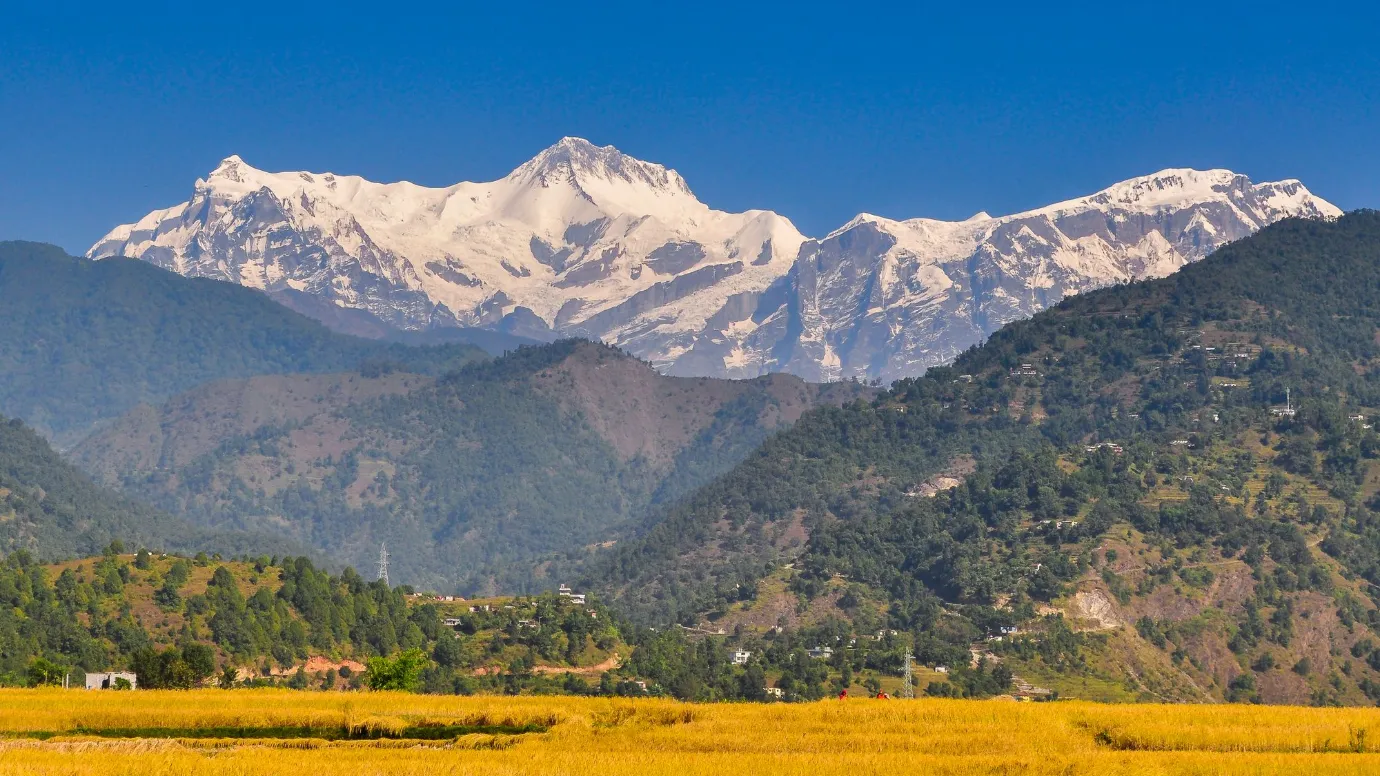
Short answer: The best short hikes are the World Peace Pagoda, Sarangkot, Australian Camp, Dhampus, Ghandruk, the Begnas and Rupa lakes ridge, and Panchase. Most take two to six hours, and several work as relaxed overnight trips. Clear mornings from October to March give the best views of Machapuchare, Annapurna and Dhaulagiri.
| Hike | High point | Time | Difficulty | Permit |
|---|---|---|---|---|
| World Peace Pagoda | About 1,100 m | 2 to 3 hours return | Easy | None |
| Sarangkot | About 1,600 m | 2 to 3 hours up | Moderate | None |
| Australian Camp | About 2,060 m | 1.5 to 2 hours up | Easy to moderate | ACAP |
| Dhampus | About 1,650 m | 2 to 3 hours from Phedi | Easy | ACAP |
| Ghandruk | About 1,940 m | Overnight trip | Moderate | ACAP and TIMS |
| Begnas and Rupa lakes ridge | About 1,000 to 1,300 m | 3 to 4 hours | Easy | None |
| Panchase | About 2,500 m | 2 to 3 days | Moderate | Check locally |
These hikes make good warm-ups before longer treks such as Poon Hill, Mardi Himal or Annapurna Base Camp.
How do you hike to the World Peace Pagoda?
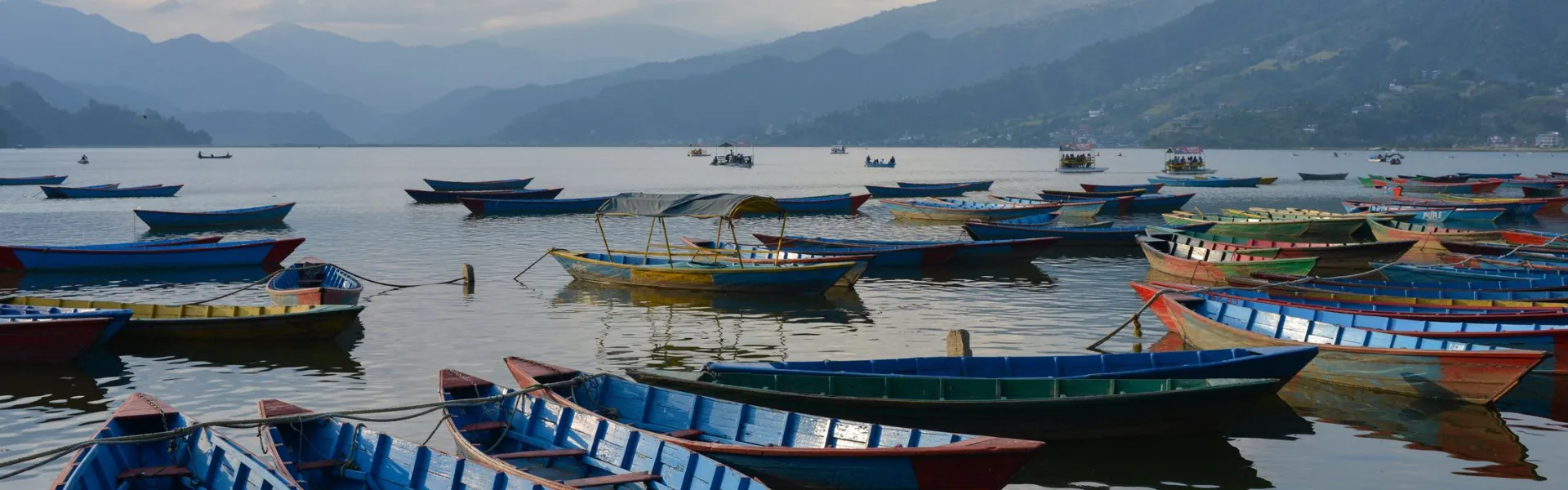
Short answer: Take a rowing boat across Phewa Lake from Lakeside to the far shore, then climb a forest trail for about 45 minutes to an hour to the white World Peace Pagoda, at about 1,100 meters. Walk down to Damside or back to the boat. Allow two to three hours. Views take in Pokhara, the lake and the Annapurna range.
The pagoda, also called Shanti Stupa, was built by Japanese Buddhist monks of the Nipponzan Myohoji order. Remove shoes before walking around it, walk clockwise and keep noise down. Late afternoon light is beautiful, but morning gives the clearest mountain views. Several cafes along the trail serve tea and snacks.
Is Sarangkot worth the hike for sunrise?
Short answer: Yes, on a clear morning. Sarangkot, a ridge at about 1,600 meters above Phewa Lake, gives one of the most famous sunrise views in Nepal, with Dhaulagiri, Annapurna South, Machapuchare and Annapurna II lit up in sequence. Hike up in two to three hours from Lakeside, or drive up and walk down.
Sarangkot is also Pokhara’s main paragliding launch site, and watching gliders take off is part of the experience. For sunrise, start in the dark with a headlamp, or stay overnight at a guesthouse on the ridge. The trail climbs steadily through villages and forest, with steep steps in places. Descend toward Lakeside or continue along the ridge to Kaski Kot.
What is the hike to Australian Camp like?
Short answer: Drive about 45 minutes to Kande or Phedi, then climb through forest and villages for 1.5 to 2 hours to Australian Camp, a grassy meadow at about 2,060 meters with close views of Machapuchare and the Annapurnas. Many hikers stay overnight in one of the lodges for sunset and sunrise. An Annapurna Conservation Area Permit applies.
Australian Camp is also the first stop on the Mardi Himal trek and some Annapurna Base Camp routes. From the meadow, you can walk down to Pothana and Dhampus and return to Phedi, making a gentle loop. Families enjoy it because the climb is short, the lodges are comfortable and the views are wide.
Why visit Dhampus?
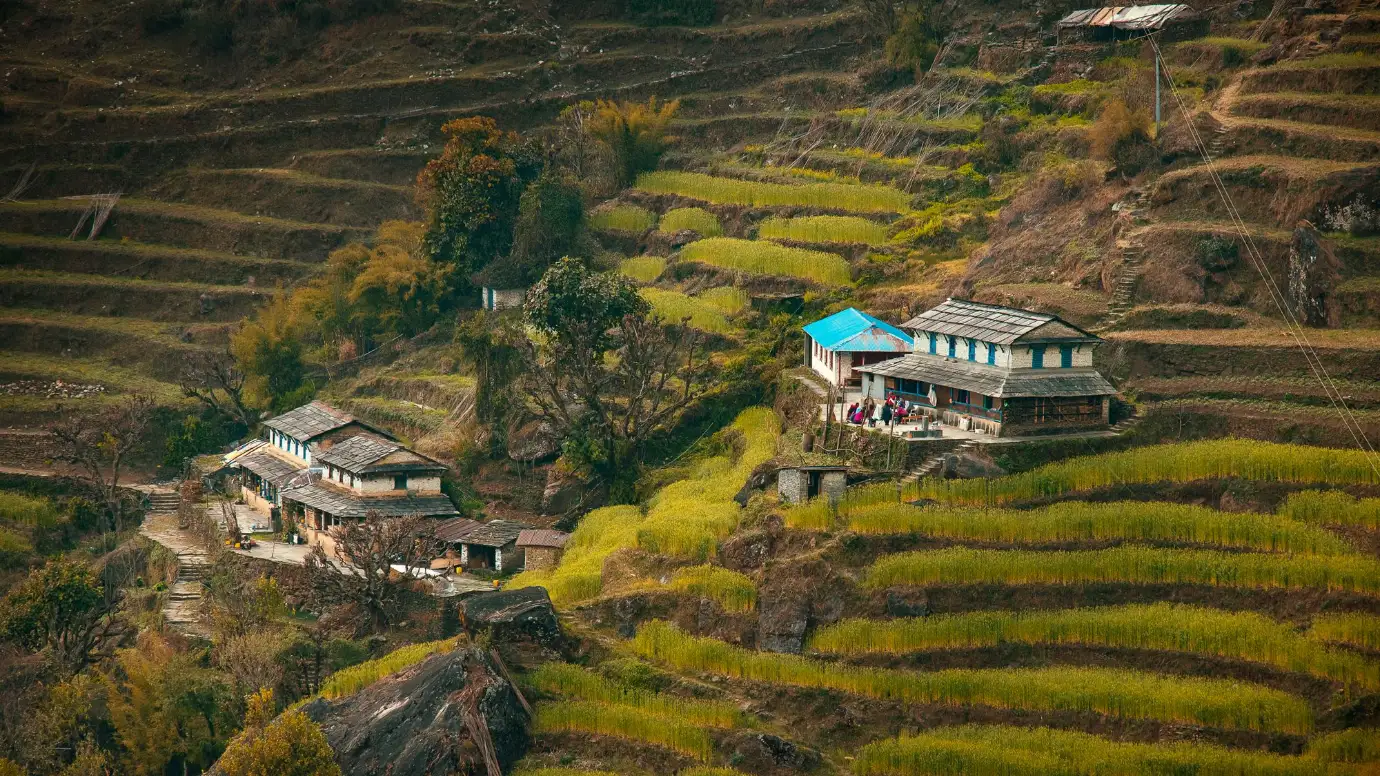
Short answer: Dhampus is a Gurung village on a ridge at about 1,650 meters, reached in two to three hours from Phedi or by road. Its lodges and homestays face Annapurna South, Hiunchuli and Machapuchare. It suits a relaxed overnight with sunrise views, and combines easily with Australian Camp in a two-day loop.
Stone houses, terraced fields and a slower pace of life make Dhampus a good introduction to hill village culture. Evenings often include dal bhat with local vegetables and a chance to talk with families who host trekkers. An Annapurna Conservation Area Permit applies, and your guide can arrange it in Pokhara.
Can you visit Ghandruk on a short trip from Pokhara?
Short answer: Yes. Ghandruk, one of the largest Gurung villages in the Annapurna region at about 1,940 meters, is reachable by jeep to Kimche or Ghandruk in two to three hours from Pokhara. A one or two night trip lets you explore stone-paved lanes, visit the Gurung museum and see Annapurna South and Machapuchare at dawn. ACAP and TIMS apply.
Ghandruk sits on the routes to Annapurna Base Camp and Poon Hill, so lodges are comfortable and well supplied. Walk down to Landruk or across to Tadapani for a short loop. Many families run homestays here. Our heritage and community trails guide covers Gurung culture in more detail.
What is the Begnas and Rupa lakes hike?
Short answer: Begnas and Rupa are two quieter lakes about 30 to 45 minutes east of Pokhara. A ridge trail called Panchabhaiya Danda runs between them through villages and forest, giving views of both lakes and the Annapurna range. Allow three to four hours. No permit is needed, and boating on Begnas makes a relaxed finish.
The area sees far fewer visitors than Phewa Lake. Fish farms, rice terraces and small tea shops line the route. It is a good choice in the hotter months, when you can cool off on the lake afterward, and in winter, when mornings are clear.
What is the Panchase trek?
Short answer: Panchase is a forested hill west of Pokhara, rising to about 2,500 meters, with five small lakes considered sacred near the top. A two to three day trek through Gurung and Magar villages leads to Panchase Danda for wide views of Dhaulagiri, Annapurna and Manaslu. The route has homestays and simple lodges.
Panchase is known for its forests of rhododendron and oak, orchids and birdlife, and for the Panchase Protected Forest. Several trails lead up from Pokhara, Bhumdi and Kande. It suits trekkers who want a quiet, low-altitude route with village stays rather than busy main trails. Ask your agency about current permit requirements for the area.
When is the best time for hiking around Pokhara?
Short answer: October to December offers the clearest mountain views and dry trails. January and February are cool and often clear. March and April bring rhododendron blooms but more haze. Pokhara is one of Nepal’s wettest places in the monsoon, from June to September, when trails are muddy and leeches are common.
Clouds usually build over the Annapurnas by late morning, so start early. Pokhara sits at about 800 meters, so the valley stays mild in winter, but ridge tops like Sarangkot and Australian Camp can be cold at dawn. In the monsoon, choose short hikes on good trails and carry rain gear and leech socks.
Do you need permits for hikes near Pokhara?
Short answer: Hikes inside the Annapurna Conservation Area, such as Australian Camp, Dhampus and Ghandruk, need an Annapurna Conservation Area Permit, NPR 3,000 for foreigners, and Ghandruk and longer routes also need a TIMS card through an agency. The World Peace Pagoda, Sarangkot and Begnas lakes hikes need no trekking permit.
Permits are issued in Pokhara and Kathmandu through registered agencies. Checkpoints along the Annapurna trails record trekkers’ details. Our permits guide lists fees and offices.
What else can you do in Pokhara between hikes?
Short answer: Go boating on Phewa Lake, visit Tal Barahi Temple on its island, paraglide from Sarangkot, visit the International Mountain Museum, explore Davis Falls and Gupteshwor Cave, and relax in Lakeside’s cafes. These activities fill rest days before or after an Annapurna trek.
The International Mountain Museum tells the story of Himalayan mountaineering and the cultures of the mountain regions. The Tibetan settlements near Pokhara sell crafts and carpets. For a different view, try an early morning boat ride on Phewa, when the lake mirrors Machapuchare on calm days.
How do you reach trailheads from Lakeside?
Short answer: Taxis and private cars reach Kande, Phedi, Sarangkot, Damside and Begnas in 20 to 60 minutes from Lakeside. Jeeps to Kimche or Ghandruk take two to three hours. Rowing boats cross Phewa Lake to the Peace Pagoda trail. Local buses also run to Phedi and Begnas but are slower and crowded.
| Trailhead | For | From Lakeside |
|---|---|---|
| Phewa Lake boat stand | World Peace Pagoda | About 20 minutes rowing |
| Lakeside north end | Sarangkot on foot | Walk from your hotel |
| Kande | Australian Camp, Mardi Himal | About 45 minutes by car |
| Phedi | Dhampus, Australian Camp | About 30 to 40 minutes by car |
| Kimche or Ghandruk | Ghandruk | 2 to 3 hours by jeep |
| Begnas Lake | Begnas and Rupa ridge | About 30 to 45 minutes by car |
What should you pack for hikes near Pokhara?
Short answer: Bring two liters of water, snacks, sun protection, a light rain jacket, a warm layer for dawn on ridges, comfortable shoes with grip, cash for permits, boats and tea stops, and a headlamp if you are hiking for sunrise. In the monsoon, add leech socks and a pack cover.
Pokhara’s lower trails can be hot and humid, even in autumn, so start early and drink regularly. For overnights at Australian Camp, Dhampus or Ghandruk, add a warm jacket, a change of clothes and a sleeping bag liner. Our packing list covers all seasons.
How safe are hikes near Pokhara?
Short answer: Hikes near Pokhara are generally safe with sensible planning. The main risks are getting lost on forest trails, slipping on steep or wet steps, heat and dehydration at low altitude and traffic on roads to trailheads. Hike with a guide or companion, start early, carry water and finish before dark.
Solo hikers have occasionally gone missing on forested hills around Pokhara, so tell your hotel where you are going and when you expect to return. Phone signal is usually good near the lake but weaker in forest. In the monsoon, landslides can damage trails, so ask locally before setting out. Paragliding and boating operators should be licensed, and life jackets should be worn on the lake.
How much does a guided hike near Pokhara cost?
Short answer: A guided day hike usually costs the guide’s day rate, often about USD 25 to 50, plus transport of about USD 15 to 60 return, boat hire for the Peace Pagoda and any permit fees. Overnight trips add simple lodge costs and meals. Prices per person fall in small groups.
Agencies in Lakeside offer packages that include hotel pickup, guide, permits, lunch and transport. For one-way routes such as Australian Camp to Dhampus, arrange a car at the finish. Our trekking cost guide explains typical guide rates and lodge prices.
Where can you see birds and wildlife near Pokhara?
Short answer: The forests on the hills around Phewa Lake, the Panchase Protected Forest and the trails around Begnas and Rupa lakes are good for birdwatching, especially in winter and spring. Look for kingfishers, sunbirds, barbets and raptors riding the thermals above Sarangkot. Early mornings are best.
Pokhara’s lakes attract wintering waterbirds, and the forested hillsides hold monkeys and many smaller species. A local birding guide can identify calls and take you to quieter spots. Carry binoculars and keep noise low. Please stay on trails to avoid disturbing nesting birds.
How can you combine these hikes with a longer trek?
Short answer: Use one short hike to test gear and fitness before starting an Annapurna trek, then build a longer route from the same trailheads. Australian Camp leads into Mardi Himal, Ghandruk leads to Poon Hill and Annapurna Base Camp, and Dhampus links to Landruk and the base camp trail.
Your guide can turn a short hike into a four to five day loop if you want more. Popular combinations include Australian Camp, Dhampus and Landruk to Ghandruk, or Ghandruk, Tadapani and Ghorepani for the Poon Hill sunrise. See our Poon Hill trek guide and Mardi Himal trek guide.
Which short hike near Pokhara suits you?
Short answer: Families and casual walkers enjoy the World Peace Pagoda and the Begnas lakes ridge. Sunrise seekers choose Sarangkot or Australian Camp. Culture lovers choose Ghandruk or Dhampus homestays. Trekkers wanting a quiet multi-day route choose Panchase. Pick based on time, fitness and what you want to see.
If you only have half a day, the Peace Pagoda or Sarangkot fits. With one night, Australian Camp or Dhampus gives sunset and sunrise. With two to three nights, Ghandruk or Panchase offers deeper village experiences.
Which hike near Pokhara is best on your first day?
Short answer: The World Peace Pagoda hike suits a first day in Pokhara. It is short, starts with a relaxing boat ride across Phewa Lake and gives wide views of the lake and the Annapurna range without a long drive. Save Sarangkot for a clear morning and Australian Camp for an overnight.
Use the first day to test your gear, adjust to the heat and humidity of Pokhara and plan the rest of your trip with your guide. Keep the evening free to enjoy Lakeside.
Frequently Asked Questions
What is the easiest hike near Pokhara?
The World Peace Pagoda hike is the easiest, with a boat ride and about an hour of climbing. The Begnas and Rupa lakes ridge is also gentle.
Which hike near Pokhara has the best sunrise?
Sarangkot and Australian Camp are the most popular for sunrise, with views of Dhaulagiri, Annapurna and Machapuchare on clear mornings.
Do I need a guide for hikes near Pokhara?
Short hikes such as the Peace Pagoda are easy to follow, but a guide is recommended for Sarangkot, Australian Camp, Dhampus, Ghandruk and Panchase. Routes within the Annapurna Conservation Area fall under the licensed guide rule for trekking.
Can I hike near Pokhara in the monsoon?
Yes, with rain gear, leech socks and flexible plans. Expect clouds, muddy trails and limited views from June to September.
Is Australian Camp suitable for children?
Yes. The climb from Kande takes about 1.5 to 2 hours, the lodges are comfortable and the altitude is low, which suits families.
About the author: Pradip Karki
Pradip Karki is the Chairman of Peregrine Treks and Tours in Kathmandu and a veteran Himalayan travel specialist with over 20 years of industry leadership. A former TIMS Department Head at the Trekking Agencies’ Association of Nepal (TAAN) with an MBA in Accounting and Finance, Pradip personally scouts routes across Nepal, Tibet and Bhutan to design safe, high-altitude treks and luxury cultural tours.
Reviewed and updated by Pradip Karki on 23 November 2026.
Official Sources Checked
- National Trust for Nature Conservation: Annapurna Conservation Area Project and permits
- Nepal Tourism Board: TIMS card, licensed guide rules and Pokhara destinations
- International Mountain Museum: Pokhara museum information
Do not hesitage to give us a call. We are an expert team and we are happy to talk to you.
info@hikinginnepal.com- Local Experience
- Financial Protection
- Effortless Travel
- Intimate Group Size
- Bespoken Itinerary