

Immerse yourself in authentic Sherpa culture and explore ancient Buddhist monasteries while enjoying breathtaking views of Mount Everest on this scenic, lower-altitude journey.

Unbeatable Holiday Offers – Save Up to 20% on Your Next Adventure!
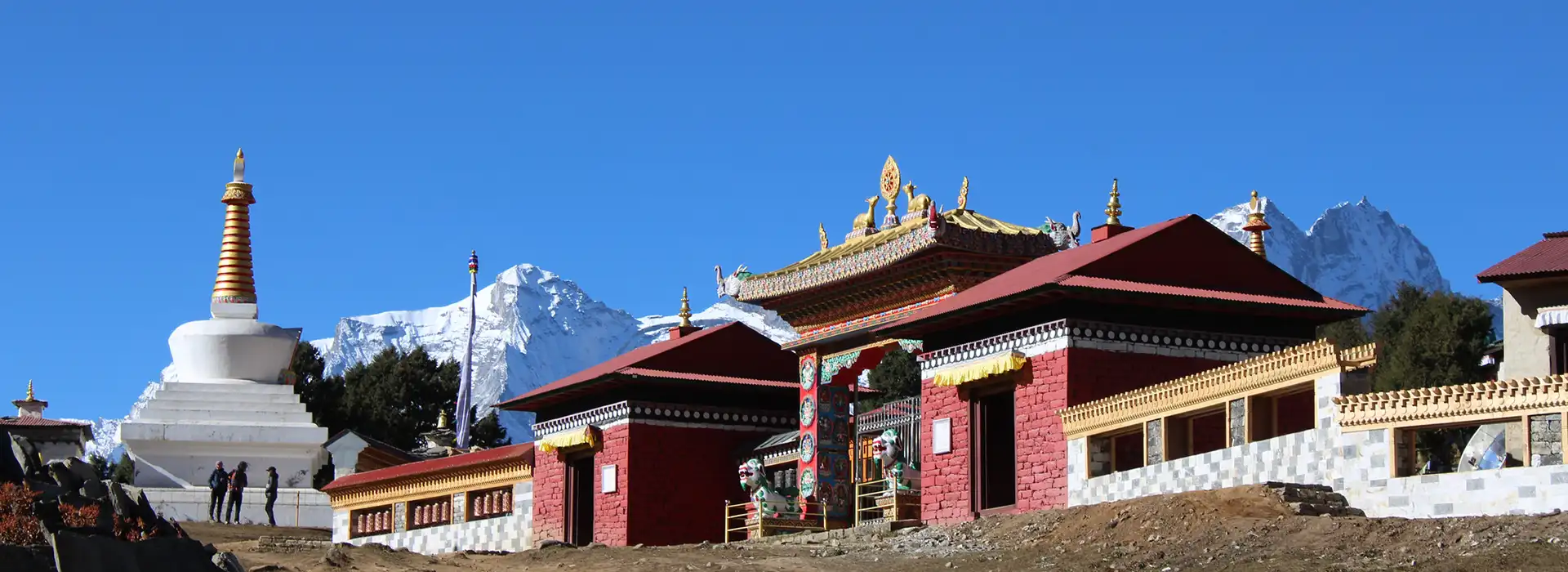

Immerse yourself in authentic Sherpa culture and explore ancient Buddhist monasteries while enjoying breathtaking views of Mount Everest on this scenic, lower-altitude journey.
The 10-day Everest Cultural Trek packages the finest elements of the Khumbu region into a single, manageable journey. This route loops through Lukla, Phakding, Namche Bazaar, Thame, Khumjung, and Tengboche Monastery before returning through the Dudh Koshi Valley. Crucially, the highest overnight point sits at 3,870 meters at Tengboche. Keeping the route below 4,000 meters dramatically reduces the risk of altitude sickness, making the trek perfect for travelers without extensive high-altitude experience.
What truly sets this journey apart is its deliberate focus on local heritage. Most short commercial packages bypass the Bhote Koshi Valley entirely. Our itinerary purposefully breaks away from the crowds to visit Thame, a quiet village that retains its traditional architectural character. From there, the trail leads to Khumjung to visit the historic Hillary School, offering a direct look at how modern mountaineering history has intertwined with community development.
Tengboche Monastery serves as the spiritual and visual centerpiece of the entire route. Perched on a high ridge, the monastery complex commands one of the most dramatic positions in the Himalayas. The iconic pyramid of Ama Dablam rises directly behind the main structure, while the massifs of Everest and Lhotse frame the northern skyline. Beyond the views, Tengboche is a living spiritual hub where guests can witness daily puja ceremonies and observe monk training.
Our comprehensive package covers all logistical details so you can focus entirely on the trail. It includes airport transfers, hotel accommodation in Kathmandu, and round-trip flight arrangements to Lukla. On the trek, the package includes eight nights of teahouse accommodation, full-board meals, a licensed English-speaking guide, and all necessary trekking permits. This balanced approach perfectly suits first-time Himalayan trekkers, families, and culture-focused travelers.
Quick Answer: What Is the Everest Cultural Trek?
The Everest Cultural Trek is a professional 10-day itinerary that focuses on Sherpa heritage, historic Buddhist monasteries, and classic Himalayan vistas, without the extreme physical toll of reaching Base Camp. The trail loops through Lukla, Namche Bazaar, Thame, Khumjung, and Tengboche before returning down the Dudh Koshi Valley. Our comprehensive package includes airport transfers, a Kathmandu hotel stay, round-trip flights to Lukla, guided trekking, teahouse accommodation, full-board meals, and all required regional permits.
The 10-day Everest Cultural Trek stands out in the Khumbu trekking market. It is neither a rushed shortcut to Base Camp nor a superficial viewpoint circuit. Instead, the itinerary purposefully incorporates historic villages that standard commercial packages omit. Diverging from the heavily trafficked main trails to visit Thame and Khumjung requires deliberate route extensions. However, these detours reward travelers with an authentic cultural depth that no viewpoint-only itinerary can match.
The entire route runs through Sagarmatha National Park, a UNESCO World Heritage Site recognized for its natural peaks and vibrant Sherpa heritage. UNESCO highlights how local cultural traditions directly support environmental conservation in the region. The communities hosting our guests in Namche, Thame, Khumjung, and Tengboche have protected this delicate mountain ecosystem for generations. By walking these paths, you engage with a living history deeply intertwined with the landscape.
Accessibility remains a core benefit of this itinerary. By keeping the highest overnight stay below 4,000 meters at Tengboche Monastery, the route minimizes the physical stress of high altitude. It requires no technical trekking skills, making it perfectly manageable for active beginners. Furthermore, the schedule fits comfortably into a standard two-week holiday, leaving ample time for cultural sightseeing in Kathmandu.

Included Meals

Trip staff

Transport

Accommodation

Trip Grade
Group Size
You arrive at Tribhuvan International Airport in Kathmandu. Our representative meets you at the international arrivals hall and transfers you by private vehicle to your hotel in Kathmandu. Check in, rest after your flight, and use the afternoon and evening to prepare for the trek. Thamel sits within easy reach of gear shops, money exchange outlets, and restaurants if you need any last-minute supplies.
Our guide visits your hotel in the evening to walk through the full 10-day Everest Cultural Trek itinerary. Use the meeting to confirm your gear list, discuss the Lukla flight logistics and the possibility of Ramechhap, ask questions about the Namche acclimatization day structure, and confirm that your travel insurance covers trekking and helicopter evacuation.
Meals: Not included – many restaurant options nearby
Accommodation:
Hotel in Kathmandu (twin sharing)
Difficulty
The day begins with an early transfer to the airport—Tribhuvan International in Kathmandu or Manthali Airport in Ramechhap, depending on the season and current flight operations. The Lukla flight covers 140 kilometers in approximately 25 to 35 minutes on a STOL aircraft. The Tenzing-Hillary Airport at Lukla, at 2,840 meters, has a runway that slopes upward toward the mountain at an 11.7-degree gradient and ends at a cliff edge—the approach and landing rank among the most dramatic in commercial aviation.
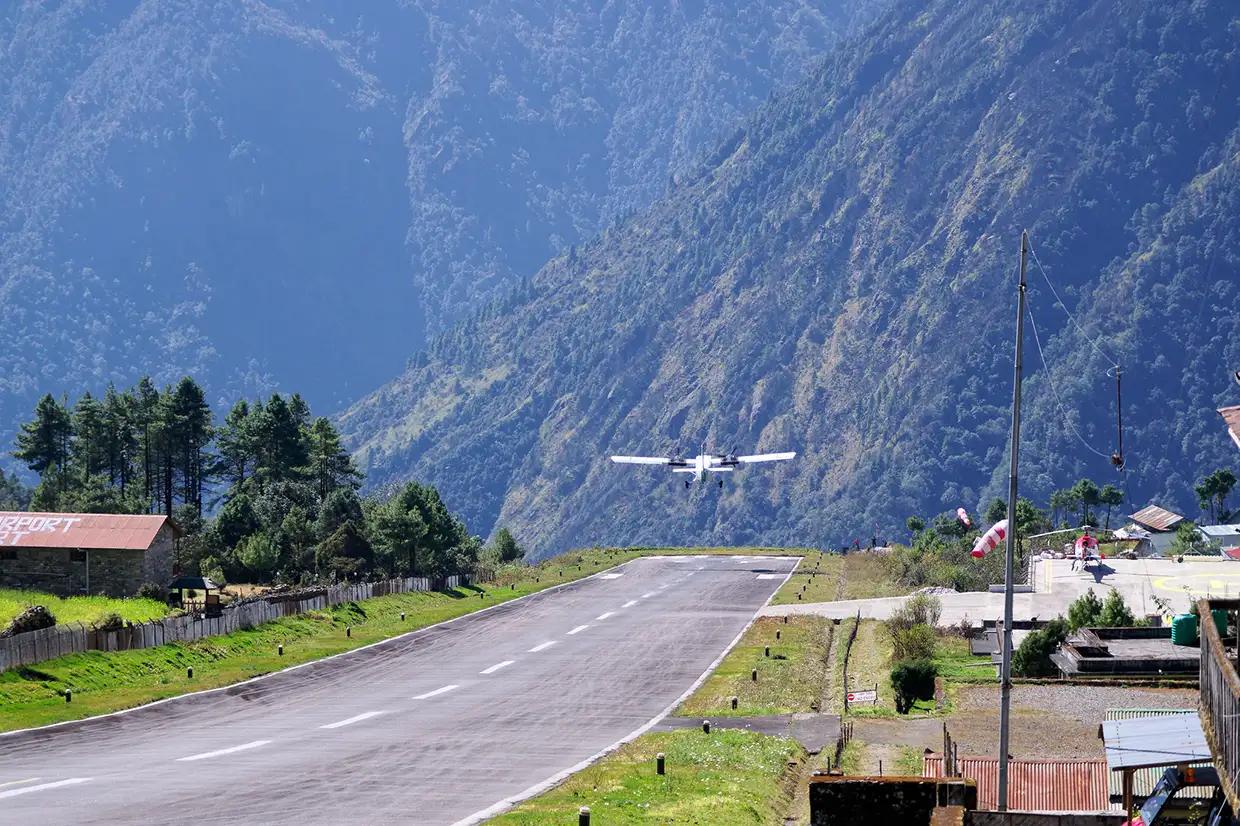
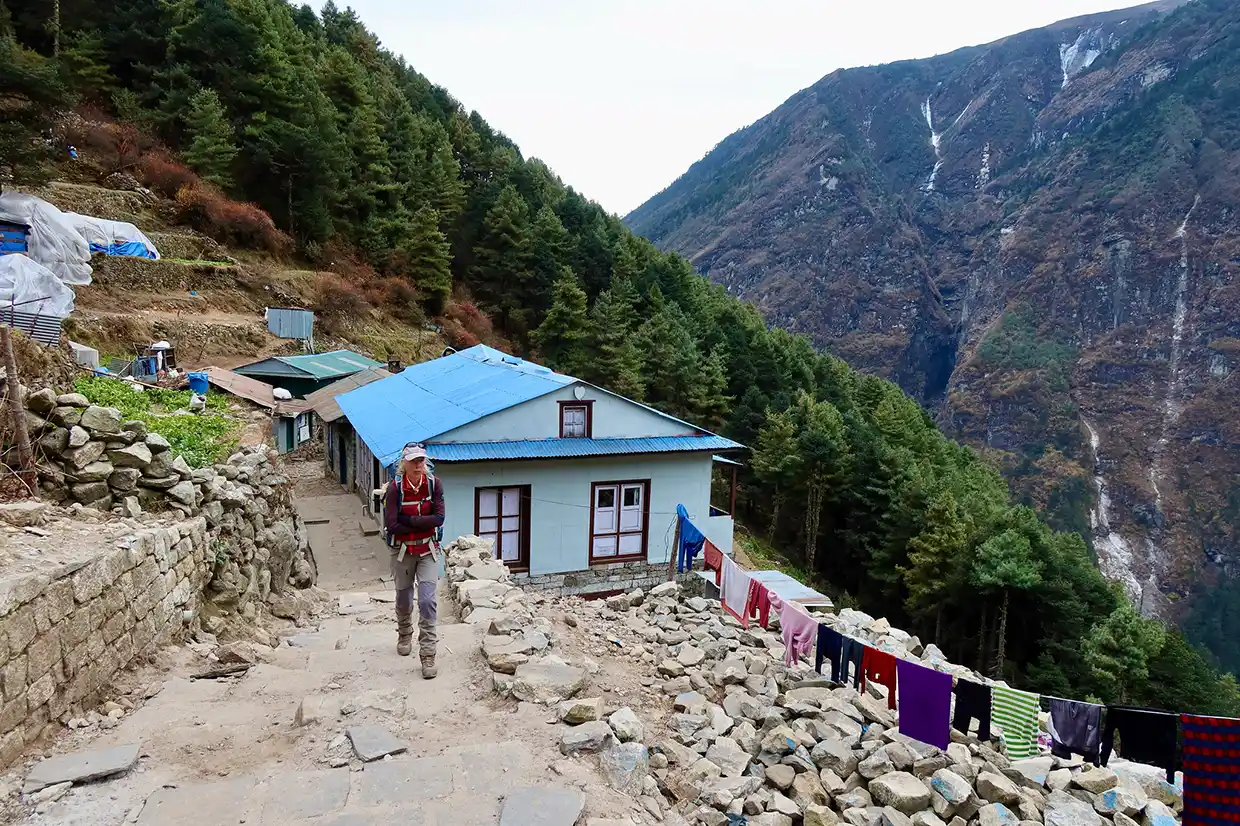
After landing in Lukla, the trek begins immediately on the Dudh Koshi Valley trail heading north. The path descends from Lukla through pine forest and Sherpa villages to the Dudh Koshi river, then follows the river valley to Phakding at approximately 2,610 meters. Walking time runs approximately 3 hours. The first suspension bridges of the route appear on the Phakding approach—iron suspension bridges with prayer flags and the sound of the glacial Dudh Koshi below
Accommodation:
Teahouse in Phakding
Meals Breakfast, Lunch, Dinner
Difficulty
The Day 3 trail from Phakding to Namche Bazaar covers the most physically demanding single section of the Everest Cultural Trek. The route follows the Dudh Koshi Valley through Monjo—where the Sagarmatha National Park entry checkpoint and permit inspection occur—and continues through pine and rhododendron forest past the Hillary Suspension Bridge before beginning the steep climb to Namche. The 600-meter elevation gain from the Dudh Koshi bridge to Namche at 3,440 meters takes 2 to 3 hours of consistent uphill walking.
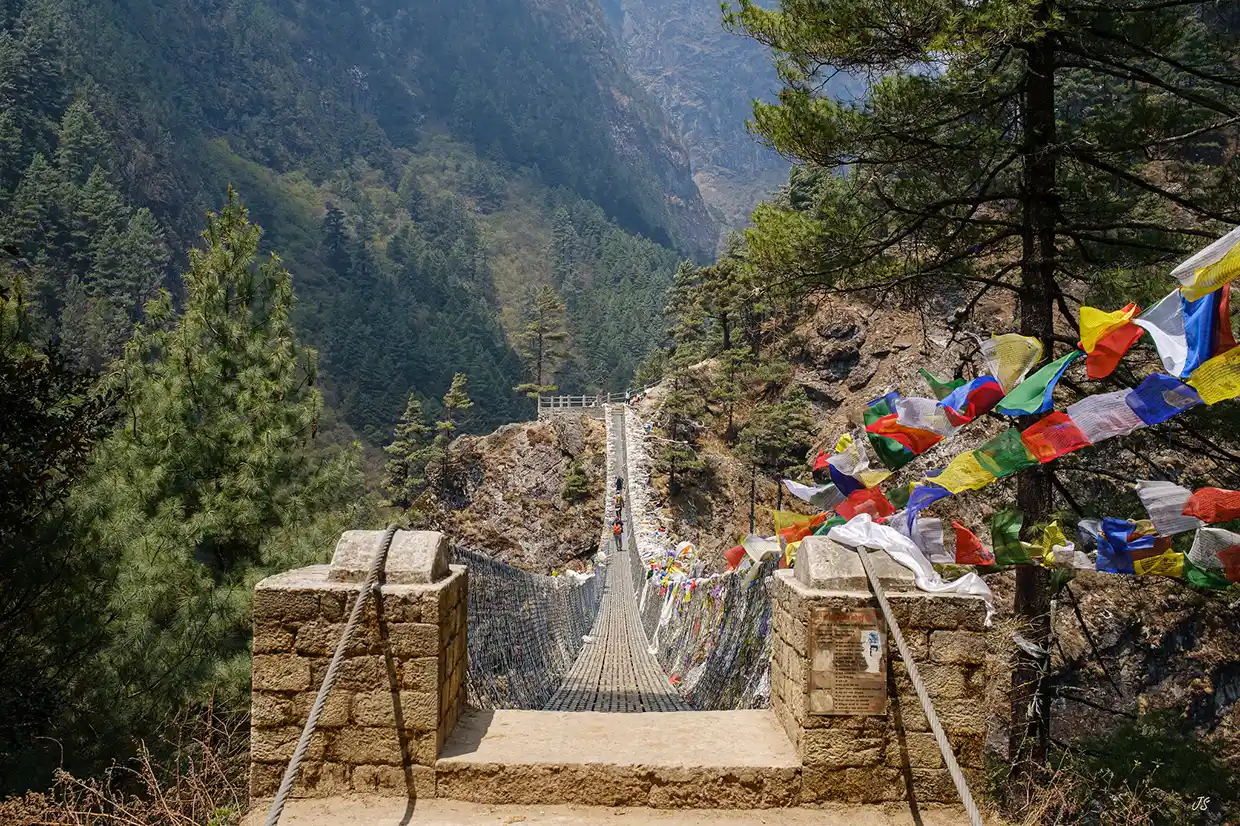
The Hillary Bridge crossing at approximately 3,300 meters provides the first clear view of Everest and the upper Khumbu range from the southern approach—a brief mountain panorama between the forest canopy sections that signals the visual rewards ahead. Namche Bazaar appears suddenly as the trail crests the final ridge and opens onto the horseshoe-shaped town spread across the hillside bowl. Check into your teahouse, eat a full dinner, and rest early for the Day 4 acclimatization and exploration.
Accommodation:
Teahouse in Namche Bazaar
Meals Breakfast, Lunch, Dinner
Difficulty
Day 4 is spent in Namche for a full day of acclimatization and cultural exploration. Your guide leads a morning acclimatization hike to the Everest Viewpoint Ridge above Namche at approximately 3,700 meters—the standard altitude-adaptation hike that follows the protocol of climbing higher than your sleeping altitude to accelerate the body’s oxygen-carrying adaptation. The 30 to 40-minute uphill walk rewards the effort with the first direct view of Everest’s upper triangle above the Lhotse-Nuptse wall on clear mornings.
After the morning hike and breakfast, your guide leads you on an afternoon exploration of Namche at your own pace. The Sherpa Museum visit provides the cultural foundation for understanding every village encounter that follows on Days 5 through 7—the museum’s displays on Sherpa history, mountaineering heritage, and Buddhist religious traditions give context that transforms village walks from observation into understanding. If Day 4 falls on a Saturday, the weekly Namche market adds a direct encounter with the Khumbu’s living trade economy to the day’s program.
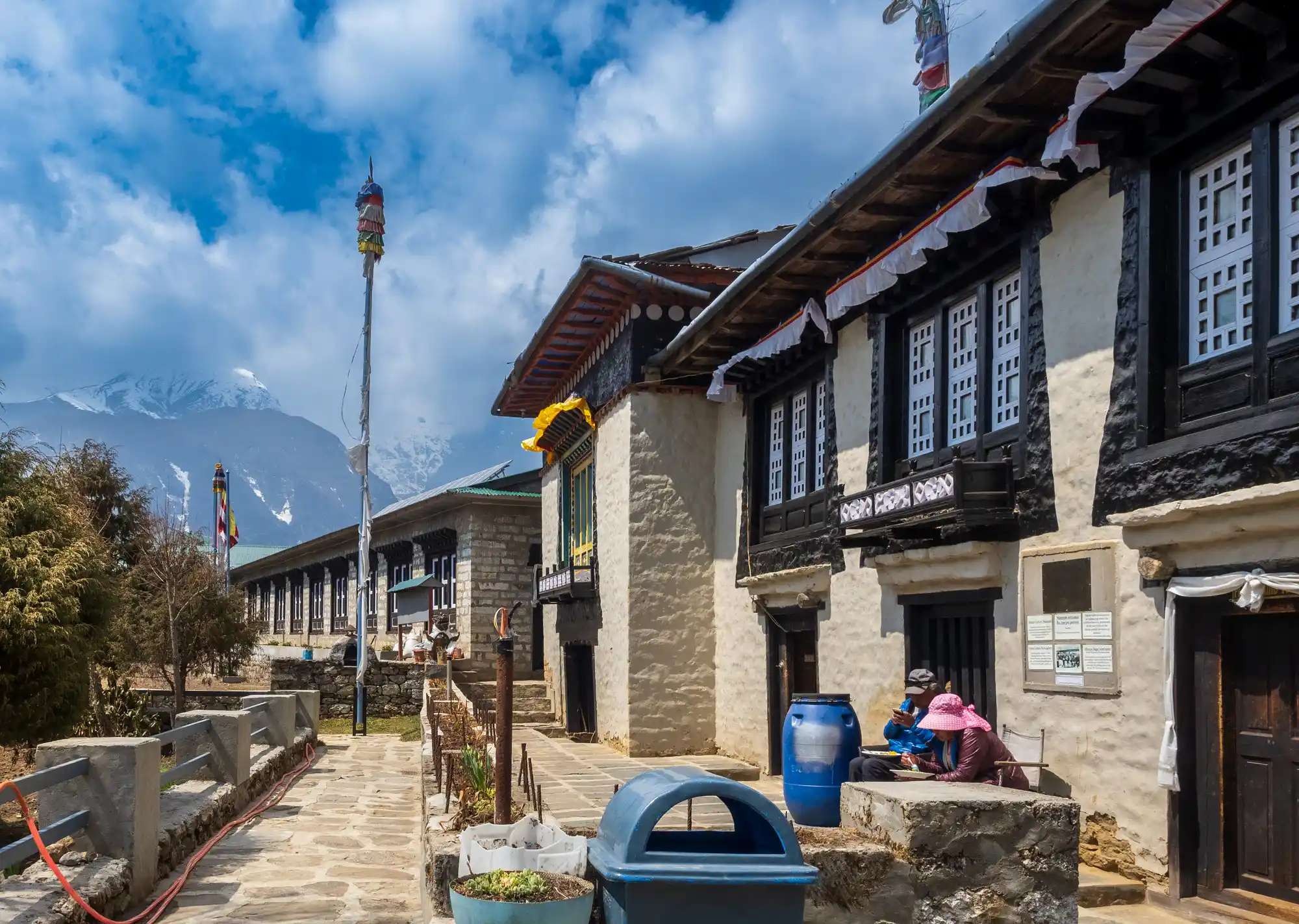
Namche also offers bakeries, cafes, gear shops, and communication facilities that disappear as the trail moves higher. Use the afternoon to stock up on snacks, replace any missing gear items, send messages home, and charge devices before the route enters smaller teahouse territory from Day 5 onward.
Accommodation:
Teahouse in Namche (second night)
Meals Breakfast, Lunch, Dinner
Difficulty
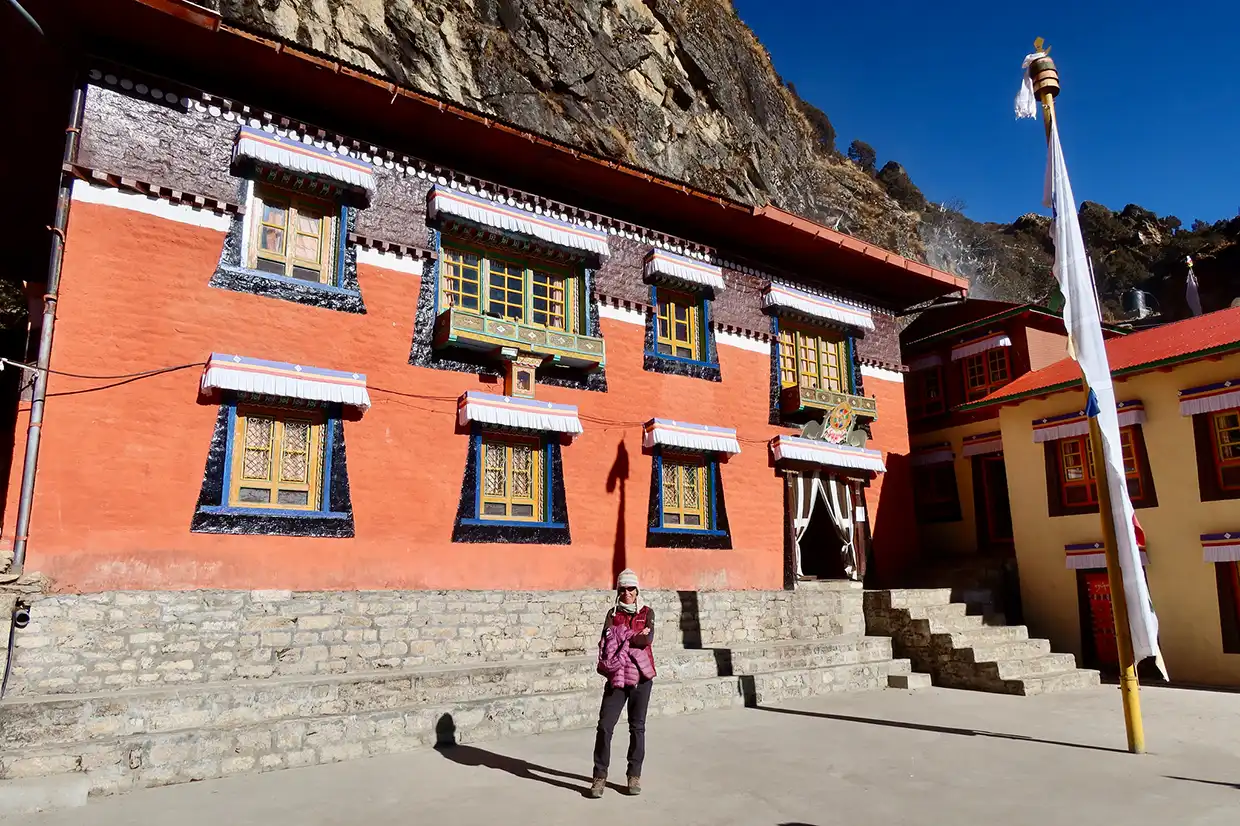
The Day 5 trail departs Namche and heads northwest into the Bhote Koshi Valley, taking a path that immediately diverges from the busy main Tengboche corridor and enters a quieter, more traditionally Sherpa environment. The walk from Namche to Thame takes approximately 3 to 4 hours through the villages of Thamo and several smaller Sherpa homesteads before reaching Thame at 3,820 meters.
The Bhote Koshi Valley trail passes mani walls, prayer wheels, and scattered Sherpa farmhouses with views of the Nangpa La glacier route to Tibet visible at the valley head on clear days. Thame village itself carries a noticeably different character from Namche—quieter, smaller, and less commercially oriented, with yak herding, potato cultivation, and traditional Sherpa household economy more visibly active than in the main trekking corridor. If the Thame Monastery is open, your guide arranges a visit to the monastery complex above the main village.
 Accommodation:
Teahouse in Thame
Meals Breakfast, Lunch, Dinner
Difficulty
The Day 6 trail from Thame to Khumjung crosses the main Namche ridge and traverses the open plateau zone above the Dudh Koshi Valley before reaching Khumjung at approximately 3,790 meters. The route crosses through the village of Kunde, adjacent to the Himalayan Trust’s Kunde Hospital, before approaching Khumjung’s traditional stone house settlement from the western side. Walking time runs approximately 4 to 5 hours, depending on the exact route and pace.
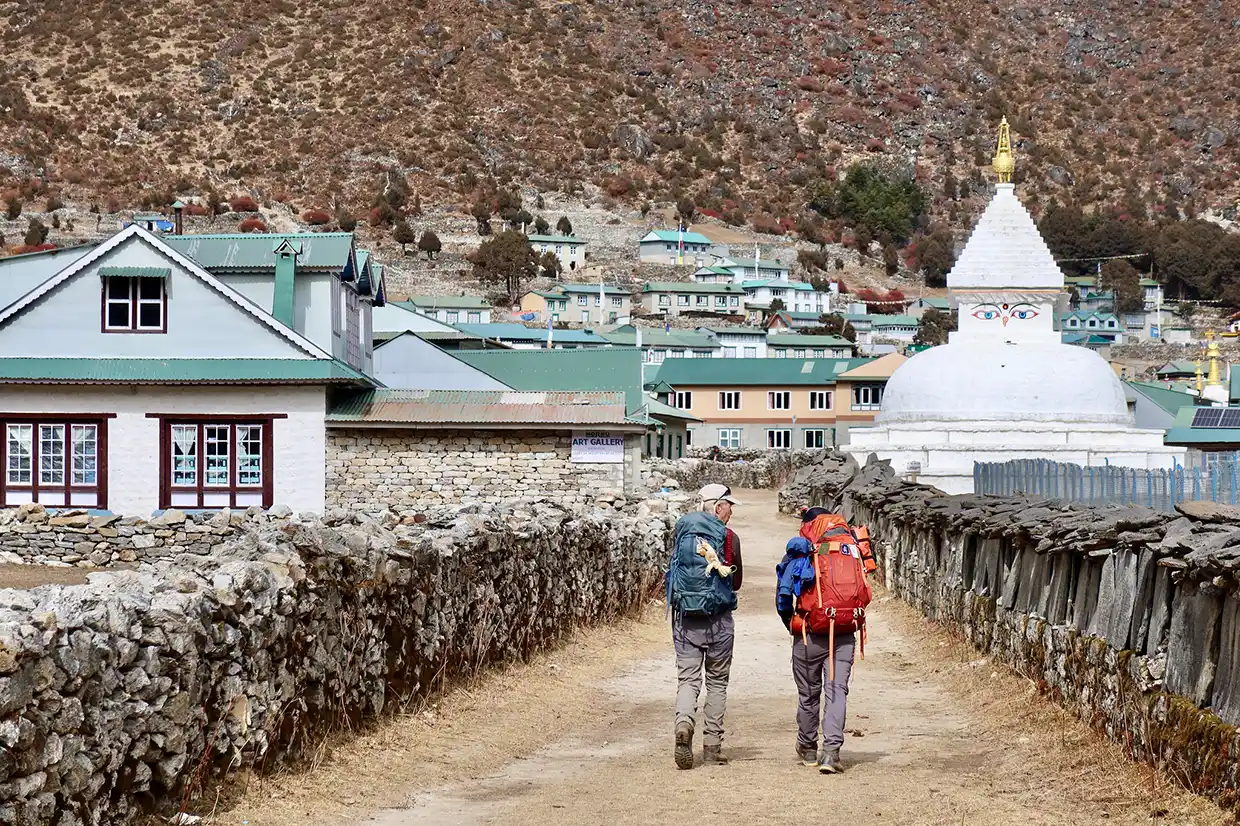
Khumjung village exploration in the afternoon gives you time before dinner to walk through the traditional Sherpa homes, visit the Hillary School area, observe the Khumjung Monastery, and take in the wide views of Ama Dablam rising above the eastern valley from the village’s open plateau position. The Hillary School area occupies a prominent central position in the village and continues as an active educational facility—request a guided visit through your guide if school is in session, or walk around the exterior buildings independently if school hours have passed.
Accommodation:
Teahouse in Khumjung
Meals Breakfast, Lunch, Dinner
Difficulty
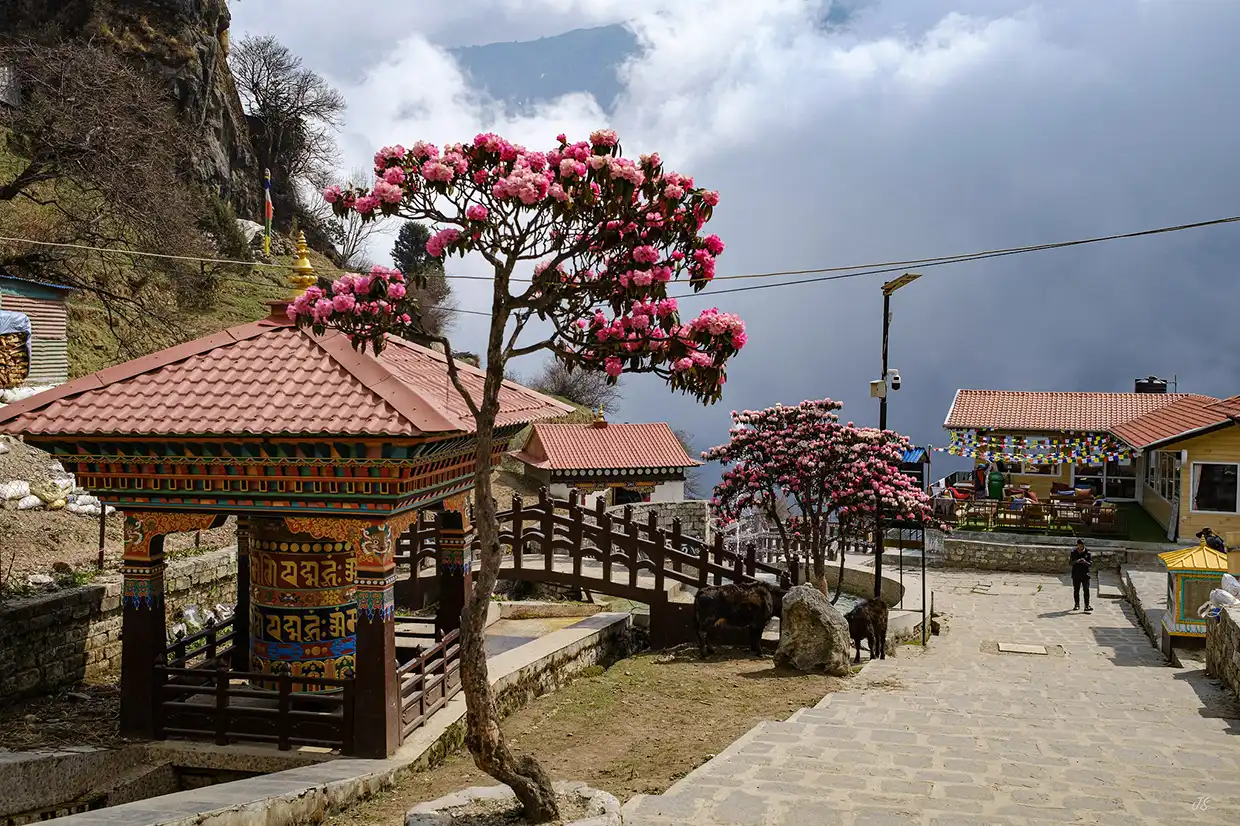
The trail from Khumjung to Tengboche descends through the Dudh Koshi Valley, crosses the river at the Phunki Tenga suspension bridge area, then climbs the steep ascent to the Tengboche ridge at approximately 3,860 meters. The walking time is approximately 4 to 5 hours. The forest section between Phunki Tenga and Tengboche climbs through rhododendron and pine forest in a trail section that ranks among the most photogenic on the entire route—particularly in spring when rhododendron blooms cover the hillside in red, pink, and white.
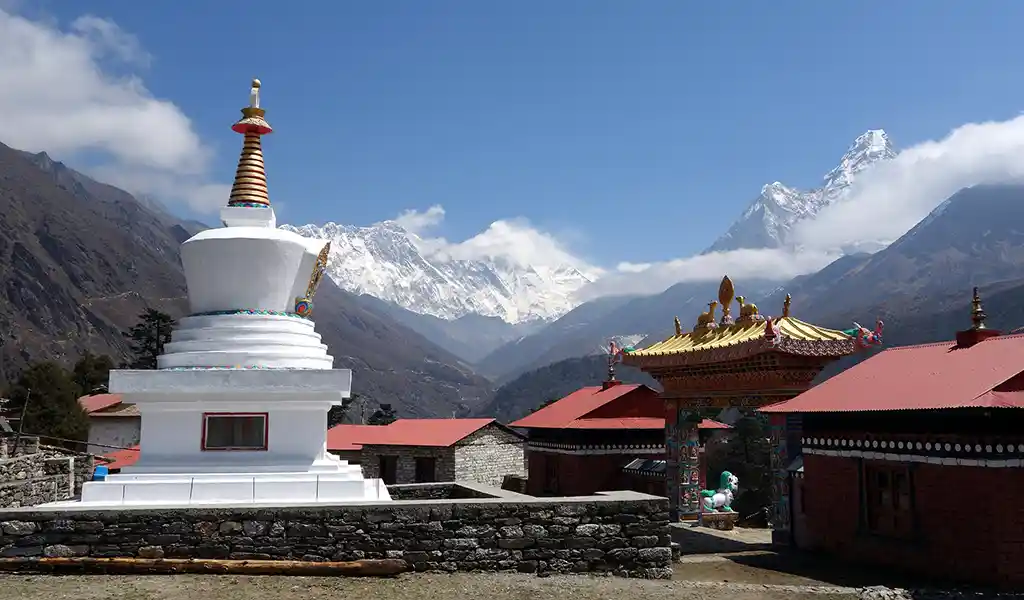
Tengboche Monastery appears at the top of the climb as the forest opens onto the wide ridge saddle. The mountain view from the Tengboche ridge emerges simultaneously with the monastery complex—Ama Dablam above the southeastern horizon, Everest and Lhotse above the northern ridge, Thamserku and Kantega filling the eastern skyline. Check into the teahouse beside or below the monastery complex, explore the monastery grounds in the late afternoon, and attend the evening puja if the ceremony timing aligns with your arrival.
Accommodation:
Teahouse at Tengboche
Meals Breakfast, Lunch, Dinner
Difficulty
Day 8 begins with the Tengboche morning view—typically the clearest mountain panorama of the entire trek as the overnight temperature drop settles the atmosphere before sunrise. Take photographs from the monastery ridge in the early morning before the cloud buildup begins. Attend the morning puja if you missed the evening ceremony.
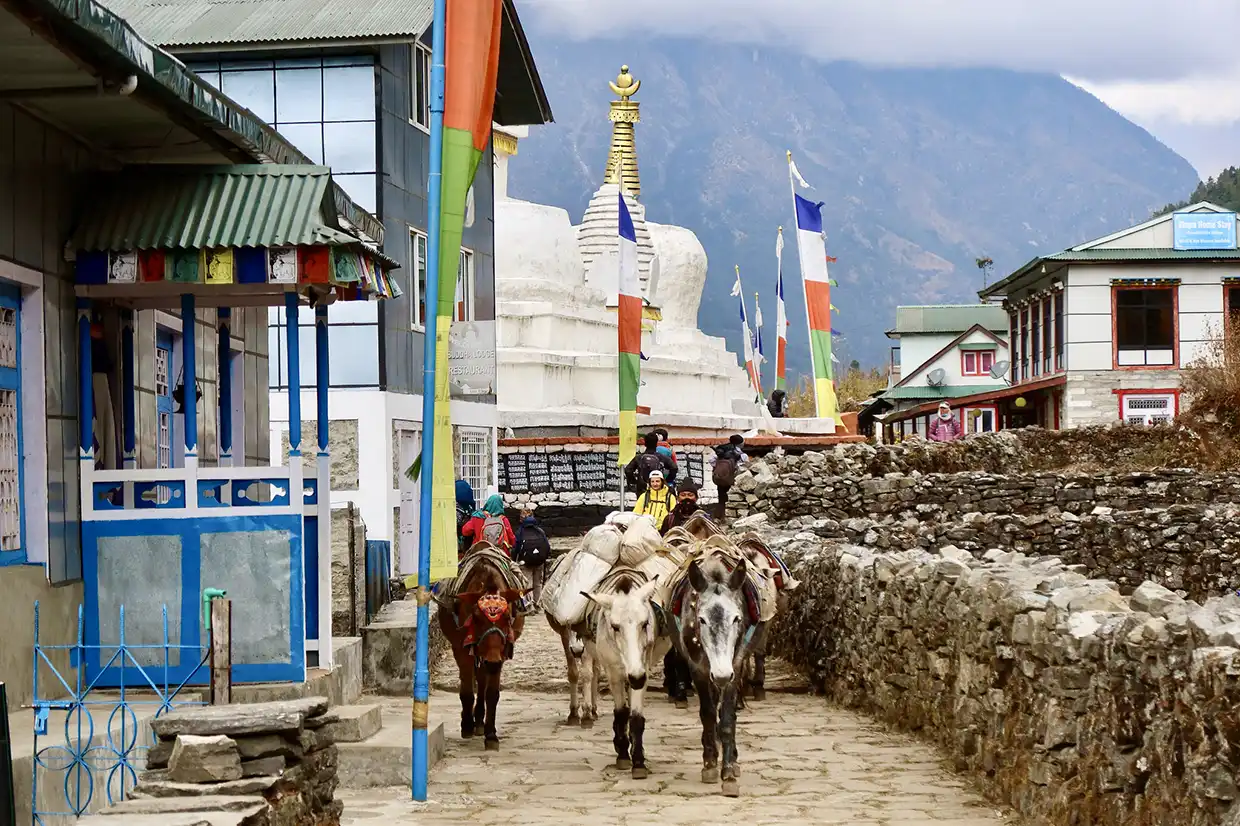
After breakfast, the trail descends from Tengboche back through the Phunki Tenga forest and Dudh Koshi Valley toward Monjo or Phakding. The descent covers significant elevation loss over 3 to 4 hours on a trail that feels familiar from the Day 3 ascent but moves in the opposite direction. Trekking poles protect knees through the steeper descent sections above Phunki Tenga. Arrive at Monjo or Phakding by early to mid-afternoon for the overnight.
 Accommodation:
Teahouse at Monjo or Phakding
Meals Breakfast, Lunch, Dinner
Difficulty
The final trekking day returns from Monjo or Phakding to Lukla on the familiar Dudh Koshi Valley trail. The walking time is approximately 4 to 5 hours, with a final climb back up from the valley floor to Lukla at 2,840 meters. The trail passes through Phakding, Ghat, and Cheplung before the final uphill approach to Lukla town.
On the final evening in Lukla, you can celebrate the completion of the Everest Cultural Trek with your guide and porter team over dinner at one of the town’s better teahouse restaurants. Organize tips for the guide and porter based on your satisfaction, confirm your morning flight departure time, and pack your main bag in full for the early departure the following morning.
Accommodation:
Teahouse in Lukla
Meals Breakfast, Lunch, Dinner
Difficulty
The morning departure from Lukla is typically scheduled between 6 and 9 AM, depending on weather conditions and flight assignment. STOL aircraft operate the Lukla-to-Kathmandu or Lukla-to-Ramechhap route in reverse of the Day 2 approach. Our team confirms your specific flight time and transfer arrangements the evening before. The airport transfer from Kathmandu airport to your international departure terminal is arranged with our pre-arranged driver.
If your international flight departs on Day 10 in the afternoon or evening, the Lukla morning departure typically provides sufficient connection time—but weather delays at Lukla create uncertainty, making a same-day international departure high-risk. Our team recommends adding an optional extra hotel night in Kathmandu on Day 10 if your international departure falls within 12 hours of the standard Lukla morning flight arrival. Contact us before booking if you want to discuss the Day 10 timing in detail.
Accommodation:
Optional extra hotel night in Kathmandu if required
Meals Breakfast
Difficulty
While most short itineraries in the Khumbu region focus almost exclusively on reaching a specific viewpoint, the 10-day Everest Cultural Trek prioritizes regional heritage. The Himalayan panorama remains a core highlight of the journey. However, this specific route treats those iconic views as a reward for traveling through the cultural heart of the region: historic Sherpa villages, centuries-old Buddhist monasteries, and traditional farming communities.
Several distinct operational choices set this itinerary apart from standard commercial packages:
Sherpa culture in the Khumbu region carries a depth that modern tourism has not erased. Arriving from eastern Tibet centuries ago, the Sherpa people established resilient highland communities. Their traditional way of life still revolves around yak herding, high-altitude potato farming, and the deep Buddhist practices that shape their daily routines. The monastery system forms the spiritual backbone of these mountain villages.
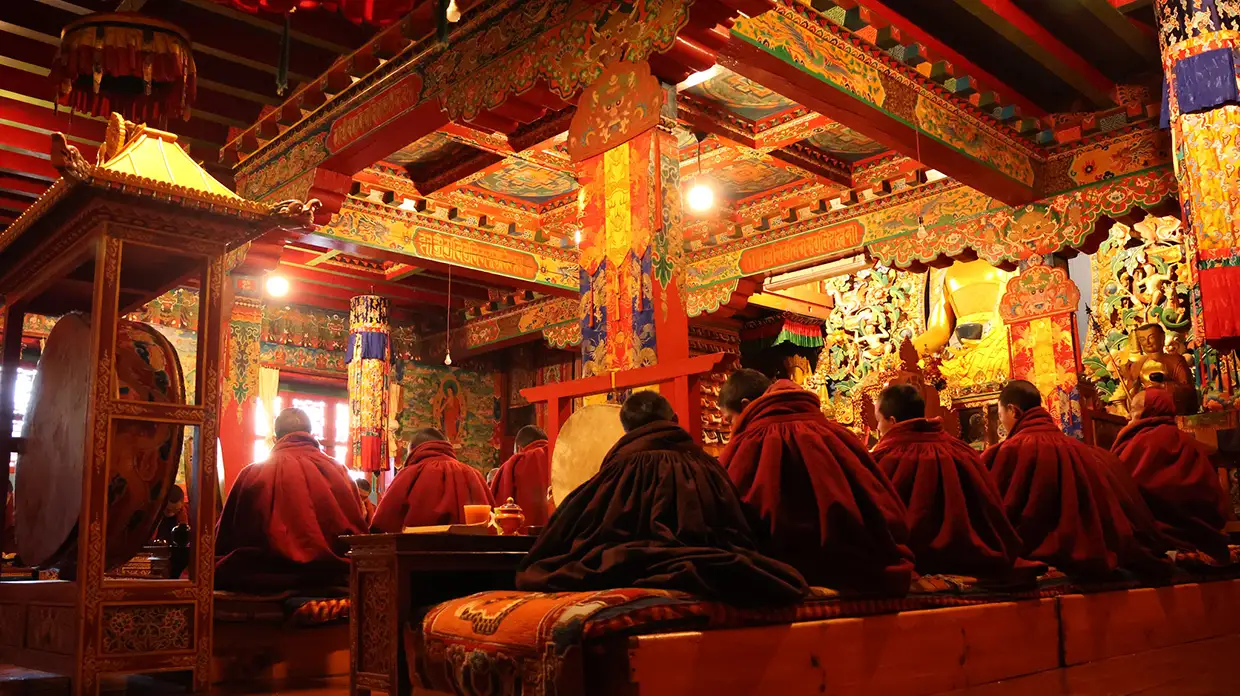
The prominent sanctuaries in Thame, Khumjung, and Tengboche house active monk communities, conduct regular puja ceremonies, and maintain the lunar ritual calendar. Tengboche Monastery also hosts the famous annual Mani Rimdu festival. This vibrant, multi-day masked dance ritual draws Sherpa pilgrims from across the region and serves as a cornerstone of cultural preservation.
As you trek, Buddhist monuments line the trails. Sacred mani walls—built from stones hand-carved with mantras—and white-domed chortens mark village boundaries. Tradition requires travelers to pass these structures on the left, keeping them on the right as they travel clockwise. Similarly, colorful prayer flags flutter at every suspension bridge and high ridge. In Tibetan Buddhism, the wind that moves through these flags carries prayers into the surrounding valleys.
To ensure respectful encounters, our guests follow a few simple protocols within village areas and monastery compounds. Modest dress is standard, meaning shoulders and knees should remain covered. Travelers must remove their footwear before entering private homes or temple interiors, and they should keep their voices low during active prayer services. Lastly, always ask for permission before photographing monks or local families.
Namche Bazaar sits at 3,440 meters in a natural bowl on the hillside above the confluence of the Dudh Koshi and Bhote Koshi. The town serves simultaneously as the commercial center of the Khumbu trekking industry, the traditional trading hub for cross-border exchange between Nepal and Tibet, and the district headquarters of the Khumbu Pasang Lhamu Rural Municipality. Saturday market day transforms Namche into a gathering point for Sherpa traders, Tibetan merchants, and trekkers from every nationality—one of the most visually distinctive market scenes in Nepal’s mountain tourism landscape.
The Sherpa Museum above Namche provides the best single-source overview of Khumbu Sherpa history, culture, and mountaineering heritage available anywhere in the Everest region. The museum displays traditional household objects, agricultural tools, religious implements, mountaineering equipment from historical Everest expeditions, and photographic records of the Khumbu community’s development from an isolated highland trading settlement to a UNESCO World Heritage Site host. A 30 to 45-minute visit during the Day 4 acclimatization exploration provides context that makes every subsequent village encounter more meaningful.
The viewpoint ridge above Namche, at approximately 3,700 meters, offers the first direct view of Mount Everest from the southern approach. On clear mornings—most common in October and November, and in early spring—the Everest summit appears above the ridgeline between Nuptse and Lhotse with Ama Dablam rising to the right in one of the most photographed mountain compositions in the world. The 30-minute uphill walk from Namche to the viewpoint earns its altitude gain as the full Khumbu mountain wall comes into view in the morning light.
Thame sits northwest of Namche Bazaar at an elevation of 3,820 meters. To get there, the itinerary leaves the busy main Everest trail and heads northwest into the quiet Bhote Koshi Valley system. It is a steady three- to four-hour hike. The path winds through juniper-covered hillsides and small Sherpa settlements, crossing the Bhote Koshi River before climbing toward the village. Looking north from the trail, travelers can see the historic Nangpa La pass. For centuries, this high glacier pass served as the primary trade and migration route between Tibet and the Khumbu region.
While lower settlements on the classic route focus almost entirely on tourist services, Thame maintains its traditional agricultural roots. The local economy still revolves around yak herding, potato farming, and traditional weaving. This offers our guests a genuine look at authentic Sherpa livelihoods, providing a sharp contrast to the commercial gear shops and modern storefronts of Namche. The trail passes directly through the small village of Thamo and several isolated homesteads, allowing you to see daily life moving at its own pace, completely separated from the crowds on the main trekking highway.
Perched on a high ridge overlooking the valley, the historic Thame Monastery stands. This spiritual landmark is home to a dedicated community of monks and serves as an essential cultural hub for the region. It is also one of the exclusive venues for the annual Mani Rimdu festival circuit. Most short Everest itineraries skip this entire valley, rushing guests straight from Namche to Tengboche. By choosing to include Thame, we introduce travelers to a quieter side of the region with very low trekker density. Ultimately, it delivers the most authentic remote-village experience available outside the restricted upper Khumbu.
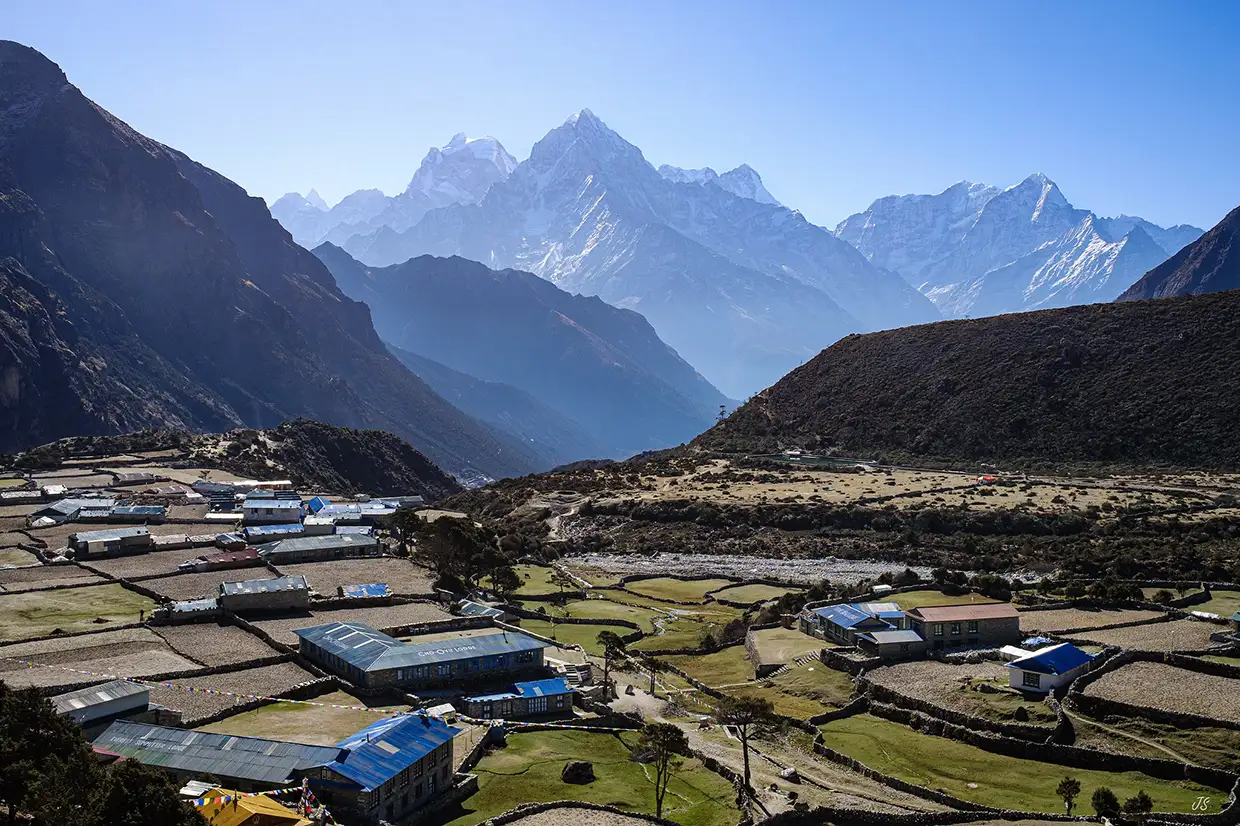
Khumjung sits at 3,790 meters on a wide plateau just above Namche Bazaar. The village offers striking views across the valley toward Ama Dablam and the southern face of the Everest massif. Unlike settlements heavily altered by modern tourism, Khumjung preserves one of the largest concentrations of traditional, stone-walled Sherpa homes in the region. This layout reflects centuries of high-altitude adaptation. Walking through these stone alleys feels like stepping into a living history where farming and cultural traditions still dictate daily life.
The village is also home to the historic Hillary School, the most enduring legacy of Sir Edmund Hillary’s Himalayan Trust. Hillary established the facility in 1961 after recognizing that local families lacked access to formal education. Today, it serves hundreds of students from surrounding valleys, operating as a vital educational center with ongoing support from the Trust. Passing through the school grounds offers our guests a meaningful connection to modern Himalayan history, showing how mountaineering achievements directly transformed into community development.
Further up the hillside, the Khumjung Monastery sits. This sacred site faces Mount Khumbila, a peak revered as the protective deity of the Khumbu. Because of its spiritual significance, the mountain is strictly off-limits to climbing. Inside the monastery, the community maintains active religious rituals and preserves the famous Khumjung Yeti scalp. While the relic’s physical authenticity has drawn international debate for decades, its cultural value to the community is undeniable.
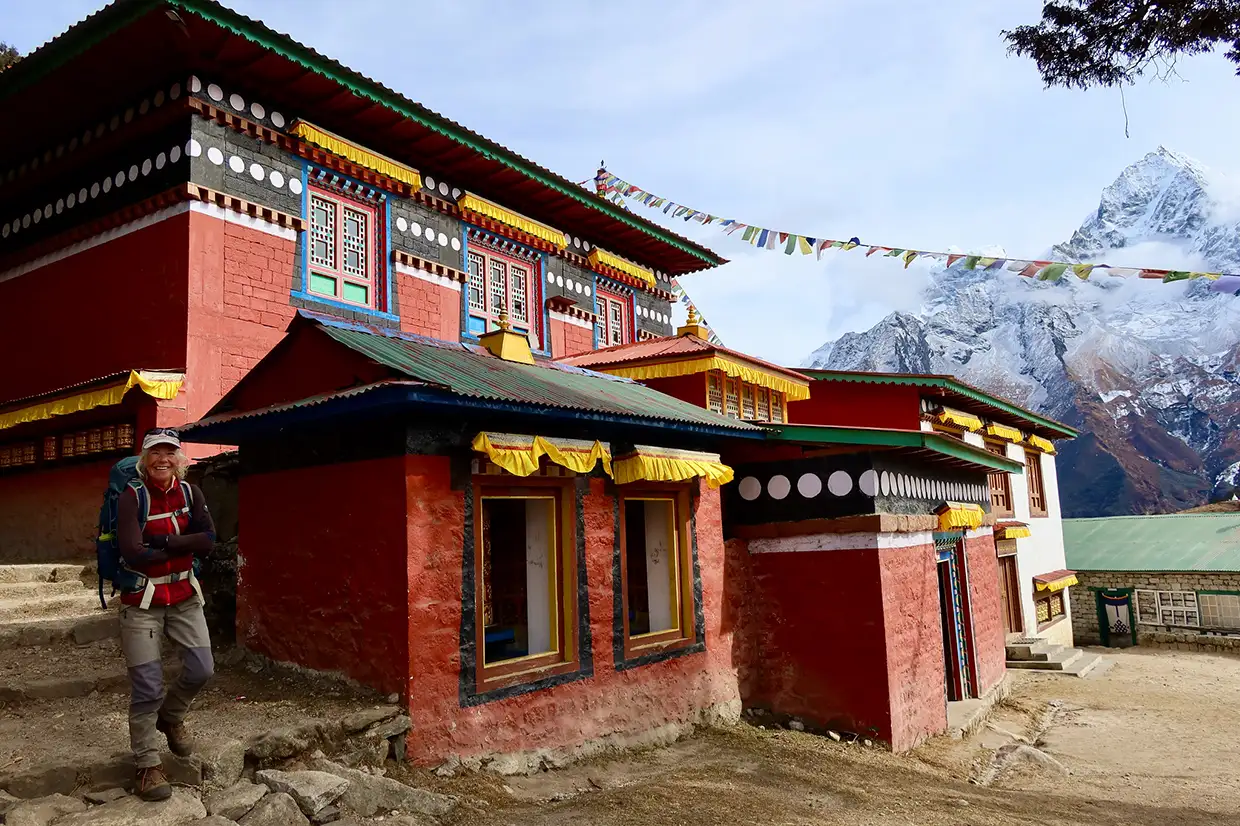
On Day 6, the route from Thame to Khumjung crosses the high ridge system above Namche, transitioning into the expansive upper plateau. Before arriving in Khumjung, the trail winds through the neighboring village of Kunde, home to the historic Kunde Hospital. Moving from the deep valley floor of Thame to the wide expanse of the Khumjung plateau highlights the region’s incredible topographical variety. This geographical shift provides a well-rounded perspective of the Khumbu that mainstream, single-corridor treks completely miss.
Tengboche Monastery stands at approximately 3,860 to 3,870 meters on a prominent ridge above the confluence of the Dudh Koshi Valley, facing north toward the full panorama of Everest, Lhotse, Nuptse, and Ama Dablam. The monastery holds the distinction of being the largest Buddhist monastery in the Khumbu region and serves as the primary spiritual center for Sherpa Buddhist communities throughout the Everest area. The original building dates to 1916, burned down in 1989, and was rebuilt with international support, reopening in 1993. The current structure maintains the original Tibetan architectural style.
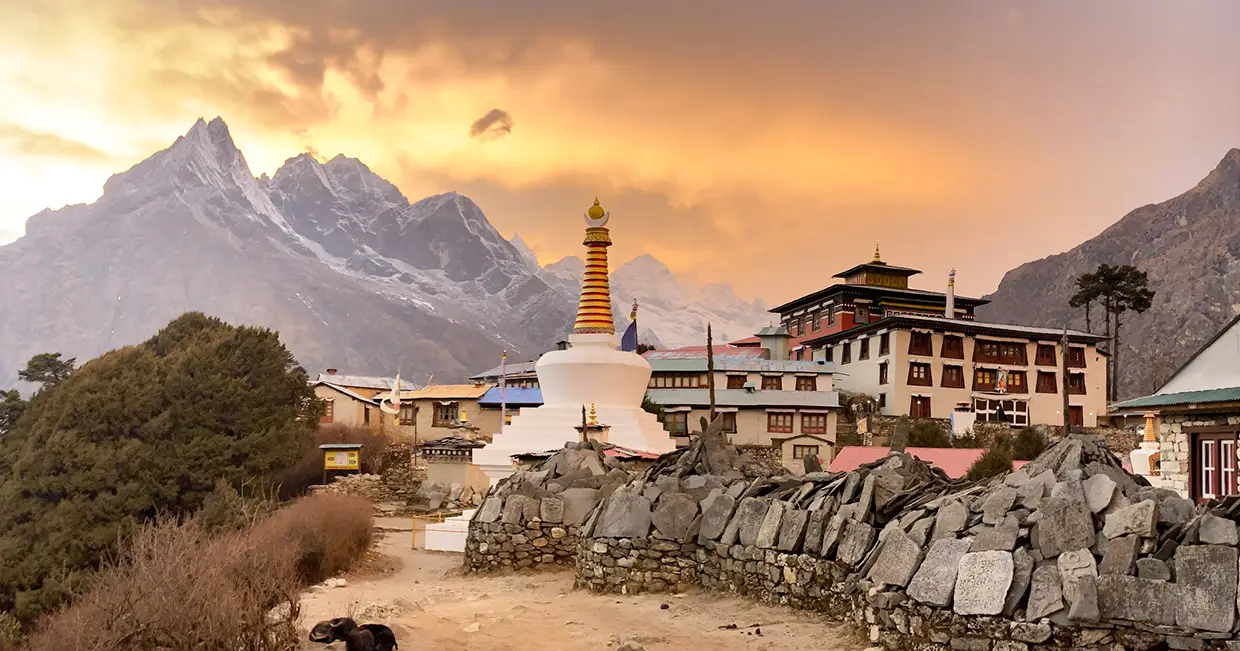
The morning view from Tengboche Monastery on clear days in October or April represents one of the strongest single visual moments available on any Everest-region trekking route. Ama Dablam’s elegant pyramid rises directly above and behind the monastery, in the classic composition that appears in more Nepal travel photographs than any other Khumbu scene. Everest and Lhotse appear above the Nuptse-Lhotse wall to the north. Thamserku and Kantega flank the eastern valley. The combination of Buddhist monastery architecture and Himalayan mountain scale in a single frame at a manageable altitude gives Tengboche its unique visual identity.
Morning and evening puja ceremonies at Tengboche create the monastery’s most atmospheric moments for visitors. The deep sound of the monastery’s 2-meter-long Tibetan dungchen horns—and the chanting of monks in the main prayer hall — provide an auditory backdrop to the mountain view that no photograph can convey. Attending a morning puja requires arriving at the monastery before 6 AM and sitting quietly in the visitors’ area without disturbing the ceremony. Your guide provides specific etiquette guidance for the Tengboche monastery visit based on the current schedule and the morning’s ceremony program.
The Day 7 arrival at Tengboche from Khumjung gives you an afternoon at the monastery for photos and exploration, and the evening puja, if the schedule aligns. The Day 8 departure from Tengboche begins with the morning view—typically the clearest of any day on the trek for mountain visibility—before the trail descends back through the Dudh Koshi Valley forest toward Monjo or Phakding.
The Everest Cultural Trek suits:
Be honest before confirming the Everest Cultural Trek:
| Trek | Duration | Difficulty | Highest Focus | Main Style | Best For |
|---|---|---|---|---|---|
| Everest Cultural Trek | 10 Days | Easy–Moderate | Tengboche (~3,870 m) | Sherpa culture and villages | Culture-focused trekkers |
| Everest View Trek | 7–9 Days | Easy–Moderate | Everest view, Namche area | Short mountain view trek | Short-time travelers |
| Everest Panorama Trek | 7–10 Days | Easy–Moderate | Tengboche | Viewpoint and monastery | Scenic trekkers |
| Everest Base Camp Trek | 12–16 Days | Mod–Challenging | EBC and Kala Patthar | Classic high-altitude trek | Base camp seekers |
| Everest Luxury Trek | 8–12 Days | Easy–Moderate | Comfort lodge route | Premium lodge experience | Comfort-focused trekkers |
Our guides walk the Lukla to Tengboche route and the Thame and Khumjung side trips multiple times each trekking season. The guide assigned to your Everest Cultural Trek knows the Namche teahouse booking system, the character of the Thame valley trail, the Khumjung plateau approach, and the Tengboche morning puja schedule from direct experience rather than from a trail description written in a previous season.
We manage Lukla flight bookings through our Kathmandu operations team, which monitors the Civil Aviation Authority’s decisions on flight routing between Kathmandu and Ramechhap and updates your group’s departure arrangements as the situation evolves. Our team communicates any flight routing changes to your guide and to you directly through the contact details you provide at booking.
All permit fees stated in this package reflect current Nepal government pricing for Sagarmatha National Park and Khumbu Pasang Lhamu Rural Municipality. Permit costs are subject to annual government review. Our team confirms the exact current pricing at the time of the booking inquiry and absorbs any fee increases that occur after your booking confirmation is issued.
The Everest Cultural Trek 10-day package delivers the most culturally complete short Everest-region experience available—Namche Bazaar with Sherpa Museum, Thame in the quiet Bhote Koshi Valley, Khumjung village with Hillary School history, and Tengboche Monastery with its Ama Dablam and Everest backdrop—all without going to Everest Base Camp. The package includes guided trekking support, Lukla flight arrangements, teahouse accommodation, full board trek meals, and all permits.
The route suits first-time Khumbu visitors, culture-focused travelers, families, and photographers who want the Everest region’s most distinctive cultural experiences in 10 days at a manageable altitude. No base camp commitment required. No extreme altitude required. Just the Sherpa villages, Buddhist monasteries, and Himalayan mountain views that make the Khumbu one of the world’s most compelling trekking destinations.
Book now to secure your Lukla flights and Tengboche teahouse reservation before the spring or autumn season fills available slots. Contact our team for group pricing, itinerary adjustments, or information about optional upgrades. We respond within 4 hours.
Your Kathmandu hotel sits in the Thamel tourist district with walking access to gear shops, restaurants, money exchange, and airport transfer pickup points. The hotel provides clean twin-sharing rooms with private bathrooms, hot water, Wi-Fi, and daily breakfast. The overnight stay provides practical comfort for Day 1 preparation and the Day 10 return, if a delayed Lukla flight extends your stay.
On the trail, you stay in teahouses at Phakding, Namche Bazaar (two nights), Thame, Khumjung, Tengboche, Monjo or Phakding, and Lukla. Teahouse quality varies significantly along the route—Namche and Lukla offer the most developed facilities, with broader menus, reliable electricity, Wi-Fi, and private bathrooms at some lodges. Thame and Tengboche provide simpler but adequate accommodation. Khumjung sits between these quality levels.
Teahouse rooms throughout the Khumbu offer twin beds with pillows and blankets in clean, but basic, rooms. Bathrooms are shared at most teahouses. Hot showers typically cost an additional USD 3 to USD 5 per shower, payable directly to the teahouse. Device charging and Wi-Fi access carry small additional fees at most stops and may not function reliably at Thame or Tengboche.
The Everest Cultural Trek uses mountain teahouses on the trail. Guests should expect warm hospitality, simple rooms, and shared bathroom facilities rather than hotel-standard comfort. Better lodges are available at Namche and Lukla as optional upgrades for travelers who prefer more comfort on city-standard stops.
Full board meals cover all eight trekking days from Day 2 through Day 9. Hotel breakfast is included at your Kathmandu hotel on Day 2 morning. Lunch and dinner in Kathmandu on Days 1 and 10 are not included in the package. Trekking day meals run from Day 2 breakfast at Lukla through Day 9 dinner at Lukla.
Teahouse food quality in the Khumbu is significantly better than the standard Annapurna foothills teahouse menu. Namche’s teahouses and cafes offer pizza, pasta, baked goods, fresh coffee, and a broader menu that reflects the town’s substantial tourist economy. Phakding, Monjo, and Phakding teahouses provide reliable standard Nepali mountain menus. Thame and Tengboche are simple, with dal bhat, noodle soup, potato dishes, eggs, and hot drinks.
Bottled water, soft drinks, alcohol, hot drinks beyond standard tea and coffee, snacks, and desserts carry additional fees at all trail locations. The cost of bottled water increases with altitude in the Khumbu—carry a refillable water bottle with purification tablets to eliminate both plastic waste and the daily cost of bottled water at Namche and Tengboche, where prices are higher.
Lukla Flight Notice: Flights to Tenzing-Hillary Airport depend entirely on weather. During the peak spring and autumn trekking seasons, Nepal’s Civil Aviation Authority may route flights through Manthali Airport in Ramechhap (approximately 4 hours by road from Kathmandu) to reduce congestion at Tribhuvan International Airport. Our team manages all Lukla flight arrangements and confirms the departure airport before your trek begins. Keep your international departure date at least 2 days after your scheduled Lukla return to account for potential flight delays.
The package covers airport pickup and drop-off in Kathmandu, Lukla flight bookings in both directions (via Kathmandu or Ramechhap, depending on current Civil Aviation Authority operations), and road transfers to or from Ramechhap if flights operate from Manthali Airport. The Ramechhap road transfer takes approximately 4 hours from Kathmandu and requires an early pre-dawn departure to reach Manthali Airport for morning flight slots.
Optional transport upgrades include a helicopter return from Lukla for travelers who want to guarantee same-day Kathmandu arrival regardless of weather delays—the most reliable but most expensive flight option available. Contact our team before booking to add a helicopter upgrade for specific travel dates if your international connections require a guaranteed Lukla return.
Two permits cover the Everest Cultural Trek route. The Sagarmatha National Park Entry Permit grants access to the UNESCO World Heritage Site and the entire Khumbu trekking network within the national park boundaries. Permit rangers check documents at the Monjo checkpoint on Day 3. The Khumbu Pasang Lhamu Rural Municipality local entry permit applies separately for entry into the Khumbu region’s administrative jurisdiction. Both permits come included in the package price.
The TIMS card may apply under the current Nepal Tourism Board policy. Our team confirms TIMS requirements at booking time and includes the card in the permit package if required by current regulations. Permit fees and regulations change with government policy revisions—our team confirms the exact current pricing at the time of your booking inquiry rather than quoting potentially outdated figures.
Bring two passport-size photographs and a clear copy of your passport photo page to provide to our team on Day 1. Our guide carries the group’s permit documentation and manages all checkpoint inspections in Nepali throughout the trek.
The Everest Cultural Trek rates as easy to moderate or moderate—accessible to fit beginners, but not without physical demand on specific days. The highest overnight point is approximately 3,870 meters at Tengboche, which keeps the risk of serious altitude sickness low but requires basic altitude awareness from Namche onward. No technical climbing, no glacier travel, and no high-altitude pass crossings appear on the route.
The most demanding single section of the trek is the climb from the Dudh Koshi bridge to Namche Bazaar on Day 3—a 600-meter elevation gain over approximately 2 to 3 hours of consistent steep uphill on a well-maintained but relentless trail. Most trekkers find this section harder than expected on the first day without acclimatization. The acclimatization day in Namche on Day 4 specifically addresses the altitude-adaptation demands of this climb before the route continues higher.
The Phunki Tenga to Tengboche climb on Day 7 represents the second most demanding ascent—a 600-meter forested uphill after a morning valley descent. Trekking poles provide clear benefits on both the uphill sections and the return descent from Tengboche on Day 8 through Phunki Tenga forest. Beginners with 3 to 4 weeks of regular hill walking preparation can comfortably complete the route without specific mountaineering fitness.
| Season | Months | Conditions | Best? |
|---|---|---|---|
| Spring | March to May | Rhododendron blooms in the lower Dudh Koshi Valley. Clear morning views, mild daytime temperatures. Lukla flights may operate from Ramechhap to reduce congestion at Kathmandu airport. | Yes |
| Autumn | Sep to Nov | Best mountain visibility of the year. Stable weather, dry trails. October is peak season—Namche fills with trekking groups, and flight bookings require advance planning. | Yes – Best |
| Winter | Dec to Feb | Cold mornings and nights in teahouses. Clear days on many mornings. Fewer trekkers on the trail. Manage with full warm gear. | Possible |
| Monsoon | Jun to Aug | Daily cloud cover, rain on lower trails, flight delays at Lukla. Views blocked most mornings. Leeches on lower forest sections. Not recommended for most travelers. | No |
Spring and autumn offer the best trekking conditions. Spring’s lower trekker density compared to autumn allows more comfortable teahouse availability in Namche and Tengboche. Autumn’s superior visibility offers the strongest mountain views from the Namche viewpoint, the Khumjung plateau, and the Tengboche ridge. Book autumn departures at least 4 to 6 weeks in advance—October is the peak Khumbu trekking month, and flight bookings, Namche teahouses, and Tengboche lodges all fill early.
Porter service is optional in the base package and available as a paid upgrade. The Namche Bazaar climb on Day 3 and the Phunki Tenga to Tengboche ascent on Day 7 represent the two sections where pack weight most directly affects walking comfort and enjoyment. One porter can carry a maximum of 20 kilograms between two trekkers. You carry your own daypack with water, camera, rain jacket, snacks, and personal items.
Adding a porter creates direct employment income for a Khumbu local and significantly improves your physical experience on the two main climb sections. All porters on our team receive fair wages, adequate warm clothing for altitude work, and full insurance coverage. Contact our team before booking to add porter service and receive current pricing.
Travel insurance is compulsory for all trekkers on the Everest Cultural Trek. Your policy must cover trekking activity in Nepal, emergency helicopter evacuation from the Khumbu region, inpatient and outpatient medical treatment, trip cancellation, Lukla flight delays, and lost baggage. A helicopter evacuation from Tengboche or Khumjung to Kathmandu costs USD 2,000-4,000, depending on conditions. Without insurance, the full cost falls on the trekker.
Lukla flight delay coverage provides additional protection for the Day 10 return. If a multi-day weather closure at Lukla extends your stay by 2 to 3 days, trip interruption coverage covers extra hotel nights, meals, and potential rebooking costs for international flights. Purchase your policy before you fly to Nepal and carry both printed and digital copies throughout the trek.
Pack for temperature conditions from warm Phakding valley afternoons at 2,610 meters to cold Tengboche ridge mornings at 3,870 meters:
Maintaining trail etiquette ensures a respectful journey through the Khumbu region. Hikers must always walk to the left of mani walls and chortens, keeping these Buddhist monuments on their right. This clockwise movement respects Tibetan Buddhist traditions. Walking counterclockwise can offend local Sherpa community members who hold these sacred structures in high regard.
Environmental preservation is equally critical within Sagarmatha National Park. Regulations strictly prohibit removing any natural materials, including rocks, plants, or wood. Your park permit and registration fees support conservation programs that maintain trail infrastructure and protect the fragile ecosystem from the pressures of trekking and climate change.
To minimize your environmental footprint, carry a refillable water bottle alongside purification tablets. Plastic waste accumulation is a persistent problem in the high-altitude wilderness, where waste removal is logistically complex and expensive. Using filtration tablets eliminates plastic waste entirely and costs significantly less than buying bottled water at high-altitude teahouses.
Finally, your choices can directly benefit the local economy. Supporting teahouses at every overnight stop provides vital income for Sherpa families who choose to remain in their ancestral villages rather than moving to urban centers. Purchasing meals and accommodations in quieter settlements like Thame and Khumjung directly funds household economies, ensuring these traditional mountain communities remain viable for generations to come.
Your licensed guide manages safety across all eight trekking days. Safety responsibilities include maintaining a sustainable walking pace on the Namche climb and Tengboche ascent, monitoring altitude response from Namche onward, confirming Lukla flight status and adjustment plans when weather conditions create delays, and managing emergency communication with our Kathmandu office for any situation requiring medical support or evacuation.
The Namche Bazaar acclimatization day on Day 4 serves as the primary safety measure for the upper route. Skipping or reducing the Namche rest day to save time places the Tengboche altitude gain on a body that has not completed adequate physiological adaptation. Mild headache and fatigue are common on the first night in Namche—rest, hydration, and a normal dinner usually resolve these symptoms. Symptoms that worsen rather than improve after rest and hydration require communication with your guide before proceeding.
Lukla weather delays represent the most common practical safety challenge on the Everest Cultural Trek. A multi-day closure at Lukla Airport during the spring or autumn season requires patience, adequate insurance coverage, and flexible international flight connections. Our team monitors Lukla weather forecasts through the flight booking system and communicates schedule changes to your group before they affect your daily plan.
The booking process completes in under 10 minutes:
Our team responds to WhatsApp, email, and phone inquiries within 4 hours during Nepal business hours (9 AM to 6 PM, UTC+5:45), 7 days a week.
The Everest Base Camp Trek focuses on one primary goal: reaching the 5,364-meter base camp and climbing Kala Patthar. In contrast, the 10-day Everest Cultural Trek prioritizes the heritage of the Khumbu region, reaching a manageable 3,870 meters. While both routes share the same initial trail from Lukla to Namche Bazaar, they diverge completely above Namche Bazaar. Our itinerary is tailored for travelers who want an authentic Himalayan experience without the extreme altitude demands and intense physical training required for Base Camp.
What Makes This Route Distinctive
Most standard short packages rush clients directly from Namche to Tengboche along the busy main trail. Our itinerary deliberately adds extensions to Thame and Khumjung. While this adds two walking days, it delivers a quiet valley character that mainstream routes completely miss. Thame offers an authentic glimpse into traditional stone architecture, away from the crowds, while Khumjung features the historic Hillary School and stunning views of Ama Dablam from a high plateau.
Tengboche Monastery serves as the true anchor of the journey. Instead of treating it as a brief rest stop, we schedule an overnight stay. This allows our guests ample time for afternoon exploration, to witness evening puja ceremonies, and to enjoy a quiet morning panorama before hitting the trail.
Managing Trail Realities and Altitude
Staying below 4,000 meters minimizes severe altitude risks, but this is still a legitimate Himalayan trek. The Day 3 climb to Namche Bazaar demands sustained uphill effort that often surprises first-time trekkers. Similarly, the ascent from Phunki Tenga to Tengboche requires solid stamina. Active beginners complete the route comfortably with a few weeks of walking preparation, but coming prepared ensures a far more enjoyable journey.
Finally, travelers must account for Lukla flight logistics. Mountain weather makes delays common, and peak season flights often reroute through Manthali Airport in Ramechhap, adding a four-hour drive. We mitigate this volatility by building a buffer day into the itinerary, ensuring a stress-free transition to your international flight home.
A: The full package runs 10 days from arrival in Kathmandu on Day 1 to final departure on Day 10. The active trekking section covers 8 days from the Lukla landing on Day 2 through the Lukla teahouse night on Day 9. Day 10 covers the Lukla morning flight and Kathmandu airport transfer. An optional extra hotel night in Kathmandu on Day 10 provides a delay buffer if needed.
A: No. The Everest Cultural Trek does not go to Everest Base Camp. The highest overnight point is Tengboche at approximately 3,860 to 3,870 meters—significantly lower than Everest Base Camp at 5,364 meters. The route focuses on Sherpa villages, Buddhist monasteries, and mountain views rather than reaching any specific high-altitude destination.
A: The highest overnight point is Tengboche at approximately 3,860 to 3,870 meters (12,664 feet). You reach Tengboche on Day 7 and depart on Day 8. The highest single walking point may reach slightly above Tengboche on the ridgeline above the monastery, but the route does not include any overnight above Tengboche’s altitude.
A: Yes, with adequate preparation. The trek rates as easy to moderate and suits healthy first-time Khumbu visitors who prepare 3 to 4 weeks of regular hill walking before departure. The Namche Bazaar climb on Day 3 and the Tengboche ascent on Day 7 both demand steady uphill effort that fitness preparation significantly improves.
A: The Everest Cultural Trek includes deliberate cultural stops—Thame village and monastery, Khumjung village and Hillary School, Namche Bazaar Sherpa Museum, and Tengboche Monastery—that standard viewpoint-focused short Everest packages omit. The route stays in Sherpa villages on every overnight rather than moving through them in transit. The guide provides cultural context for each village and monastery encounter throughout the 8 trekking days.
A: Day 4 in Namche covers: a morning acclimatization hike to the Everest viewpoint ridge at 3,700 meters, a visit to the Sherpa Museum, exploration of Namche’s main market area, Saturday market visit if Day 4 falls on the weekend, and free time in Namche’s cafes and bakeries. The guide accompanies you through the morning hike and museum visit and remains available through the afternoon for any specific cultural or commercial exploration.
A: Thame provides the quietest and most traditionally Sherpa cultural experience on the entire Everest Cultural Trek route. The village sits in the Bhote Koshi Valley away from the main Tengboche corridor and carries a character—yak herding, traditional homesteads, Thame Monastery above the village—that Namche’s commercial development has partially replaced on the main trail. Most short Everest treks skip Thame entirely, which makes its inclusion a clear differentiator for travelers who want cultural depth over viewpoint efficiency.
A: Khumjung gives you a traditional Sherpa village setting above Namche with the Hillary School area, Khumjung Monastery, Ama Dablam views from the open plateau position, and a clear connection to the Himalayan Trust community development history that defines the Khumbu’s modern relationship with the outside world. The village shows Sherpa life as it exists beyond the commercial teahouse culture of the main trekking corridor.
A: Tengboche Monastery is the largest and most spiritually significant Buddhist monastery in the Khumbu region. The monastery complex sits at 3,860 to 3,870 meters with Ama Dablam rising directly behind it and Everest and Lhotse visible above the northern ridge—the single most photographed mountain-monastery composition in Nepal. Active puja ceremonies, monk training, and the annual Mani Rimdu festival make Tengboche a living religious center rather than a historical site.
A: From various points on the Everest Cultural Trek, you see: Everest (8,849 m) from the Namche viewpoint ridge and Tengboche, Ama Dablam (6,812 m) from Khumjung and Tengboche, Lhotse (8,516 m) from Namche viewpoint and Tengboche, Nuptse (7,861 m) from Namche viewpoint, and Thamserku (6,608 m) from Tengboche and the Dudh Koshi Valley. View quality depends directly on morning weather conditions—October and November deliver the most consistently clear mornings.
A: You stay at a Kathmandu hotel for one night with private bathroom, hot water, Wi-Fi, and breakfast. On the trail, you stay in teahouses at Phakding, Namche (two nights), Thame, Khumjung, Tengboche, Monjo or Phakding, and Lukla. Teahouse rooms provide basic twin beds and shared bathrooms. Hot showers cost extra at most trail stops.
A: Yes. Full board—breakfast, lunch, and dinner—comes included on all 8 trekking days from Day 2 through Day 9. Kathmandu hotel breakfast comes included on Day 2 morning. Lunch and dinner in Kathmandu are not included. Bottled water, hot drinks, soft drinks, and alcohol carry additional charges at all locations.
A: The Everest Cultural Trek requires the Sagarmatha National Park Entry Permit and the Khumbu Pasang Lhamu Rural Municipality Local Entry Permit. The TIMS card may apply under current Nepal Tourism Board policy. All permits come included in the package price. Our team arranges all documentation before your Day 2 Lukla flight departure.
A: Lukla flights cancel due to weather on a regular basis. Our team monitors flight status and communicates any changes to your guide and to you directly. Delayed returns from Lukla extend your Kathmandu stay by one or more nights—the cost of extra hotel nights due to weather delays falls outside the base package price. We strongly recommend adding an optional buffer hotel night in Kathmandu on Day 10 and purchasing travel insurance with trip interruption coverage before your Nepal departure.
A: Yes. Travel insurance is compulsory. Your policy must cover trekking in Nepal, emergency helicopter evacuation, medical treatment, trip cancellation, and Lukla flight delays. The Khumbu altitude stays below 4,000 meters on the Everest Cultural Trek, so standard trekking insurance without extreme altitude restrictions generally provides adequate coverage. Confirm your policy covers Nepal trekking and helicopter evacuation before purchase.