

This quiet, off-the-beaten-path trek combines stunning Himalayan views with authentic community homestays.

Unbeatable Holiday Offers – Save Up to 20% on Your Next Adventure!
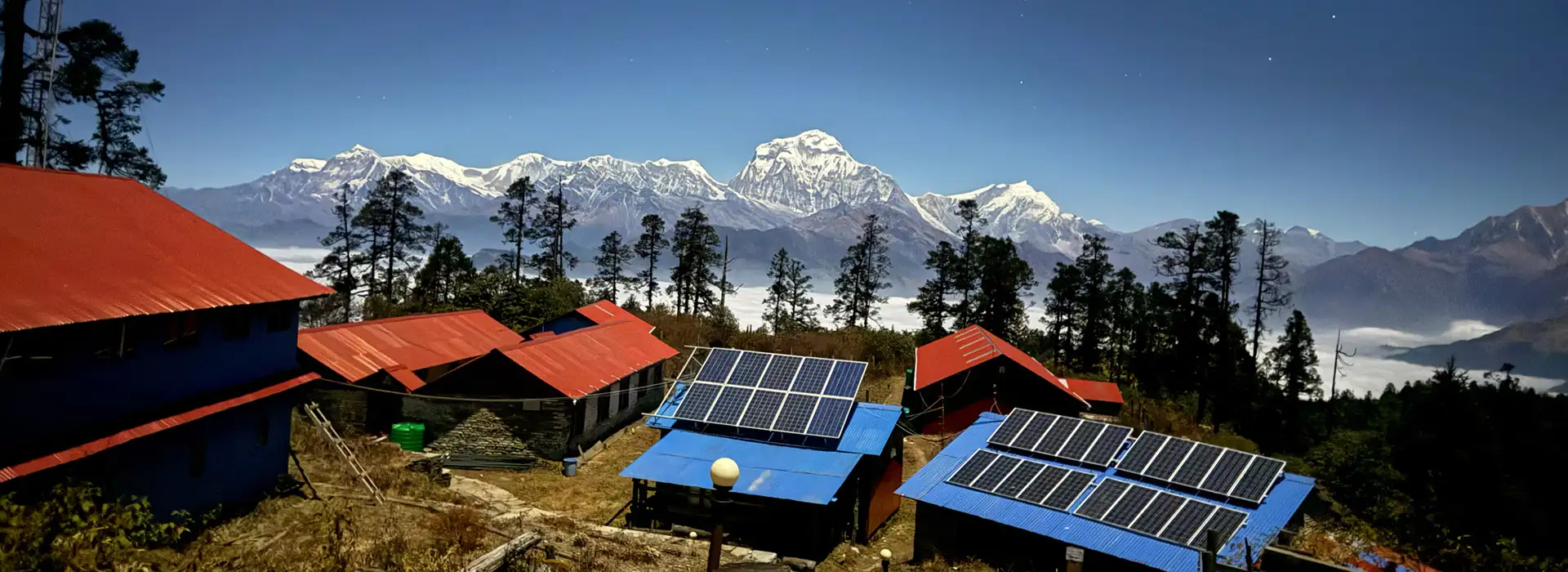

This quiet, off-the-beaten-path trek combines stunning Himalayan views with authentic community homestays.
The Mohare Danda Trek delivers one of the most rewarding short Annapurna trekking experiences in Nepal in 9 days—without the crowd pressure of Poon Hill, without the altitude demands of the Annapurna Base Camp route, and without the commercial teahouse atmosphere that defines most standard Annapurna circuits near Pokhara. Connecting Kathmandu and Pokhara via Galeshwor, Bas Kharka, Nangi, Mohare Danda, and Tikot, this route winds through Magar villages, rhododendron forests, and community lodges that directly support rural families.
Mohare Danda sits at approximately 3,300 to 3,313 meters on an open ridge facing northwest toward the full Annapurna and Dhaulagiri panoramas. Dhaulagiri at 8,167 meters rises directly above the western Kali Gandaki valley. Annapurna I at 8,091 meters, Annapurna South at 7,219 meters, Nilgiri at 7,061 meters, and Machhapuchhre at 6,993 meters fill the northern and eastern view arc.
The Mohare Danda Community Trek puts you on this ridge for both sunset on Day 5 evening and sunrise on Day 6 morning—two mountain viewing opportunities in one overnight stay that few short Annapurna treks provide. The Mohare Danda Community Lodge Trek uses locally owned accommodation rather than commercially operated teahouses along the trail. Community lodges in Bas Kharka, Nangi, and Tikot are owned by families from those villages and direct trekking income back into household economies that farming alone cannot sustain.
Nangi village adds a community development dimension to the route—the village’s trekking income supports school facilities, eco-tourism training, and local farming initiatives, making the stop more than a simple overnight on the way to the viewpoint.
The 9-day package includes airport pickup and drop-off, two nights at Hotel Thamel Park in Kathmandu, two nights at Hotel Splendid View in Pokhara, all transport between cities and the trailhead, community lodge and homestay accommodation on all four trekking nights, full board meals from Day 3 through Day 7, a licensed English-speaking guide, and both required permits.
The Mohare Danda Trek from Kathmandu rates as easy to moderate and suits first-time trekkers, responsible travel supporters, culture-focused travelers, and anyone who wants genuine Annapurna views with fewer crowds.
Quick Answer: What Is the Mohare Danda Trek?
The Mohare Danda Trek is a 9-day community lodge trek in the Annapurna region. The route connects Kathmandu, Pokhara, Galeshwor, Bas Kharka, Nangi, Mohare Danda, Tikot, and Pokhara. The trek offers quiet trails, Magar village culture, rhododendron and bamboo forests, and sunrise and sunset views of Annapurna, Dhaulagiri, Nilgiri, and Machhapuchhre. City hotels in Kathmandu and Pokhara, guide, permits, trek meals, and transport come included.
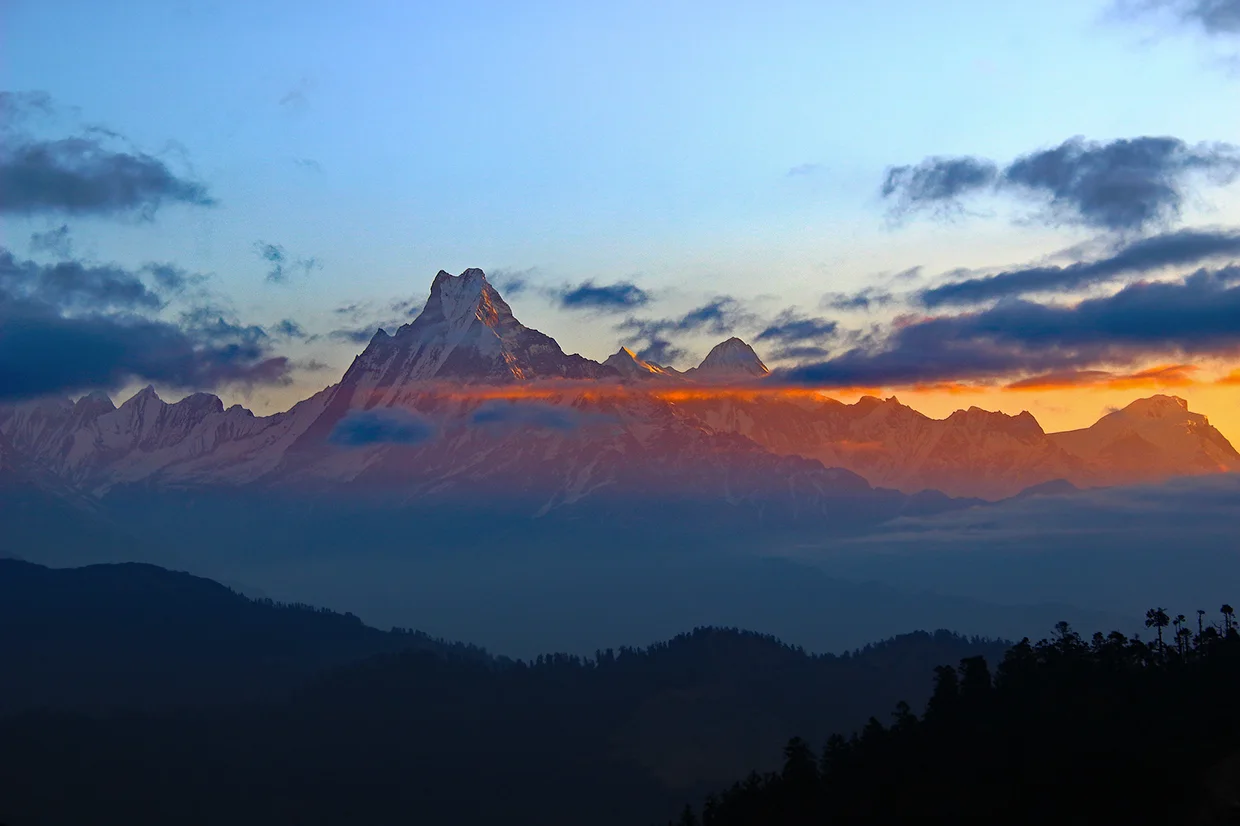
The Mohare Danda Trek Nepal route traverses the western foothills of the Annapurna Conservation Area, following a trail that parallels the Poon Hill circuit to the east but stays on a separate ridge system with far lower trekker density. Where the Ghorepani and Poon Hill trail handles hundreds of trekkers daily in peak season, the Galeshwor to Mohare Danda approach carries a fraction of that traffic.
The two routes offer much the same mountain panorama at comparable altitudes, but the trail experience differs entirely in terms of crowd character, accommodation type, and cultural connections. The Mohare Danda Community Trek 9 Days itinerary balances mountain views, village culture, and forest walking in a format that fits the time and fitness constraints of most first-time Nepal visitors.
The highest point at Mohare Danda sits at approximately 3,300 to 3,313 meters above the treeline, in the cold morning zone, and in the direct view corridor of the Annapurna and Dhaulagiri ranges—without requiring acclimatization days or high-altitude physiology management. Daily walking time ranges from 4 to 7 hours across the four active trekking days. The trek enters the Annapurna Conservation Area near Galeshwor in the Myagdi District.
The ACAP management framework, operated by the National Trust for Nature Conservation, covers 7,629 square kilometers of protected landscape, including the entire Mohare Danda trail corridor. Your permit fee supports trail maintenance, wildlife protection, and community development programs that sustain the route and the villages along it. City nights at Hotel Thamel Park in Kathmandu and Hotel Splendid View in Pokhara provide comfortable frames around the four community lodge nights on the trail.
The package positions itself as a responsible comfort trek—genuine hotel-quality in the cities, honest and simple community-lodge quality on the mountain section, and a clear local income benefit from every overnight stay between Galeshwor and the road exit point at Tipling or Baseri.

Included Meals

Trip staff

Transport

Accommodation

Trip Grade
Group Size
You arrive at Tribhuvan International Airport in Kathmandu. Our representative meets you in the international arrivals hall with a name sign and transfers you by private vehicle to Hotel Thamel Park in the Thamel tourist district. Check in, freshen up after your flight, and use the afternoon to explore the immediate Thamel area or rest at the hotel before the trek begins. Thamel puts you within easy walking distance of trekking gear shops, money exchange outlets, pharmacies, and restaurants at every price point.
Our guide visits your hotel in the evening to introduce themselves and walk through the full 9-day Mohare Danda Trek itinerary. Use the meeting to confirm your gear list, ask questions about the community lodge accommodation standard, and discuss what to expect from the Bas Kharka, Nangi, Mohare Danda, and Tikot overnight stops. Confirm that your travel insurance covers trekking activity and emergency helicopter evacuation before the meeting ends.
Meals: Not included – extensive restaurant options in Thamel
Accommodation:
Hotel Thamel Park, Kathmandu (twin sharing)
Difficulty
You board the tourist bus or private vehicle from Kathmandu to Pokhara in the morning. The journey takes 6 to 7 hours along the Prithvi Highway, following the Trishuli and Marsyangdi river valleys through the middle hill zone. Lunch at a roadside restaurant stop is not included in the package cost. You arrive in Pokhara in the early to mid-afternoon and transfer to Hotel Splendid View near the Phewa Lakeside promenade.
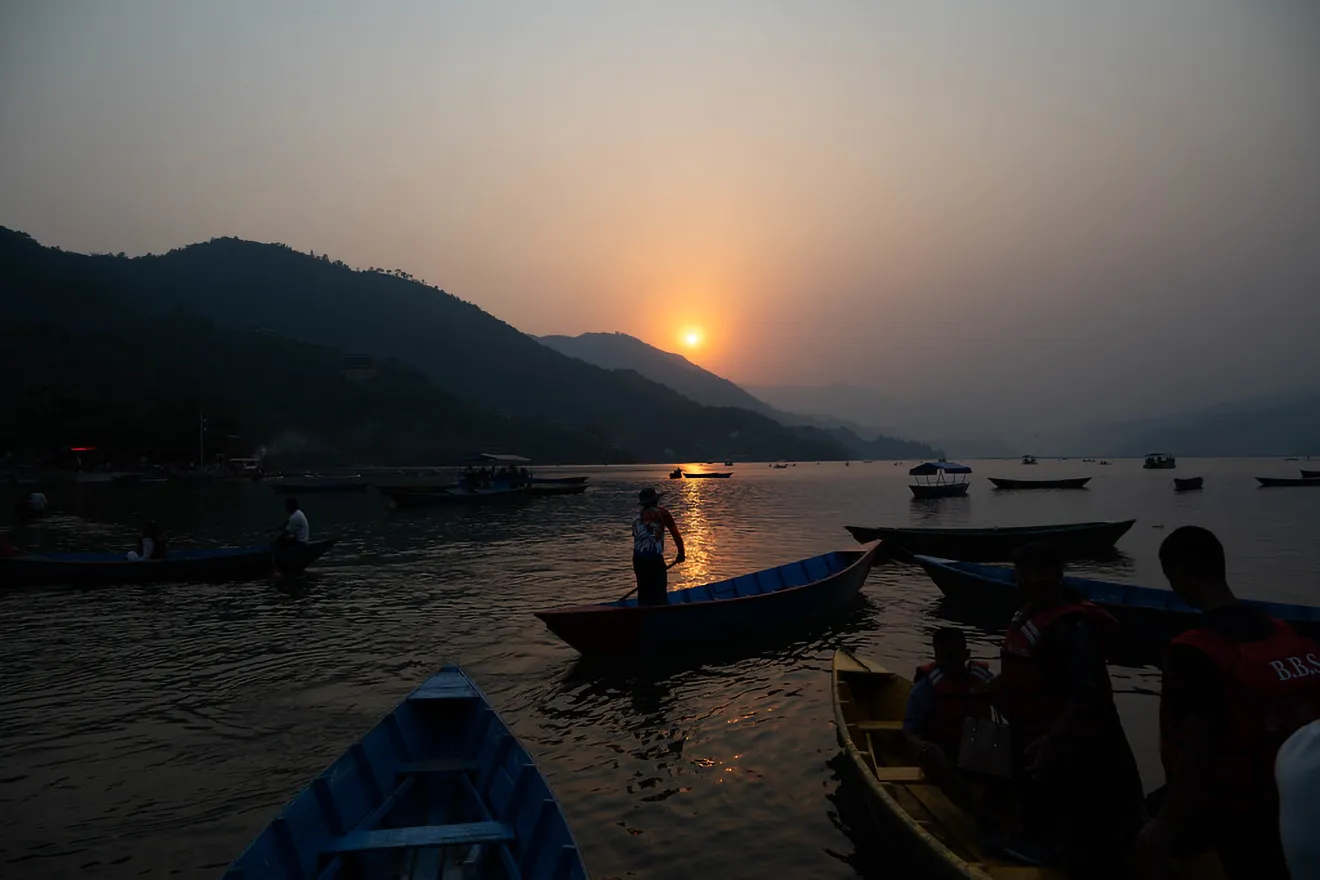
The evening is completely free. Walk along Phewa Lake at sunset, find a lakeside cafe with mountain views in clear weather, or spend the time organizing your daypack and confirming gear for the next morning’s trailhead drive. Your guide remains reachable by phone through the evening if you have questions about the Day 3 departure timing or logistics.
 Accommodation:
Hotel Splendid View, Pokhara Lakeside (twin sharing)
Meals Breakfast
Difficulty
A local vehicle transfers you from Pokhara through Beni toward Galeshwor in the Myagdi District—approximately 3 to 4 hours by road following the Kali Gandaki River valley. Galeshwor sits near the confluence of the Kali Gandaki at approximately 1,000 meters and marks the start of the Mohare Danda Community Trek trail. The trailhead puts you immediately into the lower Annapurna Conservation Area foothills, away from tourist infrastructure, on a trail that begins climbing steadily through terraced farmland and hill forest.
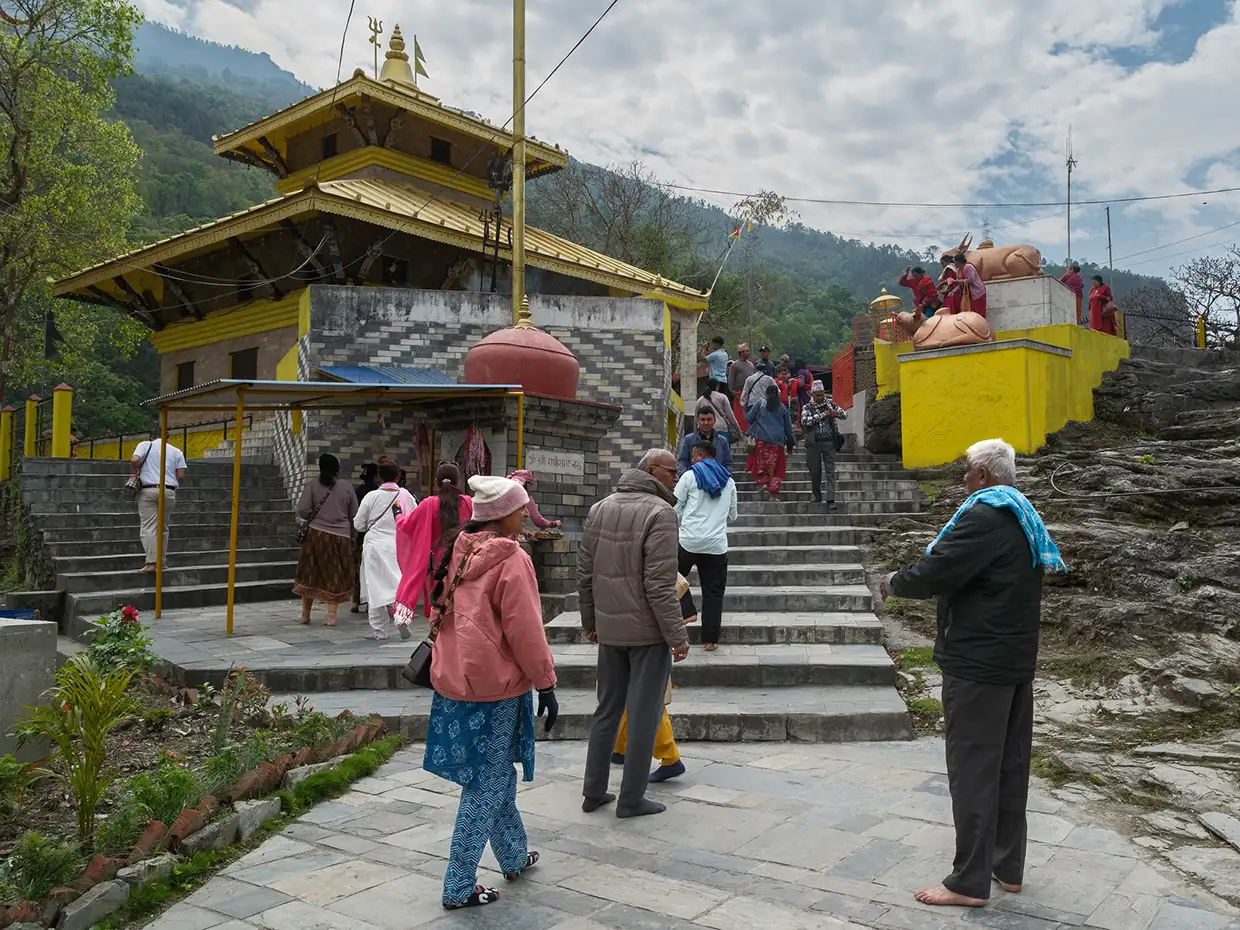
The trek from Galeshwor to Bas Kharka climbs through small Magar villages, terraced fields, and lower forest sections, taking approximately 4 to 5 hours to complete. The elevation gain on the first trekking day introduces the physical character of the route directly—sustained uphill through the hill zone that prepares your legs for the longer climb to Mohare Danda on Day 5. Arrive at the Bas Kharka community lodge in the late afternoon, eat the family-cooked dinner, and rest early for the Day 4 trail to Nangi.
Accommodation:
Community lodge or homestay in Bas Kharka
Meals Breakfast, Lunch, Dinner
Difficulty
The trail from Bas Kharka to Nangi continues through the Annapurna Conservation Area foothills on a mix of stone-paved village paths, earthen hill trails, and lower forest sections. The walking section passes through small farming communities, terraced fields, and patches of mixed forest, with consistent uphill gain toward Nangi village. Daily walking time runs approximately 4 to 6 hours, depending on pace and rest stops.
Nangi village appears after the final ridge approach, with community buildings and lodge structures visible on the hillside above the main path. Arrive in the early afternoon if pace allows, giving time before dinner to walk through the village and observe the community projects that make Nangi the most developed community tourism stop on the entire Mohare Danda route. Your guide provides context for each project and connects the trekking income structure to the visible community outcomes on the ground.
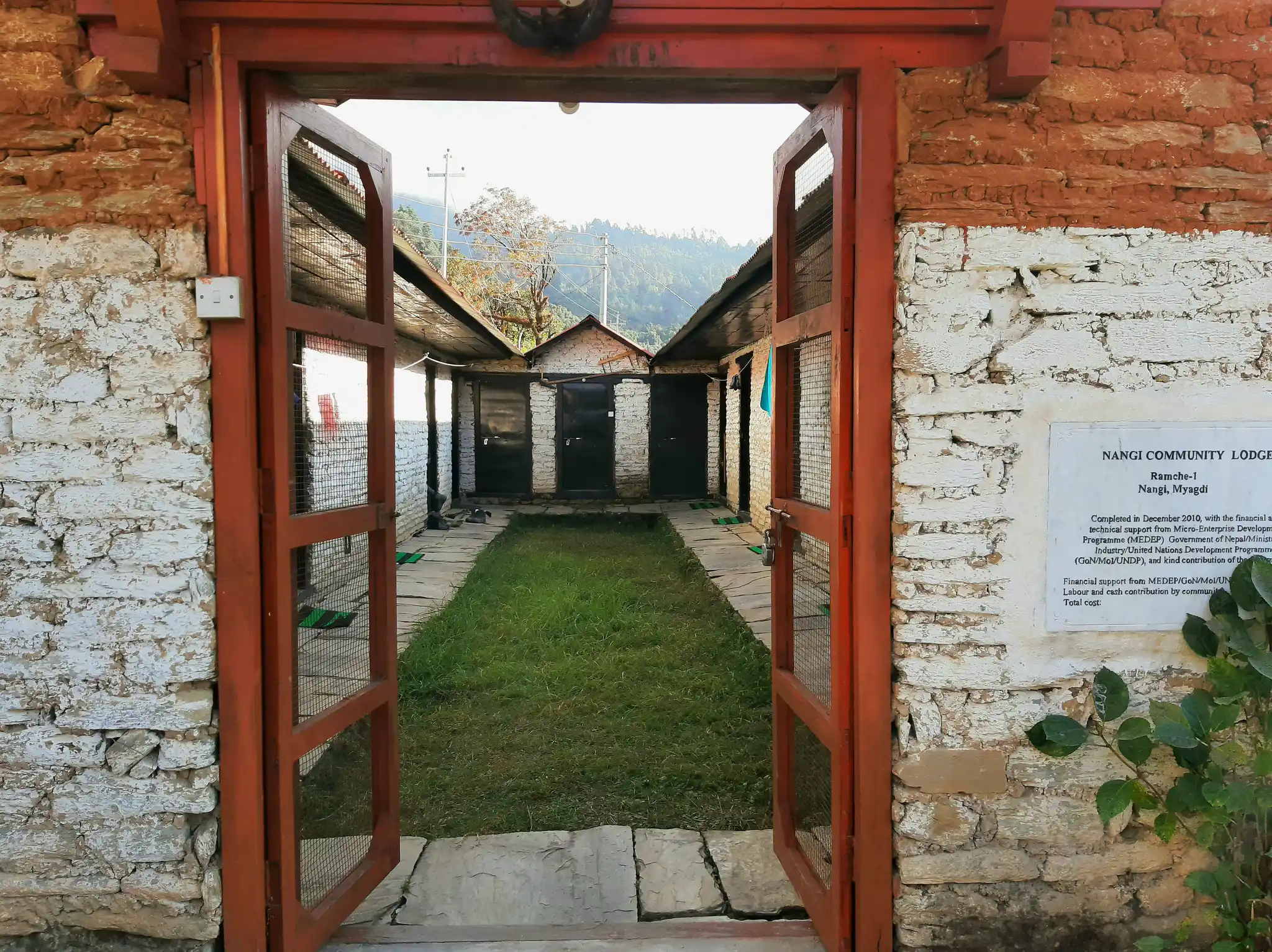 Accommodation:
Community lodge or homestay in Nangi
Meals Breakfast, Lunch, Dinner
Difficulty
Day 5 delivers the most sustained climbing of the Mohare Danda Trek itinerary and the most rewarding destination. The trail from Nangi rises through rhododendron, oak, and bamboo forests, with a steady uphill that gains elevation consistently over 5 to 7 hours of walking. The forest section provides the botanical variety of the route—rhododendron blooms cover the hillside in red and pink from late February through April, bamboo sections appear at mid-elevation, and oak forest dominates the upper approach before the trail breaks above the treeline near the Mohare Danda ridgeline.
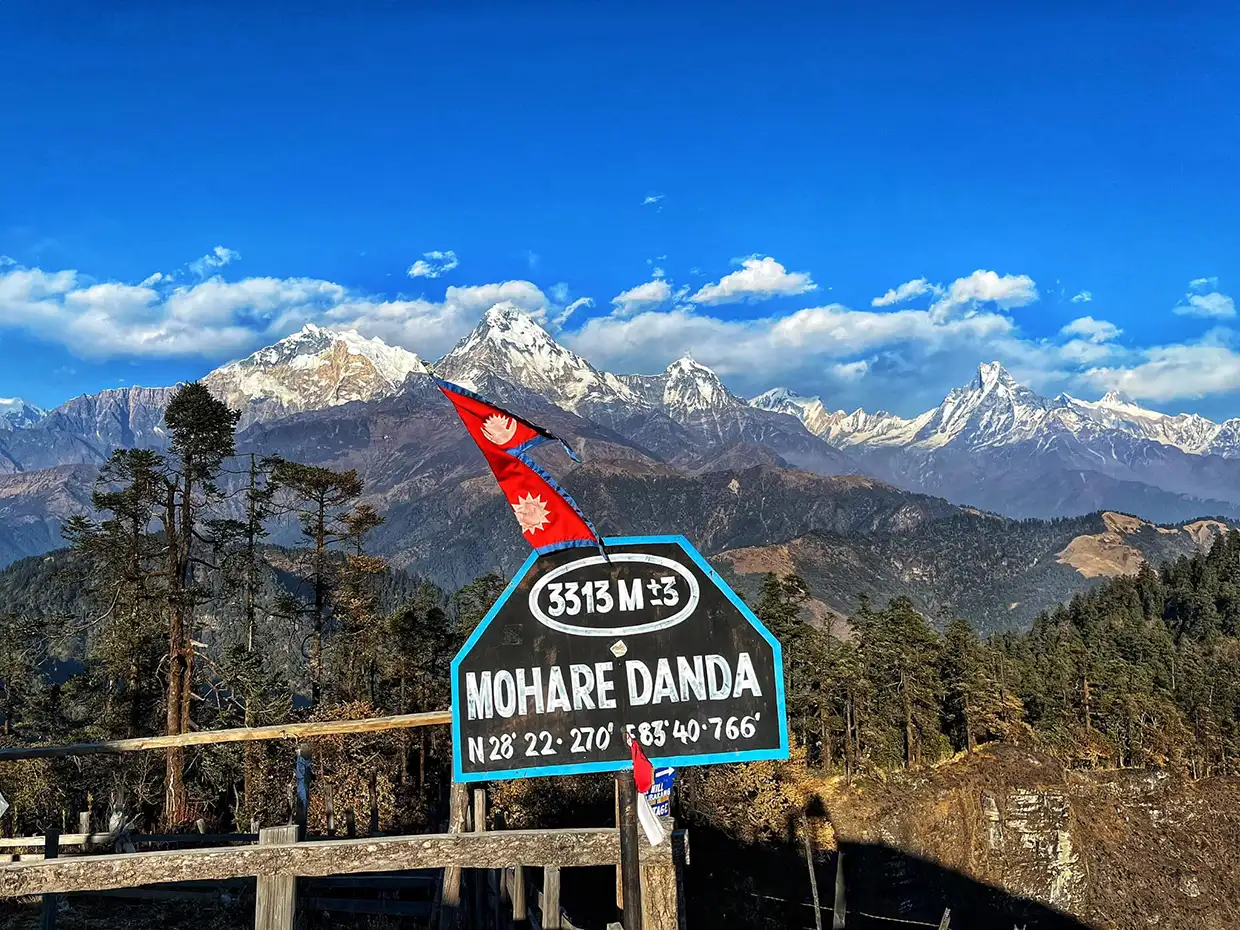
The community lodge at Mohare Danda sits at approximately 3,300 to 3,313 meters on the ridge crest with the Annapurna and Dhaulagiri panorama directly in front of the lodge dining room windows. Arrive in the afternoon in time for the Day 5 sunset. The mountain light shifts across the Annapurna face in warm golden and amber tones as the sun drops behind the western ridge. Eat dinner on the lodge terrace or through the dining room window, with the panorama as your backdrop, then put on full warm layers, gloves, and your headlamp for the pre-dawn sunrise walk on Day 6 morning.
Accommodation:
Basic community lodge at Mohare Danda
Meals Breakfast, Lunch, Dinner
Difficulty
Your guide wakes the group at 5 to 5:30 AM for the Mohare Danda sunrise. Dress in full warm layers—the temperature at 3,313 meters before dawn sits below freezing in most seasons. Walk to the ridge viewpoint position above the lodge and face north. The Machhapuchhre pyramid catches the first direct sunlight in pale gold, then the light spreads left across Annapurna South, Annapurna I, Nilgiri, and the distant Dhaulagiri massif over 15 to 20 minutes of continuous color change. The sequence ends with the full mountain wall in clear morning light against a blue sky.
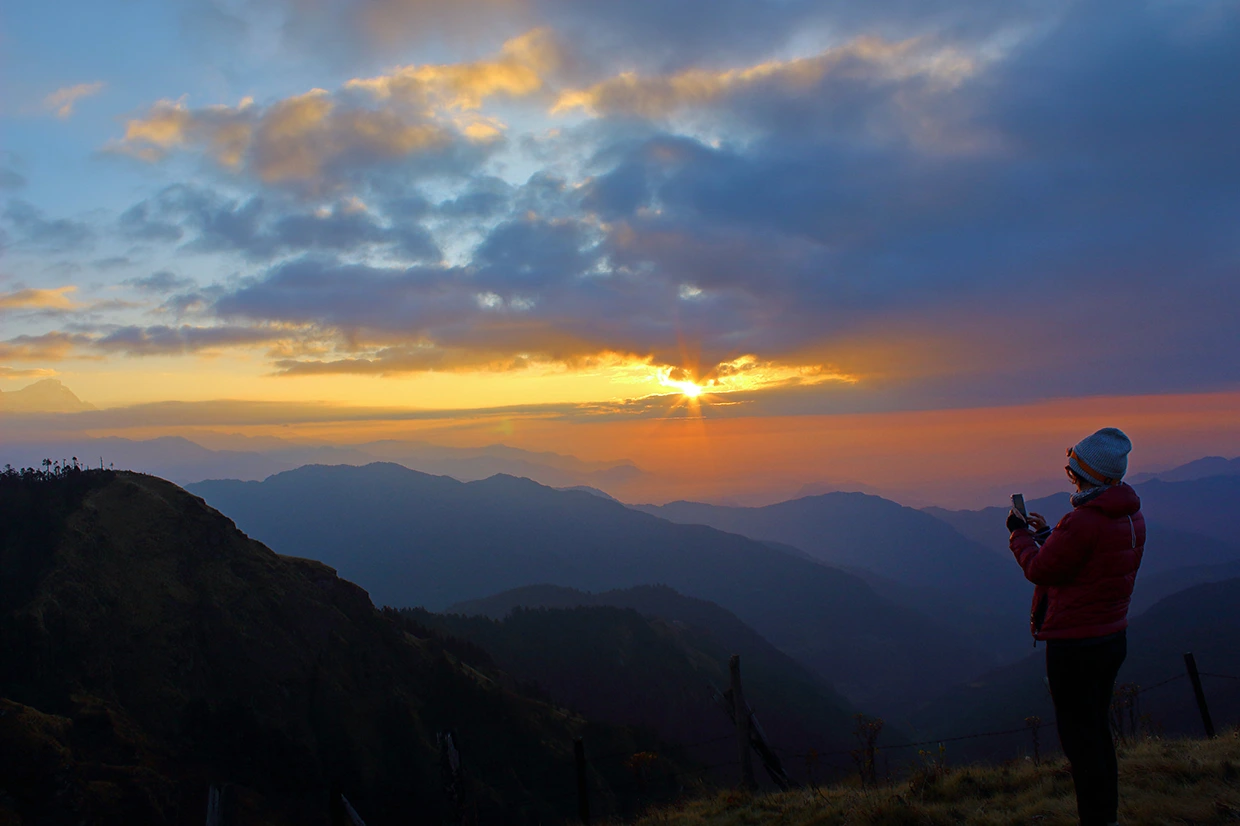
Return to the lodge for breakfast, then pack and start the descent toward Tikot. The trail from Mohare Danda drops through open pastureland, lower forest sections, and village paths on an extended downhill toward the Tikot settlement. Walking time runs approximately 4 to 6 hours on a trail that alternates between open ridgeline views and forested descent sections. Trekking poles provide genuine benefit on the steeper downhill trail sections above Tikot. Arrive at the Tikot community lodge in the afternoon for the final trail overnight before the Day 7 road exit.
Accommodation:
Community lodge or homestay in Tikot
Meals Breakfast, Lunch, Dinner
Difficulty
The final trekking day descends from Tikot through lower hill terrain and village paths to a road access point at Tipling, Baseri, or another nearby connection—approximately 3 to 4 hours of walking on a clear downhill trail. A pre-arranged vehicle picks up your group at the road access point and drives back to Pokhara in approximately 3 to 4 hours through the Kali Gandaki valley and lower hill road system.
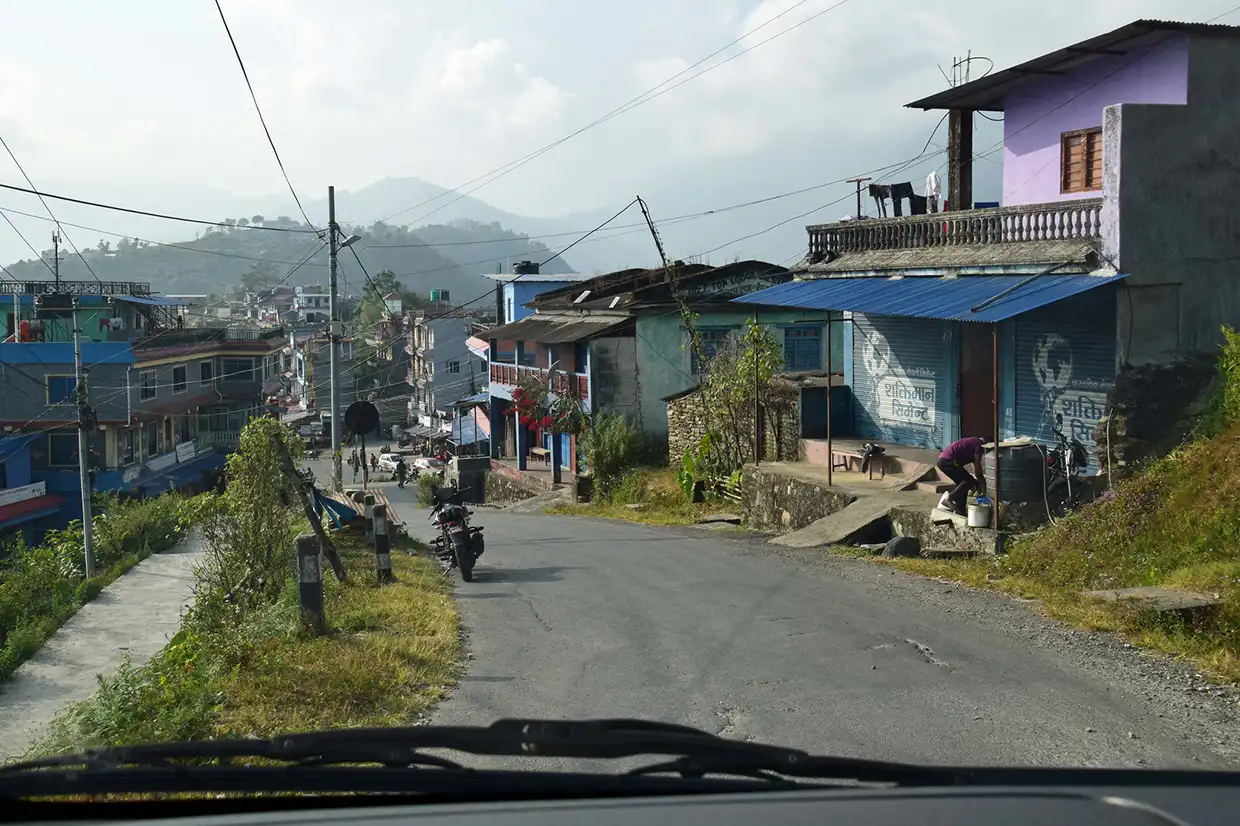
You arrive back at Hotel Splendid View in the afternoon. The evening is free—the first unstructured city evening since Day 2. The Pokhara lakeside restaurants, boat hire services, and evening promenade all become available after four consecutive nights at a community lodge on the trail. Many trekkers celebrate the completion of the Mohare Danda Trek at a lakeside table, with the Annapurna range visible above the horizon of Phewa Lake in clear weather.
Accommodation:
Hotel Splendid View, Pokhara Lakeside
Meals Breakfast, Lunch
Difficulty
The morning tourist bus or private vehicle returns from Pokhara to Kathmandu in 6 to 7 hours. Transfer to Hotel Thamel Park on arrival in the late afternoon. Use the evening for final souvenir shopping in Thamel, a celebration dinner, or rest before the Day 9 airport departure. Our team remains available by WhatsApp and phone through the evening for any departure logistics.
Accommodation:
Hotel Thamel Park, Kathmandu
Meals Breakfast
Difficulty
Our driver transfers you from Hotel Thamel Park to Tribhuvan International Airport at the agreed pickup time. Allow at least 3 hours before international departure for check-in, immigration, and security. If your flight departs in the afternoon, store luggage at the hotel after checkout and use the free morning to visit Boudhanath Stupa or Swayambhunath—both are within 15 minutes of Thamel by taxi.
Accommodation:
Not included – hotel checkout at standard time
Meals Breakfast
Difficulty
Kathmandu – Hotel Thamel Park
Hotel Thamel Park sits in the heart of the Thamel tourist district with walking access to trekking gear shops, restaurants, money exchange, pharmacies, and tourist bus departure points. The hotel offers clean twin-sharing rooms with private bathrooms, hot water, Wi-Fi, and daily breakfast. The central location and reliable service quality make it a practical and comfortable base for both pre- and post-trek preparations and departure logistics.
Pokhara – Hotel Splendid View
Hotel Splendid View is conveniently located on the lakeshore in Pokhara, with private bathrooms, hot water, Wi-Fi, and mountain views from upper-floor rooms on clear days. Two nights at the hotel—one before the trek and one after—provide genuine city-standard accommodation on either side of the community lodge section. The lakeside location gives you direct access to Pokhara’s best evening restaurants, boat hire services, and the Phewa Lake promenade.
Community Lodges and Homestays on the Trail
On the trail, you stay in community lodges or homestays in Bas Kharka, Nangi, Mohare Danda, and Tikot across four consecutive nights. Community lodge rooms offer twin beds with pillows and blankets in clean, simple rooms. Bathrooms are shared at most trail stops. Hot showers are limited or unavailable at the Mohare Danda ridge community lodge—carry a quick-dry towel and expect cold-water facilities at the higher stops.
The community lodges on the Mohare Danda Trek give city-level comfort in Kathmandu and Pokhara, and simple local comfort on the trail. The trail accommodation adds cultural value and a direct community income benefit. It does not meet the standards of a luxury hotel or a commercial teahouse—and that gap is by design.
Device charging and Wi-Fi availability vary across the four trial nights. Nangi and Tikot offer some charging facilities. Mohare Danda has limited and inconsistent electricity at the Ridge Community Lodge. Carry a fully charged power bank from Pokhara to cover all device charging needs across the four community nights.
Full board meals are included on all four active trekking days from Day 3 through Day 7. Hotel breakfast is included at Hotel Thamel Park and Hotel Splendid View on Days 2, 8, and 9. Day 7 includes breakfast and lunch before the road exit, then a drive back to Pokhara. Lunch and dinner in Kathmandu on Days 1 and 8, and dinner in Pokhara on Days 2 and 7, are not included in the package.
Community lodge food along the Mohare Danda route reflects a Nepali rural kitchen rather than a standardized tourist menu. Dal bhat—steamed rice, lentil soup, vegetable curry, pickles, and papadum with free refills—provides the best energy food on the trail and forms the core of most dinner meals. Other common options include noodle soup, potato curry with chapati, vegetable fried rice, egg dishes in multiple preparations, and porridge with honey or seasonal fruit for breakfast.
Food quality and menu variety change with supply logistics as the trail gains elevation. Bas Kharka and Nangi teahouses offer broader ingredient access than the Mohare Danda ridge community lodge, where pack animal or porter supply limits the menu to the highest-calorie, most transport-efficient items. The Day 5 dinner and Day 6 breakfast at Mohare Danda prioritize energy over variety—simple, hot, and sufficient for the physical demands of the ridge stay.
Eating at community lodges rather than carrying pre-packaged food from Pokhara keeps your spending inside the village economies you trek through. Bottled water, soft drinks, alcohol, hot drinks beyond basic tea and coffee, snacks, and desserts carry additional charges at all trail stops. Carry a refillable water bottle with purification tablets to reduce both plastic waste and daily spending on bottled water at teahouse altitudes.
The package covers five main transport segments: private vehicle airport pickup on Day 1, tourist bus or private vehicle Kathmandu to Pokhara on Day 2, local vehicle Pokhara to Galeshwor via Beni on Day 3, local vehicle from the road exit point back to Pokhara on Day 7, tourist bus or private vehicle Pokhara to Kathmandu on Day 8, and private vehicle airport drop-off on Day 9.
Optional transport upgrades improve comfort or reduce travel time on specific segments. A private car or jeep replaces the tourist bus on either the Kathmandu–Pokhara or Pokhara–Kathmandu leg for greater comfort and greater flexibility in scheduling. A domestic flight cuts the 6 to 7-hour bus journey to 25 minutes and offers aerial Himalayan views. Contact our team before confirming your booking to add any transport upgrade and receive current pricing.
The Mohare Danda Trek enters the Annapurna Conservation Area and requires two permits. The Annapurna Conservation Area Permit costs NRs. 3,000 for foreign nationals and NRs. 1,000 for SAARC nationals, tax included, as published on the NTNC e-permit portal. The TIMS card may also apply under the current Nepal Tourism Board policy. Both permits come included in the package price.
Our team arranges both permits in Kathmandu before your Day 3 departure toward the Galeshwor trailhead. Bring two passport-size photographs and a clear copy of your passport photo page to provide to our team on Day 1 or the morning of Day 2. NTNC requires all permit holders to carry the entry permit during the trek and present it when conservation area staff request it at checkpoints along the route. Your guide manages all permit checkpoint interactions on your behalf.
The Mohare Danda Trek rates as easy to moderate. No high-altitude pass crossing, no technical terrain, and no glacier sections appear on the 9-day route. The trail stays between approximately 1,000 meters at the Galeshwor trailhead and 3,313 meters at Mohare Danda, reducing the risk of altitude sickness and eliminating the need for an acclimatization day. Daily walking time ranges from 4 to 7 hours across the four active trekking days.
The Day 3 climb from Galeshwor to Bas Kharka introduces the route’s uphill character on the first trekking day. The Day 5 approach from Nangi to Mohare Danda represents the most sustained climbing section of the entire trek—5 to 7 hours of consistent uphill through forest and open trail that gains significant elevation before the ridge community lodge appears. The Day 6 descent from Mohare Danda to Tikot involves extended downhill on a trail that stresses the knees through forest and pastureland sections—trekking poles effectively reduce this load.
Beginners with 2 to 4 weeks of regular walking preparation can comfortably complete the Mohare Danda Trek. Trekkers who exercise regularly in their daily life find the daily distances and elevation changes within their physical capacity without extensive specific preparation. Wear properly broken-in trekking footwear with ankle support for the village path sections and the descent trail sections from Mohare Danda to Tikot on Day 6.
| Season | Months | Conditions | Best? |
|---|---|---|---|
| Spring | March to May | Rhododendron, oak, and bamboo forests bloom along the Bas Kharka to Mohare Danda section. Clear morning views, mild daytime temperatures. One of the two strongest windows on the route. | Yes |
| Autumn | Sep to Nov | Best mountain visibility after the monsoon ends. Stable, dry, blue-sky mornings offer the clearest views of Annapurna, Dhaulagiri, and Nilgiri from the Mohare Danda ridge. October is peak season. | Yes – Best |
| Winter | Dec to Feb | Cold nights and mornings at the community lodge above 3,000 m. Clear skies on good days. Trails run quietly. Bring full, warm gear for the nights at Mohare Danda. | Possible |
| Monsoon | Jun to Aug | Daily rain, leeches on forest sections, cloud-blocked views, and muddy village paths. Not recommended for most trekkers or families on this route. | No |
Spring and autumn deliver the strongest trekking conditions on the Mohare Danda route. March and April add the rhododendron, oak, and bamboo forest bloom sections between Nangi and Mohare Danda to the visual rewards of the mountain panorama. October produces the clearest morning views from the ridge and fills the community lodge at Mohare Danda most quickly—book at least 3 to 4 weeks in advance for October and November departures to confirm ridge accommodation.
Porter service is optional in the base package and available as a paid upgrade. The Mohare Danda Trek stays at a moderate altitude, with four consecutive trekking days, and many trekkers complete the route carrying a 6-8 kilogram daypack without significant additional physical load. The Day 5 approach from Nangi to Mohare Danda and the Day 6 descent to Tikot represent the two sections where pack weight most clearly affects walking comfort—particularly on the longer Day 5 climb through the forest zone above Nangi.
One porter carries a maximum of 20 kilograms shared between two trekkers. You carry your own daypack with daily essentials throughout the trail. Adding a porter creates direct employment income for a worker from the communities along the Galeshwor to Tipling route—the same communities your community lodge nights support. Contact our team before booking to add porter service and receive current pricing.
Add any of the following services to your base package at extra cost before confirming your booking:
Travel insurance is compulsory for all trekkers on the Mohare Danda Trek. The route stays below 3,313 meters—well below the altitude thresholds of the Annapurna Circuit or Khopra Ridge—but the remote trail location, basic lodge facilities, and the physical demands of multi-day mountain trekking make insurance coverage essential regardless of altitude. Standard trekking insurance policies that cover activity to 4,000 meters and include emergency helicopter evacuation provide adequate protection for this route.
A helicopter evacuation from the Mohare Danda section to Pokhara costs USD 1,500 to USD 3,000, depending on conditions and location. Without insurance, the full cost falls on the trekker. Your policy must also cover medical treatment, trip cancellation, flight delays, and lost baggage. Purchase your policy before you fly to Nepal and carry both printed and digital copies throughout the trip. Our office requires your provider name and policy number before the trek departs.
Pack for the temperature range from warm lower-valley afternoons to cold pre-dawn mornings at the Mohare Danda ridge community lodge at 3,313 meters:
Responsible trekking on the Mohare Danda Community Lodge Trek means daily choices that support the Magar communities you walk through rather than simply passing through them. Eat at community lodges every meal rather than supplementing with packaged food from Pokhara—the family earns more from a single dinner than a tip covers for a skipped meal. Buy water from the lodge, where purification is available, rather than purchasing plastic bottles that accumulate waste in a conservation area with limited waste removal infrastructure.
Dress modestly in Bas Kharka, Nangi, and Tikot at all times. Cover shoulders and knees in village settings. Ask clearly before photographing local residents—the Magar communities along the Mohare Danda trail host genuine daily life alongside tourist visitors rather than operating purely as a trekking service backdrop. Remove footwear before entering private homes when invited and before entering any temple or sacred space on the route.
Stay on marked trails at all times through agricultural zones. The terraced farmland below Bas Kharka and around Nangi represents the households’ food supply, not a decorative landscape. Walking across terrace walls, through irrigated fields, or creating trail shortcuts through forest damages the land that village families depend on. Follow your guide’s exact route through all the village and farmland sections from Galeshwor to Tipling.
Keep noise low in community lodges during evening and early morning hours. Lodge families manage trekker hosting alongside household farming schedules that begin before most trekkers wake. Late-night activity from trekking groups disrupts the household rhythm that makes your own comfortable stay possible. Adapt to the village rhythm throughout the trail section.
Mohare Danda Trek vs Poon Hill Trek
The Poon Hill Trek focuses on delivering one specific experience—the Poon Hill sunrise—efficiently within 4 to 5 trekking days on a well-developed commercial trail infrastructure. The Mohare Danda Trek delivers a comparable mountain panorama from a comparable ridge altitude, adds four community lodge nights in Magar villages, passes through Nangi’s community development projects, and does all of it on a trail that carries a fraction of Poon Hill’s daily trekker volume. The trade-off: the Mohare Danda route takes longer and offers simpler accommodation. The reward: quieter trails, stronger community connection, and a mountain viewing experience that belongs to a small group rather than a crowd.
What Community Lodge Trekking Really Means
Community lodge accommodation on the Mohare Danda route means basic rooms with shared bathrooms, local family cooking in small kitchens with limited ingredient variety, inconsistent electricity and Wi-Fi, and cold water for washing at most stops above 2,000 meters. The Mohare Danda ridge community lodge at 3,313 meters represents the most basic overnight of the route—small rooms, minimal facilities, and cold mornings that require sleeping bags and full warm layers rather than relying on lodge blankets alone. Trekkers who approach these conditions with curiosity and flexibility find the accommodation’s authenticity its primary value. Trekkers who approach with expectations of a commercial teahouse find genuine disappointment.
Why Nangi Adds More Value Than a Standard Village Stop
Most short Annapurna treks pass through villages where trekking tourism represents income without visible community investment. Nangi presents a different model—trekking income connecting directly to school facilities, eco-tourism development, craft production, fish farming, and mushroom cultivation in a way that makes the community development story visible and verifiable rather than theoretical. The Nangi stop adds a community development dimension to the Mohare Danda Trek itinerary that standard Poon Hill packages and commercial teahouse routes lack entirely.
Sunrise vs Sunset – What Each Delivers
The Mohare Danda community lodge position gives you access to both the Day 5 sunset and the Day 6 sunrise from the same ridge. Sunset on Day 5 arrives while you sit at the lodge terrace or dining room table—warm light on the Annapurna face, no alarm clock required, warm dinner as the backdrop. Sunrise on Day 6 requires the pre-dawn walk, the headlamp, the cold, and the patience of waiting in darkness for the first light—but delivers the sharper, more dramatic color sequence and the clearer mountain silhouettes that morning light provides. Photographers who want both opportunities. Trekkers who want the mountain view without the cold morning effort get the sunset panorama on Day 5 as their primary Mohare Danda experience.
Why Porter Service Can Stay Optional
The Mohare Danda Trek stays at a moderate altitude with four daily sections that most fit trekkers manage with a 6 to 8 kilogram daypack. The Day 5 Nangi to Mohare Danda climb represents the one section where pack weight most clearly affects pace and enjoyment—trekkers who carry over 10 kilograms on the sustained uphill to the ridge find the last hour significantly more demanding than trekkers carrying a light daypack. Porter service transforms the Day 5 experience for trekkers who pack heavily or who want to maximize energy for the viewpoint stay. Adding a porter also creates a direct employment income connection to the same Magar communities your lodge nights support.
Community lodge trekking on the Mohare Danda route operates on a fundamentally different model from commercial teahouse trekking on the main Poon Hill circuit. Where commercial teahouses optimize for trekker convenience—broad menus, reliable Wi-Fi, consistent room quality—community lodges optimize for local household income and authentic hosting. The trade-off between the two models is transparent: less consistency and comfort on the trail, more direct human connection, and responsible tourism impact.
Each community lodge stop on the Mohare Danda trail belongs to a family from the village where it operates. The Bas Kharka lodge owner farms the terraced fields below the village and supplements that income with trekker hosting. The Nangi lodge connects to a wider community development framework that channels trekking income into school facilities, craft production, local farming projects, and eco-tourism training for other community members. The Tikot lodge family at the final stop manages their hosting operation alongside the traditional Magar livestock and farming economy that has sustained the settlement for generations.
ACAP permit revenue supports conservation and community development throughout the Annapurna region. Your permit fee funds trail maintenance, wildlife protection programs, conservation education in local schools, and the community infrastructure projects that make sustainable mountain tourism viable in the long term. Choosing a community lodge trek over a standard commercial circuit amplifies this impact—your accommodation spending stays inside the village economy rather than flowing out to city-based operators.
Guests on the Mohare Danda Community Trek need to approach trail accommodation with appropriate expectations. Community lodges provide basic rooms, shared bathrooms in most locations, limited or unreliable electricity, simple food from local kitchens, and the genuine warmth of a family welcoming paying guests into their home. The comfort level stays below the commercial teahouse standard. The cultural experience level stays significantly above it.
Mohare Danda sits at approximately 3,300 to 3,313 meters on a north-facing ridge that delivers a direct, unobstructed view of the Annapurna and Dhaulagiri mountain walls. The ridge orientation faces northwest toward Dhaulagiri—one of the closest views of the seventh highest mountain in the world available from any teahouse or lodge in Nepal—and north toward the full Annapurna South, Annapurna I, Nilgiri, and Machhapuchhre view arc that makes the Annapurna region Nepal’s most photographed mountain destination.
Sunset from Mohare Danda arrives on Day 5 evening as the light drops behind the western ridge and catches the Dhaulagiri and Annapurna snow faces in amber and rose before dark. The community lodge terrace faces the mountain panorama directly—you watch the sunset sitting at your dinner table, without a trail walk. Most trekkers who arrive at the lodge by 3 PM have 2 to 3 hours of open-mountain viewing before the color event begins. The sunset quality depends entirely on the weather and cloud cover, which your guide assesses on the morning of Day 5 as you approach from Nangi.
Sunrise on Day 6 morning requires an early start—typically 5 to 5:30 AM—to reach the optimal viewpoint ridge position before the sun clears the eastern horizon and begins illuminating the summits. The Mohare Danda sunrise sequence starts with the Machhapuchhre pyramid catching the first direct light in pink and gold, then spreads left across Annapurna South, Annapurna I, Nilgiri, and finally Dhaulagiri over 15 to 20 minutes of continuous color change. Carry a headlamp, full warm layers, and gloves—the temperature at 3,313 meters before dawn sits well below comfortable.
The crowd level at Mohare Danda sunrise stays far below Poon Hill throughout both peak trekking seasons. On a clear October morning, the Mohare Danda ridge hosts 15 to 40 trekkers. Poon Hill on the same date handles 250-400. The panorama covers similar peaks from a comparable altitude. The viewing experience takes on a completely different emotional quality when you share it with a small group rather than jockeying for position in a crowd.
The full package runs 9 days from arrival in Kathmandu on Day 1 to final airport departure on Day 9. The active trekking section covers 4 days from Day 3 through Day 6, with Day 7 combining a final short descent to the road access point and a drive back to Pokhara. You spend 2 nights in Kathmandu and 2 nights in Pokhara framing the 4 community lodge nights on the trail.
The highest point is Mohare Danda at approximately 3,300 to 3,313 meters (10,827 to 10,869 feet) above sea level. You reach the Mohare Danda ridge community lodge on Day 5 afternoon and stay for the Day 6 sunrise before descending to Tikot. The altitude stays well below the thresholds that require acclimatization days or create serious altitude sickness risk for healthy adults.
Yes. The trek rates as easy to moderate and suits healthy first-time trekkers with basic fitness. The most physically demanding sections are the Day 5 sustained climb from Nangi to the Mohare Danda ridge and the Day 6 extended descent to Tikot. Two to four weeks of regular walking preparation significantly improves your comfort level on both demanding sections.
Mohare Danda delivers a comparable Annapurna and Dhaulagiri mountain panorama from a comparable ridge altitude with a fraction of Poon Hill’s daily trekker traffic, stronger community lodge accommodation, four nights in Magar villages rather than commercial teahouses, and a trail that passes through Nangi’s community development projects. Poon Hill delivers the sunrise efficiently in 4 to 5 days. Mohare Danda delivers the same mountain view alongside a 9-day community and culture experience.
From the Mohare Danda ridge, you see Dhaulagiri (8,167 m) to the northwest, Annapurna I (8,091 m) to the north, Annapurna South (7,219 m) directly ahead, Nilgiri (7,061 m) to the northeast, and Machhapuchhre or Fishtail Mountain (6,993 m) to the east. The panorama extends across more than 180 degrees of Himalayan skyline on clear mornings. Both the Day 5 sunset and Day 6 sunrise illuminate the full mountain wall from the ridge community lodge position.
You stay at Hotel Thamel Park in Kathmandu for two city nights and Hotel Splendid View in Pokhara for two city nights—both clean three-star hotels with private bathrooms, hot water, Wi-Fi, and daily breakfast. On the trail, you stay in community lodges or homestays in Bas Kharka, Nangi, Mohare Danda, and Tikot. Community lodge rooms provide basic twin beds and shared bathrooms. Hot showers are limited or unavailable at the Mohare Danda ridge community lodge.
Yes. Full board—breakfast, lunch, and dinner—comes included at community lodges on all 4 active trekking days from Day 3 through Day 6. Hotel breakfast comes included at both city hotels on applicable mornings. Day 7 includes breakfast and lunch before the Pokhara return. Lunch and dinner in Kathmandu and Pokhara are not included. Bottled water, hot drinks, soft drinks, and alcohol carry additional charges at all locations.
Porter service is optional in the base package and available as a paid upgrade. One porter carries a maximum of 20 kilograms shared between two trekkers. We recommend adding a porter if you carry more than 8 kilograms or want to reduce physical load on the Day 5 Mohare Danda climb. Porter service also supports direct employment income for workers from the Magar communities along the trail.
You need the Annapurna Conservation Area Permit (ACAP) and the TIMS card. The ACAP costs NRs. 3,000 for foreign nationals and NRs. 1,000 for SAARC nationals, tax included. Both permits come included in the package price. Our team arranges both documents in Kathmandu before your Day 3 departure. Bring two passport-size photographs and a passport copy.
Spring (March to May) and autumn (September to November) offer the best conditions. Spring adds rhododendron, oak, and bamboo forest blooms on the Nangi to Mohare Danda trail section. Autumn delivers the clearest mountain views of the year from the ridge. October fills the Mohare Danda community lodge most quickly—book 3 to 4 weeks in advance for peak season departures.
Yes. A Kathmandu city tour covering Pashupatinath Temple, Boudhanath Stupa, Swayambhunath Stupa, and one Durbar Square is available as an optional add-on at extra cost. The tour takes approximately half a day with a guide and private vehicle. Contact our team at booking to add the city tour.
Yes. A Pokhara city tour covering Phewa Lake boat ride, the World Peace Pagoda, Davis Falls, and Gupteshwor Cave is available as an optional upgrade. Contact our team before confirming your booking to add this option and receive current pricing.
Yes. Both the Kathmandu–Pokhara and Pokhara–Kathmandu legs are upgradeable—either to a private car or jeep for more comfort and flexibility, or to a domestic flight for a 25-minute journey instead of 6 to 7 hours by bus. Contact our team before booking to add any transport upgrade.
Yes. Travel insurance is compulsory. Your policy must cover trekking activity, emergency helicopter evacuation, medical treatment in Nepal, trip cancellation, and lost baggage. The route stays below 3,313 meters, so standard trekking insurance without extreme altitude restrictions generally provides adequate coverage. Confirm your specific policy terms before purchase and carry both printed and digital copies throughout the trip.
Yes. The trek suits families with active members aged 10 and above. The easy-to-moderate difficulty, lower altitude, and 4 to 7 hour daily walking distances make the route physically manageable for fit teenagers and active adults. The Magar village overnight stops in Bas Kharka, Nangi, and Tikot add cultural educational value that standard viewpoint treks do not provide. Contact our team to discuss pacing adjustments for family groups before booking.