

This challenging adventure merges the untouched Tibetan culture of a restricted, hidden valley with the iconic high-altitude passes of a classic Himalayan circuit.

Unbeatable Holiday Offers – Save Up to 20% on Your Next Adventure!
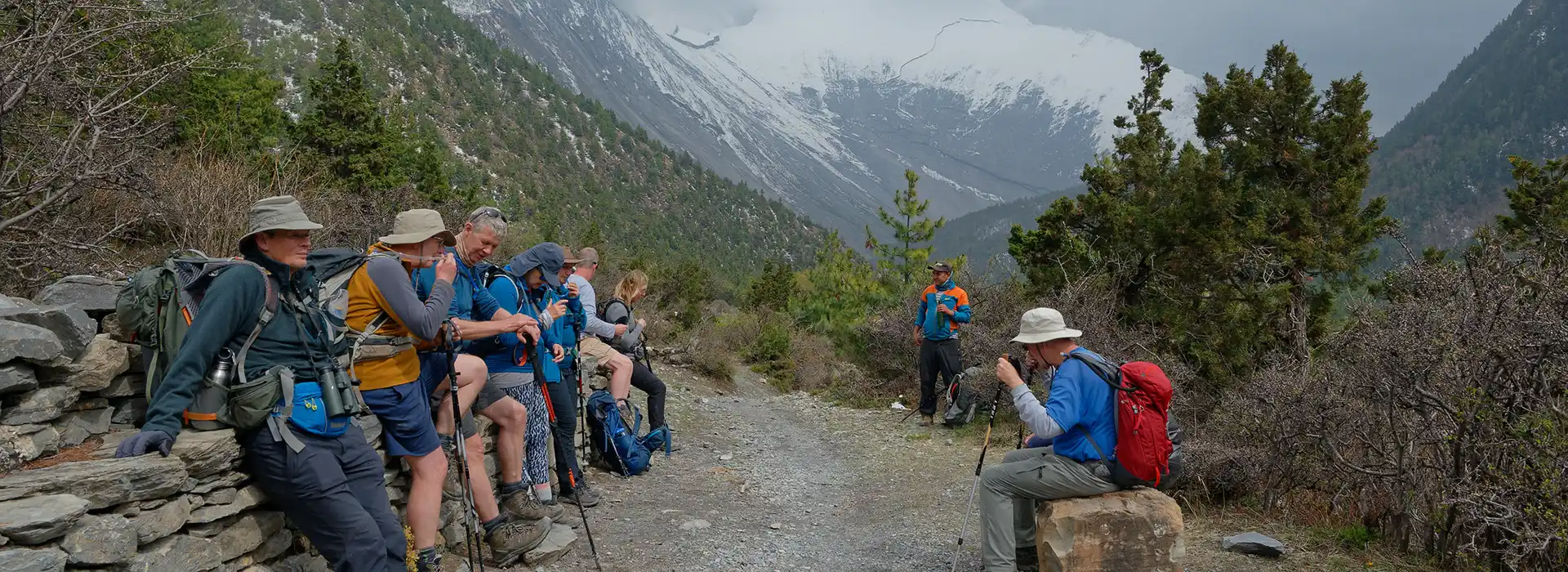

This challenging adventure merges the untouched Tibetan culture of a restricted, hidden valley with the iconic high-altitude passes of a classic Himalayan circuit.
The Nar Phu Valley with Annapurna Circuit Trek combines two of Nepal’s most rewarding high-altitude routes in a single 16-day itinerary from Kathmandu. You access the restricted Nar Phu Valley through Koto, travel deep into the remote valley to Phu Gaon and Nar Village, cross the high Kang La Pass at approximately 5,240 to 5,320 meters, rejoin the classic Annapurna Circuit at Ngawal, cross the legendary Thorong La Pass at 5,416 meters, and descend to Muktinath before driving to Pokhara.
The route combines remote Tibetan-influenced villages, ancient monasteries, high alpine desert, dense forest, and two serious pass crossings in a format that no standard Annapurna trek provides. Phu Gaon and Nar Village represent the cultural heart of the trek. Both villages maintain a Tibetan-influenced architectural and cultural identity that predates Nepal’s modern trekking tourism industry—stone-built houses, prayer walls, Buddhist monasteries, chortens at every trail junction, and a subsistence economy based on yak herding, barley farming, and buckwheat cultivation at altitudes above 3,800 meters.
The restricted area permit requirement limits visitor numbers, which keeps both villages genuinely remote in character rather than tourist-optimized. The Kang La Pass crossing on Day 8 connects the restricted Nar Phu Valley to the main Annapurna Circuit trail at Ngawal with views of Annapurna II, Gangapurna, Tilicho Peak, and Pisang Peak from the pass summit. Thorong La Pass on Day 13 closes the circuit with the highest single point of the entire 16-day route—5,416 meters of physical achievement approached before sunrise in cold and wind.
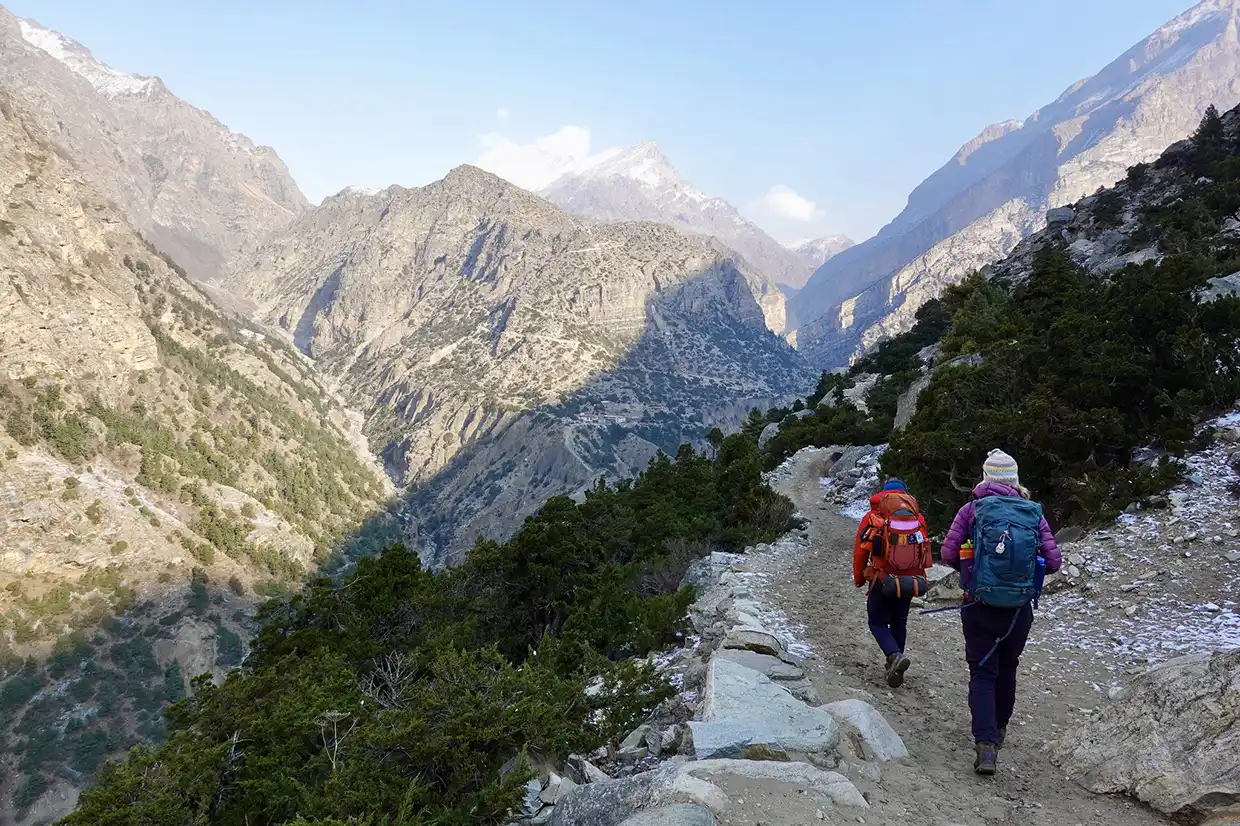
Both pass crossings demand good fitness, proper acclimatization, and a licensed guide who knows the specific trail conditions on each route. The 16-day package covers airport pickup by private vehicle, two nights at Hotel Thamel Park in Kathmandu, one night at Hotel Splendid View in Pokhara, all transport between cities and trek points, teahouse and basic lodge accommodation on all 12 trekking nights, full board meals from Day 2 through Day 13, a licensed English-speaking guide, a porter, and all three required permits—Nar Phu Restricted Area Permit, ACAP, and TIMS.
Important: This trek crosses two high passes above 5,200 meters, spends multiple nights in a remote restricted area with basic lodge facilities, and demands sustained physical effort across 12 consecutive trekking days. It suits fit trekkers with previous high-altitude or multi-day trekking experience, not casual walkers or first-time trekkers without preparation.
The Nar Phu Valley with Annapurna Circuit Trek operates on a different tier from standard Annapurna routes. Where the classic Annapurna Circuit moves through well-developed teahouse infrastructure from Dharapani to Muktinath, the Nar Phu extension branches north from Koto into a restricted valley that receives a fraction of the main circuit’s visitor numbers. The restricted area permit requirement creates a controlled entry system that preserves the valley’s remote character and protects the Tibetan-influenced communities living there from mass tourism.
The route enters the Annapurna Conservation Area at Dharapani and immediately turns north into the Nar Phu restricted zone. The valley’s character shifts from the forested lower Marsyangdi corridor into a drier, higher, more exposed environment as you climb toward Phu Gaon at approximately 4,080 meters. Narrow canyon sections, river crossings, cliff-face trail passages, and open highland terrain mark the Nar Phu Valley trail as a genuinely remote trekking experience rather than a modified teahouse circuit.
After the Kang La Pass crossing on Day 8, the route rejoins the main Annapurna Circuit at Ngawal and follows the classic trail through Manang, Yak Kharka, and Thorong Phedi to the 5,416-meter summit. The acclimatization structure—one full rest day in Phu Gaon before Kang La and one in Manang before Thorong La—builds in appropriate time for altitude adaptation into the 16-day schedule without padding the itinerary with unnecessary city days.
The trek suits fit trekkers with previous multi-day mountain walking experience who want the Annapurna Circuit’s classic pass crossing combined with the cultural and landscape depth of a restricted, remote valley. The route rewards preparation, punishes complacency at altitude, and delivers a 16-day high Himalayan experience that the standard Annapurna Circuit cannot match in terms of cultural remoteness, pass variety, or overall adventure depth.
Quick Answer: What Is the Nar Phu Valley with Annapurna Circuit Trek?
The Nar Phu Valley with Annapurna Circuit Trek is a 16-day restricted-area trek from Kathmandu. The route covers Koto, Meta, Phu Gaon, Nar Phedi, Nar Village, Kang La Pass (5,240–5,320 m), Ngawal, Manang, Yak Kharka, Thorong La Pass (5,416 m), Muktinath, and Pokhara. The trek combines remote Tibetan-influenced villages with the classic Annapurna Circuit and suits fit trekkers seeking two high passes, restricted-area culture, and a full Himalayan challenge.
| Trip Facts | Information |
|---|---|
| Duration | 16 Days (arrival to final departure) |
| Trip Start / End | Kathmandu, Nepal |
| Trek Start | Koto or Dharapani (based on road conditions) |
| Trek End | Muktinath (3,710 m) |
| Highest Point | Thorong La Pass – 5,416 m / 17,769 ft |
| Major Side Pass | Kang La Pass – approx. 5,240–5,320 m / 17,192–17,454 ft |
| Difficulty | Challenging |
| Accommodation | Hotel in Kathmandu & Pokhara; Teahouse & Basic Lodge on Trek |
| Meals | Breakfast in cities; Full board on all trek days |
| Kathmandu Hotel | Hotel Thamel Park |
| Pokhara Hotel | Hotel Splendid View |
| Permits | Nar Phu Restricted Area Permit; ACAP; TIMS (if required) |
| Guide | Licensed trekking guide – required by law for restricted areas |
| Best Season | Spring (Mar–May); Autumn (Sep–Nov) |
| Porter | Strongly recommended |
| Acclimatization | Day in Phu Gaon (Day 5) and a day in Manang (Day 10) |

Included Meals

Trip staff

Transport

Accommodation

Trip Grade
Group Size
You arrive at Tribhuvan International Airport. Our representative meets you at the international arrival hall with a name signboard and transfers you by private vehicle to Hotel Thamel Park in Thamel. Check in, rest after your flight, and use the afternoon to prepare. Thamel gives you walking access to trekking gear shops, pharmacies, money exchange, and restaurants at every price point.
Our guide visits your hotel in the evening to walk through the full 16-day itinerary, explain the restricted area permit process, discuss gear requirements for both pass crossings, and answer questions about the Nar Phu Valley section. Confirm your travel insurance covers trekking above 5,400 meters and helicopter evacuation before the meeting ends.
Meals: Not included
Accommodation:
Hotel Thamel Park, Kathmandu (twin sharing)
Difficulty
An early departure from Kathmandu covers the road journey to Besisahar, then continues by jeep up the Marsyangdi valley road to Dharapani or Koto, depending on road conditions. The full journey takes 8 to 10 hours and ends at the restricted-area entry checkpoint. Our team arranges permit processing at the checkpoint.
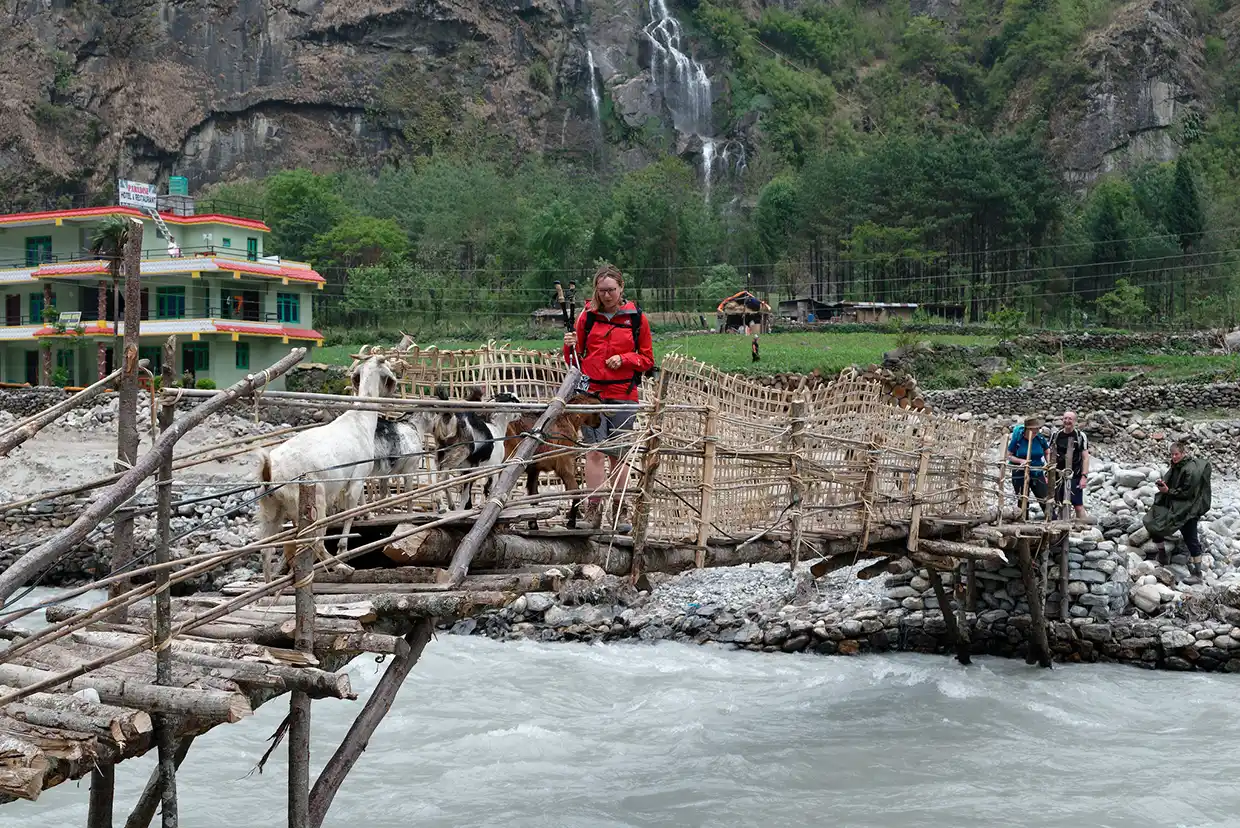
The Day 2 drive delivers the first significant Himalayan views as the road climbs into the Marsyangdi valley above Besisahar—Annapurna II and Lamjung Himal appear above the valley walls in the upper sections. Arrive at Koto or Dharapani in the evening, check into the teahouse, and rest for the first day of restricted-area trekking, beginning tomorrow.
Accommodation:
Teahouse in Koto or Dharapani
Meals Breakfast, Lunch, Dinner
Difficulty
The restricted area trail branches north from Koto on a path that immediately enters the distinct character of the Nar Phu Valley. The trail crosses the Marsyangdi and follows the Phu Khola river northward through narrow canyon sections, cliff-face traverses, and forested gorge terrain. The physical environment shifts from the lower Marsyangdi corridor—green, forested, and accessible—to a narrower, more exposed, and clearly remote valley system.
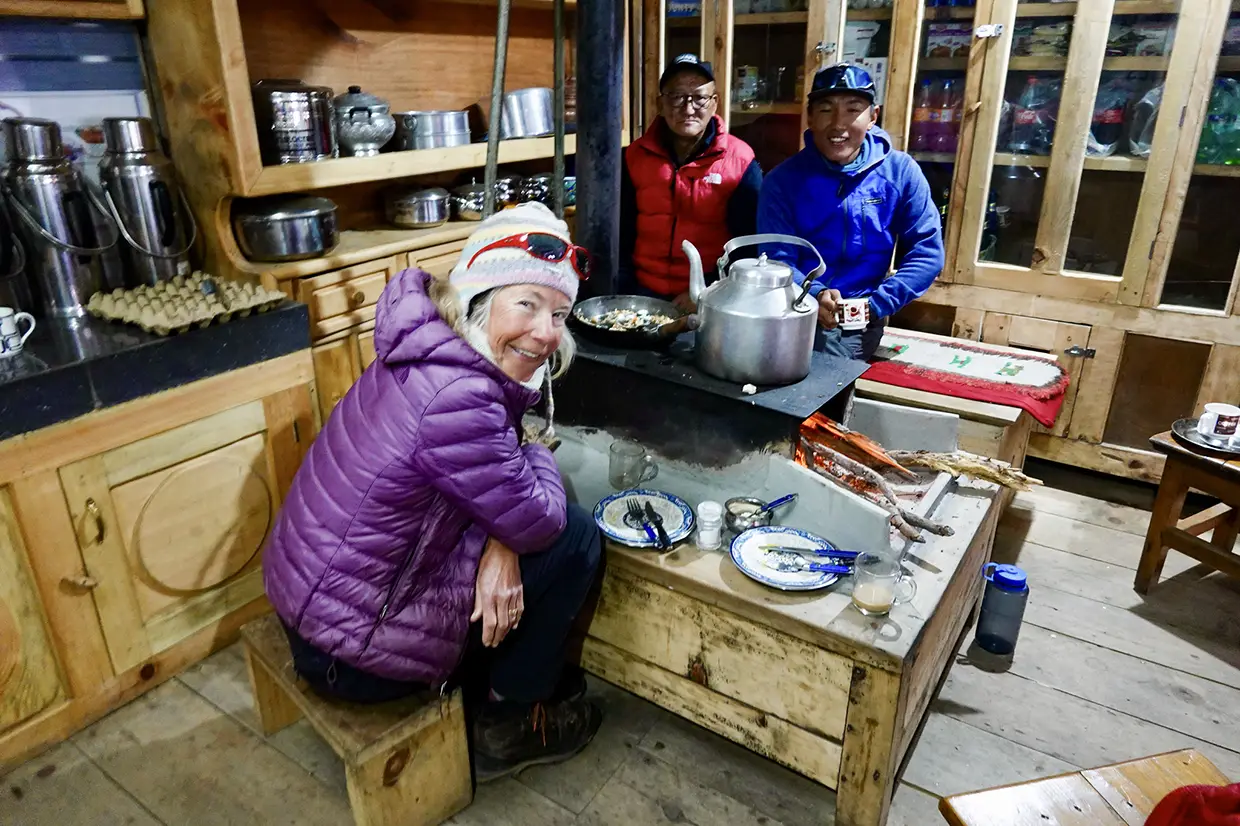
Meta sits at approximately 3,560 meters in the lower Nar Phu Valley and provides the first teahouse overnight in the restricted zone. The village shows the early signs of the Tibetan-influenced cultural character that intensifies as you climb higher into the valley—stone construction, Buddhist prayer flags, and the drier, higher-altitude atmosphere that defines the upper sections. Walking time is approximately 5 to 7 hours, depending on the trailhead.
 Accommodation:
Teahouse in Meta
Meals Breakfast, Lunch, Dinner
Difficulty
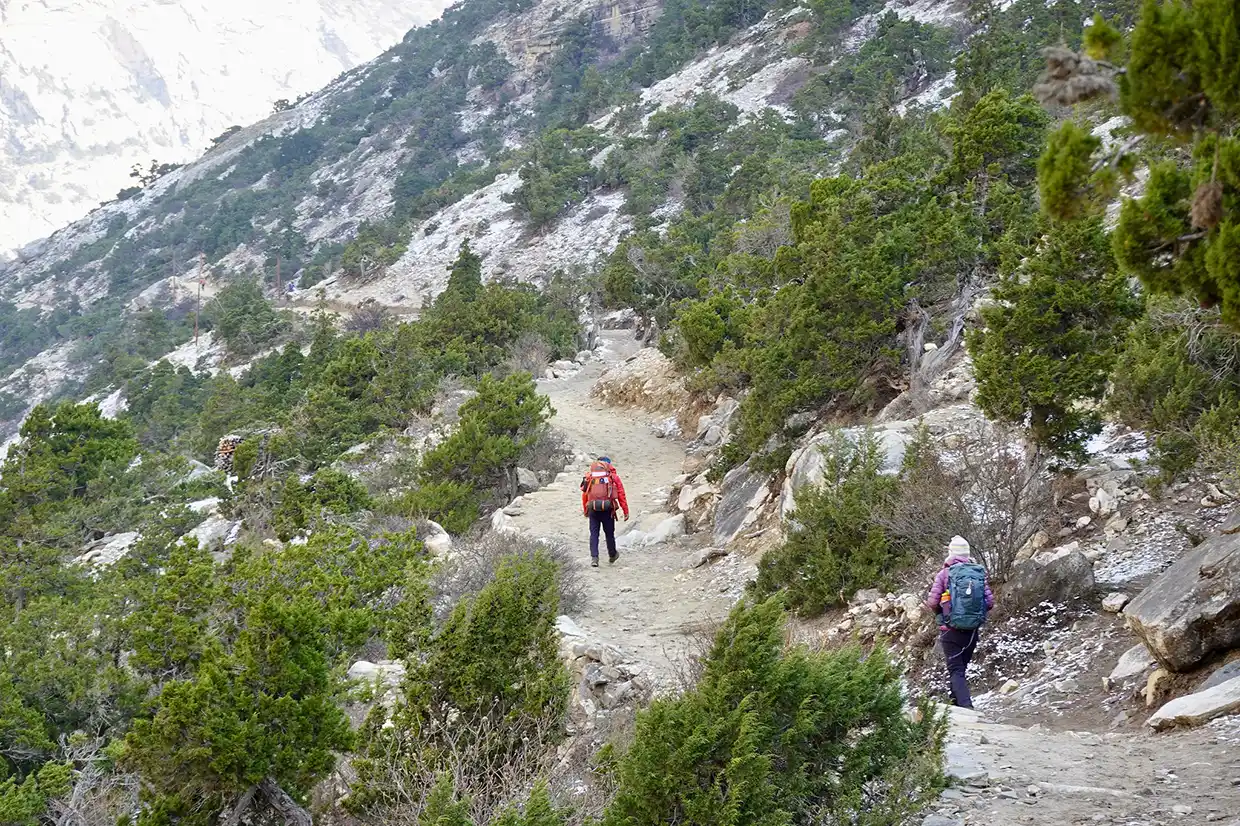
The trail from Meta to Phu Gaon continues up the valley through increasingly remote and Tibetan-influenced terrain. The landscape dries progressively as the valley narrows—rhododendron forest gives way to juniper scrub, then open rocky terrain with distant views of high ridge systems on both valley walls. Chortens appear at trail junctions throughout the day’s walking, marking a cultural transition that becomes fully realized when Phu Gaon appears on its ridge above the valley floor.
Phu Gaon sits at approximately 4,080 meters in a commanding position above the Phu Khola valley, with monastery buildings visible above the main village cluster. The village’s flat-roofed stone houses, narrow lanes, and surrounding barley terraces look more like a Tibetan than a Nepali reference. Arrive in the afternoon, check into the teahouse, and prepare for the acclimatization day tomorrow.
Accommodation:
Teahouse in Phu Gaon
Meals Breakfast, Lunch, Dinner
Difficulty
Day 5 stays in Phu Gaon for a full acclimatization day before the Kang La Pass crossing. Your guide leads a morning acclimatization hike to a higher point above the village—typically toward the upper monastery or the ridge above the settlement — at 4,400 to 4,600 meters, following the standard high-altitude protocol of climbing higher than your sleeping altitude to accelerate physiological adaptation.
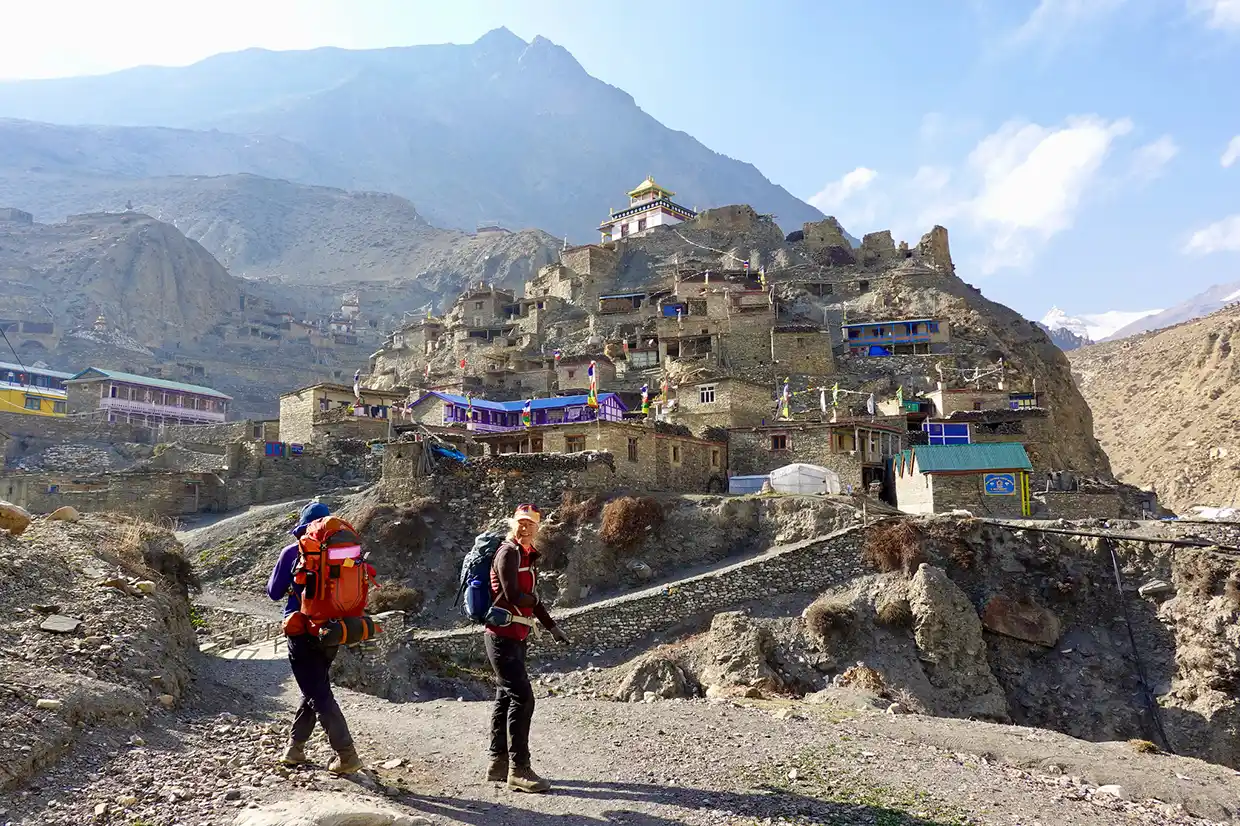
The afternoon belongs to Phu Gaon exploration. Visit the main monastery above the village for the wall paintings, prayer wheels, and the active Buddhist community that maintains the gompa. Walk the village lanes and observe the barley terracing system that Phu farmers maintain at this altitude. Speak with your guide about the local culture, the seasonal yak herding calendar, and the trading relationship between Phu and the lower valley communities. Eat a full dinner, drink 3 liters of water throughout the day, and rest early for the long Day 6 walk to Nar Phedi.
Accommodation:
Teahouse in Phu Gaon (second night)
Meals Breakfast, Lunch, Dinner
Difficulty
The trail from Phu Gaon to Nar Phedi retraces part of the valley approach before branching east toward the Nar tributary valley. The route covers a significant distance through highland terrain—open ridgelines, dry valley sections, and occasional short forest patches—before the Nar Phedi area appears in the lower Nar Valley. Walking time ranges from 6 to 8 hours, depending on the specific trail taken and conditions.
Nar Phedi provides basic teahouse or monastery lodge accommodation at approximately 4,000 meters in the lower Nar Valley. Facilities here represent the most basic overnight on the entire 16-day route—simple rooms, a minimal menu, and limited electricity. Arrive early if possible, eat a full dinner, and rest completely for the Day 7 approach to Nar Village before the Kang La crossing.
Accommodation:
Teahouse or monastery lodge at Nar Phedi
Meals Breakfast, Lunch, Dinner
Difficulty
The trail climbs gradually from Nar Phedi to Nar Village at approximately 4,110 meters. Nar presents the second major Tibetan-influenced cultural destination of the trek—a stone-walled settlement with deep-set doorways, flat rooftops used for drying barley and buckwheat, a prominent monastery above the main village, and panoramic views of the high ridge systems that ring the upper valley. The village retains the closed, self-sufficient character of a highland community that has survived centuries at this altitude through practical adaptation.
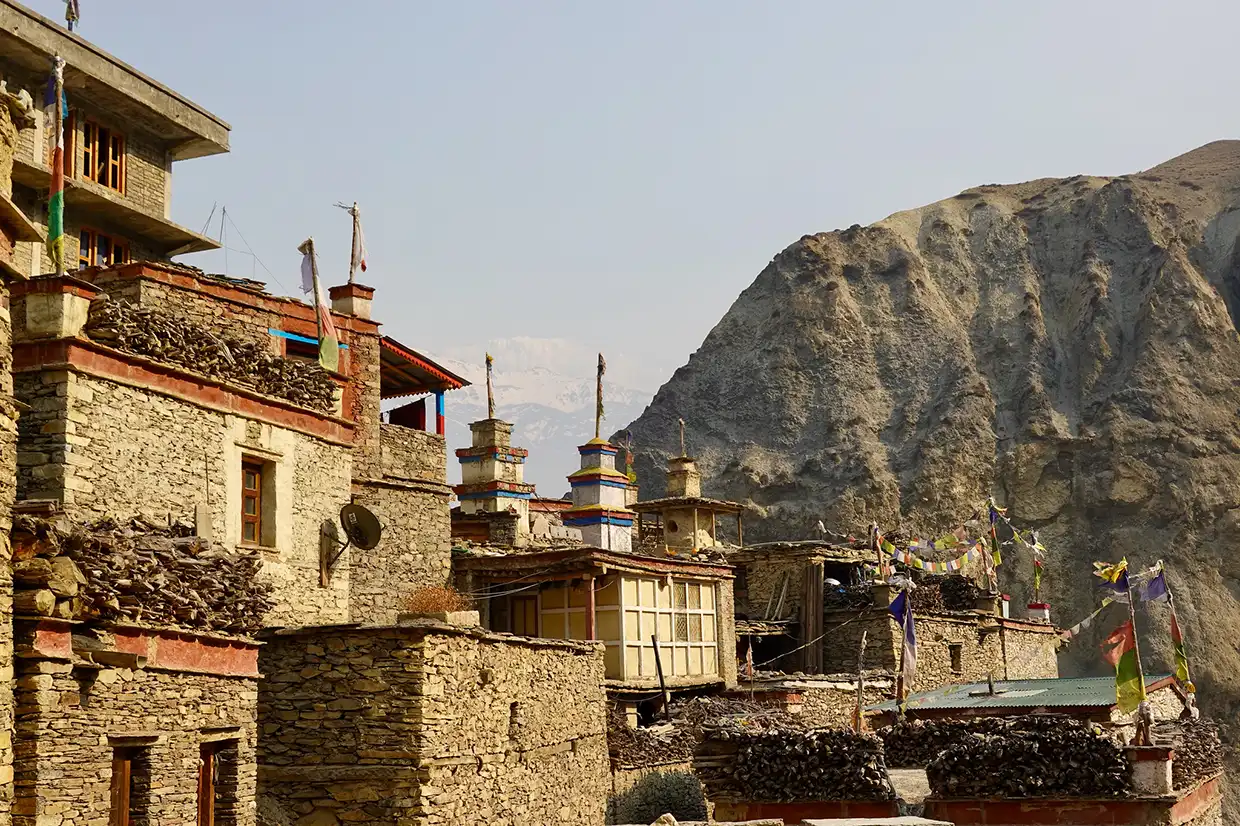
Spend the afternoon exploring Nar before the Kang La departure the following morning. Visit the monastery, walk the village perimeter, and observe the autumn harvest activities if your visit falls between September and November. Eat a large dinner, prepare your pack for the Day 8 pass crossing, and rest early. Your guide confirms the Day 8 departure time based on weather conditions at the pass and the group’s current physical state.
Accommodation:
Teahouse in Nar Village
Meals Breakfast, Lunch, Dinner
Difficulty
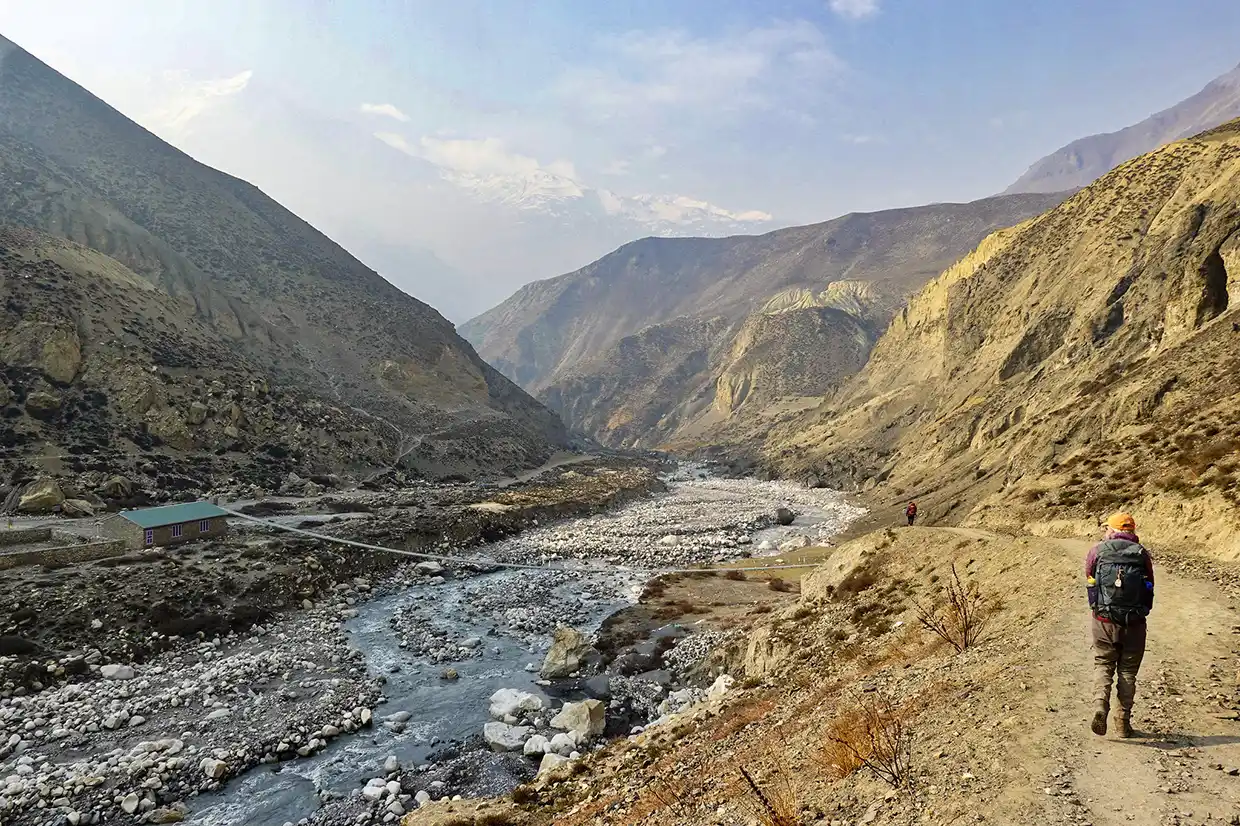
The Kang La crossing begins at 5 to 6 AM from Nar Village. The ascent from the village to the pass, at approximately 5,240 to 5,320 meters, involves significant elevation gain on a rocky, exposed trail above the treeline. Early morning temperatures sit well below freezing on the upper approach—dress in full insulating layers, gloves, and a hat before leaving the teahouse. Your guide sets the pace for the ascent based on group fitness and monitors everyone’s altitude response throughout the climb.
At the Kang La summit, Annapurna II, Gangapurna, Tilicho Peak, and Pisang Peak rise in a mountain panorama that few Annapurna trekkers ever see from this angle. The restricted area permit system means you share this viewpoint with a small number of trekkers rather than the large groups that crowd Thorong La on the same day. Spend 15 to 20 minutes at the summit before the cold drives the descent decision.
The descent from Kang La to Ngawal covers approximately 2,000 meters of altitude loss on a long, tiring trail that rewards careful footwork throughout. Ngawal, at approximately 3,660 meters, marks the entry point to the main Annapurna Circuit trail and provides the first developed teahouse stop since Meta on Day 3. Check in, eat a full dinner, and allow your legs to rest from what typically ranks as the longest and most physically demanding day of the Nar Phu section.
Accommodation:
Teahouse in Ngawal
Meals Breakfast, Lunch, Dinner
Difficulty
The trail from Ngawal to Manang follows the high route through the upper Manang Valley with consistent views of the Annapurna and Gangapurna ranges. The walking section takes approximately 3 to 5 hours on a clear, well-marked trail that represents a significant contrast to the remote Nar Phu Valley terrain—more developed teahouse infrastructure, more trekkers on the trail, and a broader food menu after the limited options of the restricted area.
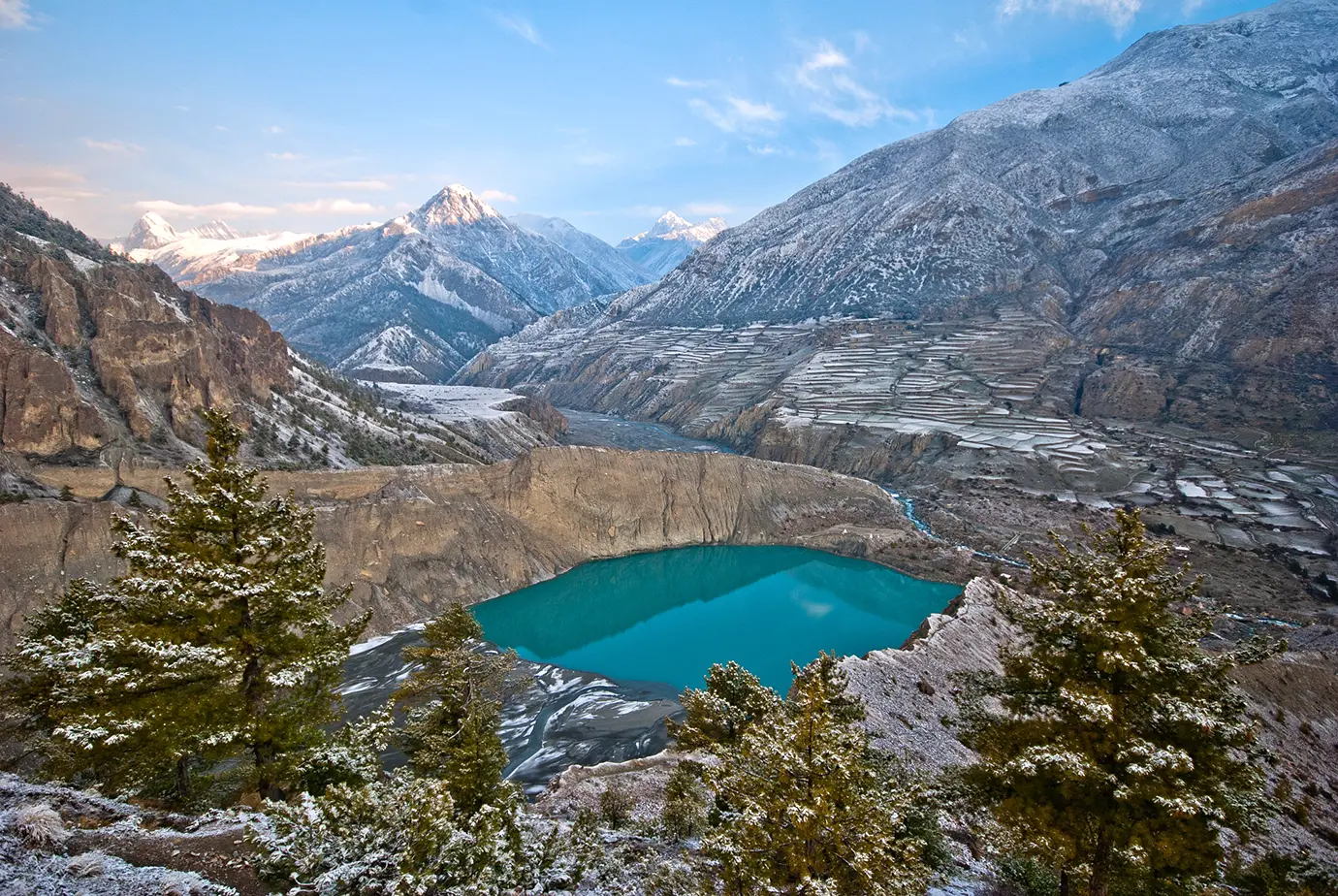
Manang at 3,519 meters offers the best teahouse facilities you encounter since Dharapani on Day 2—broader menus, reliable electricity, Wi-Fi in some lodges, and the Himalayan Rescue Association altitude information clinic that runs evening sessions for trekkers preparing for the Thorong La crossing. Attend the HRA clinic if the session falls on your Day 9 evening—the practical altitude information significantly improves decision-making on the Thorong La day.
Accommodation:
Teahouse in Manang
Meals Breakfast, Lunch, Dinner
Difficulty
Day 10 stays in Manang for a full acclimatization day before the Thorong La push. Your guide leads a morning acclimatization hike to the Gangapurna Lake viewpoint at approximately 3,700 meters, to the ridge above the village at 3,900 meters, or higher if the group’s condition warrants. The acclimatization hike principle—climb high, sleep low—accelerates the body’s oxygen-carrying adaptation at altitude.
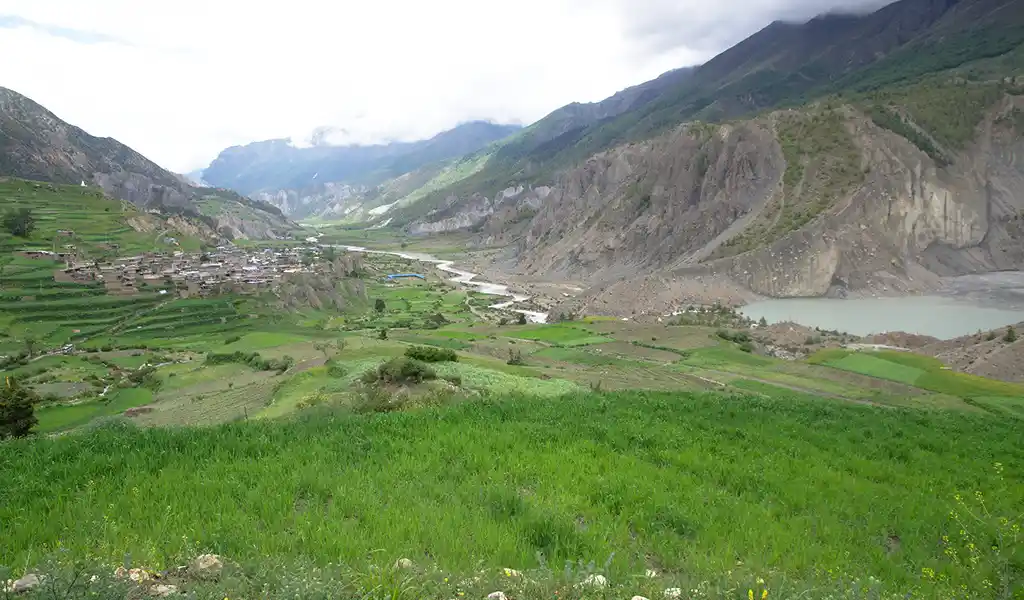
Spend the afternoon resting, eating full meals, and drinking at least 3 liters of water. Use the time to visit the HRA clinic if you missed the Day 9 session, check your gear for the Thorong La day, confirm sleeping bag temperature rating against the forecast overnight temperature at High Camp, and discuss the Day 11 through Day 13 plan in detail with your guide. Rest early—the demanding three-day push to the pass begins tomorrow.
Accommodation:
Teahouse in Manang (second night)
Meals Breakfast, Lunch, Dinner
Difficulty
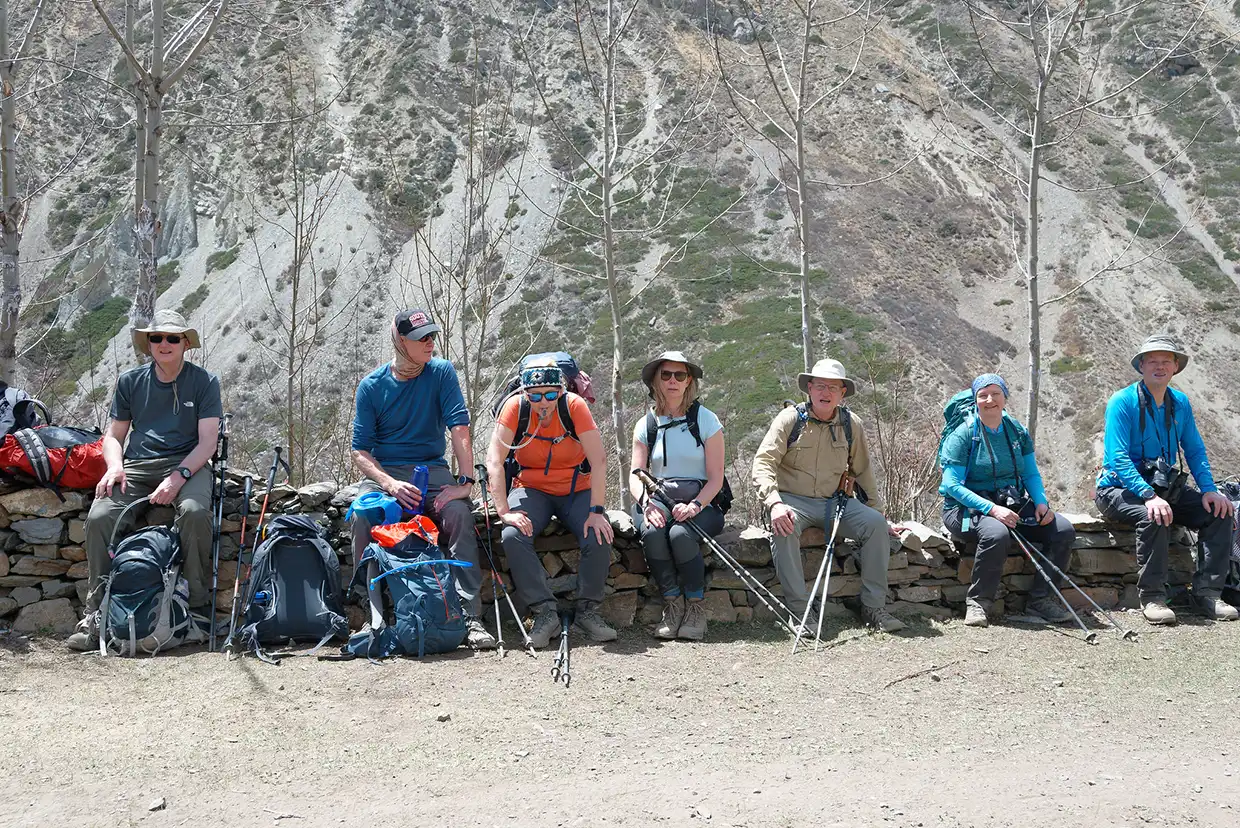
The trail from Manang to Yak Kharka at 4,018 meters follows the main Annapurna Circuit route through dry alpine terrain, open valley grassland, and yak grazing areas above the main Manang settlement zone. Daily walking time runs 3 to 4 hours on a gradual, steady uphill trail that doesn’t demand a fast pace.
Walk slowly throughout Day 11 and drink water consistently. The body continues to adapt to altitudes above 4,000 meters, and the physical load from the previous 10 days accumulates, with rushing on this section only compounding it. Arrive at Yak Kharka in the early afternoon, rest thoroughly, eat a large dinner, and prepare for the approach to Thorong Phedi or High Camp on Day 12.
 Accommodation:
Teahouse at Yak Kharka
Meals Breakfast, Lunch, Dinner
Difficulty
Day 12 reaches either Thorong Phedi at 4,450 meters or High Camp at approximately 4,850 meters, depending on your guide’s assessment of the group’s fitness, weather conditions, and the optimal departure time for Thorong La. High Camp gives you a shorter but more intense climb on Day 13. Thorong Phedi offers a longer, less stressful morning at a slightly lower altitude.
Regardless of the overnight choice, Day 12 keeps movement to a minimum once the destination is reached. Arrive as early as possible, rest completely in the afternoon, eat a large and carbohydrate-rich dinner, drink 3 liters of water, and prepare every item for the Day 13 pass crossing the night before—headlamp charged, warm layers accessible, daypack loaded, water bottle full. Set your alarm for 3 to 5 AM based on your guide’s specified departure time.
Accommodation:
Teahouse at Thorong Phedi or High Camp
Meals Breakfast, Lunch, Dinner
Difficulty
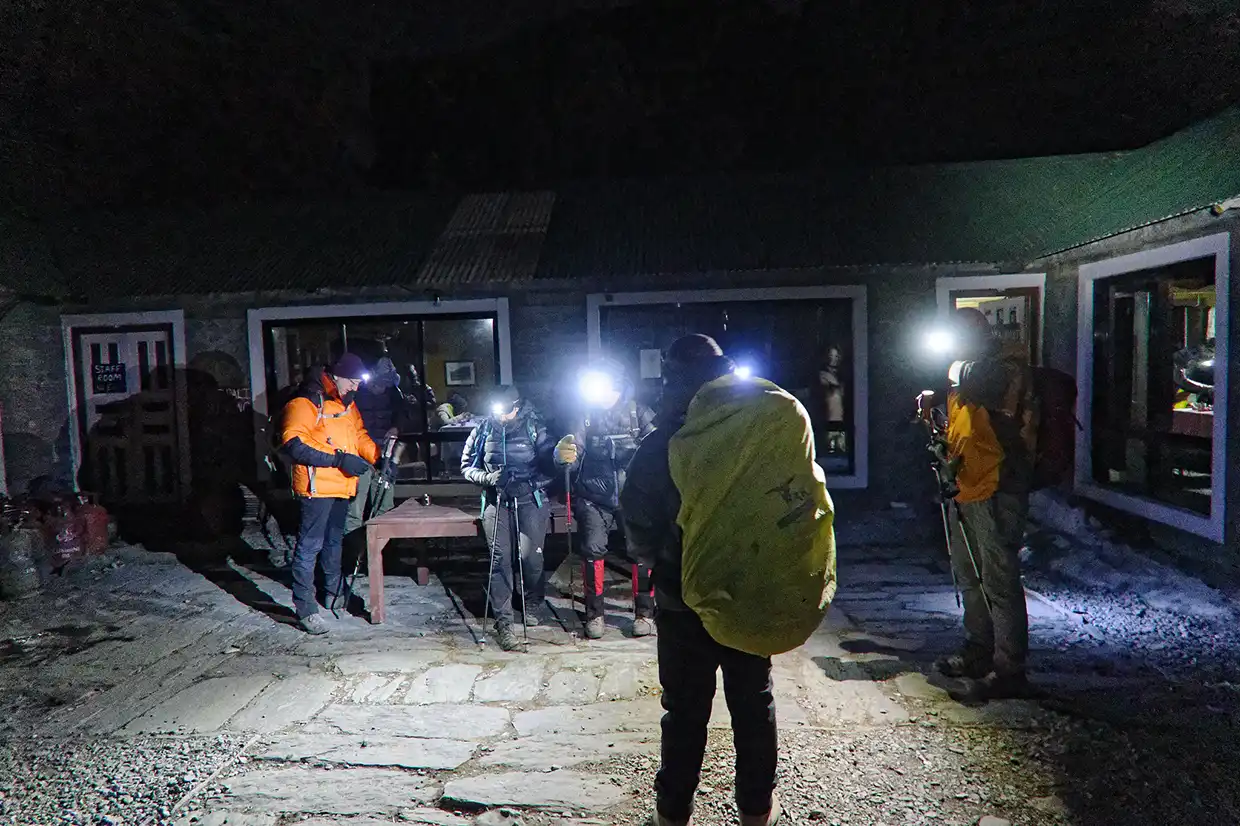
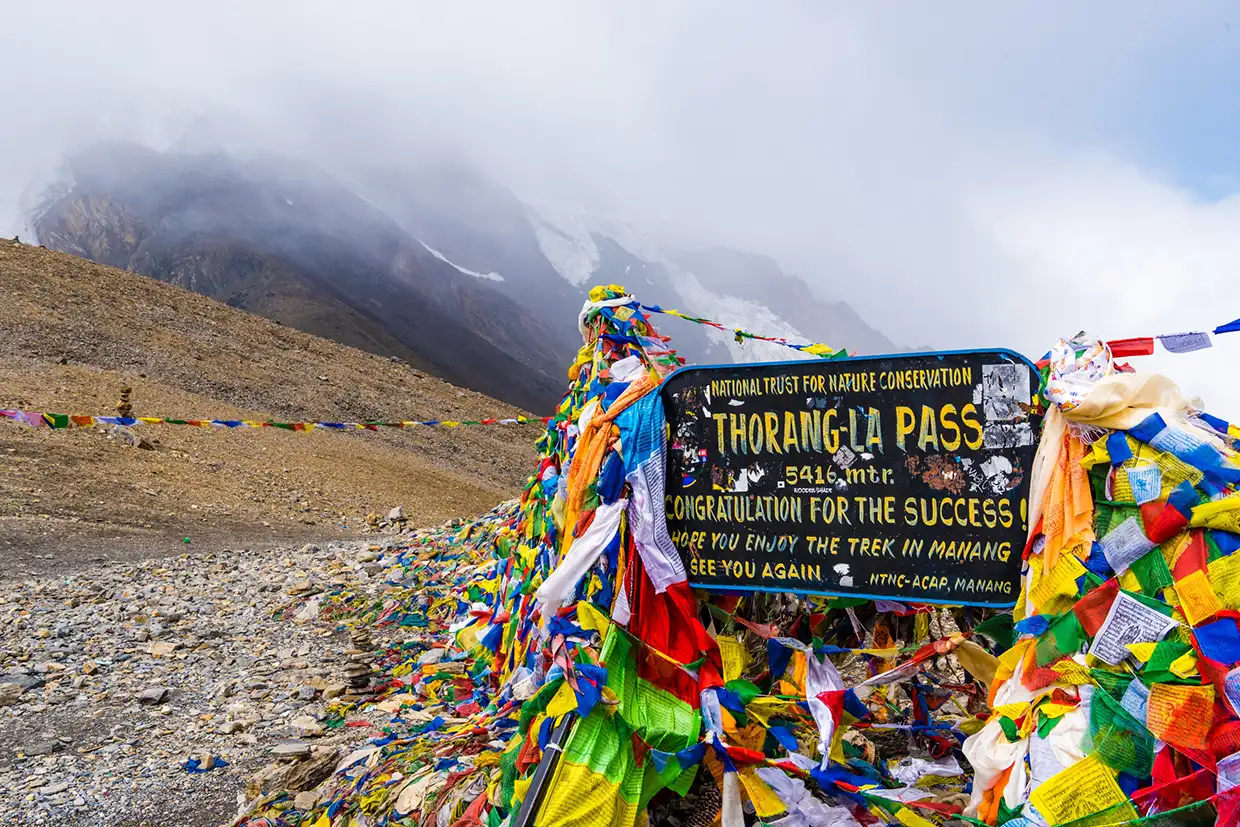
The day at Thorong La Pass begins in complete darkness. Headlamps illuminate the trail as your group joins the pre-dawn procession of trekkers climbing from Phedi or High Camp toward the 5,416-meter summit. Air temperature drops well below freezing above 5,000 meters. Wind intensifies near the pass summit. Every step requires deliberate, measured effort as the altitude reduces effective lung capacity. Walk steadily, breathe deeply, and inform your guide immediately of any worsening symptoms.
The summit at 5,416 meters carries prayer flags and stone cairns, opening the view westward into the Mustang plateau and the Kali Gandaki gorge system—a landscape entirely different from the eastern Marsyangdi valley that began the Nar Phu approach 11 days ago. Spend 10 to 15 minutes at the summit before the cold and the need to descend drive the group onward.
The descent from Thorong La to Muktinath drops 1,600 meters on a long, rocky, switchbacking trail that demands steady footwork on tired legs. Muktinath’s sacred temple complex—with 108 water spouts, a continuously burning natural gas flame, and Hindu and Buddhist pilgrims arriving from multiple directions—marks the end of the high mountain section. Rest, eat a full meal, and sleep well after the most demanding single day of the 16-day trek.
Accommodation:
Teahouse in Muktinath
Meals Breakfast, Lunch, Dinner
Difficulty
A jeep collects your group from Muktinath for the drive down through Mustang, Jomsom, and the Kali Gandaki Valley toward Pokhara. The road passes through the deepest river gorge in the world—between Dhaulagiri at 8,167 meters and Annapurna at 8,091 meters—through Marpha’s apple orchards, Tukuche’s stone buildings, and the lower Kali Gandaki valley before Beni and the final push to Pokhara. The full journey takes 6 to 8 hours.
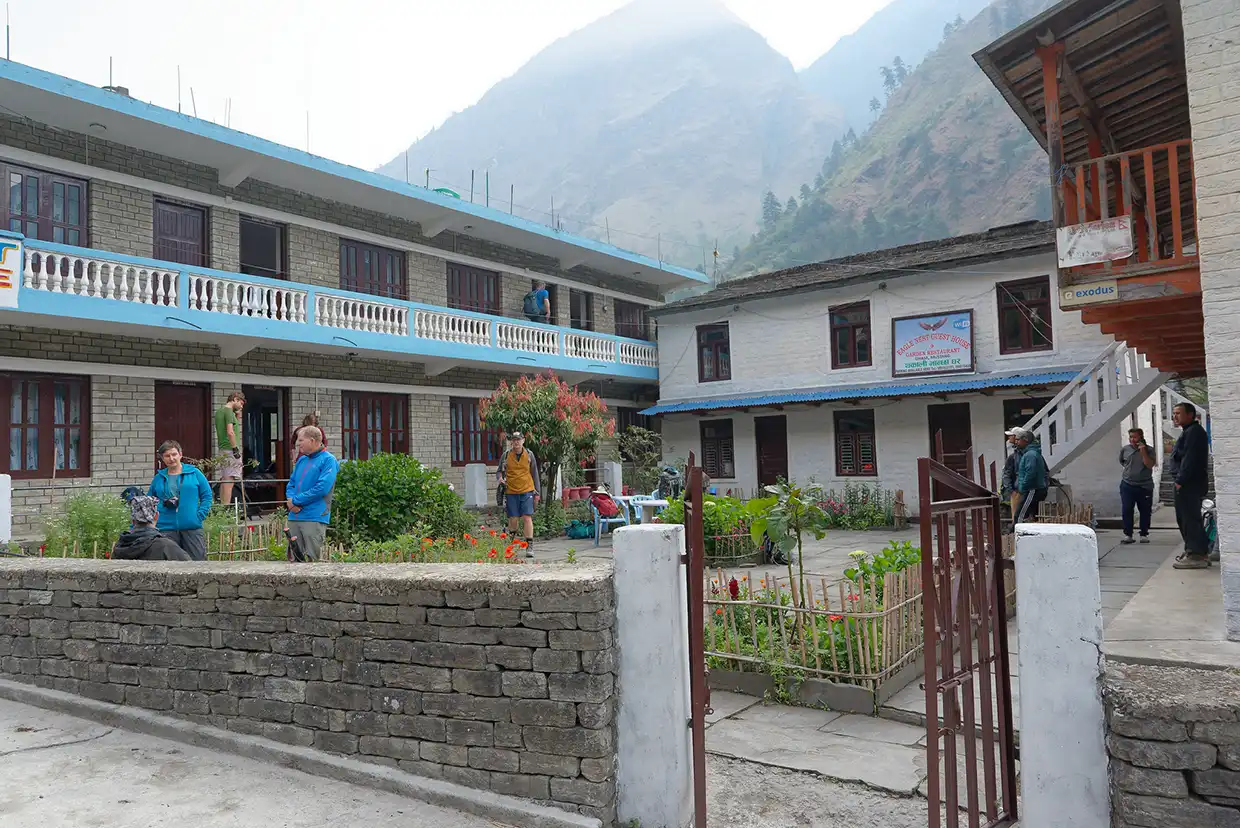
You arrive at Hotel Splendid View in Pokhara in the late afternoon. Hot shower, private bathroom, proper mattress, lakeside dinner—the contrast between the single Pokhara hotel night and the previous 12 teahouse nights arrives at exactly the right moment after the physical demands of Kang La and Thorong La combined into a single 16-day route.
Accommodation:
Hotel Splendid View, Pokhara Lakeside
Meals Breakfast, Lunch
Difficulty
The morning tourist bus or private vehicle returns from Pokhara to Kathmandu in 6 to 7 hours. Transfer to Hotel Thamel Park on arrival in the late afternoon. Use the evening for final shopping in Thamel, a celebration dinner, or rest before the Day 16 airport departure.
Accommodation:
Hotel Thamel Park, Kathmandu
Meals Breakfast
Difficulty
Our driver transfers you from Hotel Thamel Park to Tribhuvan International Airport at the agreed pickup time. Allow at least 3 hours before international departure for check-in, immigration, and security.
Accommodation:
Not included
Meals Breakfast
Difficulty
The Nar Phu Valley with Annapurna Circuit Trek delivers a complete high Himalayan experience that neither the standard Annapurna Circuit nor the standalone Nar Phu Trek provides on its own. The standard Annapurna Circuit misses the restricted valley entirely. The standalone Nar Phu Trek misses Thorong La Pass and Muktinath. The combined 16-day route gives you both—the remote cultural depth of the restricted valley and the classic circuit achievement of the world’s most famous trekking pass.
The two acclimatization days built into the 16-day schedule represent the safety structure that makes the combined route achievable rather than dangerous. The Phu Gaon rest day on Day 5 allows the body to adapt to 4,080 meters before the Kang La crossing. The Manang rest day on Day 10 allows adaptation to 3,519 meters before the 5,416-meter Thorong La push. Removing either day to shorten the itinerary creates an altitude gain profile that significantly increases the risk of mountain sickness on both pass days.
The requirement for a restricted area permit makes the Nar Phu extension genuinely different in character from the main circuit. Permit controls limit daily trekker numbers in a way that the open Annapurna Circuit cannot enforce. In Phu Gaon and Nar Village, you encounter a cultural environment that functions on its own terms rather than one adapted for commercial trekking tourism—a distinction that cultural travelers and mountain photographers recognize immediately as the route’s primary value.
The 16-day package includes private vehicle airport transfers, Hotel Thamel Park for city nights, Hotel Splendid View for city nights, jeep transport to the trailhead and back from Muktinath, and a licensed guide with direct Nar Phu Valley experience. Every logistics element is prearranged, so your focus stays on the physical and cultural experience rather than on daily transport coordination.
Kang La Pass connects Nar Village in the restricted valley to Ngawal on the main Annapurna Circuit at approximately 5,240 to 5,320 meters above sea level. The pass crossing on Day 8 represents the physical climax of the Nar Phu section—the moment where the remote valley route connects with the classic circuit infrastructure and the character of the trek shifts from restricted wilderness to developed teahouse corridor.
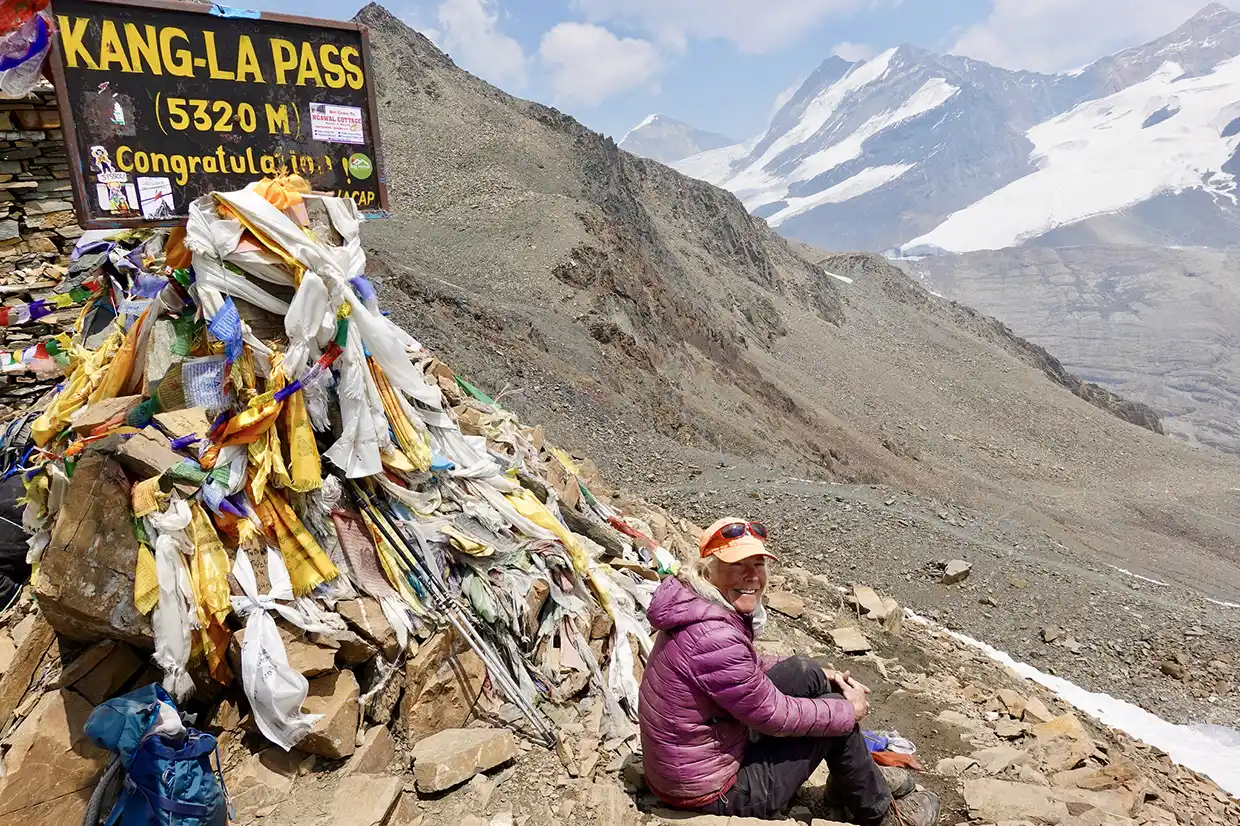
The Day 8 departure happens early—typically 5 to 6 AM—to allow full daylight for the ascent and the long descent to Ngawal before afternoon cloud and wind conditions deteriorate. The climb from Nar Village to the Kang La summit covers significant elevation gain on a rocky, exposed trail above the treeline. The pass summit area offers a 360-degree panorama of Annapurna II at 7,937 meters, Gangapurna at 7,454 meters, Tilicho Peak at 7,134 meters, and Pisang Peak at 6,091 meters on clear mornings.
The descent from Kang La to Ngawal is long, with 2,000 or more meters of altitude loss, on a trail that combines rocky switchbacks, scree sections, and lower valley farmland approaches. Your guide manages pace on the descent to protect knees from the cumulative load of extended downhill on tired legs after the morning’s altitude gain. Arrive at the Ngawal teahouse in the late afternoon with the main circuit trail and its more developed facilities available for the first time since Koto on Day 2.
Kang La Pass feels considerably more remote and less crowded than Thorong La on the same morning. The restricted area permit system limits the number of trekkers attempting the pass on any given day, so the Kang La summit typically hosts a single group or a small number of groups rather than the organized procession that Thorong La sees during October. The view from the pass and the sense of physical achievement carry different emotional weights.
Thorong La Pass at 5,416 meters marks the highest point of the Nar Phu Valley with the Annapurna Circuit Trek and is the defining physical achievement of the entire 16-day route. The Day 13 crossing starts before sunrise from Thorong Phedi or High Camp—typically between 3 and 5 AM—to allow for a full day of ascent and the 1,600-meter descent to Muktinath before evening.
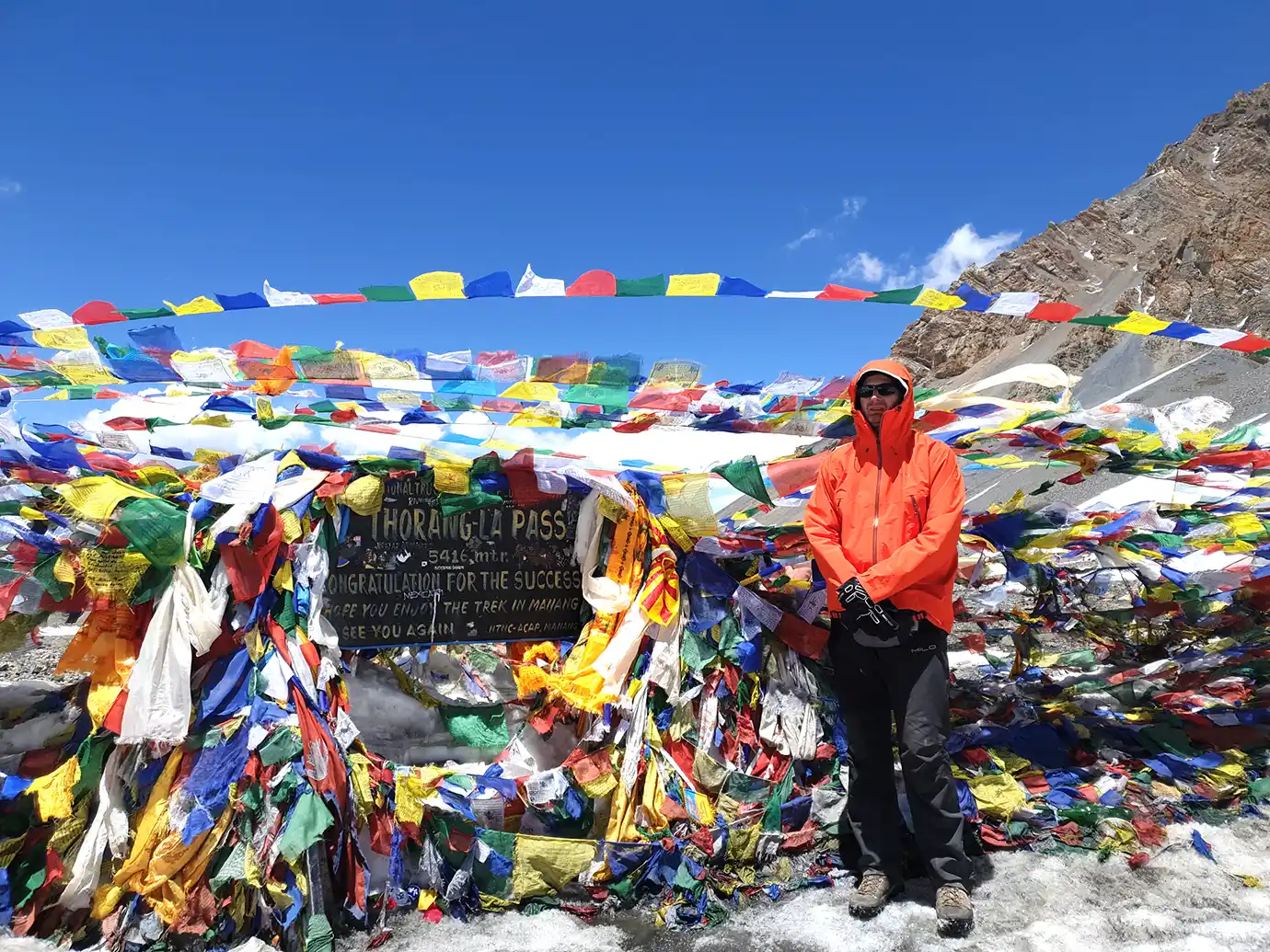
The pre-dawn departure from High Camp at approximately 4,850 meters begins at temperatures well below freezing. The climb to the pass covers 600 meters of elevation gain on a steep, exposed, rocky trail in complete darkness before the eastern sky begins to lighten. Wind intensifies near the summit and can reach dangerous levels on exposed sections if the departure occurs too late in the morning. Every step above 5,000 meters demands deliberate effort as the altitude reduces effective lung capacity to roughly half its sea-level function.
At the prayer-flag-covered summit at 5,416 meters, your body operates at the physiological limit of non-technical high-altitude trekking. The view westward into the Mustang Plateau and the Kali Gandaki region opens a landscape completely different from the one you entered 12 days earlier in the Marsyangdi Valley. Spend 10 to 15 minutes at the summit before cold, wind, and the practical need to begin the descent drive the group onward.
The descent from Thorong La to Muktinath covers 1,600 meters of altitude loss over several hours on a rocky, switchbacking trail. Trekking poles provide critical stability on tired legs through the steeper sections. Muktinath at 3,710 meters—a sacred site shared by Hindu and Buddhist pilgrims, with 108 water spouts and a continuously burning natural gas flame—marks the end of the high mountain section and the beginning of the descending Kali Gandaki route toward Pokhara.
The Nar Phu Valley with Annapurna Circuit Trek suits:
Be completely honest before confirming this package:
| Trek | Duration | Difficulty | Highest Point | Main Style | Best For |
|---|---|---|---|---|---|
| Nar Phu + Annapurna Circuit | 16 Days | Challenging | 5,416 m | Restricted valley + two passes | Fit, experienced trekkers |
| Nar Phu Valley Trek | 10–13 Days | Mod–Challenging | ~5,320 m | Remote culture, hidden valley | Shorter restricted trek |
| Annapurna Circuit Trek | 12–16 Days | Mod–Challenging | 5,416 m | Classic full circuit | First major high trek |
| Annapurna Circuit + Tilicho | 15 Days | Challenging | 5,416 m | High lake + Thorong La | Lake and pass trekkers |
| Manaslu Circuit Trek | 14–18 Days | Challenging | 5,106 m | Remote circuit, Larkya La | Restricted-area trekkers |
Kathmandu – Hotel Thamel Park
Hotel Thamel Park, in the Thamel tourist district, offers clean twin-sharing rooms with private bathrooms, hot water, Wi-Fi, and daily breakfast. The central Thamel location gives you walking access to gear shops, money exchange, pharmacies, and the permit office, which are needed for Day 1 preparation.
Pokhara – Hotel Splendid View
Hotel Splendid View near Phewa Lakeside offers private bathrooms, hot water, Wi-Fi, and mountain-view balconies on upper floors. The single Pokhara night on Day 14 provides the first city-standard accommodation after 12 consecutive teahouse nights—a genuine physical recovery experience after the combined Kang La and Thorong La effort.
Trekking Route – Teahouses and Basic Mountain Lodges
Teahouse quality varies significantly across the 12 trekking nights. Koto, Manang, and Ngawal offer the most developed facilities on the route. Meta, Phu Gaon, Nar Phedi, and Nar Village provide basic but adequate accommodation in the restricted section. The Nar Phedi monastery lodge represents the most basic single overnight—limited rooms, shared cold bathroom, and minimal food options.
The Nar Phu Valley section uses genuinely basic mountain lodges in a remote, restricted area. Room availability is limited, particularly at Nar Phedi, and advance booking through our team prevents groups from arriving to find no available accommodation. Our team contacts lodges along the restricted route before every departure.
Hot showers, Wi-Fi, and device charging incur fees at all teahouses and may not be available at the most remote Nar Phu stops. Carry a fully charged power bank from Kathmandu and do not rely on the teahouse electricity supply for critical device power in the restricted valley section.
Nar Phu Valley maintains a cultural identity more closely connected to the Tibetan Plateau than to the middle-hill Nepali communities along the lower Annapurna Circuit trail. The villages of Phu Gaon and Nar developed as highland pastoral settlements above 3,800 meters, where yak herding, barley farming, buckwheat cultivation, and trade with Tibet shaped the community economy for centuries before Nepal’s trekking industry existed.
Stone-built architecture dominates both villages—flat-roofed houses with thick walls that retain heat in the cold highland environment, small windows facing south for maximum sun exposure, and external courtyards shared between family compounds. Prayer walls and mani stones line the approach paths to both villages and continue along the main village lanes. Chortens mark trail junctions throughout the valley, placed according to Buddhist ritual geography rather than navigational convenience.
The monasteries in Phu Gaon and Nar Village function as active religious centers rather than museum pieces. Monks maintain the gompa buildings, conduct daily puja ceremonies, and preserve the Tibetan Buddhist texts and ritual objects that give the monastery complexes their cultural significance. Visiting the monasteries on Day 5 in Phu Gaon and Day 7 in Nar Village requires respectful conduct—remove footwear before entering, keep voices low inside, walk clockwise around the central chamber, and follow your guide’s specific instructions about photography restrictions.
Cultural etiquette throughout both villages mirrors standard Tibetan Buddhist respect protocols. Walk clockwise around all chortens and mani walls—always keep the stone structures on your left. Dress modestly in the village lanes and monastery areas. Ask clearly before photographing residents, particularly monks, elderly community members, and women at work in the fields or courtyards. Your guide provides cultural introductions at both village stops and helps prevent misunderstandings that can arise between foreign visitors and remote mountain communities.
The Nar Phu Valley is designated a restricted area under Nepal’s trekking permit system, which means independent trekking without an agency and a licensed guide is not permitted. Every trekker entering the valley must obtain a Nar Phu Restricted Area Permit through a registered trekking company, trek with a licensed guide at all times, and carry the permit document for presentation at checkpoints along the restricted route.
The restricted area permit fee applies per trekker for the duration of the Nar Phu Valley section. Permit fees for restricted areas are subject to change through Nepal’s Ministry of Tourism and government regulation—our team confirms current pricing at the time of your booking inquiry rather than stating a figure that may become outdated. The ACAP permit costs NRs. 3,000 for foreign nationals and NRs. 1,000 for SAARC nationals, tax included, as listed on the NTNC e-permit portal. The TIMS card may apply under the current Nepal Tourism Board policy.
Our team arranges all three permits before your Day 2 departure from Kathmandu. You must provide a clear copy of your passport photo page and two passport-size photographs to our team on Day 1. Permit rangers check documents at the Koto entry checkpoint and at additional points along the restricted valley route. Your guide carries the group’s permit records and manages all checkpoint interactions in Nepali throughout the trek.
The restricted area permit system creates a meaningful visitor control mechanism in Nar Phu. Unlike the open Annapurna Circuit, where any trekker can walk without a permit through most sections, the Nar Phu entry requires pre-arranged paperwork, a licensed guide, and an agency registration that creates accountability for every group entering the valley. The system protects the cultural environment of Phu Gaon and Nar Village from the mass tourism development that commercial accessibility often brings to popular trekking routes.
Nar Phu Valley vs the Standard Annapurna Circuit
The standard Annapurna Circuit follows a well-developed teahouse trail from Dharapani through Chame, Upper Pisang, and Manang to Thorong La, carrying hundreds of trekkers daily in peak season. The Nar Phu extension branches north from Koto before Chame, enters a restricted valley with a fraction of the main circuit’s visitor numbers, and reaches Phu Gaon and Nar at altitudes and cultural settings that the main circuit never touches. The combined route offers both the remote valley’s cultural and landscape depth and the main circuit’s pass achievements and teahouse infrastructure.
Why Both Acclimatization Days Are Non-Negotiable
The Phu Gaon rest day on Day 5 occurs at approximately 4,080 meters. Without it, Day 8’s Kang La crossing at 5,240 to 5,320 meters requires a 1,200 to 1,300 meter gain in a single day from the Nar Village overnight—a dangerous altitude jump that significantly increases acute mountain sickness risk. The Manang rest day on Day 10 occurs at 3,519 meters. Without it, Days 11 through 13 push the body from 3,519 meters to 5,416 meters over three consecutive days, without adequate time for physiological adaptation. Both rest days represent genuine safety requirements, not optional padding.
Kang La Pass vs Thorong La Pass – A Direct Comparison
Kang La connects the remote Nar Valley to the main circuit at Ngawal through a crossing that feels wild, quiet, and significantly less trafficked than Thorong La on the same day. The descent from Kang La to Ngawal is long and tiring after the altitude gain—expect 8 to 10 hours of total walking on Day 8. Thorong La carries more trekkers, has a more established approach trail, and benefits from the full Annapurna Circuit teahouse infrastructure on both sides. Both crossings demand early starts, warm gear, and a steady pace—but Kang La demands these in a genuinely remote setting with limited rescue infrastructure, while Thorong La benefits from the emergency support network that the popular circuit trail maintains.
The Restricted Area Permit Reality
The Nar Phu permit requirement is not a bureaucratic formality—it actively controls the number of trekkers entering the valley daily and legally mandates a licensed guide’s presence at all times. Solo independent trekking that bypasses the permit system faces legal penalties and operates without the safety infrastructure that the guide provides. Permit checks take place at the Koto entry checkpoint and designated points inside the valley. Our team handles all permit paperwork before your departure from Kathmandu, so your guide carries complete documentation from Day 1, eliminating the need for any permit office visits on the trail.
Road Access and Why the 16-Day Structure Works
Roads now reach Koto and, in some conditions, beyond, allowing Day 2 to cover the Kathmandu-Koto distance by vehicle rather than trekking. The 16-day structure uses this road-access efficiency to maximize actual trekking days in the high-value sections—the restricted valley, both pass crossings, and Manang—while eliminating unnecessary lower-valley road walking that the current infrastructure has rendered unnecessary. Shortening the trek beyond 16 days requires removing an acclimatization day, which increases the risk of altitude-related issues described above.
Full board covers all meals from Day 2 through Day 13—breakfast, lunch, and dinner at teahouses on every active trekking day, plus the Day 2 drive day. Hotel breakfast is included at Hotel Thamel Park and Hotel Splendid View on Days 1, 15, and 16. Day 14 includes breakfast and lunch before the Pokhara hotel check-in.
The variety of menu items decreases with increasing remoteness in the Nar Phu section. Meta, Phu Gaon, Nar Phedi, and Nar Village offer limited menus focused on dal bhat, noodle soup, potato dishes, eggs, and tea—simple, high-calorie fuel rather than diverse trail food. Ngawal, Manang, and Yak Kharka offer broader options after the restricted valley exit. Budget extra time for meal preparation at remote stops.
Bottled water, soft drinks, alcohol, hot drinks beyond basic tea and coffee, snacks, and desserts carry additional charges throughout. Carry purification tablets and a refillable bottle—the Nar Phu river water sources are clean in most seasons, and purification tablets eliminate both plastic waste and the cost of bottled water in a remote valley where supply transport is expensive.
The package covers: private vehicle airport pickup on Day 1; road vehicle from Kathmandu to Besisahar, plus a jeep from Besisahar to Koto on Day 2; jeep from Muktinath to Pokhara on Day 14; tourist bus or private vehicle from Pokhara to Kathmandu on Day 15; and private vehicle airport drop-off on Day 16. All segments run pre-arranged through our team.
Optional upgrades include a private jeep from Kathmandu to Koto for Day 2 comfort and scheduling flexibility, a private jeep from Muktinath to Pokhara on Day 14, and a domestic flight from Pokhara to Kathmandu on Day 15, replacing the 6 to 7-hour bus with a 25-minute flight. Contact our team before confirming your booking to add upgrades.
Three permits cover the Nar Phu Valley with the Annapurna Circuit Trek. The Nar Phu Restricted Area Permit grants entry to the restricted valley section—our team arranges this through the correct Nepal government channels before your departure. The ACAP covers the full Annapurna Conservation Area entry at NRs. 3,000 for foreign nationals and NRs. 1,000 for SAARC nationals, tax included. The TIMS card may apply under the current Nepal Tourism Board policy.
All three permits are included in the package price. Our team processes documents in Kathmandu before Day 2 departure and provides your group’s permit package to the guide before the restricted area entry at Koto. Permit fees—particularly for restricted areas—are subject to government revision. Our team confirms the current pricing at the time of the booking inquiry.
The Nar Phu Valley with Annapurna Circuit Trek is rated challenging on every standard trekking difficulty scale. The combination of two passes above 5,200 meters, multiple nights in a remote, restricted area with basic lodge facilities, 12 consecutive trekking days, significant altitude gain on Kang La and Thorong La, and cold wind exposure at high elevation places this route firmly above the moderate category.
Daily walking time ranges from 5 to 10 hours across the 12 trekking days. The Kang La day (Day 8) and the Thorong La day (Day 13) both carry 8 to 10 hour totals, including ascent and full descent to the overnight stop. The Nar Phedi to Nar Village section on Days 6 and 7 involves sustained high-altitude walking in a remote valley with limited emergency support infrastructure.
Trekkers who complete this route arrive with previous multi-day high-altitude trekking experience, strong cardiovascular fitness from regular sustained exercise, and mental preparedness for cold, wind, basic facilities, and early morning starts on both pass days. Previous experience on a major Himalayan pass—Thorong La, Cho La, Renjo La, or equivalent—provides the most relevant preparation for the Kang La crossing specifically.
Do not book this trek as your first major Himalayan trekking experience. The remote section between Koto and Ngawal lacks the commercial rescue infrastructure of the main circuit trail. Your guide’s experience and the group’s collective fitness represent the primary safety system for the Nar Phu section.
| Season | Months | Conditions | Recommended |
|---|---|---|---|
| Spring | March to May | Clear morning views, warming daytime temperatures, some lower-valley flowers. Good window for both Kang La and Thorong La crossings. Less crowded than autumn on the standard circuit section. | Yes |
| Autumn | Sep to Nov | Best visibility of the year after monsoon ends. Stable weather, dry trails, blue-sky days. October is the strongest month for both pass crossings. Book well in advance for this window. | Yes – Best |
| Winter | Dec to Feb | Snow accumulation at both passes can close or make crossing extremely difficult. Very cold nights in Nar Phu. Only for experienced winter trekkers with full cold-weather gear. | With Expert Guidance |
| Monsoon | Jun to Aug | Lower valley rain and poor road conditions. Cloud blocks views. Landslide risk on approach roads. Not recommended for Nar Phu or pass crossing sections. | No |
October and November deliver the clearest skies and most stable pass conditions for both Kang La and Thorong La. March through May offer the second-best window with warming days and generally stable morning conditions. Book October departures at least 6 to 8 weeks in advance—the combined Nar Phu and Annapurna Circuit demand ensures teahouses along both sections fill quickly during peak season.
Porter service is strongly recommended for the Nar Phu Valley section of the Annapurna Circuit Trek and is included in standard package tiers. The combination of 12 consecutive trekking days, two high passes above 5,200 meters, and multiple nights at altitude in a remote, restricted area makes carrying a heavy main bag a significant additional physical burden, reducing safety margins on the demanding pass-crossing days.
One porter can carry a maximum of 20 kilograms between two trekkers. You carry your own daypack throughout the trail with water, snacks, warm layers, a camera, and personal items. The Kang La and Thorong La days specifically benefit from porter support—arriving at each pass with energy reserves rather than exhaustion from combined altitude and pack weight directly affects both safety and the quality of the experience. All porters on our team receive fair wages, adequate cold-weather gear, and full insurance coverage as required by Nepal trekking industry employment standards.
Travel insurance is compulsory and must specifically cover trekking activity above 5,400 meters. Standard travel insurance policies that exclude adventure activities or cap altitude coverage at 3,000 to 4,000 meters do not provide adequate protection for this route. The trek crosses Kang La Pass at approximately 5,240 to 5,320 meters and Thorong La Pass at 5,416 meters—both above the altitude caps of most basic policies.
Your policy must cover emergency helicopter evacuation from remote restricted-area terrain, inpatient and outpatient medical treatment in Nepal, personal accident and injury during high-altitude trekking, trip cancellation, flight delay, and lost baggage. A helicopter evacuation from the Nar Phu Valley section can cost USD 3,000 to USD 6,000 or more, depending on the specific location and weather conditions. Confirm your altitude and restricted-area coverage explicitly with your insurance provider before purchase.
Pack for a temperature range from warm valley afternoons at 1,800 meters to well below freezing at the summits of Kang La and Thorong La above 5,200 meters. A sleeping bag rated to -15°C or lower is essential for the Nar Phedi, High Camp, and Thorong Phedi nights:
Buddhist cultural respect forms the core of responsible travel in Nar Phu Valley. Walk clockwise around all chortens, mani walls, and Buddhist prayer structures—keep the stone structure on your left side. Remove footwear before entering the interiors of the monastery in Phu Gaon and Nar Village. Follow your guide’s specific instructions about photography in monastery areas—some gompa interiors restrict photography of specific objects and ceremonies.
Dress modestly in both Phu Gaon and Nar Village at all times. Cover shoulders and knees in the village lanes, monastery courtyards, and farmland areas. Ask before photographing community members—the Nar Phu communities host limited numbers of visitors specifically to prevent the mass-tourism photographic culture that transforms village life into a performance.
Carry refillable water bottles and purification tablets throughout the trek. Plastic waste removal in the remote Nar Phu Valley section involves high logistical costs—the restricted access and high altitude make waste management substantially more difficult than on the main Annapurna Circuit trail. Your water bottle and purification tablets eliminate your contribution to a problem the valley’s communities cannot easily solve.
Support local teahouses at every stop rather than carrying pre-packaged food from Kathmandu for meals. The Nar Phu community lodges and Koto teahouses are sources of income for households in one of Nepal’s most economically marginal highland environments. Stay on marked trails through all agricultural zones and follow your guide’s exact route through the restricted valley terrain.
Your licensed guide is responsible for safety throughout all 12 trekking days. In the restricted Nar Phu Valley section, this responsibility extends to route navigation on trails that lack the commercial signage of the main circuit, weather monitoring before both pass crossings, advance teahouse booking for limited-capacity remote stops, and emergency communication with our Kathmandu office for any situation requiring evacuation support.
The two acclimatization days—Phu Gaon on Day 5 and Manang on Day 10—represent the primary safety infrastructure for both pass crossings. Never attempt to compress or remove either day to save time. Symptoms of acute mountain sickness above 4,000 meters—persistent headache, nausea, dizziness, disturbed sleep, loss of appetite—require rest, hydration, and descent if symptoms worsen rather than improve.
The Kang La descent on Day 8 from approximately 5,300 meters to Ngawal at 3,660 meters covers 1,600 to 1,700 meters of altitude loss in a single afternoon. Rapid altitude descent paradoxically increases rather than eliminates certain AMS risks—particularly HACE in individuals who have pushed through early symptoms. Inform your guide immediately of any neurological symptoms, including confusion, loss of coordination, or unusual fatigue, on the Kang La descent.
Carry personal altitude medication—consult your doctor about Diamox (acetazolamide) and emergency descent protocols before departure. Our guide carries a group first-aid kit with altitude medication, wound care supplies, and emergency communication equipment. The guide maintains 24-hour contact with our Kathmandu office throughout the restricted area section.
The booking process completes in under 10 minutes:
Our team responds to WhatsApp, email, and phone inquiries within 4 hours during Nepal business hours (9 AM to 6 PM, UTC+5:45), 7 days a week.
A: The full package runs 16 days from arrival in Kathmandu on Day 1 to final airport departure on Day 16. The active trekking section covers 12 days from Day 2 through Day 13. You spend 2 nights in Kathmandu, 1 night in Pokhara, and 12 nights in teahouses and basic mountain lodges along the combined route from Koto to Muktinath.
A: Yes. Nepal’s Ministry of Tourism designates Nar Phu Valley as a restricted area requiring a specific Restricted Area Permit for entry. Independent trekking without an agency and licensed guide is not permitted. Our team arranges the permit, and your guide provides documentation at all checkpoint inspections along the restricted valley route.
A: Yes. Nepal law requires a licensed trekking guide for all restricted area entry. Solo independent trekking in Nar Phu Valley operates outside the legal framework and without the safety and permit infrastructure that the restricted area system mandates. Our guide holds a valid government trekking license and direct experience on the Nar Phu Valley route.
A: Three permits cover the full route: the Nar Phu Restricted Area Permit, the Annapurna Conservation Area Permit (ACAP), and the TIMS card. All three come included in the package price. Our team arranges all documentation before your Day 2 departure from Kathmandu.
A: The trek rates as challenging. It combines two high passes above 5,200 meters, 12 consecutive trekking days, multiple nights above 4,000 meters in a remote restricted area, and basic lodge facilities in the valley section. Previous multi-day high-altitude trekking experience is strongly recommended. The route suits fit trekkers, not first-time walkers.
A: Kang La Pass sits at approximately 5,240 to 5,320 meters (17,192 to 17,454 feet) depending on the specific source. The pass connects Nar Village in the restricted valley to Ngawal on the main Annapurna Circuit. You cross it on Day 8 with an early start from Nar Village, ascending and descending 1,600 to 2,000 meters across a full walking day.
A: Thorong La Pass sits at 5,416 meters (17,769 feet) above sea level—the highest point of the trek. You cross it on Day 13 with a pre-dawn start from Thorong Phedi or High Camp, then descend 1,600 meters to Muktinath across 8 to 10 hours of total walking.
A: Phu Gaon at approximately 4,080 meters provides the altitude adaptation time required before the Kang La Pass crossing at 5,240 to 5,320 meters. Without the Day 5 rest, Day 8’s pass crossing requires a 1,200 to 1,300 meter altitude gain from the Nar Village overnight in a single day—a jump that significantly increases acute mountain sickness risk. The acclimatization day is a non-negotiable safety element.
A: Manang at 3,519 meters provides the adaptation time required before Days 11 through 13 push the body from 3,519 meters to 5,416 meters. Without the Day 10 rest, the altitude gain profile across Days 11, 12, and 13 creates compounding physiological stress, significantly increasing the risk of altitude sickness on the Thorong La approach.
A: You stay at Hotel Thamel Park in Kathmandu and Hotel Splendid View in Pokhara for city nights. On the trail, you stay in locally run teahouses and basic mountain lodges across 12 nights. Teahouse quality varies significantly—Manang and Ngawal offer developed facilities, while Nar Phedi represents the most basic overnight on the entire route. Hot showers, Wi-Fi, and charging carry additional fees and may not work at the most remote stops.
A: Yes. Full board—breakfast, lunch, and dinner—comes included on all 12 trekking days from Day 2 through Day 13. Hotel breakfast comes included at both city hotels. Day 14 includes breakfast and lunch before the Pokhara hotel check-in. Bottled water, soft drinks, and alcohol carry additional charges at all locations.
A: Porter service is included in standard package tiers. One porter carries a maximum of 20 kilograms shared between two trekkers. We strongly recommend porter support for both the Kang La and Thorong La pass days—arriving with energy reserves rather than exhaustion from combined altitude and pack weight directly affects safety and experience on both crossings.
A: Autumn (September to November) offers the best conditions—clear skies, stable weather, and safe pass conditions for both Kang La and Thorong La. Spring (March to May) provides a reliable second window with warming days and generally clear morning views. Winter makes both passes extremely difficult and potentially dangerous. Book October departures at least 6 to 8 weeks in advance.
A: Yes. A private jeep from Kathmandu to Koto on Day 2 replaces the standard vehicle combination with a single private vehicle. A private jeep from Muktinath to Pokhara on Day 14 provides more comfort for the long Kali Gandaki drive. A domestic flight from Pokhara to Kathmandu on Day 15 replaces the 6 to 7 hour bus with a 25-minute flight. Contact our team before booking to add any upgrade.
A: Yes. Insurance is compulsory and must specifically cover trekking above 5,400 meters and emergency helicopter evacuation. Standard policies that cap altitude at 3,000 to 4,000 meters do not provide adequate coverage for this route. Confirm your altitude coverage limit with your provider before purchase and carry both printed and digital copies throughout the trek.